
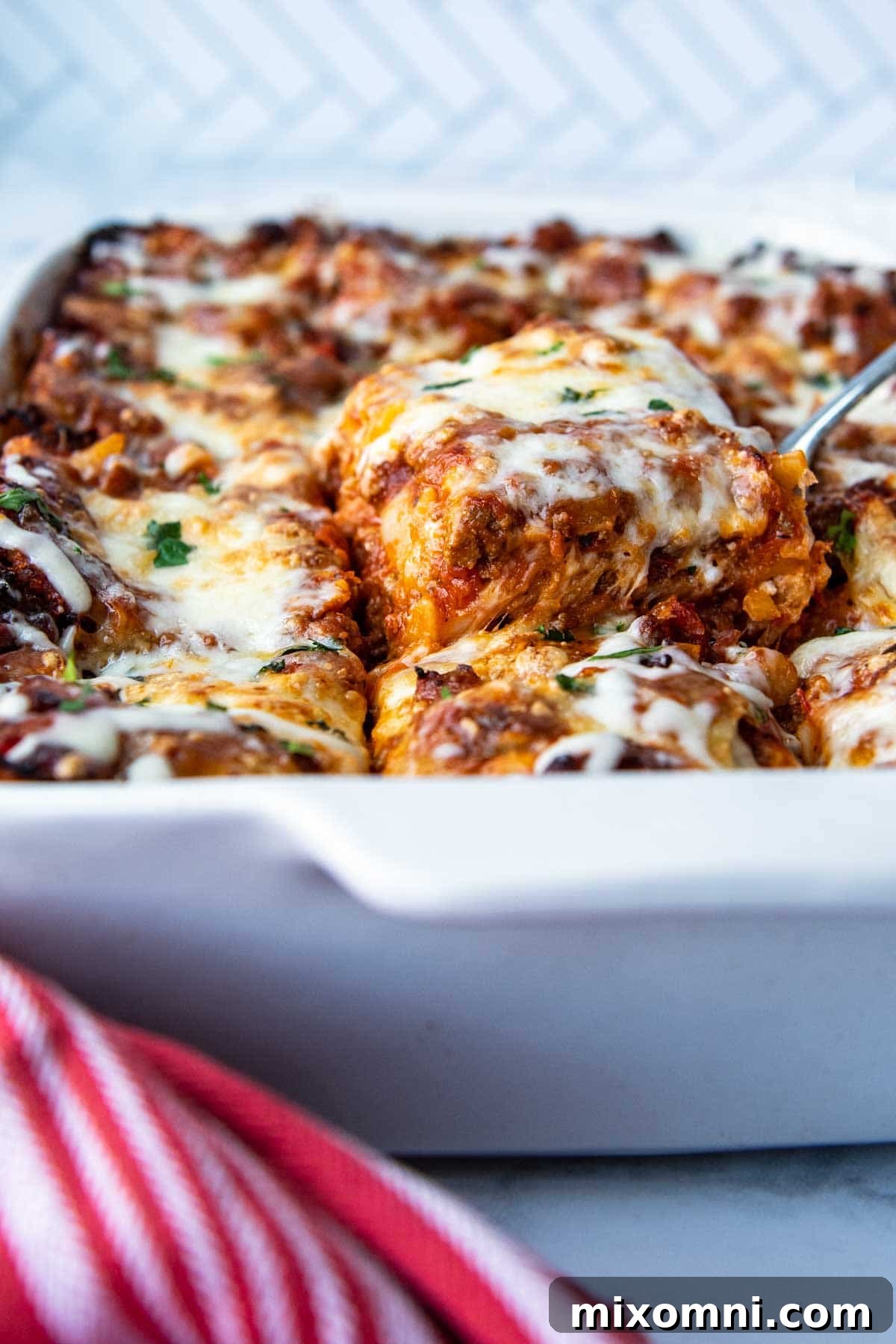
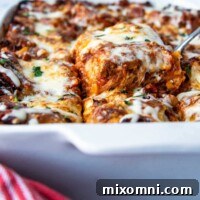
Craving the classic comfort of lasagna but need it to be gluten-free? Look no further! This ultimate guide to crafting the best gluten-free lasagna delivers a dish so rich and flavorful, no one will guess it’s GF. Imagine tender, perfectly cooked layers of robust homemade meat sauce, a creamy, savory ricotta filling, and generous amounts of gooey, melted cheese, all coming together in a harmonious symphony of Italian flavors. We’ll share invaluable pro tips to ensure your gluten-free noodles are never mushy and hold their structure beautifully through every satisfying slice. For the ambitious home cook, we even include an option for making your own fresh gluten-free lasagna sheets from scratch, elevating this already exceptional meal to a gourmet experience.
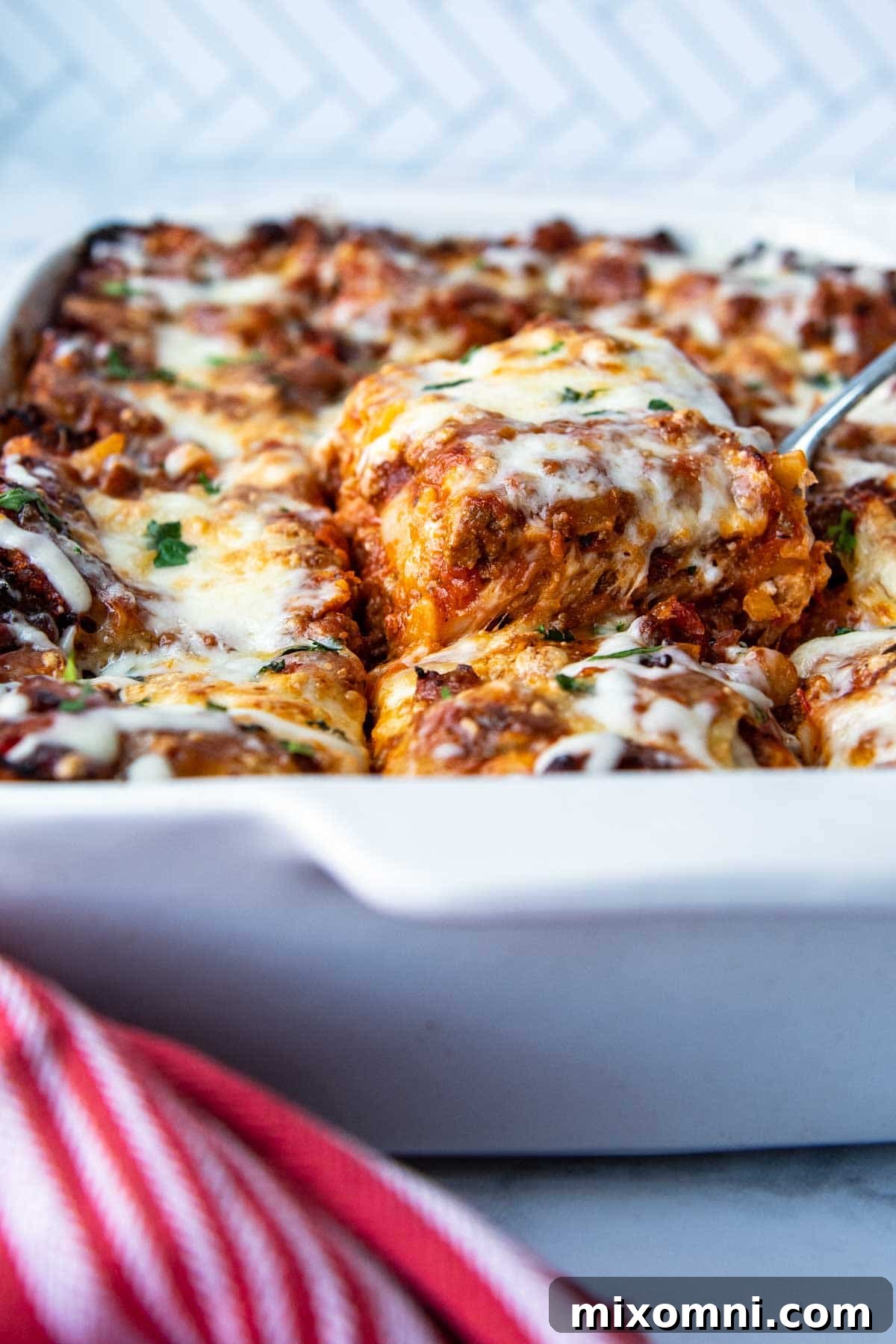
Discover the Ultimate Gluten-Free Lasagna: A Foolproof Recipe for Every Home Cook
Lasagna holds a special place in the hearts of comfort food enthusiasts worldwide. Its layers of savory meat, creamy cheese, and tender pasta create an experience that transcends a simple meal. For those navigating a gluten-free diet, achieving this perfection can sometimes feel like a culinary quest. However, with this meticulously developed recipe, you can confidently create a homemade gluten-free lasagna that rivals any traditional version – a true showstopper for family dinners, festive holidays, or impressing company. Pair it with soft gluten-free breadsticks for an unbelievably complete and satisfying meal. This recipe is a staple in my collection of easy gluten-free dinner ideas because it consistently receives rave reviews, proving that gluten-free doesn’t mean compromising on taste or texture.
Many home cooks face the challenge of mushy gluten-free pasta when making lasagna. This recipe directly addresses that common pain point, providing clear, actionable strategies to ensure your gluten-free lasagna noodles maintain a perfect al dente bite. We’ll delve into selecting the ideal gluten-free lasagna noodles, discuss crucial cooking techniques, and share expert insights for layering your lasagna for optimal structure and flavor. Much of this wisdom, refined over countless batches, first appeared in my acclaimed gluten-free cookbook, and now I’m thrilled to share these secrets with you. Prepare to impress everyone at the table with a lasagna that’s both supremely comforting and entirely gluten-free!
What Our Community Says About This Unforgettable Gluten-Free Lasagna
“This is a wonderful lasagna recipe, packed full of flavor and easy to make! Every one of Melissa’s recipes that I’ve made, have won over our family of picky eaters. Thank you Melissa for sharing your gluten-free recipes with us all.”
—Stacy
“So good! Sauce is fantastic and I used the recommended Barilla noodles. Could never guess this was gluten-free. Thank you!!”
—Monique
Essential Ingredients for a Perfect Gluten-Free Lasagna
Crafting an exceptional gluten-free lasagna begins with choosing the right ingredients. Each component plays a vital role in building the rich flavors and satisfying textures that make this dish so beloved. Here’s a detailed look at what you’ll need and why:
- Italian Sausage: We recommend using sweet Italian sausage for a mild, family-friendly flavor profile that appeals to all ages. The subtle sweetness balances the acidity of the tomatoes beautifully. However, if you prefer a bolder kick, feel free to substitute with hot Italian sausage. For an extra layer of spice, a pinch of crushed red pepper flakes can be added to the sauce during cooking. The sausage provides a foundational depth of savory flavor that is essential for a truly authentic Italian taste.
- Ground Beef: Opt for lean ground beef (at least 85/15) to create a robust meat sauce without excessive grease. Less fat means a cleaner, richer sauce that won’t separate or leave a greasy film, ensuring a more pleasant eating experience. If you’re looking for an alternative, ground turkey or a plant-based mince can be used, though adjustments to seasoning might be needed to achieve a similar depth of flavor.
- Ricotta Cheese: For the most luxurious and flavorful ricotta filling, whole-milk ricotta is highly recommended. Its higher fat content contributes to a creamier texture and richer taste, making the cheese layers wonderfully decadent. If you’re aiming to reduce calories, part-skim ricotta is a suitable alternative, still offering a pleasant creaminess. For those who aren’t fond of ricotta’s texture or flavor, 16 ounces of cottage cheese (preferably at least 4% milk fat) can be used as a substitute, offering a similar creaminess with a slightly different tang.
- Gluten-Free Lasagna Noodles: This is arguably the most critical ingredient for a non-mushy gluten-free lasagna. The quality and type of noodle can make or break your dish. My absolute preference is Barilla Gluten-Free Lasagne Sheets, which consistently deliver excellent results, maintaining their structure and a delightful texture. These are often labeled “oven-ready,” a key factor in our foolproof method. Their resilience makes them perfect for absorbing the sauce without falling apart. You can also use this type of noodle for quick meals like a 30-minute gluten-free lasagna soup. Be sure to review our dedicated section below for crucial cooking and layering tips to avoid the dreaded mushiness, including how to prepare this recipe with homemade fresh gluten-free pasta sheets.
- Homemade or Jarred Sauce: While this recipe features a quick, vibrant homemade meat sauce, we understand that sometimes convenience is key. Our scratch-made sauce allows for precise control over flavor and freshness. However, in a pinch, two 24-ounce jars of your favorite high-quality marinara sauce can be swapped in, saving you time without sacrificing too much flavor. Ensure the marinara is robust and well-seasoned to complement the other rich components of the lasagna, perhaps even adding a dash of extra Italian seasoning or red pepper flakes.
- Freshly Grated Mozzarella and Parmesan: For the ultimate melty, cheesy goodness and a beautiful golden crust, always opt for freshly grated mozzarella from a block. Pre-shredded cheeses often contain anti-caking agents (like cellulose) that can hinder smooth melting and affect the overall texture, leading to a grainy or clumpy finish. Freshly grated Parmesan adds a sharp, salty counterpoint to the richness of the ricotta and mozzarella, enhancing the overall Italian flavor profile and adding depth to every bite.
- Garlic and Onion: These aromatic vegetables form the flavor base of your meat sauce. Freshly minced garlic and finely chopped onion release their pungent and sweet notes, infusing the sauce with an irresistible aroma and taste. Don’t skimp on these fresh ingredients for the best results.
- Italian Seasoning: A blend of dried herbs like oregano, basil, thyme, and rosemary, Italian seasoning provides the quintessential herbaceous notes expected in a classic lasagna. It brings a balanced and authentic Italian flavor without needing to measure multiple individual herbs.
- Light Brown Sugar: A small amount of brown sugar works wonders to balance the acidity of the crushed tomatoes in the meat sauce, creating a smoother, more rounded flavor profile. It prevents the sauce from being too sharp and adds a subtle depth.
Pro Cooking Tips for Non-Mushy Gluten-Free Lasagna Noodles
The biggest hurdle in creating a successful gluten-free lasagna is often preventing the noodles from becoming a soggy, disintegrating mess. But fear not! With these expert tips, your dinner guests will savor a lasagna so perfectly textured and delicious, they’ll be utterly surprised it’s gluten-free:
- Embrace Oven-Ready Lasagna Noodles: For consistently superior results, prioritize gluten-free lasagna noodles explicitly labeled “oven-ready.” These noodles are specifically engineered to absorb moisture and cook perfectly within the oven’s steamy environment, completely eliminating the need for pre-boiling. Skipping this step is a game-changer, directly preventing the over-saturation that often leads to a mushy, undesirable texture. This method guarantees a firm, al dente pasta layer.
- No Pre-Boiling, Even for Regular GF Noodles: If your chosen gluten-free lasagna noodles aren’t specifically “oven-ready,” you can still successfully skip the pre-boiling step. This recipe is structured with a longer covered baking time, allowing the pasta to slowly cook to a perfect al dente texture by gradually absorbing moisture from the generous sauce layers. This gentle, slow-bake method ensures even cooking and robust, intact noodles, preventing them from breaking down prematurely.
- Mindful Noodle Placement is Key: It is critical to avoid overlapping your GF lasagna noodles as much as possible. When noodles are stacked excessively, they can fuse together during baking due to insufficient moisture access, resulting in tough, chewy spots rather than uniformly tender layers. Lay them flat, side-by-side, leaving a tiny gap if absolutely necessary, to ensure each noodle cooks evenly and separately.
- Adapt to Noodle Length for Full Coverage: Gluten-free Barilla noodles, a highly recommended brand for their excellent texture, tend to be shorter and sometimes narrower than some traditional wheat-based lasagna sheets. Don’t hesitate to break them into pieces to fit your baking dish perfectly and cover the entire surface without excessive overlap. Precision in coverage ensures even cooking and a cohesive finished product, avoiding dry, crunchy spots.
- Ample Sauce is Your Best Ally: The secret to hydrating unboiled gluten-free noodles lies in providing sufficient moisture. Ensure both the bottom layer of your lasagna, the top layer, and especially the layers directly under and over the noodles are generously coated with sauce. The steam generated by the ample sauce during the covered baking period is what cooks the pasta to perfection. Think of the sauce as your cooking medium.
- Ensure Complete Noodle Coverage: Always make sure your top layer of **gluten-free noodles** is fully submerged or thoroughly covered by sauce and cheese. Exposed noodles will inevitably dry out and become hard or brittle during baking, completely ruining the overall texture of your otherwise perfect lasagna. A blanket of sauce and cheese protects and moistens them.
Let’s Craft This Culinary Masterpiece Together!
Embark on your journey to the perfect gluten-free lasagna with these detailed, step-by-step instructions. Below, you’ll find process photos and modified guidance. For precise ingredient quantities and the full printable recipe card, please scroll down to the bottom of the page. This step-by-step approach ensures your success, even if you’re new to gluten-free cooking!
1. Begin with a Rich and Flavorful Meat Sauce
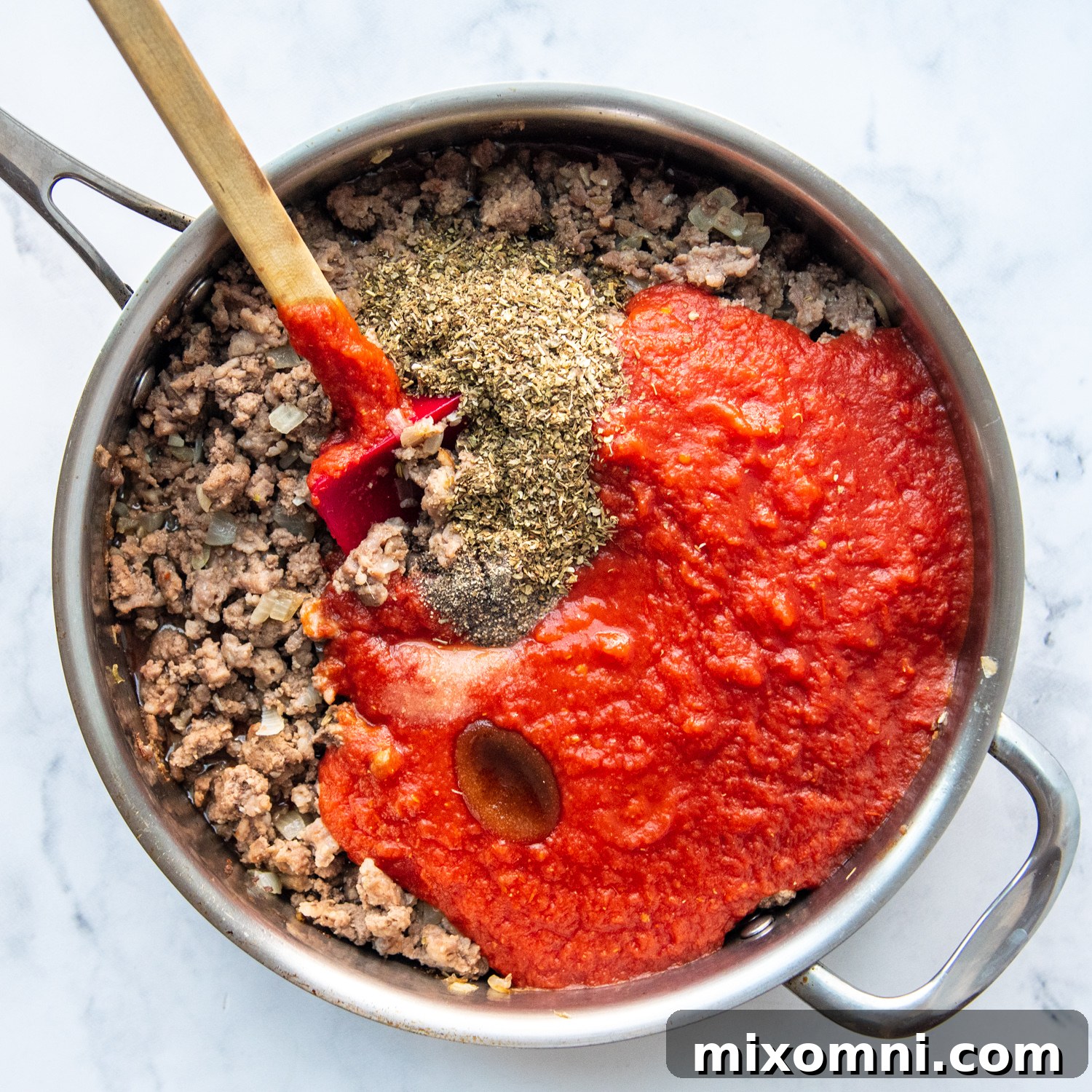
In a large, deep skillet or Dutch oven, heat a tablespoon of olive oil over medium heat until shimmering. Add your chosen 1 pound of Italian sausage, 1 pound of lean ground beef, 1 chopped medium onion, and 2 cloves of minced garlic. Cook this mixture, breaking up the meat with a spoon, until the sausage is beautifully browned and no longer pink. This initial browning builds a deep flavor foundation. Drain any excess fat thoroughly to ensure your sauce isn’t greasy.
Next, stir in the two 28-ounce cans of crushed tomatoes, 1 ½ tablespoons of Italian seasoning, 1 teaspoon of light brown sugar (to balance acidity), ¼ teaspoon of salt, and ¼ teaspoon of ground pepper. Bring the sauce to a gentle simmer, then reduce the heat to low and let it cook, uncovered, for at least 30 minutes, stirring occasionally. This simmering time allows the flavors to meld and deepen, creating the rich, complex foundation for your lasagna. While the sauce simmers, take this opportunity to prepare your creamy ricotta filling and grate your mozzarella cheese for the layering process.
2. Master the Art of Layering Your Lasagna
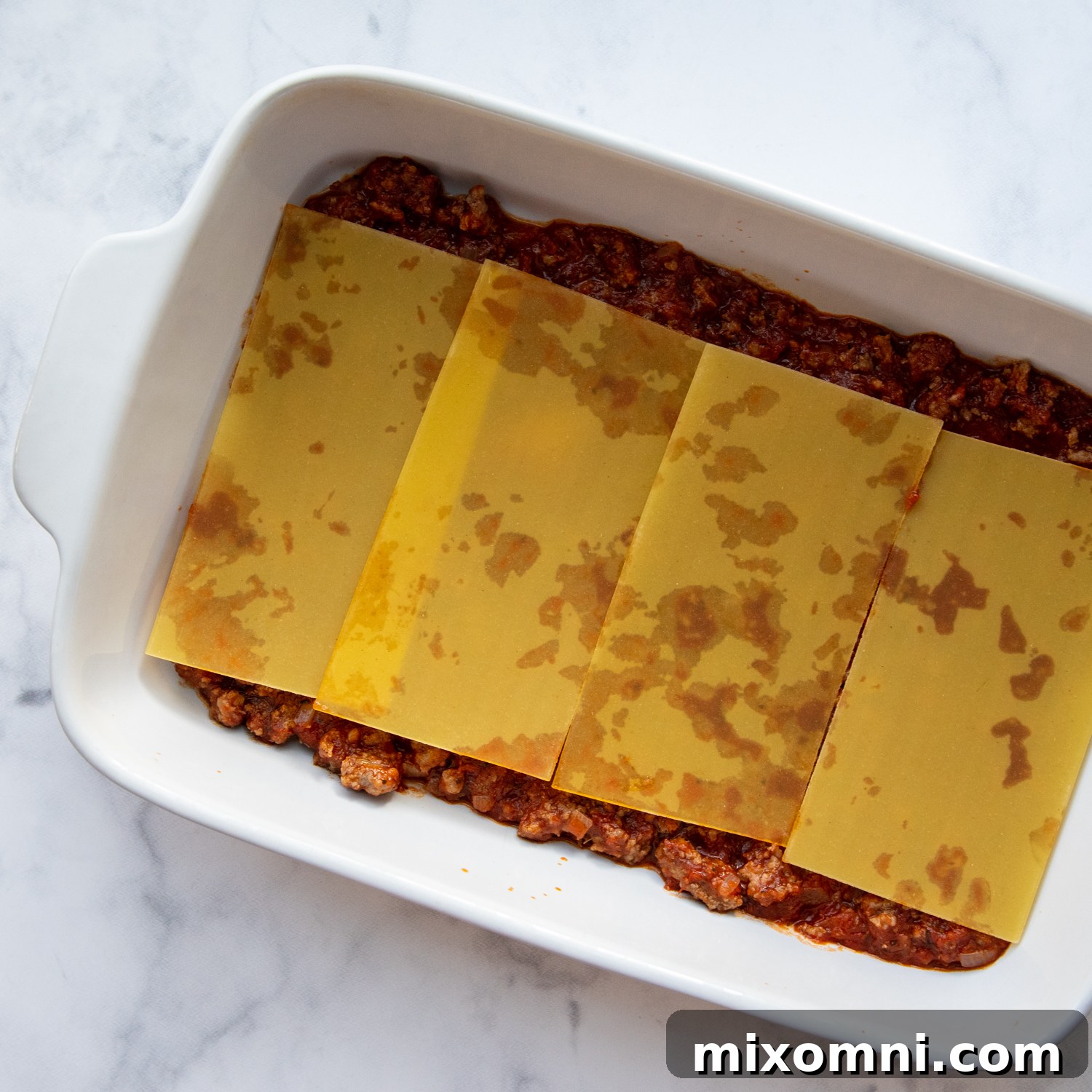
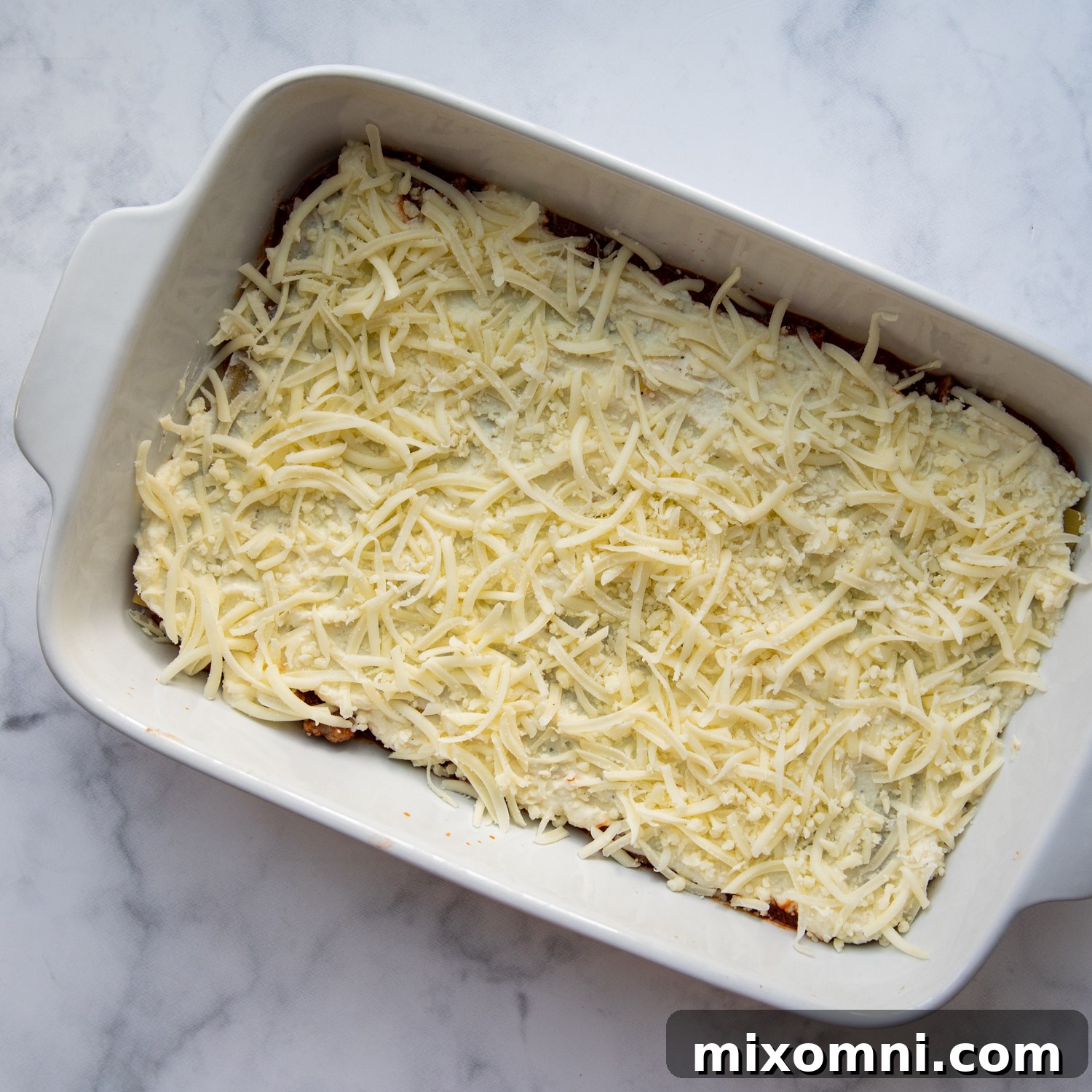
Preheat your oven to 350°F (175°C). In a 9×13 inch baking pan, spread approximately 2 ½ cups of the savory meat sauce evenly across the bottom. This foundational sauce layer is crucial for providing moisture to the first layer of noodles and preventing them from sticking. Carefully arrange 4 uncooked gluten-free lasagna noodles over the sauce. Remember our crucial tip: avoid overlapping! If using larger noodles, three might suffice to cover the base. Evenly dollop half of your prepared creamy ricotta mixture over the noodles, then gently spread it to create a uniform layer. Top this with 1 cup of freshly grated mozzarella cheese.
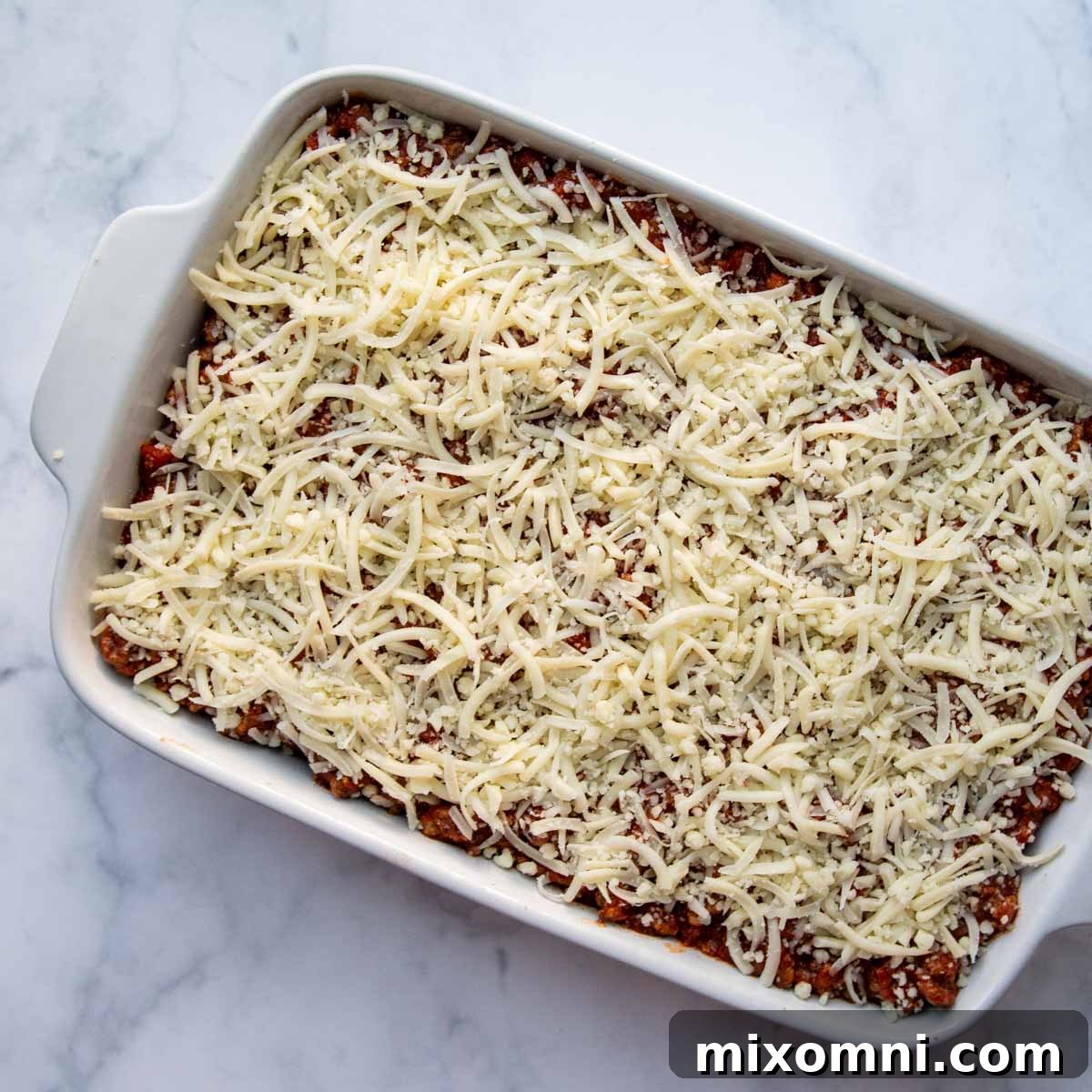
Repeat this meticulous layering process: add another layer of uncooked gluten-free noodles, the remaining ricotta mixture, another 1 cup of mozzarella cheese, and then 2 cups of the rich meat sauce. Finally, place the last of your lasagna sheets, spread the remaining sauce generously over them, and finish with the rest of the mozzarella cheese. It is paramount that all **GF lasagna noodles** are completely covered by sauce and cheese to ensure they cook through evenly and do not become dry or hard during baking. This careful layering guarantees a cohesive and perfectly cooked lasagna.
3. Bake Your Lasagna to Golden Perfection
To prevent the cheese from sticking to the foil during baking, lightly spray a large piece of aluminum foil with nonstick cooking spray on the side that will face the lasagna. Securely cover your lasagna pan with this foil, ensuring a tight seal around the edges to trap all the steam and moisture within the dish. Bake in the preheated oven for 1 hour. This initial covered baking period is absolutely essential for cooking the gluten-free noodles to tender perfection through a steaming process, preventing them from drying out.
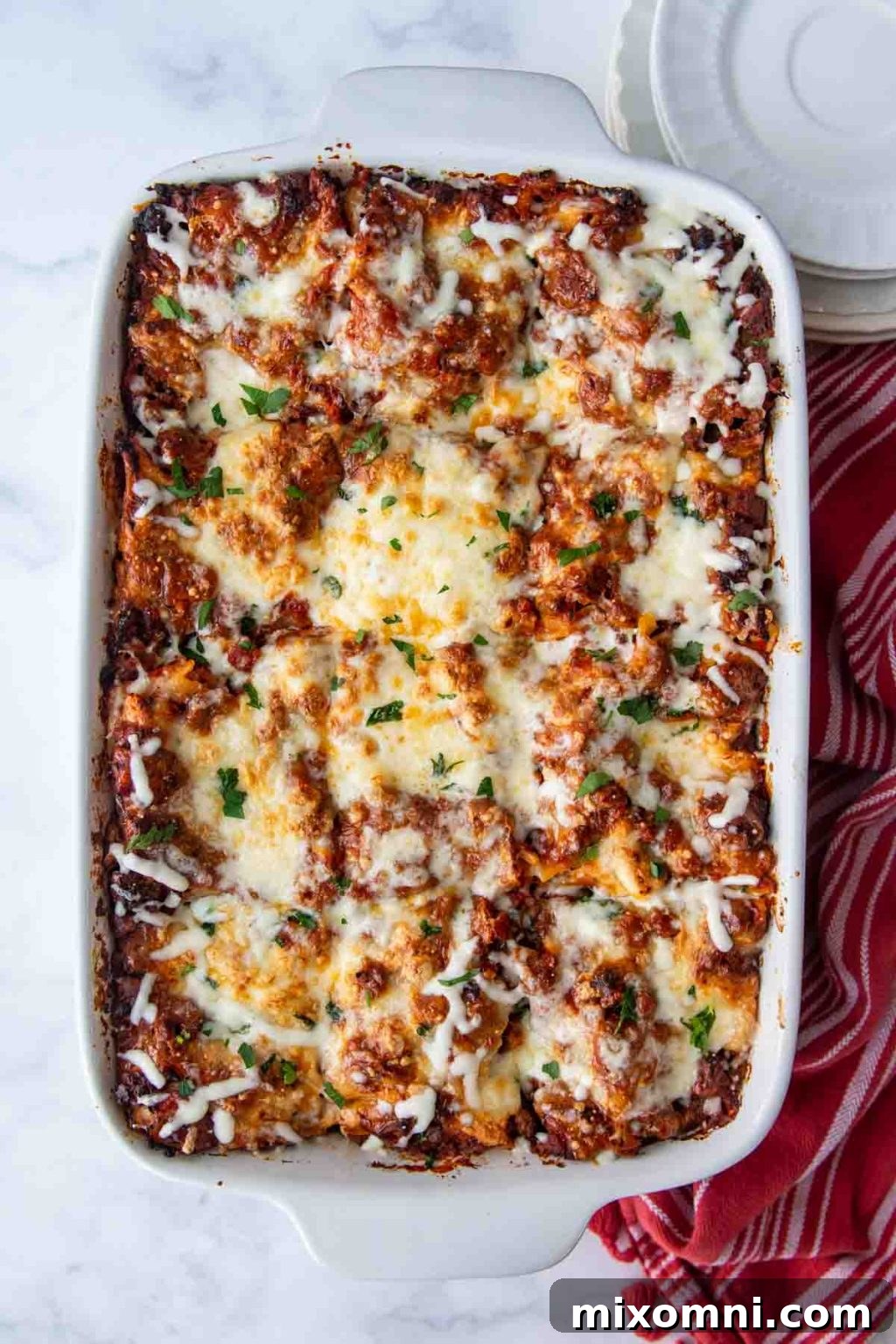
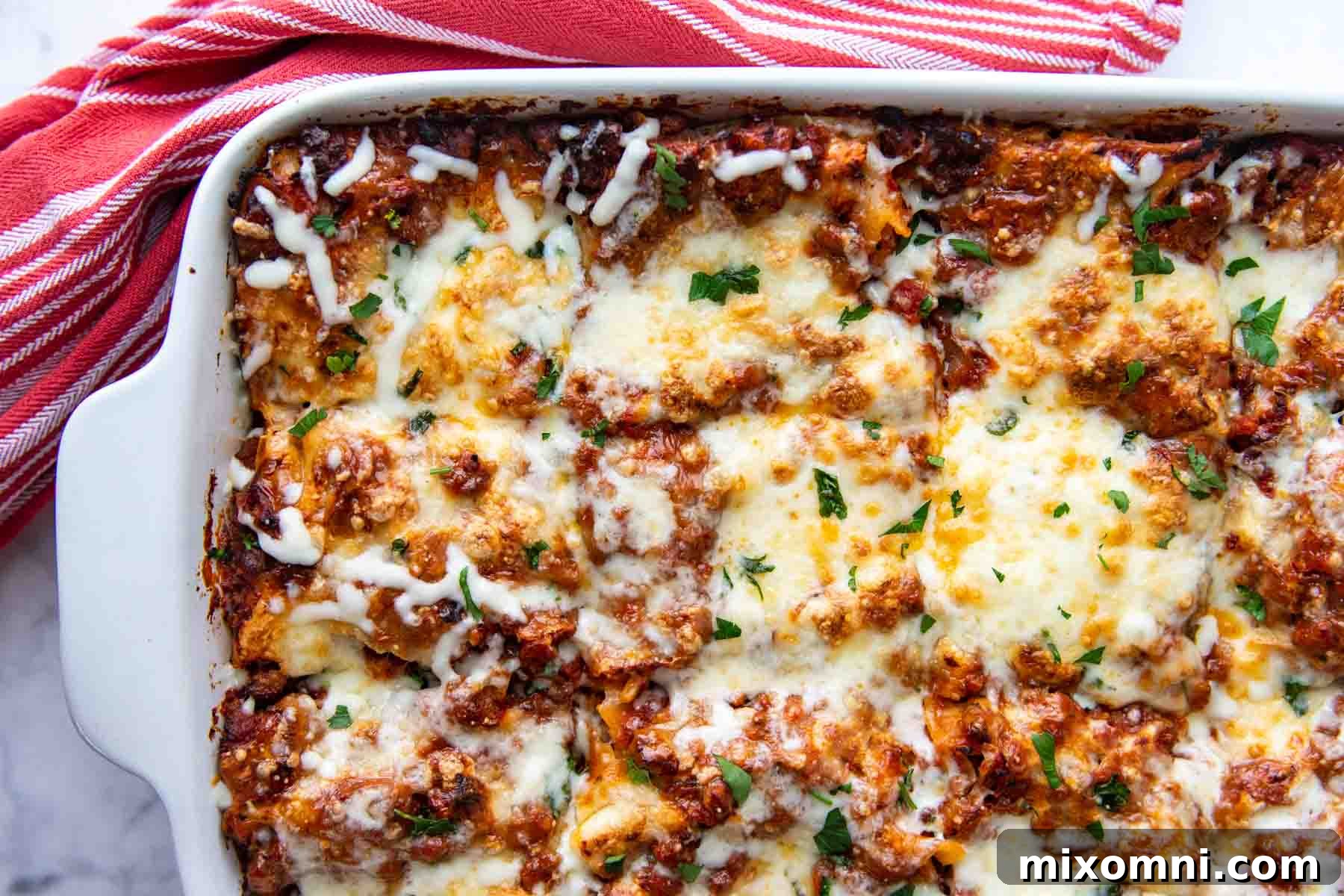
After 1 hour, carefully remove the foil. Return the lasagna to the oven and continue baking, uncovered, for another 15-20 minutes, or until the noodles are soft throughout and the cheese is beautifully melted, bubbly, and lightly golden. For that irresistible deep golden-brown, crispy top with deliciously browned cheese, place the lasagna under the broiler for a quick 1-2 minutes. Keep a very close eye on it during this stage to prevent burning, as broilers can be intense! Once out of the oven, allow the lasagna to stand for about 15 minutes before slicing and serving. This crucial resting period allows the layers to set and firm up, making for cleaner, more intact, and aesthetically pleasing slices.
Elevate Your Lasagna with Fresh Homemade Gluten-Free Pasta Sheets
For an unparalleled lasagna experience, consider making your own fresh gluten-free pasta sheets. Once I perfected my easy gluten-free fresh pasta recipe, it was a natural progression to incorporate it into my lasagna. The difference is truly heavenly, offering a tender texture and fresh flavor that store-bought noodles simply can’t match. This extra step, while requiring a little more effort, is incredibly rewarding and highly recommended for a truly gourmet touch!
- Prepare the Dough: To make enough fresh pasta for one lasagna recipe, you’ll need to prepare half a batch of my recommended gluten-free pasta dough. Follow the instructions for the dough carefully to ensure a pliable and workable consistency.
- Roll the Sheets: Using a manual or electric pasta maker, roll the dough into thin sheets. Aim for a thickness up to setting 3 on most standard pasta machines. This setting typically offers the perfect balance of tenderness and structural integrity needed for lasagna layers that will cook perfectly in the oven.
- Storage (if not using immediately): Carefully transfer the freshly rolled sheets to parchment-lined baking sheets, stacking them with additional parchment paper between layers to prevent them from sticking together. If you’re not assembling your lasagna right away, cover the stack securely with plastic wrap and refrigerate for up to 24 hours. For longer storage, the sheets can be frozen, wrapped tightly, for up to a month.
- Assemble with Fresh Sheets: When you’re ready to assemble, use the fresh sheets directly from the fridge, or thaw slightly if they were frozen. Use kitchen shears or a sharp knife to trim the dough to the exact size of your baking pan. Crucially, just like with our recommended store-bought oven-ready noodles, you can confidently skip the pre-boiling step with fresh gluten-free pasta. The moisture from the sauce and the covered baking method will cook them beautifully, absorbing flavors directly.
- Adjusted Baking Time for Fresh Pasta: Fresh noodles cook slightly faster and more delicately than dried ones. Adjust your baking time accordingly to prevent overcooking: Cover the lasagna securely with foil and bake for an initial 25 minutes. Then, carefully remove the foil and continue baking for an additional 25-30 minutes, or until the fresh pasta is tender and the cheese is bubbly and golden. For an extra crisp, golden top, finish with a quick minute or two under the broiler, watching carefully to prevent burning.
Mastering the Art of Lasagna Layering for Structural Success and Flavor Balance
Achieving perfectly structured and flavorful gluten-free lasagna layers is key to its success. Beyond just ingredients, how you assemble your lasagna makes a significant difference in the final outcome, ensuring each slice holds together beautifully and delivers a balanced bite. Follow these refined tips for impeccable layering:
- Preventing Noodle Overlap: As previously emphasized, since this recipe bypasses pre-boiling the lasagna sheets, it is absolutely crucial that they do not overlap. Overlapping noodles tend to fuse together during baking due to insufficient access to moisture, leading to uneven cooking and a tough, chewy, rather than tender, texture. Arrange them carefully in a single layer, breaking pieces if necessary to cover the pan without stacking them.
- The Essential Sauce Foundation: Always start with a generous, even layer of meat sauce at the bottom of your baking dish. This initial layer is vital as it provides the essential moisture and steam needed to begin cooking the bottom GF noodles evenly and prevents them from sticking firmly to the pan, ensuring a clean lift.
- Generous Top Coating is Non-Negotiable: Similarly, the final layer of sauce must fully cover the topmost noodles. Any exposed sections of pasta will inevitably become dry, hard, and unappetizing during baking. Ensure every inch of the top noodles is blanketed by sauce and then topped with cheese for both protection and a delicious golden finish.
- Technique for Even Ricotta Distribution: To prevent your gluten-free lasagna noodles from shifting or tearing while you spread the creamy ricotta filling, first distribute the ricotta in small, even dollops across the noodle layer. Then, gently and carefully spread it out to create a uniform layer using the back of a spoon or an offset spatula. This method minimizes pasta movement and ensures an even distribution of the delicious cheese mixture in every bite.
- Secure Foil Cover with Nonstick Spray: Before baking, spray the underside of a large sheet of aluminum foil with nonstick cooking spray. This simple yet effective step prevents the melting cheese from adhering to the foil, saving you from a messy cleanup and ensuring a beautiful, intact cheesy topping. Securely seal the foil around the edges of your baking dish to create a steamy, enclosed environment for the noodles to cook. For best results and peace of mind, use heavy-duty foil or a double layer of regular foil for extra protection against steam escape.
- Strive for Uniform Thickness in Layers: Consistency is key. Strive for relatively even thickness in all your layers – meat sauce, ricotta mixture, and cheese. This ensures that the lasagna cooks uniformly, and each bite delivers a perfectly balanced blend of flavors and textures, preventing any one component from overpowering another.
Craving This Deliciousness? Pin Our Gluten-Free Lasagna Recipe for Later!
Let’s be friends on Pinterest! I’m always sharing great recipes and gluten-free inspirations that you won’t want to miss!
Did you whip up this delicious gluten-free lasagna? We love hearing about your culinary successes and experiences! Please leave a star rating and comment below in the recipe card section. Your feedback is incredibly valuable, helping other home cooks discover and enjoy our recipes. I always make sure to respond personally to your comments! -Melissa
★
★
★
★
Gluten-Free Lasagna (Never Mushy, Foolproof!)

Melissa Erdelac
12 Servings
35 mins
1 hr 20 mins
1 hr 55 mins
Pin Recipe
Rate This Recipe
Ingredients
Meat Sauce
- 1 tablespoon olive oil
- 1 pound bulk sweet Italian sausage
- 1 pound lean ground beef
- 1 medium onion, chopped
- 2 cloves garlic, minced
- 2 (28) ounce cans crushed tomatoes
- 1 ½ tablespoons Italian seasoning
- 1 teaspoon light brown sugar
- ¼ teaspoon salt
- ¼ teaspoon ground pepper
Ricotta Filling
- 1 large egg, lightly beaten
- 16 ounces whole milk ricotta
- ½ cup freshly grated parmesan cheese
- ¼ teaspoon salt
- ¼ teaspoon ground pepper
Assembling Lasagna
- 10 ounce Barilla Gluten-Free Oven-Ready Lasagne Noodles, see recipe notes for fresh GF pasta dough option
- 4 cups freshly grated mozzarella cheese
Equipment
-
9X13 Baking Dish
-
Large Saute Pan
-
Cheese Grater
Instructions
Meat Sauce Preparation
-
Heat the olive oil in a large, deep sauté pan over medium heat. Add the bulk sweet Italian sausage, lean ground beef, chopped medium onion, and minced garlic. Cook thoroughly, breaking up the meat with a spoon, until it is fully browned and no longer pink. Drain off any accumulated excess fat to maintain a rich, non-greasy sauce.1 tablespoon olive oil,
1 pound bulk sweet Italian sausage,
1 pound lean ground beef,
1 medium onion,
2 cloves garlic -
Stir in the two 28-ounce cans of crushed tomatoes, 1 ½ tablespoons of Italian seasoning, 1 teaspoon of light brown sugar, ¼ teaspoon of salt, and ¼ teaspoon of ground pepper. Bring this mixture to a low simmer. Continue to cook, uncovered, for at least 30 minutes, stirring occasionally. This crucial simmering time allows the flavors to deepen and marry beautifully.2 (28) ounce cans crushed tomatoes,
1 ½ tablespoons Italian seasoning,
1 teaspoon light brown sugar,
¼ teaspoon salt,
¼ teaspoon ground pepper
Ricotta Filling Preparation
-
While your meat sauce is simmering, prepare the creamy ricotta cheese mixture. In a medium bowl, lightly beat the large egg. Add the 16 ounces of whole milk ricotta cheese, ½ cup of freshly grated parmesan cheese, ¼ teaspoon of salt, and ¼ teaspoon of ground pepper. Stir all the ingredients together until well combined and set the mixture aside.1 large egg, lightly beaten,
16 ounces whole milk ricotta,
½ cup freshly grated parmesan cheese,
¼ teaspoon salt,
¼ teaspoon ground pepper
Assembling and Baking Your Gluten-Free Lasagna
-
Preheat your oven to 350°F (175°C).
-
In a 9×13 inch baking pan, spread about 2 ½ cups of the rich tomato meat sauce evenly across the bottom. This forms the essential base. Carefully top this with 4 uncooked gluten-free lasagna noodles (if using Barilla, note that 3 larger noodles may cover the dish). IMPORTANT TIP: To avoid mushy or chewy textures, arrange the noodles without overlapping as much as possible. Stacked noodles will fuse together during baking, preventing them from becoming tender.10 ounce Barilla Gluten-Free Oven-Ready Lasagne Noodles
-
Evenly dollop half of the creamy ricotta mixture over the noodles, then gently spread it to create a uniform layer. Top this with 1 cup of freshly grated mozzarella cheese.
-
Repeat the layering: add another layer of gluten-free noodles, the remaining ricotta mixture, another 1 cup of mozzarella cheese, and then 2 cups of the savory meat sauce.
-
Place the remaining lasagna sheets on top, spread with the rest of the meat sauce, and generously finish with the remaining mozzarella cheese. Ensure that all the noodles are completely covered by sauce and cheese; this prevents them from drying out and becoming hard during baking.
-
Spray a large piece of foil with nonstick cooking spray on the side that will face the cheese. Cover the baking dish securely with the foil, creating a tight seal. Bake for 1 hour. This covered baking period allows the noodles to steam and cook perfectly without drying. After 1 hour, remove the foil.
-
Continue to bake the lasagna for an additional 15-20 minutes, or until the gluten-free noodles are tender throughout and the cheese is beautifully melted and bubbling. For a golden, crispy cheese topping, place the lasagna under the broiler for 2-3 minutes, watching it very closely to prevent burning. Once removed from the oven, let the lasagna stand for at least 10-15 minutes before slicing and serving. This resting period helps the layers set, making for cleaner, more appealing slices.
Helpful Notes & Pro Tips
Using Fresh Homemade Gluten-Free Noodles
- For this gluten-free lasagna recipe, you will need to prepare half a recipe of our gluten-free pasta dough.
- Roll the dough into thin sheets using a pasta machine, up to setting 3, which is ideal for lasagna.
- Transfer the freshly rolled sheets to parchment-lined baking sheets, stacking them with more parchment in between to prevent sticking. If not assembling immediately, cover tightly with plastic wrap and refrigerate for up to 24 hours, or freeze for longer storage.
- When ready to assemble, use the fresh sheets directly (or thaw slightly if frozen). Use kitchen shears to cut the dough to fit your pan. Just like store-bought oven-ready noodles, there’s no need to pre-boil fresh gluten-free pasta for this recipe.
- Baking time for fresh noodles will be slightly shorter. Cover with foil and bake for 25 minutes. Then, remove the foil and bake for an additional 25-30 minutes, or until tender. Finish with a quick broil if you desire a golden top.
Make-Ahead, Freezing, and Reheating Instructions
Make-Ahead Lasagna:
This gluten-free lasagna is an excellent choice for make-ahead meals, perfect for busy weeknights, holiday gatherings like Christmas, or when hosting company. The meat sauce can be prepared up to three days in advance and stored in an airtight container in the refrigerator. Alternatively, the sauce freezes beautifully for up to 3 months.
You can assemble the entire lasagna up to a day before baking. After layering all components, cover the pan securely with foil and refrigerate. When you’re ready to bake, let the lasagna sit at room temperature for up to an hour to take the chill off, then bake according to the recipe directions. This helps ensure even cooking.
Freezing Gluten-Free Lasagna:
For long-term meal planning, assemble the lasagna as directed but freeze it unbaked. To prevent freezer burn and ice crystals, wrap the entire baking dish securely in several layers of plastic wrap, followed by heavy-duty aluminum foil. It can be frozen for up to three months.
To bake from frozen, thaw the lasagna overnight in the refrigerator. Once thawed, let it sit at room temperature for about an hour before baking as per the recipe instructions. This ensures the noodles absorb enough moisture during baking.
Reheating Leftover Lasagna:
Store any leftover gluten-free lasagna in an airtight container in the refrigerator for up to three days. For individual slices, the microwave is your best friend. Heat at 50% power until almost heated through, then finish at full power until warmed completely to avoid drying it out.
Leftover slices can also be frozen for future quick meals. Wrap each slice tightly in plastic wrap, then transfer them to a freezer-safe ziplock bag. Freeze for up to three months.
Thaw frozen slices overnight in the fridge and reheat as described above in the microwave. If you have a larger quantity of leftovers to reheat, place them in an oven-safe baking dish, cover securely with foil, and warm in a 325ºF (160°C) oven until hot throughout (approximately 20-30 minutes, depending on quantity).
Did you make this recipe?
Please leave a star rating and review below. It helps others when searching for recipes and I LOVE feedback!