
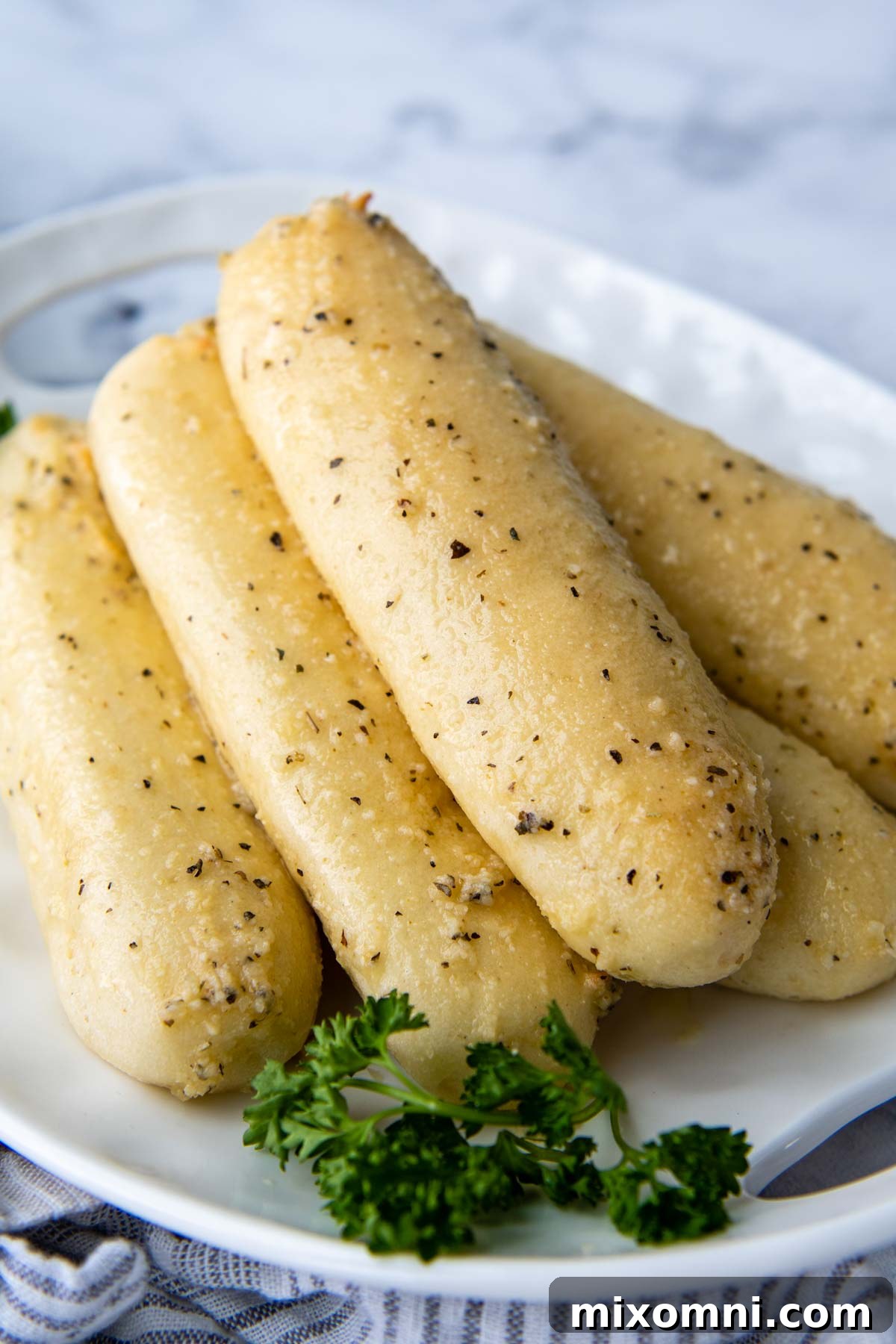
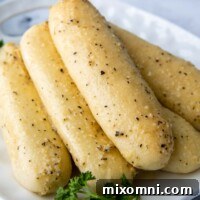
Prepare to forget every other breadstick you’ve ever tasted, because this recipe for the **ultimate homemade gluten-free breadsticks** will make you question how you ever lived without them! Boasting an irresistibly soft texture and a tantalizing garlic topping, these breadsticks aren’t just gluten-free (with a simple dairy-free option), but they also feature the most straightforward prep and baking method imaginable. Even if you’re a complete novice in the gluten-free kitchen, you’ll achieve delicious, restaurant-quality results every single time. Get ready to transform your dinner table with these amazingly soft, garlic-infused delights.
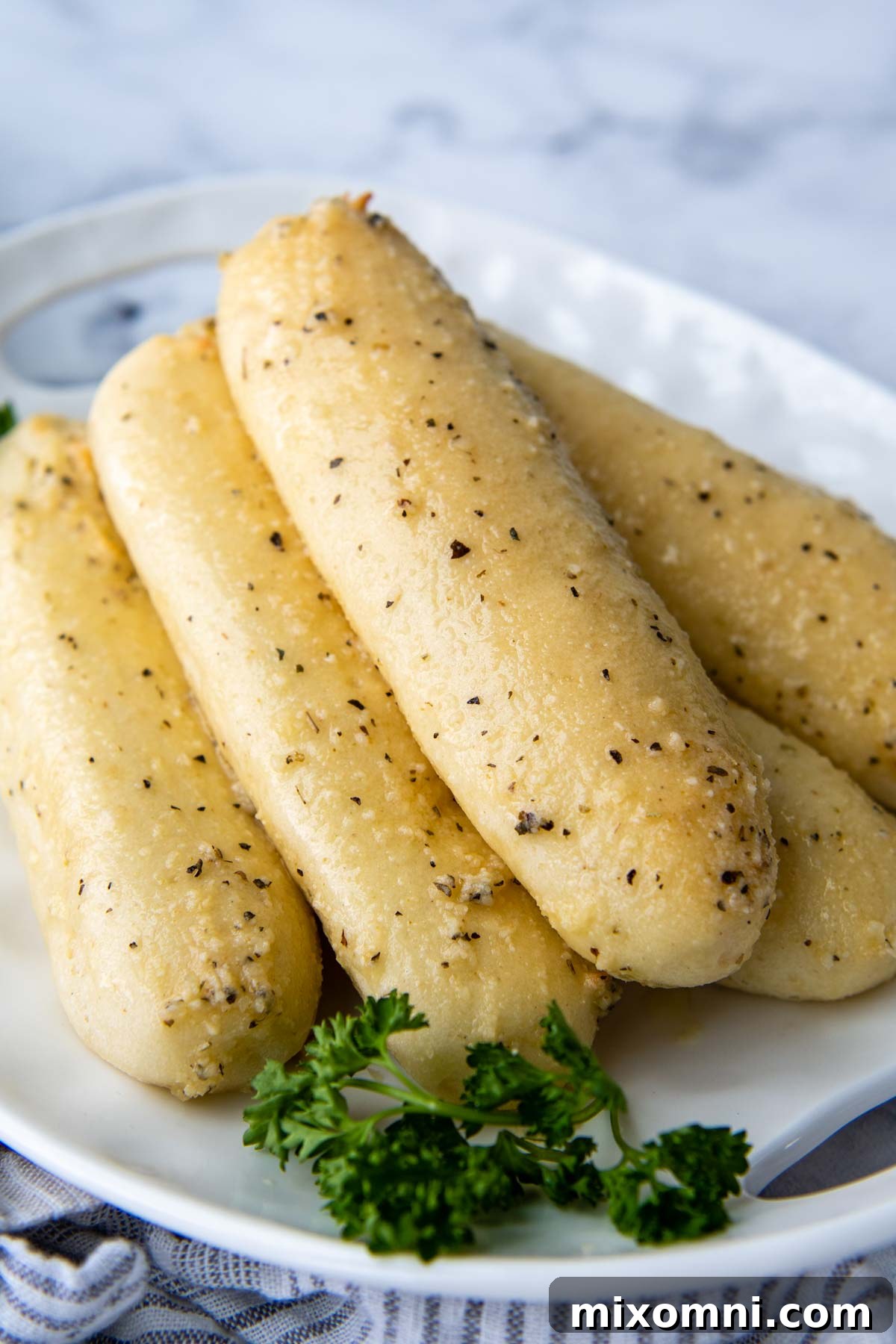
Experience Olive Garden Quality, Gluten-Free Style!
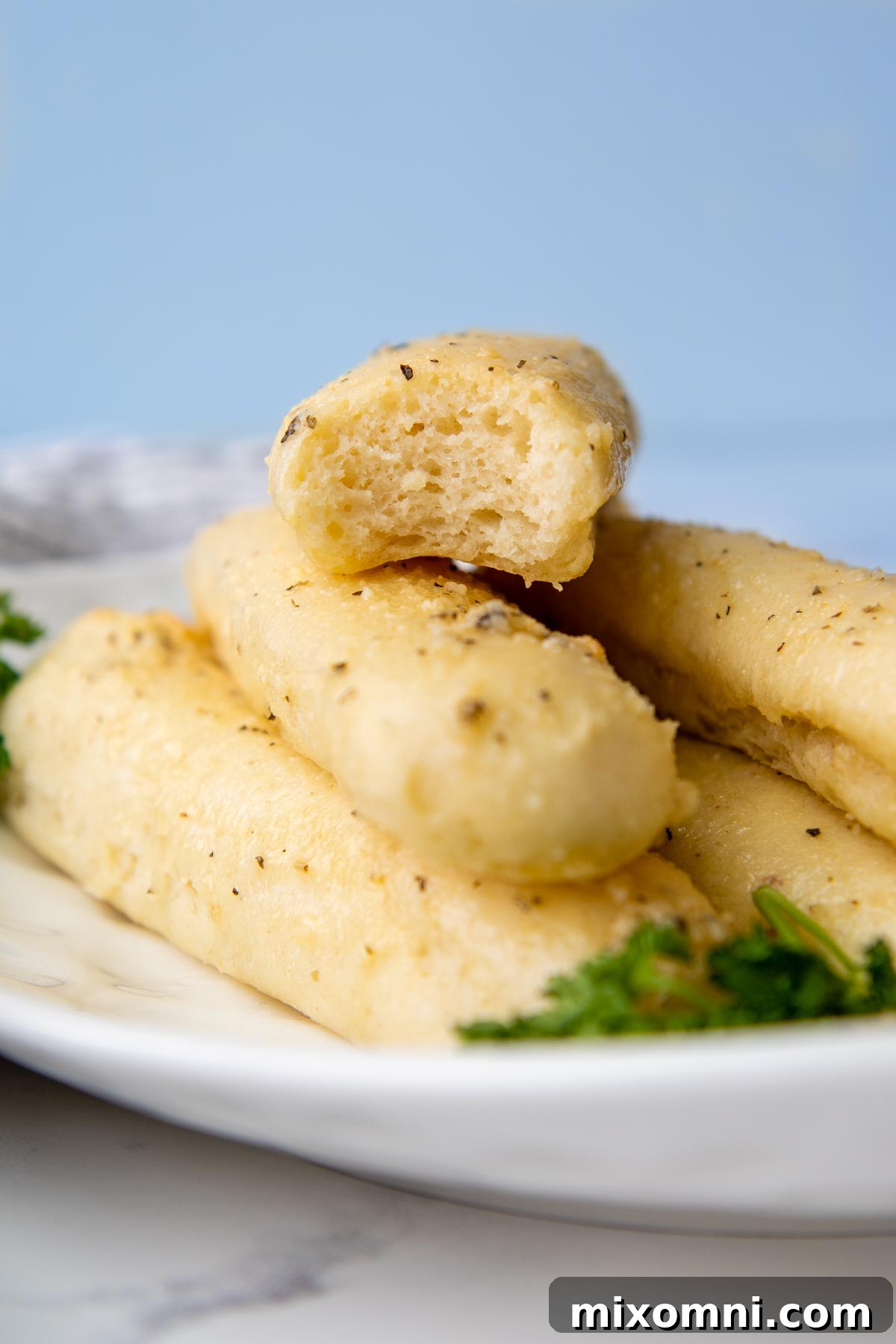
Craving those warm, soft breadsticks reminiscent of Olive Garden’s famous unlimited basket? Now you can enjoy them again, completely gluten-free! This recipe consistently produces breadsticks so remarkably authentic and flavorful that my own family, accustomed to traditional bread, couldn’t tell they were gluten-free. They possess that perfect golden crust, a delightful chewiness, and an airy, tender interior that makes them truly addictive and a guaranteed crowd-pleaser.
The magic of this recipe lies in its inspired simplicity, drawing the best elements from two popular favorites: our acclaimed gluten-free bread recipe and our savory gluten-free garlic knots. You’ll find yourself reaching for common, everyday kitchen staples, eliminating the need for any exotic or hard-to-find ingredients. What’s even better is the incredible speed at which these come together. Thanks to a brief rise time, you can go from measuring ingredients to savoring warm, parmesan-garlic breadsticks in less than 45 minutes. This makes them an ideal choice for busy weeknights, last-minute gatherings, or whenever a craving for fresh, homemade bread strikes.
Crazy easy! My non-GF husband has declared these the “go-to bread for company”, so that’s as big of a win as I could ask for.
—Caitlyn
Feedback like Caitlyn’s highlights precisely why these breadsticks are a must-try. They don’t just cater to a gluten-free diet; they stand on their own as simply exceptional breadsticks. Their fluffy texture, rich flavor, and incredible ease make them suitable for any occasion, proving that gluten-free doesn’t mean compromising on taste or quality. Prepare to fool your taste buds and impress your guests with these secretly gluten-free wonders.
Essential Ingredients for Perfect Gluten-Free Breadsticks
One of the many joys of these gluten-free garlic breadsticks is their reliance on ingredients you likely already have in your pantry. This convenience makes them an ideal last-minute side dish for a wide array of meals, from a hearty never-mushy gluten-free lasagna or a comforting bowl of soup, to a classic baked ziti, fresh salad, our tender homemade gluten-free meatballs, or alongside a quick 10-minute silky gluten-free alfredo sauce. Let’s delve deeper into the role each key ingredient plays in crafting these perfect breadsticks:
- Gluten-Free Flour Blend: The foundation of any great gluten-free bread is the right flour blend. The quality of your chosen blend can truly make or break the final texture and rise of your breadsticks. I’ve conducted extensive testing with various commercial blends to ensure this recipe’s consistent success. While many options exist, my unequivocal top recommendation for all gluten-free baking, and especially for these breadsticks, is Cup4Cup. This blend consistently delivers superior texture, excellent rise, and a delightful crumb. A significant advantage of Cup4Cup is that it typically includes xanthan gum, which is a crucial ingredient in gluten-free baking. Xanthan gum acts as a binder, providing the elasticity and structure that gluten would naturally offer in traditional bread. If you opt for a different blend, always check the ingredient list. If it doesn’t contain xanthan gum, you’ll need to add approximately 1/2 teaspoon per cup of flour to achieve similar results.
- Psyllium Husk Powder: This remarkable ingredient is nothing short of a game-changer for gluten-free dough. My experiments with and without psyllium husk powder clearly demonstrate its benefits. While it doesn’t alter the taste, its inclusion significantly improves moisture retention, resulting in a breadstick that remains soft and fresh for longer. More importantly, it adds crucial elasticity and structural integrity to the dough, preventing crumbling and giving the breadsticks a satisfying chew. A crucial tip for bakers: choose a lighter-colored brand of psyllium husk powder. Darker varieties can, unexpectedly, impart a faint purplish hue to your baked goods. Although this color change is entirely cosmetic and doesn’t affect the taste, using a light-colored brand ensures your breadsticks look as appealing as they taste. You can find my preferred brand linked for your convenience, along with more information on its benefits (What is psyllium husk?).
- Instant (Rapid Rise) Yeast: For optimal efficiency and consistent activation, instant or rapid rise yeast is the star of this recipe. Unlike active dry yeast, instant yeast can be mixed directly with dry ingredients, eliminating the need for prior activation in warm water. This saves you a step and significantly speeds up the preparation process. If active dry yeast is your only option, remember to activate it first: dissolve it in the warm water (along with a pinch of the granulated sugar) for 5-10 minutes, until it becomes foamy, indicating it’s alive and ready to work. For best results and to extend its shelf life, consider purchasing yeast in bulk and storing it in your refrigerator.
- Eggs (Room Temperature): The temperature of your eggs might seem like a small detail, but it plays an important role in the dough’s consistency and the breadsticks’ final texture. Room temperature eggs emulsify more easily with other ingredients, creating a smoother, more uniform dough. Cold eggs can stiffen the batter and prevent proper mixing and rise. To quickly bring eggs to room temperature, simply place them in a bowl of warm (not hot) water for about 5 minutes before you’re ready to use them.
- Olive Oil: Olive oil contributes significantly to the breadsticks’ tender crumb and imparts a subtle, pleasing flavor that complements the garlic topping beautifully. It also helps keep the breadsticks moist. If olive oil is not your preference or not available, you can easily substitute the same amount of vegetable oil for a more neutral flavor profile, or use melted unsalted butter for an even richer, more indulgent taste. Each substitution offers a slightly different nuance, allowing you to customize the flavor to your liking.
Let’s Bake These Delicious Breadsticks Together!
(Below, you’ll find detailed, step-by-step instructions accompanied by helpful photos. For precise ingredient measurements and the complete, printable recipe card, please scroll down to the bottom of the page.)
Effortless “Dump and Mix” Dough Preparation
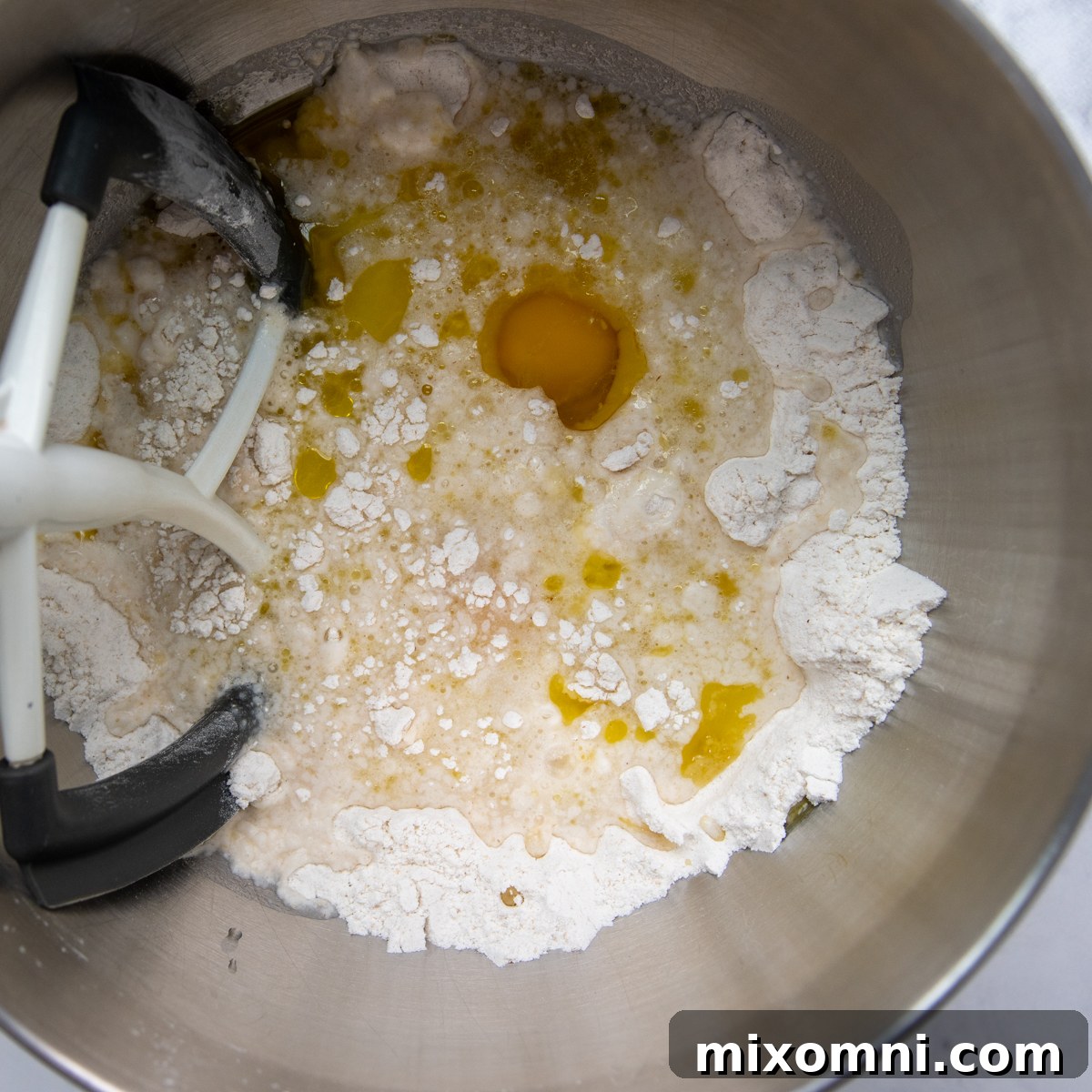
One of the most appealing aspects of this gluten-free breadstick recipe is that it requires absolutely no kneading! This saves you time and effort, making the entire baking process incredibly straightforward. To begin, gather all your dry ingredients – the gluten-free flour blend, granulated sugar, instant rapid rise yeast, psyllium husk powder, baking powder, and salt – and add them into the large bowl of a stand mixer. Ensure your mixer is fitted with the paddle attachment. Mix these dry ingredients on low speed for about a minute, just enough to thoroughly combine them and ensure even distribution.
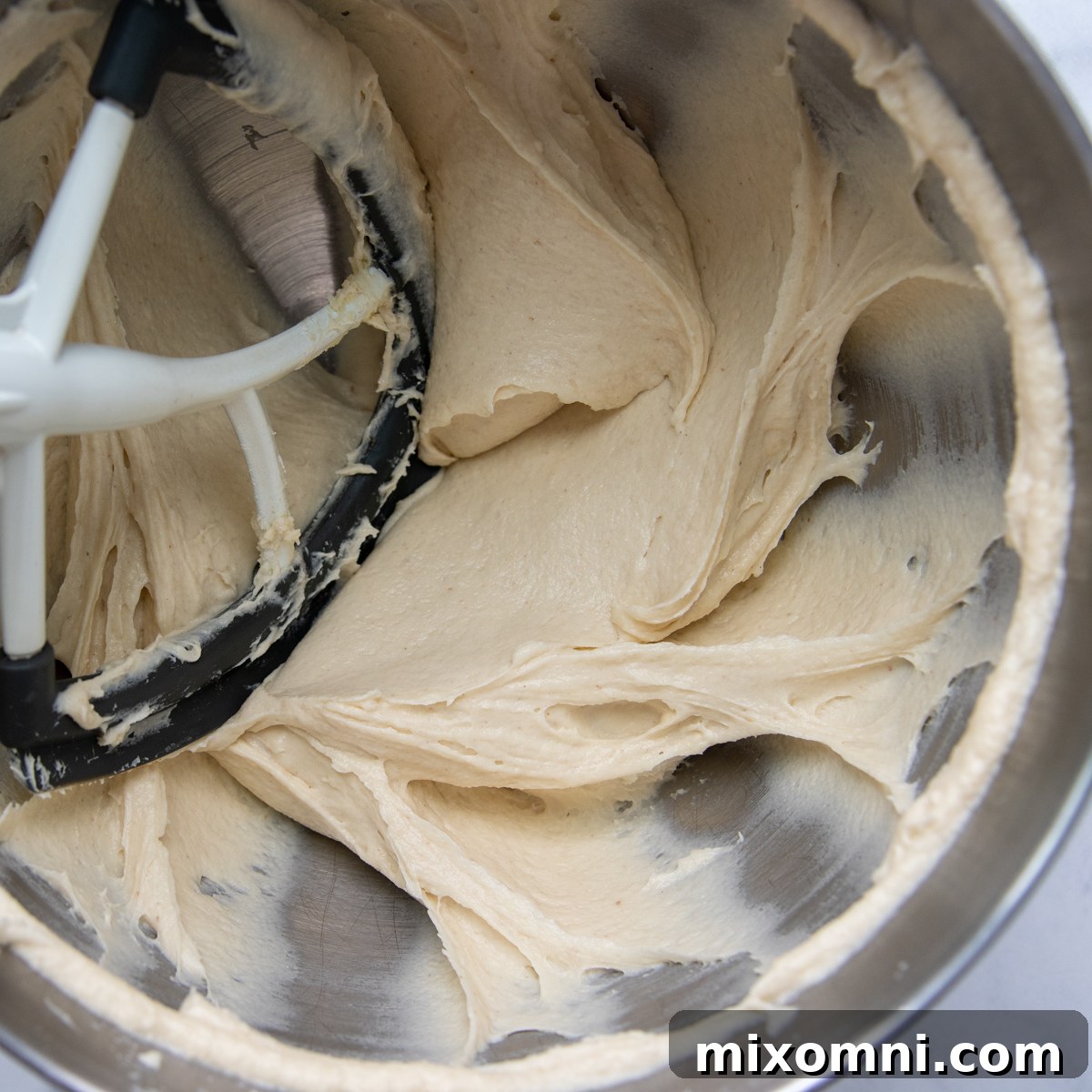
Next, it’s time to introduce the wet ingredients. Add the warm water (ensure it’s around 110°F or 43°C to properly activate the yeast without killing it), the room temperature eggs, and the olive oil to the dry mixture. Start mixing on low speed, allowing the liquids to gradually incorporate with the dry ingredients. Continue mixing on low for about 1 minute, until a rough dough begins to form. Then, increase the mixer speed to medium and beat the dough continuously for a full 5 minutes. This prolonged beating is a critical step for gluten-free baking, as it thoroughly hydrates the various starches in the flour blend and the psyllium husk, which in turn develops the necessary structure and elasticity for wonderfully soft and airy breadsticks.
Upon completion of mixing, the dough will have a distinctive, thick batter-like consistency, very similar to brownie batter. This is entirely normal and exactly what you’re aiming for! Unlike traditional bread doughs, which are firm and pliable for kneading, this looser batter is key to achieving the incredibly soft texture of these gluten-free breadsticks. Since we will be piping rather than rolling and shaping, a stiff dough is neither necessary nor desirable.
Simple Shaping Method and Perfect Baking
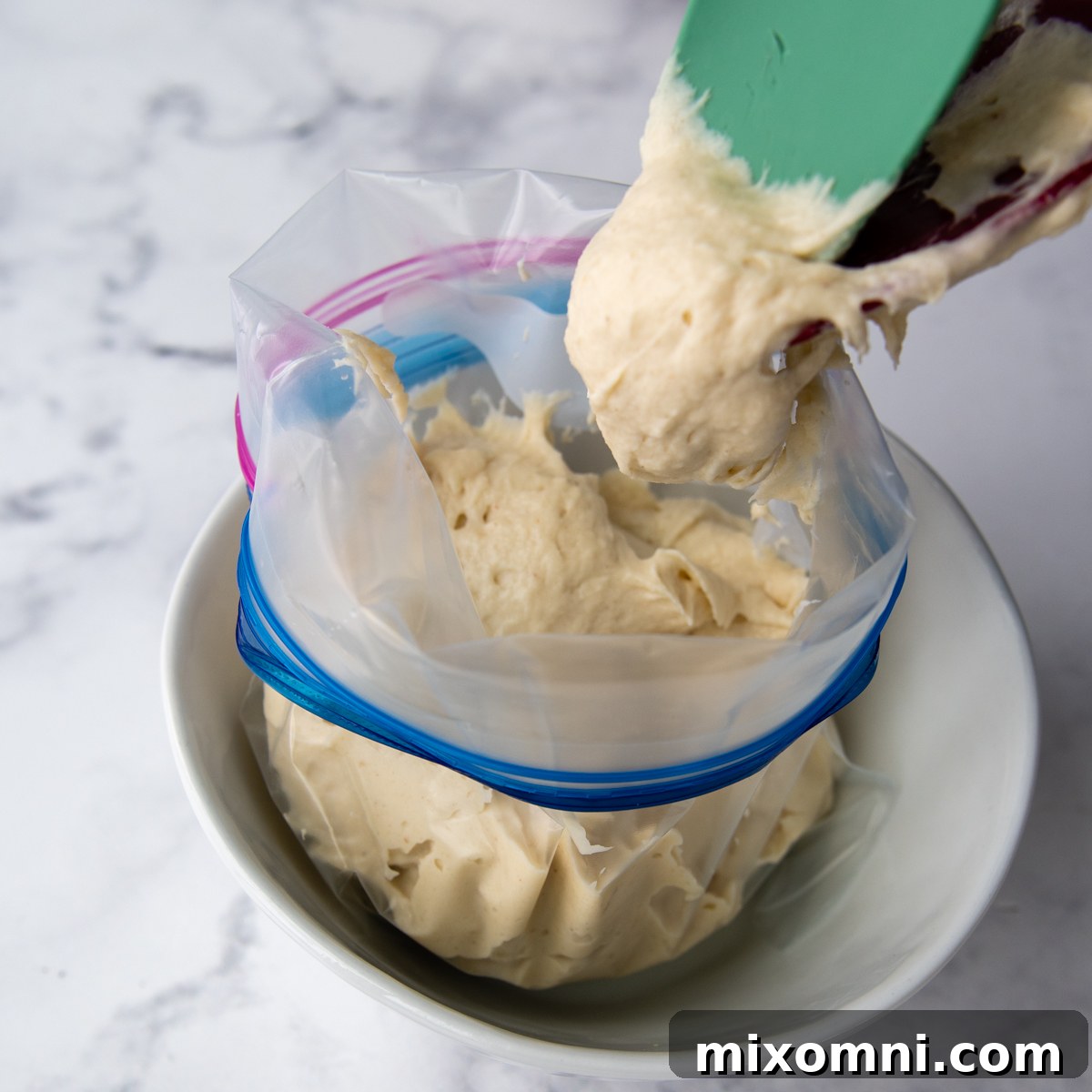
While a looser dough is the secret to exceptionally soft breadsticks, it does require a smart method for precise shaping. Here’s a clever trick: grab a gallon-sized Ziploc bag and place it into a medium-sized bowl, folding the top edges of the bag over the rim of the bowl to create a stable, open vessel. Using two silicone spatulas or sturdy spoons, carefully scrape all the prepared dough into the bottom of the bag. Once the dough is in, push it down towards one corner, gently squeeze out any excess air from the top, and then twist the top of the bag securely closed. There’s no need to zip it; the twist will keep the dough contained.
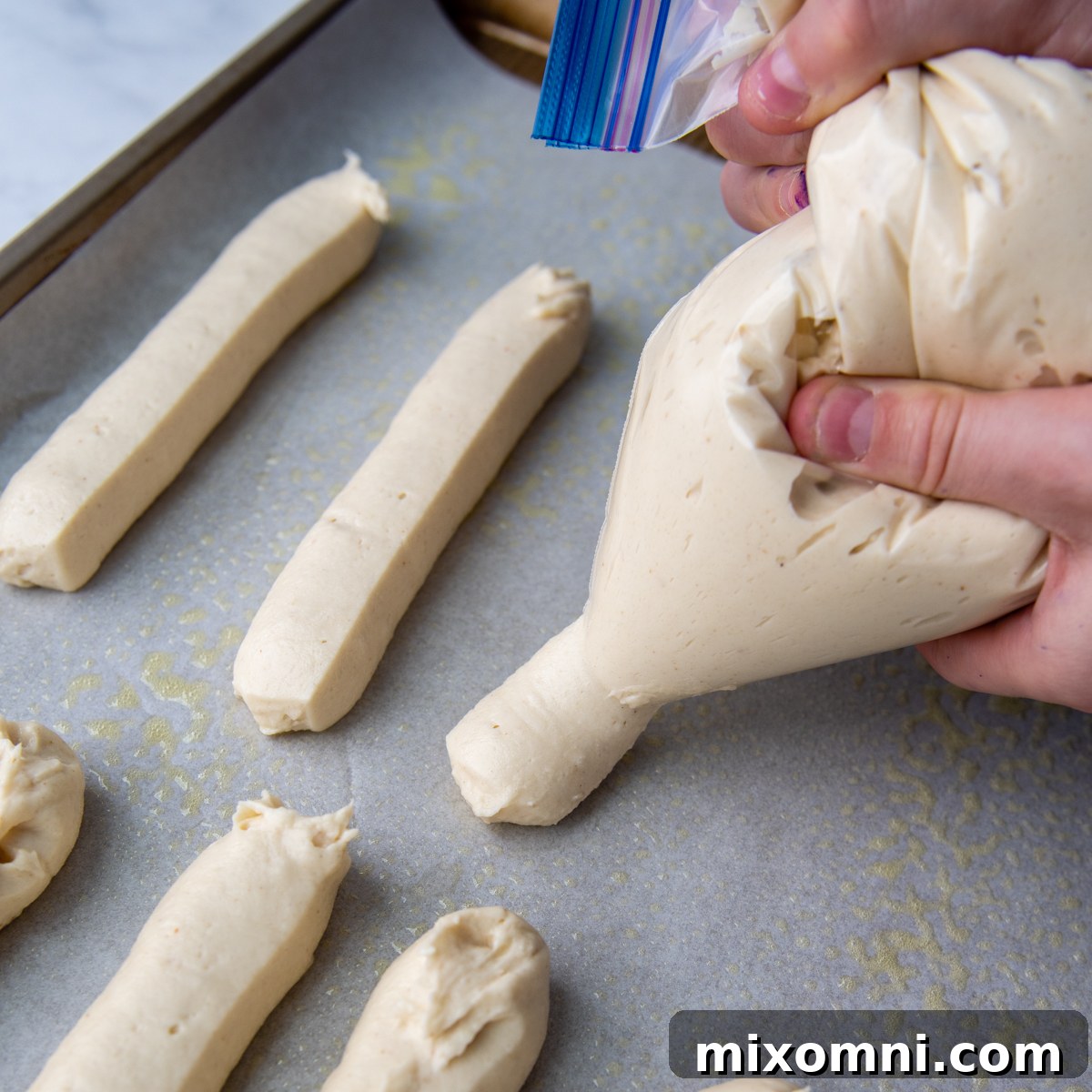
Now, to transform your Ziploc into a makeshift piping bag, snip off one of the bottom corners of the bag. Aim for an opening of approximately 1 inch. It’s always better to start with a smaller cut, as you can easily snip off a bit more if you find the opening is too small for the dough to pass through smoothly. Piping too large of an opening will result in overly thick breadsticks. Once your piping bag is ready, gently pipe 6-inch long breadsticks onto a baking sheet that has been lined with parchment paper and lightly sprayed with nonstick cooking spray. Ensure you leave about 2 inches of space between each breadstick to allow for proper rising and airflow during baking. Depending on the size of your baking sheets, you may require a second sheet to accommodate the entire batch of dough.
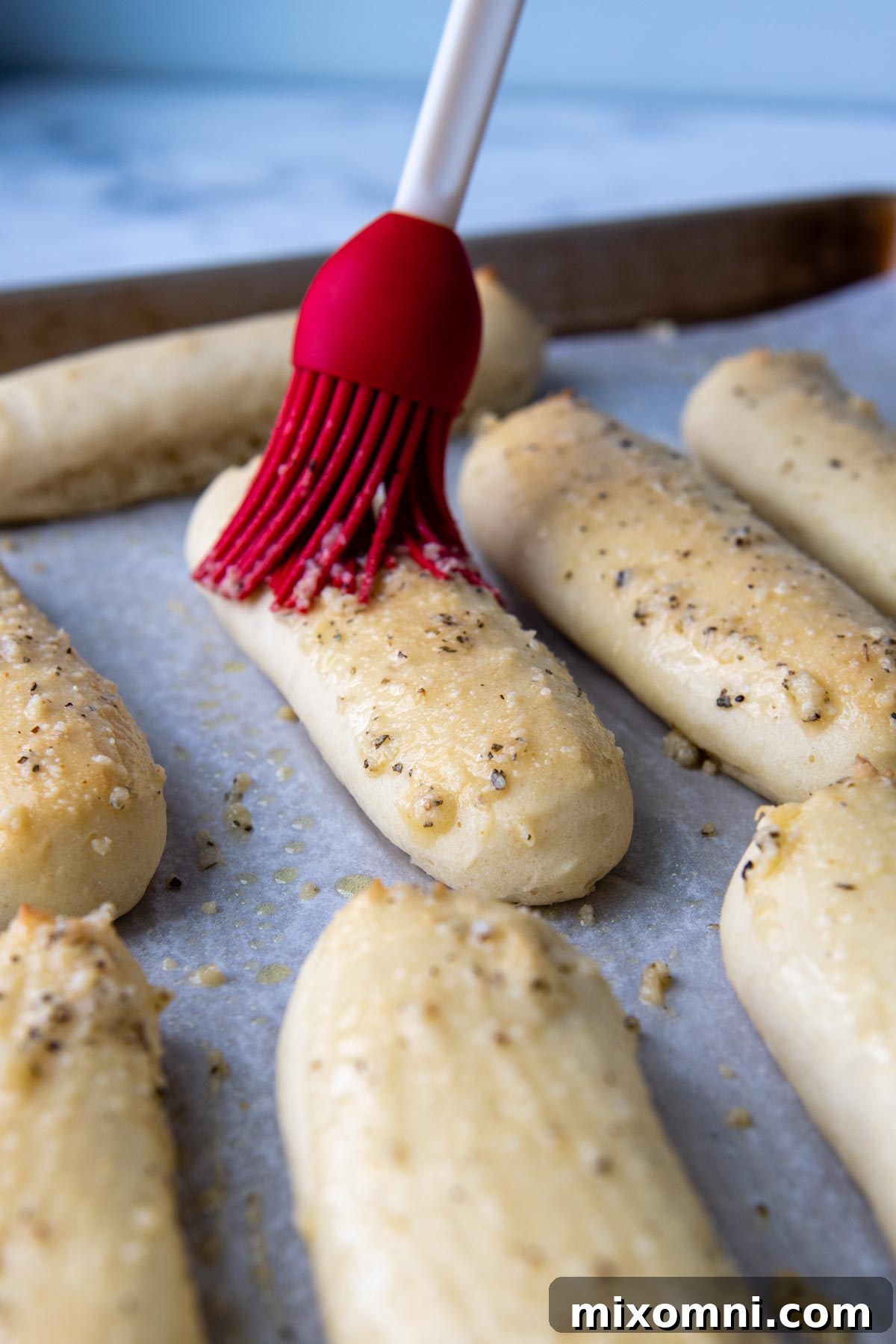
After piping, set your baking sheet(s) in a warm, draft-free location for about 15 minutes to allow the breadsticks to undergo a brief but important rise. During this time, preheat your oven to 375°F (190°C). Once the oven is ready and the breadsticks have risen slightly, bake them for 15-17 minutes, or until they achieve a beautiful golden-brown color on the bottom and sides. While your breadsticks are baking, quickly prepare your luscious garlic butter topping. The moment the hot, fragrant breadsticks emerge from the oven, immediately and generously brush them with the prepared topping. Serve them warm for the absolute best texture and flavor, or transfer them to a wire rack to cool completely before storing.
Irresistible Parmesan Garlic Topping & Creative Alternatives
The signature parmesan garlic topping for these breadsticks is crafted to capture the essence of your favorite pizzeria’s famous garlic knots, delivering a symphony of savory parmesan cheese and aromatic seasonings. However, the inherent versatility of these soft and tender breadsticks means you have endless opportunities to customize their flavor profile, perfectly suiting any meal or personal preference!
The foundational step for any topping is always to generously brush the hot, freshly baked breadsticks with melted butter or olive oil. This not only infuses them with rich flavor but also creates the perfect surface for seasonings to adhere. From there, your creativity can take over! Consider adding a pinch of fragrant dried oregano or basil for an Italian flair, a sprinkle of smoky paprika for warmth and depth, or even a touch of red pepper flakes if you enjoy a subtle kick. For those who love to dip, these breadsticks are a dream come true! For an array of incredible gluten-free dip ideas, you might enjoy exploring our easy recipe for gluten-free soft pretzels, which includes fantastic options that pair wonderfully with these garlicy delights.
For individuals adhering to a dairy-free diet, fear not! Crafting equally delicious breadsticks is wonderfully simple. For the garlic topping, merely omit the grated parmesan cheese and substitute the melted butter with an equivalent amount of olive oil or a plant-based butter alternative. To replicate the savory, umami notes typically provided by parmesan, nutritional yeast is an outstanding dairy-free alternative that delivers a similar cheesy essence. Beyond these modifications, I’ve successfully experimented with various other dairy-free toppings, including toasted sesame seeds for a pleasant nutty crunch, a generous sprinkle of everything bagel seasoning for a complex blend of flavors, or simply a fragrant dusting of dried herbs like rosemary and thyme. All these options ensure a satisfying and flavorful dairy-free and gluten-free breadstick experience for everyone to enjoy.
Do I Need A Stand Mixer for Gluten-Free Breadsticks?
While a stand mixer is not an absolute necessity for this recipe, it is **highly recommended** as it significantly simplifies and speeds up the preparation process. The dough for these gluten-free breadsticks is a thicker batter, and it benefits immensely from the consistent and powerful mixing action that a stand mixer provides. This is especially true during the crucial 5-minute beating stage, which is vital for properly hydrating the gluten-free starches and developing the optimal texture for soft and airy breadsticks.
If you don’t have access to a stand mixer, you *can* still make these breadsticks using a powerful handheld mixer. However, be prepared for a more strenuous task. The density and volume of the dough will put a considerable strain on both your mixer and your arm. You might need to pause frequently to allow your mixer to cool down and to manually scrape down the sides of the bowl more often to ensure all ingredients are thoroughly incorporated. Another excellent alternative, if available, is a bread maker with a dough-mixing cycle. Many bread makers are adept at handling thick doughs and can effectively mix and beat the ingredients, yielding results comparable to a stand mixer.
The Best Way to Determine When Your Breadsticks Are Perfectly Baked
Baking gluten-free bread, including these delightful breadsticks, can sometimes be a bit deceptive. Often, gluten-free baked goods can “look” done on the outside while still being undercooked and gummy on the inside. To consistently achieve perfectly soft, fluffy, and thoroughly baked breadsticks, I **strongly recommend** using an instant-read thermometer to check their internal temperature. This is a critical step for success with any recipe in my gluten-free bread recipe collection.
If you remove the breadsticks from the oven prematurely, the liquids within the dough won’t have had sufficient time to fully evaporate. This leads to that undesirable gummy, dense, and slightly unpleasing texture. For these gluten-free breadsticks, the ideal internal temperature should register between 195-205ºF (90-96ºC). A high-quality instant-read thermometer, such as a Thermoworks Thermapen, allows you to quickly and accurately check the temperature with minimal heat loss from the oven, ensuring your bread retains its warmth and continues baking evenly. Investing in such a tool is truly beneficial for consistent baking results and is one of my most cherished and indispensable kitchen tools for mastering gluten-free baking.
Don’t Miss Out! Pin This Recipe Now!
Let’s connect on Pinterest! I’m always sharing delicious and inspiring recipes!
Did you try this recipe? I’d love to hear from you! Your feedback helps others discover amazing recipes. Please leave a star rating and comment below the recipe card to share your experience. I always make sure to respond to every comment! -Melissa
★★★★★
4.74 stars (88 ratings)
Softest Gluten-Free Breadsticks (Impossibly Easy)

Melissa Erdelac
Prep Time: 20 mins
Cook Time: 15 mins
Total Time: 35 mins
This recipe for the best homemade gluten-free breadsticks will make you forget about those soft Olive Garden breadsticks entirely! This incredibly easy recipe, complete with a savory garlic topping, is not only gluten-free (and offers a dairy-free alternative), but it also employs the simplest preparation and baking methods, ensuring success for even a beginner GF baker.
Pin Recipe
Recipe Video Guide
Watch the full recipe video for a visual guide to making these delicious gluten-free breadsticks.
Ingredients
For the Breadsticks:
- 3 cups (438 g) gluten-free all-purpose flour (Cup4Cup gluten-free flour highly recommended)
- 2 tablespoons (25 g) granulated sugar
- 1 packet (7 g or 2 ½ tsp) instant rapid rise yeast
- 1 tablespoon (11 g) psyllium husk powder (essential for moisture & structure)
- 1 teaspoon baking powder
- 1 teaspoon salt
- 1 ½ cups (360 g) warm water (110°F / 43°C)
- 2 large eggs, room temperature
- ¼ cup (53 g) olive oil
For the Garlic Parmesan Topping:
- 1 ½ tablespoons (21 g) melted butter (see notes for dairy-free option)
- 2 tablespoons grated parmesan cheese (see notes for dairy-free option)
- ¼ teaspoon garlic powder
- ¼ teaspoon kosher salt or sea salt
- ¼ teaspoon Italian seasoning
Equipment
- Stand Mixer with paddle attachment
- Baking sheets
- Parchment paper
- Gallon-sized Ziploc bag
- Silicone spatulas or spoons
- Pastry Brush
- Instant-read thermometer (optional, but highly recommended)
Instructions
- Combine Dry Ingredients: In the large bowl of a stand mixer fitted with the paddle attachment, combine the gluten-free flour, granulated sugar, instant rapid rise yeast, psyllium husk powder, baking powder, and salt. Mix on low speed for about 1 minute until all dry ingredients are thoroughly combined.
- Add Wet Ingredients: Pour in the warm water (ensure it’s approximately 110°F or 43°C), room temperature eggs, and olive oil. Mix on low speed for about 1 minute, just until the dough starts to come together into a shaggy mass.
- Beat the Dough: Increase the mixer speed to medium and continue beating for a full 5 minutes. Periodically stop the mixer to scrape down the sides of the bowl and the paddle attachment, ensuring all ingredients are fully incorporated. The final dough will have a thick, brownie-batter-like consistency.
- Prepare for Piping: Line a baking sheet with parchment paper and lightly spray it with nonstick cooking spray. Place a gallon-sized Ziploc bag into a medium bowl, folding the top edges of the bag over the bowl’s rim to keep it open. Use two silicone spatulas or sturdy spoons to transfer all the dough into the bottom of the bag. Push the dough down, squeeze out any excess air, and twist the top of the bag securely closed.
- Pipe Breadsticks: Snip off about a 1-inch corner from the bottom of the Ziploc bag to create a makeshift piping bag. Be mindful not to cut too large of an opening. Pipe 6-inch long breadsticks onto the prepared baking sheet, leaving approximately 2 inches of space between each. You may need a second baking sheet to accommodate the entire batch.
- Rise Time & Preheat Oven: Place the baking sheet(s) in a warm, draft-free location and allow the breadsticks to rise for about 15 minutes. During this time, preheat your oven to 375°F (190°C).
- Bake: Bake the breadsticks for 15-17 minutes, or until they are lightly golden brown on the bottom. For optimal doneness, use an instant-read thermometer to confirm the internal temperature reaches between 195-205°F (90-96°C).
- Apply Topping & Serve: While the breadsticks are baking, quickly combine the melted butter, grated parmesan cheese, garlic powder, kosher salt, and Italian seasoning to create the topping. Immediately upon removing the hot breadsticks from the oven, generously brush the prepared topping over each one. Serve them warm for the best taste and texture, or transfer them to a wire rack to cool completely before storing.
Notes
Dairy-Free Option
To prepare a dairy-free version of the garlic topping, simply omit the grated parmesan cheese. Replace the melted butter with an equal amount of olive oil or your preferred plant-based butter alternative. For a similar savory, cheesy flavor, nutritional yeast can be used as an excellent substitute for parmesan.
Best Tips and Tricks for Success
- Corner Snipping Precision: The size of the corner you snip from the Ziploc bag is quite important! When I first made these, I cut too much, resulting in giant breadsticks. It’s always better to start with a smaller opening; you can easily snip off a bit more if you find the dough isn’t piping smoothly. Remember, the breadsticks will also expand slightly during baking.
- Immediate Topping Application: For the most flavorful and glistening breadsticks, brush the garlic butter topping onto them immediately after they come out of the hot oven. The heat helps the butter and seasonings melt and absorb beautifully.
- Serving Warm: These breadsticks are undeniably at their absolute best when served warm. If you need to prepare them ahead of time, simply wrap cooled breadsticks in a paper towel and microwave for 10-15 seconds to gently rewarm them.
- Make-Ahead & Freezing: For future enjoyment, baked and completely cooled breadsticks can be frozen. Wrap each breadstick individually in plastic wrap or aluminum foil to prevent freezer burn, then transfer them to a freezer-safe Ziploc bag. They can be stored in the freezer for up to three months. To serve from frozen, allow them to thaw at room temperature for approximately 1 hour before rewarming.
Freezing, Storing, and Rewarming
For optimal freshness and flavor, it’s highly recommended to enjoy these breadsticks immediately after baking or within the same day. If you happen to have any leftovers, they can be easily rewarmed to regain their delicious texture.
For microwave rewarming: Wrap the breadsticks individually in a paper towel and microwave for 10-15 seconds, or until they are warm and soft throughout.
For oven rewarming: Wrap the breadsticks tightly in aluminum foil and place them in a 350°F (175°C) oven for 5-7 minutes, or until they are heated through to your liking.
For longer storage, leftover breadsticks can be frozen. Once completely cooled, wrap each breadstick individually in plastic wrap or aluminum foil. Then, place them in a heavy-duty freezer bag to protect them from freezer burn. They will keep well in the freezer for up to three months. To prepare from frozen, first thaw them at room temperature for about an hour, then rewarm using either the microwave or oven method described above.
Nutrition Facts (per breadstick)
- Calories: 164kcal
- Carbohydrates: 23g
- Protein: 4g
- Fat: 7g
- Saturated Fat: 2g
- Polyunsaturated Fat: 1g
- Monounsaturated Fat: 4g
- Trans Fat: 1g
- Cholesterol: 29mg
- Sodium: 258mg
- Potassium: 44mg
- Fiber: 3g
- Sugar: 3g
- Vitamin A: 84IU
- Vitamin C: 1mg
- Calcium: 46mg
- Iron: 1mg
(Nutritional information is an estimate based on ingredients and standard preparation. Values may vary.)
Did you make this recipe? We’d absolutely love to hear how it turned out for you! Please leave a star rating and review below. Your valuable feedback is incredibly helpful to our community of home bakers and helps others discover wonderful recipes like this one.
Share Your Thoughts and Reviews!
We love hearing about your baking adventures. Feel free to leave a comment and a star rating below!