
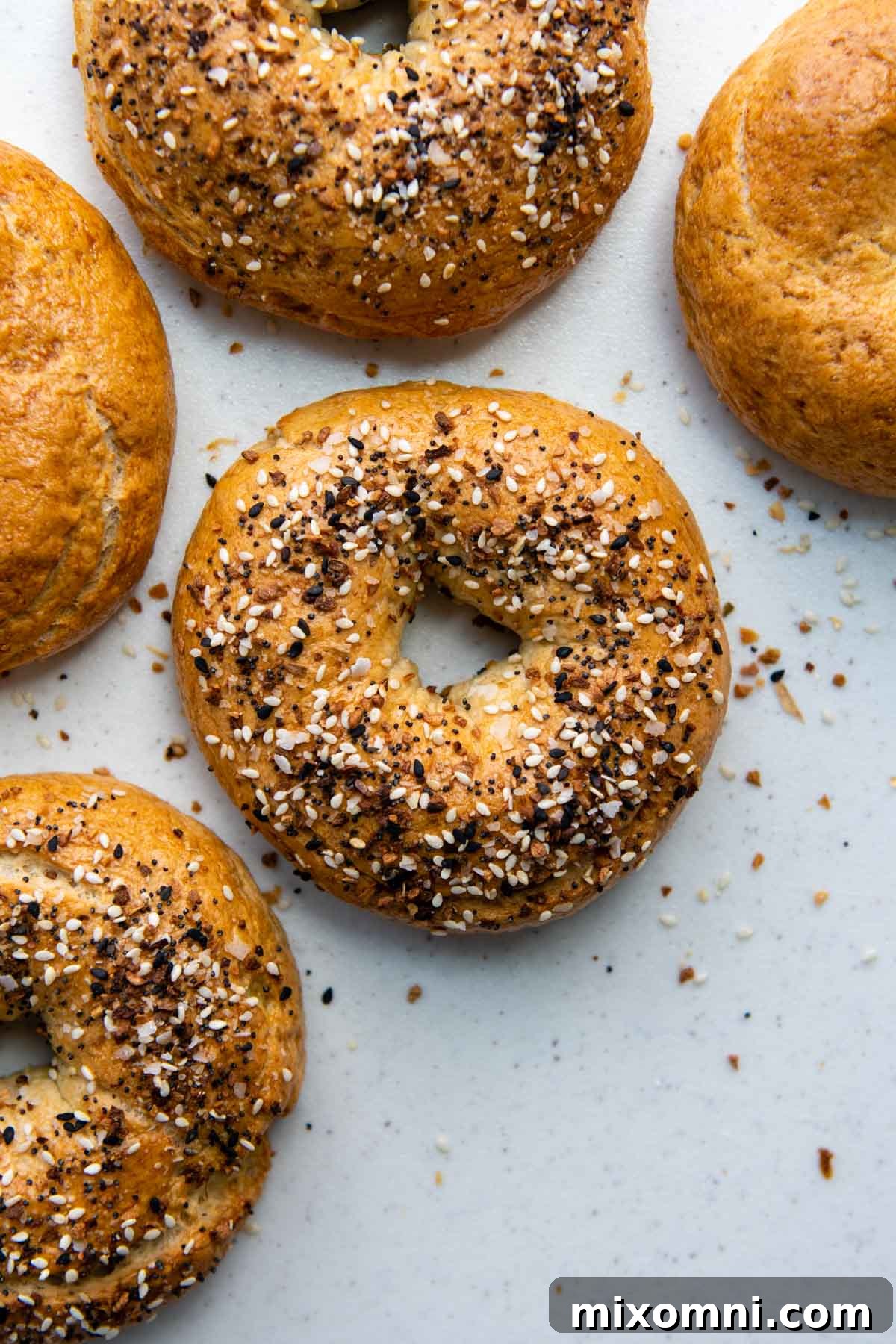
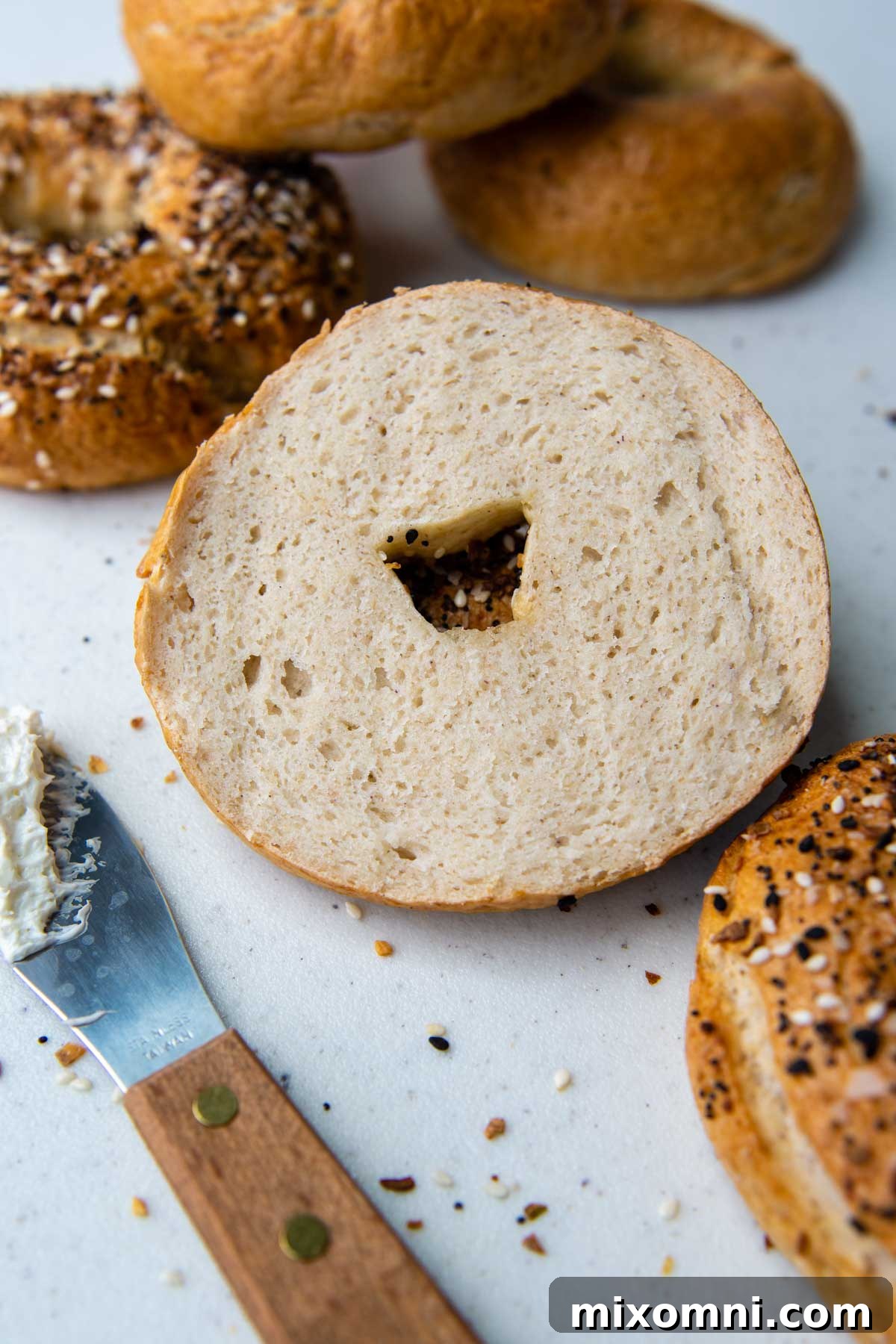
If you’ve been on a quest for the ultimate gluten-free bagel that truly rivals its traditional, glutinous counterpart, your search ends here. This easy-to-follow recipe unlocks the secret to homemade, generously sized, delightfully doughy bagels boasting a perfectly chewy crust and a soft, yielding interior. The magic lies in a subtle yet powerful ingredient: oat flour. By strategically incorporating a small amount of oat flour, we effectively absorb excess moisture, banishing the common pitfalls of dense, gummy textures often associated with gluten-free baking. Join us as we demystify the process, guiding you step-by-step to bagel perfection. Plus, we’ve included simple adaptions to make these irresistible bagels vegan and dairy-free, ensuring everyone can enjoy this classic treat.
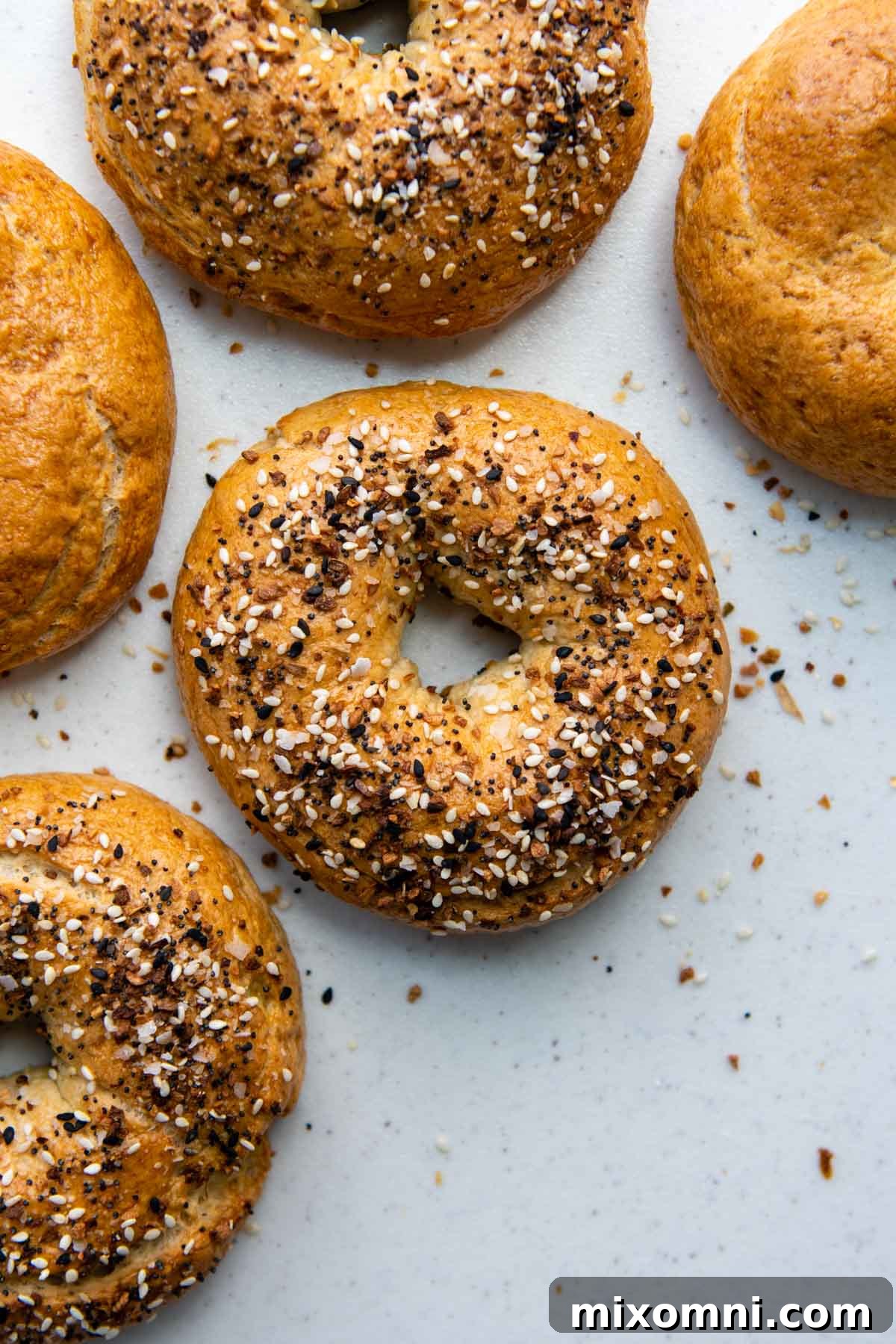
The Ultimate Gluten-Free Bagel Recipe: Achieving Authentic Texture and Taste
Crafting a gluten-free bagel recipe that not only proves easy to execute but also genuinely replicates the iconic taste and texture of New York-style bagels has been a passionate endeavor. After numerous successful ventures in gluten-free bread baking, I was eager to tackle the bagel challenge head-on. Many readers have enthusiastically shared that my collection of gluten-free bread recipes surpasses any store-bought or homemade alternatives they’ve encountered. It was this same winning spirit and dedication to excellence that I poured into developing these gluten-free bagels, leveraging smart baking tricks to guarantee their success.
The inherent challenges of gluten-free baking often revolve around the absence of gluten, the protein responsible for the elasticity and structure in traditional breads. Without it, dough can become crumbly, dense, or excessively gummy. Through extensive experimentation, I’ve discovered a transformative technique for yeast breads: replacing a small portion of the gluten-free flour blend with an alternative starch. This simple adjustment works wonders in counteracting potential textural issues. It proved remarkably effective for my popular gluten-free baguettes, so applying the same principle to bagels was a logical next step.
Bagels, by nature, require a dough that is stiff and pliable enough to be shaped into their distinctive rings without collapsing. The common temptation might be to add more gluten-free flour, but this often leads to a dry, crumbly, and unsatisfying end product. Instead, this recipe employs a touch of oat flour. Oat flour not only efficiently absorbs excess moisture, preventing a gummy interior, but it also helps maintain a wonderfully soft crumb. Once the dough consistency was perfected, the remainder of the process gracefully follows traditional bagel-making methods. This includes the crucial water bath, which is essential for developing that coveted chewy outer crust, before a final bake in the oven transforms them into golden perfection.
Beyond the basic recipe, I’m thrilled to share how you can effortlessly transform these easy gluten-free bagels into a variety of bakery-style favorites. Imagine crafting everything bagels, savory onion bagels, cheesy bagels, or sweet cinnamon raisin variations – the possibilities are endless! All the detailed tips for shaping, baking, and customizing flavors are provided below. Much like we celebrated the creation of soft gluten-free English muffins with their abundant nooks and crannies, we can now achieve that same level of perfection with these truly exceptional gluten-free bagels!
First of all, I followed this recipe exactly, using Cup4Cup flour. These are so good!!! I have tried sooo many different bagel recipes. Even going so far as to try gluten free bread flour and they were “ok”. This recipe tho! Wow. These bagels are AMAZING. So easy too!! Thank you!!!
—Megan
Essential Ingredients for Extraordinary Gluten-Free Bagels
Achieving the perfect gluten-free bagel hinges on a few key ingredients, each playing a vital role in replicating the texture and flavor of traditional bagels. Understanding their function will empower you to create consistently delicious results.
- Gluten-Free Flour Blend: The foundation of our bagels. I consistently use and highly recommend Cup4Cup all-purpose gluten-free flour because it includes xanthan gum, which is crucial for gluten-free baking. This blend provides a reliable base for structure. While Cup4Cup is my go-to, I encourage you to check the reader comments below for other alternative flours that have yielded successful results for our community.
- Oat Flour: This is one of our “secret weapons.” A measured amount of oat flour is incorporated to effectively absorb excess liquid in the dough. This absorption is critical in preventing the dense, gummy texture that often plagues gluten-free baked goods. Beyond its textural benefits, oat flour also imparts a delightful, subtle nutty flavor and acts as an excellent gluten-free binding agent, contributing to a more cohesive dough structure.
- Psyllium Husk Powder: Often hailed as a miracle ingredient in the world of gluten-free baking, psyllium husk powder is a powerhouse. It is instrumental in mimicking the elasticity and crumb structure found in traditional, gluten-containing baked goods. In this specific bagel recipe, psyllium husk powder significantly enhances the dough’s ability to absorb moisture. This results in a dough that is remarkably pliable and easy to handle without the need to add additional flour, which would otherwise lead to an undesirably dry and crumbly texture. Its unique properties help create that sought-after chewiness. Learn more about what psyllium husk is and why it’s so beneficial.
- Butter: A small quantity of melted butter is added to the dough not just for flavor, but also to coat the gluten-free starches. This coating action is key to eliminating any potential grittiness and contributing to a smoother mouthfeel. For those seeking dairy-free bagels, simply substitute the butter with vegan butter sticks. If using a salted vegan butter, remember to reduce the salt content in the recipe to 1 teaspoon to maintain proper seasoning balance.
- Yeast & Granulated Sugar: Standard instant dry yeast is our leavening agent, creating the airy pockets and rise in the bagels. The granulated sugar doesn’t just add a touch of sweetness; it primarily acts as food for the yeast, ensuring it activates properly and gives our bagels their lift.
- Baking Powder: While yeast provides the primary rise, a small amount of baking powder offers an additional leavening boost, contributing to a lighter, softer interior texture.
- Salt: Essential for enhancing flavor and balancing the sweetness, salt also plays a role in regulating yeast activity.
- Baking Soda (for water bath): This ingredient is critical for the boiling step. The alkaline environment created by baking soda in the water bath is what gives bagels their characteristic glossy, chewy crust and distinct flavor. Without it, they would resemble regular bread rolls.
- Egg Wash (optional): A simple mixture of whisked egg and water, applied before baking, gives the bagels a beautiful, shiny, golden-brown crust. It also acts as an adhesive for any toppings you choose to add. For vegan bagels, this step can be omitted, or you can use a plant-based milk wash for some shine.
Step-by-Step Guide: Crafting Your Homemade Gluten-Free Bagels
(The following section provides detailed step-by-step photos and refined instructions to guide you through the process. For precise ingredient amounts and the complete printable recipe, please scroll down to the recipe card at the bottom of the page.)
Preparing the Dough: The Foundation of Flavor and Texture
To begin making the dough, first gently dissolve the instant dry yeast in warm water, adding a touch of granulated sugar. The ideal water temperature is lukewarm, around 110ºF (43ºC). I find it incredibly helpful to use an instant-read thermometer to ensure an accurate reading, as temperature is vital for yeast activation. Allow this mixture to sit for approximately 5 minutes until it becomes foamy, indicating the yeast is active. Afterward, incorporate the melted and cooled butter, stirring until thoroughly combined.
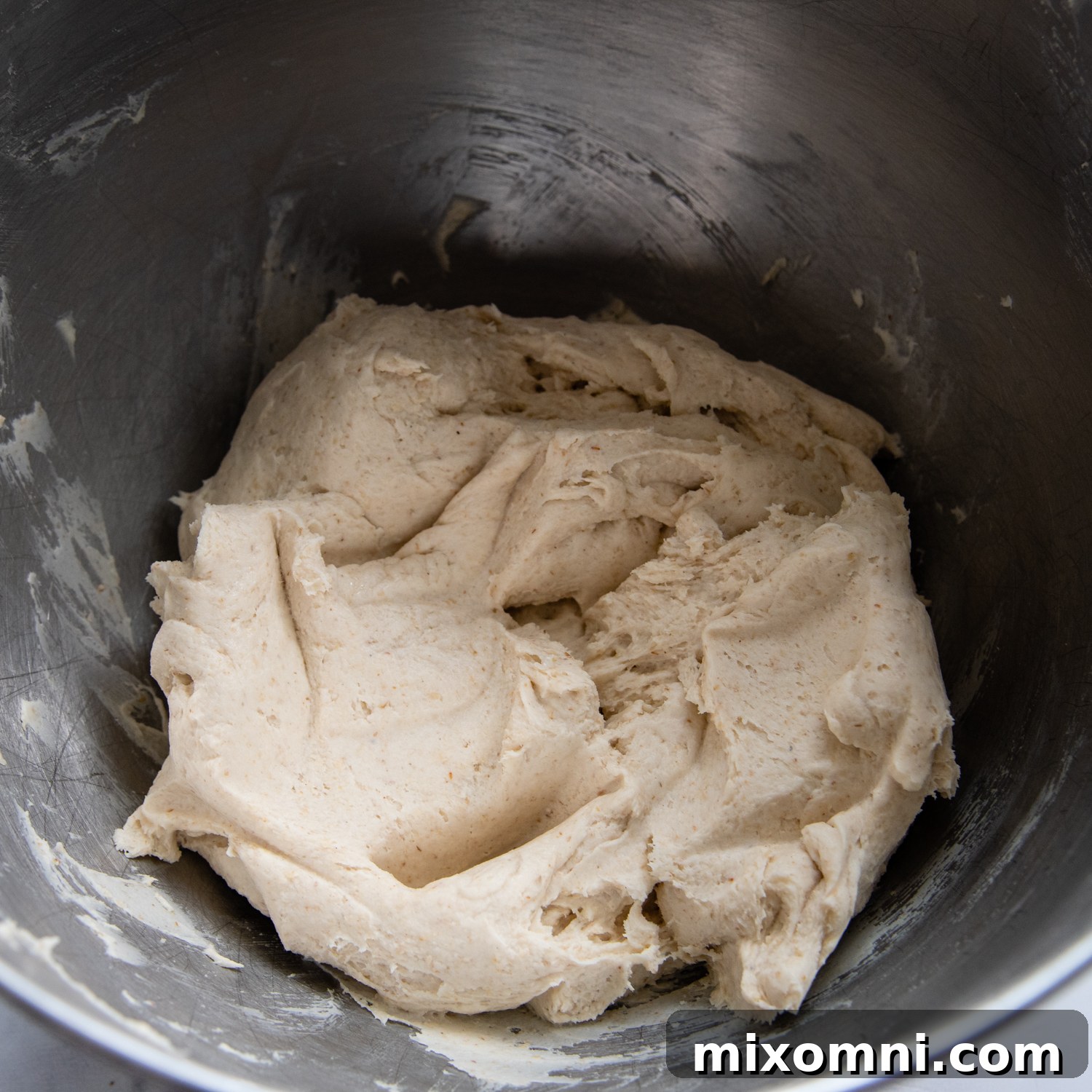
In the bowl of a stand mixer fitted with a paddle attachment, combine all the dry ingredients: the gluten-free flour blend, oat flour, psyllium husk powder, baking powder, and salt. Gradually add the activated yeast mixture to the dry ingredients. Start mixing on a low speed until the dough just begins to come together. Once a cohesive dough forms, increase the mixer speed to medium and beat for a full 6 minutes. This extended mixing time is crucial for developing the structure in gluten-free dough. The dough will be quite stiff, so it may be necessary to pause the mixer once or twice to scrape down the sides of the bowl, ensuring all ingredients are evenly incorporated.
Masterful Shaping for Picture-Perfect Bagels
For a clean, nonstick surface that simplifies handling, I highly recommend using a silicone baking mat. Once your dough is ready, scrape it out of the mixing bowl and divide it into 6 equal pieces. You can use a kitchen scale for precision or simply use a knife or your hands to pull the dough apart evenly.
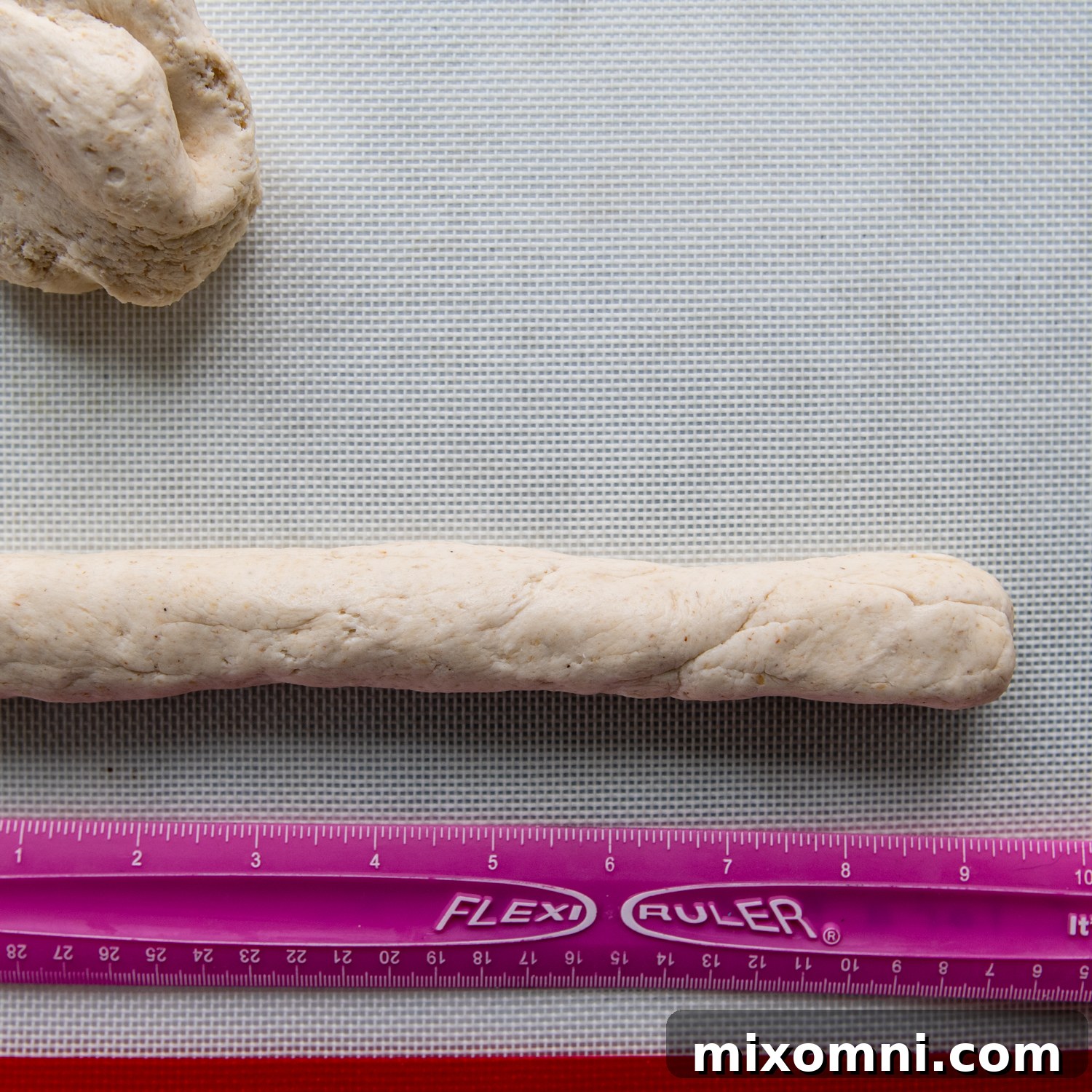
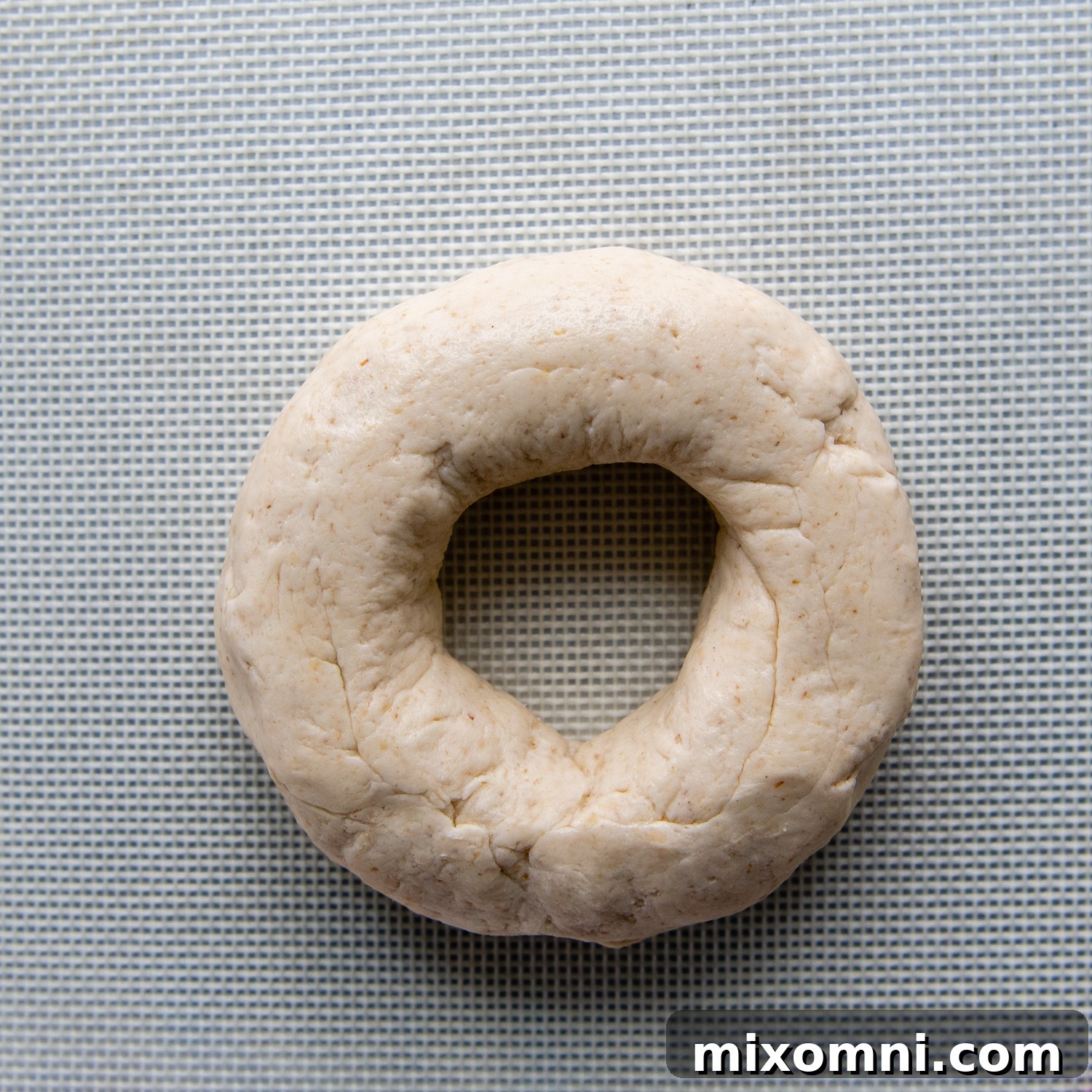
Take one portion of the dough and roll it gently until you achieve a thick, uniform rope approximately 9 inches in length. Carefully bring the ends of the rope together to form a circular shape, creating the classic bagel ring. It is absolutely essential to securely press the ends together, both on the top and bottom of the bagel. This firm seal prevents the bagels from unraveling during the critical water bath step and during baking. Take your time with this step to ensure a robust seam.
Once shaped, transfer the bagels to a prepared baking sheet, cover them loosely with plastic wrap, and allow them to rise for 30 minutes. During this rising period, you can begin preparing the water bath by bringing a large pot of water to a boil.
The Essential Water Bath and Baking Process
Prepare a large pot of water for boiling, and add the baking soda. This alkaline water bath is a cornerstone of bagel making; it sets the outer crust, initiates the Maillard reaction, and is responsible for giving bagels their signature shiny, wonderfully chewy texture and unique flavor profile. Don’t skip this step!
Once the bagels have completed their rise, carefully submerge them into the vigorously boiling water, one at a time, using a slotted spoon or a skimmer. The boiling time is brief but critical: cook each bagel for only 10 seconds total, flipping it halfway through to ensure even exposure. Promptly return the boiled bagels to the baking sheet, ready for their final bake.
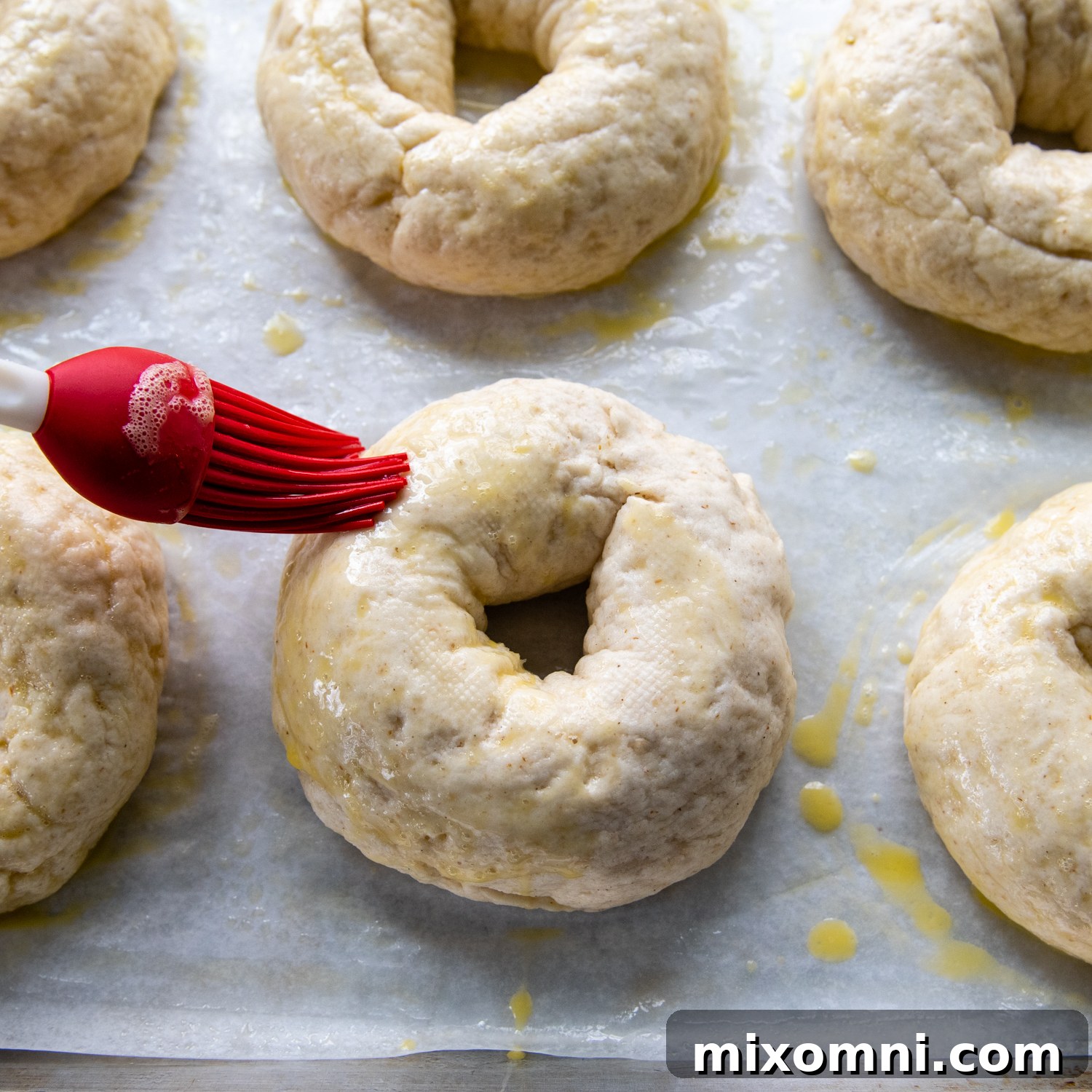
For those desirable nice, shiny crusts and to help any desired seasonings adhere properly, I highly recommend brushing the bagels with an egg wash (a whisked egg with a tablespoon of water). This is the perfect stage to apply toppings like everything bagel seasoning, sesame seeds, poppy seeds, or a cinnamon sugar blend.
Begin baking the bagels in a preheated 425°F (220°C) oven for the initial 15 minutes. This high heat helps to quickly set the crust. After 15 minutes, reduce the oven temperature to 350°F (175°C) and continue baking for an additional 20 minutes, or until the bagels achieve a beautiful golden-brown color and are cooked through. Allow them to cool slightly before slicing and enjoying!
Creative Flavor Variations for Your Gluten-Free Bagels
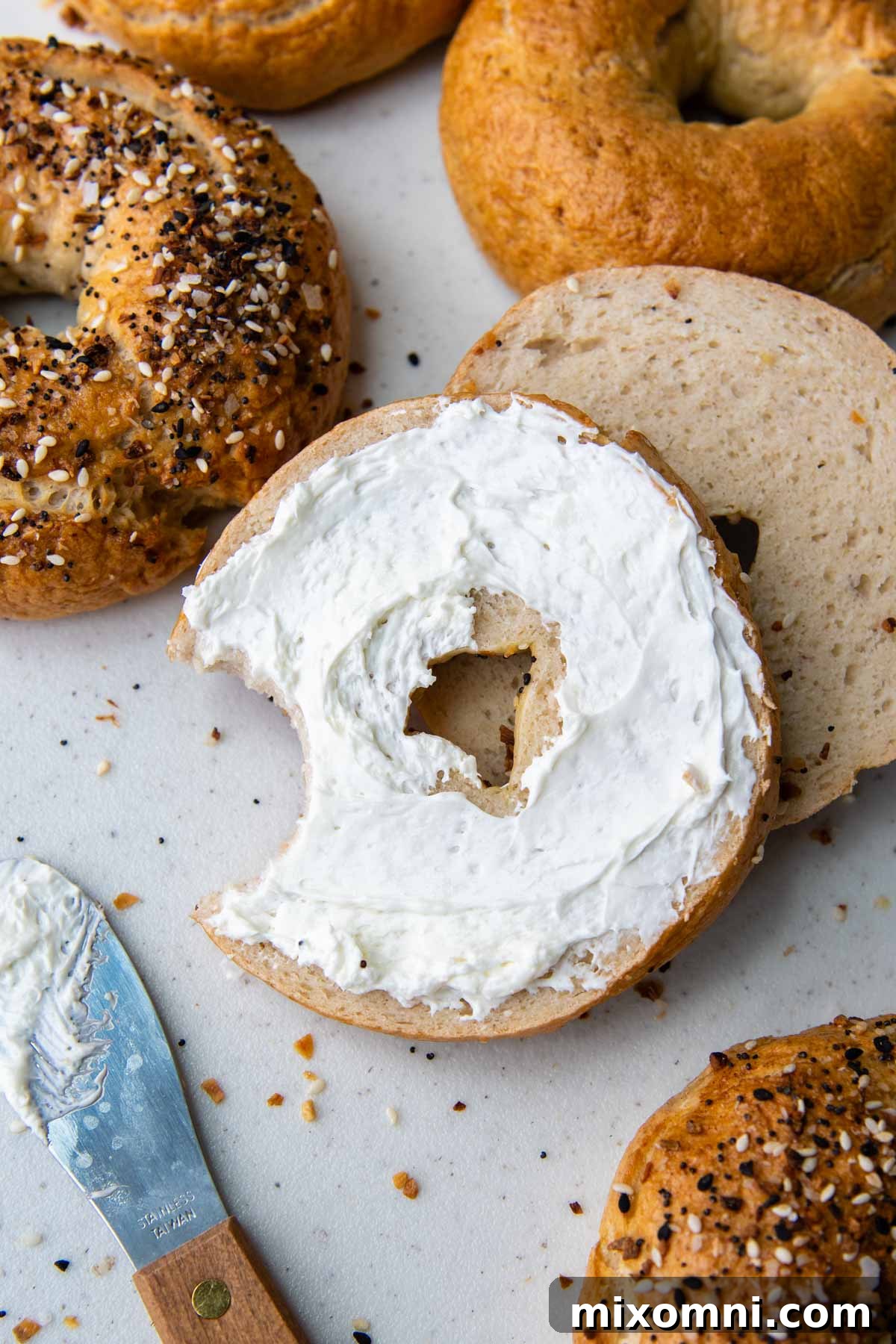
Once your perfectly boiled bagels are ready, it’s time to add that final flourish: a beautiful, shiny crust and a sprinkle of delicious toppings, if desired. While I particularly adore making gluten-free everything bagels, ideal for slicing and crafting hearty breakfast sandwiches or lunch creations, any of these flavor combinations are absolutely perfect for a quick toast and a generous dollop of cream cheese.
Remember, the egg wash (or a vegan alternative) is your best friend here, as it acts as a wonderful adhesive to ensure your chosen toppings stick firmly to the bagels. For those who prefer a classic, unadorned bagel, simply brush on the egg wash for shine, or omit it completely for a more rustic finish.
- Everything Bagel: This ever-popular option is incredibly easy to achieve. I often use a convenient pre-mixed seasoning blend available in most grocery stores (Aldi is a great source!). For a homemade version, combine sesame seeds, poppy seeds, dried minced garlic, dried minced onion, and a touch of flaky sea salt. Sprinkle generously over the egg-washed bagels before baking.
- Poppy Seeds or Sesame Seeds: For a simple yet classic touch, sprinkle either poppy seeds or sesame seeds (white or black) onto the egg-washed bagels. These offer a subtle texture and nutty aroma.
- Cinnamon Sugar: To infuse warmth and sweetness, add 1 teaspoon of ground cinnamon and 1 tablespoon of brown sugar directly into the dough mixture when combining the dry ingredients. Before baking, brush with egg wash and sprinkle the tops with an additional mixture of cinnamon sugar for a delightful crunch.
- Onion: For a savory kick, incorporate 2 teaspoons of onion powder into your bagel dough during the dry ingredient mixing stage. Once the bagels are boiled and egg-washed, sprinkle the tops with dried minced onion for an extra layer of flavor and texture.
- Cinnamon Raisin: A timeless favorite! Gently fold 2/3 cup of plump raisins, 1 teaspoon of ground cinnamon, and 1 tablespoon of brown sugar into the dough during the final stages of mixing. Ensure the raisins are evenly distributed.
- Cheese: For a deliciously cheesy bagel, mix 1/2 cup of your favorite shredded cheese (such as cheddar, mozzarella, or a blend) into the dough. For an extra cheesy top, sprinkle additional shredded cheese over the bagels after the egg wash and before they go into the oven. The cheese will melt and crisp up beautifully.
Frequently Asked Questions About Gluten-Free Bagels
Here are answers to some common questions you might have when baking these amazing gluten-free bagels:
- Can I make this recipe completely vegan and dairy-free?
- Absolutely! This recipe is easily adaptable. Simply replace the unsalted butter with an equal amount of your favorite vegan butter sticks. If using a salted vegan butter, reduce the recipe’s added salt to 1 teaspoon. For the egg wash, you can either omit it for a more rustic finish or use a plant-based milk (like almond or soy milk) brushed on for a subtle shine. Always double-check your gluten-free flour blend, as some can contain milk powder. Look for blends clearly labeled “dairy-free” or “vegan.”
- What if I don’t have psyllium husk powder? Can I skip it?
- While psyllium husk powder is a game-changer for the texture and pliability of these gluten-free bagels, providing much-needed elasticity and structure, it’s generally not recommended to omit it without a substitute. It’s the key to preventing crumbly dough and achieving that desirable chewy bite. If you absolutely cannot source it, some bakers have experimented with chia seed or flaxseed meal as a thickener, but results will vary significantly, and the authentic chewy texture may be compromised. For the best results, investing in psyllium husk powder is highly advised.
- Why is the water bath so important for bagels?
- The water bath is a non-negotiable step for authentic bagels, both gluten-free and traditional! Boiling the shaped dough in alkaline water (with baking soda) achieves several crucial things: it sets the exterior, creating a firm skin that contributes to the chewy crust; it prevents the bagels from rising too much in the oven, maintaining their dense, bagel-like texture; and it initiates the Maillard reaction, which is responsible for the rich brown color and complex flavor of the crust. Without the water bath, you’d essentially have a round roll, not a bagel.
- How should I store homemade gluten-free bagels?
- Once your bagels have completely cooled to room temperature, the best way to maintain their freshness is to store them in an airtight container at room temperature for up to two days. Gluten-free baked goods tend to dry out more quickly than their wheat-based counterparts, so avoid refrigerating them as this will accelerate moisture loss. For longer storage, freezing is your best option.
- Can these gluten-free bagels be frozen?
- Yes, these bagels freeze beautifully! If you don’t plan on enjoying them within a day or two, freezing is highly recommended. To freeze, individually wrap each completely cooled bagel in plastic wrap. Then, transfer the wrapped bagels to an airtight freezer-safe container or a heavy-duty ziplock freezer bag. They can be frozen for up to 3 months. When you’re ready to enjoy, simply thaw them at room temperature or quickly defrost them in the microwave. They are delicious toasted or enjoyed as is!
Troubleshooting Common Gluten-Free Bagel Issues
Even with the best recipes, gluten-free baking can sometimes present unique challenges. Here’s a quick guide to help you troubleshoot common issues and ensure your bagels turn out perfect every time:
- My bagels are too dense or gummy. What went wrong?
- This is a common concern in GF baking, but this recipe is designed to prevent it. If your bagels turn out dense or gummy, consider these factors:
- Too much liquid: Ensure precise measurements, especially of water. Too much liquid can lead to a gummy texture.
- Not enough oat flour or psyllium husk: These ingredients are crucial for moisture absorption and elasticity. Double-check quantities.
- Under-mixing: The dough needs to beat for the full 6 minutes in the stand mixer to develop structure.
- Over-proofing: If the bagels rise too much, the structure can collapse during boiling or baking, leading to a denser texture.
- Why did my bagels fall apart during the water bath or baking?
- The most common reason for bagels falling apart is insufficient sealing of the ends during the shaping process. It’s crucial to firmly press the two ends of the dough rope together, both on the top and bottom, to create a strong, continuous ring. If the seal is weak, the expansion during boiling and baking can cause them to separate. Also, ensuring the dough isn’t too wet or sticky helps with shaping and maintaining integrity.
- My bagels are crumbly or dry. How can I fix this?
- If your bagels are dry or crumbly, it usually points to a lack of moisture or an imbalance in the dry ingredients:
- Too much flour: Measuring flour by weight (grams) is always more accurate than by volume (cups), as cup measurements can vary wildly. Too much flour will result in a dry dough.
- Not enough butter: Butter adds moisture and richness, helping to coat starches and prevent dryness.
- Over-baking: Baking for too long, especially at too high a temperature, will dry out gluten-free goods very quickly. Keep an eye on them and remove them once golden brown.
Save This Delicious Gluten-Free Bagel Recipe!
Let’s be friends on Pinterest! I’m always sharing fantastic recipes and gluten-free baking tips!
Did you make this recipe? I absolutely love hearing from you and seeing your baking successes! Please take a moment to leave a star rating and comment below the recipe card. Your feedback is invaluable, helping other bakers find and enjoy these recipes, and I genuinely appreciate hearing from our wonderful community. You can always expect a response from me! – Melissa
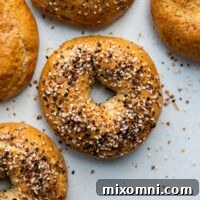
Doughy Soft, Chewy Gluten-Free Bagels Recipe

Melissa Erdelac
6 Bagels
45 mins
30 mins
1 hr 15 mins
Pin Recipe
Rate This
Ingredients
- 1 ⅔ cup (320 g) warm water (110°F)
- 1 tablespoon (10 g) instant dry yeast
- 1 tablespoon (13 g) granulated sugar
- 3 tablespoons (42 g) melted and cooled unsalted butter, see recipe notes for dairy-free
- 3 cups (438 g) gluten free all purpose flour, I recommend Cup4Cup GF flour
- ⅔ cup (63 g) oat flour, see recipe notes
- 1 ½ tablespoon (17 g) psyllium husk powder, what is psyllium husk?
- 2 teaspoons baking powder
- 1 ½ teaspoon salt
- 1 tablespoon baking soda, for boiling water bath
- Egg wash – 1 egg whisked with 1 tbsp water, omit for vegan
- Optional topping everything bagel seasoning mix
Equipment
-
Skimmer Spoon
-
Cup4Cup Gluten Free Flour
-
Stand Mixer
Instructions
-
Before you begin mixing the bagel dough, turn your oven to 200ºF (95ºC). Once it reaches the temperature, turn it off. Line a baking sheet with greased parchment paper, ready for your shaped bagels.
-
Add the yeast and sugar to the warm water. I found it helpful to use an instant-read thermometer to get an accurate water temperature reading (110°F is ideal). Stir to combine and let sit for 5 minutes until foamy. Then, stir in the melted butter.
-
While the yeast mixture sits, use a stand mixer with a paddle attachment to combine the gluten-free flour, oat flour, psyllium husk powder, baking powder, and salt. Slowly add the yeast mixture to the dry ingredients and mix on low speed until everything is just combined and a dough forms.
-
Once the dough comes together, increase the mixer to medium speed and beat for 6 minutes. The dough will be quite stiff, so you may need to stop the mixer and scrape down the bowl once or twice to ensure even mixing.
-
Scrape the dough into a large ball and then divide it into 6 equal pieces. On a clean surface or silicone baking mat, roll each piece into a thick, 9-inch rope. Bring the ends of the rope around to form a circle. Firmly press the ends together, both on the top and bottom of the bagel, ensuring they are securely sealed. Finish by shaping it into a smooth, even circle.
-
Transfer the shaped bagels to the prepared baking sheet. Cover them loosely with plastic wrap and place them in the warmed, turned-off oven for 10 minutes. After 10 minutes, remove the pan from the oven and let the bagels sit at room temperature for an additional 20 minutes to complete their rise. During this time, preheat your oven to 425°F (220°C).
-
While the bagels are rising, boil 4 quarts of water with the baking soda in a large pot. Once boiling, use a slotted spoon or skimmer to carefully submerge one bagel at a time. Boil for 10 seconds total, flipping it halfway through. Return the boiled bagels to the prepared baking sheet.
-
Brush the top, sides, and center of each bagel with the egg wash (if using). Sprinkle on everything bagel seasoning mix or any other desired toppings. Bake for 15 minutes at 425°F (220°C). Then, reduce the oven temperature to 350°F (175°C), rotate the baking sheet, and bake for 20 minutes more, or until the bagels are beautifully golden brown.
-
Remove from the oven and cool for 5 minutes on the baking sheet. Transfer them to a wire rack and allow them to cool for at least 20 minutes before serving. Store cooled bagels in an airtight container for up to 2 days or freeze for up to 2 months.
Notes
Oat Flour
To make your own oat flour at home, simply blend 2/3 cup of gluten-free quick oats in a food processor or high-speed blender. Process until no large flakes remain and you achieve a fine, powdery mixture.
Dairy-Free / Vegan Adaptations
For dairy-free bagels, replace the butter with an equal amount of vegan butter sticks. If your vegan butter is salted, reduce the salt in the recipe to 1 teaspoon. The egg wash may be omitted before baking for a vegan version. Additionally, always check the ingredient label on your chosen gluten-free flour blend, as some mixes may contain milk powder.
Storing and Freezing
Once the bagels have completely cooled to room temperature, wrap them individually in plastic wrap. Then, transfer them to an airtight container and store at room temperature for up to two days.
I do not recommend refrigerating gluten-free bagels, as it tends to dry them out quickly. Gluten-free baked goods naturally lose moisture faster than their wheat flour counterparts. Therefore, if you don’t plan on consuming all the bagels within a day or two, freezing them is the ideal method for longer-term storage.
To freeze, ensure the bagels are individually wrapped and then place them into an airtight freezer container or a heavy-duty ziplock freezer bag. They can be safely frozen for up to 3 months.
When you’re ready to enjoy a frozen bagel, simply thaw it at room temperature or use the defrost setting on your microwave. They are delicious toasted or enjoyed as is!
Recipe adapted from America’s Test Kitchen.
Did you make this recipe?
Please leave a star rating and review below. It helps others when searching for recipes and I LOVE feedback!