
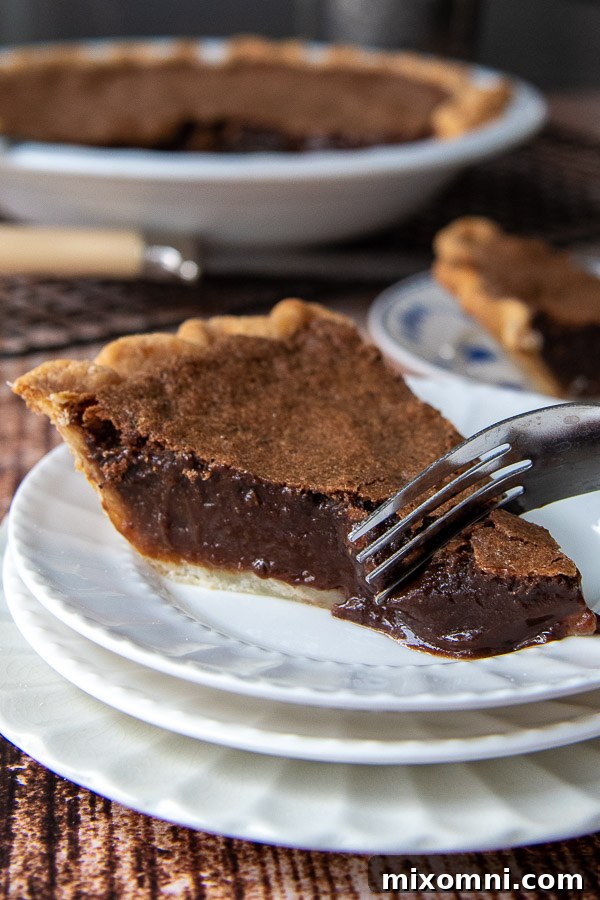
Indulge in a timeless Southern classic with this exquisite Old Fashioned Chocolate Chess Pie. This recipe promises a rich, fudgy, and utterly decadent chocolate custard, nestled within a perfectly flaky, buttery crust. Thanks to the unique properties of evaporated milk, which boasts less water content, and a touch of cornmeal and flour, the filling sets beautifully every single time, achieving that coveted dense yet melt-in-your-mouth texture. This iconic dessert is not just a pie; it’s a chocolate lover’s dream, an essential centerpiece for any holiday table, and a comforting taste of tradition that will leave a lasting impression.
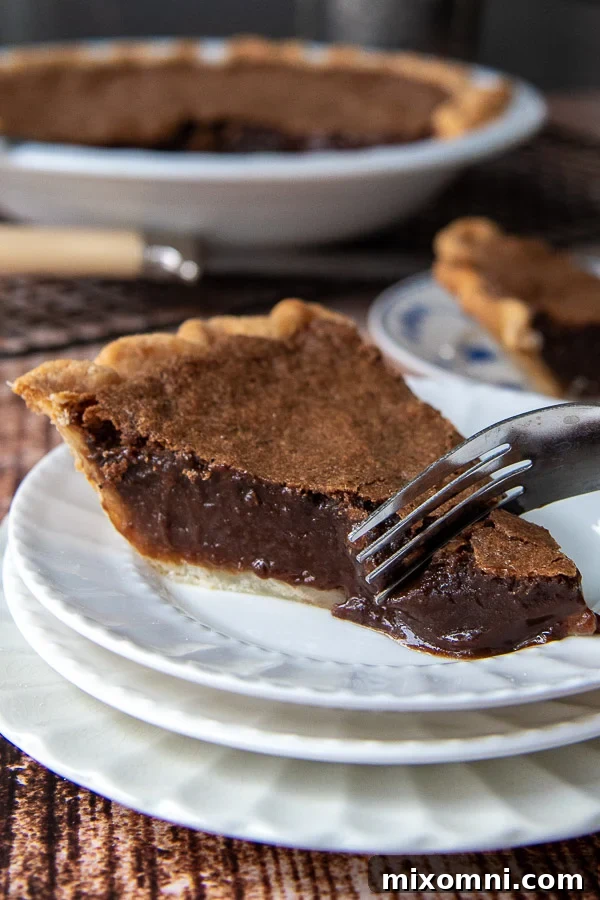
The Irresistible Allure of Southern Classic Chocolate Chess Pie
For many families, especially mine, dessert isn’t truly dessert unless it’s chocolate. Any sweet treat that doesn’t meet this fundamental criterion often finds itself relegated to a secondary role. This unwavering devotion to cocoa makes the chocolate version of the classic chess pie not just a preference, but a true celebration. It’s the ultimate answer to every chocolate craving, delivering a depth of flavor and a luxurious texture that few other desserts can rival.
As the festive season approaches, bringing with it Thanksgiving gatherings and a flurry of holiday baking, I’m thrilled to share this easy-to-follow chocolate chess pie recipe. It’s designed to be ultra-fudgy and incredibly creamy, guaranteed to delight even the most discerning chocolate connoisseurs. Beyond its standalone deliciousness, this pie serves as a wonderful counterpart to other traditional desserts, offering a perfect balance of richness. Imagine pairing its intense chocolate notes with the delicate sweetness of a Hoosier Sugar Cream Pie – a truly harmonious dessert experience.
Chess pies themselves are a treasured old-fashioned Southern dessert, characterized by their simple yet profound ingredients: butter, eggs, sugar, and milk. These rustic custard pies traditionally feature little to no flour, relying instead on a small amount of cornmeal for texture and structure. However, in my quest to create a truly foolproof homemade pie recipe, I’ve added a strategic touch of all-purpose flour. This small addition acts as an insurance policy, ensuring the filling achieves that perfect, consistent set every single time, eliminating any worries about a runny custard.
While many classic chess pie recipes call for melted butter in the filling, this particular version opts for softened butter. The reasoning behind this subtle but significant change lies in the pie’s fundamental composition. Chess pie fillings are primarily composed of eggs, sugar, and milk, ingredients that don’t readily absorb liquid butter in the same way flour-heavy batters might. By using softened butter, we achieve a more robust and stable structure for the custard. Moreover, softened butter blends far more homogeneously with the other ingredients, preventing any separation or pockets of oil. For the best results, utilize a handheld mixer to thoroughly incorporate the softened butter, ensuring a perfectly smooth and unified filling.
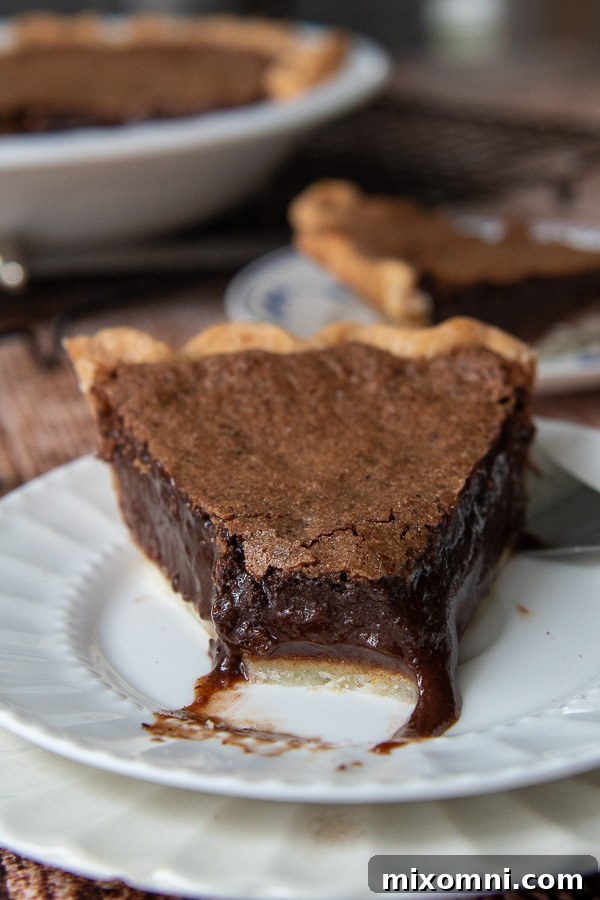
One of the many beauties of this chocolate chess pie is its make-ahead potential, making it an ideal candidate for busy holiday meals. You can prepare this pie one to two days in advance. After it has fully cooled, it can be left at room temperature, maintaining its wonderfully soft and fudgy consistency. If you prefer a firmer, almost brownie-like texture, simply refrigerate the pie after it has cooled completely. Whether served at room temperature or chilled, its rich flavor profile shines through.
Much like another beloved Southern creation, silky smooth sweet potato pie, this chocolate chess pie is delightful on its own. However, its decadence can be elevated with simple accompaniments. A dollop of freshly whipped cream, a scoop of vanilla bean ice cream, or a scattering of fresh berries can add a refreshing contrast and a touch of elegance, making each slice an even more memorable treat.
I have made this recipe several times, and it never disappoints! My family absolutely adores it. We love serving it with a scoop of coffee ice cream, a generous swirl of whipped cream, and a decadent drizzle of chocolate syrup. Truly delicious and a holiday staple!
—Lydia
Essential Ingredients for Your Fudgy Chocolate Chess Pie
The magic of this chocolate chess pie lies in its straightforward ingredients – common kitchen staples that, when combined, create something extraordinary. The process is remarkably simple: mix everything in one bowl, pour it into your chosen pie shell, and bake. It’s truly that easy to achieve a gourmet-quality dessert.
- Cocoa Powder: While regular baking cocoa can certainly be used, I highly recommend Dutch-processed cocoa powder for a truly intense, deep chocolate flavor and a darker, richer color. Dutch-processed cocoa has been treated to reduce its acidity, resulting in a smoother, less bitter taste that enhances the fudginess of the pie.
- All-Purpose Flour: Only a single tablespoon of flour is incorporated into this recipe, primarily to provide a subtle thickening agent. This small amount works in conjunction with the cornmeal and eggs to ensure the custard sets perfectly. For those requiring a gluten-free option, an all-purpose gluten-free flour blend can be seamlessly substituted without compromising the texture or flavor.
- Cornmeal: A signature ingredient in traditional chess pies, cornmeal plays a dual role here. It contributes to the filling’s structure, aiding in its setting, and also imparts a characteristic, slightly coarse texture on the surface of the creamy custard, creating a delightful contrast.
- Evaporated Milk: Canned evaporated milk is a game-changer in this recipe. It’s milk that has been heated to remove approximately 60% of its water content, making it thicker and richer than regular milk. This reduced water content means the filling requires less baking time to achieve its desired consistency, and it contributes significantly to the pie’s incredibly fudgy texture. If evaporated milk isn’t available, or if you prefer an alternative, both buttermilk and whole milk can be used, though they may slightly alter the final texture and require minor adjustments to baking time.
- Softened Unsalted Butter: As discussed, using softened butter, rather than melted, is key to developing the pie’s structure and ensuring a homogeneous filling. Unsalted butter allows you to control the overall saltiness of the pie.
- Large Eggs: Eggs are fundamental to any custard pie, acting as the primary emulsifier and setting agent. They provide richness and bind all the ingredients together, creating that smooth, luxurious texture. Ensure your eggs are at room temperature for better incorporation into the filling mixture.
- Granulated Sugar: Provides the essential sweetness and caramelizes slightly during baking, contributing to the pie’s delightful crusty top.
- Vanilla Extract: A splash of vanilla enhances the chocolate flavor, adding a layer of warmth and complexity to the overall taste profile.
- Salt: A small amount of salt is crucial for balancing the sweetness and intensifying the chocolate notes, making the pie taste even more profound and satisfying.
Crafting Your Perfect Chocolate Chess Pie: A Step-by-Step Guide
Making this incredible chocolate chess pie is a straightforward process, broken down into manageable steps. (Below, you’ll find a detailed, simplified instruction set. For precise ingredient measurements and a printable recipe card, please scroll down to the dedicated recipe section.)
Step 1: Prepare and Blind Bake the Pie Crust
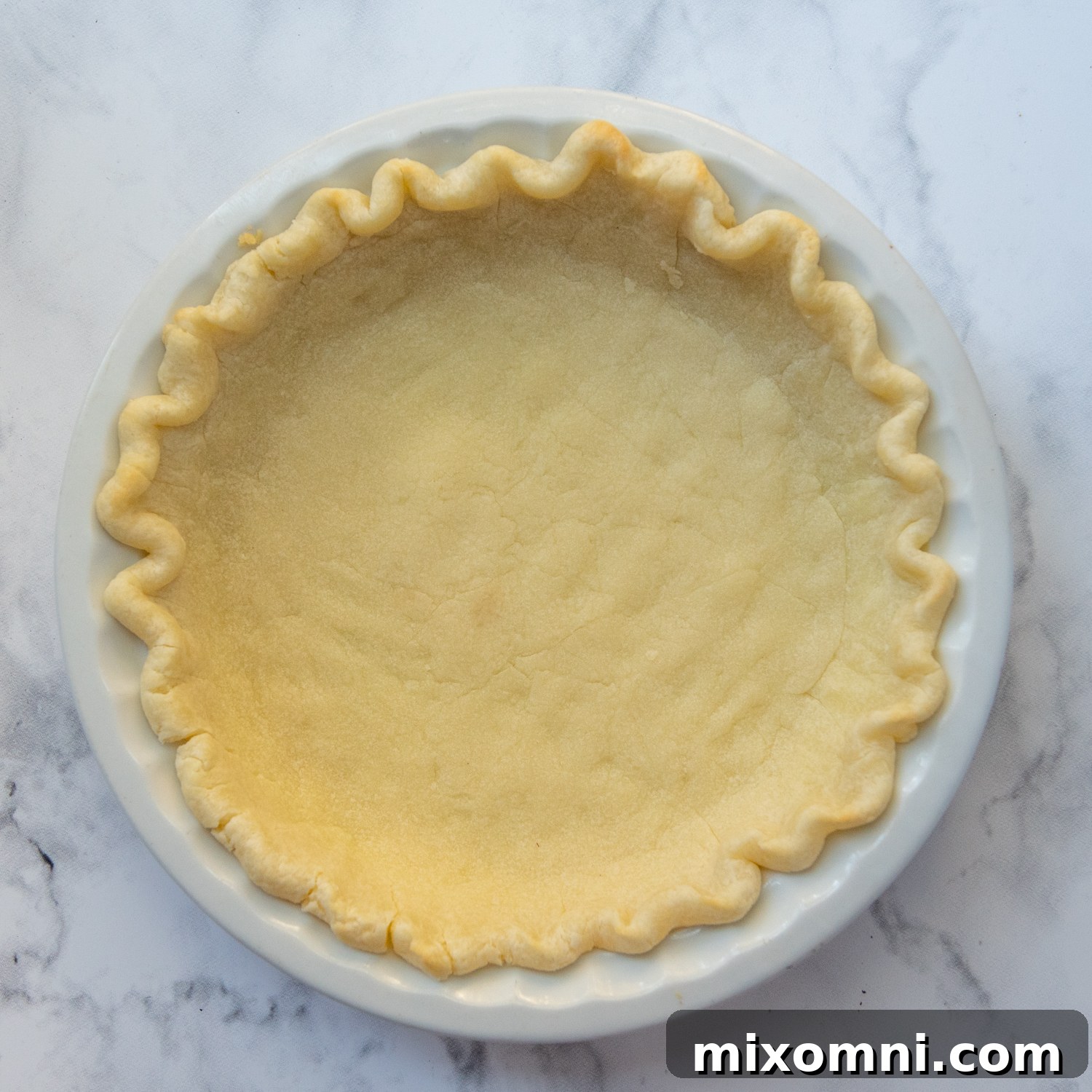
Begin by preheating your oven to 425°F (220°C) and adjusting your oven rack to the lowest position. This lower position is critical for ensuring a crisp bottom crust. Roll out your pie crust dough, carefully fit it into a 9-inch pie plate, and then chill it in the refrigerator for at least 15 minutes. Chilling helps prevent the crust from shrinking during baking.
Since the pie’s filling will ultimately bake at a lower temperature, the crust needs a head start with a “blind bake.” This means baking it partially without the filling. This crucial step guarantees that the bottom crust will achieve a delightful crispness and golden-brown hue by the time the rich chocolate filling is perfectly set.
Step 2: Whisk Together the Easy Chocolate Chess Filling
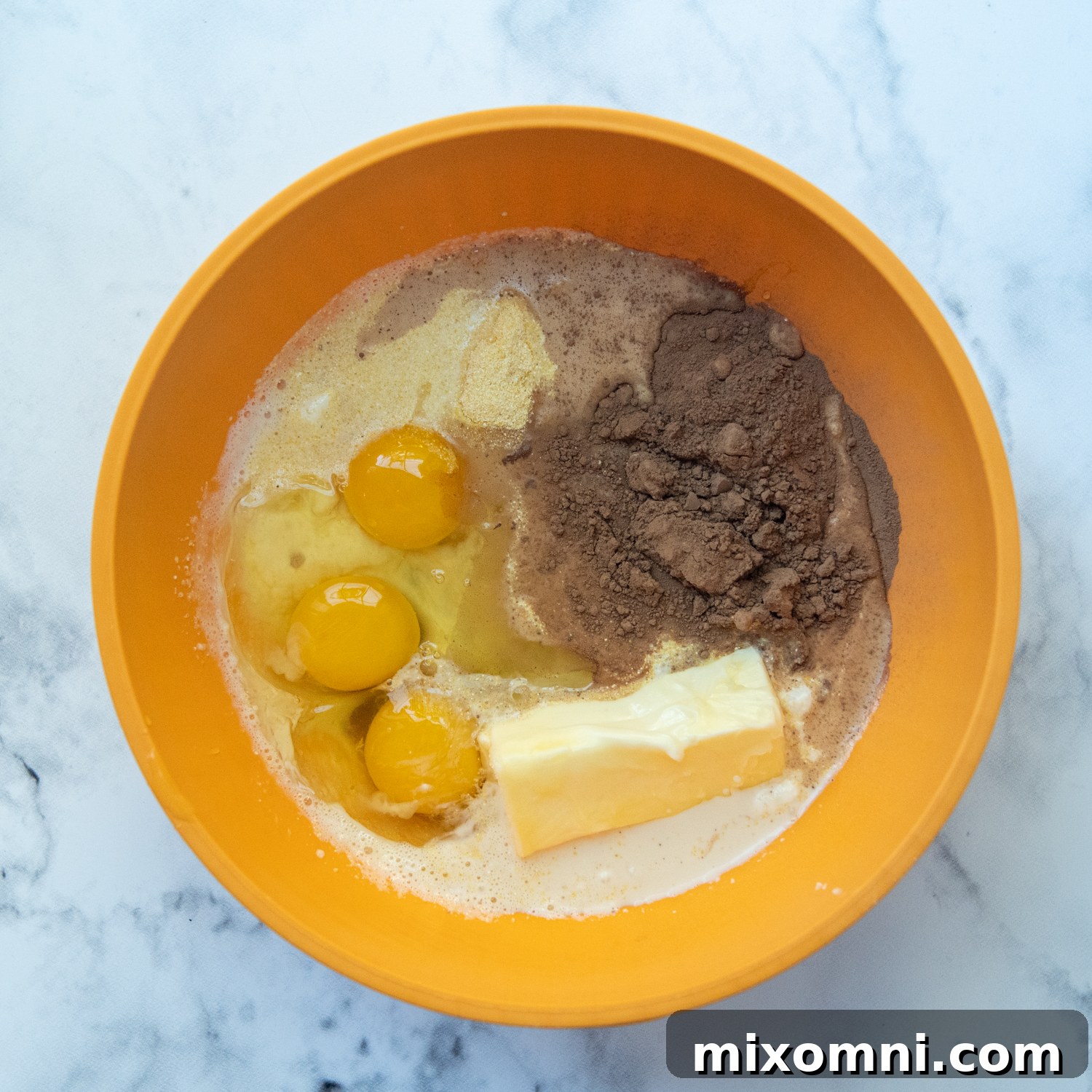
In a large mixing bowl, combine the granulated sugar, unsweetened cocoa powder, cornmeal, all-purpose flour, and salt. Whisk these dry ingredients thoroughly to ensure they are well distributed. Next, add the softened butter, room temperature eggs, evaporated milk, and vanilla extract. Using a handheld electric mixer, beat the mixture on medium speed until it is completely smooth and all ingredients are fully incorporated. The filling should be uniform in color and consistency. It truly is that simple to prepare such a rich and flavorful filling!
Step 3: Pour, Bake, and Cool to Perfection
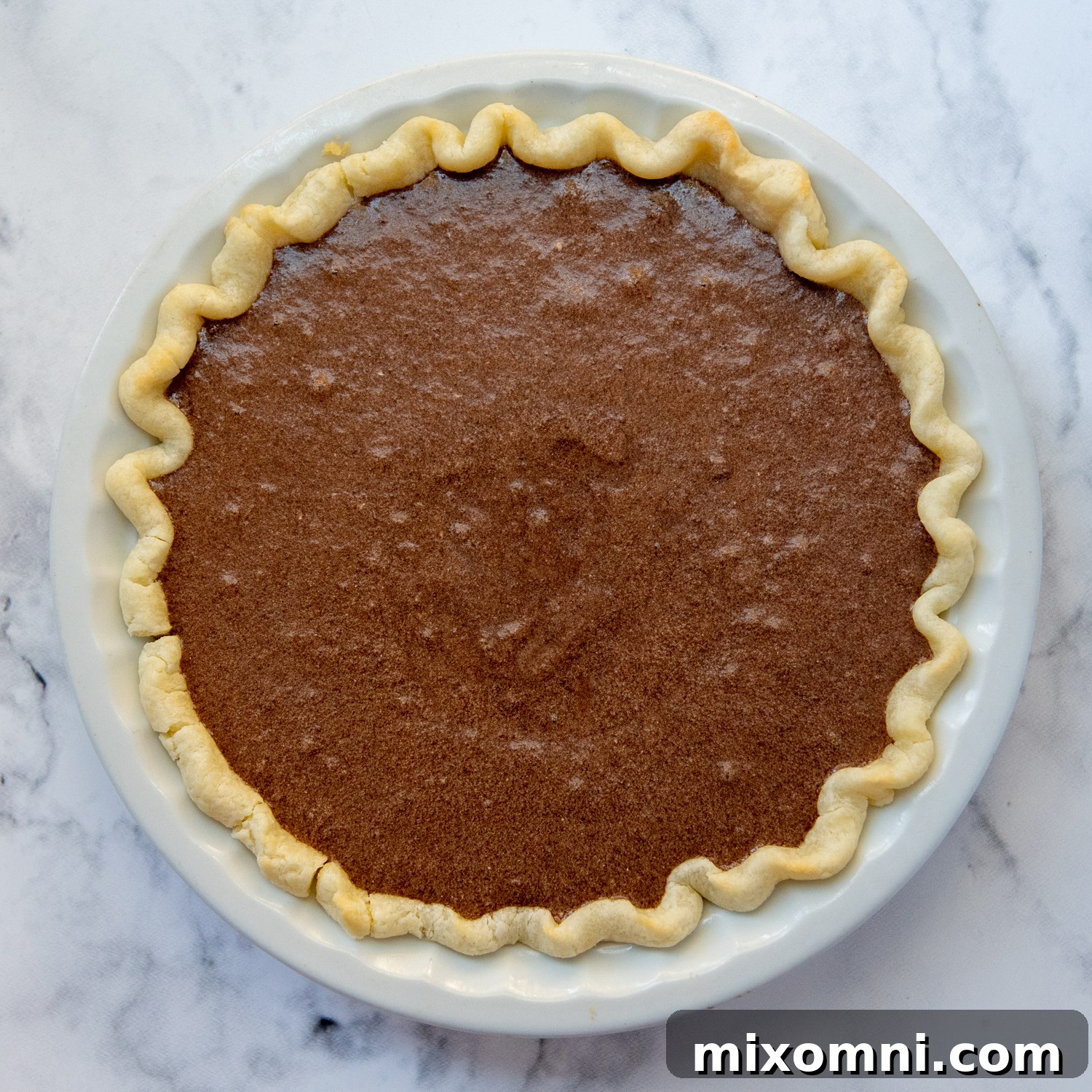
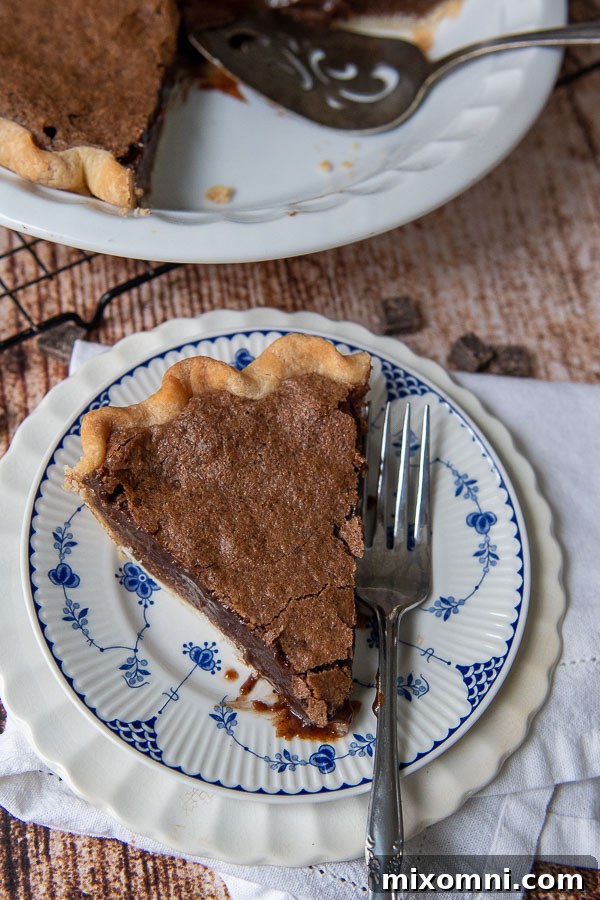
Once your crust is partially baked and cooled slightly, carefully pour the smooth chocolate filling into it. Return the pie to the oven, placing it back on the lowest rack, and bake at 325°F (160°C) for approximately 55-60 minutes. During baking, the top layer of the pie will develop a firm, crackly crust, reminiscent of a perfect brownie. Beneath this delightful crust, the filling should exhibit a slight jiggle in the center when gently nudged, indicating it’s almost set. Crucially, it should not appear liquidy or sloshy. For the most accurate doneness, a thermometer inserted into the center should read 200°F (93°C). After baking, allow the pie to cool completely on a wire rack for about 2 hours before slicing and serving. This cooling time is essential for the custard to fully set and achieve its ideal fudgy texture.
Mastering the Crust: Options and Expert Baking Tips
The foundation of any great pie is its crust, and for this vintage chocolate chess pie, you have several excellent options. Whether you choose to craft a homemade crust from scratch, opt for the convenience of a store-bought refrigerated dough, or utilize a frozen pie shell, each can yield delicious results. For those seeking a gluten-free dessert, my trusted homemade gluten-free pastry dough works exceptionally well, ensuring everyone can enjoy a slice of this Southern delight.
Some traditional chess pie recipes instruct bakers to pour the filling directly into an unbaked pie shell, typically baking at a higher temperature around 350ºF (175°C) for a shorter duration of about 45 minutes. While this method can work, I prefer to bake this chocolate chess pie at a slightly lower temperature for a longer period. This gentle, extended baking not only helps prevent the delicate custard filling from curdling or cracking, resulting in a smoother, more aesthetically pleasing surface, but also ensures the pie cooks evenly all the way through.
However, baking at a lower temperature for an extended time can sometimes pose a challenge for the bottom crust, potentially preventing it from becoming adequately crisp. This is precisely why I’ve meticulously tested and perfected the method of pre-baking, or blind baking, the crust before adding the filling. This crucial step gives the pie crust a vital head start, guaranteeing a wonderfully crisp, golden-brown bottom layer that perfectly complements the rich, fudgy filling. Say goodbye to soggy bottoms!
With an extended baking time, protecting the outer edges of your pie crust is paramount to prevent them from becoming overly browned or even burnt. A simple yet highly effective kitchen gadget for this purpose is a handy dandy pie shield. This affordable tool makes the task effortless; simply place it over the crust edges, avoiding the fuss and potential mess of shaping aluminum foil. It’s a small investment that yields big results in achieving a beautifully baked pie every time.
Don’t Forget to Pin This Recipe!
Let’s connect and be friends on Pinterest! I’m always sharing delicious and inspiring recipes!
Did you bake this delightful pie? Your feedback is incredibly valuable! We love hearing about your culinary adventures. Please consider leaving a star rating and a comment below the recipe card. Your reviews not only help others in our community discover fantastic recipes but also provide cherished feedback for us. Rest assured, I read every comment and will always get back to you! -Melissa

Vintage Fudgy Chocolate Chess Pie
 Melissa Erdelac
Pin
Rate
Remove Ads
Ingredients
- 1 (9-inch) pie crust, homemade, store-bought, or gluten-free
- 1 ¼ cups (250 g) granulated sugar
- 5 tablespoons unsweetened cocoa powder
- 2 tablespoons cornmeal
- 1 tablespoon all-purpose flour or gluten-free all-purpose flour
- ¼ teaspoon salt
- ⅓ cup (75.67 g) unsalted butter, softened
- 3 large eggs, room temperature
- 5 ounce (141.75 g) can evaporated milk
- 1 teaspoon vanilla extract
Equipment
- 9-inch pie plate
- Pie Weights
- Pie Shield
Instructions
-
Preheat oven to 425°F (220°C) and adjust oven rack to the lowest position. Roll out your pie crust and carefully fit it into a 9-inch pie plate. Refrigerate for 15 minutes to prevent shrinking.1 pie crust
-
Line the bottom of the chilled crust with aluminum foil or parchment paper. Fill the liner with pie weights or dried beans to prevent puffing. Bake on the bottom oven rack for 5 minutes. Reduce the oven temperature to 325°F (160°C) and continue baking for another 4 minutes. Carefully remove the liner and pie weights, and bake the crust for an additional 3-4 minutes, or until lightly golden. Remove the crust from the oven and set it aside to cool completely.
-
In a large mixing bowl, whisk together the granulated sugar, cocoa powder, cornmeal, flour, and salt until well combined and lump-free.1 ¼ cups granulated sugar, 5 tablespoons unsweetened cocoa powder, 2 tablespoons cornmeal, 1 tablespoon all-purpose flour or gluten-free all-purpose flour, ¼ teaspoon salt
-
Add the softened unsalted butter, large room temperature eggs, evaporated milk, and vanilla extract to the bowl with the dry ingredients. Using an electric mixer, beat the mixture on medium speed until it is perfectly smooth and all ingredients are thoroughly blended.⅓ cup unsalted butter, 3 large eggs, 5 ounce can evaporated milk, 1 teaspoon vanilla extract
-
Carefully pour the prepared chocolate filling into the cooled, partially-baked pie crust. Place the pie on the lowest oven rack and bake at 325°F (160°C) for 55-60 minutes. To prevent the crust edges from browning too much, I highly recommend using a pie shield for the duration of baking. The pie is done when the top layer is set and crackly, and the center has a slight jiggle, but is not liquidy. Insert a toothpick into the center; it should come out with fudgy, moist crumbs, not wet liquid. For precision, the internal temperature of the pie’s center should reach 200ºF (93ºC).
-
Once baked, transfer the pie to a wire rack and allow it to cool completely for at least 2 hours before slicing and serving. This cooling period is crucial for the custard to fully set. If you are concerned about clean slices, you can cool it completely and then refrigerate it for 1-2 hours for a firmer set. Serve at room temperature or chilled, according to your preference.
Notes
Storing and Freezing
Chess pie does not strictly require refrigeration and can be stored at room temperature for up to 3 days. For a chilled custard pie with a firmer texture, refrigerate it after it has cooled completely.
This pie also freezes exceptionally well after baking. To prevent a soggy bottom crust when thawing and reheating, bake the frozen pie at 375ºF (190°C) on the bottom rack for 15-20 minutes. Remember to use a pie shield or aluminum foil to protect the exposed crust from becoming overly brown during this reheating process.
Calories: 354.96kcal, Carbohydrates: 47.89g, Protein: 5.62g, Fat: 16.71g, Saturated Fat: 8.2g, Cholesterol: 86.85mg, Sodium: 270.46mg, Potassium: 152.75mg, Fiber: 1.8g, Sugar: 33.19g, Vitamin A: 367.81IU, Vitamin C: 0.34mg, Calcium: 65.79mg, Iron: 1.43mg