
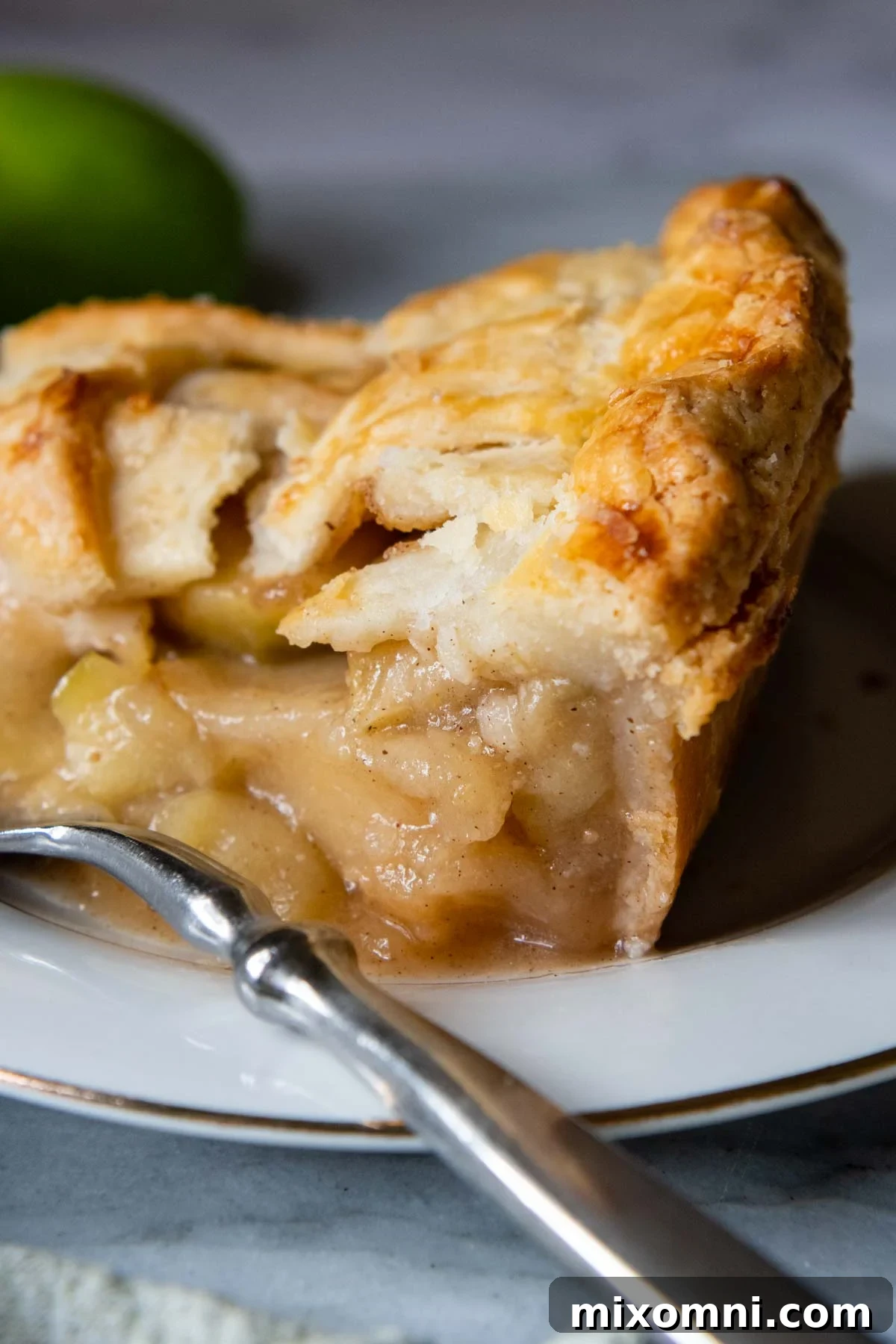
Are you ready to create the most delectable homemade gluten-free apple pie you’ve ever tasted? This comprehensive guide will equip you with all the essential techniques and insider tips to bake a truly exceptional pie. Imagine a dessert featuring an exceptionally flaky gluten-free pie dough, cradling a rich, juicy deep-dish apple filling, all crowned with a beautiful golden double lattice crust. Forget common gluten-free baking pitfalls like soggy bottoms or mushy apples – this recipe is foolproof, utilizing clever hacks for a consistently crisp crust and perfectly cooked fruit. We’ll walk you through every step, ensuring a triumphant pie-making experience!
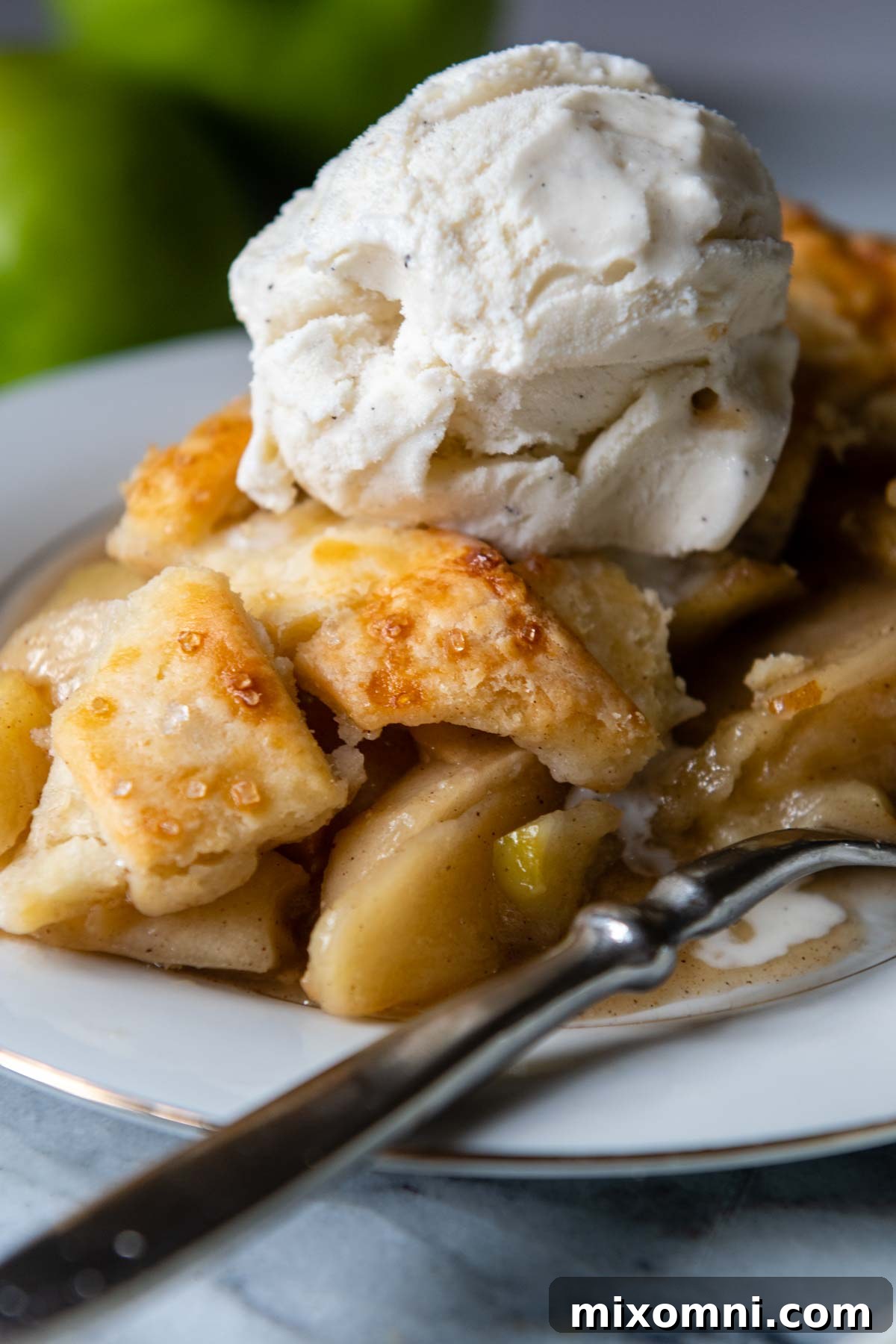
Bake the Best Gluten-Free Apple Pie with a Flaky, Crisp Crust
My journey into pie making began years ago with a classic homemade apple pie. I still recall the minimalist instructions from my mother: “Make a homemade crust, slice apples, mix with sugar, lemon juice, and cinnamon, top with another crust, and bake.” While it somehow turned out, I had the advantage of already understanding pastry dough, and crucially, it wasn’t gluten-free, which meant it was significantly more forgiving.
Fast forward to today, after countless hours refining various gluten-free baking techniques, I’ve mastered the art of creating foolproof gluten-free pie recipes. This expertise has culminated in the ultimate gluten-free apple pie, designed to sidestep all the common disappointments: bland pastry, a dreaded soggy bottom crust, overly mushy apples, or a watery filling. Gluten-free baking, especially with high-moisture fillings like apples, presents unique challenges, as gluten-free starches react differently to moisture compared to traditional wheat flour. This requires a more strategic approach to ensure a truly crisp crust.
While techniques like par-baking the crust work wonders for less moist fillings, such as in this easy gluten-free pecan pie recipe, apple pies demand an extra layer of finesse. Fortunately, the solution is remarkably simple and even easier than par-baking! The secret lies in a tip borrowed from my perfected gluten-free pumpkin pie crust: simply place your assembled pie directly onto a hot, preheated baking sheet when it goes into the oven. The intense heat from the metal baking sheet transfers efficiently to the bottom crust, ensuring it bakes to a beautiful golden brown and becomes wonderfully crisp, while the apples cook to perfection above.
Another crucial step for an impeccably cooked gluten-free apple pie filling is to gently soften the apples and pre-thicken the juices on the stovetop before transferring them into your pie crust. By thickening the sauce beforehand, you significantly reduce the amount of excess moisture that can seep into the crust during baking, further safeguarding against a soggy base. Whether you’re a novice baker intimidated by scratch-made pies or an experienced home chef seeking advanced tips, this guide provides everything you need. With clear, step-by-step photos and an easy-to-follow tutorial, you’ll learn how to construct a magnificent deep-dish apple pie, complete with a show-stopping gluten-free lattice pie crust!
Selecting the Best Apples for Your Gluten-Free Pie
While superior baking techniques are key to an outstanding gluten-free apple pie, the success of your dessert hinges significantly on one ingredient: the choice of apples. The right apple variety can make or break your pie, ensuring a filling that holds its shape, offers balanced flavor, and avoids becoming a mushy or watery mess during baking. The apples listed below are excellent choices for gluten-free apple recipes because they maintain their integrity and texture beautifully under oven heat.
For those who favor a tart filling, Granny Smith apples are a popular and classic choice. However, in this specific gluten-free apple pie recipe, which contains a carefully balanced amount of sugar, I’ve found Granny Smith to be a touch too tart for optimal flavor harmony. They can easily overpower the other delicate spices.
My absolute top recommendation for this recipe, and indeed for my favorite gluten-free crisp recipe, is the Golden Delicious apple. These apples strike a perfect balance of sweetness and subtle tartness, resulting in a rich, complex flavor profile that isn’t too overpowering. Critically, Golden Delicious apples maintain their form exceptionally well during baking, ensuring your pie filling has a delightful texture without turning into a soft purée.
Here are some of the best apple varieties to consider for your pie:
- Golden Delicious: Our preferred variety for its balanced flavor and excellent texture retention.
- Honeycrisp: Known for its crisp texture and sweet-tart flavor, it holds up well in baking.
- Granny Smith: A classic choice for a distinctly tart pie; consider pairing it with a sweeter apple for balance if you use less sugar in the filling.
- Jonagold: Offers a honey-like sweetness with a hint of tartness and a firm flesh.
- Braeburn: A crisp, sweet-tart apple that retains its structure beautifully.
- Pink Lady: Delivers a sweet, tangy flavor and a firm, fine-textured flesh that resists mushiness.
How to Make Homemade Gluten-Free Apple Pie
Crafting a truly exceptional gluten-free apple pie involves careful attention to both the filling and the crust. Below, you’ll find detailed, step-by-step instructions accompanied by photos to guide you through the process. For precise ingredient amounts and a complete printable recipe, please refer to the full recipe card at the end of this article.
Preparing the Juicy Apple Pie Filling
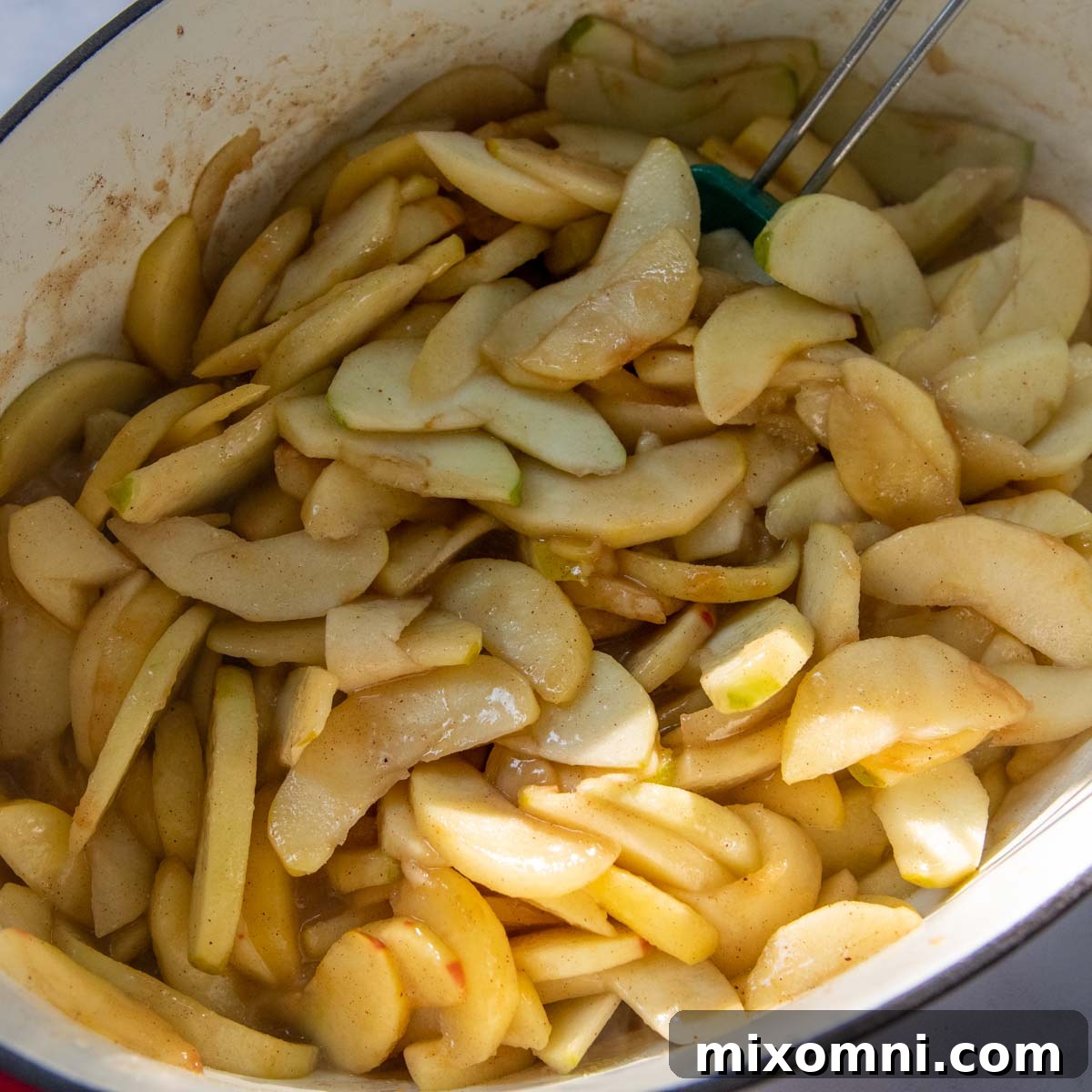
- While your pie dough is chilling in the refrigerator, begin preparing the apple filling on the stovetop. This crucial step initiates the cooking process for the apples, ensuring they achieve that ideal tender-yet-firm texture within a perfectly thickened sauce, rather than turning mushy in the oven. In a large Dutch oven or a heavy-bottomed pot, combine the thinly sliced apples, both granulated and brown sugars, chopped butter, aromatic spices (cinnamon, allspice, nutmeg), a pinch of salt, and fresh lemon juice.
- Cook this mixture over medium heat, uncovered, stirring occasionally to prevent sticking and ensure even cooking. Continue for approximately 15 minutes. At this point, the apples should be slightly softened around the edges but still firm enough to hold their shape; they should not be breaking down.
- In a separate small bowl, whisk together cornstarch with a small amount of cold water to create a slurry. Pour this cornstarch mixture into the simmering apple filling. Continue to cook for another 2 minutes, stirring constantly, until the filling visibly thickens. This pre-thickening step is vital for preventing a watery pie and a soggy crust. Remove the pot from the heat and stir in the vanilla extract for added depth of flavor.
- Before the warm apple filling can be transferred to your prepared pie crust, it must cool completely. You can allow it to sit at room temperature for about 1 hour, stirring occasionally to help release heat, or to speed up the process, spread the filling onto a baking sheet in a single layer and transfer it to the refrigerator. Ensure it’s fully cooled before proceeding to the next step, as warm filling can negatively impact the raw pie crust.
Mastering the Gluten-Free Pie Crust
Beyond a generously tall apple filling, the other indispensable component of this recipe is a remarkably buttery, flaky, and consistently foolproof gluten-free pie crust. For this, I turn to my trusted, well-tested recipe that has successfully convinced many that they were enjoying a “traditional” pastry, rather than one crafted with a gluten-free flour blend. This specific recipe yields a crust that is not only delicious but also surprisingly easy to roll out, a common challenge with many gluten-free doughs. The secret ingredient? A touch of sour cream and apple cider vinegar, which tenderize the dough and contribute to its incredible flakiness.
Below are the fundamental steps for preparing this exceptional gluten-free pastry dough. More intricate details, including specific ingredient quantities and extended tips, are provided in the full recipe card. To ensure you achieve a perfectly baked crust with that coveted crisp bottom and no hint of sogginess, be sure to also consult the bonus baking tips in the Tricks for Crispy Crust section further down the page.
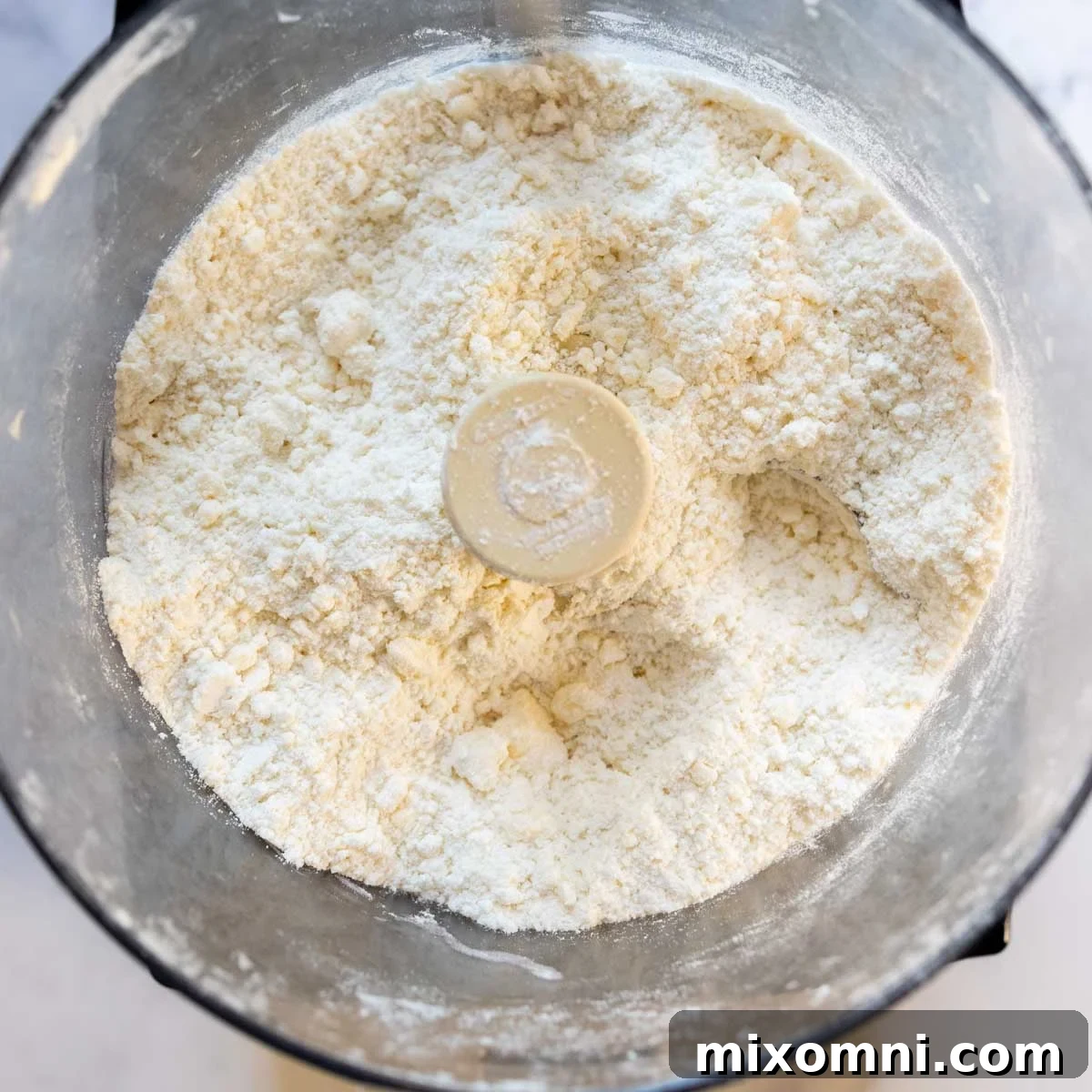
- Begin by combining the gluten-free flour blend, sugar, and salt in a food processor (or a large bowl if mixing by hand). Pulse (or whisk) until these dry ingredients are thoroughly mixed.
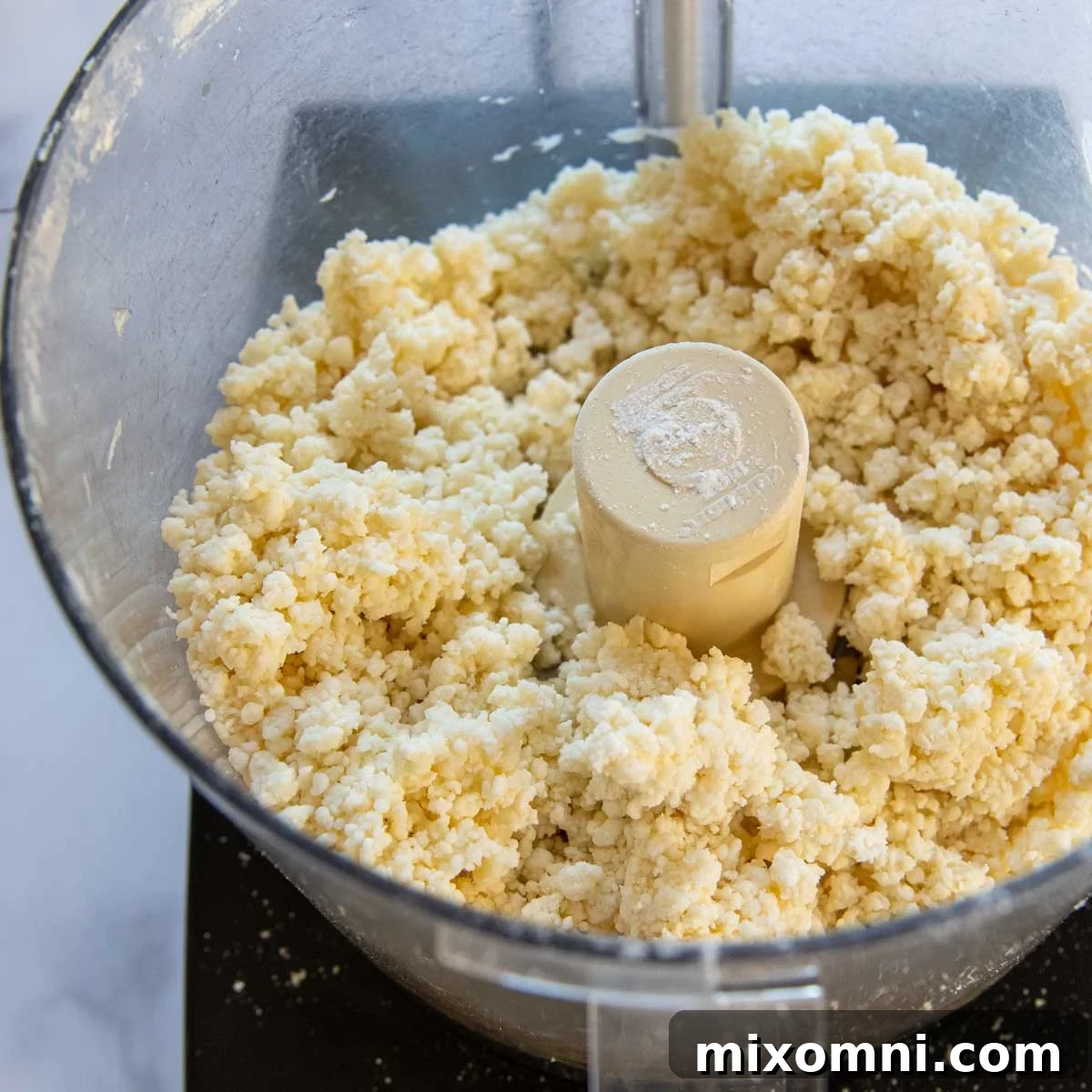
- Next, add the thoroughly chilled, cubed butter to the dry mixture. Process (or cut in with a pastry blender, fork, or your fingers) until the butter is evenly dispersed throughout the flour and resembles coarse crumbs with some pea-sized pieces remaining. Avoid overmixing at this stage, as the cold butter is key to flakiness.
- In a separate small bowl, whisk together the liquid ingredients: ice water, apple cider vinegar, and sour cream. Gradually add this chilled liquid mixture to the flour and butter mixture. Pulse the food processor (or knead gently by hand) until the dough just begins to come together in small, moist clumps. Be careful not to overwork the dough. It should be just moist enough to hold together when squeezed, but not sticky.
- Divide the dough into two equal portions. Flatten each portion into a thick, approximately 1-inch disk. Wrap each disk tightly in plastic wrap and refrigerate for at least 1 hour, or freeze for about 30 minutes. Chilling is crucial as it allows the gluten-free flours to hydrate and the butter to firm up, making the dough much easier to roll and ensuring a flaky final texture.
Crafting a Beautiful Lattice or Double Crust
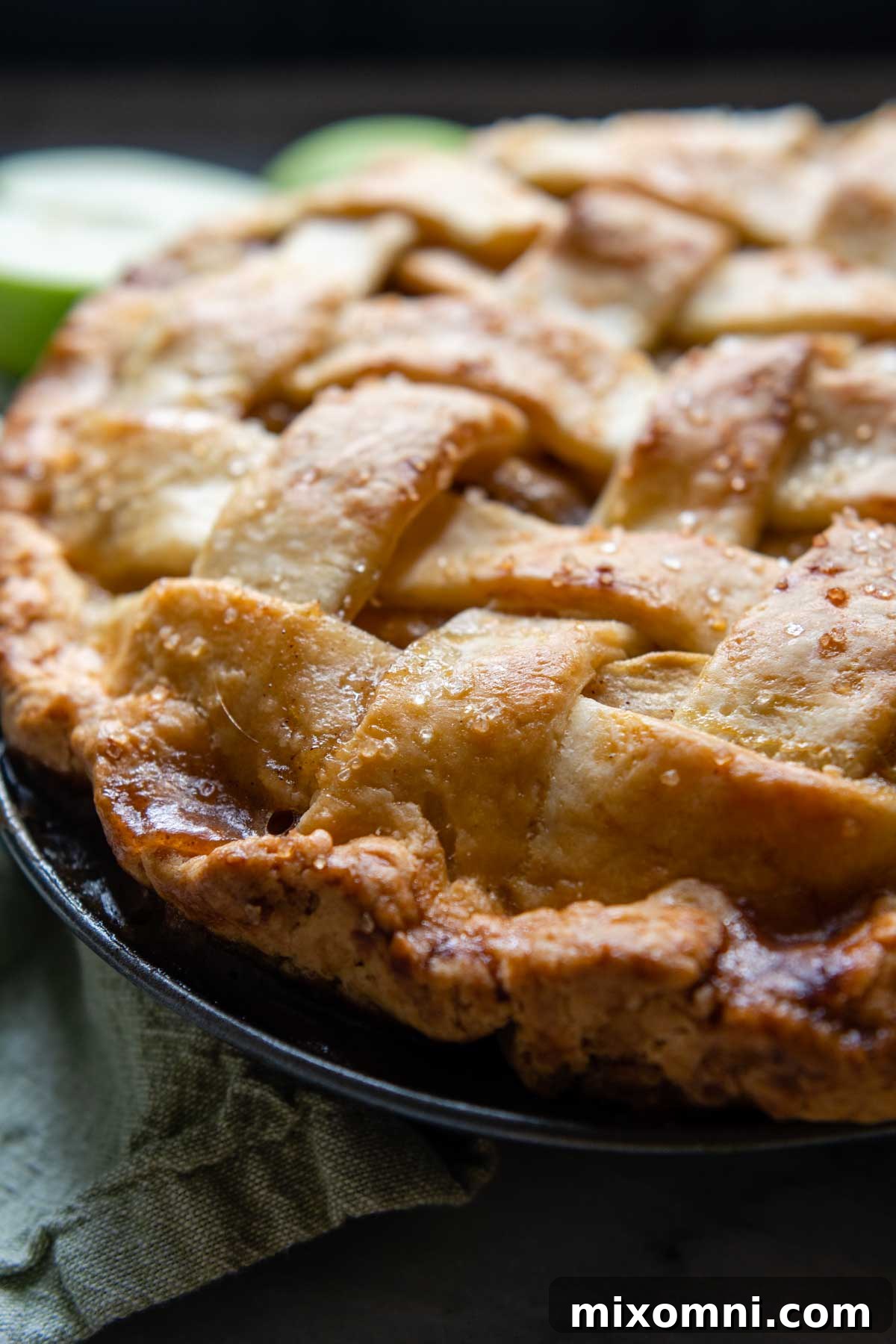
While a meticulously woven lattice crust undeniably adds an impressive, professional touch to your homemade gluten-free apple pie, it’s a technique that is surprisingly achievable with a few simple steps. If you’re short on time or prefer a more classic look, a traditional double crust offers equal deliciousness and is also covered here. Both options result in a stunning and tasty pie.
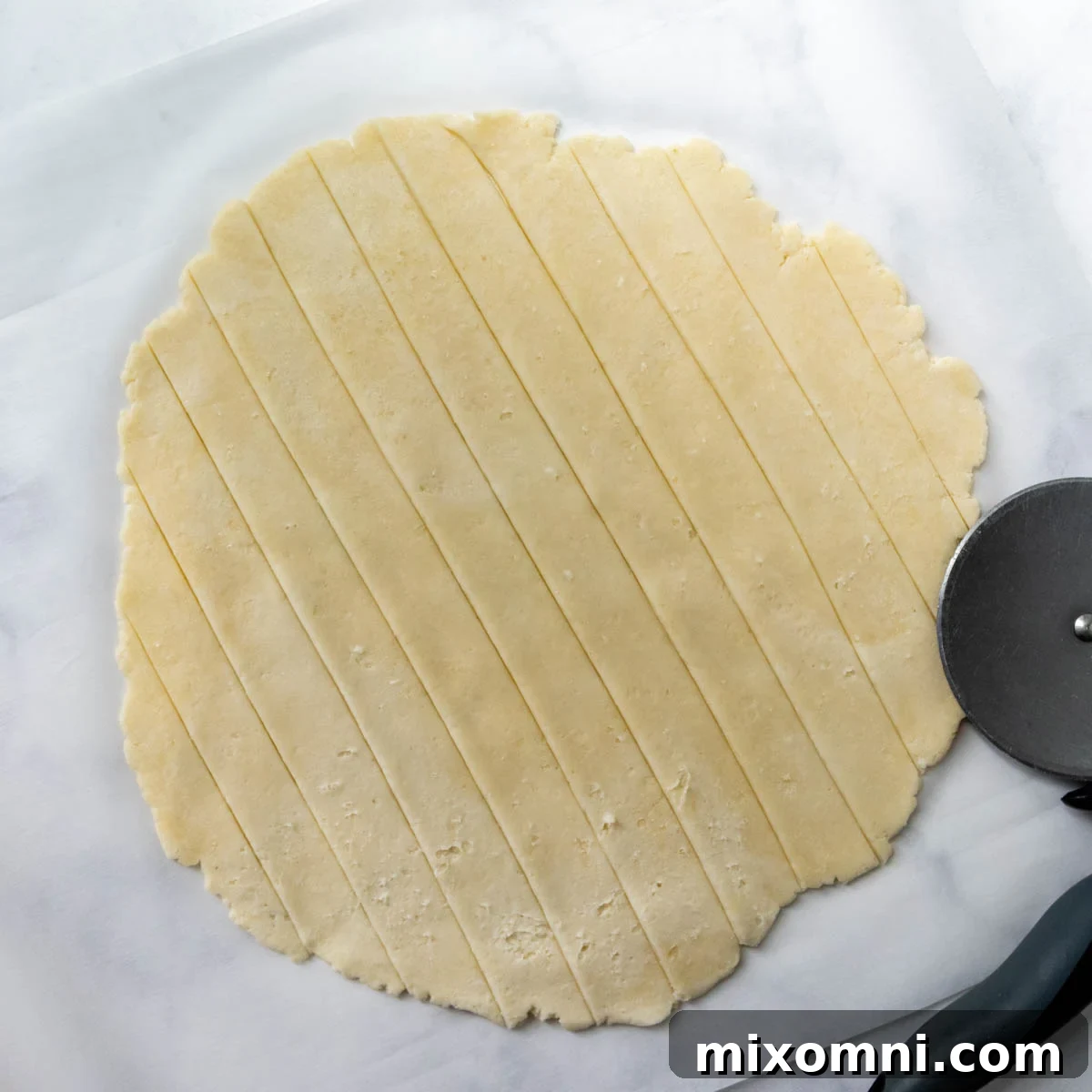
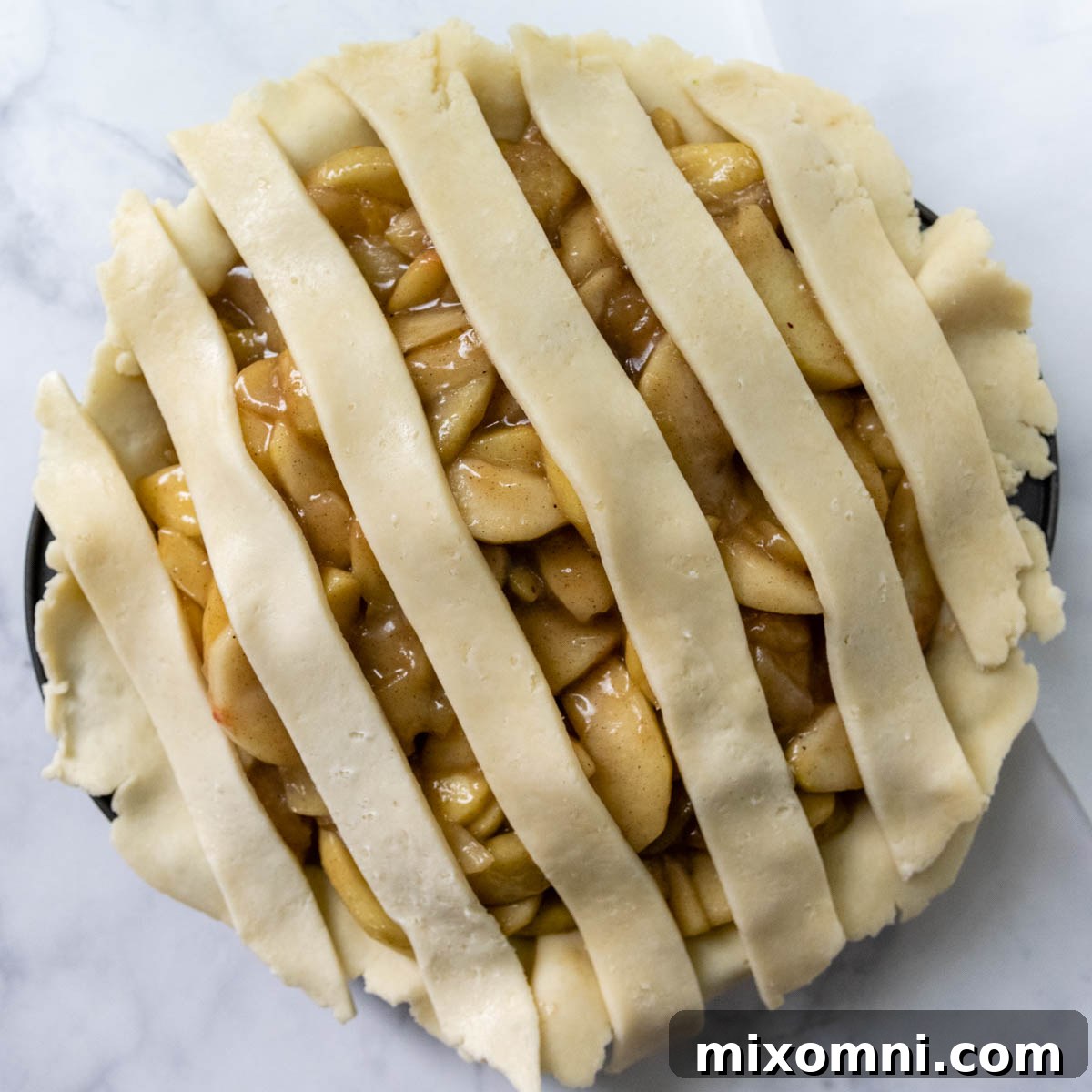
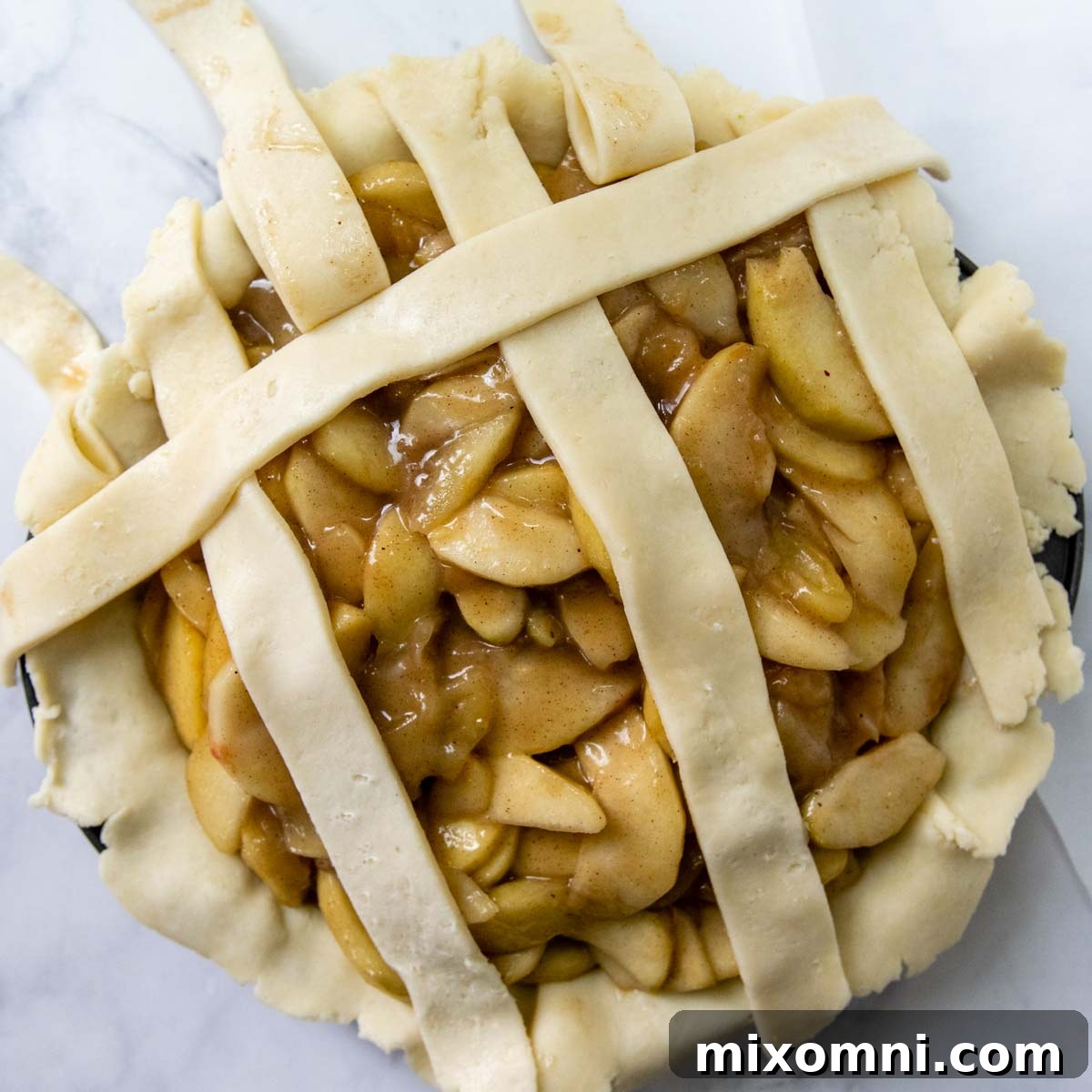
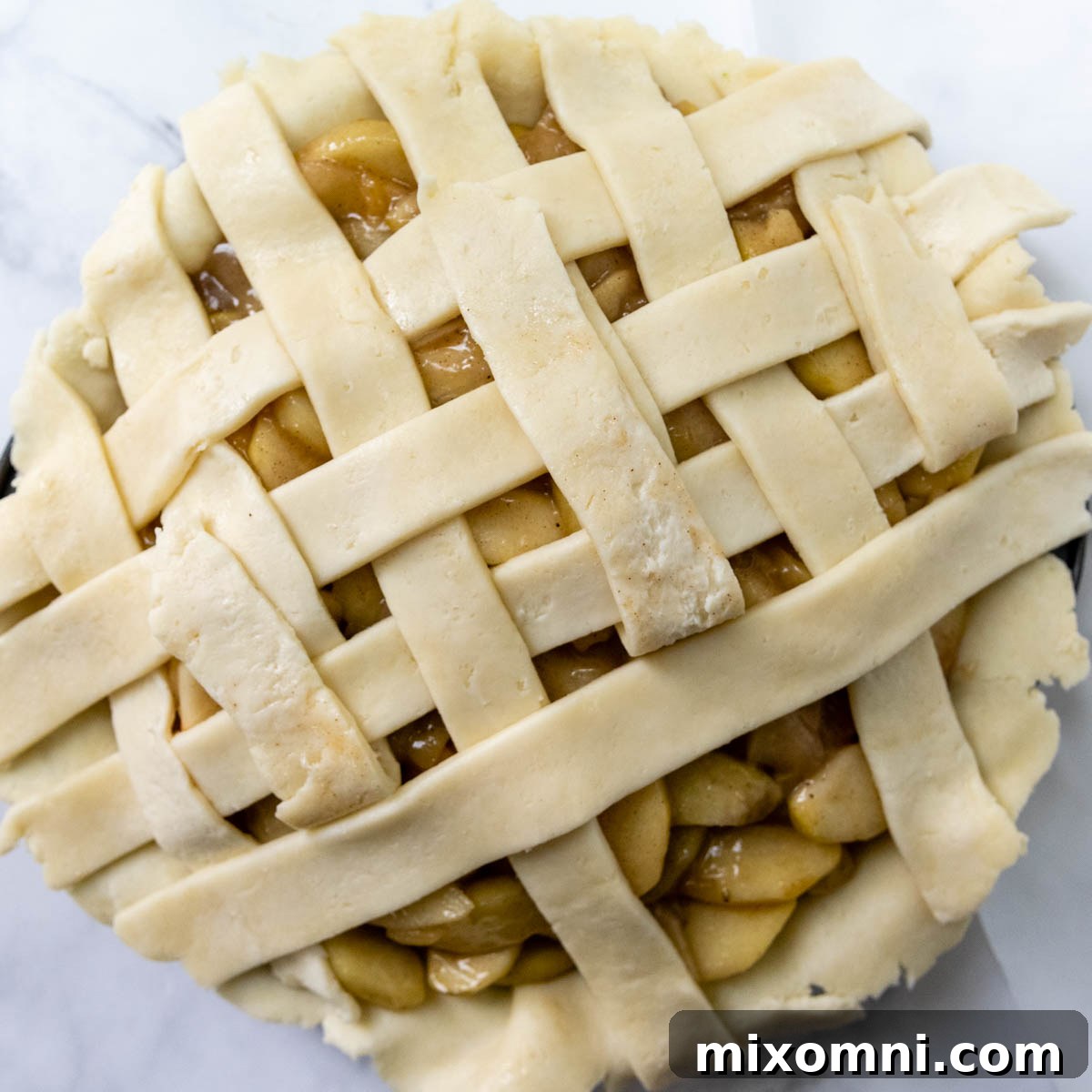
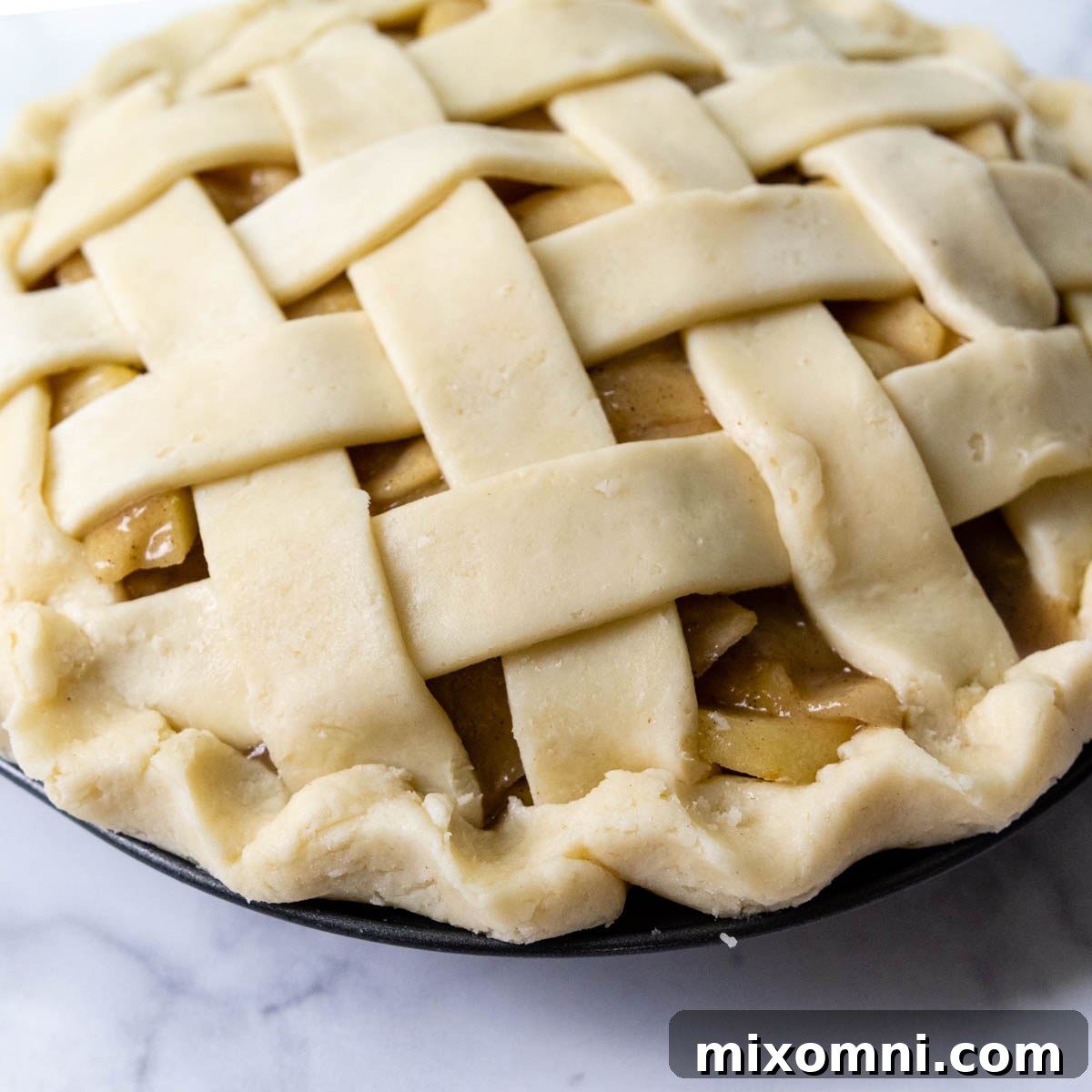
How to Make a Lattice Crust:
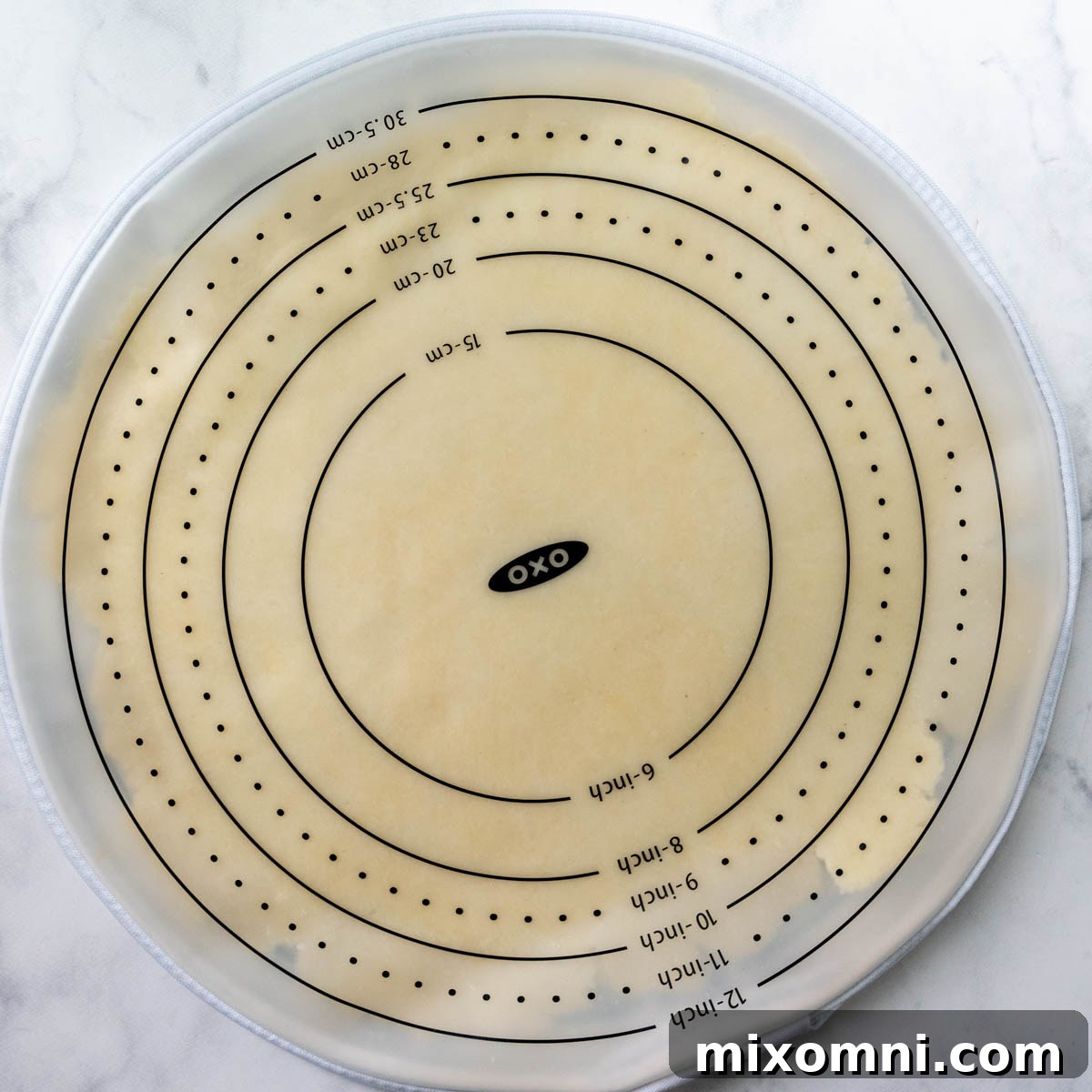
- Prepare your workspace by laying a large piece of parchment paper. Place one chilled pie dough disk in the center and cover it with another piece of parchment paper of the same size. Alternatively, use a pastry rolling bag, which makes handling gluten-free dough much easier. Using a rolling pin, gently press and spread the dough outwards from the middle until you form a circle slightly larger than your pie dish, roughly 11-12 inches in diameter.
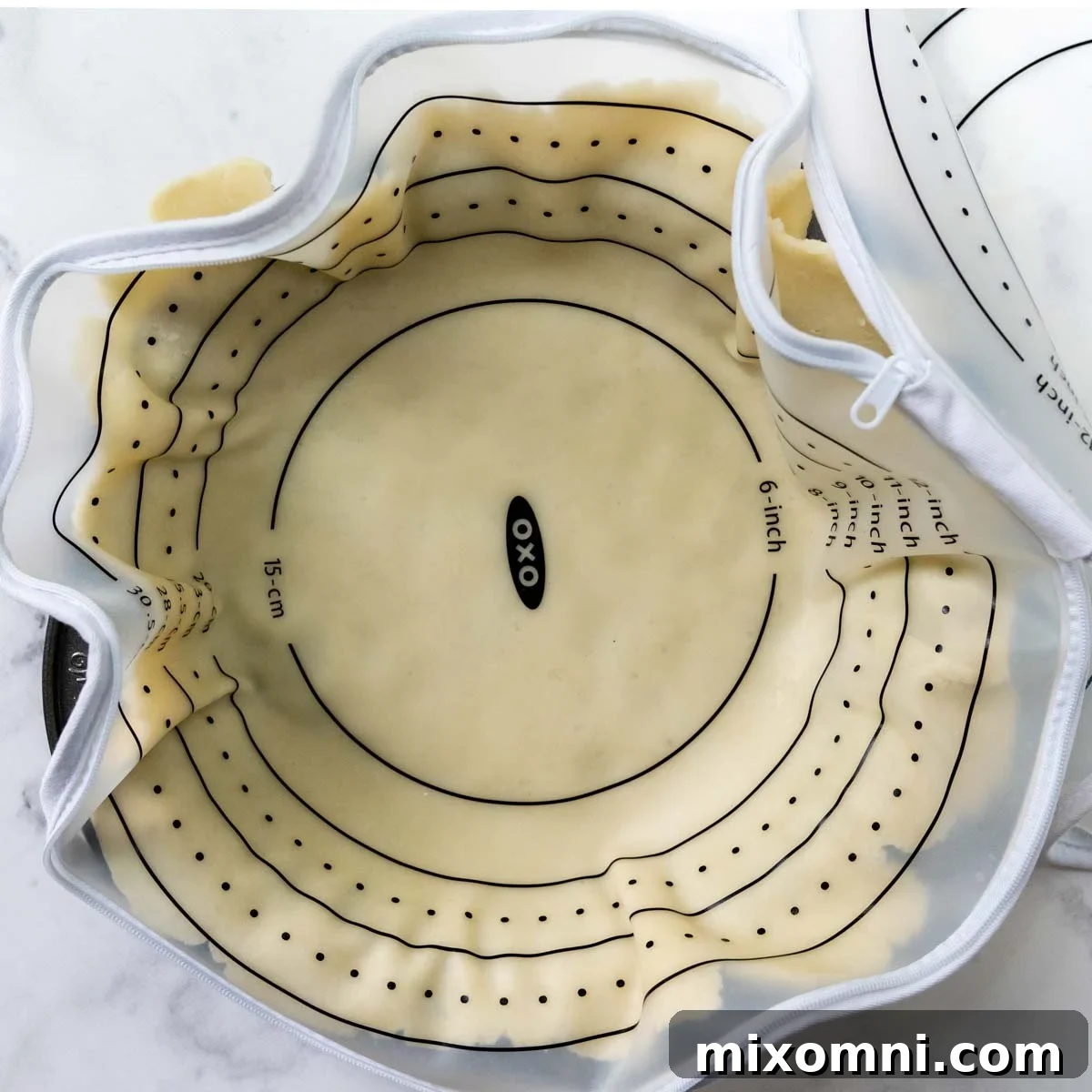
- Carefully remove the top parchment paper, then invert the rolled dough into your pie dish. Gently press the dough to fit snugly against the bottom and sides of the dish. Remove the second sheet of parchment paper. Pour the completely cooled apple filling into this bottom crust. Place the entire pie in the refrigerator while you prepare the top lattice crust.
- For the lattice top, roll out the second disk of chilled dough into another 12-inch circle. If using a pastry bag, invert the rolled dough onto a fresh sheet of parchment. Using a pizza cutter or a sharp knife, slice the dough into twelve 1-inch wide strips.
- Lay 6 of these strips evenly spaced across the pie filling, parallel to each other. Use the shorter strips for the edges and the longer ones for the middle of the pie.
- Now, for the weaving: Fold back 3 alternating strips (e.g., every other strip) almost entirely off the pie. Take one of the unused strips and lay it perpendicularly across the pie, right against where the folded strips meet the still-flat strips. Carefully return the folded-back strips over the new perpendicular strip, so they now cover it.
- Repeat this process on the other side. Fold back the remaining 3 vertical strips. Lay another unused strip perpendicularly against the folded strips. Return the vertical strips over it. Continue this alternating folding and laying method with the remaining strips until the entire lattice pattern is formed across the pie.
- Once the lattice is complete, trim any excess dough from the edges. Fold the top and bottom crust edges underneath themselves, sealing the lattice strips to the bottom crust. Use your thumb and forefinger (or a fork) to create a beautiful, decorative crimped edge. Freeze the assembled pie for 15 minutes before baking; this helps set the crust and prevents shrinkage. For an extra golden and shiny crust, brush with an egg wash (one egg whisked with a tablespoon of milk) and sprinkle generously with coarse sugar crystals just before baking.
How to Make a Double Crust:
- After placing the cooled apple filling in the bottom crust, roll out your second dough disk into a 12-inch circle, similar to how you prepared the bottom crust. Carefully invert this top crust over the apple filling. If necessary, use kitchen shears or a knife to trim the edges, leaving an even ½-inch overhang all around the pie dish.
- To seal the pie, fold the top and bottom crust edges together and tuck them underneath, pressing firmly to create a secure seal. Then, use your fingers and thumb to create a decorative crimped or fluted edge. As with the lattice crust, freeze the pie for 15 minutes before baking.
- For a beautiful finish, brush the top crust with an egg wash and sprinkle with coarse sugar crystals. Before placing the pie in the oven, remember to cut 3-4 slits in the center of the top crust. These vents are essential to allow steam to escape during baking, preventing the crust from bubbling up and ensuring even cooking of the filling.
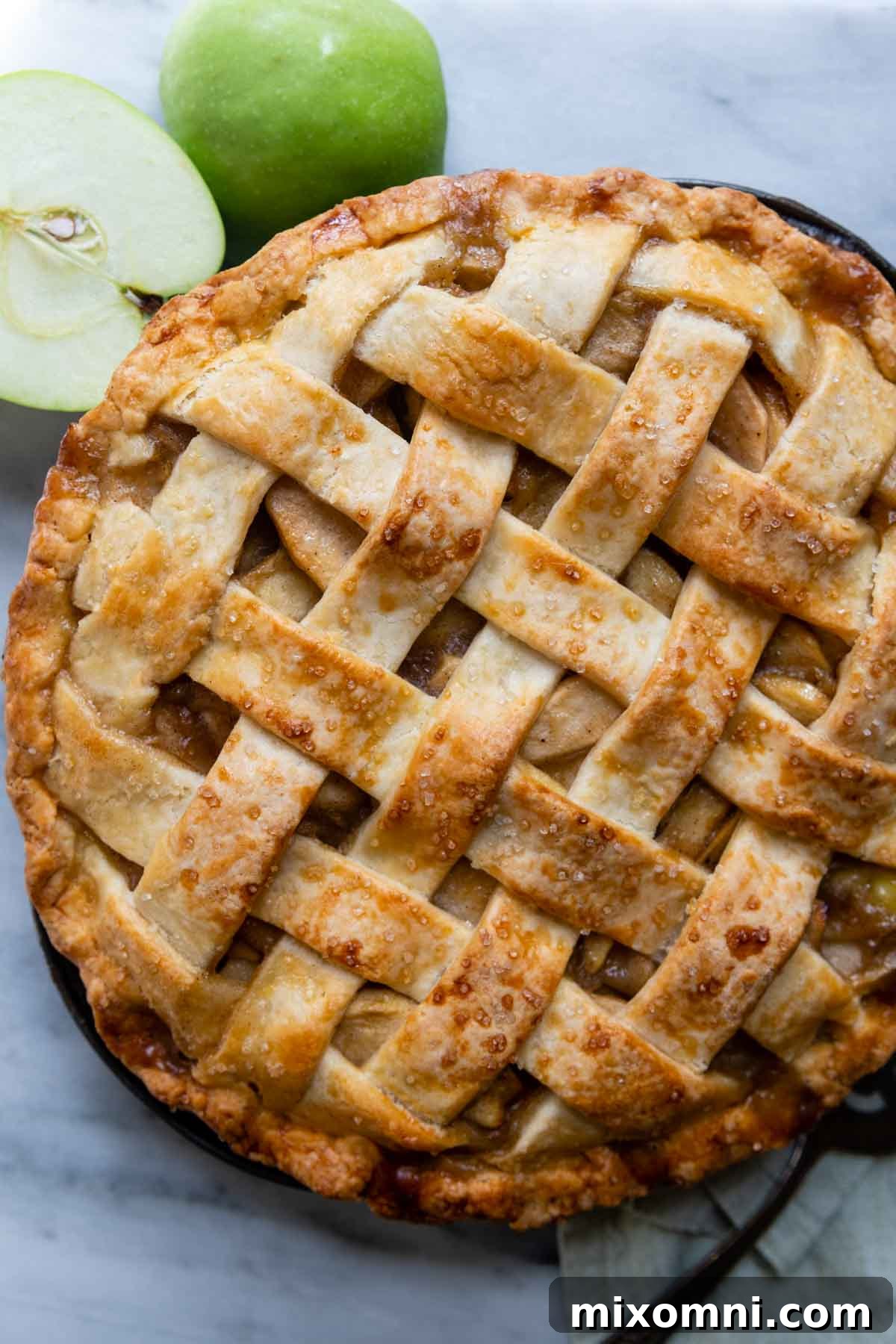
Expert Baking Tips for a Crispy Bottom Crust (No More Soggy Pie!)
Achieving a golden, crisp bottom crust is paramount, especially for a mile-high, deep-dish apple pie with a gluten-free crust. Gluten-free pastry dough can sometimes struggle to absorb fat in the same way traditional doughs do, often leading to common issues like a dense texture or a soft, underdeveloped bottom layer. Fortunately, these challenges are easily overcome with a few strategic baking adjustments. Employing these easy tricks will guarantee a beautifully crisp foundation for your apple pie.
- Ensure Your Pie is Thoroughly Chilled: Before your pie ever enters the oven, it’s vital that it is well-chilled. Freezing the assembled pie for at least 15 minutes just before baking works wonders. This step is critical because it brings the butter (the fat in your crust) back down to a very cold temperature. When cold butter hits a hot oven, it releases steam rapidly, creating those desirable pockets of air that result in a truly flaky and crisp crust.
- Preheat with a Baking Sheet: While your oven is preheating to the specified temperature, place a metal baking sheet (preferably lined with parchment paper or foil for easy cleanup) on the middle rack. Your pie will sit directly on this hot baking sheet during baking. The principle here is simple yet effective: the extra, direct heat conducted from the hot metal pan reflects upwards into the bottom crust. This intense heat conduction rapidly crisps the base of the pie, effectively preventing any sogginess.
- Choose the Right Pie Pan: For the absolute best results, opt for a deep-dish metal pie pan over glass or ceramic alternatives. Metal pans are superior conductors of heat, meaning they transfer heat more efficiently and directly to your pie crust. When combined with the preheated metal baking sheet, this setup provides a powerful one-two punch that guarantees a wonderfully crisp bottom crust every time.
- Strategize Your Oven Temperature: Begin baking your pie at a higher oven temperature for the initial half of the baking time. The combination of the cold butter in the crust, the hot metal baking sheet, and the heat-conducting metal pie dish creates an environment where the crust crisps up rapidly and effectively. After this initial high-heat phase, lower the oven temperature slightly to allow the apples to finish cooking through gently and prevent the top crust from over-browning.
- Protect the Edges with a Pie Shield: While we’re intentionally using higher heat and direct conduction to achieve a beautifully crisp bottom and sides, the delicate edges of your pie crust can brown too quickly or become tough if exposed to excessive heat. To prevent this, use a silicone pie shield. If you don’t have one, strips of aluminum foil carefully molded around the crust edges work just as well. Apply the shield partway through baking, typically when the edges are already lightly golden, to ensure they don’t overcook.
Make-Ahead and Storage Tips for Your Gluten-Free Apple Pie
For the ultimate experience of flakiness and crispness, a gluten-free apple pie is best enjoyed on the very day it is baked. The inherent moisture from the apple filling will naturally begin to soften the crust after about 24 hours. However, given that this pie requires a considerable amount of baking and cooling time before it’s ready to serve, enjoying it immediately after baking might not always be practical. No worries—there are excellent solutions to plan ahead!
For a Make-Ahead Apple Pie:
You can easily prepare this pie in advance by assembling it fully, right up until the point of baking. Once assembled (with or without the egg wash and coarse sugar), freeze the pie until it is completely solid. After it’s frozen solid, wrap it securely first with plastic wrap, then with aluminum foil. This double layer of protection prevents freezer burn and maintains quality. The pie can be stored in the freezer for up to 2 months.
When you’re ready to serve your make-ahead pie, there’s no need to thaw it! Bake the pie directly from frozen. Unwrap the pie completely and place it on the preheated baking sheet as directed in the baking instructions. Keep a close eye on it, as baking directly from frozen will require an additional 10-20 minutes of baking time once the oven temperature is lowered. Remember to cover the edges with a pie shield and loosely tent foil over the top of the pie to prevent over-browning while it finishes baking.
Storing Leftovers:
To store any leftover apple pie, simply leave it at room temperature. Loosely tent foil over the top of the pie, ensuring it’s not sealed tightly. This loose covering allows any residual moisture to escape, helping to preserve the crust’s texture for longer. The pie is best enjoyed within 3 days, keeping in mind that the crust will inevitably become softer on the second and third days as it continues to absorb moisture from the apples.
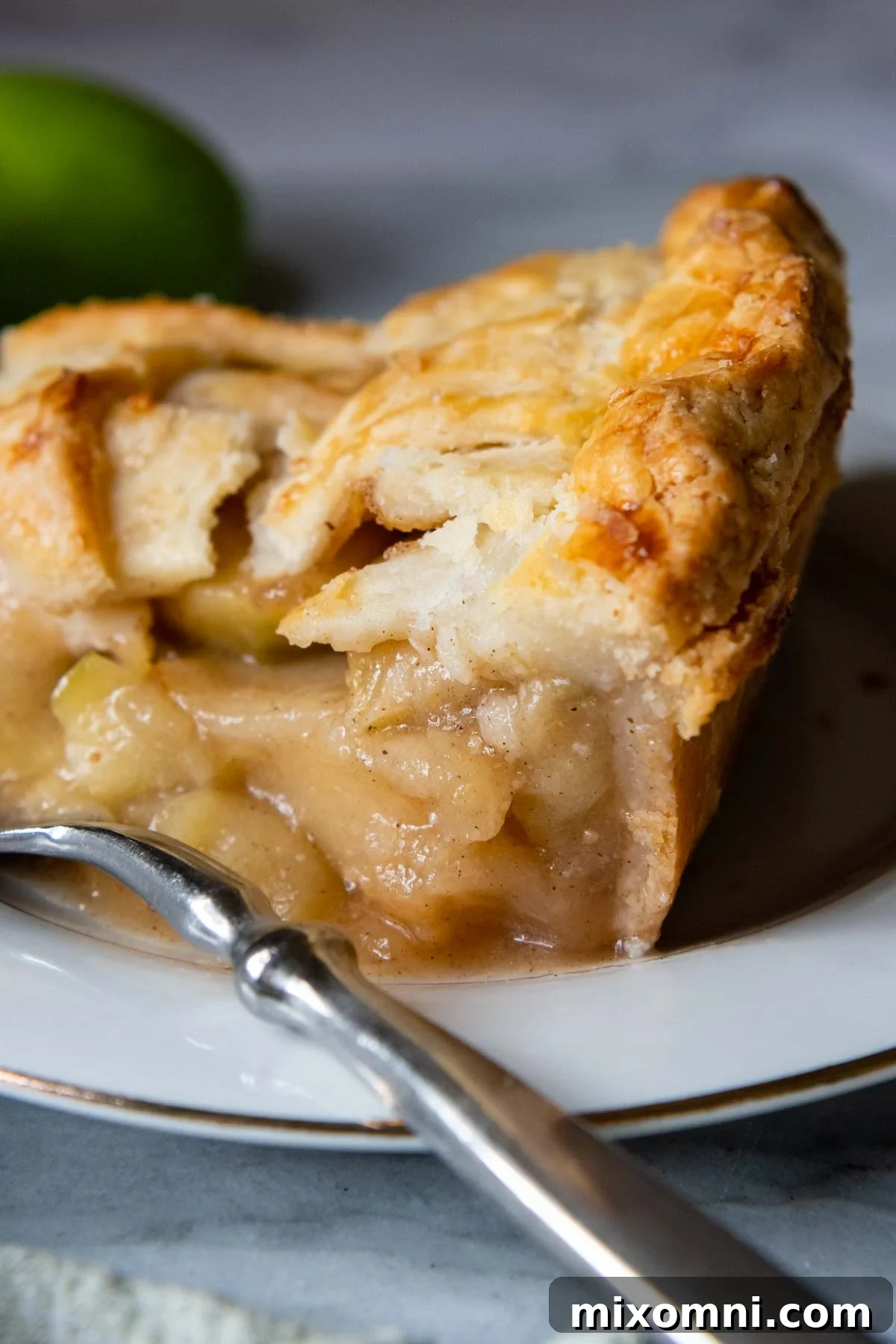
Don’t forget to save this incredible Gluten-Free Apple Pie recipe to your Pinterest board! You can also find many other delicious recipes by becoming friends with us on Pinterest!

Homemade Gluten-Free Apple Pie (No Soggy Bottom!)

Melissa Erdelac
8 servings
45 mins
1 hr
2 hrs 45 mins
Pin
Rate
Remove Ads
Ingredients
Gluten-Free Lattice Crust
- 2 sticks (16 tablespoons) unsalted butter, cut into cubes and frozen for 10 minutes
- 5 tablespoons ice water
- 3 tablespoons sour cream
- 3 teaspoons apple cider vinegar
- 2 ½ PLUS ⅓ cup (13 ounces weight total) gluten free flour, I highly recommend Cup4Cup gluten-free flour
- 3 teaspoons sugar
- 1 teaspoon salt
Gluten-Free Apple Pie Filling
- 5 pounds apples, cored, peeled, and ¼” slices, see recipe notes for best variety
- ⅓ cup granulated sugar
- ⅓ cup light brown sugar
- 3 tablespoons butter, chopped
- 1 ½ tablespoons lemon juice
- 1 ½ teaspoons ground cinnamon
- ¼ teaspoon ground allspice
- ¼ teaspoon ground nutmeg
- ⅛ teaspoon salt
- 2 tablespoons cornstarch
- 2 teaspoons vanilla extract
- Eggwash: 1 egg whisked with 1 tbsp milk
- Optional coarse sugar, for sprinkling on crust
Equipment
-
Pie Shield
-
Food Processor
-
Pastry Rolling Bag
-
Deep Dish Metal Pie Pan
Instructions
Gluten-Free Double Crust
-
Place the cubed butter in the freezer for 10 minutes. Mix together the cold water, sour cream, and vinegar in a small bowl. Place the liquids bowl in the refrigerator until you are ready to use.2 sticks (16 tablespoons) unsalted butter, 5 tablespoons ice water, 3 tablespoons sour cream, 3 teaspoons apple cider vinegar
-
FOOD PROCESSOR: Pulse flour, sugar, and salt together until mixed.
BY HAND: Whisk dry ingredients in medium-sized bowl.2 ½ PLUS ⅓ cup (13 ounces weight total) gluten free flour, 3 teaspoons sugar, 1 teaspoon salt -
FOOD PROCESSOR: Process the butter into the flour mixture until well incorporated, evenly dispersed, and without large chunks.
BY HAND: Use a pastry blender, fork, or fingers to cut and knead butter into the dough until it is well incorporated throughout. -
FOOD PROCESSOR: Add the liquids to the food processor and pulse until the flour becomes moistened and small dough clumps appear. If dough doesn’t start to come together, add a touch more cold water.
BY HAND: Add half the liquids and knead with fingers or a fork. Pour in the remaining liquids. Knead until the dough starts to come together and the liquids are well mixed with flour.
TIP: To check if you have enough liquid, clump and flatten a small bit of dough. If it doesn’t stick together, is crumbly, or breaks apart easily, add a small dash of ice water. Pulse a few times and recheck. If the dough is too wet or sticky, add a dash of flour. Pulse a few times and recheck. -
Divide the dough between 2 large sheets of plastic wrap and flatten into a thick 1″ disk. Wrap tightly and refrigerate for at least 1 hour or freeze for 30 minutes.
Apple Pie Filling
-
While the pie dough is chilling, prepare the filling. In a large Dutch oven or pot, combine the apples, sugars, butter, spices, salt, and lemon juice.5 pounds apples, cored, peeled, and ¼” slices, ⅓ cup granulated sugar, ⅓ cup light brown sugar, 3 tablespoons butter, 1 ½ tablespoons lemon juice, 1 ½ teaspoons ground cinnamon, ¼ teaspoon ground allspice, ¼ teaspoon ground nutmeg, ⅛ teaspoon salt
-
Cook over medium heat, uncovered, stirring occasionally for 15 minutes. The apples should be slightly softened, but not breaking down or losing their shape.
-
In a small bowl mix together the cornstarch with 2 tablespoons water. Pour into the apple mixture and cook for another 2 minutes, or until thickened. Remove from heat and stir in the vanilla.2 tablespoons cornstarch, 2 teaspoons vanilla extract
-
At this point the filling will have to completely cool before transferring to the pie crust. Either let it sit out for 1 hour, or for quicker cooling, transfer to a baking sheet and place in the refrigerator.
Shaping Crust and Baking
-
Preheat the oven to 400ºF. Place a baking sheet, lined with parchment paper or foil, on the middle rack. The baking sheet heats, along with the oven, to place the pie on. The metal conducts the heat better, which makes a crisp bottom crust. The foil or parchment catches drips, saving you clean up!
-
To roll the pie dough, lay a large piece of parchment paper on your workspace. Place one unwrapped dough disc in middle and place same sized sheet on top. Alternatively, use the pastry rolling bag pictured in the post. Use a rolling pin to press and spread out down from the middle out. Roll out into a circle slightly larger than your pie dish, about 11-12 inches.
-
Remove the top paper, and invert onto pie dish. Press the dough to fit securely against the pie plate. Remove the second paper. Tip: If the dough warmed while rolling, it may be trickier to take the paper off. If this happens, leave the paper on, and stick the whole thing in the fridge for 5-10 minutes. Once the crust is chilled again it’s much easier to pull off the paper.
-
Pour the cooled pie filling in the bottom crust and place the pie in the fridge while you repeat the rolling process with the top crust.
How to Make Lattice Crust
-
Roll out the second disc into a 12-inch circle. If using the pastry rolling bag, invert the rolled crust onto a piece of parchment paper for cutting. Use a pizza cutter or knife to slice the dough in twelve 1-inch strips. Lay 6 strips, evenly spaced, across the pie. Use the shorter strips at the ends, longer strips towards the middle.
-
Fold back 3 alternating strips almost all the way off of the pie. Take one unsused strip and lay it right against where the strips are folded back. Return the strips back over the pie so they cover the strip just placed.
-
Fold back the other 3 vertical strips. Take another usused strip and lay it against where the strips are folded back. Return the vertical strips back over it. You will start to see the woven pattern. Repeat process with remaining strips.
-
Fold the excess dough edges under, sealing the lattice crust strips with the bottom crust. Use your finger and thumb to make a decorative edge. Freeze the pie for 15 minutes before baking.
How to Make a Double Crust
-
Roll out the second disc into a 12-inch circle. Invert the crust on top of the filling. If necessary, trim the edges so there is an even ½ inch overhang all around the edges. Seal the top and bottom edges together, tucking under, and then use your finger and thumb to make a decorative edge. Freeze the pie for 15 minutes before baking.
Baking Instructions
-
After the pie has chilled in the freezer, brush on the egg/milk mixture on the top crust and edges to make a shiny crust. Sprinkle with the optional coarse sugar. If using a double crust, cut 3-4 slits in the top for steam to escape.eggwash: 1 egg whisked with 1 tbsp milk, optional coarse sugar
-
Use a pie shield to protect the edges or shield with strips of foil circled around. Place the pie directly on the heated baking sheet. Bake for 35 minutes.
-
Leave the pie in the oven, but lower the temperature to 375℉. If the crust is becoming too browned, loosely tent a piece of foil over the top. Continue to bake for 30-40 minutes, or until the juices start to bubble throughout the vents.
-
Cool the pie on a wire rack for at least 3 hours before slicing. This allows enough time for pie to cool and the sauce to set. It’s best served the same day or see recipe notes for make-ahead tips.
-
DID YOU MAKE THIS RECIPE?? DON’T FORGET TO LEAVE FEEDBACK AND/OR CLICK A STAR RATING ON THE RECIPE CARD
Notes
Recommended Apples
- Golden Delicious (preferred variety)
- Honeycrisp
- Granny Smith apples (very tart, so may want to pair with something else)
- Jonagold
- Braeburn
- Pink Lady
Make-Ahead and Storage Tips
For maximum flakiness, enjoy the day it is made. The crust becomes softer after 24 hours as it absorbs the moisture from the apples.
When storing leftovers, leave at room temperature and loosely tent foil over the top, not securely, so moisture can escape. Enjoy within 3 days, but the crust will became softer on days 2 and 3.
For a make-ahead apple pie, follow the recipe for assembly until right before baking. Freeze until solid and then wrap securely with plastic wrap and foil. Return to freezer up to 2 months.
When ready to serve, bake directly from frozen, do not thaw. Unwrap the pie and bake as directed with the preheated baking sheet. Once the oven temperature is lowered, it will required about 10-20 minutes additional baking time. Be sure the edges are covered with a pie shield and foil loosely tented over the top.
Carbohydrates: 93g,
Protein: 6g,
Fat: 30g,
Saturated Fat: 18g,
Polyunsaturated Fat: 1g,
Monounsaturated Fat: 7g,
Trans Fat: 1g,
Cholesterol: 74mg,
Sodium: 553mg,
Potassium: 342mg,
Fiber: 12g,
Sugar: 50g,
Vitamin A: 1007IU,
Vitamin C: 14mg,
Calcium: 74mg,
Iron: 2mg
Did you make this recipe?
Please leave a star rating and review below. It helps others when searching for recipes and I LOVE feedback!