
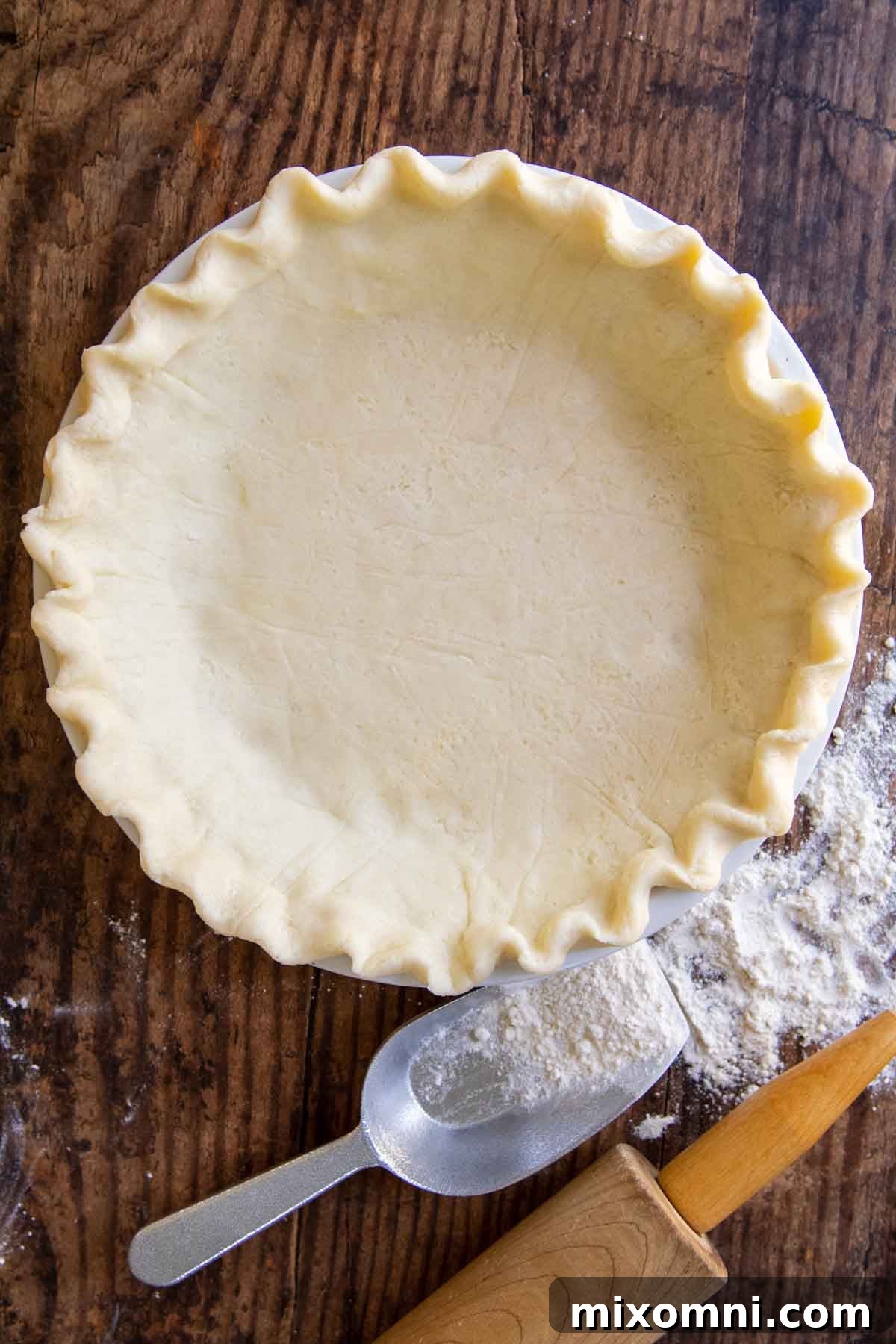
Are you on a quest for the ultimate gluten-free pie crust? One that’s irresistibly flaky, wonderfully tender, and surprisingly easy to roll out? Your search ends here. This isn’t just another gluten-free recipe; it’s a comprehensive guide to mastering a pie crust so delicious and effortless, even skeptics won’t guess it’s gluten-free. The secret ingredient that sets this recipe apart? A simple tablespoon of sour cream. This humble addition works wonders, tenderizing the dough to achieve a lightness and flakiness reminiscent of the beloved all-butter pie crusts you grew up enjoying.
The Journey to a Legendary Gluten-Free Pie Crust
My baking journey, much like many others who ventured into the world of gluten-free, began with a mix of excitement and eventual frustration. Pre-GF days, whipping up a pie crust was second nature. Post-diagnosis, however, those initial attempts at gluten-free pie dough often ended in tears and dismal results. The dough was crumbly, hard to handle, and far from the flaky perfection I craved.
While I found solace in simpler alternatives like a press-in oatmeal pie crust that required no rolling or chilling, I yearned for that classic, buttery, flaky base for my apple pies or a perfectly crisp bottom for a pumpkin filling. The true essence of homemade pie felt just out of reach.
Then, a culinary revelation arrived in the form of America’s Test Kitchen: The How Can It Be Gluten Free Cookbook. This groundbreaking resource didn’t just help me rediscover beloved desserts; it equipped me with the knowledge to bake like a gluten-free professional. Its insights inspired everything from my soft, squishy homemade gluten-free bread recipe to the eventual publication of my own gluten-free cookbook. It was through this journey that I unearthed the critical missing ingredient for an exceptional GF pie crust: the magical combination of sour cream and all-butter.
Sour cream works by tenderizing the pastry dough, effectively coating the starches and preventing them from forming a tough, chewy texture. This results in a homemade gluten-free pie crust that is astonishingly light, exquisitely flaky, and never dense. With this discovery, pie-making and I joyfully reunited. It motivated me to build an entire collection of gluten-free pie recipes – a feat I once thought impossible! This very recipe even forms the base of a from-scratch GF pot pie that has consistently won over even the toughest critics.
This detailed guide offers more than just the best-tasting crust; it’s packed with invaluable tips, innovative hacks, recommendations for the best gluten-free flour, essential equipment, and comprehensive instructions for making the dough both with a food processor and by hand. I’ll walk you through every step, ensuring you achieve a perfect, consistently delicious pastry dough every single time.
This is The Best GF Pie Crust Recipe!! My non-GF son-in-law raved about the crust & was shocked when I told him it was GF! I feel I have arrived in the baking world when I can make a beautiful pie! This. Is. It!! Thank you for a grand recipe!
—Julie
Essential Equipment for Gluten-Free Pie Making Success
While a delicious gluten-free pastry crust can technically be made with minimal tools – a bowl, a fork, and a rolling pin will suffice – certain kitchen equipment can significantly streamline the process and lead to consistently superior results. If you’ve ever felt intimidated or frustrated by homemade pie crusts, consider these game-changing tools. I’ll explain why each is recommended, allowing you to decide what will best address your baking challenges.
- Food Processor: If the thought of making dough from scratch feels daunting, a food processor is your best friend. It makes the process incredibly quick and easy, typically taking about 10 minutes from start to finish. The blades excel at incorporating butter into dry ingredients far more efficiently and evenly than a fork or a pastry blender, ensuring a more consistent dough texture.
- Silicone Dough Bag: Struggling with rolling out dough that sticks, creases, or tears? This affordable tool is an absolute must-have for gluten-free bakers. I used to roll dough between two sheets of parchment or plastic wrap, only to contend with persistent creasing and sticking. This innovative bag simplifies the rolling process, helps you achieve the correct size, and makes transferring the delicate dough to your pie plate a breeze.
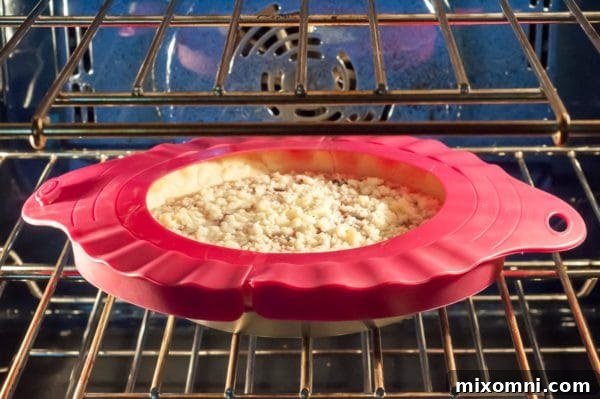
- Pie Shield: The edges of a pie crust are exposed during baking, causing them to brown much faster than the bottom crust. While aluminum foil offers a quick fix, it can be cumbersome to adjust and remove. A pie shield, typically made of silicone, simplifies things by providing even protection, ensuring your crust edges are perfectly golden, not burnt.
- Metal Pie Pans: A common complaint with gluten-free pies is a soggy bottom crust. This often happens because fats are absorbed differently by GF starches, leading to a less flaky or soft bottom. Baking your crust in a metal pan significantly improves results. Metal conducts heat more efficiently and rapidly, ensuring the bottom crust bakes thoroughly and achieves that desirable crispness.
- Pie Weights: Whether you’re blind baking a crust (baking it without filling) or partially baking it (useful for fillings with high moisture content), weighting the crust is essential to prevent it from puffing up or shrinking. While you can use parchment paper filled with dried beans, a dedicated pie weight is a more convenient option. Many pie weights feature holes that allow heat to circulate effectively to the bottom crust, requiring no parchment and making the process simpler.
Watch This Recipe Video
Step-by-Step: Crafting Your Perfect Gluten-Free Pie Dough
Let’s create this incredible gluten-free pie crust together! The following sections provide detailed step-by-step photos and modified instructions. For the complete recipe, including precise ingredient amounts, please refer to the comprehensive recipe card further down the page.
Step 1: Prepare Your Ingredients (The Cold Factor is Key!)
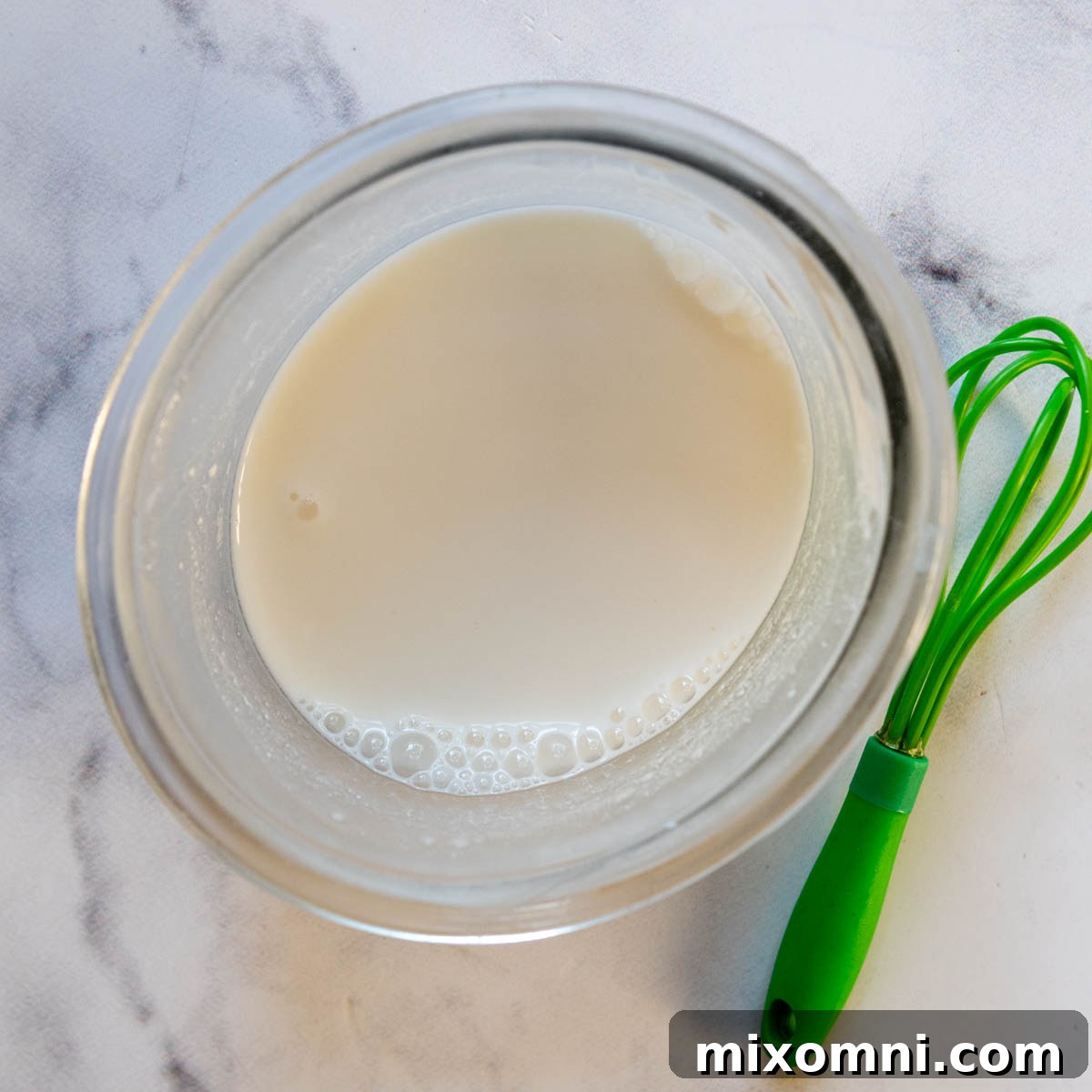
The foundation of a truly flaky, all-butter pie crust lies in using very cold ingredients. Begin by whisking together the cold water, sour cream, and vinegar in a small bowl. Place this bowl in the refrigerator to keep it chilled until you’re ready to incorporate the liquids. Next, chop your butter into small cubes and place them in the freezer for about 10 minutes to ensure they are extra firm and cold.
Step 2: Combine Dry Ingredients & Incorporate Butter
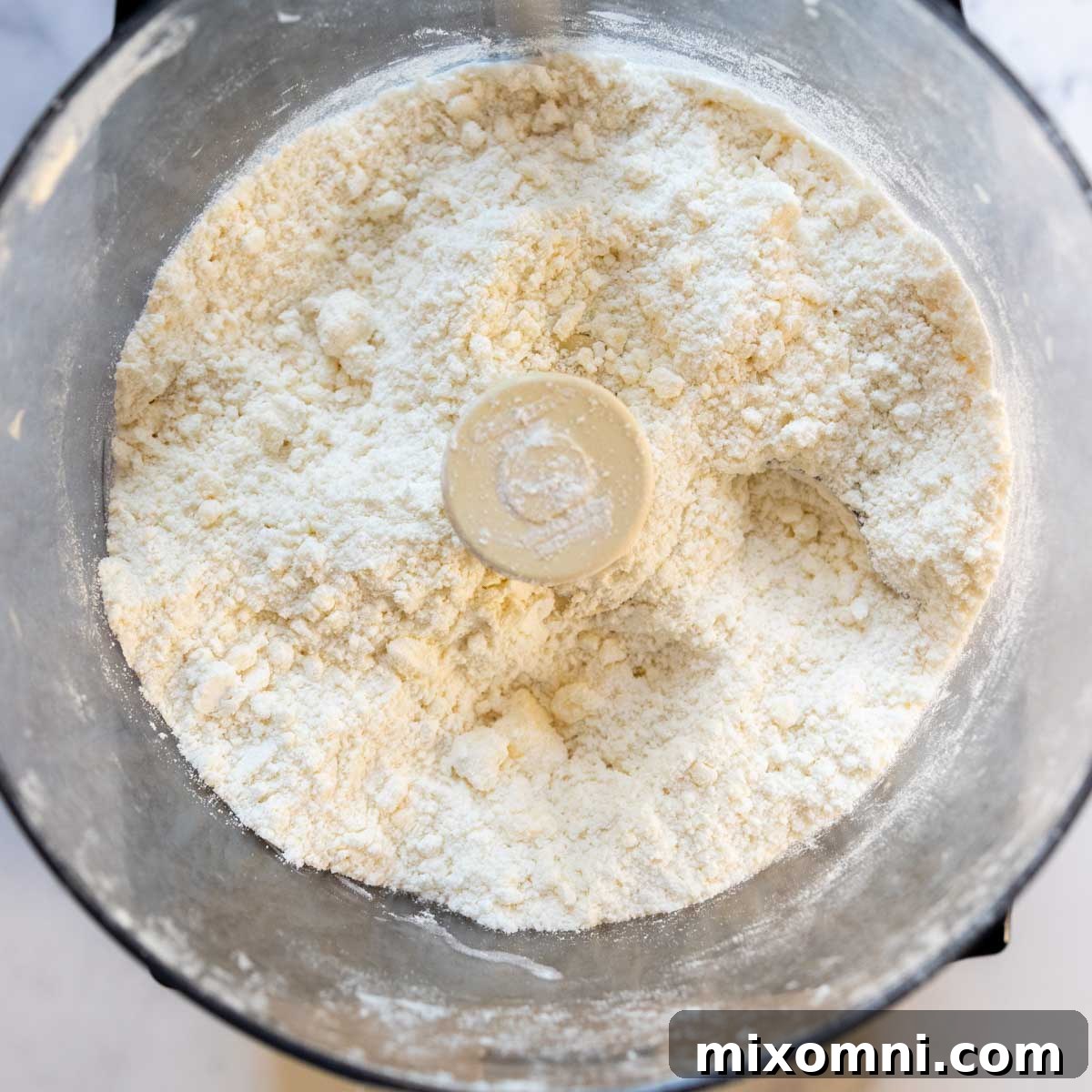
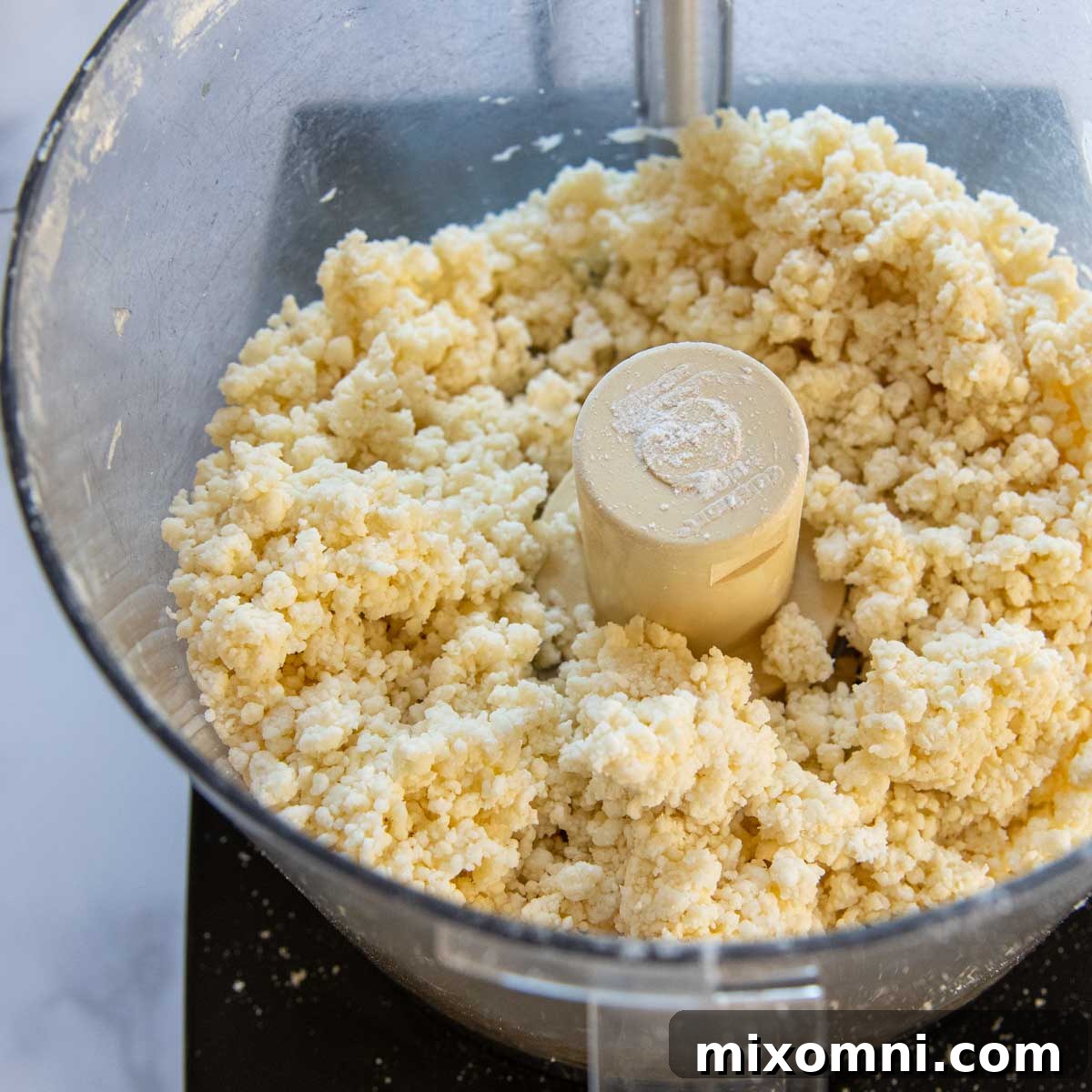
First, in a large bowl or the bowl of your food processor, combine the dry ingredients: gluten-free flour, sugar, and salt. Mix these thoroughly. Then, add the partially-frozen, cubed butter to the dry ingredients. Work the butter into the flour mixture until it’s evenly incorporated and resembles coarse sand with some pea-sized crumbs. You can achieve this using a pastry blender, a fork, or by pulsing in a food processor.
Step 3: Add Liquids for the Perfect Dough Consistency
Now, retrieve your chilled liquid mixture. Gradually add these liquids to the flour and butter mixture. Continue to mix (either by hand or by pulsing the food processor) until the dough is just moistened and small clumps begin to form. Avoid overmixing, as this can develop toughness.
Pro Tip: To accurately check for the right amount of liquid, take a small pinch of dough and try to clump it together. If it holds its shape without being crumbly or breaking apart easily, you’ve likely hit the sweet spot. If it’s too dry, add a tiny dash of ice water, pulse a few times, and recheck. Conversely, if the dough feels too wet or sticky, add a small sprinkle of gluten-free flour, pulse, and check again. The dough should come together effortlessly.
Step 4: Wrap & Chill for Optimal Texture
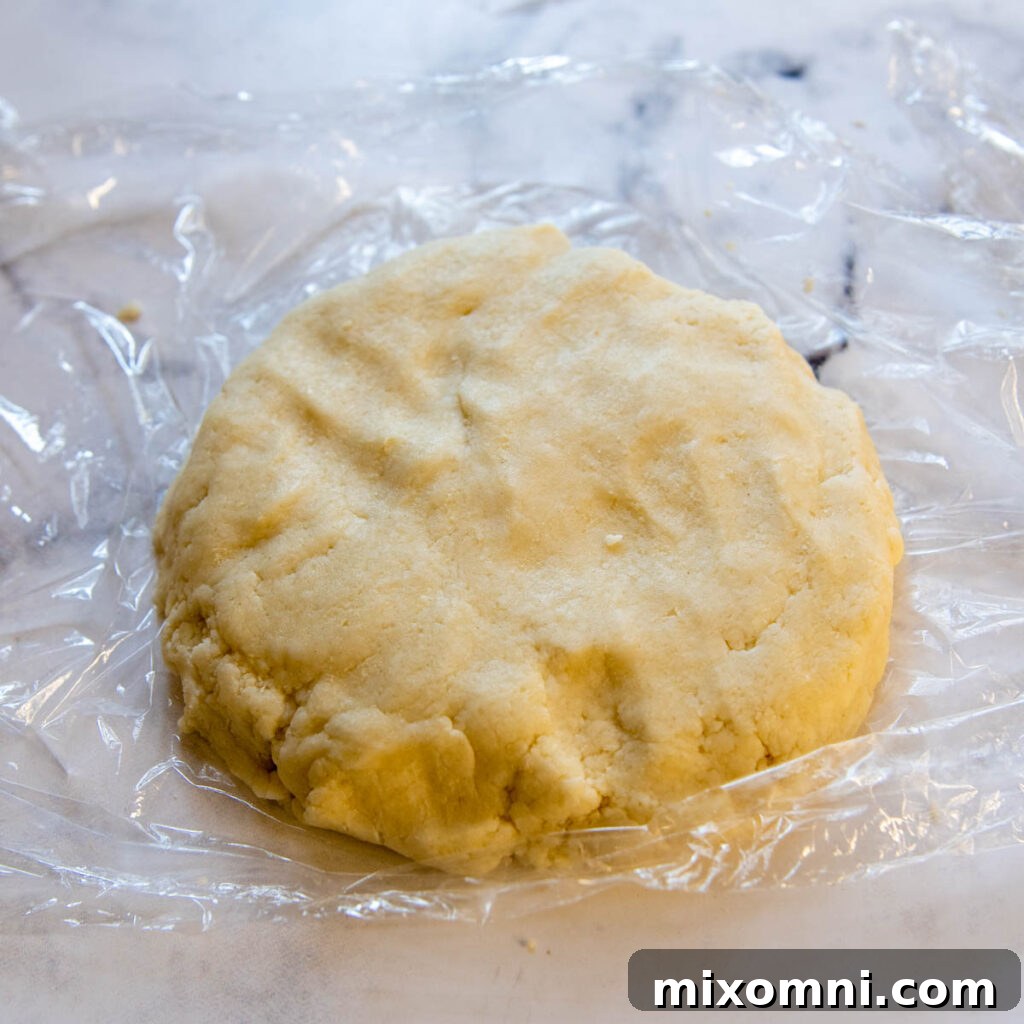
Once the dough is properly mixed, it’s crucial to chill and rest it before rolling. Lay a large piece of plastic wrap on your counter. Transfer the dough onto the plastic wrap and gently shape it into a disc, approximately 1 inch thick. Wrap the disc tightly with the plastic wrap, ensuring no air can get in, and refrigerate it for at least 1 hour, or freeze for 30 minutes. This chilling period is vital for the butter to re-solidify and for the gluten-free flours to properly hydrate, making the dough much easier to handle.
Pro Tip: Wrapped pie crust dough can be stored in the refrigerator for 1-2 days. For longer storage, place the tightly wrapped disc into a freezer-safe ziplock bag and freeze for up to 1 month. When you’re ready to use it, simply thaw the frozen dough in the refrigerator overnight.
Masterful Rolling: Achieving a Flawless Gluten-Free Pie Crust
Rolling out gluten-free dough can sometimes present unique challenges, but with the right techniques and tools, you can achieve a perfectly smooth, crack-free crust every time. Here are my top tips for rolling with success:
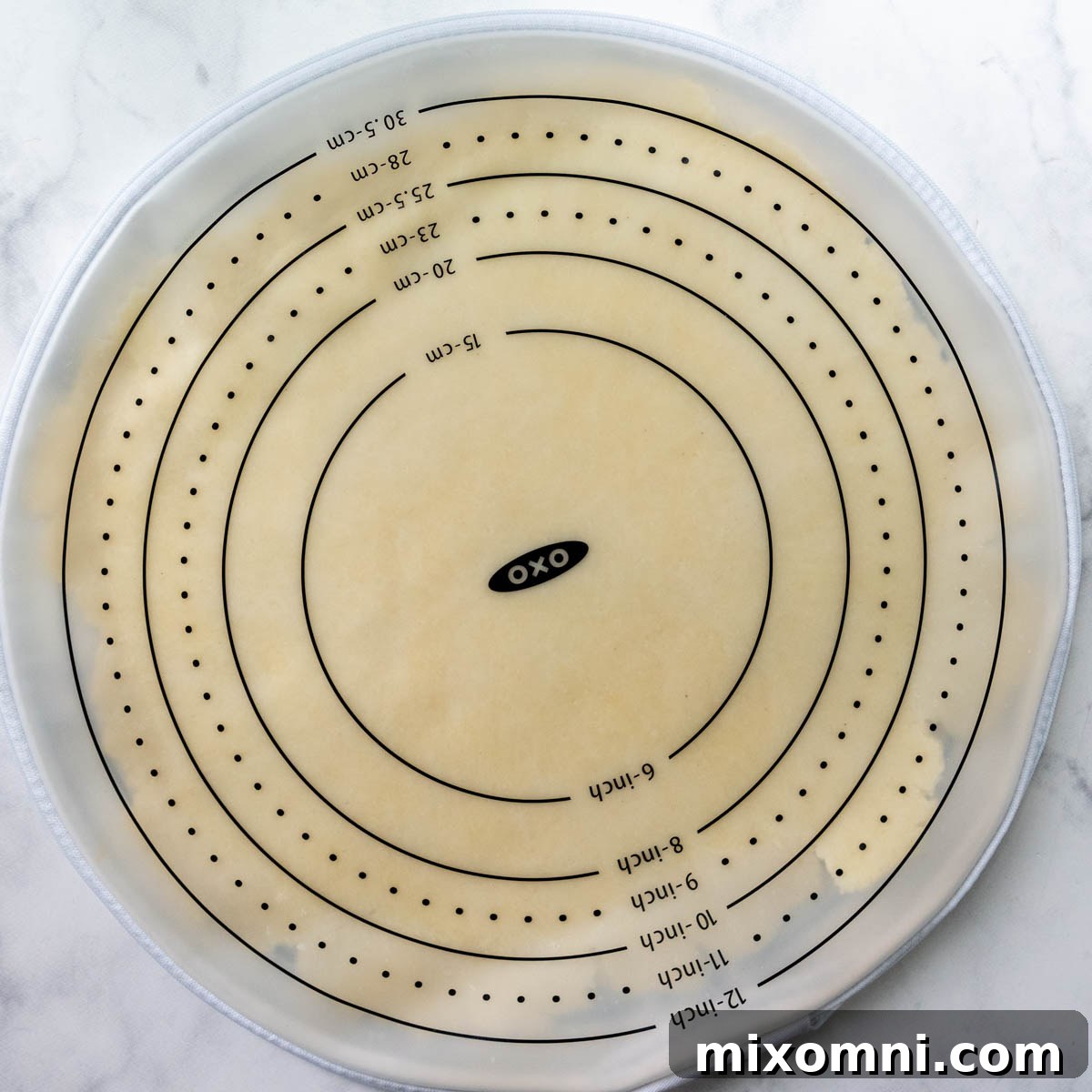
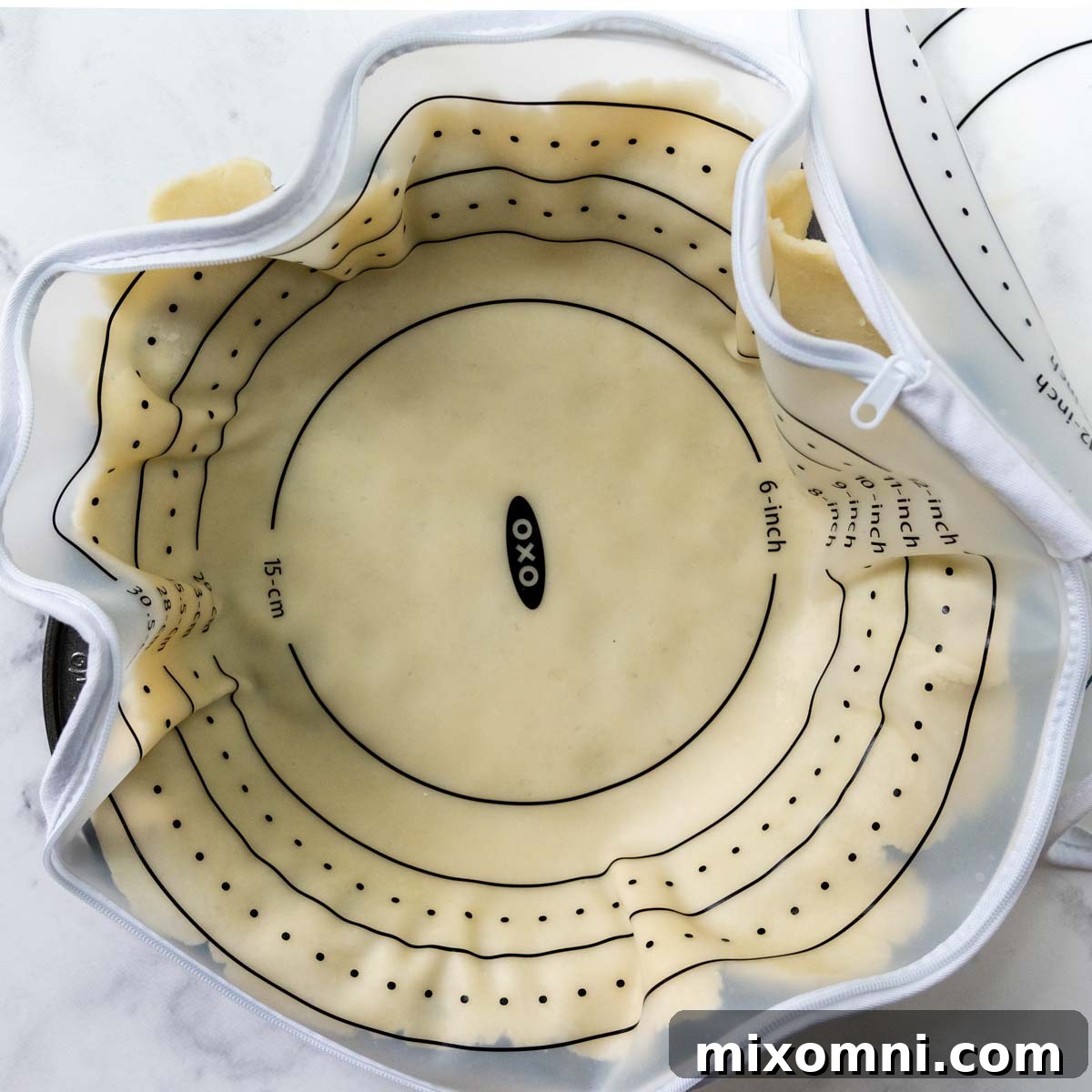
- Use the Right Tool: I highly recommend rolling your dough in a silicone pie bag. It’s incredibly effective because the dough won’t stick, eliminating the need for additional flour, and making shaping much easier. If you don’t have one, two large sheets of parchment paper are the next best option. While plastic wrap can work, it tends to stick to gluten-free dough more readily.
- Temperature is Key: If your dough is too cold directly from the fridge, it will be stiff, hard to roll, and prone to breaking apart. Let it sit on the counter for about 5 minutes to soften slightly before attempting to roll. Conversely, if the dough becomes too warm during rolling, the butter will soften too much, making it sticky and difficult to handle. If this happens, place the rolled dough (still on its parchment or in the bag) back into the refrigerator for 5-10 minutes to allow the butter to re-solidify.
- Consistent Pressure from the Center: When rolling, always start by pressing down in the middle of the dough disc and pushing outwards. This technique ensures that the middle of the crust doesn’t become too thick while the edges become too thin, promoting an even thickness throughout.
- Maintain a Round Shape: Continuously rotate the pie dough as you roll to help it form a perfect circle. If you notice one side becoming larger than the other, you can carefully trim a small amount of dough from the larger side and gently press it onto the smaller side of the circle to even it out.
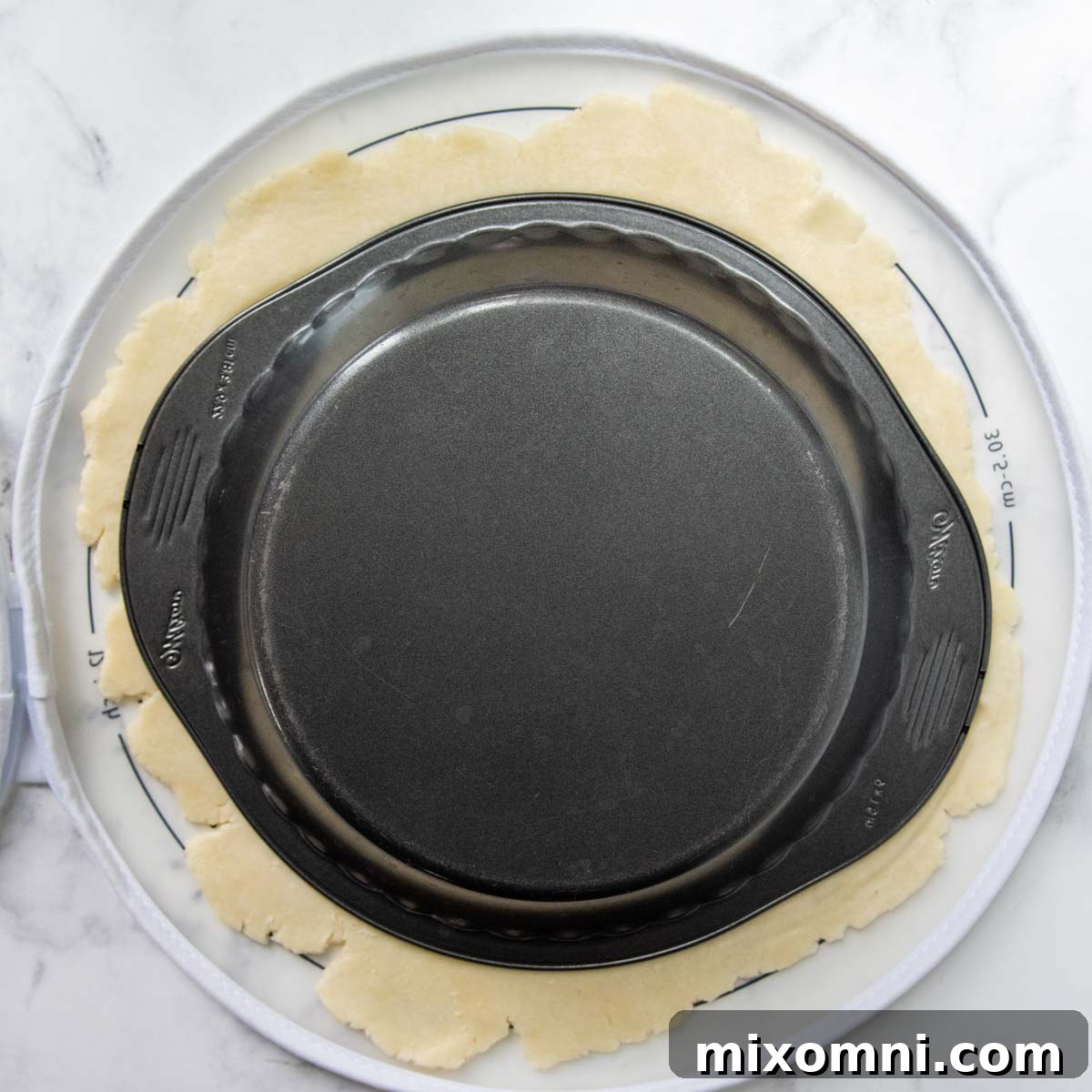
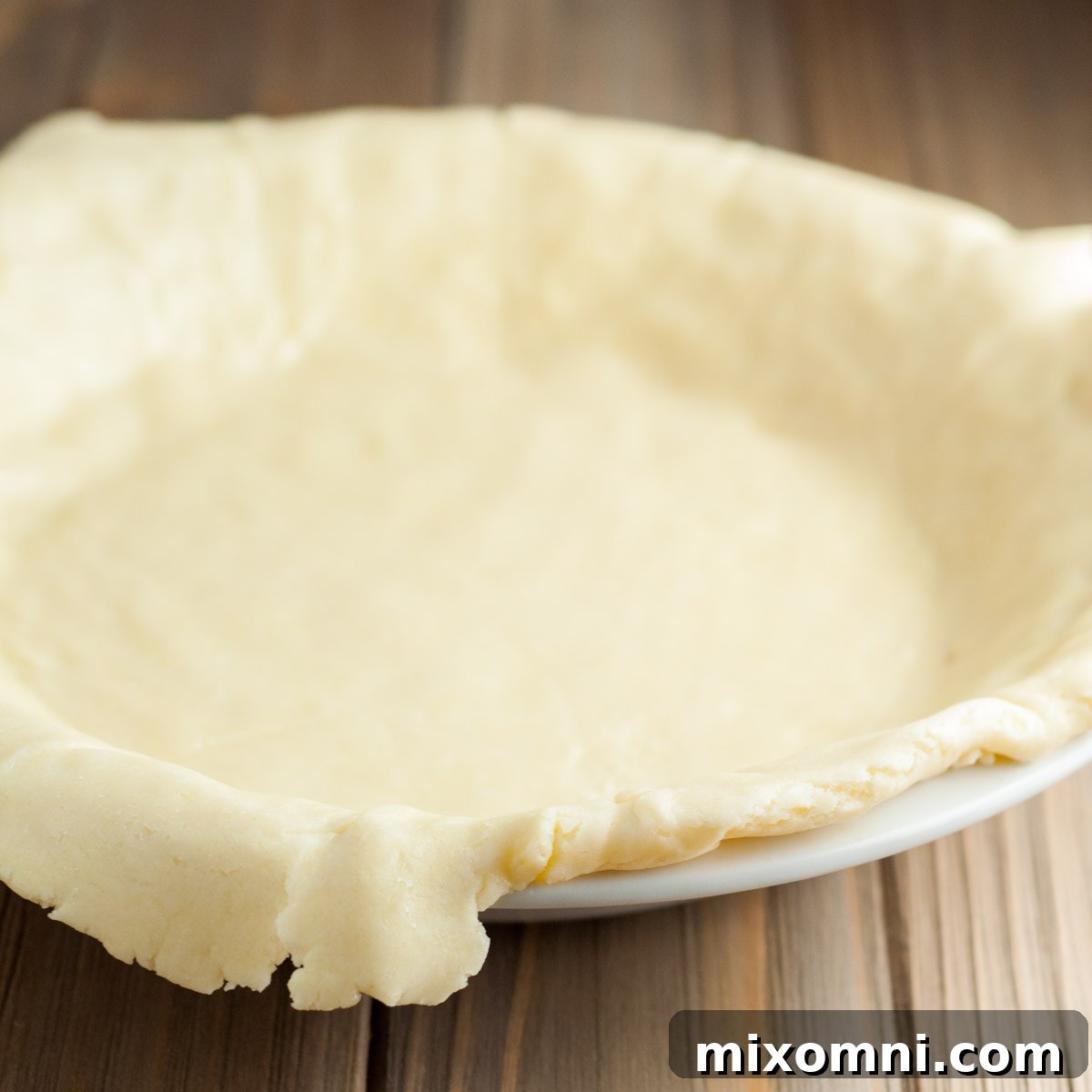
- Transferring the Dough: Once your dough is rolled to the desired size (slightly larger than your pie dish), gently remove the top sheet of parchment or open your silicone bag. Carefully invert the dough into your pie plate, then peel off the remaining parchment or silicone. If the dough has warmed and is sticking, a quick chill in the fridge with the paper still on will help it release easily.
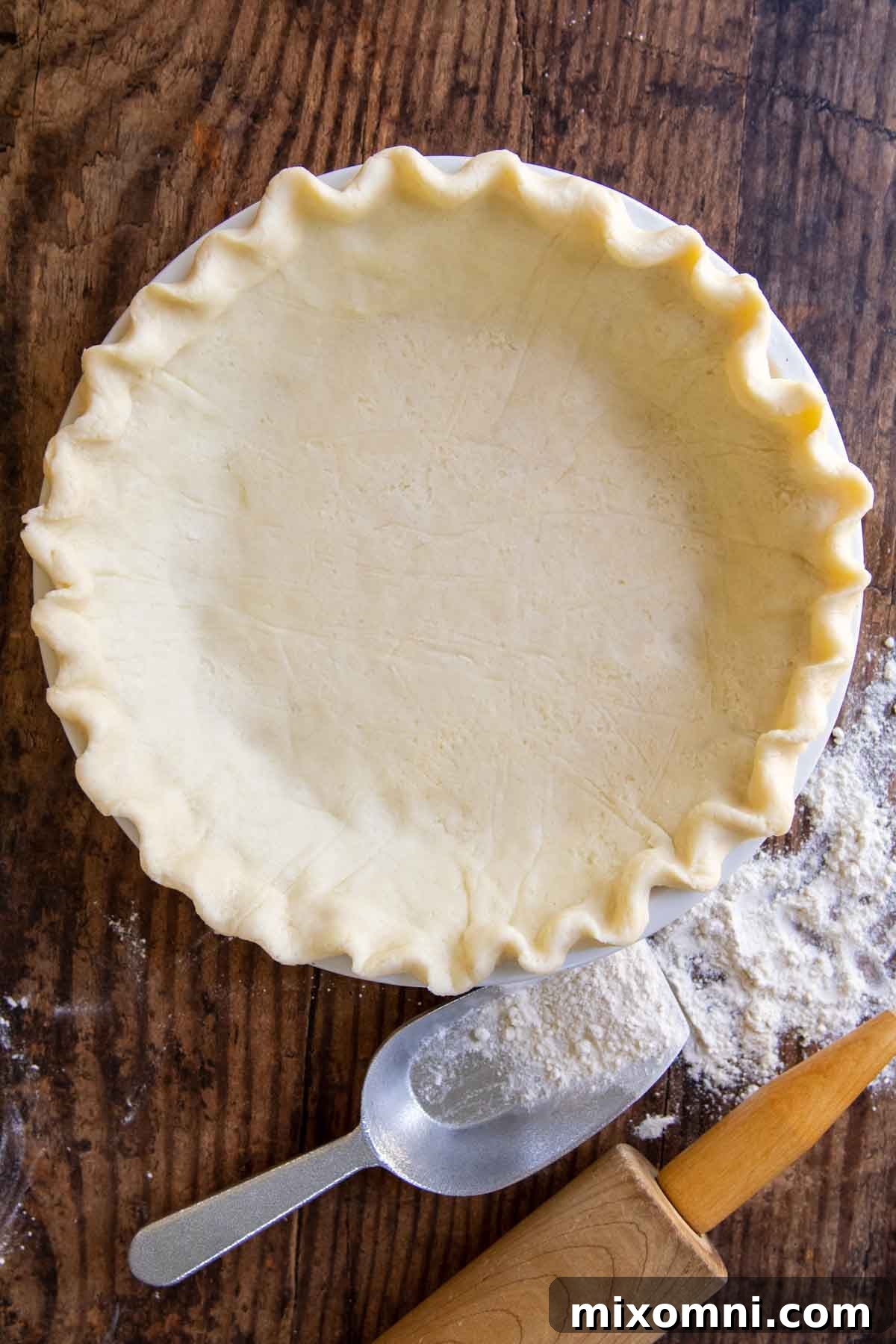
- Trimming and Shaping Edges: Use kitchen scissors to trim off any excess dough around the edges, leaving about a ½-inch overhang. If any areas need more dough to create a full edge, you can press on some of the clipped-off scraps. Fold the overhang dough under itself to meet the edge of the pie dish, creating a neat rim.
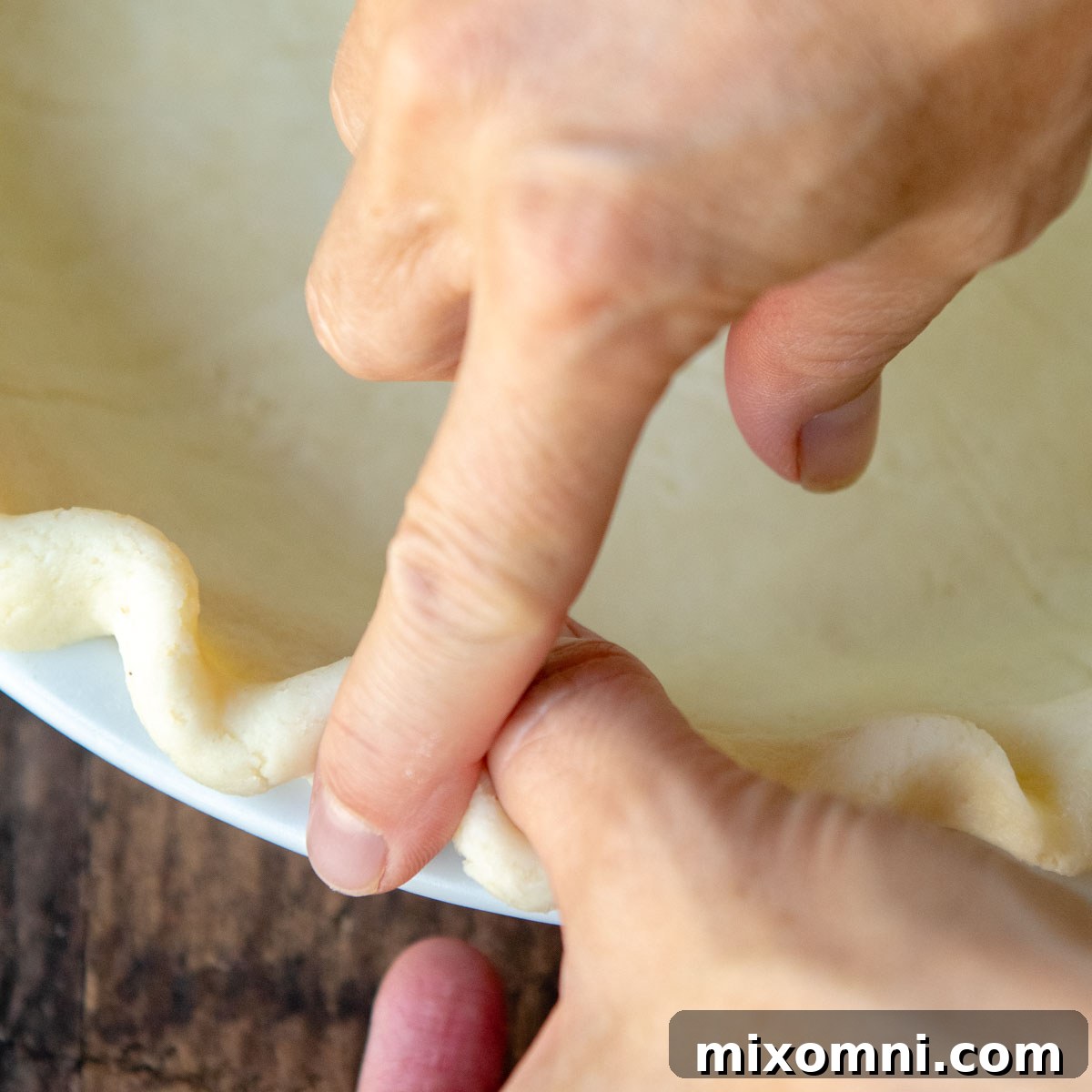
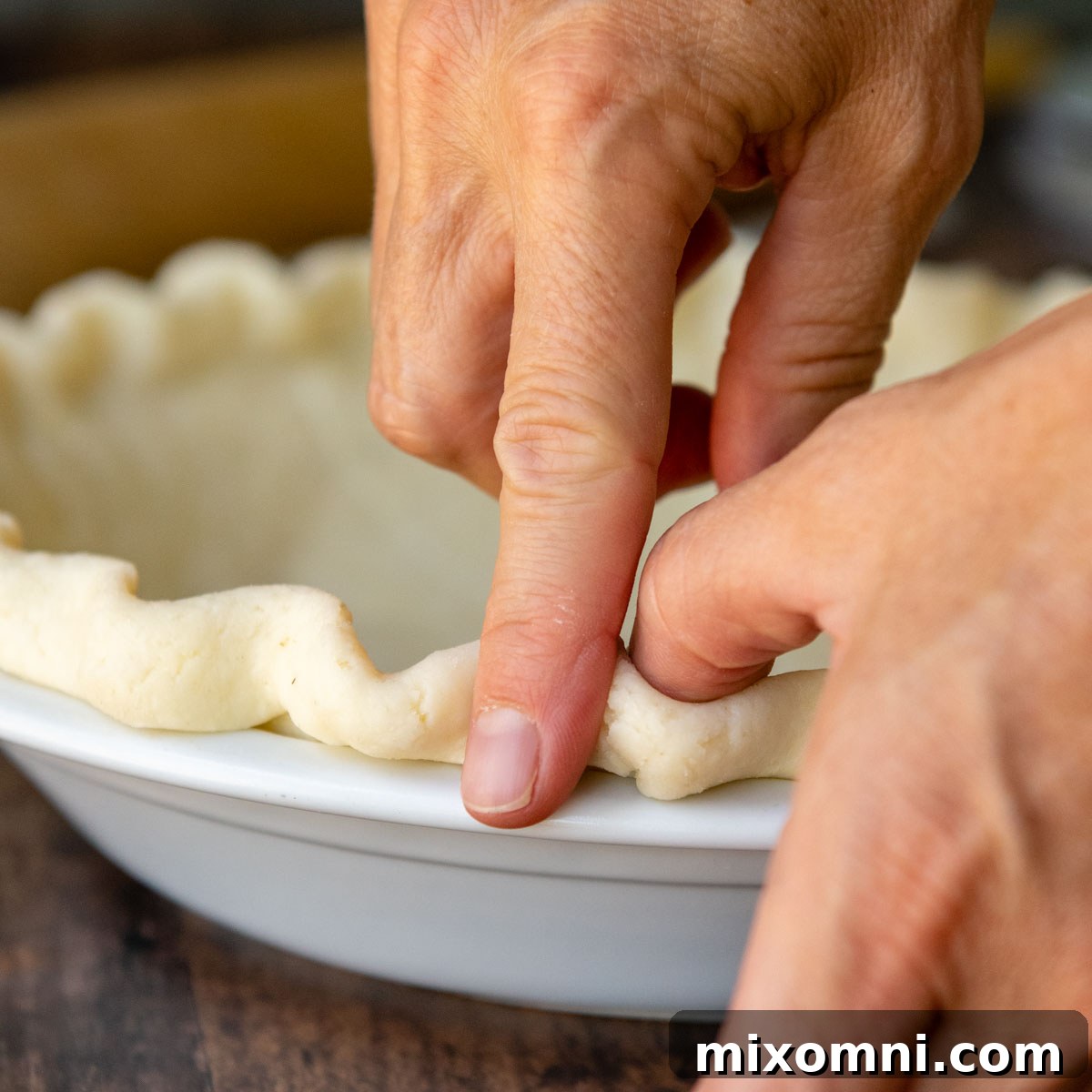
- Decorative Fluting: To create a beautiful, decorative edge, use two fingers to flute the crust. You can press one finger down while pushing another up next to it, or use a fork to create a crimped pattern. For a glossy, golden finish, brush the exposed edges with an egg wash (one egg yolk mixed with a tablespoon of water) before adding your filling and baking.
Baking Your Gluten-Free Pie Crust to Perfection
Once your gluten-free pie dough is beautifully rolled out and shaped in your pie pan, a critical step for a perfect crust is to chill it again. Move the pie dish to the freezer for 15 minutes, or up to an hour, until the dough is firm. This re-chilling helps set the butter and prevents shrinkage during baking. After chilling, add your chosen pie filling and bake according to your specific recipe’s directions. However, for certain types of pies, you might need to pre-bake the crust. Here’s how:
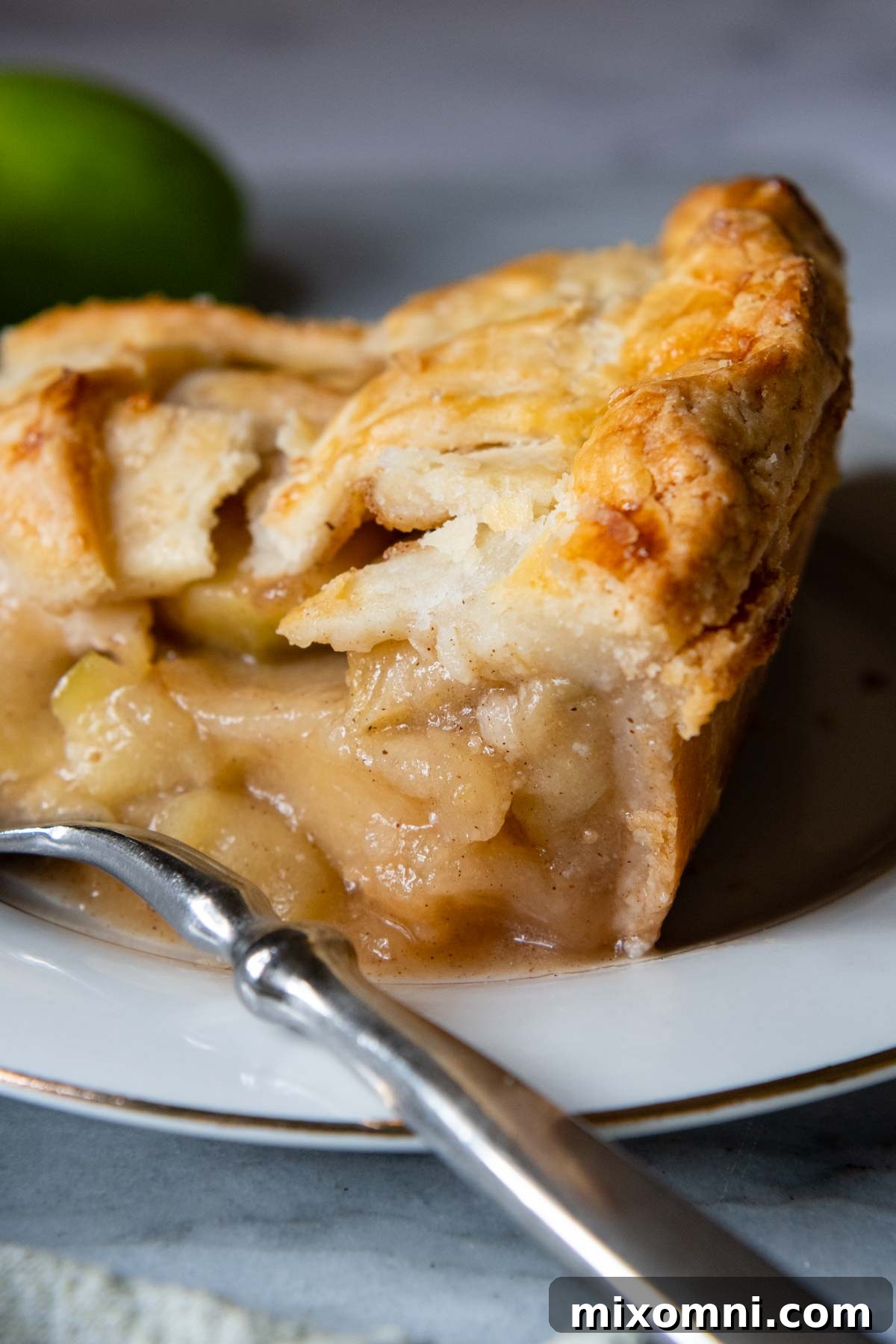
- Double or Lattice Crust: This recipe yields enough dough for a single pie crust. If your recipe calls for a double crust or a decorative lattice top, you will need to double the ingredients and divide the dough into two separate discs before refrigerating. For guidance on creating a beautiful lattice top, refer to the tutorial in this homemade gluten-free apple pie recipe. For a classic double crust, carefully invert the second rolled crust over your filling, trim any excess edges as needed, and then seal the top and bottom crusts together by tucking them under. Finally, use your fingers to create a decorative edge.
- Partially Baked Crust (Blind Baking Light): Some pie fillings, especially those with high moisture content, benefit from a partially baked crust. To do this, preheat your oven to 375ºF (190ºC). Place a pie weight directly on the bottom of your chilled crust. Alternatively, line the bottom of the crust with a piece of parchment paper and fill it with dried beans or rice. Bake on the middle rack for 15 minutes, rotating the pie halfway through to ensure even baking.
- Blind Baked Crust (Fully Baked): For recipes that require a fully baked crust before filling (such as custard pies or those with no-bake fillings), preheat your oven to 375ºF (190ºC). As with partial baking, place a pie weight directly on the bottom of the chilled crust, or use parchment paper filled with dried beans. Bake on the middle rack for 25 minutes, rotating halfway through. During this time, it’s wise to protect the edges of the crust with a pie shield or aluminum foil to prevent them from over-browning. For an extra golden-brown bottom crust, carefully remove the pie weights for the last 10 minutes of baking.
The Gluten-Free Flour Factor: Choosing Your Best Blend
The choice of gluten-free flour blend significantly impacts the texture, taste, and overall success of your pie crust. Not all GF flours are created equal, and their varying compositions of starches and gums can lead to vastly different results. I’ve personally experimented with this recipe using several popular store-bought gluten-free flour blends. Below are my detailed notes on how three common options performed, but remember that the gluten-free baking community is always discovering new favorites, so feel free to check the comments for additional recommendations from other bakers.
- Recommended: Cup4Cup Gluten Free Flour: This blend consistently delivers exceptional results for gluten-free pie crusts and virtually all my gluten-free baking projects. The dough rolls out beautifully, and the baked crust boasts an exquisitely flaky and tender texture. What truly sets it apart is its flavor profile, which closely mimics traditional wheat flour, making it virtually impossible for anyone to suspect it’s gluten-free.
- Bob’s Red Mill Gluten-Free 1 to 1 Baking Flour: While this flour was surprisingly easy to work with and rolled out without much difficulty, the resulting texture was a bit chewier and less flaky compared to the Cup4Cup blend. It also felt slightly denser. Critically, I noticed a subtle, off-putting aftertaste that detracted from the overall enjoyment of the pie.
- King Arthur Measure-for-Measure Gluten-Free Flour: This blend presented the most challenges during preparation. The dough was notably dry, requiring me to add more liquid than the recipe called for to achieve a cohesive texture. Post-baking, the crust was chewy and dense, likely due to an imbalance in the starch-to-liquid ratio. Overall, it was the least satisfactory option for this specific pie crust recipe.
Experimentation is key in gluten-free baking. If you use a different blend, you might need to slightly adjust the liquid content to achieve the ideal dough consistency described in the recipe. Always aim for a dough that is moist enough to come together but not sticky.
Save this recipe to your Pinterest board!
Let’s be friends on Pinterest! I’m always sharing great recipes!
Did you make this recipe? I love hearing from you! Leave a star rating and comment below the recipe card. Your feedback helps others discover and enjoy our recipes, and I truly appreciate hearing from our community. You will always hear back from me! -Melissa
Best Gluten-Free Pie Crust (Flaky, Tender, Easy To Roll)

Melissa Erdelac
8
15 mins
1 hr 15 mins
If you’re looking for a flaky, tender gluten-free pie dough (or pastry dough) that is fabulously easy to roll out, look no further. Not only is this the best tasting gluten-free pie crust, this detailed guide is also full of tips and tricks to help you make perfect GF crust at home. The secret? A tablespoon of sour cream! It tenderizes the dough to make it just as light as all butter pie crusts you grew up on.
Pin
Rate
Remove Ads
Ingredients
- 8 tablespoon (113 g) unsalted butter, cut into small cubes and frozen for 10 minutes
- 2 ½ tablespoons ice water
- 1 ½ tablespoons sour cream
- 1 ½ teaspoon apple cider vinegar
- ¾ PLUS ⅔ cup (194 g) gluten-free flour, I highly recommend Cup4Cup gluten-free flour
- 1 ½ teaspoon granulated sugar
- ½ teaspoon salt
Equipment
-
Pie Shield
-
Pie Weight
-
Food Processor
Instructions
Food Processor (OR Stand Mixer with Paddle Attachment)
-
Place the cubed butter in the freezer for 10 minutes. Mix together the cold water, sour cream, and vinegar in a small bowl. Place the liquids bowl in the refrigerator until you are ready to use.
Ingredients: 8 tablespoon unsalted butter, 2 ½ tablespoons ice water, 1 ½ tablespoons sour cream, 1 ½ teaspoon apple cider vinegar
-
Pulse or mix on low speed the flour, sugar, and salt together until well combined.
Ingredients: ¾ PLUS ⅔ cup gluten-free flour, 1 ½ teaspoon granulated sugar, ½ teaspoon salt
-
Process the butter into the flour mixture until well incorporated, evenly dispersed, and without large chunks, resembling coarse meal with some pea-sized pieces.
-
Add the chilled liquids to the food processor or stand mixer and combine until the flour becomes moistened and small dough clumps appear.
Tip: To check if you have enough liquid, clump and flatten a small bit of dough. If it doesn’t stick together, is crumbly, or breaks apart easily, add a small dash of ice water. Pulse a few times and recheck. The dough should come together easily without being sticky.
-
Turn the dough onto a large sheet of plastic wrap and flatten into a thick 1″ disk. Wrap tightly and refrigerate for at least 1 hour or freeze for 30 minutes. Before rolling out, let sit on the counter for 5 minutes so it is easier to work with.
By Hand Method:
-
Mix together the cold water, sour cream, and vinegar in a small bowl and place in the fridge until ready to use. Freeze the butter for 10 minutes until very cold.
-
In a large bowl, whisk together the gluten-free flour, sugar and salt.
-
Use a pastry blender, fork, or your fingers to cut and knead the cold butter into the flour mixture until it is well incorporated throughout and resembles coarse meal.
-
Add half of the chilled liquids and gently knead with fingers or a fork. Pour in the remaining liquids. Continue to knead until the dough starts to come together and the liquids are well mixed with the flour, forming small clumps.
-
Turn the dough onto a large sheet of plastic wrap and flatten into a thick 1″ disk. Wrap tightly and refrigerate for at least 1 hour or freeze for 30 minutes. Before rolling out, let sit on the counter for 5 minutes so it is easier to work with.
How To Roll Out Crust:
-
I find rolling in a silicone pie bag works best because the dough doesn’t stick, no additional flour is needed, and it’s easy to shape. If you don’t have one, use two large pieces of parchment paper. Plastic wrap may be used, but it has a tendency to stick to the dough more.
-
Place the unwrapped dough disc in the middle. Use a rolling pin to press and spread the dough from the middle out. Roll into a circle slightly larger than your pie dish. (See tips in the “Masterful Rolling” section for detailed rolling out crust advice)
-
Remove the top paper, and invert the dough into the pie plate. Remove the second paper.
Tip: If the dough has warmed while rolling, it may be trickier to take the paper off. If this happens, leave the paper on, and stick the whole thing in the fridge for 5 minutes. Once the crust is chilled again it’s much easier to pull off the paper. If the dough is too cold and the crust breaks, let it sit on the counter for a minute first before trying again.
-
Trim off excess dough around the edges, leaving about a ½-inch overhang. If some edges need more dough to fold under, press on some of the clipped-off pie dough. Tuck the overhang dough under to meet the edge of the pie dish. Using both forefingers, flute the edges by pressing one down and one up next to each other to create a decorative pattern.
-
Wrap loosely with plastic wrap and place in the freezer for 15 minutes, or up to an hour, until thoroughly chilled. Fill and bake according to your specific pie recipe directions, or refer to the “Baking Your Gluten-Free Pie Crust to Perfection” section for instructions on partially or fully baked crusts.
Notes
Best Tips For Rolling Out Crust
- If the dough is too cold it will be hard to roll and break apart. Let it sit on the counter for 5 minutes and try again.
- When you are rolling, press down in the middle and push the dough out from center. This will ensure the middle is not too thick, while edges are not too thin.
- Rotate the pie dough as you are rolling so it forms a perfect circle. If one side is bigger than the other, cut some dough off and add it to the smaller side of the circle.
- While rolling, the dough may warm, which causes the parchment paper to stick. If this happens, place the rolled pie crust, with parchment still on, in the refrigerator for 5 minutes so butter re-solidifies and releases from the paper.
- Once the dough is turned over in the pie dish, use kitchen scissors to trim off excess dough around edges. If some edges need more dough to fold under, press on some of the clipped-off pie dough.
- Use two fingers to flute into a decorative edge. For a shiny crust, brush the exposed edges with an egg wash before adding filling.
Dairy-Free / Vegan Adaptation
For a gluten-free dairy-free or vegan pie dough, plant-based butter sticks or shortening may be substituted for the butter. Please note that this will affect the taste and flakiness of the crust compared to using dairy butter. I also recommend reducing the salt by half if using plant-based butter, as many brands are already salted. Replace the sour cream with an equal amount of a dairy-free sour cream substitute.
Storing / Freezing Dough
Wrapped dough may be refrigerated for up to 1 day. For longer storage, place the tightly wrapped disc in a freezer-safe ziplock bag and freeze for up to 1 month. Thaw the frozen dough in the refrigerator overnight before use.
Recipe adapted from America’s Test Kitchen: The How Can It Be Gluten Free Cookbook.
Calories: 188kcal, Carbohydrates: 17g, Protein: 2g, Fat: 13g, Saturated Fat: 7g, Cholesterol: 32mg, Sodium: 227mg, Potassium: 5mg, Fiber: 2g, Sugar: 1g, Vitamin A: 380IU, Calcium: 22mg, Iron: 0.8mg
Did you make this recipe?Please leave a star rating and review below. It helps others when searching for recipes and I LOVE feedback!