
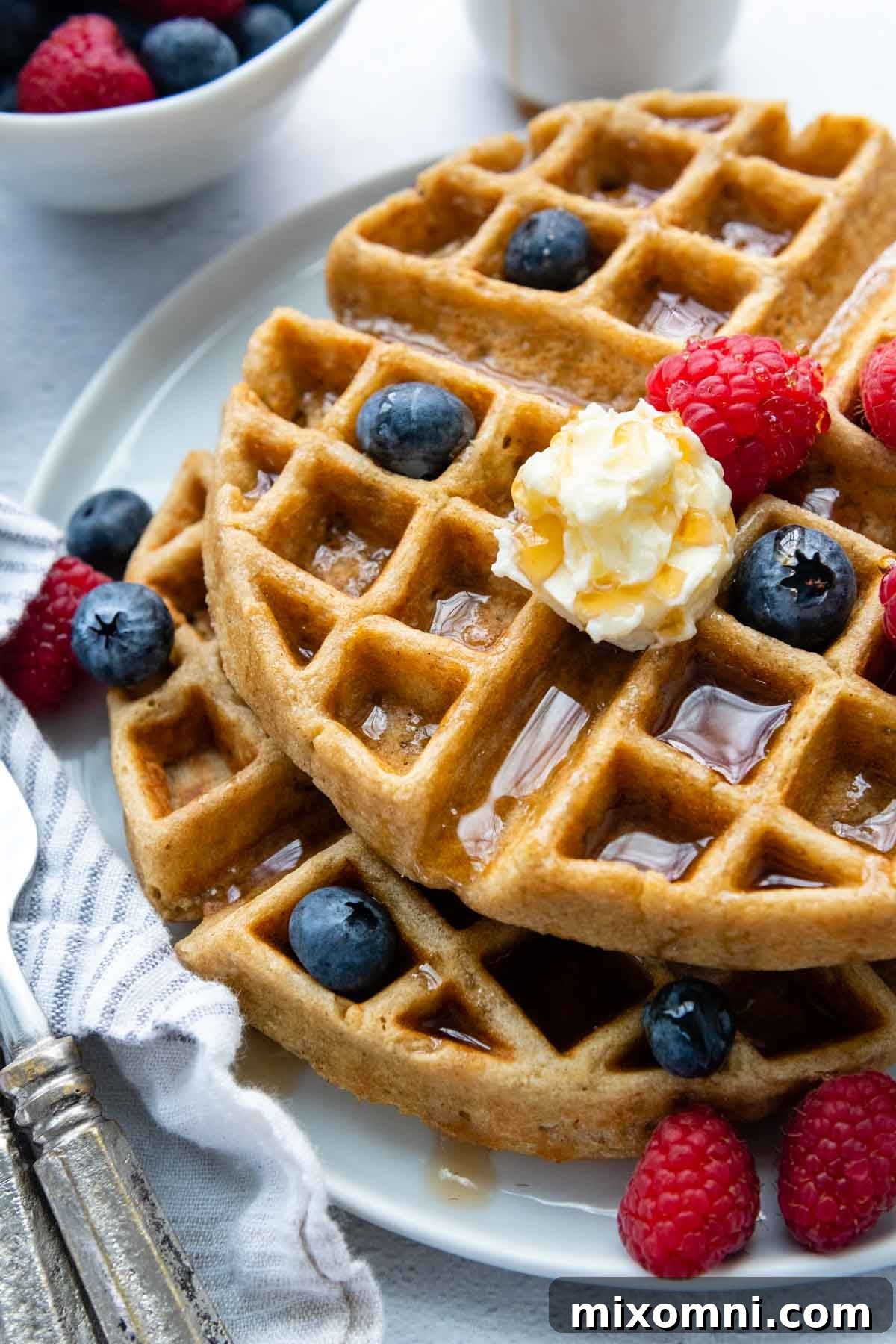
Transform your breakfast routine with these delightful fluffy, yet irresistibly crispy oat flour waffles. This incredibly straightforward gluten-free recipe proves that wholesome eating can be utterly delicious. Crafted without refined sugar and bursting with natural flavor, these waffles are a kid-approved favorite that can be effortlessly adapted to suit various dietary needs, including dairy-free, egg-free, and completely vegan options. Get ready to savor a breakfast that’s both nourishing and truly satisfying!
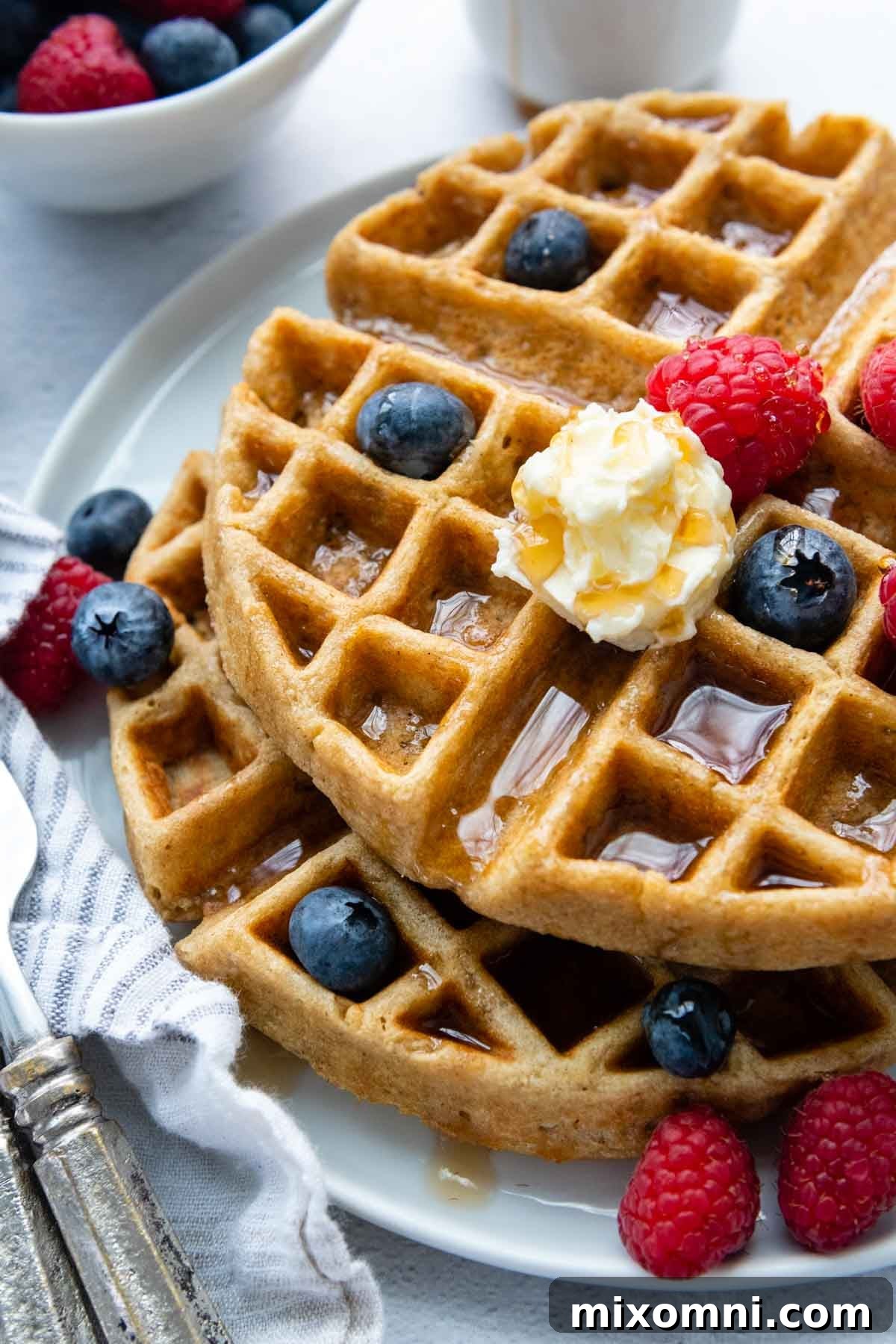
Why Choose Oat Flour Waffles? The Perfect Gluten-Free Breakfast
There’s no better way to kickstart your day than with a stack of light, airy, and wholesome oat flour waffles. Beyond their truly decadent taste, these waffles offer a nutritional powerhouse, making them a smart and satisfying choice for any morning. As a naturally gluten-free option, they are crafted without a trace of refined sugar, relying instead on natural sweeteners for their balanced flavor. Oat flour, the star ingredient, imbues them with a sweet, nutty essence and contributes significantly to their protein and fiber content, ensuring you stay full and energized.
Whether you prefer the satisfaction of making your own homemade oat flour from rolled oats or opt for the convenience of your favorite store-bought certified gluten-free brand, this recipe utilizes simple, affordable kitchen staples. Much like the carefully curated collection of recipes in my gluten-free cookbook and those regularly shared on the website, this recipe prioritizes accessibility without compromising on taste or quality. The unique properties of oats, which absorb liquid effectively and act as a natural binder, eliminate the need for additional starches, resulting in a waffle recipe made with 100% pure oat flour. This not only simplifies the ingredient list but also enhances the wholesome, grain-forward character of the waffles. Below, we’ll dive into practical substitutions for various diets, essential tips for storing and reheating, and a comprehensive list of the best toppings to elevate your waffle experience.
The Magic of Oat Flour: What Makes it Special for Waffles?
Oat flour isn’t just a gluten-free alternative; it’s a culinary gem that brings unique qualities to baking, especially waffles. Made from finely ground oats, it offers a distinct nutty flavor and a tender crumb that often surpasses traditional wheat flour in certain applications. For those following a gluten-free diet, certified gluten-free oat flour is a safe and delicious choice, providing a rich source of fiber and essential nutrients. Unlike many gluten-free flour blends that rely on a mix of starches and gums, oat flour stands alone beautifully, creating a dense yet soft texture that is perfect for hearty waffles.
The high fiber content in oat flour means it absorbs liquid differently than other flours. This characteristic is precisely what makes our resting period crucial for the batter, as it allows the oats ample time to hydrate and soften, preventing a gritty texture and ensuring a wonderfully fluffy outcome. Recipes like these flourless pancakes and gluten-free banana waffles also harness the power of blended oats, demonstrating their versatility and effectiveness as a gluten-free flour substitute. Choosing oat flour means opting for a wholesome, natural ingredient that contributes to both the health benefits and the exceptional taste and texture of your homemade waffles.
Essential Ingredients & Smart Substitutions for Perfect Waffles
Creating crispy, gluten-free oat flour waffles requires only a handful of common kitchen ingredients and your trusty waffle iron. We’ve also included several workable modifications to easily adapt this recipe to different dietary needs and personal preferences, ensuring everyone can enjoy these delightful breakfast treats.
Oat Flour: Homemade vs. Store-bought
- For truly gluten-free waffles, always ensure you use certified gluten-free oat flour. This guarantees no cross-contamination with wheat.
- Homemade Oat Flour: You can easily make your own by placing certified gluten-free rolled oats in a high-powered blender and processing until it forms a fine, fluffy flour. For a detailed guide on how to make oat flour, refer to our comprehensive resource.
- Why it matters: The fineness of the flour impacts the final texture. A very fine flour yields a smoother waffle, while slightly coarser homemade flour can still work well for waffles, especially with adequate batter resting time.
Sweeteners: Natural Choices
- Choose from natural sweeteners like honey, pure maple syrup, coconut sugar, or brown sugar. Each offers a unique flavor profile that complements the nutty taste of oat flour.
- For those who prefer less sweetness, the sugar can be reduced or entirely eliminated without significantly impacting the waffle’s structure. Consider adding a ripe mashed banana for natural sweetness and extra moisture.
Milk: Dairy & Dairy-Free Options
- Any preferred dairy or non-dairy milk can be used in this recipe.
- Popular non-dairy choices include almond milk, soy milk, oat milk, or coconut milk (from a carton, not canned). Each will impart a subtle difference in flavor, so choose your favorite!
Eggs & Egg-Free Alternatives
- Eggs play a crucial role in binding the ingredients and contributing to the waffle’s structure and fluffiness.
- For an egg-free version: You can simply omit the eggs. However, for a better texture, replace each egg with either half a mashed ripe banana or 1/4 cup of unsweetened applesauce. These substitutes add moisture and help with binding, though the resulting waffle may be slightly more delicate.
- Other egg substitutes: A “flax egg” (1 tablespoon ground flaxseed mixed with 3 tablespoons water, allowed to sit for 5 minutes) can also be used as a binder, although it might give a slightly denser texture.
Fats: Butter or Oil
- Melted butter is my personal preference for its rich, satisfying flavor that enhances the overall taste of the waffles.
- Alternatively, this recipe works exceptionally well with an equal amount of any preferred oil. Good options include melted coconut oil (which can add a subtle tropical note), canola oil, avocado oil, or grapeseed oil. Ensure the melted fat is cooled slightly before adding to the wet ingredients to avoid scrambling the eggs.
Crafting Perfect Oat Flour Waffles: A Step-by-Step Guide
Follow these detailed steps to create flawless oat flour waffles that are both fluffy and crispy every time. The full recipe with precise ingredient amounts can be found in the recipe card below.
Step 1: Prepare Your Oat Flour (If Making From Scratch)
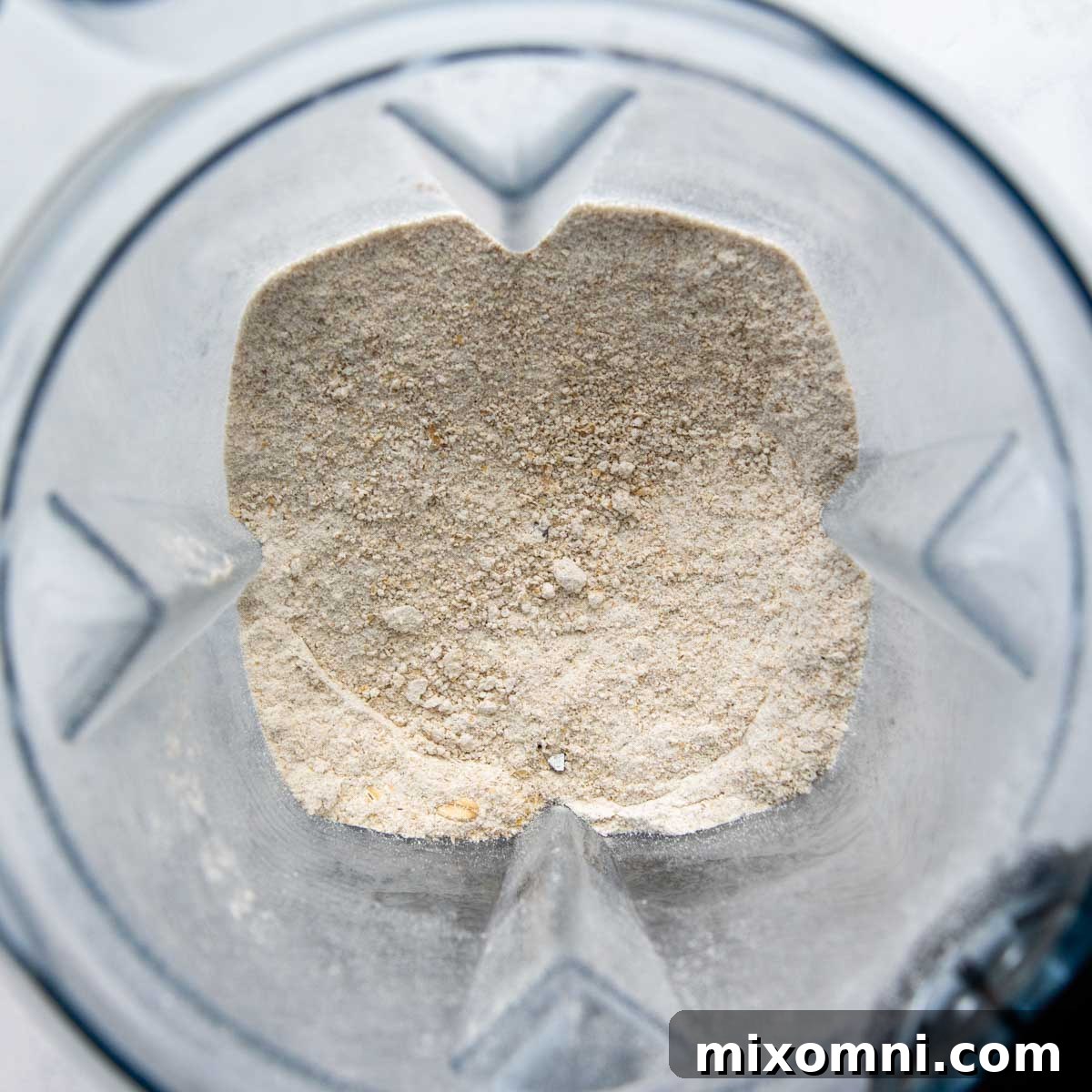
If you’re opting for homemade oat flour, begin by placing certified gluten-free rolled oats into a high-powered blender, such as a Vitamix. Process them on high speed until they transform into a very fine, uniform powder. While a food processor can be used, it typically yields a coarser flour with some unprocessed specks, which might result in a slightly grainier texture for delicate baked goods like cookies. However, for more forgiving recipes such as these waffles, or oat flour muffins and oat flour bread, the added moisture, extended resting time, and thorough cooking process will hydrate the grains sufficiently, ensuring a wonderfully soft and fluffy outcome regardless of the equipment used.
Step 2: Combine Wet Ingredients
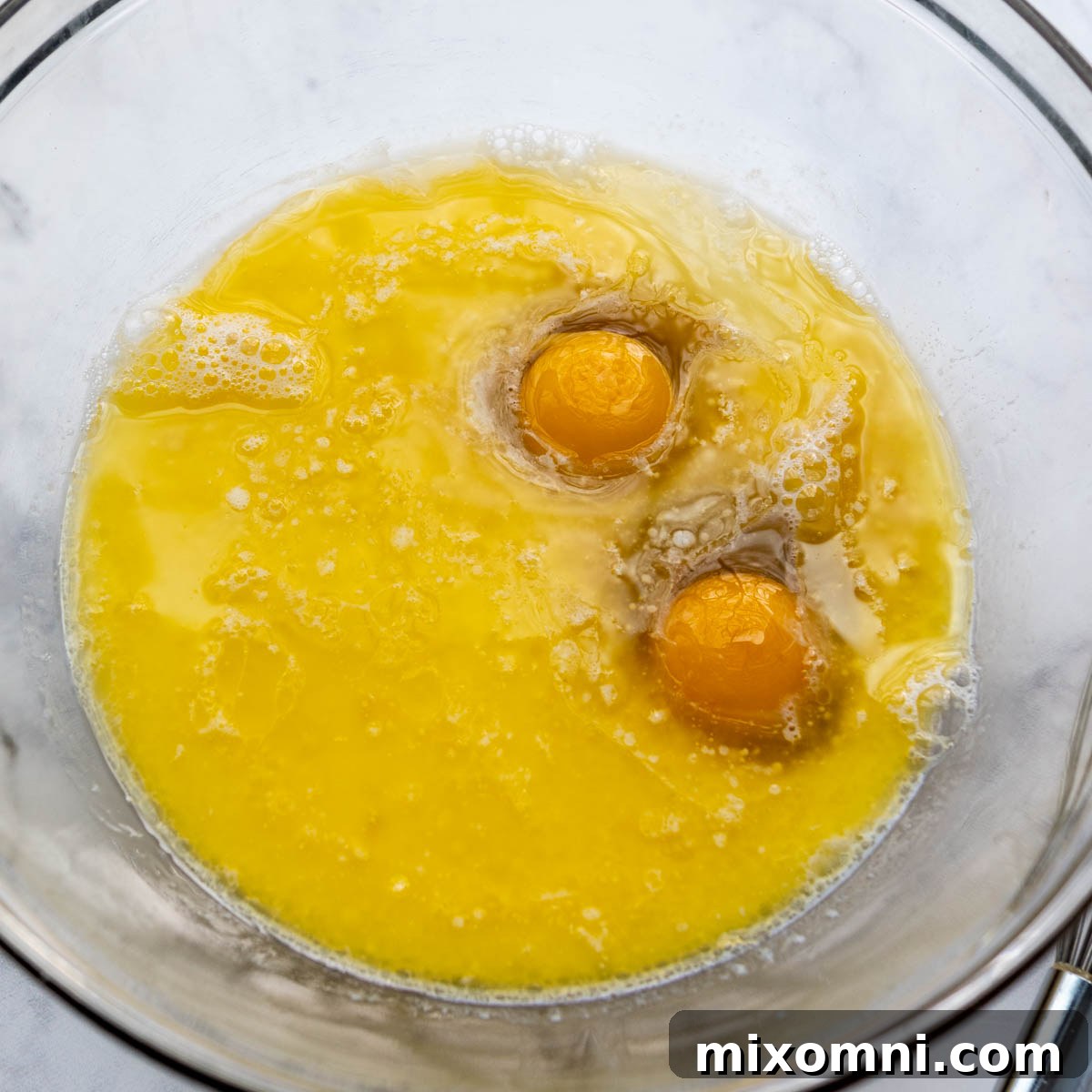
In a medium-sized mixing bowl, thoroughly whisk together all the liquid ingredients: milk (or your chosen dairy-free milk), eggs (or egg substitute), your preferred sweetener, vanilla extract, and the cooled melted butter or oil. Ensure everything is well combined and smooth before moving to the next step.
Step 3: Mix Dry Ingredients
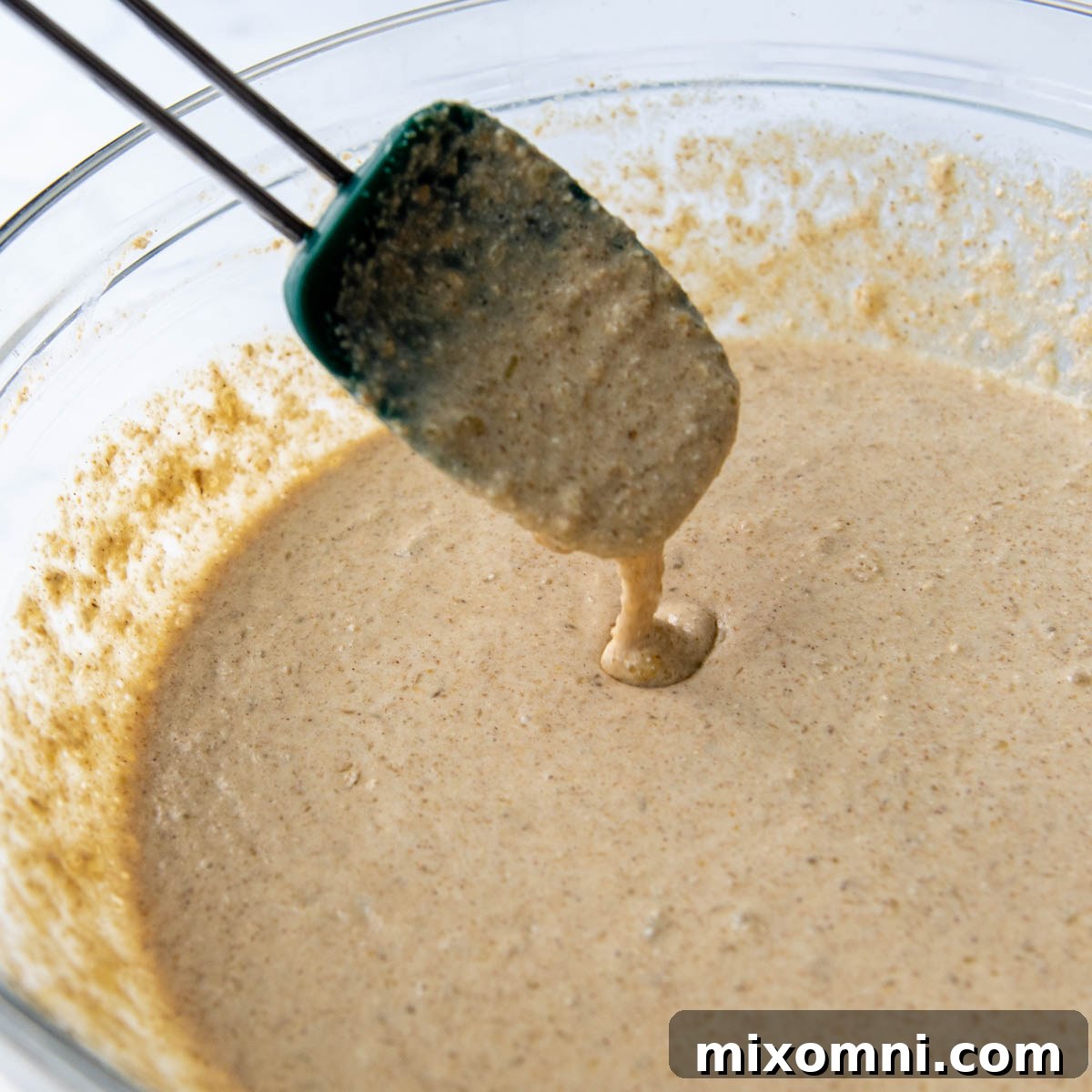
Once your wet ingredients are combined, gently add the dry ingredients – oat flour, baking powder, cinnamon, and salt – to the bowl. Stir just until everything is combined and no dry streaks remain. It’s important not to overmix the batter. At this stage, the batter will appear quite thin and pour easily. Don’t worry; this is normal before the resting phase.
Step 4: The Crucial Batter Rest
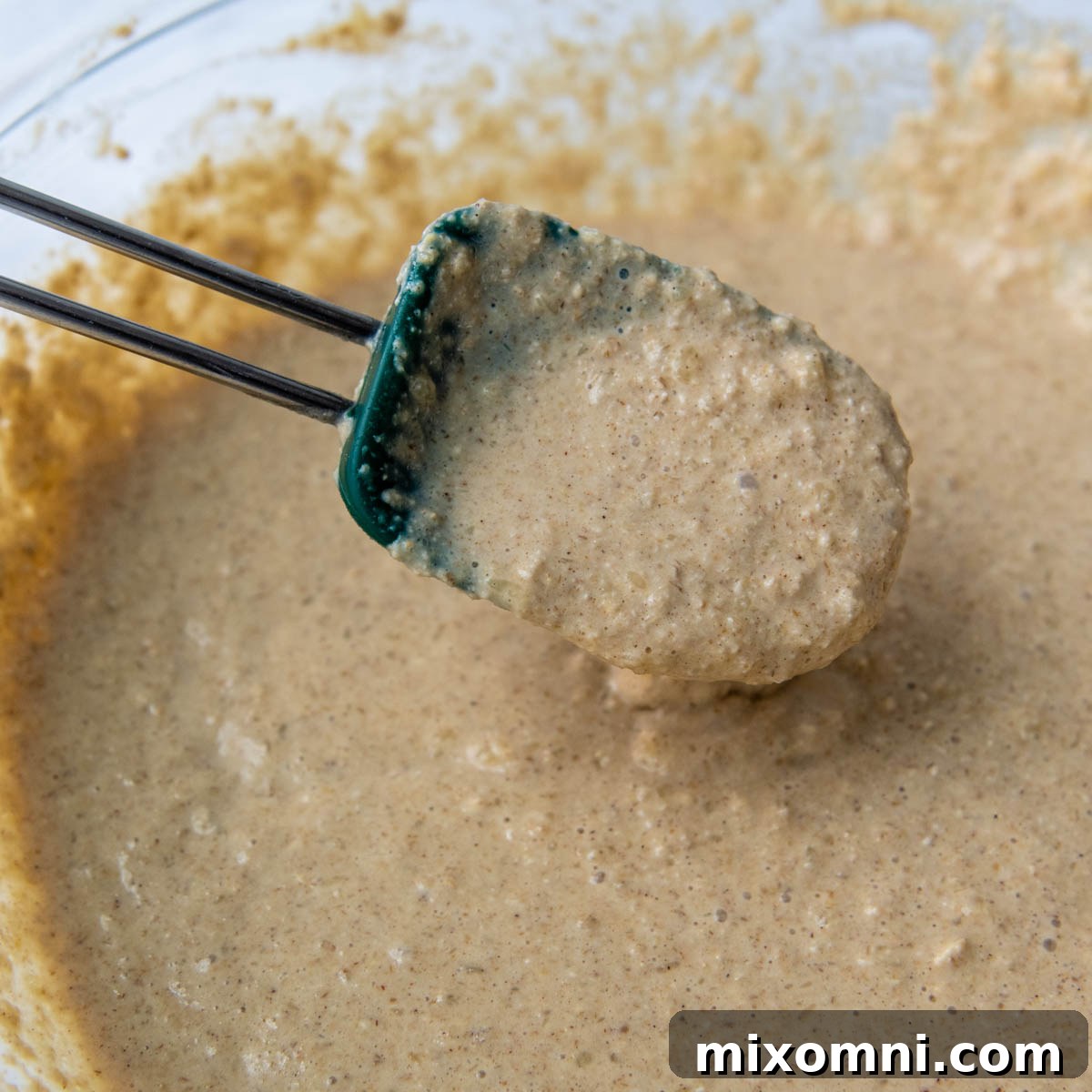
This step is paramount for achieving the perfect texture in oat flour waffles. While your waffle iron preheats (which typically takes about 10-15 minutes), allow the waffle batter to rest. This resting period is critical for gluten-free baking, especially with oat flour. Oats are highly absorbent, and this time allows the oat flour to fully hydrate, softening the grains and preventing a gritty texture. Without this rest, your waffles can turn out dense and unappetizingly gritty. By letting the batter rest, you ensure a significantly lighter, fluffier, and more tender waffle. A similar technique is also utilized in recipes like oat flour cake to achieve its desirable light texture and cohesive crumb. After resting, you’ll notice the batter has visibly thickened, indicating it’s ready for the waffle iron. If, by chance, the batter rests for too long and becomes excessively thick, simply stir in a splash more milk until it reaches a pourable consistency again.
Step 5: Waffle Iron Prep & Cooking
Ensure your waffle iron is fully preheated. Generously spray the waffle maker plates with a nonstick cooking spray to prevent sticking and encourage a crispy exterior. Pour the thickened batter onto the preheated waffle iron, filling approximately three-quarters of the cooking area. Close the lid and cook according to your waffle iron’s instructions, typically until the waffles are golden brown and have beautifully crispy edges. If your iron indicates it’s “done” but the waffles don’t release easily, or the exterior isn’t as brown and crispy as you’d like, close it and cook for a minute or two longer. You may also need to adjust your waffle maker to a darker setting for optimal crispness. Don’t be afraid to experiment with your specific appliance to find the perfect setting.
Step 6: Serve and Enjoy!

Once cooked, transfer the hot waffles to a wire rack to cool slightly, which helps maintain their crispness. If you’re cooking multiple batches and want to keep them warm, place the cooked waffles on a baking sheet in a preheated oven at 200°F (95°C). Serve immediately with your favorite toppings and enjoy your perfectly crafted oat flour waffles!
Troubleshooting Common Waffle Issues
Even with a great recipe, sometimes waffles can present minor challenges. Here are a few common issues and how to resolve them:
- Waffles are sticking: Ensure your waffle iron is properly preheated and generously sprayed with nonstick cooking spray before *each* waffle. Over time, some nonstick coatings can wear; a little extra spray can make a big difference.
- Waffles are soggy or not crispy: This often happens if the batter is too thin (add a tablespoon or two more oat flour and rest again) or if the waffles are removed too soon. Cook for a little longer until they reach a deep golden brown. Placing cooked waffles directly on a plate can also cause sogginess; always transfer them to a wire rack to allow steam to escape.
- Waffles are too dense or gritty: This is almost always due to insufficient batter resting time. The oat flour needs to fully hydrate. Ensure you give the batter the full 10-15 minutes to rest. If still gritty, your homemade oat flour might be too coarse; try blending it longer next time.
- Waffles are burning on the outside, raw on the inside: Your waffle iron might be too hot or set too high. Reduce the temperature or use a lighter setting. Some irons cook unevenly, so rotating the waffle halfway through can help.
Making Your Oat Flour Waffles Vegan
Creating delicious dairy-free, egg-free, or fully vegan oat flour waffles is incredibly simple with just a few easy substitutions!
- Dairy-Free Milk: Replace any dairy milk with your favorite non-dairy alternative. Excellent choices include unsweetened almond milk, soy milk, oat milk, or coconut milk (from a carton, not the thicker canned variety). Each will perform similarly in the recipe.
- Dairy-Free Fat: In place of melted butter, use an equal amount of melted coconut oil, avocado oil, or another neutral-flavored vegetable oil. Melted coconut oil adds a lovely richness that mimics butter well.
- Egg-Free Options: To make the recipe completely egg-free, you have a couple of fantastic options. You can simply omit the eggs, though the texture might be slightly more delicate. For a better binding and moisture, replace each egg with half a mashed ripe banana or 1/4 cup of unsweetened applesauce. These natural binders contribute moisture and a subtle sweetness without overpowering the waffle’s flavor. You can also use a “flax egg” (1 tbsp ground flaxseed + 3 tbsp water per egg, let sit for 5 minutes).
By implementing these straightforward changes, you can enjoy all the fluffy, crispy goodness of these oat flour waffles, perfectly suited for a vegan breakfast!
Storing and Reheating for Lasting Freshness
These oat flour waffles are fantastic fresh, but they also store and reheat beautifully, making them perfect for meal prep or quick weekday breakfasts.
- Keeping Waffles Warm: As you cook batches of waffles, transfer the finished ones to a baking sheet and keep them warm in a preheated oven at 200°F (95°C). This helps maintain their crispness until you’re ready to serve everyone.
- Refrigeration: Allow any leftover waffles to cool completely to room temperature. Store them in an airtight container in the refrigerator for up to one week.
- Freezing for Longer Storage: For longer preservation, individually wrap cooled waffles in plastic wrap, then transfer them to a freezer-safe ziplock bag or airtight container. They can be frozen for up to 3 months. Individual wrapping prevents them from sticking together and makes it easy to grab just one or two at a time.
- Reheating from Refrigerated: To rewarm refrigerated waffles, simply lay them on a baking sheet and heat in a 350°F (175°C) oven for about 5-7 minutes, or until heated through and crisp.
- Reheating from Frozen: For frozen waffles, you can reheat them directly from the freezer. Place them on a baking sheet in a 350°F (175°C) oven for 10-15 minutes, or until heated through and crispy. A toaster oven is also an excellent option for reheating both frozen and refrigerated waffles, providing a quick way to restore their crisp exterior. Microwaving is possible for a quick defrost and re-warming, but it won’t yield crispy results; use it if time is of the essence and texture is less critical.
Elevate Your Waffles: Creative Topping Ideas
The best part of any waffle breakfast is undoubtedly piling on your favorite toppings! Here are some of the most delicious ways to enjoy your easy oat flour waffles, catering to every craving:
- Chocolate Chips: Stir them directly into the batter before cooking for melty pockets of chocolate, or sprinkle them on top of warm waffles.
- Nut Butters: Spread warm waffles generously with peanut butter, almond butter, cashew butter, or your favorite nut butter for a protein-packed addition.
- Crunchy Grains: Sprinkle on homemade gluten-free muesli or granola for an extra layer of satisfying crunch and wholesome goodness.
- Fresh Berries & Cream: A classic combination of vibrant fresh berries (strawberries, blueberries, raspberries) paired with a dollop of whipped cream (dairy or coconut-based) is always a winner.
- Sweet Syrups: Drizzle with pure maple syrup, a rich gluten-free pancake syrup, a homemade strawberry syrup, or a burst of flavor from blueberry syrup.
- Fruit Mix-ins: Gently fold fresh or frozen blueberries (no need to thaw) into the batter before cooking, or simply sprinkle them over your waffles when serving.
- Warm Fruit Compotes: Sautéed apples with a hint of cinnamon, or warm berry compotes, make for a comforting and delicious topping.
- Candied Nuts: Add a touch of gourmet with crunchy candied pecans or walnuts.
- Sliced Bananas: Freshly sliced bananas add natural sweetness and a creamy texture.
- Toasted Coconut: Sprinkle toasted coconut flakes for a tropical twist and delightful texture.

The Ultimate Oat Flour Waffle Recipe (Gluten-Free)

Fluffy, Crispy Oat Flour Waffles (Gluten-Free)
By Melissa Erdelac
Prep Time: 5 mins
Cook Time: 15 mins
Total Time: 30 mins
Enjoy fluffy, yet crispy oat flour waffles with this easy gluten-free recipe. Waffles made with oat flour are kid-approved, yet contain no refined sugar and are easily modified for a dairy-free, egg-free, vegan breakfast!
Pin Recipe
Ingredients
- 1 cup milk, or dairy-free milk
- 2 large eggs, (see notes for egg-free)
- 6 tablespoons melted butter or coconut oil, cooled
- 2 tablespoons honey, pure maple syrup, or coconut sugar
- 2 teaspoons vanilla extract
- 2 cups oat flour (same as 2 cups GF rolled oats blended into flour)
- 2 teaspoons baking powder
- ½ teaspoon cinnamon
- ¼ teaspoon salt
Equipment
- Waffle Iron
- Vitamix (or high-powered blender for making oat flour)
Instructions
- In a medium mixing bowl, whisk together the wet ingredients – milk or dairy-free milk, eggs, melted butter or oil, sweetener, and vanilla extract.
- If you are not using pre-made oat flour, begin by making the oat flour. Place 2 cups rolled oats in a high-powered blender, such as a Vitamix, and process until it becomes a fluffy, fine powder.
- Add the oat flour, baking powder, cinnamon, and salt to the wet ingredients. Stir to combine. The batter will be thin and pour easily from the spoon at this stage.
- While the waffle iron preheats, let the batter rest for 10-15 minutes. This crucial step allows the oats to hydrate, resulting in a lighter and fluffier waffle texture.
- After resting, the batter will be thicker and ready to pour onto the preheated waffle iron. Spray the waffle maker generously with nonstick cooking spray. Pour the batter until it covers about three-fourths of the cooking area.
- Close and cook until golden brown with crispy edges. If the iron indicates it is “done,” but the waffles don’t release easily, or the exterior is not sufficiently browned and crispy, close and cook for a little longer. You may need to adjust your waffle maker to a darker setting.
- Serve immediately, or place on a baking sheet in a 200ºF (95°C) oven to keep warm while preparing additional waffles. Alternatively, transfer to a wire rack to cool.
Notes
Egg-Free Modification
To make the recipe egg-free, you can simply omit the eggs. For improved binding and moisture, replace each egg with half a mashed banana or 1/4 cup unsweetened applesauce. While the texture may be slightly more delicate, it will not compromise the delicious taste.
Storing, Freezing, and Reheating
Store cooled leftover waffles in an airtight container in the fridge for up to one week. For longer storage, wrap individual waffles in plastic wrap, then transfer to a freezer-safe bag and freeze for up to 3 months.
To rewarm, place waffles on a baking sheet and heat for 10 minutes in a 350ºF (175°C) oven. They can be reheated from frozen or quickly defrosted and re-warmed in the microwave (though they won’t be crispy). A toaster oven is also excellent for reheating both frozen and refrigerated waffles, providing crisp results.
Nutrition Information (per serving)
Calories: 327kcal, Carbohydrates: 35g, Protein: 9g, Fat: 17g, Saturated Fat: 9g, Polyunsaturated Fat: 2g, Monounsaturated Fat: 5g, Trans Fat: 0.5g, Cholesterol: 87mg, Sodium: 232mg, Potassium: 376mg, Fiber: 3g, Sugar: 8g, Vitamin A: 507IU, Vitamin C: 0.04mg, Calcium: 143mg, Iron: 2mg
Don’t forget to save this recipe for Oat Flour Waffles to your Pinterest board!
Let’s be friends on Pinterest! I’m always sharing great recipes!