
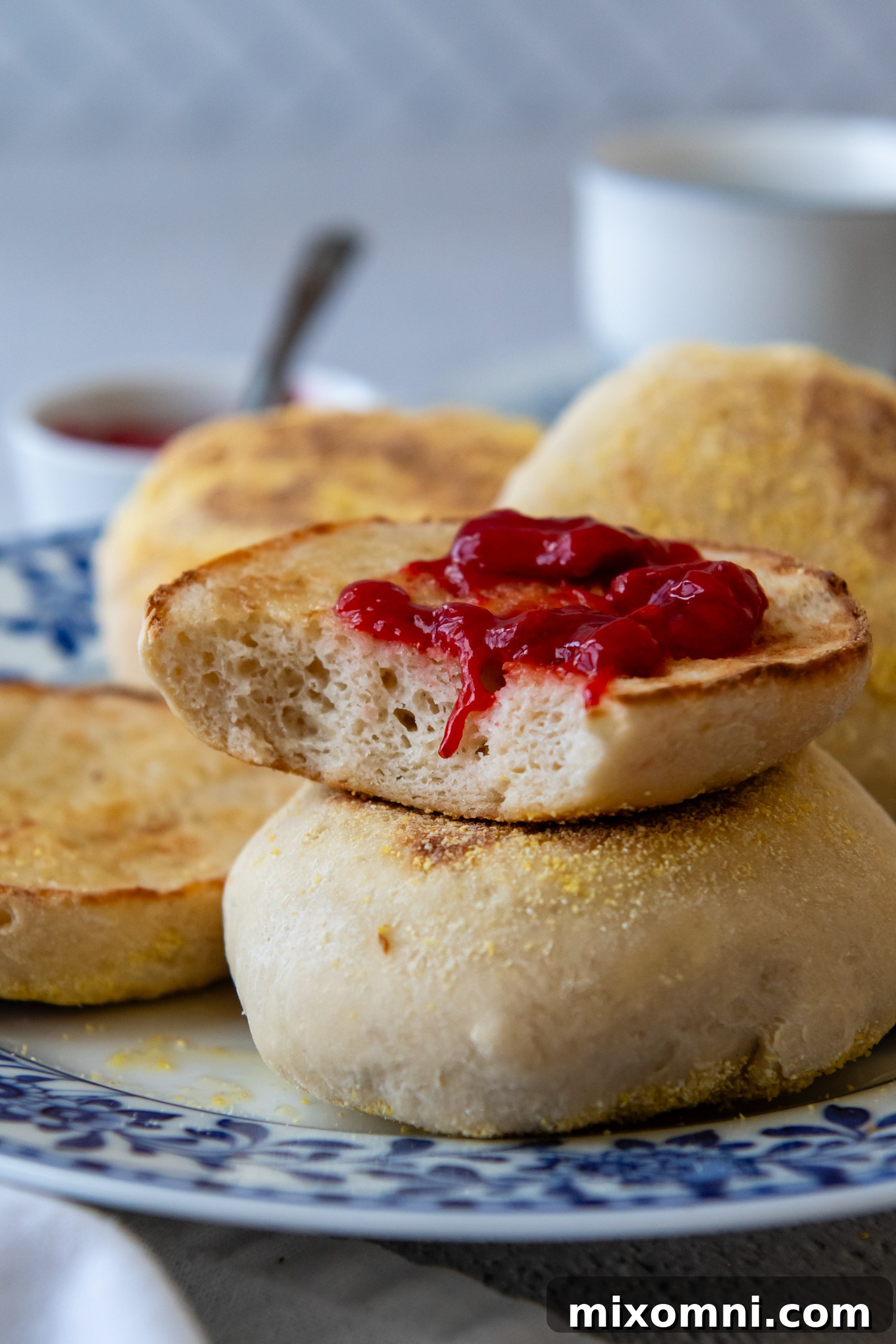
Prepare to delight your taste buds with a gluten-free bread experience that truly lives up to its promise. These homemade, yet incredibly easy, gluten-free English muffins are crafted using readily available all-purpose gluten-free flour and a clever cooking technique. The result? A beautifully golden exterior that gives way to an irresistibly soft, airy crumb, complete with all those coveted nooks and crannies. We’re here to show you how even a complete baking novice can achieve surprising success with this revolutionary recipe!
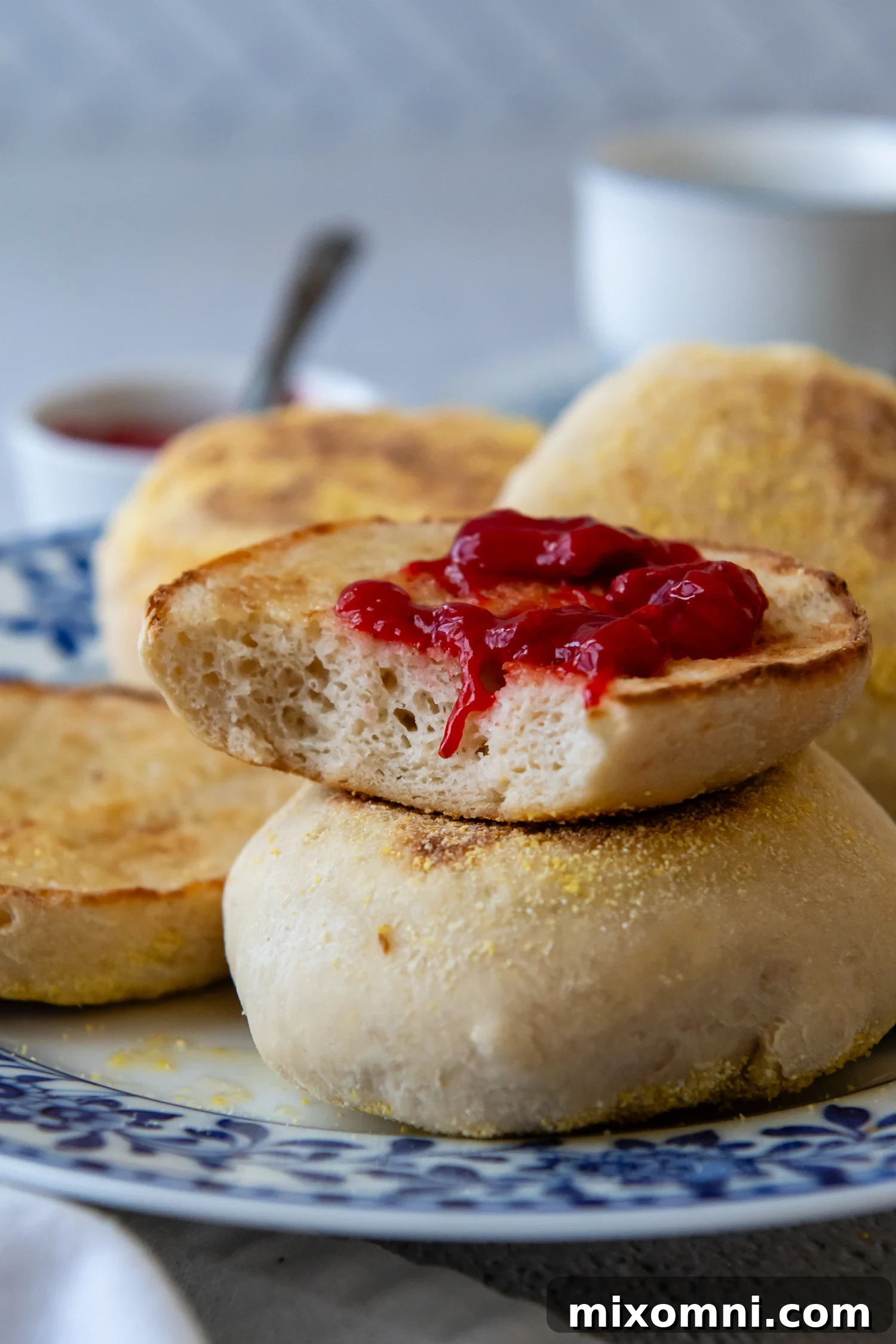
The Ultimate Guide to Easy Homemade Gluten-Free English Muffins
Why This Gluten-Free English Muffin Recipe Stands Out
I’ve often shared my conviction that achieving truly delicious gluten-free bread with an impeccable texture doesn’t have to be complicated. In fact, many yeasted gluten-free bread recipes, like these homemade English muffins, can actually be simpler and quicker to prepare than their traditional wheat-based counterparts. For years, the quest for a truly satisfying gluten-free English muffin has been a challenging one for many. Store-bought options often fall short, lacking the signature chew, airy interior, and delightful cragginess that makes a classic English muffin so beloved. This recipe changes everything, delivering a homemade version that rivals, and dare I say, surpasses the texture and taste of traditional muffins.
How is it possible that gluten-free breads can be less complicated? There are a couple of key factors that streamline the process:
- Single Rise: Traditional wheat breads often demand a double proofing process – a bulk fermentation followed by a second rise after shaping. Gluten-free dough, due to its different structure, typically requires only one quick rise. This significantly cuts down on the overall preparation time, meaning you can whip up everything from English muffins to soft, doughy gluten-free burger buns, dinner rolls, and even pizza crusts in under an hour for many recipes.
- No Kneading Required: Forget the strenuous kneading associated with developing gluten in wheat dough. Our gluten-free English muffin dough is simply mixed together in a stand mixer until combined. No intense arm work, no sticky mess on your counter – just pour the ingredients, mix, shape, and cook. This ease makes the baking process far more approachable for beginners and busy home cooks alike.
And let’s talk about the cooking process itself – another aspect that is ingeniously streamlined when making gluten-free English muffins compared to conventional methods. Instead of cooking the muffins solely on the stovetop from start to finish, which can be tedious and inconsistent, this recipe employs a more effective, two-stage technique. It begins on the stovetop to develop that beautiful, crusty, golden-brown exterior that is characteristic of a perfect English muffin. Following this initial pan-fry, the muffins are transferred to a baking sheet and finished in the oven. This dual approach ensures several crucial things:
- Even Cooking: The oven provides a more consistent, gentle heat, allowing the interior of the muffins to cook thoroughly without over-browning the outside.
- Optimal Moisture Release: Gluten-free starches can notoriously hold onto moisture, leading to a gummy or dense texture if not baked properly. The extended, controlled baking time in the oven ensures that excess moisture is thoroughly absorbed and evaporated, preventing those dreaded gummy, dense “hockey pucks” and leaving you with a light, airy crumb.
- The Perfect Texture: This technique is the secret to achieving both the crispy, golden crust and the pillowy soft, open interior with all the signature nooks and crannies that make English muffins so enjoyable.
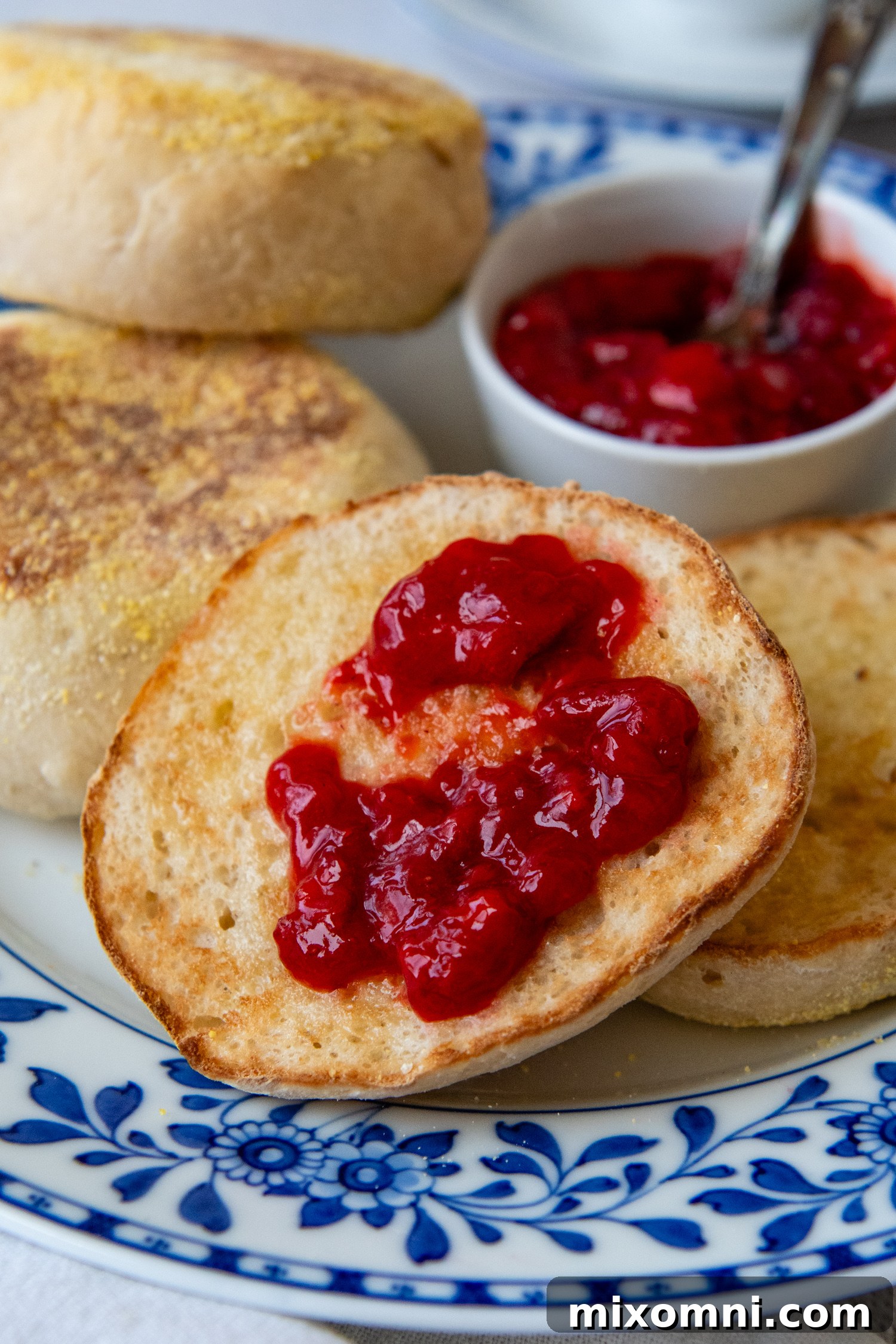
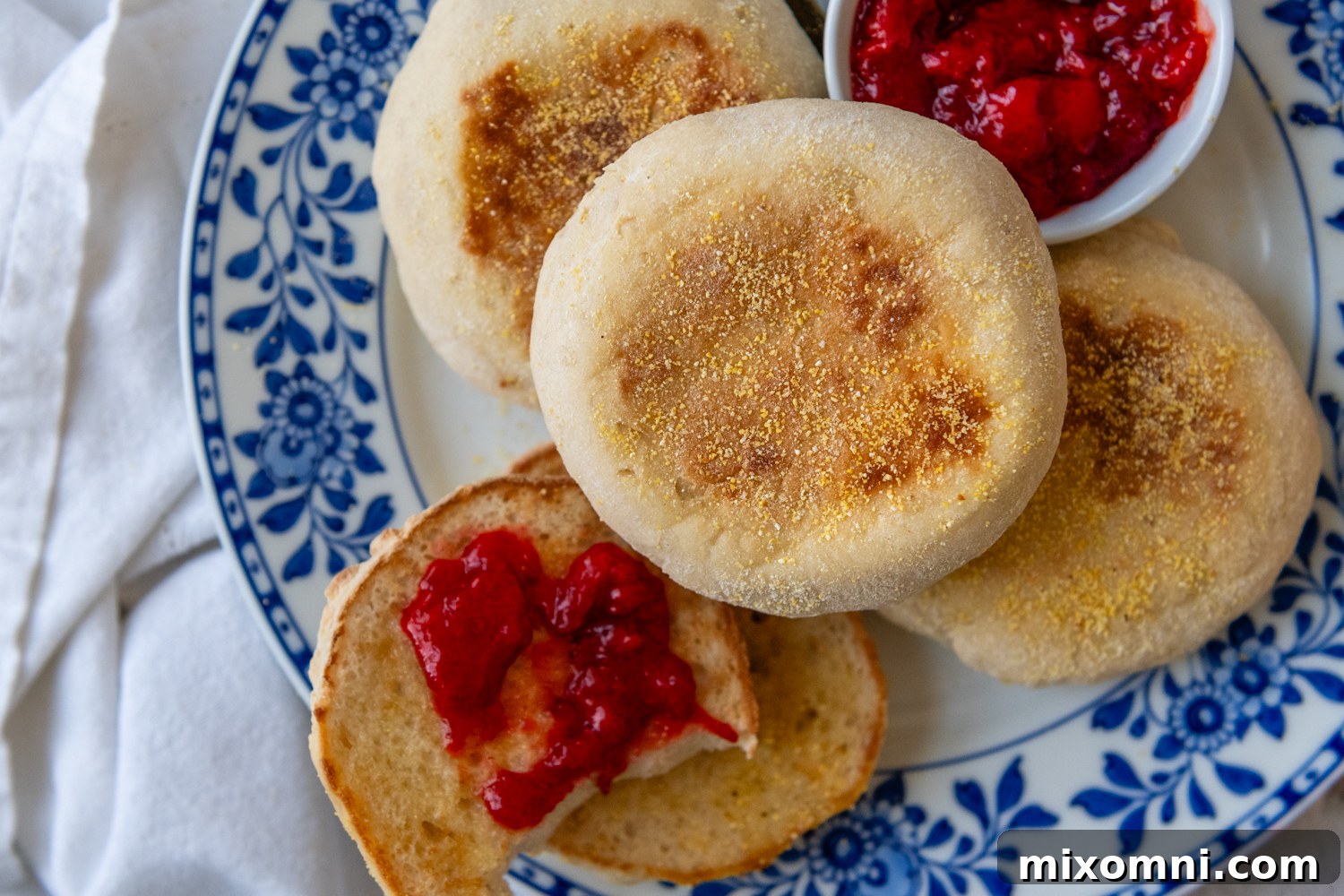
This recipe delivers seriously good stuff. Experience it for yourself: split one open, toast it to golden perfection, and serve alongside your favorite gluten-free breakfast ideas. Mark another successful gluten-free creation off your list!
I haven’t had an English muffin that tastes like an English muffin in 6 years. I made these this morning for my family’s Sunday brunch, and WOW. Followed exactly, it was so easy and amazingly delicious. I’ve made just about every recipe you have on here but for some reason was intimidated by the English muffins. But it turns out, they turned out! Thank you!! I could cry. I really missed English muffins.
—Megan
Your Step-by-Step Guide to Perfect Gluten-Free English Muffins
(Below you’ll find detailed step-by-step photos and expanded instructions. For the complete recipe, including precise ingredient amounts, please scroll down to the dedicated recipe card.)
1. Mix Up the Dough: The Foundation of Flavor and Texture
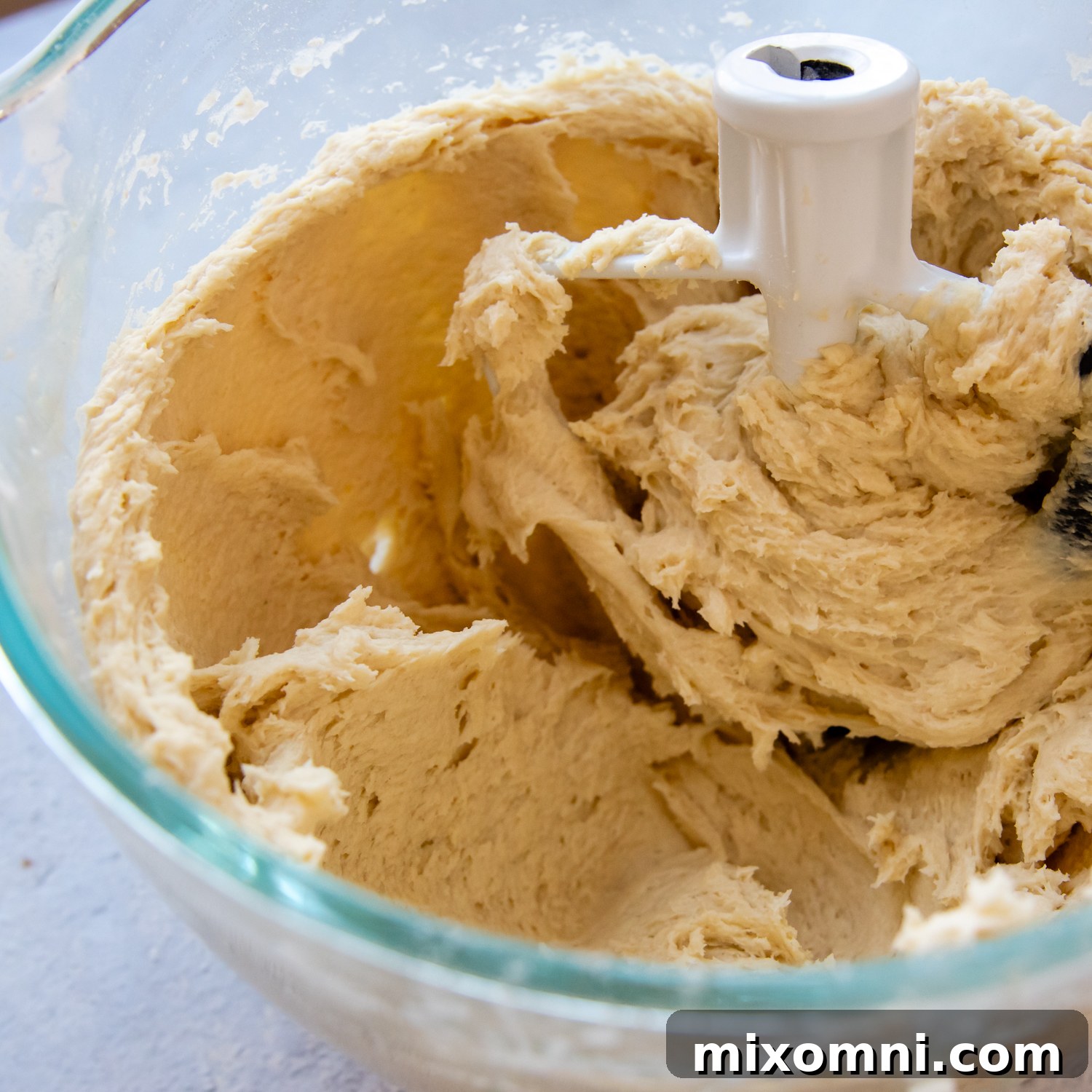
Begin by combining all the dry ingredients in the bowl of a stand mixer. This includes your gluten-free all-purpose flour, a touch of granulated sugar, instant rapid-rise yeast, baking powder, and a crucial ingredient for gluten-free baking: psyllium husk powder. The psyllium husk is key here, acting as a binder and providing the necessary structure and pliability to the dough, mimicking the role of gluten. The addition of baking powder works synergistically with the yeast, helping to aerate the crumb and contribute to that light, open texture we’re aiming for.
Next, introduce the warmed milk and water mixture (ensuring it’s just slightly warm to activate the yeast, around 110°F), room temperature eggs, melted and cooled butter, and a hint of apple cider vinegar. The vinegar adds a subtle tang and also helps activate the baking soda often found in GF flour blends. Mix these ingredients on low speed until they are just combined, then increase the speed to medium-low and mix for a full 5 minutes. Don’t be alarmed by the dough’s consistency; it will be noticeably stiff, a characteristic texture for well-structured gluten-free bread dough.
2. Divide and Shape: Creating Uniform Muffins
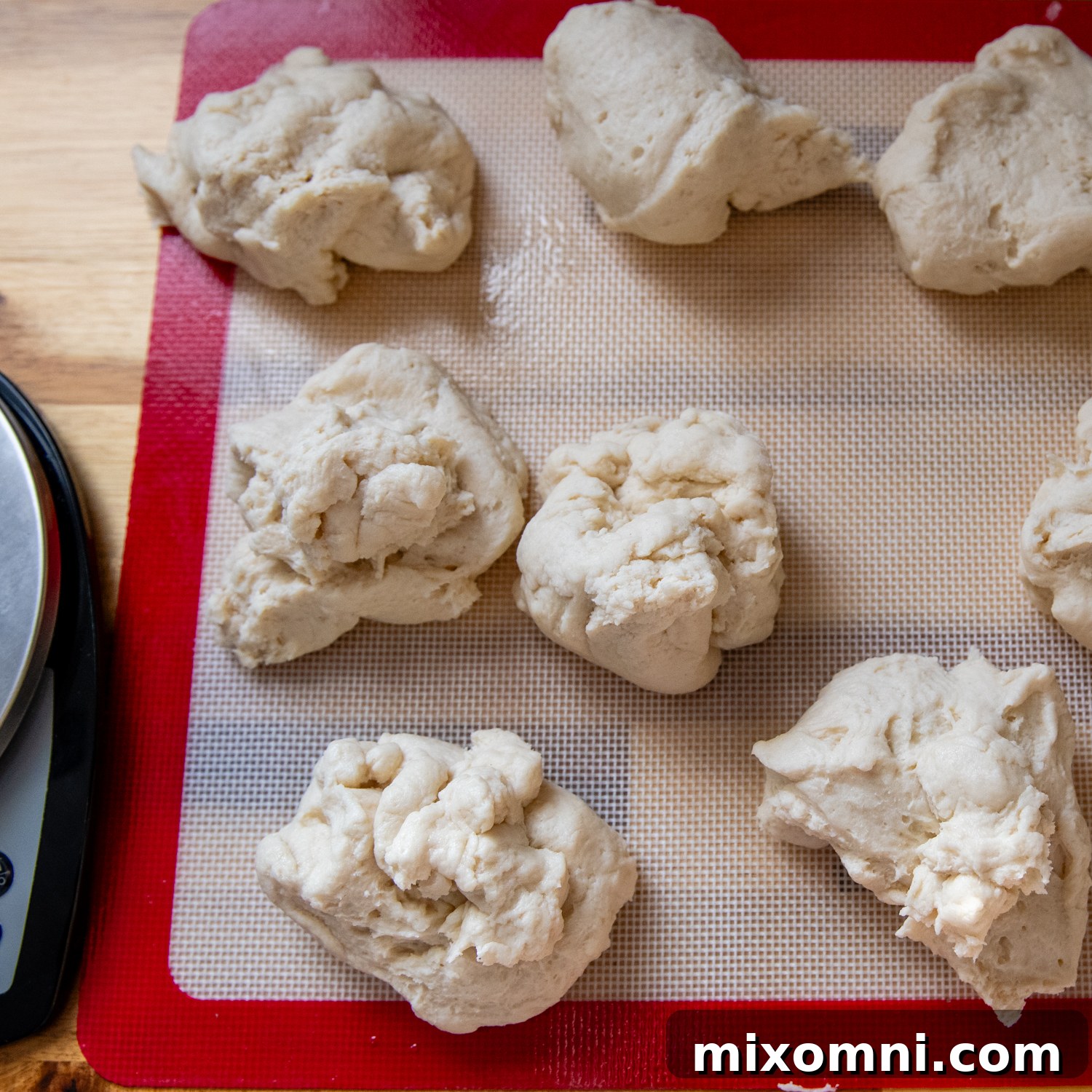
Prepare your work surface by lightly spraying a silicone mat or a piece of parchment paper with non-stick cooking spray. This crucial step prevents the sticky gluten-free dough from adhering to your hands and surfaces. Using lightly greased hands (a little olive oil works well too), divide the dough evenly into 10 portions. For those who prefer precision and consistent results, a food scale is your best friend here; each portion should weigh approximately 4 ounces. Even division ensures that all your English muffins cook uniformly and rise consistently, giving you a batch of perfectly matched breakfast treats.
3. Smooth, Flatten, and Rest: The Crucial Rise
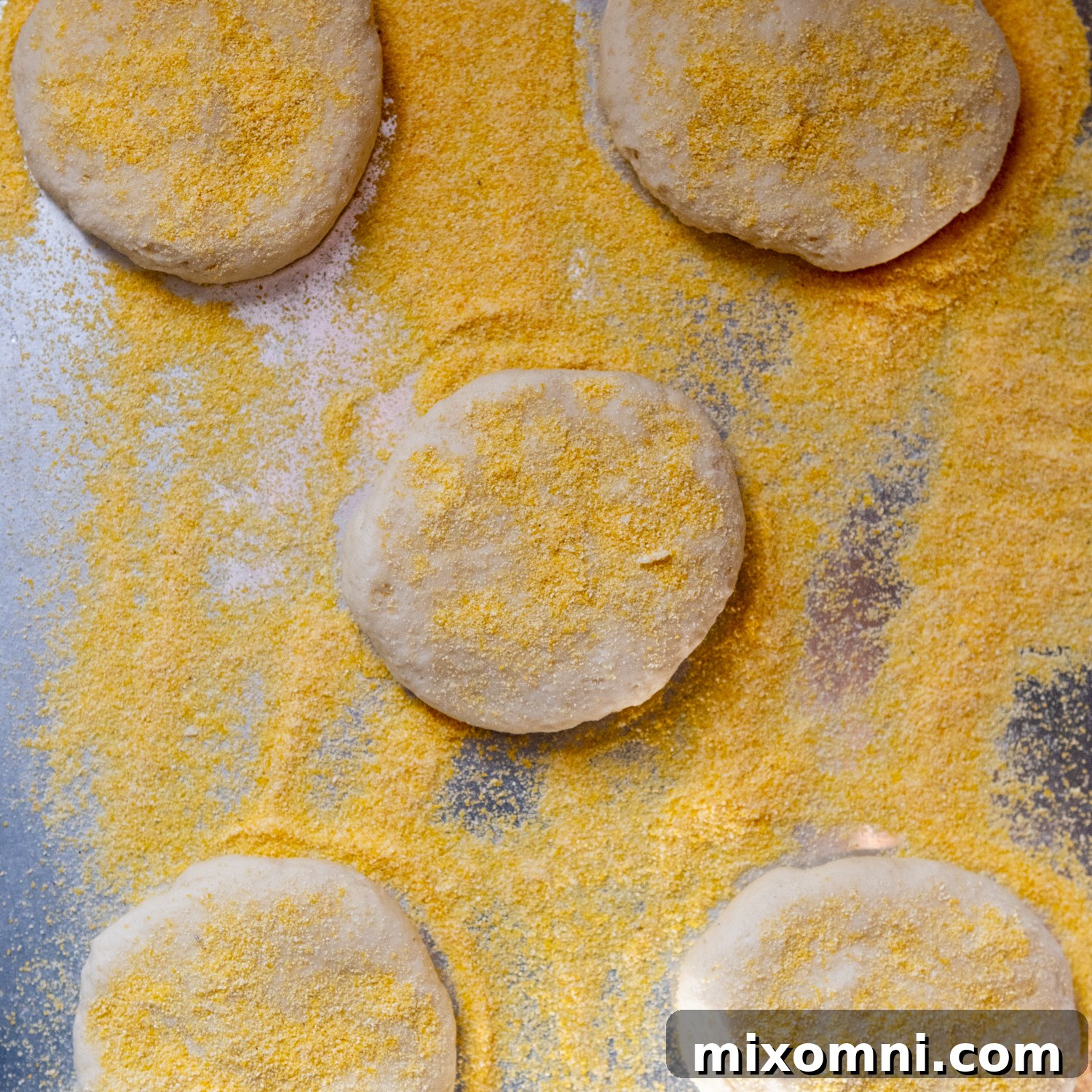
Once divided, shape each dough portion into a smooth, neat ball. Achieving a smooth surface is important in gluten-free baking to prevent cracks from forming during the cooking process. Sprinkle a generous amount of gluten-free cornmeal onto two separate baking sheets, then arrange 5 shaped dough balls on each sheet, ensuring they are evenly spaced. Gently flatten each ball so they are about ¾-inch tall; this initial shaping helps create the classic English muffin disc shape.
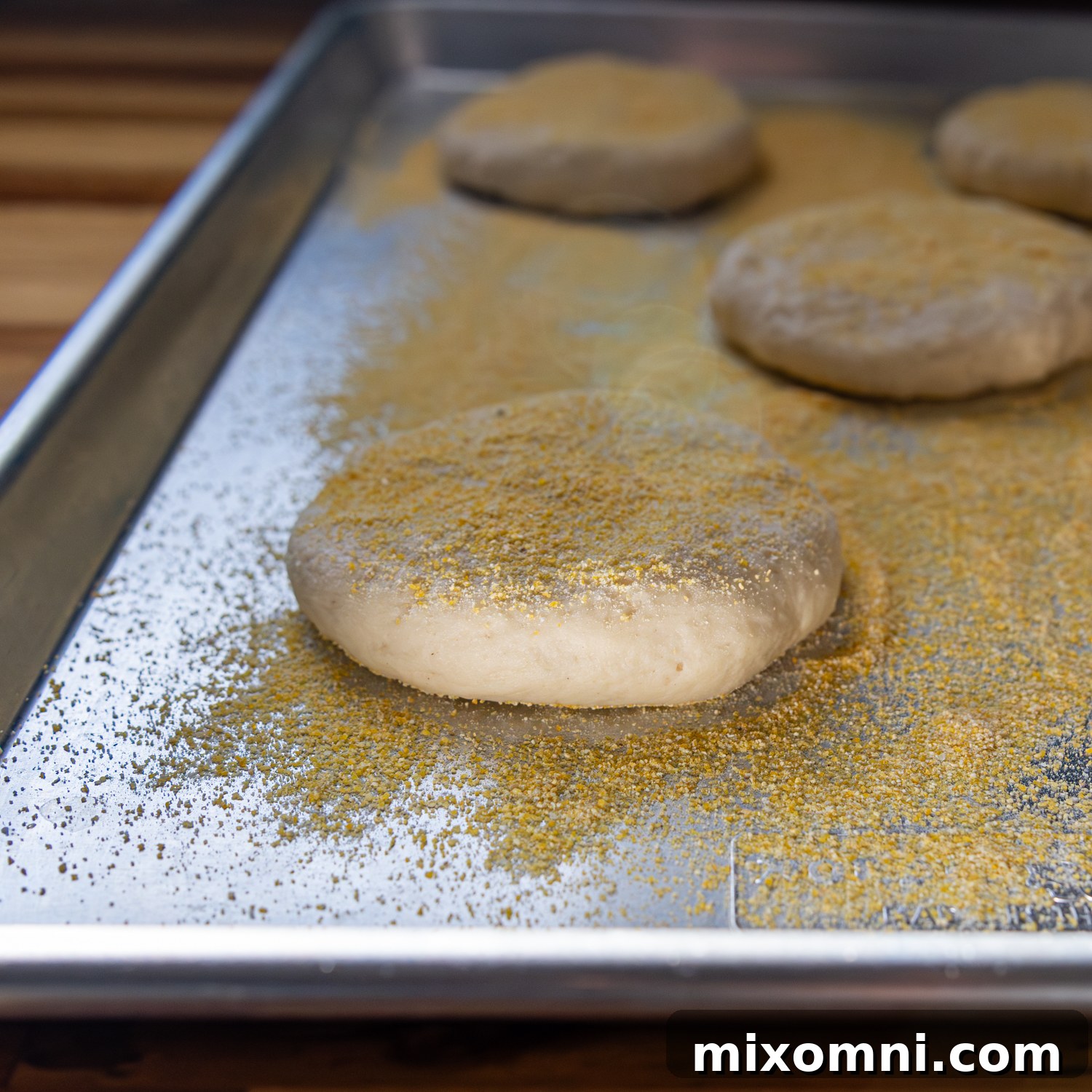
Next, sprinkle more cornmeal over the tops of the flattened dough and loosely cover the baking sheets with a piece of plastic wrap. Allow the muffins to rise in a warm, draft-free area for 30-40 minutes. During this time, they should visibly increase in height, reaching approximately 1 ¼ to 1 ½ inches tall (refer to the second image below for visual guidance). In the final 15 minutes of the rising period, preheat your oven to 350°F (175°C), preparing for the next stage of cooking.
4. The Streamlined Cooking Technique: Skillet to Oven
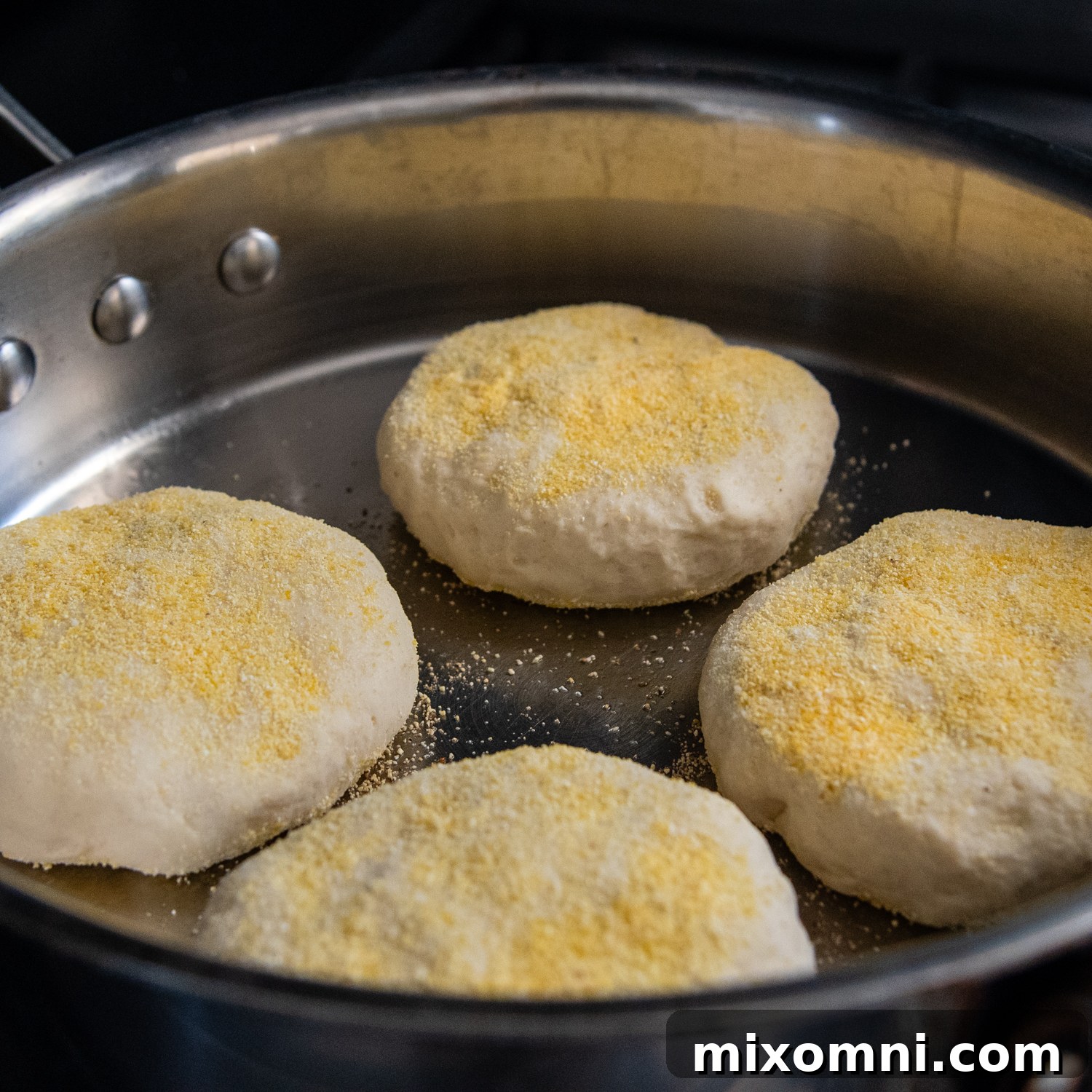
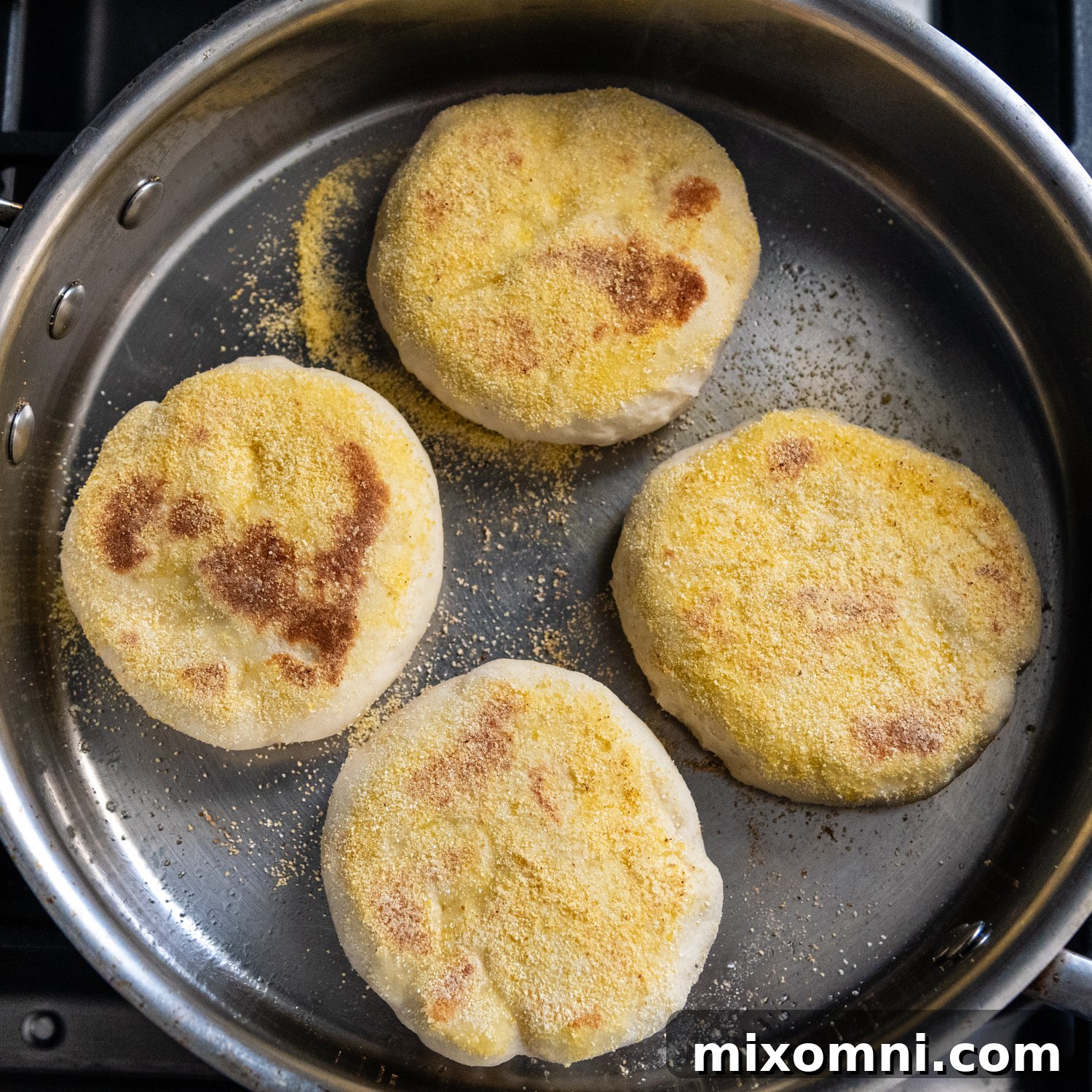
Now for the innovative cooking process that sets these English muffins apart! Heat about a teaspoon of oil in a large, heavy skillet (preferably cast iron) over medium heat. Once hot, use a dry paper towel to carefully wipe away any excess oil, leaving just a thin, even film on the pan surface. This ensures a perfect golden crust without making the muffins greasy. Place 3-4 muffins in the hot pan, giving them ample space, and cook until their bottoms are set and begin to turn a beautiful golden brown, typically about 1 to 1 ½ minutes. If you notice them puffing up too much during this stage, gently press down on the tops with a spatula to slightly flatten them, maintaining their classic disc shape.
Flip the muffins and cook on the second side for another 1 to 1 ½ minutes, until golden. Transfer these pan-fried muffins to a parchment-lined baking sheet. Before frying the next batch, use a dry paper towel to carefully wipe out any residual cornmeal or oil from the skillet, then add another teaspoon of oil and repeat the pan-frying process until all your English muffins have been briefly cooked on the stovetop.
Once all muffins are on the baking sheet (you may need to consolidate onto one sheet), transfer them to the preheated 350°F (175°C) oven. Bake for 20-25 minutes, rotating the baking sheet halfway through to ensure even cooking. For perfect doneness, the internal temperature of the muffins should reach 210°F (99°C). An instant-read thermometer is invaluable here, taking all the guesswork out of baking breads. Allow the muffins to cool slightly on the baking sheet before splitting, toasting, and savoring these epic homemade English muffins. Let the sense of accomplishment and the delicious aroma wash over you!
Expert Tips for Dividing and Shaping Gluten-Free Dough
When working with gluten-free bread dough, achieving as smooth a ball as possible during the shaping stage is beneficial. Unlike traditional wheat doughs which possess elastic gluten for forgiveness, GF dough lacks this flexibility. The effort you put into smoothing the dough before baking will minimize cracks as the muffins cook, contributing to a more aesthetically pleasing final product.
It’s important to note that shaping is primarily an aesthetic consideration; it doesn’t significantly impact the taste or internal texture of the muffin. If you prioritize speed over picture-perfect appearance, you can certainly save time by being less meticulous. However, if you desire bakery-worthy English muffins that look as good as they taste, here are my top tips for smooth shaping:
- Prepare Your Surface and Hands: Always use a greased silicone baking mat or parchment paper as your work surface. Additionally, lightly spray your hands with non-stick cooking spray or rub them with a tiny bit of olive oil to prevent the dough from sticking. This simple step makes a world of difference.
- Pinch and Roll: As you roll the dough into balls, actively pinch together any visible cracks or seams. This creates a more uniform surface tension in the dough, which helps maintain its shape during rising and baking.
- Moisture for Stubborn Spots: For any persistent cracks or small dimples that don’t smooth out easily, lightly wet your fingertips with a little water and gently smooth them over the problematic areas. The slight moisture helps to seal the surface of the dough, resulting in a flawless finish.
Don’t Forget to Pin This Amazing Recipe!
Let’s connect on Pinterest! I’m always sharing fantastic recipes you’ll love.
Made this recipe? I genuinely love hearing from you! Share your feedback and leave a star rating and comment below the recipe card. Your reviews are incredibly helpful to others searching for recipes, and I always appreciate insights from our wonderful community. You can expect a reply from me! -Melissa

Easy & Perfected Gluten-Free English Muffins

Melissa Erdelac
10
20 mins
30 mins
1 hr 24 mins
Discover another seemingly too-good-to-be-true gluten-free bread marvel! These homemade, yet incredibly easy, gluten-free English muffins are crafted with versatile all-purpose gluten-free flour and a clever cooking method, promising a beautifully golden crust with a soft, airy crumb. Let us guide you on how even a beginner can master this recipe with astonishing success!
Pin Recipe
Rate This Recipe
Remove Ads
Ingredients
- 3½ cups (516 g) all-purpose gluten-free flour, I use and recommend Cup4Cup GF flour
- 3 tablespoons (33 g) psyllium husk powder
- 2 tablespoons (26 g) granulated sugar
- 2¼ teaspoon (9 g) instant rapid rise yeast
- 1¼ teaspoon baking powder
- 1½ teaspoon salt
- 1 cup (240 g) water
- 1 cup (245 g) milk
- 2 large eggs, room temperature
- 2 tablespoons (28 g) butter, melted and cooled
- 2 teaspoon apple cider vinegar
- gluten-free cornmeal, for sprinkling
- oil, for frying
Equipment
- Food Scale
- Cup4Cup Gluten-Free Flour
- Baking Sheets
Instructions
-
Sprinkle approximately 2 tablespoons of gluten-free cornmeal evenly over each of two baking sheets. Set these aside for later use.
-
In the large bowl of a stand mixer, combine all the dry ingredients: gluten-free all-purpose flour, psyllium husk powder, granulated sugar, instant rapid-rise yeast, baking powder, and salt. Attach the paddle attachment and mix on low speed for about 30 seconds to ensure everything is well combined. In a microwave-safe liquid measuring cup, combine the milk and water. Heat this mixture for approximately 1 minute, or until it is just slightly warm to the touch, ideally around 110°F (43°C). This temperature is crucial for activating the yeast without killing it.
-
Add the warmed milk/water mixture, room temperature eggs, melted and cooled butter, and apple cider vinegar to the dry ingredients in the stand mixer. With the paddle attachment, mix on low speed for 1 minute until all ingredients come together into a cohesive dough. Then, increase the speed to medium-low and continue mixing for another 5 minutes. The dough will be quite stiff and thick, which is the desired consistency for these English muffins.
-
Prepare your work surface by lightly spraying a silicone mat or a piece of parchment paper with non-stick cooking spray to prevent sticking. Using hands lightly greased with cooking spray or a little olive oil, divide the dough in half. Then, divide each half into 5 equal pieces, resulting in 10 total portions. For precise and uniform muffins, you can use a food scale to ensure each section weighs approximately 4 ounces. Place a sprayed piece of plastic wrap on your food scale for easy weighing.
-
Once the dough has been divided evenly, take each portion and shape it into a smooth, round ball. Place 5 shaped balls onto each of your prepared baking sheets, ensuring they are spaced evenly apart to allow for rising. Gently flatten each ball with the palm of your hand or a spatula so that they are about ¾-inch tall. This will give them the classic English muffin disc shape.
-
Sprinkle additional cornmeal over the tops of the flattened dough balls. Loosely cover the baking sheets with a piece of plastic wrap to create a warm, draft-free environment. Allow the muffins to rise for 30-40 minutes in a warm spot. During this time, they should visibly increase in height, becoming approximately 1 ¼ to 1 ½ inches tall. During the last 15 minutes of the rising period, preheat your oven to 350°F (175°C).
-
Now, prepare for the two-stage cooking process. If you only have two baking sheets, gently transfer all the English muffins to one sheet using a spatula. Clean off the empty baking sheet and line it with parchment paper; this will be for the muffins after pan-frying. Alternatively, if you have a third baking sheet, simply line it with parchment paper to transfer the cooked muffins to.
-
Heat about a teaspoon of oil in a 12-inch heavy skillet or cast iron pan over medium heat. Once the pan is hot, use a dry paper towel to carefully wipe away any excess oil, leaving only a thin film to prevent sticking and ensure even browning. Place 3-4 muffins in the pan, making sure not to overcrowd it. Cook until the bottoms are set and turn a beautiful golden brown, which should take about 1 to 1 ½ minutes. If the muffins puff up significantly while cooking, gently press down on the tops with a spatula to flatten them slightly.
-
Flip the muffins and cook on the second side for another 1 to 1 ½ minutes, until golden brown. Transfer the pan-fried muffins to the parchment-lined baking sheet. Before cooking the next batch, carefully use a dry paper towel to wipe out any cornmeal residue left in the pan. Add another teaspoon of oil and repeat the frying process until all English muffins have been briefly cooked on both sides. Once all are pan-fried, arrange them evenly spaced on one baking sheet (if you had used multiple during frying).
-
Bake the English muffins in the preheated oven for 20-25 minutes. To ensure even baking, rotate the baking sheet halfway through the cooking time. For perfect doneness, the internal temperature of the muffins should reach 210°F (99°C). Allow the muffins to cool on the baking sheet for at least 20 minutes before attempting to split and toast them. This cooling time is essential for the structure to set and for the best texture. Then, enjoy your epic from-scratch English muffins!
Notes
Storing and Freezing Gluten-Free English Muffins
Gluten-free baked goods tend to lose moisture and freshness more quickly than their wheat counterparts, so I highly recommend serving these English muffins on the day they are made for the absolute best taste and texture.
If you wish to prepare them ahead of time or store leftovers, ensure the muffins are cooled completely to room temperature. Once cool, wrap each muffin individually in plastic wrap, then transfer them to a freezer-safe ziplock bag. They can be frozen for up to 2 months without significant loss of quality.
When you’re ready to enjoy them from the freezer, make sure they come to room temperature before serving. If they are still chilled, they will not be as soft. You can gently warm them for a few seconds in the microwave to remove any lingering chill, or simply split and toast them directly for a delightful breakfast.
Nutrition Information
Calories: 217kcal, Carbohydrates: 38g, Protein: 7g, Fat: 6g, Saturated Fat: 2g, Polyunsaturated Fat: 1g, Monounsaturated Fat: 1g, Trans Fat: 0.1g, Cholesterol: 46mg, Sodium: 393mg, Potassium: 128mg, Fiber: 7g, Sugar: 5g, Vitamin A: 164IU, Vitamin C: 0.01mg, Calcium: 88mg, Iron: 2mg
Did you make this recipe? Please leave a star rating and review below. Your feedback is incredibly valuable to others searching for recipes, and I absolutely love hearing from you!