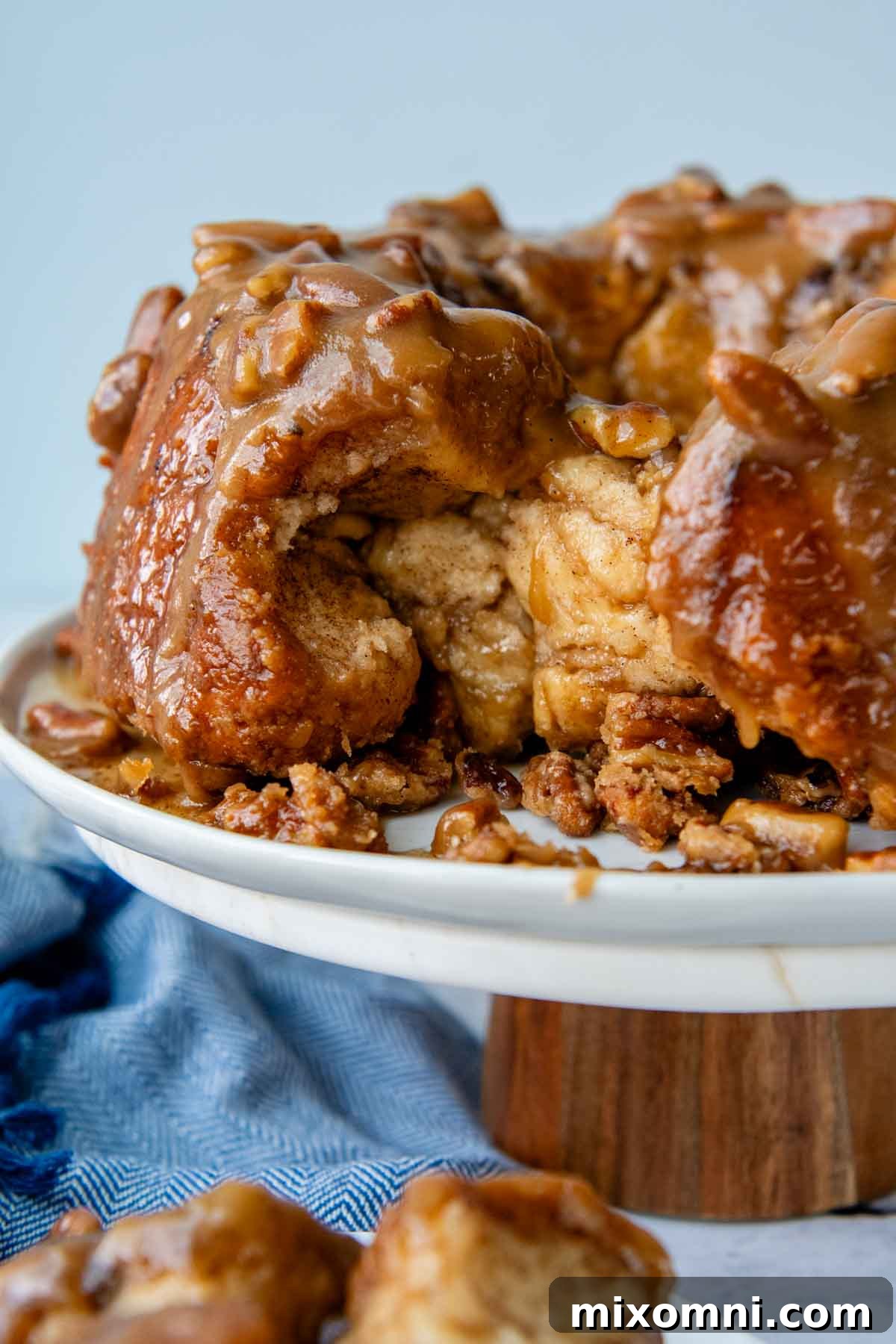
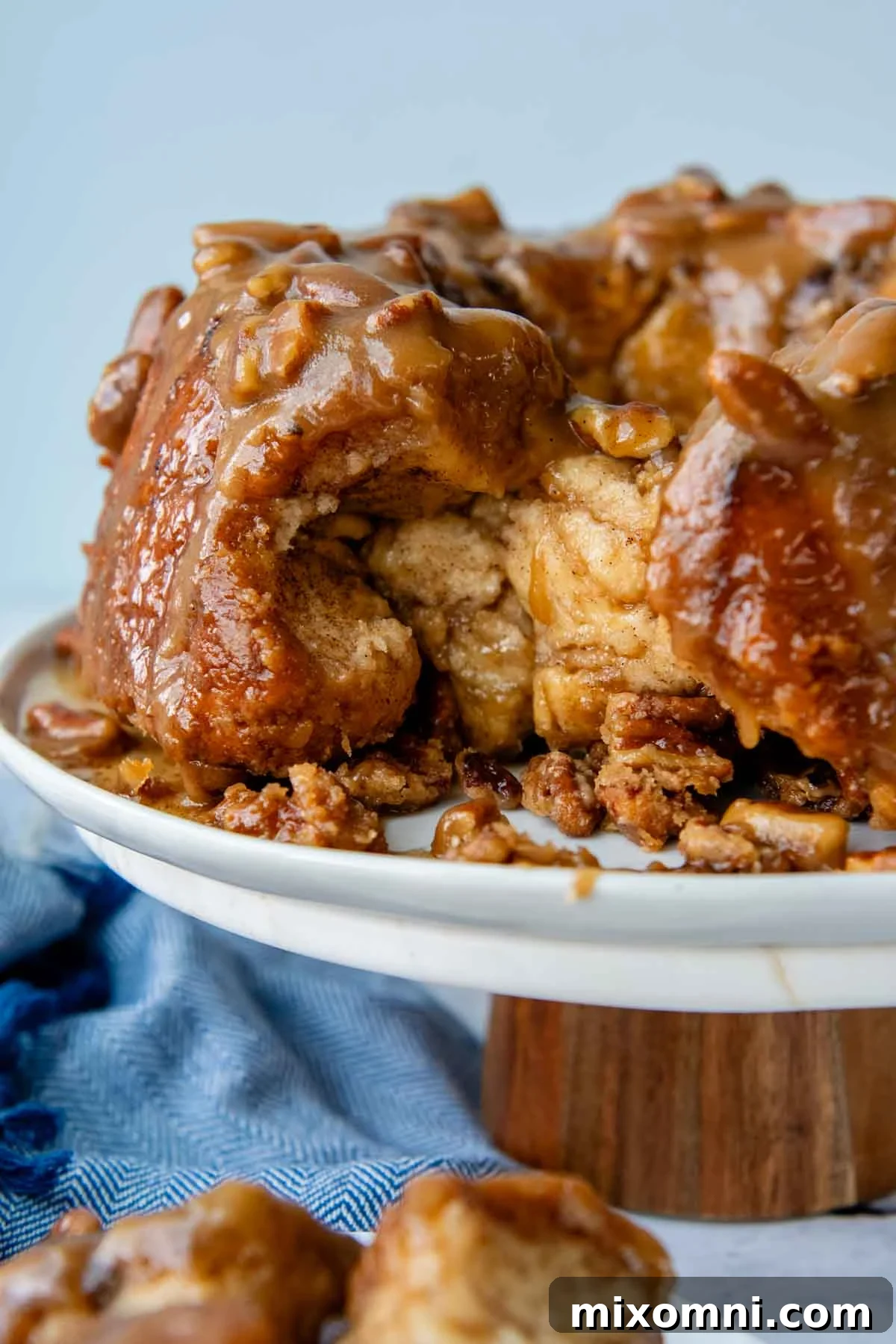
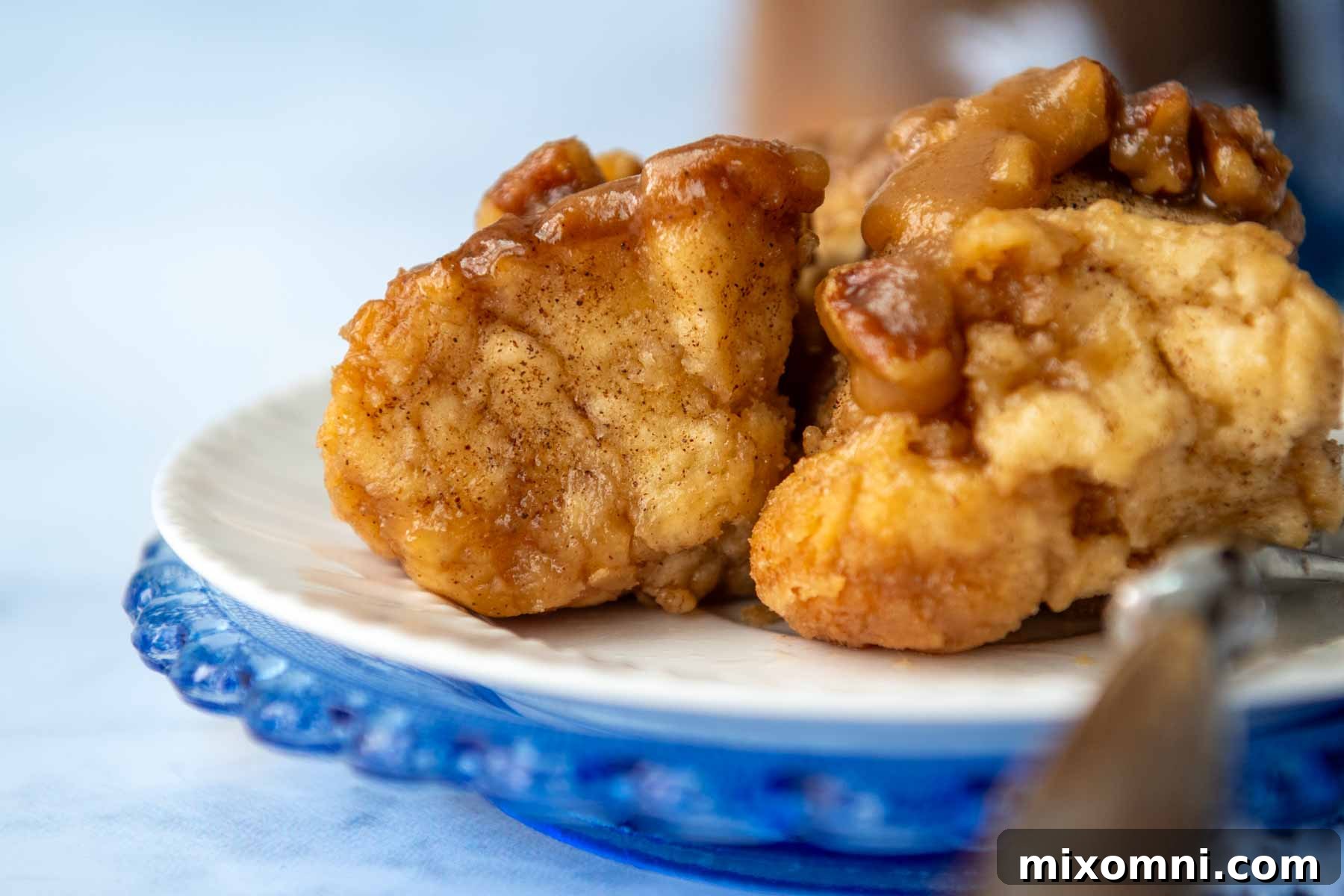
Reclaim the joy of a truly classic, homemade indulgence with this remarkably easy and utterly delicious gluten-free monkey bread recipe. Imagine tender, pillowy-soft cinnamon dough bites, generously coated in a rich, sticky caramel pecan sauce, baked to golden perfection until every piece is bubbly, gooey, and irresistible. This extraordinary treat is perfect for holiday breakfasts, special occasions, or simply a weekend delight. Designed with versatility in mind, it offers both a full bundt-cake option to effortlessly serve a crowd and a convenient small-batch adaptation for more intimate gatherings. Best of all, it can be prepared overnight, making busy mornings a breeze. Let’s embark on this culinary adventure together, step-by-step, to create a gluten-free monkey bread that rivals any traditional version you’ve ever tasted.
Mastering the Art of Pull-Apart Gluten-Free Monkey Bread
For many years, the idea of enjoying a classic gooey cinnamon monkey bread seemed like a distant memory for those on a gluten-free diet. The quest for a gluten-free version often felt daunting, with concerns of overly complicated techniques and underwhelming, dense results. However, with advancements in gluten-free baking and a growing understanding of specific flour characteristics, recreating beloved classics has become not only possible but truly delightful.
My journey in gluten-free baking has led to the discovery of simple yet highly effective tactics for crafting yeast breads that are just as pillowy soft, tender, and airy as their gluten-containing counterparts. This expertise has allowed me to reintroduce cherished homemade recipes, ideal for holidays and special occasions, such as copycat Cinnabon gluten-free cinnamon rolls, and now, this absolutely magical gluten-free monkey bread recipe. Prepare to be amazed by the incredible texture and flavor that will transport you back to your favorite childhood memories, without any gluten.
While this recipe might involve a little time dedicated to portioning out the individual dough balls, the overall process remains remarkably simple and straightforward. Even a novice gluten-free baker can achieve spectacular results with confidence. The brilliant make-ahead, overnight option is a game-changer, allowing you to prepare the soft, fluffy monkey bread dough the day before busy holidays, ensuring a stress-free Christmas morning or any celebratory breakfast. Imagine waking up to the aroma of freshly baked cinnamon and caramel – pure bliss!
Traditionally, monkey bread is baked in a bundt cake pan, making it an ideal choice for large gatherings, family brunches, and accommodating overnight guests. A full batch of this recipe generously yields approximately 40 dough balls, providing ample servings for anywhere from 12 to 20 people, depending on appetites and accompanying dishes. For those planning a smaller gathering, a convenient small-batch option is also included, perfectly adaptable for baking in a loaf pan or a 9-inch cake pan. No matter the occasion, this recipe delivers.
The secret to the exceptional softness and tender crumb of this gluten-free yeast dough lies in specialized recipe testing techniques, meticulously refined and inspired by highly acclaimed 5-star gluten-free dinner rolls. One of the primary innovations is the incorporation of a roux, also known as a tangzhong. This method involves combining a small portion of the gluten-free flour with water and milk, then gently warming the mixture to create a thick, smooth paste. This crucial step helps to pre-saturate some of the flour before it’s mixed with the remaining dry ingredients. By doing so, the flour is better able to absorb and retain more liquid, resulting in a significantly softer, fluffier bread structure, rather than the dense, crumbly, or gummy texture often associated with gluten-free baked goods.
Another key technique to achieve an incredibly soft and pliable gluten-free pull-apart bread is the strategic replacement of a portion of the gluten-free flour blend with potato starch. Many gluten-free recipes rely on adding additional gluten-free flours to provide structure to the dough, which can sometimes lead to a drier, stiffer final product. By substituting some of this flour with potato starch, we leverage its excellent moisture-absorbing properties. While it contributes to the dough’s workability, it bakes into a much softer, more tender texture, enhancing the overall melt-in-your-mouth experience of the monkey bread. These two techniques combined create a truly superior gluten-free dough that is both a pleasure to work with and a delight to eat.
Essential Ingredient Insights for Perfect Monkey Bread
Crafting exceptional gluten-free baked goods often hinges on selecting the right ingredients. When developing this monkey bread recipe, I focused on an ingredient list that has consistently delivered outstanding results across all my gluten-free homemade bread recipes. Below, you’ll find detailed notes on key ingredients, including any workable substitutions or modifications to ensure your success.
- Gluten-Free All-Purpose Flour: The quality of your gluten-free flour blend is paramount and can truly make or break the outcome of your GF breads. For the best taste and texture, I highly recommend Cup4Cup gluten-free flour. It’s a reliable blend that consistently performs well in yeast-based recipes, producing a light and airy crumb. If using another blend, ensure it’s designed for yeast baking and contains xanthan gum, or add it separately according to package directions.
- Potato Starch (not Potato Flour): This is truly the “secret ingredient” that elevates the dough to an unparalleled level of softness and fluffiness. Instead of relying on an excessive amount of additional gluten-free flour to build structure, which can lead to a dry product, I’ve incorporated potato starch. It effectively absorbs moisture while baking into a delicate, tender texture. For optimal results, stick with potato starch. However, if absolutely necessary, tapioca starch or an equal amount of additional gluten-free flour blend may be substituted, though the final texture may vary slightly.
- Psyllium Husk Powder: This often-overlooked ingredient plays a vital role in gluten-free yeast breads. It acts as a natural binder, mimicking the elasticity and binding properties of gluten. Psyllium husk helps to maintain moisture within the dough, preventing the rolls from becoming dry or crumbly. It also provides the necessary structure, allowing the pull-apart buns to be shaped and hold their form beautifully. I strongly recommend using a reputable brand, as darker psyllium powders can sometimes impart a purple hue to baked goods. Look for a light-colored, finely ground powder for the best aesthetic and functional results.
- Instant (Rapid Rise) Yeast: For convenience and consistent results, instant yeast is my preferred choice. It’s incredibly forgiving as it doesn’t require prior proofing and can be added directly to your dry ingredients. To ensure its longevity and potency, I suggest buying it in bulk and storing it in an airtight glass jar in the refrigerator. If you only have active dry yeast on hand, don’t worry! You’ll simply need to activate it first by stirring it into the warm milk (along with 1 teaspoon of sugar from the recipe) and letting it sit for about 5 minutes until a frothy layer appears on the surface, indicating the yeast is active and ready to work its magic.
- Pecans: I personally find that pecans enhance the monkey bread experience beautifully. Their slightly salty crunch provides a wonderful textural contrast and helps to balance the sweetness of the caramel sauce. However, if pecans are not to your taste or you have nut allergies, they can be easily omitted from the recipe entirely. Alternatively, feel free to substitute them with another preferred nut, such as walnuts or chopped almonds, if desired.
Let’s Make This Together!
(Below, you’ll find detailed step-by-step instructions accompanied by helpful photos. For precise ingredient amounts and the complete recipe card, please scroll further down.)
1. Start with a Roux (It’s Easier Than It Sounds!)
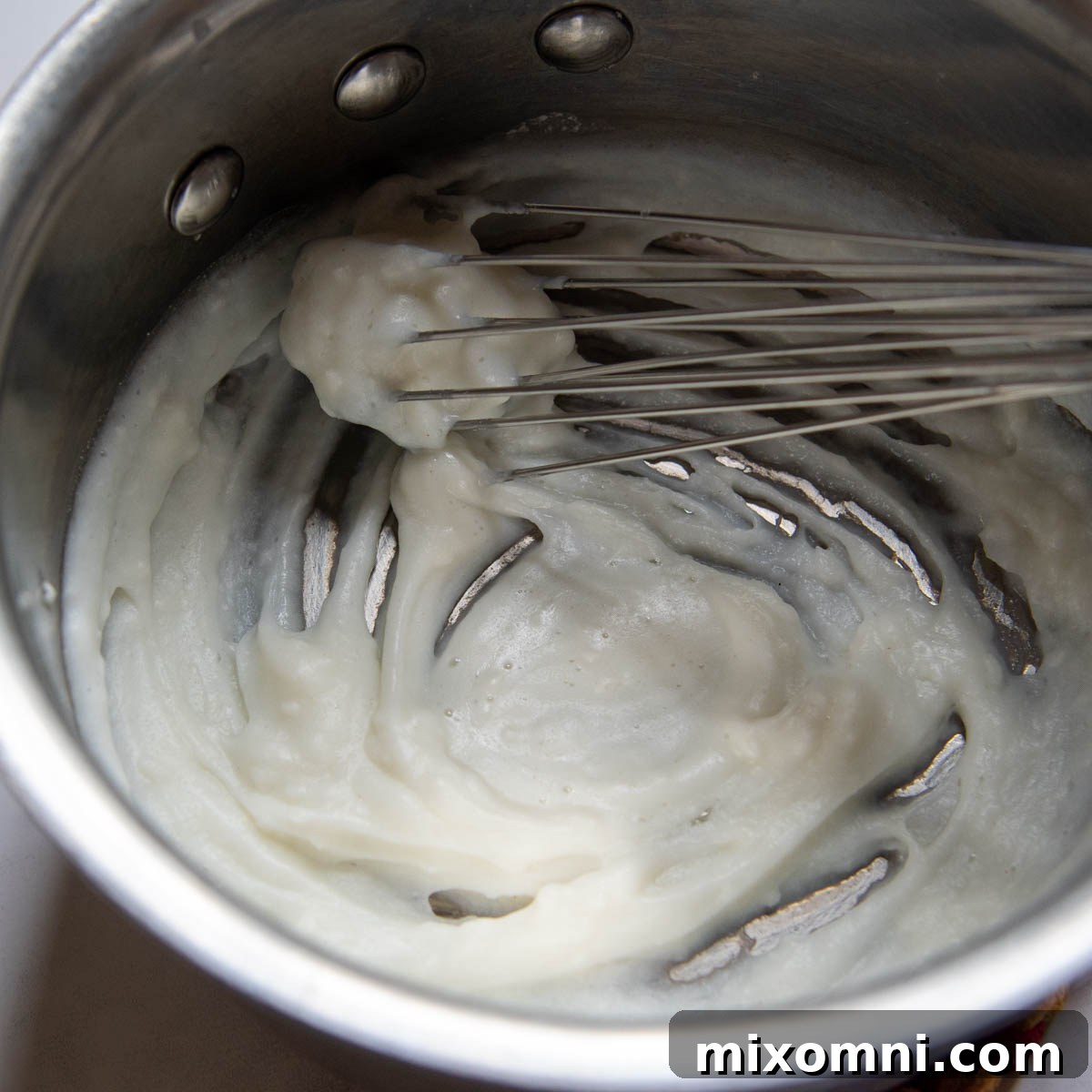
The roux method (also known as tangzhong) is a secret weapon in gluten-free baking. Since GF flours don’t absorb liquids as efficiently as wheat flour, the roux helps to pre-saturate a portion of the flour, allowing it to absorb and retain more liquid. This crucial step is what makes the final texture incredibly soft and fluffy, preventing it from becoming dense or gummy.
Despite its fancy name, making a roux is incredibly simple. In a small saucepan, combine 2 tablespoons of gluten-free flour with milk and water. Whisk continuously over medium heat. Within about a minute, you’ll notice a distinct trail separation at the bottom of the pan as the mixture thickens. That’s your cue! Remove it from the heat and set aside to cool slightly. Easy peasy!
2. Mix the Gluten-Free Yeast Dough
In the large mixing bowl of your stand mixer, fitted with a paddle attachment, combine all the dry ingredients: the gluten-free flour, potato starch, granulated sugar, psyllium husk powder, instant yeast, baking powder, and salt. Mix on low speed until they are well incorporated. Next, add in the warm milk, room temperature egg, slightly cooled melted butter, and, importantly, the prepared roux. Mix on low speed until everything is thoroughly blended. Increase the speed to medium-low and beat for a full 5 minutes. The dough will have a stiff consistency, yet it will remain noticeably sticky. This is the perfect texture for our soft, pull-apart monkey bread.
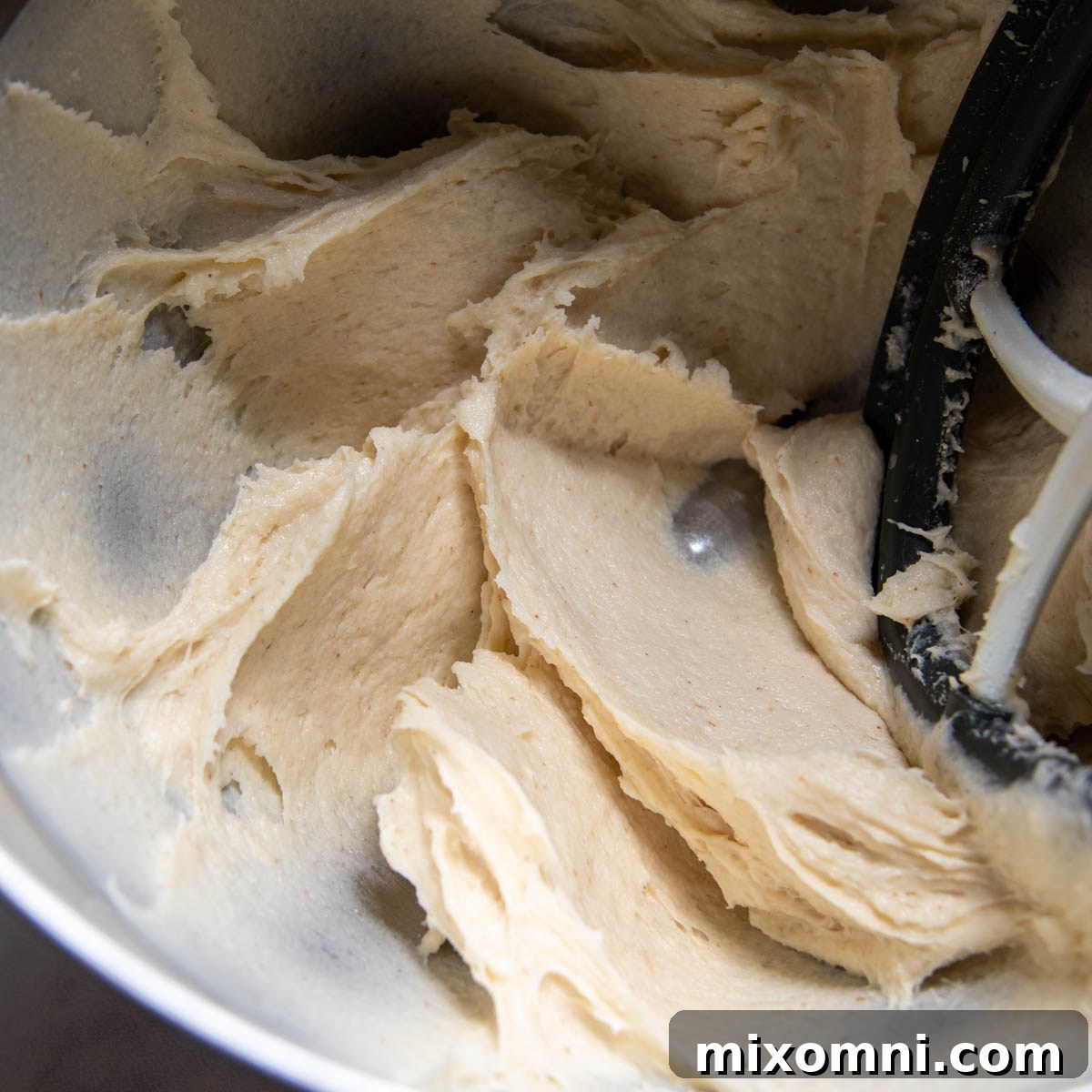
3. Portioning the Dough Balls
The next step is to efficiently portion out all your dough balls. You’ll aim for approximately 40 small pieces. Start by generously greasing a large piece of parchment paper or a silicone baking mat with cooking spray and lay it on your work surface. To make scooping easier, spray the inside of a medium cookie scoop with nonstick cooking spray as well. Scoop about 1 ½ tablespoons of dough for each ball and transfer it to the greased paper. There’s no need to meticulously roll them into perfectly smooth balls at this stage – efficiency is key! You may need to re-spray your cookie scoop and grease your hands occasionally as you work. The initial shape doesn’t matter, as we’ll refine it in the next step.
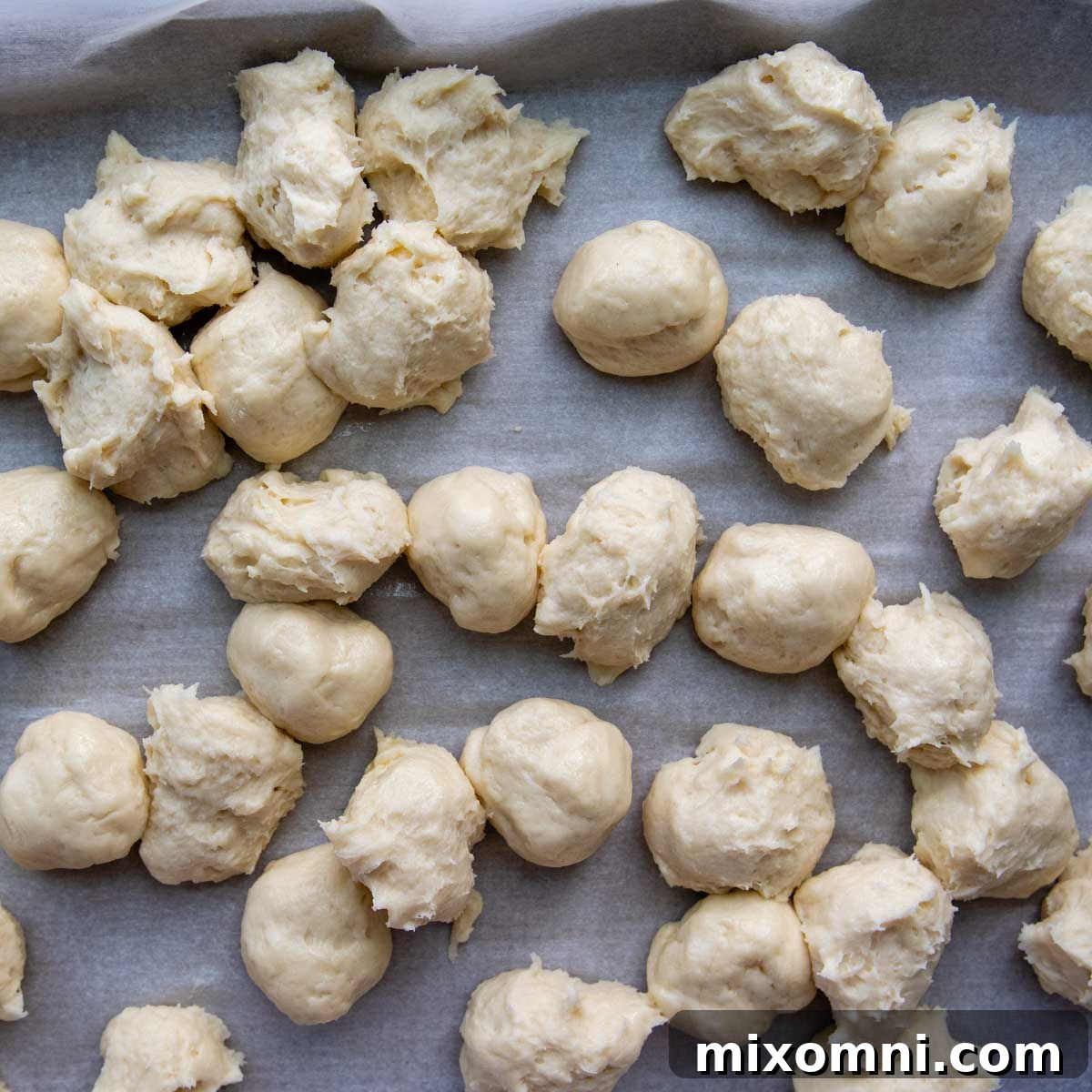
4. Shaping and Assembling the Layers
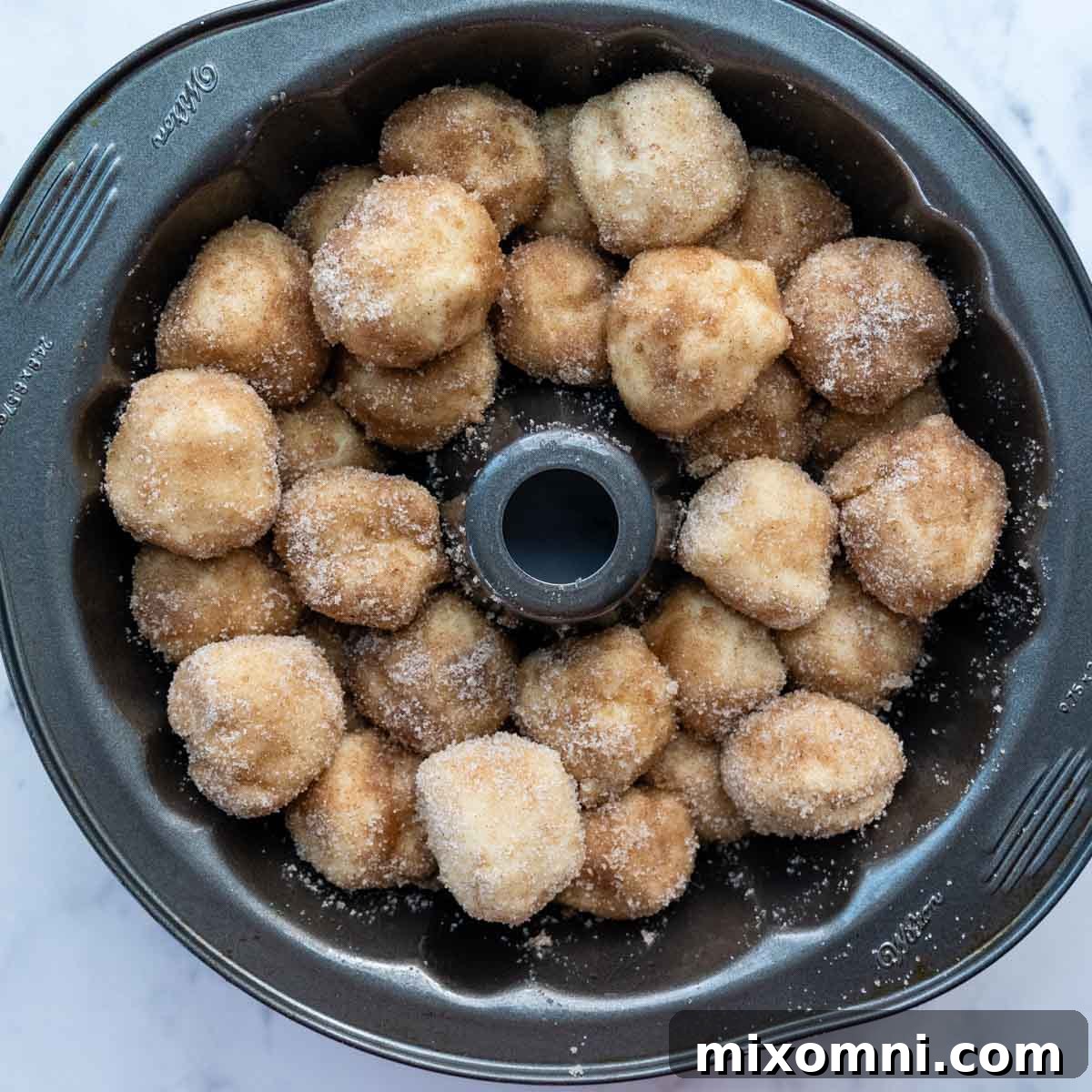
With your dough portioned, set up your dipping station. In one small bowl, melt the butter (and let it cool slightly). In another bowl, combine the granulated sugar and ground cinnamon for your coating. Have your greased bundt pan ready. Now, with lightly greased hands, take each dough portion and quickly roll it into a rough ball shape – it doesn’t need to be perfectly spherical. Dip each ball into the melted butter, ensuring it’s fully coated, then roll it generously in the cinnamon-sugar mixture. Arrange the coated balls in the bottom of the bundt pan, forming a single layer in a circle, close but not touching initially. Continue this process with the remaining dough balls, stacking them on top of each other and filling in any gaps as you build the layers. This method ensures every bite is enveloped in delicious flavor.
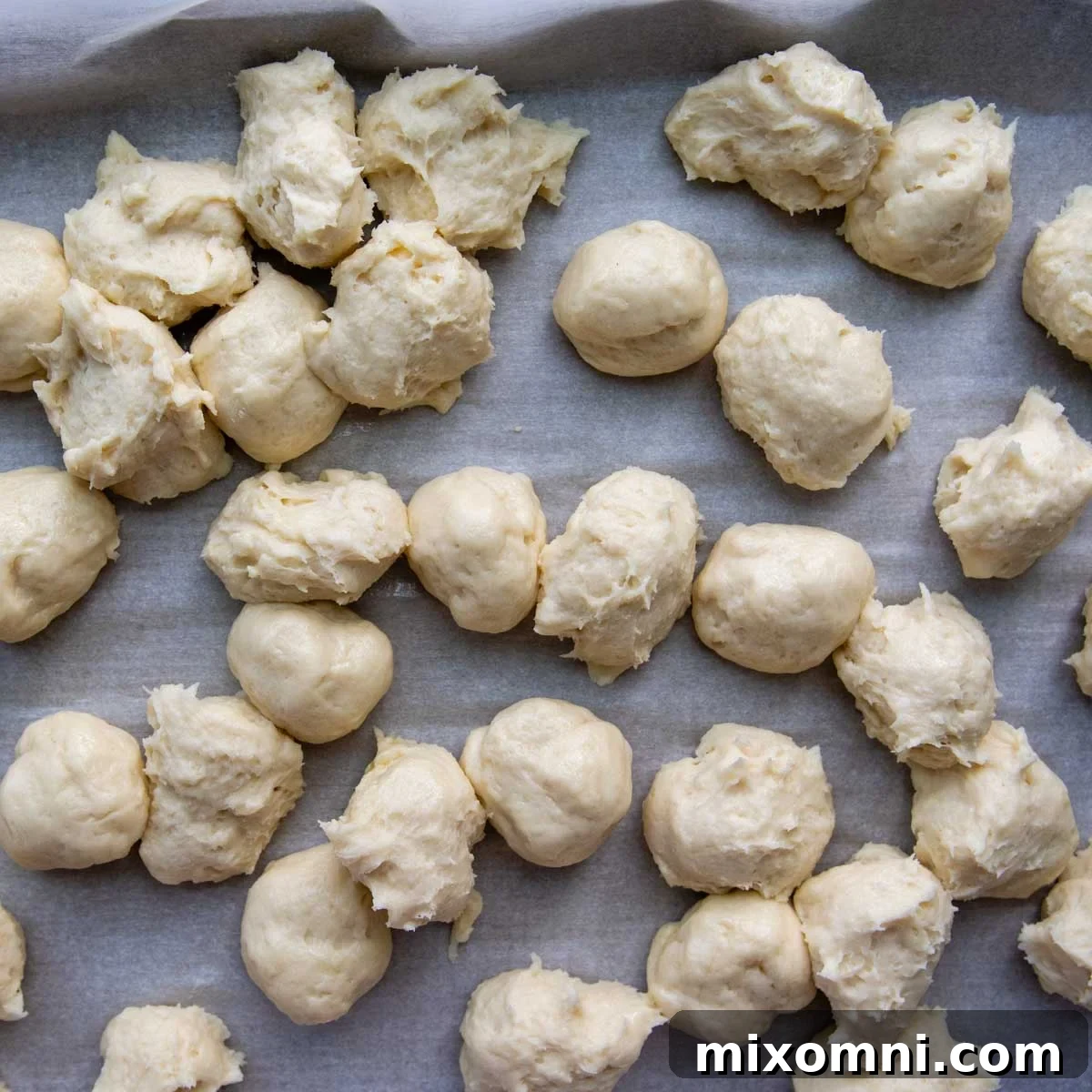
5. The Dipping Station & Pan Layering
Before you begin shaping, prepare your dipping station. Melt the butter in one small bowl and allow it to cool slightly. In a separate bowl, combine the granulated sugar and ground cinnamon to create your flavorful coating. Ensure your bundt pan is thoroughly greased. With hands lightly coated in cooking spray, take each portioned dough ball and quickly roll it into a rough sphere. Dip the ball completely into the melted butter, allowing any excess to drip off. Then, roll it generously in the cinnamon-sugar mixture until fully coated. Carefully arrange the first layer of coated dough balls at the bottom of the bundt pan, forming a circle. Place them close but not touching, as they will expand. Repeat this process with the remaining dough balls, stacking them on top of the first layer and filling in any spaces, ensuring an even distribution for a beautiful pull-apart effect.
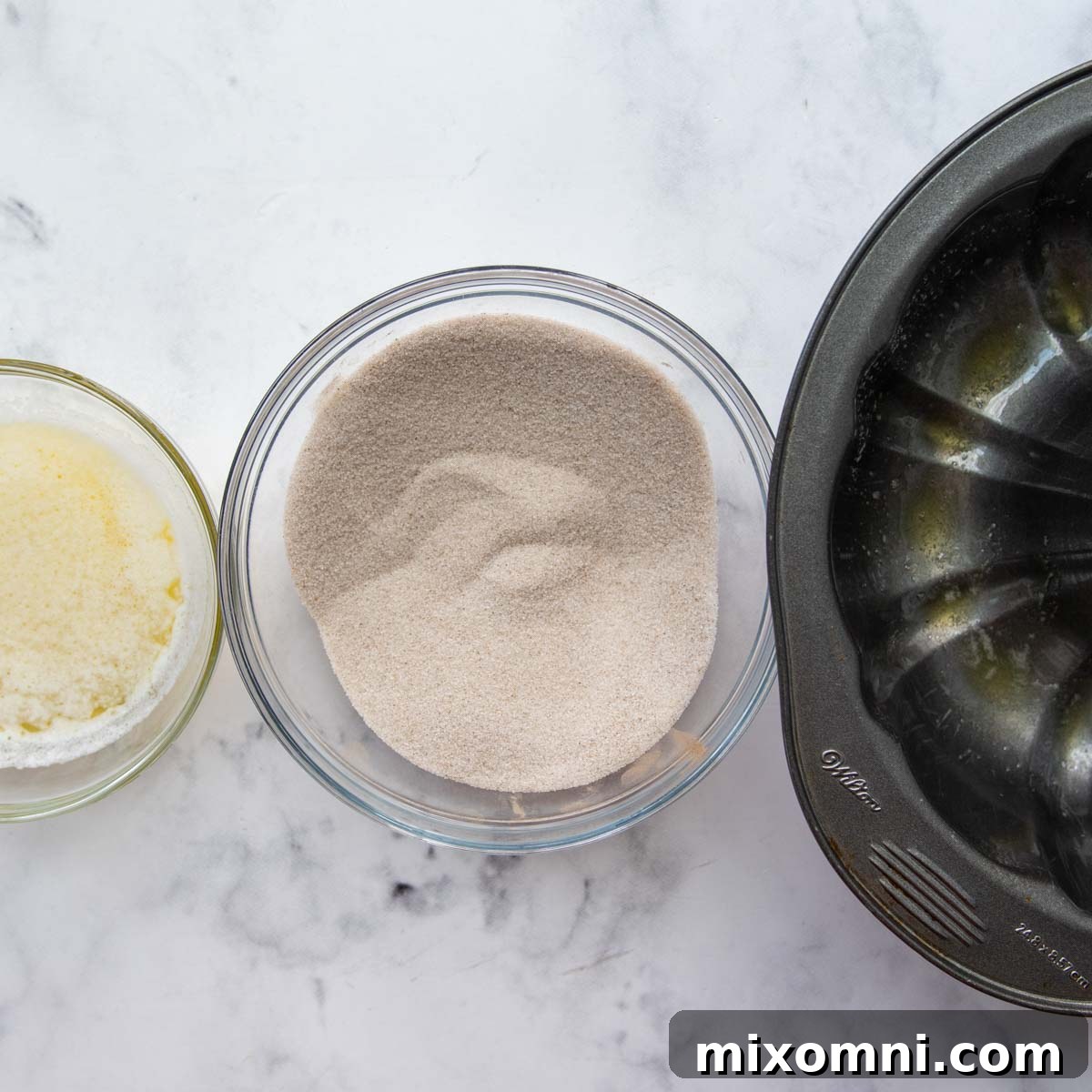
6. Rise and Preheat
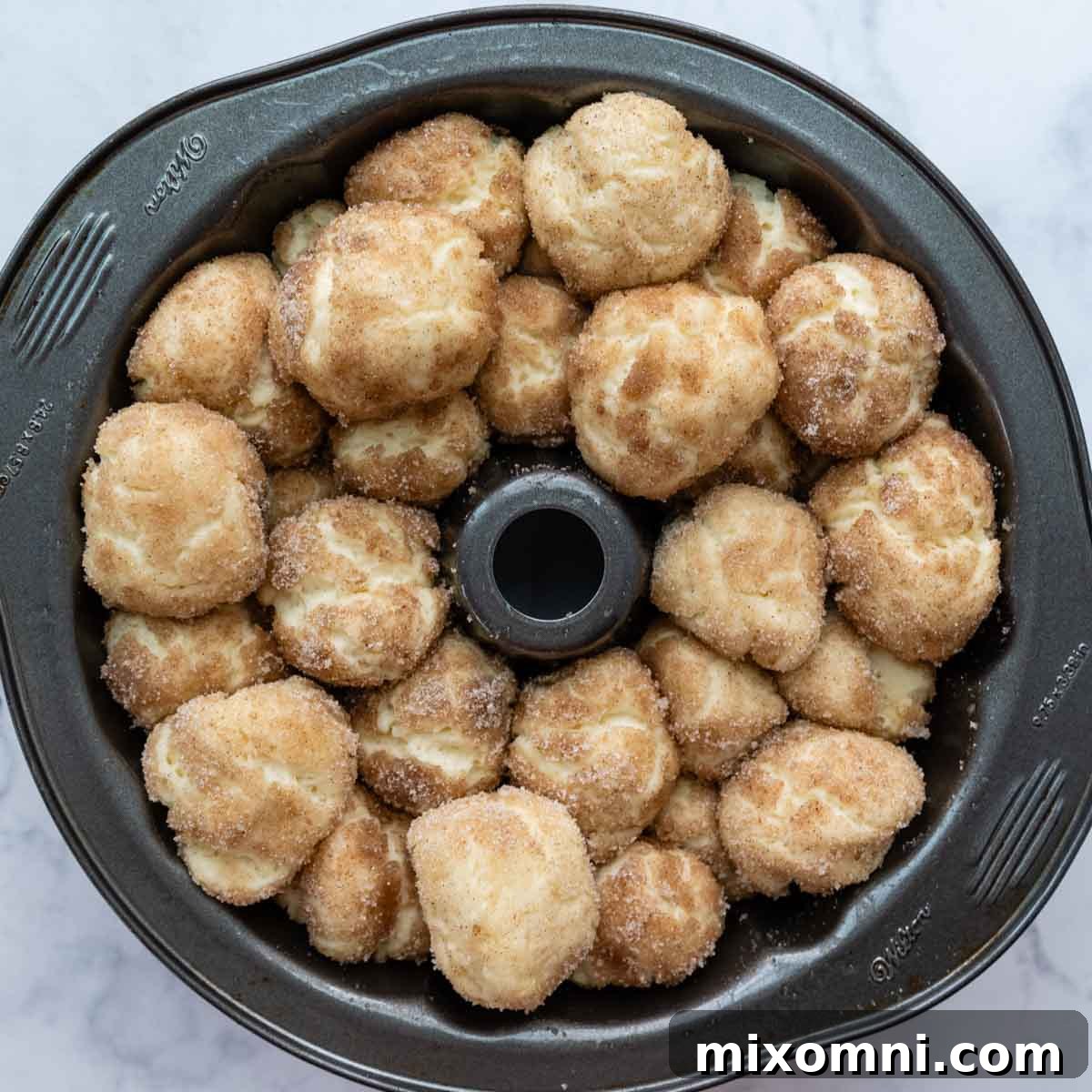
Once all the dough balls are neatly arranged in the bundt pan, gently cover the pan with plastic wrap. Allow the dough to rise in a warm, draft-free place for about 30 minutes. This is a crucial step for achieving that light and airy texture. During this rising period, preheat your oven to 350°F (175°C). While the dough is completing its final rise and the oven is coming to temperature, this is the perfect time to prepare your luscious caramel sauce. Making the sauce now allows it a little time to cool slightly before pouring, ensuring it sets beautifully over the baked monkey bread. Make sure to keep an eye on both the rising dough and the preheating oven.
7. The Sticky Caramel Pecan Sauce
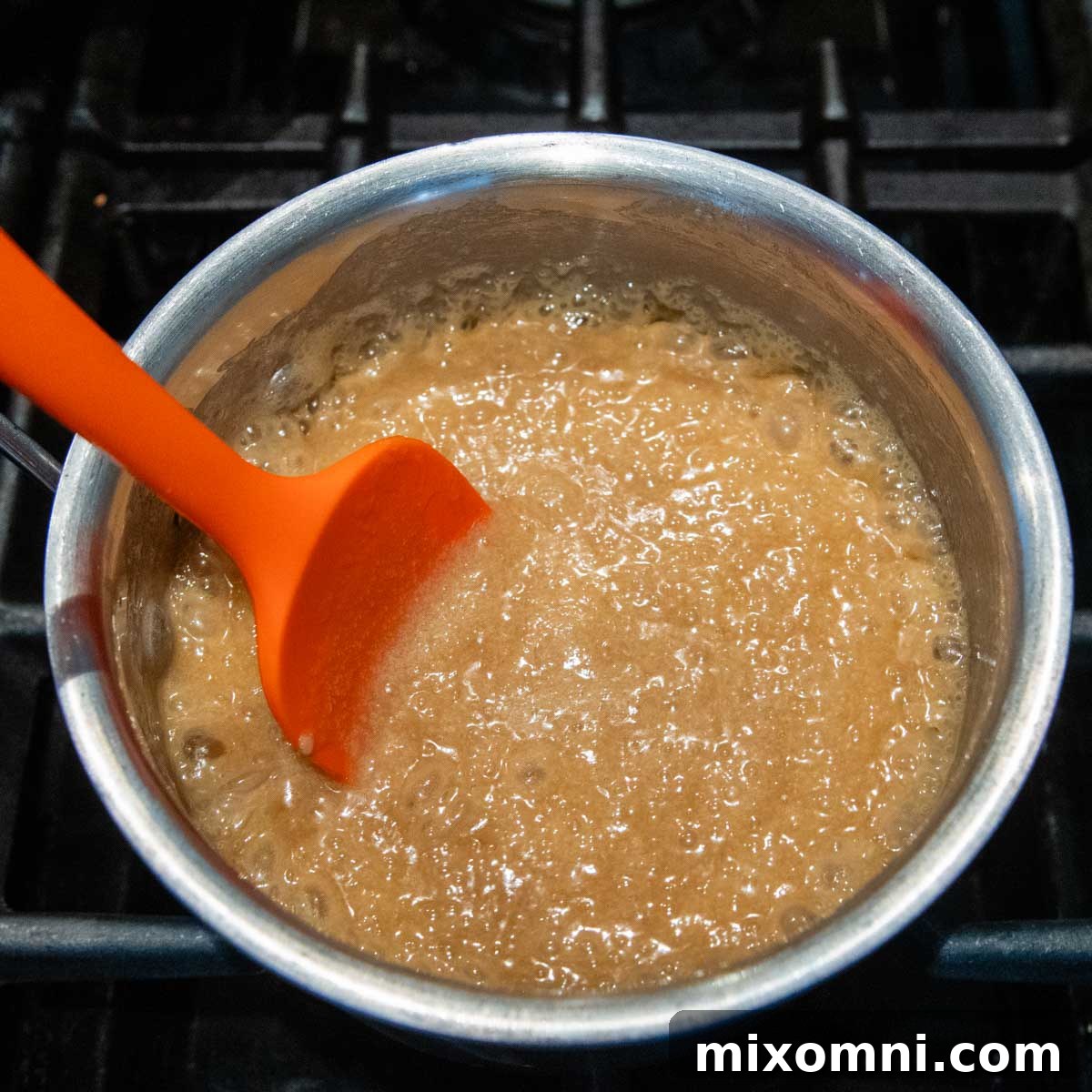
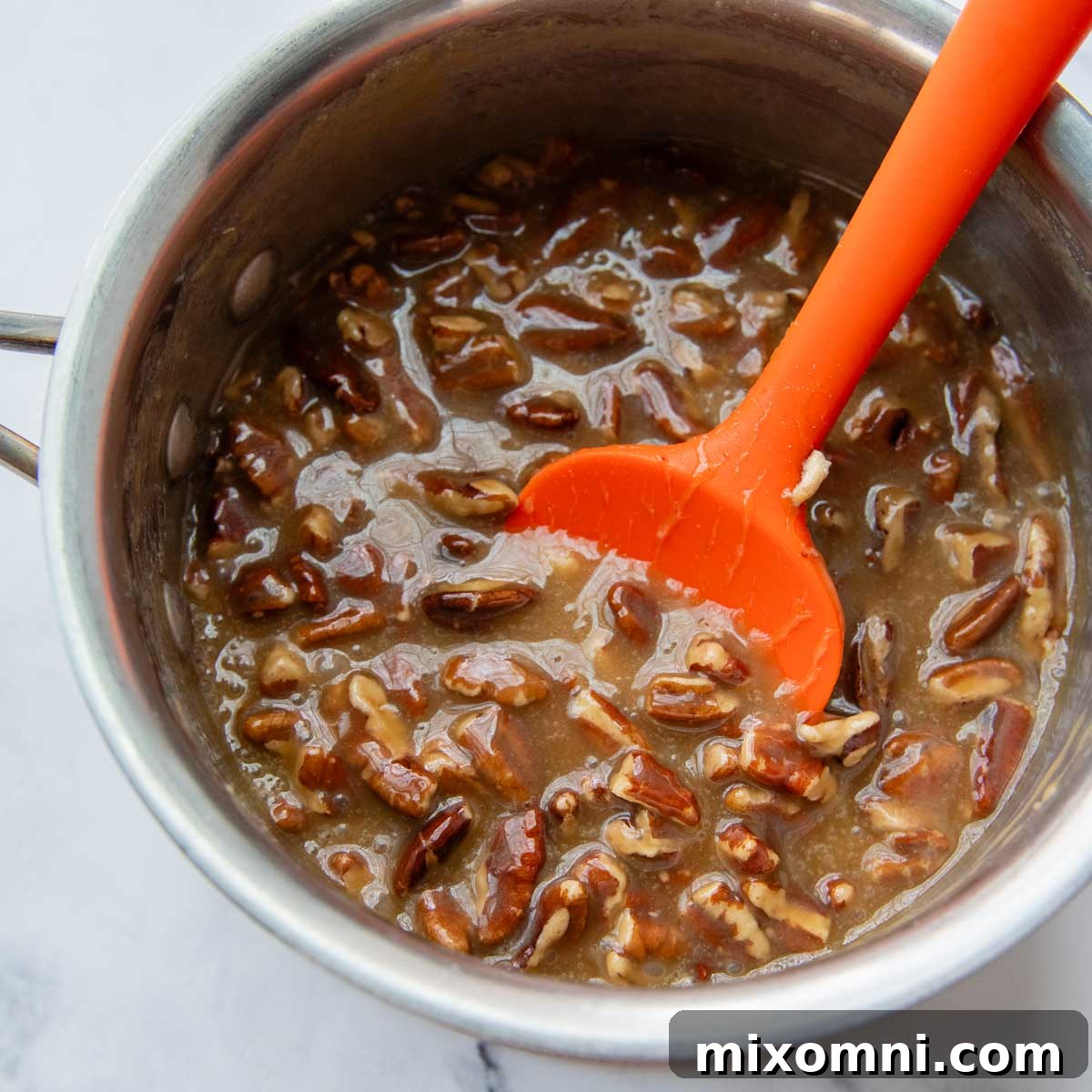
When envisioning the ultimate monkey bread, I knew an exceptional caramel sauce was non-negotiable. This recipe delivers a rich, luxurious caramel, thickened with heavy cream, that perfectly complements the soft cinnamon rolls. While salted caramel can sometimes be a bit tricky, this foolproof sauce comes together effortlessly in just minutes. In a medium saucepan, combine the brown sugar, chopped butter, heavy cream, and salt. Stir these ingredients together over medium heat, continuing to stir frequently until the mixture reaches a FULL, rolling boil. Once it hits a full boil, set your timer and cook, stirring constantly, for exactly 4 minutes. This precise timing is key for the caramel’s consistency. Immediately remove the saucepan from the heat and stir in the vanilla extract and the optional chopped pecans. Allow the sauce to cool slightly before use. Pour about two-thirds of this warm, glistening sauce evenly over the top of the risen dough balls in the bundt pan, reserving the remaining one-third for serving later. Place the bundt pan in the preheated oven and bake for 50-55 minutes. To ensure the rolls are thoroughly cooked, gently lift one from the top layer and check the one underneath for a gooey yet cooked center.
Serving Your Irresistible Monkey Bread
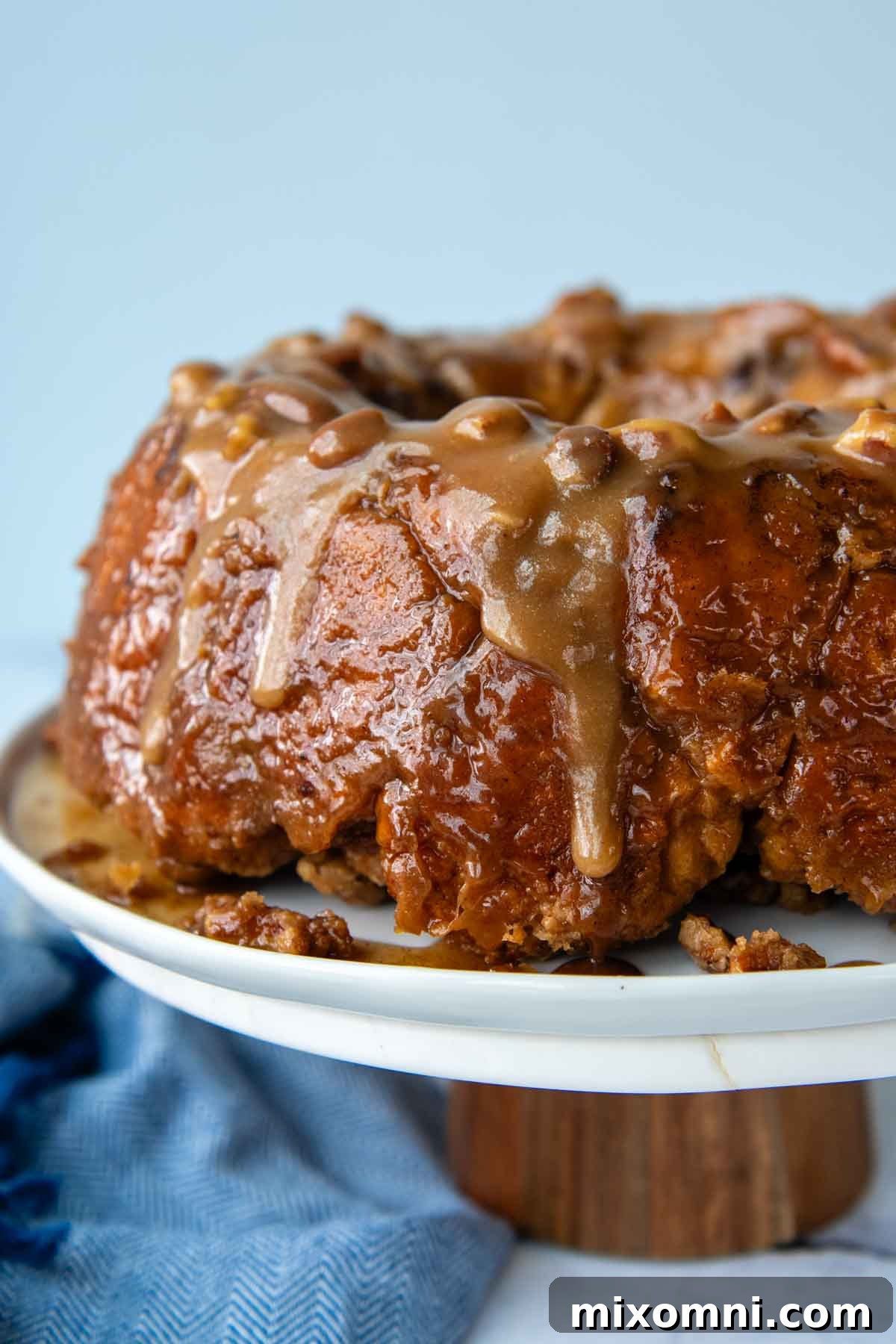
The moment your monkey bread emerges from the oven, bubbling and golden, the tempting aroma will fill your kitchen. To serve, allow it to cool slightly in the bundt pan for about 15 minutes. This cooling period is important as it allows the caramel to settle slightly and the bread to firm up just enough for easy removal. Next, carefully run a thin knife around both the outer and inner edges of the bundt pan to loosen any sticky bits. Place a large serving platter or plate on top of the bundt pan, then, with confidence, invert the pan upside down to release the entire monkey bread onto the platter. It should slide out easily, revealing its beautiful, caramel-coated exterior.
Gently rewarm the remaining reserved caramel sauce on the stovetop over low heat or in the microwave until it’s pourable and glistening. Drizzle this warm, extra caramel generously over the top of the inverted monkey bread. The additional sauce adds another layer of sticky sweetness and visual appeal. Serve immediately while it’s still warm and gloriously gooey. Each individual piece can be easily pulled apart, making it a fun and interactive treat for everyone. Trust me, it tastes every bit as good as it looks – a truly unforgettable gluten-free experience!
Frequently Asked Questions (FAQs)
Can I Make This Recipe Dairy-Free?
Absolutely! This delicious monkey bread can be easily adapted to be dairy-free. You will need to make suitable substitutions for both the milk and butter in the recipe. For the milk, opt for unsweetened dairy-free alternatives such as almond milk, soy milk, or oat milk. For the butter, use a high-quality plant-based vegan butter stick, ensuring it has a similar fat content to regular butter for best results. It’s also crucial to double-check the ingredient label on your chosen gluten-free flour blend, as some brands may contain milk powder or other dairy products. Always read labels carefully to ensure full compliance with dairy-free requirements.
For the caramel sauce in a dairy-free version, a simpler approach works best. Instead of the heavy cream caramel, you can create a quick alternative: melt 1/3 cup of dairy-free butter, then stir in 3/4 cup of packed light brown sugar and 1 teaspoon of vanilla extract. Mix until smooth. Pour all of this mixture directly over the unbaked dough balls before they go into the oven. This simplified dairy-free caramel will still create a wonderfully sticky and sweet coating.
How Can I Prepare a Small Batch?
If you’re serving fewer people or simply want a more modest portion, a small-batch adaptation is simple to achieve. You will need to halve all the ingredients in the recipe, with two important exceptions: use a full 1-packet (2 ¼ teaspoons) of instant active yeast and 1 teaspoon of baking powder (do not halve these leavening agents). Instead of a bundt pan, layer the shaped and dipped dough balls in a 9-inch cake pan or a standard loaf pan. Arrange them at the bottom, close but not touching for the first layer, then stack the remaining balls on top, filling in spaces. Prepare a half-recipe of the caramel sauce as well. Pour two-thirds of this halved sauce over the dough before baking. Bake for a shorter duration, typically 30-35 minutes. After baking, cool in the pan for 15 minutes, run a knife around the edges, and invert onto a serving platter before pouring the remaining sauce over the top.
Can I Make This Monkey Bread Overnight?
Yes, the overnight option is perfect for convenient, fresh-baked morning treats! After you’ve shaped the dough balls, dipped them in the cinnamon-sugar mixture, and layered them in your greased baking dish, cover the pan tightly with plastic wrap. Allow the bread to sit at room temperature for about 20 minutes to kickstart the rising process. Then, transfer the covered pan to the refrigerator overnight. You will prepare the caramel sauce fresh the next day.
On the day of serving, remove the refrigerated monkey bread and let it sit at room temperature for approximately 2 to 2.5 hours before you plan to serve it. During the last 1.5 hours of this resting period, prepare your caramel sauce as directed in the recipe. Preheat your oven to 350°F (175°C). Once the sauce is ready and the bread has proofed, pour two-thirds of the sauce over the dough, and then bake according to the main recipe directions. After baking and inverting the pan, pour the remaining warmed sauce over the top for an irresistible finish.
Storing and Serving Tips
Gluten-free monkey bread is truly at its best when enjoyed warm, on the very day it is made, offering the softest texture and most delightful gooeyness. If you find yourself with leftovers, store them at room temperature, ensuring they are securely wrapped in plastic wrap or placed in an airtight container to prevent drying out. To reheat individual serving-size portions, simply microwave them for about 20 seconds until warm and soft again.
For longer storage, baked monkey bread can also be frozen in serving-size portions. Wrap each portion tightly in plastic wrap, then place them in a freezer-safe bag or container. When you’re ready to enjoy, thaw the frozen portions at room temperature for a few hours, then rewarm them in the microwave until soft and heated through. This ensures you can savor this delicious treat whenever a craving strikes!
Don’t Forget to Pin This Recipe!
Let’s be friends on Pinterest! I’m always sharing great recipes!
Did you make this recipe? I love hearing from you! Leave a star rating and comment below the recipe card. Your feedback helps others discover amazing recipes, and I truly appreciate hearing from our community. I promise to always get back to you! -Melissa
Gooey & Soft Gluten-Free Monkey Bread

Melissa Erdelac
Enjoy a classic, homemade treat again with this easy gluten free monkey bread recipe. Doughy soft cinnamon bites are covered in a sticky caramel pecan sauce and baked until bubbly and gooey. This make-ahead, overnight holiday gluten-free breakfast idea has a bundt-cake option, perfect for a crowd, or prepare the small-batch adaptation. I’ll show you how, step-by-step.
Pin Recipe
Rate This Recipe
Ingredients
Roux
- 4 tablespoons (35 g) gluten free all purpose flour, I highly recommend Cup4Cup brand
- 6 tablespoons (90 g) water
- 6 tablespoons (90 g) milk
Rolls
- 3 cups (438 g) gluten free all purpose flour, I highly recommend Cup4Cup brand
- 6 tablespoons (64 g) potato starch
- ½ cup (100 g) granulated sugar
- 2 tablespoon (22 g) psyllium husk powder, (what is psyllium husk?)
- 1 packet (9 g) instant rapid rise yeast, see recipe notes for active dry yeast
- 1 ½ teaspoons baking powder
- ½ teaspoon salt
- 1 ½ cups (368 g) warm milk (110°F), microwaved for 90 seconds
- 2 large eggs, room temperature
- 4 tablespoons (57 g) melted butter, slightly cooled
Cinnamon Sugar Coating
- ½ cup (113 g) butter, melted and cooled
- 1 ½ cup (300 g) granulated sugar
- 1 ½ tablespoons ground cinnamon
Caramel Sauce
- 1 ½ cups (351 g) packed light brown sugar
- ½ cup (113 g) butter, chopped into 6-8 pieces
- ½ cup (120 g) heavy whipping cream
- ½ teaspoon salt, (reduce to ¼ tsp if you don’t prefer “salted” caramel)
- ½ teaspoon vanilla extract
- 1 cup (125 g) chopped pecans, optional
Equipment
- Stand Mixer
- Bundt Pan
- Medium Cookie Scoop
Instructions
- Before starting the roux, preheat your oven to 200ºF (95°C) and then turn it off once it reaches temperature. This creates a warm, draft-free environment for the bread’s initial rise. Generously grease a nonstick 12-cup bundt cake pan and set it aside.
- While the oven is preheating, prepare the roux. In a small saucepan, combine 4 tablespoons of gluten-free flour with the milk and water. Whisk constantly over medium heat until the mixture thickens and you see a distinct trail separation at the bottom of the pan. Remove from heat and set aside to cool slightly.
- In the large mixing bowl of a stand mixer, combine the remaining gluten-free flour, potato starch, granulated sugar, psyllium husk powder, instant rapid rise yeast, baking powder, and salt. Mix on low speed using a paddle attachment until all dry ingredients are thoroughly combined.
- Add the warm milk, room temperature eggs, slightly cooled melted butter, and the prepared roux to the dry ingredients. Mix on low speed until well blended, then increase to medium speed and beat for 5 minutes. Stop to scrape down the sides of the bowl once or twice during this process. The dough will be stiff but remain sticky.
- Now, portion the dough balls. You will need about 40 balls in total. Lay a greased silicone baking mat or parchment paper on your work surface. Spray the inside of a medium cookie scoop with nonstick cooking spray. Scoop about 1 ½ tablespoons of dough for each ball and transfer it to the greased paper. You’ll need to re-spray the cookie scoop and may need to grease your hands every few balls. It’s most efficient to scoop all the dough portions first and then roll them into smooth balls in the next step.
- Set up your dipping station. Melt ½ cup of butter in one bowl and allow it to cool slightly. In another bowl, combine the 1 ½ cups granulated sugar and 1 ½ tablespoons ground cinnamon. Have your greased 12-cup bundt pan ready.
- With greased hands, take each dough portion and roll it into a round ball (it doesn’t have to be perfect). Dip each ball thoroughly in the melted butter, then roll it generously in the cinnamon-sugar mixture. Arrange the coated balls in the bottom of the bundt pan in a circle, placing them close but not touching for the first layer. Repeat with the remaining balls, stacking them on top of each other and filling in any gaps.
- Cover the bundt pan loosely with plastic wrap and place it in the warmed, turned-off oven for 10 minutes to begin rising. Remove the pan from the oven and let it sit at room temperature for an additional 20 minutes while your main oven preheats to 350°F (175°C). This is also the ideal time to make the caramel sauce so it has a chance to cool slightly.
Caramel Sauce
- In a medium saucepan (choose one with enough room for bubbling without splattering), combine the 1 ½ cups packed light brown sugar, ½ cup chopped butter, ½ cup heavy whipping cream, and ½ teaspoon salt. Stir frequently over medium heat.
- Once the mixture reaches a FULL, rolling boil, continue to cook and stir constantly for exactly 4 minutes. Reduce the heat as necessary if the boil becomes too high to manage. Remove the saucepan from the heat and stir in the ½ teaspoon vanilla extract and the optional 1 cup chopped pecans. Stir occasionally as the sauce cools slightly.
Baking
- Pour two-thirds of the slightly cooled caramel sauce evenly over the top of the risen dough balls in the bundt pan, reserving the remaining one-third for serving later. Place the bundt pan on the middle rack of your preheated oven. On the rack directly below it, place a baking sheet lined with foil to catch any potential drips.
- Bake for 50-55 minutes. Be aware that the top of the monkey bread may appear done sooner, but it requires a longer baking time due to the depth of the bundt pan. If the tops start to brown too quickly during the last 15 minutes of baking, you can lightly tent a piece of foil over the pan. To check for doneness, gently lift one dough ball from the top layer and carefully check the one underneath for a fully cooked, gooey center.
- Allow the monkey bread to cool in the pan for 15 minutes. This crucial step helps the caramel settle and the bread to firm up slightly. Run a knife around both the outer and inner edges of the pan to loosen any sticky parts. Place a serving platter on top of the bundt pan, then carefully invert the pan to release the monkey bread onto the platter. Gently rewarm the reserved caramel sauce and drizzle it over the top. Serve warm for the best experience.
Notes
Using Active Dry Yeast
If you only have active dry yeast, you’ll need to proof it first. Mix the yeast in the warm milk (110ºF / 43°C) with 1 teaspoon of sugar (taken from the recipe’s total sugar amount). Let this mixture sit for 5 minutes until it becomes frothy before adding it with the other wet ingredients.
Small Batch Adaptation
- Halve all the main ingredients except use a full 1 packet (2 ¼ teaspoons) of instant active yeast and 1 teaspoon baking powder.
- Layer the shaped and dipped balls in a 9-inch cake pan or loaf pan. Arrange at the bottom close, but not touching for the first layer. Repeat with remaining balls, stacking on top of each other and filling in spaces.
- Make a half recipe of the caramel sauce. Pour 2/3 of this halved sauce over the dough before baking. Bake for 30-35 minutes.
- Cool in the pan for 15 minutes, run a knife around the edges, and then invert onto a serving platter. Pour the remaining sauce over the top.
Overnight Instructions
After shaping the rolls and layering them in the baking dish, cover them tightly with plastic wrap and let them sit at room temperature for 20 minutes to begin rising. Then, transfer the covered pan to the refrigerator overnight. You will make the caramel sauce the next day.
On the day of serving, remove the bread from the refrigerator about 2 ½-3 hours before you wish to serve it. Let it sit at room temperature for 1 ½ hours while you prepare the caramel sauce. Preheat your oven to 350°F (175°C). Pour ⅔ of the sauce over the bread, then bake according to the main directions. After the pan has been inverted, pour the remaining warmed sauce over the top.
Storing and Serving
Monkey bread is best enjoyed warm, the day it is made. Store any leftovers at room temperature, wrapped securely in plastic wrap or in an airtight container. Reheat individual serving-size amounts in the microwave for about 20 seconds.
Baked monkey bread can also be frozen in serving-size portions. Wrap each portion tightly, then thaw at room temperature and rewarm in the microwave when ready to eat.
Calories: 663kcal
,
Carbohydrates: 93g
,
Protein: 7g
,
Fat: 32g
,
Saturated Fat: 16g
,
Polyunsaturated Fat: 3g
,
Monounsaturated Fat: 10g
,
Trans Fat: 1g
,
Cholesterol: 93mg
,
Sodium: 385mg
,
Potassium: 258mg
,
Fiber: 6g
,
Sugar: 64g
,
Vitamin A: 847IU
,
Vitamin C: 0.4mg
,
Calcium: 149mg
,
Iron: 2mg
Did you make this recipe?
Please leave a star rating and review below. It helps others when searching for recipes and I LOVE feedback!