
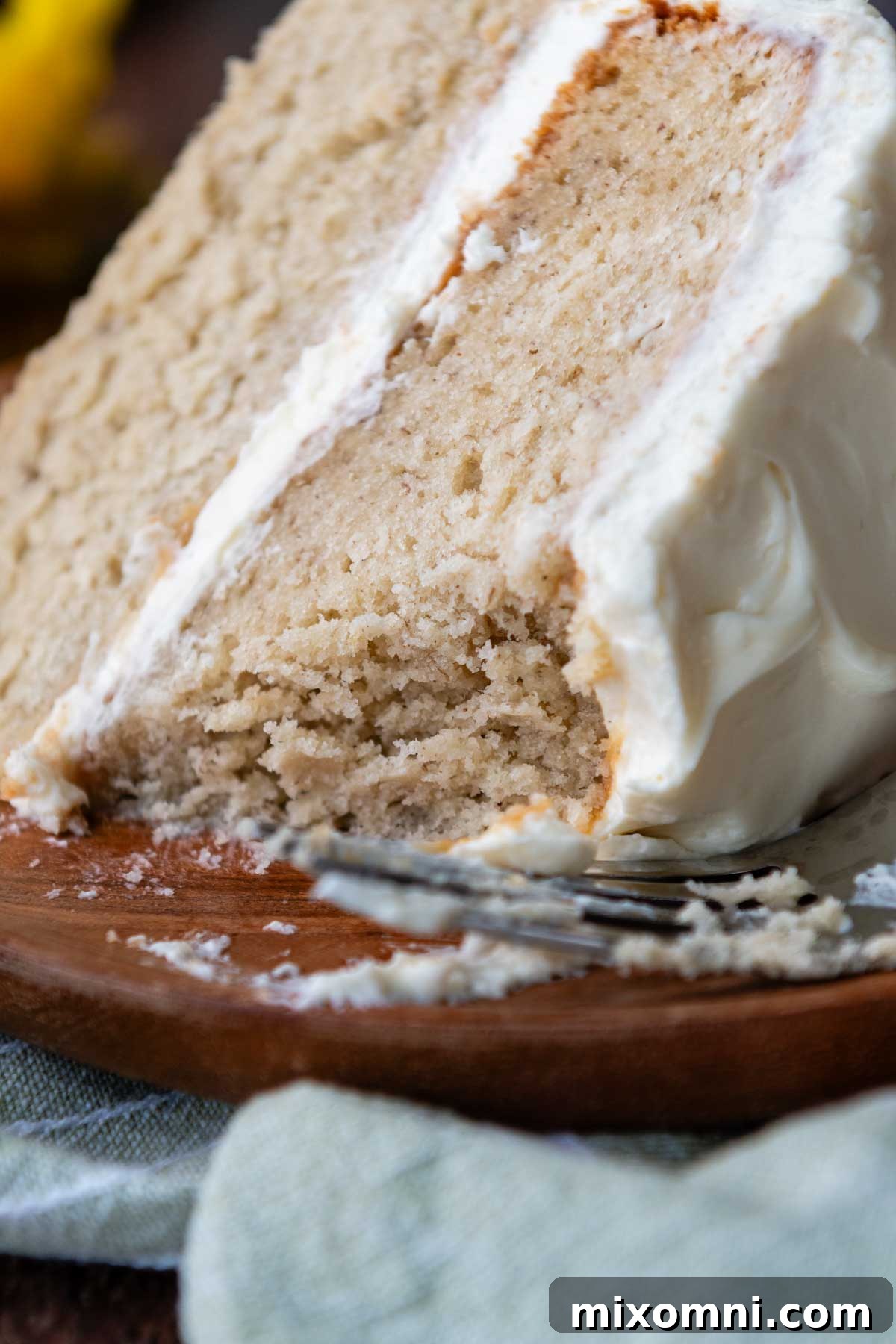
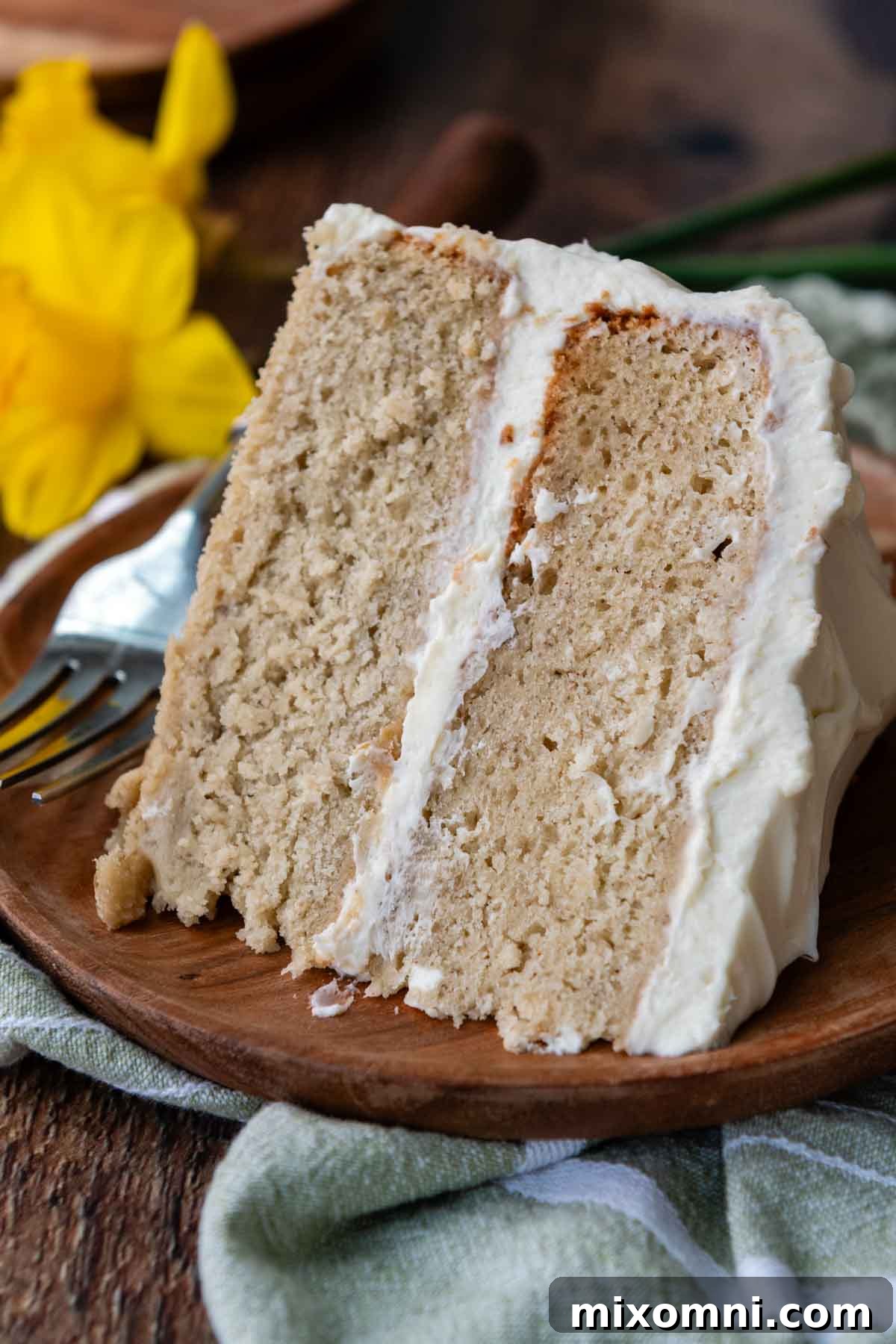
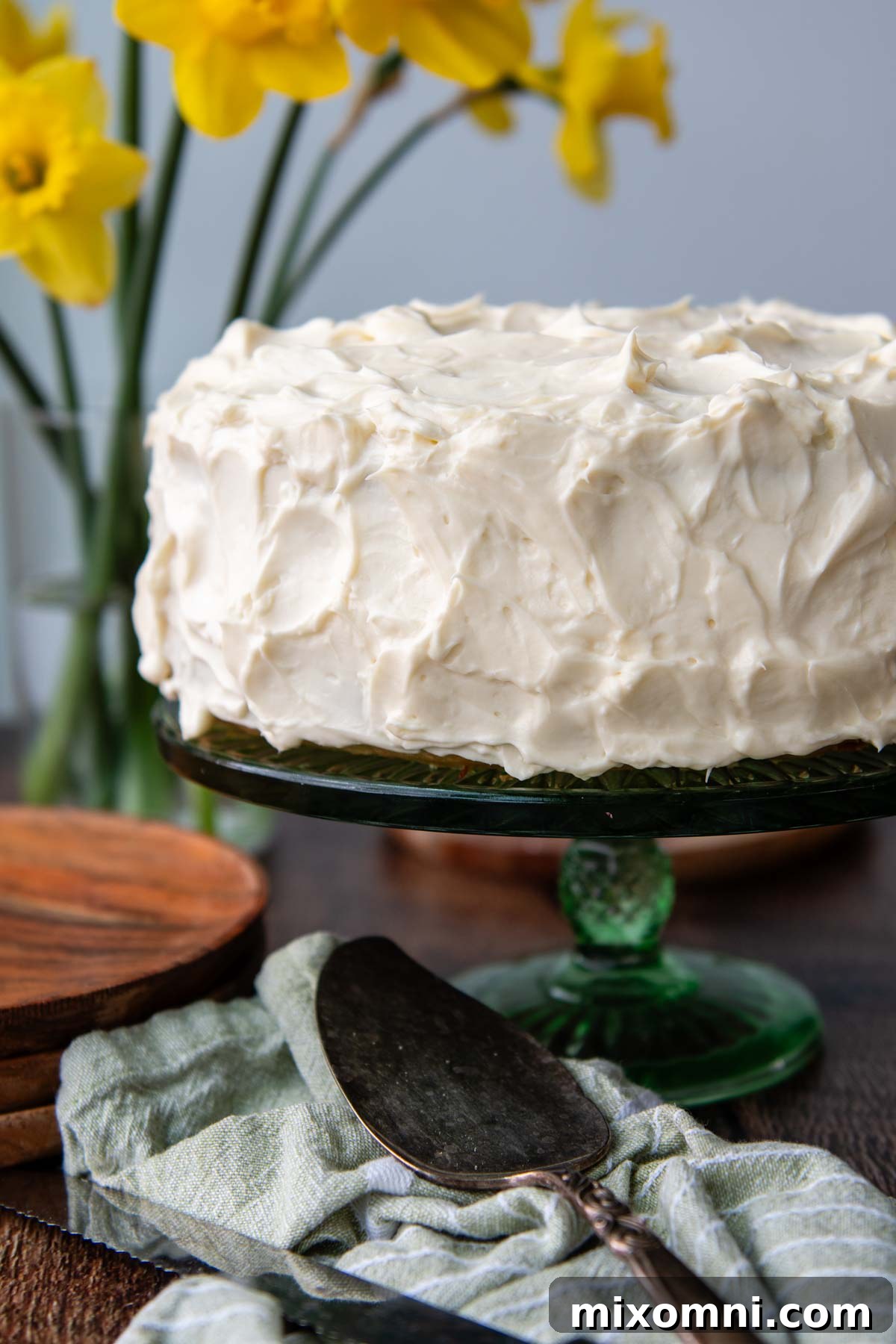
If you’ve ever dreamt of a gluten-free banana cake recipe that truly delivers – one with an impressive rise, a moist yet incredibly fluffy crumb that never sinks, and a rich banana flavor – then your search ends here. This meticulously developed layer cake eliminates the common pitfalls of gluten-free baking, such as dense, heavy, or gummy textures. Through rigorous testing and precise ingredient ratios, we’ve perfected a recipe that yields a flawlessly light and tender cake every single time. Crowned with a delicate, whipped cream cheese frosting, this is undoubtedly the best gluten-free banana cake you’ll ever bake, destined to become a staple in your collection.
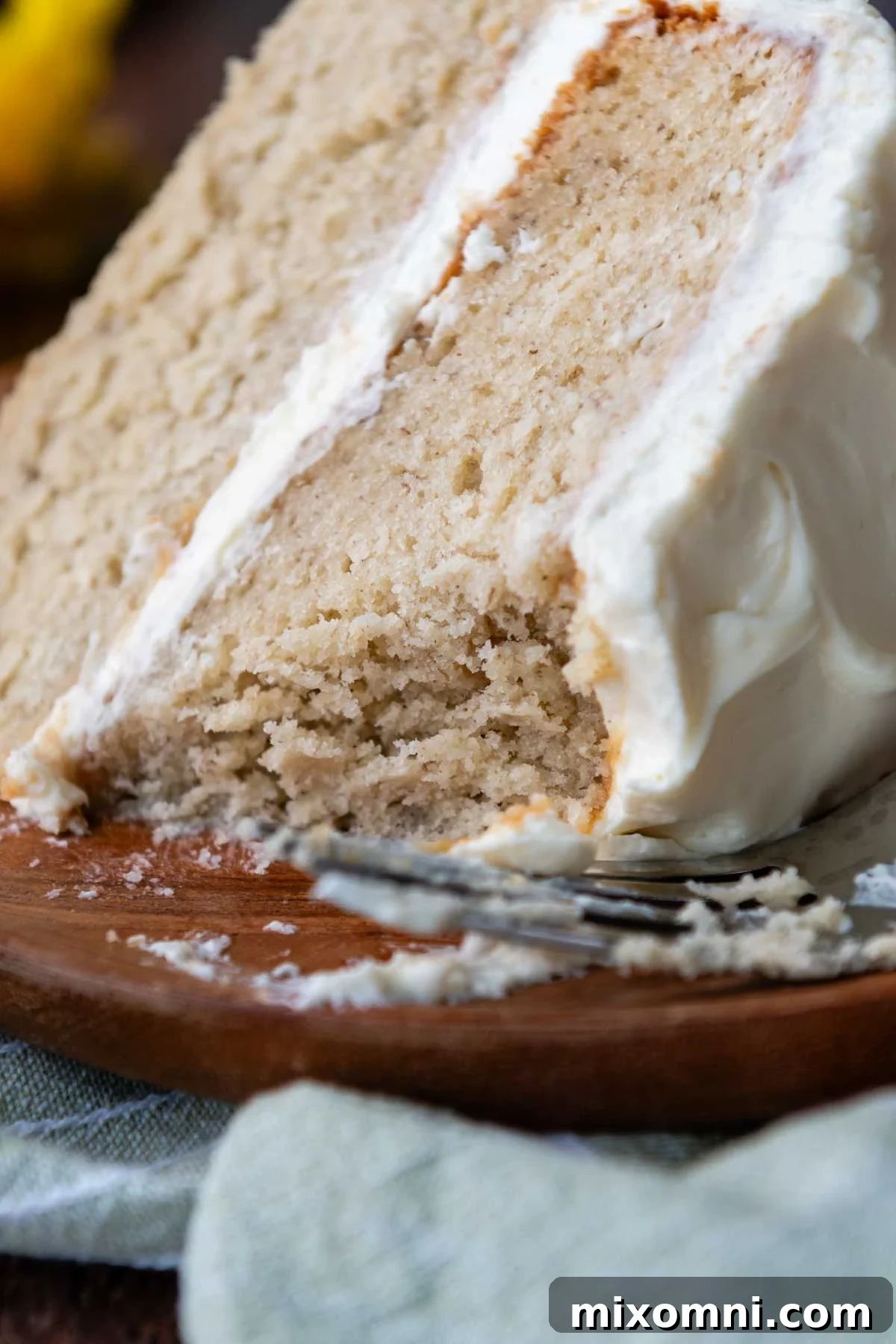
Mastering Fluffy Gluten-Free Banana Cake: Expert Tips
For years, my quest for the perfect gluten-free banana cake was met with a string of disappointments. So many attempts ended in cakes that were undeniably thick, dense, and heavy – a far cry from the light and airy texture I envisioned. I was determined to crack the code, aiming for a crumb balance that was both moist and incredibly fluffy, similar to my highly-rated homemade gluten-free chocolate cake and moist gluten-free white cake recipes. After more than 30 (yes, thirty!) recipe testing attempts, I finally uncovered the secrets to achieving the ultimate fluffy gluten-free banana cake.
Below, I’m excited to share the invaluable lessons learned throughout this extensive journey of creating a truly exceptional homemade banana dessert. These insights are a blend of my long-standing gluten-free baking expertise and some surprising recent discoveries specific to this layer cake recipe. While some findings didn’t apply universally to other gluten-free banana recipes on my site, I’m thrilled to finally share these breakthroughs and put this challenging, yet rewarding, recipe-testing chapter behind me!
Lesson One: Embrace a Strategic Blend of Fats
In traditional gluten-free banana bread, using all oil often works well, as the goal is typically a very moist, slightly denser crumb. However, for a cake, we aim for a lighter, more open, and airy texture. To achieve this delicate balance in our gluten-free banana cake, I discovered that a thoughtful combination of oil, softened butter, and a touch of sour cream is key.
The oil and sour cream work synergistically to coat the gluten-free starches effectively, preventing them from becoming overly hydrated and resulting in a gummy texture, without making the cake greasy. Butter, on the other hand, contributes a rich depth of flavor and additional moisture, while surprisingly yielding an overall lighter and more tender crumb. This trio of fats ensures maximum flavor and optimal texture.
Lesson Two: Optimize Your Sugar Choices
Many classic banana cake recipes rely heavily on brown sugar, which imparts a wonderful hint of caramel that beautifully complements the banana flavor. However, when adapting a banana cake to be gluten-free, using too much brown sugar can paradoxically weigh down the delicate crumb. Gluten-free flours behave differently, and the extra moisture from brown sugar can lead to a denser result.
Therefore, I found that primarily using granulated sugar for the bulk of the sweetness, coupled with a smaller, carefully measured portion of brown sugar, offers the best of both worlds. The granulated sugar provides structure and a clean sweetness, while the reduced amount of brown sugar still delivers that essential caramel note and a touch of moisture without compromising the cake’s desired lightness.
Lesson Three: Counterintuitively, Use Less Banana
This revelation was, without a doubt, the most challenging and surprising conclusion of my entire testing process, and ultimately the reason for so many trials! I stumbled upon this critical insight purely by accident during one particular test when I mistakenly added only half the usual amount of banana. The resulting cake was unlike any I had baked before – it was remarkably close to perfection. I never would have guessed that the secret to the best gluten-free banana cake lay in drastically reducing the amount of mashed banana.
While bananas are a source of delightful flavor, they also contribute a significant amount of moisture and considerable weight to a cake batter. Since gluten-free flour blends struggle to absorb excess liquid as efficiently as wheat flour, this unabsorbed moisture is a primary culprit behind common issues like gummy, dense, or sunken gluten-free cakes. By cutting back the quantity of ripe bananas, we mitigate these textural problems.
However, reducing banana content meant facing the challenge of preserving that quintessential banana flavor. My solution was to incorporate banana extract, alongside a warming hint of cinnamon. This combination proved to be spot on, delivering an authentic and robust banana taste without overburdening the cake’s delicate structure.
Lesson Four: Allow the Batter to Rest
This technique is a game-changer for many gluten-free baked goods, a practice I apply to everything from muffins and cookies to scones and quick breads. As previously mentioned, gluten-free baking can be temperamental due to the unique way these flours handle moisture absorption. Unlike wheat flour, which contains gluten to form an elastic network, gluten-free flours rely on starches and gums for structure.
Allowing the cake batter to rest for at least 15 minutes before baking provides crucial extra time for the gluten-free flour blend to fully hydrate and for the starches to soften. This saturation process is vital for preventing a gritty or “ricey” texture, an issue that can sometimes arise with certain brands of gluten-free flour. A well-rested batter results in a more cohesive, smoother, and ultimately fluffier cake crumb.
Additional Gluten-Free Baking Insights
To avoid writing an entire culinary thesis on gluten-free banana cake with cream cheese frosting (though I certainly could at this point!), I’ll briefly highlight a few other important discoveries and helpful tips gleaned from countless hours of experimentation.
Avoiding Sunken Cakes
If you frequently encounter issues with cakes that fall or sink after baking, a common reason in gluten-free baking is insufficient baking time. It’s often advisable to err on the side of slightly over-baking by a couple of minutes. Gluten-free baked goods can often *appear* done on the surface but may still retain too much moisture internally, leading to collapse once cooled. Look for specific cues: the center should spring back when gently touched, the cake should be fully risen and set in the middle, and a toothpick inserted into the center should emerge completely clean, without any moist crumbs attached. This ensures all the moisture has properly evaporated and the internal structure has set.
Choosing the Right Gluten-Free Flour Blend
To ensure consistency and reliability, I tested this recipe with several different gluten-free flour blends. My top recommendation for achieving the absolute best texture and flavor in this gluten-free banana cake is Cup4Cup gluten-free flour. It consistently yields superior results across a wide range of baking applications.
King Arthur Measure-for-Measure also performed very well, producing a batter that was particularly easy to spread. While the texture was good, the taste had a slightly grittier quality compared to Cup4Cup. Bob’s Red Mill all-purpose gluten-free flour blend will also work, but I personally find its taste to be quite strong and sometimes off-putting, and it tends to result in a slightly heavier crumb for cakes.
Dairy-Free Gluten-Free Banana Cake Adaptations
For those requiring a gluten-free dairy-free banana cake recipe, some modifications are necessary. Be aware that Cup4Cup flour contains milk powder, so it would need to be substituted with a dairy-free gluten-free blend. For the wet ingredients, the buttermilk can be replaced with an equal amount of full-fat coconut milk (or a dairy-free milk alternative curdled with a teaspoon of lemon juice or apple cider vinegar). Vegan butter and dairy-free sour cream (or a thick, plain dairy-free yogurt) can be used as direct substitutions for their dairy counterparts. Ensure all other ingredients, like chocolate chips if using, are also dairy-free.
Let’s Bake This Together!
While perfecting the method and ingredient ratios for this fluffy gluten-free banana cake was the challenging part, the actual baking process is remarkably straightforward! Even novice gluten-free bakers will find themselves effortlessly creating this stunning cake with its airy cream cheese frosting. Follow these step-by-step instructions for a guaranteed success.
(Below, you’ll find helpful step-by-step photos and detailed instructions. For the complete recipe, including precise ingredient amounts and nutritional information, please scroll down to the dedicated recipe card.)
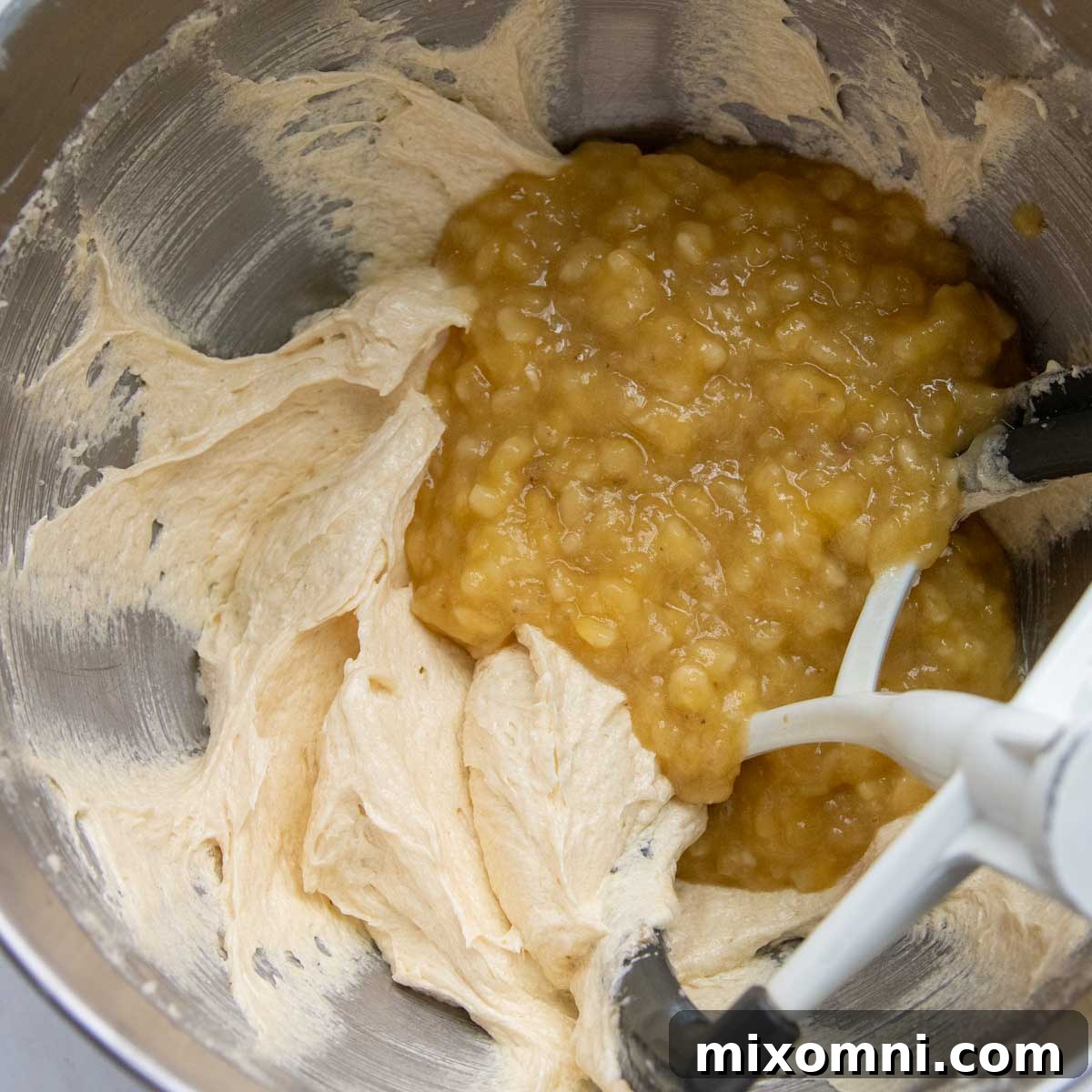
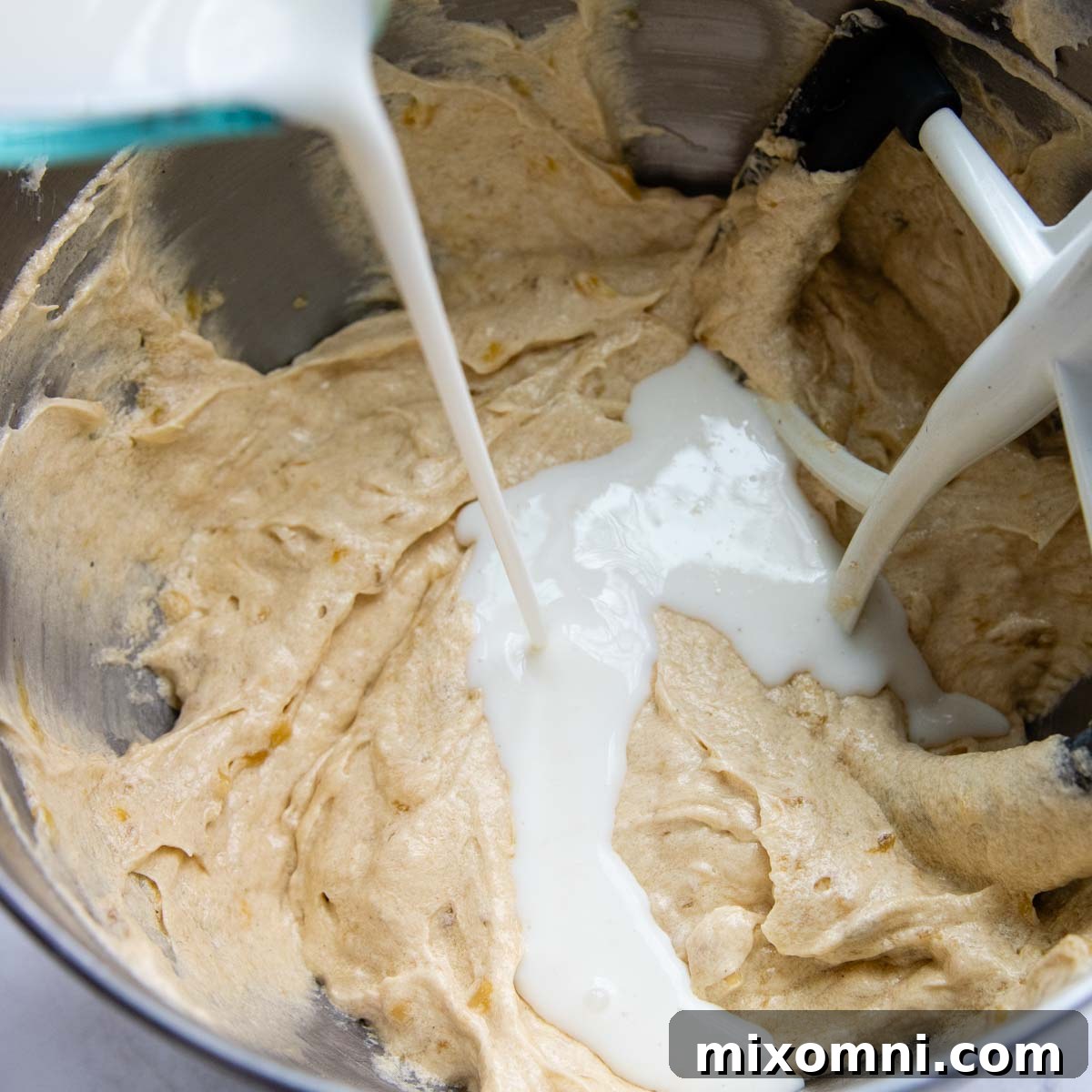
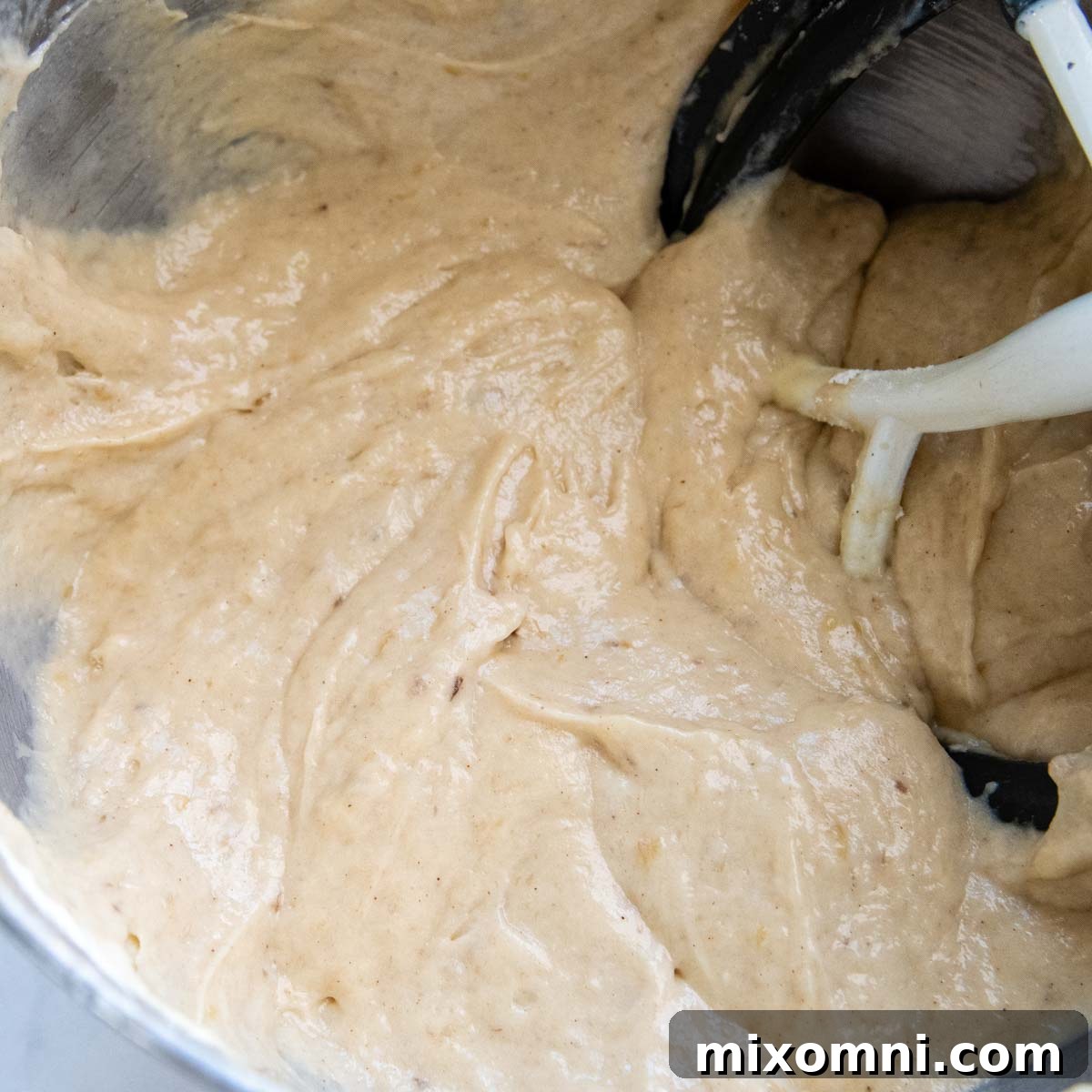
- Preheat your oven to 350°F (175°C). Prepare two 9-inch round cake pans by greasing and flouring them (with gluten-free flour) or lining them with parchment paper.
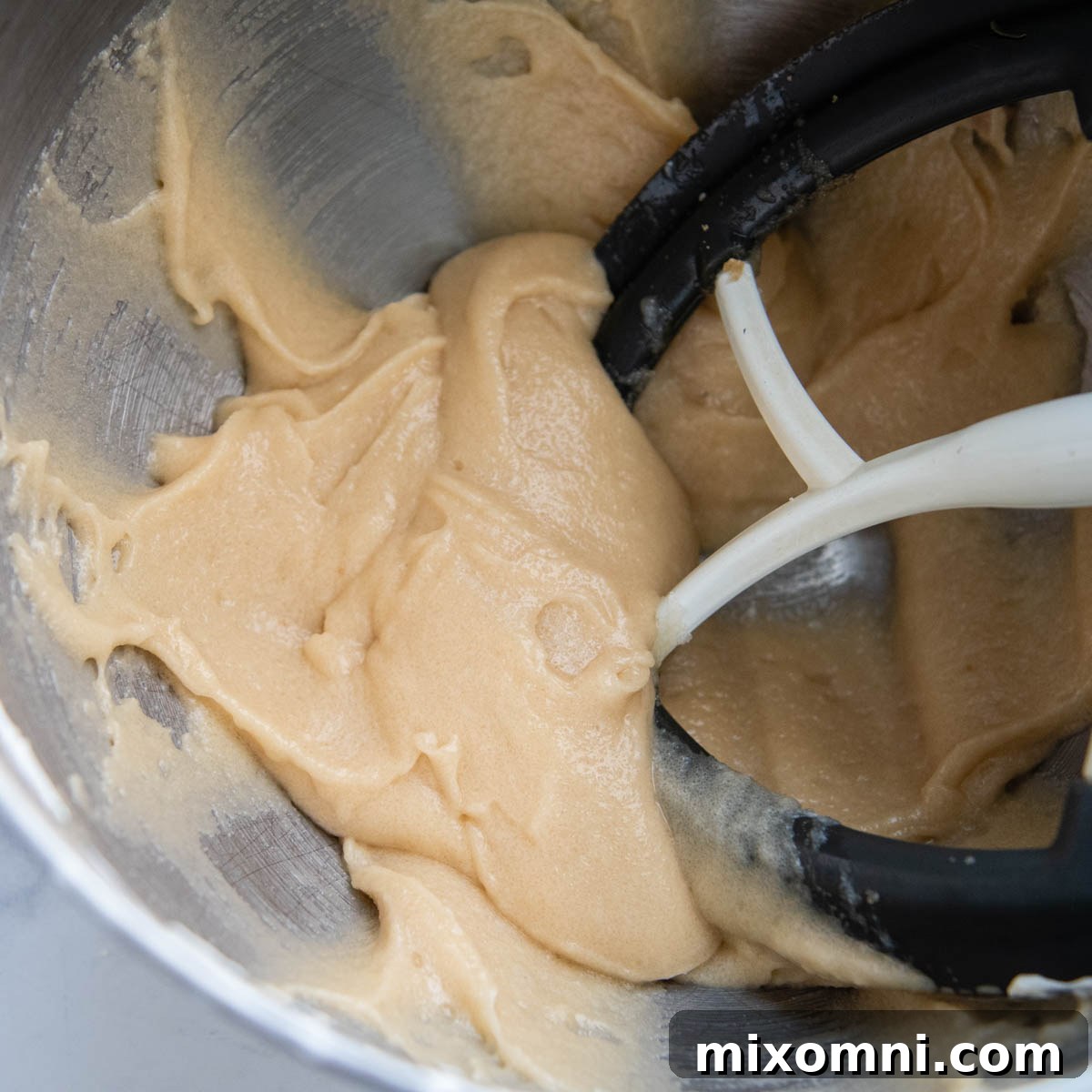
- In a large mixing bowl, combine the granulated sugar, light brown sugar, oil, sour cream, and softened unsalted butter. Beat with an electric mixer on medium speed for approximately 2 minutes, until the mixture is light and creamy.
- Add the large eggs, one at a time, beating well after each addition to fully incorporate. Stir in the mashed banana, banana extract, and vanilla extract until just combined. Be careful not to overmix.
- In a separate bowl, whisk together the gluten-free all-purpose flour, baking powder, baking soda, ground cinnamon, and salt.
- Gradually add the dry ingredients to the wet ingredients in three additions, alternating with the buttermilk. Begin by adding about 1 cup of the flour mixture and mix on low speed until just combined. Then, pour in approximately ¼ cup of the buttermilk and beat again. Repeat this process two more times, ending with the buttermilk. The batter will be relatively thick.
- Divide the batter evenly between the two prepared 9-inch cake pans. Let the batter rest in the pans for 15 minutes before placing them in the oven. This resting period is crucial for the gluten-free flours to absorb the liquids, resulting in a significantly fluffier crumb.
- Bake for 35 minutes, or until a toothpick inserted into the center of the cakes comes out clean and the center springs back when lightly touched. For gluten-free cakes, slightly over-baking by a minute or two is often beneficial to ensure the moisture is fully absorbed and prevent sinking upon cooling.
- Allow the cakes to cool in their pans for 5 minutes before carefully inverting them onto a wire cooling rack to cool completely. Ensure the cakes are entirely cool before applying frosting.
Whipped Cream Cheese Frosting and Creative Alternatives
A classic banana cake with cream cheese frosting is an irresistible combination. However, after all the effort put into achieving such a light and fluffy cake crumb, I was determined not to weigh it down with a heavy, dense frosting. My solution was to develop a lighter, airier version of cream cheese frosting, incorporating heavy cream to achieve a wonderfully delicate texture that complements the cake perfectly.
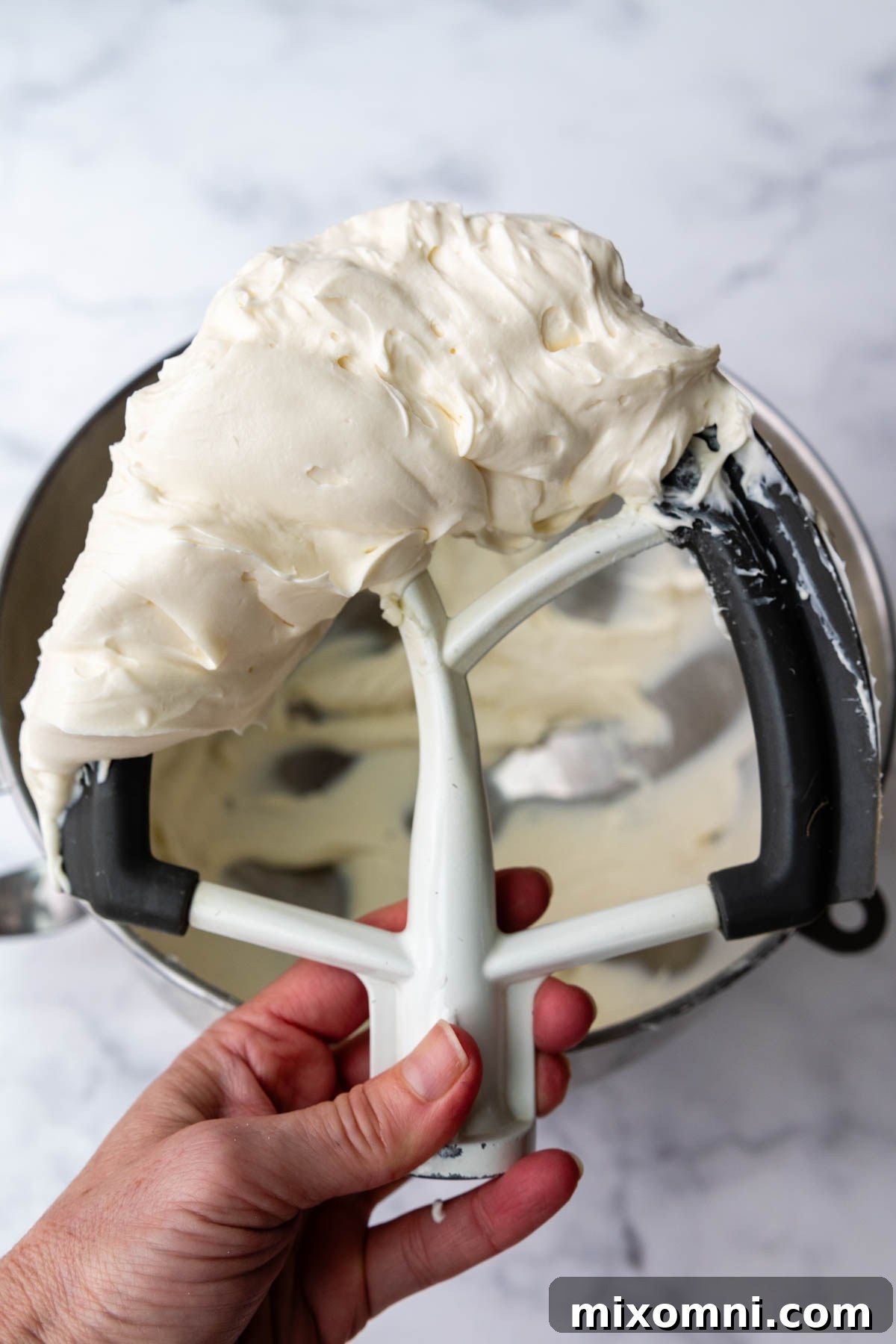
There are two key factors to remember when preparing this irresistibly fluffy cream cheese frosting. First, always use cold cream cheese, not softened or room temperature. When you introduce the cold heavy cream, you want all the dairy ingredients to be as chilled as possible. This cold temperature is crucial for building and maintaining maximum volume as you whip the frosting.
Second, once the heavy cream has been incorporated into the cream cheese mixture, it is essential to beat the frosting on high speed for a full 3 minutes. Much like making homemade whipped cream, the mixture requires this sustained beating time to incorporate enough air and build up to its full, luscious volume. The result is a cloud-like, tangy-sweet frosting that melts in your mouth.
I adore this light, creamy frosting so much that I use it for many of my other dessert creations, including my widely praised best gluten-free pumpkin cake!
Versatile Baking: Making a Sheet Cake or Cupcakes
This incredibly versatile gluten-free banana cake recipe can be easily adapted to suit your preferred baking pan and serving style. Whether you desire a classic layer cake, a simple sheet cake, or even individual cupcakes, the core recipe remains delicious.
Creating a Banana Sheet Cake
For a convenient banana snack cake, simply pour the entire batter into a 9×13-inch baking pan. There is no need to adjust the ingredient quantities. However, the baking time will differ slightly. You will need to bake the sheet cake for approximately 48-52 minutes. Use the same doneness cues as for the layer cakes: the center should spring back when lightly touched, and a toothpick inserted into the middle should come out clean.
Smaller Batch Baking
If you prefer a smaller cake, halve all the ingredients and bake the batter in an 8×8-inch baking dish. The baking time for this smaller version will be around 35 minutes, again using the toothpick test for perfect doneness. While I haven’t personally tested this recipe for cupcakes yet, I encourage you to try it! If you do, please share your experience and any tips in the comments section below – your feedback helps our entire baking community!
Delectable Recipe Variations and Mix-Ins
This fluffy gluten-free banana cake serves as a fantastic base for a myriad of flavor enhancements and creative additions. One of my personal favorite ways to elevate a layer cake is to incorporate a luscious homemade banana cake filling between the layers. If you choose this option, you will have extra cream cheese frosting since it won’t be used as a filling. In this case, I recommend reducing the frosting ingredients to: 8 ounces cold cream cheese, ⅔ cup powdered sugar, ¾ cup heavy cream, 1 teaspoon vanilla extract, and ⅛ teaspoon salt.
Banana, of course, harmonizes beautifully with a wide array of other flavors! Consider folding in 1 ½ cups of miniature chocolate chips into the batter for a classic chocolate-banana pairing. If you’re looking for an alternative to cream cheese, you could replace the frosting entirely with a decadent fluffy chocolate buttercream or pipe on a rich, stabilized chocolate whipped cream frosting for a lighter chocolate touch.
To make this cake truly special, especially for a birthday or celebratory occasion, consider sprinkling chopped nuts (such as walnuts or pecans), toasted coconut flakes, or drizzling a bit of homemade salted caramel over the top of the frosting. These additions provide delightful textural contrast and enhance the overall flavor profile, transforming your gluten-free banana cake into an unforgettable dessert.
Save this recipe to your Pinterest board!
Let’s be friends on Pinterest! I’m always sharing great recipes!
Did you make this recipe? I love hearing from you! Leave a star rating and comment below the recipe card. It helps others when searching for recipes and I appreciate feedback from our community. You will always hear back from me! -Melissa
Fluffy Gluten-Free Banana Cake (Not Dense!)

Melissa Erdelac
12
10 minutes
35 minutes
1 hour
Pin
Rate
Remove Ads
Ingredients
Gluten-Free Banana Cake
-
1 cup
(200 g)
granulated sugar -
½ cup
(117 g)
packed light brown sugar -
⅓ cup
(73 g)
oil, any preferred -
⅓ cup
(81 g)
sour cream, room temperature -
¼ cup
(57 g)
unsalted butter, softened -
3
large eggs, room temperature -
¾ cup
(196 g)
mashed banana, about 3 medium -
1 teaspoon
banana extract -
1 teaspoon
vanilla extract -
3 cup
(438 g)
gluten free all purpose flour, divided -
1 ½ teaspoon
baking powder -
½ teaspoon
baking soda -
½ teaspoon
ground cinnamon -
½ teaspoon
salt -
¾ cup
(184 g)
buttermilk, divided
Whipped Cream Cheese Frosting
-
12 ounces
(336 g)
cream cheese, cold -
1 cup
(120 g)
powdered sugar -
1 cup
(240 g)
heavy cream -
1 ½ teaspoon
vanilla extract -
¼ teaspoon
salt
Equipment
-
9 inch Cake Pans -
Stand Mixer -
Cup 4 Cup Gluten Free Flour
Instructions
-
Preheat the oven to 350℉ (175°C). Grease two 9-inch round cake pans and set aside.
-
In a large mixing bowl, blend together the granulated sugar, brown sugar, oil, sour cream, and softened butter until creamy, about 2 minutes.1 cup granulated sugar, ½ cup packed light brown sugar, ⅓ cup oil, ⅓ cup sour cream, ¼ cup unsalted butter
-
Add the eggs, one at a time, mixing well between each addition. Then add the mashed banana, banana extract, and vanilla extract and mix to combine.3 large eggs, ¾ cup mashed banana, 1 teaspoon banana extract, 1 teaspoon vanilla extract
-
To the batter, add 1 cup of the gluten-free flour, baking powder, baking soda, cinnamon, and salt. Mix on low speed until just combined. Pour in about ¼ cup of the buttermilk and beat again to combine. Repeat this process two more times, adding 1 cup flour, then buttermilk, then the final cup of flour, and ending with buttermilk. The batter will be relatively thick but well combined.3 cup gluten free all purpose flour, 1 ½ teaspoon baking powder, ½ teaspoon baking soda, ½ teaspoon ground cinnamon, ½ teaspoon salt, ¾ cup buttermilk
-
Evenly divide the batter between the two prepared cake pans. Allow the batter to rest for 15 minutes before baking. This crucial step permits the liquids to fully absorb into the starches of the gluten-free flour, ensuring a fluffier and more tender crumb.
-
Bake for 35 minutes, or until the center of the cake springs back when lightly touched and a toothpick inserted comes out completely clean. When baking gluten-free cakes, it is generally better to slightly over-bake by a minute or two, as this ensures all excess moisture is evaporated and the cake structure is fully set, preventing it from sinking after cooling.
-
Cool the cakes in their pans for 5 minutes before carefully turning them out onto a wire rack to cool completely. It is essential for the cakes to be entirely cool before proceeding with frosting.
Frosting the Layer Cake
-
In a large mixing bowl, combine the cold cream cheese and powdered sugar. Begin mixing on low speed to slowly incorporate the cream cheese and sugar. Once combined, increase the speed to high and beat for 1 minute until smooth.12 ounces cream cheese, 1 cup powdered sugar
-
Add the cold heavy cream, vanilla extract, and salt to the cream cheese mixture. Beat again on low speed until just combined. Then, increase to high speed and mix for 3 full minutes, allowing the frosting to become very light, fluffy, and voluminous. If you desire a thinner frosting, add a splash of additional cream; for a stiffer consistency, gradually add more powdered sugar.1 cup heavy cream, 1 ½ teaspoon vanilla extract, ¼ teaspoon salt
-
Place one completely cooled cake layer on your desired serving platter. Spread a generous, even amount of the whipped cream cheese frosting on top. Carefully place the second cake layer on top, then use the remaining frosting to spread evenly over the top and sides of the entire cake, creating a beautifully finished appearance.
-
Store any leftover cake in the refrigerator due to the cream cheese frosting. However, for optimal taste and texture, the cake crumb is best enjoyed at room temperature. If chilled, allow the cake to sit out for up to 3 hours before serving to reach its ideal temperature and softness.
Notes
Storing, Freezing, and Make-Ahead Tips for Your Gluten-Free Banana Cake
Since this delicious cake features a delicate cream cheese frosting, any leftovers must be stored in the refrigerator. To maintain freshness, gently press a piece of plastic wrap against any cut edges before storing for up to 2 days. While still enjoyable, the cake’s crumb is at its absolute best when eaten within 24 hours of baking.
When serving a chilled cake, the optimal texture and flavor of the crumb are achieved at room temperature. Simply take the cake out of the refrigerator up to 3 hours before you plan to serve it, allowing it to gently come to room temperature.
To prepare this cake ahead of time, you can frost the entire cake and then freeze it until solid. Once frozen, wrap it securely in several layers of plastic wrap, followed by a layer of aluminum foil, for protection against freezer burn. This method allows you to enjoy freshly frosted cake at a later date.
Alternatively, you can bake the cake layers ahead of time. After they have cooled completely, wrap each layer securely in plastic wrap and freeze them. When you’re ready to assemble, simply thaw the layers at room temperature before proceeding with the frosting steps.
Did you make this recipe?
Please leave a star rating and review below. It helps others when searching for recipes and I LOVE feedback!