
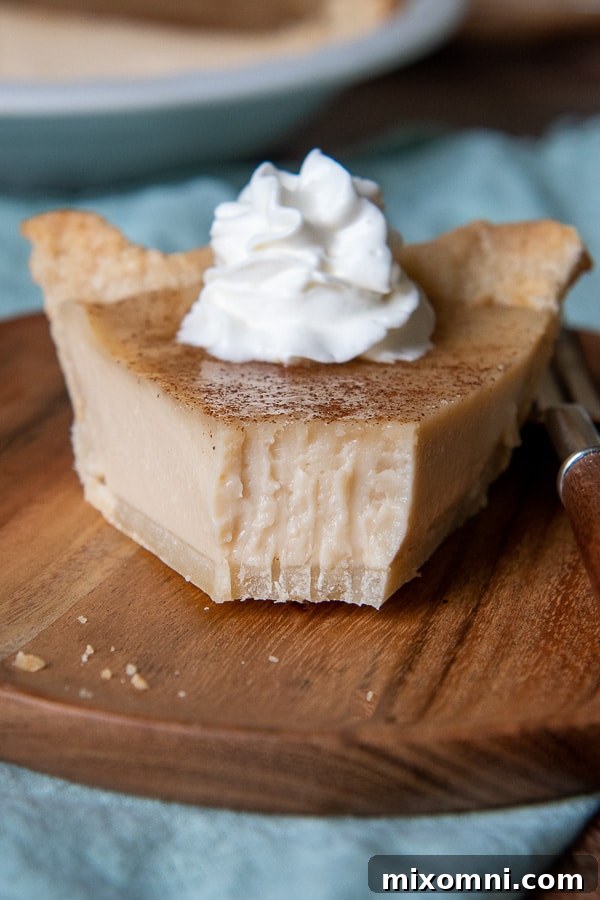
Indulge in a truly iconic American dessert with this classic Sugar Cream Pie recipe. Also affectionately known as Hoosier Pie, this delightful creation is filled with a gloriously thick, exquisitely creamy, and richly vanilla-infused custard. Each slice is traditionally finished with a delicate dusting of cinnamon, making it a masterpiece of understated elegance. What makes this recipe stand out is its reliance on a handful of simple ingredients and straightforward steps, combined with a clever trick: starting the custard on the stovetop ensures a perfectly set, smooth filling every single time. Prepare to discover why this humble pie has captivated hearts for generations and earned its place as Indiana’s official state dessert!
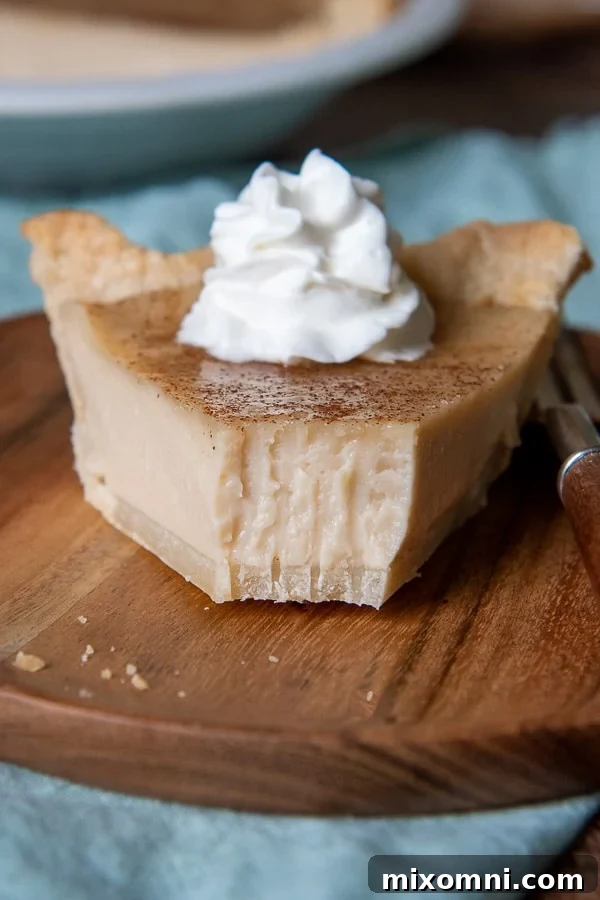
Unveiling Indiana’s Sweetest Secret: The Story of Sugar Cream Pie
Just consider the pure poetry of its name: Sugar Cream Pie. It’s a dessert that practically guarantees pure bliss from the title alone! This old-fashioned delicacy perfectly embodies the “simpler-is-better” philosophy, which is why it has quickly become one of the most requested additions to any dessert table, rivaling even our most beloved homemade pie recipes. There isn’t much to it, yet its taste is simply divine. And why is it so good? Because it’s literally sugar, and cream, in a pie. What more could you possibly ask for?
This exquisite dessert is most famously known as Hoosier Pie, a tribute to its deep roots and immense popularity in the state of Indiana. Its cultural significance is so profound that the Indiana state legislature officially recognized it as the state’s official pie in 2009, cementing its legendary status. But its history stretches back much further, earning it another charming moniker: “desperation pie.” In earlier times, when fresh fruits like apples or berries were scarce or out of season, resourceful farm families could still whip up this satisfying pie using readily available pantry staples like sugar, cream, and flour. This historical context suggests that the best time to enjoy this pie is, quite simply, *always*. A sentiment we wholeheartedly agree with!
If your heart beats for recipes that evoke the charm of vintage, spiral-bound church cookbooks – much like our acclaimed moist carrot cake with crushed pineapple – then this fail-proof sugar cream pie is destined to become your next baking obsession. It’s a comforting slice of culinary history, made accessible and delicious for today’s home bakers.
This was indeed much easier than the recipe I have been making for way over 20 years. It was on point and I did not have to shake the pie 6 times to make sure it was done.
—Robin
The Magic Behind the Custard: Why Our Method is Fail-Proof
As a proud native Hoosier myself, I can confidently tell you from years of firsthand experience (and countless taste tests – the perks of the job!) that not all sugar cream pie recipes are created equal. The consistency and flavor can vary wildly depending on the preparation method.
Historically, there have been a few approaches to crafting this regional gem. One of the simplest methods involves merely mixing all the ingredients in a bowl, pouring them into an unbaked crust, and allowing it to bake entirely in the oven. While appealing for its minimal fuss, this technique often takes an exceptionally long time to set, leaving bakers guessing about when the pie is truly done, and sometimes resulting in an inconsistently baked or even runny filling.
Another approach involves cooking the custard completely on the stovetop before pouring it into a pre-baked pie crust. While this can offer some control over the custard’s thickness, I’ve found that the custard doesn’t always set consistently once cooled, and the overall flavor profile isn’t as rich or developed as when it benefits from a final bake in the oven. The subtle caramelization that occurs during baking significantly enhances the pie’s depth.
This brings us to why our unique hybrid method is, without a doubt, the best for achieving a perfect homemade sugar cream pie. By partially cooking the custard on the stovetop, we ensure it begins to thicken and stabilize before it even enters the oven. It then finishes baking for a significantly shorter duration. This dual approach guarantees that the filling sets solidly and beautifully every single time, achieving that coveted, never-runny, impossibly creamy texture that defines a truly exceptional Hoosier Pie. It’s the secret to consistent perfection, merging the best of both worlds for an unbeatable result.
Mastering the Ingredients: Simple Components, Exceptional Flavor
The beauty of an authentic Sugar Cream Pie lies in its simplicity. With just a few basic pantry staples, you can create a dessert that tastes far more complex and indulgent than its ingredients suggest. Let’s delve into the role each component plays in achieving that perfect creamy consistency and rich vanilla flavor.
The Perfect Pie Crust: Foundation for Flavor
The crust is more than just a holder for the luscious filling; it provides a crucial textural contrast and a buttery foundation. For this recipe, an unbaked 9-inch pie crust is essential. You can opt for a high-quality store-bought crust for convenience or create your own homemade version, perhaps even a gluten-free pie crust if desired. The key is to partially bake the crust (blind bake) before adding the custard. This step prevents a soggy bottom and ensures that your crust is beautifully golden and crisp, perfectly complementing the soft, creamy filling.
The Sweetness Factor: Granulated and Brown Sugar
Our recipe uses a combination of both granulated sugar and brown sugar, each contributing distinct qualities to the custard. Granulated sugar provides a clean, pure sweetness that allows the vanilla and cream flavors to shine through. Brown sugar, with its molasses content, adds a subtle depth, a hint of caramel, and a slight chewiness to the texture. This pairing creates a more nuanced and rounded sweetness that is absolutely irresistible, moving beyond a simple sugary taste to something far more complex and inviting.
The Creamy Core: Choosing Your Dairy
The type of cream you choose is paramount to the ultimate texture and richness of your custard pie. I generally recommend using half and half, as it strikes a wonderful balance. It’s lighter than heavy whipping cream but still provides ample richness, resulting in a thick, luxurious custard that isn’t overly dense. Using regular milk, however, is not recommended. Its lower fat content means the custard will be too thin and may not set properly, making it difficult to slice and serve neatly.
For those seeking the absolute pinnacle of decadence and creaminess, heavy cream is your best friend. While it will make the pie richer, it also means the custard will thicken more quickly on the stovetop. Whichever you choose, ensure it’s fresh and high-quality for the best possible flavor. The dairy is the true heart of this vanilla custard pie.
Essential Flavor Boosters: Butter and Vanilla
While sugar and cream form the base, butter and vanilla are the unsung heroes that elevate this simple pie to extraordinary heights. Cubed butter, stirred in at the end of the stovetop cooking, melts seamlessly into the hot custard, lending an unparalleled richness and a silky mouthfeel. Without the butter, the custard can taste a little “flat” or one-dimensional. The generous amount of vanilla extract provides that signature warmth and aromatic sweetness that defines a classic sugar cream pie. Always use a good quality vanilla for the most impactful flavor, as it truly makes a difference in this ingredient-focused dessert.
Step-by-Step: Crafting Your Own Hoosier Masterpiece
Ready to bake the most delicious homemade Sugar Cream Pie? Follow these detailed steps, complete with extra tips, to ensure a stunning and delicious result. (Below shows step-by-step photos and modified instructions. For the complete recipe, along with precise ingredient amounts, scroll down to the recipe card.)
Partially Bake the Crust and Begin the Custard
Since our superior custard method involves initial cooking on the stovetop, it requires less time in the oven to fully set. To ensure both the creamy filling and the flaky crust are perfectly done at the same time, we’ll start by partially baking (blind baking) the pie crust. Begin by preheating your oven to 425ºF and adjusting the rack to the lower position, which helps ensure the bottom of the crust gets adequately browned. Roll out your 9-inch pie crust and carefully fit it into your pie pan. Line the bottom of the crust with a piece of foil or parchment paper, then fill it with dried beans or your trusty pie weights. Bake until lightly golden brown, typically around 15 minutes, then remove the weights and foil and bake for another 5-10 minutes until the crust edges are nearly completely baked.
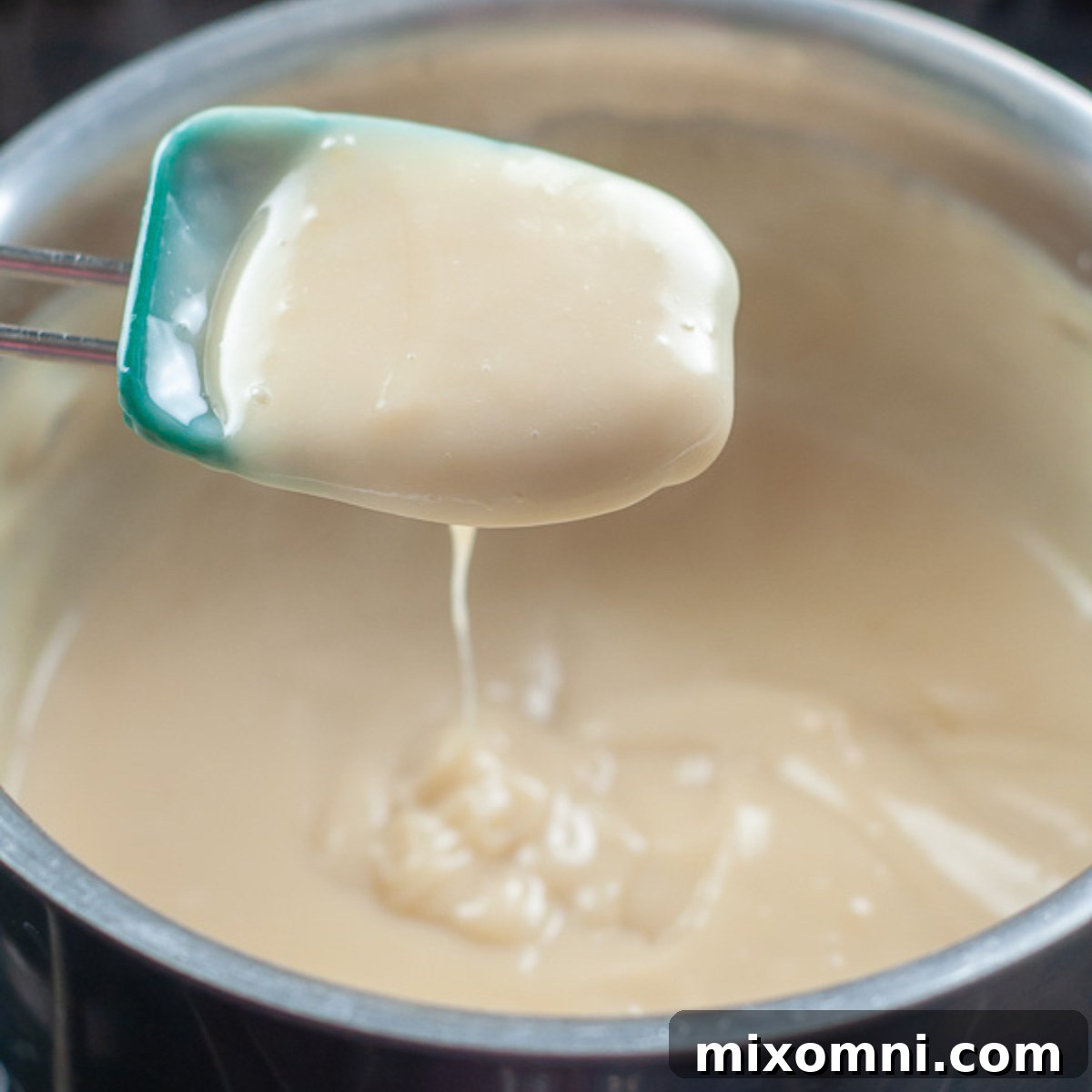
While your crust is doing its thing in the oven, you can begin preparing the rich custard filling. In a large saucepan, whisk together the dry ingredients: granulated sugar, brown sugar, and cornstarch. Whisking them thoroughly before adding liquids helps prevent lumps. Then, gradually pour in the half and half (or heavy cream). Bring this mixture to a boil over medium heat, stirring frequently with a whisk to prevent scorching on the bottom. Once it starts to bubble vigorously, reduce the heat slightly to a simmer and continue to cook and stir for about 2 minutes, or until the mixture has noticeably thickened to a pudding-like consistency. This initial thickening on the stove is key to our fail-proof method.
Finish the Filling with Flavor Enhancers
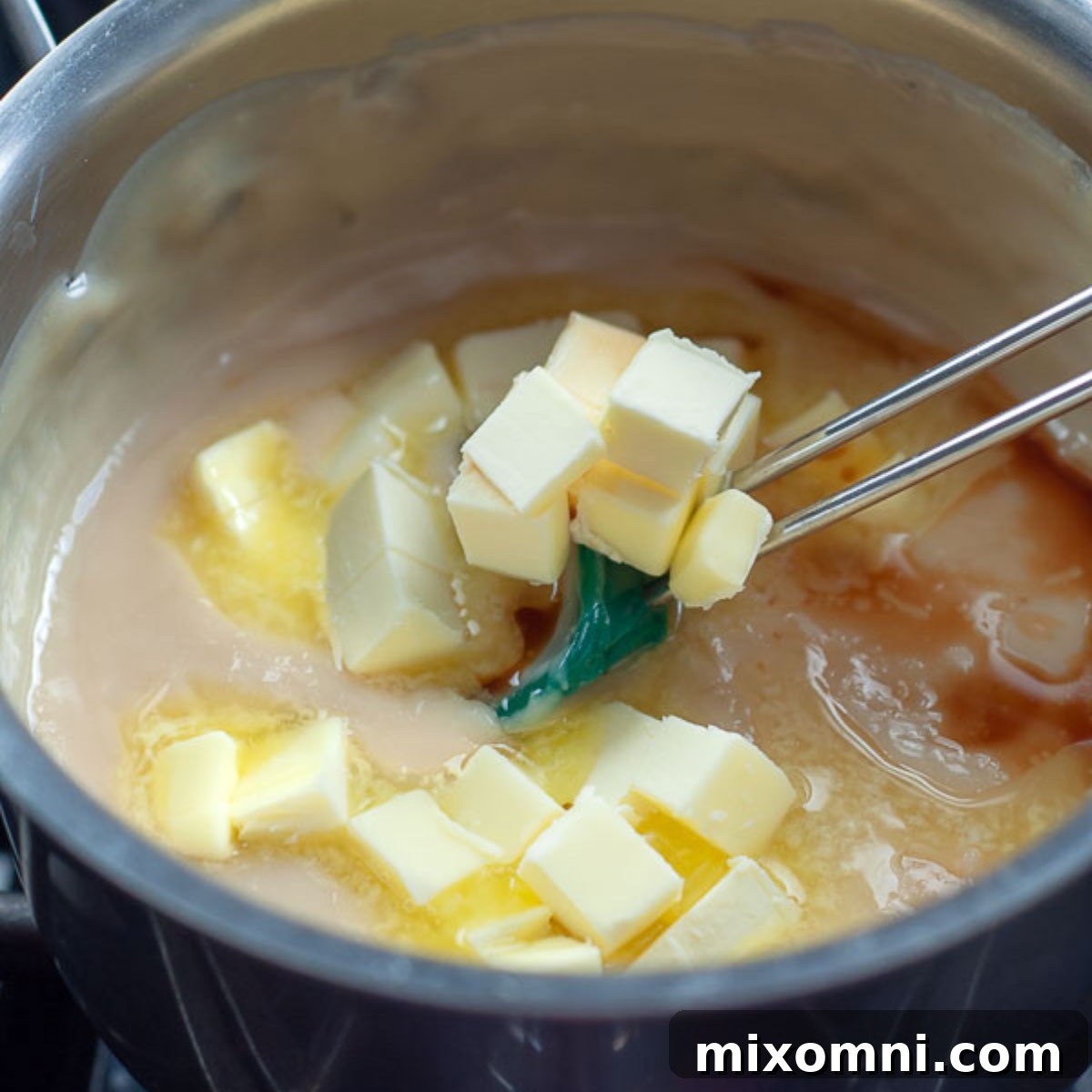
Once the custard has reached its desired thickness on the stovetop, remove it immediately from the heat. This is the perfect moment to stir in the cubed butter and the vanilla extract. The residual heat of the custard will quickly melt the butter, incorporating its rich, velvety texture and enhancing the overall flavor. I can’t stress enough how crucial these two ingredients are for adding a wonderful dimension of flavor. Without the butter, the taste can sometimes fall a little flat, lacking that luscious richness. And a good quality vanilla is essential to infuse that classic, comforting aroma and taste. Don’t be shy – these additions will transform your custard!
Pour and Bake to Perfection
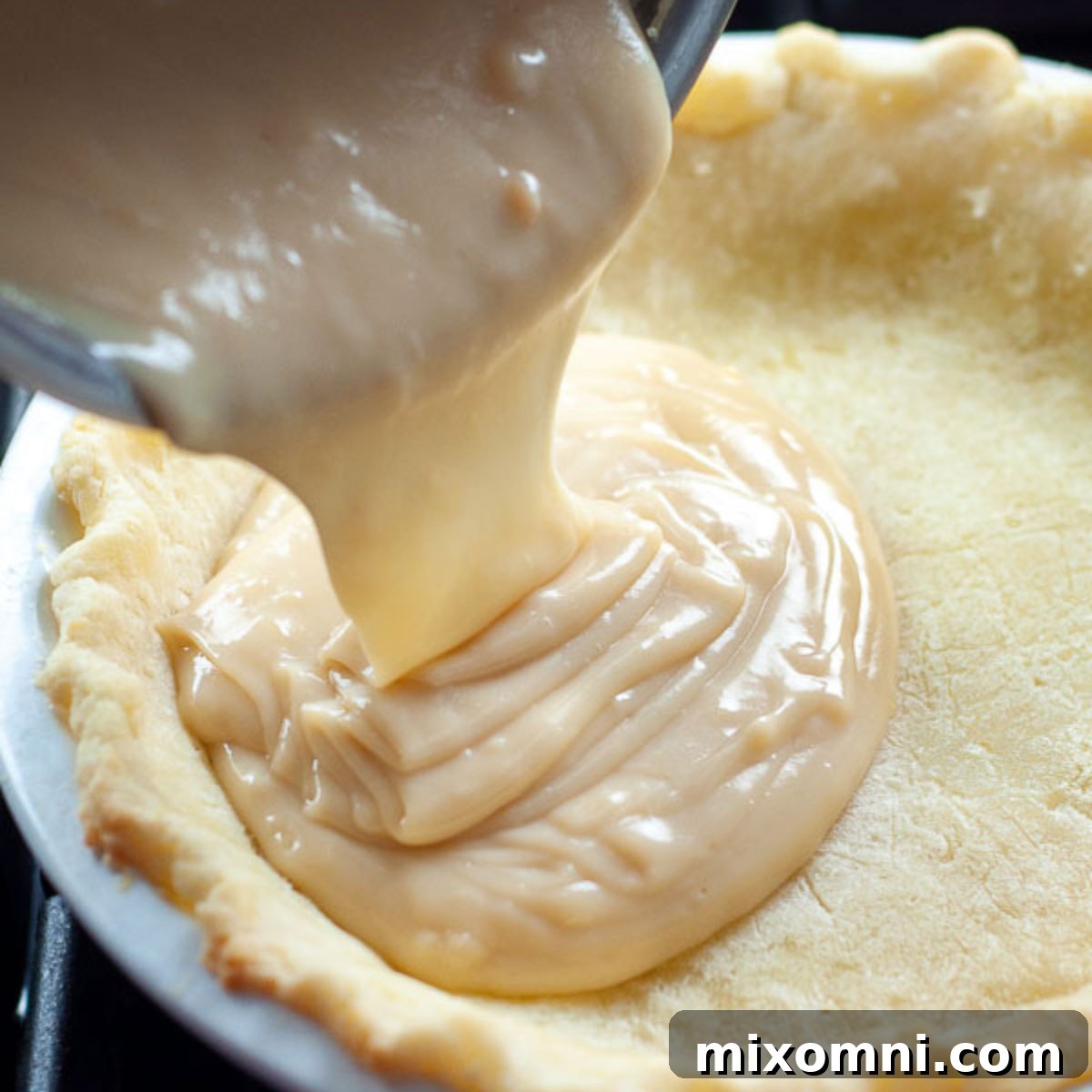
Now, it’s time to bring it all together! Carefully pour the warm, thickened custard filling into your partially-baked pie crust. Don’t worry if the crust hasn’t cooled completely; it’s perfectly fine to pour the warm filling in. If you desire, sprinkle the top of the filling with a light dusting of cinnamon – it adds a lovely aromatic touch and visual appeal that perfectly complements the sweet vanilla. Transfer the pie to your preheated oven (which should now be at 375ºF) and bake for approximately 20 minutes, or until the pie filling is visibly set and the crust is golden brown. A gentle jiggle of the pie should show that the center is firm, with perhaps just a slight wobble. Tip: If you notice the crust edges beginning to brown too quickly before the filling is set, cover them loosely with aluminum foil or use a handy pie shield to protect them.
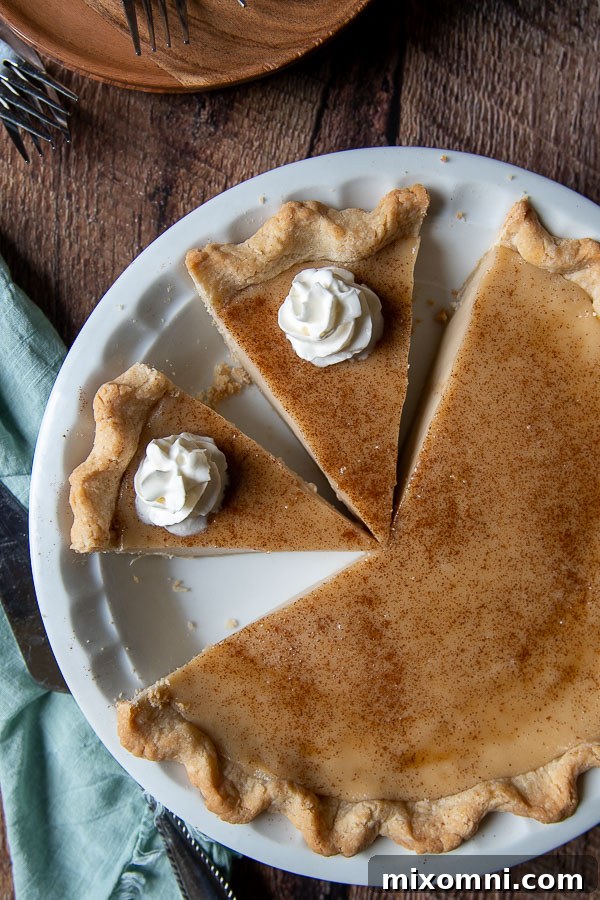
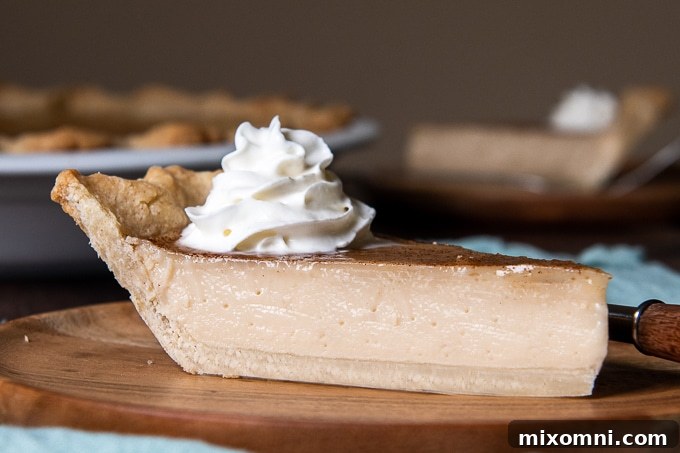
The hardest part comes next: resisting the urge to dig in immediately! For the best possible texture and to ensure clean slices, it’s absolutely crucial to let the pie cool completely at room temperature first. Then, transfer it to the refrigerator to chill for at least 1-2 hours (or even longer) before slicing and serving. This chilling period allows the custard to fully firm up, resulting in perfectly defined, creamy slices. We love to serve ours with an extra dusting of cinnamon and a generous dollop of freshly whipped cream. Truly, it’s a taste of heaven!
Serving Your Sugar Cream Pie: Tips and Delightful Pairings
Once your Hoosier Sugar Cream Pie has cooled and chilled to perfection, it’s ready to be savored. The traditional way to serve this classic dessert is simple and elegant: a light dusting of ground cinnamon over the top of each slice. The warm, earthy notes of cinnamon beautifully enhance the sweet, creamy vanilla custard, creating a harmonious flavor profile.
For an added touch of indulgence, a dollop of freshly whipped cream is a highly recommended accompaniment. Its light, airy texture and delicate sweetness provide a wonderful contrast to the rich, dense filling. You can also experiment with other toppings: a scattering of fresh berries like raspberries or blueberries can add a welcome burst of tartness and color, while a sprinkle of finely grated dark chocolate could offer a sophisticated, bittersweet note. Some even enjoy a drizzle of caramel or a few toasted nuts for extra crunch.
This pie is absolutely delicious served at room temperature, allowing its full array of flavors to emerge. However, many find it even more refreshing when chilled, especially on a warm day. Any leftovers should be stored in an airtight container in the refrigerator for up to 3-4 days to maintain its freshness and creamy texture.
Troubleshooting Common Sugar Cream Pie Issues
Even with a fail-proof recipe, baking can sometimes present unexpected challenges. Here are a few common issues you might encounter with Sugar Cream Pie and how to troubleshoot them:
- Runny Custard: If your pie doesn’t set firmly, it’s likely due to insufficient cooking time on the stovetop or in the oven, or perhaps using a dairy product with too low a fat content (like skim milk). Ensure your custard comes to a full boil and simmers for the recommended 2 minutes on the stove, stirring constantly. It should be thick like a pudding before going into the crust. Also, remember that proper chilling in the refrigerator is essential for the custard to fully firm up.
- Soggy Pie Crust: A soggy bottom crust is a common pie problem. Our method mitigates this by blind baking the crust before adding the filling. Ensure you bake the crust until it’s lightly browned and almost fully cooked. Using pie weights during the initial bake helps keep the crust from bubbling up. Make sure your oven rack is on the lower position to ensure direct heat to the bottom of the pie.
- Over-Browned Crust Edges: The delicate edges of a pie crust can sometimes brown too quickly. To prevent this, use a pie shield or create one out of aluminum foil by tearing a circle in the center and placing it over the crust edges for the last portion of the baking time. This protects the crust while allowing the filling to finish cooking.
Craving More? Save This Hoosier Pie Recipe on Pinterest!
Let’s be friends on Pinterest! I’m always sharing great recipes and baking inspiration!
Did you make this authentic Indiana Sugar Cream Pie? We’d love to hear from you! Leave a star rating and comment below the recipe card. Your feedback helps other home bakers discover and enjoy this incredible recipe, and I truly appreciate hearing from our community! -Melissa
Failproof Hoosier Sugar Cream Pie (Easy Recipe)
 Melissa Erdelac
Pin
Rate
Remove Ads
Ingredients
- 1 (1) unbaked 9″ pie crust, or use gluten-free pie crust
- ½ cup (100 g) granulated sugar
- ½ cup (110 g) brown sugar
- ¼ cup (32 g) cornstarch
- 2 cups (484 g) half and half
- ½ cup (113.5 g) butter, cubed
- 1 tablespoon (1 tbsp.) vanilla
- optional cinnamon, for sprinkling
Equipment
-
Pie Weight
-
Pie Plate
-
Pie Shield
Instructions
-
Preheat oven to 425ºF and adjust rack to lower position. Roll out and fit the pie crust into a 9″ pie pan. Line the bottom of the crust with foil or parchment and fill with dried beans or pie weights.1 unbaked 9″ pie crust
-
Bake for 15 minutes on LOWER RACK. Remove weights and foil and bake for 5-10 minutes longer, until crust starts to brown and almost completely baked.
-
Cool the crust on wire rack and reduce oven temperature to 375ºF. Begin to make custard filling.
-
In a large saucepan, whisk together sugar, brown sugar, and cornstarch. Whisk in the half and half.½ cup granulated sugar, ½ cup brown sugar, ¼ cup cornstarch, 2 cups half and half
-
Bring mixture to a boil over medium heat, stirring frequently. Once it starts to boil, reduce heat slightly to a simmer. Cook and stir for 2 minutes, or until thickened. Remove from heat and immediately stir in the butter and vanilla.½ cup butter, 1 tablespoon vanilla
-
Pour filling into par-baked crust (the crust doesn’t have to be cooled completely) and sprinkle the filling with dusting of cinnamon, if desired. Bake for 20 minutes, or until the crust is golden brown and filling is set. Tip: If crust starts to brown too much before filling is set, cover the crust loosely with foil or use a pie shield.
-
Remove from the oven and cool completely. Refrigerate for at least 1-2 hours before slicing and serving. Store any leftovers in the refrigerator.
Notes
Tips To Remember
- Bake the crust on the lower rack so the bottom crust turns golden.
- When filling a pie shell with weights, make sure the shell is very cold first. After rolling out the dough into the pie plate, refrigerate it for 30 minutes or freeze for 10 minutes.
- While the pie shell is initially baking, you may begin making the custard filling. The shell does not have to cool completely before pouring it in.
- Every time I bake pies, I use a pie shield to prevent the edges from becoming too browned.
- For best results with cutting and serving, cool the pie completely at room temperature then move to the refrigerator to chill for at least 1-2 hours before slicing.
Adapted from Taste of Home