
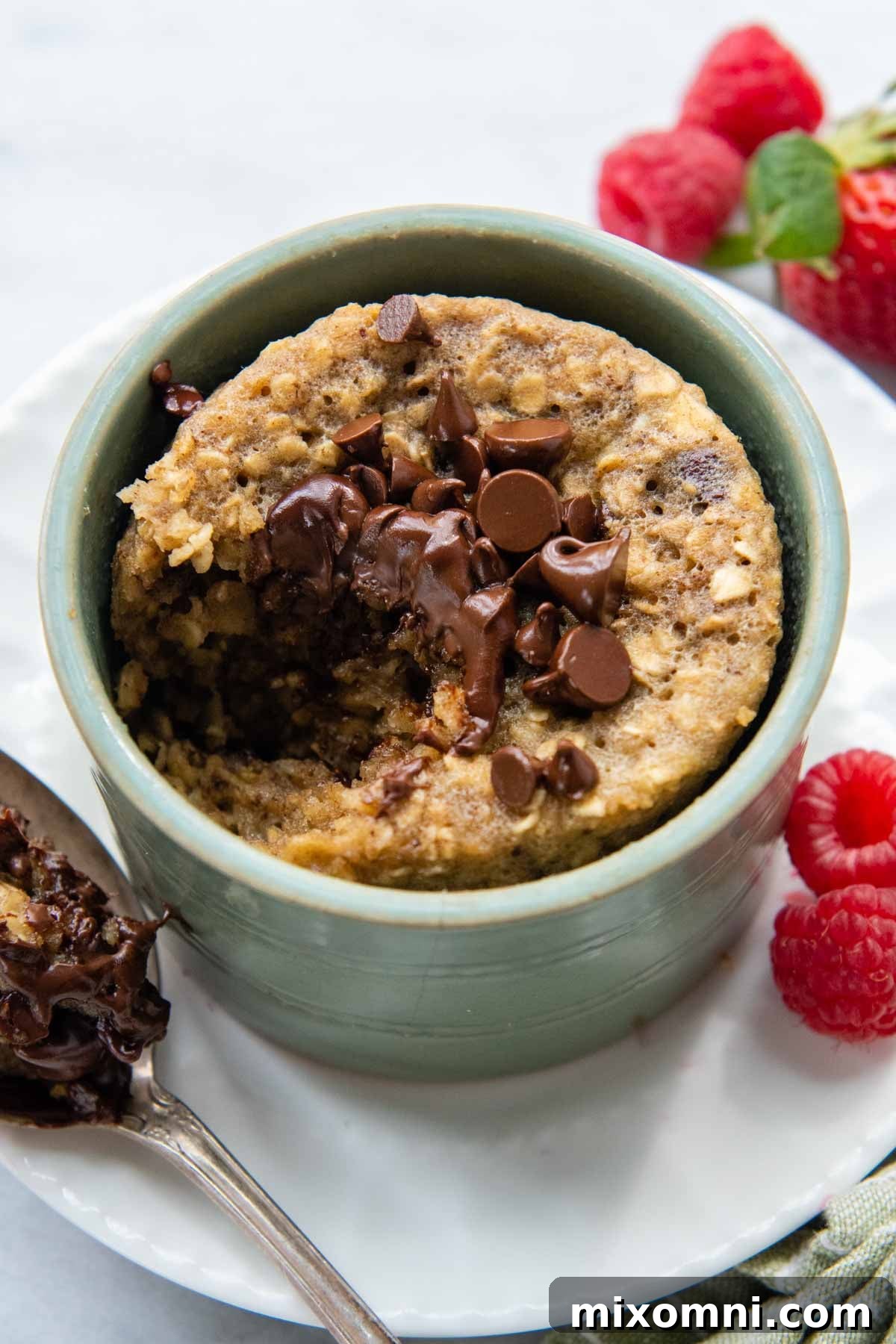
Craving a delightful, warm treat that’s ready in minutes? Imagine a fluffy, moist cake, perfectly portioned just for you, and made without any traditional flour. This dream becomes a reality with our incredible Gluten-Free Oatmeal Mug Cake! It’s the ultimate solution for a quick breakfast, a satisfying snack, or a decadent dessert, whipped up using only simple, wholesome ingredients you likely already have in your kitchen. Best of all, this culinary marvel takes only 2 minutes to prepare in your microwave, making it an ideal choice for those busy mornings or sudden sweet cravings.
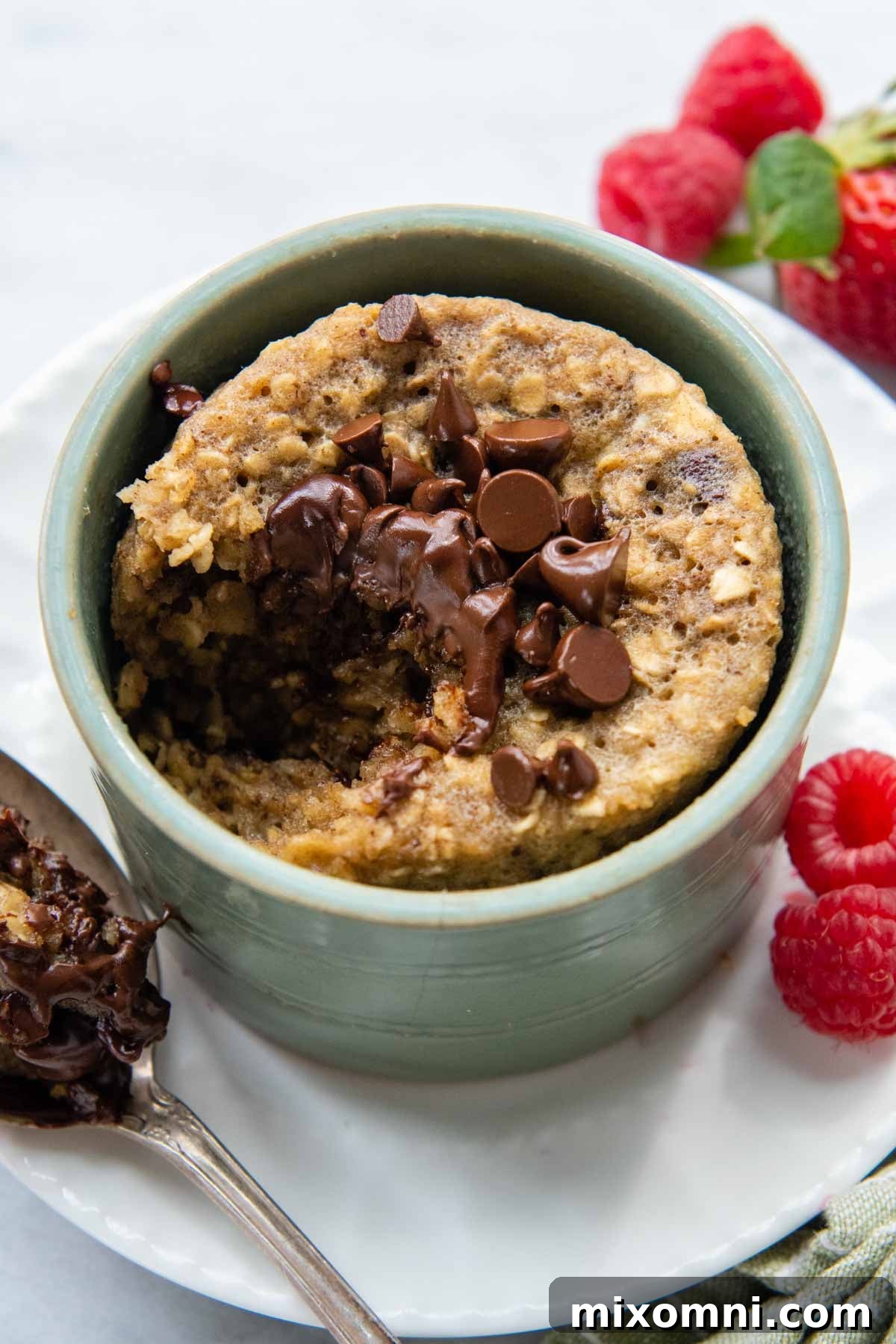
Discover the Magic: Why an Oatmeal Mug Cake?
The beauty of this recipe lies in its simplicity and ingenious use of oats. Forget complicated baking processes and extensive cleanup. This oatmeal mug cake is a game-changer for anyone seeking a quick, delicious, and genuinely healthy alternative to traditional baked goods. It’s particularly fantastic for individuals following a gluten-free diet (provided you tolerate certified gluten-free oats), offering a reliable and budget-friendly flour substitute.
Oats are not just a filler; they are a nutritional powerhouse. They provide essential fiber, aid in building the cake’s structure, and act as a natural binder, ensuring that our no-flour oat cake achieves a wonderfully tender and moist texture without any wheat-based ingredients. This recipe proves that you don’t need fancy ingredients or advanced baking skills to create something truly special. Just a few pantry staples, a microwave-safe mug, and a couple of minutes stand between you and a delightful, guilt-free indulgence.
Unlike many gluten-free recipes that can be finicky or require a blend of obscure flours, our flourless oatmeal mug cake embraces the wholesome goodness of oats to deliver a consistent, delicious result every time. Its hearty nature makes it substantial enough for a satisfying breakfast, yet it’s sweet enough to quell any dessert craving. The best part? It’s incredibly versatile. Just like a fudgy chocolate almond flour mug cake, you can easily adapt this recipe to be dairy-free or sugar-free, catering to various dietary preferences without compromising on taste or texture.
This article will guide you through all the secrets to achieving the perfect fluffy oat mug cake, from ideal ingredient choices and smart substitutions to a crucial cooking hack that prevents rubbery results. Get ready to transform humble oats into an extraordinary treat!
This👏🏼is👏🏼SO👏🏼delicious! I confess, I make this almost every night and have absolutely zero regrets. It’s my go-to treat!
—Erica
Essential Ingredients and Clever Swaps for Your Oat Mug Cake
Creating this irresistible oatmeal mug cake requires just a handful of everyday ingredients. You’ll need some certified gluten-free oats, milk, an egg, your preferred sweetener (maple syrup or brown sugar work wonderfully), a touch of oil, and baking powder. These components come together harmoniously to create a light, airy, and deeply satisfying cake.
- Egg: The egg is crucial for mimicking the beloved texture of traditional cake, contributing to both structure and richness. For those avoiding eggs, ½ a mashed banana can serve as an excellent egg-free alternative, though it will result in a denser, more baked-oatmeal-like texture rather than a fluffy cake.
- Oil: Oil is key for achieving that coveted fluffy texture. Canola oil, vegetable oil, or melted coconut oil all work well. If you’re looking for an added flavor boost and a slightly denser cake, an equal amount of creamy peanut butter (or any other nut butter) can be used as a delicious substitute.
- Sweetener: Pure maple syrup is my top recommendation for the best flavor and moisture balance. However, brown sugar or coconut sugar are also viable options, though they might lead to a slightly drier texture. For those conscious of sugar intake, feel free to reduce the amount of sweetener to your liking, especially if you plan to enjoy this as a breakfast item. While I haven’t personally tested sugar-free substitutes, they should theoretically work without issues.
- Oats: The type of oats you choose significantly impacts the final texture. For the fluffiest, most cake-like result, quick-cooking oats or pre-made oat flour are ideal, as their finer texture allows for quicker absorption of liquids during the short microwave cooking time. If you only have old-fashioned rolled oats, you can still use them, but expect a slightly heavier and more rustic crumb. Remember, for a truly gluten-free mug cake, always opt for certified gluten-free oats to prevent cross-contamination.
- Milk: This recipe is incredibly adaptable for those with dairy sensitivities. Any preferred milk or non-dairy alternative will work perfectly – think soy milk, oat milk, or almond milk.
- Chocolate Chips: While optional, miniature chocolate chips are a fantastic addition that melts beautifully into the cake. Using miniature chips helps them disperse more evenly throughout the batter. For a dairy-free version, simply omit them or use dairy-free chocolate chips.
Let’s Bake Together: Step-by-Step Oat Mug Cake
Creating this 2-minute oatmeal mug cake is incredibly straightforward. Follow these simple steps for a perfect outcome every time! (Detailed ingredient amounts are available in the recipe card below.)
Step 1: Whisk the Wet Ingredients
First, ensure your mug or ramekin is at least 10 ounces and microwave-safe to prevent overflow during cooking. Lightly spray the inside with nonstick cooking spray. In the mug, use a fork to vigorously whisk together the egg, milk, maple syrup, oil, and vanilla extract until well combined.
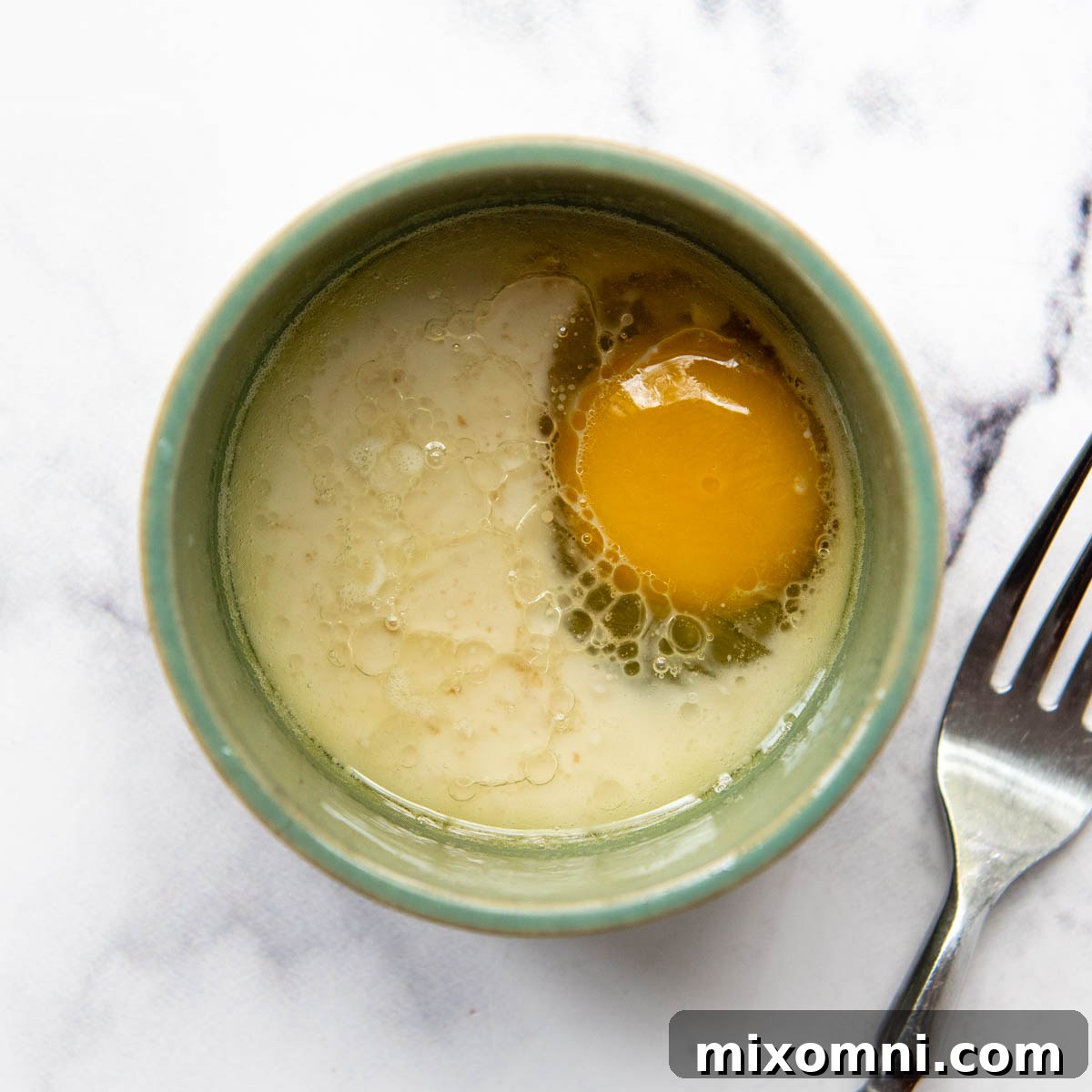
Step 2: Incorporate Dry Ingredients & The Magic Stirring Hack
Now, add your dry ingredients to the wet mixture in the mug: oats, baking powder, cinnamon, and a pinch of salt. Stir with the fork until just combined. If you plan to add chocolate chips, hold off for now to prevent them from over-melting too early. Place the mug in the microwave and cook at full power for precisely 45 seconds. This is where the magic happens! Remove the mug and immediately stir the batter thoroughly with your fork. This crucial step redistributes the egg and prevents it from settling at the bottom, which is the secret to avoiding a rubbery cake and ensuring an evenly fluffy texture. If adding chocolate chips, stir them in now. Return the mug to the microwave for another 45-60 seconds. The cake might still appear slightly moist on top, which is perfectly normal. Let it rest for a minute before digging in to avoid burning your mouth and to allow the remaining moisture to absorb, resulting in the perfect texture.
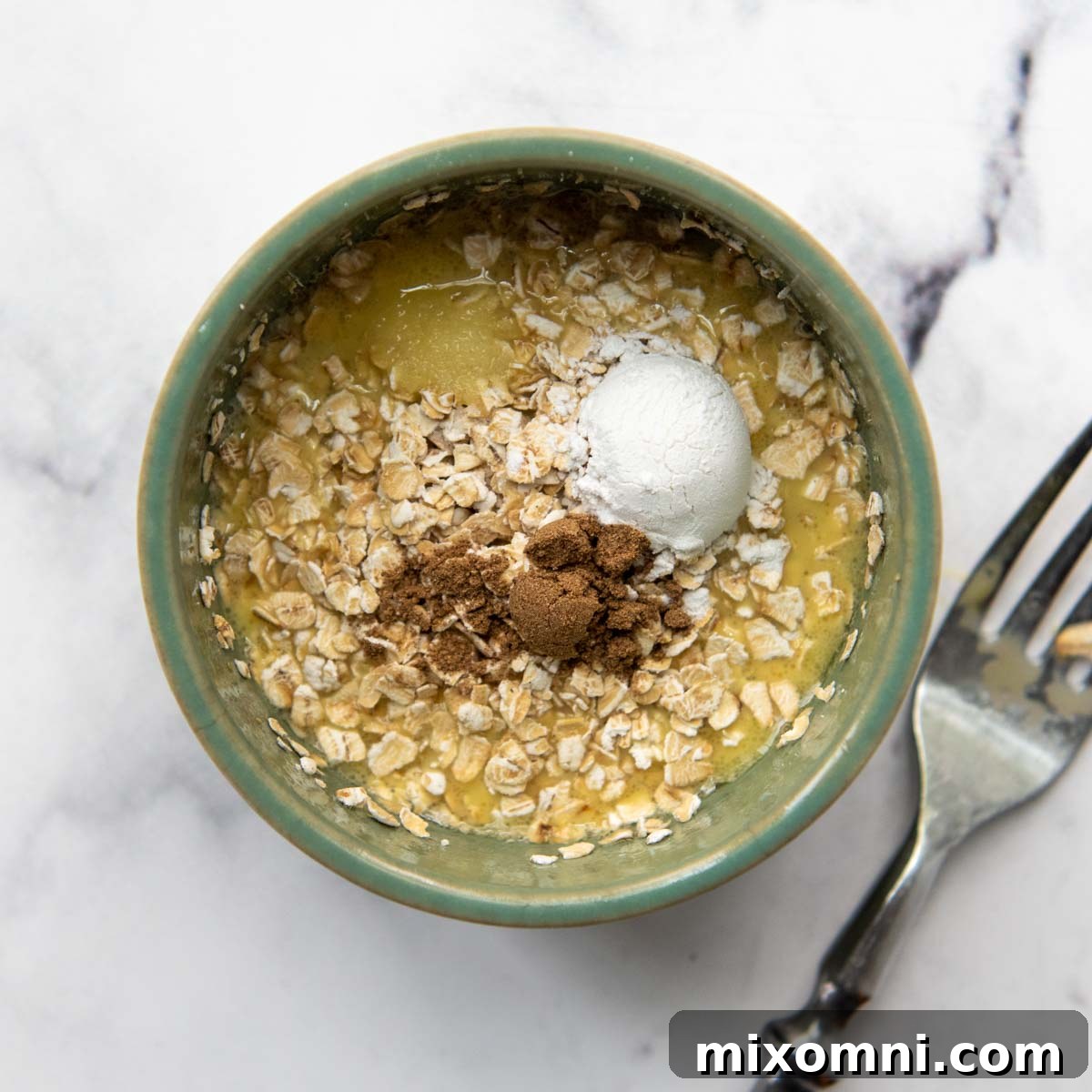
Choosing the Right Oats: Quick, Rolled, or Oat Flour?
The type of oats you use is a key factor in achieving the desired texture for your oatmeal mug cake, especially given its rapid microwave cooking time. For the most consistently fluffy and tender results, quick-cooking oats are highly recommended. Their smaller, finer texture allows them to absorb liquids more efficiently and cook through evenly in just a couple of minutes.
Another fantastic option, offering an even more refined and traditional cake-like crumb, is to use oat flour. If you happen to have oat flour on hand, it can be substituted in an equal amount for the quick oats. The fine consistency of oat flour creates a wonderfully smooth batter and a perfectly soft cake.
But what if you don’t have quick oats or oat flour? No problem! You can easily make your own oat flour in seconds. Simply measure out ½ cup of old-fashioned rolled oats (ensure they are certified gluten-free if needed) and place them in a blender or food processor. Blend for 30-45 seconds, or until the oats are ground into a fine flour-like consistency with no large flakes remaining. This homemade oat flour can then be used in place of the quick-cooking oats, transforming your rustic rolled oats into a delicate and fluffy base for your oat flour mug cake!
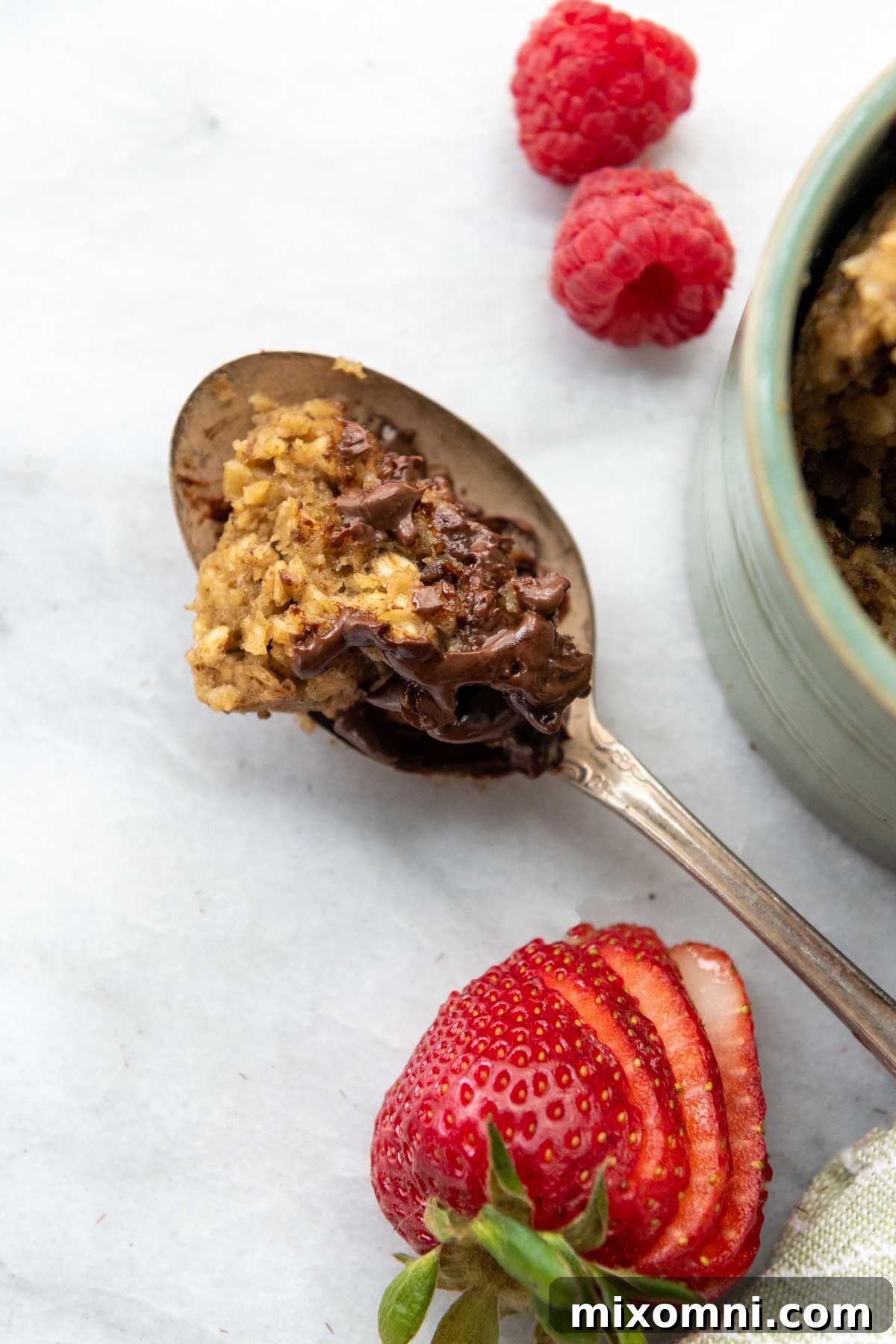
How To Avoid Rubbery Mug Cakes: Your Secret Weapon for Fluffiness
One of the most common pitfalls when making mug cakes, especially those with an egg, is ending up with a rubbery, dense texture rather than the light and airy cake you desire. This often happens because microwave cooking can cause the egg to set too quickly and unevenly, creating an undesirable consistency. But fear not, there’s a simple yet incredibly effective hack to prevent this and guarantee a perfectly fluffy oatmeal mug cake every single time!
The secret lies in the crucial step of stirring the batter halfway through cooking. After the initial 45 seconds in the microwave, remove your mug and use a fork to thoroughly stir the cake batter. This action effectively redistributes the egg throughout the mixture, preventing it from settling at the bottom and ensuring it cooks more evenly with the other ingredients. This allows the oats to absorb the liquids more uniformly, resulting in a consistently moist and tender crumb.
Additionally, it’s vital to avoid overcooking your mug cake. Overcooking is the quickest way to dry out any microwave cake, leading to a tough, rubbery texture as too much moisture evaporates. The cake should still appear slightly moist on top when you remove it from the microwave after the second cooking interval. Don’t worry, it will continue to set and absorb that moisture as it rests for a minute or two before serving, leaving you with a perfectly cooked, fluffy, and never rubbery, oat mug cake.
Elevate Your Experience: Seriously Delish Topping Ideas
While this oatmeal mug cake is absolutely delicious on its own, especially when served warm, there’s no denying the joy that comes with enhancing it with your favorite toppings. Whether you’re aiming for an indulgent dessert or a more wholesome breakfast, the possibilities are endless.
For a truly next-level decadent dessert, consider adding a generous dollop of vanilla ice cream that slowly melts into the warm cake, a cloud of homemade whipped cream, or a luxurious drizzle of hot fudge. These additions transform your simple mug cake into an extraordinary treat perfect for satisfying any serious sweet tooth.
If you’re enjoying this gluten-free oat cake as a breakfast option or a lighter snack, opt for toppings that boost both flavor and nutritional value. Fresh berries like blueberries, raspberries, or sliced strawberries add a burst of freshness and antioxidants. A sprinkle of chopped nuts (almonds, walnuts, pecans) provides a satisfying crunch and healthy fats. Shredded coconut flakes offer a tropical twist, while sliced bananas pair wonderfully with the warm oats. For an extra protein kick and creamy texture, swirl in a spoonful of your favorite peanut butter or almond butter.
The single-serving size of this recipe is fantastic for portion control, but it can easily be shared, especially when adorned with an array of delicious toppings. If you find yourself craving a larger dessert (and who doesn’t sometimes?!), you might also enjoy this 5-minute blender oat flour cake with brown sugar frosting for a super-sized indulgence.
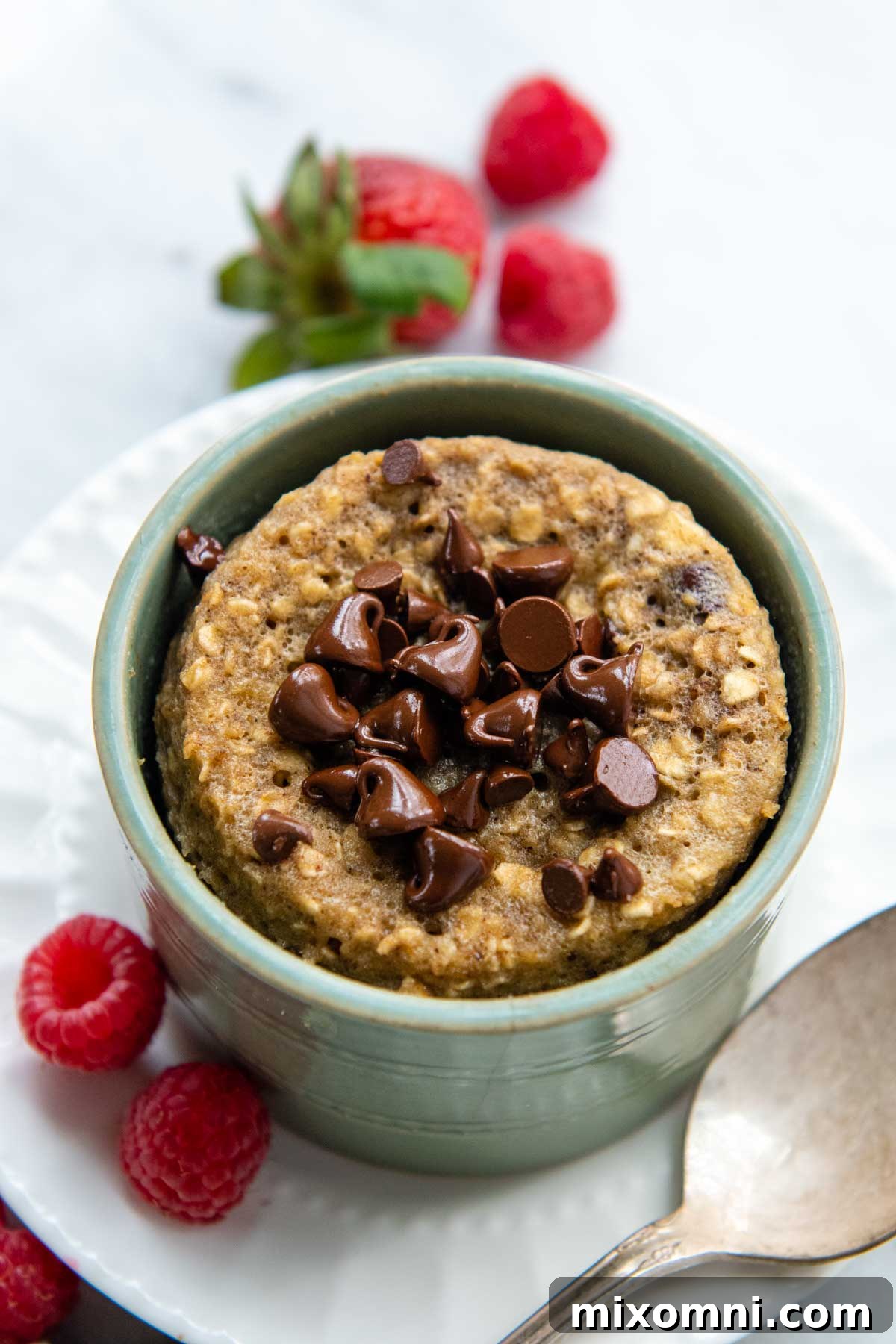
Don’t Forget to Pin This Easy Oat Mug Cake!
Let’s be friends on Pinterest! I’m always sharing great recipes and gluten-free delights!
Did you make this recipe? I love hearing from you! Leave a star rating and comment below the recipe card. Your feedback helps others discover delicious recipes, and I truly appreciate hearing from our community! -Melissa
2 Minute Oatmeal Mug Cake (Fluffy, No Flour)
 Melissa Erdelac
Pin
Rate
Remove Ads
Ingredients
- 1 large egg
- 3 tablespoons milk, or dairy-free alternative
- 2 tablespoons pure maple syrup, preferred, see recipe notes for subs
- 1 tablespoon oil, canola, vegetable, or melted coconut oil
- ½ teaspoon vanilla extract
- ½ cup quick-cooking oats, certified gluten-free for GF cake
- ½ teaspoon baking powder
- ¼ teaspoon ground cinnamon
- ⅛ teaspoon salt
- ½ tablespoon miniature chocolate chips, optional
Instructions
-
Grease a 10-ounce microwave-safe mug or ramekin with nonstick cooking spray. Use a fork to whisk together the egg, milk, maple syrup, oil, and vanilla extract until well combined.1 large egg, 3 tablespoons milk, 2 tablespoons pure maple syrup, 1 tablespoon oil, ½ teaspoon vanilla extract
-
Using the same fork, stir in the quick-cooking oats, baking powder, ground cinnamon, and salt. Do not add chocolate chips at this stage if using.½ cup quick-cooking oats, ½ teaspoon baking powder, ¼ teaspoon ground cinnamon, ⅛ teaspoon salt
-
Pour the batter into the prepared mug. Place in the microwave and cook for 45 seconds at full power. Remove from the microwave and use a fork to vigorously stir the batter until it is uniformly mixed again. This crucial step helps the egg disperse evenly, preventing it from settling and ensuring a fluffy, non-rubbery cake. If you are adding chocolate chips, stir them in now.½ tablespoon miniature chocolate chips
-
Return the mug to the microwave and cook for an additional 45-60 seconds. The cake will likely still have a little moisture on top, which is perfectly fine. It will absorb as the cake rests for 1 minute before serving. To achieve the best texture, avoid overcooking.
Notes
Sweetener Options
Pure maple syrup provides the best results in terms of flavor and moisture. Brown sugar or coconut sugar can also be used, but may slightly dry out the texture. For a less sweet option, you can reduce the sweetener to 1 or 1½ tablespoons. While I haven’t tested it myself, sugar-free substitutes should also work well in this recipe.
Helpful Tips to Remember for Perfect Results
- Ensure your mug or ramekin has at least a 10-ounce capacity and is certified microwave-safe to prevent overflow and ensure even cooking.
- The critical step of stirring the cake halfway through microwaving is key to preventing the egg from settling and guaranteeing a light, fluffy texture. Do not skip this!
- If you wish to double the recipe for two servings, it’s best to prepare and cook each serving in separate mugs. Cooking two mugs simultaneously may result in uneven cooking.
- For a richer, slightly denser cake with an added flavor, the oil can be replaced with an equal amount of creamy peanut butter or your favorite nut butter.
- For any leftovers, allow the cake to cool completely, then wrap it securely. For optimal enjoyment, gently rewarm it in the microwave before eating.