
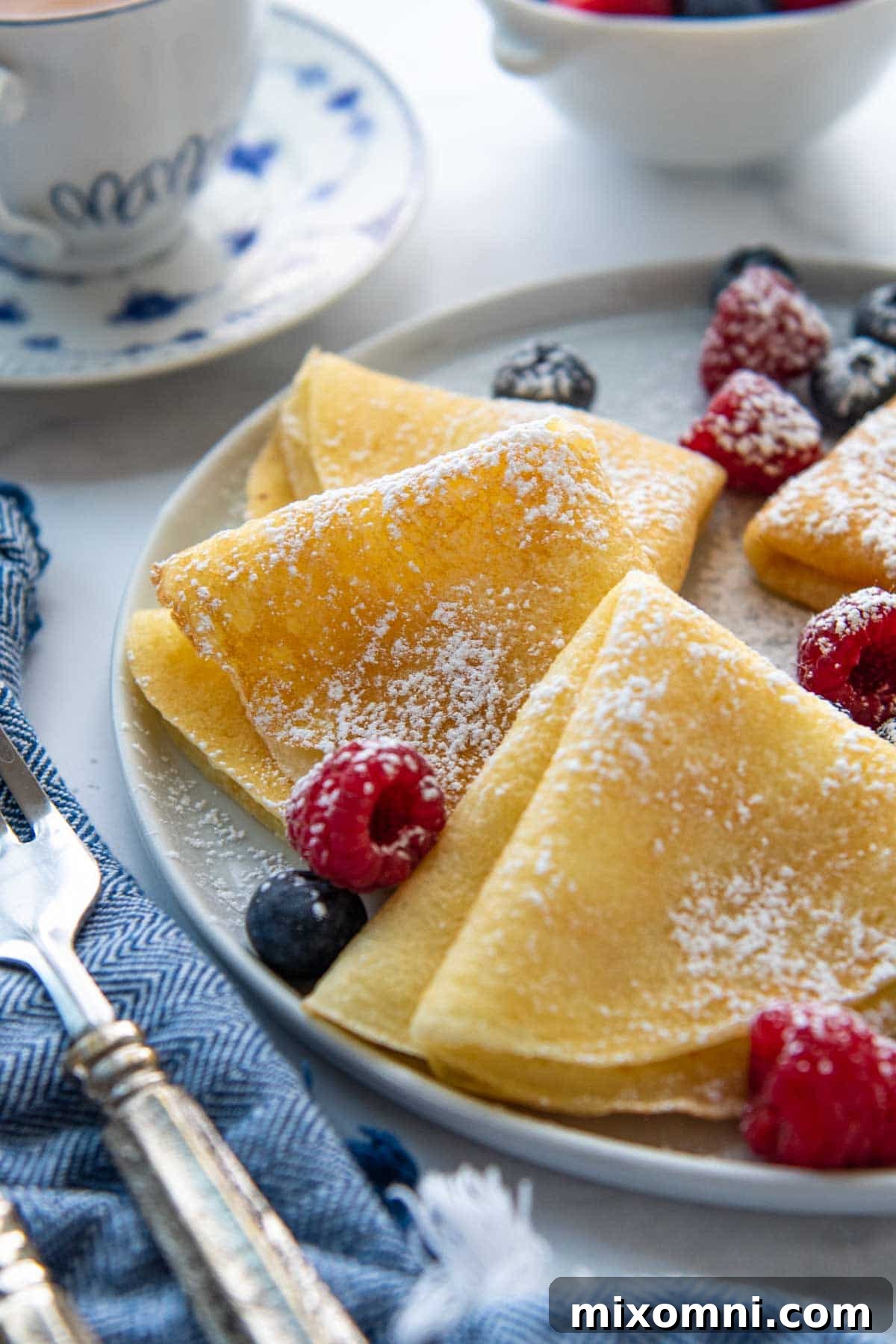
Effortlessly Delicious: The Ultimate Guide to Perfect Gluten-Free Crepes (Sweet & Savory)
Unlock the secret to crafting incredible gluten-free crepes right in your own kitchen! This meticulously developed recipe ensures you can create ultra-thin, delightfully tender crepes with perfectly crispy edges, every single time. Whether you crave a sweet breakfast treat or a savory dinner wrap, these versatile skillet crepes provide the ideal canvas for any topping imaginable. As a dedicated gluten-free baker, I’ve spent countless hours perfecting this method, and it all boils down to two critical adjustments that transform good crepes into truly exceptional ones. Let’s delve into how you can achieve gluten-free crepe perfection, just as satisfying and flavorful as their traditional counterparts.
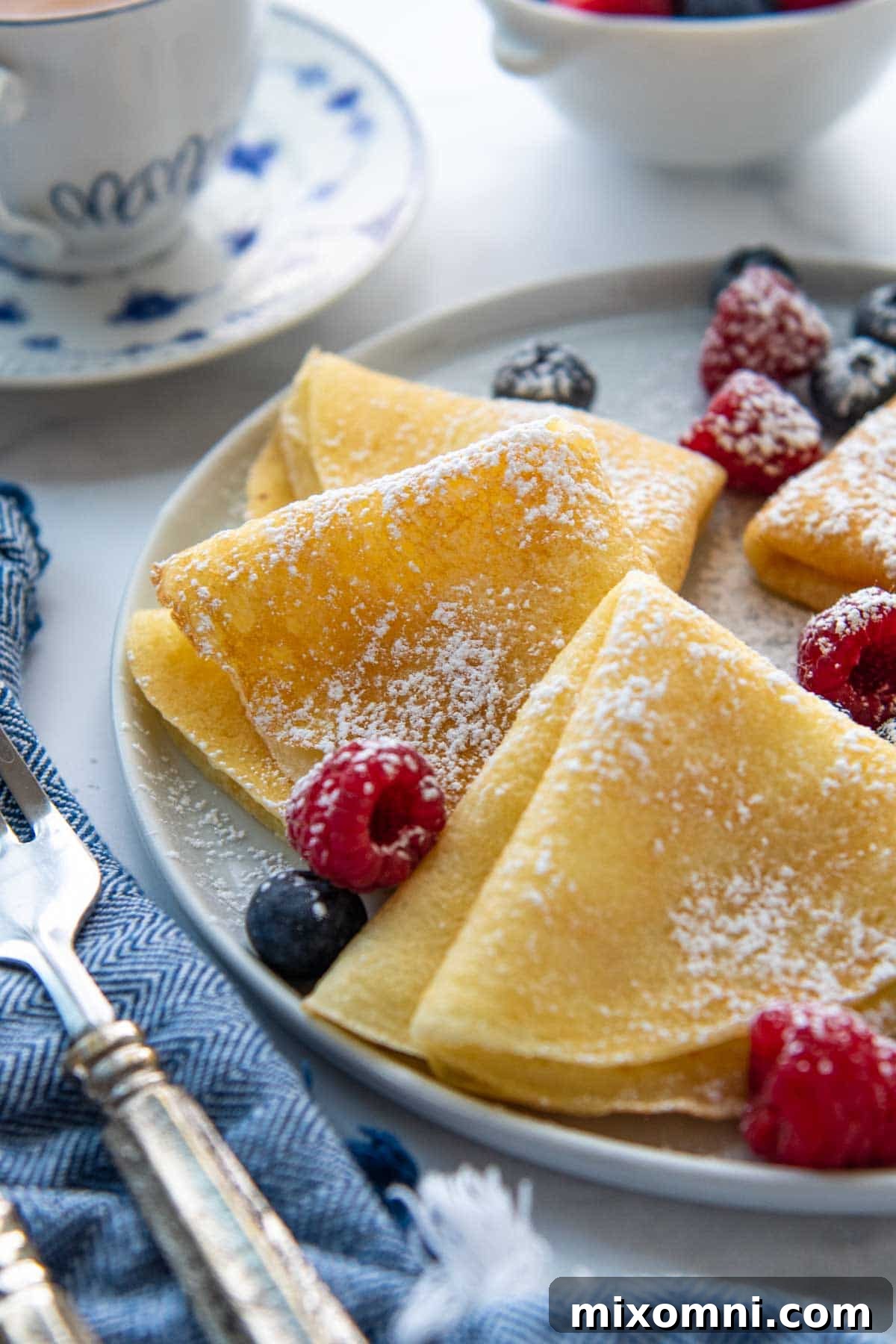
Mastering Gluten-Free Crepes: Why This Recipe Stands Out
Many traditional crepe recipes, particularly those for sweet variations, rely on white wheat flour. While savory French crepes often utilize naturally gluten-free buckwheat flour, adapting sweet crepes for a gluten-free diet isn’t as simple as a direct flour swap. Early attempts at simply replacing wheat flour with a gluten-free blend often result in a disappointing gummy or rubbery texture. This common issue arises because gluten-free starches, unlike wheat gluten, don’t absorb moisture in the same way, leading to a denser, less delicate batter.
Through extensive experimentation, this recipe was adapted from insights inspired by acclaimed cookbooks like America’s Test Kitchen’s How Can It Be Gluten-Free Cookbook, a foundational resource that has also inspired many of our other popular gluten-free breakfast recipes. The key to truly great gluten-free breakfast crepes lies in understanding and compensating for the unique properties of gluten-free flour blends. To replicate the delicate, airy texture and crisp edges of classic crepes, two crucial adjustments are made:
- **Reduced Liquid Content:** Gluten-free flours absorb less moisture than wheat flours, so the overall liquid in the batter needs to be carefully calibrated to prevent a heavy, gummy texture.
- **Extended, Lower Heat Cooking:** Cooking crepes at a slightly lower temperature for a longer duration allows sufficient time for excess moisture to evaporate, resulting in that coveted ultra-thin texture and signature crispy edges without burning.
By implementing these two adjustments, this recipe ensures that your homemade gluten-free crepes will be every bit as delicious and satisfying as any traditional version, suitable for both sweet and savory applications.
Thank you!! Was so worried to attempt making gluten free crepes for a friend. Hosting a party and she is the only one, this recipe was so easy to follow, love the details and they came out great!
—Nancy
Essential Ingredients for Your Gluten-Free Crepes
Crafting these delectable gluten-free crepes requires only a handful of common pantry staples. While the ingredients themselves are simple, understanding their role and potential substitutions is key to achieving consistent results. Here’s a deeper look into each component of your gluten-free crepe batter:
- Gluten-Free Flour Blend: The choice of gluten-free flour is paramount. I highly recommend using a high-quality all-purpose gluten-free flour blend like Cup4Cup gluten-free flour, which this recipe was specifically tested with and designed for. Different gluten-free flour blends contain varying ratios of starches (like tapioca, potato, corn starch) and whole grain flours (like rice, sorghum, millet), which can significantly impact the batter’s consistency and final texture. If you opt for a different blend, you might find the batter slightly too thick or too thin, requiring minor adjustments to the liquid or flour amount. Always use a kitchen scale to measure flour for the most accurate results, as scooping can vary widely.
- Milk: For a richer, more traditional flavor and a beautifully tender crepe, whole milk or 2% milk is ideal. The fat content contributes to both taste and texture. If you’re looking to make dairy-free crepes, rest assured that this recipe is incredibly adaptable. Excellent non-dairy substitutes include almond milk, oat milk, or coconut milk (from a carton, not canned). Ensure your chosen milk is unsweetened if you’re making savory crepes, or adjust the sugar accordingly for sweet ones.
- Butter: Melted butter adds a wonderful depth of flavor and helps create those coveted crispy edges. If you’re using salted butter, be sure to omit the additional salt called for in the recipe to avoid over-salting. For a dairy-free version, plant-based butter sticks (such as Earth Balance vegan butter sticks) or melted coconut oil work beautifully as a 1:1 substitute, providing similar richness and texture.
- Granulated Sugar: This recipe calls for granulated sugar to achieve a subtly sweet crepe, perfect for dessert applications. However, the amount of sugar is highly customizable. You can reduce it, increase it, or omit it entirely if you’re preparing savory crepes. For a natural alternative, you could experiment with a small amount of maple syrup or agave, but be mindful that liquid sweeteners can alter the batter consistency, potentially requiring a slight adjustment to the milk.
- Eggs: Eggs are crucial for providing structure, binding the ingredients, and adding richness to the crepes. They contribute to the batter’s elasticity and help prevent the crepes from tearing during cooking. Large eggs are standard for this recipe.
- Salt: A pinch of salt is a flavor enhancer, balancing the sweetness in dessert crepes and bringing out the savory notes in other variations. If using salted butter, remember to adjust accordingly.
- Vegetable Oil (for greasing pan): A minimal amount of vegetable oil is essential for ensuring your crepes don’t stick and achieve an even golden-brown finish. Any neutral-flavored cooking oil like canola, grapeseed, or even a light olive oil will work.
Let’s Make These Amazing Gluten-Free Crepes Together!
Creating these delicate crepes is a straightforward process, and with these detailed steps, you’ll be flipping like a pro in no time. (Please note: The step-by-step photos below illustrate the process. For the complete recipe with precise ingredient amounts, scroll down to the full recipe card.)
Step 1: Prep and Whisk Ingredients – Quick and Easy!
Begin by combining all your dry ingredients. In a medium-sized bowl, whisk together the gluten-free flour blend, sugar (if using), and salt until thoroughly combined. This ensures an even distribution of leavening and seasoning. In a separate, larger bowl, whisk the eggs with the milk until well blended. This prevents overmixing the flour once wet ingredients are added, which is especially important with gluten-free flours to avoid a tough texture.
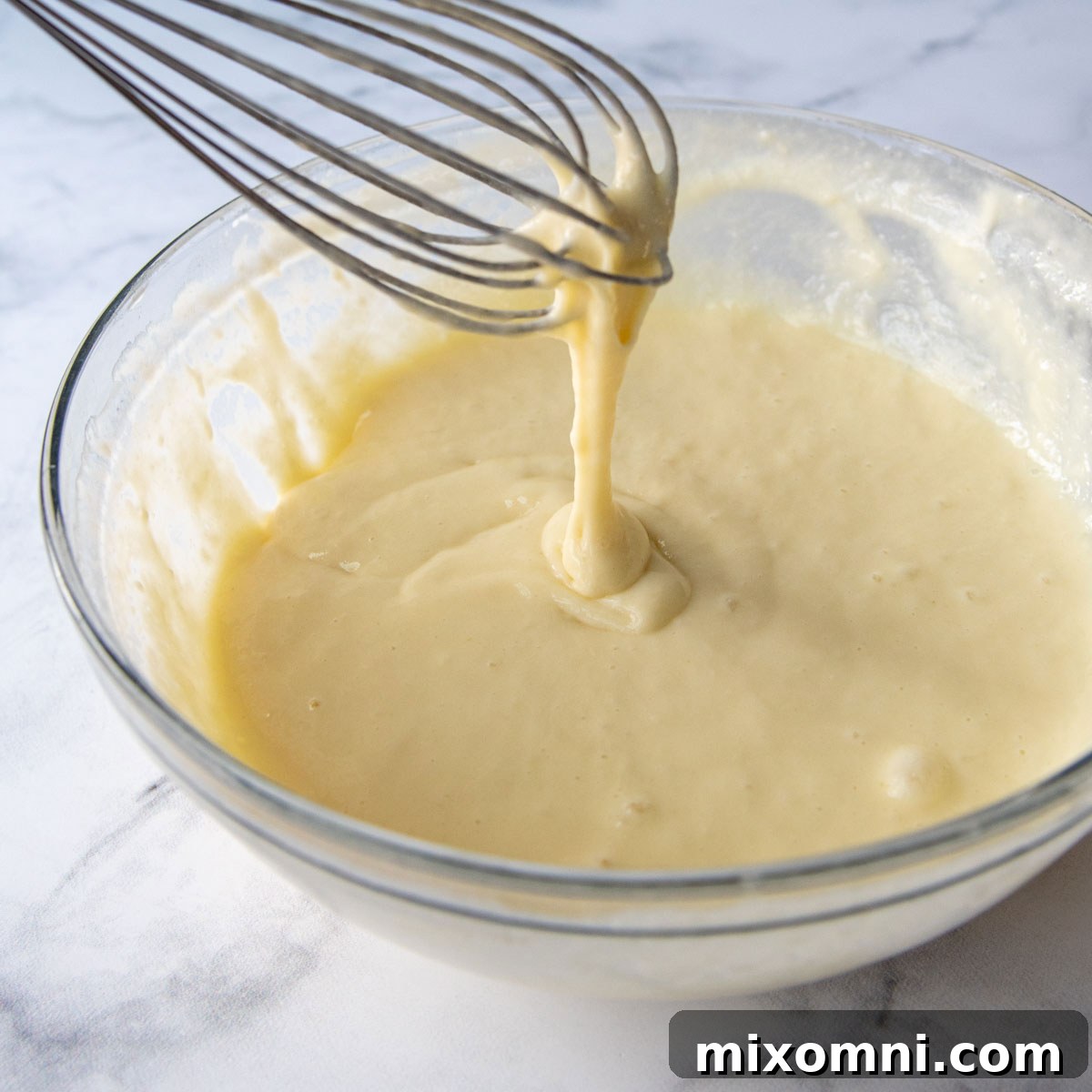
Next, gradually incorporate the wet into the dry. Add about three-fourths of the milk and egg mixture to the bowl containing the flour mixture. Whisk gently but consistently until a smooth batter forms, free of lumps. Then, add the remaining milk/egg mixture along with the melted and cooled butter. Whisk once more until all ingredients are fully incorporated and the batter is silky smooth. This two-stage mixing helps prevent overworking the starches and ensures a consistent, lump-free batter.
Step 2: Rest the Batter, Then Cook to Perfection
This step is crucial for gluten-free crepes: allow the batter to rest. While your crepe pan or nonstick skillet preheats over medium-low heat for about 5 minutes, let the batter sit at room temperature. This resting period (ideally 10-15 minutes, but at least 5) allows the gluten-free starches to fully hydrate and relax, resulting in a more pliable, less brittle crepe. This significantly improves the texture and makes them easier to cook.
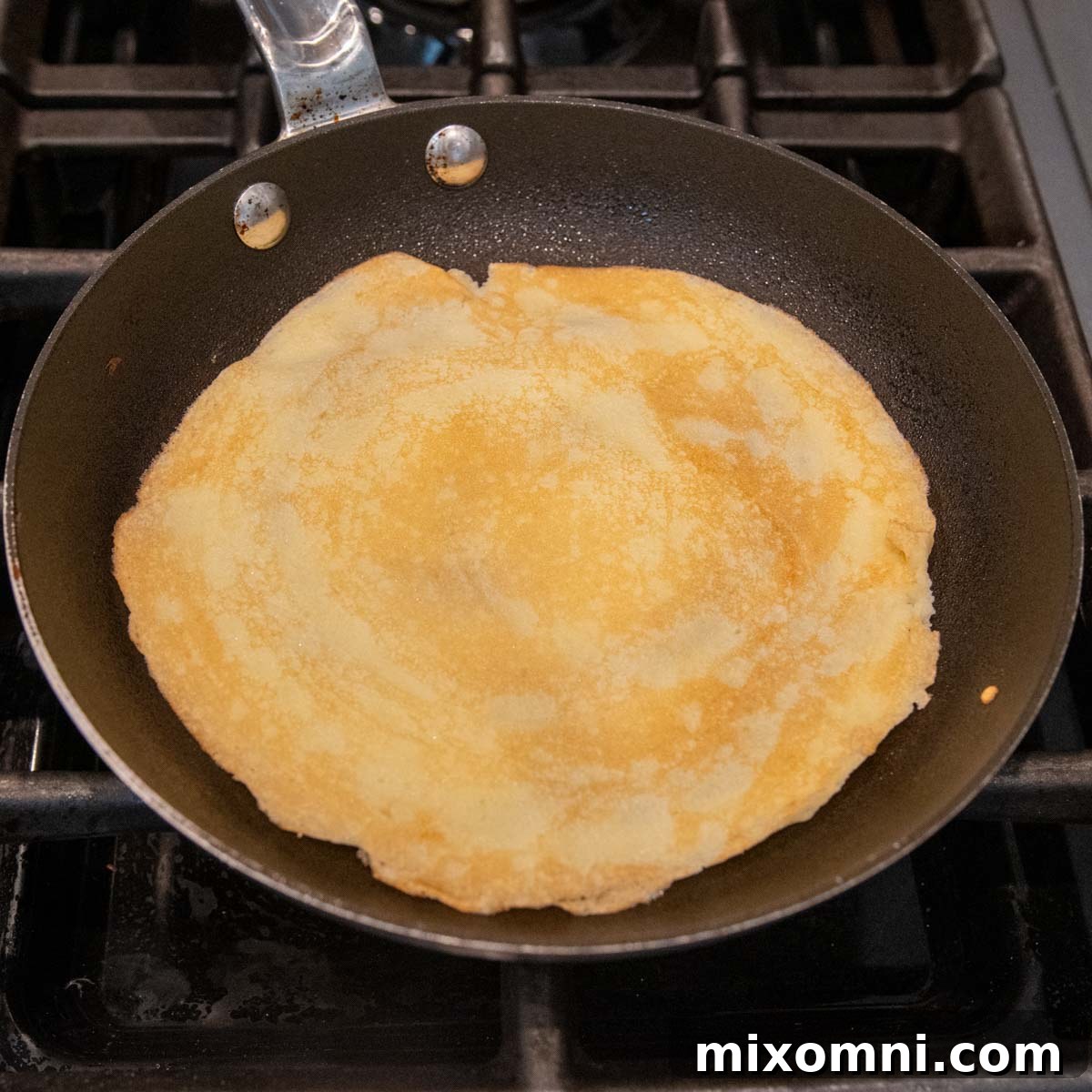
Once the pan is hot, lightly grease it. Drizzle about ½ teaspoon of vegetable oil into the skillet and then wipe away the excess with a paper towel, leaving only a thin, even film. This prevents sticking and promotes even browning. Give the batter a final quick whisk, then pour about ¼ cup of batter into the center of the preheated pan. Immediately tilt and rotate the pan to spread the batter thinly and evenly across the bottom. Cook for approximately 20-30 seconds, or until the top surface appears opaque and dry, and the edges begin to look set and slightly crispy.
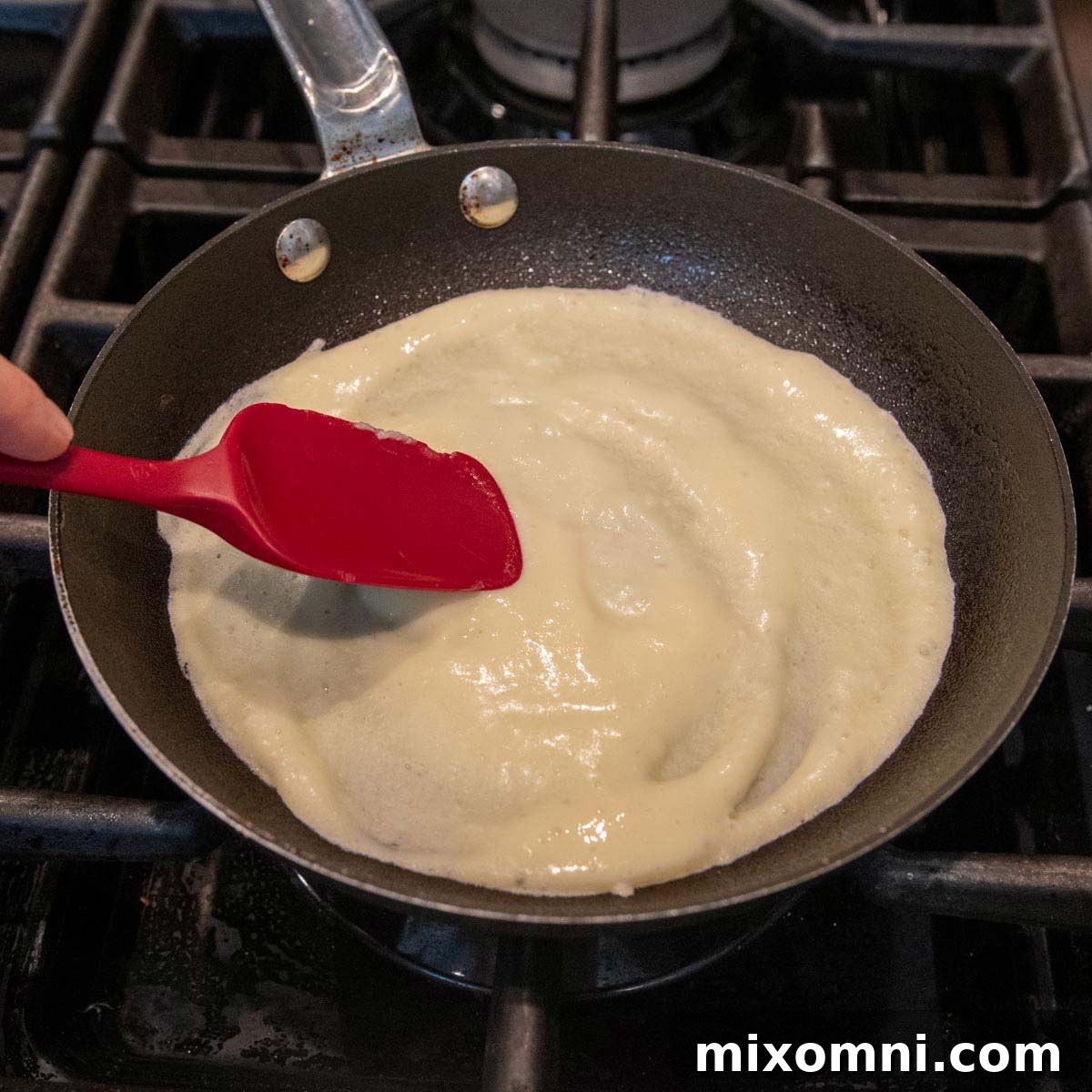
Gently use a rubber spatula to release the edges of the crepe, then carefully slide the spatula underneath and flip the crepe. Cook the second side for another 20 seconds, or until lightly golden brown. Both sides should have a delicate, even color. Slide the cooked crepe onto a wire cooling rack and repeat the greasing and cooking process with the remaining batter. You should yield approximately 8-10 crepes.
Step 3: Stack, Serve, and Enjoy!
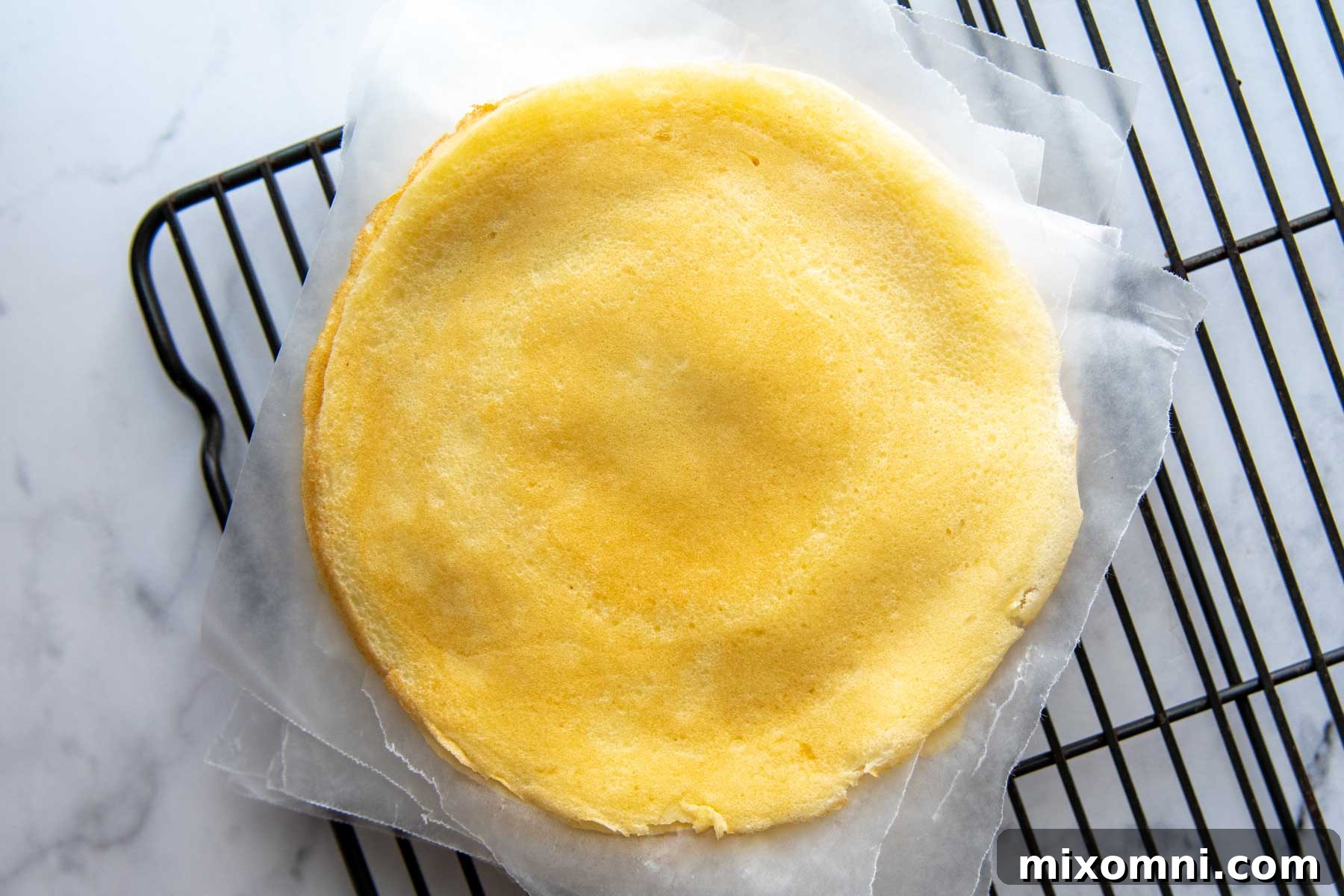
Once cooked, you can immediately serve your warm, tender crepes. For keeping crepes warm while you finish cooking the batch, I recommend stacking them with sheets of wax paper in between. This prevents them from sticking together and retains their warmth without making them soggy. If you plan to store them for later enjoyment, lay them out individually on a wire rack until completely cooled. Once cool, you can stack them with wax paper in between, transfer them to an airtight container, and refrigerate or freeze.
Do I Need A Special Crepe Pan?
While dedicated crepe pans are available and can be beneficial, specialty equipment is absolutely not required to make fantastic homemade crepes. In fact, I often achieve excellent results using a standard nonstick skillet, demonstrating that delicious crepes are well within reach for any home cook.
However, the size of your pan does play a role in the texture of your crepes. An 8-inch skillet will produce slightly thicker crepes, which are still incredibly tasty but will have a slightly firmer, more pancake-like texture. For that signature ultra-thin, delicate crepe, a quality 10-inch nonstick skillet is ideal. This size allows for an even spread of batter and consistent cooking temperature, yielding superior, restaurant-quality crepes.
If you’re curious about other tools that can simplify crepe making, here’s a look at commonly used kitchen equipment:
- 10-inch Crepe Pan: These pans feature shallower sides compared to standard skillets, making it significantly easier to slide a spatula under the crepe and flip it. They are generally quite affordable, and while heavy-duty cast iron versions exist, the price jump often doesn’t correlate to a massive difference in the final product for home use.
- Electric Crepe Griddle: A plug-in electric griddle offers precise temperature control and typically has no sides, making flipping incredibly simple. While convenient, consider their storage footprint before investing, as they can be a bit cumbersome for smaller kitchens.
- Crepe Spreader: This T-shaped wooden tool is used to evenly distribute batter in the pan, creating a perfectly round and thin crepe. While professional crepe makers often use them, I don’t find them strictly necessary for homemade crepes, as tilting the pan works just as well. However, they can be a handy gadget if you plan on making large batches frequently.
Don’t Forget to Pin This Recipe!
Join our community on Pinterest! We’re always sharing fantastic recipes and culinary inspiration!
Made these crepes? I love hearing from you! Share your experience by leaving a star rating and comment below. Your feedback not only helps others in our community discover great recipes but also inspires me. You’ll always hear back from me! -Melissa

4.54 stars (15 ratings)
Quick Gluten-Free Crepes (Thin with Crisp Edges)

Melissa Erdelac
8-10 crepes (4 servings)
10 mins
15 mins
25 mins
Pin
Rate
Ingredients
- 1 ¼ cups all purpose gluten-free flour, (Cup4Cup gluten-free flour recommended)
- 3 tablespoons granulated sugar
- ¼ teaspoon salt
- 1 ½ cups whole or 2% milk, (see recipe notes for dairy-free recipe)
- 2 large eggs
- 2 tablespoons unsalted butter, melted and cooled
- vegetable oil, for greasing pan
Equipment
-
10-inch Nonstick Skillet
-
Crepe Pan (Optional)
-
Electric Crepe Griddle (Optional)
Instructions
-
In a medium bowl, whisk together the gluten-free flour, sugar, and salt. In a separate bowl, whisk together the eggs with the milk.1 ¼ cups all purpose gluten-free flour,
3 tablespoons granulated sugar,
¼ teaspoon salt,
1 ½ cups whole or 2% milk,
2 large eggs,
2 tablespoons unsalted butter -
Add three-fourths of the milk/egg mixture to the flour and whisk until smooth. Then, add the remaining wet ingredients and melted butter, whisking again until well combined into a smooth batter.
-
Let the batter rest for 5-10 minutes while your pan preheats. Heat a 10-inch nonstick skillet or crepe pan over medium-low heat for 5 minutes. This rest allows gluten-free starches to hydrate, improving crepe texture.
-
Drizzle about ½ teaspoon of vegetable oil in the skillet and wipe with a paper towel, leaving a thin film. Whisk the batter again, then pour ¼ cup into the pan. Immediately tilt and rotate the pan to evenly cover the bottom with batter. Cook, undisturbed, until the top surface is opaque and dry (about 20-30 seconds).
-
Gently release the edges with a rubber spatula and flip to cook the other side until both sides are lightly browned (about 20 seconds longer). Slide the cooked crepe onto a wire cooling rack and repeat the oiling/cooking process with the remaining batter. This recipe yields 8-10 crepes.
-
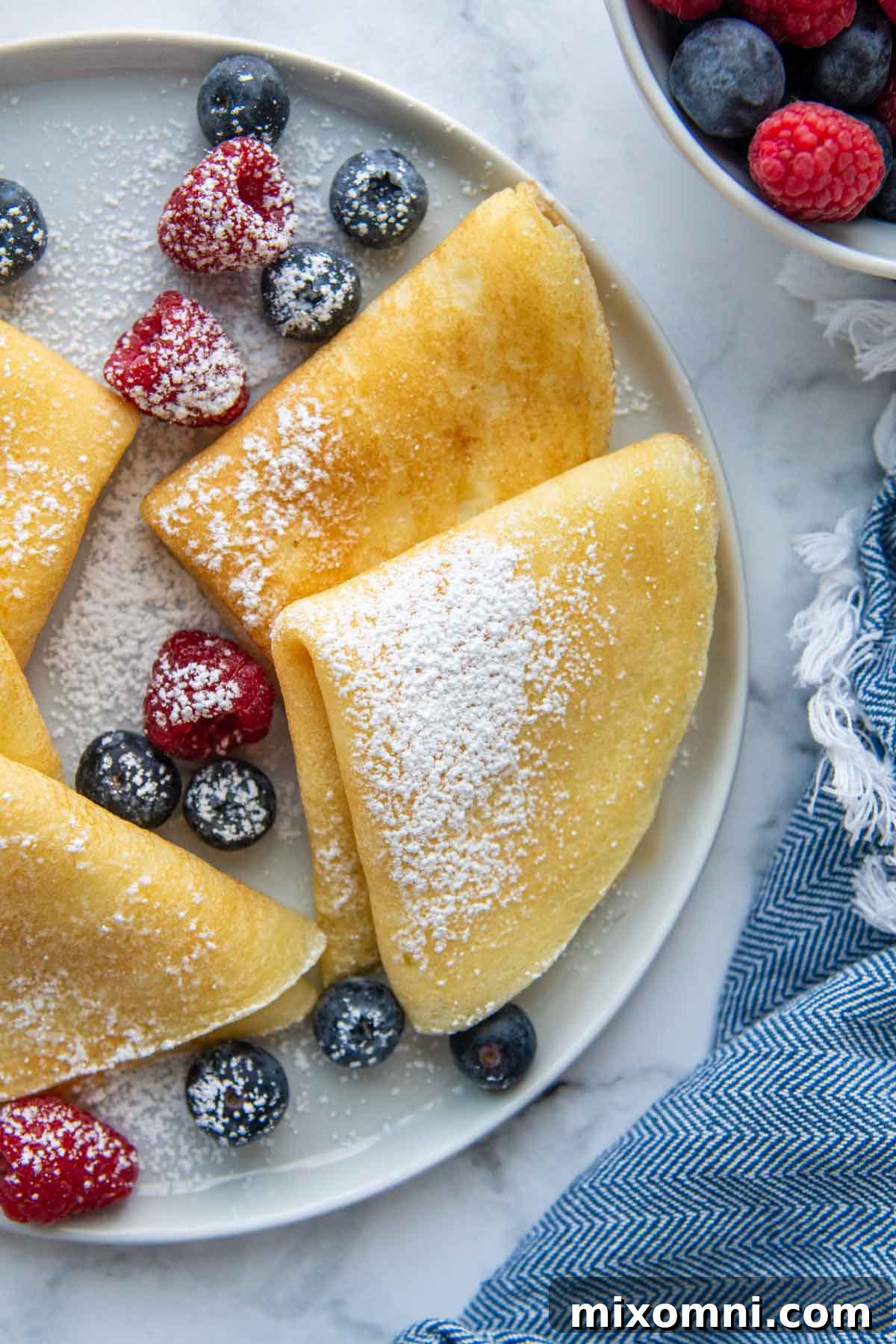
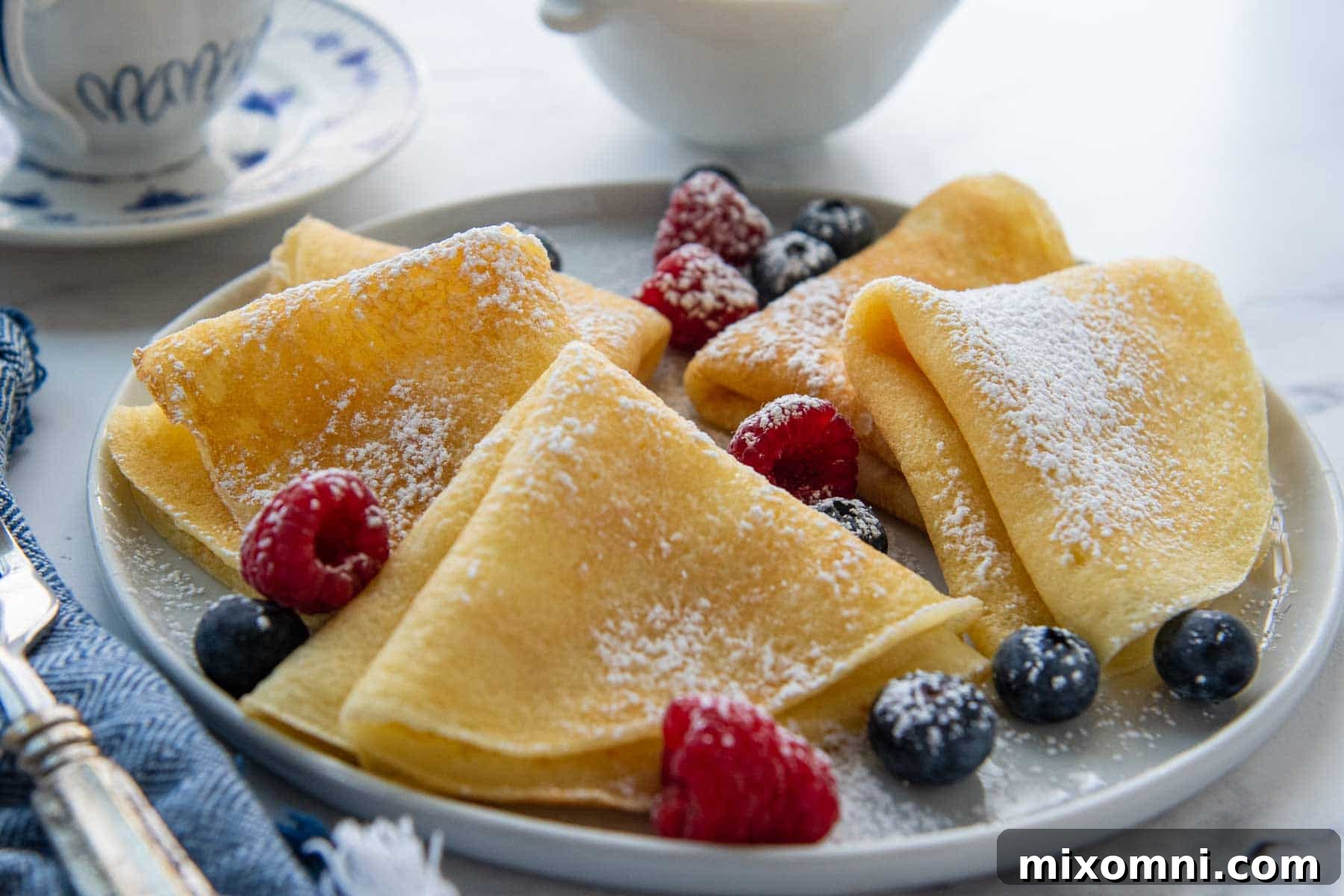
To serve, place the crepe flat on a plate. Fill with your desired sweet or savory toppings and roll or fold into a triangle.
Notes
Pro Tips To Remember
- **Batter Rest Time:** Always let the batter sit while the pan preheats, at least 5-10 minutes. This crucial step allows the gluten-free starches to fully relax and hydrate, leading to a more pliable and less fragile crepe.
- **Temperature Test:** Before cooking your first full crepe, test the pan’s temperature by making a tiny “mini-crepe.” The bottom should turn golden in about 20-30 seconds if the pan is heated properly. Adjust heat as needed.
- **Grease Consistently:** Between each crepe, lightly grease the pan with a little vegetable oil and wipe away any excess with a dry paper towel. This ensures a thin, even film for consistent non-stick performance and browning.
- **Keeping Warm:** To keep crepes warm while cooking the entire batch, stack them with sheets of wax paper in between layers on a plate. This prevents them from sticking and keeps them from getting soggy.
Dairy-Free Modifications
To create dairy-free gluten-free crepes, simply substitute your favorite unsweetened dairy-free milk alternative, such as almond milk, oat milk, or coconut milk (from a carton, not canned). For the butter, use a plant-based vegan butter stick or melted coconut oil in equal amounts.
Storing, Freezing, and Reheating
Storing: Once your crepes have cooled completely, they can be stored in an airtight container in the refrigerator for up to 3 days. For easy separation, place square sheets of wax paper between each crepe before stacking.
Freezing: For longer storage, cool crepes completely, then stack them with wax paper sheets in between. Transfer the stack to a ziplock freezer bag and freeze for up to 3 months. Thaw frozen crepes overnight in the refrigerator before reheating.
Reheating: To reheat individual crepes, remove the wax paper and warm in the microwave for 15-20 seconds. For reheating a batch simultaneously, you can use a microwave tortilla pouch, which also doubles as a warmer for serving.
Recipe adapted from America’s Test Kitchen
Calories: 297kcal,
Carbohydrates: 41g,
Protein: 10g,
Fat: 12g,
Saturated Fat: 6g,
Polyunsaturated Fat: 1g,
Monounsaturated Fat: 3g,
Trans Fat: 1g,
Cholesterol: 106mg,
Sodium: 266mg,
Potassium: 153mg,
Fiber: 4g,
Sugar: 15g,
Vitamin A: 442IU,
Calcium: 143mg,
Iron: 2mg
Did you make this recipe?
Please leave a star rating and review below. It helps others when searching for recipes and I LOVE feedback!