
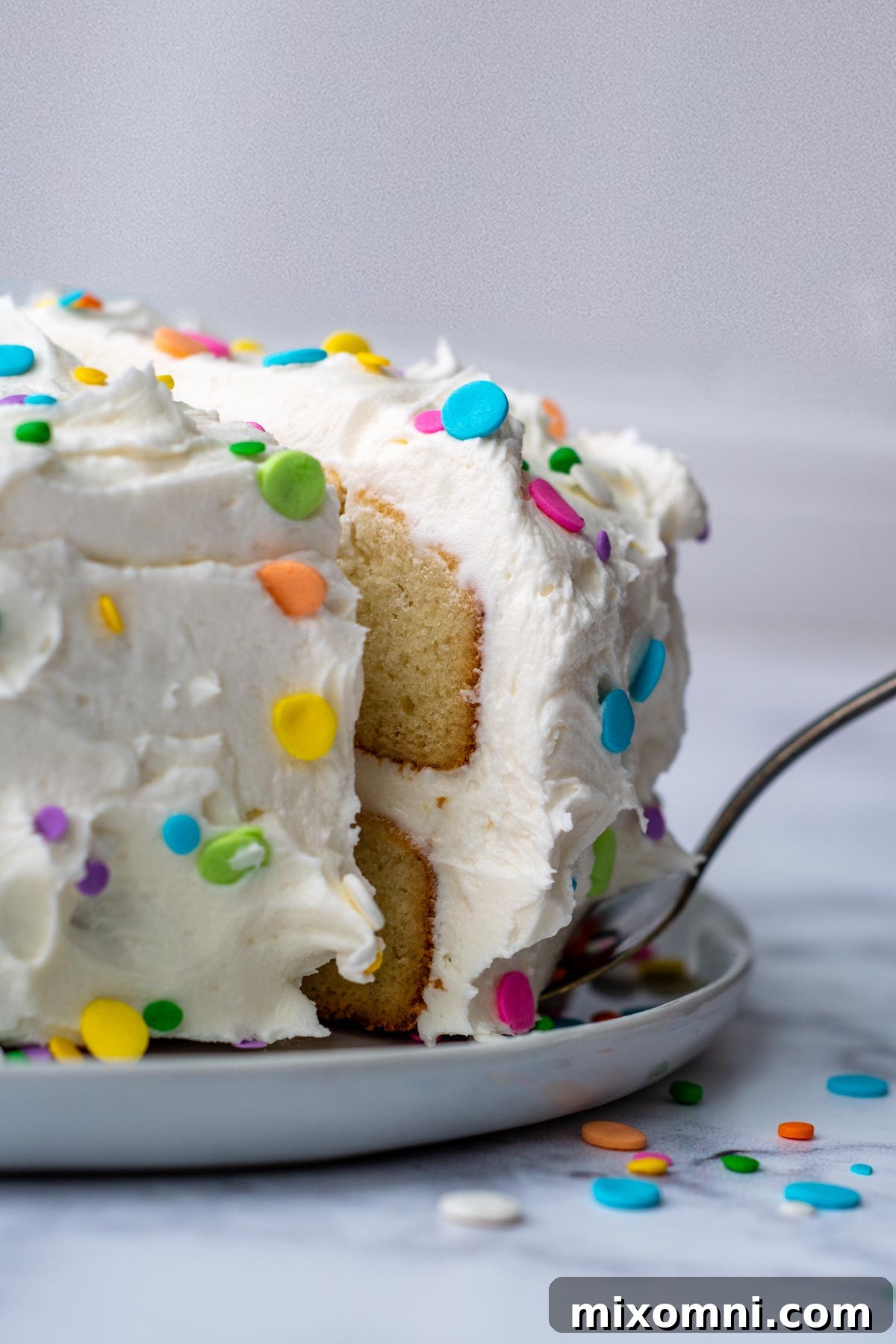
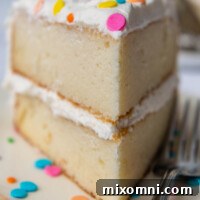
Welcome to the ultimate guide for creating a truly sensational gluten-free white cake. Forget everything you thought you knew about gluten-free baking – this isn’t just another dry, crumbly imitation. This recipe delivers a cake that is exceptionally fluffy, wonderfully moist, and bursting with classic vanilla flavor, making it the perfect centerpiece for any birthday celebration or special occasion. If your quest for a perfect homemade gluten-free white cake has felt like an endless journey of disappointment, prepare to be amazed. Hundreds of gluten-free bakers have found swoon-worthy success with this recipe, transforming their baking experiences, and you’re next!
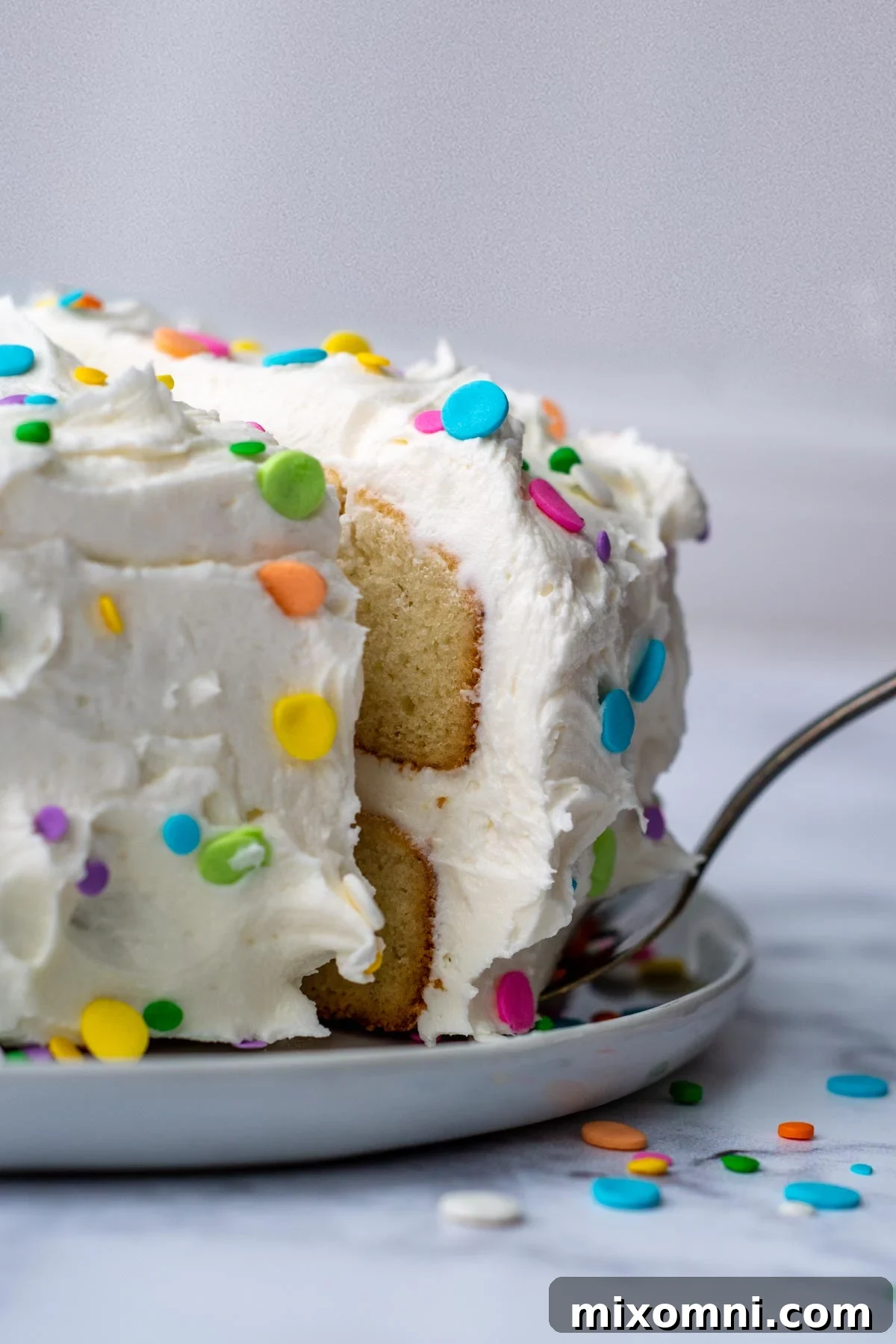
Discovering the Secret to Fluffy Gluten-Free Cake
My journey into gluten-free baking has been a long and winding one, marked by numerous experiments, both triumphant successes and disheartening failures. Those who bake gluten-free will undoubtedly understand the pain of a seemingly promising recipe turning into a dense, gritty, or dry disaster. Fortunately, over the years, I’ve honed my skills and perfected a collection of reliable gluten-free staples. Imagine a rich, fudgy, and incredibly moist gluten-free chocolate cake, or a wonderfully soft gluten-free bread that defies all expectations by *not* crumbling. And don’t even get me started on my crisp GF sugar cookies, which are surprisingly easy to roll out and decorate.
However, one particular challenge persistently eluded me: a truly soft and fluffy gluten-free white cake. Many gluten-free recipes simply attempt to adapt traditional wheat-based recipes by swapping in a generic all-purpose gluten-free flour blend. While this might yield something that vaguely resembles a homemade layer cake, it often falls short of the desired texture and taste. I, too, found myself throwing many “pity parties” after trying countless from-scratch vanilla cake recipes that ended up being dry, overly dense, or unpleasantly gritty. But I’m here to tell you, there *is* a better way! The fantastic news is that these completely achievable gluten-free cake tips and tricks don’t require advanced baking expertise. I wouldn’t lead you astray.
My breakthrough came from applying key lessons learned during the development of my gluten-free cookbook. These insights included understanding the crucial role of a high-quality gluten-free flour blend, recognizing the benefits of a slightly longer mixing time, and, most importantly, mastering the precise ratio of wet to dry ingredients. This last point is precisely why simply substituting a gluten-free all-purpose flour into a “regular” recipe will only take you so far – gluten-free flours behave fundamentally differently from wheat flours.
I initially started with a well-tested foundation: America’s Test Kitchen’s lemon layer cake recipe. I adapted it by omitting the lemon flavor to create a vanilla base. From there, I continued to refine it, making further adjustments to achieve an incredibly light and fluffy homemade white cake specifically tailored for gluten-free flour. I quickly discovered that the original baking time was too long for gluten-free batter; two layers in 9-inch round cake pans needed only 23-25 minutes. But then another issue arose: while the cake was airy and spongy, it had a disheartening tendency to sink upon cooling.
This led to extensive adjustments in the wet and dry ingredient ratios, a process that involved numerous test runs and meticulous tweaking of baking powder and baking soda quantities. Let’s just say, there were some truly “dark times” filled with more than a little “GF fury.” But we’ve arrived at a happy ending! You will never again have to rely on a mediocre gluten-free cake mix for an easy, quick layer or sheet cake. This tried-and-true white cake recipe comes together in only five minutes, setting you up for that special birthday cake triumph.
Hands down the best gluten-free cake recipe I’ve tried. Sticking to this one because it’s so good! I’m new to GF baking so the “no fail” scared me – easy to say but not always true. Been there before! But, this is exactly as advertised. I’ll make this one every time. Better than so-called regular cake by a mile!
—Ann
My husband and grown son and daughter have Celiac. I do not and still eat gluten away from home, so have not forgotten how delicious a cake made with wheat flour is compared to other gluten free cake recipes. This was absolutely moist and delicious, and I could not tell it is gluten free. Thank you for the perfect recipe!
—Jeanne
Watch the Gluten-Free White Cake Recipe Video
A quick video guide to making your perfect fluffy and moist gluten-free white cake. Get all the visual cues you need for success!
Let’s Make This Fluffy Gluten-Free White Cake *Together*!
(Below you’ll find step-by-step photos and detailed instructions. For the complete recipe, including exact ingredient amounts and nutritional information, please scroll down to the full recipe card.)
One of the unique aspects of working with gluten-free flours is their different absorption properties compared to traditional wheat flour. Gluten-free flours don’t absorb fats as readily. This is why, instead of creaming softened butter and sugar – a common technique in traditional baking – this homemade gluten-free cake recipe ingeniously uses *melted* butter. By melting the butter, it blends more effectively with the starches in the gluten-free flour. This method ensures that the fat and moisture thoroughly coat the starch particles, resulting in a cake that remains beautifully moist and never dry or crumbly. It’s a small change with a huge impact on the final texture!
After observing feedback about cakes deflating, I rigorously retested the recipe, focusing on reducing the overall liquid content. This proved to be the pivotal adjustment! This key discovery, coupled with my “eureka” moment of letting the cake batter rest for 15 minutes (a trick I perfected when developing my bona fide fluffy GF banana cake recipe), solidified the “no-fail” magic of this cake. The resting time allows the gluten-free flours to properly hydrate, preventing dense layers and creating an incredibly tender crumb. These two crucial steps are your secret weapons for gluten-free cake perfection!
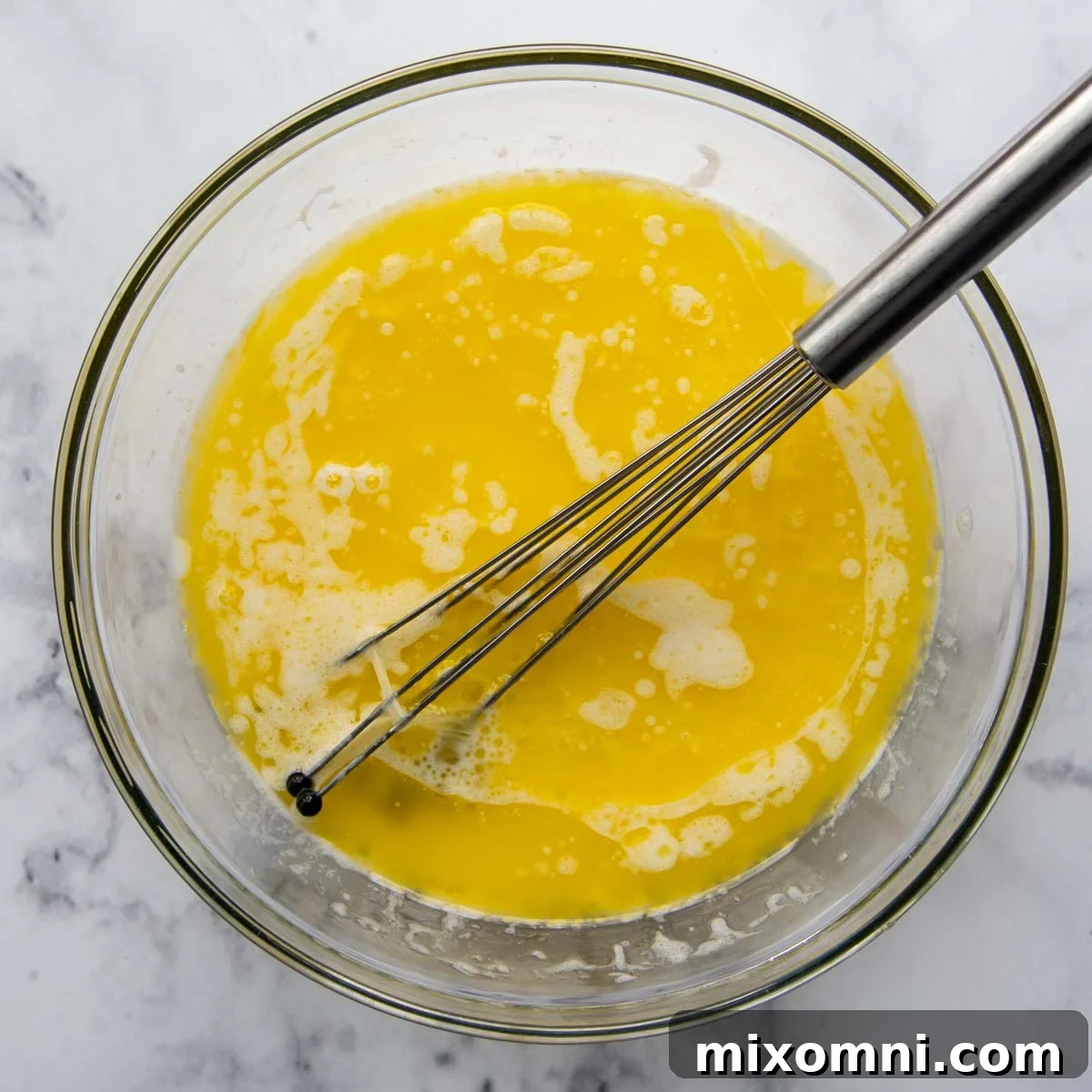
Step 1: Whisk Together Wet Ingredients
For optimal incorporation with the dry ingredients, ensure your egg whites and milk are at room temperature. Allow them to sit out for at least 45 minutes before you begin. Once your butter has been melted and cooled sufficiently, whisk it together with the room-temperature milk, egg whites, and pure vanilla extract until thoroughly combined. This careful blending of wet ingredients is the first step towards a perfectly balanced batter.
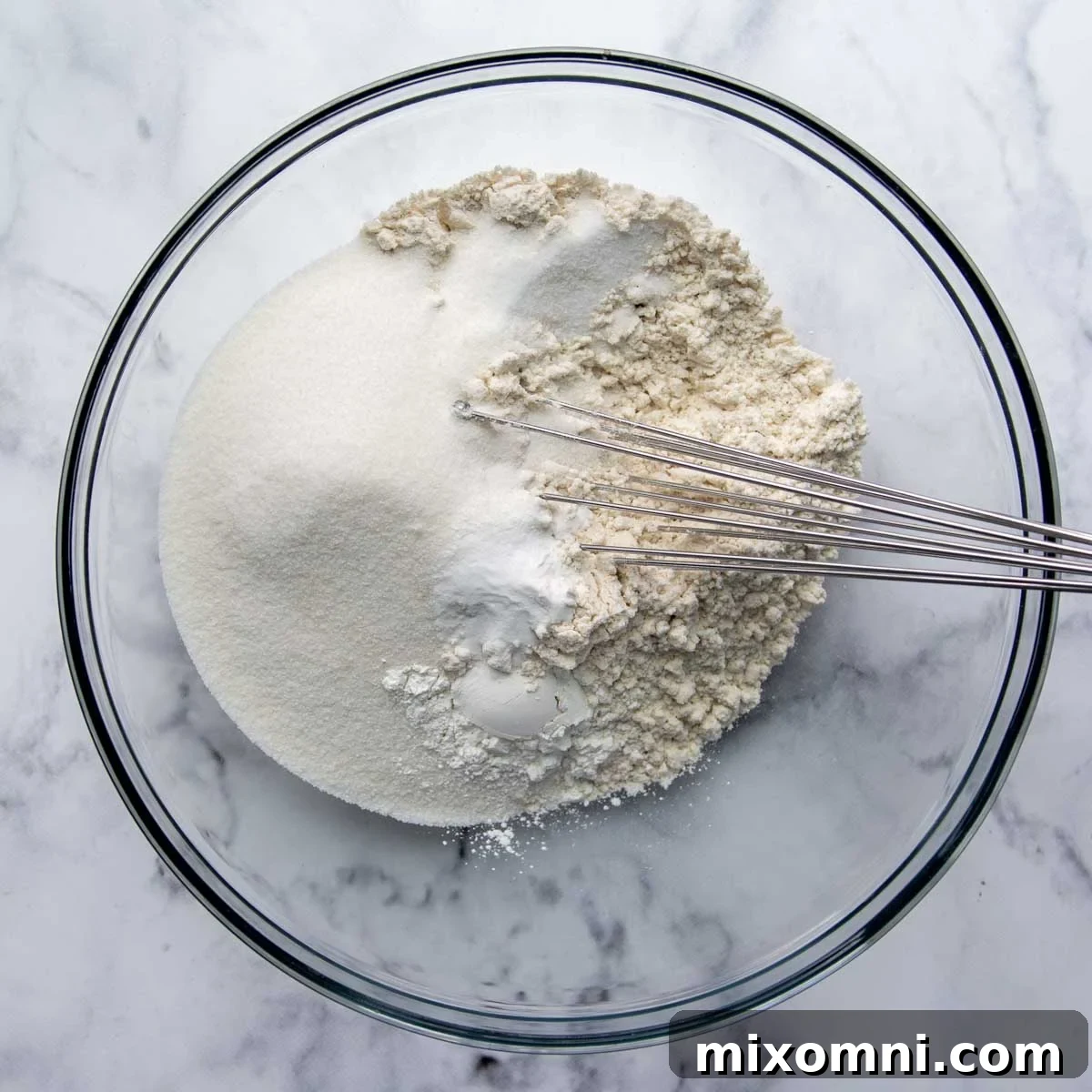
Step 2: Combine Dry Ingredients
In a separate, larger bowl – or, ideally, in the bowl of your stand mixer fitted with a paddle attachment – combine all your dry ingredients. Whisk together the gluten-free flour blend, granulated sugar, baking powder, baking soda, and salt. Ensure they are thoroughly mixed to evenly distribute the leavening agents and flavorings. This step is incredibly straightforward, highlighting just how easy this recipe truly is to prepare!
Step 3: Mix, Rest, and Bake for Perfection
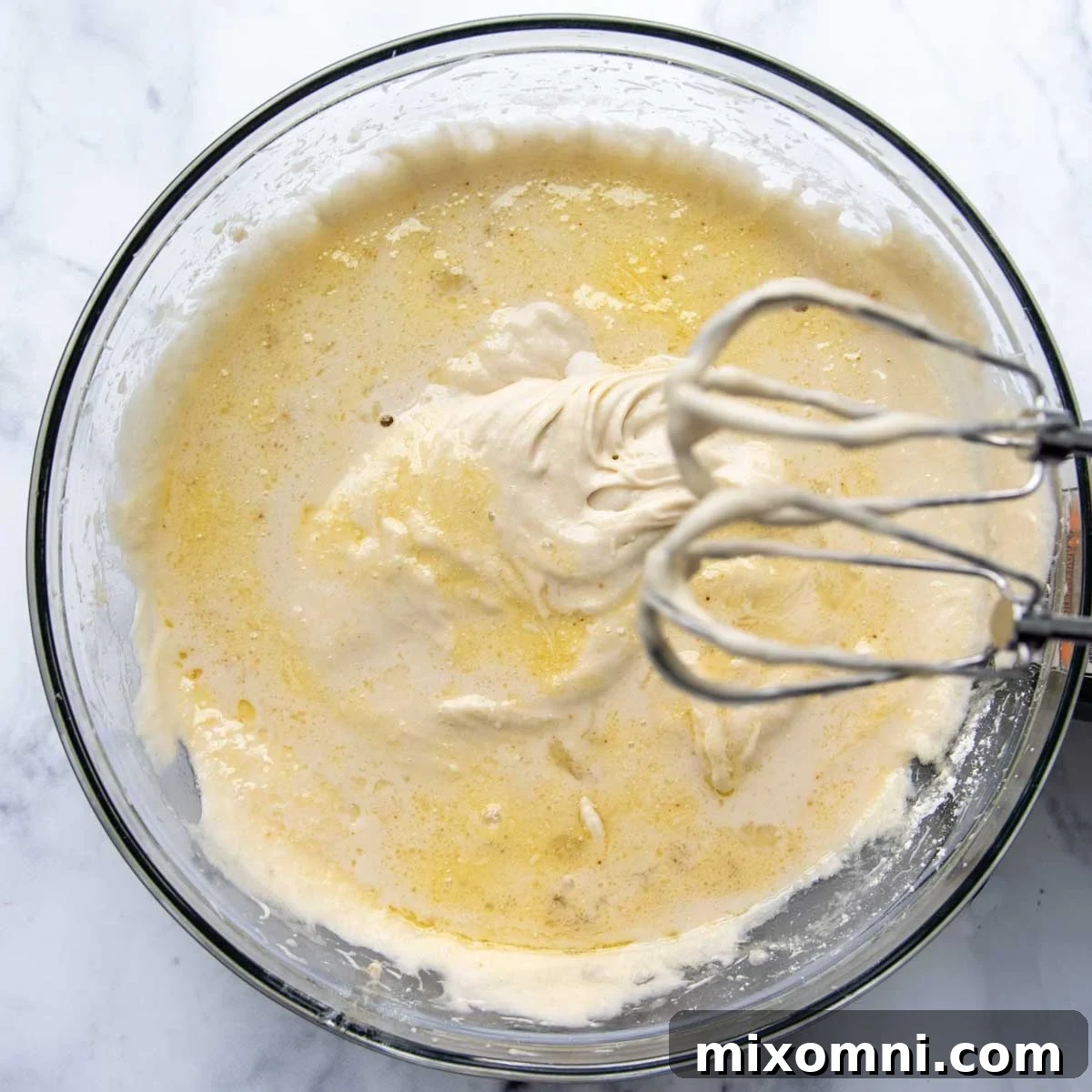
Now for the magical part: pour almost all of the wet ingredients into the dry mixture, reserving about 1/2 cup. Begin beating on low speed until the ingredients are just moistened, then increase the speed to medium and beat for 2 minutes. Watch as the batter transforms, becoming noticeably pale and fluffy. Next, incorporate the remaining liquid and beat for an additional minute. This two-stage mixing process is key to developing the cake’s light texture. Once mixed, spread the batter evenly into your greased baking pans and, crucially, let it rest for 15 minutes while your oven preheats. This resting period is vital for allowing the gluten-free flours to fully absorb the liquids, ensuring wonderfully fluffy cake layers every time, effectively bidding farewell to dense cakes forever! Bake for approximately 23 minutes, cool, and then prepare to frost.
If you’re making this for a festive birthday celebration, why not stir in a little extra fun? For guidance on quantities and recommendations for certified gluten-free sprinkles, be sure to check out my delightful homemade gluten-free funfetti cake recipe!
Choosing the Best Gluten-Free Flour Blends for Baking
The world of gluten-free flour blends has evolved dramatically over the last decade and a half. In the past, gluten-free baking was often a complex undertaking, requiring bakers to purchase, store, and meticulously measure a variety of individual gluten-free flours and starches to create their own custom blends. This process was time-consuming and often yielded inconsistent results.
Thankfully, today’s market offers several commercial gluten-free flour brands that far outperform any homemade mixes I’ve ever experimented with. These commercially prepared blends are expertly formulated to mimic the properties of wheat flour, making gluten-free baking significantly more accessible and enjoyable. Below are the brands I consistently recommend for their reliable performance and excellent taste, ensuring your gluten-free white cake turns out perfectly every time.
- Cup4Cup: This is my top recommendation and the brand I primarily use. What sets Cup4Cup apart is its ability to create baked goods where any gluten-free taste or textural difference is virtually undetectable. While it is often the most expensive option on the market, I firmly believe the unparalleled results and the joy of enjoying baked treats that are just as good as their gluten-containing counterparts make it entirely worth the investment.
- King Arthur Measure-for-Measure: This blend is my strong runner-up and an excellent choice, particularly if you need a dairy-free gluten-free cake recipe. It’s generally more affordable than Cup4Cup. While it performs admirably, I do occasionally detect a very slight gritty flavor in some baked goods when using this blend, though it’s often negligible in cakes.
- Bob’s Red Mill 1-to-1 Baking Flour: Many home bakers favor Bob’s Red Mill due to its wide availability in most grocery stores and its accessible price point. However, in side-by-side comparisons with other leading brands, I’ve sometimes noticed an off-putting aftertaste in some applications. If you do choose to use Bob’s Red Mill, I specifically recommend it only for cakes. I have found that it does not consistently deliver good results when used in recipes for breads, biscuits, or cookies, where texture and flavor nuances are more pronounced.
Why Did My Gluten-Free Cake Sink? Common Troubleshooting Tips
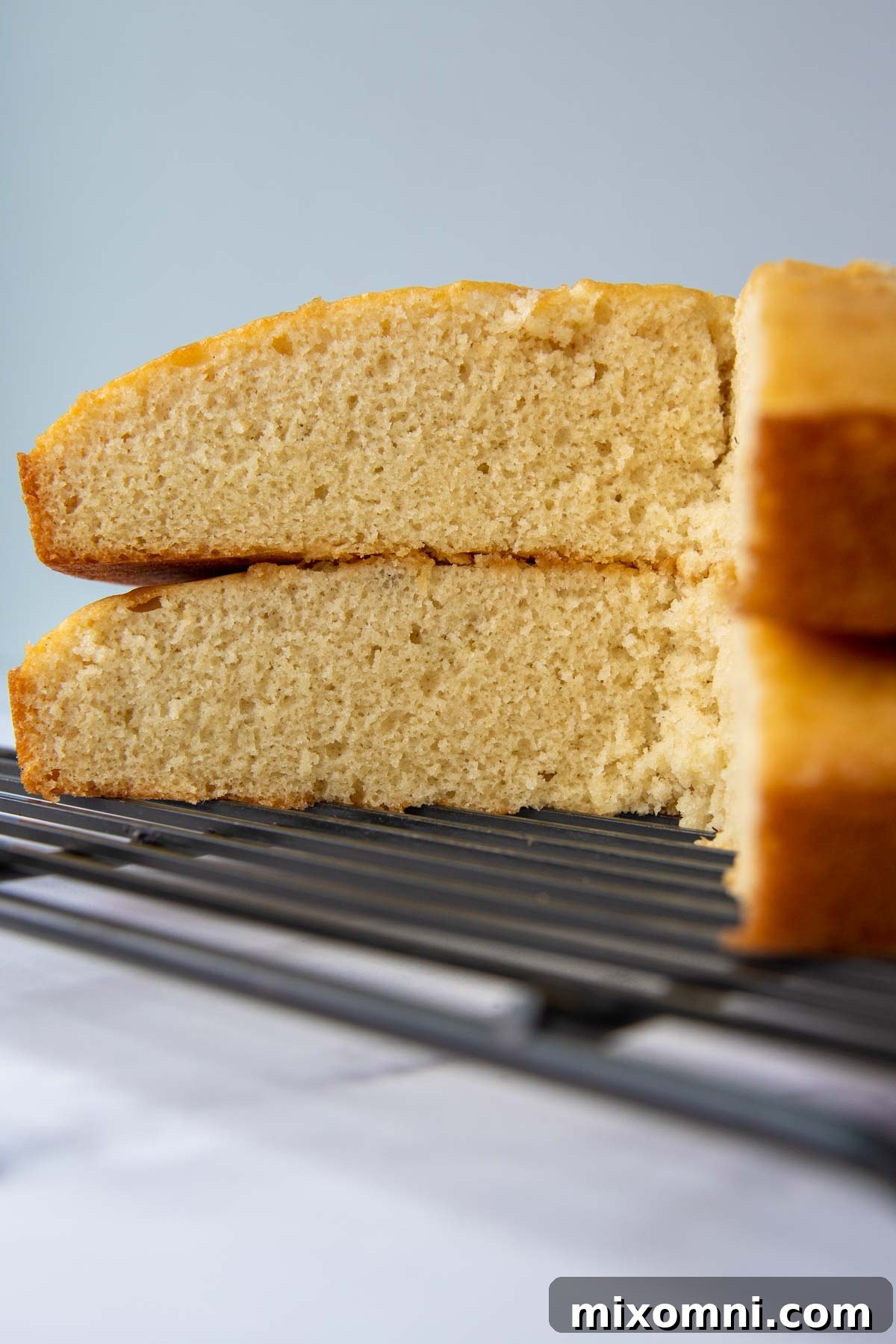
It’s disheartening when a beautifully risen cake sinks, but with this updated recipe and careful attention to detail, this should no longer be an issue. Generally, gluten-free cakes tend to sink for a few primary reasons: they were either not baked long enough, or the delicate balance of wet to dry ingredients was slightly off. It’s crucial to remember that gluten-free flours do not absorb moisture in the same way that traditional wheat flour does, which significantly impacts baking times and ingredient ratios.
Unlike traditional cakes, which often risk overbaking if left in the oven for even a minute too long, gluten-free cake recipes typically require a few additional minutes of baking time. For the most accurate assessment of doneness, always rely on the toothpick test: insert a toothpick into the very center of the cake. If it comes out clean or with only a few moist crumbs attached, your cake is ready. The traditional method of checking if the top “springs back” when lightly touched is often not a reliable indicator for gluten-free cakes.
Another frequent culprit behind a sinking cake is an inaccurate oven temperature. If your oven isn’t calibrated to a true 350ºF, the leavening agents, particularly baking powder, could be activated too quickly. This rapid rise can cause the cake to ascend dramatically and then collapse as it cools, due to an unstable structure. To prevent this, I highly recommend using an inexpensive oven thermometer. These handy tools allow you to verify your oven’s actual temperature and make any necessary adjustments to ensure consistent and perfect baking results every time.
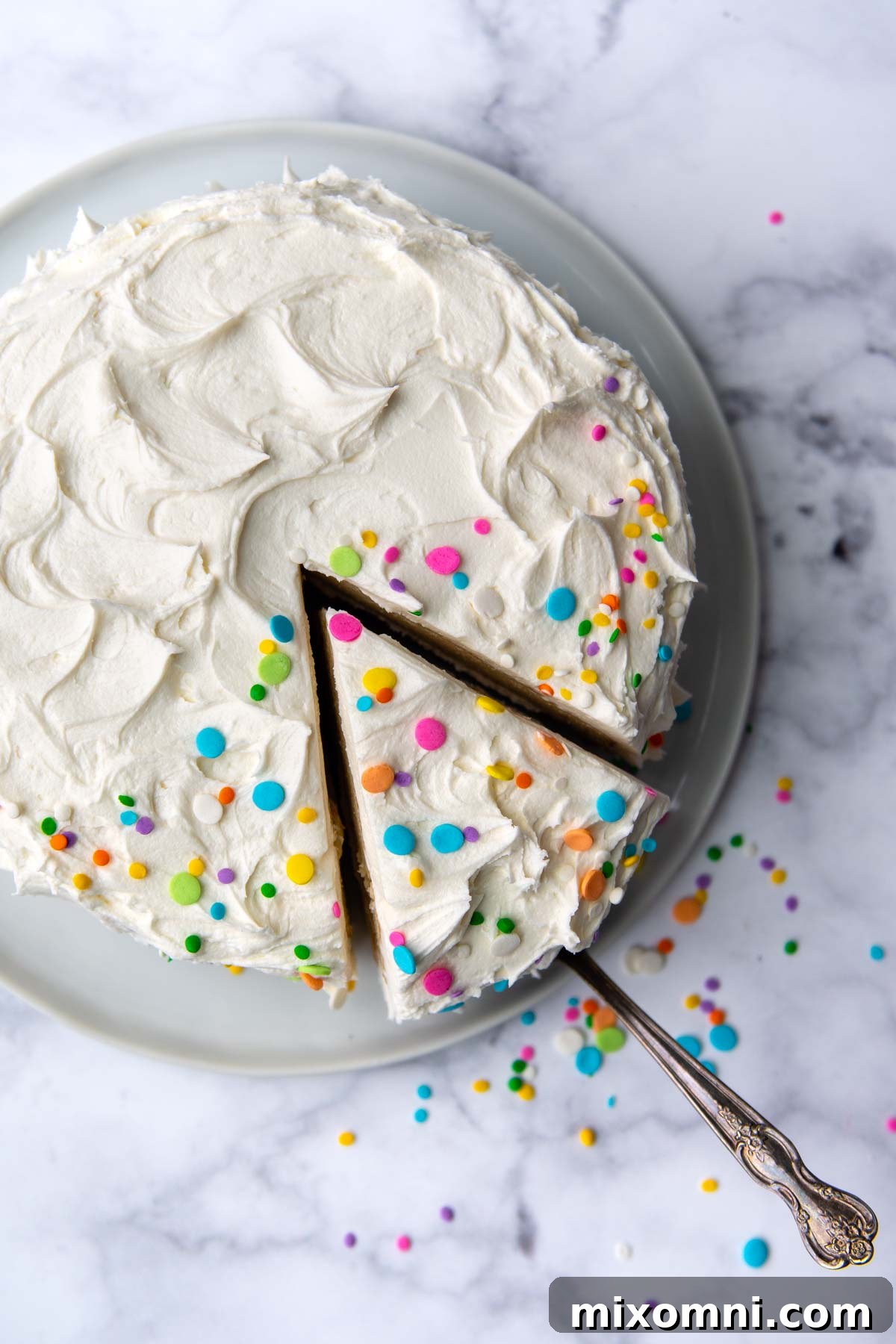
Craving individual treats? To transform this incredible vanilla layer cake recipe into delightful cupcakes, simply follow my dedicated recipe for gluten-free vanilla cupcakes. Fill the cupcake liners about two-thirds full, and ensure they cool completely before spreading or piping on your favorite frosting. For a wonderful seasonal twist, consider exploring a fresh berry alternative with this incredibly moist and fluffy homemade GF strawberry cake.
Phenomenal Gluten-Free Cake Filling and Frosting Ideas
Whether you’re using this from-scratch recipe or even a high-quality gluten-free cake mix, the right filling and frosting can elevate your white cake to an unforgettable dessert. The versatility of a vanilla white cake means it pairs beautifully with an array of flavors. For classic fillings, consider a rich and creamy vanilla custard, a vibrant fresh fruit filling bursting with seasonal flavors, or any light and airy mousse filling of your choice. A truly creative option is to fill your cooled cake layers with softened ice cream, then refreeze the cake until solid before generously covering it with a luscious whipped cream frosting. This creates a delightful surprise with every slice!
My family’s absolute number one requested filling? Without a doubt, it’s my irresistible homemade banana cream filling, and I’m never upset about making it! We typically complement this with a smooth and sweet vanilla frosting for a truly comforting combination.
Alternatively, you can keep it beautifully classic and simple, reminiscent of an old-school birthday cake. Smother your white cake with a thick, luxurious layer of the world’s fluffiest buttercream frosting. For the chocolate enthusiasts, opt for an equally airy chocolate buttercream. We’ve also successfully experimented with delicious lemon, tropical coconut, and a remarkably stable chocolate whipped cream frosting that holds its shape perfectly for piping intricate designs. The possibilities are truly endless!
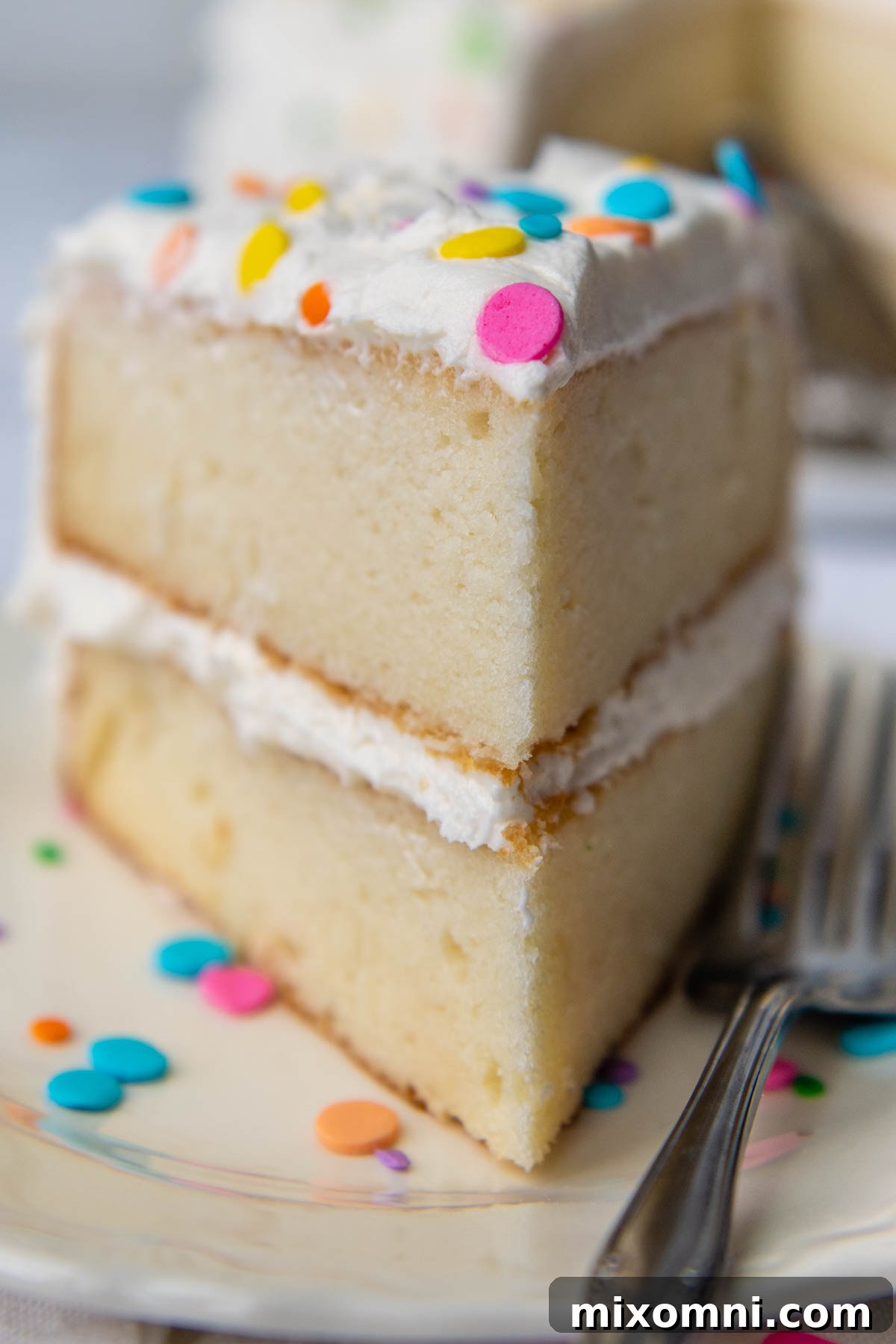
Save This Fluffy Gluten-Free White Cake Recipe to Your Pinterest Board!
Let’s be friends on Pinterest! I’m always sharing delicious and inspiring recipes!
Did you bake this incredible cake? I absolutely love hearing from you! Please leave a star rating and a comment below the recipe card. Your feedback is invaluable, helping other bakers in our community discover and enjoy this recipe. Plus, I promise you’ll always hear back from me! -Melissa
Rating: 4.54 out of 5 stars (128 ratings)
Fluffy, Moist Gluten-Free White Cake (No Fail!)
By Melissa Erdelac
Yield: 12 servings |
Prep Time: 5 mins |
Cook Time: 23 mins |
Total Time: 28 mins
Not all gluten-free cake recipes are created equal! This fluffy and moist gluten-free white cake is the best, easy, from-scratch vanilla cake recipe perfect for birthdays and celebrations! If you have been looking for a homemade white cake to end all future searches, join the hundreds of gluten-free bakers who have made this cake with swoon-worthy success!
Pin Recipe
Rate This Recipe
Ingredients
- 8 tablespoons (113 g) unsalted butter, melted and cooled
- ⅔ cup (163 g) whole milk, room temperature
- 4 large (148 g) egg whites, room temperature
- 2 teaspoons vanilla extract
- 2 cups (292 g) gluten-free all-purpose flour (highly recommend Cup4Cup)
- 1 ¼ cup (250 g) granulated sugar
- 1 TABLESPOON baking powder
- ½ teaspoon baking soda
- ½ teaspoon salt
Equipment
- Stand Mixer
- Cup4Cup Gluten Free Flour
- 8 or 9 inch cake pans
Instructions
- Preheat your oven to 350ºF (175ºC) and position an oven rack in the middle. Lightly spray two 8-inch or 9-inch cake pans with cooking spray. Line the bottoms of the pans with parchment paper cut to size, then grease the parchment paper as well. Set the prepared pans aside.
- Melt the unsalted butter first to allow it ample time to cool to room temperature before incorporating. Once the butter has cooled, whisk it together in a bowl with the room-temperature whole milk, large egg whites, and vanilla extract until thoroughly blended.
- In a large bowl or the bowl of a stand mixer fitted with a paddle attachment, combine the gluten-free flour, granulated sugar, baking powder, baking soda, and salt. Mix until all dry ingredients are well combined. Add all but approximately ½ cup (you can simply eyeball this amount) of the liquid mixture to the dry ingredients. Begin beating on low speed until the ingredients are just moistened. Increase the speed to medium and beat for 2 minutes, until the batter becomes visibly pale and fluffy. Pour in the remaining reserved liquid and beat for 1 minute longer.
- Evenly divide the batter between the two prepared cake pans. Allow the batter to rest in the pans for 15 minutes while your oven finishes preheating. This crucial resting period ensures the liquids are fully absorbed by the gluten-free flours, resulting in wonderfully fluffy cake layers. Bake for 23-25 minutes, rotating the pans halfway through the baking time for even cooking. The cake is done when the tops are golden brown and a toothpick inserted into the center comes out clean.
- Allow the baked cake layers to cool in their pans for 10 minutes. After 10 minutes, carefully invert them onto a wire rack, gently remove the parchment paper, and let them cool completely before frosting with your favorite fluffy vanilla or chocolate buttercream.
Notes
Tips for Success
- For a truly pure white cake, opt for clear vanilla extract instead of traditional brown vanilla, which can slightly tint the batter.
- Always melt your butter at the very beginning of your prep. This gives it sufficient time to cool back down to room temperature, which is essential for proper incorporation into the batter.
- Egg whites are easiest to separate when they are cold. After separating, set the egg whites (along with the measured milk) out to come to room temperature for about 45 minutes before you plan to use them.
- This recipe calls for whole milk to achieve the best texture and richness. While 2% milk can be substituted, skim milk is not recommended as it lacks the necessary fat content. For a dairy-free version, unsweetened almond milk has performed exceptionally well in testing.
Dairy-Free Adaptation
To make this cake completely dairy-free, substitute the unsalted butter with Earth Balance Vegan Buttery Sticks (or a similar high-quality vegan butter substitute). Replace the whole milk with unsweetened almond milk. Additionally, when making this dairy-free alteration, reduce the amount of salt in the recipe to ¼ teaspoon.
Sheet Cake Instructions
If you prefer to make a sheet cake instead of a layer cake, bake the batter in a 9×13 inch pan. If you intend to remove the cake from the pan for decorating, line the bottom with parchment paper cut to size, then grease the top of the parchment with cooking spray for easy release.
Bake the sheet cake at the same temperature (350ºF) as directed for the layer cake. The baking time may need to be 4-5 minutes longer for a sheet cake, so begin checking for doneness around the 24-minute mark with a toothpick inserted into the center.
Storing and Freezing Gluten-Free Cake
It’s important to note that gluten-free cakes typically do not stay fresh as long as their traditional counterparts. Therefore, if you do not plan on freezing the cake, it is best to prepare it no more than 24 hours in advance of serving for optimal freshness and texture.
A convenient option is to bake the cake layers ahead of time and freeze them until you are ready to assemble with your chosen filling and frosting. Alternatively, an entire cake, once baked and frosted, can also be frozen whole.
Freezing Cake Layers: Once your cake layers have completely cooled, wrap each layer securely in several layers of plastic wrap. Transfer the wrapped layers to a large gallon-sized freezer bag and freeze for up to 3 months. When you’re ready to use them, remove the layers from the freezer bag and thaw them, still wrapped, at room temperature for approximately 1 hour.
Freezing Frosted Cake: Assemble your cake with its filling and frosting. Place the entire cake in the freezer for a few hours until the frosting has solidified. Once frozen solid, wrap the cake securely with plastic wrap, then cover the plastic-wrapped cake with a layer of aluminum foil. Freeze for up to 3 months. To thaw, transfer the cake to the refrigerator overnight. Carefully remove the plastic wrap and foil, then continue to thaw the cake at room temperature for 5-6 hours before serving.
Recipe adapted from America’s Test Kitchen
Nutrition per serving (approx.): Calories: 236kcal, Carbohydrates: 37g, Protein: 4g, Fat: 9g, Saturated Fat: 5g, Cholesterol: 22mg, Sodium: 337mg, Potassium: 148mg, Fiber: 2g, Sugar: 23g, Vitamin A: 266IU, Calcium: 83mg, Iron: 1mg
Did you make this recipe? Please leave a star rating and review below. It helps others when searching for recipes and I LOVE feedback!