
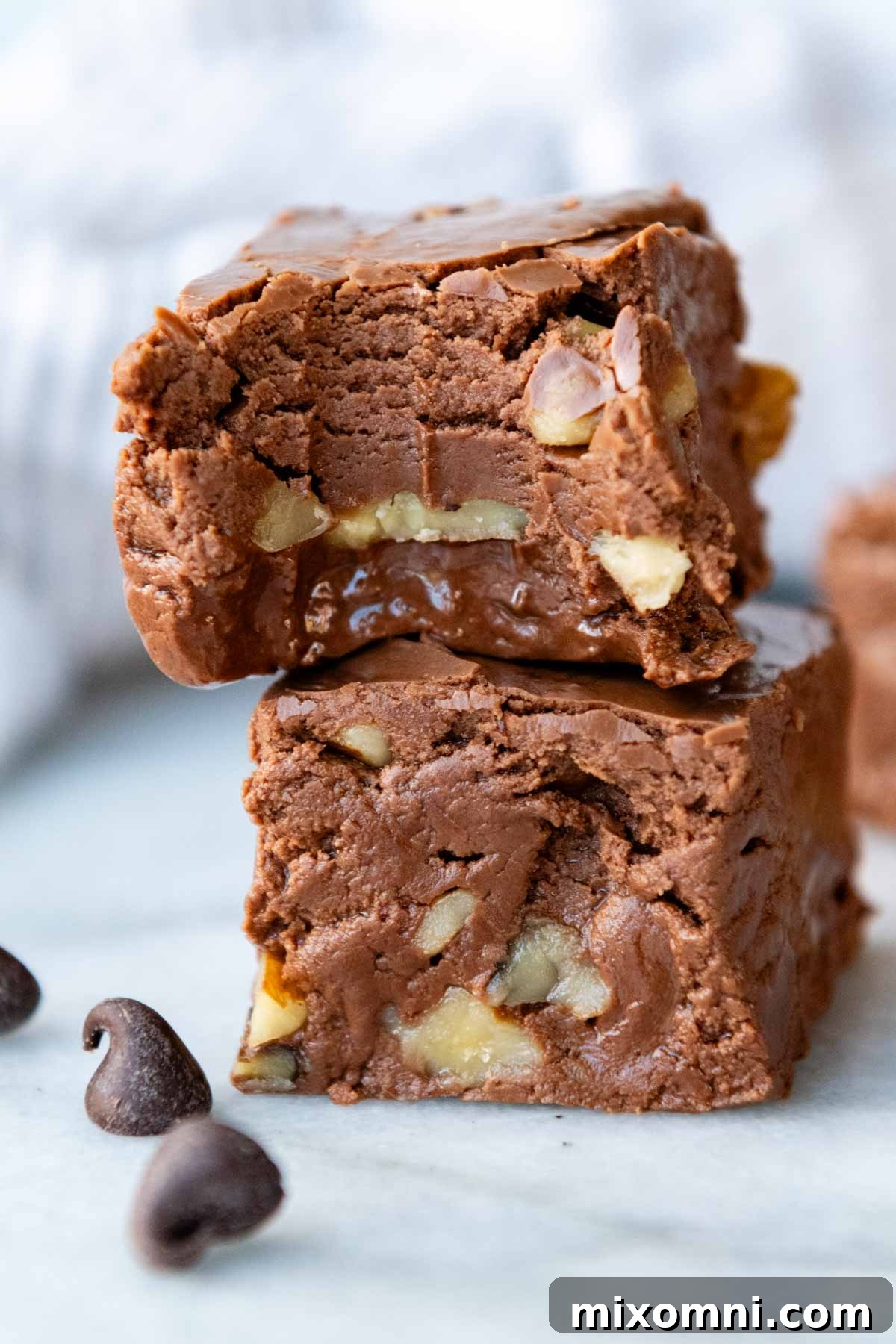
The Ultimate Guide to Silky Smooth Gluten-Free Fudge: Your Easy, No-Fail Recipe
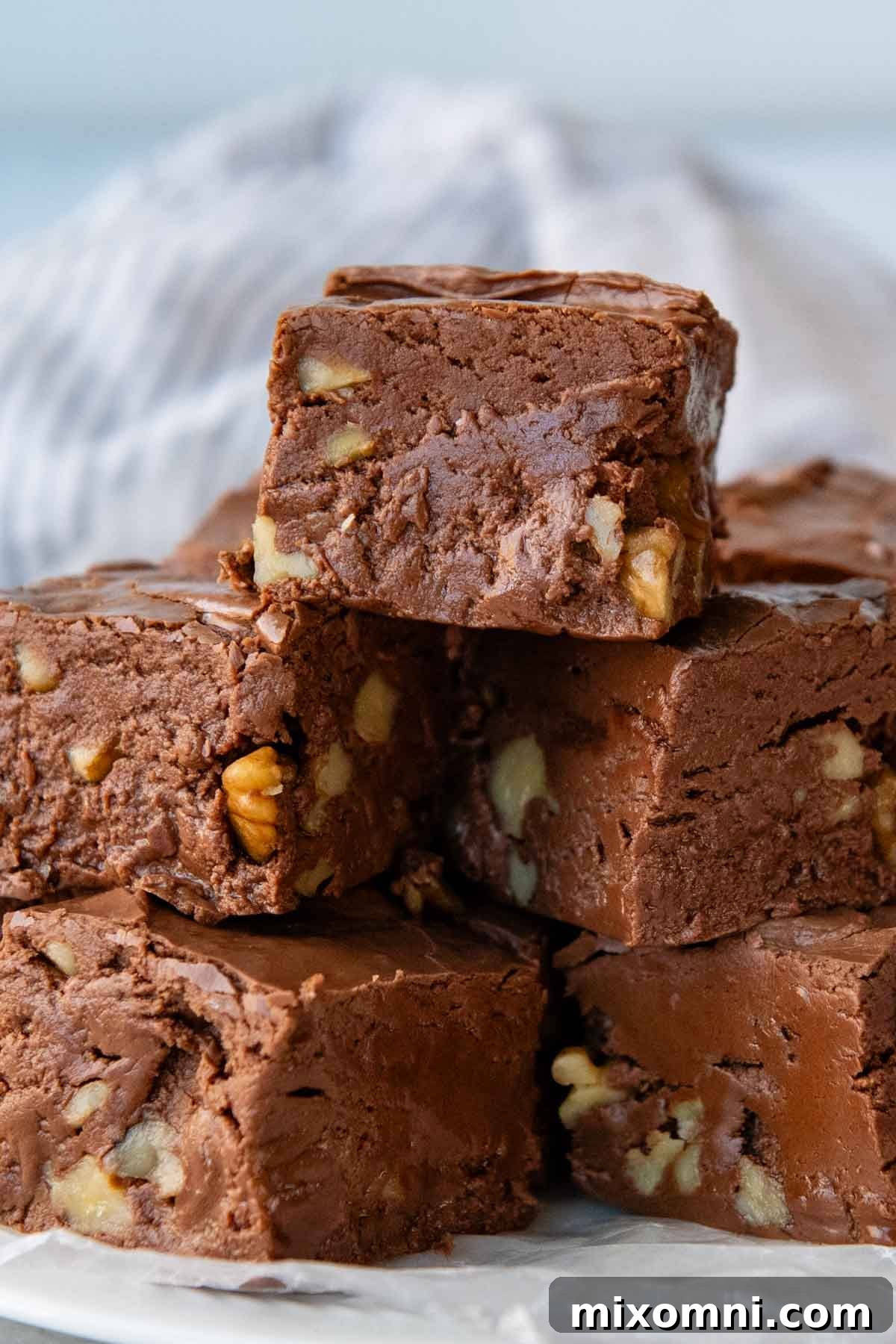
Craving an irresistibly smooth and creamy fudge that’s not only incredibly easy to make but also perfectly safe for those following a gluten-free diet? Look no further! This comprehensive guide reveals the secrets to a fool-proof homemade fudge recipe, crafted without condensed milk, ensuring authentic texture and rich flavor every time. Whether you dream of classic chocolate, rich peanut butter, delightful Oreo fudge, or wish to explore a variety of gluten-free mix-in ideas, you’ll learn how to achieve perfect results. Get ready to master the art of homemade fudge and impress everyone with your delectable creations!
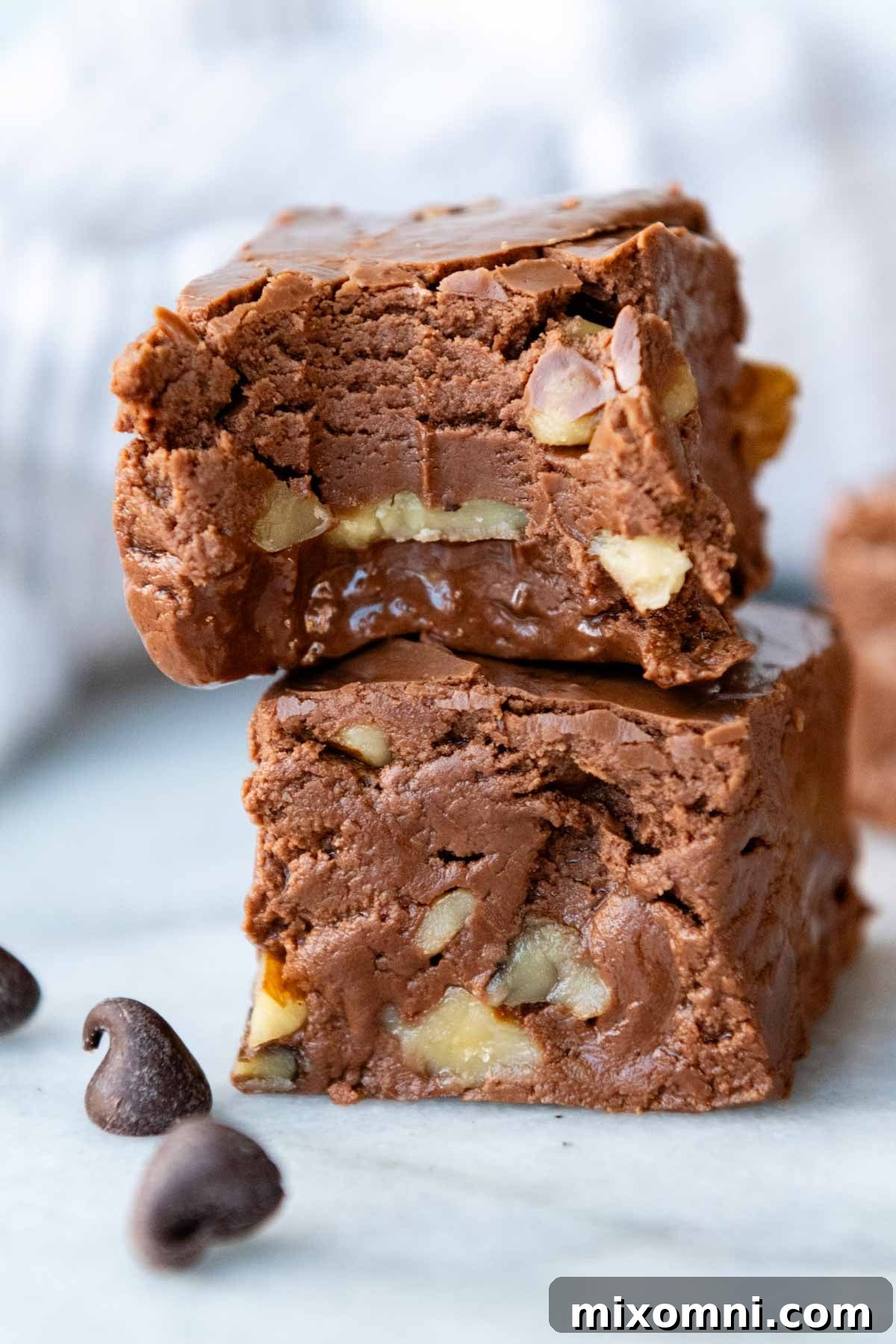
Why Gluten-Free Fudge Matters: Safety and Purity in Every Bite
While many fudge recipes appear to be naturally gluten-free, it’s crucial to exercise caution to ensure they are truly safe for a gluten-free diet. Traditional fudge typically relies on fundamental ingredients like butter, sugar, milk or cream, and chocolate or other flavorings. Some variations incorporate marshmallows, or, like this exceptional recipe, leverage the delightful consistency of marshmallow fluff.
So, if the core components are often gluten-free, what could possibly pose a risk to those avoiding gluten? The primary concern arises from flavorings and inclusions. For example, some maple fudge varieties might contain malt, an ingredient derived from barley, which contains gluten. Similarly, popular flavors like “cookies and cream” or “cookie dough” fudge almost always contain wheat flour unless explicitly made with certified gluten-free alternatives. To eliminate any uncertainty and ensure complete peace of mind, crafting your own easy homemade version is the ultimate solution. This recipe offers a reliably safe and utterly delicious option, allowing you to indulge without worry.
During my extensive research and testing of countless homemade fudge recipes – much like my journey to perfect these classic no-bake gluten-free peanut butter bars – I was initially overwhelmed by the sheer variety of methods available. Recipes ranged from those utilizing condensed milk, evaporated milk, cocoa powder, individual marshmallows, and marshmallow fluff, each claiming to be the definitive “best.” My prior baking experiences quickly taught me to steer clear of recipes that prominently feature sweetened condensed milk and chocolate chips as the base. I consistently found that these methods resulted in a texture that felt inauthentic, often resembling a thick, overly sweet slab of chocolate rather than the true, melt-in-your-mouth fudge experience.
Recipes that leaned on unsweetened cocoa powder often delivered that desired old-fashioned creaminess, but they proved to be finicky, producing inconsistent results that were frustrating to replicate batch after batch. This led me to explore the classic fudge-making approach using marshmallows, and within this category, I finally discovered a true winner!
The method of making fudge with marshmallow fluff, often affectionately known as “Fantasy Fudge,” consistently yields the most authentic, old-fashioned consistency, turning out perfectly every single time. When compared head-to-head with a similar technique using mini marshmallows, the marshmallow fluff version consistently produced a delightfully softer, smoother texture that unequivocally won over all my taste testers. Once I landed on this winning formula, I eagerly experimented with adapting the recipe for a diverse range of flavors. Much like another one of our family’s favorite treats, GF Oreo truffles, this fudge base proved incredibly versatile. Variations such as rich chocolate walnut, creamy peanut butter, and comforting cookies and cream all delivered spectacular, delicious results. The conclusion was undeniable: this truly is the best gluten-free fudge recipe you’ll ever make!
Essential Ingredients for Flawless Fudge
This remarkably easy, no-bake dessert requires just a handful of staple ingredients: butter, sugar, evaporated milk, chocolate chips, and marshmallow fluff. The preparation takes mere minutes, followed by a few hours of setting time before you can indulge in its creamy goodness.
- Evaporated Milk: The Secret to Creaminess
Evaporated milk is a shelf-stable dairy product from which approximately 60% of the water content has been removed. This concentration is key to its success in fudge recipes. Unlike regular milk or cream, evaporated milk can withstand higher cooking temperatures for longer periods without the risk of curdling, which is vital for achieving the correct candy stage. Furthermore, its reduced water content and rich, concentrated flavor contribute significantly to the ultra-creamy, smooth texture that defines perfect fudge. It’s an irreplaceable ingredient for this recipe’s success. - Marshmallow Fluff: The Foundation of Fantasy Fudge
For this recipe, you will need a 7-ounce container of marshmallow fluff, also sometimes labeled as “marshmallow creme.” These two terms are interchangeable and both products are inherently gluten-free, making them safe for everyone. It’s important to note that regular mini marshmallows will NOT yield the same results in this recipe. Marshmallow fluff provides a unique viscosity and aeration that is crucial for the fudge’s signature soft and consistent texture, preventing it from becoming grainy or too firm. - Chocolate Chips: A Flavorful Choice
During extensive recipe testing, dark chocolate chips consistently outperformed semi-sweet chips in terms of flavor balance. The richer, deeper chocolate notes of dark chocolate beautifully complement the sweetness of the fudge base, creating a more sophisticated and less cloyingly sweet final product. Even those who typically shy away from dark chocolate found this balance to be highly preferable. For tips on sourcing the absolute best quality chocolate chips to elevate your fudge, you can refer to my recommendations in my favorite Christmas bark recipe. Investing in good quality chocolate makes a noticeable difference in the final taste. - Quality Butter and Sugar: The Unsung Heroes
While often overlooked, the quality of your butter and sugar plays a significant role in the overall outcome of your fudge. Use unsalted butter to control the salt content precisely. Granulated sugar provides the necessary structure and sweetness. Ensuring these foundational ingredients are fresh and of good quality sets the stage for a truly superior batch of fudge.
Mastering the Soft Ball Stage: The Key to Perfect Fudge Texture
The definitive, fool-proof method for determining when your fudge mixture is perfectly cooked is by using a candy thermometer. For this particular recipe, the mixture must reach a precise temperature of 234ºF, which corresponds to the “soft ball stage” in candy making, before it is removed from the heat. This exact temperature is non-negotiable for achieving the ideal creamy, melt-in-your-mouth texture.
Many recipes often simply instruct home cooks to boil the mixture for a fixed duration, typically 4-5 minutes. However, through my repeated testing of this recipe, meticulously using a thermometer to gauge accuracy, I discovered a significant variability in cooking times. Depending on factors like stovetop heat consistency, saucepan material, and even ambient humidity, it took anywhere from 3 to 5 minutes to reach the critical 234ºF mark. Had I relied solely on a timed boil, I would have frequently over-boiled the mixture, risking the ruination of multiple batches.
Over-boiled fudge is a common culprit for undesirable textures. When sugar crystals are cooked for too long or at too high a temperature, they become excessively hard and brittle, resulting in fudge that is tough, crumbly, and far from creamy. Conversely, perfectly timed fudge, achieved by reaching that precise soft ball stage, is wonderfully soft, luxuriously creamy, and possesses the ideal texture that defines truly great fudge. This highlights why temperature control, facilitated by a reliable thermometer, is absolutely critical for consistent success.
Why a Candy Thermometer is Non-Negotiable
Fortunately, a candy thermometer is a surprisingly inexpensive kitchen tool, often costing less than the ingredients for a single batch of fudge. Investing in one is a smart decision that saves both frustration and money in the long run. Beyond mastering fudge, this versatile gadget can be used for a multitude of other confectionary projects, such as crafting homemade caramel sauce, perfecting this easy peanut brittle recipe, making delicate toffee, or preparing rich pralines. It is truly the ticket to fool-proof results in candy making!
If you’re looking to invest in a thermometer that offers even greater utility beyond just candy temperatures, I highly recommend my personal favorite kitchen tool: a one-second instant-read thermometer. This indispensable device can be used not only for homemade candies but also for accurately checking meat temperatures, ensuring perfectly cooked proteins, and even testing the internal temperature of gluten-free breads to guarantee they are baked through. Its versatility makes it an invaluable addition to any home kitchen.
Step-by-Step: Creating Your Irresistible Gluten-Free Fudge
Below, you’ll find detailed step-by-step instructions with key tips to guide you through the process. For precise ingredient amounts and the full printable recipe, please refer to the comprehensive recipe card at the end of this article.
Preparation is Key
The fudge-making process moves quickly once you start, so meticulous preparation is paramount. Begin by gathering all your ingredients and equipment, ensuring everything is measured and within easy reach. Line an 11×7-inch pan with foil or parchment paper, leaving an overhang on the sides to easily lift the fudge out later. If you prefer a thicker fudge, opt for an 8×8-inch pan; for a slightly thinner slice, a 9×9-inch pan will work perfectly. Having your pan ready before you start cooking is essential for a smooth process.
The Boiling Process: Achieving the Perfect Consistency
Now, let’s address the boiling stage – a critical step that truly makes or breaks your fudge recipe. Combine the butter, granulated sugar, and evaporated milk in a heavy-bottom saucepan. A heavy saucepan is crucial because it distributes heat more evenly, preventing hot spots that can scorch the sugar and ruin the texture of your fudge. Place the saucepan over medium heat.
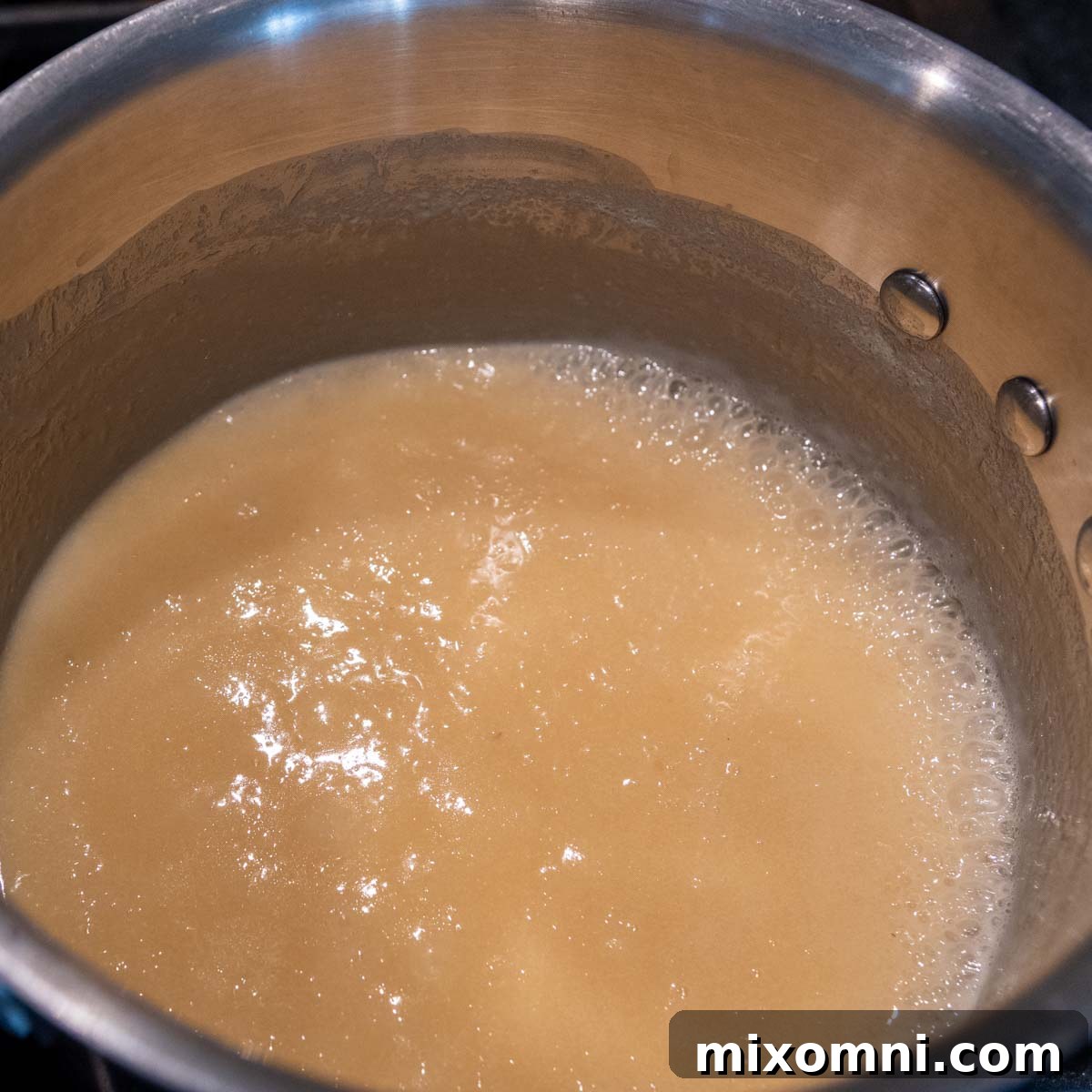
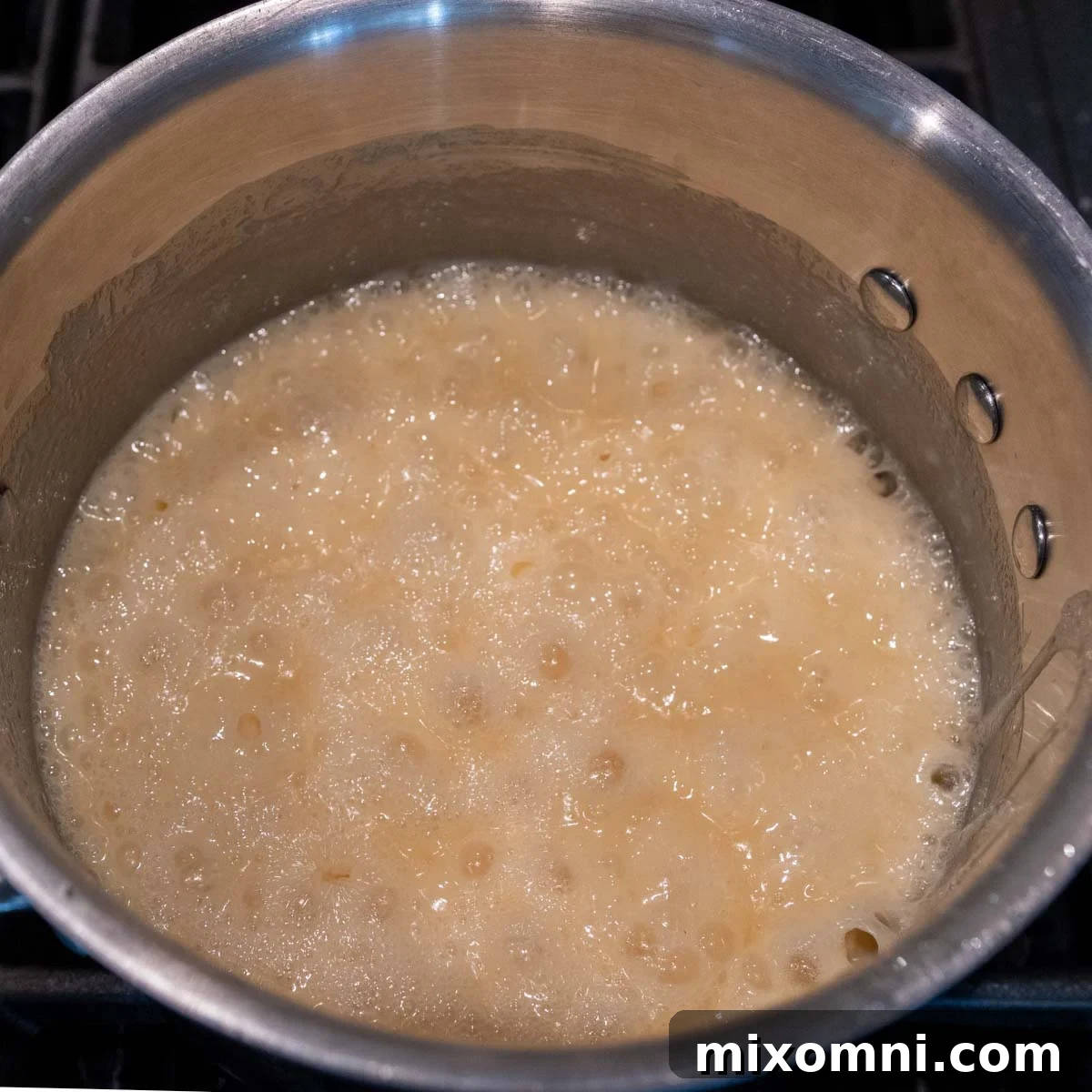
Bring the mixture to a rolling boil, stirring constantly to prevent sticking and ensure even heating. A “rolling boil” is characterized by continuous, vigorous bubbles erupting throughout the entire surface of the mixture, not just around the edges of the pan. Once you’ve achieved this full rolling boil, continue to cook and stir consistently for precisely 4 minutes.
For the most accurate and reliable results, which I highly recommend, use a candy thermometer or an instant-read thermometer to monitor the temperature. Remove the mixture from the heat as soon as it reaches 234ºF (the soft ball stage). If you do not have a thermometer, adhere strictly to the 4-minute boiling time after the rolling boil has been established. By this point, the mixture will have visibly thickened and reduced slightly, indicating it’s ready for the next step.
Bringing it All Together: Finishing Touches
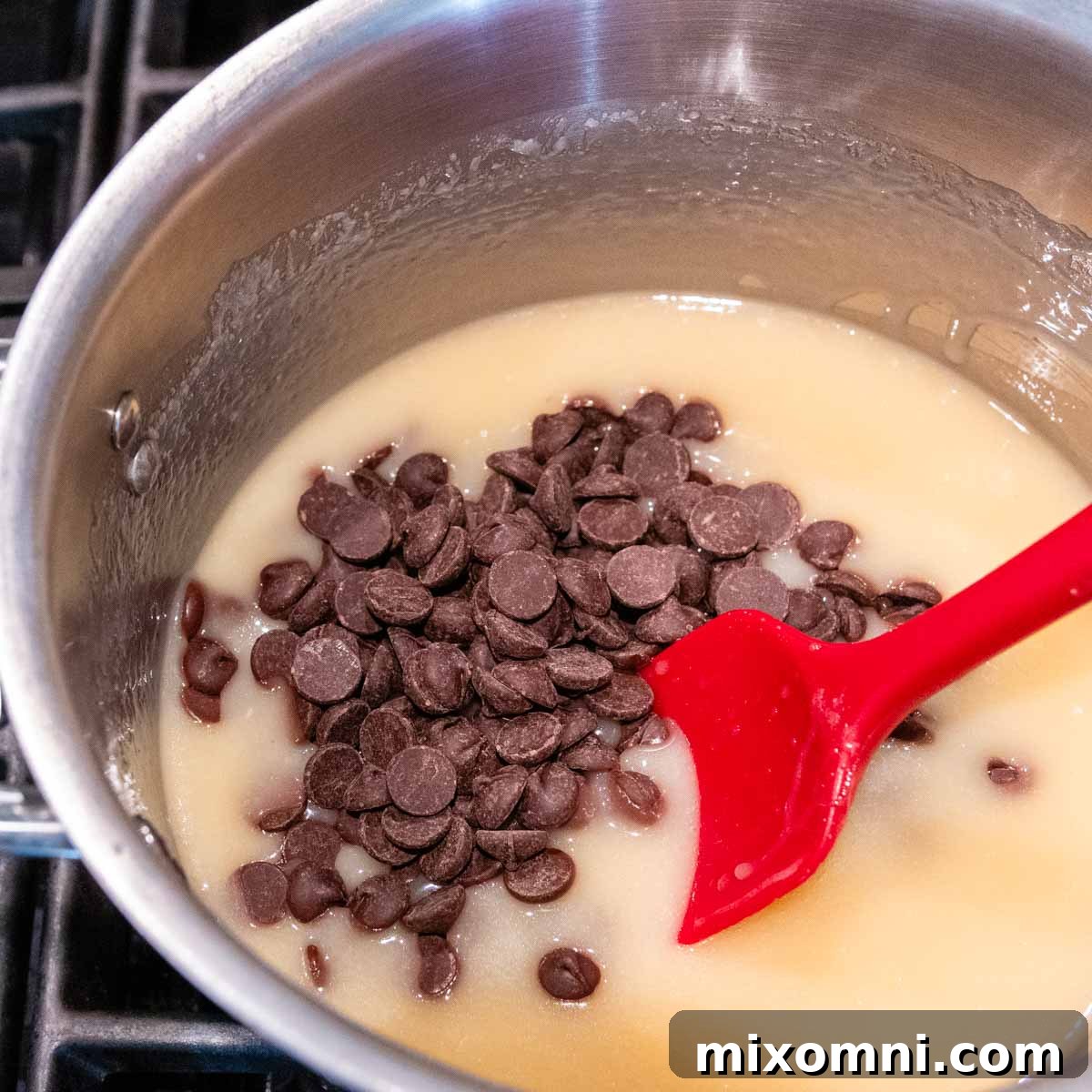
Once your fudge mixture has reached the precise temperature and is removed from the heat, the “hard part” of cooking is truly over! Immediately and briskly stir in the chocolate chips and vanilla extract until the chocolate is fully melted and smoothly incorporated. The residual heat from the boiled mixture will be sufficient to melt the chips beautifully. Following this, add the marshmallow fluff and any desired mix-ins, such as chopped nuts, stirring until everything is thoroughly combined and the mixture is uniform. Work quickly as the fudge will begin to set.
Promptly pour the luscious fudge mixture into your prepared pan, spreading it evenly with a spatula. Now comes perhaps the most challenging part: the wait! Allow the fudge to sit undisturbed at room temperature for approximately 2-3 hours, or until it has completely cooled and firmed up. Rushing this step will result in soft, unset fudge. Once fully set, use the foil or parchment overhang to lift the fudge from the pan, then slice it into desired pieces with a sharp knife. Enjoy your perfectly crafted, ultra-creamy fudge!
Endless Creations: Delicious Gluten-Free Fudge Variations
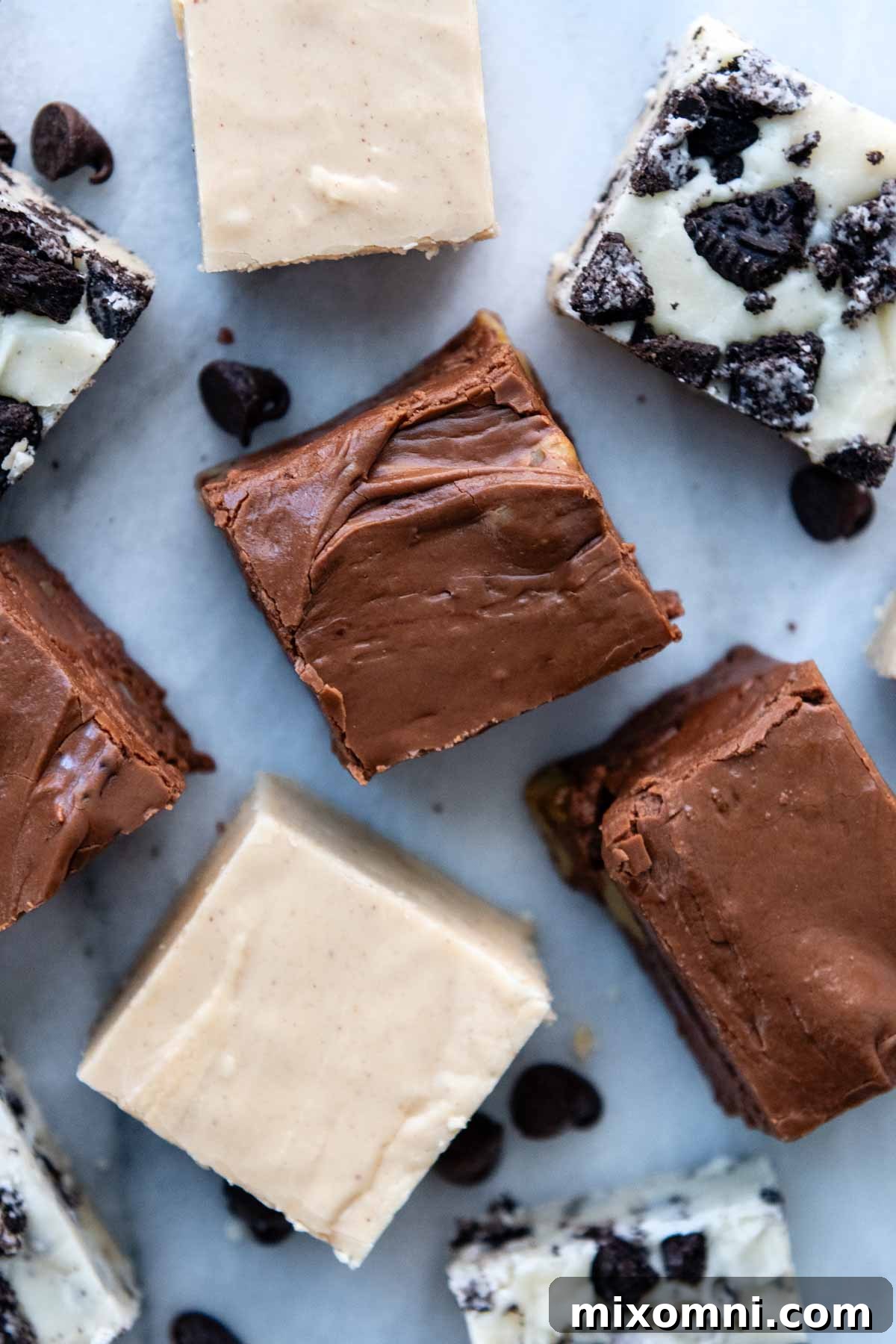
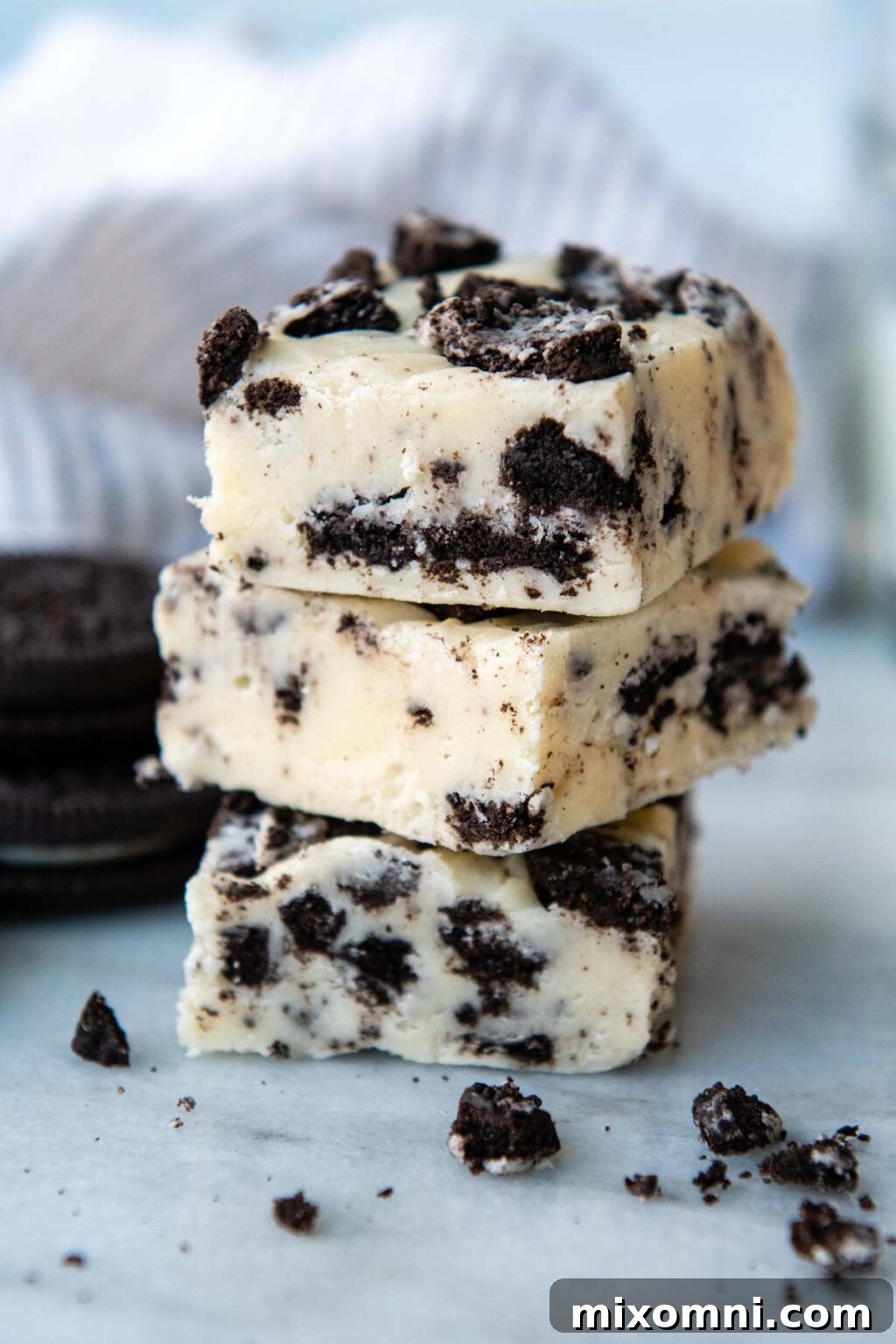
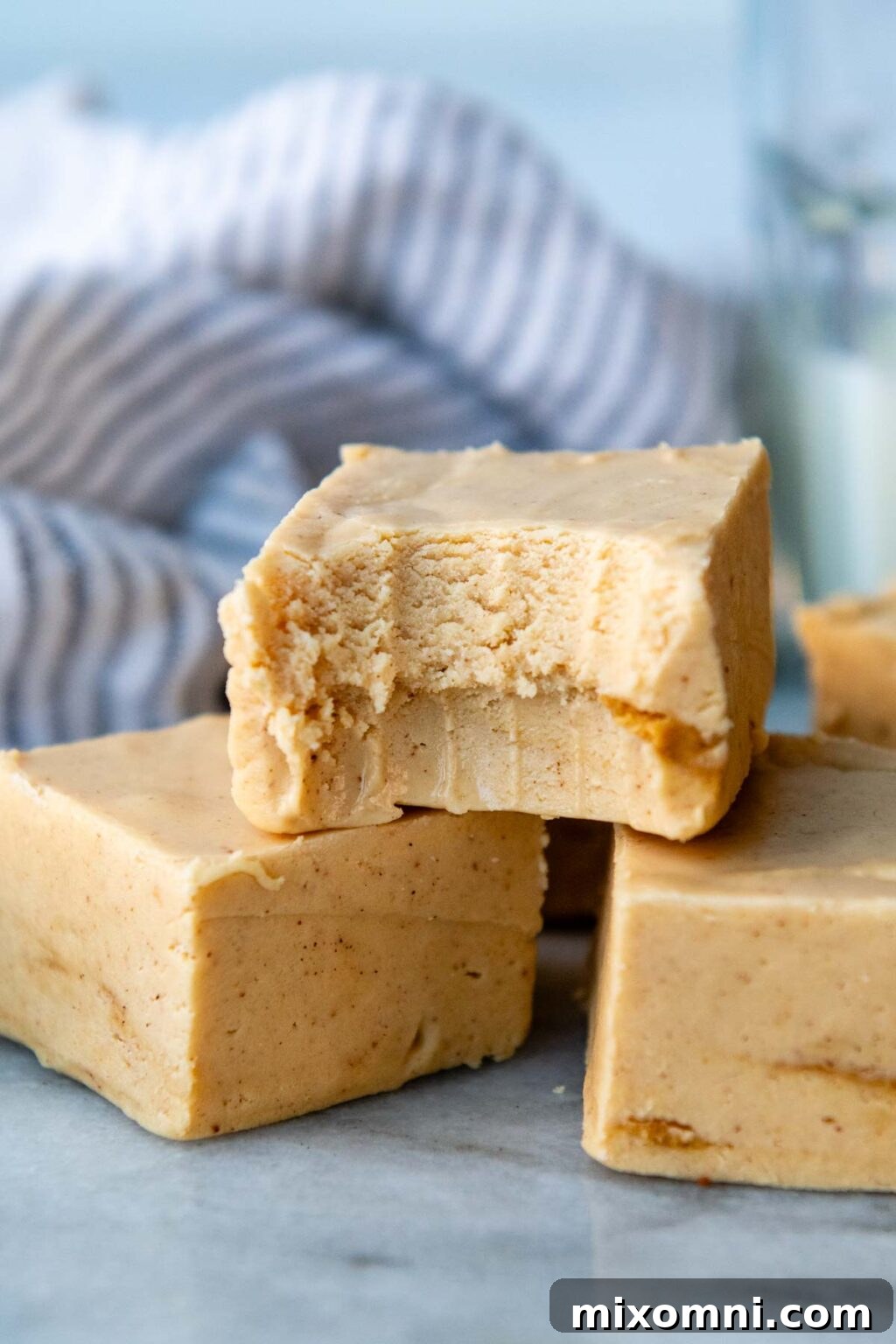
This versatile gluten-free fudge recipe serves as an excellent base for a multitude of delicious flavors. While the full recipe card includes detailed variations for mouth-watering gluten-free Oreo fudge and classic peanut butter fudge (both pictured below), the possibilities extend far beyond! Here are some creative gluten-free mix-in ideas to customize your next batch:
Classic Flavor Combinations
- Rocky Road Fudge: For this beloved classic, after stirring in the chocolate and marshmallow fluff, let the mixture cool slightly for 2 minutes, stirring occasionally. Then, fold in ½ cup of mini marshmallows and ½ cup of salted peanuts. Spread the mixture into your prepared pan, then sprinkle an additional handful of mini marshmallows and chopped peanuts over the top for an authentic finish.
- Nutty Indulgence: Add 1 cup of your favorite chopped nuts for a satisfying crunch and depth of flavor. Excellent choices include pecans, walnuts, cashews, pistachios, or rich macadamia nuts. Toasting the nuts lightly beforehand can enhance their flavor even further.
- Fruity Fudge: Incorporate ⅔ cup of finely chopped dried fruits for a chewy, tangy contrast. Dried cranberries, cherries, raisins, apricots, or even tropical pineapple bits work wonderfully.
Seasonal and Gourmet Options
- Peppermint Perfection: For a festive treat, use either white chocolate chips or dark chocolate chips as your base. Stir in ½ cup of crushed peppermint candies and replace the vanilla extract with ½ teaspoon of peppermint extract for an intense minty flavor. Sprinkle extra crushed peppermint on top for decoration and an added crunch.
- White Chocolate Cranberry Pistachio: A sophisticated blend of flavors and textures. Use white chocolate chips as your primary chocolate. After mixing in the fluff, fold in ½ cup of dried cranberries and ½ cup of chopped pistachios. The vibrant colors and distinct flavors make this a truly elegant fudge.
- Sea Salt Caramel Swirl: After pouring the plain chocolate fudge into the pan, dollop spoonfuls of store-bought or homemade gluten-free caramel sauce on top. Use a knife or skewer to swirl the caramel through the fudge. Finish with a sprinkle of flaky sea salt.
- Espresso Dream: Incorporate 1-2 teaspoons of instant espresso powder (dissolved in a tiny bit of hot water if needed) along with your chocolate chips for a rich, coffee-flavored kick. This pairs wonderfully with dark chocolate.
Storing Your Homemade Fudge: Keeping it Fresh
Proper storage is essential to maintain the freshness and delightful texture of your homemade gluten-free fudge. Here’s how to keep it at its best:
- Room Temperature Storage: For optimal freshness and that classic soft, chewy texture, store your fudge in an airtight container at room temperature. It will remain delicious for up to two weeks. To prevent the pieces from sticking together, place sheets of wax paper or parchment paper between the layers.
- Refrigeration: If you prefer a slightly firmer fudge or wish to extend its shelf life, you can refrigerate it in an airtight container. Refrigerated fudge will last approximately one week longer than at room temperature. Be aware that the texture will become slightly harder when cold, so you may want to let it soften at room temperature for 15-30 minutes before serving for the best experience.
- Freezing: Fudge freezes exceptionally well, allowing you to prepare it in advance or save leftovers for a later indulgence. To freeze, wrap individual pieces or blocks securely in plastic wrap, then place them in an airtight, freezer-safe container or heavy-duty freezer bag. This double layer of protection helps prevent freezer burn and ice crystal formation. Fudge can be frozen for up to three months. To enjoy, thaw the frozen fudge at room temperature for 2-3 hours before serving.
Troubleshooting Your Fudge: Common Problems and Solutions
Even with a no-fail recipe, sometimes things don’t go exactly as planned. Here are some common fudge problems and how to troubleshoot them:
- Fudge is Too Hard or Crumbly: This is almost always a sign of overcooking. The sugar mixture reached too high a temperature, or it was boiled for too long, causing too much moisture to evaporate and the sugar crystals to become too hard.
- Solution: Ensure you are using a reliable candy thermometer and remove the mixture from heat precisely at 234°F. Do not rely solely on timed boiling, as stovetop variations can drastically alter results. You can try to salvage very hard fudge by gently reheating it with a tablespoon or two of milk or cream in a saucepan over very low heat, stirring until it softens slightly, then re-pouring it into the pan.
- Fudge is Too Soft or Won’t Set: This indicates undercooking. The sugar mixture did not reach the proper temperature (234°F), meaning it retained too much moisture and the sugar crystals didn’t form correctly.
- Solution: The best way to prevent this is to use a thermometer to ensure the mixture reaches the soft ball stage. Unfortunately, it’s challenging to fix undercooked fudge once it has cooled and been poured. You might try returning it to the saucepan, adding a small amount of sugar, and reheating it slowly to the correct temperature, but results can vary.
- Fudge is Grainy: Grainy fudge is typically caused by sugar crystals that have separated and re-crystallized too quickly or improperly. This can happen if the mixture is stirred too vigorously after the chocolate and fluff are added, or if sugar crystals adhere to the sides of the pan during boiling and fall back into the mixture.
- Solution: During the initial boiling phase, avoid stirring once the mixture begins to boil, or gently wash down any sugar crystals from the sides of the pan with a wet pastry brush. After removing from heat and adding the chocolate and fluff, stir just enough to combine everything smoothly, then pour immediately. If your fudge is already grainy, try melting it down again over low heat with a tiny bit of extra butter and evaporated milk, stirring constantly until smooth, then re-setting.
Frequently Asked Questions About Gluten-Free Fudge
Here are answers to some common questions you might have about making this delicious gluten-free fudge:
- Q: Can I use regular marshmallows instead of marshmallow fluff?
A: No, mini marshmallows will not work as a direct substitute for marshmallow fluff in this recipe. Marshmallow fluff has a different consistency and aeration that is crucial for the fudge’s smooth, creamy texture and consistent setting. - Q: Is condensed milk truly not recommended for fudge?
A: While many “easy fudge” recipes use condensed milk, in my testing, I found they often result in a texture that is overly sweet and more like a dense chocolate bar rather than traditional, smooth fudge. This recipe avoids condensed milk to achieve a more authentic, old-fashioned creamy consistency. - Q: What if I don’t have a candy thermometer?
A: While a candy thermometer is highly recommended for accuracy, you can rely on the precise timing of 4 minutes at a full rolling boil as a secondary method. However, using a thermometer significantly increases your chances of consistent success by eliminating variables like stovetop heat and pan type. - Q: How can I ensure my fudge is truly gluten-free?
A: The base ingredients are naturally gluten-free. The main considerations are your mix-ins (e.g., ensuring any cookies used are certified GF) and checking labels on all packaged ingredients (like chocolate chips or extracts) for “gluten-free” certification or warnings about cross-contamination. - Q: Can I use semi-sweet chocolate chips?
A: While dark chocolate chips are preferred for their balanced flavor, you can use semi-sweet chocolate chips if that’s what you have on hand or prefer. The fudge will be slightly sweeter.

Creamiest Gluten-Free Fudge (Easy, No-Fail Recipe)
By Melissa Erdelac
Yield: 24 servings | Prep Time: 5 mins | Cook Time: 10 mins | Total Time: 15 mins
Learn how to make ultra smooth and creamy fudge that is not only easy, but safe for those on a gluten-free diet! Use the fool-proof homemade recipe, made without condensed milk, for a traditional chocolate version, peanut butter fudge, Oreo fudge, or choose from the variety of gluten-free mix-in ideas. I’ll teach you the secret for making fudge perfectly every time!
Ingredients
- 3 cups granulated sugar
- ¾ cup (12 tbsp) unsalted butter
- ⅔ cup (5 ounces) evaporated milk
- 2 cups dark chocolate chips (Nestle Dark or Ghirardelli 60% Cacao recommended)
- 1 teaspoon vanilla extract
- 7 ounces marshmallow fluff (or marshmallow creme)
- 1 cup (optional) chopped walnuts or pecans (see recipe notes for other variations)
Equipment
- Saucepan (heavy-bottomed recommended)
- Candy Thermometer (highly recommended)
- Instant Read Thermometer (alternative/additional)
Instructions
- Prepare Your Pan: Measure all ingredients and prep your pan before you begin cooking, as the recipe moves quickly. Line an 11×7-inch pan with foil or parchment paper. For thicker fudge, use an 8×8-inch pan; for slightly thinner slices, a 9×9-inch pan works well.
- Combine Ingredients: Place the granulated sugar, unsalted butter, and evaporated milk in a medium, heavy-bottom saucepan.
- Boil to Temperature: Bring the mixture to a full rolling boil over medium heat, stirring constantly. A rolling boil means there are continuous bubbles throughout, not just at the edges. Once a full rolling boil is achieved, continue to cook and stir for 4 minutes. For best results, use a candy thermometer. Remove from heat when the mixture reaches 234ºF (soft ball stage). If you do not have a thermometer, remove from heat after 4 minutes at a full rolling boil. The mixture will have thickened and reduced slightly.
- Stir in Final Ingredients: Immediately remove from heat and stir in the chocolate chips and vanilla extract until the chocolate is completely melted and smooth. Then, stir in the marshmallow fluff until fully incorporated. If using, mix in any optional mix-ins, such as chopped nuts.
- Set and Store: Pour the fudge mixture into the prepared pan, smoothing the top evenly with a spatula. Let it sit undisturbed at room temperature for 2-3 hours to cool completely and set before slicing with a sharp knife. Store in an airtight container at room temperature for up to 2 weeks.
Notes
Storing
If stored in an airtight container at room temperature, this fudge will last up to 2 weeks. Place sheets of wax paper between the layers to prevent sticking.
It can also be refrigerated, stored similarly in an airtight container. It will last about 1 week longer in the fridge, but will have a slightly harder texture. You may want to let it soften at room temperature before serving.
To freeze, wrap it securely to prevent any ice crystals from forming. Freeze for up to 3 months and thaw at room temperature for 2-3 hours before enjoying.
Gluten-Free Oreo Fudge Variation
- When prepping ingredients, finely chop or crush 12 gluten-free Oreo-style cookies. Measure out ½ cup crushed Oreos and set aside for topping; the remaining will be mixed into the fudge.
- Instead of 2 cups dark chocolate chips, replace with an equal amount of white chocolate chips (always read labels carefully to ensure they are gluten-free).
- Prepare the recipe as directed. After stirring in the marshmallow fluff, fold in the larger portion of crushed Oreos. Spread in the prepared pan and then sprinkle the reserved ½ cup of crushed Oreos on top, gently pressing down.
Gluten-Free Peanut Butter Fudge Variation
- Prep ingredients and pan. Instead of chocolate chips, use a 10-ounce bag of peanut butter chips (Reese’s Peanut Butter Baking Chips are generally gluten-free, but always check labels). You will also need to measure out ⅓ cup creamy peanut butter.
- Prepare the recipe as directed. After stirring in the peanut butter chips, mix in the marshmallow fluff and the creamy peanut butter until thoroughly combined. If desired, you may also stir in ⅔ cup chopped peanuts or sprinkle some on top after spreading in the pan.
Nutrition Information (per serving)
- Calories: 264 kcal
- Carbohydrates: 41g
- Protein: 2g
- Fat: 11g
- Saturated Fat: 8g
- Polyunsaturated Fat: 0.3g
- Monounsaturated Fat: 2g
- Trans Fat: 0.2g
- Cholesterol: 17mg
- Sodium: 25mg
- Potassium: 119mg
- Fiber: 1g
- Sugar: 36g
- Vitamin A: 196 IU
- Vitamin C: 0.2mg
- Calcium: 66mg
- Iron: 0.2mg
Share Your Sweet Success!
Did you make this delightful gluten-free fudge? We’d love to hear from you! Your feedback helps our community and guides other bakers. Please consider leaving a star rating and a comment below the recipe card to share your experience.
Let’s be friends on Pinterest! I’m always sharing great recipes and tips!