
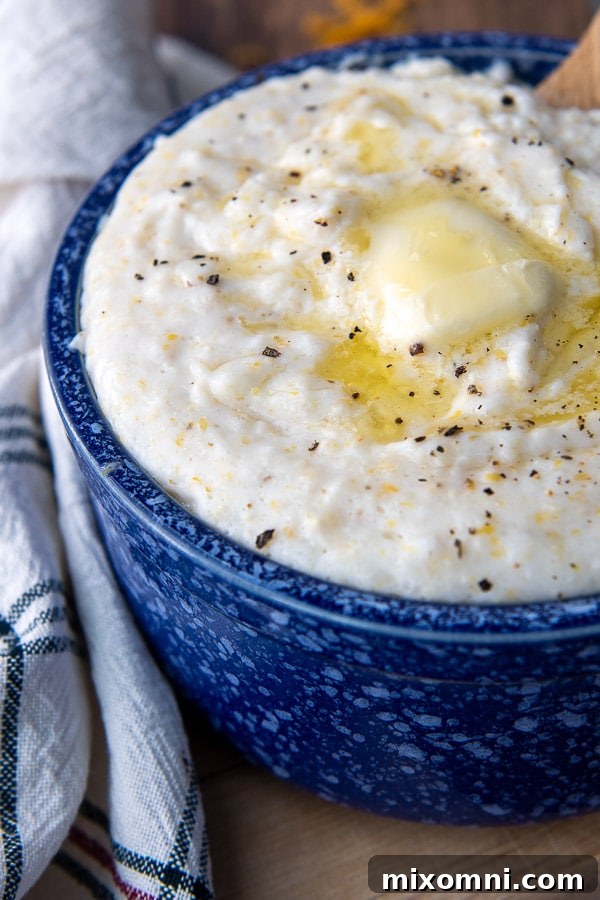
Grits, a beloved staple of Southern American cuisine, are far more than just a simple side dish. They are a versatile, comforting, and incredibly flavorful component that can anchor any meal, from breakfast to dinner. This comprehensive guide will teach you how to make grits that are consistently fluffy and creamy, ensuring a perfect batch every time. Beyond the basic recipe, we’ll explore the fascinating world of grits, delving into their origins, diverse types and varieties, optimal cooking methods, delicious serving suggestions, and essential tips and tricks to elevate your grits game.
Whatever type you like – basic, cheese, spicy, sweet, thick, or creamy – this guide will show you how to master them!
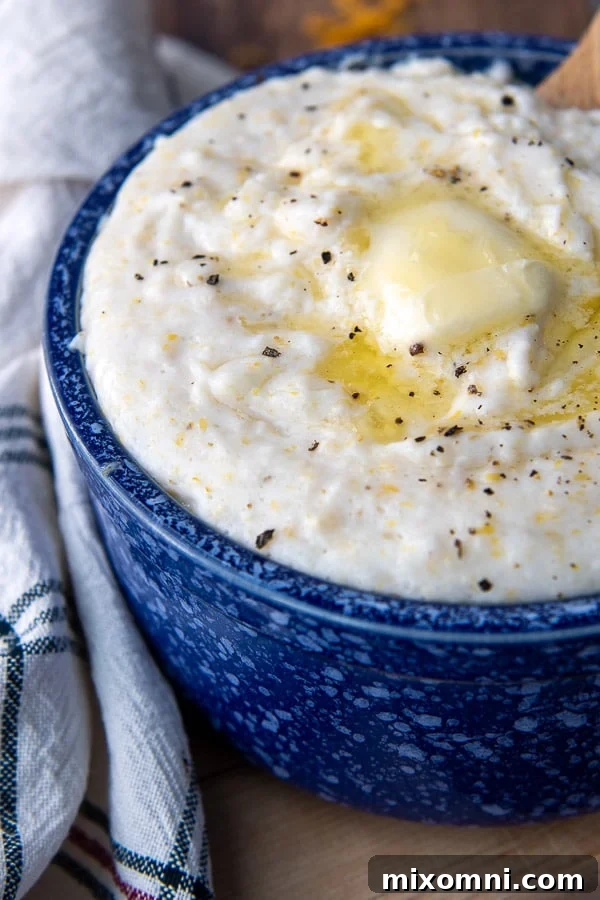
What Are Grits Made From? Understanding the Core Ingredient
At their core, grits are made from dried corn. However, it’s crucial to understand that not just any corn will do. The sweet corn varieties that grace our summer tables are distinct from the corn used for grits. Grits specifically originate from a type known as dent corn, also widely referred to as field corn.
Dent corn is characterized by its high starch content and a small indentation at the crown of each kernel, hence its name. This particular variety is ideal for producing a range of corn-based products beyond grits, including cornmeal flour, corn chips, tortillas, and taco shells. Its robust flavor and starchy texture contribute significantly to the characteristic mouthfeel and taste of authentic Southern grits. The history of dent corn in North American cuisine is rich, forming the backbone of many indigenous and later settler diets, evolving into staples like grits that we cherish today.
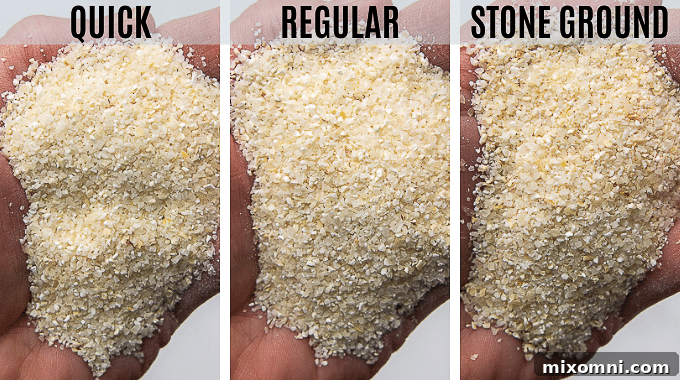
While all grits share this common ancestor in dent corn, they undergo varying grinding and processing methods, which result in the diverse types available today. Each distinct variety boasts unique characteristics, dictating different cooking times and ideal preparation techniques. Understanding these differences is key to mastering the art of cooking grits to your desired consistency and flavor, ensuring every spoonful is a delight.
Exploring the Diverse Types of Grits: A Guide to Choosing Your Best Option
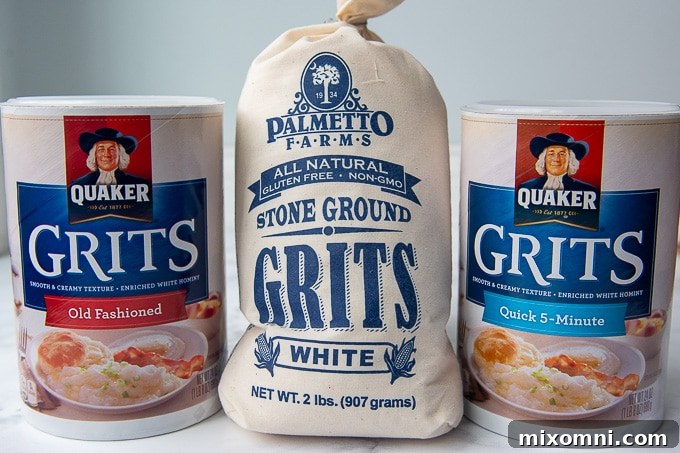
Navigating the grocery aisle for grits can sometimes be confusing, with options like stone ground, regular, quick, and instant. You might wonder about the distinctions or which type promises the best results. The “best” type of grits ultimately depends on several factors: availability, the amount of time you have for preparation, and your preference for a hands-on or more convenient cooking approach. Each variety offers a unique experience, from rustic texture to speedy preparation.
Southern Stone Ground Grits: The Traditional Choice
Considered the gold standard by many Southern purists, stone ground grits are an artisanal, old-fashioned variety. They are produced by coarsely grinding the entire dried dent corn kernel between two large, rotating stones. This traditional method preserves more of the corn’s natural oils and nutrients, resulting in a rustic, speckled appearance and a deeply satisfying, rich corn flavor. The milling process is slow, ensuring minimal heat generation, which further helps in retaining the corn’s inherent goodness.
Due to their minimal processing, stone ground grits retain the whole corn germ, which contributes to their superior taste and texture but also means they have a shorter shelf life compared to more processed varieties. For optimal freshness, it’s highly recommended to store them in the freezer. While they might be less common outside the Southern states, their unique texture – incredibly creamy with a delightful slight chewiness – makes them worth seeking out for an authentic experience. Brands like Palmetto Farms, Geechie Boy, and Charleston Favorites are renowned for their quality stone ground offerings, often available online. Larger brands such as Trader Joe’s and Bob’s Red Mill also offer respectable stone ground varieties.
Preparing stone ground grits on the stovetop requires the most dedication, typically needing 35-40 minutes of cooking time with occasional stirring to prevent sticking and achieve that signature creamy consistency. However, for those seeking convenience without compromising quality, stone ground grits can also be successfully prepared using an Instant Pot or a slow cooker, offering a more hands-off approach to this traditional delight while still delivering exceptional flavor and texture.
Regular or Old Fashioned Grits: The Everyday Staple
Regular grits, often labeled “old fashioned,” represent a slightly finer grind than their stone ground counterparts. This finer texture allows them to cook considerably faster, typically requiring only 15-20 minutes on the stovetop. While they still offer a good corn flavor and creamy consistency, they lack the rustic chewiness and depth of flavor found in true stone ground grits. They provide a balanced texture that is neither too coarse nor too smooth.
These are the most commonly found grits in standard grocery stores, with brands like Quaker being mass-produced. Unlike the small-batch, grist mill production of stone ground grits, regular grits are typically processed in larger industrial settings. They strike a good balance between tradition and convenience, making them a popular choice for everyday meals when time is a factor but quality is still desired. Their consistent texture makes them a reliable option for various recipes.
Hominy Grits: A Unique Flavor Profile
Hominy grits derive their distinctive white color from a specific processing method called nixtamalization. This ancient Mesoamerican technique involves soaking and cooking dried corn kernels in an alkaline solution, typically limewater (calcium hydroxide) or lye. This process removes the corn hull and germ, and significantly enhances the corn’s nutritional value, particularly making niacin (Vitamin B3) more bioavailable. It also imparts a unique, slightly earthy, and more savory flavor, along with a softer, fluffier texture to the corn.
Dried hominy can indeed be substituted for grits in many recipes, as they are essentially the same product, differing only in the extent of their grinding after nixtamalization. Hominy grits often result in a particularly tender and less fibrous consistency, offering a subtle but noticeable flavor difference that some prefer, especially for savory applications where a distinct corn flavor is desired. They offer a taste that bridges the gap between traditional grits and masa.
Quick Grits: For Busy Schedules
As their name suggests, quick grits are designed for speed. They are ground even finer than regular grits and often pre-steamed, which drastically reduces their cooking time to a mere 5-10 minutes. This makes them an excellent choice for busy mornings or when you need a fast side dish without much fuss. The processing aims to break down starches for rapid hydration.
While quick grits offer unparalleled convenience, their very fine texture means they may not achieve the same depth of flavor or rustic feel as stone ground or even regular grits. However, they are perfectly suitable for applications where speed is paramount, such as a weekday breakfast or as an ingredient in recipes like cheese grits casserole or for creating crispy grit cakes, where their smooth texture blends well with other ingredients. They are a practical option for getting grits on the table quickly.
Instant Grits: The Ultimate Convenience
Instant grits represent the ultimate in convenience, often sold in individual packets much like instant oatmeal. These grits are fully precooked, dried, and then finely ground, requiring only the addition of hot water or a couple of minutes in the microwave. They are designed for immediate consumption with minimal effort, making them a pantry staple for those truly pressed for time.
The trade-off for this extreme convenience, however, is often in taste and texture. Instant grits tend to be blander and can have a less satisfying, sometimes pasty, consistency compared to their less processed counterparts. While they serve their purpose for a quick, no-fuss meal, many aficionados find them forgettable when compared to the richness and complexity of traditionally cooked grits. They are best reserved for situations where speed trumps all other considerations.
Yellow versus White Corn Grits: Subtle Differences
The primary distinction between yellow and white corn grits is simply the color of the dent corn they are made from. Functionally, if tasted blindly, most people would likely find it challenging to detect a significant difference in flavor, as the corn’s inherent flavor is subtle once processed.
However, subtle variances do exist that can influence preference:
- Yellow Grits: These are often perceived as slightly richer in starch and may possess a more pronounced “corn” taste. Their golden hue also adds a visual warmth to dishes, often preferred for heartier, rustic presentations.
- White Grits: Generally considered milder in flavor, white grits tend to have a slightly higher sugar content. Their delicate taste makes them particularly well-suited to absorbing and complementing added flavors, such as butter, cream, and various cheeses, allowing these enhancements to shine through without competition from an overpowering corn flavor. They are often favored for more elegant or refined dishes.
Do Grits Contain Gluten? A Dietary Consideration
A common question for those with dietary restrictions is whether grits contain gluten. The good news is, no, they do not. In their pure form, grits are made exclusively from ground corn, which is a naturally gluten-free grain. This makes them an excellent and safe option for individuals with gluten sensitivities, celiac disease, or those following a gluten-free lifestyle.
However, it’s important to exercise caution with certain commercially processed brands, such as Quaker, which may not guarantee their products as certified gluten-free. This is because they might be processed in facilities that also handle gluten-containing grains (like wheat, barley, or rye), leading to potential cross-contamination. For those with severe gluten allergies or celiac disease, always look for grits explicitly labeled “certified gluten-free” to ensure safety and prevent any adverse reactions. For another naturally gluten-free grain, consider learning how to cook oat groats!
What to Serve With Grits: Versatile Pairings for Any Meal
If you’re wondering what truly complements a bowl of perfectly cooked grits, you’ll be delighted by the sheer array of options. Grits are far from being solely a Southern-style breakfast item; their creamy texture and subtle corn flavor make them an incredibly versatile canvas for both savory and sweet dishes, perfectly suitable for any meal of the day. Their adaptability makes them a fantastic addition to your culinary repertoire.
We frequently enjoy this creamy grits recipe alongside various weeknight dinners. It’s particularly appealing because it offers a naturally gluten-free side dish that the entire family can relish. Beyond the classic eggs and breakfast meats, velvety stone ground grits beautifully complement a multitude of main courses:
- BBQ Meats: Pair them with savory BBQ pulled chicken, slow-cooked ribs, or tender brisket for a hearty, comforting meal that soaks up all the delicious sauce.
- Grilled & Roasted Proteins: They are excellent with grilled chicken, juicy pork tenderloin, pan-seared fish (especially flaky white fish), or robust sausages. The grits provide a creamy contrast to the textures of the meat.
- Seafood: The classic pairing of shrimp and grits is a Southern icon for a reason, but they also work wonderfully with seared scallops, baked salmon, or even delicate crab cakes. The mildness of grits allows the seafood flavors to shine.
- Beyond the Plate: Think of grits as a delicious substitute for pasta, rice, or potatoes. Whatever savory dish you typically serve with these staples, try swapping in grits for a delightful twist! They can absorb sauces and gravies beautifully.
For a fulfilling vegetarian dish, consider roasting or grilling your favorite seasonal vegetables – bell peppers, zucchini, mushrooms, or asparagus – and piling them generously on top of a bed of creamy grits. Enhance this further with a dollop of marinara sauce, fresh mozzarella, tangy goat cheese, or a luxurious ball of burrata for an unforgettable meal. The combination of textures and flavors is simply sublime.
And don’t limit grits to savory applications! For a sweet treat, serve them with a drizzle of maple syrup or honey, fresh berries, a sprinkle of cinnamon, or even a dollop of fruit compote. They make for a comforting and unique dessert, a delightful breakfast variation, or even a wholesome snack.
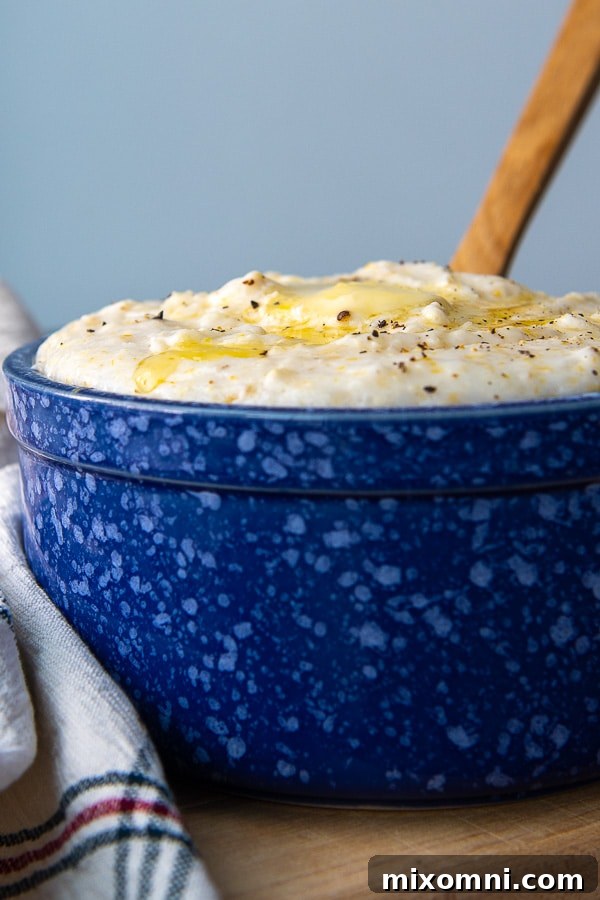
Grits to Water Ratio: Achieving Perfect Consistency Every Time
The secret to perfectly cooked grits, whether thick or runny, lies in mastering the correct grits to liquid ratio. A widely accepted guideline for cooking grits is a 1 to 4 ratio of grits to liquid. This means for every 1 cup of dry grits, you should incorporate 4 cups of liquid. Adhering to this ratio is fundamental for achieving the desired creamy, smooth consistency without them becoming too thin or overly stiff. Deviating too much can lead to either soupy or overly dry grits.
While water is the traditional base, many cooks enjoy customizing their liquid choice to enhance flavor and creaminess:
- Milk for Creaminess: To achieve an even creamier texture, some prefer to replace up to half of the water with milk from the outset of cooking. The proteins and fats in milk slowly integrate into the grits as they cook, building a richer, more luxurious base.
- Heavy Cream or Half-and-Half (Finishing Touch): I highly recommend reserving heavier dairy products like half-and-half or heavy cream to be stirred in during the final minute or two of cooking. Cream contains a higher concentration of milk solids and fat. If added too early, these solids can absorb too much liquid during the prolonged cooking process, potentially leading to overly thick grits or even a slightly gummy texture. Adding them at the end provides an immediate, luxurious, velvety finish without compromising the cooking process or consistency.
- Broth or Stock for Savory Dishes: For savory applications, particularly dishes like shrimp and grits, a portion of the water can be replaced with chicken or vegetable broth (or stock). This deepens the savory profile of the grits, making them an even more robust complement to your main course. Remember, however, that broths and stocks often contain sodium, so be sure to reduce the amount of added salt in your recipe to avoid over-seasoning and ensure a balanced flavor profile.
Understanding and adjusting this ratio, along with your liquid choices, empowers you to create grits that are perfectly tailored to your palate and the accompanying meal, always delivering a comforting and satisfying experience.
How to Cook Grits: Methods for Every Kitchen
Cooking grits can be approached in various ways, catering to different preferences and time constraints. Traditional Southern recipes often emphasize the stovetop method, which typically involves a watchful eye and frequent stirring to achieve that coveted creamy texture. While this hands-on approach is rewarding, other convenient options still yield deliciously creamy results for those seeking a more hands-off method.
Here’s a glimpse at popular cooking methods, allowing you to choose the best fit for your schedule and desired outcome. And if you happen to have any leftovers, our favorite way to repurpose them is by transforming them into crispy grit cakes – perfect as an appetizer, a unique breakfast item, or a delightful dinner side dish, minimizing food waste while maximizing flavor!
Stovetop Method: The Classic Approach for Creamy Grits
The stovetop method is the most traditional and provides the most control over the grits’ consistency. It requires attention but rewards you with exceptional creaminess.
- Boil Liquid: In a heavy-bottomed saucepan (to prevent scorching), bring your chosen liquid (water, milk, broth, salt, and pepper) to a rolling boil over high heat. Ensuring the liquid is vigorously boiling is crucial for even cooking.
- Add Grits Slowly: Gradually whisk in the grits in a slow, steady stream. This prevents lumps from forming and ensures each grit kernel is separated and hydrated evenly. Continue stirring constantly for the first minute or two until the grits are fully incorporated.
- Reduce Heat & Simmer: Once the grits are fully incorporated and the mixture returns to a gentle boil, reduce the heat to medium-low or low. The mixture should maintain a gentle simmer, not a vigorous boil.
- Cover & Stir Occasionally: Cover the saucepan with a lid and continue to simmer, stirring every 5-7 minutes. This prevents sticking to the bottom, helps distribute heat, and ensures even cooking.
- Cook Until Tender & Creamy: Continue cooking until the grits are tender, have absorbed most of the liquid, and reached your desired creamy consistency. Stone ground grits will take 35-40 minutes, while regular grits are ready in 15-20 minutes, and quick grits in 5-10 minutes. Taste for doneness and texture.
- Finish with Flavor: Remove from heat and stir in butter, cheese, or cream for extra richness and a final touch of flavor. Adjust seasoning if needed.
Slow Cooker Grits: Hands-Off Perfection
For a truly hands-off experience, the slow cooker is ideal, especially for stone ground grits which benefit from longer cooking times and develop an incredibly creamy texture with minimal supervision.
- Combine grits and liquid (using a 1:4 ratio, perhaps slightly more liquid for longer cooking) along with seasonings in your slow cooker.
- Cook on low for 3-4 hours, or on high for 1.5-2 hours. While stirring once or twice can be beneficial, it’s not strictly necessary, making this a great option for busy mornings or gatherings.
- The extended gentle heat ensures ultra-creamy, perfectly cooked grits with minimal effort, allowing you to focus on other tasks.
Instant Pot Grits: Speed and Convenience
The Instant Pot offers a fantastic way to cook stone ground grits quickly and efficiently, delivering creamy results without constant stirring. This method harnesses pressure to rapidly cook the grains.
- Combine grits, liquid (maintaining the 1:4 ratio), and seasonings in the Instant Pot. Ensure you don’t overfill past the max line.
- Pressure cook on HIGH for 10-15 minutes (depending on grit type and desired tenderness), followed by a natural release for 10-15 minutes. This allows the pressure to drop safely and the grits to fully absorb the liquid.
- Carefully release any remaining pressure, open the lid, stir thoroughly to achieve maximum creaminess, and then add your finishing touches like butter and cheese.
How to Make Grits Extra Creamy! Expert Tips for Unbeatable Texture
While grits are naturally comforting, achieving that ultimate, velvety smooth, extra-creamy consistency is an art. My favorite version, packed with butter, Parmesan, and ricotta cheese, offers a truly decadent experience. For those aspiring to elevate their grits to this level of luxuriousness, here are some expert tips that will guarantee an incredibly rich and smooth bowl every time:
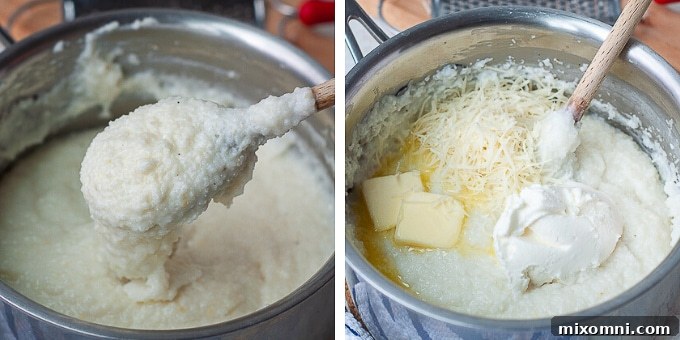
- Start with Milk: For a foundational layer of creaminess, substitute half of the water with milk when you begin cooking. The lactose and fat in milk will slowly infuse into the grits as they cook, building a richer, more complex base flavor and contributing significantly to the final creamy texture.
- Finishing with Heavy Cream or Half-and-Half: Just before serving, during the last minute of cooking, stir in a generous splash of heavy cream or half-and-half. This provides an immediate boost of richness and a silky texture without making the grits overly thick during the main cooking phase. Adding it at the end prevents the higher fat content from being absorbed too quickly and creating an overly dense texture.
- Incorporate Cheeses and Dairy: Beyond just milk, certain cheeses and dairy products are game-changers for creaminess. Try stirring in cream cheese, grated Parmesan, sharp cheddar, or my personal secret ingredient, ricotta cheese. Ricotta adds an incredible lightness and subtle sweetness that enhances the overall creaminess, making the grits feel more luxurious. TIP: Always add these dairy additions *after* the grits are fully cooked and removed from the direct heat. Adding them too early, especially cheddar or ricotta, can cause them to become lumpy, stringy, or even separate due to prolonged heat. Ensure the grits are hot enough to melt the cheese smoothly with residual heat.
- Don’t Skimp on the Butter: A generous knob of good quality butter stirred in at the very end is non-negotiable for truly creamy grits. Butter not only adds unparalleled flavor and richness but also contributes significantly to the smooth mouthfeel and luscious finish, creating that melt-in-your-mouth experience.
Tips & Tricks for Making the Best Grits: Expert Advice
Mastering grits goes beyond just a recipe; it involves a few key techniques and considerations that can significantly impact the final outcome. Here are some invaluable tips to ensure your grits are consistently perfect, flavorful, and incredibly creamy every single time:
- Polenta as a Substitute: This recipe can also be wonderfully adapted for Quick Cooking Polenta. While technically different (polenta is typically made from a different type of corn and grind), it offers a similar creamy texture and can be used in many of the same applications, providing a delicious alternative.
- Salt the Water First: Always salt the water (or liquid) before stirring in the dry grits. Grits do not absorb seasonings effectively once they are cooked, so adding salt to the cooking liquid ensures the flavor is integrated throughout the grain from the start. Taste and adjust as needed, keeping in mind that adding salty ingredients like cheese later will also contribute to the overall seasoning.
- Smart Cheese Swaps: If ricotta cheese isn’t available, cream cheese is an excellent alternative for adding creaminess and a tangy note. For cheesy grits, feel free to substitute cheddar, Colby, Monterey Jack, or even spicy pepper jack for the Parmesan to suit your flavor preferences. Experiment with different cheese combinations for unique profiles.
- The Strategic Role of Cream: As mentioned, adding half-and-half or heavy cream during the last minute of cooking is crucial for that extra-velvety finish. The higher fat content of cream contributes to a rich mouthfeel without making the grits excessively thick or heavy during the longer cooking process.
- Stovetop Technique Refinement: When preparing grits on the stovetop, stir frequently, especially in the initial stages, until the grits have absorbed most of the liquid and the mixture becomes thick and soupy. This active stirring helps prevent sticking and promotes an even, creamy texture. Once this consistency is achieved, reduce the heat to a low simmer, cover the saucepan, and continue to stir occasionally until the grits are fully cooked and reach your desired thickness. Don’t rush the simmering process; patience is key here for tender, non-gummy grits.
- Preventing Lumps: To avoid lumpy grits, always add the dry grits slowly in a steady stream to vigorously boiling liquid while continuously whisking. This ensures each grit kernel is separated and hydrated evenly, preventing clumps from forming.
- Use a Large Pot: Make sure to use a sufficiently large, heavy-bottomed saucepan. Grits expand significantly during cooking and can bubble up, so ample space prevents boil-overs and ensures even heat distribution, reducing sticking.
- Taste and Adjust: Always taste your grits at the end of cooking. Add more salt, pepper, or a pinch of sugar (for sweet applications) as needed to achieve a perfectly balanced flavor.
Making Grits Thicker or Thinner: Customizing Your Consistency
The ideal thickness of grits is entirely a matter of personal preference. Some prefer them with a thinner, porridge-like consistency, perfect for soaking up gravies or being poured over other dishes. Others enjoy a hearty, almost solid texture that holds its shape, ideal for forming grit cakes or serving as a substantial side. Fortunately, adjusting the thickness is straightforward and can be done at the end of the cooking process:
- If you prefer your grits runnier and more pourable, simply add a little more hot milk, cream, or water towards the very end of cooking. Stir it in gradually, a tablespoon at a time, until you reach your desired consistency. Using hot liquid helps maintain the temperature and smoothness.
- If thicker grits are more to your liking, continue to cook them for a little longer over low heat, stirring occasionally. This allows more of the water or milk to evaporate and absorb, naturally thickening the mixture. Be careful not to let them dry out too much or stick to the bottom of the pot; continuous stirring is essential here.
Always taste and adjust seasonings after making any consistency adjustments, as adding more liquid might dilute the flavor slightly, and cooking longer might intensify it. A perfect bowl of grits is one that matches your personal preference.
How to Reheat Grits: Restoring Creaminess
Leftover grits tend to firm up considerably as they cool due to their starch content, often becoming a solid mass. Reheating them to their original creamy glory is simple with a few tricks, primarily involving the reintroduction of liquid:
- To reheat in the microwave: Place the cold grits in a microwave-safe bowl. Add a generous splash of milk or water (start with about 1-2 tablespoons per cup of grits). Heat at 50% power, stirring every minute, until they begin to warm and loosen. Then, finish heating at full power, stirring occasionally, until they are hot and creamy. Adjust liquid as needed for desired consistency, adding more in small increments if they are still too thick.
- To reheat on the stove: Transfer the cold grits to a heavy-bottomed saucepan. Add a splash of milk or water (again, starting with 1-2 tablespoons per cup of grits). Heat over low heat, stirring occasionally, until they begin to warm and loosen. Gradually increase the heat slightly and continue stirring diligently until they are hot, smooth, and creamy, adding more liquid if necessary to reach the right consistency. This method often yields the best results for restoring texture.
The key is to add extra liquid and reheat gently, allowing the grits to rehydrate and regain their smooth texture without becoming dry, scorched, or lumpy. Don’t be afraid to add more liquid than you think you need initially, as the grits will absorb it.
Save this recipe to your Pinterest board!
Let’s be friends on Pinterest! I’m always sharing great recipes!
Did you make this recipe? We love hearing from you! Leave a star rating and comment below the recipe card. Your feedback helps others discover and enjoy our recipes, and we always appreciate hearing from our community. You will always hear back from me! -Melissa

How to Make Grits: The Ultimate Creamy Recipe

Melissa Erdelac
6
5 minutes
35 minutes
40 minutes
Pin Recipe
Rate This Recipe
Remove Ads
Ingredients
- 2 cups (750 g) water
- 2 cups (244 g) milk
- ½ teaspoon (0.5 tsp. ) salt
- dash pepper
- 1 cup (156 g) stone ground grits, (see recipe notes for using different type)
- 3 tablespoons (3 tbsp. ) butter
- ½ cup (123 g) ricotta cheese
- ½ cup (50 g) freshly grated parmesan
Instructions
-
In a medium saucepan, bring water, milk, salt, and pepper to a rolling boil over high heat. Slowly add grits, stirring constantly with a whisk to prevent lumps from forming.2 cups water, 2 cup milk, ½ teaspoon salt, dash pepper, 1 cup stone ground grits
-
Once the grits have absorbed most of the water and the mixture thickens to a soupy consistency, reduce the heat to a low simmer. Cover the saucepan with a lid and stir occasionally for 25-35 minutes (for stone ground grits), or until the grits are thick, creamy, and tender.
-
Remove the saucepan from the heat. Stir in the butter, ricotta cheese, and Parmesan cheese until everything is smooth and creamy. Taste and adjust seasonings (salt and pepper) if necessary. Serve immediately for the best flavor and texture.3 tablespoons butter, ½ cup ricotta cheese, ½ cup freshly grated parmesan