
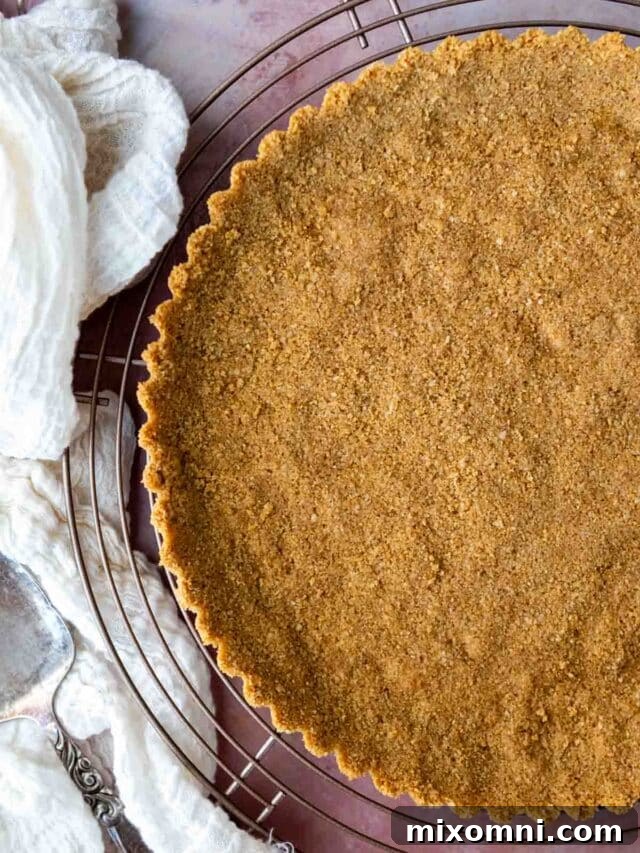
If you’ve ever dreamt of creating a gluten-free graham cracker crust that’s so perfect it fools even the most discerning palates, you’ve landed in the right spot. Many attempts at gluten-free baking can lead to disappointment, but not today. I’ve meticulously tested and perfected simple yet ingenious tricks to craft an incredible pie or cheesecake crust. This isn’t just any crust; it’s one that truly holds its shape, slices beautifully without crumbling, and delivers a texture and flavor that rivals its gluten-containing counterparts. Prepare to impress your toughest gluten-free critics with a homemade crust that’s surprisingly easy to make and utterly delicious. Dive in to discover all the helpful, straightforward tips and the magic ingredient that makes all the difference!
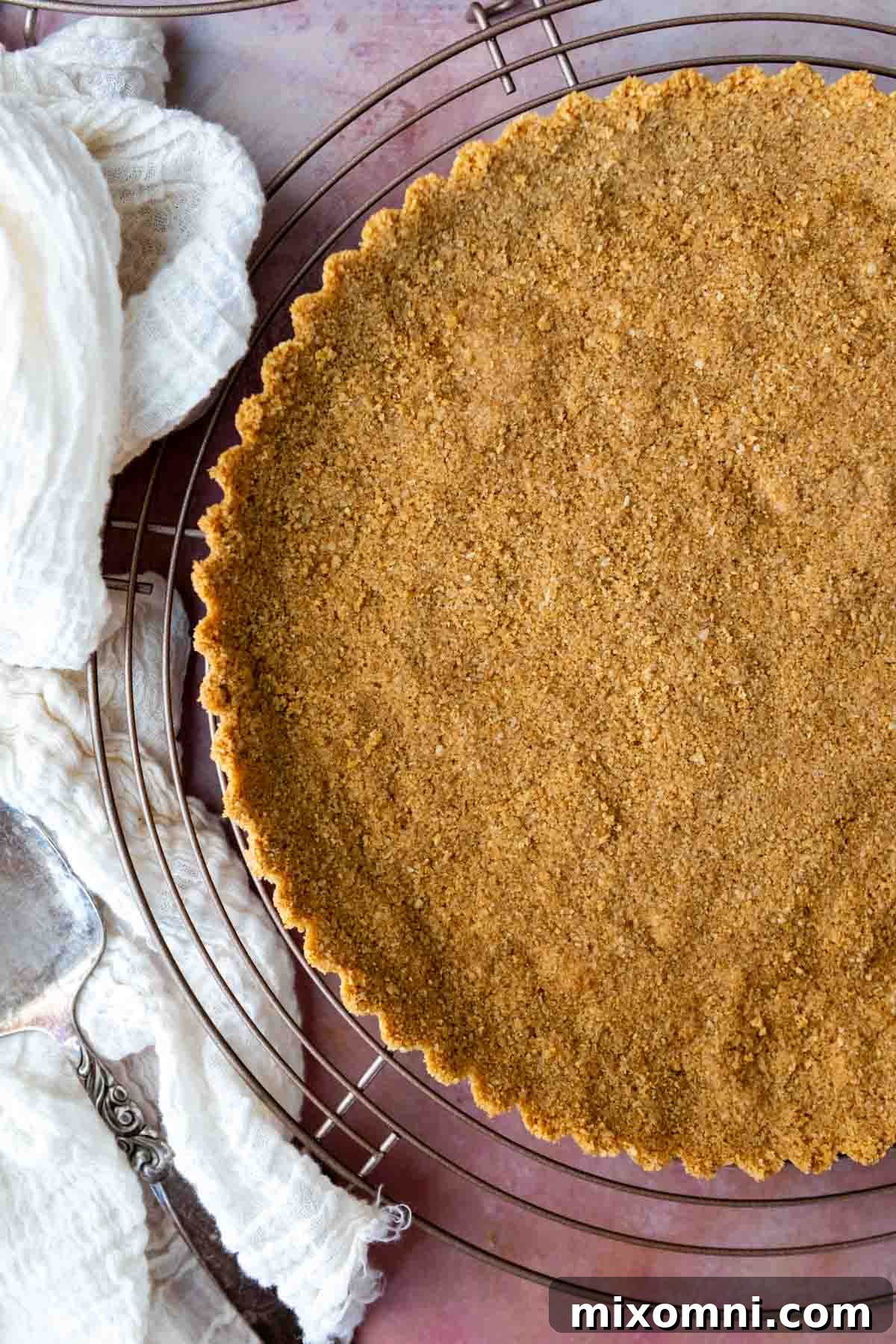
Mastering the Gluten-Free Graham Cracker Crust: No More Gritty Disappointments!
Navigating the world of gluten-free baking often means facing unique challenges. Simply substituting a specialty GF ingredient into a traditional recipe rarely yields optimal results, especially when it comes to something as fundamental as a crumb crust. The common advice—”just swap out those ridiculously expensive and often gritty GF crackers!”—is, frankly, disappointing. We deserve better than crumbly, sandy crusts that detract from the delicious fillings they’re meant to support. This frustration was a significant driving force behind my quest to create not only gluten-free pies that truly hold their shape but also this outstanding graham cracker crust.
For years, I found myself seriously let down by many pre-packaged, “convenient” gluten-free products. This led me to fully embrace developing easy and affordable homemade gluten-free alternatives. While there are times you crave that perfectly flaky pie crust recipe, other times the call of a decadent cheesecake is irresistible. For those moments, a reliable gluten-free graham cracker pie crust is essential to encase all that creamy, delightful goodness.
A recent trip to the grocery store sparked a new inspiration: the sheer number of gluten-free graham cracker brands available. Surely, not all of them could be bad. This presented an exciting taste-testing challenge, and I was ready to take it on. My goal was clear: to avoid the two most common pitfalls when making a gluten-free crust with graham crackers. First, selecting a quality cracker that doesn’t taste like rice or have an unpleasantly gritty texture. Second, perfecting the preparation and baking method to ensure the crust doesn’t crumble like loose sand once baked.
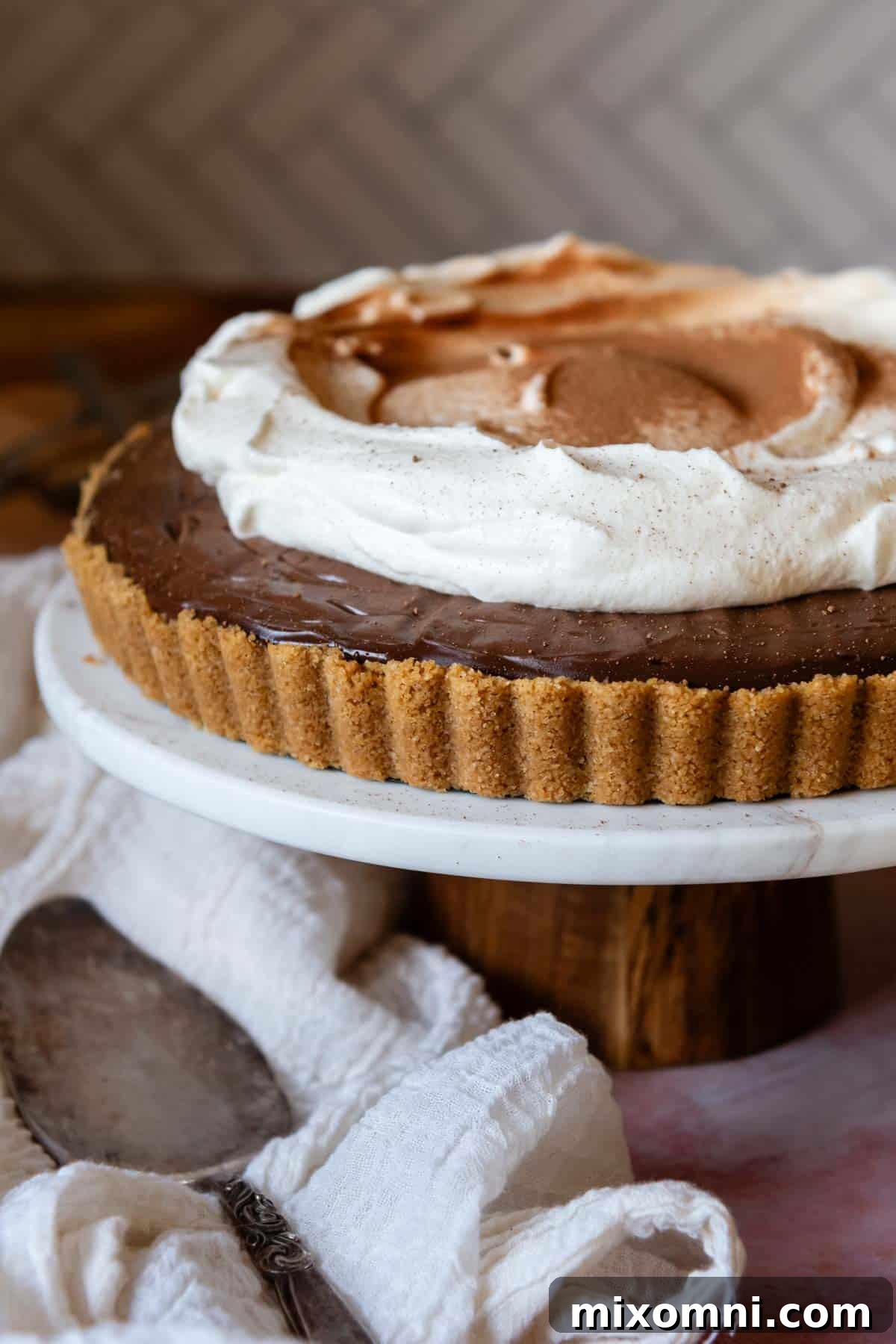
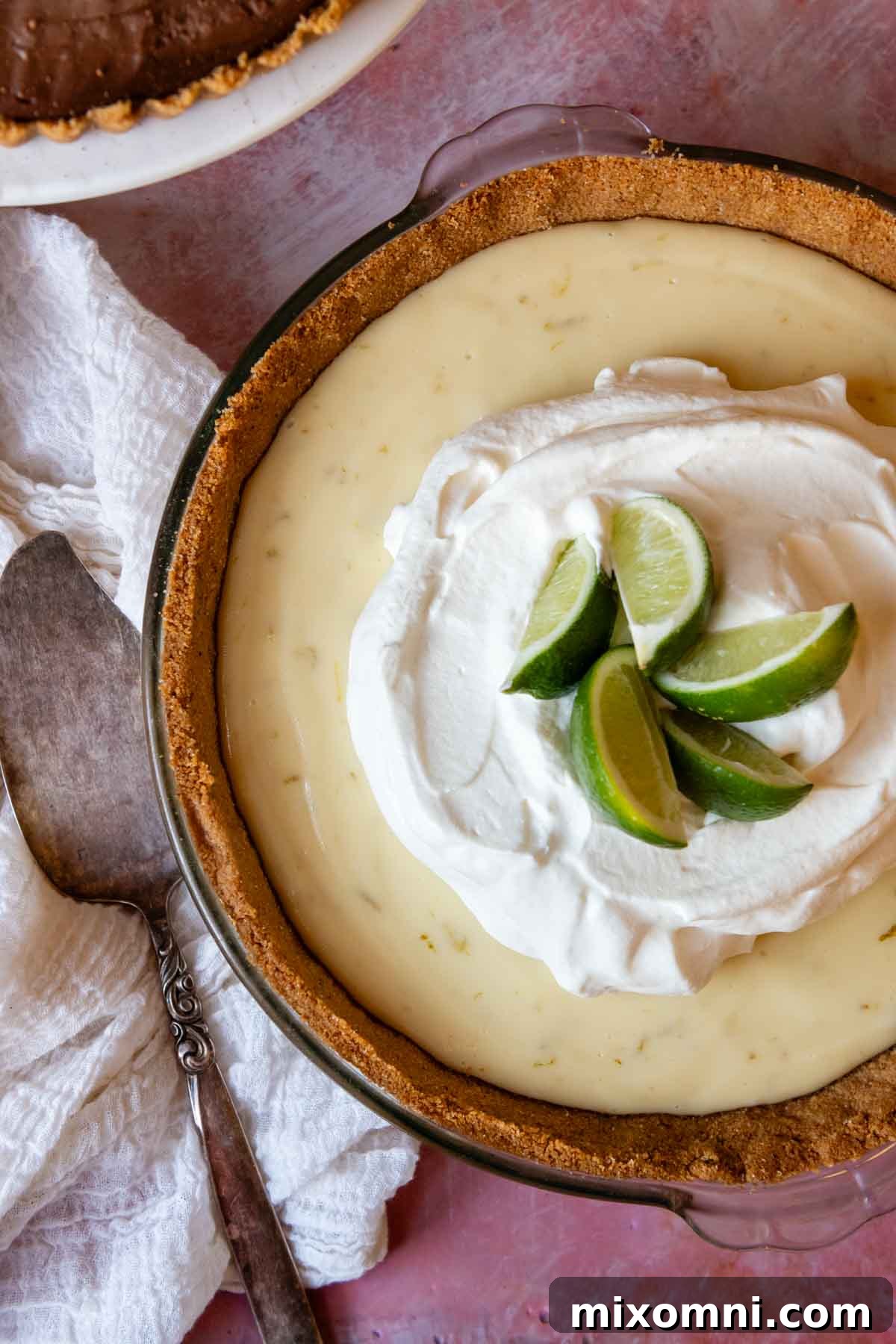
After extensive experimentation, which involved spending a small fortune on various graham crackers (but it was worth it, so you don’t have to!), I discovered the secret. The key to a seriously amazing crumb crust lies in both the selection of the right cracker and the addition of a special “magic” binding ingredient that beautifully stabilizes the baked crust. It’s time to reclaim all those delicious pie and cheesecake slices we’ve been missing! I personally use this versatile crust for my famously delicious gluten-free key lime pie and as the ideal base for countless cheesecakes. What will you create with it? Be sure to share your creations and leave a comment below!
Essential Ingredients for a Perfect GF Graham Cracker Crust
Achieving a truly exceptional gluten-free graham cracker crust hinges on selecting the right ingredients. This section details the critical components, especially the gluten-free graham crackers themselves, and explains any specific modifications or considerations.
- Gluten-Free Graham Crackers – The foundation of your crust! After extensive testing, I’ve identified brands that truly shine. You’ll need precisely 180 grams of crackers to achieve the perfect crumb-to-binder ratio. Check the list below for my top suggestions and notes on how many boxes you might need. The quality of your crackers directly impacts the final texture and flavor, so choose wisely to avoid a “ricey” or gritty outcome.
- Butter – This recipe uses a slightly more generous amount of butter than many traditional recipes, and for good reason! The extra 5 full tablespoons are crucial for binding the gluten-free crumbs together, ensuring the crust holds its shape beautifully and slices cleanly. For those needing a dairy-free option, melted coconut oil or a high-quality vegan butter can be seamlessly swapped in without compromising the results.
- Granulated Sugar – While some recipes opt for brown sugar, I’ve found that using white granulated sugar contributes to a noticeably crispier crust. Its lower moisture content helps achieve that desired crunch and firm texture, creating a delightful contrast with creamy fillings.
- Binder (Where the Magic Happens!) – This is the secret weapon for a stable gluten-free crust. Traditional graham cracker crusts rely solely on crumbs, sugar, and butter for binding. However, because gluten-free crackers lack the gluten protein structure, a small “smidge” of an additional binder is essential to prevent a loose, sandy texture and ensure the crust truly holds for slicing. I rigorously tested this recipe using 1 tablespoon of gluten-free all-purpose flour, cornstarch, and rice flour. All three options performed exceptionally well, so you can confidently choose whichever one you have on hand or prefer!
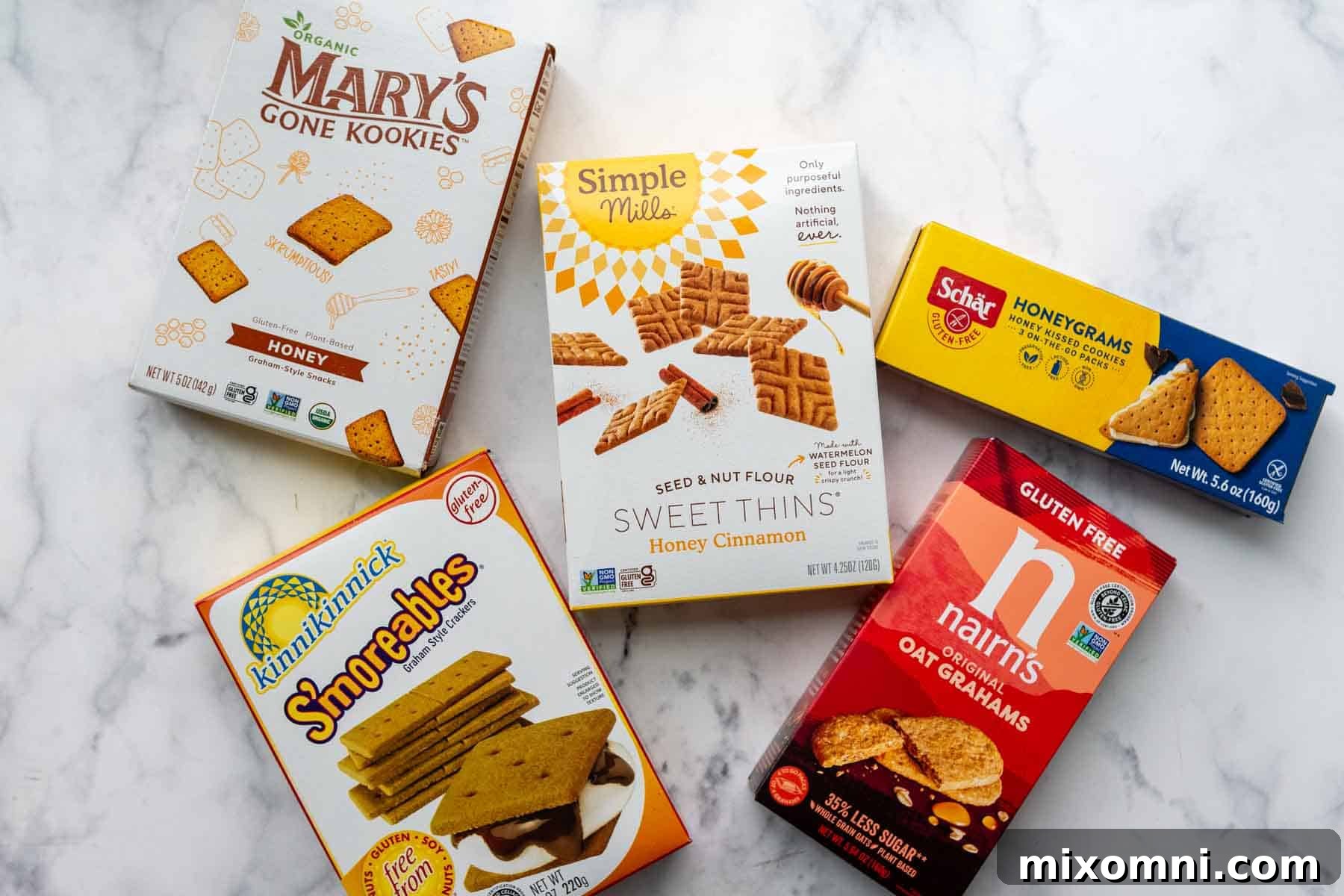
GF Graham Cracker Brands – What To Buy and Avoid for Your Crust
Choosing the right gluten-free graham cracker brand is paramount for the success of your crust. After extensive testing, I’ve compiled a list to guide your selection, focusing on taste, texture, and binding properties when crushed.
- Nairn’s Oat Grahams – (Highly Recommended) These are a fantastic choice. They offer a lightly sweetened, wholesome oat flavor without any grittiness or displeasing texture, making them delicious even on their own. While one box might be slightly under the 180 grams required for the recipe, you can easily make up the difference or simply buy two boxes and enjoy the extras as a snack. They are truly delightful and create an excellent crust.
- Schar Gluten-Free Honeygrams – (Recommended) Schar Honeygrams are another solid option. They are lighter and possess a more tender, traditional graham cracker-like texture. The taste is good, although you might detect a slight grittiness, which is common in many GF products. One box typically provides the exact amount needed for this recipe, making them convenient.
- Simple Mills Sweet Thins Honey Cinnamon – These taste really great on their own, boasting a smooth texture without grittiness. However, they are made with watermelon seed, which I found might affect their binding ability as a crust compared to oat or rice-based crackers. Also, one box contains only 120 grams, so you would need to purchase two boxes to meet the 180-gram requirement for the recipe.
- Mary’s Gone Kookies Honey Grahams – These crackers are less sweet, leaning almost towards a savory profile. If you choose this brand, I suggest adding an extra 1-2 tablespoons of granulated sugar to the crust mixture to achieve the desired sweetness balance. Similar to Simple Mills, one box provides only 142 grams, necessitating the purchase of two boxes for the recipe.
- Kinnikinnick Graham Crackers – (Not Recommended) Unfortunately, these did not perform well in testing. They have a very pronounced “ricey” flavor and a gritty texture that can translate to the final crust. They are also quite thick, which makes them less ideal for general use, even for s’mores. This brand also offers ready-to-use gluten-free graham cracker crumbs, but based on the crackers, I would not recommend those either for this recipe.
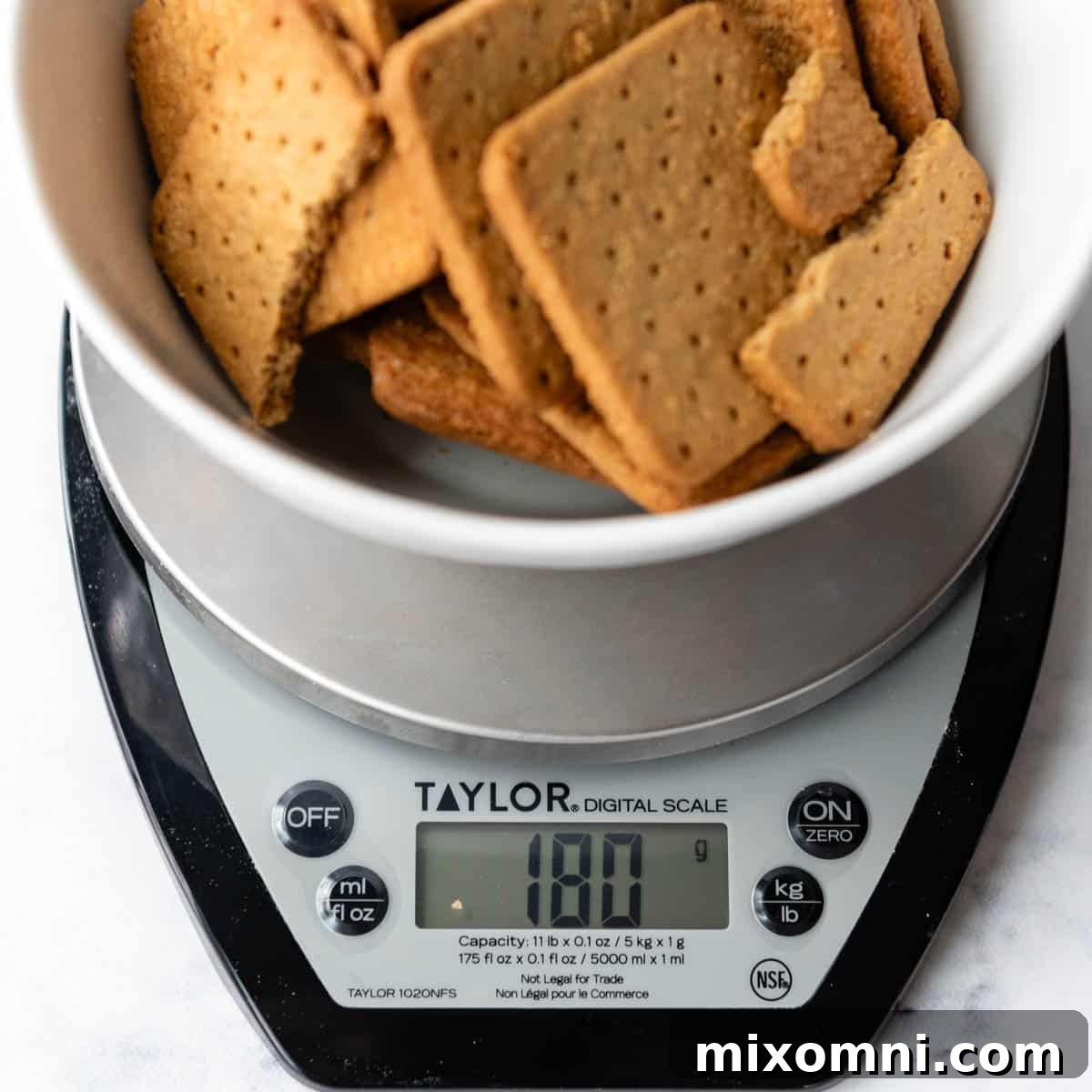
Let’s Make This Perfect Gluten-Free Crust!
Crafting this incredible gluten-free graham cracker crust is a straightforward process, even if you’re new to gluten-free baking. Below, you’ll find step-by-step photos and detailed instructions. For the complete recipe, including exact ingredient amounts, please scroll down to the dedicated recipe card.
Step 1: Create the Fine Crumbs
For effortlessly uniform crumbs, a food processor is a true kitchen hero, making this step incredibly simple. If you don’t have one, don’t worry! You can achieve equally good results by placing the graham crackers in a sturdy zip-top bag and crushing them with a rolling pin. The key here is to ensure the crumbs are very fine – this is crucial for a crust that binds together beautifully and doesn’t feel sandy.
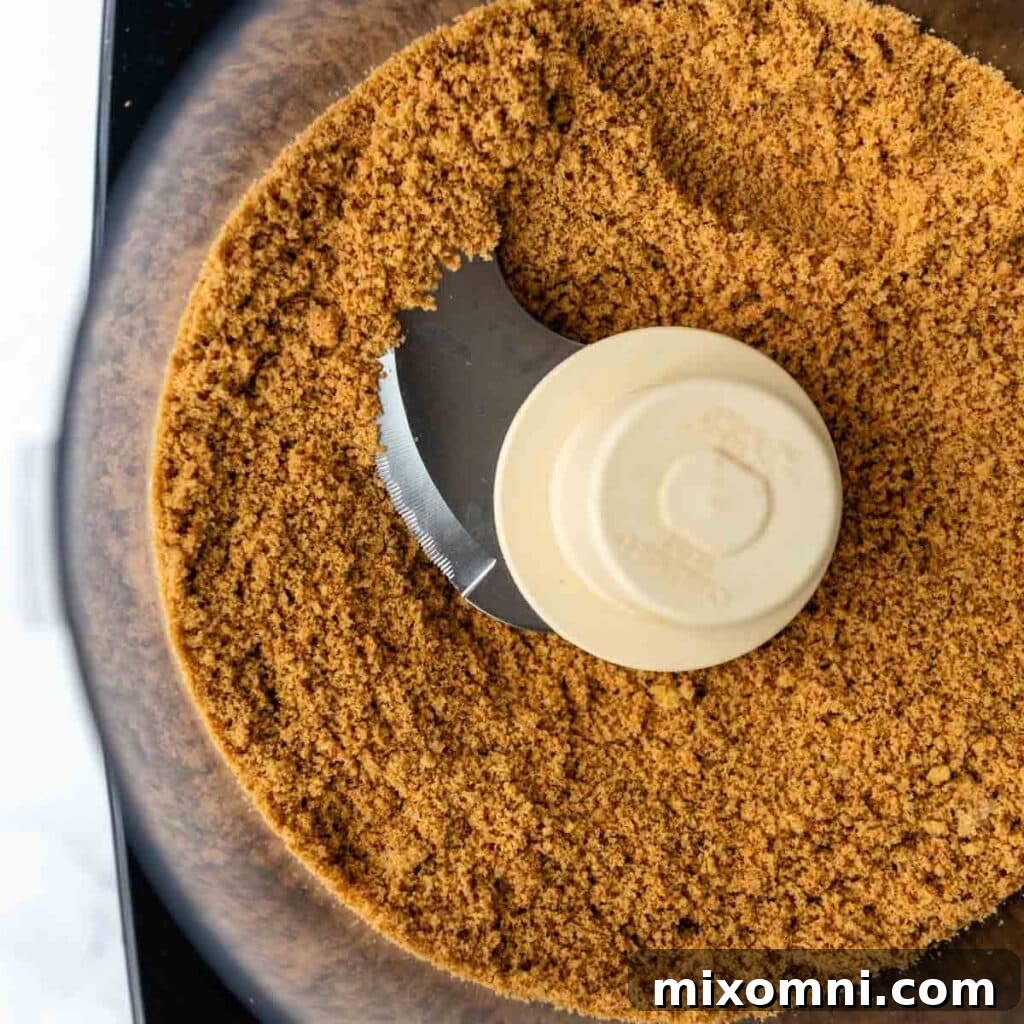
Step 2: Incorporate the Magic Binder and Melted Butter
Once your graham cracker crumbs are perfectly fine, add the granulated sugar, your chosen gluten-free flour (or cornstarch), cinnamon, and the melted butter (or dairy-free butter alternative/coconut oil) to the food processor. Process all the ingredients together until they are very well combined and the mixture resembles wet sand. This ensures that every crumb is coated, ready to form a cohesive crust.
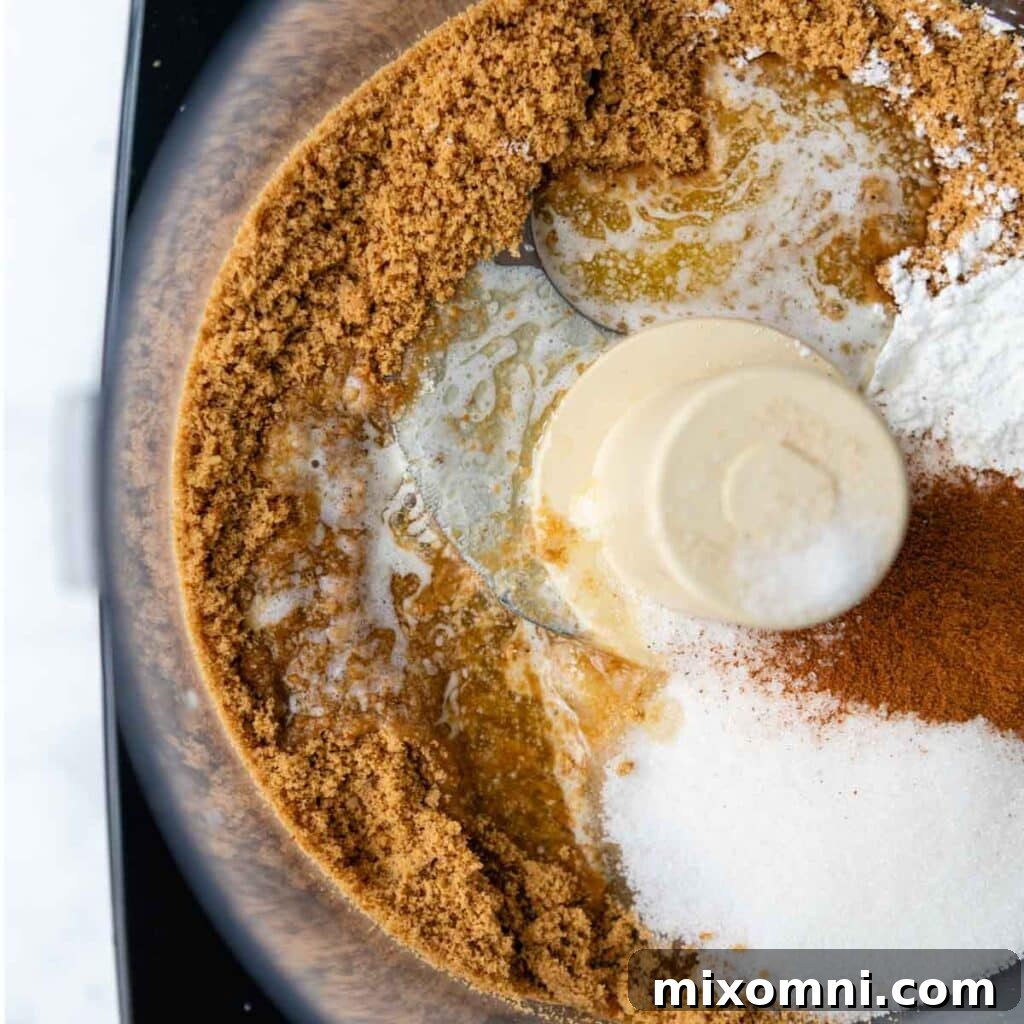
Step 3: Press and Bake for Stability
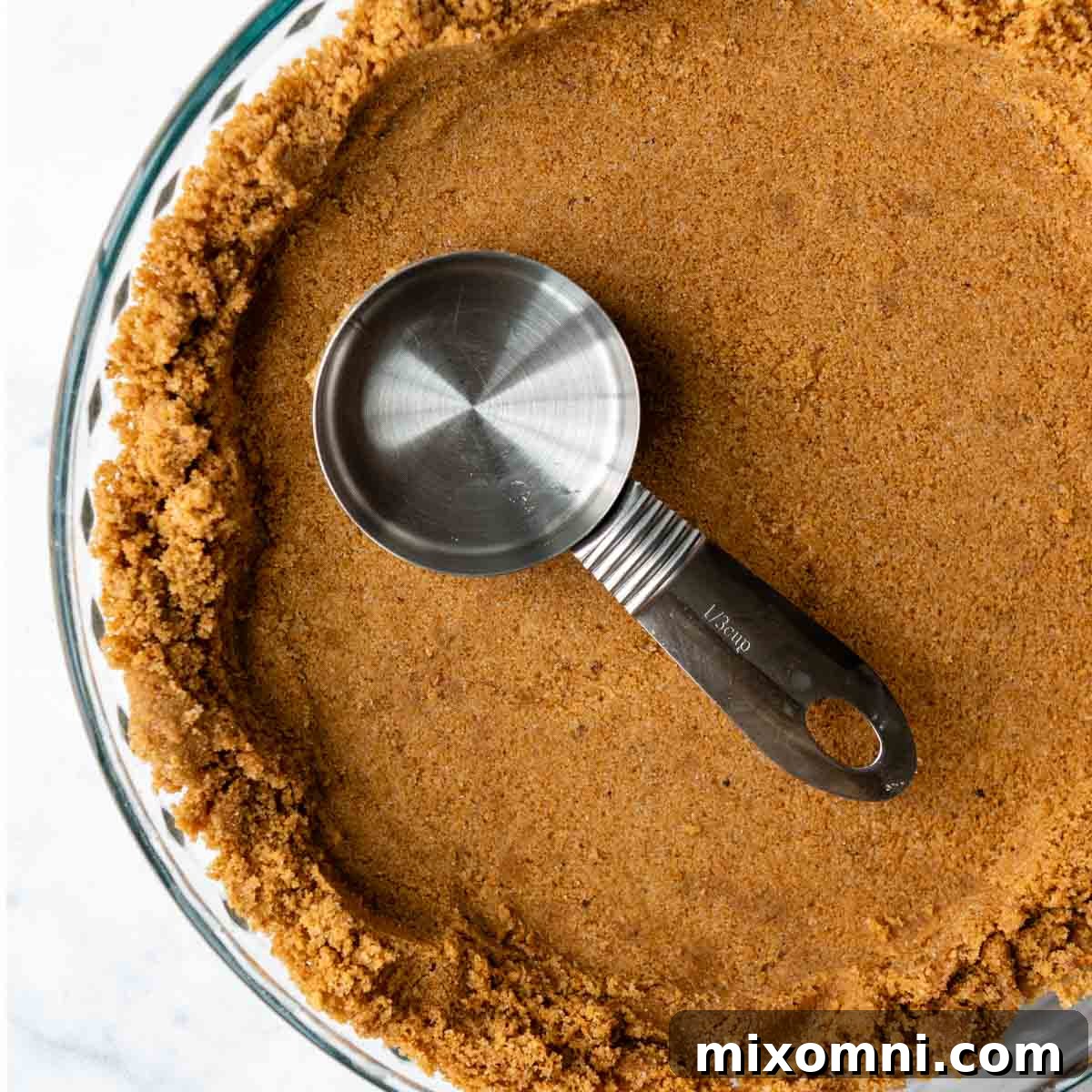
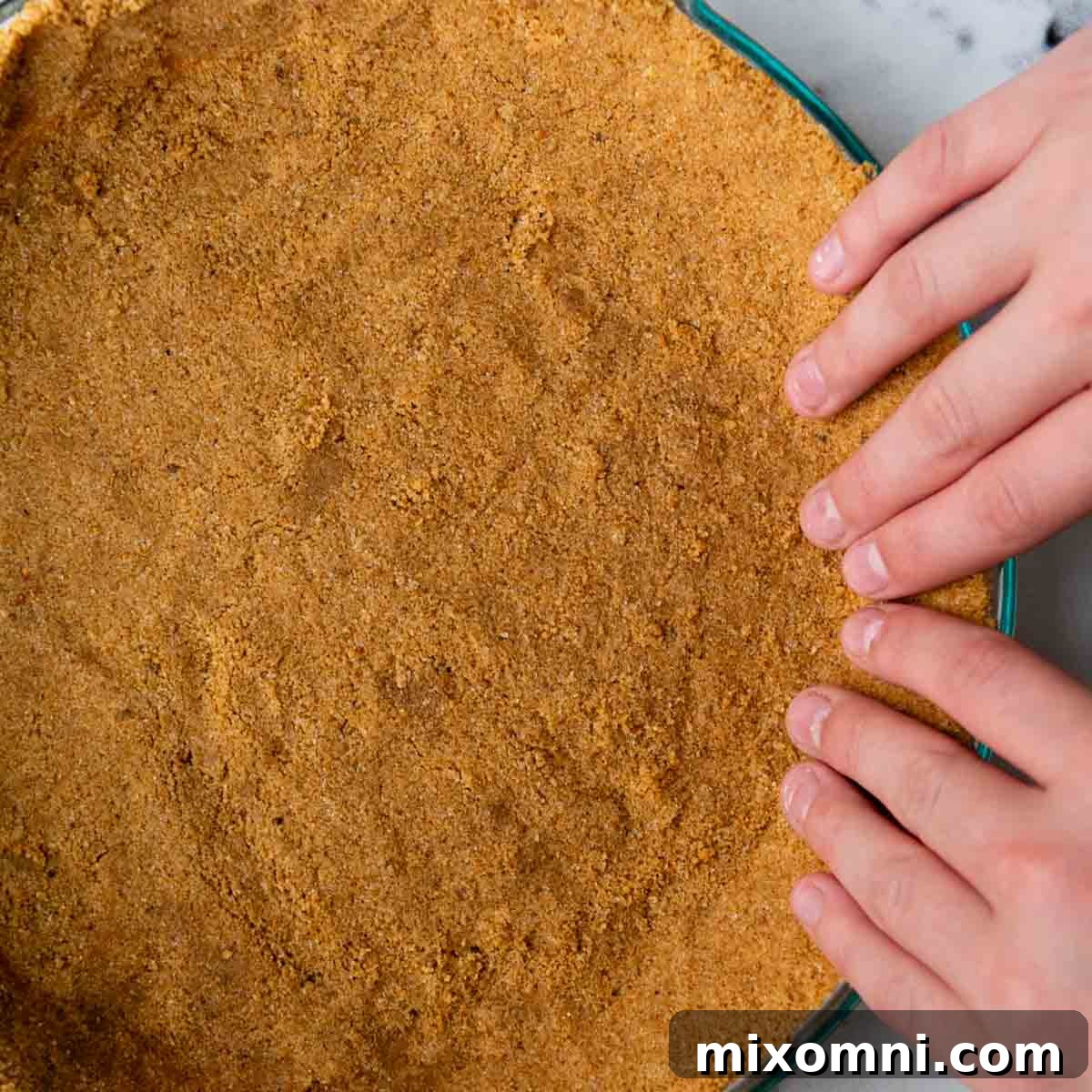
Now, carefully transfer the crumb mixture into your chosen pie plate, tart pan, or the bottom of a springform pan (more tips on pan choice below). Begin by spreading the mixture across the bottom of the pan. Then, use the flat bottom of a measuring cup or a glass to press the crumbs down firmly and evenly. As you press towards the edges, some crumbs will naturally push up the sides. Use your clean hands to gently but firmly press these crumbs around the edges, creating a well-formed and sturdy rim. Once pressed, bake the crust in a 350ºF (175°C) oven for just 10 minutes. After baking, allow it to cool completely before adding your desired filling. Get ready to fill your gluten-free bursting heart’s desire!
To Bake Or Not To Bake: Why Baking is Essential for GF Crusts
When it comes to crafting a gluten-free graham cracker crust, baking is not just an option – it’s an absolute necessity for achieving a truly stable and delicious result. Unlike traditional graham cracker crusts, which rely on the natural binding properties of gluten-containing crackers and butter, gluten-free crackers lack this inherent structural integrity. Without gluten, there’s nothing naturally present to sufficiently bind the crumb mixture together on its own. This is where our “magic combination” comes into play: a little extra butter, coupled with that crucial smidge of gluten-free flour (or cornstarch), and a brief bake in the oven. This trio works synergistically to create a crust that is perfectly bound, beautifully firm, and capable of holding its shape, preventing it from crumbling into a pile of loose crumbs.
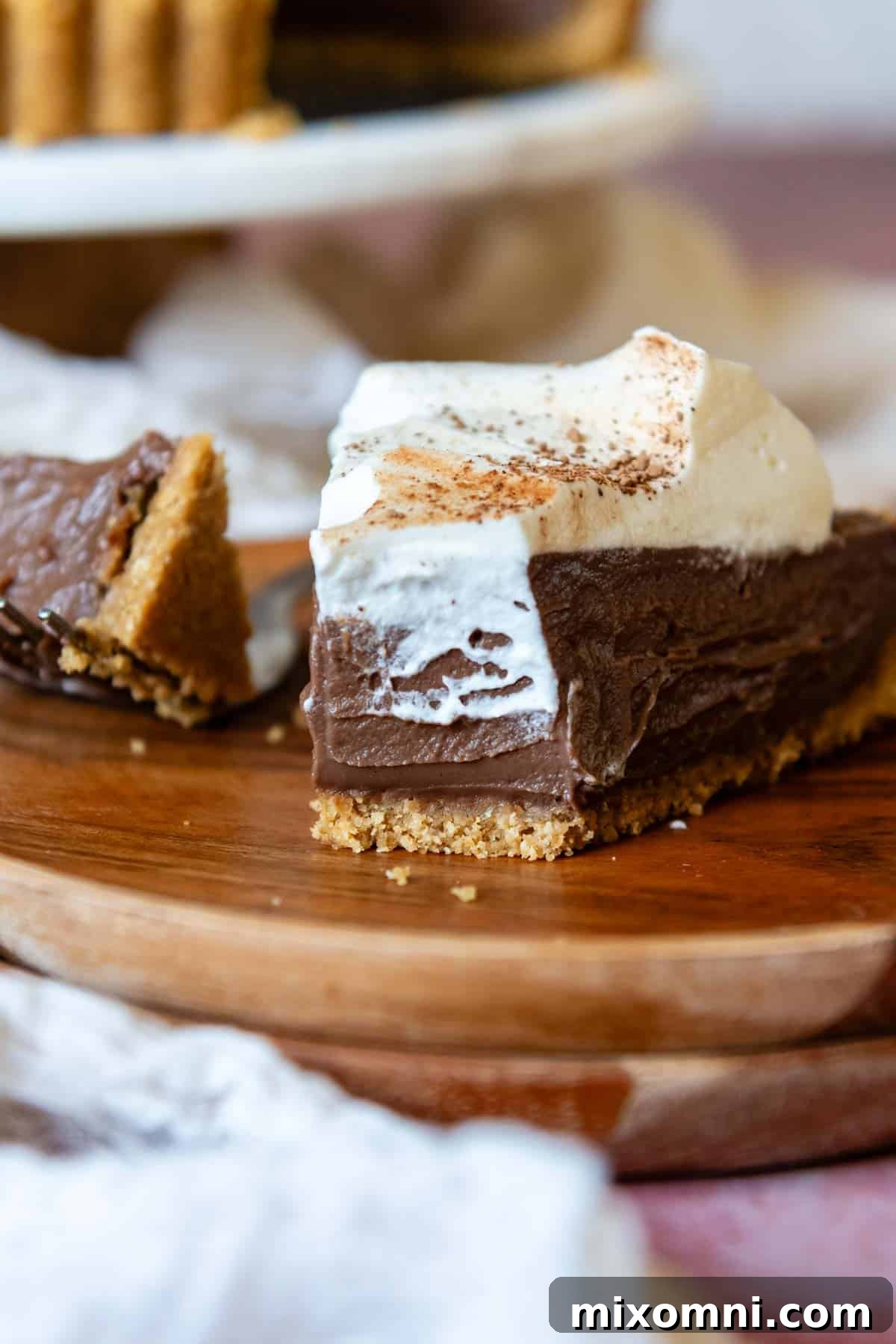
Even if you plan to use this versatile base for a no-bake dessert, such as a luscious cheesecake, a rich chocolate pudding pie, or a refreshing icebox pie, it’s vital to bake the crust first. The good news is that this step is quick and easy! The crust only needs about 10 minutes in the oven. This short bake time is enough to activate the binding agents and solidify the crust, ensuring it’s robust enough to support your filling and slice cleanly. After baking, simply allow the crust to cool completely before adding your desired no-bake filling. This simple step guarantees a structurally sound and incredibly satisfying gluten-free base for any dessert you envision.
Save this recipe to your Pinterest board!
Let’s be friends on Pinterest! I’m always sharing great recipes and baking tips!
Did you make this recipe? I love hearing from you and seeing your delicious creations! Leave a star rating and comment below the recipe card. Your feedback is incredibly helpful to others searching for reliable gluten-free recipes, and I truly appreciate hearing from our community. I promise you’ll always hear back from me! -Melissa
15-Minute Baked Gluten-Free Graham Cracker Crust
 Melissa Erdelac
Pin
Rate
Remove Ads
Ingredients
- 180 grams gluten-free graham crackers (or 1 ½ cups crumbs), Schar or Nairn’s Oat Crackers recommended
- 5 tablespoons melted butter, or dairy-free butter or melted coconut oil
- ¼ cup granulated sugar
- 1 tablespoon gluten-free all purpose flour, or cornstarch
- ½ teaspoon ground cinnamon
Equipment
-
Food Processor
-
Food Scale
-
Pie Plate
Instructions
-
Preheat your oven to 350℉ (175°C). In a food processor, add the gluten-free graham crackers and process until they are very finely ground. This usually takes about 1 minute. The finer the crumbs, the better the crust will bind. If you do not have a food processor, you can easily crush the graham crackers in a sturdy zip-top bag using a rolling pin. Ensure they are crushed into a very fine, sand-like consistency, as this critical step significantly helps bind the crust together and prevents it from being crumbly.180 grams gluten-free graham crackers (or 1 ½ cups crumbs)
-
To the finely ground crumbs, add the melted butter, granulated sugar, gluten-free all-purpose flour (or cornstarch), and ground cinnamon. Process again until all the ingredients are very well and uniformly mixed. The mixture should appear moist and clump together when pressed. If you are making this without a food processor, transfer the crushed crumbs to a mixing bowl and stir all the ingredients together thoroughly with a spoon or spatula until evenly combined.5 tablespoons melted butter, ¼ cup granulated sugar, 1 tablespoon gluten-free all purpose flour, or cornstarch, ½ teaspoon ground cinnamon
-
Pour the mixture into a 9 or 10-inch pie pan, a tart pan, or the bottom-only of a springform pan. First, spread the mixture across the bottom of the pan. Then, use the bottom of a flat-bottomed measuring cup or a glass to press down firmly and evenly across the entire surface. As you work towards the edges, any excess crumbs will naturally push up the sides. Use your hands to meticulously press and mold these crumbs around the edges to form a neat, sturdy, and even rim. (Refer to the how-to images in the main post for visual guidance.) Bake for 10 minutes. Once baked, let the crust cool completely on a wire rack before filling it with your favorite pie or cheesecake mixture. This ensures maximum stability and prevents soggy bottoms.