
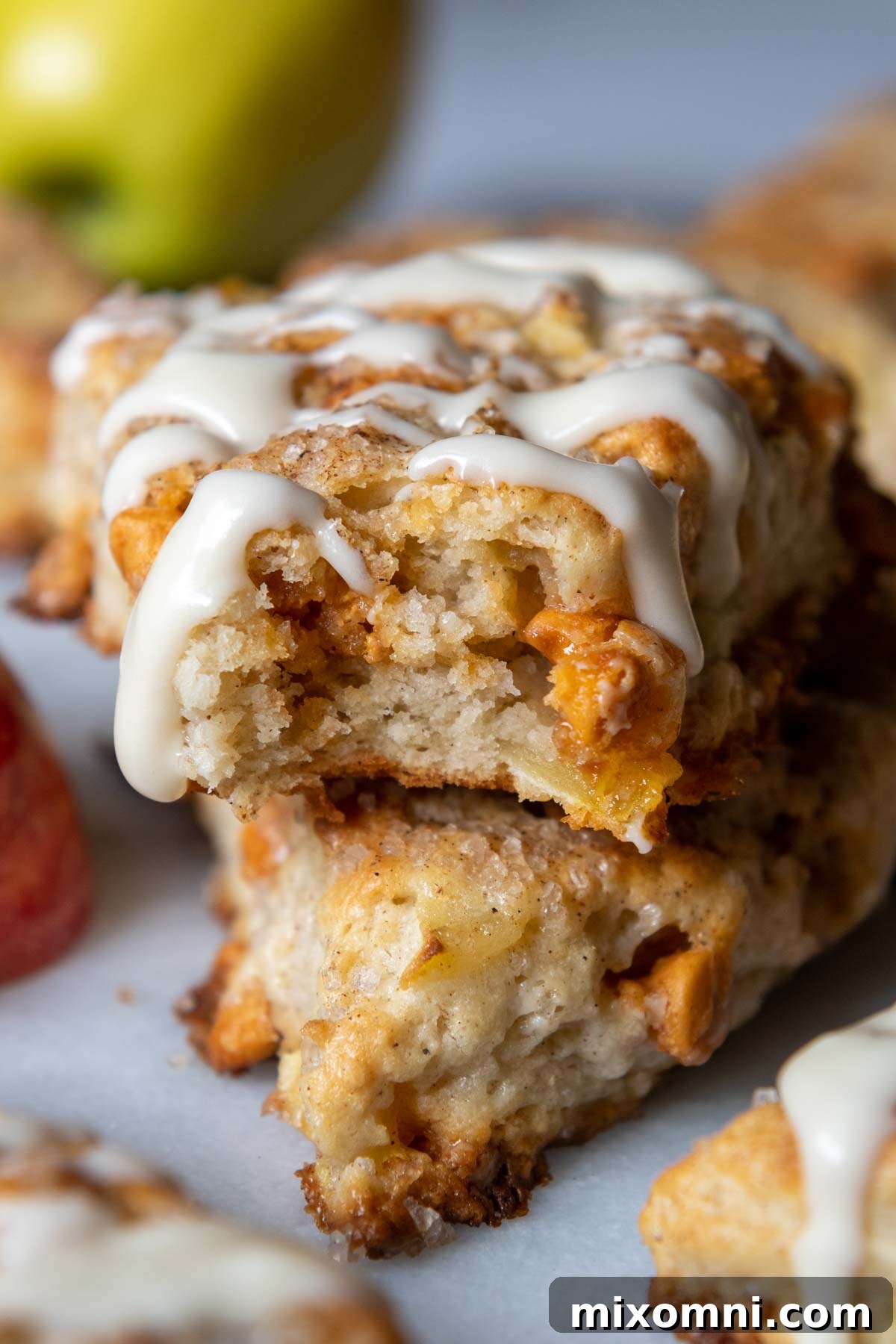
Irresistibly Fluffy Gluten-Free Apple Scones with Butterscotch: Your New Favorite Recipe
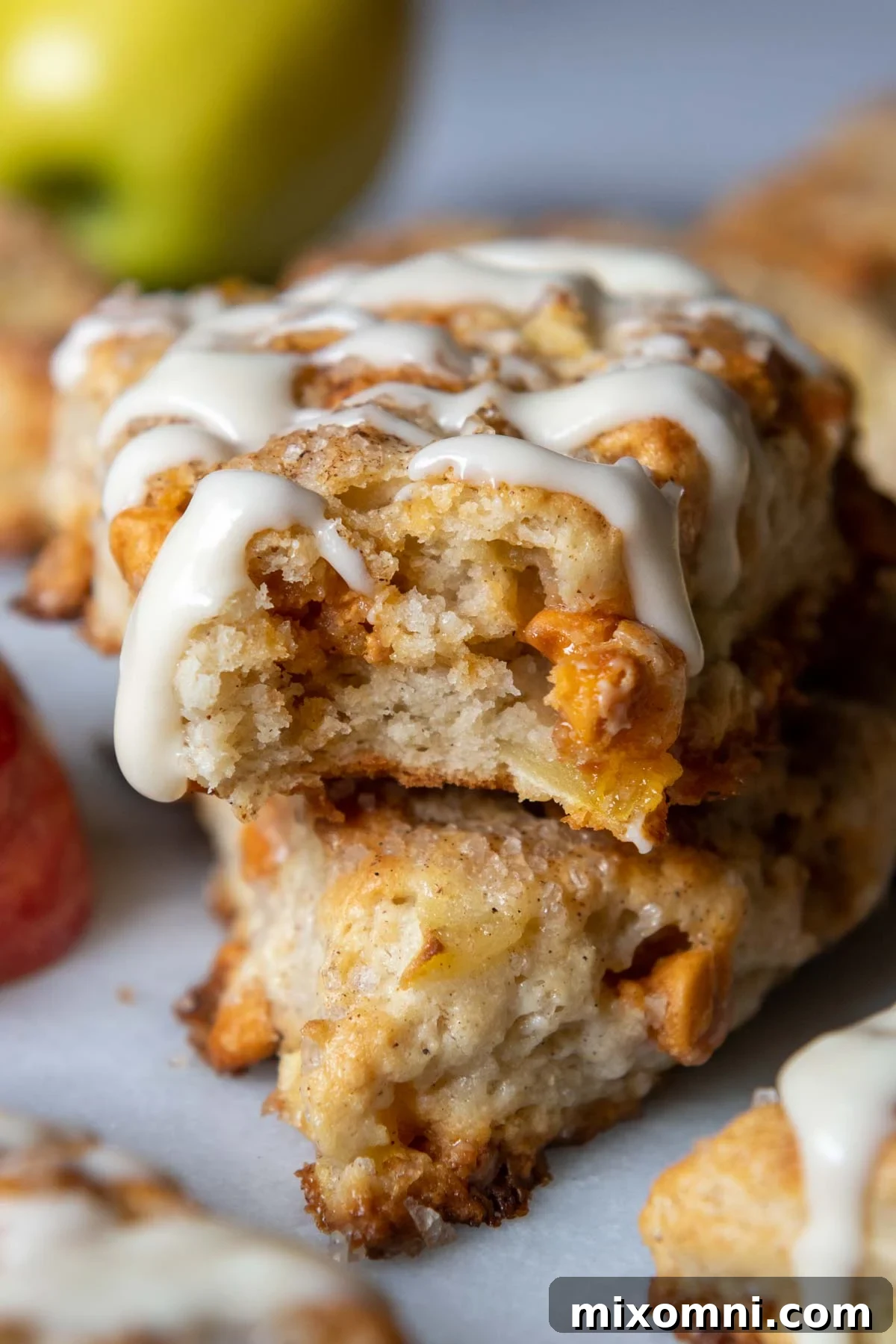
Imagine sinking your teeth into a warm, tender, and incredibly fluffy scone, bursting with the comforting flavors of autumn. Now, imagine that scone is entirely gluten-free! This isn’t just a dream; it’s the reality you’ll create with this foolproof recipe for gluten-free apple scones. What sets these scones apart? It’s a combination of simple techniques and thoughtfully chosen ingredients that elevate them from a basic bake to a high-end bakery treat. Juicy chunks of apple mingle with the warm spice of cinnamon and the delightful sweetness of gooey butterscotch chips, all enveloped in a perfectly tender crumb. Whether you’re a seasoned gluten-free baker or just starting your journey, this recipe promises success and an absolutely irresistible result.
This recipe isn’t just about avoiding gluten; it’s about crafting a scone that rivals its traditional counterparts in texture and flavor. We’ve honed every detail, from the choice of flour blend to the magical touch of sour cream, ensuring each bite is a pure delight. These scones are perfect for a special breakfast, a cozy afternoon treat, or a thoughtful gift. They’re so good, you might forget they’re gluten-free!
The Secret to the Best Gluten-Free Apple Cinnamon Scones: Texture and Flavor Harmony
Developing a truly exceptional gluten-free scone recipe required a deep dive into successful gluten-free baking principles. We drew inspiration from our acclaimed savory GF cheese scones for structural integrity and incorporated the perfect sweetness balance learned from our highly-reviewed berry scones. The result is a scone that boasts an unbelievably tender crumb without any of the dryness or grittiness often associated with gluten-free baked goods.
The cornerstone of this recipe’s tender texture lies in the addition of sour cream. When baking with gluten-free flours, which often lack the elasticity and structure of wheat flour, moisture management is key. Sour cream, along with cold butter, coats the gluten-free starches, effectively preventing them from becoming dry or gritty. Its high fat content contributes to richness, while its acidity reacts with baking powder, promoting a superior rise and an airy texture. This creamy element provides a buffer, making the recipe more forgiving and adaptable to various gluten-free flour blends, which can absorb moisture differently. Unlike buttermilk, which can be unpredictable in its absorption, sour cream offers a consistent tangy flavor and a sturdy dough, minimizing the risk of a dry or gummy outcome. If sour cream isn’t readily available, plain full-fat yogurt can be substituted with equally fantastic results, providing the same essential moisture and acidity.
Beyond texture, the flavor profile of these scones is designed to capture the essence of autumn. Inspired by our popular gluten-free apple cinnamon bread, we aimed to highlight the apples’ juicy, bright notes with warm, caramel-spiced undertones. Cinnamon is an obvious, essential choice, but for an truly irresistible and decadent twist, we stir in a generous amount of gluten-free butterscotch chips. This combination creates a deeply comforting flavor that evokes crisp fall days and cozy evenings. A sprinkle of coarse sugar on top provides a delightful crunchy finish, and for those who desire an extra layer of sweetness and elegance, a quick, gooey glaze adds the perfect touch. These small details ensure every bite is an experience, making these scones memorable for any occasion.
This comprehensive guide will walk you through making the best gluten-free apple scones, complete with easy step-by-step photos, essential baking tips, and creative mix-in ideas to personalize your batch. Enjoy them fresh from the oven, still warm and fragrant, or prepare them ahead and freeze for a convenient gluten-free breakfast bread, perfect for holiday gatherings or when entertaining company.
Essential Ingredients for Perfect Gluten-Free Scones
Achieving the ideal tender and fluffy texture in gluten-free scones starts with understanding each ingredient’s role. Below are the recommended components, along with helpful insights and workable substitutions. Feel free to leave a comment below the recipe card if you have further questions about modifications.
- Gluten-Free Flour Blend: This is arguably the most crucial ingredient. For the best scone texture – light, tender, and not gummy – a high-quality gluten-free all-purpose flour blend is paramount. Through extensive baking trials, Cup4Cup has consistently proven superior. Its inclusion of cornstarch is key, as it helps absorb moisture effectively and contributes significantly to a wonderfully fluffy, delicate crumb. It’s important to note that not all gluten-free flours are created equal, and some, like almond flour or oat flour, have vastly different properties. Therefore, we strongly advise against swapping the recommended GF flour blend with single-ingredient gluten-free flours or other specialty starches, as this will drastically alter the scone’s structure and texture.
- Butter: Cold butter is non-negotiable for flaky scones. When cold butter is cut into the dry ingredients, it creates small pockets of fat. As the scones bake, these pockets release steam, creating layers and contributing to that desirable flaky texture. Using warm or softened butter will result in a dense, cake-like scone rather than a light and airy one. Ensure your butter is well-chilled and cut into small pieces before incorporating.
- Sour Cream (or Yogurt): As previously discussed, sour cream is a game-changer for gluten-free scones. It provides essential moisture, a delightful tang reminiscent of buttermilk, and a crucial acidity that aids in leavening. Its thick consistency also helps create a sturdier dough that is easier to handle, contributing to the overall structure. Full-fat plain yogurt can be used as an excellent 1:1 substitute, offering similar benefits in terms of moisture, acidity, and texture.
- Egg Yolk: Gluten-free flours tend to absorb liquids differently and often require less moisture than wheat-based recipes. Using just the egg yolk, instead of a whole egg, provides excellent binding properties while minimizing the total liquid content. This helps prevent the dough from becoming too wet or sticky, ensuring a manageable consistency and a perfect final texture.
- Apples: The choice of apple variety profoundly impacts the final texture of your scones. It’s essential to select apples that hold their shape and texture during baking, rather than breaking down into a mushy consistency. Golden Delicious are my preferred choice due to their balanced sweetness and firmness. For other excellent alternatives, refer to the “Recommended Apples For Baking” section below to ensure your apple chunks remain distinct and flavorful in every bite.
- Butterscotch Chips: These add a wonderfully rich, caramel-like sweetness and gooey texture that perfectly complements the apples and cinnamon. When purchasing, always scrutinize labels carefully to ensure they are certified gluten-free, as some brands may contain hidden gluten ingredients. Reputable gluten-free brands often include Great Value (Walmart), Baker’s Corner (Aldi), Hershey’s, and Guittard.
How To Craft Your Fluffy Gluten-Free Apple Scones: A Step-by-Step Guide
This recipe is designed to be simple and foolproof, even for novice bakers. Each step is clearly outlined to ensure your success. Remember, the key to tender, not dense, gluten-free apple scones lies in maintaining cold ingredients, especially the butter and sour cream. Additionally, don’t skip the crucial step of chilling the dough in the refrigerator before baking; this allows the gluten-free starches to properly hydrate and relax, preventing a gritty texture and promoting an excellent rise.
(Below you’ll find step-by-step photos and detailed instructions. For the complete recipe, including precise ingredient amounts, please scroll down to the dedicated recipe card.)
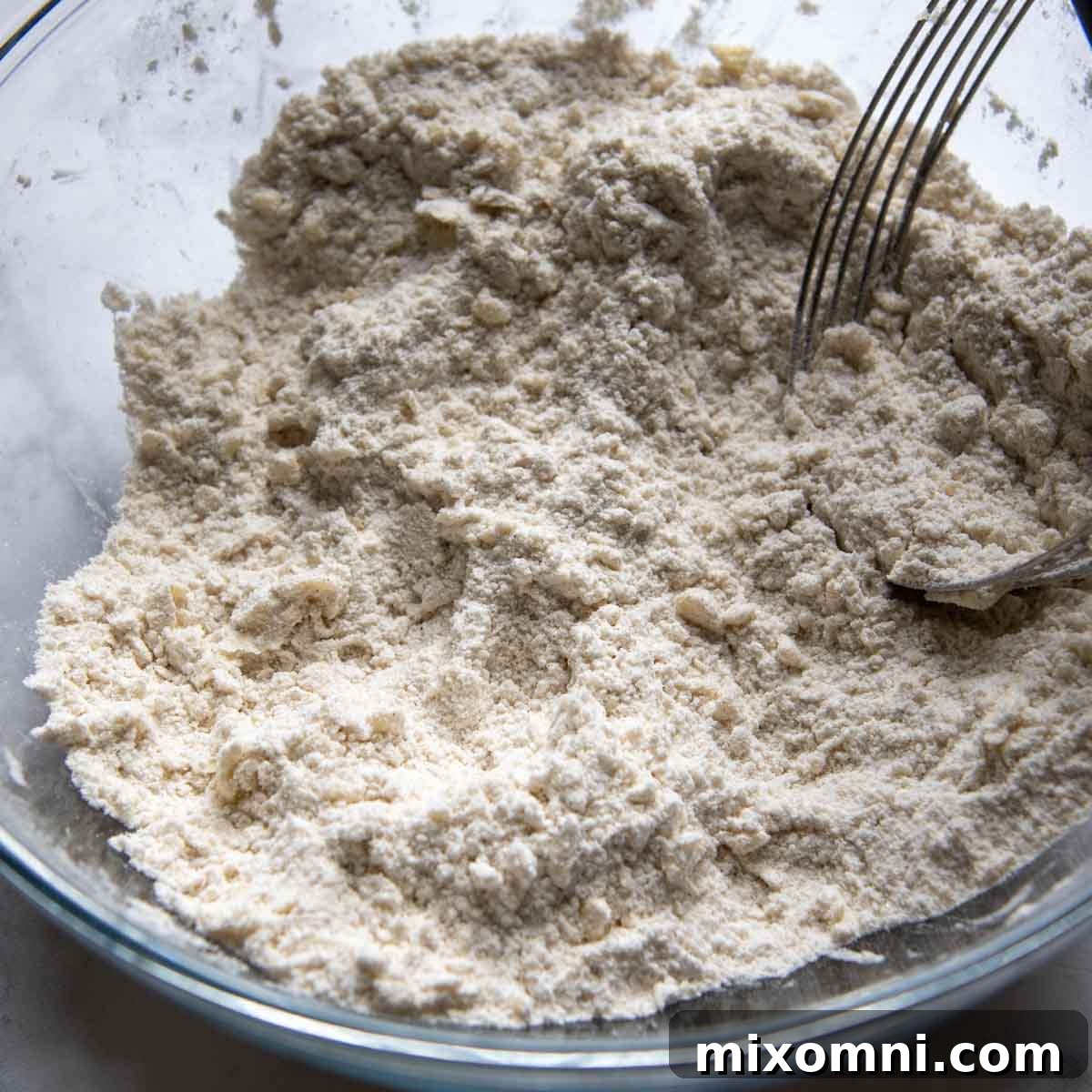
- Combine Dry Ingredients: In a large mixing bowl, whisk together the gluten-free all-purpose flour blend, granulated sugar, baking powder, ground cinnamon, and salt. Ensure all dry ingredients are well combined and lump-free.
- Incorporate Cold Butter: Add the cold, chopped unsalted butter to the dry mixture. Using a pastry blender, a fork, or your fingertips, cut the butter into the flour until the mixture resembles coarse meal with pea-sized crumbs. This step is crucial for flakiness; avoid overworking the butter or letting it melt.
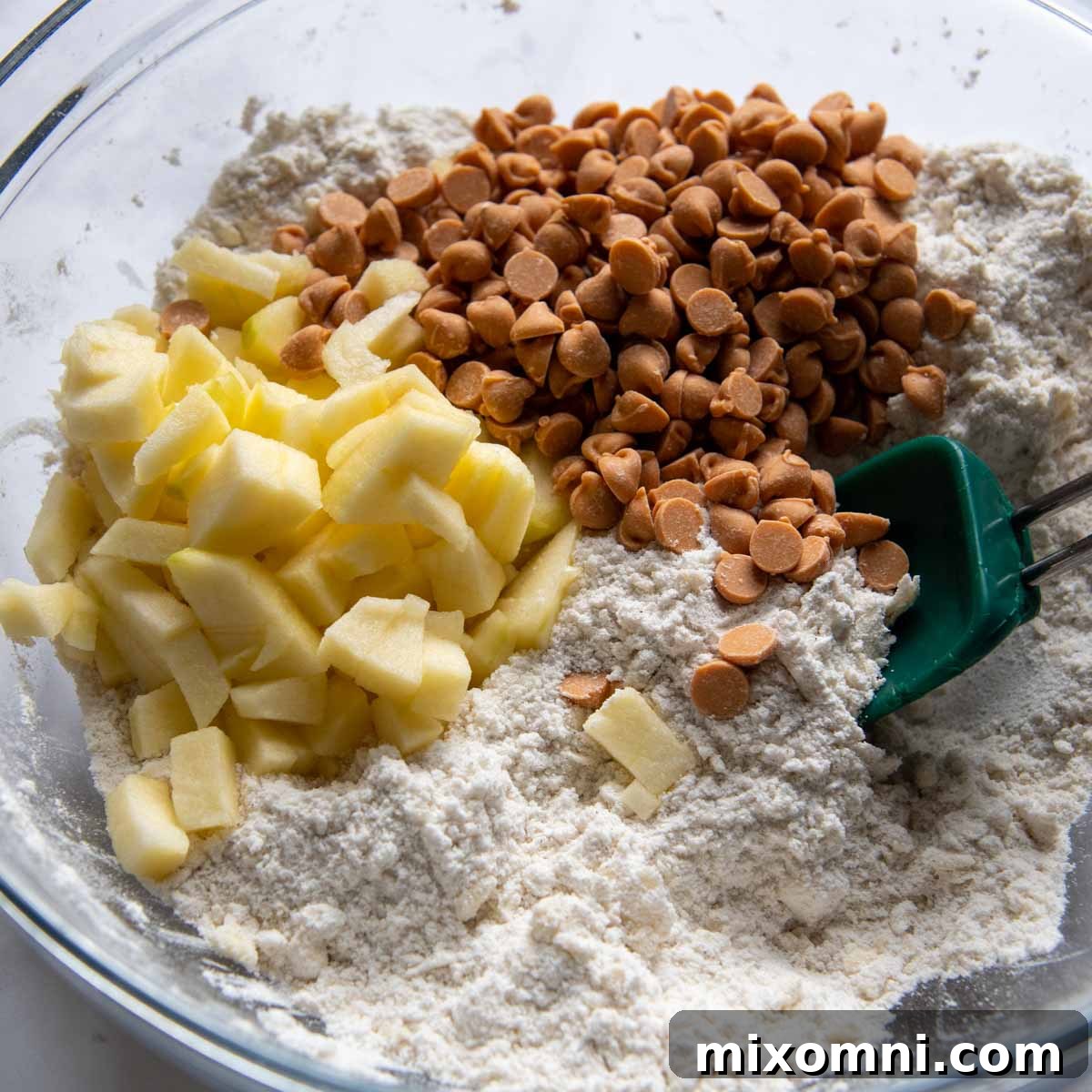
- Add Flavorful Inclusions: Gently stir in the diced apples and gluten-free butterscotch chips. Incorporating them at this stage ensures even distribution without overmixing the dough once liquids are added, which can make the dough tough and dense.
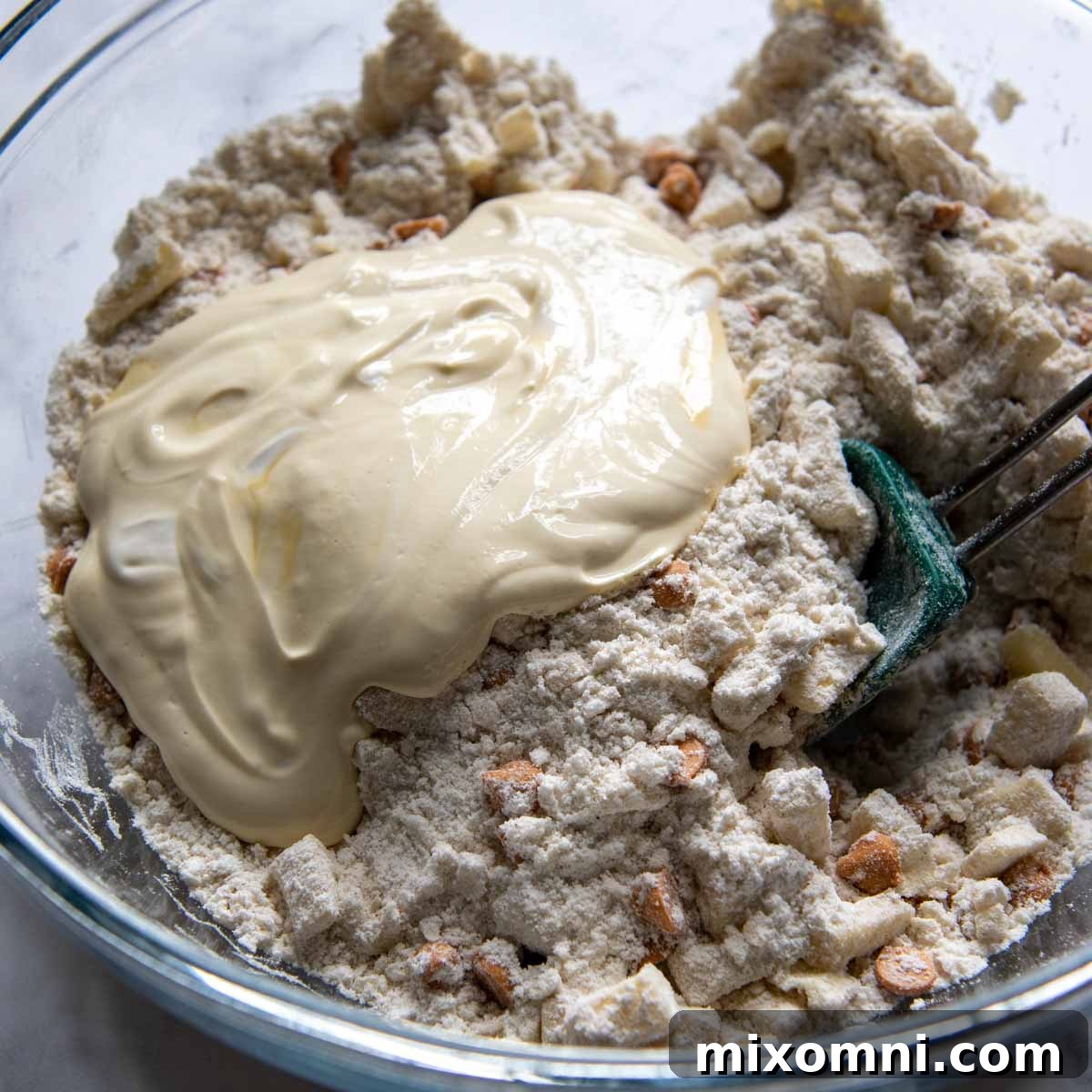
- Mix Wet Ingredients: In a separate small bowl, whisk together the sour cream (or yogurt), egg yolk, and vanilla extract until smooth.
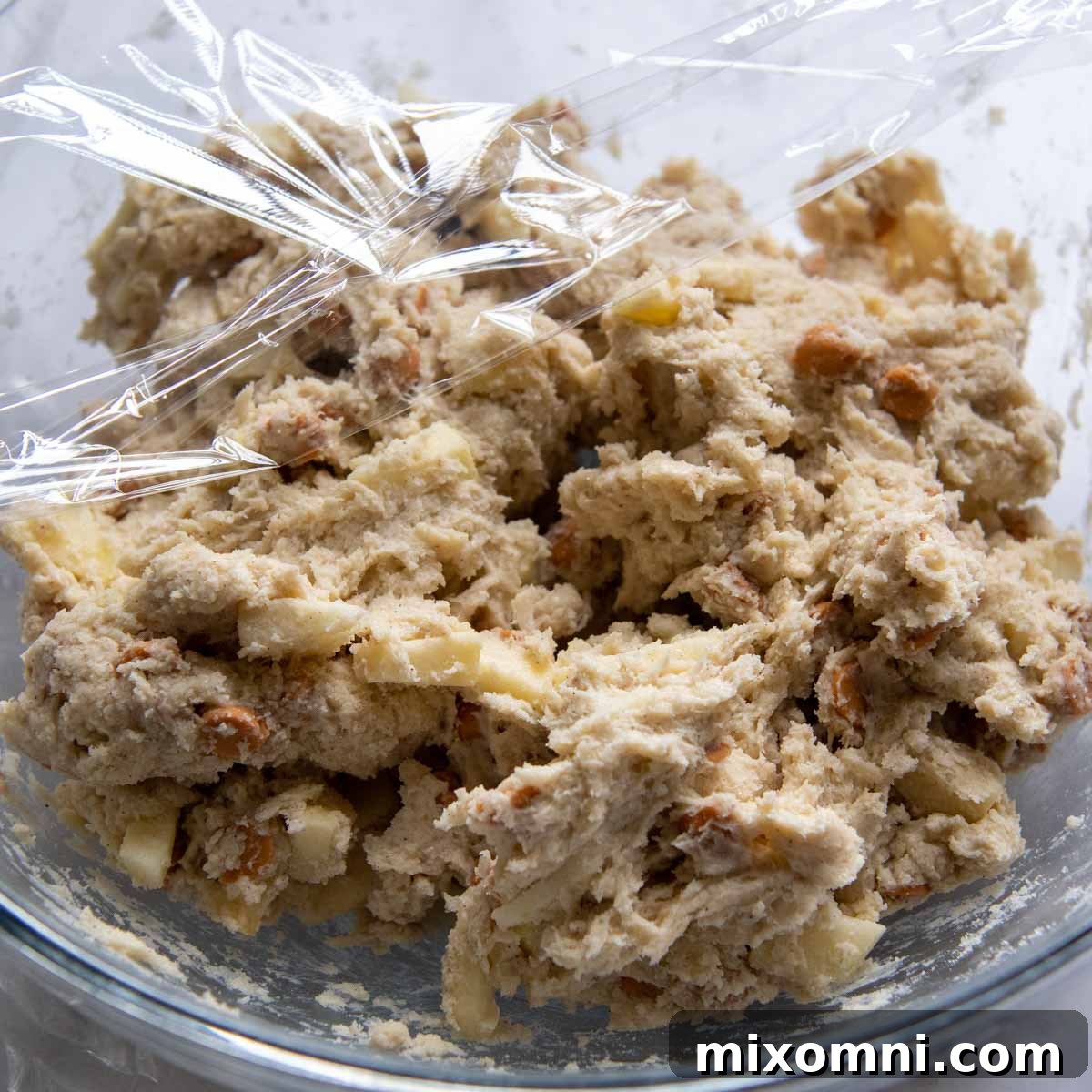
- Combine Wet and Dry: Pour the wet ingredient mixture into the dry flour and apple mixture. Using a silicone spoon or spatula, gently mix until just combined and no dry flour streaks remain. The dough will be thick and shaggy. Be careful not to overmix, as this can lead to tough scones.
- Chill the Dough: Cover the bowl with plastic wrap and refrigerate the dough for at least 30 minutes (while your oven preheats). This chilling period is crucial for gluten-free baking; it allows the starches to fully hydrate, preventing a gritty texture and ensuring a more tender, well-structured scone.
- Prepare for Baking: Preheat your oven to 450°F (230°C). Line a baking tray with greased parchment paper.
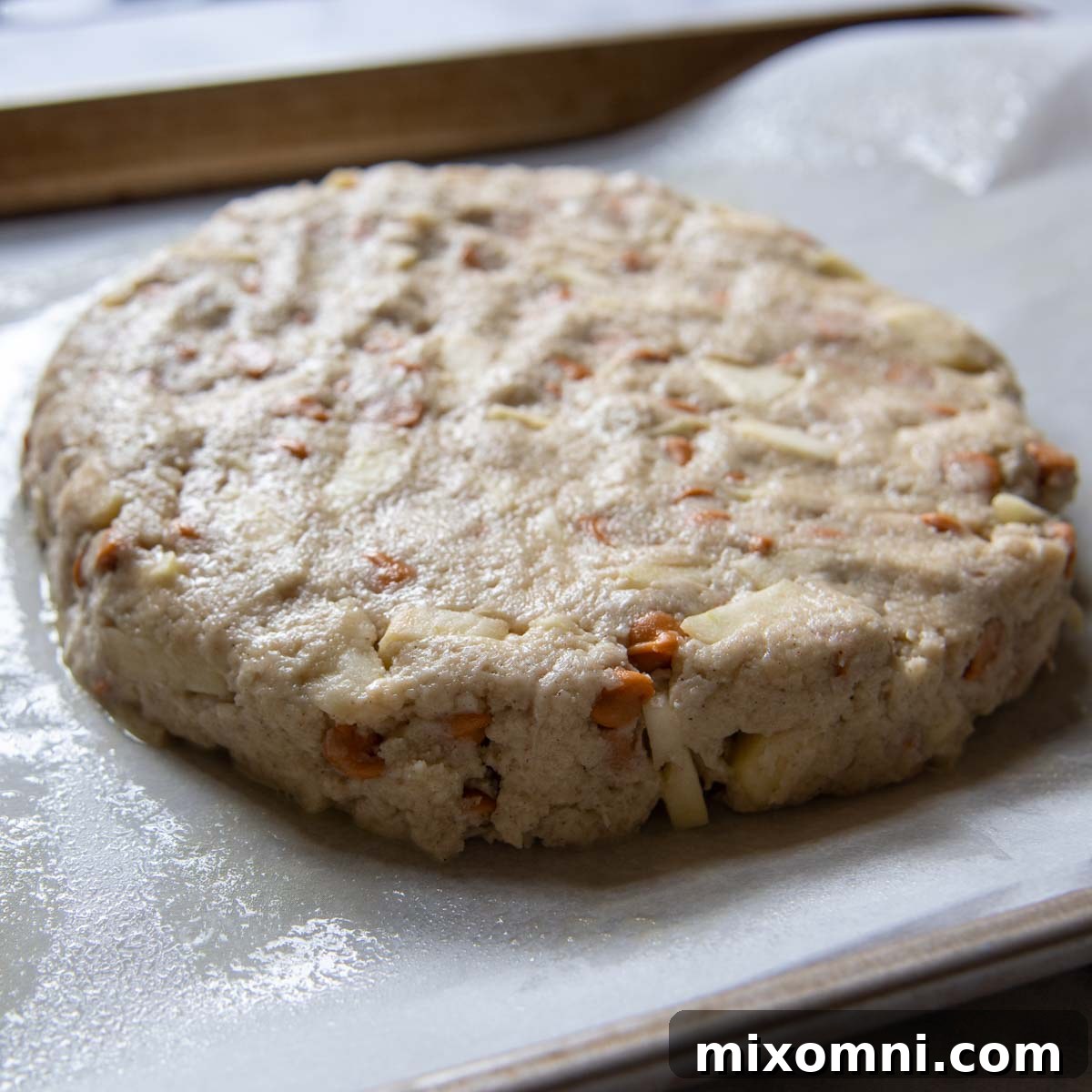
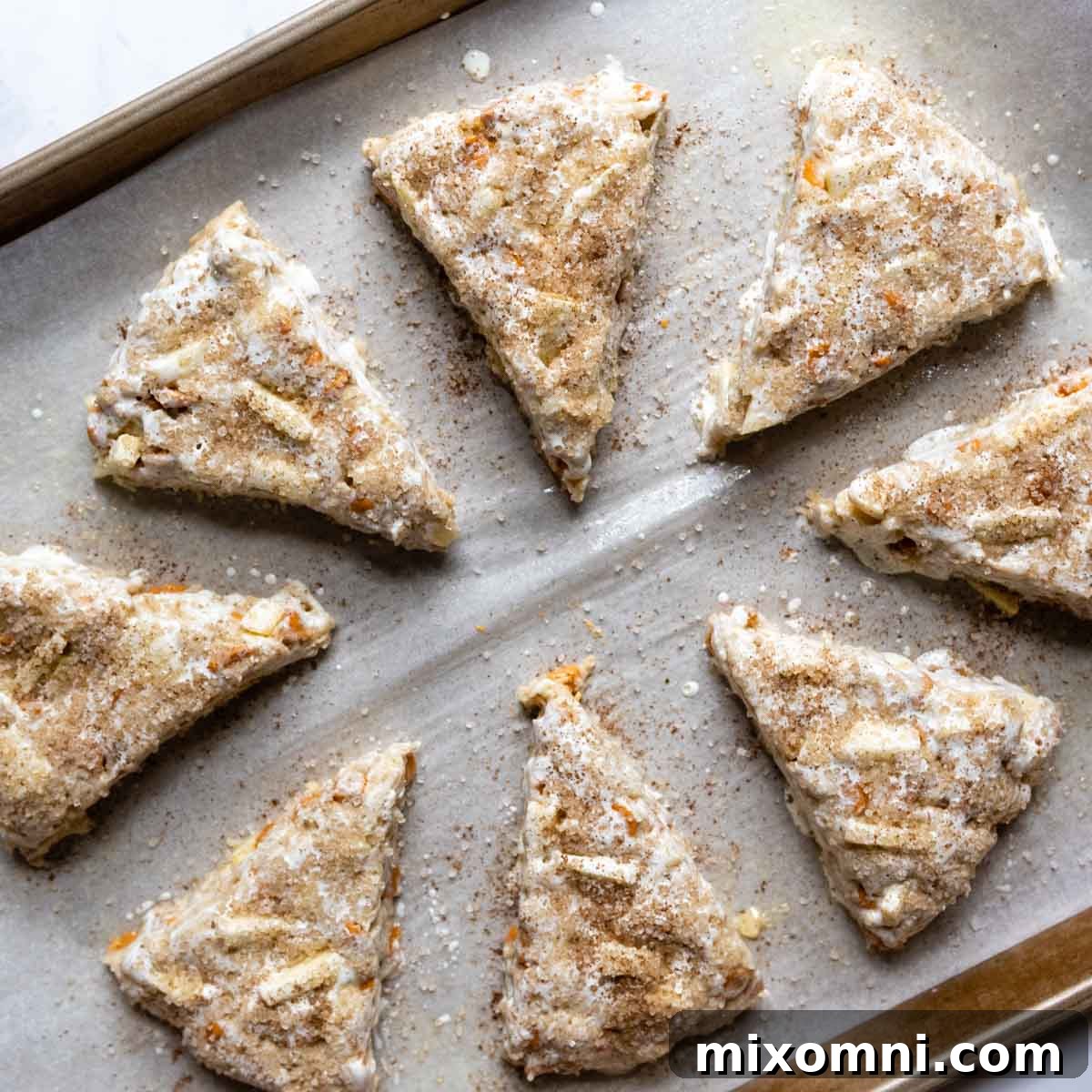
- Shape and Cut Scones: Transfer the chilled dough to the center of the prepared baking sheet. Lightly dust your hands with gluten-free flour or spray them with cooking spray if the dough is sticky. Gently pat the dough into a large, thick disc, approximately 7 inches (18 cm) in diameter and 1 inch (2.5 cm) thick. Using a sharp knife or a pastry cutter, cut the disc into 8 even triangles. Carefully spread the scone triangles about 2 inches (5 cm) apart on the baking sheet.
- Prepare for Baking: For a golden finish and a touch of sweetness, brush the tops of the scones with a little milk or cream and generously sprinkle them with coarse turbinado sugar.
- Bake to Perfection: Bake the scones on the lower middle rack of your preheated oven for 16-18 minutes, rotating the pan halfway through baking to ensure even browning. The scones are done when their tops and bottoms are lightly golden brown and a toothpick inserted into the center comes out clean.
- Cool and Glaze: Allow the baked scones to cool on the baking sheet for 5 minutes before carefully transferring them to a wire rack to cool completely. If you choose to add the optional glaze, mix its ingredients together while the scones cool. Drizzle the glaze over the cooled scones using a small spoon. Let the glaze set before stacking or storing.
Choosing the Best Apples for Baking Scones
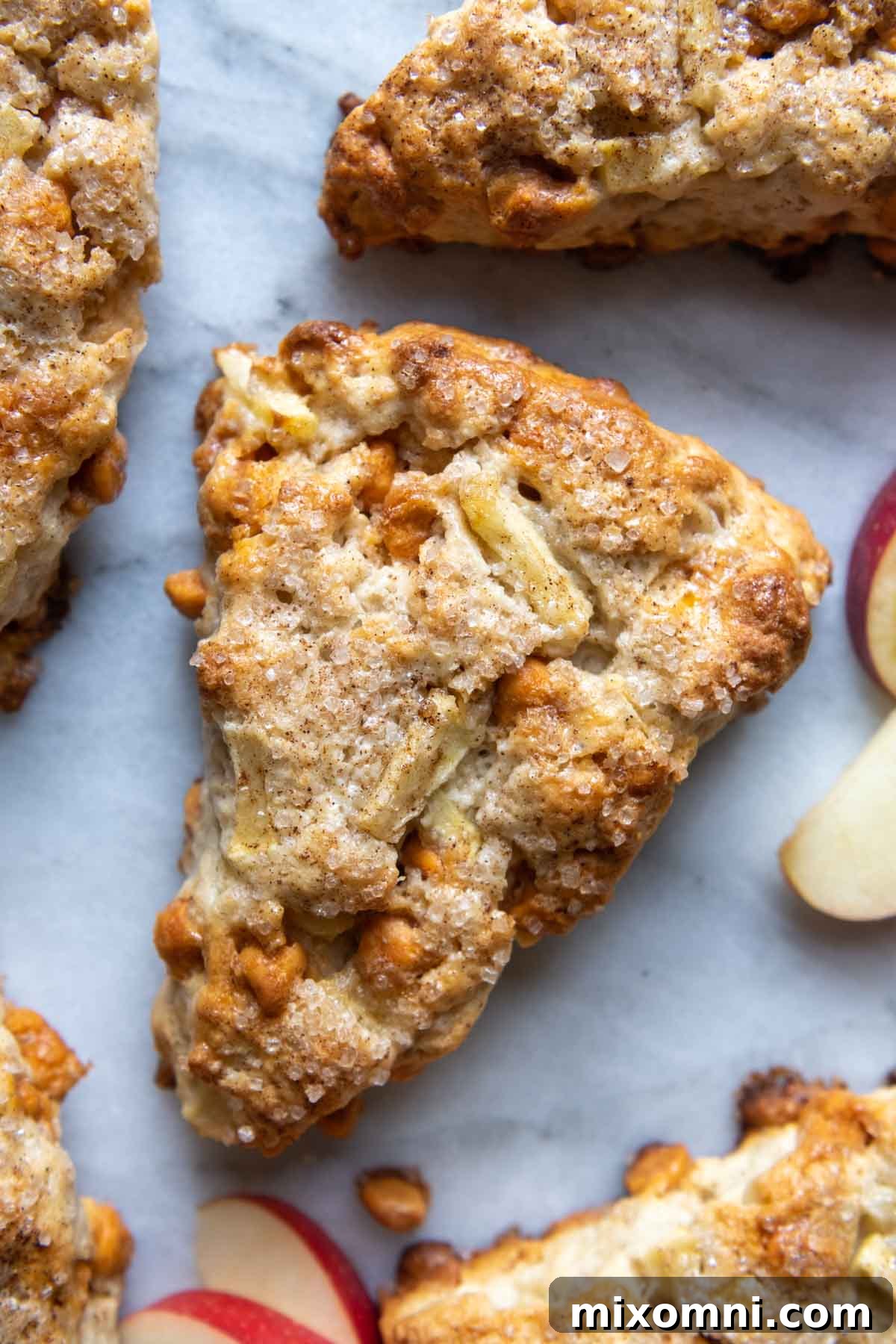
When incorporating apples into any baked good, especially gluten-free recipes where texture can be more delicate, selecting the right variety is crucial. Certain apples maintain their structure and flavor beautifully under heat, preventing a mushy or mealy outcome. For these gluten-free apple scones, opt for one of the suggested types below to ensure delightful, distinct apple chunks in every bite:
- Honeycrisp: A highly popular choice, Honeycrisp apples are known for their crisp texture and balanced sweet-tart flavor, holding up exceptionally well during baking.
- Granny Smith: If you prefer a more pronounced tartness, Granny Smith apples are an excellent option. Their firm texture is ideal for baking, but consider pairing them with a slightly sweeter apple or adjusting the sugar in your recipe to balance their tartness.
- Jonagold: This apple offers a wonderful blend of sweet and tart, with a firm flesh that resists breaking down in the oven, making it a reliable baking apple.
- Braeburn: With a crisp texture and a sweet-tart flavor that intensifies when baked, Braeburn apples are a fantastic choice for scones and other apple desserts.
- Pink Lady (Cripps Pink): Known for their beautiful pink blush and crisp, sweet-tart taste, Pink Lady apples hold their shape well and provide a lovely flavor.
- Golden Delicious: My personal preference for these scones, Golden Delicious apples offer a sweet, mellow flavor and a tender-crisp texture that softens perfectly during baking without becoming mushy.
Any of these varieties will ensure your apple scones have that delightful burst of fresh apple flavor and a pleasant texture that compliments the tender scone crumb.
Elevate Your Scones: Optional Toppings and Glazes
While these gluten-free apple scones are absolutely delicious on their own, a simple topping can elevate them to another level of indulgence. Scones can be served as is, perhaps with just a brush of cream before baking for a subtle sheen and richer crust, but there are many ways to customize their finish.
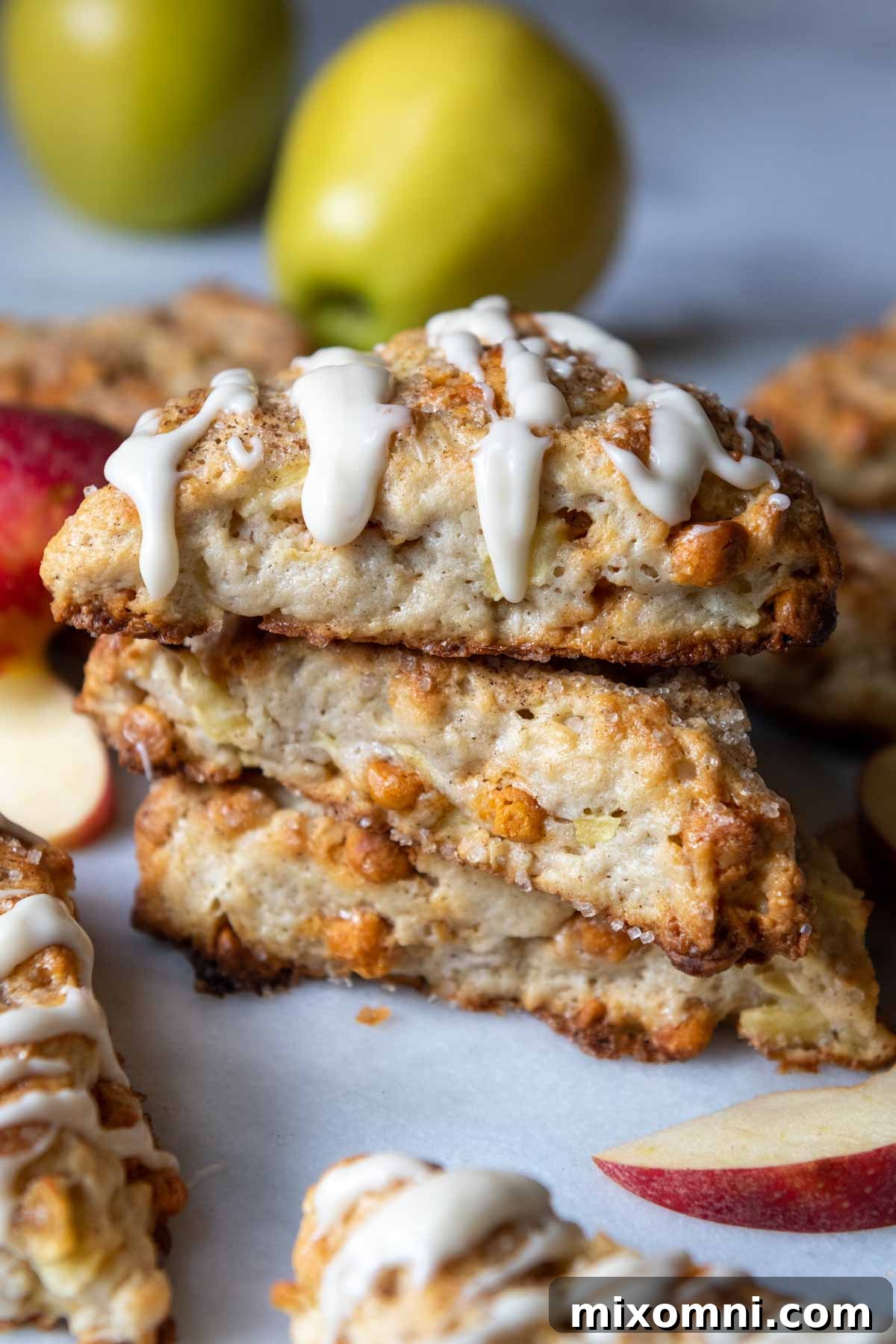
For a delightful textural contrast and a boost of sweetness, brush the tops of your unbaked scones with milk or cream and then generously sprinkle them with coarse turbinado sugar. This creates a beautifully sparkling, crunchy crust as they bake. For an extra layer of fall flavor, you can even mix a pinch of additional cinnamon into the coarse sugar before sprinkling.
If you’re aiming for a truly decadent treat, a quick and easy glaze is the answer. A basic powdered sugar glaze can be made by simply whisking powdered sugar with a small amount of milk or cream and a splash of vanilla extract until it reaches a drizzly consistency. To deepen the autumn flavor profile, consider replacing the milk with pure maple syrup for a rich, nuanced sweetness that pairs wonderfully with apple and butterscotch. A dash of ground cinnamon can also be added to the glaze for an extra aromatic kick. Drizzle the glaze artfully over cooled scones for a stunning presentation and an extra layer of gooey sweetness.
Unlock New Flavors: Creative Mix-in Ideas
These apple cinnamon scones are already bursting with incredible flavor, but the beauty of scone baking is the endless possibility for customization. To maintain the perfect dough-to-mix-in ratio and ensure your scones bake properly, aim for a total of 1 ¾ cups of additional add-ins. You can adjust the quantity of apples or butterscotch chips accordingly to make room for new favorites.
- Chopped Nuts: Add a delightful crunch and nutty flavor with finely chopped walnuts, pecans, pistachios, or almonds. Toasting them lightly before adding can enhance their aroma and taste.
- Dried Fruit Medley: Introduce chewy textures and concentrated sweetness with dried fruits like plump raisins, tart cranberries, sweet cherries, exotic figs, or tiny currants. These pair wonderfully with apples and cinnamon.
- Savory Twist: For a unique savory-sweet experience, omit the cinnamon and add ¾ cup of freshly grated sharp cheddar cheese. The tangy cheese complements the sweet apples beautifully for a sophisticated apple cheese scone.
- Expanded Spice Profile: Beyond cinnamon, elevate your scones with additional warm spices. A pinch of ground cloves, ginger, or nutmeg can add depth and complexity to the apple and butterscotch flavors. Consider a pumpkin pie spice blend for an instant fall classic.
- Caramel Indulgence: If you love the caramel notes of butterscotch, consider replacing the butterscotch chips entirely with gluten-free caramel baking bits. Always double-check labels to ensure they are free from gluten.
- Chocolate Harmony: For chocolate lovers, mini chocolate chips (dark, milk, or white) can be a delicious addition or substitute for the butterscotch, creating a classic apple-chocolate combination.
Experiment with these ideas to create your signature gluten-free apple scones, tailored perfectly to your taste preferences!
Expert Tips for Gluten-Free Scone Success
Mastering gluten-free scones is achievable with a few key techniques. Here are some extra tips to ensure your scones turn out perfectly every time:
- Keep Everything Cold: This cannot be stressed enough. Cold butter and cold sour cream (or yogurt) are vital for flaky, tender scones. If your kitchen is warm, you can even chill your mixing bowl and pastry blender beforehand.
- Don’t Overmix: Overmixing gluten-free dough can lead to a tough, dense product. Mix only until the ingredients are just combined and no dry streaks of flour remain. A few small lumps are perfectly fine.
- Rest the Dough: The 30-minute chilling period is essential. It allows the gluten-free starches to fully absorb the moisture, resulting in a smoother dough that is easier to handle and a final scone with a much better texture.
- High Heat for a Quick Rise: Scones benefit from a hot oven (450°F / 230°C). The high heat causes the liquid in the butter to rapidly turn to steam, creating pockets that help the scones rise quickly and develop a beautiful, flaky texture.
- Even Thickness: When patting out your dough, aim for an even 1-inch thickness across the entire disc. This ensures that all scones bake uniformly and are done at the same time.
- Sharp Knife for Clean Cuts: Use a sharp knife or a clean pizza cutter to cut your scone triangles. This creates clean edges, which contribute to a better rise and a more professional appearance.
Common Questions About Gluten-Free Apple Scones (FAQ)
Here are answers to some frequently asked questions about making gluten-free apple scones:
Q: Why are my gluten-free scones dry or gritty?
A: This is a common issue with gluten-free baking. It’s usually due to an insufficient amount of moisture or not allowing the dough to chill. The chilling step is crucial for gluten-free flours to properly hydrate. Ensure you’re using the recommended flour blend and not over-baking your scones.
Q: Can I make these scones dairy-free?
A: Yes, with a few substitutions! Use a high-quality dairy-free butter alternative (like Miyoko’s Kitchen or Earth Balance sticks) and a plain, unsweetened dairy-free yogurt or sour cream alternative (such as coconut or almond-based). Make sure your butterscotch chips are also dairy-free.
Q: How can I ensure my scones rise well?
A: Several factors contribute to a good rise:
- Using fresh baking powder.
- Keeping the butter and sour cream very cold.
- Not overmixing the dough.
- Baking at a high initial temperature.
- The acidity in the sour cream reacting with the baking powder.
Q: Can I use frozen apples?
A: While fresh apples are preferred for their texture, you can use frozen diced apples. Do not thaw them before adding to the dough; incorporate them directly from frozen to prevent excess moisture from making the dough too wet. You might need to add an extra minute or two to the baking time.
Q: How do I store leftover scones?
A: See the detailed “Storing, Freezing, and Make-Ahead Tips” in the recipe notes below for best practices.
Save This Irresistible Recipe to Your Pinterest Board!
Let’s connect on Pinterest! We’re always sharing delicious recipes!
Did you bake this recipe? We love hearing from you! Please leave a star rating and comment below the recipe card. Your feedback helps others discover amazing recipes, and we always appreciate hearing from our community! -Melissa
Fluffy Gluten-Free Apple Scones with Butterscotch (No Fail)
 Melissa Erdelac
Pin Recipe
Rate This Recipe
Ingredients
Gluten-Free Scones
- 1 ¾ cup (245 g) gluten-free all-purpose flour (recommended: Cup4Cup brand)
- ⅓ cup (67 g) sugar
- 1 tablespoon (14 g) baking powder
- 1 teaspoon ground cinnamon
- ¼ teaspoon salt
- 6 tablespoons (85 g) unsalted butter, chopped into ½” pieces and chilled
- 1 cup (125 g) peeled and diced apples (see recipe notes for recommended varieties)
- ¾ cup (120 g) gluten-free butterscotch chips
- ⅔ cup (153 g) sour cream (may substitute plain full-fat yogurt)
- 1 egg yolk
- 1 teaspoon vanilla extract
Optional Topping
- 1 tablespoon milk or cream
- 1 tablespoon turbinado (coarse) sugar
Optional Glaze
- ½ cup (60 g) powdered sugar
- ½ – 1 tablespoon milk or cream
- ½ teaspoon vanilla extract
Equipment
- Baking Sheets
- Pastry Cutter
- Silicone Spoon
Instructions
-
In a large bowl, whisk together the gluten-free flour, sugar, baking powder, cinnamon, and salt. Use a pastry blender or fork to cut in chopped butter until the butter is uniformly mixed with the flour in very small, crumbly pieces.
-
In a small bowl, whisk together the sour cream, egg yolk, and vanilla extract. First, gently stir the apples and butterscotch chips into the flour mixture. Then, pour in sour cream mixture and gently combine until no flour pockets remain. The dough will be quite thick. Cover bowl with plastic wrap and refrigerate for 30 minutes while the oven preheats.
-
Preheat the oven to 450°F (230°C). Line a baking sheet with parchment paper and spray with nonstick cooking spray.
-
Place the dough in the center of the prepared baking sheet and shape it into a ball. Flatten the dough with your hands into a 7-inch (18 cm) disc, 1-inch (2.5-cm)–thick. If the dough is sticking, spray your fingers with cooking spray to shape. Cut the disc into 8 triangles, using a sharp knife. Use a small spatula to spread the cut scones around the baking sheet so they are about 2 inches (5-cm) apart.
-
If topping with sugar, brush on milk or cream and sprinkle tops with sugar. Bake on the LOWER MIDDLE rack for 16-18 minutes, rotating halfway through, until the tops and bottoms start to turn golden brown. Cool on the baking sheet for 5 minutes, then transfer to a wire rack to cool.
-
For glaze, mix together powdered sugar, milk/cream, and vanilla extract until smooth and drizzly. The glaze should be thin enough to drizzle on, but thick enough it stays on the scone. Place a piece of waxed paper under the cooling rack and then use a small spoon to drizzle glaze over the tops. Allow glaze to harden before stacking or storing.
Notes
Storing, freezing, and make-ahead tips
Storing: Baked scones are best enjoyed fresh on the day they are made. They may be kept in an airtight container at room temperature for up to 2 days, but their optimal taste and tender texture will diminish quickly. Refrigerating scones is not recommended as it tends to dry them out significantly.
Freezing Baked Scones: If you’re not planning to enjoy all the scones on the same day, allow them to cool completely (at least 3 hours) before individually wrapping them tightly in plastic wrap, then foil. Transfer the wrapped scones to a freezer-safe ziplock bag and freeze for up to 3 months.
To thaw, simply place a frozen scone on the counter for about 1 hour. For a quick grab-and-go breakfast, unwrap and gently defrost in the microwave until warm.
Make-Ahead (Freezing Unbaked Scones): To bake fresh scones right before serving, you can prepare the dough in advance. Shape the dough into triangles as per the instructions and place them on a baking tray. Freeze until they are solid. Once frozen, wrap the unbaked scones individually in plastic wrap, then foil, and transfer them to a ziplock freezer bag. They can be frozen for up to 3 months.
To bake from frozen, place unwrapped, frozen scones on a parchment-lined baking sheet. Bake at 425ºF (220ºC), extending the baking time by a few minutes (typically 18-22 minutes), until golden brown and cooked through.