
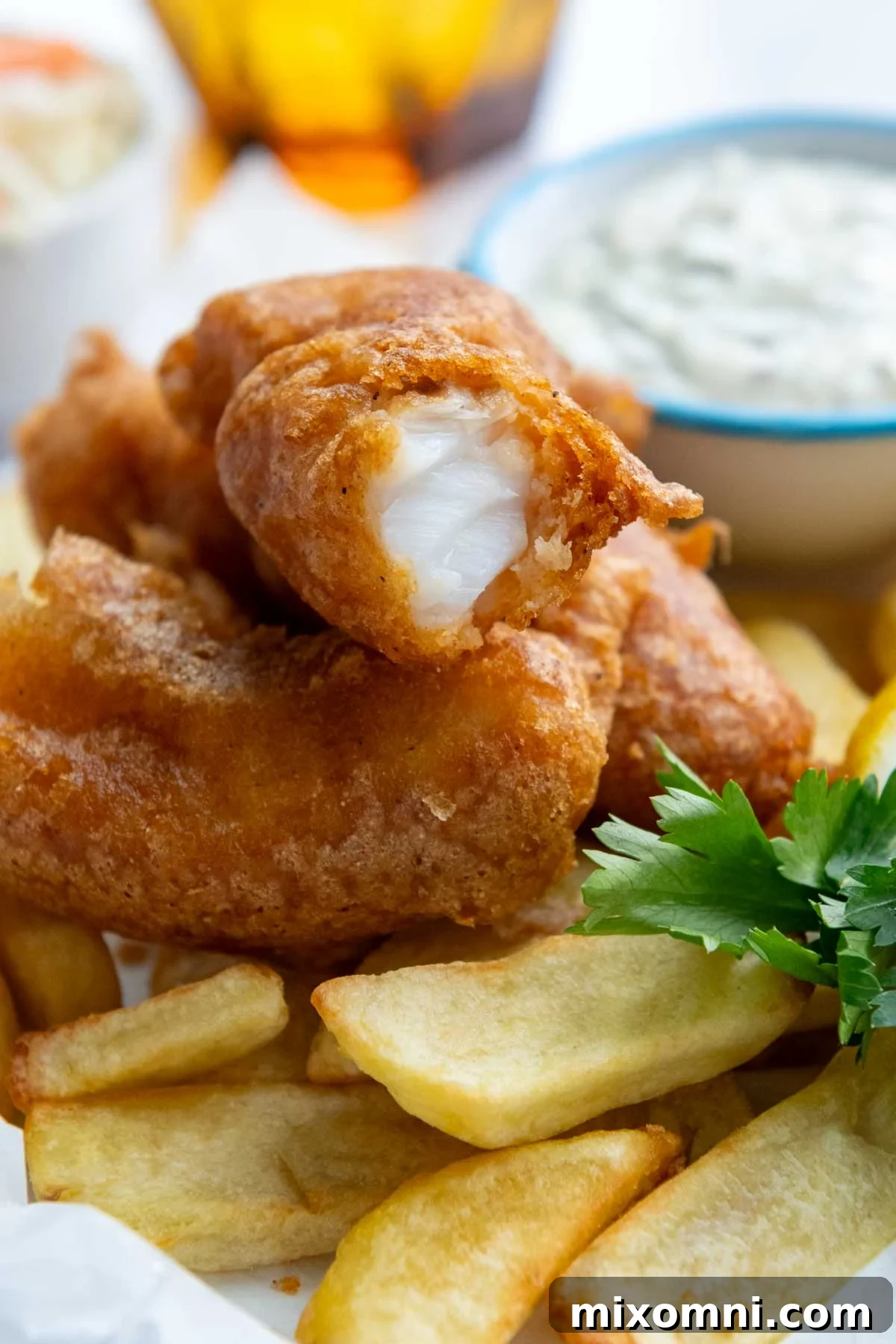
If you’ve been yearning for the satisfying crunch of classic beer-battered fish and chips but thought it was off-limits due to a gluten-free diet, prepare for a culinary revelation! This groundbreaking recipe for gluten-free fried fish is engineered to deliver an incredibly light, airy, and utterly crispy coating, making it virtually indistinguishable from its traditional counterpart. Our secret lies in a carefully crafted gluten-free fish batter that leverages the effervescence of soda water or gluten-free beer, combined with a precise blend of gluten-free all-purpose flour and rice flour. The result? Tender white fish, perfectly encased in a golden, crisp shell, fried to perfection for an authentic pub-style experience right in your own kitchen.
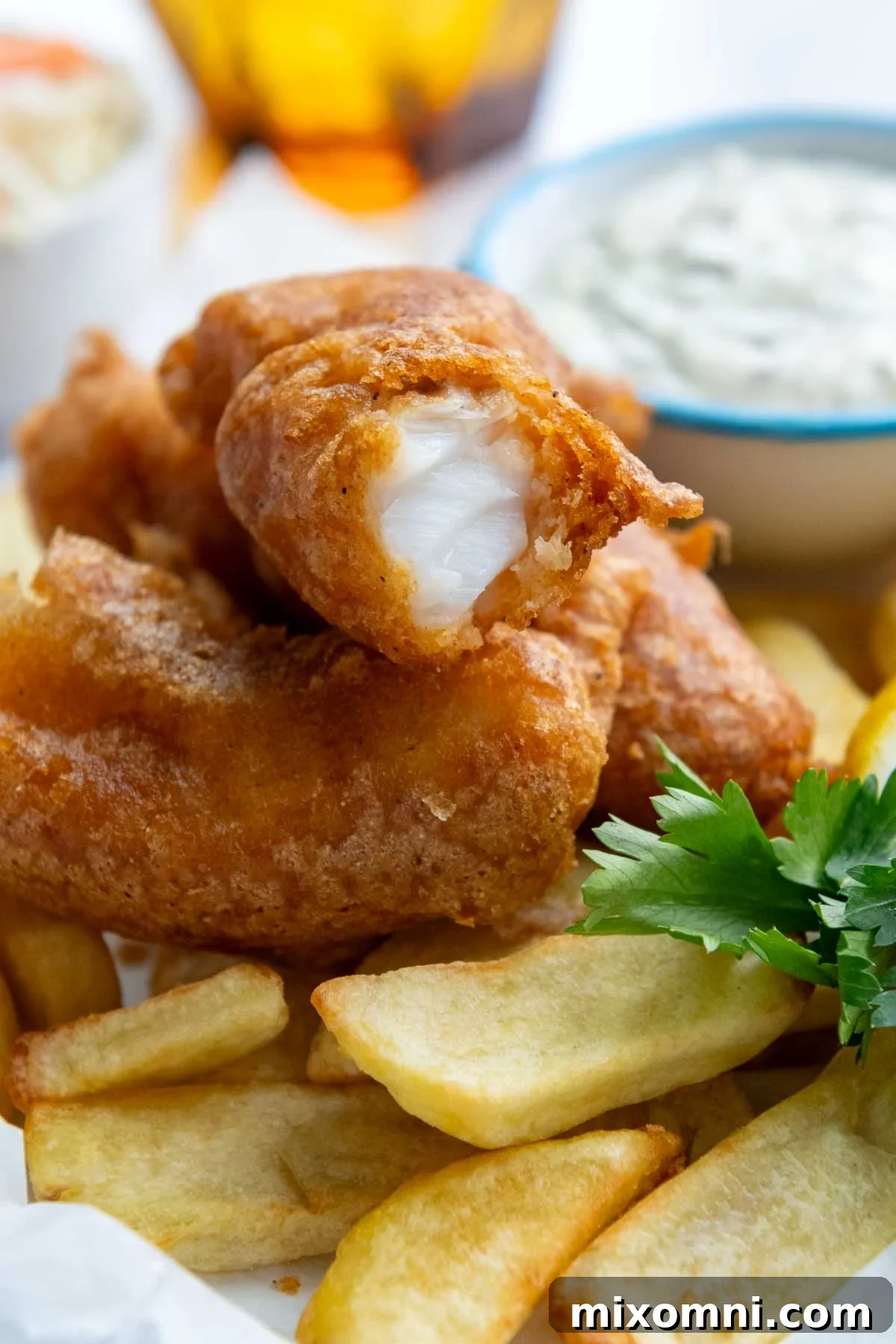
Mastering the Art of Gluten-Free Fish Batter
For those navigating a gluten-free lifestyle, finding truly delicious and authentic fried fish on a restaurant menu can often feel like an impossible quest. But fret not! This recipe empowers you to take matters into your own hands, ensuring you never have to miss out on tender, flaky fish enveloped in that irresistible light and crispy coating again. In fact, during extensive testing, we discovered just how effortless this recipe is, making it a perfect candidate for a weeknight gluten-free dinner. Serve it alongside a delightful accompaniment like creamy gluten-free coleslaw, and watch as even your non-gluten-free family members rave about this sensational fried fish, completely unaware of its dietary secret!
While the process of creating exceptional gluten-free fried fish is surprisingly straightforward, mastering a few key techniques is essential for consistent, no-fail results, even if you’re a novice at preparing battered fish. We’ve meticulously researched and refined the most crucial homemade fish batter principles to guarantee your success every single time.
The foundation of any great fried fish lies in its batter, and the beloved beer-battered fish is no exception. Its deliciousness stems not just from flavor, but more importantly, from the textural transformation it undergoes during frying. The carbonation from beer (or an alternative) plays a vital role in aerating the batter, releasing carbon dioxide as it fries. This process creates countless tiny pockets within the coating, resulting in a supremely light, unbelievably crispy breading that’s the hallmark of perfectly fried fish.
To replicate this effervescent magic in a gluten-free context, you have two excellent options. Firstly, you can choose a high-quality gluten-free beer from a trusted brand. The beer not only provides the necessary bubbles for an aerated batter but also contains alcohol, which evaporates more rapidly during frying. This quicker evaporation means less time in the oil for the fish, significantly reducing the chances of a greasy coating and contributing to a lighter overall texture.
Alternatively, if gluten-free beer isn’t readily available or you prefer a more budget-friendly option, plain carbonated club soda works wonderfully. Our tests revealed negligible differences in the final fish batter quality between using GF beer and club soda, proving both are excellent choices for achieving that desirable crispness.
Another pivotal element in crafting the best gluten-free fried fish is the strategic inclusion of rice flour. Unlike wheat flour, rice flour absorbs less fat and moisture, which is precisely what we want for a light, non-dense fried coating. We use a balanced combination of white rice flour with a high-quality gluten-free all-purpose flour blend. This specific blend ensures optimal batter adhesion to the fish during frying, preventing any dreaded slide-off. By following these foundational tips and the detailed instructions that follow, you’ll be well on your way to enjoying beautifully battered fish. Discover more expert advice on achieving the perfect oil temperature, maintaining warmth for batches, and the best methods for reheating your fish and chips. For those exploring other seafood options, be sure to check out our crispy, breaded gluten-free shrimp recipe!
Absolutely phenomenal! Best GF fish batter EVER. I’m from England so I know 😊👍
Used GF beer but only because some was on hand. Gonna use club soda next time. Turned out light and crunchy without being even slightly heavy. NO leftovers to worry about 😉
This is now my ‘go-to’ recipe for fish.—Clareity
Essential Ingredients for Gluten-Free Fried Fish
Crafting exceptional homemade fried fish involves careful consideration of ingredients. While some variations are possible, understanding how modifications affect the final product is key. Below, we delve into the nuances of each essential component for your gluten-free fish batter.
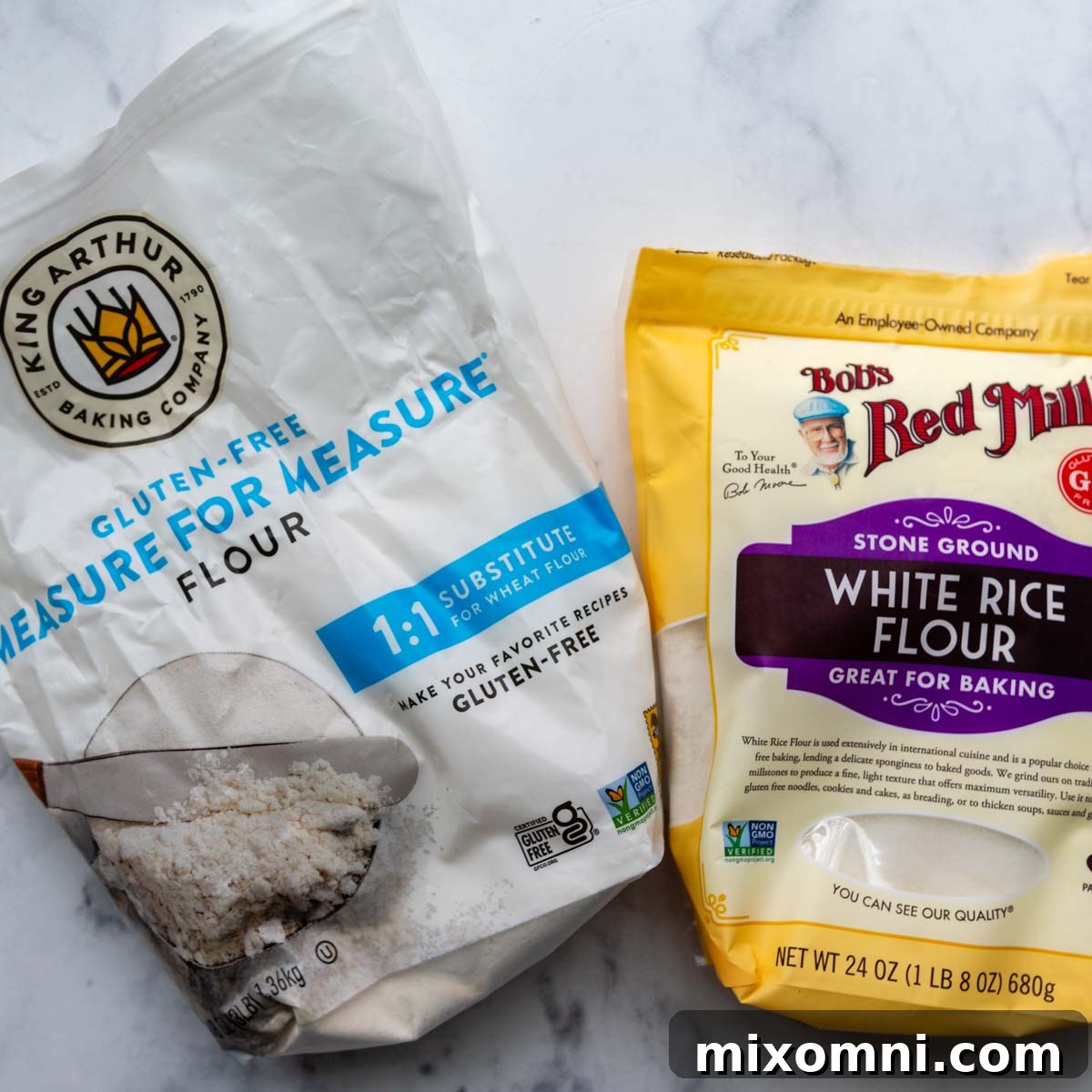
- Gluten-Free All-Purpose Flour Blend: The choice of your GF flour blend is paramount. During testing, we found significant differences between various brands. For instance, Cup4Cup, due to its higher cornstarch content, tended to create a thicker batter that was harder to coat evenly and resulted in a denser fried texture. In contrast, King Arthur Measure-for-Measure consistently yielded superior results, producing a beautifully thin, easy-to-work-with batter that fried up wonderfully crisp. Therefore, we highly recommend King Arthur Measure-for-Measure or any gluten-free blend that does not list cornstarch as one of its top three ingredients.
- White Rice Flour: This ingredient is a true game-changer for gluten-free fried fish. It serves a dual purpose: first, it’s used to dredge the fish fillets before dipping them into the wet batter. This initial coating creates a rough surface, helping the batter adhere securely and preventing it from sliding off during frying. Second, white rice flour is incorporated into the batter itself. Its unique properties allow it to absorb less fat and moisture compared to other flours, contributing significantly to a lighter, less dense, and ultimately crispier fried coating. While a cornstarch-free GF flour blend can be a substitute, white rice flour remains the top choice for optimal results.
- Gluten-Free Beer or Club Soda: The carbonation in these liquids is not just for show; it’s a critical textural enhancer. As the batter hits the hot oil, the carbon dioxide bubbles expand and escape, creating internal air pockets that result in an incredibly light and crispy coating. Furthermore, if using gluten-free beer, the alcohol content aids in reducing frying time by evaporating quickly, which helps prevent the fish from becoming greasy. For those avoiding alcohol or seeking a simpler alternative, very cold club soda performs just as effectively, delivering excellent crispness.
- Fish: To achieve that classic, flaky fried fish experience, opt for firm, white fish fillets such as cod, haddock, pollock, flounder, halibut, or tilapia. The thickness of your chosen fish will directly influence the necessary frying time. We recommend using an internal thermometer to ensure the fish is cooked perfectly to an internal temperature of 140ºF. For more in-depth guidance on selecting the ideal fish, refer to our dedicated Best Types of Fish to Use section below.
- Oil: For deep frying, it’s crucial to use oils with a high smoke point. Canola oil, peanut oil, or vegetable oil are all excellent choices. Ensure your deep, large skillet is filled with oil to a depth of approximately 2 inches. This depth is vital; if the oil is too shallow, the fish may stick to the bottom of the pan and cook unevenly. Proper oil depth allows the fish to float and cook uniformly, contributing to an even, golden-brown crust.
Choosing the Best Fish for Frying
Living in the Midwest, access to high-quality, fresh fish can sometimes be a challenge, often accompanied by a hefty price tag. This led us to test our GF fried fish recipe using both fresh and frozen-then-thawed cod. Unfortunately, the results from thawed fish were noticeably inferior to those achieved with fresh fillets.
The primary reason for this disparity lies in moisture content. When fish is thawed, it releases a significant amount of liquid. Despite diligent blotting with paper towels, it proved virtually impossible to remove enough excess moisture from thawed fish. This residual water often leads to a mushier texture inside the fish after cooking, detracting from the desired firm, flaky consistency.
Fresh white fish, on the other hand, naturally contains less excess moisture, requiring far less pre-blotting. This lower moisture content directly translates to a superior, meaty, and beautifully flaky texture once fried. Therefore, whenever possible, using fresh fish is highly recommended for the ultimate fried fish experience!
Regarding fish types, almost any white fish will work for this recipe. However, for a truly classic fish and chips experience – characterized by a substantial, satisfying bite – a thicker fillet is preferable. Varieties such as cod, haddock, pollock, flounder, or halibut are ideal. Thinner fillets, like tilapia or swai, can certainly be used, but the batter-to-fish ratio might be slightly off, resulting in a less substantial piece of fried fish. While still tasty, these thinner options often shine brightest in recipes like gluten-free oven-fried fish, where their delicate nature can be better preserved.
Let’s Craft This Crispy Delight Together!
(Below, you’ll find comprehensive step-by-step photos and detailed instructions. For the complete recipe, including precise ingredient measurements, please scroll down to the full recipe card.)
Prepare the Fish for Optimal Crispness
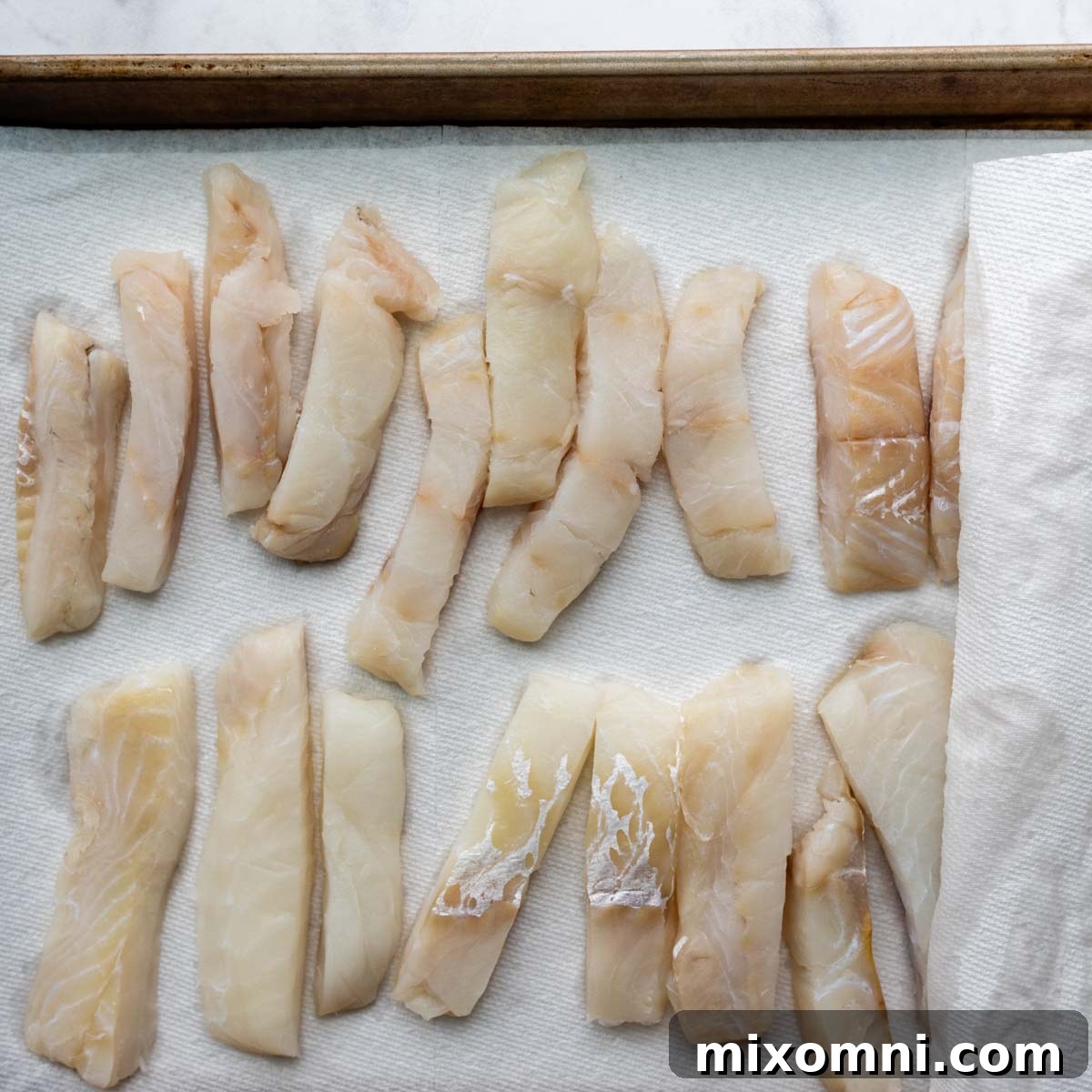
Begin by laying your cut fish fillets on a baking sheet lined with several layers of paper towels. Place an additional layer of paper towels over the fish and gently press down to blot out any excess moisture. This step is critical; the drier the fish, the better the batter will adhere, leading to a crispier result. Fresh fish generally requires less blotting compared to frozen and thawed varieties.
Quick & Easy Dredging Method
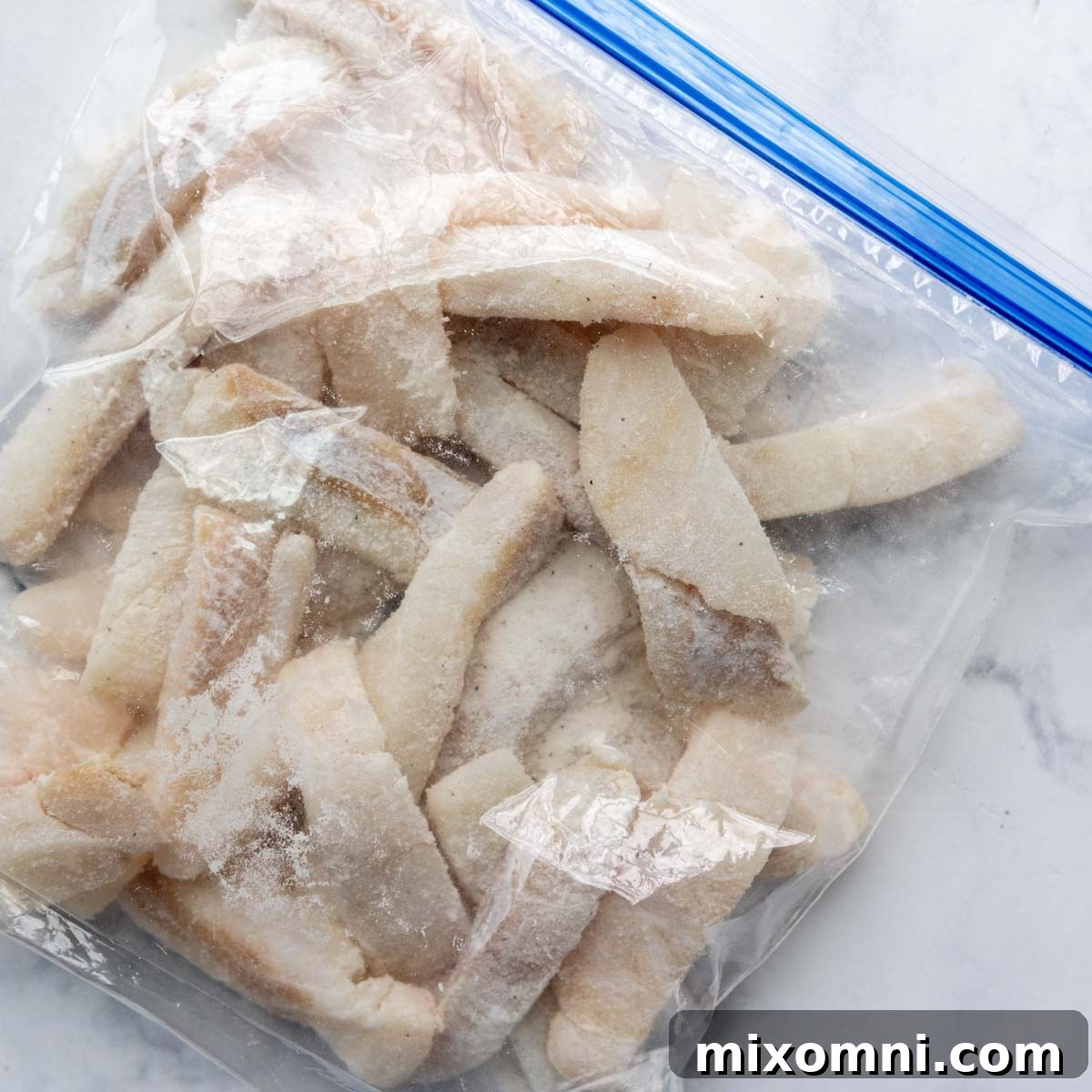
For an incredibly fast and efficient way to dredge your fish, simply place the fish pieces into a large resealable plastic bag along with the rice flour, salt, and pepper. Seal the bag and shake vigorously until each piece of fish is uniformly coated. This “shake-and-coat” method ensures even coverage and minimal mess, perfectly aligning with our goal of making this recipe as simple and enjoyable as possible.
Whipping Up the Perfect Gluten-Free Batter
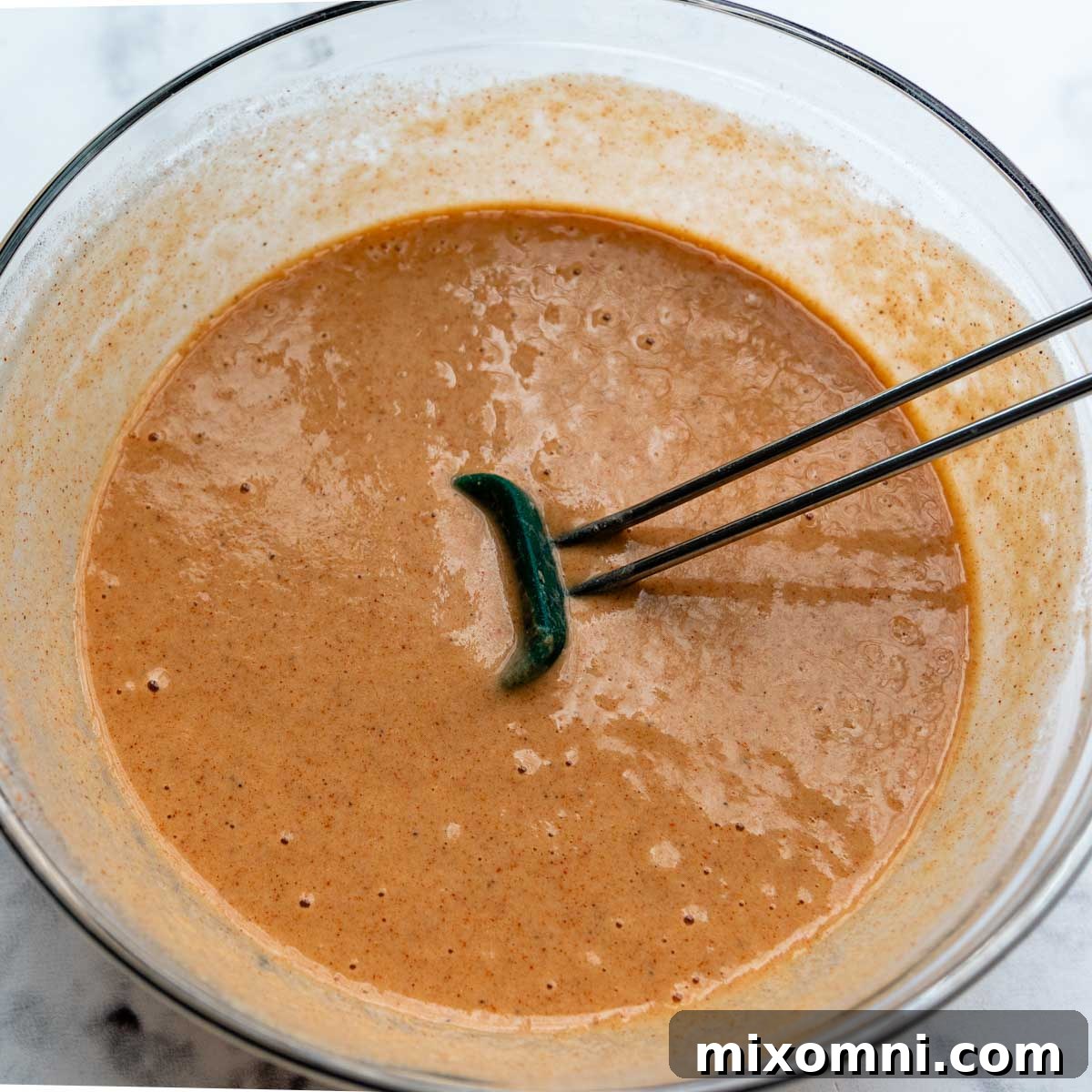
In a large mixing bowl, combine all the dry ingredients for your gluten-free fish batter. Whisk them together thoroughly to ensure they are well integrated. A crucial tip for achieving a light and thin batter that adheres beautifully for dipping is to select a gluten-free flour blend that is not excessively high in cornstarch. Crucially, the cold liquid ingredients (gluten-free beer or club soda, and egg) should only be added just before you are ready to begin frying. Keeping the batter optimally cold is key to its light texture and crispness.
Time to Fry for Golden Perfection!
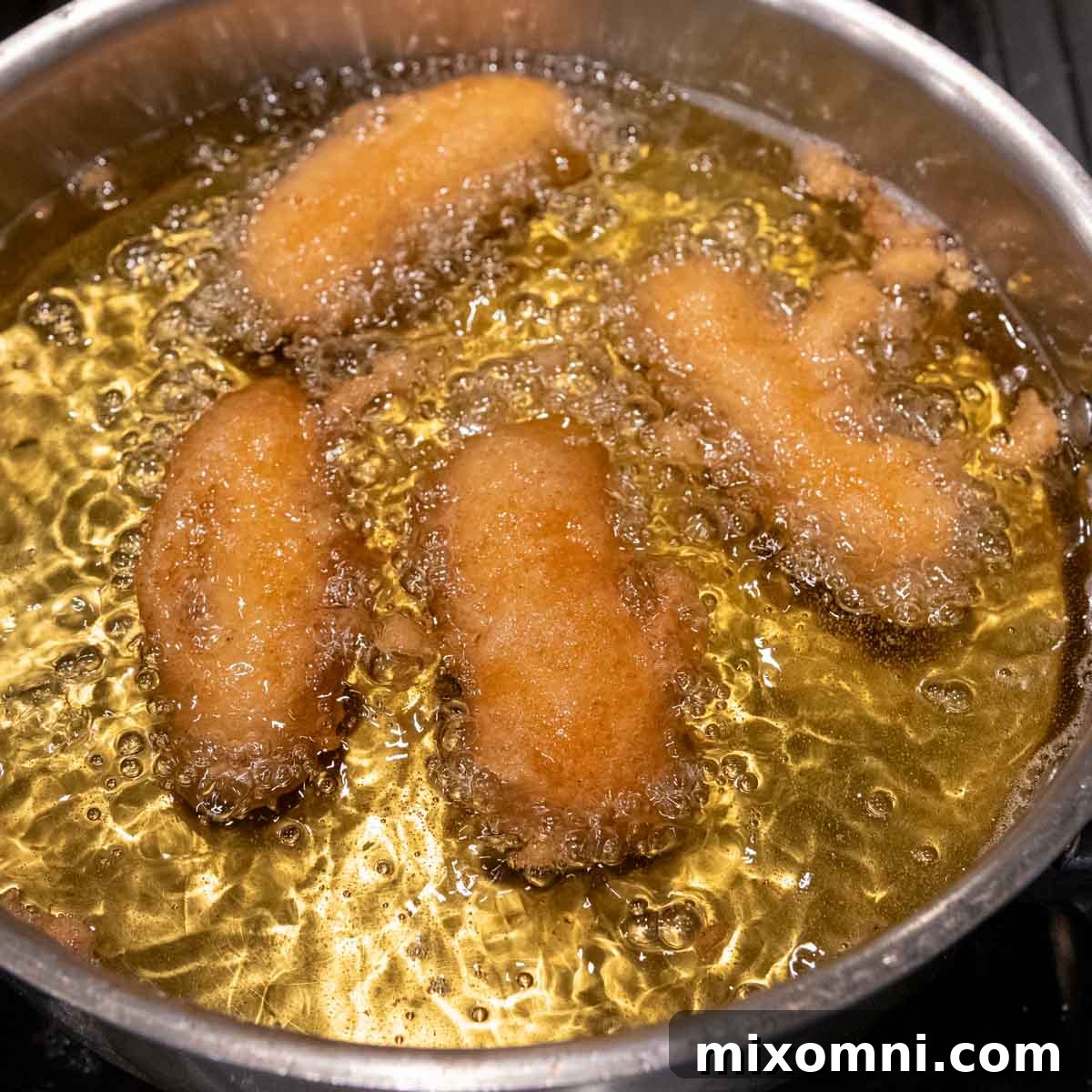
Pour your chosen cooking oil into a large, heavy-bottomed deep skillet, ensuring it reaches a depth of approximately 2 inches. Heat the oil over medium to medium-high heat until it precisely reaches 375ºF. Maintaining this specific oil temperature is absolutely paramount; if the oil is too cool, the fish will absorb too much oil and become greasy, while if it’s too hot, the batter will brown too quickly before the fish is cooked through. (This precise temperature control is also a secret to achieving airy gluten-free apple donuts!)
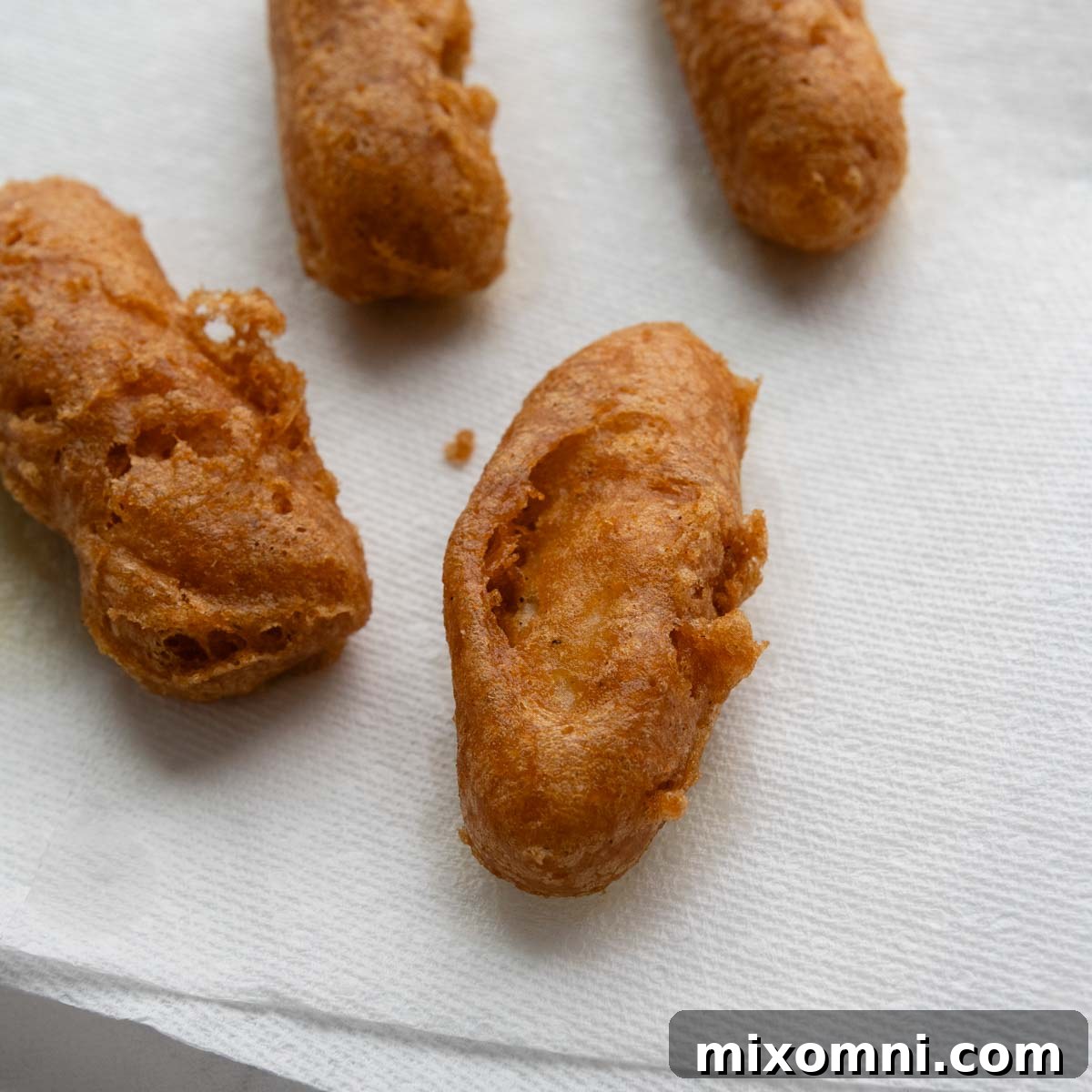
Once the oil is at the correct temperature, take a piece of dredged fish from your resealable bag and fully dip it into the prepared batter, ensuring an even coating on all sides. Use a fork to carefully lift the fish out of the batter, allowing any excess to drip off briefly, then gently transfer it into the hot oil. Repeat this process, adding 3-4 pieces of fish to the oil at a time. It’s crucial not to overcrowd the pan, as this will significantly lower the oil temperature and compromise the crispness. Cook the fish for 3-5 minutes, depending on its thickness, using tongs to flip it occasionally until it’s golden brown and cooked through. The internal temperature of the fish should reach 140ºF. As each batch finishes cooking, transfer the fried fish to the paper towel-lined plate to briefly absorb any excess grease. Then, move it to the wire rack in the preheated oven (set to 200ºF) to keep it warm and crispy while you fry the remaining batches – a key step for maximum enjoyment!
Completing Your Meal: Pairing with Gluten-Free Chips
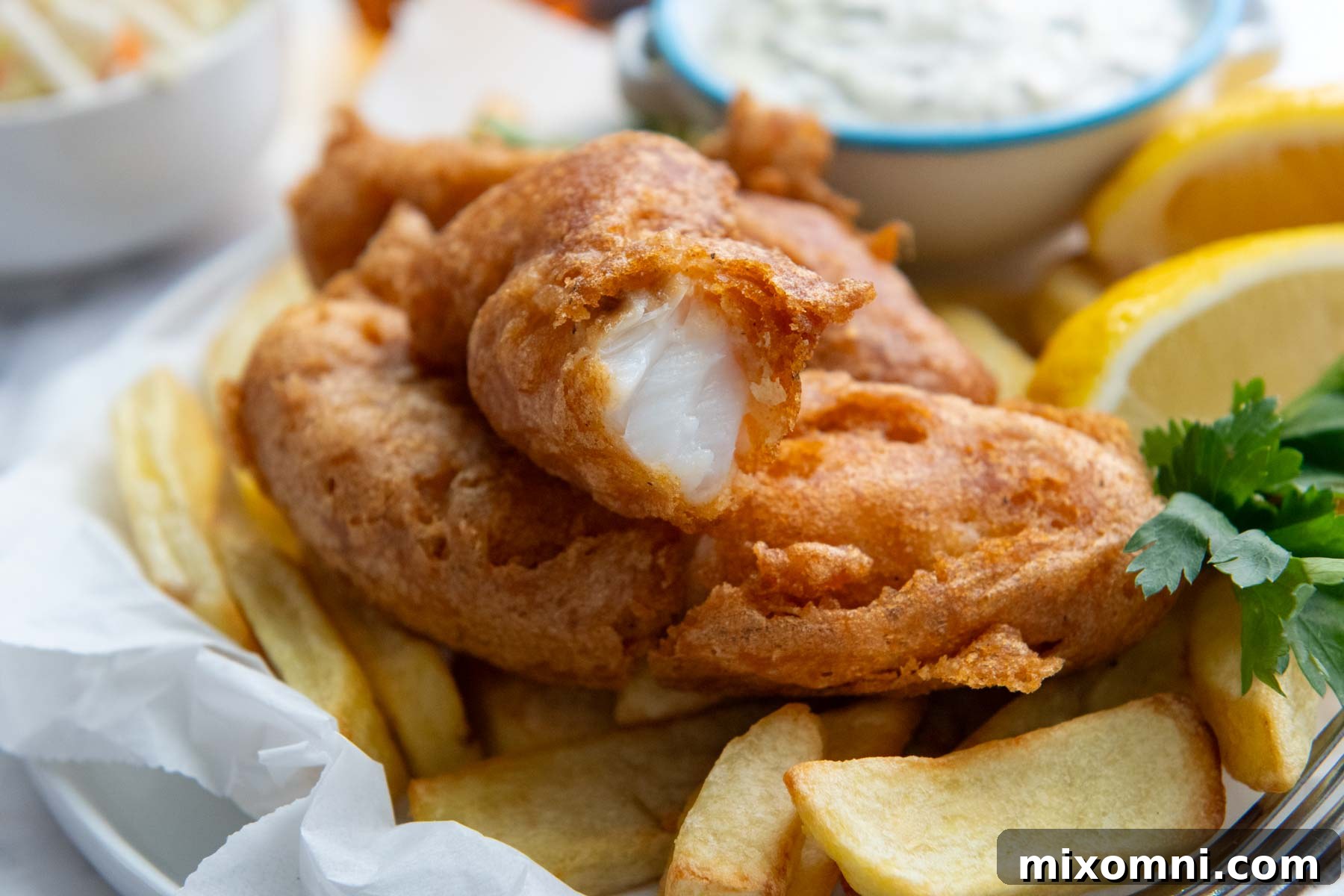
No plate of gluten-free fried fish is complete without a generous side of perfectly cooked chips! When it comes to making homemade gluten-free fish and chips, you have several fantastic options, ranging in effort and time commitment:
- Homemade Deep-Fried Chips: For the most authentic experience, you can deep-fry your own potatoes before tackling the fish. Start by cutting your potatoes into desired chip shapes and soaking them in cold water for at least 30 minutes. This draws out excess starch, leading to crispier fries. Dry them thoroughly on a lint-free towel. Heat your oil to a lower temperature first, around 330ºF, and fry the potatoes in small batches until they are tender but not browned. Remove them and let them cool slightly. While the fish fries, you can keep the partially cooked chips warm in a 200ºF oven. Once your fish is nearly done, increase the cooking oil temperature to 375ºF and fry the chips a second time until they are golden brown and irresistibly crispy. This double-frying method is the secret to superior texture!
- Crispy Oven-Baked Fries: If you prefer a less oil-intensive method, consider baking your chips. Prepare homemade oven fries by first soaking the cut potatoes in cold water, similar to the deep-frying method, then drying them thoroughly. Toss them with a little oil and seasonings, then bake at a high temperature until golden and crisp. This option allows you to focus solely on the fish frying while your chips handle themselves in the oven. For detailed instructions, refer to our recipe for best crispy oven-baked fries with fry sauce.
- Convenient Store-Bought French Fries: For the absolute easiest approach to fish and chips, utilize store-bought frozen french fries. While your fish is frying, you can bake these in your oven or crisp them up in an air fryer. This is a fantastic time-saver, allowing you to enjoy your meal without extensive preparation. However, it is crucial to read ingredient labels very carefully to ensure they are genuinely gluten-free. Reputable brands like Ore-Ida, Alexia Foods, and Grown in Idaho often offer safe options. Be especially vigilant if the frozen fries come pre-seasoned, as seasonings can sometimes contain hidden gluten.
Delicious Serving Suggestions for Your Fried Fish
Once your delectable gluten-free fried fish is ready, elevate the experience with these classic and creative serving suggestions. The perfect pairing enhances the flavors and completes your meal:
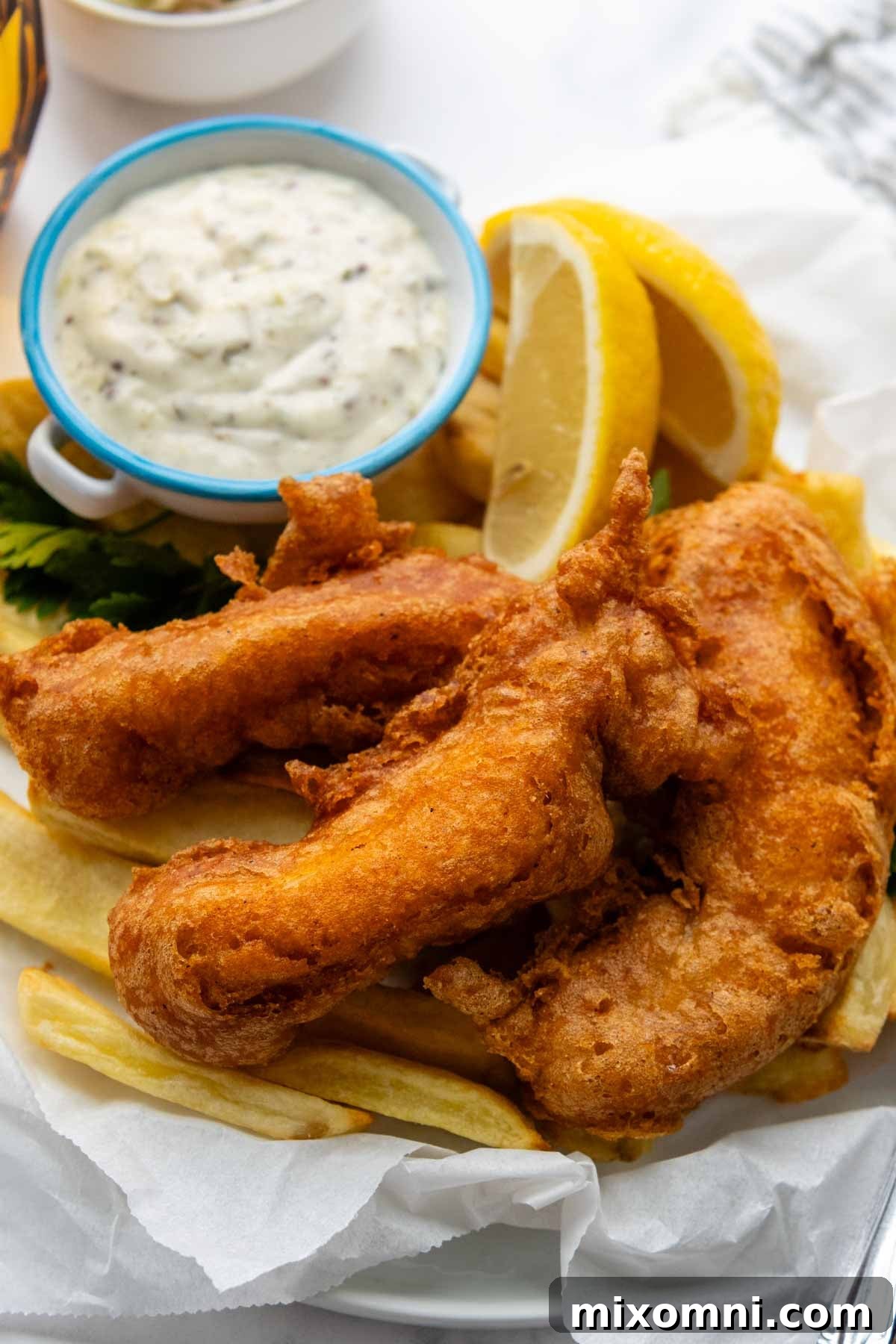
- Classic Companions: Serve your homemade fried fish immediately with plenty of fresh lemon wedges for a bright, tangy squeeze and a generous dollop of creamy tartar sauce. These traditional accompaniments are truly indispensable for the full fish and chips experience.
- Beyond French Fries: While french fries are the quintessential partner for battered fish, don’t limit yourself! Consider other delightful sides such as from-scratch gluten-free fried onions, crispy gluten-free tater tots, or even a healthier option like steamed green beans or asparagus for a lighter touch.
- Creative Culinary Uses: This versatile fried fish recipe isn’t just for plates! It’s an excellent base for various other dishes. Transform it into incredible gluten-free fried fish tacos, complete with your favorite toppings like shredded cabbage, a zesty crema, and fresh salsa. Or, build a satisfying fried fish sandwich on a soft bun with crisp lettuce and tomato. If you’re planning a sandwich feast, remember to prepare a batch of these extra soft gluten-free hamburger buns ahead of time for the ultimate handheld treat!
Essential Tips for Unforgettable Gluten-Free Fried Fish!
Our goal is for you to achieve perfect results on your very first attempt at this recipe. To ensure your success and an utterly delicious outcome, here are the most important steps and insights to keep in mind:
- Optimal Fish Moisture: Always prioritize using fresh fish over frozen and thawed, as fresh fillets contain significantly less moisture. Regardless, thoroughly blot the fish dry with paper towels before dredging it in rice flour. This crucial step is what allows the batter to adhere perfectly to the fish, preventing it from sliding off during frying and contributing to a superior crispy texture.
- Precision Oil Temperature Control: The secret to light, crispy, and non-oily fried fish lies in maintaining the correct oil temperature. It is absolutely paramount! If your oil temperature is too low, the fish will take too long to cook, absorbing excessive oil and becoming greasy – a mistake we learned from experience! Conversely, if the oil is too hot, the batter will brown prematurely before the fish inside is thoroughly cooked. Aim to keep your oil consistently around 375ºF. Remember, the introduction of cold fish and batter will naturally cause the oil temperature to drop, so continuously monitor it with an instant-read thermometer and adjust your burner heat as needed throughout the frying process.
- Avoid Overcrowding the Pan: To effectively maintain the optimal oil temperature, it’s equally important not to overcrowd your frying pan. Adding too many cold fish pieces at once will drastically lower the oil’s temperature, leading to greasy results. Therefore, fry only about 3-4 pieces of fish at a time. This allows ample space for the hot oil to circulate freely around each piece, ensuring even cooking and consistent crispness.
- Choose the Right Flour Blend: For the ideal batter consistency and ultimate crispness, we highly recommend King Arthur Measure-for-Measure gluten-free flour or another blend that does not list cornstarch as a primary ingredient. Flour blends with high cornstarch content can result in a denser, less airy batter.
- Keep Liquids Chilled: To ensure the lightest fried texture, the liquid ingredients for your batter must be kept very cold until the last moment. Do not add the cold egg or the carbonated beer/soda to your dry batter mixture until you are completely ready to dip the fish and begin frying. This temperature contrast helps create a crispier coating.
- Maintaining Warmth Between Batches: To ensure every piece of fish stays perfectly warm and crispy while you fry subsequent batches, preheat your oven to a low 200ºF. Place a baking sheet fitted with a wire rack inside the warm oven. As each batch of fish finishes frying, briefly blot off any excess oil on a paper towel-lined plate, then transfer the fried fish directly to the wire rack in the oven. The rack allows air to circulate, preventing the bottoms from becoming soggy.
Save This Recipe to Your Pinterest Board!
Let’s be friends on Pinterest! I’m always sharing great recipes!
Did you make this recipe? We love hearing from you! Leave a star rating and comment below the recipe card. Your feedback helps others discover amazing recipes, and we genuinely appreciate it. You’ll always hear back from us! -Melissa

No-Fail, Crispy Battered Gluten-Free Fried Fish

Melissa Erdelac
6
20 minutes
30 minutes
50 minutes
Pin
Rate
Remove Ads
Ingredients
For Dredging
-
¼ cup
white rice flour -
½ teaspoon
salt -
⅛ teaspoon
pepper
Gluten-Free Fish Batter
-
2 pounds
white fish, cut into 2-inch strips, see recipe notes -
1 cup
gluten-free all purpose flour blend, King Arthur Measure-for-Measure recommended -
¼ cup
white rice flour -
1 tablespoon
paprika -
1 teaspoon
salt -
1 ½ teaspoon
baking powder -
1 teaspoon
seasoned salt -
½ teaspoon
onion powder -
¼ teaspoon
baking soda -
¼ teaspoon
pepper -
12 ounces
gluten-free beer or club soda, very cold -
1
large egg -
cooking oil (canola, vegetable, or peanut), for frying -
tartar sauce and lemon, for serving
Equipment
-
Deep Skillet
-
Instant Read Thermometer
-
Wire rack
Instructions
-
In a large resealable bag, combine the dry ingredients for dredging: white rice flour, salt, and pepper. Shake the bag thoroughly to ensure the ingredients are well combined.¼ cup white rice flour,
½ teaspoon salt,
⅛ teaspoon pepper -
Preheat your oven to 200℉. Place a wire rack inside a baking sheet and set it in the preheated oven. Line a separate plate with paper towels. This setup will be used to transfer cooked fish from the oil to the paper towel-lined plate to absorb excess grease, and then to the oven to keep warm while you fry in batches.
-
Lay the cut fish fillets on another baking sheet lined with paper towels. Place a top layer of paper towels over the fish and press firmly to blot up as much excess moisture as possible. Fresh fish is always recommended for the best texture, but if using frozen and thawed fish, be extra diligent in removing moisture, changing out paper towels if they become saturated. Set the fish aside while you prepare the batter and preheat the oil.2 pounds white fish, cut into 2-inch strips
-
For the fish batter, in a large bowl, whisk together all the dry ingredients: gluten-free all-purpose flour blend, white rice flour, paprika, salt, baking powder, seasoned salt, onion powder, baking soda, and pepper. Mix until uniformly combined. Set this dry mixture aside. It is crucial to add the very cold liquid ingredients (gluten-free beer or club soda, and egg) only right before you are ready to begin frying, to ensure the batter remains optimally cold for the crispiest results.1 cup gluten-free all purpose flour blend,
¼ cup white rice flour,
1 tablespoon paprika,
1 teaspoon salt,
1 ½ teaspoon baking powder,
1 teaspoon seasoned salt,
½ teaspoon onion powder,
¼ teaspoon baking soda,
¼ teaspoon pepper -
Pour the cooking oil into a large, heavy-bottomed deep skillet. Ensure the oil covers about 2 inches deep. Heat the oil over medium to medium-high heat until it reaches a consistent temperature of 375ºF. This typically takes about 10-15 minutes. Use an instant-read thermometer to continually monitor and maintain the oil temperature. As cold fish is added to the batter and then the oil, the temperature will tend to drop. If the oil temperature falls too low, the fish will cook slowly and become greasy. Adjust the heat accordingly throughout the entire frying process to keep the oil consistently around 375ºF.12 ounces gluten-free beer or club soda,
1 large egg -
While the oil is heating and nearing its target temperature, add the blotted fish to the resealable bag with the dredging mixture. Shake vigorously to ensure each piece is evenly coated. Once the oil is at the proper cooking temperature (375ºF), add the very cold gluten-free beer or club soda and the large egg to your dry batter mixture. Whisk everything together quickly to combine thoroughly.
-
Take a piece of fish from the dredged bag and fully immerse it into the prepared cold batter, ensuring it’s completely coated on all sides. Use a fork to carefully lift the fish out of the batter, allowing any excess to drip off briefly before gently transferring it into the hot oil. Repeat this process, adding 3-4 pieces of fish into the oil at a time. It is crucial not to overcrowd the pan, as this will cause a significant drop in oil temperature and result in a less crispy product. Cook for 3-5 minutes, depending on the thickness of your fish fillets, using tongs to flip them occasionally to ensure even golden-brown cooking. The fish should reach an internal temperature of 140℉.
-
Once cooked, transfer the golden-brown fish to the paper towel-lined plate to briefly absorb any excess grease. Immediately move the cooked fish to the wire rack on the baking sheet in the preheated 200ºF oven to keep it warm and crispy while you continue to fry the remaining batches. Serve all the fish immediately with fresh tartar sauce and lemon wedges for the ultimate enjoyment.
Notes
Recommended Fish
We thoroughly tested this recipe using both fresh fish and frozen-and-thawed cod. The results showed that frozen and thawed fish did not perform as well as fresh fish.
When fish is thawed, it naturally releases a considerable amount of moisture. It proved virtually impossible to blot out enough of this excess liquid, leading to a mushier texture inside the fish after cooking.
Fresh white fish requires significantly less blotting beforehand and maintains a firm, meaty, and beautifully flaky texture after frying. Therefore, if at all possible, always opt for fresh fish!
As for specific types, any white fish will work wonderfully. However, for the most satisfying experience, especially if you’re aiming for that classic fish and chips feel, a thicker fillet yields superior results. We recommend using cod, haddock, pollock, flounder, or halibut.
Storing and Reheating
Store any leftover fried fish in an airtight container in the refrigerator for up to two days. While the coating will inevitably soften during storage, there’s a simple and effective way to reheat fried fish to revive its crispy outer layer.
The quickest and most convenient method is to use an air fryer. Lightly spray the air fryer basket with cooking spray and preheat it to 400ºF. Arrange the fish in a single layer, ensuring not to overcrowd the basket, and “bake” for approximately 4 minutes, flipping halfway through for even crisping.
If you don’t have an air fryer, reheating in the oven is another excellent option. Place a wire rack inside a baking sheet. Lightly spray the wire rack with cooking spray and lay the fish on top in a single layer. Bake in a preheated 375ºF oven for about 10 minutes, flipping the fish halfway through, until thoroughly heated and crispy again.
Calories:
631
kcal
,
Carbohydrates:
29
g
,
Protein:
35
g
,
Fat:
42
g
,
Saturated Fat:
4
g
,
Polyunsaturated Fat:
11
g
,
Monounsaturated Fat:
25
g
,
Trans Fat:
0.1
g
,
Cholesterol:
103
mg
,
Sodium:
1108
mg
,
Potassium:
623
mg
,
Fiber:
3
g
,
Sugar:
1
g
,
Vitamin A:
615
IU
,
Vitamin C:
0.05
mg
,
Calcium:
84
mg
,
Iron:
2
mg
Did you make this recipe?
Please leave a star rating and review below. It helps others when searching for recipes and I LOVE feedback!