
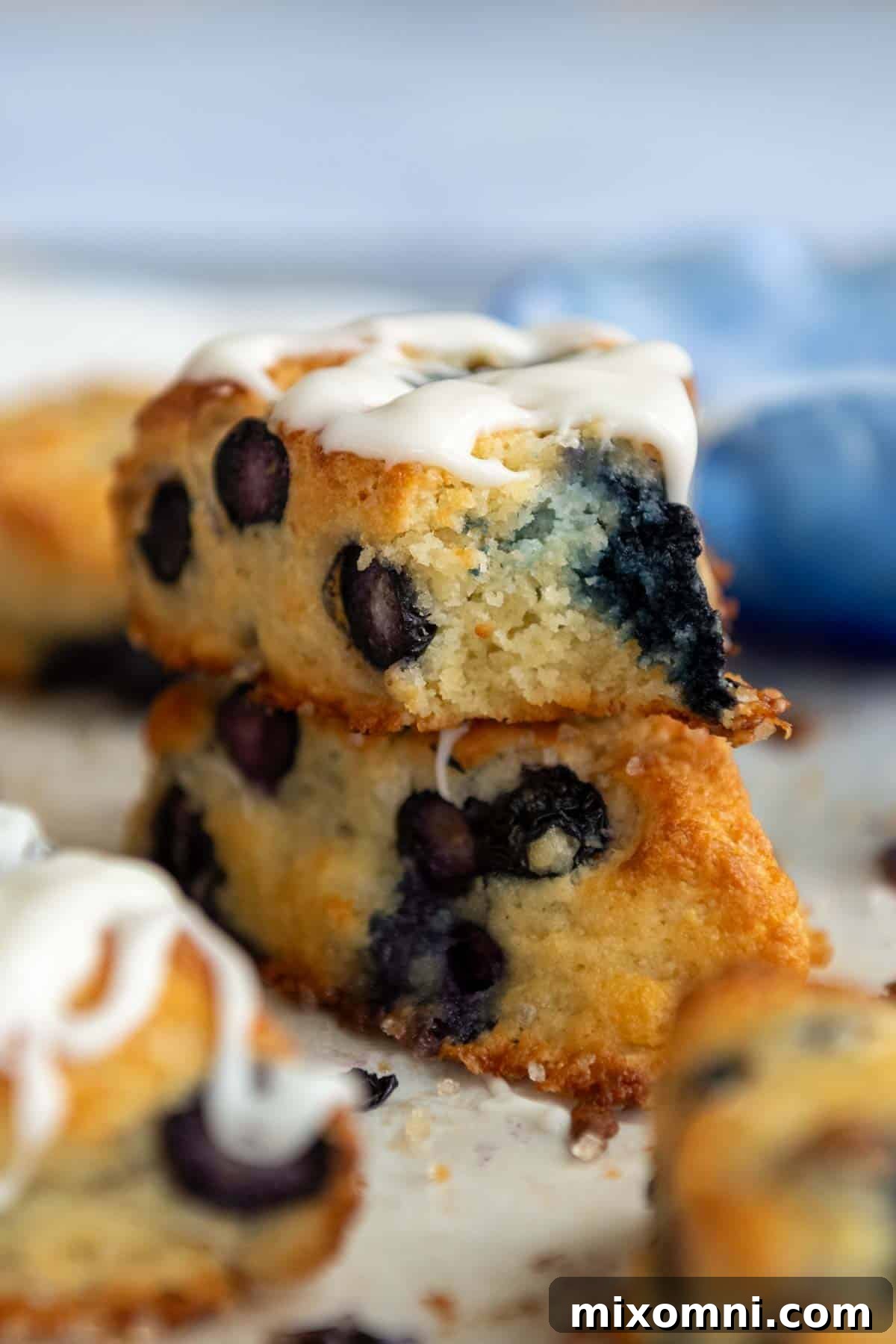
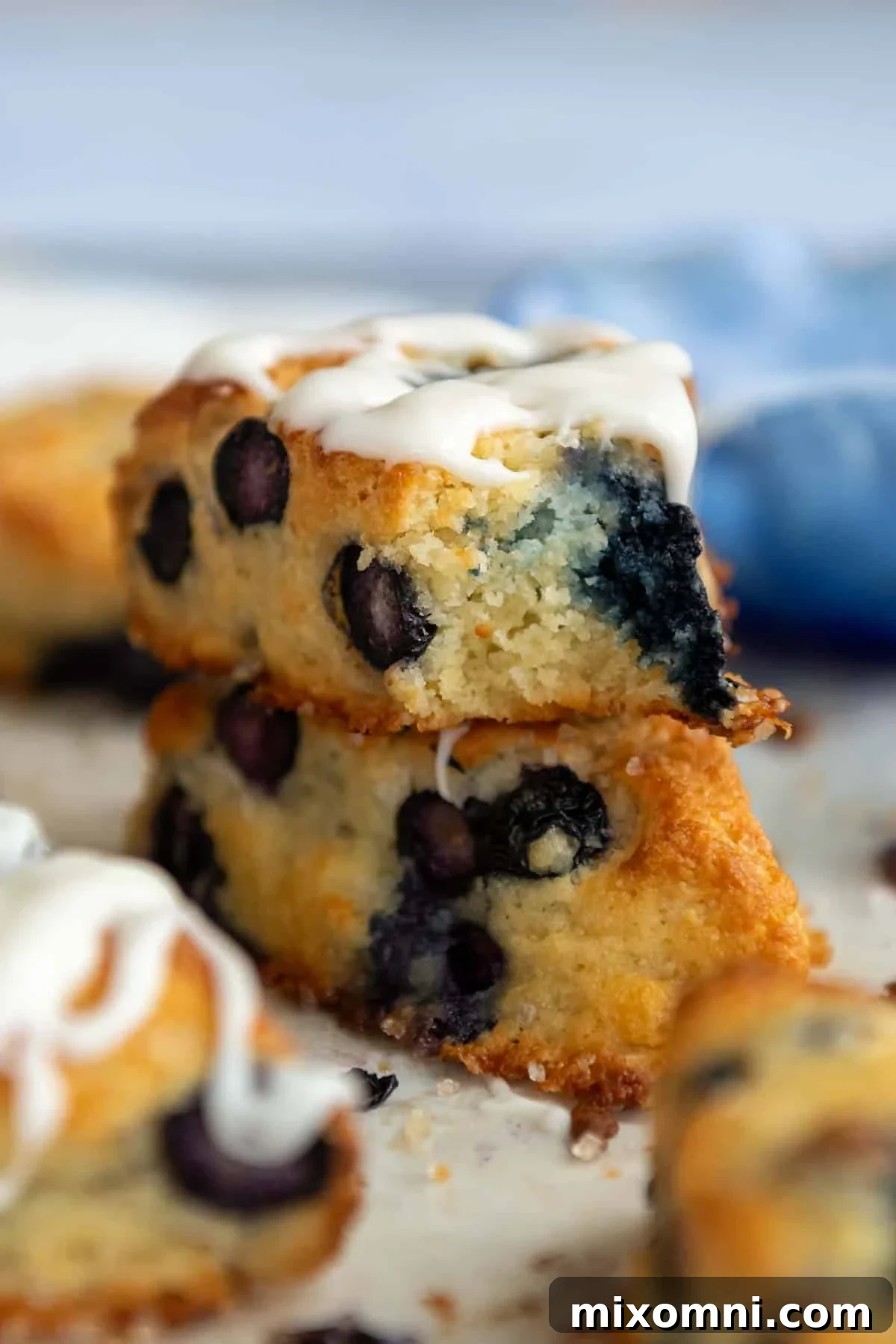
Embark on a delightful culinary journey to achieve ultimate gluten-free baking success with these remarkably tender, impossibly fluffy scones, lovingly crafted with almond flour. If your past experiences with almond flour recipes have left you disappointed by dense, heavy results, prepare for a revelation. These blueberry almond flour scones are more than just a recipe; they are a game-changer, promising a bakery-style bliss that will redefine your expectations. Imagine scones with perfectly crisp, subtly chewy edges, a rich, buttery, and subtly nutty taste, all harmonized with an astonishingly light and airy texture. The secret to this magic lies within a simple yet transformative ingredient likely already nestled in your pantry, waiting to unlock the full potential of gluten-free baking.
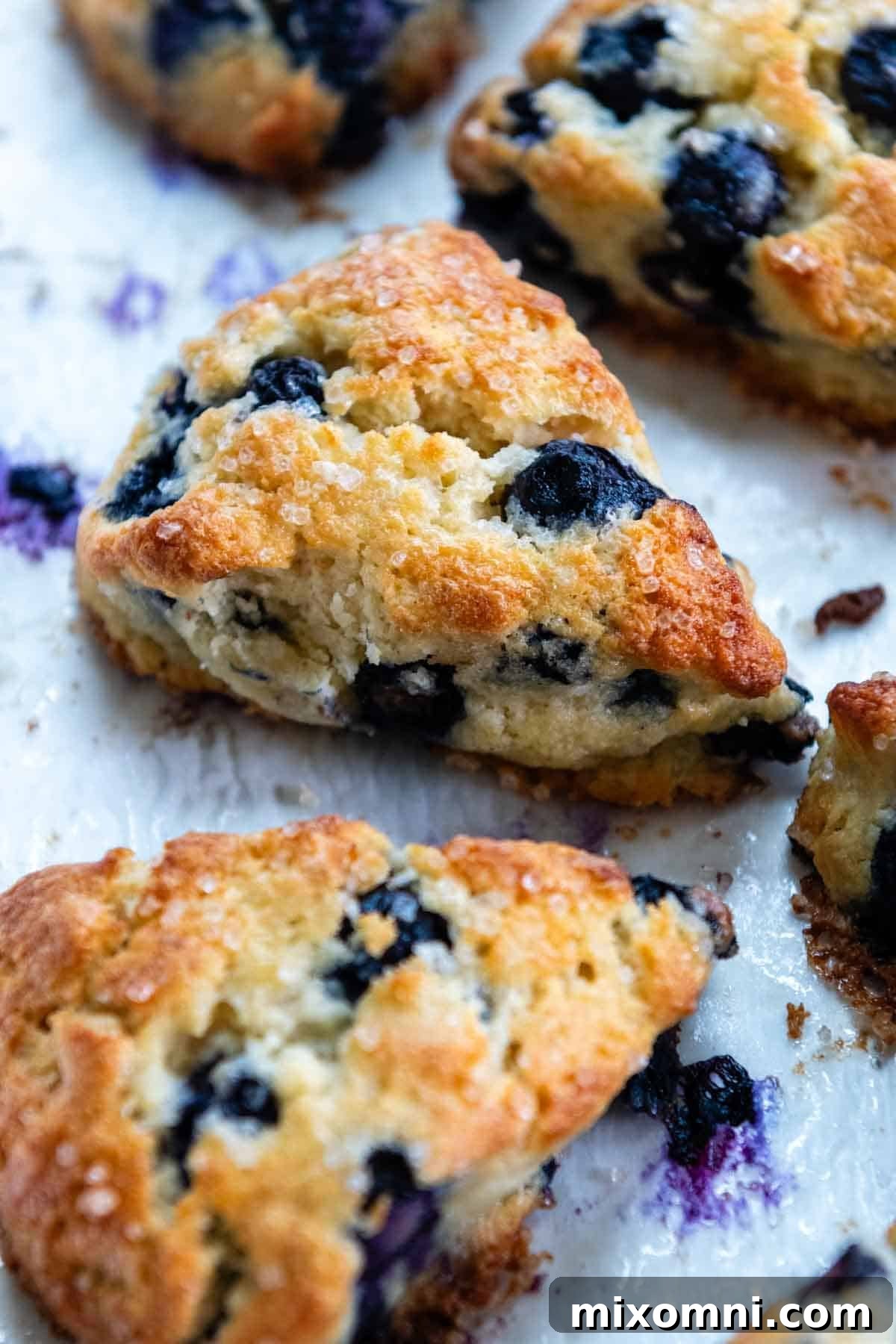
Mastering Light and Fluffy Almond Flour Scones
Crafting gluten-free and grain-free scones with almond flour often presents a significant challenge: preventing that dreaded dense, compressed texture. When you anticipate biting into a lovely, fresh blueberry morning treat, you deserve an experience filled with delight, not disappointment. Achieving that perfect, airy crumb is crucial for a truly satisfying scone.
In developing this exceptional scone recipe, I honed in on my most trusted techniques for combating almond flour’s natural density and heaviness. These groundbreaking almond flour “hacks” have consistently brought immense joy and received rave reviews within the Mamagourmand community for other popular creations, such as our acclaimed Almond Flour Carrot Cake. It’s a testament to the effectiveness of these methods!
When working with almond flour in baking, there are generally two primary approaches to achieve a lighter, more tender crumb. For delicate cakes, like our moist and fluffy almond flour lemon cake, my preferred method involves separately beating egg yolks and whites to incorporate maximum aeration into the batter. However, this technique isn’t as practical or necessary for scones, which typically require fewer eggs and a different dough structure.
Therefore, I turned to my other simple yet incredibly effective trick: strategically replacing a portion of the almond flour with a lighter-density starch. This is where the magic ingredient comes in! You can readily use cornstarch, a staple in most pantries, or opt for tapioca starch if you’re committed to a completely grain-free recipe. An added benefit of this approach is that it’s significantly less time-consuming than the meticulous process of separating and beating eggs, a welcome relief for any home baker.
Let’s delve into this recipe together, and I’ll share all my insider tips to ensure your homemade blueberry scones are an absolute triumph. And remember, if blueberries aren’t your preference, this versatile dough serves as an excellent base for countless other flavors. I’ve already envisioned a myriad of delicious possibilities – explore them all further down! 👇
I am so pleased with this recipe. I have tried 5 (almond flour) blueberry scone recipes all to my disappointment. This recipe is by far the ONLY recipe that resembles the consistency of a scone with flakiness and light texture. I believe it is the cornstarch. I tried it with Greek yogurt but will make it again with sour cream to compare. It is my go to recipe now and I am so thankful I found this!
—Linda
Essential Ingredient Tips and Smart Substitutions
One of the many reasons I adore almond flour in gluten-free baking is the delightful touch of chewiness it imparts, coupled with its naturally sweet, nutty flavor. If you haven’t yet experienced how it elevates the texture of crunchy almond flour biscotti, I urge you to add that recipe to your must-try list!
- Blanched Almond Flour: For precise and consistent results, when measuring almond flour, I recommend the scoop-and-level method. This typically yields about 92 grams per cup. If you prefer a spoon-in-and-level technique, or if your measuring cups vary, I highly advise measuring by weight to guarantee accuracy. Blanched almond flour, made from almonds with their skins removed, provides the finest texture for light scones.
- Sweetener: While I commonly use granulated white sugar, this ingredient is quite flexible. The key is to use a granulated sweetener, not a liquid one, as liquids would disrupt the dough’s delicate texture. Interestingly, these scones can be made entirely sugar-free (a discovery made during a recipe testing oversight!). Alternatively, you can substitute with a low-carb powdered sweetener, such as monk fruit. Feel free to adjust the sugar amount to suit your preference for sweetness.
- Cornstarch or Tapioca Starch: This is our secret weapon for lightness! I’ve successfully tested this recipe using both cornstarch and tapioca starch, and both yield excellent results. They act as lighteners, preventing the dense texture often associated with almond flour. I strongly advise against using coconut flour, as its absorption properties and weight are vastly different and incompatible with this recipe’s ratios.
- Butter: Cold butter is absolutely essential for achieving flaky, tender scones. The fat creates steam pockets during baking, contributing to that desirable layered texture. Although almond flour contains natural fats, I’ve carefully reduced the butter quantity to prevent the pastries from becoming overly greasy. For a dairy-free option, good quality vegan butter sticks can be substituted; however, coconut oil is not recommended due to its different fat composition and melting point.
- Sour Cream or Yogurt: This is another clever hack I frequently employ in gluten-free baking. Instead of relying solely on butter or oil for fat, incorporating some sour cream (or yogurt, which also works well) helps to coat the starches in the flour mixture. This builds structure and moisture without making the crumb heavy. Non-dairy sour cream or yogurt alternatives can also be used for those with dietary restrictions. The acidity in sour cream also reacts with the baking powder, enhancing the lift and tenderness.
- Blueberries (Fresh or Frozen): Fresh blueberries are generally easier to work with as they introduce less moisture into the dough. However, frozen blueberries can certainly be used straight from the freezer. If using frozen, avoid thawing them, as this can lead to excess moisture and purple streaks in your dough. Simply toss them into the dry ingredients while still frozen.
Let’s Bake These Fluffy Scones Together!
(The following provides detailed step-by-step photos and modified instructions. For the complete recipe, including precise ingredient amounts and nutritional information, please scroll down to the full recipe card.)
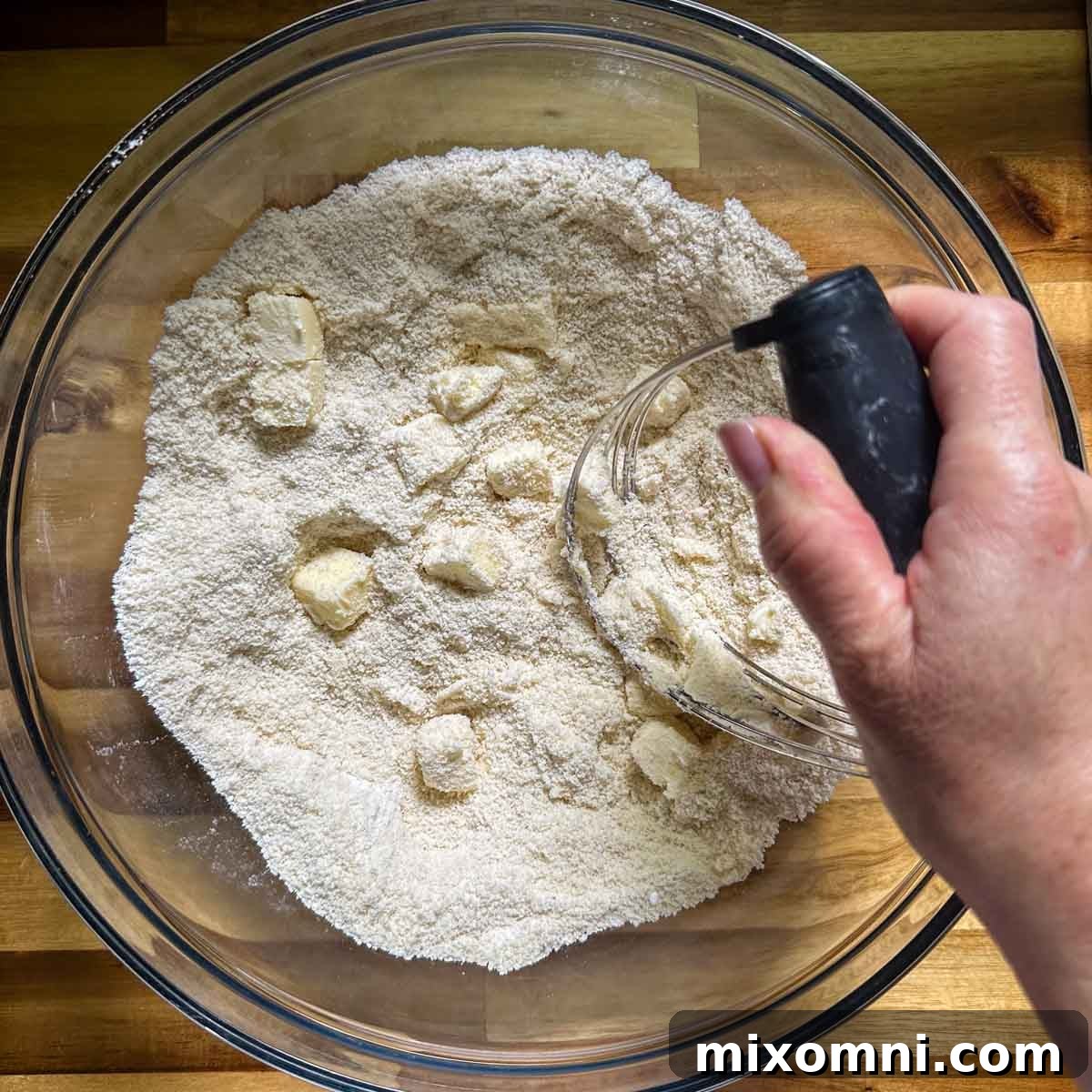
Step 1: Incorporate the Cold Butter
Begin by whisking together all the dry ingredients in a large mixing bowl: blanched almond flour, granulated sugar, cornstarch (or tapioca starch), baking powder, and salt. Once thoroughly combined, it’s time to introduce the critically important cold, unsalted butter, chopped into small pieces. You can efficiently work the butter into the dry mixture using a pastry blender, as shown in the image. If you don’t have this specialized tool, a sturdy fork or even your fingertips will work just as well. The goal is to achieve a uniform, sandy, and crumbly mixture with no large butter pieces, ensuring a tender and flaky scone.
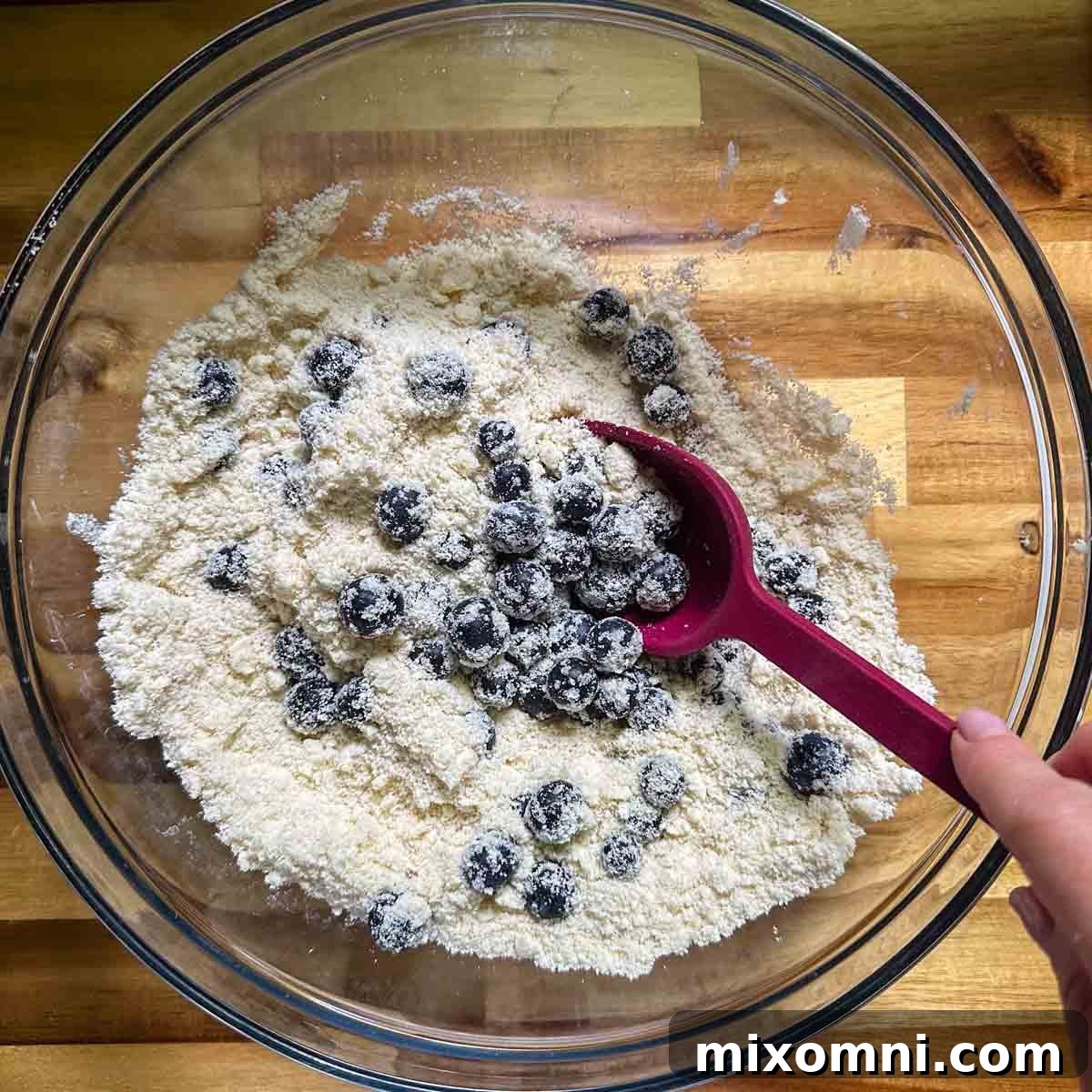
Step 2: Gently Fold in Blueberries or Other Mix-ins
At this stage, after the butter has been incorporated, I like to gently stir in the chosen mix-ins. Whether you opt for fresh blueberries, a medley of other berries, chopped nuts, decadent chocolate chips, or any other flavorful additions, now is the ideal moment. Coating them in the almond flour mixture at this point prevents them from sinking to the bottom of the dough and ensures an even distribution. This method is far simpler than trying to fold them into a thicker, wetter dough later on.
Step 3: Combine Wet Ingredients and Chill the Dough
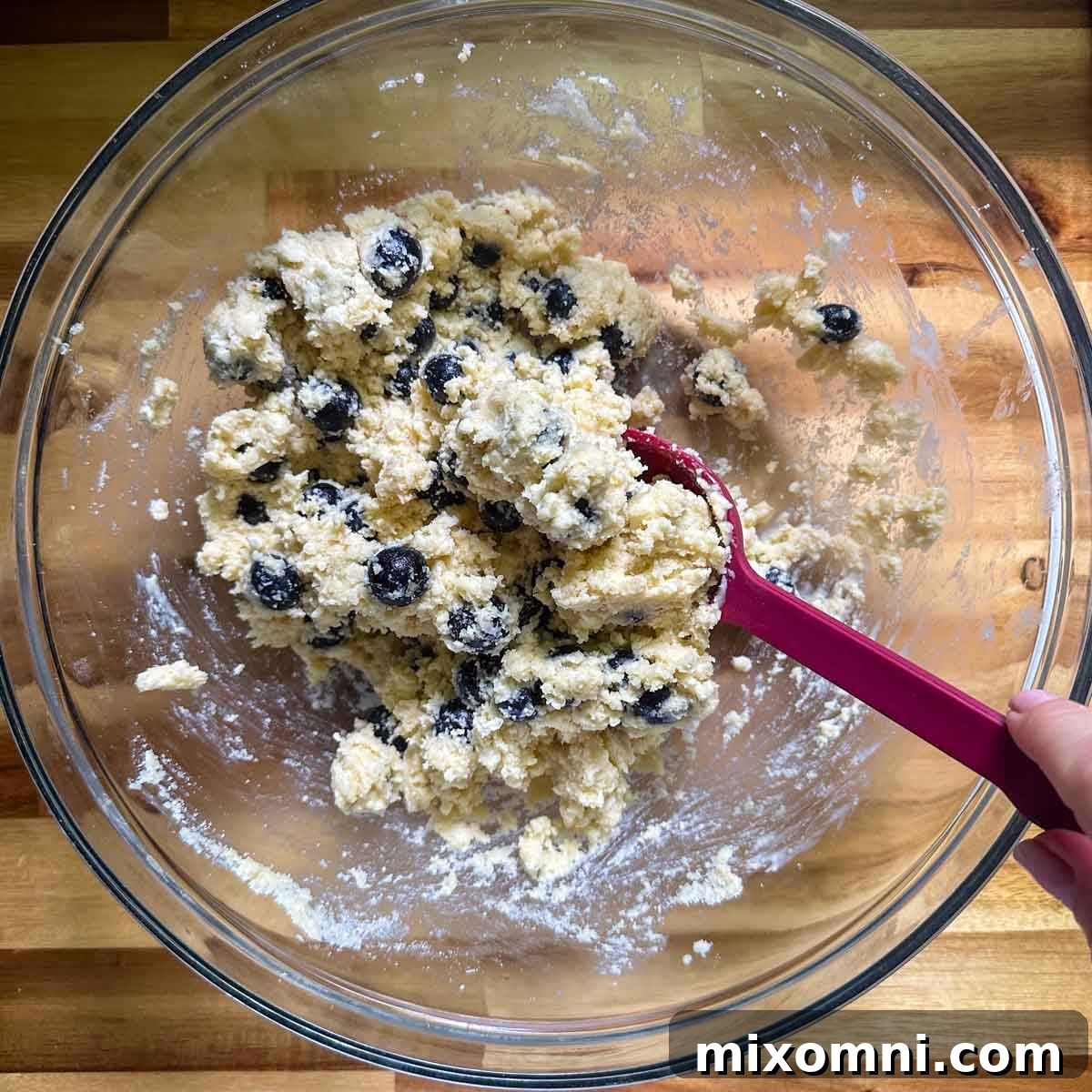
In a separate, small bowl, whisk together the few wet ingredients: a large egg, sour cream (or yogurt), and vanilla extract. Once combined, pour this wet mixture into the almond flour and butter mixture. Stir gently until no dry pockets of flour remain and a cohesive dough forms. Avoid overmixing, as this can lead to tougher scones. See? Wasn’t that easy peasy? Cover the bowl with plastic wrap and place it in the freezer for a minimum of 30 minutes, or refrigerate for up to 2 hours. This chilling step is crucial, as it re-solidifies the butter, ensuring the fat remains cold when baking for an exceptionally tender and flaky crumb.
Step 4: Shape, Cut, and Final Chill Before Baking
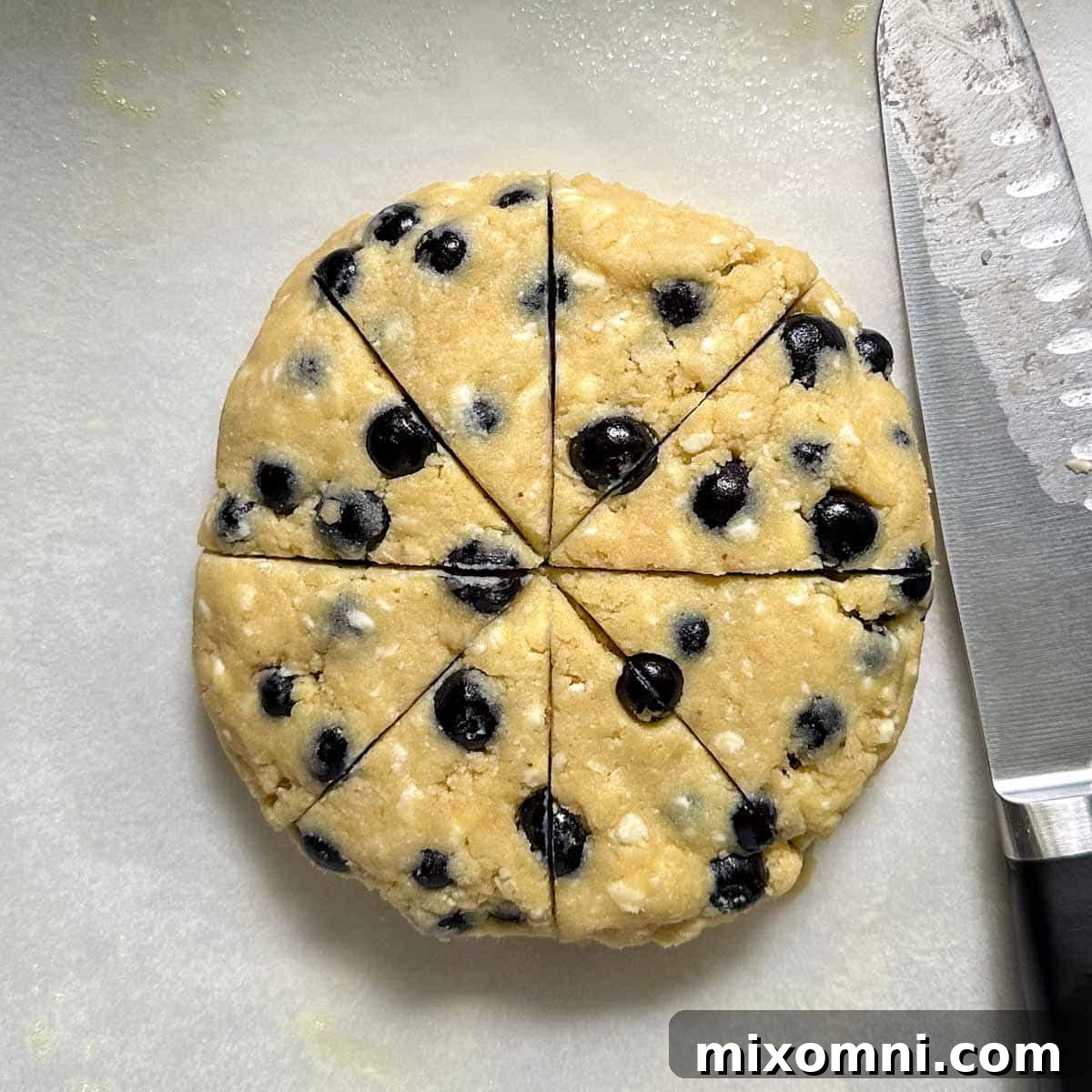
Once chilled, turn the dough out onto a greased parchment-lined baking sheet or a silicone baking mat. Gently shape the mixture into a thick disc, approximately 6-7 inches (15-18 cm) in diameter and about 1 to 1½ inches (2.5-4 cm) thick. Using a sharp knife or a pastry cutter, divide the disc into 8 equal wedges (or “wedgies,” as my Mom playfully calls them during Trivia Pursuit! 🤣).
Carefully spread the wedges slightly apart on the baking sheet to allow for even baking. For optimal results, place the entire baking sheet with the shaped scones back into the freezer for another 30 minutes. This secondary chill is vital: it helps the scones maintain their perfect shape during baking and prevents them from spreading too much or browning excessively. While they chill, preheat your oven to 375ºF (190ºC). Bake for approximately 22-25 minutes, or until the tops are golden brown and an internal temperature of 205-207ºF (96-97ºC) is reached. Remove from oven and let cool slightly on the baking sheet for 10 minutes before transferring to a wire rack to cool completely, then enjoy immensely!
Oh, The Endless Possibilities and Delicious Variations!
While fresh blueberries are often preferred for their ease of handling and minimal moisture content, you can absolutely use frozen blueberries in this recipe. If opting for frozen, add them directly from the freezer without thawing to prevent excess moisture from making the dough too wet and causing purple streaks. Beyond blueberries, this versatile dough provides an excellent foundation for a myriad of other homemade scone possibilities.
Feel free to swap out the blueberries for other delightful mix-ins. Consider using an equal amount of sliced fresh strawberries, juicy raspberries, or tart blackberries. For a different flavor profile, try adding mini chocolate chips, chopped nuts like pecans or walnuts, or finely diced apples tossed with a pinch of cinnamon for an autumnal twist. Get creative with combinations such as luscious white chocolate and raspberry, a tablespoon of bright citrus zest (lemon, orange, or lime), various dried fruits (cranberries, apricots, cherries), or even a savory cheese and herb blend for a unique savory scone experience. The beauty of this almond flour scone base is its adaptability, allowing you to tailor it to your cravings and available ingredients!
Make-Ahead: The Convenient Freeze and Bake Method
One of the best qualities of this scone dough is its performance when baked from a chilled or frozen state. This makes it an ideal candidate for a make-ahead option, perfect for busy mornings or when you want freshly baked goods with minimal effort. Here’s how to prepare and store them:
After preparing the dough and chilling it in the refrigerator for at least 30 minutes, proceed to shape it into a disc and cut it into wedges as described in Step 4. At this point, if desired, you can brush the tops of the scones with a little heavy cream for a richer golden crust and sprinkle them with turbinado (coarse) sugar for an added crunch and sparkle. Then, transfer the entire baking sheet with the unbaked scones directly to the freezer.
Allow the scones to freeze solid, which typically takes about 1-2 hours. Once completely frozen, carefully wrap each scone individually in plastic wrap. This prevents freezer burn and makes them easy to grab one by one. Transfer the wrapped scones to a gallon-sized freezer bag or an airtight freezer-safe container for longer storage. They can be kept in the freezer for up to 3 months.
When you’re ready to enjoy fresh scones, simply unwrap the desired number of frozen scones and place them on a parchment-lined baking sheet. There’s no need to thaw! Bake them directly from frozen at 375ºF (190ºC), adding an additional 1-2 minutes to the standard baking time to ensure they are cooked through and beautifully golden. This method allows for warm, homemade scones anytime you desire.
Save this Recipe to Your Pinterest Board!
Let’s be friends on Pinterest! I’m always sharing great recipes!
Did you make this recipe? I love hearing from you! Leave a star rating and comment below the recipe card. Your feedback helps others discover and enjoy our recipes, and I truly appreciate hearing from our community. You will always hear back from me! -Melissa

Legit Easy Peasy Fluffy Almond Flour Scones

Melissa Erdelac
8
15 minutes
25 minutes
1 hour
40 minutes
Pin
Rate
Remove Ads
Ingredients
-
2 ¼
cups
(240
g)
blanched almond flour
-
⅓
cup
(72
g)
granulated sugar
-
¼
cup
(35
g)
cornstarch
,
or tapioca starch -
2
teaspoons
baking powder
-
¼
teaspoon
salt
-
4
tablespoons
(58
g)
cold unsalted butter
,
chopped -
1
cup
(190
g)
blueberries
,
fresh preferred -
1
large egg
-
¼
cup
(61
g)
sour cream
,
or yogurt -
1
teaspoon
vanilla or almond extract
-
optional
heavy cream
,
brushing on before baking -
optional
turbinado (coarse) sugar
,
sprinkling on before baking
Equipment
-
Baking Sheets -
Pastry Cutter -
Almond Flour
Instructions
-
In a large mixing bowl, thoroughly whisk together the blanched almond flour, granulated sugar, cornstarch (or tapioca starch), baking powder, and salt until well combined and lump-free.2 ¼ cups blanched almond flour,
⅓ cup granulated sugar,
¼ cup cornstarch,
2 teaspoons baking powder,
¼ teaspoon salt -
Add the cold, chopped butter pieces to the dry mixture. Using a pastry blender, a fork, or your fingertips, work the butter into the flour until the mixture resembles coarse sand with pea-sized bits of butter. Gently stir in the blueberries or your chosen alternative mix-ins.4 tablespoons cold unsalted butter,
1 cup blueberries -
In a separate small bowl, whisk together the egg, sour cream (or yogurt), and vanilla extract until smooth. Pour this wet mixture into the dry ingredients and stir gently until just combined, ensuring no dry pockets of flour remain. Be careful not to overmix. Cover the bowl and place it in the freezer for 30 minutes to quickly chill the dough, or refrigerate for up to 2 hours.1 large egg,
¼ cup sour cream,
1 teaspoon vanilla or almond extract -
Meanwhile, line a baking sheet with parchment paper and lightly spray it with nonstick cooking spray. Once the dough is chilled, turn it out onto the prepared baking sheet and shape it into a thick disc, approximately 6-7 inches (15-18 cm) in diameter and about 1 to 1½ inches (2.5-4 cm) thick.
-
Use a sharp knife or pastry cutter to divide the dough disc into 8 equal triangles. Carefully use a small spatula to separate the cut scones on the baking sheet, ensuring they are at least 2 inches apart for even baking. If desired, brush the tops and sides of the scones with heavy cream and sprinkle with coarse turbinado sugar for a golden finish and added texture.
-
For the best possible results, place the baking sheet with the shaped scones into the freezer for an additional 30 minutes. This crucial step helps them retain their shape during baking and prevents excessive spreading or browning. While the scones chill, preheat your oven to 375℉ (190ºC).
-
Bake the scones on the middle rack for 22-25 minutes, rotating the pan halfway through for uniform baking. The tops should be set and lightly golden brown, and an internal temperature of 205-207℉ (96-97ºC) indicates they are perfectly baked. Allow the scones to cool on the baking sheet for 10 minutes before carefully transferring them to a wire rack to cool completely.
Notes
Storing and Freezing
Store completely cooled scones in an airtight container at room temperature for up to 2 days. For longer preservation, wrap individual scones tightly in plastic wrap and transfer them to a freezer-safe ziplock bag or airtight container. They can be frozen for up to 3 months. For best enjoyment, gently reheat them before serving again.
Calories:
311
kcal
,
Carbohydrates:
22
g
,
Protein:
8
g
,
Fat:
23
g
,
Saturated Fat:
6
g
,
Polyunsaturated Fat:
0.4
g
,
Monounsaturated Fat:
2
g
,
Trans Fat:
0.2
g
,
Cholesterol:
40
mg
,
Sodium:
129
mg
,
Potassium:
135
mg
,
Fiber:
4
g
,
Sugar:
12
g
,
Vitamin A:
259
IU
,
Vitamin C:
2
mg
,
Calcium:
123
mg
,
Iron:
1
mg
Did you make this recipe?
Please leave a star rating and review below. It helps others when searching for recipes and I LOVE feedback!