
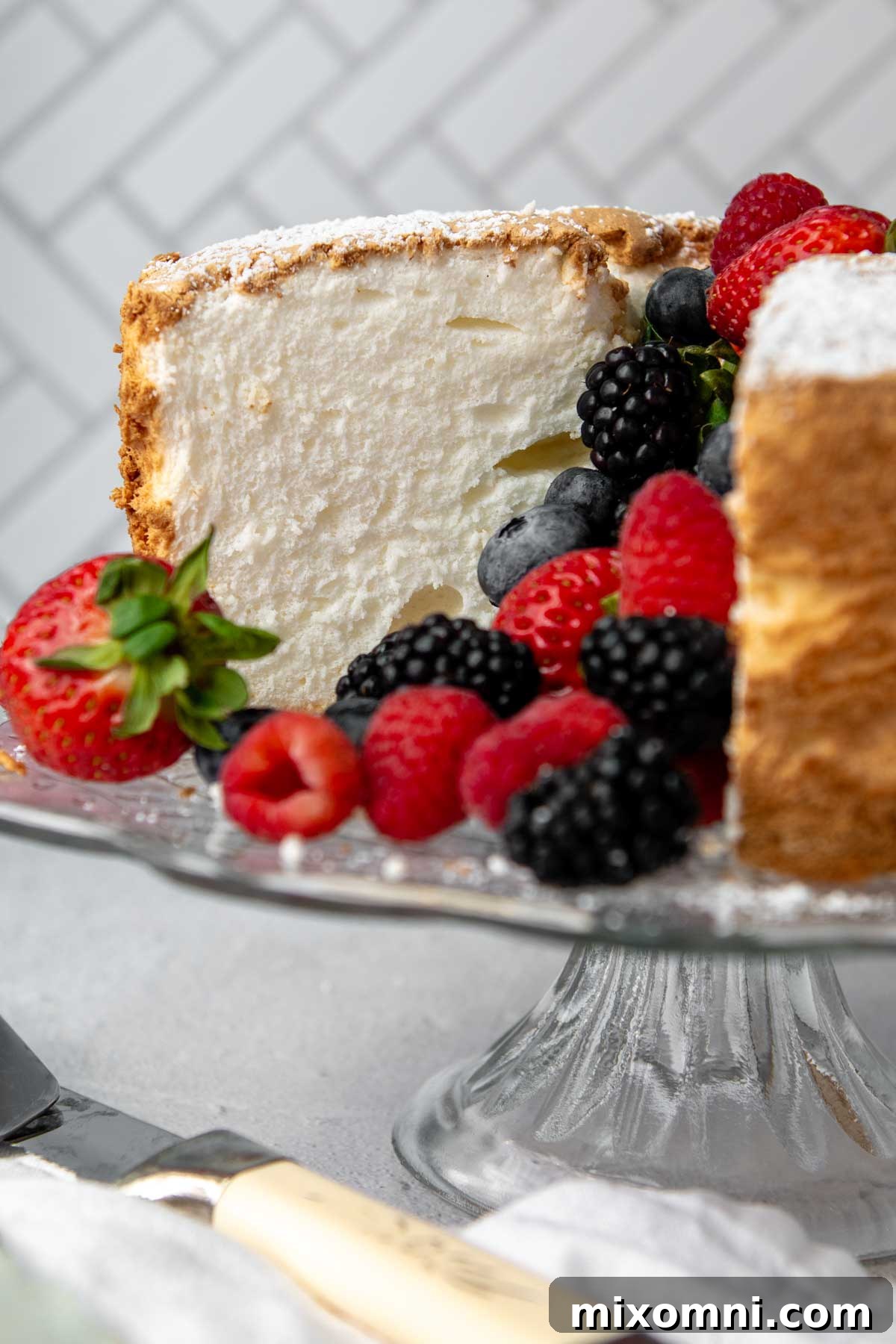
Embark on a delightful baking adventure to create a truly exquisite, pillowy soft gluten-free angel food cake from scratch. This comprehensive guide is packed with expert tips and clever tricks designed to help you master the art of homemade angel food cake, achieving a taste and texture so authentic, no one will ever suspect it’s gluten-free. The secret to its delicate, airy crumb lies in specific ingredient choices and precise mixing methods – all meticulously detailed below – ensuring even a novice baker can achieve remarkable success.
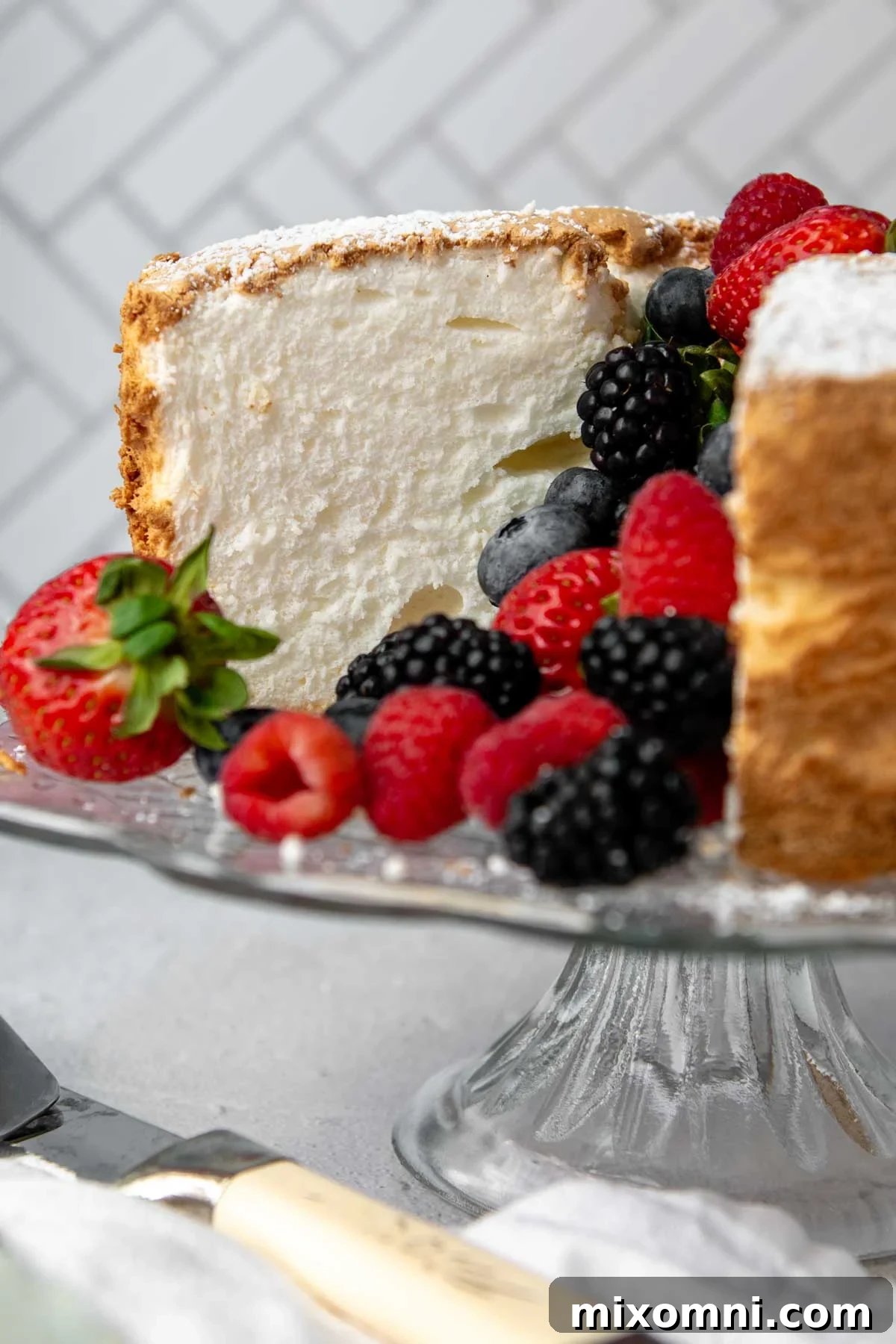
Rediscover the Classic: A Gluten-Free Angel Food Cake Recipe That Tastes Just Like You Remember!
For many of us, the joy of a perfectly light and fluffy angel food cake is a cherished memory. The challenge, of course, is recreating that magic in a gluten-free format. When crafting gluten-free cake recipes, my ultimate goal is always to achieve a texture and flavor profile indistinguishable from the traditional homemade versions I grew up enjoying. With this gluten-free angel food cake, that goal was not only met but exceeded – my guests were genuinely surprised to learn it was GF!
Achieving such an ethereal, airy crumb in a gluten-free sponge cake might seem like a daunting task, but surprisingly, it requires minimal adjustments. The key truly lies in the choice of gluten-free flour. I enthusiastically recommend using Cup4Cup gluten-free flour. This particular blend shines in angel food cake recipes because of its inherent inclusion of cornstarch, a game-changer for gluten-free baking. Traditional angel food cakes often rely on cake flour, which boasts a low protein content and a high starch level, contributing to its signature tenderness. By using a GF blend already fortified with cornstarch, or by adding extra cornstarch and sifting it with your chosen gluten-free all-purpose flour, we effectively mimic the properties of cake flour. This strategy has proven exceptionally effective in my kitchen, consistently lightening the texture of various gluten-free cakes, including this lemony almond flour cake.
For this recipe, you’ll need approximately 10-12 large egg whites, which should yield about 1 ½ cups when precisely measured. Accuracy here is important, as the volume of egg whites forms the very structure of your cake. But what to do with all those leftover egg yolks? Don’t let them go to waste! They are perfect for enriching a variety of dishes. Consider using them to create these luscious homemade gluten-free lemon bars, a creamy custard, or a rich hollandaise sauce.
Another crucial detail for gluten-free angel food cake is a slightly longer baking time compared to its traditional counterpart. To prevent the top from browning excessively before the center is fully baked, it’s essential to position your cake pan on the lower oven rack. This ensures even heat distribution and a perfectly golden finish without compromising the delicate interior. Patience during baking and cooling is a virtue that will be greatly rewarded!
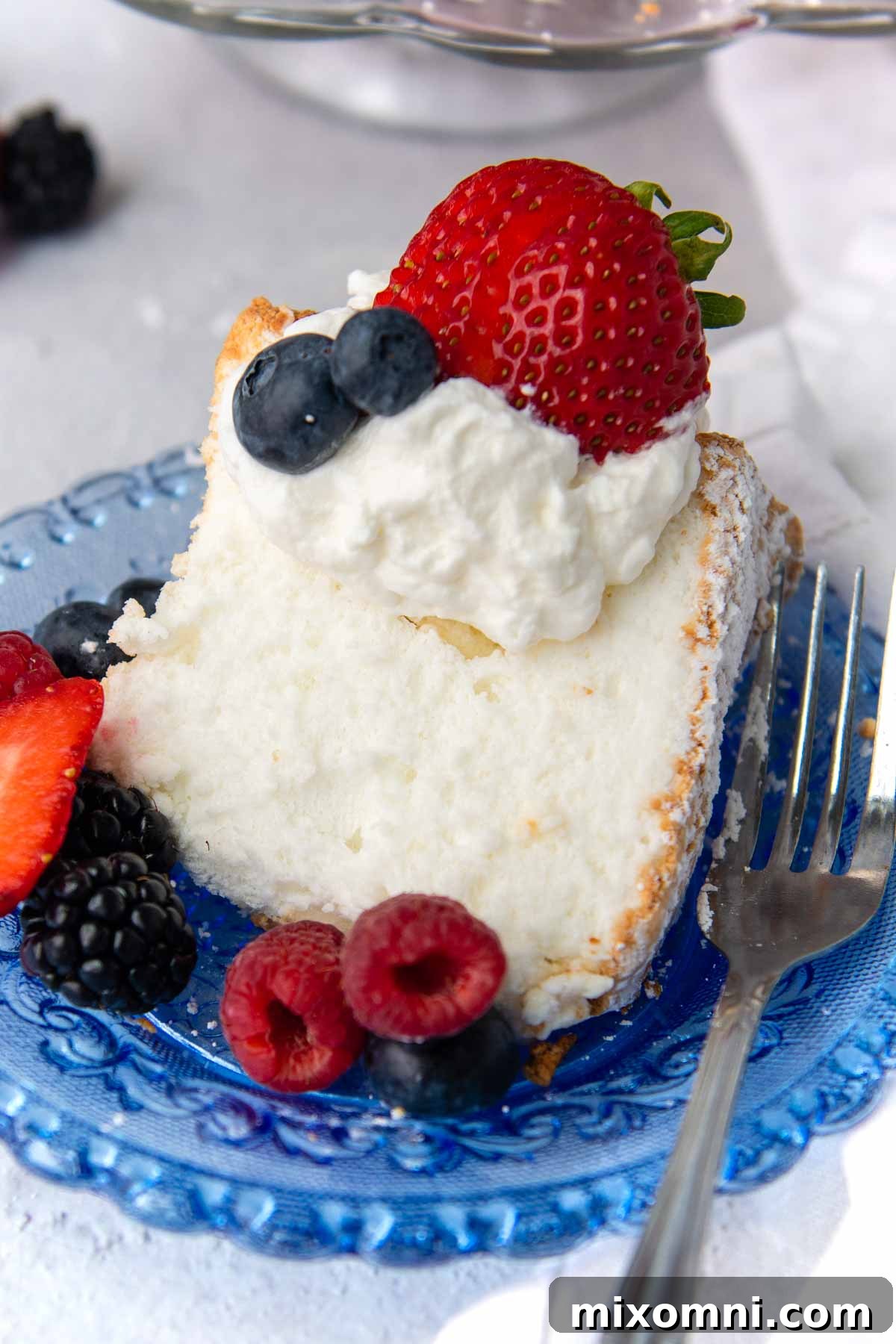
The moment of truth arrives after proper cooling – the first taste of your triumphant efforts! We love to serve our angel food cake with a simple accompaniment of fresh berries and a dollop of freshly whipped cream. For an extra touch of indulgence, consider pairing it with this easy chocolate whipped cream frosting. For a delightful shortcake experience, simply slice the cake, layer it with macerated strawberries and whipped cream, then drizzle with strawberry syrup. This versatile cake provides a perfect canvas for countless dessert creations.
My son is celiac, which means, we’re all basically GF. This was the first GF cake I have made which turned out delicious, way better than expected. So much so that guests went for seconds and were totally surprised it was gluten free. I can’t tell you how grateful I am to you and the time and effort in coming up with a delicious recipe.
—Erika
Mastering the Meringue: Let’s Make This Together!
Creating a light and airy angel food cake involves a few key techniques that are surprisingly simple to execute. The step-by-step photos and detailed instructions below will guide you through each stage. For the complete list of ingredients and precise measurements, please refer to the recipe card further down this page.
Separate Egg Whites Like a Pro for Optimal Volume
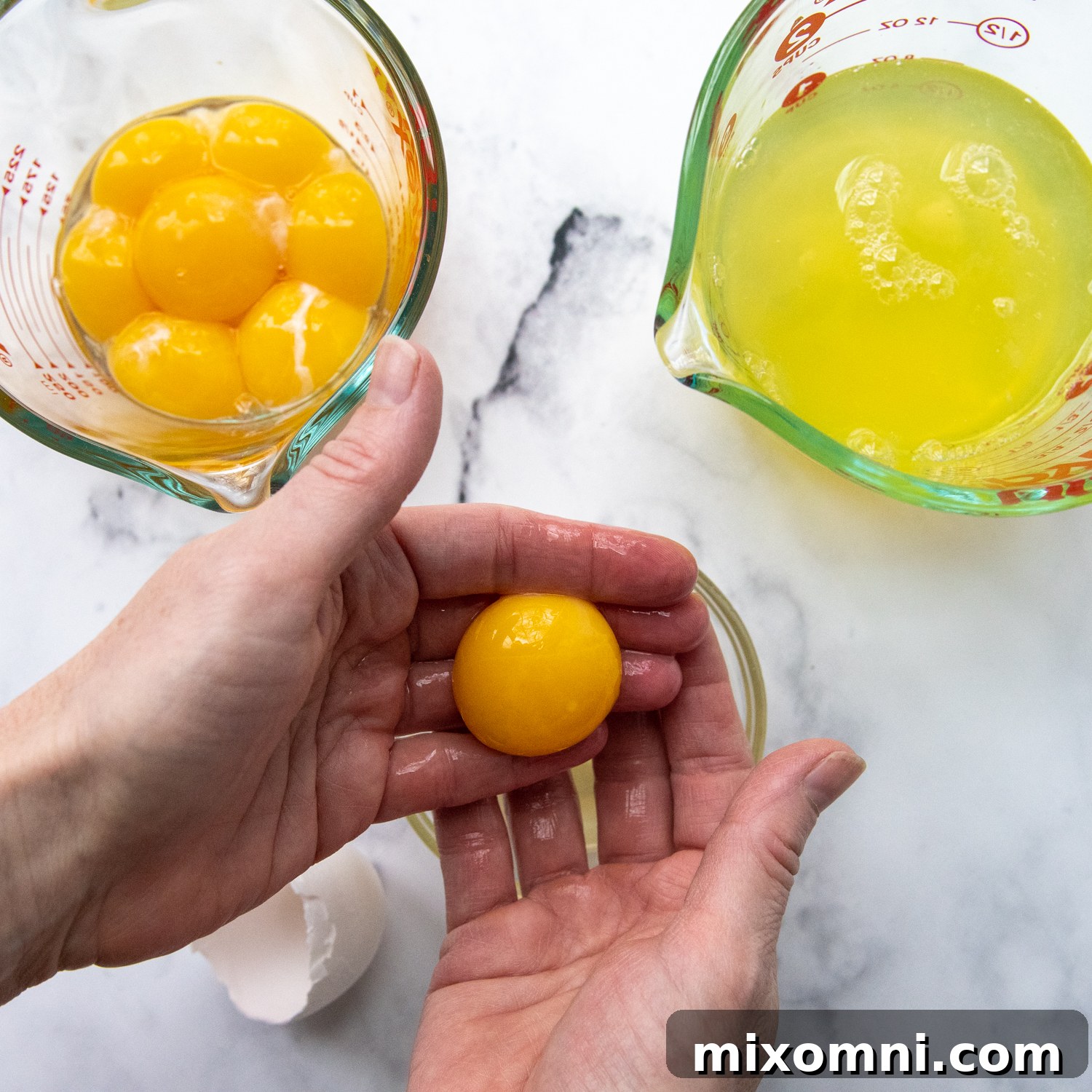
Perfect egg separation is the cornerstone of a successful angel food cake. This invaluable trick is also crucial for other delicate gluten-free sponge recipes, like my moist and airy gluten-free tres leches cake. To ensure effortless separation, always separate your eggs when they are cold. Once separated, allow the egg whites to come to room temperature before beating. This temperature change significantly helps them achieve maximum volume and stability when whipped. The single most important rule to remember is to prevent even the tiniest speck of egg yolk from contaminating the whites. Yolk contains fat, which inhibits the whites from whipping up into stiff, stable peaks. To safeguard your meringue, avoid separating eggs directly over your main mixing bowl. Instead, use a smaller, separate bowl for each egg. If any yolk accidentally slips through, that single contaminated white can be discarded without ruining your entire batch. A helpful technique is to use your clean fingers to gently transfer the yolk back and forth, allowing the whites to drip into your collection bowl, as pictured below.
Don’t fret about the leftover yolks! They can be stored in an airtight freezer bag or in ice cube trays and labeled with the date. Frozen yolks keep well for up to one year. When you’re ready to use them, simply thaw them overnight in the refrigerator or by running the sealed bag under cold water until pliable. They are fantastic additions to creamy puddings, rich hollandaise sauce, or vibrant lemon curd.
The Art of Sifting: Creating an Ultra-Light Crumb with Dry Ingredients
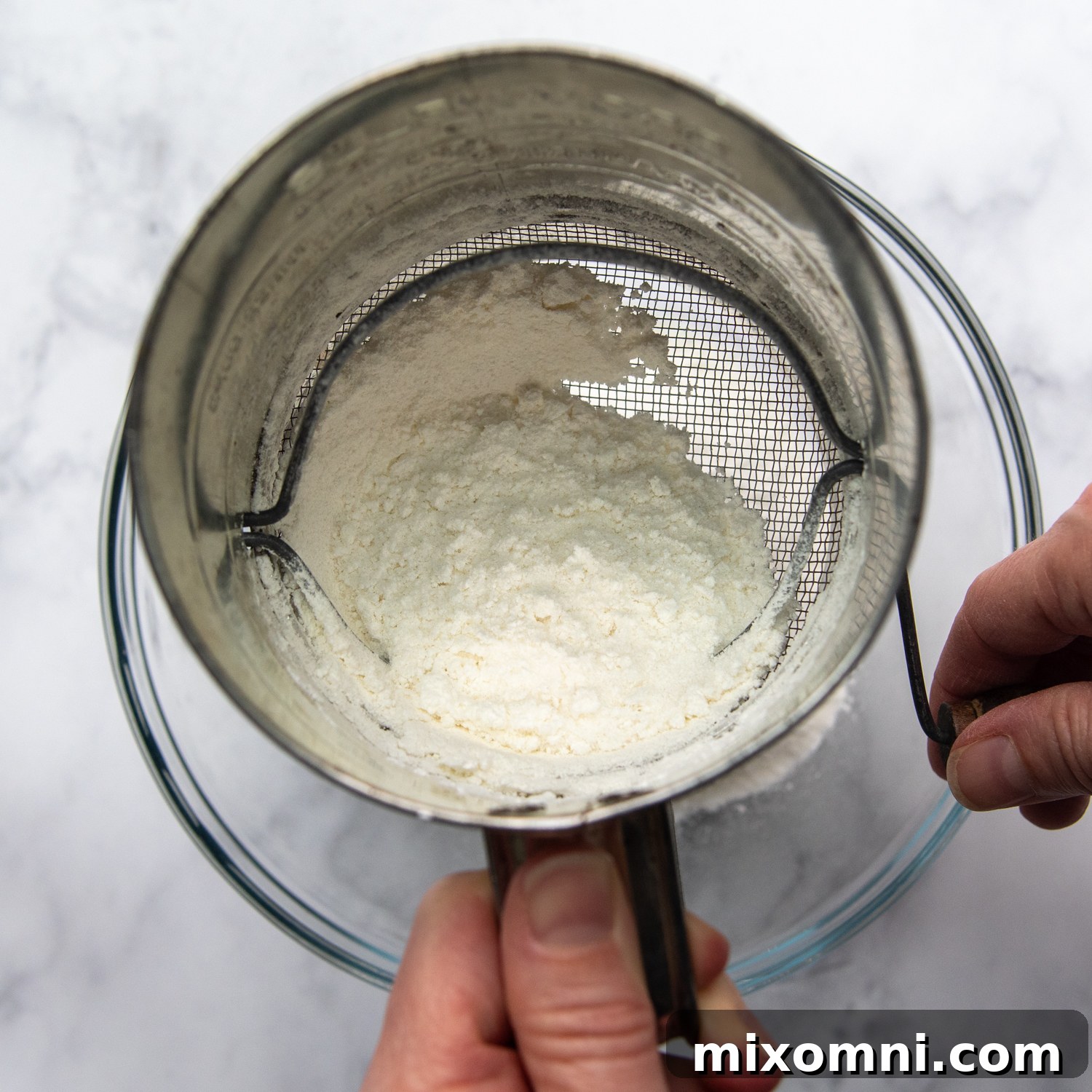
Once your egg whites are prepped, it’s time to prepare the dry ingredients: gluten-free flour, cornstarch, sugar, and salt. The crucial step here is sifting. Use a fine-mesh sifter to run these ingredients through not once, but at least twice, or even three times. This meticulous process is vital for two main reasons: it breaks up any lumps in the flour mixture, and more importantly, it incorporates air, which is essential for achieving that characteristic light and airy crumb. This step is particularly significant when working with gluten-free flours, which often tend to be denser than wheat-based flours. Thorough sifting prevents a heavy or gummy texture, ensuring your cake is tender and delicate.
Crafting the Perfect Meringue: The Heart of Angel Food Cake
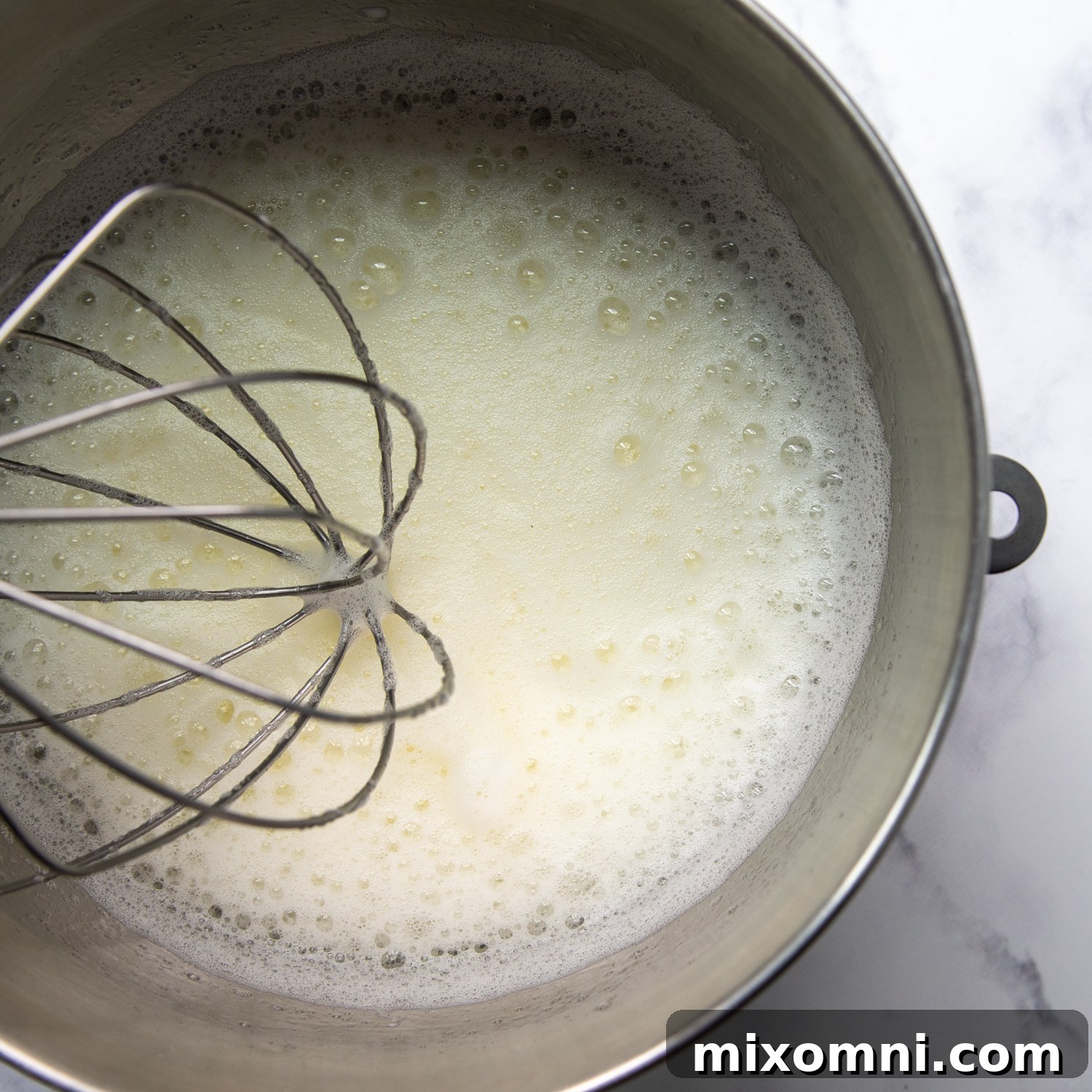
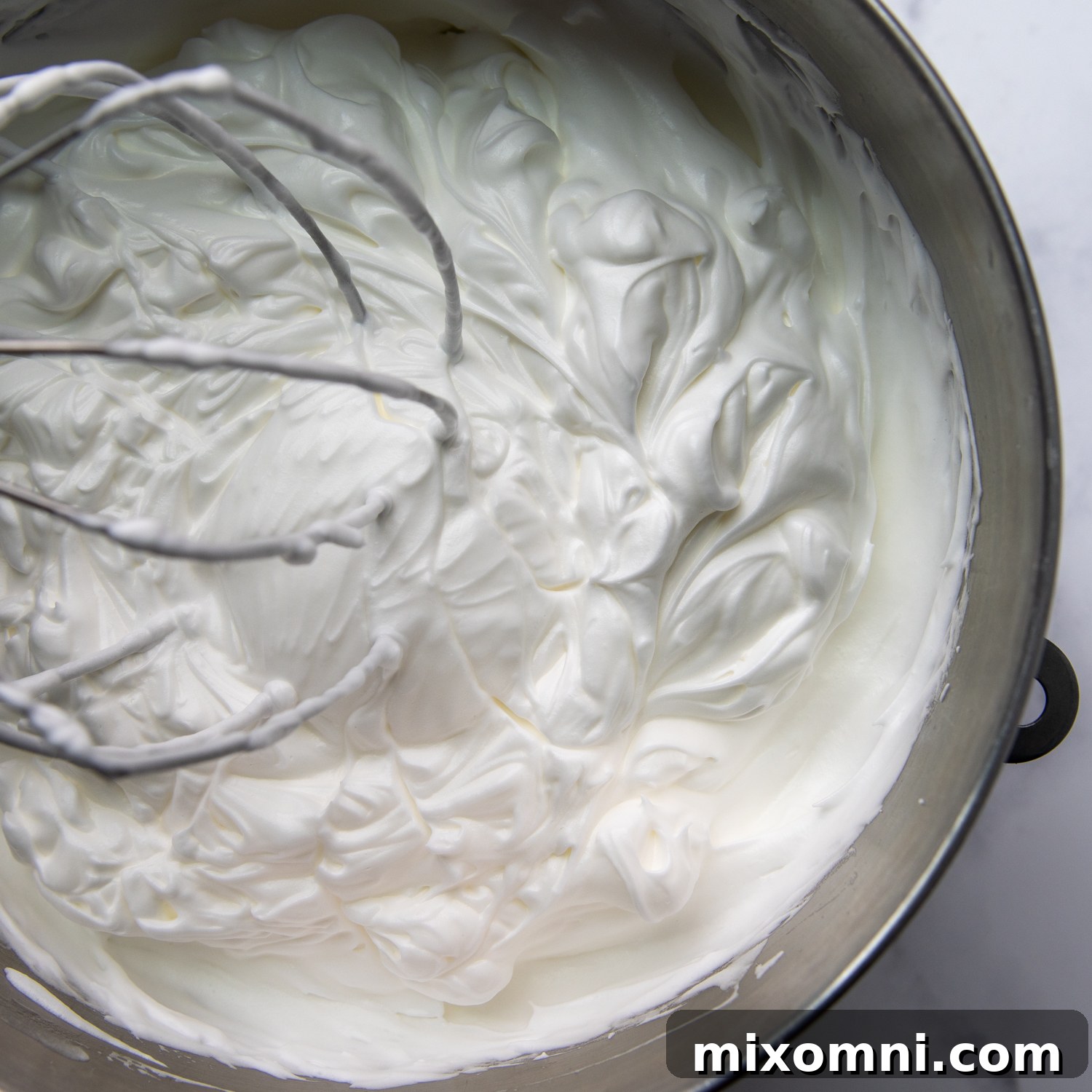
The word “meringue” might sound intimidating, but I promise, it’s an achievable feat! The meringue is the structural backbone of your angel food cake, so mastering it is key. Begin with a very large mixing bowl – preferably a stand mixer bowl with a whisk attachment, or a spacious bowl with a handheld mixer. You’ll need ample room for the egg whites to expand in volume. Beat the room-temperature egg whites with cream of tartar and your chosen extracts (vanilla and almond) on medium-low speed. Initially, the mixture will become light and foamy. This is your cue to begin gradually adding the granulated sugar. Add the sugar slowly, a couple of tablespoons at a time, allowing it to fully dissolve and absorb into the whipped egg whites. This gradual addition prevents the meringue from becoming grainy and ensures a smooth, stable structure. Continue beating, increasing the speed to medium-high as the sugar is incorporated, until all the sugar has been added and stiff, glossy peaks form. When you lift the whisk, the peaks should hold their shape firmly, curling slightly at the very tip without collapsing.
Gentle Folding and Perfect Baking
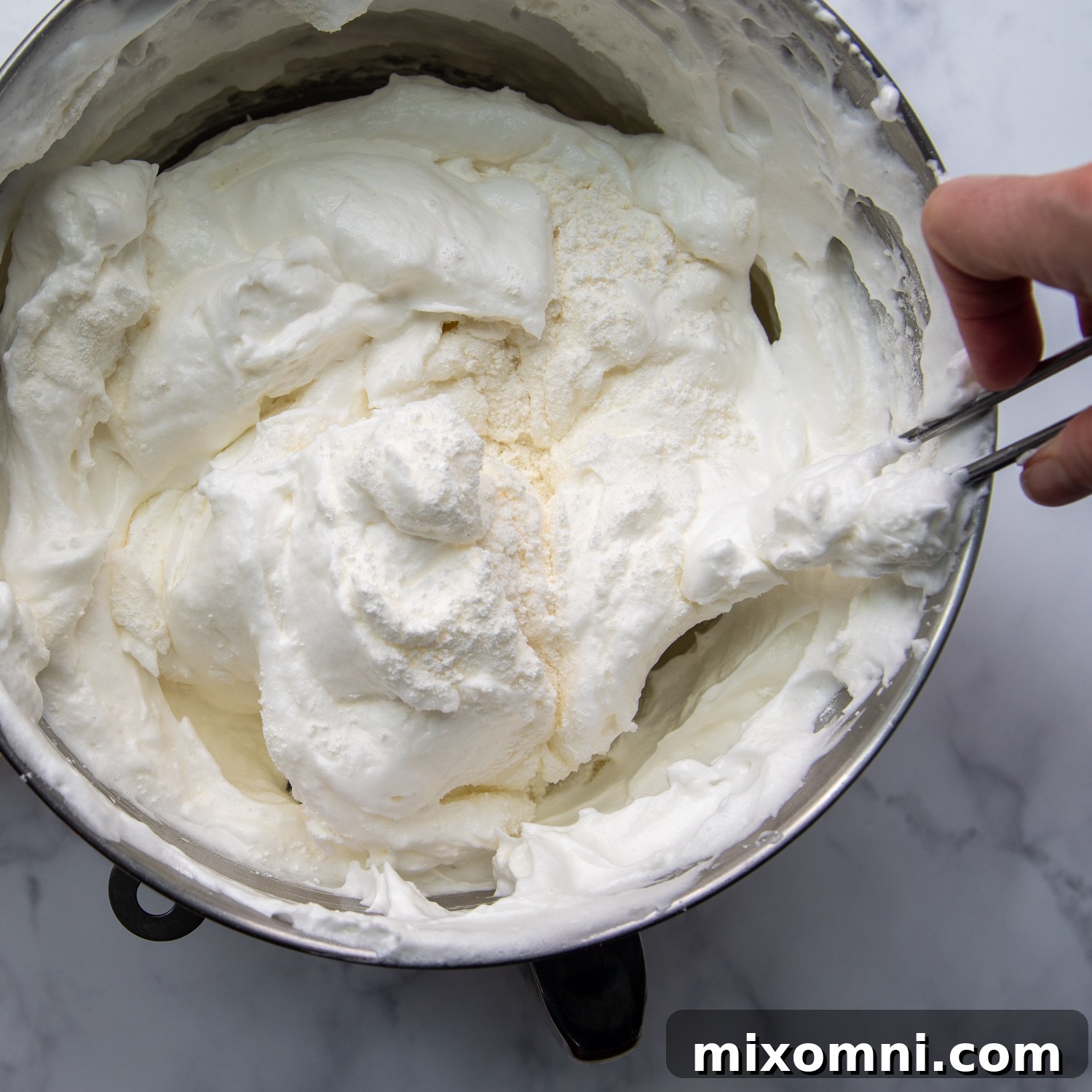
With your magnificent meringue ready, the next step is to gently incorporate the sifted gluten-free flour mixture. This is where the folding technique becomes paramount. Remove the bowl from the stand mixer and, using a wide rubber spatula, add the flour mixture a few tablespoons at a time. To fold, gently cut down through the center of the meringue, sweep across the bottom of the bowl, and then bring the mixture up and over, turning the bowl slightly with each fold. The goal is to carefully blend the flour into the meringue while preserving as much of that precious air as possible. Overmixing will deflate the meringue, resulting in a dense cake, so be patient and gentle until just combined.
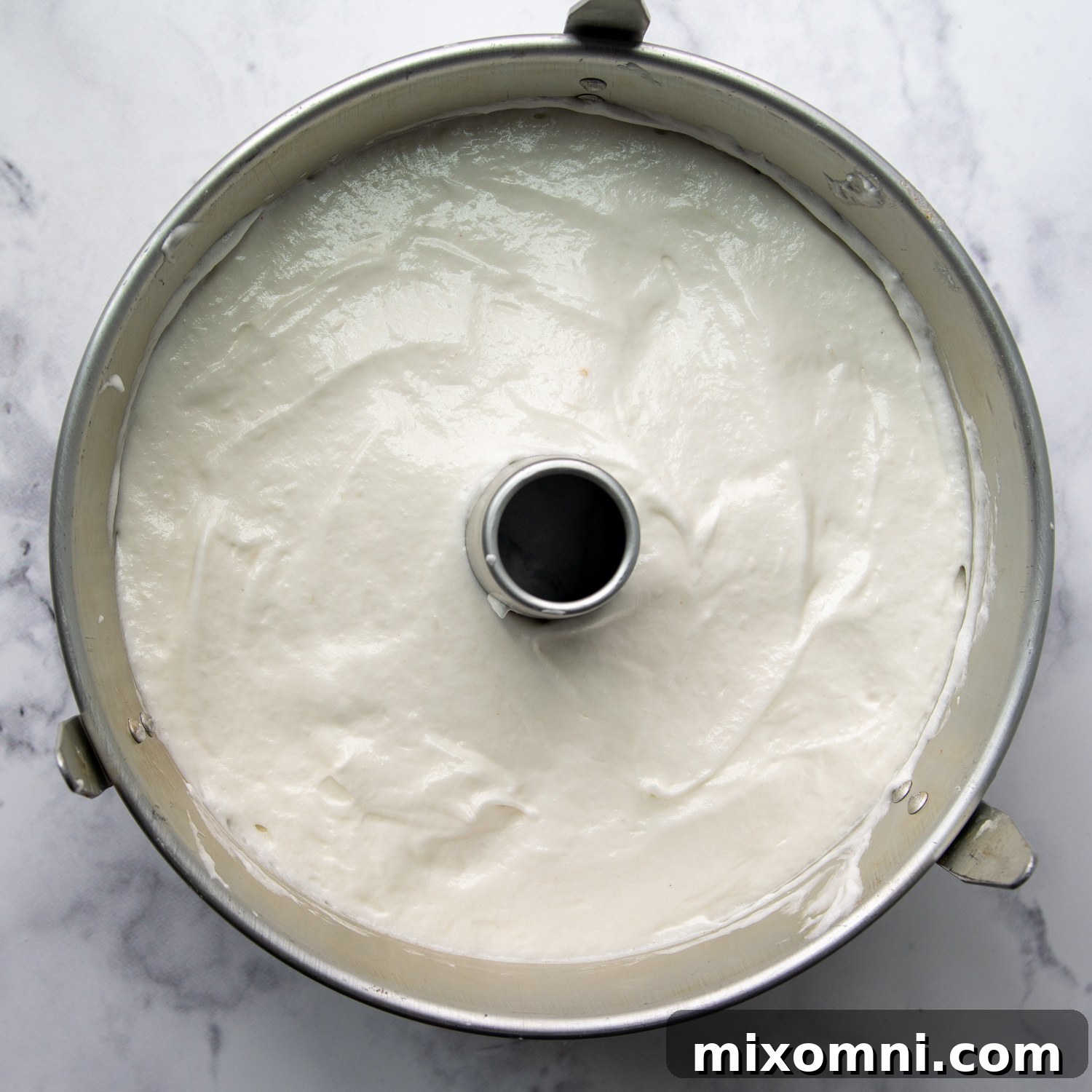
Once the batter is uniformly mixed, spoon it carefully into an UNGREASED angel food cake tube pan. It is absolutely critical that the pan is not greased, as the batter needs to “climb” the sides of the pan as it bakes to achieve its characteristic height and airy texture. Smooth the top of the batter with your rubber spatula and gently tap the pan on the counter a couple of times to release any large air bubbles. Bake the cake on the LOWER rack of your preheated oven for 50-55 minutes. Not quite sure if it’s done? I’ve got more detailed tips on testing for doneness right below. After baking, the cooling process is equally important: immediately invert the cake pan onto the counter (or onto the prongs around the rim if your pan has them) and allow it to cool completely, which typically takes at least 2 to 3 hours. This inverted cooling prevents the delicate cake from collapsing under its own weight, ensuring it stays tall and fluffy. This truly is the hardest part – the waiting!
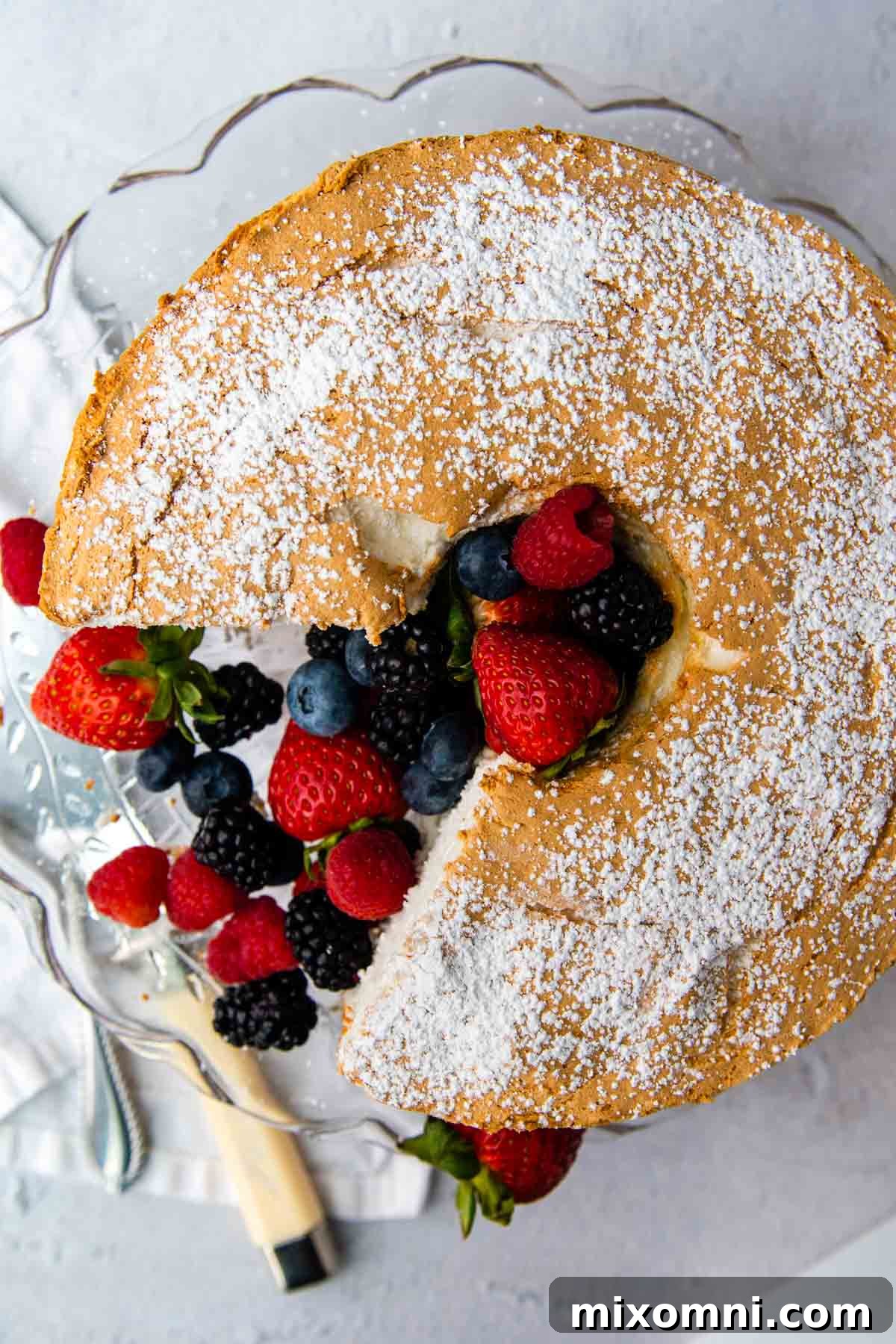
How to Know When Your Angel Food Cake is Perfectly Baked (and More Essential Tips!)
Unlike many other cakes where a toothpick inserted into the center comes out clean, this traditional test isn’t reliable for a porous cake like angel food. So, how do you accurately determine when your heavenly creation is done?
A reliable indicator is the “spring back” test. Gently touch the top of the cake with your finger. If it’s done, it will spring back immediately without leaving any indentation. If you see a dent, it needs a little more time in the oven. Additionally, the cake’s exterior should have a beautiful, even golden-brown color.
For an even more precise measurement, you can use an instant-read thermometer. When inserted into the center of the cake, it should register at least 205℉ (96℃). Reaching this internal temperature is crucial to prevent the cake from collapsing as it cools.
After baking, the cake must be inverted, while still in its pan, and allowed to cool completely for several hours. This prevents the delicate structure from compressing and maintains its impressive height and airy texture. If your tube pan lacks built-in “feet,” you can invert it over the neck of a bottle or a funnel to ensure air circulation beneath. Once fully cooled, use a thin, sharp knife to carefully run around both the outer and inner rings of the pan to loosen the cake. Then, turn the pan upside down to release the cake onto a wire rack or a serving platter.
To preserve its lovely tall stature and avoid tearing, always use a serrated knife with a gentle sawing motion when slicing your angel food cake. This creates clean, even slices that showcase its delicate crumb.
Exploring Alternative Baking Pans for Angel Food Cake
While a tube pan is the classic vessel for baking angel food cake, yielding its signature tall, rounded shape, you do have other options if one isn’t available. Since the cake batter needs to “climb” up the sides of the pan as it bakes, you may need to adjust by dividing the batter into a couple of smaller baking pans, depending on the volume of each.
Regardless of the pan type you choose, two critical rules remain constant: never grease the pan before adding the batter, as this will prevent the cake from rising properly. Secondly, always invert the pans immediately after baking and let them cool completely for 2-3 hours before attempting to remove the cake. This prevents shrinkage and maintains the cake’s light structure.
- Springform pan (10-inch): Bake for approximately 40-45 minutes. A springform pan makes removal very easy once cooled.
- Loaf pans: Divide the batter evenly between two standard loaf pans and bake for 35-40 minutes. This is a great option for smaller, more manageable cakes.
- 9 x 13-inch pan: This will produce a flatter, sheet-cake style angel food cake. Bake for 35-45 minutes. Perfect for layering in trifles or for a simple family dessert.
Don’t Forget to Pin This Heavenly Recipe!
Let’s be friends on Pinterest! I’m always sharing delicious recipes!
Did you bake this recipe? I’d love to hear about your experience! Leave a star rating and comment below the recipe card. Your feedback helps others discover and enjoy our recipes, and I truly appreciate hearing from our community! -Melissa

Extra Soft, Fluffy Gluten-Free Angel Food Cake

Melissa Erdelac
10 servings
20 mins
50 mins
1 hr 10 mins
Learn how to make pillowy soft gluten-free angel food cake from scratch. This detailed recipe is full of tips and tricks to help you successfully make the best homemade version with a copycat taste and texture. The delicate airy crumb is achieved with specific ingredients and mixing methods – all of which are shared below – and are easy enough for a novice baker to pull off with success.
Pin Recipe
Rate This
Recipe Video
A video for making this gluten-free angel food cake would typically be embedded here. Please refer to the original source for video content if available.
Ingredients
-
1 ½ cups egg whites (from 10-12 eggs), room temperature
(Buy Eggs) -
¾ cup (107 g) gluten-free all-purpose flour, I recommend using Cup4Cup GF flour
(Buy GF Flour) -
1 ½ cup (300 g) granulated sugar, divided
(Buy Sugar) -
3 tablespoons (26 g) cornstarch
(Buy Cornstarch) -
½ teaspoon salt
(Buy Salt) -
1 ½ teaspoon cream of tartar
(Buy Cream of Tartar) -
1 ½ teaspoon vanilla extract
(Buy Vanilla Extract) -
½ teaspoon almond extract, or use additional vanilla extract
(Buy Almond Extract)
Equipment
-
Stand Mixer
-
Sifter
-
Tube Cake Pan
Instructions
-
Preheat oven to 350°F (175°C). In a medium bowl, sift together the gluten-free flour, ¾ cup of the granulated sugar, cornstarch, and salt. Repeat the sifting process two more times for a total of three siftings. Set this dry mixture aside.
-
In a very large bowl of a stand mixer fitted with a whisk attachment (or using a hand mixer), combine the room-temperature egg whites, cream of tartar, vanilla extract, and almond extract. Beat on medium-low speed until the mixture becomes foamy.
-
Increase the mixer speed to medium-high. Gradually add the remaining ¾ cup of granulated sugar, incorporating it a couple of tablespoons at a time. Continue beating until stiff, glossy peaks form, which should take approximately 2-3 minutes after all sugar is added. The meringue should be firm and shiny.
-
Remove the bowl from the stand mixer. Add the sifted flour mixture to the meringue, about 3 tablespoons at a time. Using a rubber spatula, gently fold each addition into the egg whites using an up-and-over motion, being careful not to deflate the meringue. Continue until all the flour mixture is just incorporated and no dry streaks remain.
-
Spoon the batter evenly into an UNGREASED angel food cake tube pan. Smooth the top with a rubber spatula. Gently tap the pan on the counter a few times to release any trapped air bubbles. Bake the cake on the LOWER-MIDDLE rack of the preheated oven for 50-55 minutes, or until the top is golden brown and springs back when lightly pressed.
-
Immediately after baking, invert the cake pan onto the counter. If your pan has prongs, use them to keep the cake slightly elevated for air circulation. If not, invert it over a bottle or funnel. Let the cake cool completely in the inverted pan for at least 2-3 hours. Once cool, run a thin knife around both the outer and inner edges of the pan to loosen the cake. Turn the pan upside down to release the cake and transfer it to a serving platter.
Notes
Baking Tips and Storage
- Ungreased Pan: Always leave your tube pan ungreased. The batter needs to cling to the sides of the pan to “climb” and rise properly as it bakes.
- Thorough Sifting: Sifting the dry ingredients multiple times is a critical step for achieving an airy, tender texture, especially with gluten-free flour, which can sometimes be heavier.
- Large Bowl for Meringue: Use a very large mixing bowl (at least 5 quarts) for the egg whites. This provides ample space for the whites to volumize and for gently folding in the flour mixture without deflation.
- Egg Temperature: Separate egg whites when they are cold for easier separation, but always allow them to come to room temperature before beating. This temperature difference is key for achieving the most voluminous and stable stiff peaks.
- Lower Oven Rack: Baking the cake on the lower rack of the oven prevents the top from browning too quickly and ensures the center cooks through evenly without drying out.
- Testing for Doneness: The cake is done when its surface springs back immediately when lightly touched, leaving no indentation. The top should also be a beautiful golden color. For precision, an internal temperature of 205℉ (96℃) in the center is ideal.
- Cooling Inverted: Inverting the cake pan immediately after baking and letting it cool completely in this position is essential. It prevents the delicate structure from collapsing and helps maintain the cake’s height and fluffy texture.
- Storage: Wrap any leftover cake securely in plastic wrap and store it at room temperature for up to two days. For longer storage, the cake freezes beautifully for up to 3 months. To freeze, wrap slices or the whole cake tightly in plastic wrap, then aluminum foil, and place in a freezer-safe bag. Thaw overnight in the refrigerator before serving.
Nutrition Information
Calories: 178kcal | Carbohydrates: 39g | Protein: 5g | Fat: 1g | Sodium: 178mg | Potassium: 134mg | Fiber: 1g | Sugar: 31g | Calcium: 9mg | Iron: 1mg
Did you make this recipe? Please leave a star rating and review below. It helps others when searching for recipes and I LOVE feedback!