
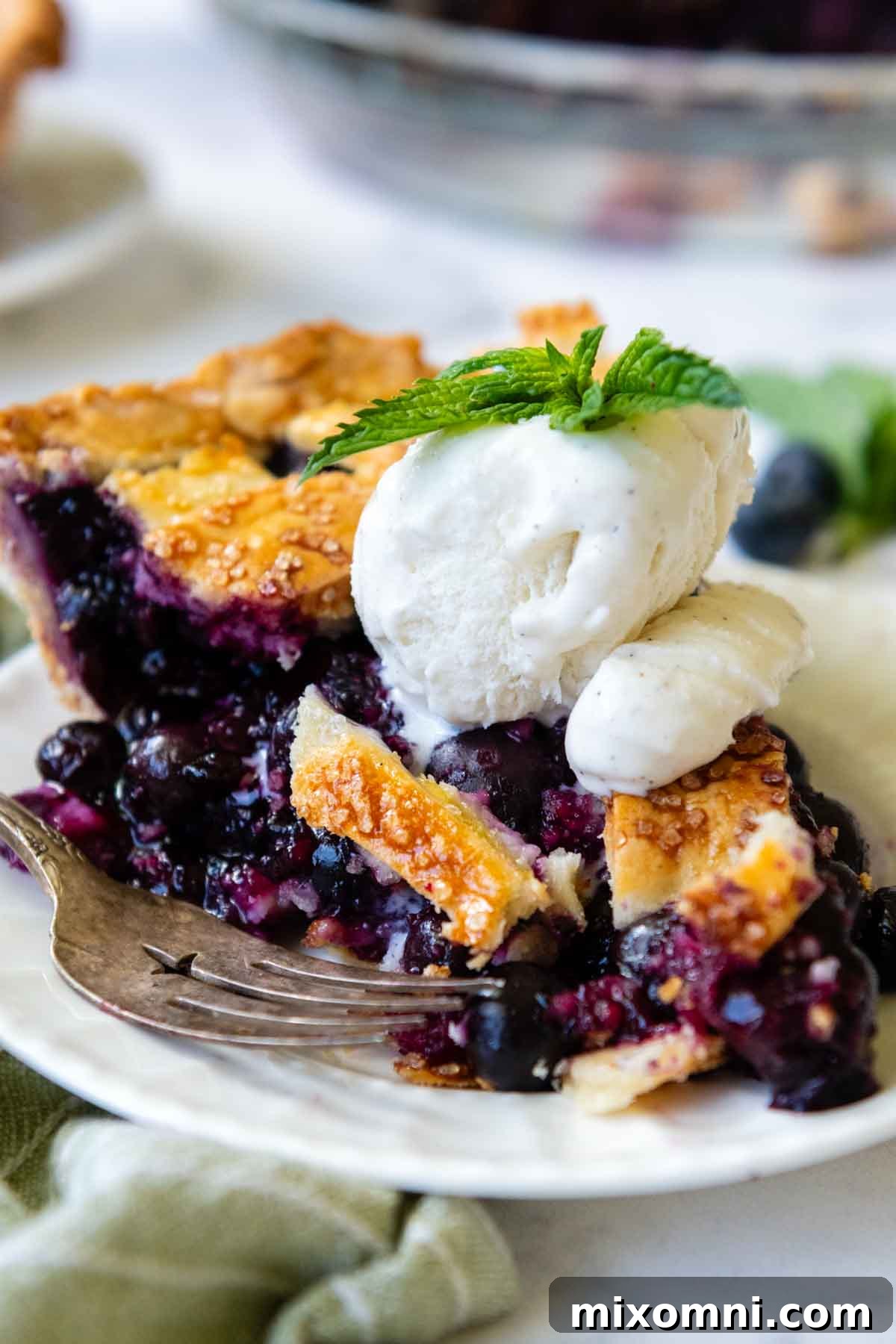
Prepare to be amazed by this **Blue Ribbon Gluten-Free Blueberry Pie**, a truly spectacular dessert that promises an impossibly flaky crust and a thick, juicy blueberry filling. Whether you’re aiming for a competition win or simply seeking to delight your family with a homemade masterpiece, this recipe is designed for accolades. We achieve an ethereal, tender crust using our signature gluten-free pie dough, combined with a unique baking technique that guarantees a perfectly set filling, a beautifully crackly lattice top, and a golden brown, crisp bottom crust. Say goodbye to soggy pie bottoms and hello to your new favorite gluten-free indulgence!
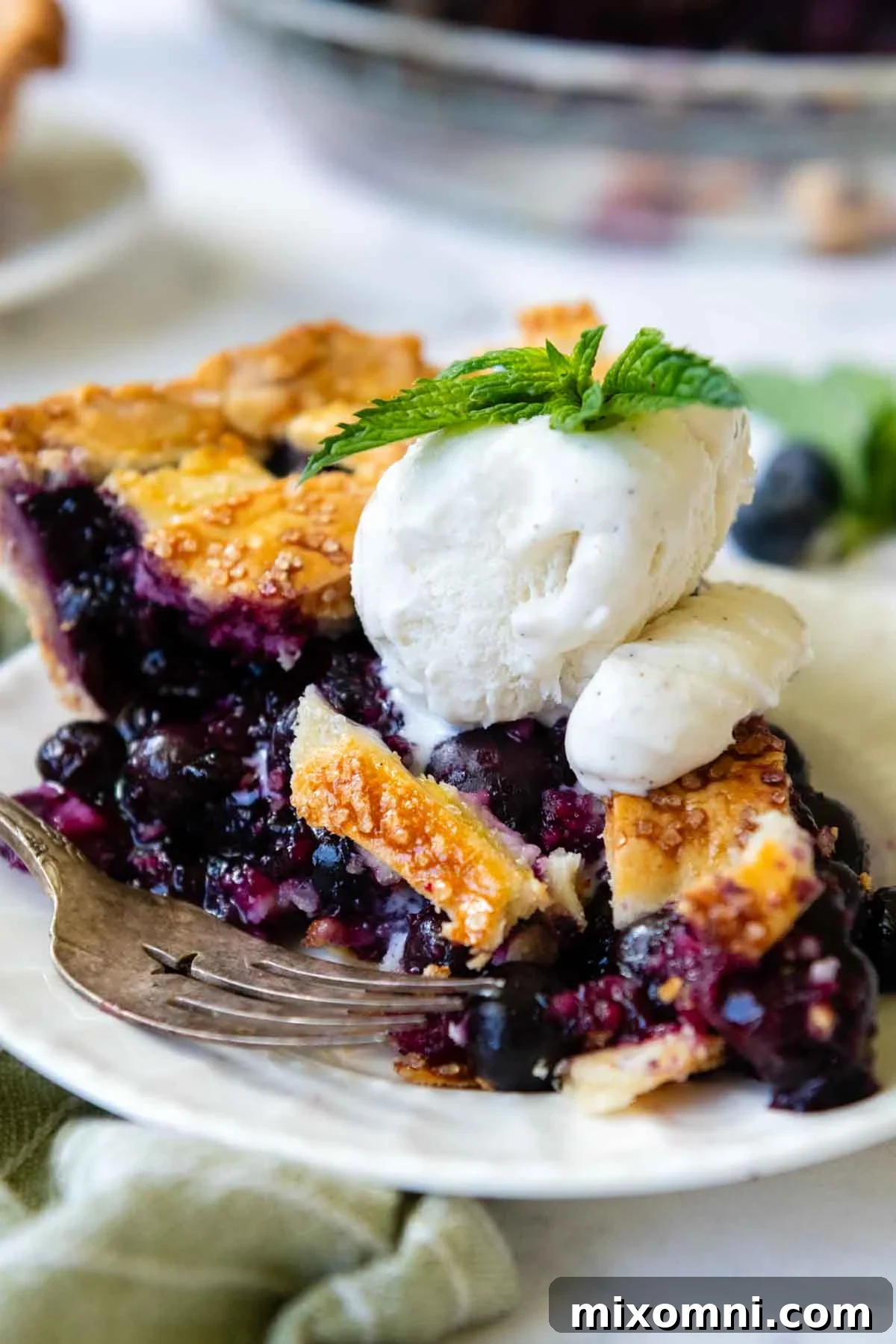
The Ultimate Gluten-Free Blueberry Pie: Unveiling the Secrets to Perfection
For many, a gluten-free diet often means sacrificing certain culinary delights, but a fresh, homemade blueberry pie shouldn’t be one of them. Midsummer months practically demand a slice of this quintessential dessert. After extensive research and countless trials with various gluten-free blueberry pie recipes, it became clear that a truly comprehensive recipe—one that consistently delivered on all fronts—was missing from the culinary landscape. This recipe fills that void, providing a foolproof method for a pie that rivals any traditional counterpart.
Crafting a truly exceptional homemade pie, regardless of dietary considerations, hinges on several critical elements. Among my favorite GF pie recipes, a golden, impossibly flaky crust is always paramount. However, one of the most frustrating challenges when working with gluten-free dough and moisture-rich fruit fillings is the dreaded soggy bottom crust. It can turn a potentially heavenly pie into a disappointing experience, leaving a pastry chef (home or professional) feeling defeated.
The breakthrough for this blueberry pie came after perfecting a double-crust gluten-free apple pie recipe. The simple yet revolutionary techniques discovered there proved to be universally applicable. The core secret? Baking gluten-free pies on a preheated metal baking sheet. This technique is a game-changer because the metal radiates heat upwards, ensuring the bottom crust cooks quickly and becomes gloriously crisp and flaky. This method is incredibly effective, whether you’re making savory dishes like a 5-star gluten-free chicken pot pie or fruit-laden desserts with high-moisture fillings, such as this blueberry delight.
Beyond the crust, the other crucial piece of the puzzle is achieving a gluten-free pie filling that sets beautifully, allowing for clean, distinct slices without any runny, disheartening results. This perfection lies in selecting the ideal gluten-free thickener for fruit pie fillings, a choice that can make or break the pie’s texture and overall enjoyment.
While many gluten-free pie recipes instinctively lean towards cornstarch, my research and experimentation revealed that instant tapioca consistently yielded superior results. And isn’t consistency always the ultimate goal in baking? Cornstarch’s thickening power is activated once it reaches boiling point during baking, but it also has a tendency to break down over time, increasing the likelihood of a thin, watery filling as the pie cools or sits.
Instant tapioca, on the other hand, offers a more reliable and steadfast thickening solution. As it heats, it readily absorbs the liquid released by the fruit, transforming it into a thick, glossy, and sticky blueberry sauce. It is naturally gluten-free and breaks down clear, allowing the vibrant, juicy blueberries to shine through both visually and texturally. The result is a perfectly set, sliceable texture that holds its form, creating a truly satisfying slice of pie. I absolutely love delving into the nuances of my favorite recipe techniques, so please don’t hesitate to share any questions in the comments below. We can bond over the sheer joy of a heavenly slice of pie!
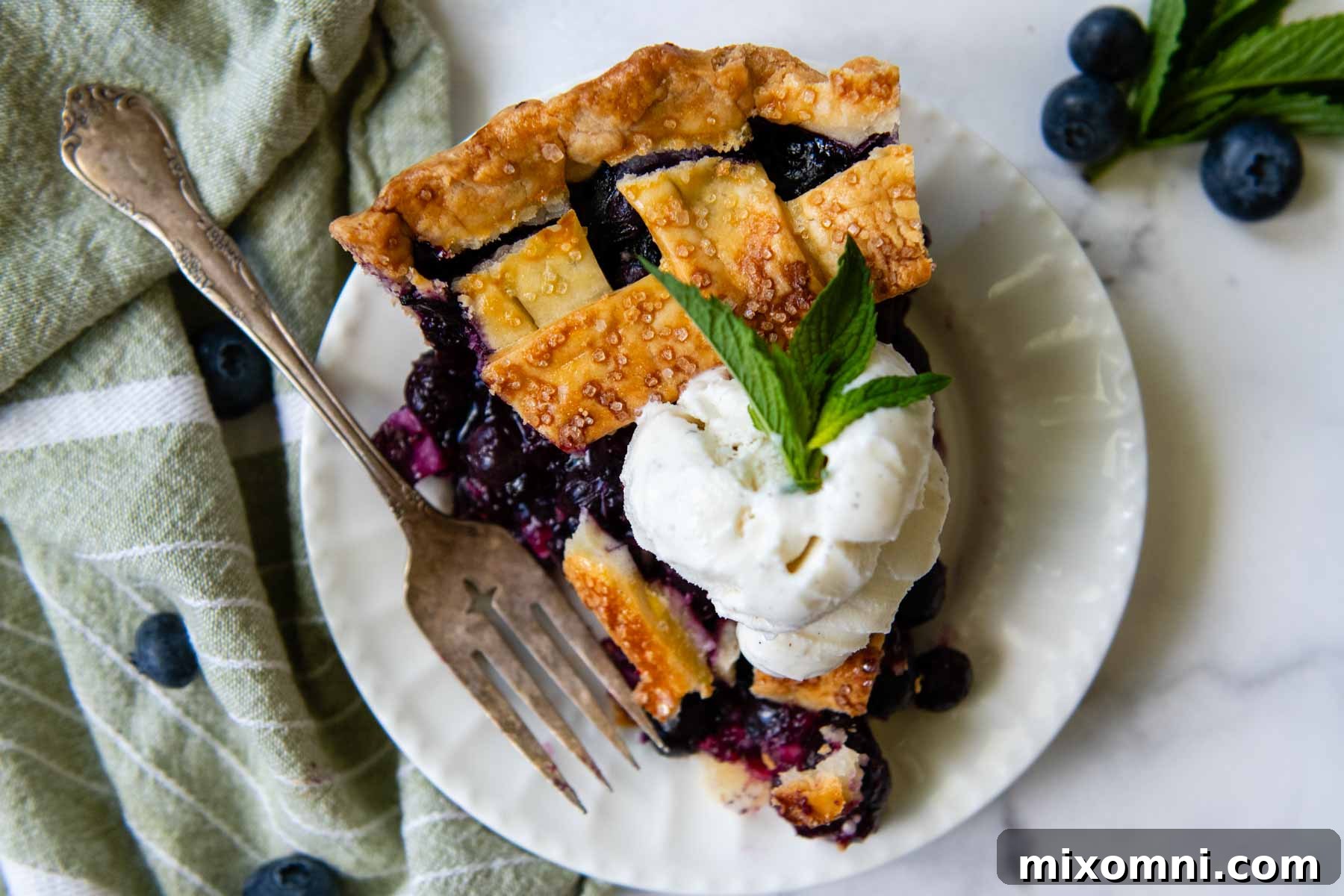
Unpacking Your Ingredients: Tips for a Flawless Blueberry Pie
Every ingredient plays a vital role in achieving the perfect gluten-free blueberry pie. Understanding their purpose and considering potential substitutions can elevate your baking experience and ensure fantastic results every time.
- Gluten-Free Pie Crust: The cornerstone of this pie is a superb gluten-free pie dough. While I wholeheartedly recommend using my favorite homemade recipe (linked in the recipe card), which is designed for ultimate flakiness, convenience is also a key consideration. If you’re short on time or prefer a simpler approach, don’t hesitate to use two pre-made gluten-free pie crusts from the freezer section of your grocery store. Just ensure they are suitable for a double-crust application. Beyond the traditional double crust, remember you have other delightful options like a crumb topping, which we’ll discuss later.
- Blueberries: This recipe was meticulously tested using fresh blueberries, yielding a bright and vibrant filling. However, frozen blueberries work just as beautifully. There’s no need to defrost them beforehand; simply mix the frozen berries directly into the filling mixture. You may need to extend the baking time by a few minutes to ensure the filling thickens properly, as frozen fruit releases more liquid. For the best flavor, choose ripe, plump blueberries.
- Sugar: The amount of sugar in the filling is entirely adjustable to your taste and the natural sweetness of your blueberries. If your berries are exceptionally sweet, feel free to reduce the granulated sugar to 1/2 cup. Conversely, if they’re tart, you might want to add a little extra. For those monitoring sugar intake, various granulated low-sugar sweeteners can be substituted successfully. Experiment to find your preferred balance.
- Instant Tapioca: This is our secret weapon for a perfectly set filling. It’s crucial to use granulated, instant, or quick-cooking tapioca. Avoid larger tapioca pearls (like those used in tapioca pudding), as they retain their shape and won’t break down sufficiently to create a smooth, thick sauce. If you only have tapioca starch on hand, it can be used, but you’ll need to increase the amount to 1/2 cup to achieve the desired consistency. Instant tapioca readily absorbs moisture during baking, creating a clear, thick, and stable filling.
- Butter (for filling): A small amount of diced cold butter dotted over the fruit filling before baking is a game-changer. Trust me on this one; it enhances the richness and depth of flavor, adding a subtle creamy note that beautifully complements the blueberries. For those with dairy sensitivities, dairy-free butter alternatives can be used with equally delicious results.
- Lemon Juice, Vanilla Extract, and Ground Cinnamon: These ingredients are not mere afterthoughts; they are essential for brightening and balancing the flavors. Lemon juice cuts through the sweetness and enhances the berry’s natural tartness, while vanilla extract adds a warm, aromatic depth. Cinnamon provides a comforting spice note that pairs wonderfully with blueberries, creating a harmonious flavor profile that is truly irresistible.
Crafting Your Masterpiece: A Step-by-Step Guide
Get ready to create a show-stopping gluten-free blueberry pie! Below, you’ll find detailed step-by-step photos and modified instructions to guide you through the process. For the complete recipe, including precise ingredient amounts, please refer to the recipe card at the bottom of this article.
Step 1: Preparing Your Gluten-Free Pie Dough
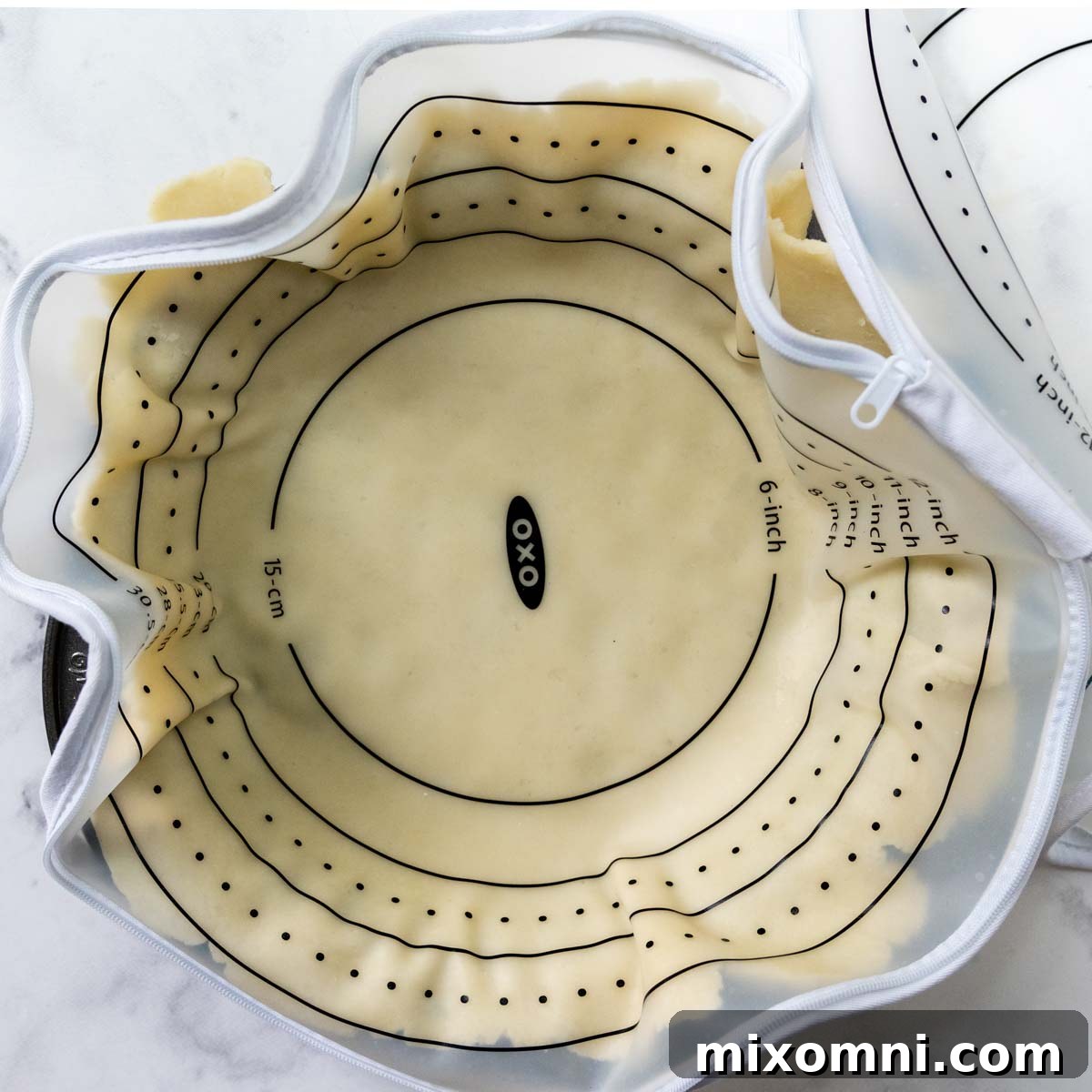
The journey to a flaky crust begins with properly prepared dough. After mixing your gluten-free pie dough (detailed step-by-step instructions, including my recommended gluten-free flour blend, can be found in this easy gluten-free pie crust recipe), it’s time to roll it out. Using a pastry bag or simply rolling between two sheets of parchment paper are the easiest and most effective methods for gluten-free dough, which can be more delicate than traditional wheat dough. Once rolled, carefully fit one disk of dough into a 9-inch pie pan, ensuring it’s evenly distributed and comes up the sides. Trim any excess, leaving a slight overhang for shaping the edges later.
Step 2: Creating the Irresistible Blueberry Filling
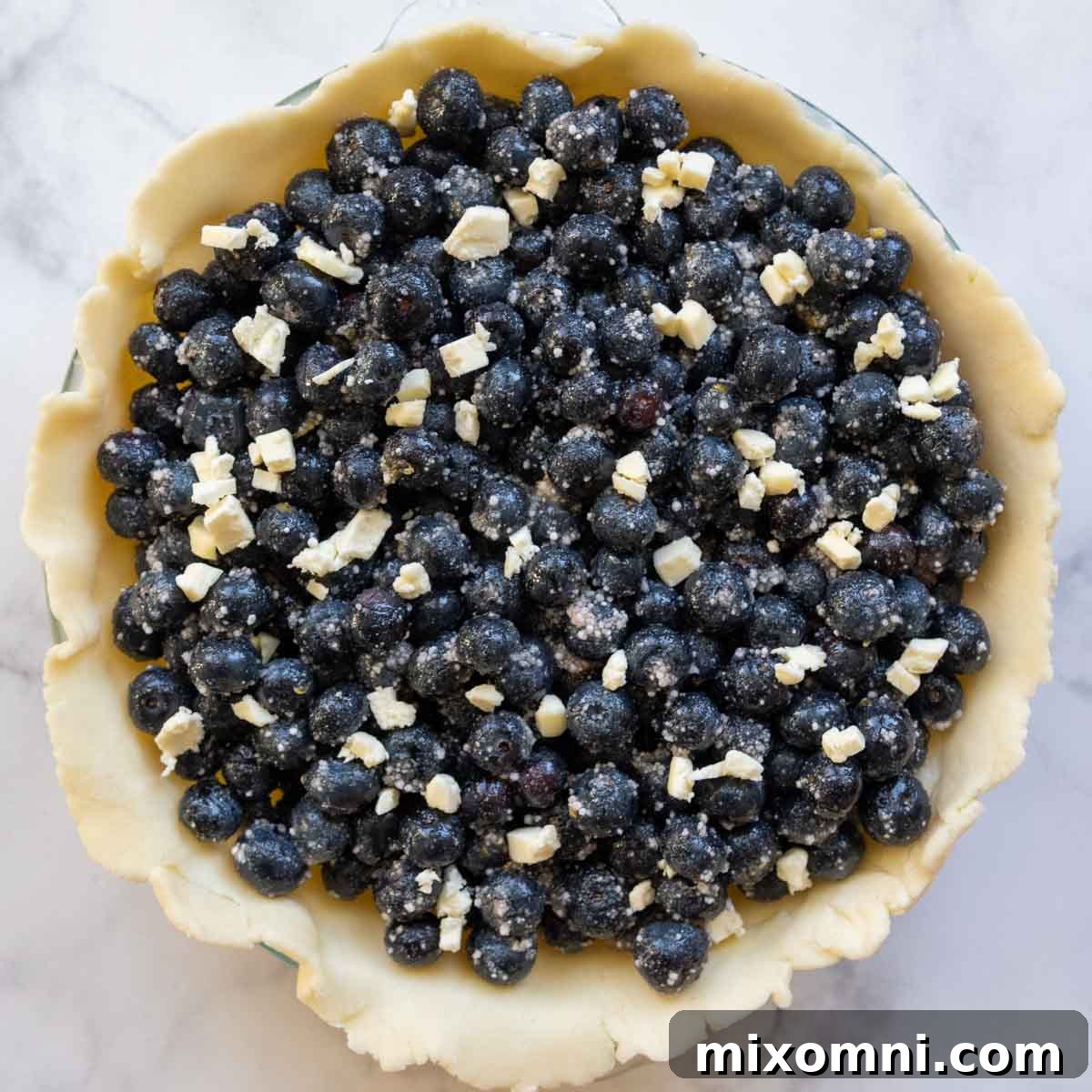
With your bottom crust in place, it’s time to prepare the star of the show: the rich blueberry filling. In a large mixing bowl, gently combine the fresh or frozen blueberries with the granulated sugar, instant tapioca, vanilla extract, lemon juice, and a hint of cinnamon. Stir everything together until the blueberries are evenly coated. Pour this vibrant mixture into your chilled bottom crust. Before adding the top crust, dot the surface of the filling with small pieces of diced cold butter. This adds an extra layer of richness and flavor. As you prepare your lattice top, remember to transfer the assembled pie back to the refrigerator. Keeping the pie cold is essential; cold pies bake up the flakiest!
Step 3: Rolling and Slicing the Lattice Top
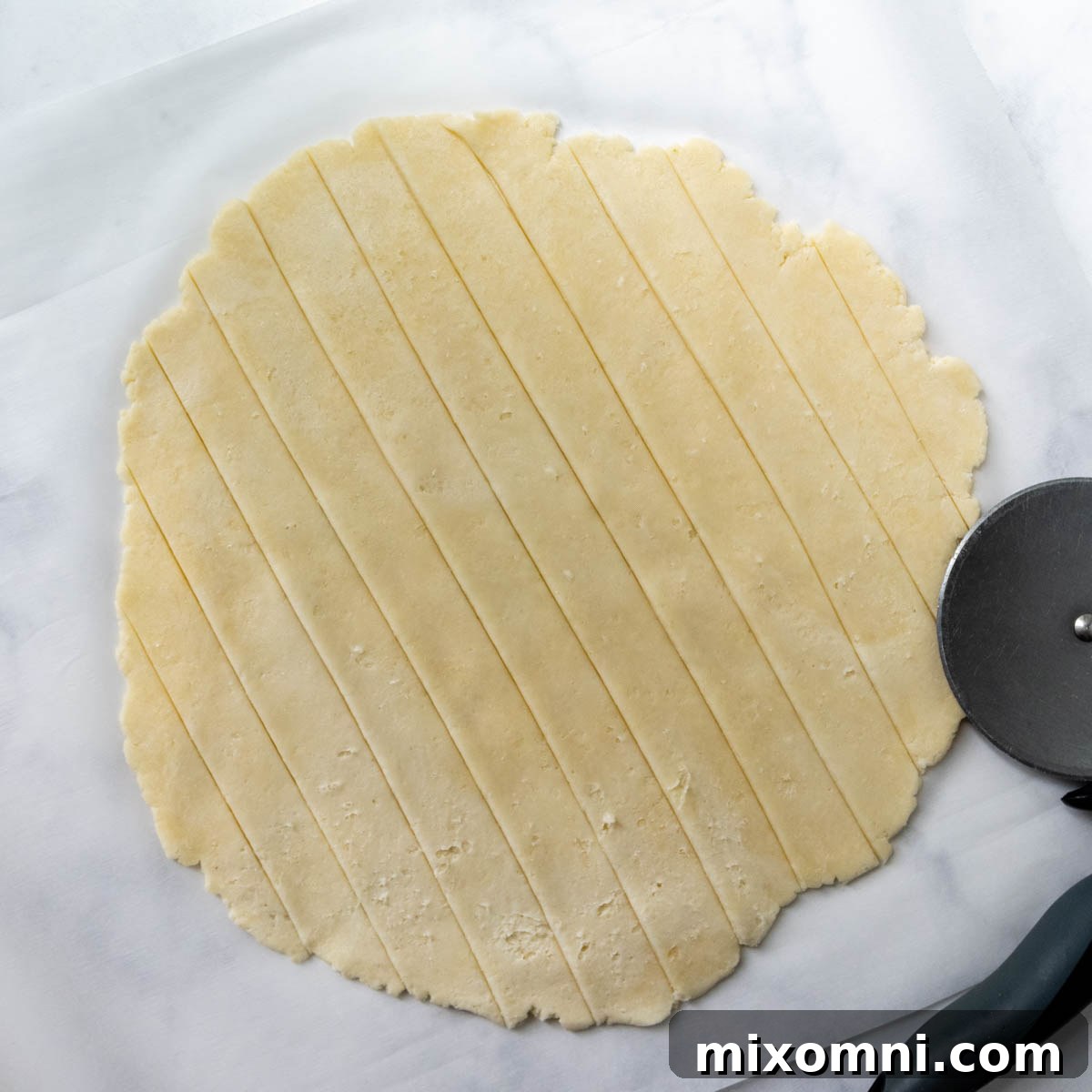
Now for the elegant lattice top! Take your second disk of chilled pie dough and roll it out into a uniform 12-inch circle. If you’re using a pastry bag for rolling, carefully invert the rolled dough onto a clean sheet of parchment paper for easy handling. With a pizza cutter, a specialized pastry cutter, or a sharp knife, carefully slice the dough into twelve even 1-inch wide strips. The consistency of these strips is key to a beautiful, symmetrical lattice pattern.
Step 4: The Art of Weaving Your Lattice
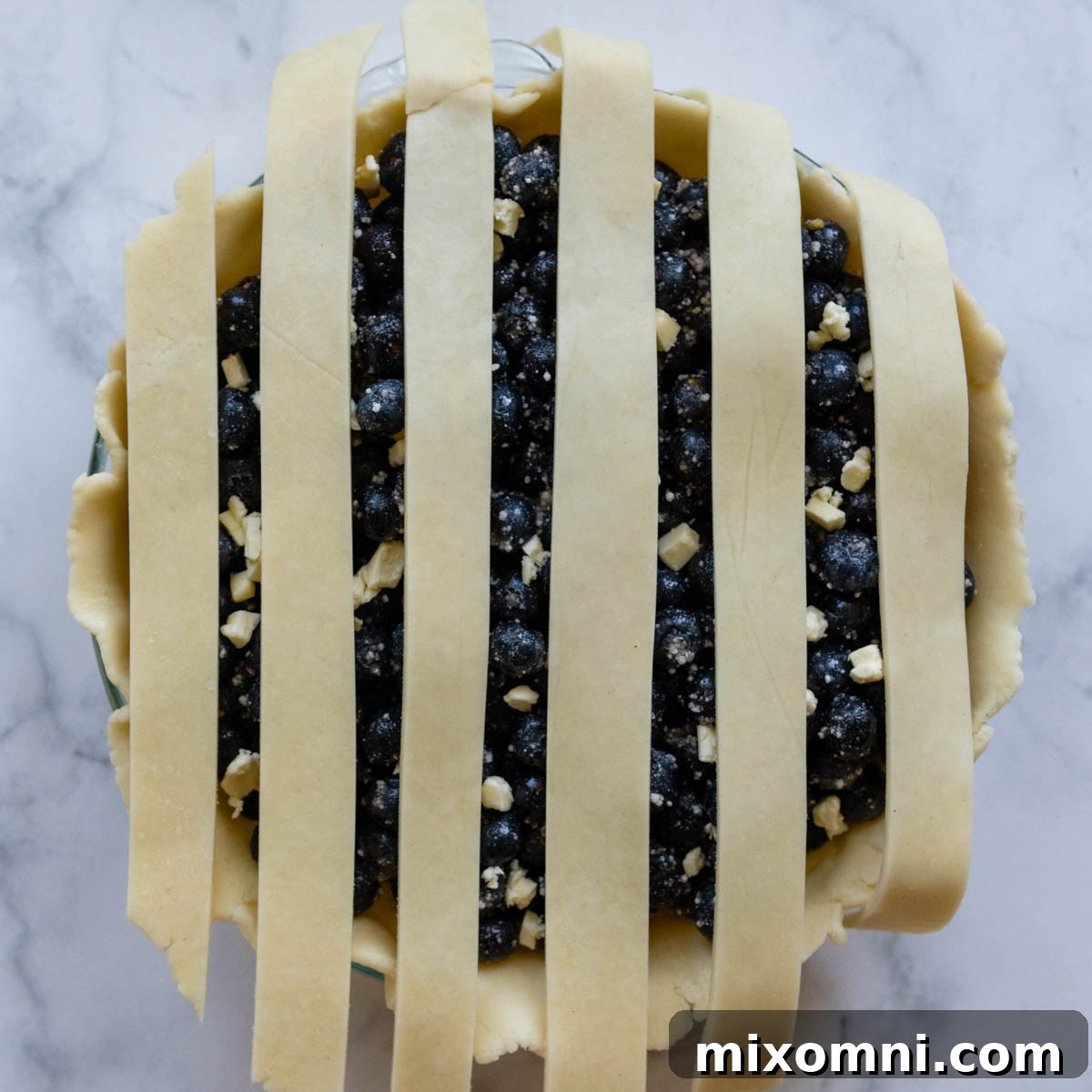
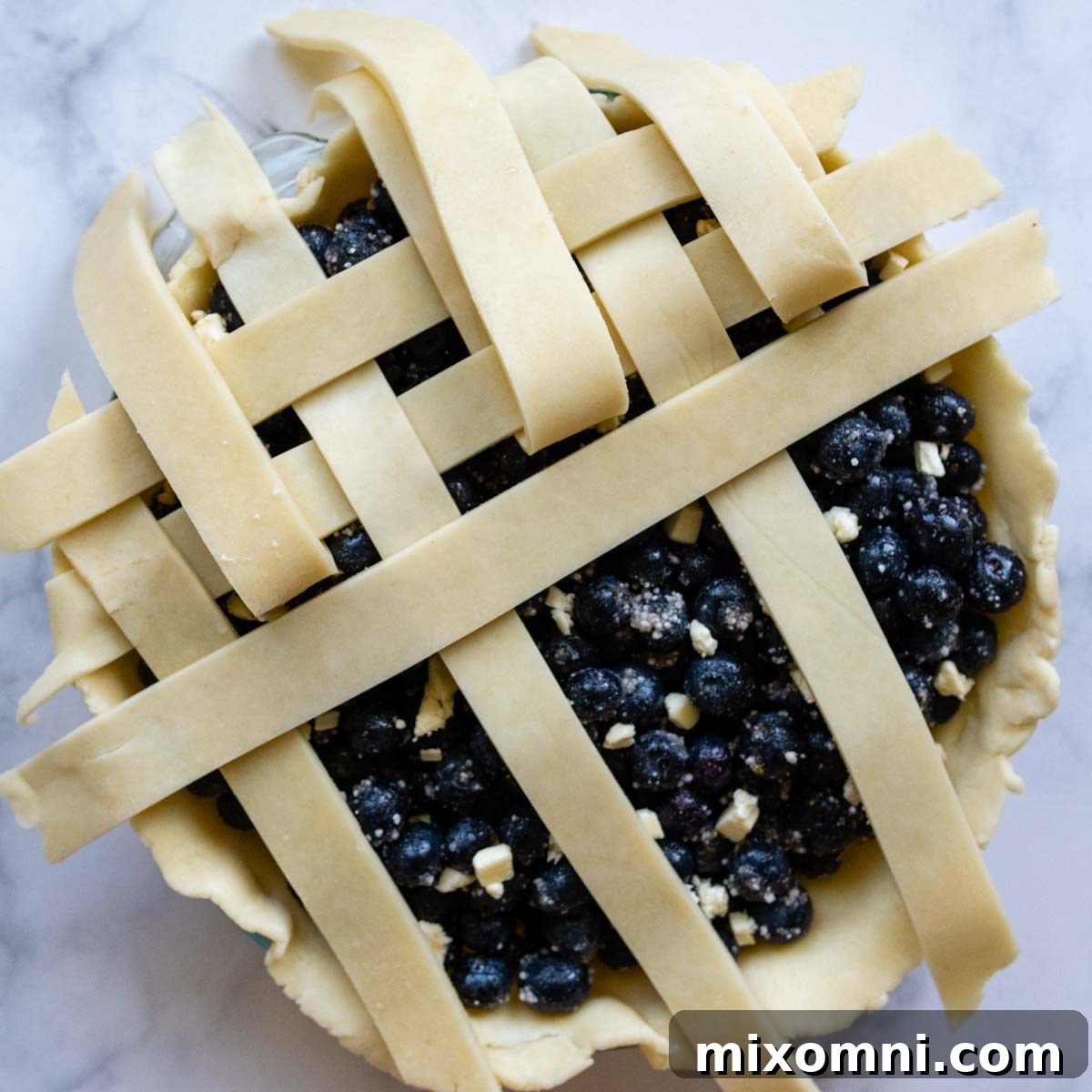
This is where the magic happens, and yes, for a baker, this is indeed the fun part! Begin by carefully laying six of your dough strips, evenly spaced, across the blueberry filling. For the best aesthetic, place the shorter strips towards the edges and the longer ones in the middle. Next, gently fold back three alternating strips (for example, every other strip) almost all the way off the pie. Take one of the unused strips and lay it horizontally right against the folded-back strips. Carefully return the folded strips back over the newly placed horizontal strip. Now, fold back the other three alternating vertical strips. Place another horizontal strip next to the previous one, and again, return the vertical strips over it. Continue this rhythmic folding and placing until all your strips are woven, creating a stunning, intricate pattern. You’ll be incredibly impressed with your handiwork!
Step 5: Perfecting the Edges and Chilling
Once your lattice is complete, trim off any excess dough from the edges, leaving a small overhang. Carefully fold these dough edges under, firmly sealing the lattice crust strips with the bottom crust. It’s crucial that these two crusts are well sealed together to prevent the filling from bubbling out during baking. Use your fingers and thumb to create a decorative edge – whether a classic flute, a crimped pattern, or any design you prefer. Remember our golden rule for gluten-free pies: cold pies bake best! So, after shaping, freeze your pie for at least 15 minutes before it goes into the oven. This final chill helps set the butter in the crust, ensuring maximum flakiness.
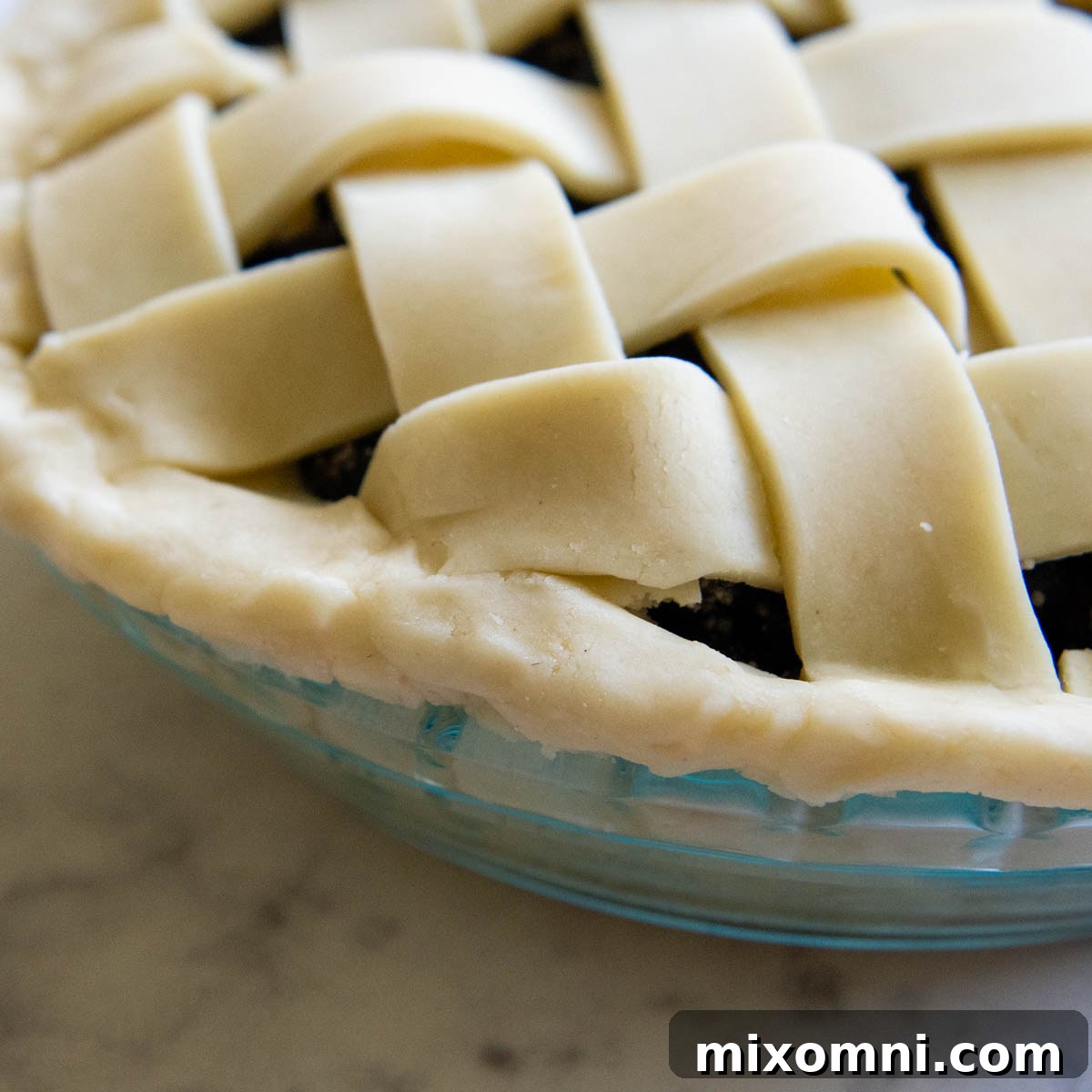
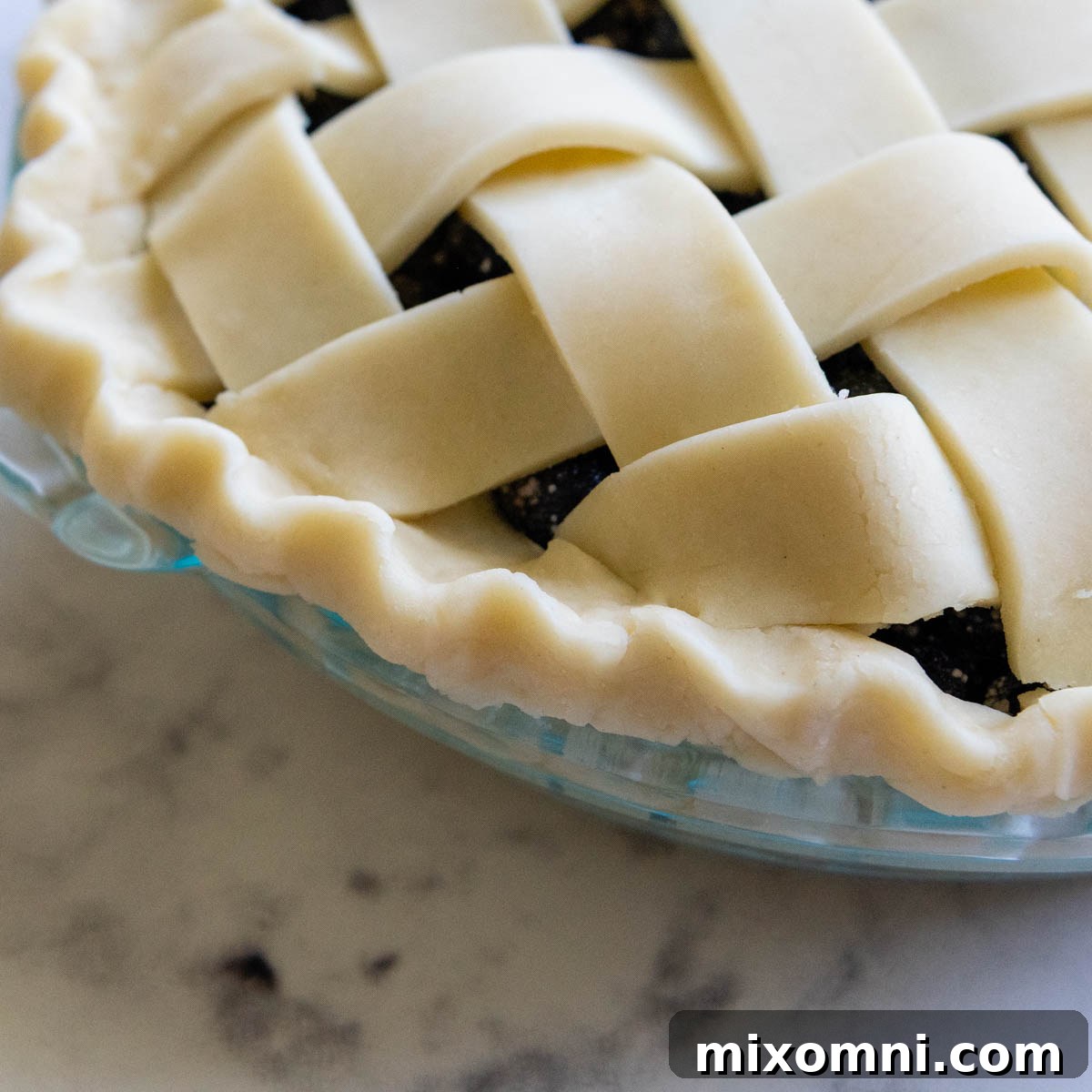
Baking Your Pie to Golden Perfection: The Flaky Crust Method
The baking process is just as critical as preparation for achieving that coveted flaky crust and perfectly set filling. As you assemble your pie, be sure to preheat your oven to a high temperature of 425ºF (220ºC). Simultaneously, place a metal baking sheet, lined with parchment paper or aluminum foil (to catch any potential drips and simplify cleanup), on the middle rack of your oven. The baking sheet heats up along with the oven, becoming a hot surface for your pie. This metal conducts heat far more efficiently than just the oven rack, delivering that crucial burst of heat to the bottom crust, preventing sogginess and ensuring a wonderfully crisp base.
Once your pie has had its final chill in the freezer, carefully transfer it directly onto the preheated baking sheet. Bake at 425ºF (220ºC) for an initial 25 minutes. This high heat helps to quickly set the crust and begin the thickening process for the filling. After this initial bake, reduce the oven temperature to a more gentle 375ºF (190ºC) and continue baking. This lower temperature allows the crust to finish baking to a beautiful golden brown without burning, while the filling steadily thickens throughout.
How do you know when your gluten-free blueberry pie is perfectly done? Keep an eye on the filling! You’ll first notice it bubbling gently around the edges. Continue baking until the bubbling extends more towards the center of the pie. This indicates that the filling has reached the necessary temperature throughout and the thickener has fully activated. Due to the longer overall bake time, it’s wise to protect the edges of your pie crust from over-browning. Use a pie shield around the perimeter, or loosely tent a piece of aluminum foil over the top of the entire pie if the lattice top starts to darken too quickly.
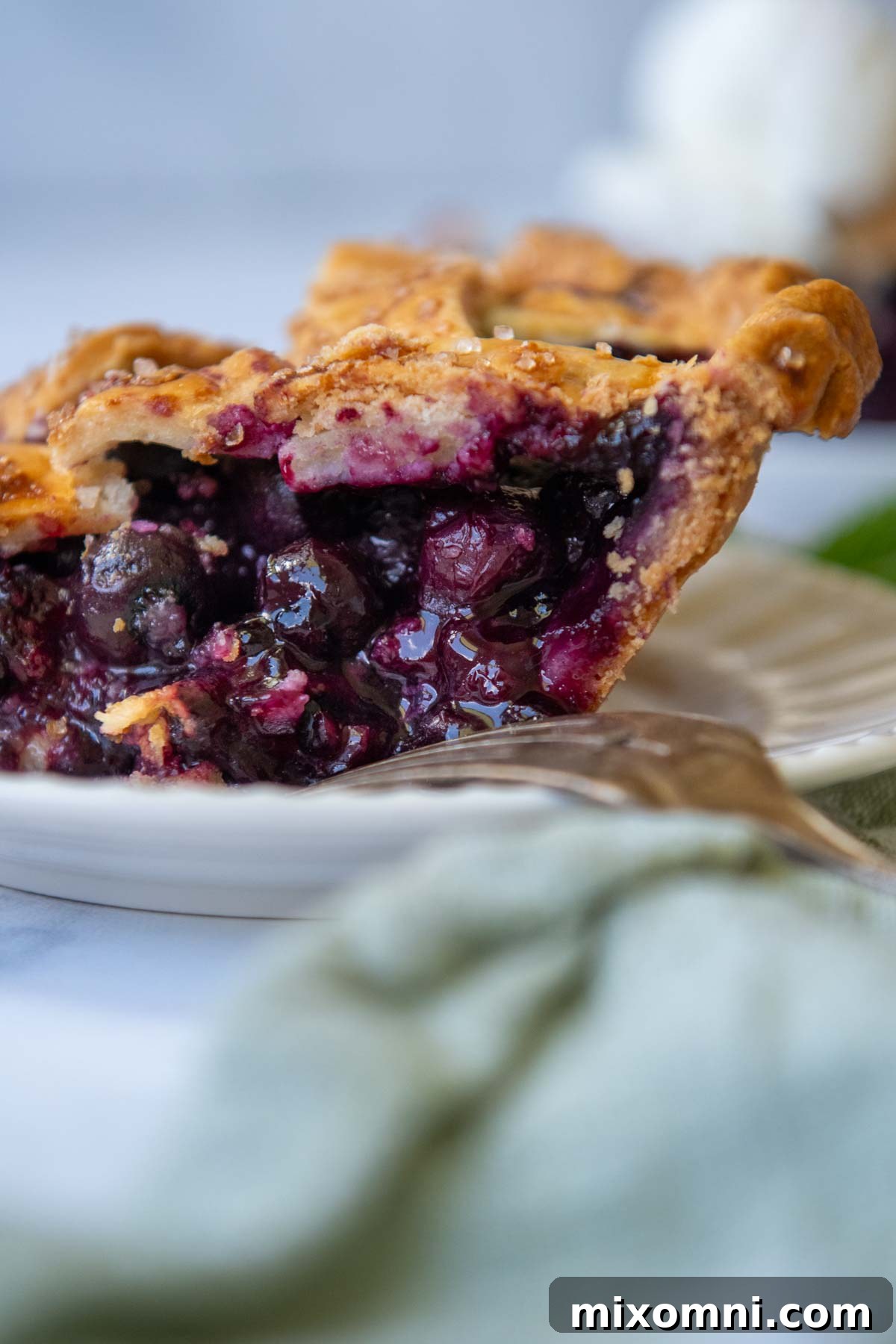
Now comes perhaps the hardest part: the wait. For a truly sliceable pie with a perfectly set filling, it absolutely must cool for at least 3 hours. I often recommend waiting closer to 4 hours for optimal results. This extended cooling period allows the tapioca-thickened filling to fully set, preventing a runny mess when you cut into it. The pie will still be delightfully warm, and when served with a generous scoop of vanilla ice cream, it becomes an absolutely heavenly dessert experience!
Exploring Other Crust Options and Variations
While a lattice crust adds an elegant touch and allows steam to escape beautifully, it’s perfectly understandable if you’re not in the mood for intricate weaving. There are several fantastic alternative options for topping your gluten-free blueberry pie, each offering its own unique charm and ease of preparation.
Classic Double Crust: Simplicity and Steam Vents
One straightforward option is to opt for a traditional double crust. Simply roll out your second disk of gluten-free pie dough into a circle large enough to cover the entire pie. Carefully place it over the blueberry filling, then trim any excess dough and securely seal the edges with the bottom crust, creating a neat, unified rim. Flute or crimp the edges for a decorative finish. Before baking, remember to cut three to four slits into the top crust using a sharp knife. These slits are vital for allowing steam to escape during baking, preventing the crust from puffing up excessively and ensuring the filling cooks evenly. The baking times and temperatures remain the same as for the lattice pie.
Rustic Crumb Topping: An Easy and Delicious Alternative
If you prefer a more rustic, less fussy topping, a crumb topping is an excellent choice. You can easily adapt the delicious crumb topping recipe from my fresh gluten-free strawberry pie recipe. This adds a delightful texture contrast and a sweet, buttery crunch to your blueberry pie. To apply, simply prepare the crumb topping mixture and sprinkle it generously over the blueberry filling. For an extra layer of texture and flavor within the filling itself, you can even mix a small amount of the crumb topping directly into the blueberries before pouring them into the pie shell. Be sure to follow the specific baking instructions provided with the crumb topping recipe, as the bake time or temperature might vary slightly from a double-crust pie to ensure the topping achieves a golden crispness without burning.
Creative Toppings: Beyond the Bake
Once your gluten-free blueberry pie has cooled and set, the serving possibilities are endless. While a scoop of vanilla ice cream is a classic pairing, consider elevating your dessert with a dollop of freshly whipped cream, perhaps infused with a hint of lemon zest or almond extract. A drizzle of homemade blueberry sauce or a sprinkle of toasted slivered almonds can also add extra layers of flavor and texture. Don’t be afraid to get creative and personalize your pie presentation!
Save This Recipe to Your Pinterest Board!
Let’s be friends on Pinterest! I’m always sharing great recipes!
Did you make this recipe? I love hearing from you! Leave a star rating and comment below the recipe card. It helps others when searching for recipes and I appreciate feedback from our community. You will always hear back from me! -Melissa

Blue Ribbon Gluten-Free Blueberry Pie with Flaky Crust
 Melissa Erdelac
Pin
Rate
Remove Ads
Ingredients
Gluten-Free Lattice Crust
- 2 sticks (226 g) unsalted butter, cut into cubes and frozen for 10 minutes
- 5 tablespoons ice water
- 3 tablespoons sour cream
- 3 teaspoons apple cider vinegar
- 2 ½ PLUS ⅓ cup (416 g) gluten free flour, I highly recommend Cup4Cup gluten-free flour
- 3 teaspoons granulated sugar
- 1 teaspoon salt
Gluten-Free Blueberry Filling
- 6 cups (1.14 kg) blueberries, about 3 ½ pints
- ⅔ cup (134 g) granulated sugar
- ¼ cup (48 g) instant granulated tapioca
- 1 tablespoon lemon juice
- 2 teaspoons vanilla extract
- ¼ teaspoon ground cinnamon
- ¼ teaspoon salt
- 1 tablespoon (14 g) cold butter, diced
- eggwash: 1 egg whisked with 1 tbsp milk
- optional coarse sugar, for sprinkling on crust
Equipment
-
Pie Shield
-
Food Processor
-
Pastry Rolling Bag
Instructions
Gluten-Free Double Crust
-
Place the cubed butter in the freezer for 10 minutes. Mix together the cold water, sour cream, and vinegar in a small bowl. Place the liquids bowl in the refrigerator until you are ready to use.2 sticks unsalted butter, 5 tablespoons ice water, 3 tablespoons sour cream, 3 teaspoons apple cider vinegar
-
FOOD PROCESSOR: Pulse flour, sugar, and salt together until mixed.BY HAND: Whisk dry ingredients in medium-sized bowl.2 ½ PLUS ⅓ cup gluten free flour, 3 teaspoons granulated sugar, 1 teaspoon salt
-
FOOD PROCESSOR: Process the butter into the flour mixture until well incorporated, evenly dispersed, and without large chunks.BY HAND: Use a pastry blender, fork, or fingers to cut and knead butter into the dough until it is well incorporated throughout.
-
FOOD PROCESSOR: Add the liquids to the food processor and pulse until the flour becomes moistened and small dough clumps appear. If dough doesn’t start to come together, add a touch more cold water.BY HAND: Add half the liquids and knead with fingers or a fork. Pour in the remaining liquids. Knead until the dough starts to come together and the liquids are well mixed with flour.TIP: To check if you have enough liquid, clump and flatten a small bit of dough. If it doesn’t stick together, is crumbly, or breaks apart easily, add a small dash of ice water. Pulse a few times and recheck. If the dough is too wet or sticky, add a dash of flour. Pulse a few times and recheck.
-
Divide the dough between 2 large sheets of plastic wrap and flatten into a thick 1″ disk. Wrap tightly and refrigerate for at least 1 hour or freeze for 30 minutes.
Blueberry Filling
-
After the pie dough has chilled, prepare the filling. In a large bowl combine the blueberries, sugar, tapioca, lemon juice, vanilla, cinnamon, and salt. (The 1 tbsp butter will be used when filling the pie.) Let the mixture sit at room temp for at least 10 minutes while the crust is rolled out.6 cups blueberries, ⅔ cup granulated sugar, ¼ cup instant granulated tapioca, 1 tablespoon lemon juice, 2 teaspoons vanilla extract, ¼ teaspoon ground cinnamon, ¼ teaspoon salt
Shaping Crust and Baking
-
Preheat the oven to 425ºF (220ºC). Place a baking sheet, lined with parchment paper or foil, on the middle rack. The baking sheet heats, along with the oven, to place the pie on. The metal conducts the heat better, which makes a crisp bottom crust. The foil or parchment catches drips, saving you clean up!
-
To roll the pie dough, lay a large piece of parchment paper on your workspace. Place one unwrapped dough disc in middle and place same sized sheet on top. Alternatively, use the pastry rolling bag pictured in the post. Use a rolling pin to press and spread out down from the middle out. Roll out into a circle slightly larger than your pie dish, about 11-12 inches.
-
Remove the top paper, and invert into pie dish. Press the dough to fit securely against the pie plate. Remove the second paper. Tip: If the dough warmed while rolling, it may be trickier to take the paper off. If this happens, leave the paper on, and stick the whole thing in the fridge for 5-10 minutes. Once the crust is chilled again it’s much easier to pull off the paper.
-
Pour the pie filling in the bottom crust. Scatter the diced butter pieces over the top and place the pie in the fridge while you repeat the rolling process with the top crust.1 tablespoon cold butter
How to Make Lattice Crust
-
Roll out the second disc into a 12-inch circle. If using the pastry rolling bag, invert the rolled crust onto a piece of parchment paper for cutting. Use a pizza cutter or knife to slice the dough in twelve 1-inch strips. Lay 6 strips, evenly spaced, across the pie. Use the shorter strips at the ends, longer strips towards the middle.
-
Fold back 3 alternating strips almost all the way off of the pie. Take one unused strip and lay it right against where the strips are folded back. Return the strips back over the pie so they cover the strip just placed.
-
Fold back the other 3 vertical strips. Take another unused strip and lay it against where the strips are folded back. Return the vertical strips back over it. You will start to see the woven pattern. Repeat process with remaining strips.
-
Trim any excess dough from the edges, then fold the dough under, securely sealing the lattice crust strips with the bottom crust. Use your finger and thumb to make a decorative edge. Freeze the pie for 15 minutes before baking.
Baking Instructions
-
After the pie has chilled in the freezer, brush on the egg/milk mixture on the top crust and edges to make a shiny crust. Sprinkle with the optional coarse sugar.eggwash: 1 egg whisked with 1 tbsp milk, optional coarse sugar
-
Use a pie shield to protect the edges or shield with strips of foil circled around. Place the pie directly on the heated baking sheet. Bake for 25 minutes.
-
Leave the pie in the oven, but lower the temperature to 375℉ (190ºC). If the crust is becoming too browned, loosely tent a piece of foil over the top. Continue to bake for 40-50 minutes, or until the juices start to bubble throughout the vents.
-
Cool the pie on a wire rack for at least 4 hours before slicing. This allows enough time for pie to cool and the sauce to set. It’s best served the same day or see recipe notes for make-ahead tips.
Notes
Make-Ahead and Storage Tips
For maximum flakiness, enjoy the day it is made. The crust becomes softer after 24 hours as it absorbs the moisture from the blueberries.
When storing leftovers, leave at room temperature and loosely tent foil over the top, not securely, so moisture can escape. Enjoy within 3 days, but the crust will became softer on days 2 and 3.
For a make-ahead blueberry pie, follow the recipe for assembly until right before baking. Freeze until solid and then wrap securely with plastic wrap and foil. Return to freezer up to 2 months.
When ready to serve, bake directly from frozen, do not thaw. Unwrap the pie and bake as directed with the preheated baking sheet. Once the oven temperature is lowered, it will required about 10-20 minutes additional baking time. Be sure the edges are covered with a pie shield and foil loosely tented over the top.