
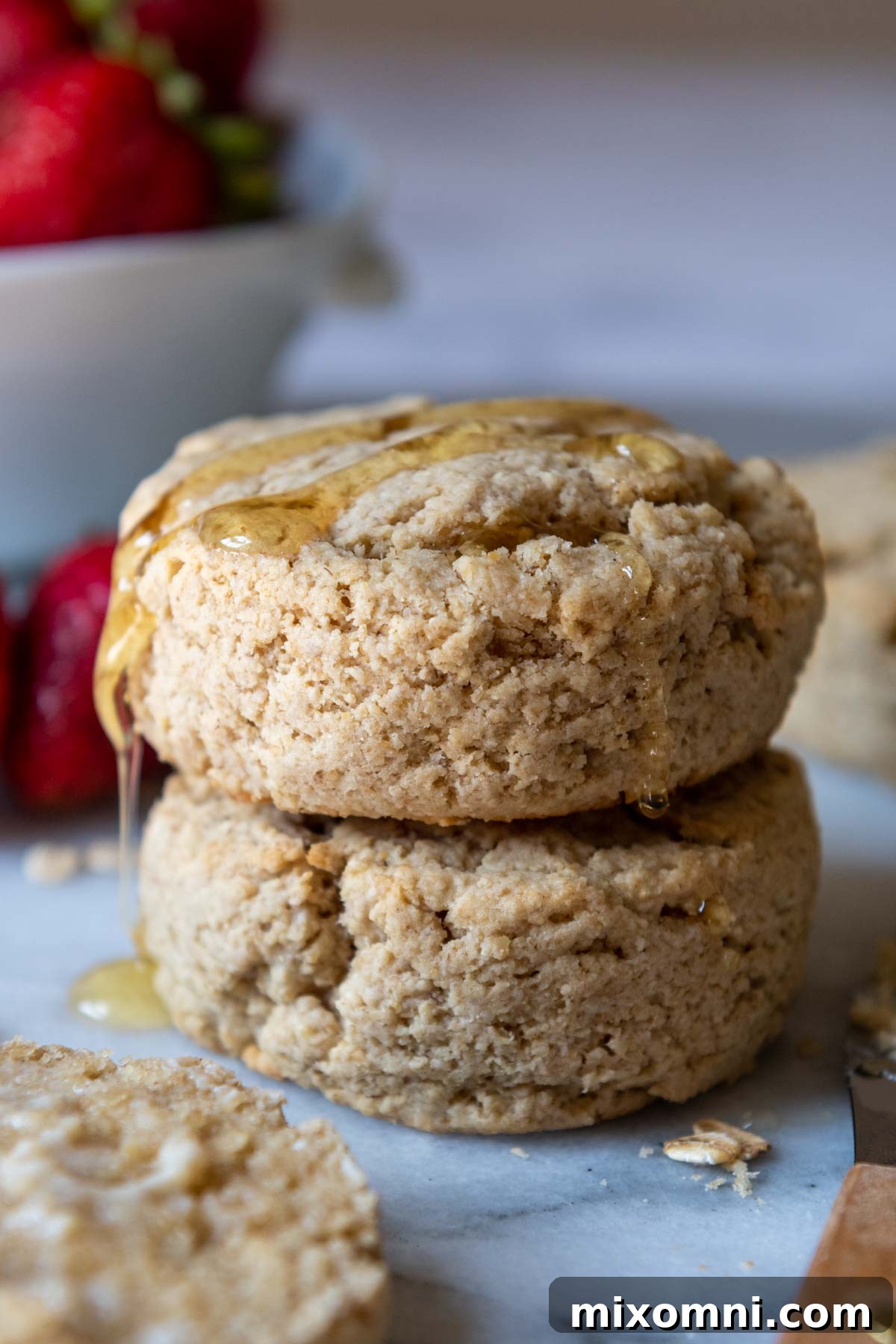
Discover the ultimate recipe for unbelievably tender and fluffy oat flour biscuits! These homemade drop biscuits are a revelation for anyone seeking delicious, gluten-free baking that’s both easy to prepare and incredibly satisfying. Requiring only minutes of active prep time and relying on simple, budget-friendly ingredients, they’re designed for success even if you’re a novice baker. Our well-tested method utilizes a clever trick to guarantee perfectly formed biscuits without the hassle of rolling or cutting, and incorporates a special ingredient to prevent the common pitfalls of crumbly, dry gluten-free results. This recipe yields 7 generous servings and includes straightforward adaptations for a dairy-free version, ensuring everyone can enjoy these wholesome, nutty treats.
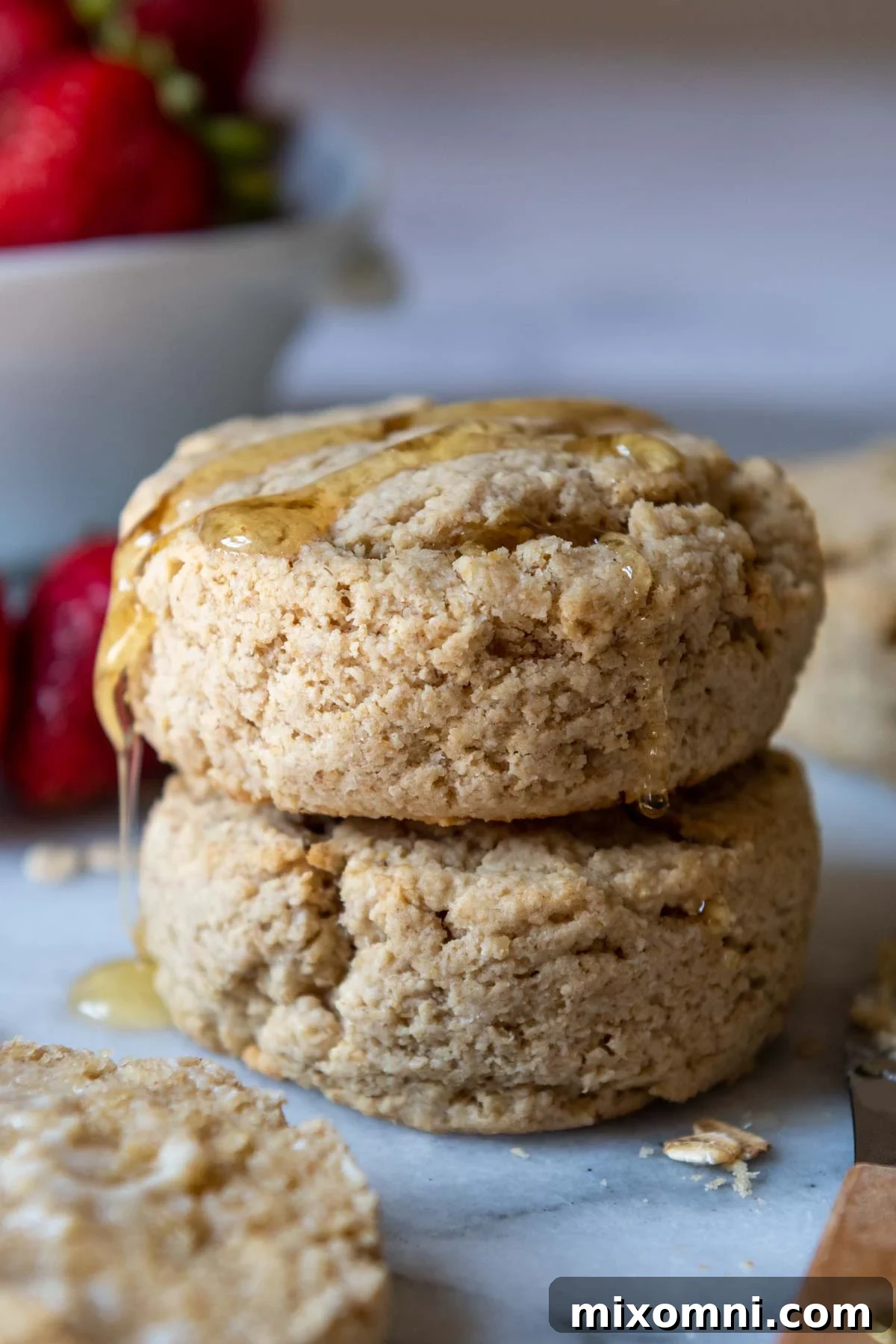
Fluffy Oat Flour Biscuits: A Gluten-Free Baking Essential
Whether you’re exploring the world of gluten-free baking or simply adore the naturally sweet, nutty, and wholesome flavor profile of 100% oats, these homemade oat flour biscuits are destined to become a staple in your kitchen. They offer a delightful texture that rivals traditional biscuits, making them perfect for breakfast, brunch, or as a comforting side to any meal.
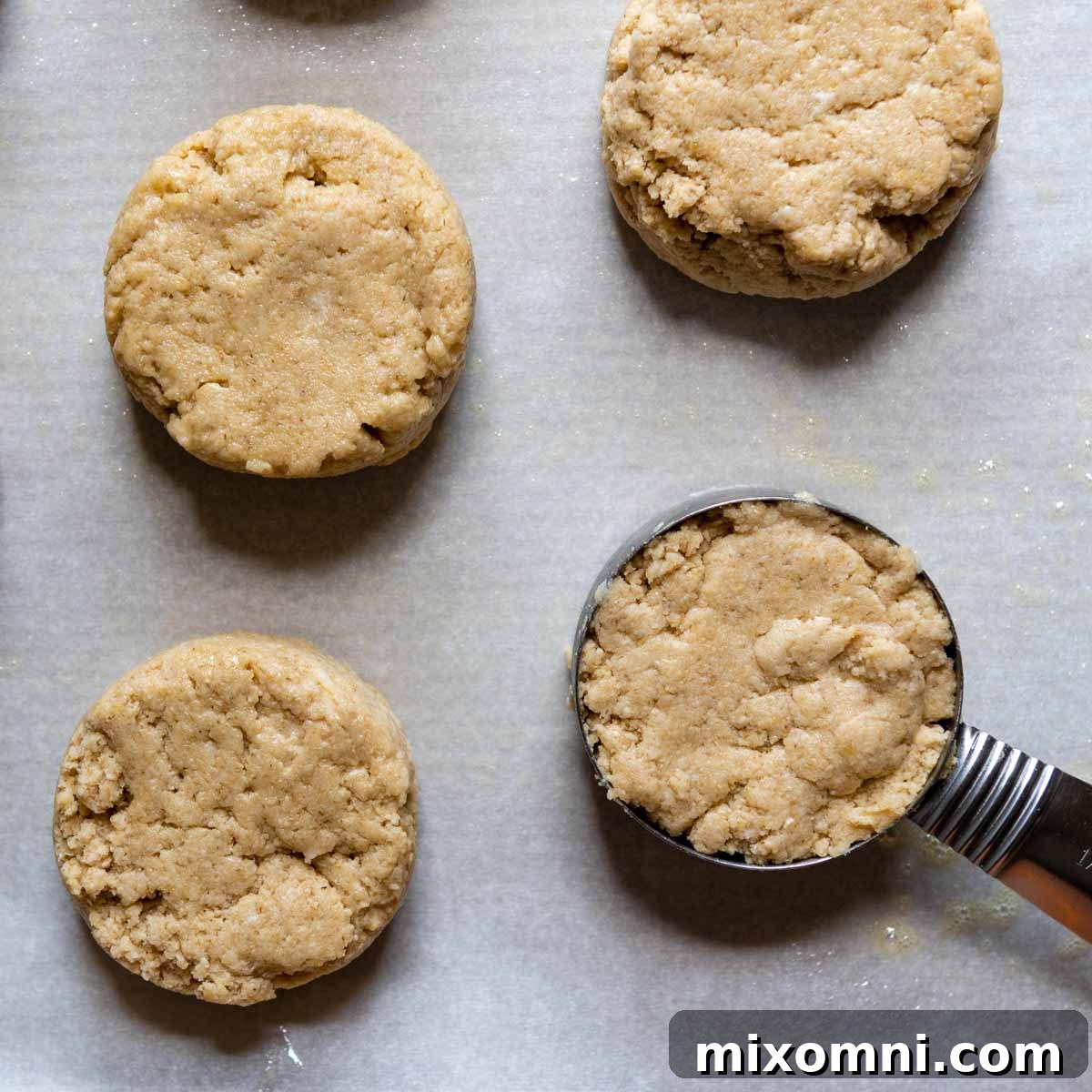
For those new to baking, the drop biscuit method is a dream come true. Forget the intimidation of rolling pins and biscuit cutters! This recipe simplifies the process: just mix your dough and use a simple, ingenious trick to portion it perfectly. By utilizing a lightly greased measuring cup to scoop out even amounts of dough, you effortlessly create uniformly sized biscuits, ensuring consistent baking and a picture-perfect presentation every time.
One of the many advantages of baking with oat flour, especially for gluten-free recipes, is its affordability and accessibility. If you keep rolled oats and a powerful blender on hand, you can whip up fresh, homemade oat flour in minutes, which not only saves you money but also guarantees the freshest ingredients. I’ve successfully used homemade oat flour for a variety of creations, from wonderfully soft oat tortillas to our family’s favorite sweet indulgence: chewy oat flour cookies with chocolate chips. The versatility of oat flour makes it an indispensable ingredient in a gluten-free pantry.
The Role of Psyllium Husk in Gluten-Free Baking
A key to the tender, cohesive crumb of these oat flour biscuits lies in a special gluten-free baking ingredient: psyllium husk powder. Unlike wheat flour, oat flour naturally lacks gluten, the protein network responsible for binding and structure in traditional baked goods. Psyllium husk powder steps in to admirably mimic this gluten-like effect, creating elasticity in the dough and significantly enhancing the overall structure by absorbing moisture and forming a gel-like consistency.
Because I prioritize recipes that don’t require stocking excessive specialty ingredients, I rigorously tested this biscuit recipe both with and without psyllium husk powder. While you won’t detect a difference in taste, the structural integrity is markedly improved with psyllium. Biscuits made without it tend to be more crumbly, making them slightly more challenging to slice, spread toppings on, and enjoy. However, understanding the power of psyllium husk powder in gluten-free baking opens up a world of possibilities, enhancing the texture of many gluten-free bread and pastry recipes beyond just these biscuits.
Continue reading to uncover more expert tips and tricks for crafting the most exceptional, fluffy oat flour biscuits. We’ll delve into easy-to-follow dairy-free modifications, practical baking insights gleaned from extensive recipe testing, creative serving ideas, and the optimal ways to store your delicious creations for lasting freshness.
Essential Ingredients for Perfect Oat Flour Biscuits
Crafting delicious oat flour biscuits starts with understanding the role each ingredient plays. Here’s a closer look at the components that make these biscuits uniquely tender and flavorful:
- Oats (for Oat Flour): While oats are inherently gluten-free, it’s crucial for individuals with celiac disease or severe gluten sensitivities to opt for certified gluten-free rolled oats. This ensures they haven’t been cross-contaminated during processing. If you prefer to buy it pre-made, ensure you use certified GF oat flour. For the best texture and flavor in these biscuits, finely ground oat flour is essential.
- Psyllium Husk Powder: As discussed, this ingredient is technically optional but highly recommended. It acts as a phenomenal binder, imparting elasticity to the dough and significantly improving the overall structure, preventing a crumbly texture. While not always needed for softer baked goods like oat flour cookies or oat flour waffles, it becomes invaluable in recipes like biscuits that require more structural integrity for slicing and handling.
- Fat (Butter and Oil): This recipe employs a strategic combination of cold butter and liquid oil. The cold butter, when cut into the flour, creates pockets of steam during baking, contributing to that desirable flaky texture. The added oil helps to coat the oat starches, resulting in a wonderfully softened, moist crumb that stays tender. For dairy-free adaptations, high-quality plant-based butter sticks are an excellent substitute.
- Yogurt: Plain, whole milk, or Greek yogurt is recommended for its creamy texture and the subtle tang it imparts, mimicking the flavor profile often found in traditional buttermilk biscuits. Its acidity also reacts with the baking powder, aiding in leavening. Sour cream or a thick dairy-free yogurt can be successfully substituted.
- Egg: The egg serves multiple purposes: it adds crucial moisture to the biscuit dough, enriching the texture, and acts as an additional binder, helping to hold the ingredients together for a more stable biscuit. Please note, this recipe has not been tested with egg substitutes.
- Sweetener (Honey or Maple Syrup): A touch of liquid sweetener, such as honey or pure maple syrup, beautifully complements the inherent sweetness of the oats. Beyond flavor, it also contributes to the biscuits’ moisture content and helps achieve a lovely golden-brown crust.
How To Make Tender Oat Flour Biscuits: Step-by-Step
Follow these detailed steps to create perfectly fluffy oat flour drop biscuits. For precise ingredient amounts, please refer to the recipe card below.
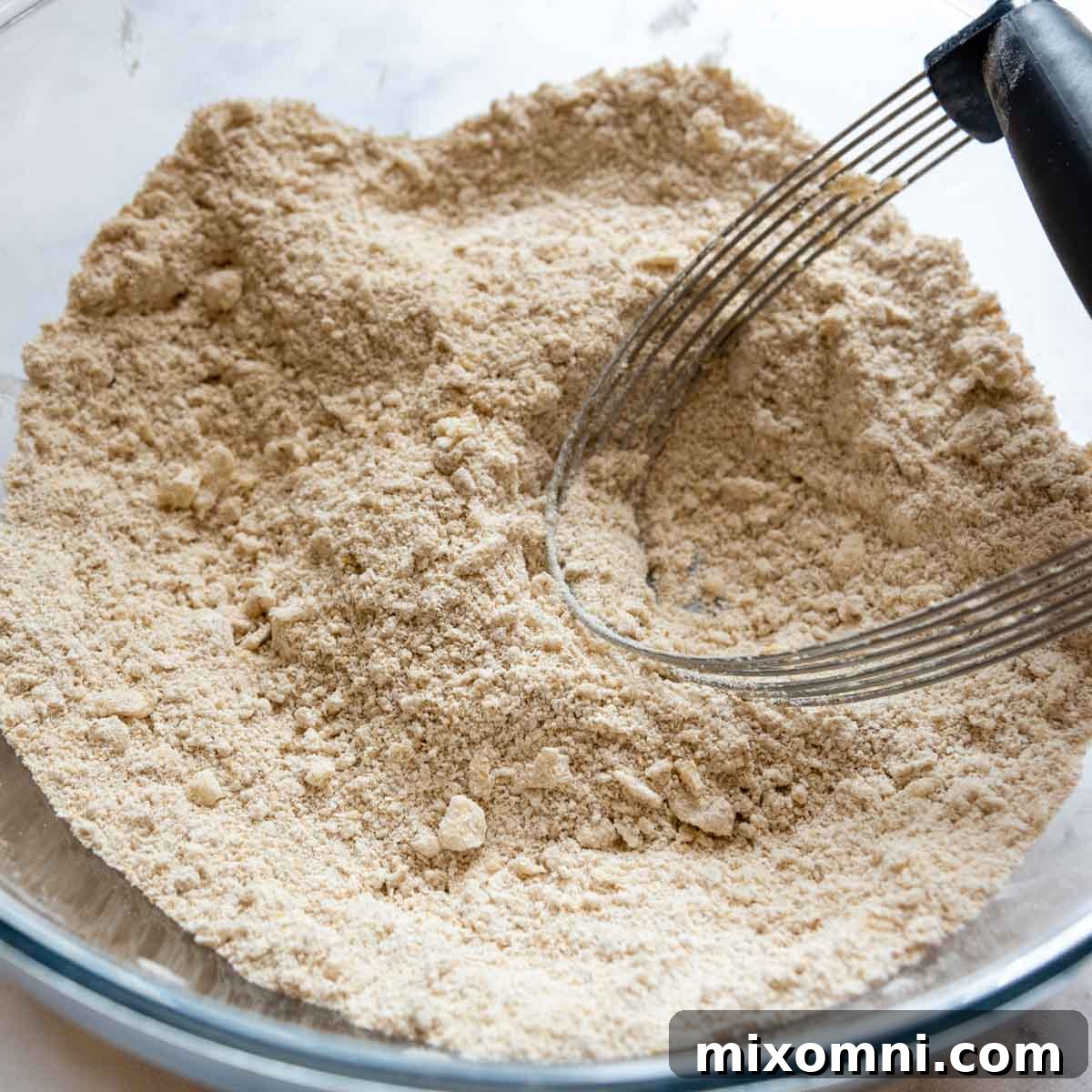
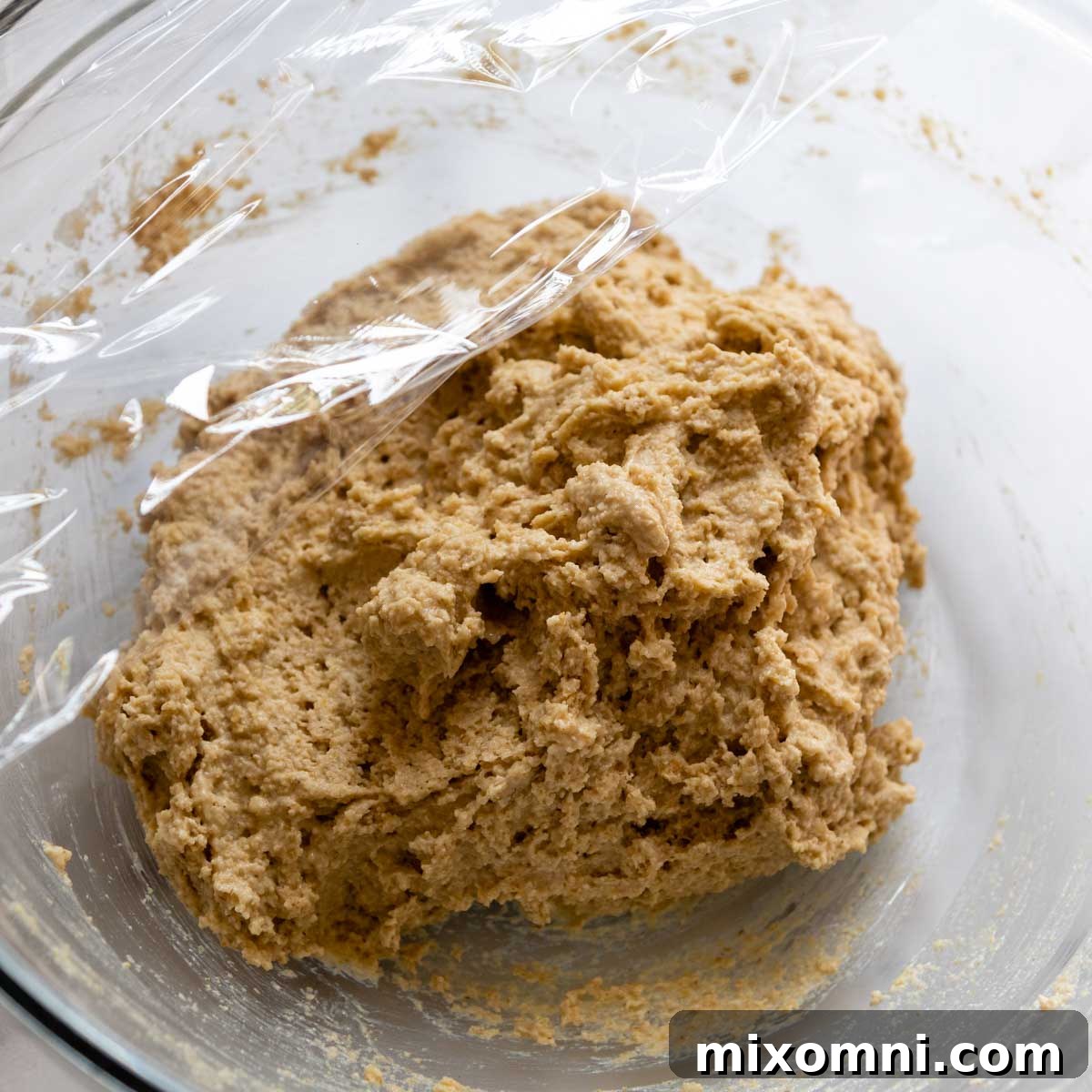
- Prepare Dry Ingredients: In a large mixing bowl, thoroughly whisk together the oat flour, psyllium husk powder, baking powder, and salt. Add the well-chilled, chopped butter pieces to this dry mixture. Using a pastry blender, a fork, or even your fingertips, carefully cut the butter into the flour until small, pea-sized pieces of butter remain and the mixture resembles coarse meal. Ensure the butter is evenly distributed but still distinct.
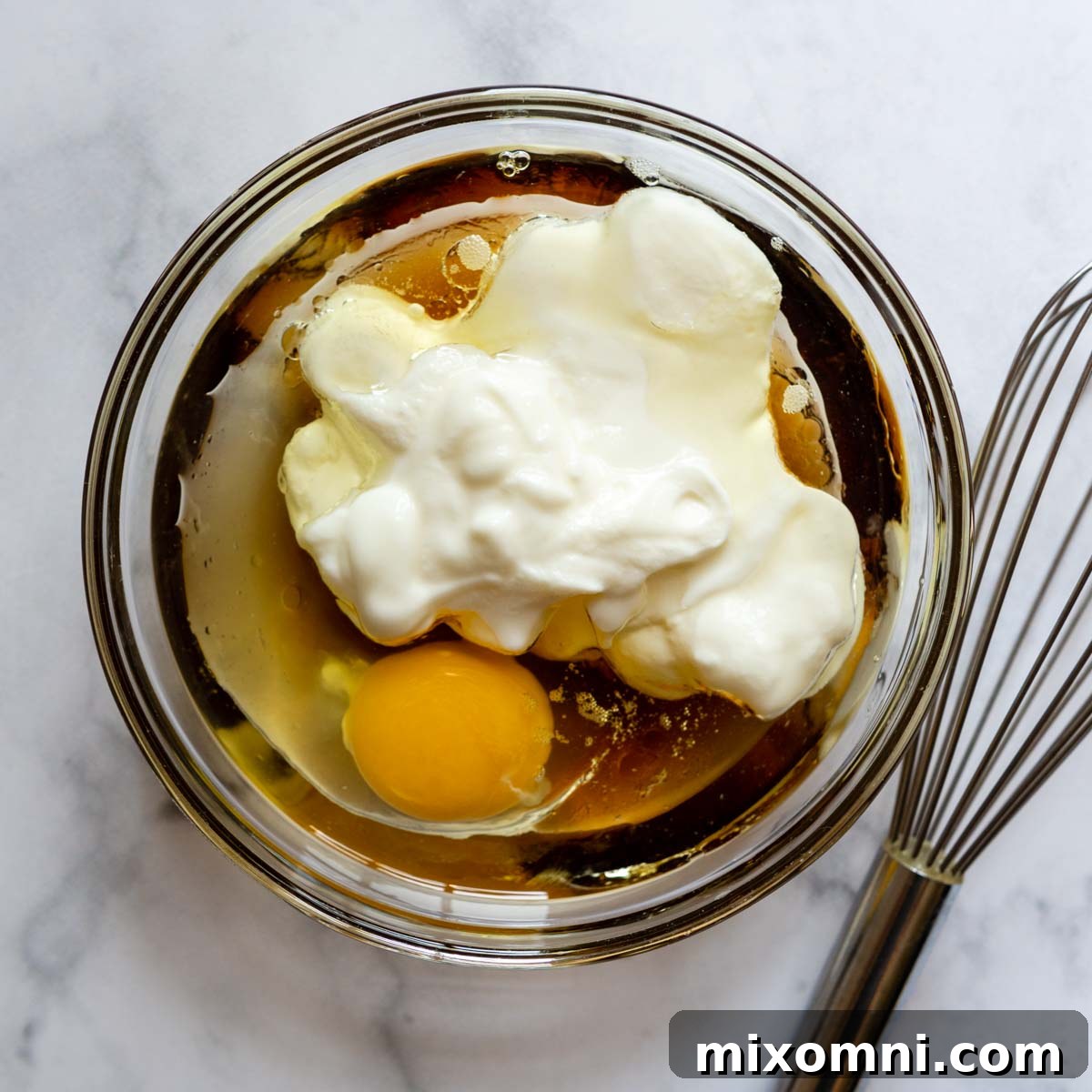
- Combine Wet Ingredients & Chill Dough: In a separate, smaller bowl, whisk together the egg, yogurt, oil, and honey or maple syrup until well combined. Pour this wet mixture into the dry flour and butter mixture. Stir gently with a spoon or spatula until no dry flour pockets are visible and the ingredients are just combined into a cohesive dough. Be careful not to overmix. Cover the bowl tightly with plastic wrap and refrigerate for a minimum of 30 minutes. This essential resting period allows the oat flour to fully hydrate and absorb the liquids, resulting in a more tender, less crumbly biscuit and a dough that is much easier to handle and shape. While the dough chills, preheat your oven to 375ºF (190ºC) and line a baking sheet with parchment paper.
- Portion and Drop Dough: Lightly grease a ⅓ cup measuring cup or coat it with non-stick cooking spray. Scoop a level amount of the chilled biscuit dough into the greased measuring cup, pressing down slightly to ensure it’s compact. Gently drop the dough onto the prepared baking sheet. Arrange the biscuits approximately 1 inch apart, ideally towards the center of the sheet. This strategic spacing helps to create a slightly steamy environment during baking, which contributes to a softer, more tender biscuit interior. Remember to re-grease or spray your measuring cup between each scoop of dough to prevent sticking and ensure easy release.
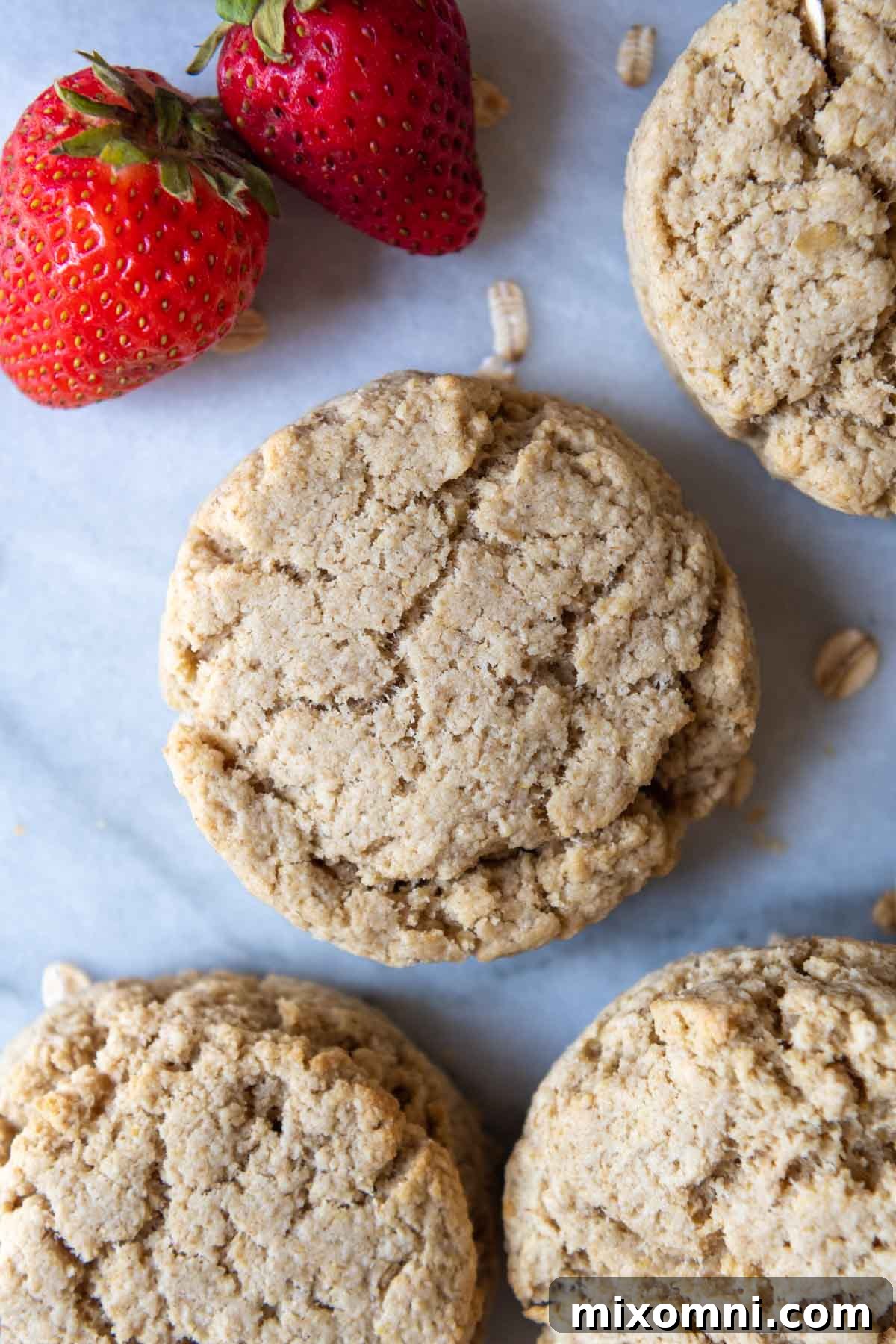
- Bake to Golden Perfection: Place the baking sheet in the preheated oven and bake for 15-16 minutes. For even baking and browning, rotate the pan halfway through the baking time. The biscuits are ready when their tops develop light cracks and the bottoms turn a delicate golden brown. Once baked, transfer the biscuits to a wire rack and allow them to cool for at least 15 minutes before enjoying them warm. This cooling period helps the biscuits set and firm up their structure.
The Importance of Resting Dough for Oat Flour Biscuits
The instruction to rest the dough in the refrigerator is not merely a suggestion; it’s a crucial step for achieving the perfect texture in oat flour biscuits. Ground oats, while naturally gluten-free, are exceptionally good at absorbing moisture. This characteristic is precisely what makes them an excellent binder in gluten-free recipes, but it also means they need time to fully hydrate. When you allow the dough to rest, the oat flour starches have the opportunity to fully soak up the liquids, leading to a more evenly hydrated dough. This process transforms the texture, making the biscuits significantly more tender and cohesive, less prone to crumbliness, and much easier to shape and handle.
Additionally, keeping the ingredients cold by refrigerating the dough helps maintain the butter’s solid state. Cold butter is key to flaky biscuits, as it creates pockets of steam that lift the dough during baking. However, there’s a fine balance: a longer resting time isn’t necessarily better for oat flour. As it continues to absorb moisture, the dough can eventually become too dry, leading to less tender biscuits. Therefore, an optimal resting window of 20-30 minutes is ideal before you proceed to shape and bake, ensuring maximum tenderness without sacrificing moisture.
Dairy-Free Modifications for Oat Flour Biscuits
Creating delicious dairy-free oat flour biscuits is entirely achievable with a few simple substitutions. The two main dairy components to address are butter and yogurt. For the butter, it’s highly recommended to use high-quality, plant-based butter sticks rather than tub spreads. Butter sticks typically have a lower water content and a fat composition that more closely mimics traditional butter, which is essential for achieving the desired flakiness and richness in your biscuits. When selecting dairy-free yogurt, opt for varieties with a higher fat content, such as those made from coconut or cashew milk, to ensure your biscuits remain moist and flavorful. These richer alternatives contribute to a superior texture compared to lower-fat options. If your chosen plant-based butter is unsalted, you may want to slightly increase the salt in the recipe to taste, or ensure you’re using salted plant-based butter for optimal flavor balance. By making these thoughtful swaps, you can enjoy equally tender and flavorful oat flour biscuits that cater to dairy-free dietary needs.
Versatile Serving Ideas for Your Oat Flour Biscuits
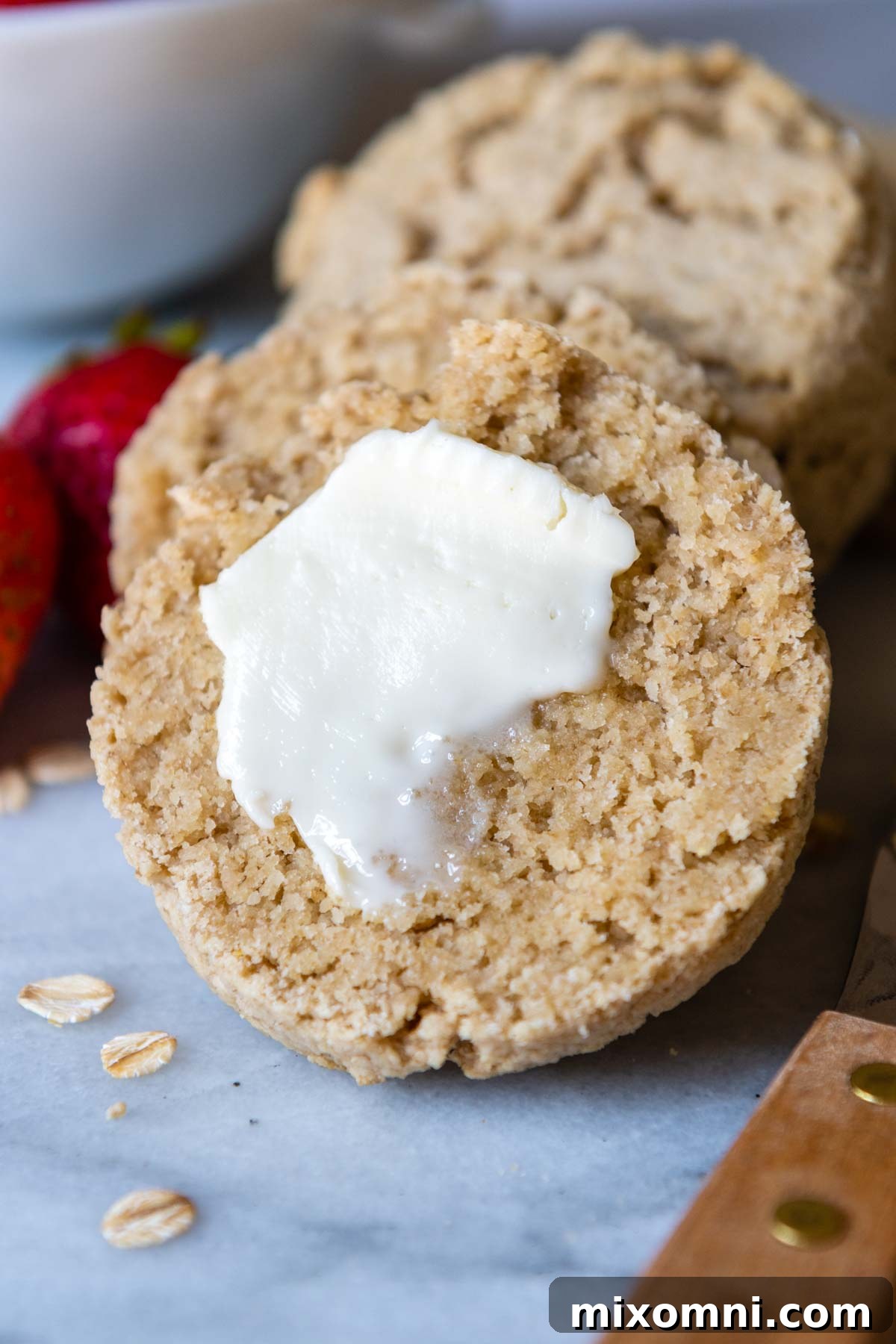
These fluffy oat flour biscuits are incredibly versatile and can be enjoyed in a multitude of ways, enhancing any meal of the day. For a classic savory experience, serve them warm alongside a rich and creamy gluten-free sausage gravy, creating a hearty and comforting breakfast or brunch. They are also perfect slathered with your favorite butter, sweet jam, fruit preserves, or a drizzle of golden honey, making for a simple yet satisfying treat.
Elevate your breakfast game by transforming them into delightful breakfast sandwiches. Split them open and load them with fluffy scrambled eggs, savory breakfast meats like crispy bacon, juicy sausage patties, or thinly sliced ham, and a slice of your favorite cheese for a truly satisfying start to your day.
If you’re an avid fan of oats (and who isn’t?), these biscuits make an excellent accompaniment to warm, creamy gluten-free cereals. Imagine enjoying a biscuit with a bowl of hearty slow cooker oat groats, providing a deeply nourishing breakfast. Or pair them with a new personal favorite: oat bran porridge, which offers a wonderfully smooth and satisfying gluten-free hot cereal that the whole family is sure to love.
Storing and Freezing Tips for Freshness
To ensure your homemade oat flour biscuits remain as fresh and delicious as possible, proper storage is key. Once the biscuits have completely cooled to room temperature, they can be stored in an airtight container at room temperature for up to 2-3 days. Avoid refrigerating them if you plan to eat them within a few days, as the refrigerator can sometimes dry out baked goods, making them a bit tougher.
For longer-term storage, these biscuits freeze beautifully. To freeze, wrap each cooled biscuit individually in plastic wrap, then place the wrapped biscuits into a large gallon-sized freezer bag or an airtight freezer-safe container. They can be stored in the freezer for up to 3 months, ready whenever a craving strikes.
When you’re ready to enjoy a frozen biscuit, you have a couple of options for thawing and reheating. You can let them thaw gradually at room temperature for a few hours, or for a quicker solution, defrost them in the microwave. They are always best served warm. To reheat, wrap an individual biscuit in a slightly damp paper towel and microwave for about 15-20 seconds, or until heated through and soft. This helps to restore their tender, fresh-baked quality. For a crispier exterior, you can also reheat them in a toaster oven for a few minutes until warmed and lightly toasted.
Save this recipe to your Pinterest board!
Let’s be friends on Pinterest! I’m always sharing great recipes!
Did you make this recipe? We’d love to hear from you! Please consider leaving a star rating and comment below. Your feedback helps other home bakers discover and enjoy this recipe, and we truly appreciate hearing from our community! -Melissa
Fluffy Oat Flour Drop Biscuits (No Flour, Gluten-Free)
Enjoy tender, fluffy oat flour biscuits requiring only minutes of prep and simple, affordable gluten-free ingredients! These well-tested, homemade drop biscuits require no flour, only oatmeal, and use a simple trick to avoid crumbly, dry results. Yields 7 servings and includes an easy dairy-free adaptation as well.
Yield: 7 biscuits
Prep Time: 5 mins
Cook Time: 15 mins
Total Time: 50 mins
Ingredients
- 2 cups oat flour (same as 2 cups rolled oats blended into flour)
- 1 tablespoon psyllium husk powder (see recipe notes for substitution)
- 1 tablespoon baking powder
- ½ teaspoon salt
- 3 tablespoons cold butter, chopped
- 1 large egg
- ½ cup plain yogurt (see recipe notes for dairy-free)
- 3 tablespoons oil (any preferred oil)
- 2 tablespoons honey or pure maple syrup
Equipment
- Baking Sheets
- Pastry Cutter
Instructions
- Line a baking sheet with parchment paper.
- In a large mixing bowl, whisk together the oat flour, psyllium husk powder, baking powder, and salt. Add the chilled butter pieces to the flour mixture. Use a pastry blender, fork, or fingers to cut butter into the flour until small, pea-sized pieces remain and the butter is uniformly worked in.
- In a separate small bowl, whisk together the egg, yogurt, oil, and honey or maple syrup. Stir the yogurt mixture into the flour mixture until no flour pockets remain and thoroughly combined. Cover the bowl with plastic wrap and refrigerate for 30 minutes. This allows the starches to blend with the liquid, making the dough tender and easier to shape. Meanwhile, preheat the oven to 375ºF (190ºC).
- Grease a ⅓ cup measuring cup and scoop a level amount of biscuit dough into it, pressing down slightly. Drop onto the prepared baking sheet, spacing biscuits about 1 inch apart in the center of the sheet (this traps a little extra steam between the biscuits and makes them more tender). Spray the measuring cup between each scoop of dough to prevent sticking.
- Bake for 15-16 minutes, rotating the pan halfway through. The tops will crack and bottoms will be lightly browned when done. Cool on a wire rack for 15 minutes before enjoying warm.
Recipe Notes
Psyllium Husk Powder
The psyllium husk powder significantly helps absorb moisture and bind together the crumb, mimicking the function of gluten. While the recipe can be made without psyllium, the biscuits will have a more delicate and crumbly structure if omitted.
Dairy-Free Modification
For dairy-free oat flour biscuits, substitute regular butter with plant-based butter sticks (avoid softer butter spreads) and replace the plain yogurt with a dairy-free yogurt or sour cream. Choose a dairy-free option with a higher fat content for best results. If using unsalted plant-based butter, reduce the added salt in the recipe to ¼ teaspoon.
Nutrition Information (per serving)
- Calories: 278 kcal
- Carbohydrates: 30g
- Protein: 6g
- Fat: 15g
- Saturated Fat: 5g
- Polyunsaturated Fat: 3g
- Monounsaturated Fat: 6g
- Trans Fat: 0.2g
- Cholesterol: 39mg
- Sodium: 230mg
- Potassium: 341mg
- Fiber: 3g
- Sugar: 6g
- Vitamin A: 201 IU
- Vitamin C: 0.1mg
- Calcium: 120mg
- Iron: 2mg