
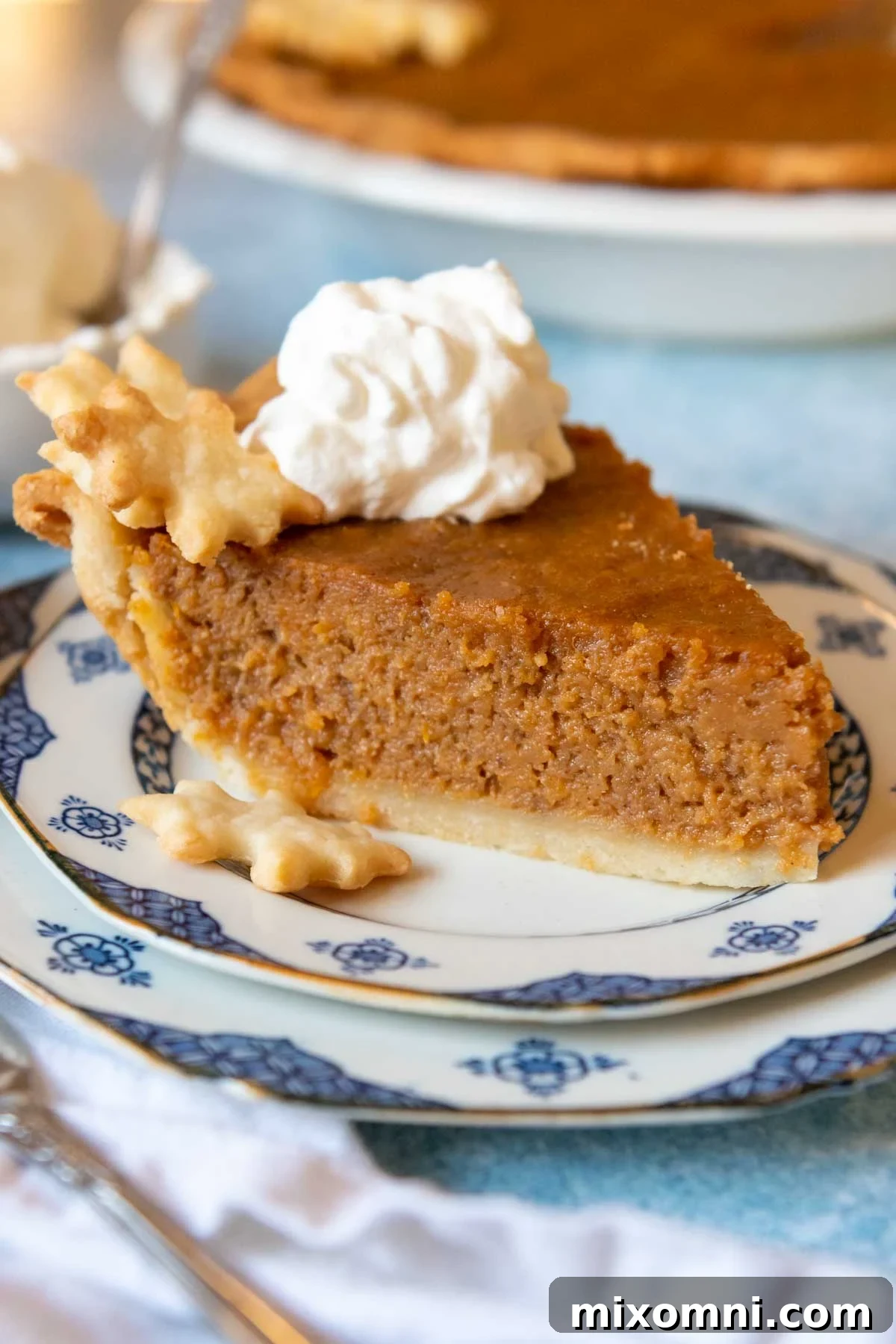
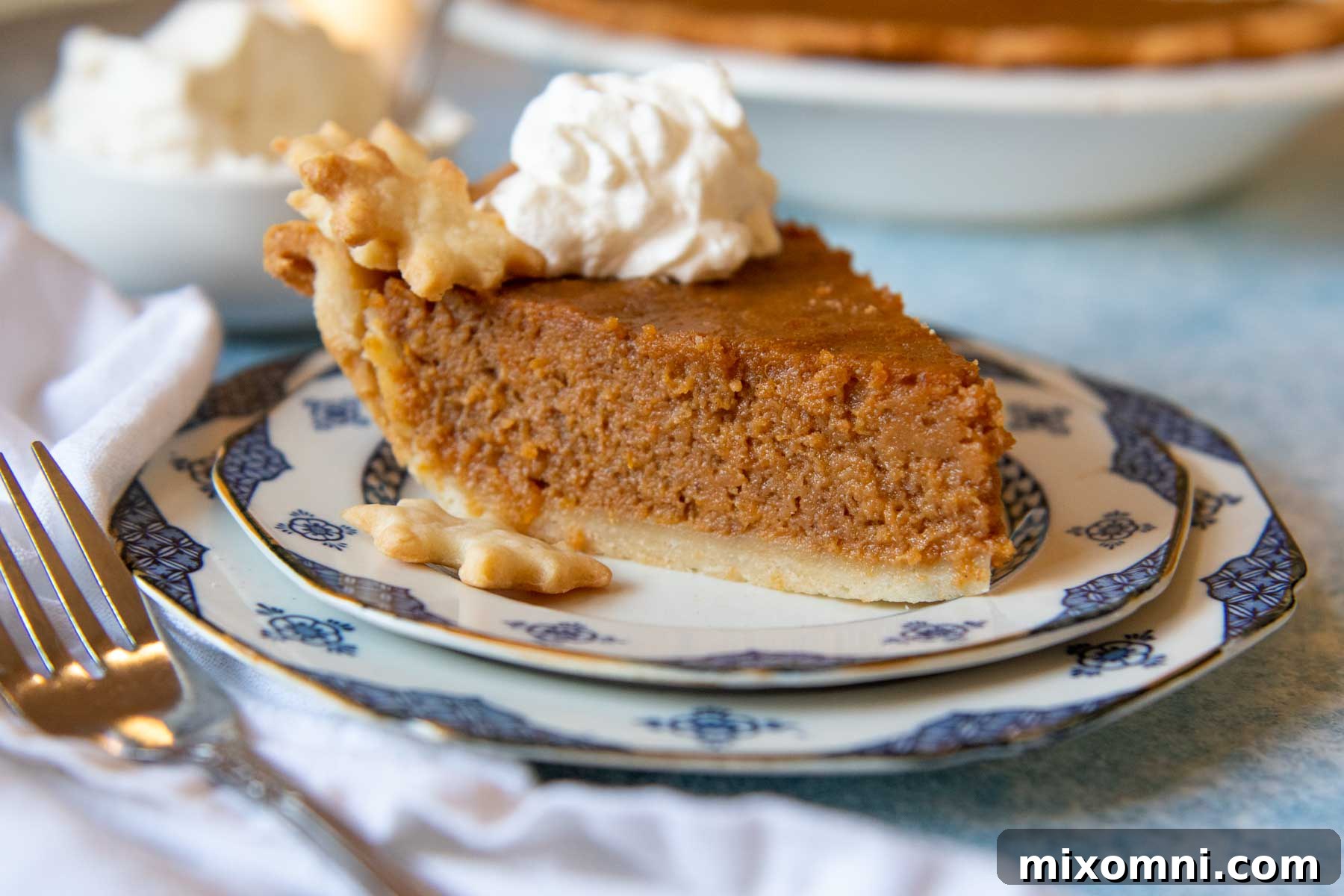
Welcome to your new favorite holiday dessert! Master the art of baking the best gluten-free sweet potato pie with this authentic southern-style recipe, packed with easy-to-follow instructions and expert tips from seasoned bakers. This isn’t just any sweet potato pie; it features an ultra-creamy, perfectly sweetened filling, harmoniously balanced by rich brown sugar and luscious evaporated milk. All of this divine goodness is lovingly cradled in a buttery, impeccably flaky gluten-free pie crust that will impress even the most discerning palates. For those with dietary considerations, we’ve thoughtfully included comprehensive dairy-free modifications so everyone can enjoy a generous slice of this comforting Southern classic!
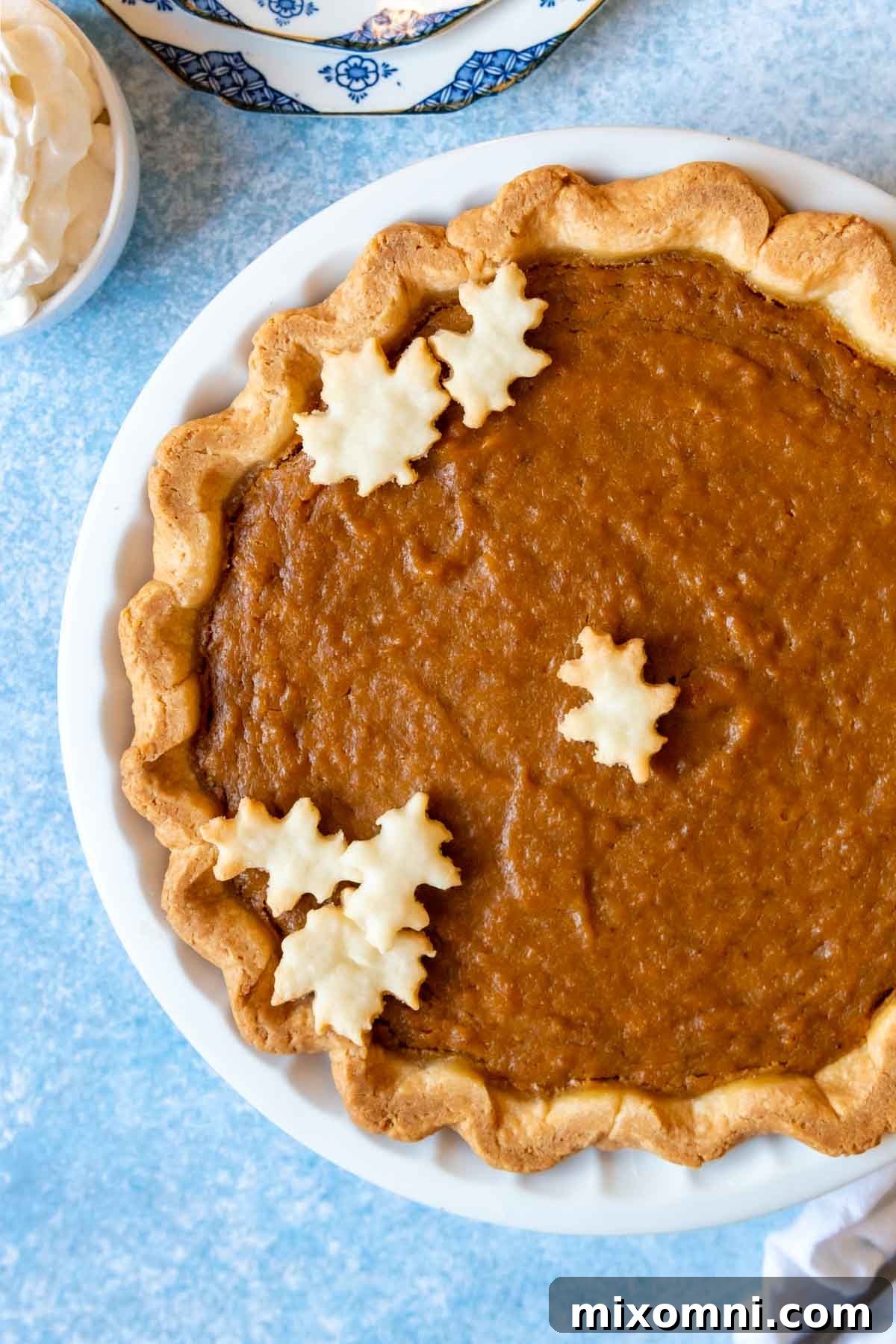
Easy Gluten-Free Sweet Potato Pie: A Southern Culinary Tradition Reimagined
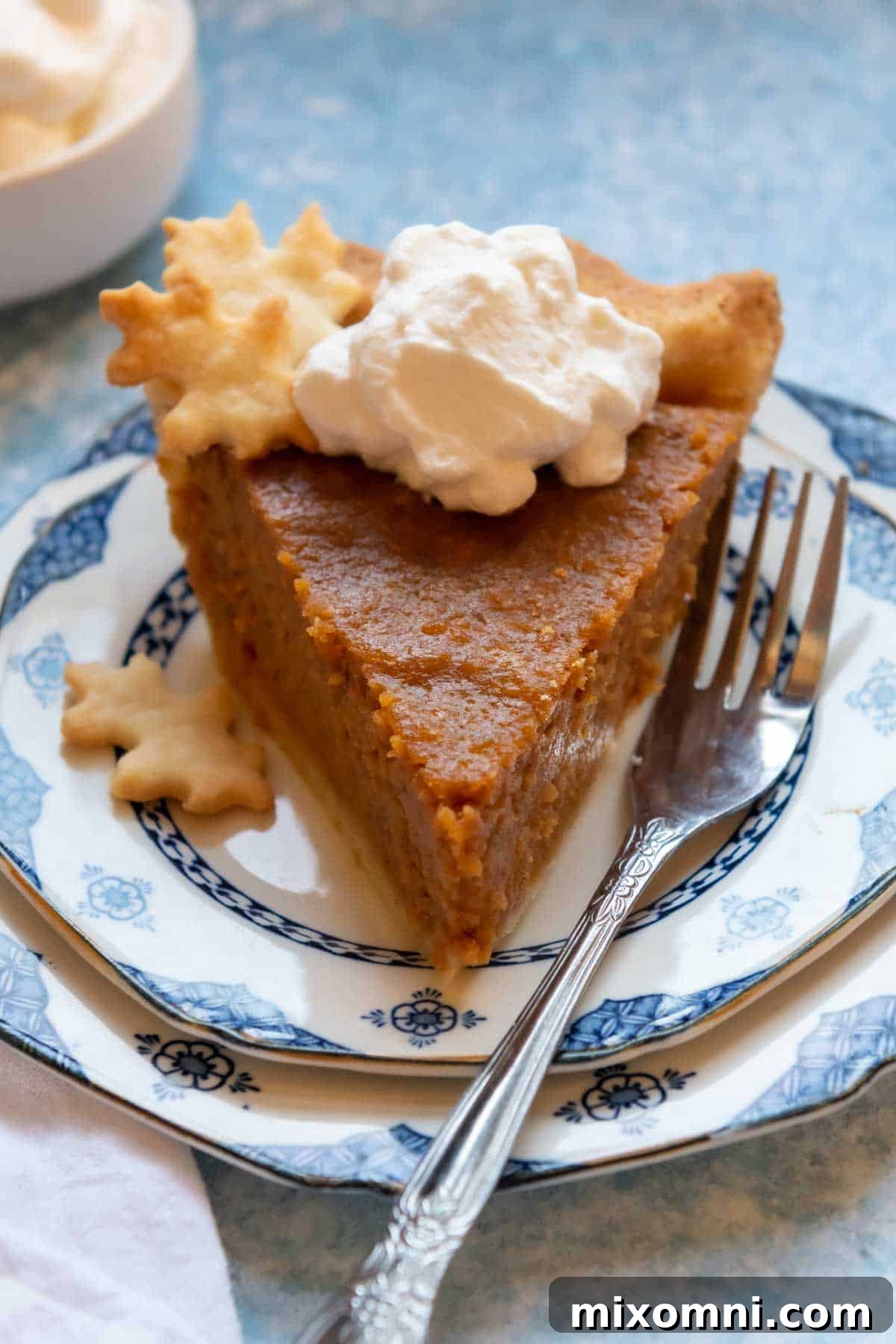
For many, the holiday season, particularly Thanksgiving and Christmas, feels incomplete without a classic Southern dessert gracing the table. Our gluten-free sweet potato pie offers a delightful and warmly spiced alternative to the ubiquitous pumpkin pie, presenting a custard filling that is both profoundly rich in flavor and wonderfully smooth in texture. This recipe has become our undisputed favorite, built upon a foundation of tender, flaky gluten-free pastry crust that truly elevates this humble root vegetable into a culinary masterpiece. It’s a dessert that speaks of home, comfort, and celebration, now accessible to everyone.
The true hallmark of an outstanding sweet potato pie often lies in its crust. Crafting homemade gluten-free pies with a buttery, flaky pastry is a skill many believe to be challenging, if not impossible. However, our meticulously developed, fail-proof recipe is designed to convert even the toughest skeptics. We’ve honed specific techniques and selected the perfect gluten-free dough blend to ensure your creamy sweet potato filling is perfectly supported by a gloriously crispy, never-soggy bottom crust. This common pitfall in many pie recipes has been completely sidestepped through our expert tips and careful instructions, guaranteeing a pristine pie every time.
Beyond the crust, the filling takes center stage, and our method prioritizes flavor and texture above all else. We strongly advocate for roasting sweet potatoes over boiling them. Why? Roasting intensifies and concentrates their natural sugars, caramelizing them slightly and deepening their flavor profile significantly. Crucially, this process also reduces excess moisture, leading to an exceptionally silky-smooth, lump-free puree – a stark contrast to the diluted flavor and watery texture that boiling can produce. Furthermore, our choice of evaporated milk instead of heavy cream is a game-changer. It not only contributes a richer, subtly caramel-like flavor but also boasts a concentrated nature that acts as a natural thickener, guaranteeing a perfectly set pie filling every single time. This attention to detail transforms a simple sweet potato pie into an unforgettable dessert experience.
If your culinary quest is for a gluten-free sweet potato dessert that truly outshines all others, you’ve unequivocally found your treasure. This recipe promises not only an unparalleled taste experience but also an easy, streamlined method that will make it a treasured cornerstone of your holiday celebrations for years to come. It consistently ranks alongside other cherished family favorites, such as a perfectly baked old-fashioned gluten-free pecan pie, solidifying its place as a non-negotiable component of your Thanksgiving feast or any special gathering. Prepare to receive endless compliments!
Unlocking Perfect Flavor: Essential Ingredients for Your Gluten-Free Sweet Potato Pie
To craft a truly exceptional sweet potato pie, each ingredient plays a pivotal role in achieving that perfect balance of sweetness, spice, and creamy texture. Below, we’ll delve into each component, highlighting its unique contribution and offering valuable substitution tips, especially for those seeking dairy-free options. Please note, this specific recipe has not been tested for a completely vegan adaptation (without eggs), but many dairy-free alternatives are readily available.
- Sweet Potatoes: The undisputed star of our show! For the most profound flavor, deepest natural sweetness, and silkiest texture, roasting your sweet potatoes (or yams) is highly recommended. Roasting causes the sugars to caramelize, creating a more complex and intense flavor profile compared to boiling. Boiling can dilute the potato’s flavor and introduce unwanted water, which can lead to a less firm filling. With roasting, there’s the added bonus of no need to peel them beforehand – simply scoop out the tender, flavorful flesh after baking! If, in a pinch, you must use canned sweet potatoes, ensure they are thoroughly drained and measure approximately 2 cups of mashed puree.
- Warm Spices: A meticulously balanced blend of ground cinnamon, ground nutmeg, aromatic ginger, and subtle cloves is absolutely essential for that signature holiday aroma and comforting taste. These spices together evoke warmth and seasonal cheer, making this pie truly irresistible and reminiscent of festive gatherings. Feel free to adjust the quantities slightly to perfectly suit your personal preference for spice intensity.
- Butter: Provides a rich, luxurious fat content that contributes significantly to the filling’s smooth, melt-in-your-mouth texture and deep flavor. For a luscious dairy-free pie, you can effortlessly substitute with your favorite high-quality plant-based vegan butter or even refined coconut oil. Ensure your dairy-free butter is kept cold and firm when cutting for the crust, and softened for the filling, to replicate the texture correctly.
- Evaporated Milk: This is our secret weapon for an ultra-creamy, perfectly set filling! Evaporated milk not only contributes a rich, slightly caramelized flavor due to its concentrated nature, but its reduced water content also acts as a natural thickener. This guarantees your pie sets beautifully and holds its shape without being overly dense or disappointingly runny. For dairy-free versions, full-fat canned coconut milk (chilled overnight and the thick cream scooped off) is an excellent choice for its richness and complementary flavor, while unsweetened almond milk can also be used, though it may result in a slightly lighter-bodied filling.
- Brown Sugar: We specifically opt for light brown sugar because its subtle molasses notes provide a deep, complex sweetness that perfectly complements the earthy undertones of the sweet potato. This choice contributes significantly to the pie’s rich, golden hue and its undeniably delectable, well-rounded flavor.
- Eggs and Egg Yolks: These are absolutely vital for the custard’s structural integrity, acting as binding agents that bring all the ingredients together. They are essential for contributing to the filling’s smooth, firm, yet tender texture once baked. The addition of extra egg yolks specifically enhances the richness and ensures a beautifully creamy mouthfeel that is characteristic of a high-quality sweet potato pie.
- Vanilla Extract: A splash of good quality pure vanilla extract is like a magician’s touch; it doesn’t just add sweetness, but enhances and brightens all the other flavors, weaving in a subtle layer of aromatic complexity that completes the filling.
- Optional Bourbon: For an exquisite adult twist and a truly classic Southern bourbon sweet potato pie, consider adding up to 1/4 cup of good quality bourbon. If you choose this delightful addition, simply omit the vanilla extract, as bourbon will provide its own unique aromatic notes. Remember to adjust the liquid balance by reducing the same amount of milk from the recipe (e.g., if adding 2 tablespoons of bourbon, reduce the evaporated milk by 2 tablespoons) to maintain the perfect filling consistency.
- Gluten-Free Pie Crust: Our accompanying recipe for a gluten-free pie crust is renowned among GF bakers for its incredible flakiness, tender crumb, and buttery taste. It’s specifically designed to be easy to work with and provides the ideal sturdy yet delicate foundation for your pie, ensuring no one misses out on the perfect pie experience. For a dairy-free crust, you’ll need to follow a specialized gluten-free and dairy-free pie crust recipe to ensure both compatibility and optimal results.
- Optional Toppings: Elevate your pie to dessert perfection with a generous dollop of freshly whipped cream, a sprinkle of crunchy 5-minute stove-top candied pecans, a cloud of fluffy homemade meringue, toasted marshmallows for a nostalgic touch, or even a swirl of whipped coconut cream for a delightful dairy-free indulgence.
The Ultimate Secret to a Flawless Crust: The Magic of Pre-Baking Your Pie Shell
What truly sets this gluten-free sweet potato pie recipe apart from countless others, guaranteeing a superior texture every time? It’s the simple yet utterly transformative step of pre-baking (also known as blind-baking) the pie crust. This technique is an absolute game-changer, especially for custard and fruit pies, which are notoriously prone to developing that dreaded soggy bottom due to the moisture released by the filling during baking.
Par-baking the crust creates a vital barrier, effectively sealing the dough and preventing it from absorbing excess moisture from the rich sweet potato filling. The result? When your glorious pie finally emerges from the oven, both the delicate, golden edges and, critically, the entire bottom layer will be wonderfully flaky, crisp, and robust, providing the perfect textural contrast to the creamy filling. Here’s how to master this essential step for a truly perfect pie:
- First, precisely roll out your prepared gluten-free pastry dough to fit perfectly into your 9-inch pie pan, allowing for a slight overhang.
- To rigorously prevent any shrinkage of the crust during baking, generously prick the bottom of the pie shell several times with a fork, then place the entire pie shell in the freezer for at least 15 minutes. This chilling process helps the butter in the dough solidify, maintaining the crust’s shape and structure.
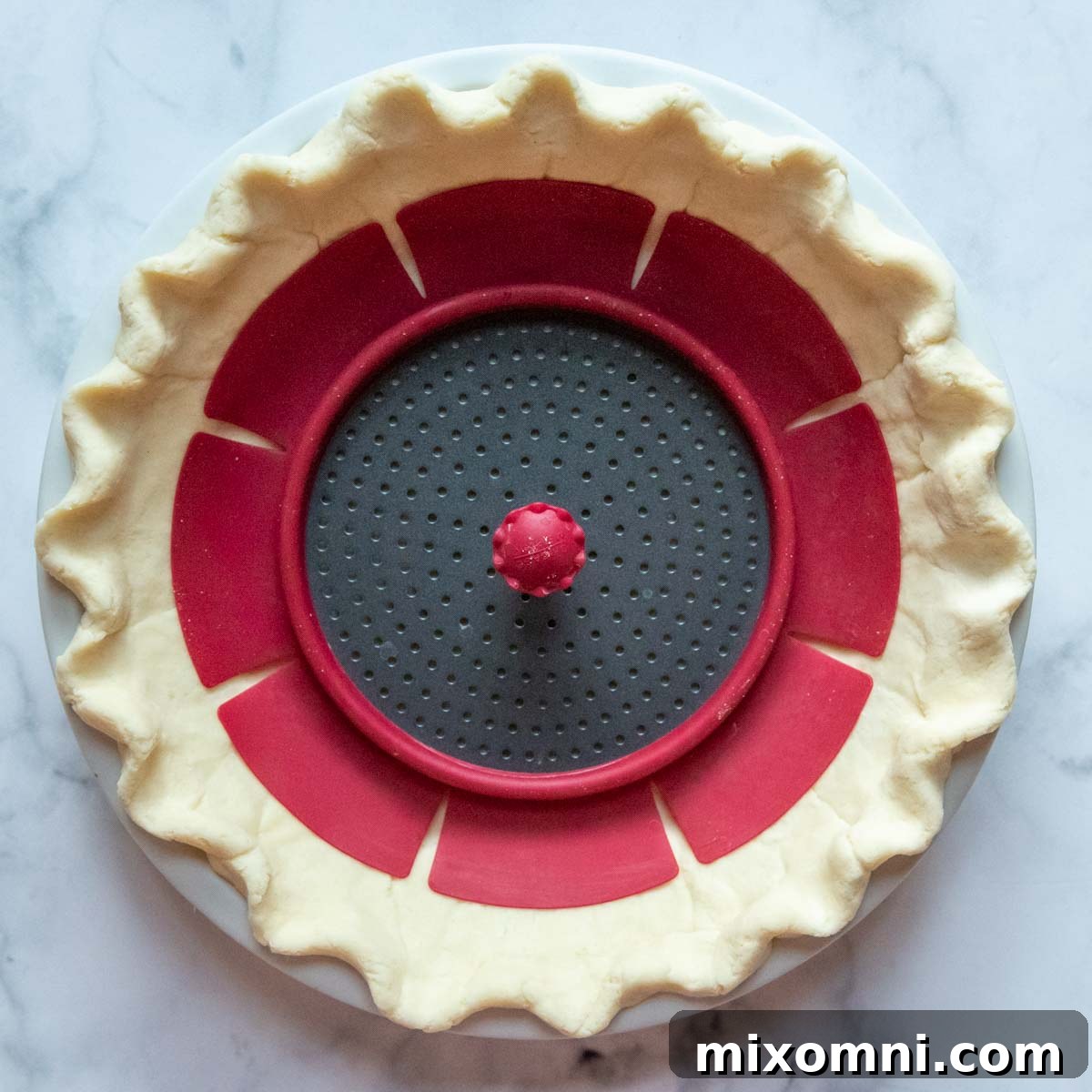
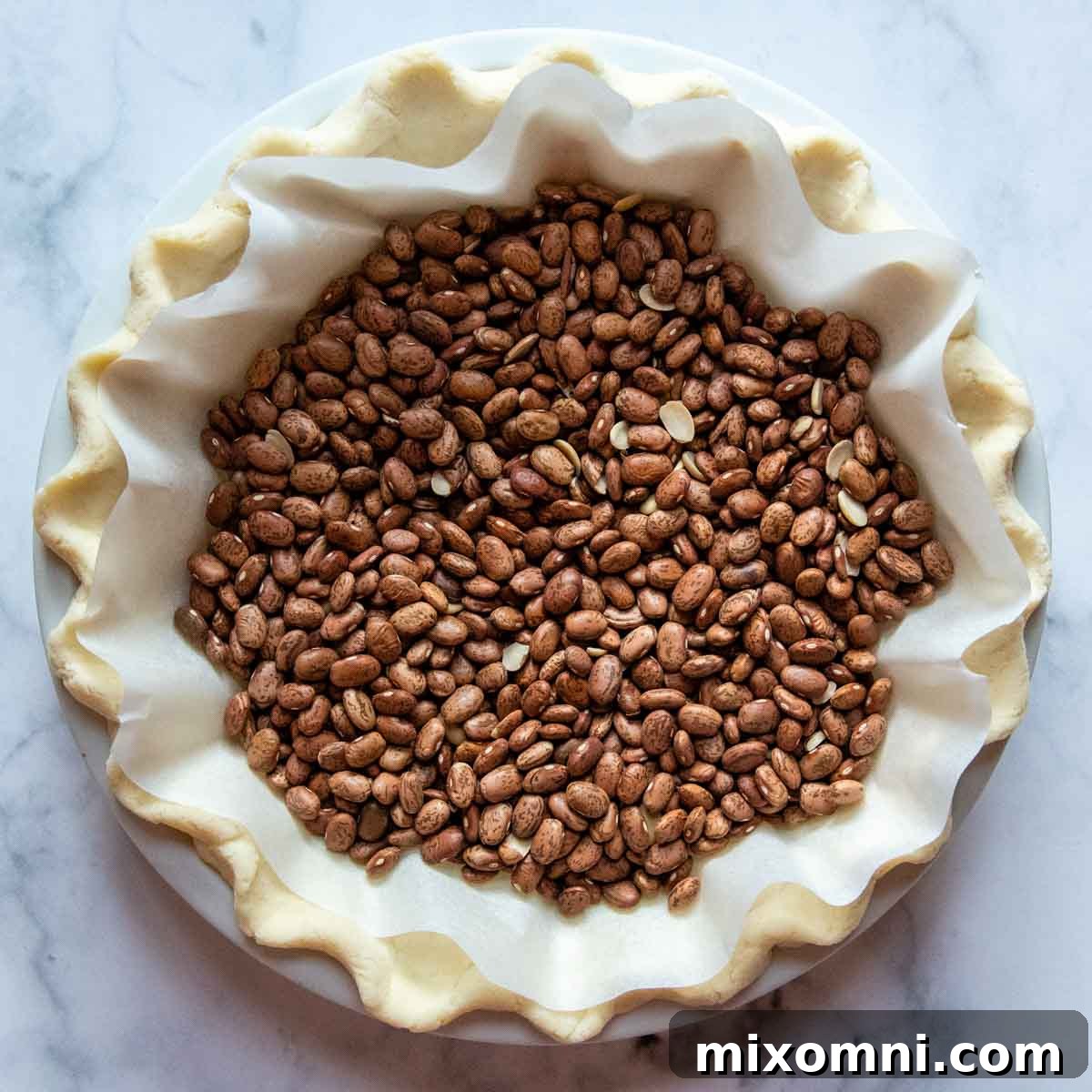
- Once thoroughly chilled and firm, line the pie shell with parchment paper, then fill it completely with either ceramic pie weights or dried beans. These weights are crucial for ensuring the crust bakes evenly and prevents the bottom from puffing up excessively. Alternatively, specialized pie weights designed specifically for this purpose (as pictured below) are also an excellent investment.
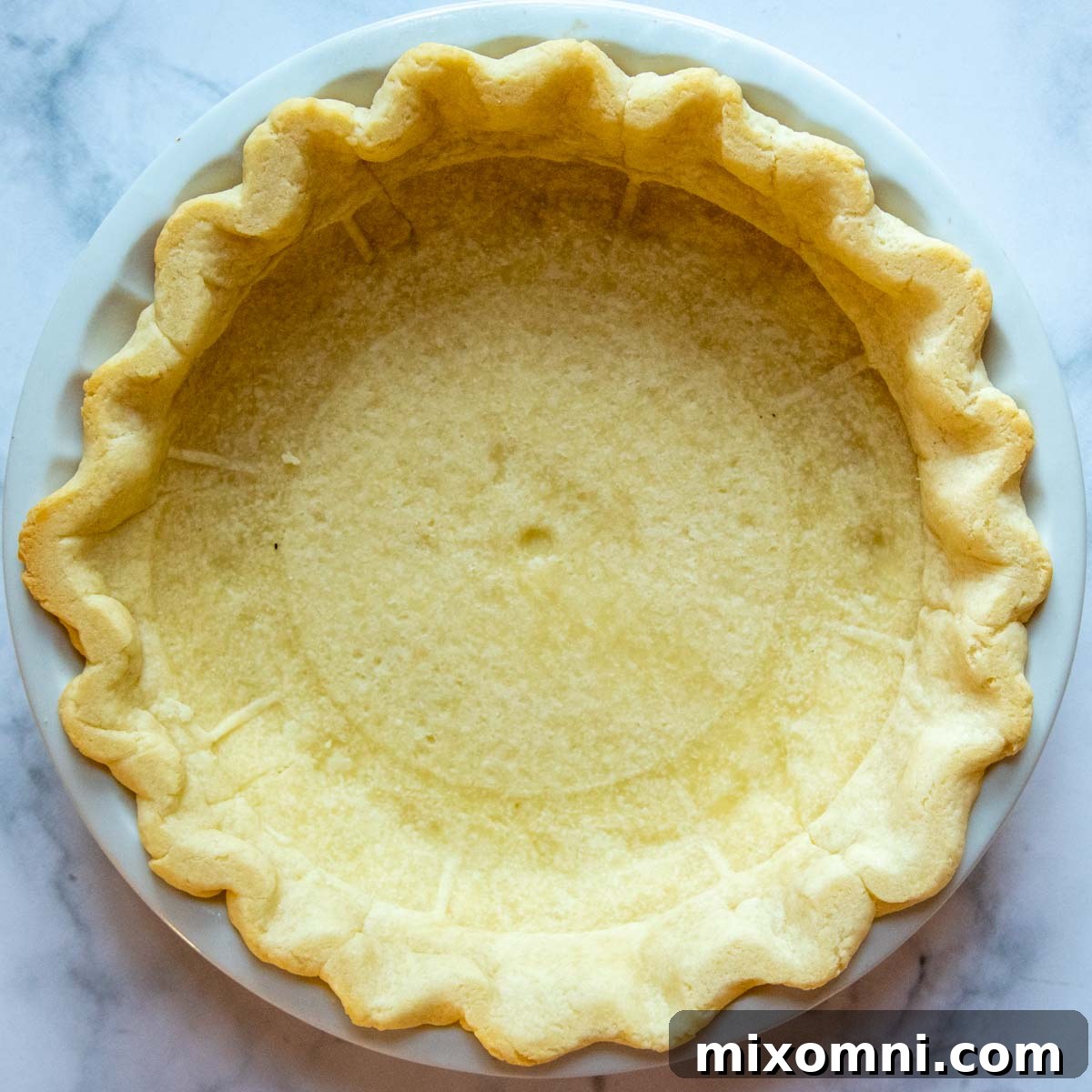
- Bake the crust in a preheated oven (set to 375ºF) until it is just set and appears dry to the touch, but critically, before it begins to turn golden brown. This typically takes around 25-30 minutes.
- To meticulously protect the delicate edges of your crust from over-browning while the center of the pie bakes, we highly recommend employing a pie crust shield. If a dedicated shield isn’t readily available, strips of aluminum foil can be carefully molded around the exposed edges as an effective protective barrier.
Pro Tip for an Exceptionally Crispy Bottom Crust: For an absolutely unparalleled crispy bottom, especially if you’ve experienced sogginess in the past, consider using a metal pie pan. Place the metal pie dish directly on a baking sheet before pre-baking. The combined metal surfaces conduct heat much more efficiently and directly to the bottom of the crust, ensuring maximum crispness and definitively preventing any possibility of sogginess. This technique is a game-changer for pie perfection.
Let’s Bake This Southern Gluten-Free Sweet Potato Pie Together!
Follow these detailed step-by-step photos and instructions to achieve pie perfection, from crafting the crust to the final, creamy filling. For exact ingredient amounts and a concise recipe format, please scroll down to the complete recipe card below.
Step 1: Preparing Your Sweet Potatoes and Pre-Baking the Crust
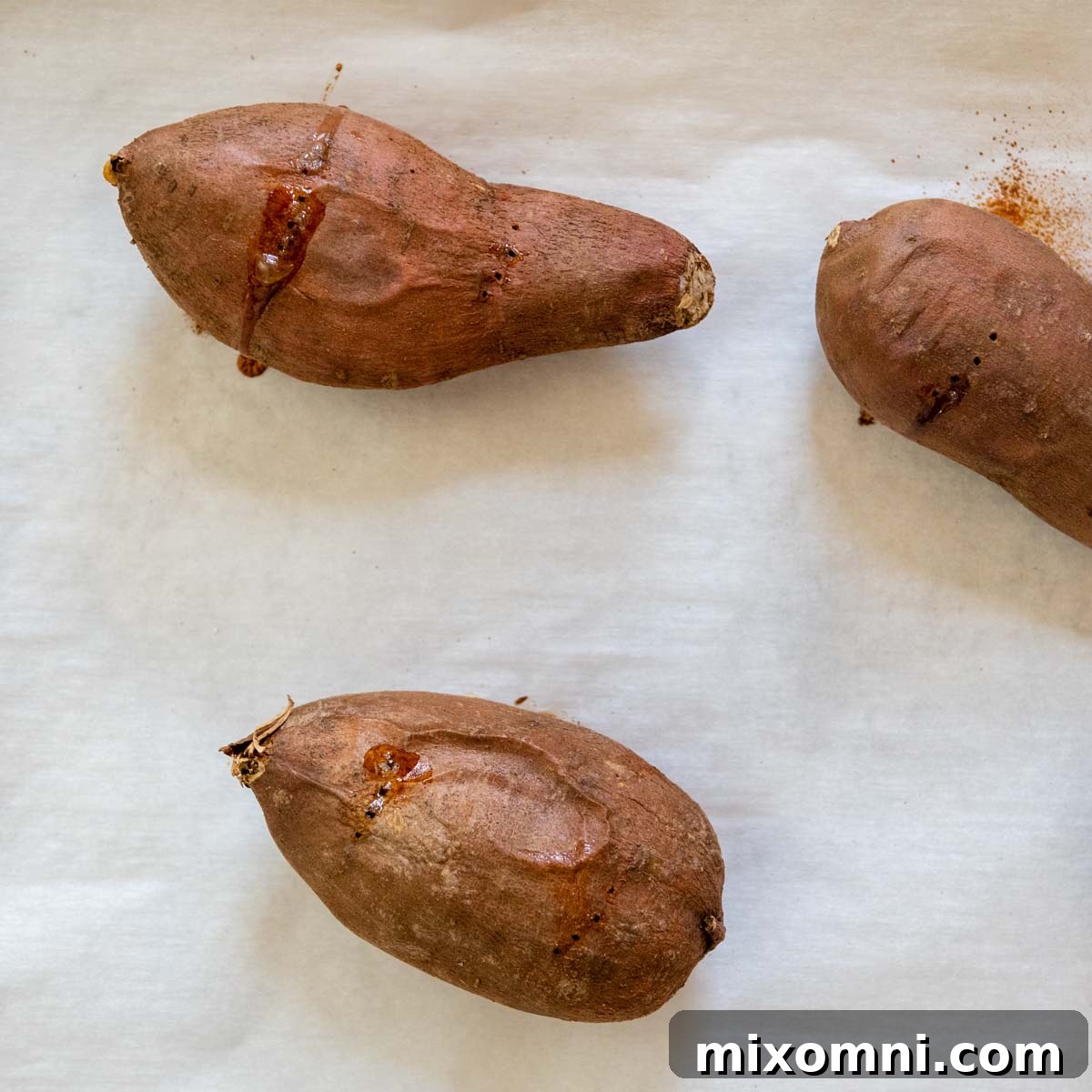
Begin by thoroughly washing your sweet potatoes. Prick each potato 5-6 times with a fork to allow steam to escape during baking, ensuring they cook evenly. Place them on a baking sheet that you’ve lined with foil or parchment paper for easy cleanup. Bake in a preheated oven (initially set to 375ºF) until they are incredibly soft and tender throughout, which typically takes about 50-60 minutes, depending on their size. The potatoes should yield easily when gently squeezed. This crucial roasting step is key to concentrating their natural sweetness and removing excess moisture, which in turn guarantees a smooth and intensely flavorful filling. For convenience and holiday planning, you can roast the potatoes up to 2 days in advance; once cooled, simply store them in an airtight container in the refrigerator.
While the sweet potatoes are roasting, take this opportunity to prepare your gluten-free pie crust. Roll out the dough according to the recipe, carefully place it into your pie pan, and then freeze it for at least 15 minutes. This chilling helps prevent shrinkage during baking. For maximum efficiency, the pie crust can be par-baked alongside the sweet potatoes in the oven during the last 25-30 minutes of their roasting time, at the same 375ºF temperature. Follow the pre-baking instructions outlined in the section above for a perfectly crisp crust.
Step 2: Crafting the Velvety-Smooth Sweet Potato Filling
Once the roasted sweet potatoes have cooled enough to handle comfortably (they should still be warm but not hot), carefully remove their tender flesh from the skins. Discard the skins and transfer all the sweet potato flesh into a large mixing bowl. Using an electric mixer (either a handheld or stand mixer), beat the sweet potato flesh thoroughly until it forms an incredibly smooth, lump-free puree. This step is absolutely critical for achieving that signature silky-smooth, creamy texture in your pie.
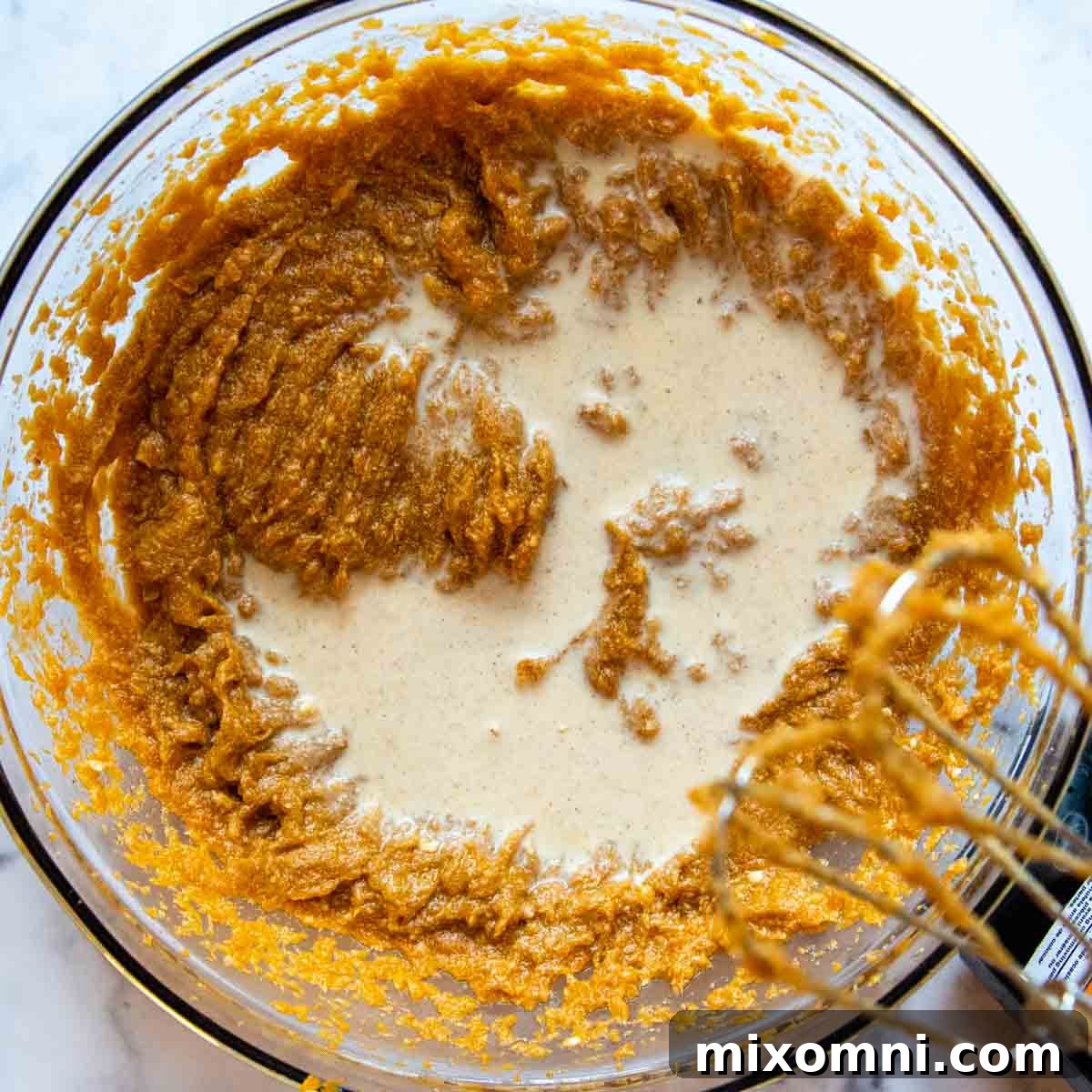
Next, introduce the remaining filling ingredients to the sweet potato puree: add the packed light brown sugar, very soft butter, a large egg, two additional egg yolks, pure vanilla extract (unless using bourbon), all the warm spices (ground cinnamon, ginger, nutmeg, cloves), and the salt. Beat these ingredients together again with the electric mixer until everything is thoroughly combined and the mixture is smooth and uniform in consistency. Finally, gradually incorporate the evaporated milk, mixing until it is fully absorbed and the entire filling is homogenous. The evaporated milk is crucial here; it not only enriches the flavor with a subtle caramel note but also helps to thicken the filling beautifully, ensuring a perfect set when baked. If using bourbon, remember to adjust the milk quantity as per the ingredient notes to maintain proper consistency.
Step 3: Assembling and Baking Your Perfect Sweet Potato Pie
Now, it’s time to bring it all together! Carefully pour the prepared velvety sweet potato filling into your pre-baked gluten-free pie crust. By this point, your crust should be lightly browned, perfectly set, and wonderfully crisp. Before placing the pie in the oven, ensure the delicate edges of your crust are meticulously protected from burning. This is best achieved by covering them with a dedicated pie shield. Alternatively, you can carefully wrap strips of aluminum foil securely around the exposed crust edges, crimping them gently to hold in place. Reduce your oven temperature to 350ºF (175ºC).
Bake the pie in the preheated 350ºF oven for approximately 60-75 minutes. The pie is done when the edges of the filling are firmly set, possibly showing very slight cracks, and might puff up a little. Crucially, the center of the pie (about a 2-inch diameter) should still have a slight, delicate jiggle when you gently shake the pie pan. It should not be liquidy, but rather resemble a firm Jell-O. To precisely confirm doneness, insert a toothpick or a thin knife into the middle of the pie; it should come out mostly clean, without any liquid filling adhering to it. Avoid the temptation to over-bake, as this can lead to a dry, cracked, or rubbery filling. Once baked to perfection, remove the pie from the oven and transfer it to a wire rack to cool completely. This cooling process is absolutely vital for the filling to fully set and for the complex flavors to meld beautifully. Allow at least 3-5 hours for cooling before attempting to slice and serve. For the absolute best taste and texture, we strongly recommend making the pie one day ahead of serving.
How Do I Know When My Sweet Potato Pie is Perfectly Done?
Achieving the perfect texture in a delicate custard pie like this gluten-free sweet potato pie is truly an art, but there are clear and reliable indicators to guide you toward perfection. Knowing precisely when your glorious homemade pie has finished baking will ensure a filling that is wonderfully smooth, incredibly creamy, and holds its shape beautifully when sliced. Here are the key clues and methods to look for:
- Firm Edges: The pie’s outer edges should appear firmly set, showing perhaps very slight cracks, and may even puff up a little. This indicates that the outer custard has properly coagulated and is fully cooked.
- Subtle Center Jiggle: While the edges are firm, the very center of the pie (specifically, an area about a 2-inch diameter in the middle) should still exhibit a slight, delicate jiggle when you gently shake the pie pan. It should not be liquidy, but rather have the consistency of a firm set gelatin or custard. This subtle movement is the sign of a pie that is cooked through but not overbaked, ensuring a creamy, silky texture rather than a dry or rubbery one.
- Toothpick or Thin Knife Test: For a quick check, carefully insert a thin knife or a clean toothpick into the center of the pie, aiming for a spot midway between the edge and the very middle. If it comes out mostly clean, with perhaps only a few moist crumbs or a faint film attached, your pie is likely done. If there is still liquid batter clinging to it, continue baking in short intervals.
- Internal Temperature (The Most Reliable Method): For absolute precision and peace of mind, an instant-read thermometer is your ultimate baking tool. Insert the thermometer into the center of the filling; the ideal internal temperature for a perfectly set custard pie is between 175ºF and 180ºF (80ºC-82ºC). This method removes all guesswork, ensuring a safe, flawlessly textured, and perfectly cooked dessert every single time.
Always remember that oven temperatures can vary significantly, so it’s essential to trust these visual and temperature cues over strict adherence to baking times. A slightly underbaked pie is often salvageable (you can always pop it back in the oven for a few more minutes), but an overbaked pie can become dry, cracked, and lose its beautiful creamy texture, which is much harder to fix. Patience during the final baking stage is a virtue!
Craving More Deliciousness? Pin This Recipe for Later!
Let’s be friends on Pinterest! I’m always sharing incredible recipes and culinary inspiration that you won’t want to miss!
Did you bake this incredible Southern Gluten-Free Sweet Potato Pie? We’d absolutely love to hear from you and see your beautiful creations! Please consider leaving a star rating and comment below the recipe card. Your valuable feedback is incredibly helpful for other home bakers searching for delicious recipes, and I genuinely appreciate hearing about your experience. Rest assured, you’ll always hear back from me! -Melissa

Southern Gluten-Free Sweet Potato Pie (Flakiest Crust)

Melissa Erdelac
Learn how to make the best gluten-free sweet potato pie with this southern-style recipe full of easy pro tips! An ultra creamy, perfectly sweetened filling thanks to a combination of brown sugar and evaporated milk makes the ideal compliment to a buttery, flaky GF pie crust. Dairy-free modifications included.
Pin Recipe
Rate This Recipe
Ingredients
For the Gluten-Free Pie Crust:
- 8 tablespoons (113.6 g) unsalted butter, cut into small cubes and frozen for 10 minutes (for dairy-free, use cold plant-based butter or coconut oil)
- 2 ½ tablespoons (2.5 tbsp) ice water
- 1 ½ tablespoons (1.5 tbsp) sour cream (for dairy-free, use dairy-free sour cream or full-fat coconut milk solids)
- 1 ½ teaspoon (1.5 tsp) apple cider vinegar
- ¾ PLUS ⅔ cup (184 g or 6 ½ ounces total) gluten-free all-purpose flour blend (Cup4Cup is highly recommended for best results due to its balanced starch and gum content)
- 1 ½ teaspoon (1.5 tsp) granulated sugar
- ½ teaspoon (0.5 tsp) salt
For the Sweet Potato Pie Filling:
- 1 ½ pounds sweet potatoes (about 3-4 medium yams), roasted until very tender and cooled
- ¾ cup light brown sugar, packed
- 6 tablespoons unsalted butter, very soft (for dairy-free, use very soft plant-based butter)
- 1 large egg
- 2 egg yolks
- 1 teaspoon vanilla extract (omit if using bourbon for optimal flavor balance)
- 1 teaspoon ground cinnamon
- ½ teaspoon ground ginger
- ¼ teaspoon ground nutmeg
- ⅛ teaspoon ground cloves
- ¼ teaspoon salt (reduce to ⅛ teaspoon if using full-fat coconut milk for dairy-free option, as it can be naturally saltier)
- ¾ cup evaporated milk (for dairy-free, use full-fat coconut milk from a can, chilled overnight and solids scooped off)
- Optional: Up to ¼ cup bourbon (if using, reduce evaporated milk by the same exact amount to maintain consistency)
- Optional Toppings: Whipped cream, candied pecans, meringue, toasted marshmallows, or whipped coconut cream for serving.
Equipment
- Pie Weights or dried beans
- Pie Shield or aluminum foil
- Food Processor (optional, for making crust and mashing potatoes quickly)
- Electric mixer (handheld or stand mixer)
- Large mixing bowls
- 9-inch pie dish (metal is highly recommended for a crisper bottom crust)
- Rolling pin
- Parchment paper
- Baking sheet
- Instant-read thermometer (optional, but highly recommended for precise doneness)
Instructions
For the Gluten-Free Pie Crust:
- Place the cubed unsalted butter in the freezer for at least 10 minutes to ensure it’s very cold. In a small separate bowl, thoroughly mix together the ice water, sour cream, and apple cider vinegar. Keep this liquid mixture in the refrigerator until you are ready to incorporate it.
- If using a food processor: Pulse the gluten-free flour blend, granulated sugar, and salt together until thoroughly combined and uniform. If mixing by hand: Whisk these dry ingredients together in a medium-sized bowl to ensure even distribution.
- If using a food processor: Add the frozen butter cubes to the flour mixture and pulse repeatedly until the butter is well incorporated into the flour, resembling coarse meal with no large chunks remaining. If mixing by hand: Use a pastry blender, a fork, or your fingertips to carefully cut the butter into the flour mixture until it is evenly distributed and resembles coarse crumbs.
- If using a food processor: Gradually add the chilled liquids (water, sour cream, vinegar mixture) to the food processor and pulse just until the flour becomes moistened and small clumps of dough begin to form. If the dough seems too dry and doesn’t quite come together, add a tiny dash more cold water, pulsing a few times, and recheck the consistency. If mixing by hand: Add half of the chilled liquids and gently knead with your fingers or a fork until somewhat combined. Pour in the remaining liquids and continue to knead until the dough just starts to come together and the liquids are thoroughly mixed with the flour.
- Tip for perfect dough consistency: To check if you have achieved the right moisture level, take a small bit of dough, clump it together, and gently flatten it. If it doesn’t stick together, is crumbly, or breaks apart easily, add another small dash of ice water and mix briefly. If, conversely, the dough becomes too wet or sticky, add a dash of gluten-free flour and mix again until manageable.
- Turn the dough out onto a sheet of plastic wrap and gently flatten it into a thick, 1-inch disk. Wrap it tightly and refrigerate for at least 1 hour, or freeze for 30 minutes. Before rolling out, let the chilled dough sit on the counter for about 5 minutes to soften slightly, making it much easier to work with without cracking.
- Prepare your workspace by laying a large piece of parchment paper. Place the unwrapped dough disk in the center, then cover it with another sheet of parchment paper of the same size. Use a rolling pin to press and spread the dough outwards from the middle, rotating it as you go, until it forms a uniform circle slightly larger than your pie dish.
- Remove the top parchment paper and carefully invert the dough onto your pie dish. Gently peel off the second sheet of parchment paper. Troubleshooting Tip: If the dough has warmed up significantly while rolling and becomes tricky to remove from the paper, simply leave the paper on and place the entire pie dish (with dough and paper) into the fridge for 5-10 minutes. Once thoroughly chilled, the paper will peel off much more easily. Conversely, if the dough is too cold and cracks when handling, let it sit on the counter for a minute to warm slightly before attempting to fix.
- If necessary, meticulously trim the edges of the dough to leave an even ½-inch overhang all around the pie dish. Tuck this overhang under itself, creating a neat, thick edge. Then, use your fingers and thumb to crimp or create a decorative edge, as desired, for a beautiful presentation.
- Preheat your oven to 375ºF (190ºC). Place the prepared pie crust in the freezer for at least 15 minutes while you begin roasting your sweet potatoes.
- Once the crust is solid from freezing, line the pie shell with parchment paper and fill it completely with dried beans or a pie weight. Cover the edges of the crust with a pie shield or carefully secure aluminum foil strips around them to prevent any unwanted over-browning.
- Bake the crust in the preheated 375ºF oven until it is just set and appears dry, but critically, before it starts to turn golden brown. This should take approximately 25-30 minutes. For maximum efficiency, the pie crust can be baked alongside the roasting sweet potatoes during this time.
For the Sweet Potato Filling & Final Baking:
- Preheat the oven to 375ºF (190ºC) if not already on for roasting potatoes. Line a baking sheet with foil or parchment paper. Prick the washed sweet potatoes 5-6 times with a fork and place them on the lined sheet. Bake until they are very soft and tender, approximately 50-60 minutes.
- Once the potatoes are roasted and cool enough to handle comfortably, scoop the tender flesh from their skins into a large mixing bowl, discarding the skins. Using an electric mixer, beat the sweet potato flesh thoroughly until it forms a smooth, lump-free puree. Reduce oven temperature to 350ºF (175ºC) for the final pie baking.
- Add the very soft butter, light brown sugar, large egg, two egg yolks, vanilla extract (if not using bourbon), ground cinnamon, ground ginger, ground nutmeg, ground cloves, and salt to the sweet potato puree. Beat again with the electric mixer until all ingredients are thoroughly combined and the mixture is smooth and uniform. Then, gradually mix in the evaporated milk until fully incorporated and the filling is homogenous. (If using bourbon, remember to omit vanilla and adjust milk quantity as per ingredient notes).
- Carefully pour the velvety sweet potato mixture into your pre-baked crust, ensuring the crust is lightly browned and perfectly set before filling. Meticulously cover the edges of the pie crust with a pie shield or securely with aluminum foil strips to prevent them from burning during the final bake.
- Bake the pie in the 350ºF (175ºC) oven for about 60-75 minutes, or until the edges of the filling are firmly set and slightly cracked, and a toothpick inserted into the middle comes out mostly clean, with a slight, delicate jiggle remaining in the very center. Refer to the “How Do I Know When The Pie Is Done?” section for detailed indicators.
- Remove the baked pie from the oven and carefully place it on a wire rack to cool completely. This cooling process is absolutely vital for the filling to set properly and for the complex flavors to deepen and meld beautifully. Allow at least 3-5 hours for cooling before attempting to slice and serve. For the absolute best taste and texture, we strongly recommend making the pie one full day ahead of serving, allowing the flavors to fully develop.
Notes and Expert Tips
Dairy-Free Modification for a Delicious Alternative:
To prepare an equally delicious dairy-free version of this exquisite pie, you’ll need to make a few simple yet effective substitutions. First, for the crust, utilize a specialized gluten-free and dairy-free pie crust recipe; ensure it’s designed to be flaky and holds up well during baking. For the filling, replace the evaporated milk with an equal amount of full-fat canned coconut milk (for best results, chill the can overnight and scoop off only the thick cream that rises to the top). Additionally, substitute the unsalted butter with a high-quality vegan butter alternative. When using coconut milk, you may also want to slightly reduce the salt in the filling to 1/8 teaspoon, as certain brands of coconut milk can sometimes have a naturally saltier profile, which you’ll want to balance.
Storing and Make-Ahead Notes for Convenience:
For enhanced flavor development and unparalleled ease during busy holiday seasons, we highly recommend baking this sweet potato pie one full day before you plan to serve it. This crucial resting period allows the complex spices and rich flavors to truly meld and deepen, resulting in a more harmonious, robust, and ultimately more delicious pie. Store the baked pie at room temperature, either uncovered or loosely tented with foil, to prevent any condensation from forming and softening the crust.
To further streamline your baking process and reduce stress, many components of this recipe can be prepared efficiently in advance:
- Gluten-Free Pie Crust Dough: The unbaked gluten-free pie crust dough can be made up to two days ahead of time and safely refrigerated, tightly wrapped in plastic. For longer storage, it can be frozen for up to two weeks. If frozen, thaw it completely in the refrigerator overnight before attempting to roll it out.
- Roasted Sweet Potato Puree: The roasted sweet potato puree can be prepared up to one day in advance and stored in an airtight container in the refrigerator. This saves significant time on baking day.
- Mixed Filling (Unbaked): The entire filling mixture (prior to baking) can be mixed together up to one day ahead and refrigerated in an airtight container. If you do this, allow it to come closer to room temperature for about 30 minutes before pouring it into the pre-baked crust for more even and consistent baking.
Once baked, the pie can be stored at room temperature, covered with foil, for up to two days, maintaining its delightful texture and flavor. For extended freshness, you may refrigerate the pie, covered with foil, for up to three days. For optimal taste and texture, always allow any refrigerated pie to come back to room temperature before serving; this truly brings out its full flavor profile and creamy consistency.
Nutrition Information
Nutrition Information (per serving, approximate):
- Calories: 466 kcal
- Carbohydrates: 58g
- Protein: 7g
- Fat: 24g
- Saturated Fat: 14g
- Polyunsaturated Fat: 1g
- Monounsaturated Fat: 7g
- Trans Fat: 1g
- Cholesterol: 129mg
- Sodium: 466mg
- Potassium: 415mg
- Fiber: 5g
- Sugar: 28g
- Vitamin A: 12838 IU
- Vitamin C: 3mg
- Calcium: 142mg
- Iron: 2mg
*Nutritional information provided is an estimate based on standard ingredient calculations and may vary based on specific brands, ingredient substitutions, and preparation methods. It is intended for informational purposes only.
Did you make this recipe?
Please leave a star rating and review below. It helps others when searching for recipes and I LOVE feedback!