
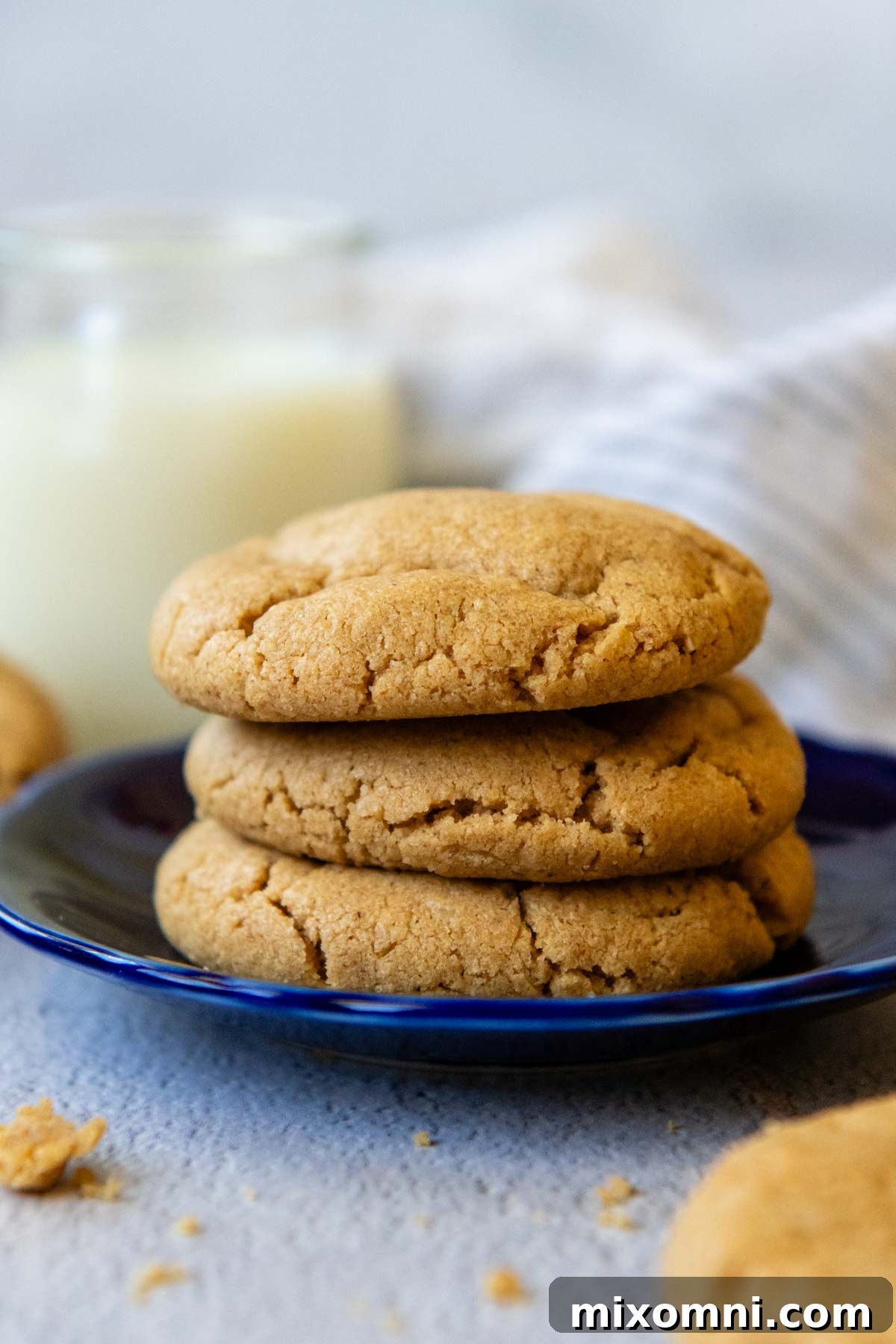
Prepare to be amazed by these old-fashioned, irresistibly soft, and perfectly chewy peanut butter cookies! What makes them truly special? They’re crafted with oat flour, making them naturally gluten-free without sacrificing an ounce of classic flavor or texture. These homemade peanut butter oat flour cookies capture that beloved old-school charm, all thanks to a couple of simple baking secrets that anyone can master in their kitchen. Get ready to bake a batch of these super-easy, melt-in-your-mouth delights with us!
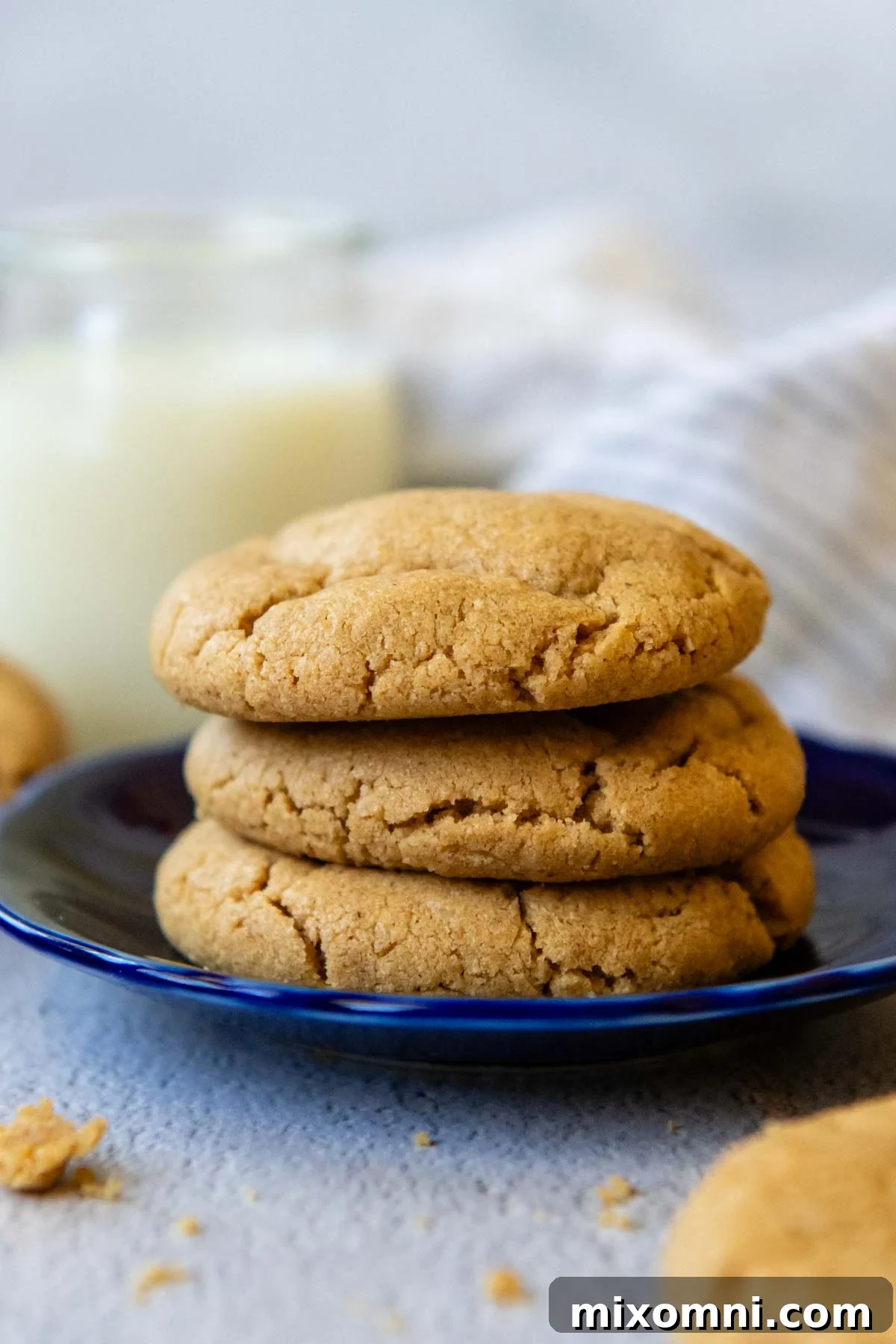
The Magic Behind Absolutely Perfect Gluten-Free Peanut Butter Oat Flour Cookies
For years, exploring the versatility of homemade oat flour has been a passion of mine. Its inherent qualities, particularly when making a stellar peanut butter cookie, have consistently impressed me. Not only is it a more affordable alternative to many commercial gluten-free flour blends, but it also delivers remarkably consistent results, yielding baked goods with a delightful texture and a subtle, naturally sweet flavor. Crafting flourless peanut butter cookies made entirely with oats is just one of the many delicious ways we embrace effortless gluten-free baking.
While it’s tempting to streamline this peanut butter cookie recipe into a simple mix, scoop, and bake process, I believe in refining recipes to achieve perfection, especially when it comes to my favorite gluten-free cookie recipes. During the development of these oat flour cookies, I extensively experimented with various techniques: comparing chilled versus unchilled dough, testing different baking temperatures, and adjusting the oat-to-fat ratio. My goal was to recreate the classic taste and iconic chewy, soft-batch texture of traditional peanut butter cookies, but in a naturally gluten-free format. The effort was undeniably worth it, as the results speak for themselves.
You simply can’t beat the slightly sweet, earthy, and nutty flavor that oats bring to baking once they’re finely milled into a powder. This humble grain works wonders in a myriad of recipes, from these incredibly soft batch cookies to the world’s fluffiest oat flour cake topped with brown sugar frosting, and even our family’s beloved Belgian-style oat flour waffles. Its ability to create a tender crumb and rich flavor profile makes it a standout ingredient in gluten-free baking.
Join us as we uncover the easy tweaks that produce the best results, explore how to achieve a perfectly crispy cookie (if that’s your preference!), and discover fun additions to elevate these gluten-free peanut butter cookies to an entirely new level of deliciousness. Get ready to transform your gluten-free baking experience!
Essential Ingredients for Irresistible Oat Flour Peanut Butter Cookies
Understanding each ingredient’s role is key to baking success. Here’s a closer look at what you’ll need and why:
- Peanut Butter: The Heart of the Cookie – For all my peanut butter-centric desserts, I consistently reach for classic, creamy peanut butter brands like Jif or Skippy. Their consistent texture and balanced flavor are crucial for achieving that authentic old-school taste and chewiness. If you prefer using natural peanut butter or another nut butter (almond, cashew, etc.), ensure it is thoroughly stirred and well-blended with its natural oils before incorporating it into the recipe. This prevents your dough from becoming too dry or oily, which can affect the final cookie texture.
- Butter: For Richness and Structure – Unsalted butter provides essential richness and helps build the cookie’s structure. If you are aiming for a dairy-free modification, this is the primary ingredient to adapt. Opt for plant-based, vegan butter sticks. When using a vegan butter substitute, remember to reduce the amount of added salt by half, as many vegan butters contain higher levels of sodium. Ensure your butter is at room temperature for optimal creaming with the sugars.
- Oat Flour: The Gluten-Free Star – You can certainly purchase pre-made oat flour, which is widely available in most grocery stores. However, if you have certified gluten-free rolled or quick oats and a high-powered blender or food processor, I highly encourage you to make your own! It’s incredibly simple and cost-effective. To make your own, place 2 cups of rolled or quick oats into your blender or food processor and process until the oats transform into a very fine, powdery flour – typically about 1 minute. Check carefully to ensure there are no larger flecks of oats remaining; if so, blend for a few more seconds until completely uniform. This fine texture is vital for a smooth cookie dough.
- Sugars: A Perfect Sweet Symphony – This recipe utilizes a combination of granulated sugar and packed light brown sugar. Granulated sugar contributes to the crispness around the edges and overall sweetness, while light brown sugar adds a lovely caramel note and helps keep the cookies soft and chewy due to its molasses content. This dual sugar approach is fundamental to building the classic structure and achieving the ideal balance of flavor and texture. I have not personally tested this recipe with alternative sugar substitutes (like erythritol or stevia blends), but if you do, please share your results in the comments below – your feedback helps the entire community!
Made these several times. Family loves them. Asked my hubby if he wanted oat flour or regular flour. Quickly answered oat flour. Oat flour for the win. Thank you for the recipe.
—Beth
Let’s Make These Together: Your Step-by-Step Baking Companion!
(Below, you’ll find detailed step-by-step photos and expanded instructions to guide you through the process. For the complete recipe, including precise ingredient amounts and nutritional information, please scroll down to the dedicated recipe card at the bottom of this post.)
Step 1: Cream Your Butter and Sugars to Perfection
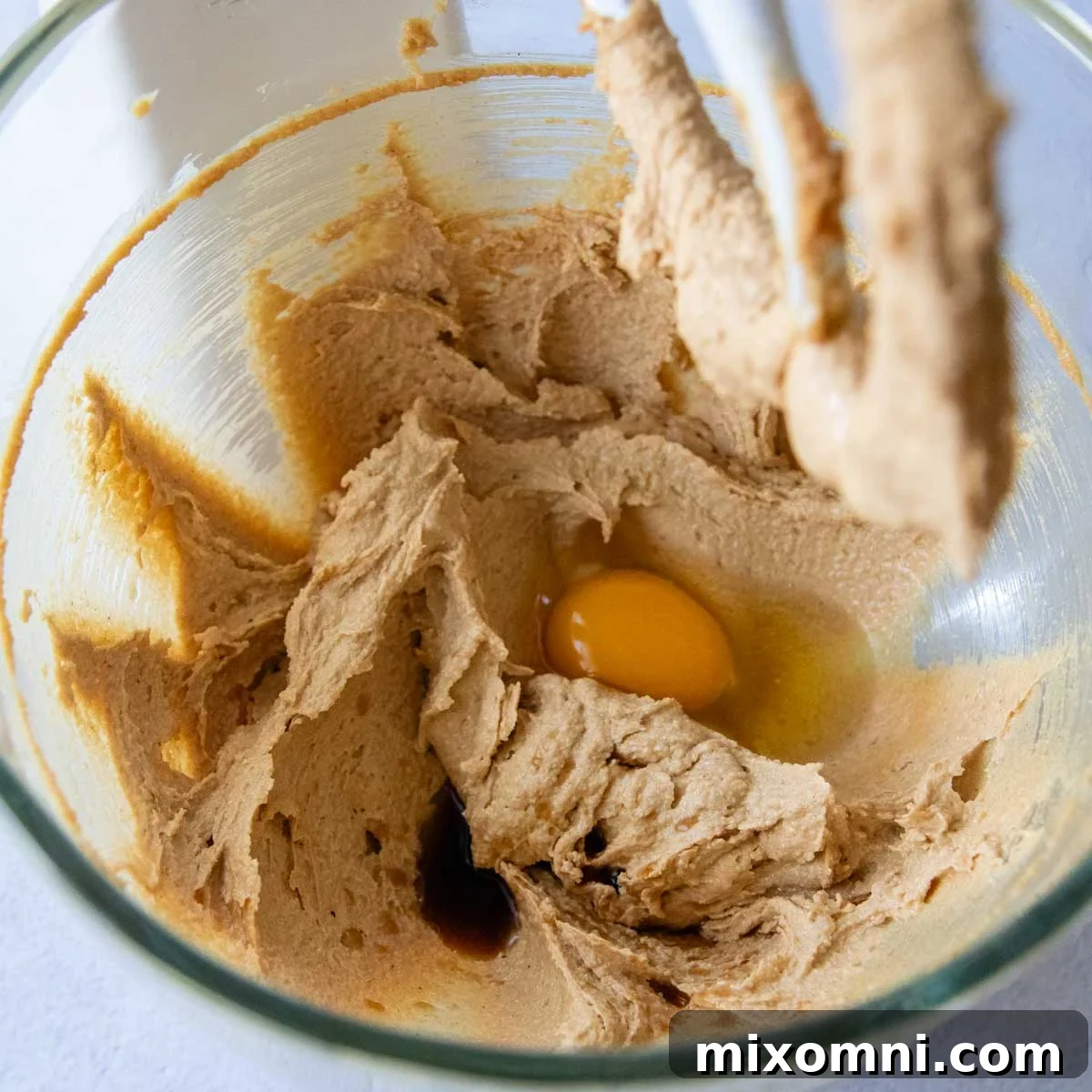
Begin by placing your softened room-temperature unsalted butter, creamy peanut butter, packed light brown sugar, and granulated sugar into a large mixing bowl. Using an electric mixer (either a stand mixer with the paddle attachment or a hand mixer), beat these ingredients together on medium-high speed until the mixture becomes wonderfully light, fluffy, and creamy. This process typically takes about 2-3 minutes. Achieving this creamy consistency is crucial for trapping air, which will make your cookies tender. Once combined, crack in the large egg and pour in the vanilla extract. Mix again until everything is thoroughly incorporated and smooth.
Step 2: Gently Mix in the Dry Ingredients
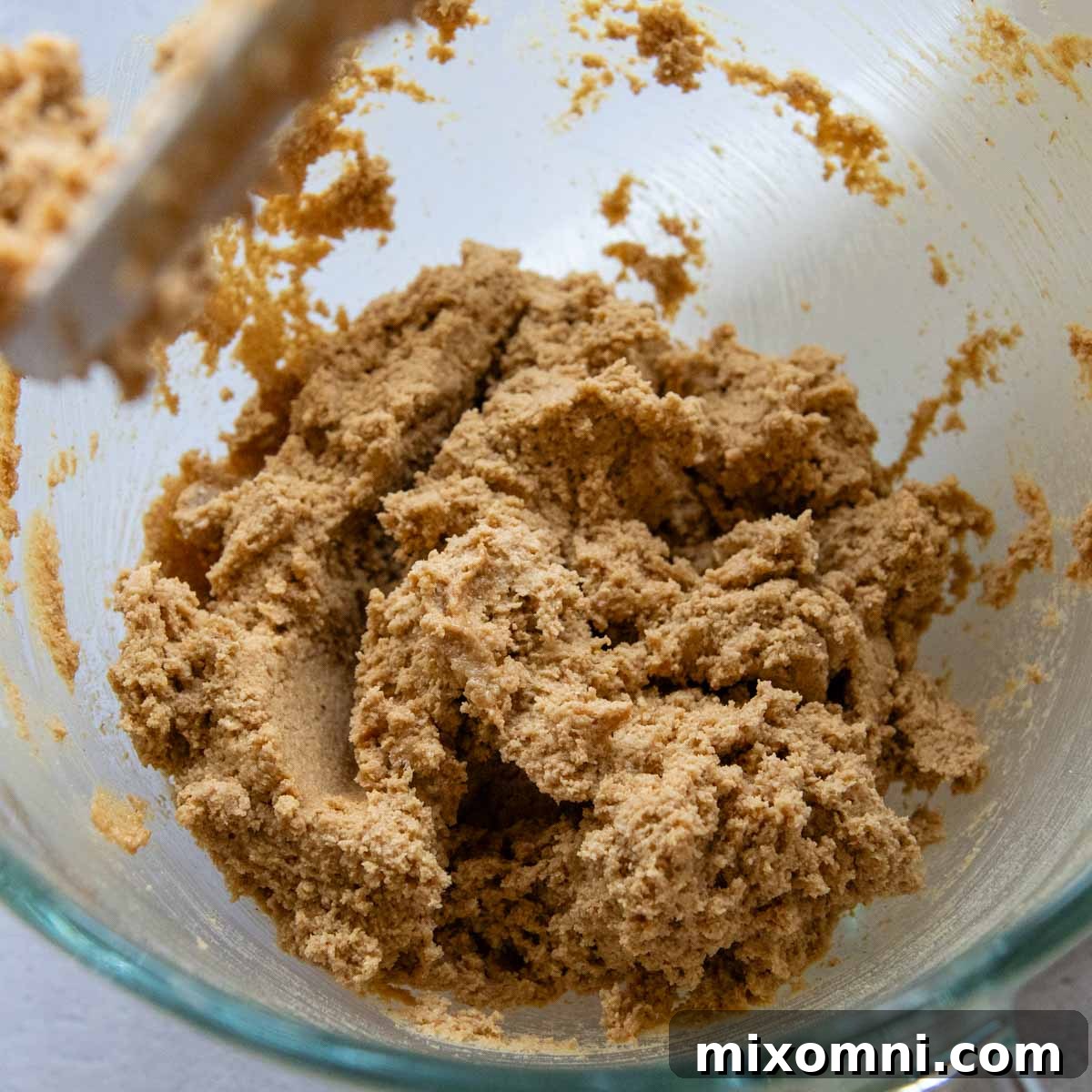
Now it’s time to introduce the dry components of our recipe. Add the prepared oat flour, baking soda, and salt to your creamy wet mixture. Turn your mixer to a low speed and mix just until the dry ingredients are fully combined with the wet, and a thick, uniform cookie dough forms. Be careful not to overmix at this stage, as overmixing can lead to tougher cookies. Stop as soon as no streaks of flour are visible. Congratulations, the hardest part of your cookie-making journey is now complete!
Step 3: Scoop and Prepare for Baking… or Chill for Perfection!
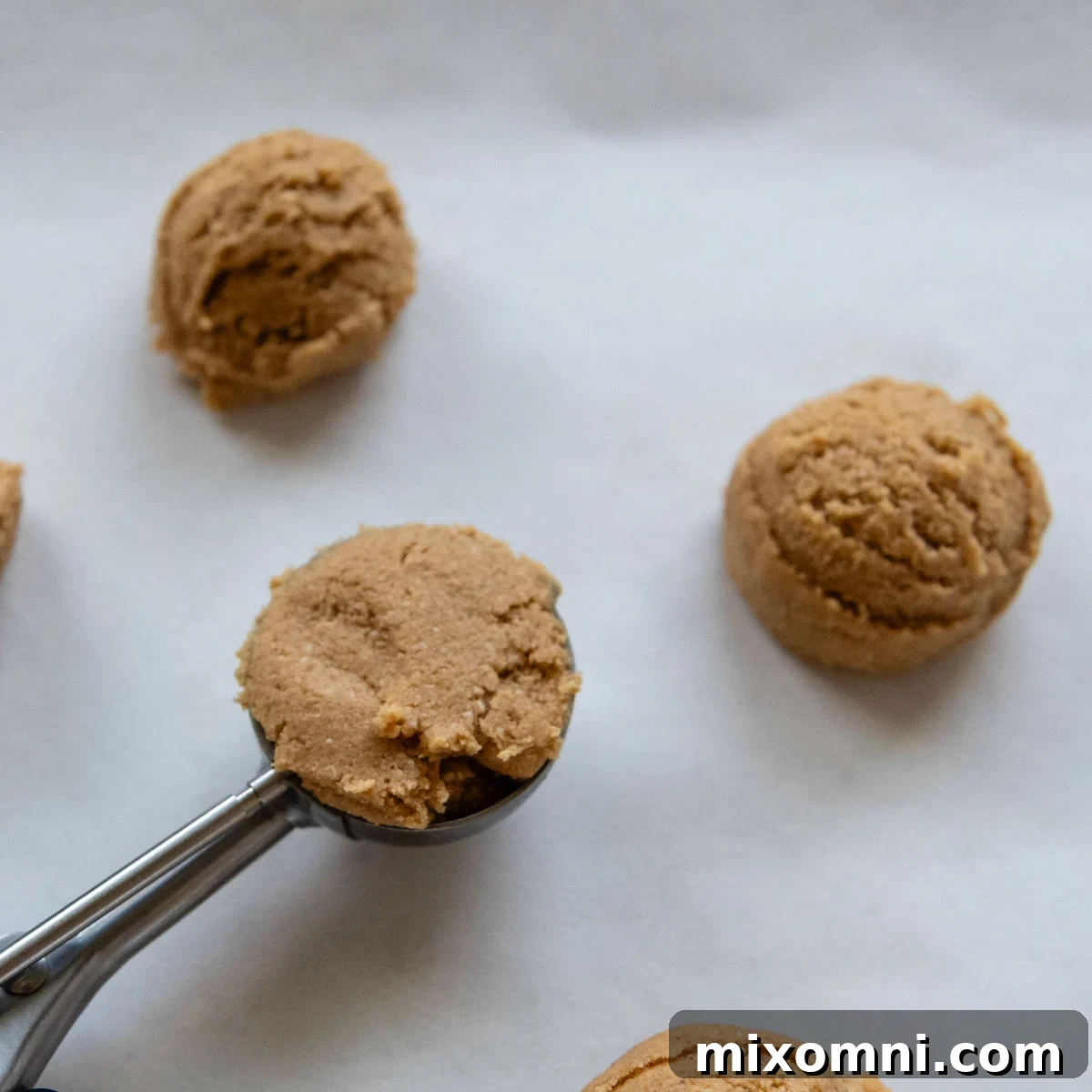
For the absolute best texture and appearance, chilling the dough first is highly recommended (we’ll dive into the ‘why’ below). However, if you find yourself in a cookie emergency and simply can’t wait, you can certainly scoop and bake the dough immediately. For consistent cookie size and even baking, I used a medium cookie scoop, which portions out roughly 1.5 tablespoons of dough per cookie. Arrange your scooped dough balls about 2 inches apart on a baking sheet lined with parchment paper or a silicone mat.
Step 4: Bake to Your Preference – Crispy or Delightfully Chewy!
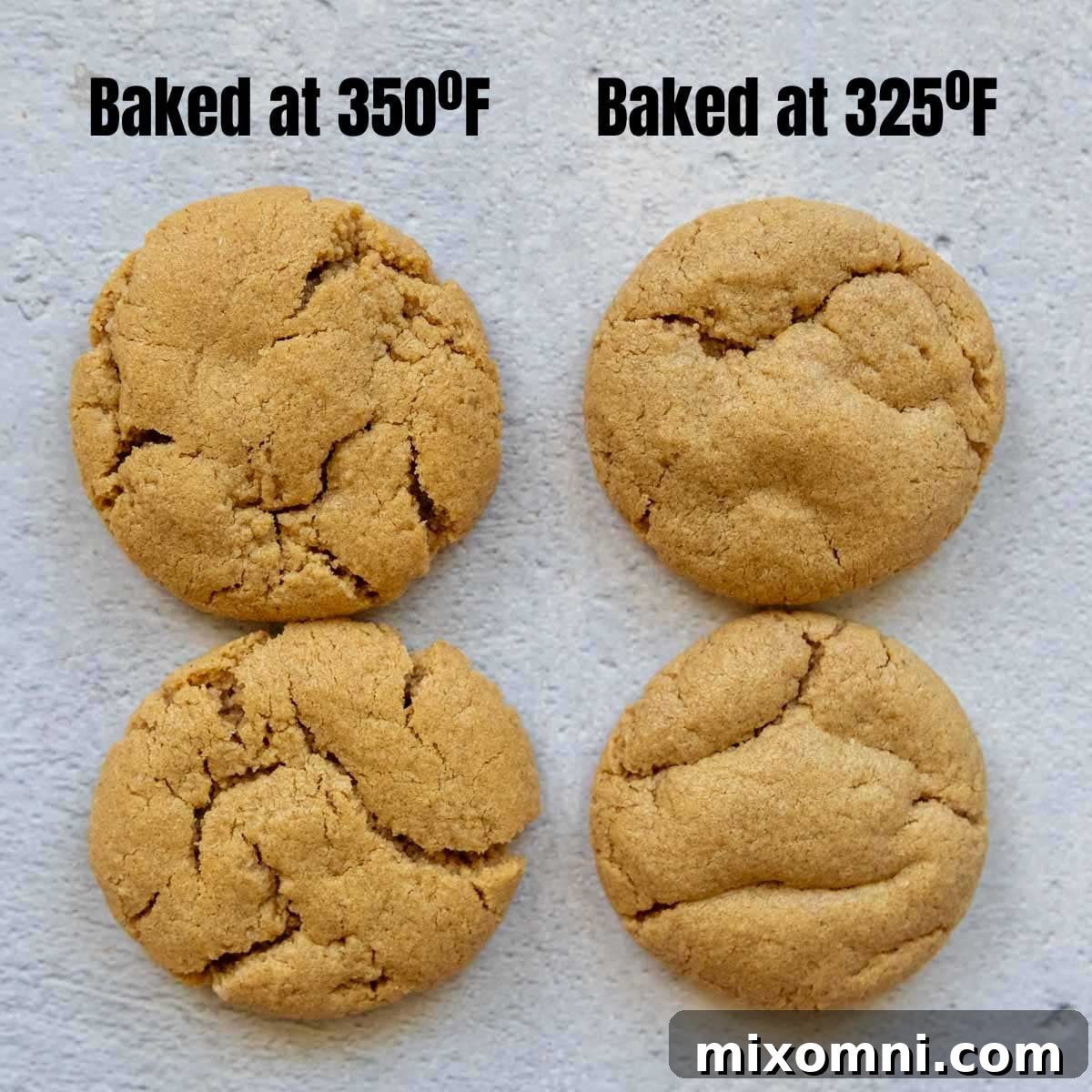
When developing other gluten-free cookie recipes, I’ve often noticed that baking at a slightly lower oven temperature can significantly improve the final texture, leading to a softer, more tender crumb. I applied this same principle to these peanut butter cookies made with oat flour, and the results were phenomenal! I absolutely adored the softer ridges and the wonderfully chewy, soft-batch crumb achieved when baking these cookies in a 325ºF oven. This lower temperature allows the cookies to spread gently and bake more evenly without over-browning too quickly.
However, if you belong to “Team Crispy Cookie” and prefer a more golden, slightly crunchy texture, I recommend increasing your oven temperature to 350ºF and extending the baking time by 1-2 minutes. Keep a close eye on them during the final minutes, as oven temperatures can vary. Regardless of your preferred texture, rotate your baking sheets halfway through the baking time to ensure even browning. Once baked, let them cool on the sheets for a few minutes before transferring to a wire rack to cool completely.
The Secret to Superior Texture: Chilling Your Dough
Often, chilling cookie dough is recommended to make it easier to handle and shape, especially with softer doughs. Interestingly, this oat flour peanut butter cookie dough is quite manageable even without chilling, particularly if you’re using a cookie scoop. I almost skipped the chilling experiment entirely, assuming it wouldn’t make a significant difference. I am so glad I saw the experiment through, because the results were eye-opening!
Why Chilling is a Game-Changer for These Oat Flour Cookies
Chilling oat flour cookie dough, even for just an hour, performs several miracles that significantly enhance the final cookie:
- Improved Texture: Chilled dough results in a smoother, less granular texture in the baked cookie. The oats, even when finely milled, benefit from time to fully absorb the moisture from the wet ingredients, leading to a more homogenous and tender crumb.
- Enhanced Flavor: Allowing the dough to chill gives the flavors a chance to meld and deepen. The nutty notes of the peanut butter and oat flour become more pronounced, creating a richer taste experience.
- Better Spread and Appearance: The fat in the dough (butter and peanut butter) solidifies when chilled. This means the cookies will spread less rapidly in the hot oven, leading to thicker, chewier cookies with those desirable smooth, puffy undulations along the top – truly first-class-tickets-to-cookie-heaven kind of stuff. Unchilled dough tends to spread more, resulting in thinner, flatter cookies.
- Easier Handling: While this dough is already fairly easy to work with, chilling makes it even firmer and less sticky, simplifying the scooping and shaping process, especially if you’re making a large batch.
If you’re truly short on time, you could technically skip this step, but I strongly advise against it for the ultimate cookie experience. If you need to speed up the chilling process, simply pop the covered dough into the freezer for about 30 minutes. This quick chill will still provide many of the benefits of a longer refrigeration.
Common Questions & Expert Baking Tips for Your Oat Flour Peanut Butter Cookies
Even the simplest recipes can benefit from a few expert tips and answers to common questions. Here are some insights to ensure your oat flour peanut butter cookies turn out perfectly every time:
- Can I use quick oats instead of rolled oats for the flour? Yes, you can! Both quick oats and old-fashioned rolled oats work well for making homemade oat flour. The key is to blend them until they reach a very fine, powdery consistency, similar to traditional flour. Quick oats might take slightly less blending time as they are already partially processed.
- What if my cookies are spreading too much? Over-spreading can be due to several factors. Ensure your butter is at room temperature but not melted. If your kitchen is very warm, consider chilling the dough for at least 1-2 hours. Also, make sure your baking soda is fresh, and you’re not using too little flour or too much fat. Measuring ingredients by weight (grams) rather than volume (cups) offers greater accuracy and can prevent such issues.
- How do I store these oat flour peanut butter cookies? Once completely cooled, store the cookies in an airtight container at room temperature for up to 4-5 days. For longer freshness, you can also store them in the refrigerator for up to a week.
- Can I freeze the dough or baked cookies? Absolutely! For freezing cookie dough: scoop the dough into balls and place them on a parchment-lined baking sheet. Freeze until solid (about 1-2 hours), then transfer the frozen dough balls to a freezer-safe bag or container. They can be stored for up to 3 months. When ready to bake, you can bake them directly from frozen, adding a few extra minutes to the baking time. For freezing baked cookies: allow them to cool completely, then place them in a single layer in a freezer-safe container, separated by parchment paper, or wrap individually. They freeze well for up to 2-3 months. Thaw at room temperature before enjoying.
- Can I make these cookies vegan? Yes! The only non-vegan ingredient is butter and egg. For a dairy-free option, use plant-based, vegan butter sticks and cut the amount of salt added in half. For the egg, a flax egg (1 tbsp ground flaxseed meal + 3 tbsp water, let sit for 5 mins) or a commercial egg replacer can often be used, though texture may vary slightly.
- My cookies are too dry/crumbly. What happened? This usually indicates too much flour or not enough fat/moisture. Ensure you’re measuring your oat flour correctly; if making your own, don’t pack it into the measuring cup, spoon it lightly. Also, make sure your peanut butter isn’t an extra-dry variety or one where the oils have separated and not been properly mixed back in.
Elevate Your Cookies: Delicious Additions and Variations
While these oat flour peanut butter cookies are absolutely phenomenal on their own, sometimes it’s fun to get creative! You could stop at a great-tasting, classic cookie, or you could take them to the next level with these yummy mix-in ideas and creative twists:
- A Touch of Salt: For a sophisticated flavor contrast that truly enhances the peanut butter, sprinkle a pinch of flaky sea salt over the tops of the cookie dough balls just before baking. This adds a delightful textural crunch and balances the sweetness.
- Double Peanut Power: Boost the peanut flavor and add a satisfying crunch by mixing in 3/4 cup of finely chopped roasted peanuts into the dough. Alternatively, for an attractive finish, roll the scooped cookie dough balls in crushed peanuts before placing them on the baking sheet.
- Chocolate Lover’s Dream: Stir in 3/4 to 1 cup of your favorite chocolate chips into the dough. I particularly love using a mixture of semi-sweet chocolate chips and miniature baking chips for varied texture in every bite. Dark chocolate chips also pair wonderfully with peanut butter.
- Decadent Chocolate Dip: After the cookies have baked and cooled completely, melt some high-quality chocolate (dark, milk, or white). Dip half of each cookie into the melted chocolate, letting the excess drip off, then place them on parchment paper to set. A sprinkle of sea salt on the wet chocolate makes for an elegant finish!
- Peanut Butter Blossoms: For a classic treat, use a small cookie scoop to portion out smaller cookies. Immediately after they come out of the oven, gently press an unwrapped Hershey Kiss or a small chocolate candy into the center of each warm cookie. The residual heat will slightly melt the chocolate, creating that iconic “blossom” effect.
- Peanut Butter & Jelly Swirl: For a fun, nostalgic twist, after scooping the dough, make a small indentation in the center of each cookie. Fill with a tiny dollop of your favorite jam or jelly before baking.
- White Chocolate & Cranberry: For a slightly more gourmet touch, swap out semi-sweet chips for white chocolate chips and add a handful of dried cranberries for a burst of color and tartness.
Craving More? Pin This Recipe for Later!
Let’s be friends on Pinterest! I’m always sharing great recipes!
Did you make this recipe? We love hearing from you! Leave a star rating and comment below the recipe card. Your valuable feedback helps other bakers discover and enjoy delicious recipes, and I truly appreciate hearing about your culinary adventures! You will always hear back from me! -Melissa
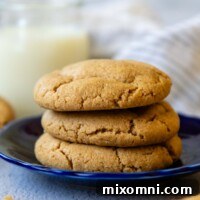
Big, Soft, and Chewy Oat Flour Peanut Butter Cookies
 Melissa Erdelac
Pin Recipe
Rate This Recipe
Remove Ads
Ingredients
- ½ cup (113 g) unsalted butter
- ¾ cup (194 g) creamy peanut butter
- ½ cup (117 g) packed light brown sugar
- ½ cup (100 g) granulated sugar
- 1 large egg
- 1 teaspoon vanilla extract
- 2 cups (190 g) oat flour, see recipe notes for making your own
- 1 teaspoon baking soda
- ½ teaspoon salt
Equipment
-
Baking Sheets
-
Medium Cookie Scoop
-
Stand Mixer
Instructions
-
First, if you don’t have oat flour on hand, you’ll need to make your own. Place 2 cups of old-fashioned rolled oats or quick-cooking oats into a food processor or high-powered blender. Blend them until they transform into a very fine, powdery flour-like consistency (this usually takes about 1 minute). Carefully check to ensure there are no larger oat flecks remaining; if so, blend again until completely smooth. Set the homemade oat flour aside.
-
In a large mixing bowl or the bowl of a stand mixer fitted with the paddle attachment, combine the softened unsalted butter, creamy peanut butter, packed light brown sugar, and granulated sugar. Beat these ingredients together on medium-high speed for about 2-3 minutes, until the mixture is light, fluffy, and well-creamed. Next, add the large egg and vanilla extract, mixing until fully incorporated and smooth.
-
Reduce your mixer speed to low. Gradually add the prepared oat flour, baking soda, and salt to the wet ingredients. Mix just until everything is well combined and a thick, cohesive cookie dough forms. Be careful not to overmix the dough at this stage.
-
While this step can be skipped if you’re in a significant hurry, I highly recommend chilling the dough for at least 1 hour, or even up to overnight, for the best possible results. Chilling significantly improves the cookie’s texture and reduces spreading (see the detailed explanation in the post above for why this is so important!). Cover the bowl tightly with plastic wrap before chilling. If you’re pressed for time, you can pop the dough into the freezer for 30 minutes to speed up the process.
-
When you’re ready to bake, preheat your oven. For soft-batch, chewy cookies, set the oven to 325℉ (160°C). If you prefer a crispier cookie, preheat to 350℉ (175°C). Use a medium cookie scoop or drop 1 ½ – 2 tablespoons of dough onto baking sheets lined with parchment paper, spacing them about 2 inches apart. Bake for 12-14 minutes, rotating the pans halfway through to ensure even baking. Be vigilant not to overbake, especially if aiming for soft-batch cookies. For crispy cookies, you may extend the baking time to 14-15 minutes. Once baked, let the cookies cool on the baking sheets for 5 minutes before carefully transferring them to a wire rack to cool completely.
Nutrition Information (per cookie, approximate)
- Calories: 147kcal
- Carbohydrates: 16g
- Protein: 3g
- Fat: 8g
- Saturated Fat: 3g
- Polyunsaturated Fat: 1g
- Monounsaturated Fat: 3g
- Trans Fat: 0.1g
- Cholesterol: 16mg
- Sodium: 125mg
- Potassium: 86mg
- Fiber: 1g
- Sugar: 9g
- Vitamin A: 118IU
- Calcium: 14mg
- Iron: 1mg