
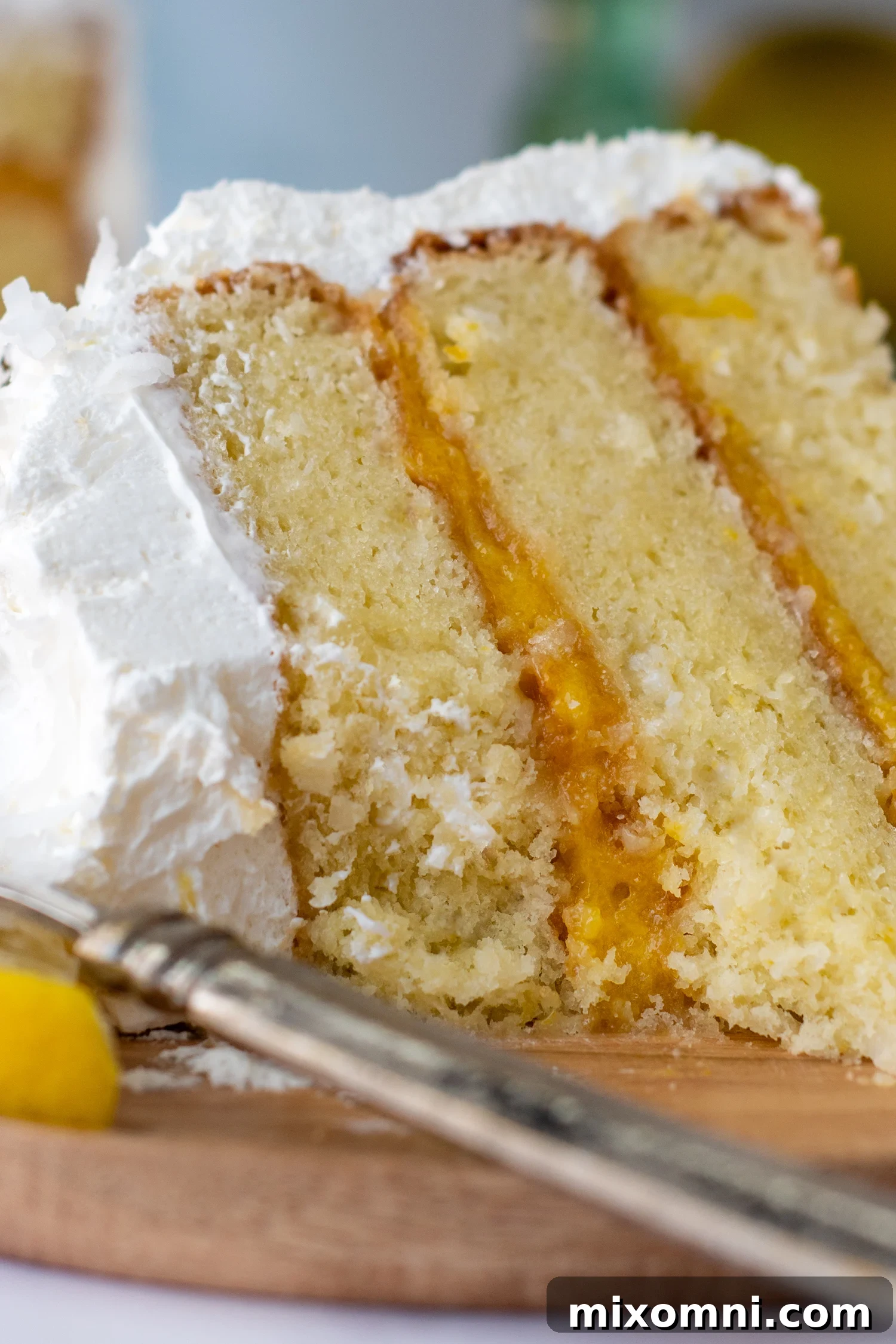
Unlock the secrets to baking an incredibly fluffy and moist gluten-free coconut lemon cake with this foolproof, step-by-step recipe. This delightful homemade creation features a vibrant, tangy, and sweet citrus curd filling, elegantly nestled between tender layers of coconut cake, all crowned with an airy lemon cream cheese frosting. Whether you’re a seasoned baker or prefer a simpler approach, this guide also includes a fantastic cake mix adaptation. I’ll show you how to effortlessly create an impressive gluten-free layer cake that will wow everyone, no matter your starting point!
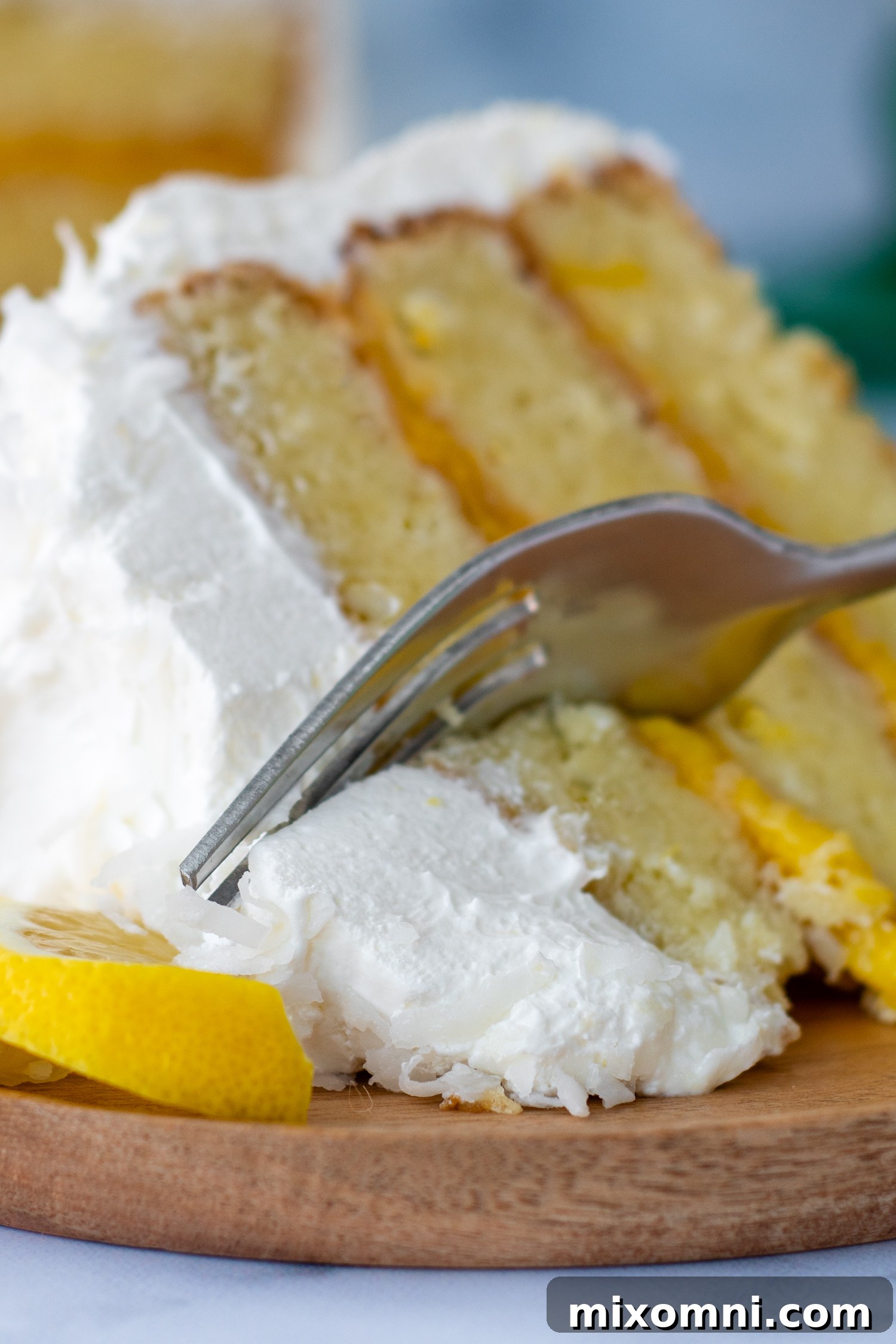
Indulge in the Ultimate Gluten-Free Coconut Lemon Cake
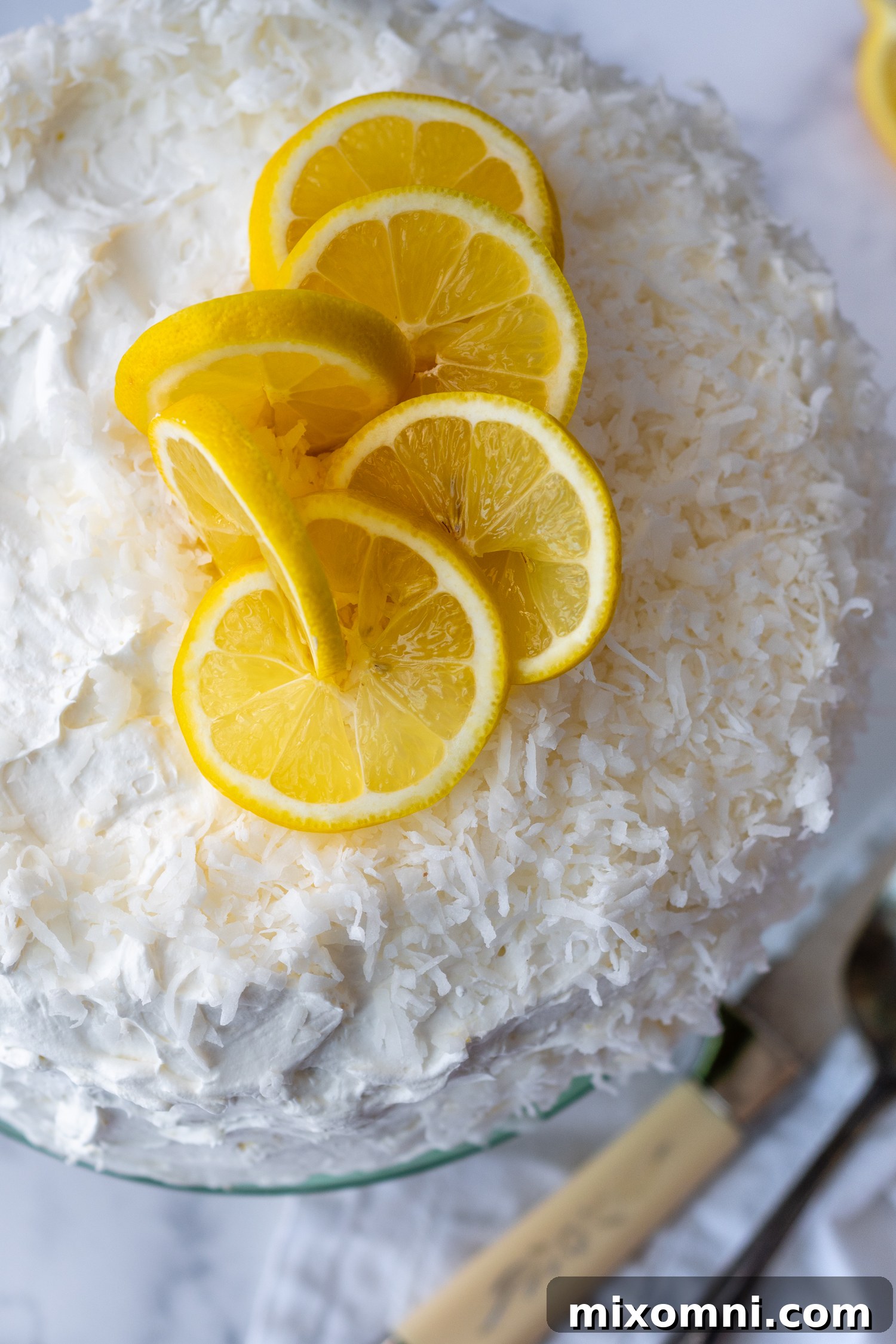
Prepare to be amazed by this show-stopping gluten-free coconut lemon cake, a true highlight in any dessert collection. Its sophisticated appearance belies how surprisingly easy it is to achieve at home. This cake is perfectly suited for those special occasions that demand something extraordinary, whether it’s a bright Easter celebration, a heartfelt Mother’s Day brunch, or a memorable birthday party.
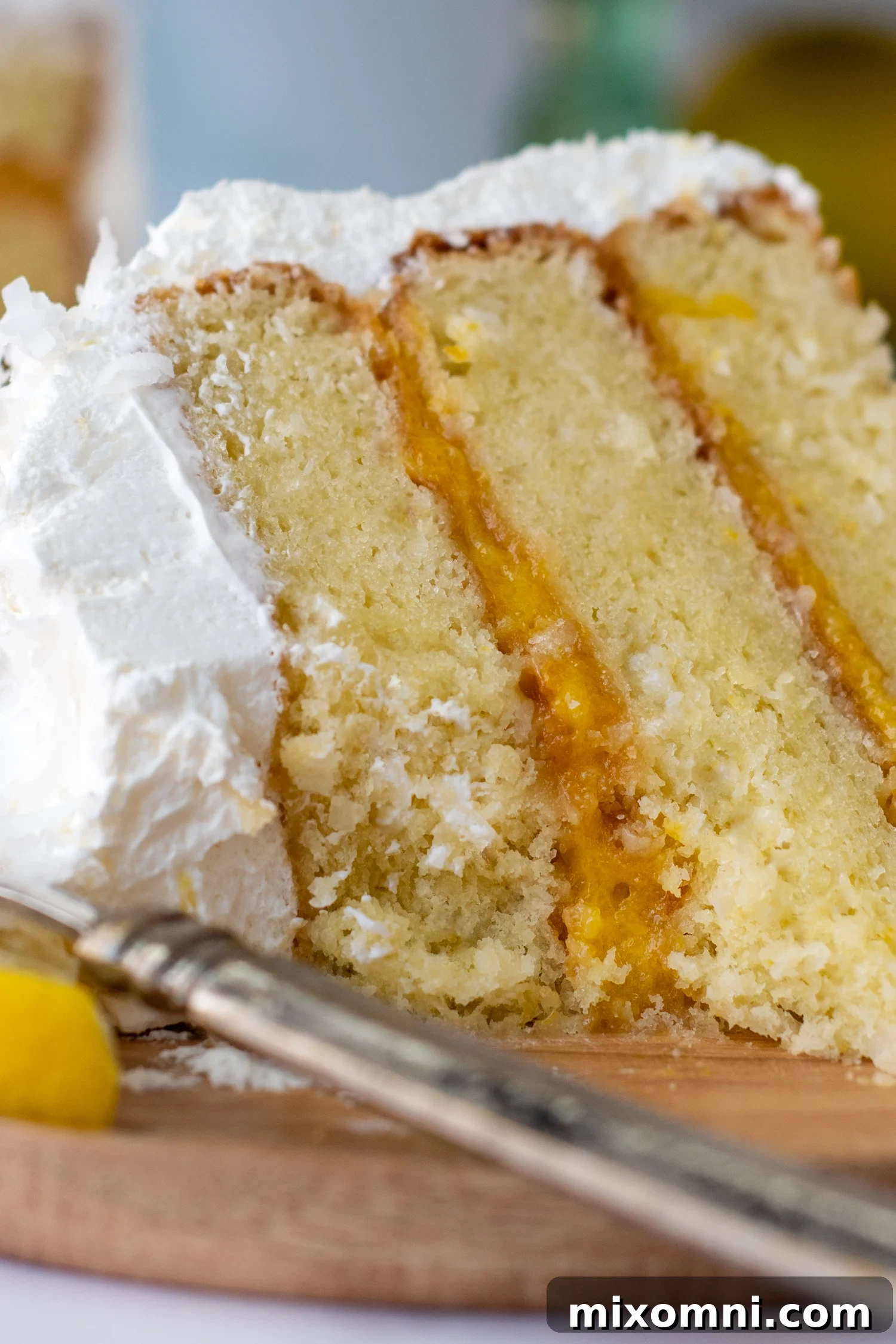
Much like our acclaimed 5-star homemade gluten-free white cake, this recipe promises a sublime texture – a harmonious blend of fluffy lightness and rich moisture. You have the flexibility to craft this dessert entirely from scratch, including a luscious fresh lemon filling and tender coconut cake layers, or opt for a streamlined version by utilizing a high-quality gluten-free cake mix and a readily available store-bought lemon curd. Both methods yield an undeniably delicious result that tastes like it came from a gourmet bakery.
Crafting the perfect gluten-free coconut and lemon cake becomes an absolute breeze when you incorporate my tried-and-true gluten-free baking tips. A crucial technique involves combining both oil and butter in the cake batter. This dynamic duo not only guarantees exceptional moisture, preventing the common dryness often associated with gluten-free bakes, but also imparts a rich, creamy, and undeniably buttery flavor that elevates the entire cake. Forget about sacrificing taste for texture; with this approach, you get the best of both worlds.
While many gluten-free coconut cake recipes traditionally call for buttermilk, I’ve discovered an even better secret ingredient: canned full-fat coconut milk. Its naturally high-fat content is a game-changer, infusing the cake with incredible moisture. Beyond that, it introduces an exquisite layer of authentic coconut flavor that complements the lemon beautifully. Moreover, the rich consistency of coconut milk excels at coating gluten-free starches, which is vital for preventing a dry, crumbly outcome and ensuring a consistently tender crumb every single time.
“Delicious and easy! Made gluten-free for my Mother-in-law’s birthday. Everyone loved it! Used store-bought lemon curd to save time. The fluffy frosting is light and not too sweet and very easy to spread on the cake. Never would have thought to put lemon and coconut together but it’s amazing. Thanks for another great recipe!”
—Tamara
Bake Your Perfect Gluten-Free Coconut Lemon Cake: A Step-by-Step Guide
Embark on this delightful baking journey with me! Below, you’ll find detailed step-by-step photos and simplified instructions to guide you through each stage. For precise ingredient quantities and comprehensive directions, please refer to the complete recipe card at the end of this article.
Crafting Your Zesty Lemon Curd: Homemade or Store-Bought
The vibrant lemon filling is a core component of this cake. You have the choice to prepare a homemade lemon curd or opt for a convenient store-bought version. Both options are absolutely delicious and will perfectly complement the coconut cake layers.
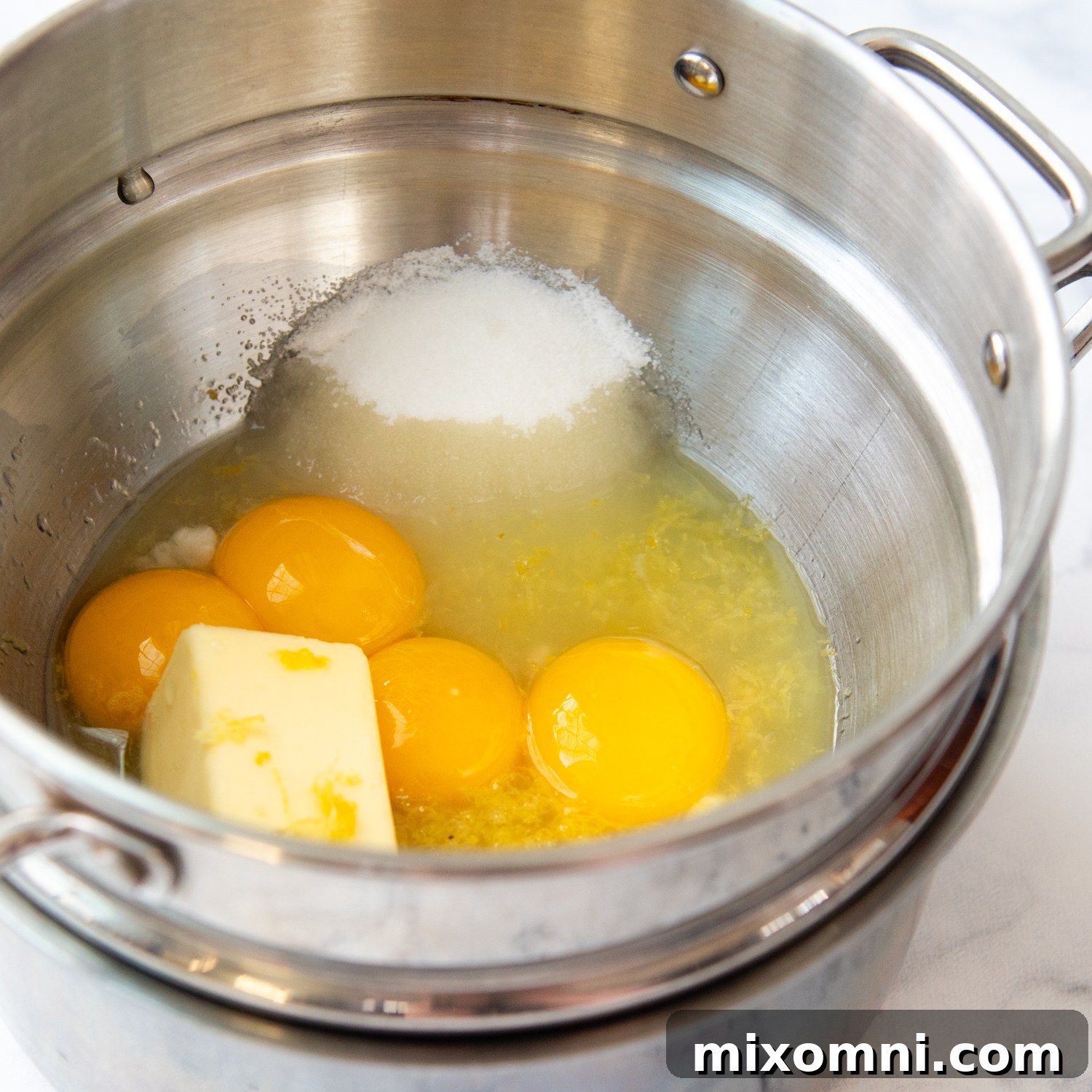
If you choose the homemade route – and I have full confidence in your ability to create a silky, bright lemon curd from scratch – begin by placing all your lemon curd ingredients into a metal bowl. This bowl should be comfortably fitted over a gently simmering pot of water, creating a makeshift double boiler. Ensure that the water in the lower pot is just simmering and high enough to heat the mixture effectively, but crucially, not directly touching the bottom of the upper bowl. The goal is to cook the lemon curd gently and evenly using only the steam heat.
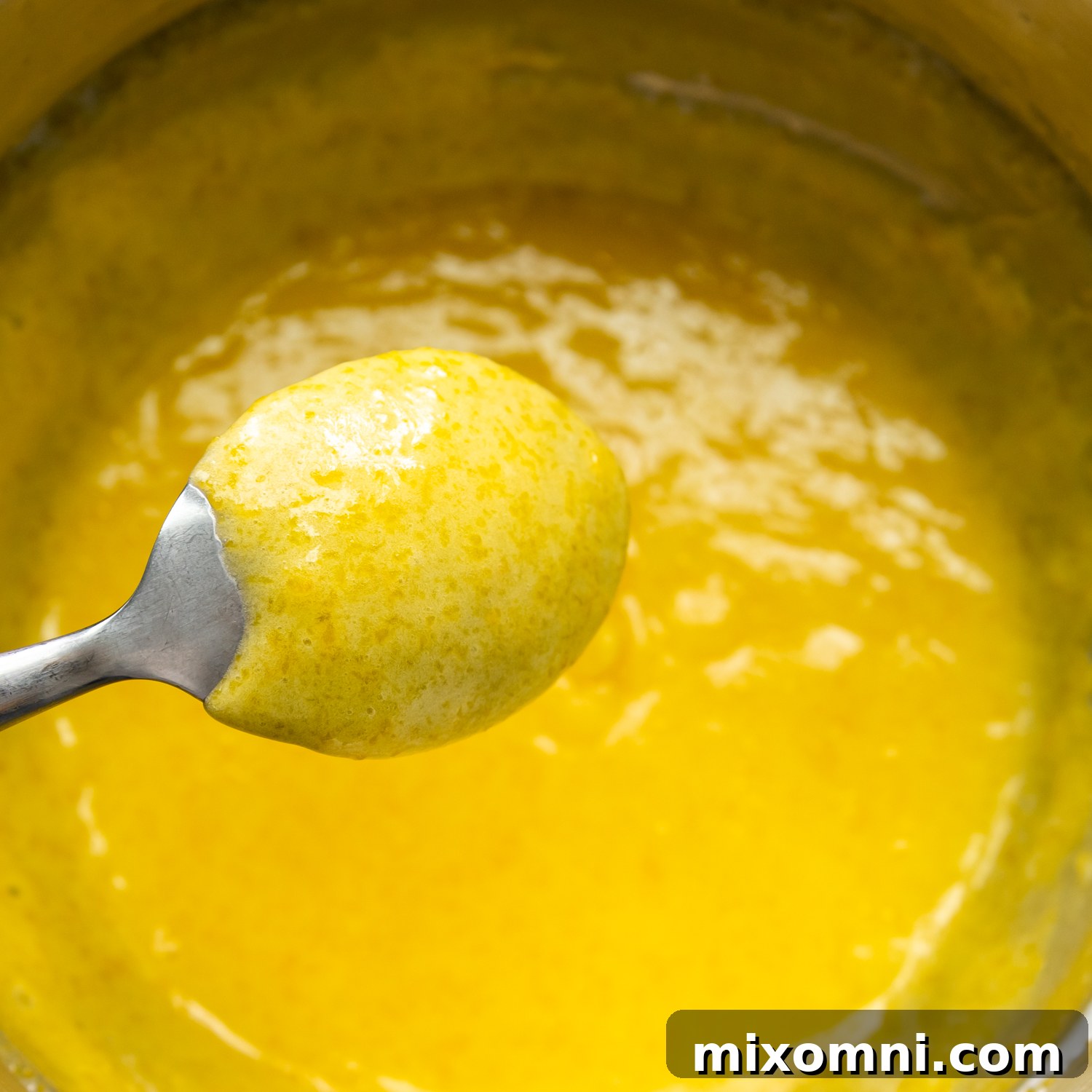
Continuously whisk the mixture as it heats until it visibly thickens. A perfect indication of readiness is when the curd coats the back of a spoon without running off. For precision, aim for a temperature of 170°F (77°C). An instant-read thermometer is an invaluable tool for quickly and accurately measuring this temperature, ensuring your curd is perfectly cooked and thickens beautifully upon cooling.
Mastering the Creaming Method for a Light Cake
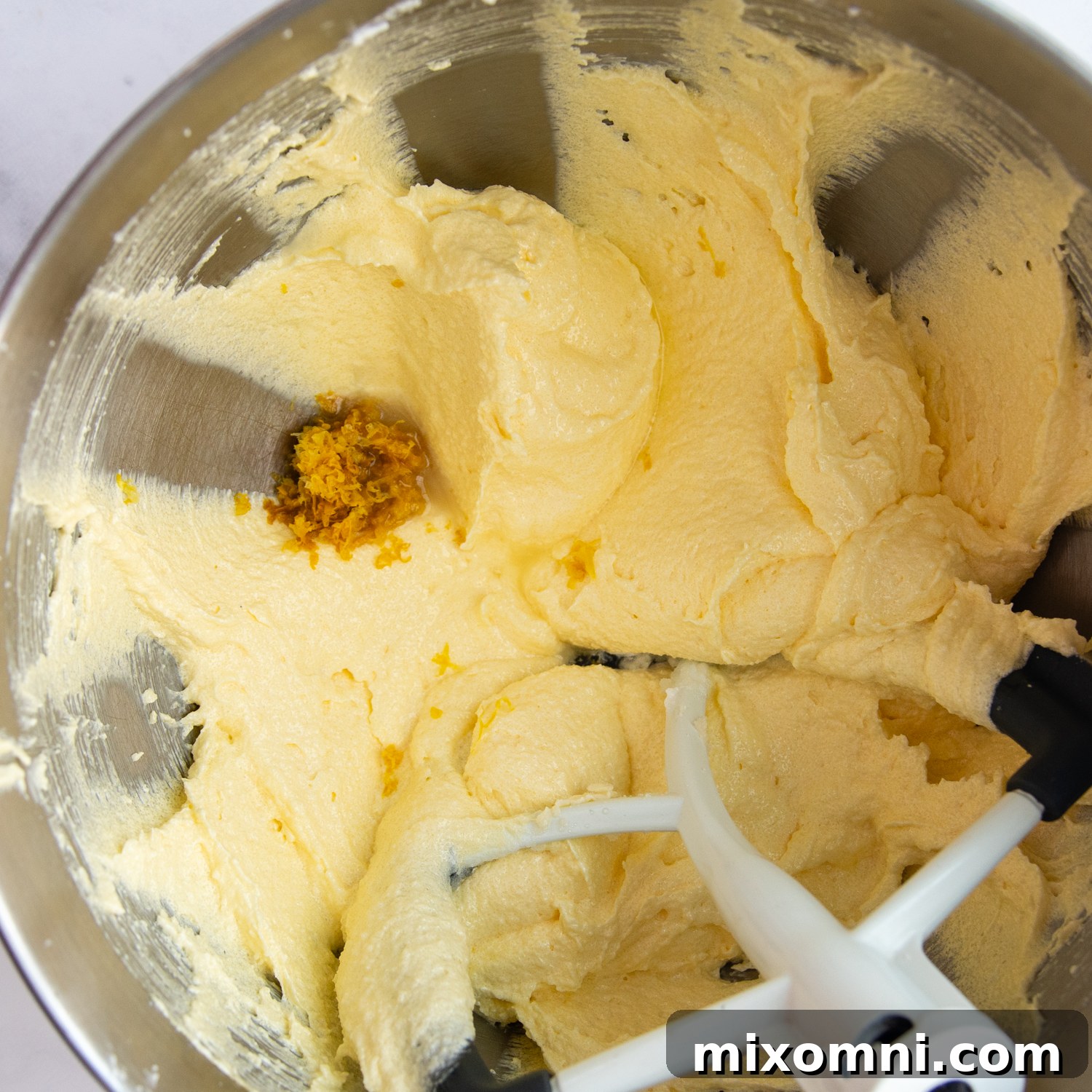
The secret to a wonderfully light and tender cake lies in proper creaming. Begin by combining softened butter, vegetable oil, and granulated sugar in a large mixing bowl. Beat these ingredients together until the mixture transforms into a light, airy, and fluffy consistency. This process typically takes about 3 minutes, so resist the urge to stop once they’re merely combined! Continue beating until the mixture significantly lightens in color and gains substantial volume, indicating that enough air has been incorporated. Next, beat in the egg yolks, one at a time, ensuring each is fully integrated before adding the next. Finish this stage by mixing in the fresh lemon zest and your chosen extracts for a burst of flavor.
Alternating Wet and Dry Ingredients for Optimal Texture
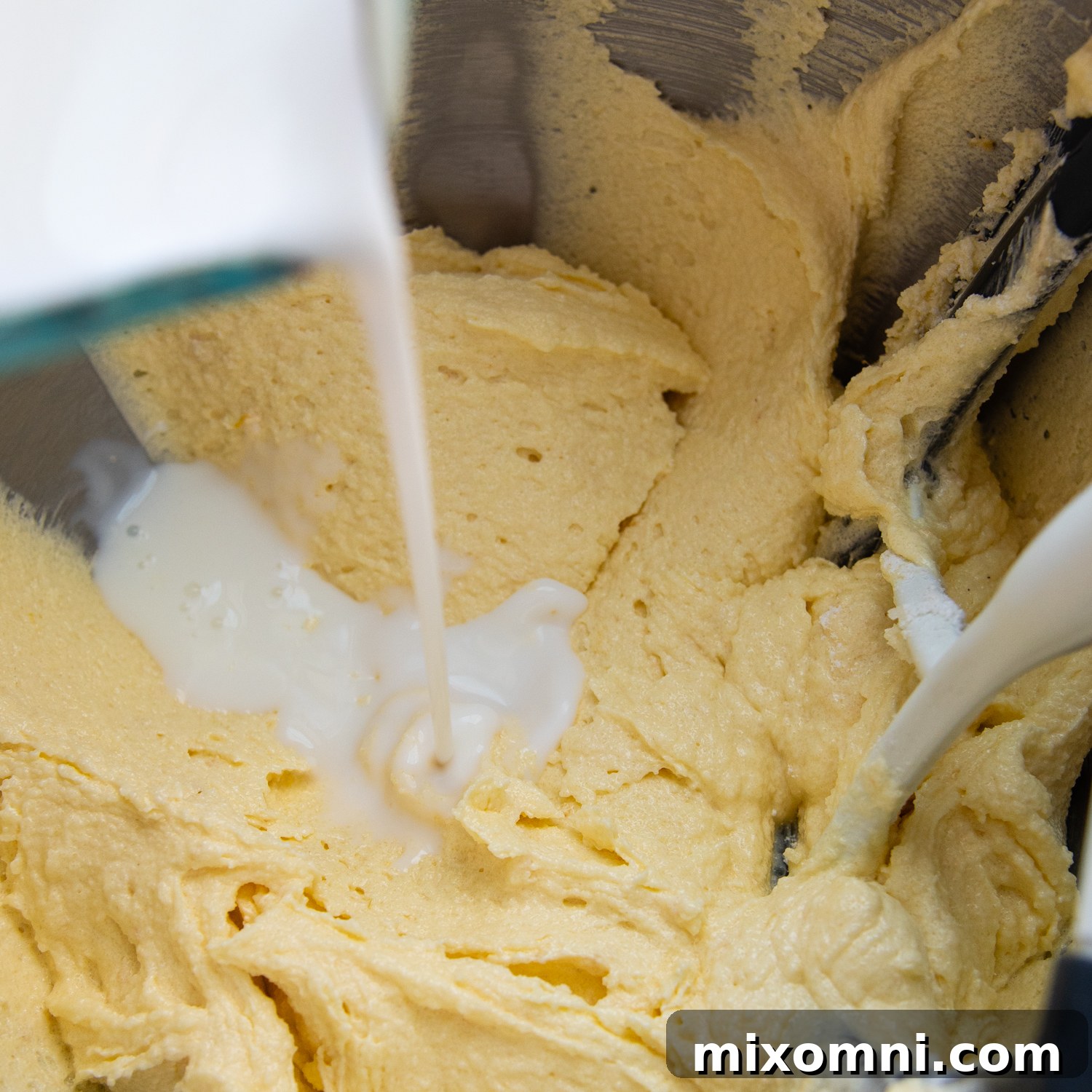
In a separate bowl, whisk together all your dry ingredients – this ensures even distribution of leavening agents and salt. Now comes the alternating addition: gradually incorporate the gluten-free flour mixture with the canned coconut milk into the creamed butter mixture. Start by adding approximately one-third of the dry mixture and mix until just combined. Follow with about one-third of the coconut milk, mixing until smooth. Continue this alternating process, adding a third of the dry ingredients, then a third of the liquid, until all ingredients are fully incorporated. This method prevents overmixing and promotes a delicate, uniform crumb.
Folding in Egg Whites and Baking to Perfection
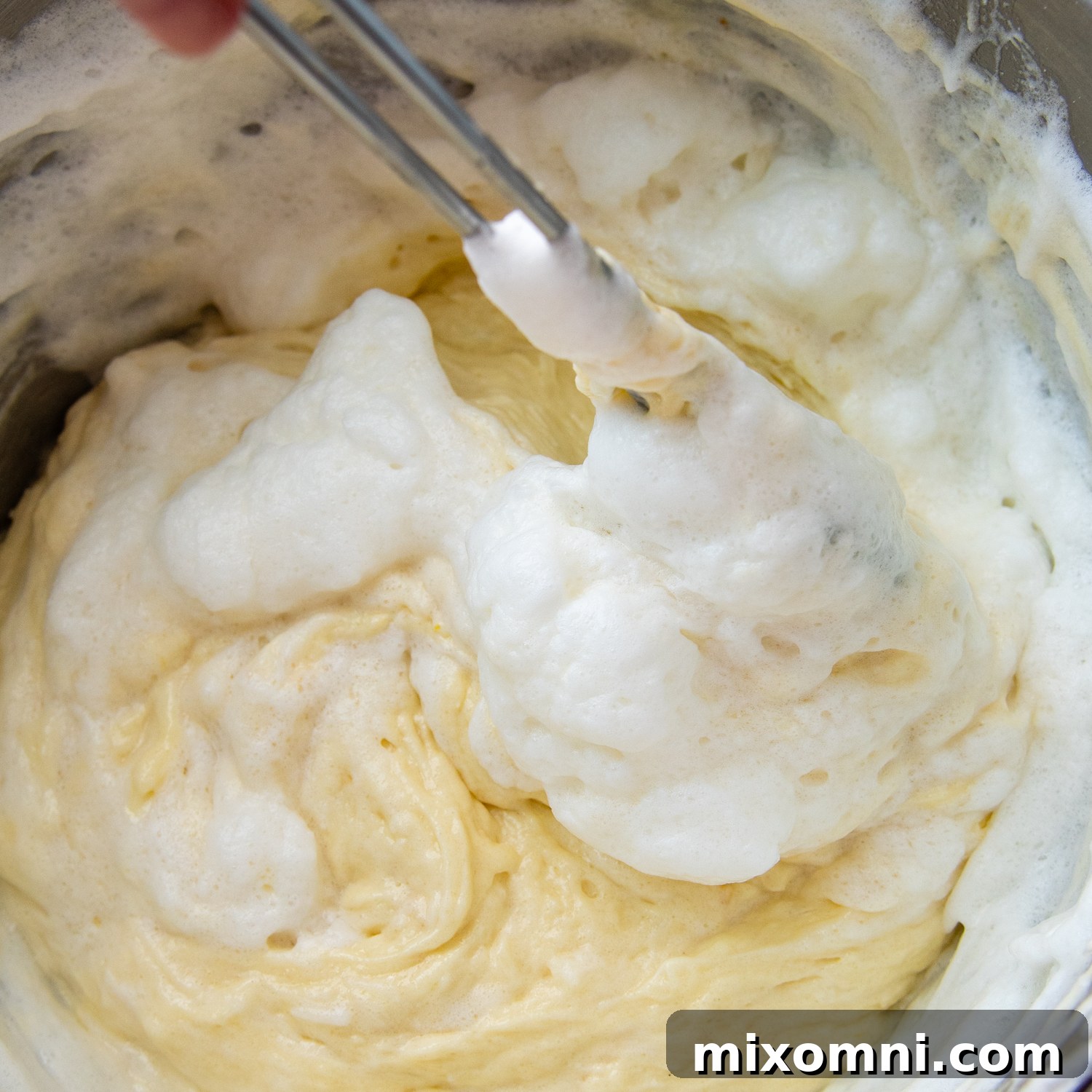
At this stage, your cake batter will likely be quite thick. This is perfectly normal! The next step involves folding in whipped egg whites, which will dramatically lighten the batter and contribute to the cake’s signature fluffiness. Once the stiff-peaked egg whites are gently folded in until no streaks remain, evenly divide the loosened cake batter among three prepared 9-inch cake pans. Bake these layers in a preheated 325°F (160°C) oven for approximately 25-30 minutes. When baking gluten-free cakes, I highly recommend using a long cake tester; its length allows it to reach the center of the cake, providing a more accurate assessment of doneness. Once baked, allow the cake layers to cool completely on a wire rack before you even think about frosting them, ensuring a stable and beautiful final assembly.
Crafting the Next-Level Fluffy Lemon Cream Cheese Frosting
While traditional coconut cakes often feature a dense, generous layer of cream cheese frosting, I wanted to create something truly exceptional for this recipe. My aim was a frosting that was not only lighter and airier but also infused with a vibrant, zesty lemon flavor that perfectly complements the coconut cake layers and tangy curd. This “next-level” frosting achieves just that.
Instead of relying solely on a large amount of cream cheese, this recipe uses a carefully balanced combination. A smaller, precise amount of softened cream cheese is blended with a touch of rich heavy cream, bright lemon zest, aromatic lemon extract, and just enough powdered sugar. This blend creates a foundation that offers a subtle hint of sweet, creamy lemon without being overly rich or heavy, allowing the other flavors to shine through.
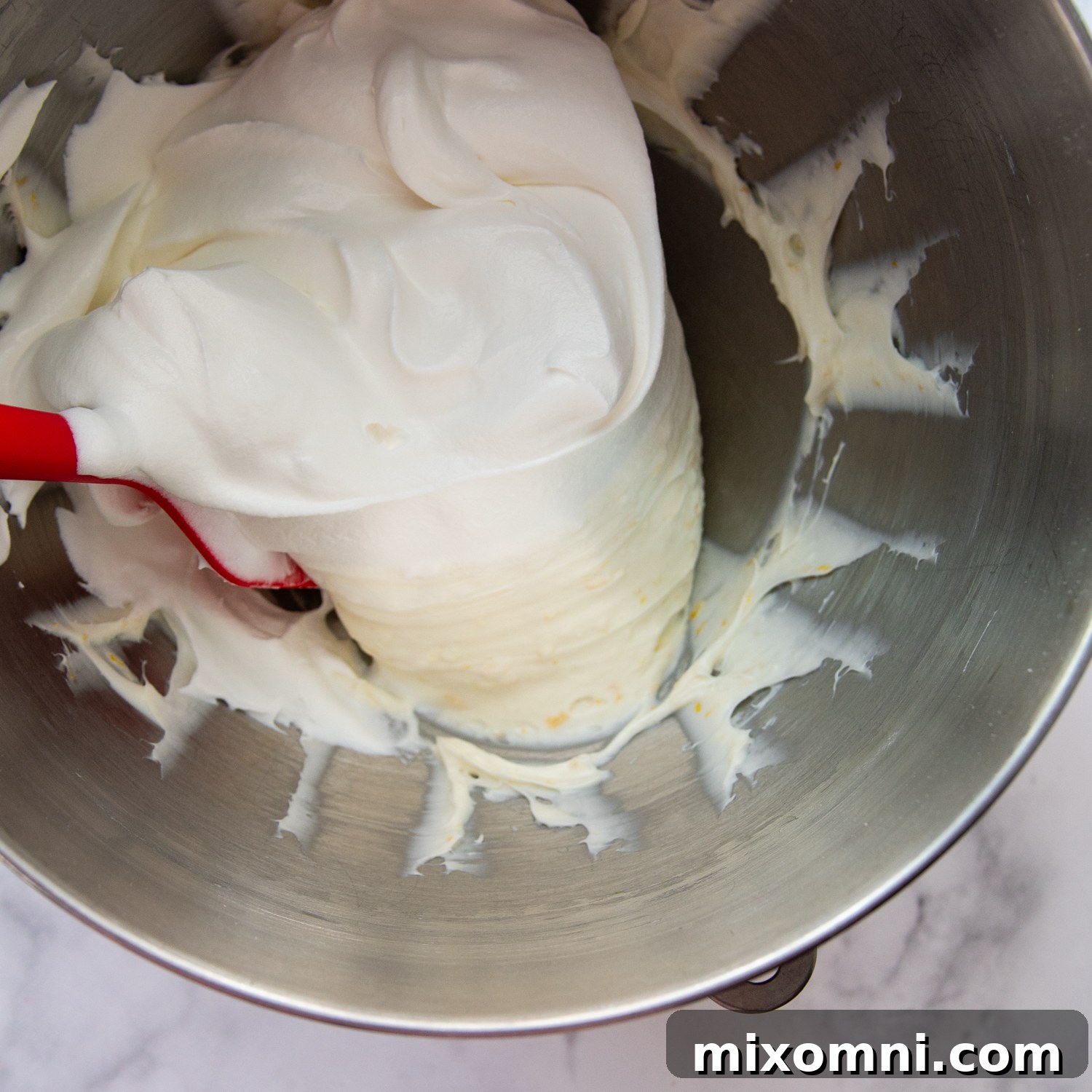
The true magic happens when a store-bought whipped topping, such as Cool Whip, is gently folded into this cream cheese base. This technique is what transforms the frosting into its signature fluffy, cloud-like texture, making it incredibly light and easy to spread. If you prefer to avoid store-bought whipped topping, you can easily make your own. Simply increase the amount of powdered sugar in the cream cheese mixture by 3 tablespoons. Then, whip 1 ½ cups of cold heavy cream until it forms stiff peaks. Gently fold this homemade whipped cream into your lemon cream cheese base until a smooth, airy consistency is achieved. Either method delivers a frosting that is sheer perfection, striking the ideal balance between sweetness, tang, and an irresistible fluffiness.
Can I Use a Gluten-Free Cake Mix for This Recipe?
Absolutely! This recipe is incredibly versatile and can be adapted to suit your baking style and time constraints. In the detailed recipe notes below, I’ve included specific instructions on how to transform a standard gluten-free yellow cake mix into a delightful “homemade-ish” coconut cake. This is a fantastic option for when you want to create something spectacular without the commitment of baking entirely from scratch.
Please keep in mind that using a typical gluten-free cake mix will yield enough batter for a two-layer cake, rather than the three layers created with the full scratch recipe. Consequently, you will only need about half the amount of lemon filling specified in the main recipe. But don’t fret about having extra lemon curd!
That delicious, vibrant lemon filling is too good to waste. It’s incredibly versatile and can be put to excellent use in a variety of other culinary delights. Stir it into creamy yogurt for a quick breakfast or snack, spread it generously over fluffy gluten-free biscuits or homemade gluten-free scones for a treat. It’s also heavenly drizzled over ice cream, used as a bright and tangy cheesecake topping, or as a flavorful accompaniment to pancakes. For a truly elegant indulgence, spoon it into delicate gluten-free crepes. The possibilities are endless!
Troubleshooting: What If My Lemon Filling Doesn’t Thicken?
Achieving a thick, silky, and luscious lemon curd is often a point of concern for many home bakers. The key to its perfect consistency truly lies in precise temperature measurement. My favorite kitchen tool for this task is an instant-read thermometer, which allows me to check the temperature in mere seconds. For guaranteed success, the lemon curd mixture should reach a temperature of 170ºF (77ºC). This critical temperature ensures that the egg yolks have cooked thoroughly, providing the necessary thickening power for your curd.
For the most accurate reading, it’s best practice to momentarily remove the double boiler from the heat when checking the temperature. This simple step prevents a falsely high temperature reading that can occur if the thermometer is still exposed to the direct steam from the simmering water below. If you don’t have a thermometer handy, a reliable visual cue is when the curd is thick enough to generously coat the back of a spoon without running off immediately.
If, by chance, you remove the mixture from the heat too early, you might end up with a lemon curd that is thinner and more runny than desired. Don’t despair – there’s a very good chance it can be salvaged!
- **Reheating:** Often, the simplest solution is to try reheating it. Place the lemon curd back in the double boiler and whisk vigorously while gently heating it again. The most common reason for a thin curd is that the mixture did not quite reach the crucial 170ºF mark the first time around. A second gentle heating with continuous whisking can often resolve this.
- **Using Cornstarch as a Thickener:** If reheating alone doesn’t do the trick, cornstarch can come to the rescue. In a small separate bowl, mix a little of the thin lemon filling with about 1 teaspoon of cornstarch until a smooth slurry forms. Whisk this cornstarch slurry back into the double boiler with the rest of the lemon curd. Continue to heat and whisk until the mixture thickens to your desired consistency. Depending on how thin your curd is, you may need to add up to 1 tablespoon of cornstarch, adding it in small increments to avoid over-thickening.
Save This Recipe for Later on Pinterest!
Let’s be friends on Pinterest! I’m always sharing great recipes!
Did you make this recipe? I love hearing from you! Leave a star rating and comment below the recipe card. Your feedback helps others discover and enjoy our recipes, and I truly appreciate hearing from our community! -Melissa
Extra Moist Gluten-Free Coconut Lemon Curd Cake

Melissa Erdelac
12
25
30
1
55
Pin
Rate
Remove Ads
Ingredients
Lemon Filling
- 5 egg yolks, separated and room temperature
- 3 tablespoons unsalted butter, softened and cubed
- ¼ cup (61 g) fresh lemon juice
- ½ cup (100 g) sugar
- 2 teaspoons lemon zest
- pinch salt
Coconut Cake
- 2 cups granulated sugar
- ½ cup (109 g) vegetable oil
- ½ cup (113.5 g) unsalted butter, softened
- 5 eggs, separated and at room temperature
- 1 teaspoon coconut extract
- 1 teaspoon lemon extract
- 1 teaspoon lemon zest
- 2 ¼ cups (306 g) all-purpose gluten-free flour, (I use and recommend Cup4Cup gluten-free flour)
- 1 teaspoon baking powder
- ½ teaspoon baking soda
- ½ teaspoon salt
- 1 cup (240 g) canned coconut milk, full fat
- 1 cup (90 g) sweetened shredded coconut
- ¼ teaspoon cream of tartar
Lemon Cream Cheese Frosting
- 4 ounces cream cheese, softened
- ½ cup powdered sugar
- ¼ cup heavy cream
- 1 teaspoon lemon zest
- ½ teaspoon lemon extract
- 8 ounce tub whipped topping (3 cups Cool Whip)
- for decorating: sweetened shredded coconut, fresh lemon slices
Equipment
- Stand Mixer
- 9 inch Cake Pans
- Double Boiler
Instructions
Lemon Curd Filling
-
Place all the ingredients in a double boiler (or a metal bowl over a pot of simmering water). Fill the lower pot with only a couple of inches of water, ensuring it doesn’t touch the upper pot. Bring the water to a gentle simmer. Heat the ingredients while whisking constantly and vigorously.5 egg yolks, 3 tablespoons unsalted butter, ¼ cup fresh lemon juice, ½ cup sugar, 2 teaspoons lemon zest, pinch salt
-
Continue heating and whisking until the mixture thickens, coats the back of a spoon, and reaches a temperature of 170°F (77°C). The volume will slightly increase, and the mixture will become paler. TIP: To measure the temperature accurately, remove the mixture from the simmering water before testing. This prevents a falsely high reading, which could mean the eggs haven’t cooked sufficiently or the filling won’t thicken upon cooling.
-
Pour the lemon curd into a heatproof bowl. Press plastic wrap directly onto the surface of the curd to prevent a film from forming. Refrigerate until cold, about 1 hour. If preparing ahead, transfer the lemon curd to an airtight container and refrigerate for 1-2 weeks.
Coconut Cake
-
Preheat oven to 325ºF (160°C). Spray THREE 9-inch cake pans with cooking spray. Line the bottom of each pan with a cut-to-size parchment or wax paper circle. Spray again and set aside.
-
In a large mixing bowl, combine the granulated sugar, softened butter, and vegetable oil. Beat until well blended and light, about 2 minutes. Add room temperature egg yolks, one at a time, beating well after each addition to ensure full incorporation. Mix in the coconut extract, lemon extract, and lemon zest.2 cups granulated sugar, ½ cup vegetable oil, ½ cup unsalted butter, 5 eggs, 1 teaspoon coconut extract, 1 teaspoon lemon extract, 1 teaspoon lemon zest
-
In a separate bowl, whisk together the gluten-free flour, baking powder, baking soda, and salt. Gradually add about one-third of this flour mixture to the creamed butter mixture and mix until just combined. Then, add about one-third of the canned coconut milk and mix well. Continue alternating between the flour mixture and coconut milk, beating well after each addition, until all ingredients are incorporated. After all wet and dry ingredients are mixed, stir in the shredded coconut. Set the batter aside.2 ¼ cups all-purpose gluten-free flour, 1 teaspoon baking powder, ½ teaspoon baking soda, ½ teaspoon salt, 1 cup canned coconut milk, 1 cup sweetened shredded coconut
-
In a separate, very clean bowl, with clean, dry beaters, beat the egg whites and cream of tartar until stiff peaks form. Gently fold about one-fourth of the beaten egg whites into the cake batter to lighten it. Then, carefully fold in the remaining whites until no streaks of white remain, being careful not to deflate the air.¼ teaspoon cream of tartar
-
Divide and spread the batter evenly between the three prepared cake pans. Bake for 25-30 minutes, or until a toothpick inserted into the middle of a cake layer comes out clean. Cool the cakes in their pans for 10 minutes before inverting them onto wire racks to cool completely.
Fluffy Lemon Cream Cheese Frosting
-
In a large mixing bowl, beat together the softened cream cheese, powdered sugar, heavy cream, lemon zest, and lemon extract until the mixture is smooth and fluffy, which should take about 1-2 minutes.4 ounces cream cheese, ½ cup powdered sugar, ¼ cup heavy cream, 1 teaspoon lemon zest, ½ teaspoon lemon extract
-
Gently fold in the whipped topping (Cool Whip or homemade whipped cream) until it is thoroughly combined and no streaks remain, ensuring the frosting remains light and airy.8 ounce tub whipped topping (3 cups Cool Whip)
Assembly
-
Place the first cooled cake layer onto your serving platter. To keep your platter clean during frosting, tuck strips of waxed paper underneath the edges of the cake to catch any drips.
-
Evenly spread half of the prepared lemon filling over the top of the first cake layer. Carefully place the second cake layer on top, then spread the remaining lemon curd over it. Finally, top with the third cake layer.
-
Begin spreading the fluffy lemon cream cheese frosting, starting at the top of the cake and working your way evenly around the sides. An offset spatula is ideal for achieving a smooth, professional finish. If desired, decorate your finished cake with additional sweetened shredded coconut and fresh lemon slices for an elegant touch.
-
If you’re making the cake in advance, store it in the refrigerator, loosely covered, to maintain its freshness. For the best flavor and texture, allow the cake to come to room temperature for about 2 hours before serving. Securely wrap any leftover cake and refrigerate.
Notes
Using a Gluten-Free Cake Mix Adaptation
Please note that when using a standard gluten-free cake mix, it will typically yield enough batter for a two-layer cake. Therefore, you will only need half the amount of homemade lemon filling specified in the main recipe. Don’t let the extra lemon curd go to waste; it’s delicious stirred into yogurt, spread on biscuits, paired with ice cream, as a topping for cheesecake, served with crepes, or drizzled over pancakes.
- Beat together a gluten-free yellow cake mix with ½ cup softened butter, ¾ cup canned coconut milk, ½ cup water, and 3 whole eggs.
- Mix first on low speed to combine ingredients, then increase speed to medium and beat for 2 minutes until light and airy.
- Divide the batter evenly between TWO 9-inch layer cake pans, ensuring they are lined with parchment paper on the bottom and sprayed with cooking spray.
- Bake at 350ºF (175°C) for 33-36 minutes, or until a toothpick inserted into the center comes out clean. Cool for 10 minutes in the cake pans before turning onto wire racks to cool completely.
- Prepare the lemon cake filling (using only half for the cake) or use store-bought lemon curd.
- Prepare the fluffy lemon cream cheese frosting and assemble your delightful two-layer cake.
Nutrition
Calories: 629kcal, Carbohydrates: 75g, Protein: 9g, Fat: 34g, Saturated Fat: 24g, Cholesterol: 188mg, Sodium: 371mg, Potassium: 234mg, Fiber: 1g, Sugar: 54g, Vitamin A: 642IU, Vitamin C: 3mg, Calcium: 102mg, Iron: 1mg
Did you make this recipe?
Please leave a star rating and review below. Your feedback helps others when searching for recipes, and I LOVE hearing from you!