
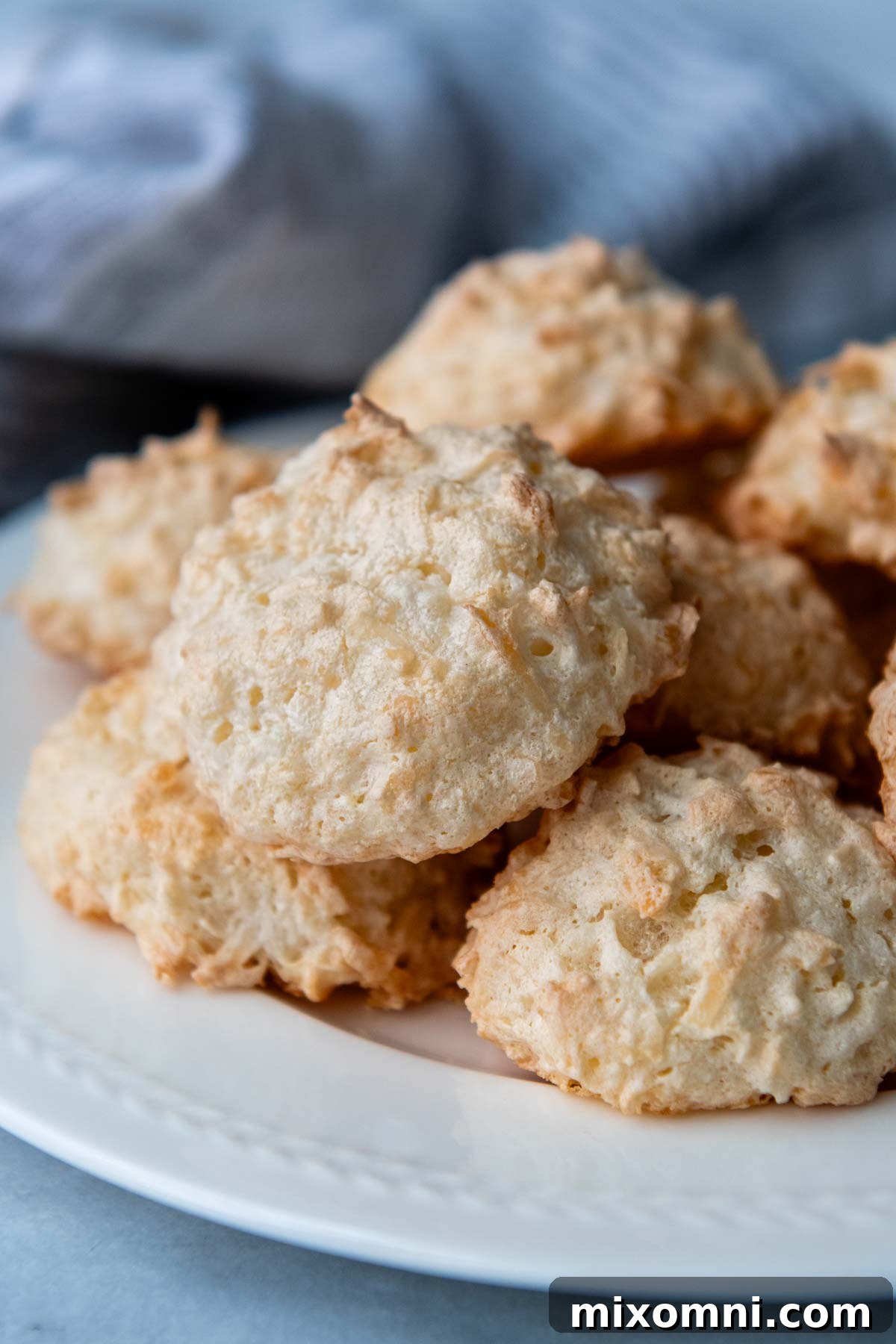
Embark on a delightful baking journey with our ultimate guide to creating fluffy, light, and airy gluten-free coconut macaroons. Far from the dense, overly sweet versions you might encounter, this recipe introduces two ingenious tricks that elevate these simple treats to bakery-quality perfection. By whipping egg whites into a delicate meringue, we infuse the macaroons with an ethereal, cloud-like texture. Furthermore, the thoughtful inclusion of potato starch, almond flour, or the option to go flourless allows for precise control over the crispness, chewiness, and overall loft of each bite. Whether you’re a seasoned baker or a curious beginner, prepare to discover the secrets behind truly irresistible gluten-free coconut macaroons that will impress every palate.
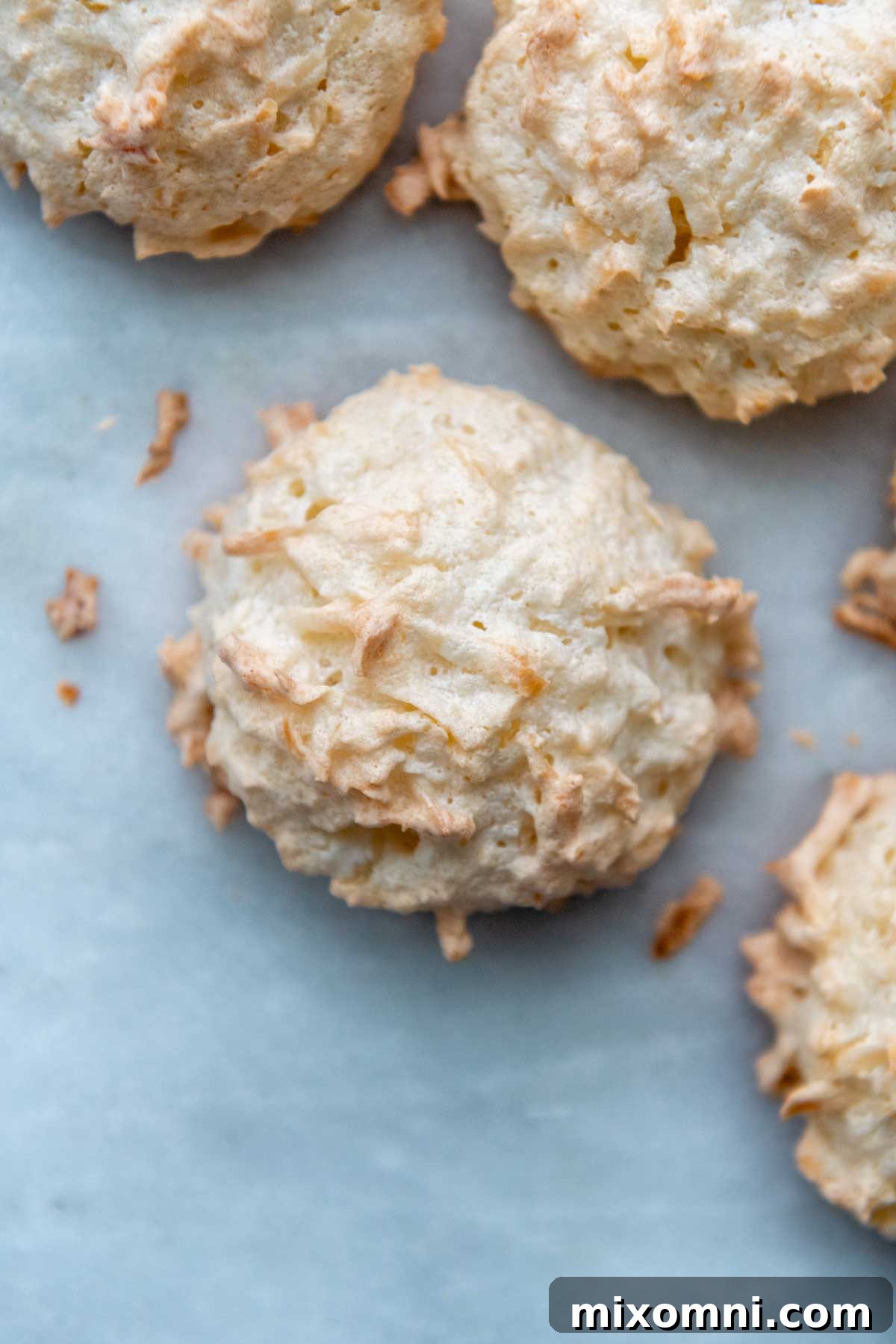
The Secret to Irresistibly Light Gluten-Free Coconut Macaroons
Creating truly exceptional gluten-free baked goods often means rethinking traditional approaches. My quest for the perfect coconut macaroon was driven by a desire for a treat that was far from the norm—not excessively sweet, boasting a magnificent airy structure, fluffy centers, and wonderfully chewy edges. While coconut macaroons appear deceptively simple, made with just a few core ingredients like egg whites, shredded coconut, and sugar, the method of combining these elements is where the real magic happens.
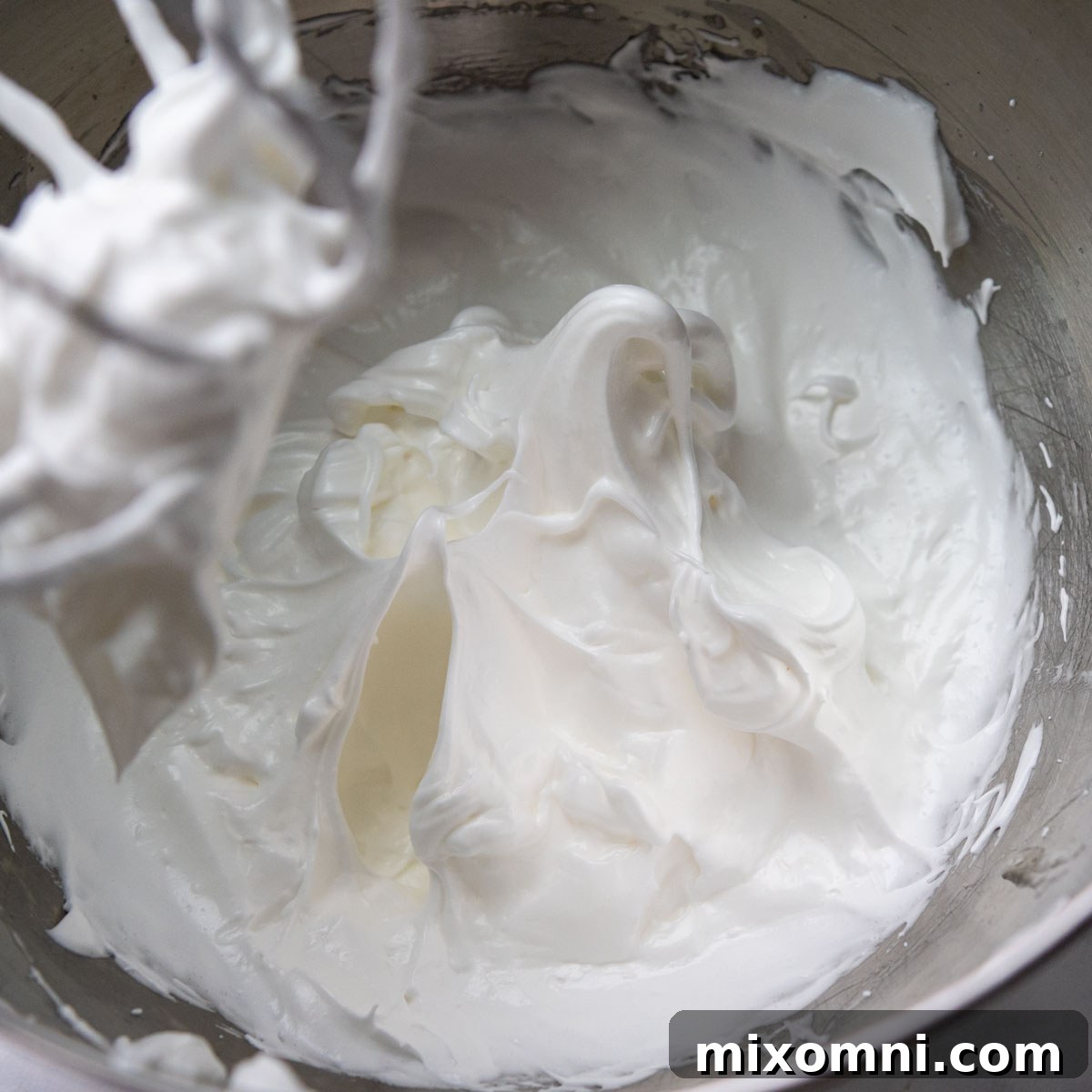
Many recipes call for egg whites that are only lightly beaten, which can result in a denser, heavier cookie. Our unique method, however, involves beating the egg whites into a stable, voluminous meringue. This aeration technique is paramount, transforming the mixture into a light, cloud-like consistency, much like the process used in revered Italian almond cookies. This meringue base is the first cornerstone of achieving those coveted light and fluffy macaroons, ensuring each bite melts in your mouth rather than feeling heavy.
Even with the meringue technique perfected, I felt there was still room for improvement; the coconut sometimes felt a little too compressed. Through extensive research into various coconut macaroon recipes, I discovered that some versions incorporate a small amount of flour to enhance the texture and prevent denseness. Given our commitment to gluten-free baking, I experimented with several alternatives. The results led to three fantastic options: using a touch of potato starch, incorporating almond flour, or making them entirely flourless for those who prefer minimal ingredients.
Of the options, potato starch consistently delivered the best results for absorbing excess moisture, which is key to an incredibly fluffy texture. This is precisely why potato starch is celebrated as a secret ingredient in many gluten-free recipes, including my recipe for soft gluten-free rolls! If potato starch isn’t readily available, don’t fret—omitting it entirely still yields wonderfully airy macaroons. For a delightful twist and an enhanced chew, substituting almond flour introduces a lovely hint of nutty flavor that pairs beautifully with the coconut.
Understanding Your Ingredients: Beyond the Basics
Every ingredient in this recipe plays a crucial role in the final texture and flavor of your gluten-free coconut macaroons. Understanding their individual contributions can help you achieve consistent, delicious results every time.
Egg Whites: The Foundation of Loft
The star of our light and airy macaroons, egg whites, are responsible for the impressive loft and delicate structure. When whipped into a meringue, they trap air, creating countless tiny bubbles that expand during baking. For best results, ensure your egg whites are at room temperature, as this allows them to whip up to their maximum volume. Be meticulous when separating eggs to avoid any trace of yolk, which can prevent the whites from stiffening properly. A pinch of salt also aids in stabilizing the meringue.
Sweetened Shredded Coconut: Essential Texture and Flavor
Sweetened shredded coconut is non-negotiable for traditional macaroons. Its natural sweetness complements the sugar in the meringue, and its texture provides the signature chewiness. Unlike unsweetened coconut, which can be drier and less pliable, sweetened coconut maintains a pleasant moisture level, contributing to the macaroon’s tender interior. While you can opt for unsweetened if you prefer less sugar, you might need to adjust the overall sweetness slightly or accept a firmer texture.
Granulated Sugar: More Than Just Sweetness
Beyond its role in sweetening, granulated sugar is vital for the stability and structure of the meringue. It helps to dissolve into the egg whites, forming a stable foam that holds its shape. Gradually adding sugar to the frothy egg whites ensures it fully incorporates, resulting in a glossy, firm meringue that will support the coconut and prevent your macaroons from collapsing.
Vanilla Extract: A Touch of Aromatic Warmth
A good quality vanilla extract adds a layer of warm, sweet aroma that enhances the overall flavor profile of the macaroons. It balances the sweetness of the coconut and sugar, creating a more complex and inviting taste. Don’t skimp on the vanilla; its subtle presence makes a significant difference.
The “Secret” Gluten-Free Boosters: Potato Starch, Almond Flour, or Flourless
This is where our macaroons truly shine! These optional additions allow you to fine-tune the texture. Potato starch, a highly effective moisture absorber, contributes to an incredibly fluffy and light interior. Almond flour, on the other hand, adds a delightful nutty flavor and enhances the macaroon’s chewiness, making it slightly more substantial. Opting for a flourless version keeps the recipe even simpler while still yielding a wonderful, airy treat, albeit with a slightly less “lofty” body.
Step-by-Step: Crafting Your Perfect Gluten-Free Macaroons
Let’s walk through the process together. These step-by-step instructions, complemented by visuals, will guide you to a batch of perfect macaroons. For exact ingredient measurements and the full recipe, please refer to the recipe card below.
Step 1: Whipping the Meringue to Perfection
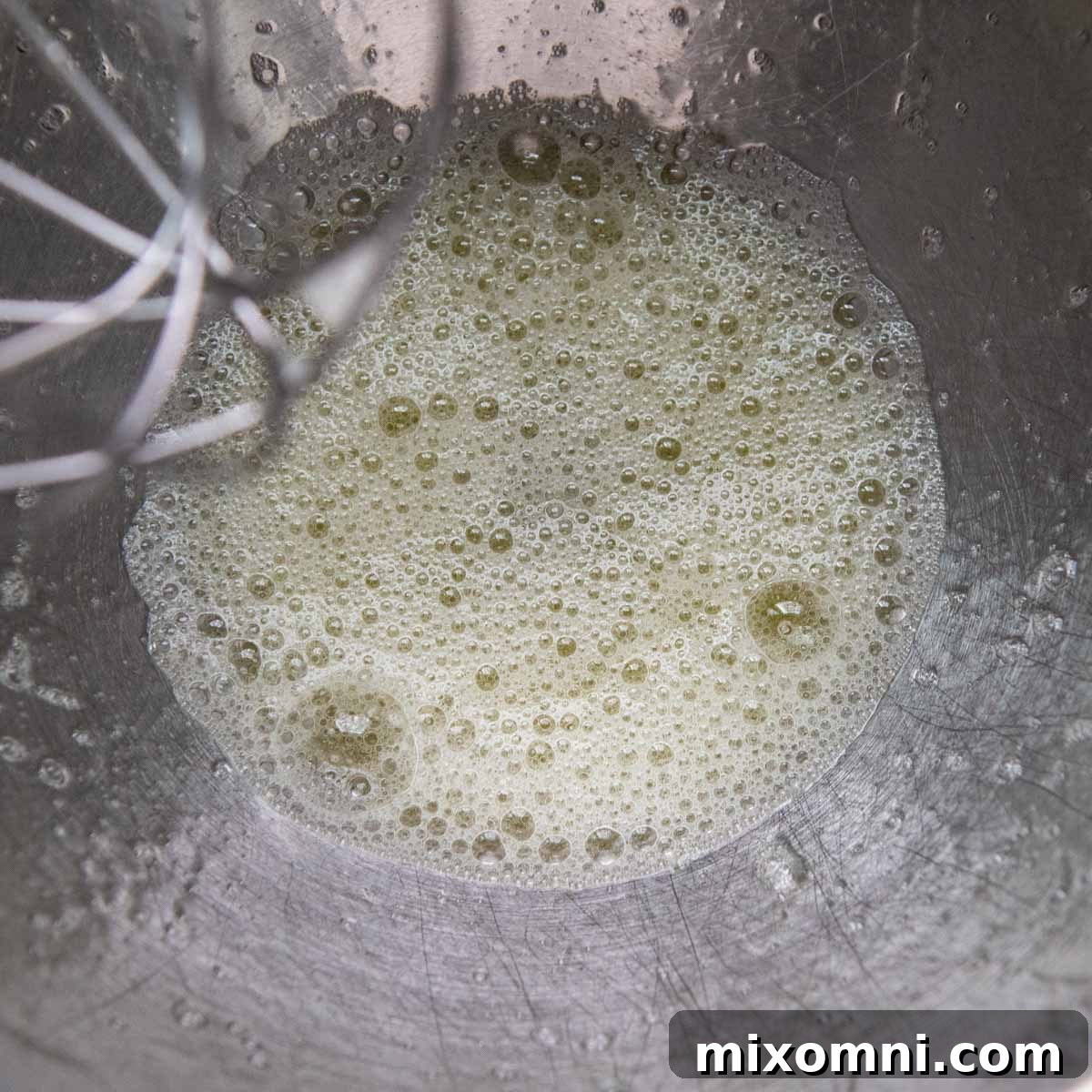
Begin by beating the egg whites and salt in the bowl of a stand mixer (or with handheld beaters) until they become frothy, usually within about a minute. This initial frothing helps to kickstart the aeration process. Next, gradually introduce the granulated sugar, adding it a couple of tablespoons at a time. Continue beating until the mixture transforms into very stiff, glossy peaks. When you lift the whisk, the peaks should hold their shape without collapsing. Finally, fold in the vanilla extract, ensuring it is evenly distributed.
Step 2: Gently Folding in the Coconut and Starch
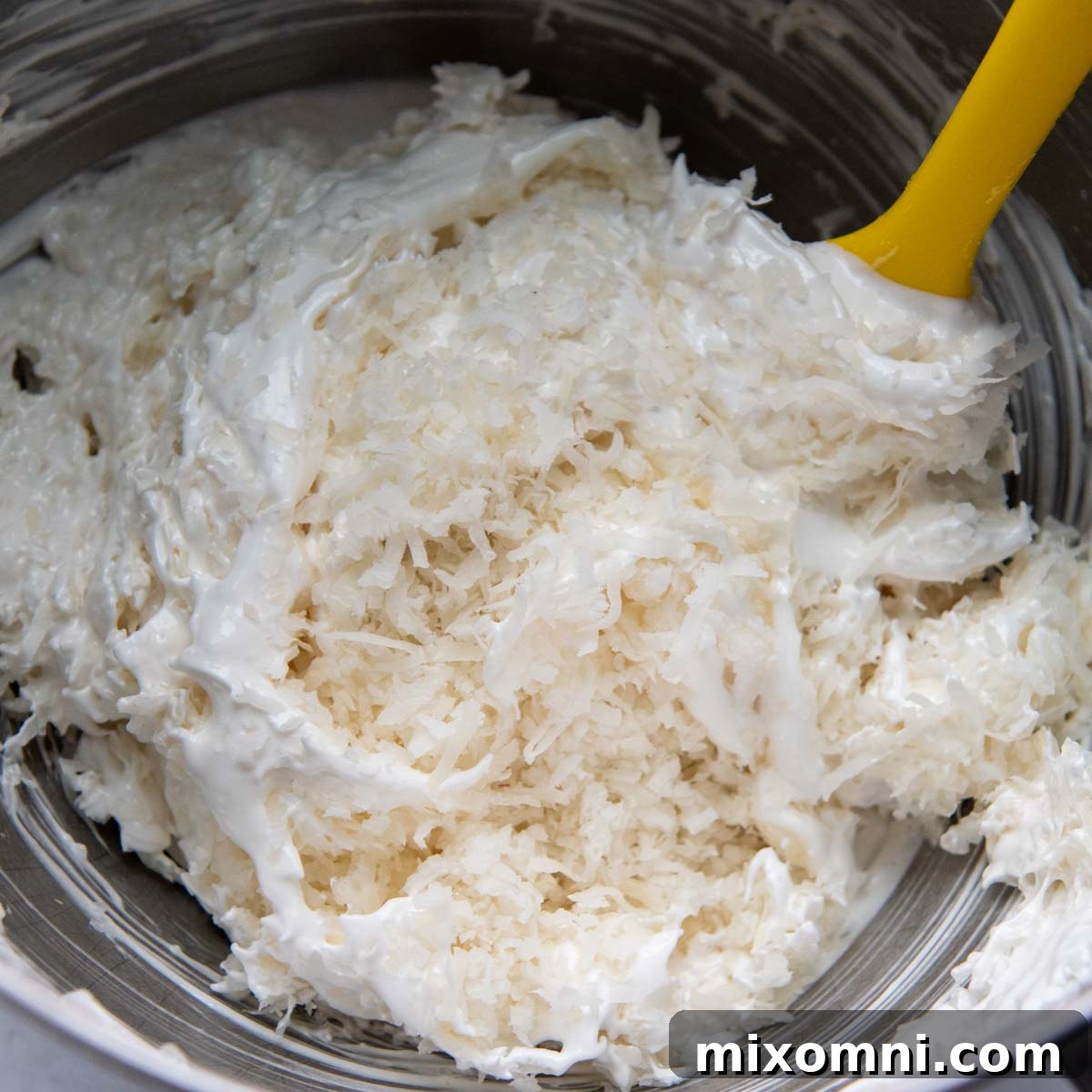
Once your meringue is ready, it’s time to incorporate the shredded coconut and your chosen special ingredient (potato starch or almond flour). The key here is gentle folding. Using a silicone spoon or spatula, carefully fold the coconut and starch into the meringue until just combined. Overmixing can deflate the precious air you’ve whipped into the egg whites, leading to a denser macaroon. This gentle technique is crucial for maintaining that light, airy texture. For an extra layer of flavor and aroma, consider toasting your shredded coconut lightly before folding it in, similar to the technique used in my favorite coconut flan recipe with a coconut crust.
Step 3: Shaping and Baking for Golden Perfection
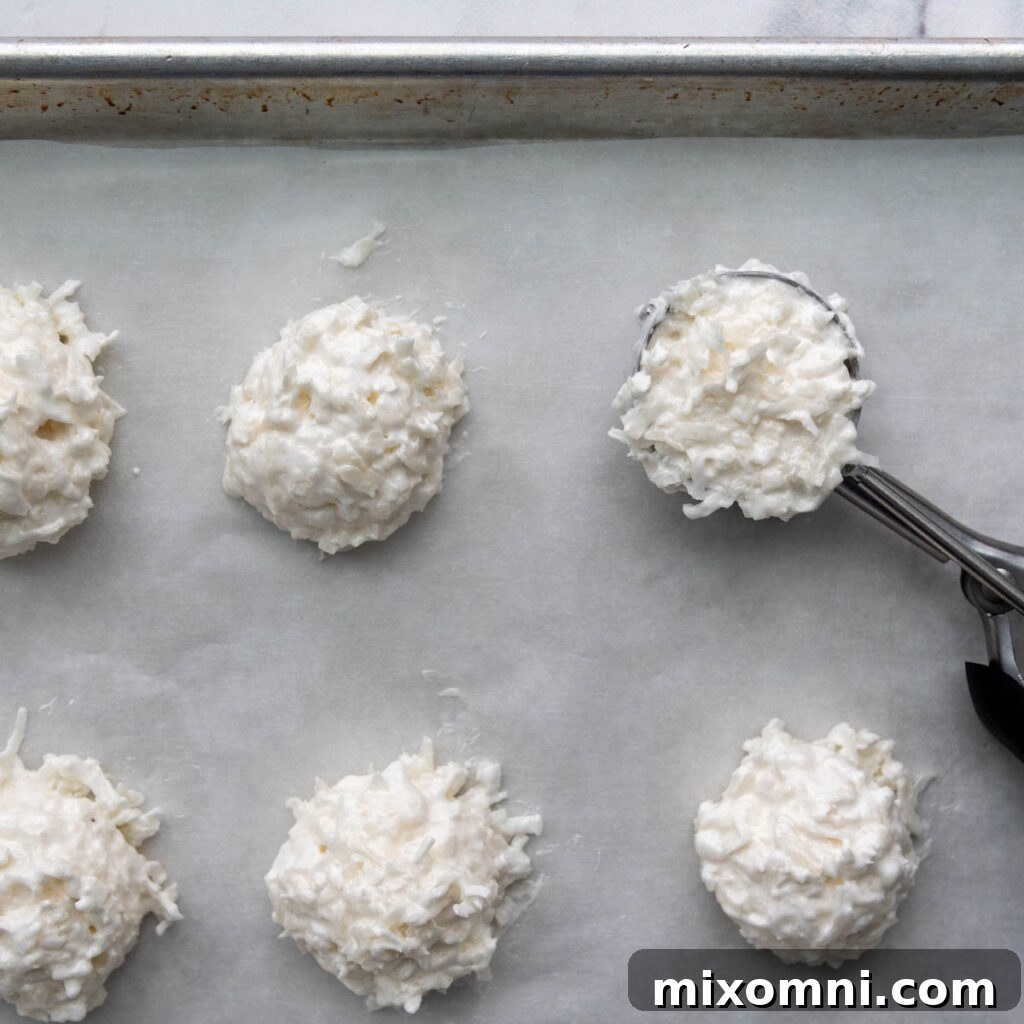
Preheat your oven to the specified temperature and line two baking sheets with parchment paper or silicone mats. Using a medium cookie scoop, or two spoons, drop mounds of the macaroon mixture, approximately 1 ½ tablespoons each, onto the prepared baking sheets. Ensure they are spaced about 1 inch apart to allow for even baking. Bake for approximately 25 minutes, rotating the pans halfway through to ensure uniform browning. The macaroons are done when they are very lightly golden brown and set. Allow them to cool on the baking sheets for about 10 minutes before carefully transferring them to a wire rack to cool completely. Or, if you can’t resist, grab one straight away – your secret is safe with me!
Tailoring Your Macaroons: The Flour Factor – Potato Starch, Almond Flour, or Flourless
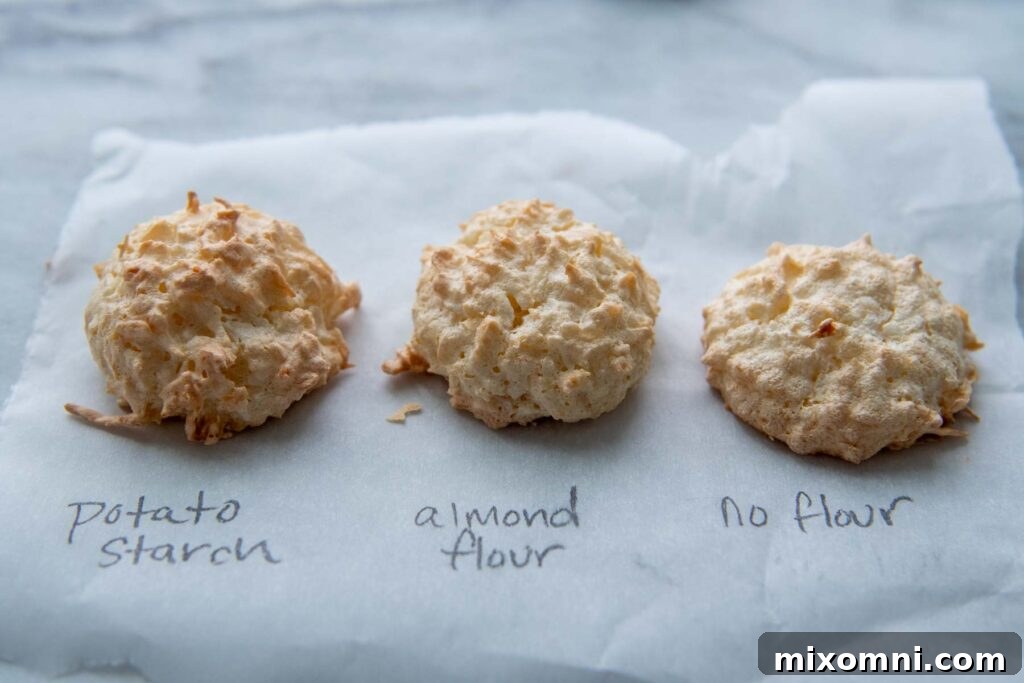
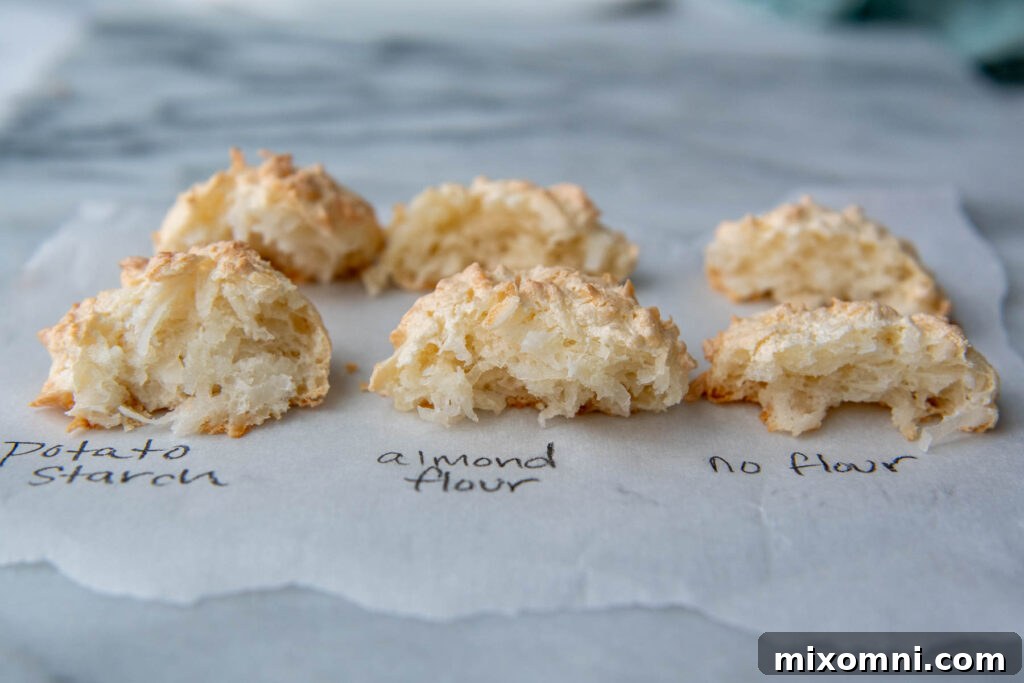
One of the most exciting aspects of this gluten-free coconut macaroon recipe is the flexibility it offers in tailoring the texture. While many macaroons are traditionally flourless, we discovered that a small addition of a gluten-free “flour” alternative can profoundly impact the cookie’s body and prevent the coconut from becoming overly compressed, leading to an even more delightful eating experience.
Potato Starch for Supreme Fluffiness
For the ultimate light, fluffy texture and a beautiful lofty structure, potato starch is your best friend. This finely milled starch excels at absorbing moisture, which is key to achieving that tender, melt-in-your-mouth interior. It provides a subtle binding effect without adding any discernible flavor, allowing the coconut to truly shine. If you’re aiming for that cloud-like quality, potato starch is the clear winner. Don’t worry if you don’t have it on hand, or prefer not to purchase an additional ingredient; simply leaving it out will still yield wonderfully airy macaroons, though they may not have quite the same “lift” and body.
Almond Flour for an Enhanced Chew and Flavor
If your preference leans towards a macaroon with a more defined mound and a satisfyingly chewy texture, replacing the potato starch with almond flour is an excellent choice. Almond flour introduces a lovely, delicate almond flavor that complements the coconut beautifully, adding a layer of complexity. To further enhance this nutty profile, consider swapping out a portion of the pure vanilla extract for almond extract. For an elegant finish and an extra crunch, sprinkle a few sliced almonds on top of the macaroons before baking. This variation is particularly popular for those who enjoy a richer, slightly more substantial cookie.
The Flourless Option: Still Deliciously Airy
For purists or those seeking a minimalist approach, opting for entirely flourless gluten-free macaroons is a perfectly viable and delicious choice. While they might be slightly less lofty and have a fractionally denser interior compared to those made with potato starch, they still boast a wonderfully airy texture thanks to the whipped meringue. This option proves that sometimes, simplicity truly is key, offering a straightforward path to delightful coconut macaroons that are naturally gluten-free.
Elevate Your Macaroons: Drizzling and Dipping in Chocolate
There’s something inherently festive about chocolate-dipped macaroons, making them an ideal treat for special holidays like Easter, Christmas, or any celebration where a touch of elegance is desired. The rich, slightly bitter notes of dark or semi-sweet chocolate provide a wonderful contrast to the sweet, tropical flavor of the coconut. If you’re catering to dietary restrictions, be sure to use high-quality non-dairy baking chips for a dairy-free friendly option.
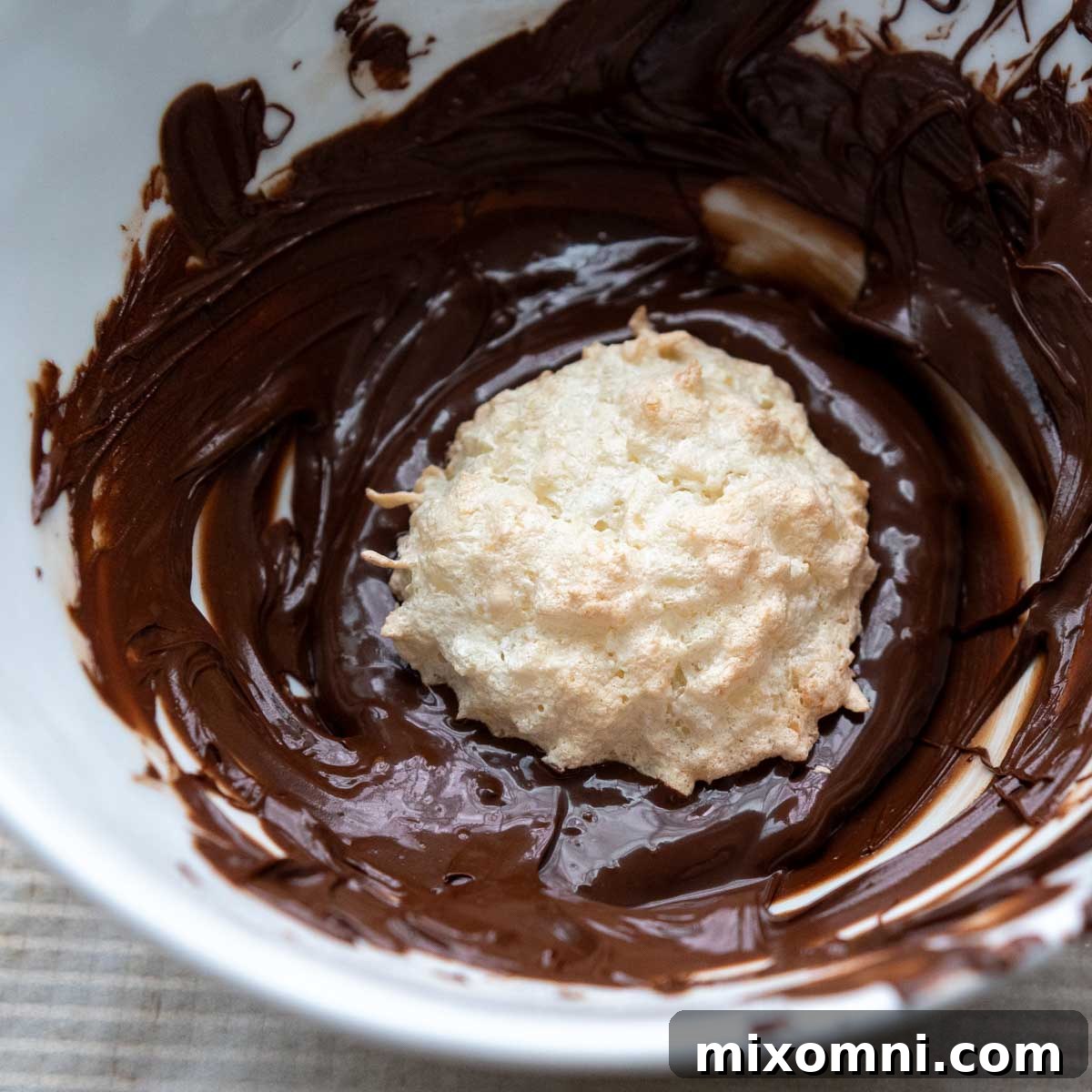
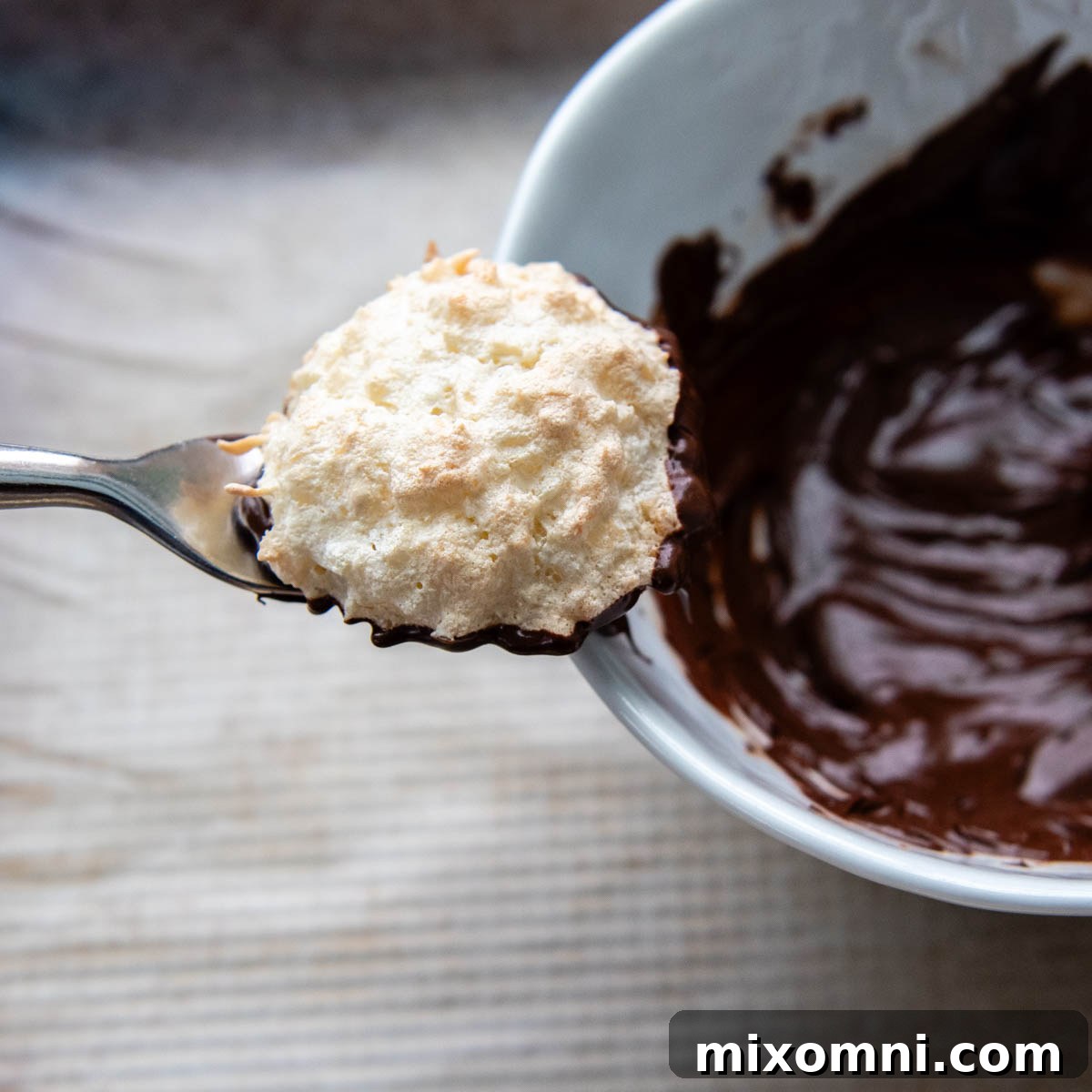
The Dipping Technique for a Professional Finish
Once your macaroons have completely cooled, prepare your melted chocolate. You can do this by gently melting chocolate chips in a microwave-safe bowl, stirring every 15-20 seconds until smooth, or using a double boiler. Line a baking sheet with wax paper or parchment paper; this will be your landing pad for the chocolate-dipped treats. Carefully take a cooled macaroon and dip its bottom into the melted chocolate. Use a fork to gently lift the macaroon out, allowing any excess chocolate to drip off or gently scraping it against the side of the bowl. Immediately transfer the dipped macaroon to your prepared baking sheet. Repeat until all macaroons are dipped, then let them sit at room temperature until the chocolate has fully hardened, which typically takes 1-2 hours.
The Effortless Drizzle for Quick Elegance
If you’re short on time or prefer a more rustic aesthetic, a chocolate drizzle is a fantastic shortcut. Arrange your cooled macaroons on a wax-paper-lined baking sheet. Using a fork or a small spoon, artfully drizzle the melted chocolate back and forth over the tops of the cookies. This method still provides that delightful chocolate flavor and visual appeal with minimal effort. For an extra festive touch, consider dusting with edible glitter or colorful sprinkles while the chocolate is still wet.
A few tips for melting chocolate: if your melted chocolate seems too thick for dipping or drizzling, add a small dash of neutral oil (such as canola, vegetable, or melted coconut oil) and stir until you reach the desired consistency. Remember that chocolate can thicken as it cools, so you may need to gently reheat it if you’re dipping a large batch.
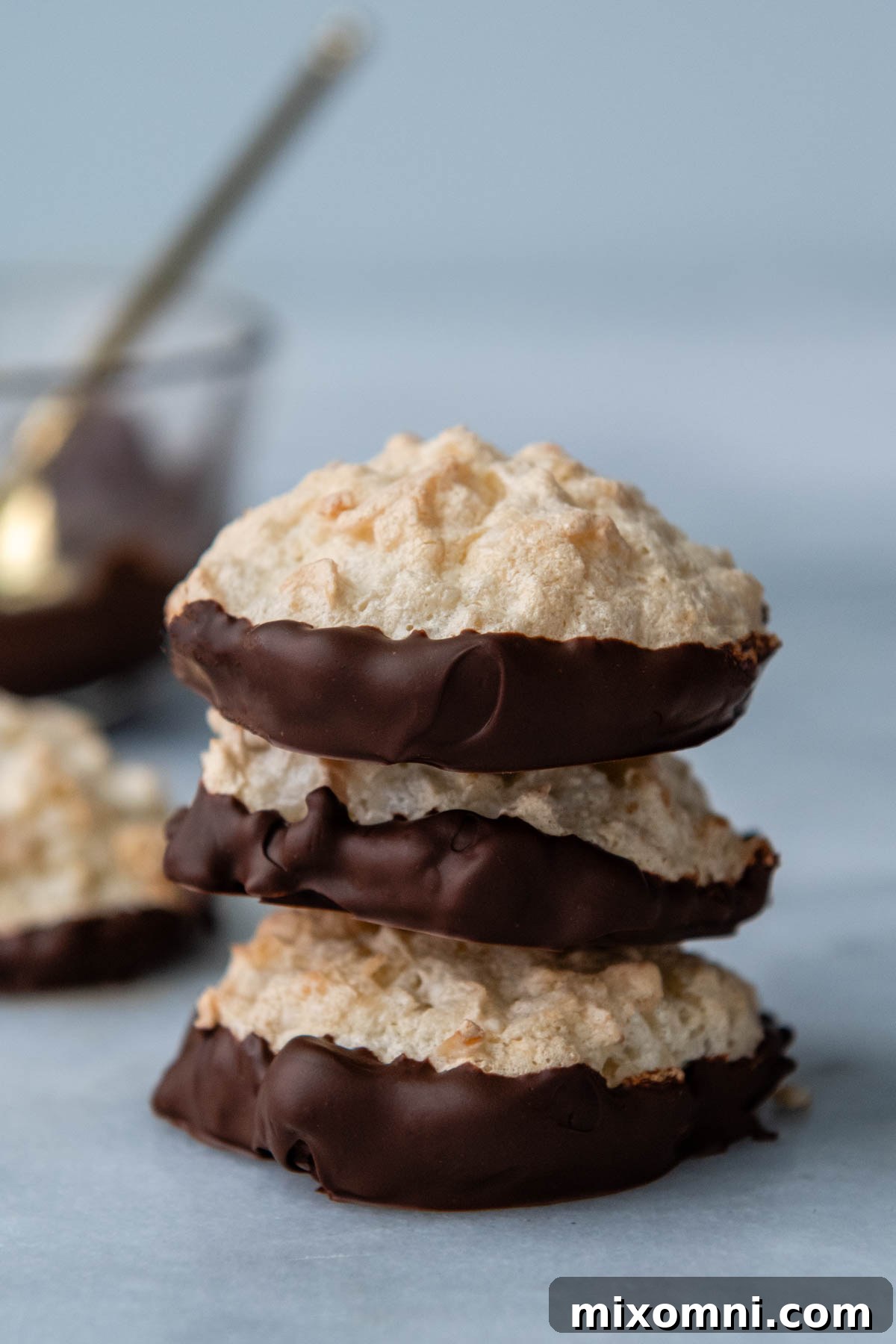
Endless Possibilities: Creative Macaroon Variations
Beyond the classic, these gluten-free coconut macaroons are a fantastic canvas for culinary creativity. Adapt them into many different flavors and versions using these delightful suggestions:
- Cherry Coconut: For a burst of fruity sweetness, drain a 10-ounce jar of maraschino cherries and blot them thoroughly with paper towels to remove excess moisture. Chop them finely and gently fold them into the coconut mixture before baking.
- Mini Chocolate Chip: Who doesn’t love chocolate? Stir in ½ cup of mini chocolate chips along with the shredded coconut for delightful pockets of melted chocolate throughout.
- Toasted Nuts: Enhance the texture and add a nutty depth by stirring in ¾ cup of toasted sliced almonds, chopped pecans, or walnuts. The slight saltiness from the nuts creates a wonderful contrast with the sweet coconut.
- Extracts Extravaganza: Get adventurous with flavor extracts! Replace the vanilla extract with coconut flavor extract for an intense coconut experience, or try almond, orange, or lemon extracts for a different aromatic profile.
- Citrus Zest: Brighten your macaroons with the vibrant essence of citrus. Stir in 1 teaspoon of fresh lemon, lime, or orange zest along with the vanilla for a fragrant and refreshing twist.
- Spiced Macaroons: For a cozy, warming flavor, add a pinch of ground cinnamon, cardamom, or even a tiny amount of nutmeg to the coconut mixture. These spices are especially wonderful during the autumn and winter months.
- White Chocolate Dream: Instead of dark chocolate, dip the cooled macaroons in melted white chocolate for a creamier, sweeter coating. You can also tint the white chocolate with food coloring for themed events!
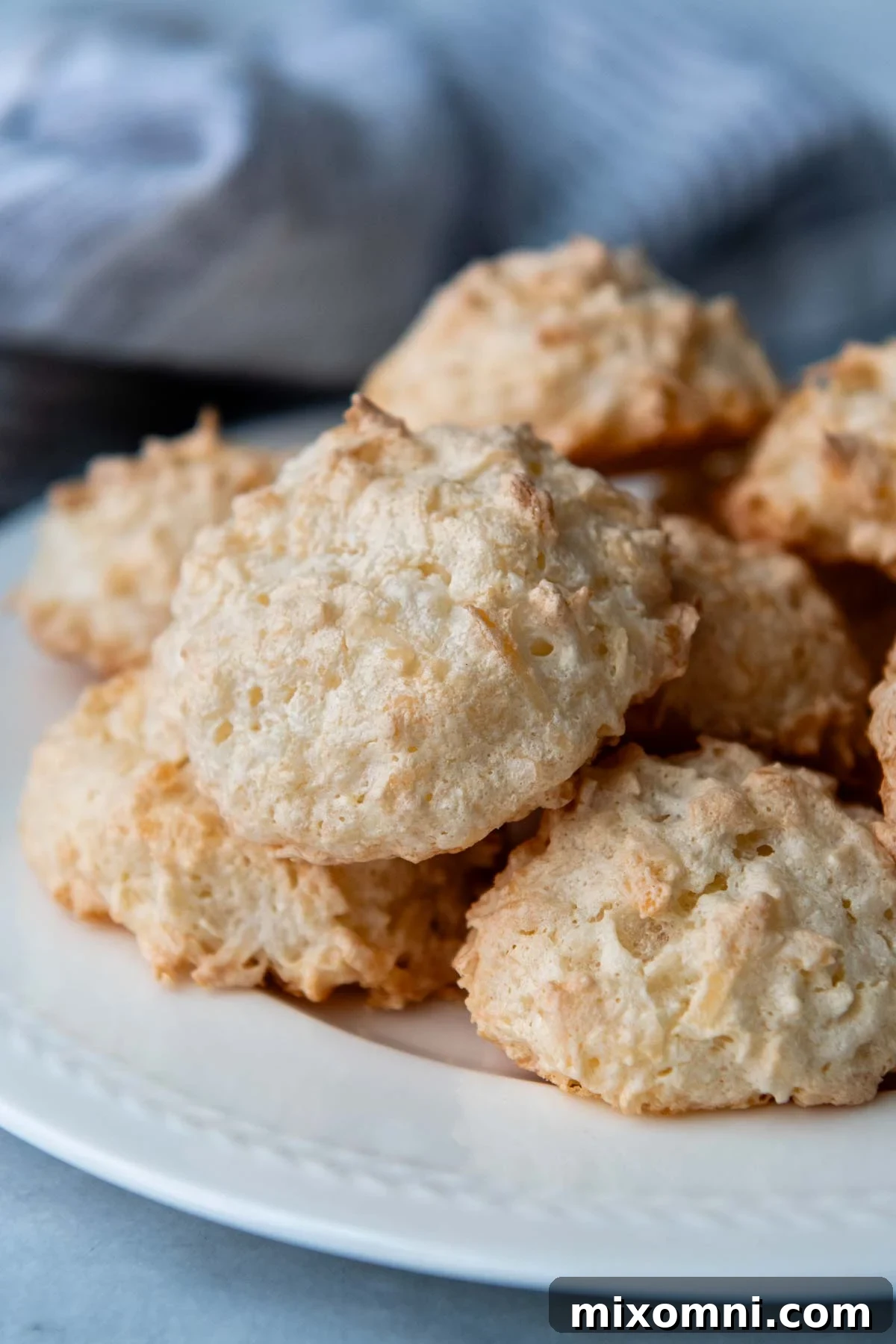
Storage and Freezing Tips for Freshness
Proper storage is key to keeping your delicious gluten-free coconut macaroons fresh and enjoyable for as long as possible.
Storing: Once completely cooled, store your macaroons in an airtight container at room temperature. They will remain fresh and delightful for up to one week. To prevent them from sticking together or losing their shape, I recommend separating layers with sheets of wax paper or parchment paper, especially if you have dipped them in chocolate.
Freezing: These macaroons freeze beautifully, making them an excellent candidate for meal prep or for having a stash of treats on hand. For best results, wrap individual macaroons or small groups of 1-2 cookies tightly in plastic wrap. Then, place the wrapped macaroons in a gallon-sized freezer bag or a freezer-safe storage container. They can be frozen for up to 3 months without compromising quality. When you’re ready to indulge, simply thaw them at room temperature for about an hour. They’ll taste just as good as freshly baked!
Frequently Asked Questions (FAQ) About Gluten-Free Coconut Macaroons
What’s the difference between macaroons and macarons?
This is a common question! Macaroons (as in “M-A-C-A-R-O-O-N-S”) are dense, chewy coconut-based cookies, often mounded or piped, and sometimes dipped in chocolate. They are typically gluten-free by nature. Macarons (as in “M-A-C-A-R-O-N-S”) are delicate French meringue-based sandwich cookies, characterized by their smooth top, ruffled “feet,” and flavorful ganache or buttercream filling. They are also usually gluten-free but much more temperamental to make and require almond flour as a primary ingredient.
Can I use unsweetened coconut in this recipe?
While the recipe specifies sweetened shredded coconut for optimal moisture and flavor balance, you can use unsweetened shredded coconut. However, note that the texture might be slightly drier, and the macaroons will be less sweet. If using unsweetened coconut, you might consider adding an extra tablespoon or two of sugar to the meringue, or adjusting your expectations for a less sweet final product.
How do I prevent my macaroons from spreading too much?
Several factors contribute to spreading. First, ensure your meringue is whipped to very stiff, glossy peaks. A weak meringue will not hold its shape. Second, avoid overmixing when folding in the coconut and starch; too much agitation can deflate the meringue. Third, ensure your oven temperature is accurate. If the oven is too cool, the macaroons will spread before they set. Lastly, make sure your baking sheets are lined with parchment paper or silicone mats, as this helps with even baking and prevents sticking.
Why are my macaroons dense instead of fluffy?
Density in macaroons is almost always related to the meringue. The most common culprits include not whipping the egg whites to sufficiently stiff peaks, or deflating the meringue by overmixing once the coconut and starch are added. Ensure your egg whites are at room temperature, that there’s no yolk contamination, and that you incorporate the dry ingredients with a gentle folding motion.
Save this recipe to your Pinterest board!
Let’s be friends on Pinterest! I’m always sharing great recipes!
Did you make this recipe? I love hearing from you! Leave a star rating and comment below the recipe card. It helps others when searching for recipes and I appreciate feedback from our community. You will always hear back from me! -Melissa
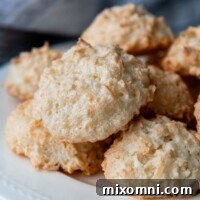
Light, Airy Gluten-Free Coconut Macaroons

Melissa Erdelac
Pin
Rate
Remove Ads
Ingredients
- 3 egg whites, from large eggs
- ⅛ teaspoon salt
- ½ cup granulated sugar
- 1 teaspoon vanilla extract
- 3 cups sweetened shredded coconut
- 2 tablespoons potato starch, or almond flour or omit flour (see recipe notes)
Equipment
- Stand Mixer
- Baking Sheets
- Medium Cookie Scoop
Instructions
- Preheat the oven to 325℉ (160°C). Line two baking sheets with parchment paper or silicone baking mats. Set aside.
- In a bowl of a stand mixer using a whisk attachment or a large mixing bowl using handheld beaters, beat together the egg whites and salt until frothy. Gradually add the sugar, stopping the mixer to add a couple tablespoons at a time. Beat until very stiff, glossy peaks form. Mix in the vanilla.
3 egg whites, ⅛ teaspoon salt, ½ cup granulated sugar, 1 teaspoon vanilla extract
- Add the coconut and potato starch. Gently combine, using a silicone spoon to fold and mix in until well incorporated. Use a medium cookie scoop or two spoons to scrape about 1 ½ tablespoon mounds onto the baking sheets, 1 inch apart.
3 cups sweetened shredded coconut, 2 tablespoons potato starch
- Bake for 25 minutes, rotating pans halfway through, until very lightly browned and set. Cool on the baking sheets for 10 minutes before transferring to a wire rack.
Notes
Potato Starch, Almond Flour, or Flourless
For the lightest, fluffy texture and loft, use potato starch in the recipe. If you do not have any on hand, or don’t want to get another ingredient, simply leave it out. It will still have airy texture, but the body won’t be as lofty.
If you prefer a more mounded cookie and enhanced chew, replace the potato starch with almond flour. It also adds a nice hint of almond flavor.
Dipping in Chocolate
In a microwave safe bowl, melt 1 cup of semi-sweet or dark chocolate chips for approximately 45 seconds, stopping to stir every 15 seconds. Line a baking sheet with wax paper to transfer the dipped cookies to.
Dip the bottom of the cooled cookie into the chocolate. Use a fork to gently lift it out of the bowl, scraping off excess chocolate on the side of the bowl. Transfer to the prepared baking sheet and let sit at room temperature until hardened, about 1-2 hours.
If you find the chocolate to be too thick for dipping or drizzling, add a small dash of oil, such as canola, vegetable, or melted coconut oil. Stir and try again. The chocolate will also thicken as it sits, so it may have to be reheated.
Storing / Freezing
Store in an airtight container up to a week. I use a glass container with a locking lid and separate layers with wax paper.
They may also be frozen for up to 3 months. For best results, wrap 1-2 cookies in plastic wrap. Freeze in a gallon ziplock freezer bag or freezer-safe storage container. When ready to serve, thaw at room temperature for 1 hour.
Carbohydrates: 10g,
Protein: 1g,
Fat: 4g,
Saturated Fat: 4g,
Polyunsaturated Fat: 0.04g,
Monounsaturated Fat: 0.2g,
Sodium: 48mg,
Potassium: 51mg,
Fiber: 1g,
Sugar: 9g,
Vitamin C: 0.1mg,
Calcium: 2mg,
Iron: 0.2mg
Did you make this recipe?
Please leave a star rating and review below. It helps others when searching for recipes and I LOVE feedback!