
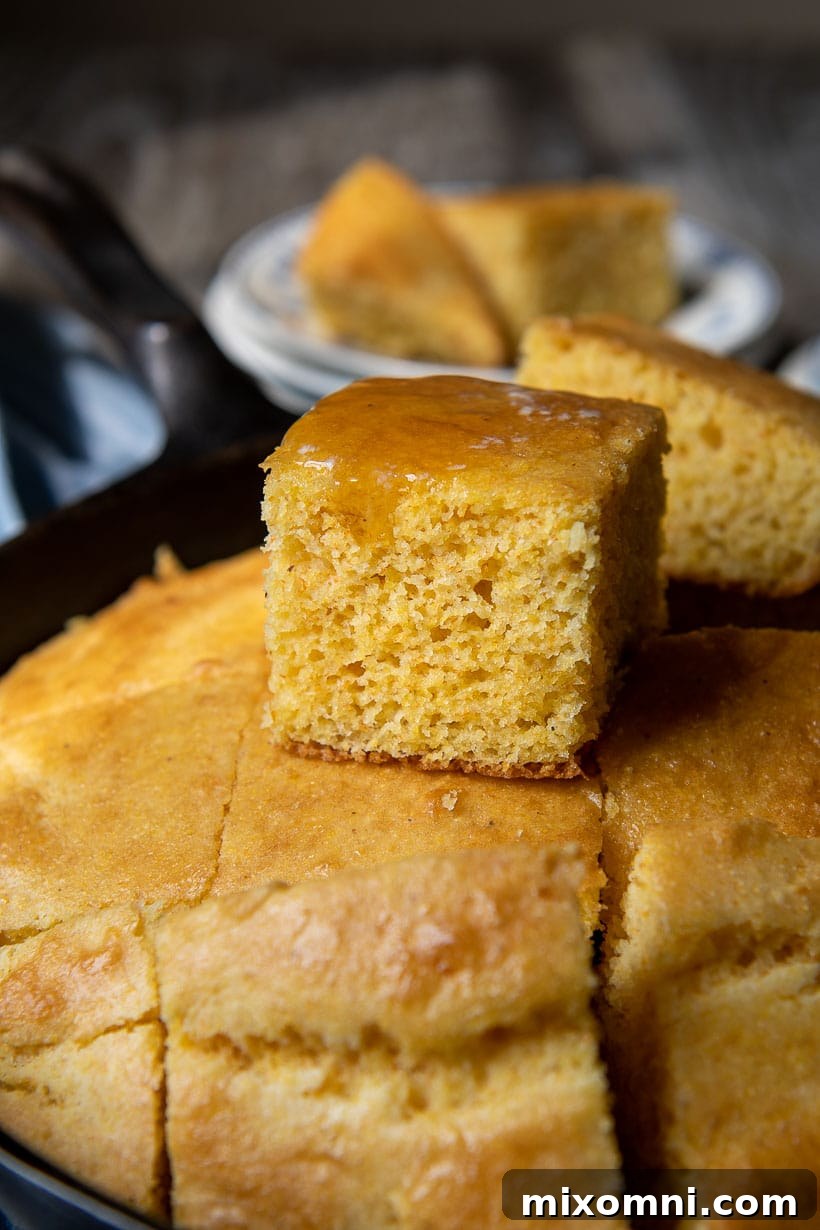
Welcome to your new favorite gluten-free cornbread recipe! If you’ve ever yearned for the nostalgic, comforting taste and texture of Jiffy mix cornbread but need a gluten-free alternative, your search ends here. This copycat recipe delivers an identical lightly sweet flavor profile and that irresistible fluffy, tender, cake-like consistency that makes cornbread a beloved classic. Forget complicated steps or exotic ingredients; this easy homemade recipe utilizes a few simple pantry staples and comes together in less than 30 minutes. Prepare to enjoy a cornbread so utterly delicious and authentic, no one will ever guess it’s a gluten-free creation!
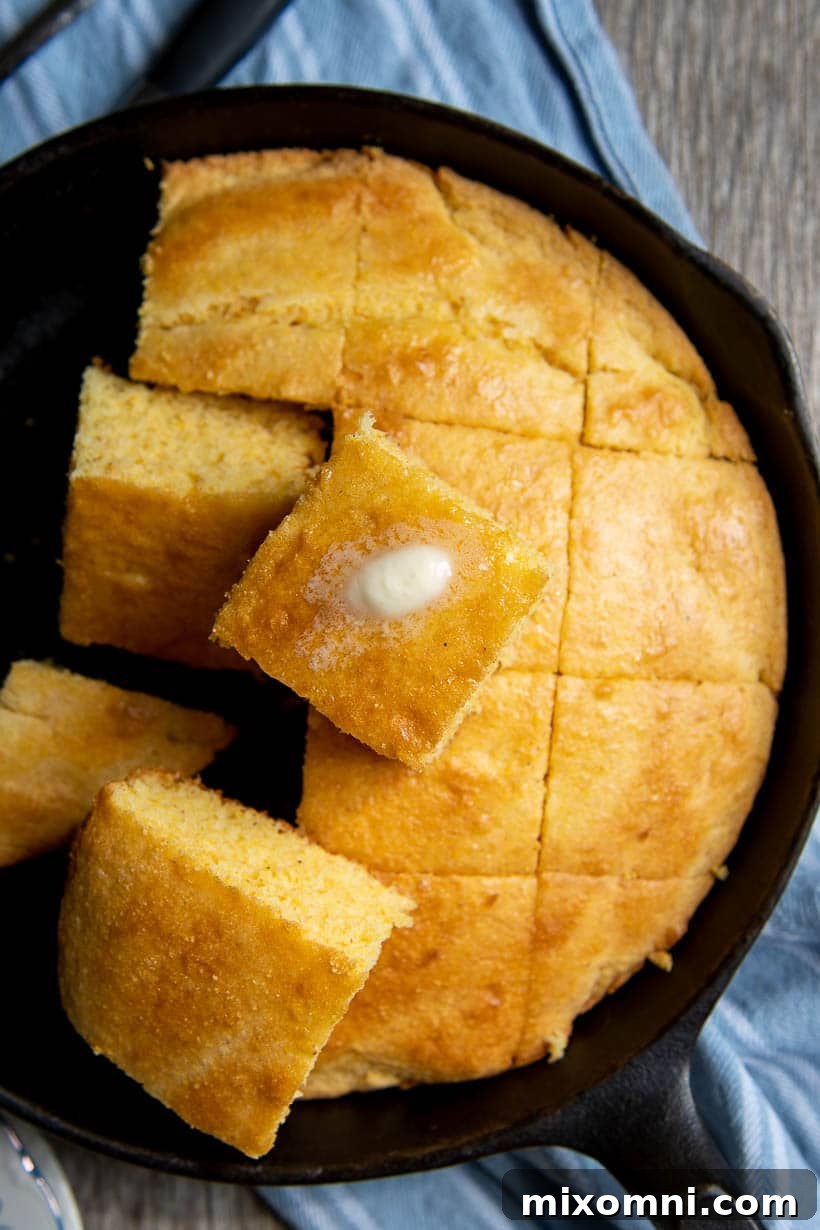
Mastering Gluten-Free Cornbread: A Recipe for Success
There’s no need to reach for another gluten-free cornbread mix when you can easily whip up a batch of this unbelievably good homemade version. This recipe is designed for simplicity, requiring minimal effort and standard kitchen ingredients. You’ll find yourself reaching for this reliable recipe again and again, whether you’re looking for a quick side for dinner or a comforting treat.
The beauty of homemade cornbread lies in its versatility. It’s the perfect companion for a wide array of dishes, from hearty gluten-free soup recipes like an award-winning Buffalo Chicken Chili, our family’s favorite Stuffed Pepper Soup, or a creamy Chicken and Dumpling Soup. Its slightly sweet and tender crumb also makes it ideal for savory pairings, soaking up the delicious flavors of stews, chili, or barbecue.
Just like many other beloved recipes shared across our site, this gluten-free cornbread relies on affordable and readily available ingredients. With cornmeal and a reliable gluten-free all-purpose flour blend always on hand, this recipe becomes a dependable “emergency” quick bread. It ranks right up there with our homemade gluten-free bread recipe as one of the most frequently made dishes, proving that delicious gluten-free baking is not only possible but incredibly easy.
Get ready to transform your gluten-free baking game. We’ll walk you through the simple steps to create this incredible homemade cornbread, complete with expert tips and tricks to ensure this becomes the only recipe you’ll ever need for perfectly fluffy, moist, and flavorful gluten-free cornbread.
My son has been on a GF diet for about 6 months and I started searching for recipes and found this cornbread! OMG, this is our new favorite cornbread, even of our old gluten laden variety. Hands down, the best. Old recipe was always crumbly and messy. This one, has a great texture and stays together, while staying moist.
—Darlene
Fluffy good cornbread! Texture is excellent, not dry and crumbly like most gluten free recipes.
—Tish
Essential Ingredients for Your Gluten-Free Cornbread
Crafting exceptional gluten-free cornbread starts with understanding the role of each ingredient. Here’s a deeper look into the components that make this recipe shine:
- Cornmeal: While cornmeal is inherently gluten-free, it’s crucial to always read labels to confirm it has been processed in a certified gluten-free facility to avoid cross-contamination. Brands like Bob’s Red Mill and Arrowhead Mills are excellent choices for certified gluten-free cornmeal. The grind size significantly impacts the final texture: finely ground cornmeal typically results in a softer, more cake-like crumb, while medium ground cornmeal contributes a coarser, more rustic, and traditional southern cornbread texture.
- Gluten-Free All-Purpose Flour: The choice of gluten-free flour blend is vital for successful baking. We highly recommend Cup4Cup gluten-free flour blend because its specific composition, including cornstarch, contributes to a wonderfully soft and tender crumb, preventing the common dryness often associated with gluten-free baked goods. However, many readers have successfully used their preferred blends, so don’t hesitate to experiment once you’re familiar with the recipe.
- Sugar: This recipe calls for granulated sugar to achieve that lightly sweet Jiffy-like flavor. For a more savory cornbread, you can easily reduce the amount of sugar. Alternatively, for natural sweetness and a different flavor profile, substitute with an equal amount of honey or pure maple syrup.
- Milk: Regular dairy milk works perfectly, but for a dairy-free gluten-free version, simply swap it with your favorite non-dairy milk, such as unsweetened almond milk or coconut milk. If you love a little tang and a richer flavor, buttermilk is also an excellent substitute, reacting with the baking soda to create an even lighter texture.
- Butter: Melted butter adds richness and moisture. To make this recipe dairy-free, use a high-quality dairy-free butter substitute, vegan butter, vegetable oil, or coconut oil. Ensure your chosen gluten-free flour blend also doesn’t contain hidden dairy if you’re aiming for a completely dairy-free result.
- Baking Powder & Baking Soda: These leavening agents are crucial for the cornbread’s fluffy rise. Baking powder provides the initial lift, while baking soda reacts with acidic ingredients (like buttermilk, if used, or the natural acidity of other ingredients) to create additional airiness.
- Eggs: Eggs bind the ingredients, add moisture, and contribute to the structure and richness of the cornbread. Lightly beaten eggs integrate more smoothly into the batter.
- Salt: A pinch of salt enhances all the flavors, balancing the sweetness and making the cornbread more savory and complex.
Watch the Recipe Video
For a visual guide to making this delightful gluten-free cornbread, you can find a comprehensive video tutorial within the recipe card below. Watching the steps can be incredibly helpful, especially for visual learners, ensuring you grasp each detail for perfect results.
Let’s Make This Together!
If you’ve been relying on a Jiffy cornbread mix but are ready to embrace the superior taste and texture of homemade gluten-free cornbread, you’re in for a treat. This recipe is so incredibly simple and rewarding, you’ll never feel the need to purchase a pre-made mix again. The process is straightforward, ensuring success even for novice bakers.
(The following section provides step-by-step photos and detailed instructions. For the complete recipe, including precise ingredient amounts and nutritional information, please scroll down to the full recipe card.)
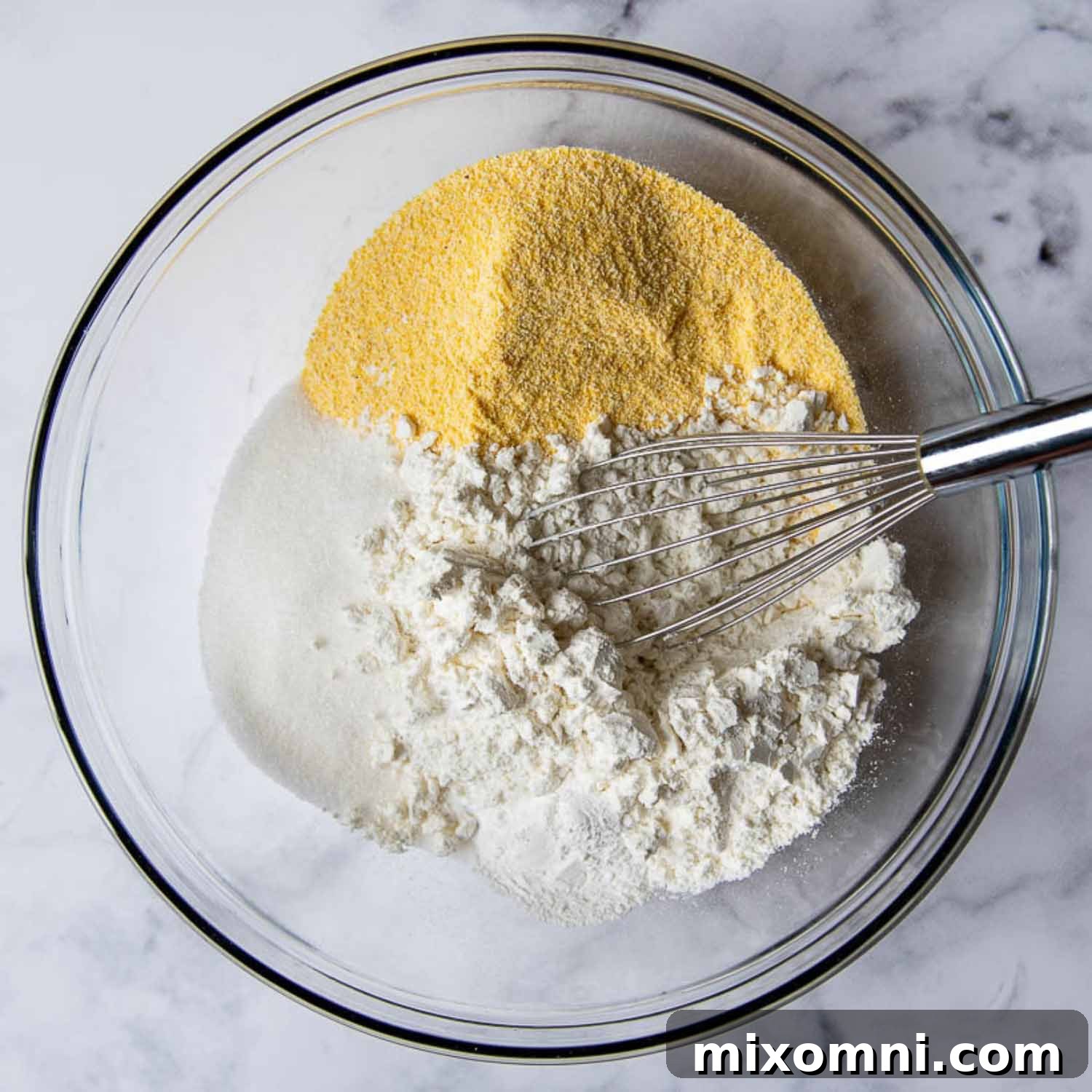
Step 1: Whisk Dry Ingredients Thoroughly
Begin by combining all the dry ingredients – cornmeal, gluten-free flour, sugar, baking powder, baking soda, and salt – in a large mixing bowl. Whisk them together thoroughly until they are well combined and there are no lumps. This ensures even distribution of the leavening agents and flavorings, which is crucial for a consistent rise and taste throughout your cornbread. If you’re aiming for an extra fluffy, cake-like gluten-free cornbread, maintain the suggested amounts of flour and cornmeal as written in the recipe card. For a more rustic, denser crumb, consider the texture adjustments discussed further below.
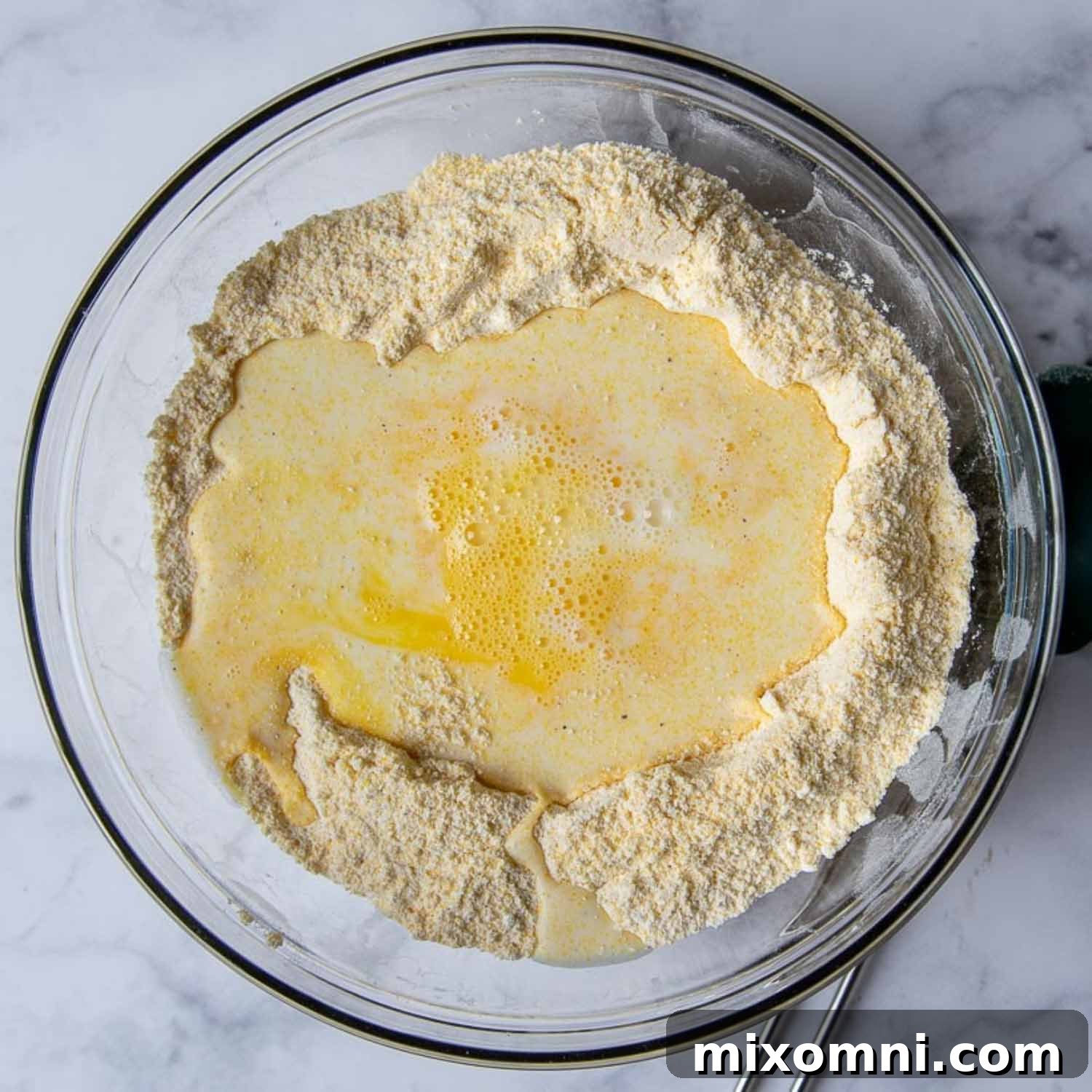
Step 2: Create a Well for Liquid Ingredients
To simplify your baking process and minimize cleanup, there’s no need for a separate bowl for your wet ingredients. Instead, simply create a deep well in the center of your whisked dry ingredients. Pour the milk and lightly beaten eggs directly into this well. This method allows you to gradually incorporate the wet into the dry, reducing the risk of overmixing and ensuring a smooth, lump-free batter. Stir gently from the center outwards until just combined.
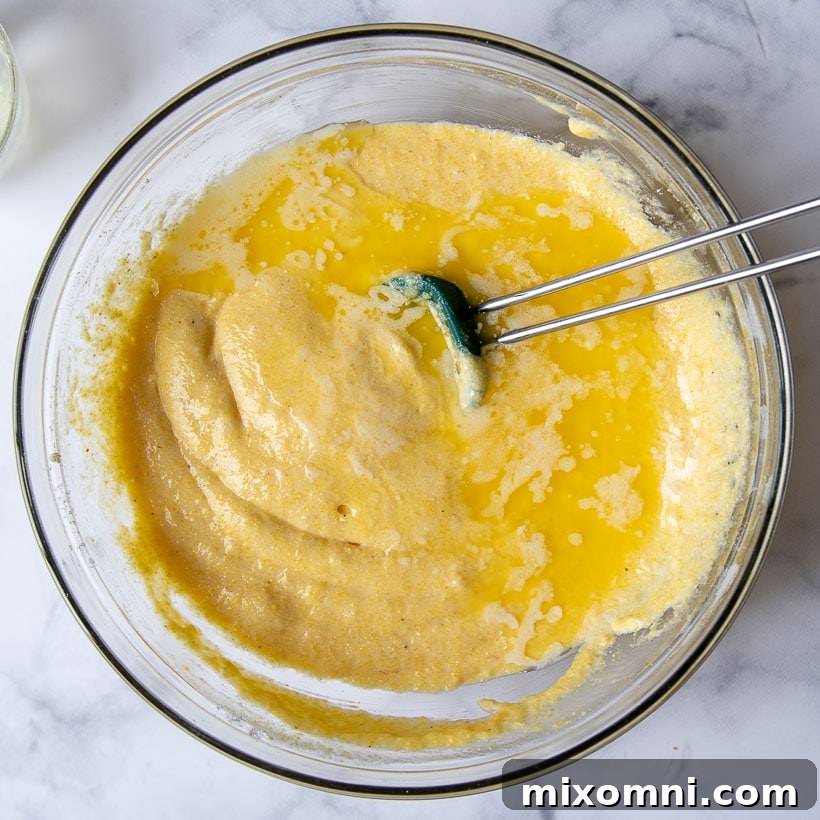
Step 3: Gently Fold in Melted Butter
The final wet ingredient to incorporate is the melted butter. It’s important that the butter is melted and then cooled slightly before adding it to the batter. This prevents it from cooking the eggs or reactivating the gluten in non-GF flour (not an issue here, but good practice). Stirring the cooled melted butter in at the end lessens the chance of it re-solidifying when it comes into contact with colder ingredients. Mix until just combined, being careful not to overmix, which can lead to a tougher cornbread. A few small lumps are perfectly fine and often result in a more tender crumb.
Pro Tips for Perfectly Baked Gluten-Free Cornbread
Achieving the perfect texture and golden crust on your gluten-free cornbread is easy with these expert baking tips:
Preheat Your Baking Pan: While you’re preparing the batter, place your greased cast iron skillet or baking pan in the oven for about 10 minutes as it preheats. Pouring the batter into a hot, buttered pan creates an instant sizzle, which is the secret to achieving those desirable crispy, golden-brown edges and a beautifully caramelized bottom crust, reminiscent of classic southern cornbread.
Rest the Batter: After mixing, allow the cornbread batter to rest at room temperature for 5-10 minutes before baking. This crucial step serves multiple purposes: it gives the baking powder and baking soda time to fully activate, ensuring a superior rise and lighter crumb. More importantly for gluten-free baking, it allows the starches in the gluten-free flour and cornmeal to properly hydrate. This hydration is key to preventing a dry, crumbly texture and results in a wonderfully moist and tender cornbread.
Delicious Serving Suggestions and Flavor Modifications
This gluten-free cornbread is fantastic on its own, but it also serves as a perfect canvas for creative flavor enhancements. Here are some of our favorite ways to enjoy and customize it:
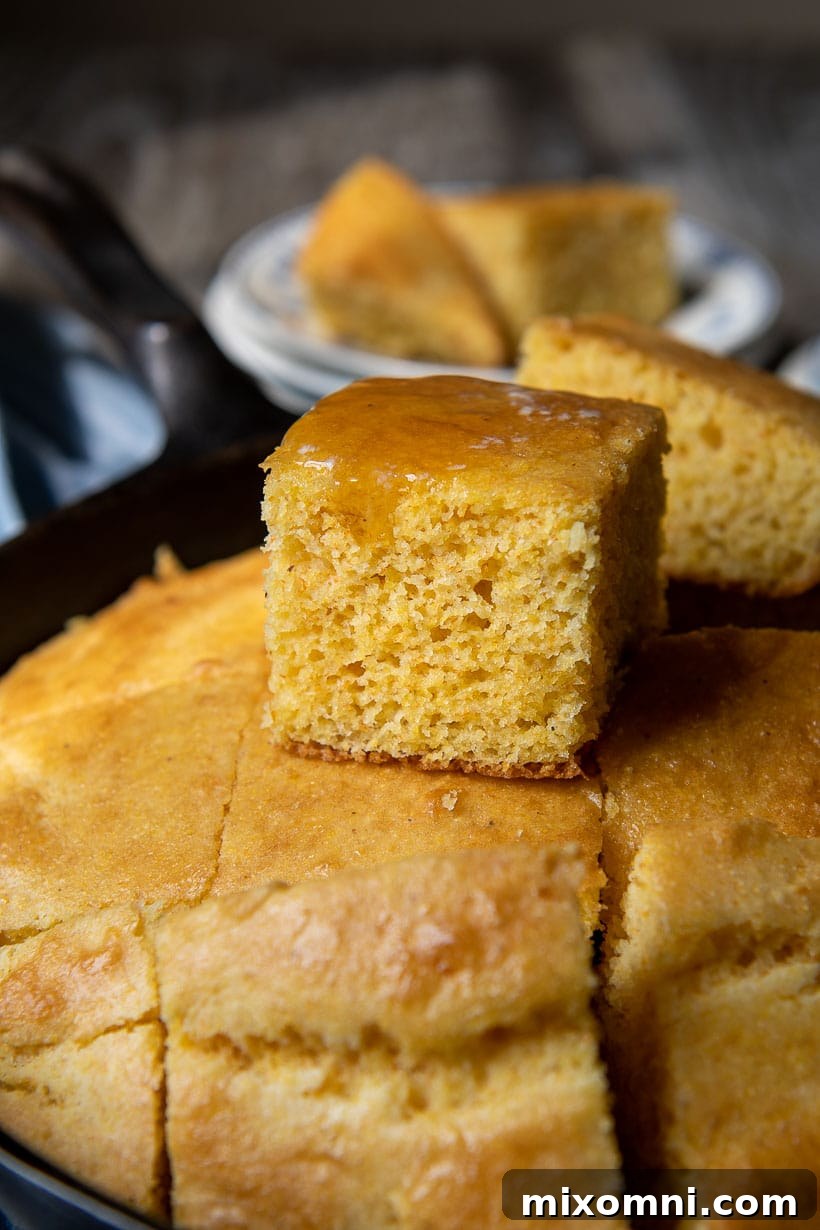
- Honey Butter: Elevate your cornbread experience with a quick and easy homemade honey butter. Simply mix together 1/4 cup of softened butter (or dairy-free butter) with 2 tablespoons of honey and a pinch of salt until well combined. Spread generously over warm cornbread for an irresistible sweet and savory touch.
- Spicy Jalapeño: For a kick, stir in 1-2 fresh jalapeño peppers, finely minced, directly into the batter before baking. For extra heat, leave some of the seeds in. This adds a vibrant, savory spice that complements the cornbread beautifully.
- Smoky Bacon: Instead of granulated sugar, try sweetening your cornbread with maple syrup. Then, stir in 6 slices of cooked and crumbled bacon into the batter. For an extra smoky garnish, sprinkle additional chopped bacon on top before baking. This makes for an incredibly flavorful and robust cornbread, perfect alongside stews or barbecue.
- Sharp Cheddar: For a truly savory treat, fold 1 cup of freshly grated sharp cheddar cheese into the batter. Sprinkle a little extra cheddar on top of the cornbread before it goes into the oven to create a golden, cheesy crust. This pairs wonderfully with chili and other savory main courses.
- Fresh Herbs: Add finely chopped fresh chives, rosemary, or thyme to the batter for an aromatic twist.
- Green Onions: Mix in chopped green onions for a mild onion flavor and a pop of color.
- Creamed Corn: For an ultra-moist and slightly sweeter cornbread, fold in half a cup of creamed corn (ensure it’s gluten-free) into the batter.
Beyond these modifications, warm cornbread is delicious with a drizzle of maple syrup for breakfast, served alongside a bowl of hearty chili, or as a complement to a classic barbecue spread.
Customize Your Cornbread: Fluffy Cake-Like vs. Rustic Southern
One of the best aspects of this gluten-free cornbread recipe is its flexibility, allowing you to easily adjust the texture to match your preference. Whether you desire an extra fluffy, cake-like crumb or a denser, more rustic southern-style cornbread, it’s simple to achieve, and we do it all the time!
For a Softer, More Cakey Crumb: If your preference leans towards a lighter, fluffier texture that’s closer to cake, simply adjust the ratio of flour to cornmeal. Use 1 ¼ cups of gluten-free all-purpose flour and ¾ cup of cornmeal. The higher proportion of flour contributes to a finer, more tender crumb that melts in your mouth.
For a Coarser, Rustic Southern Cornbread: If you prefer the traditional, hearty texture of authentic southern cornbread, simply reverse the ratio. Use 1 ¼ cups of cornmeal and ¾ cup of gluten-free all-purpose flour. The increased cornmeal content will yield a denser, more robust cornbread with a delightful chew and a more pronounced corn flavor. This version pairs exceptionally well with savory dishes.
You can also fine-tune the amount of sugar to perfectly fit each version. A slightly sweeter profile often suits the cake-like version, while the rustic style can be made less sweet or even savory to complement hearty meals.
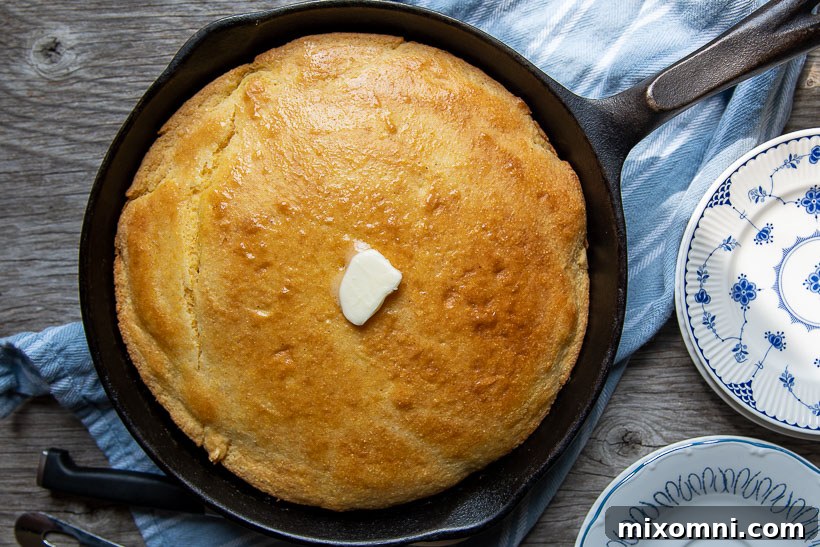
Don’t Forget to Pin This Recipe for Later!
Let’s be friends on Pinterest! We’re always sharing delicious new recipes and baking tips!
Did you try this recipe? We love hearing your feedback! Please leave a star rating and comment below the recipe card. Your reviews help other home cooks discover and enjoy our recipes, and we truly value your input. We always strive to respond to every comment! -Melissa
Uber Fluffy, Moist Gluten-Free Cornbread (Like Jiffy!)
 Melissa Erdelac
If you loved Jiffy mix cornbread, this copycat gluten-free cornbread has an identical lightly sweet taste and fluffy, tender, cake-like texture. This easy homemade recipe requires a few simple ingredients and less than 30 minutes to enjoy a cornbread so good no one will realize it’s gluten-free!
Pin
Rate
Ingredients
- 1 cup (150 g) cornmeal, (Use certified gluten-free cornmeal to ensure safe processing)
- 1 cup (146 g) gluten free all purpose flour, (I recommend Cup4Cup gluten-free brand)
- ⅓ cup (67 g) granulated sugar
- 2 teaspoons baking powder
- ½ teaspoon baking soda
- ¼ teaspoon salt
- 2 large eggs, lightly beaten
- 1 cup (245 g) milk, regular or dairy-free
- 4 tablespoons (57 g) melted and cooled butter, (see recipe notes for dairy-free)
- additional butter,, for greasing
Equipment
-
Iron Skillet
-
Gluten Free Cornmeal
-
Cup 4 Cup Gluten Free Flour
Instructions
-
Preheat oven to 375ºF (190°C). Liberally grease a 10″ cast iron skillet or an 8×8 inch baking pan with about 1/2 tablespoon of butter. Place the greased pan on the middle rack while the oven preheats. This crucial step helps achieve a crispy, golden crust.
-
In a large bowl, whisk together the cornmeal, gluten-free all-purpose flour, granulated sugar, baking powder, baking soda, and salt until all dry ingredients are thoroughly combined and evenly distributed. This prevents pockets of leavening agents or uneven sweetness.
1 cup cornmeal, 1 cup gluten free all purpose flour, ⅓ cup granulated sugar, 2 teaspoons baking powder, ½ teaspoon baking soda, ¼ teaspoon salt -
Push the dry ingredients to the sides of the bowl to create a well in the middle. Add the milk and lightly beaten eggs to the well. Begin stirring gently from the center, gradually incorporating the dry ingredients into the wet until just combined. Be careful not to overmix.
2 large eggs, 1 cup milk -
Add the melted and cooled butter to the batter. Stir until it is thoroughly combined, ensuring no streaks of butter remain. Then, let the batter rest at room temperature for 5-10 minutes. This resting period allows the leavening agents to activate and the flours to hydrate, resulting in a moister and fluffier cornbread.
4 tablespoons melted and cooled butter -
Carefully remove the hot pan from the oven and immediately pour the prepared batter into it. Smooth the top evenly with a spatula. Place the pan back into the preheated oven. Bake for 20 minutes, rotating the pan halfway through for even browning. If you are not using a cast iron skillet, baking time may vary slightly, potentially taking a few extra minutes. The cornbread is done when a toothpick inserted into the center comes out clean. Enjoy your freshly baked, fluffy gluten-free cornbread!
Notes
To bake gluten-free corn muffins, refer to our dedicated muffin recipe for specific instructions and baking times.
Storing and Freezing Tips
Once your gluten-free cornbread has completely cooled, store it in an airtight container at room temperature for up to 2 days. Avoid storing it in the refrigerator, as this can cause it to dry out quickly and lose its tender texture.
For optimal freshness and to prolong its shelf life, we highly recommend freezing any leftover gluten-free baked goods right away, as they tend to not stay fresh as long as their gluten-containing counterparts. Wrap individual slices or muffins tightly in plastic wrap, then place them in a freezer-safe container or a heavy-duty freezer bag. Frozen cornbread can be stored for up to 3 months. To enjoy, simply thaw at room temperature or gently reheat in the oven or microwave.
Dairy-Free Modifications
To make this recipe entirely dairy-free, substitute the regular milk with a non-dairy alternative such as unsweetened almond milk or coconut milk. For the butter, use a dairy-free butter substitute, vegan butter, vegetable oil, or an equal amount of coconut oil. When choosing your gluten-free all-purpose flour blend, always double-check the ingredient labels, as some blends may contain milk powder. This ensures your cornbread is suitable for those with dairy allergies or sensitivities.
Calories: 190kcal, Carbohydrates: 29g, Protein: 5g, Fat: 7g, Saturated Fat: 3g, Cholesterol: 46mg, Sodium: 177mg, Potassium: 180mg, Fiber: 3g, Sugar: 9g, Vitamin A: 234IU, Calcium: 78mg, Iron: 1mg