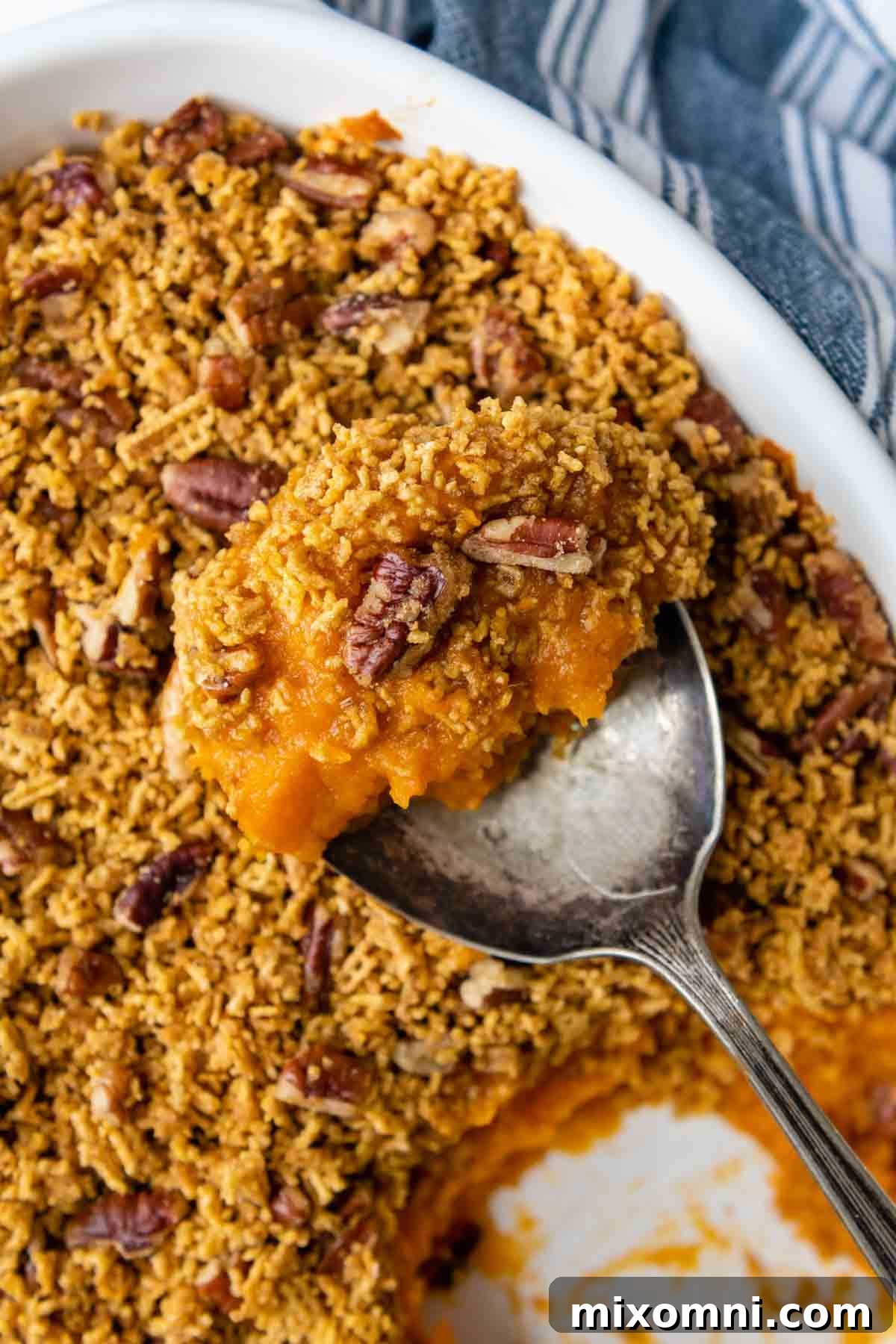
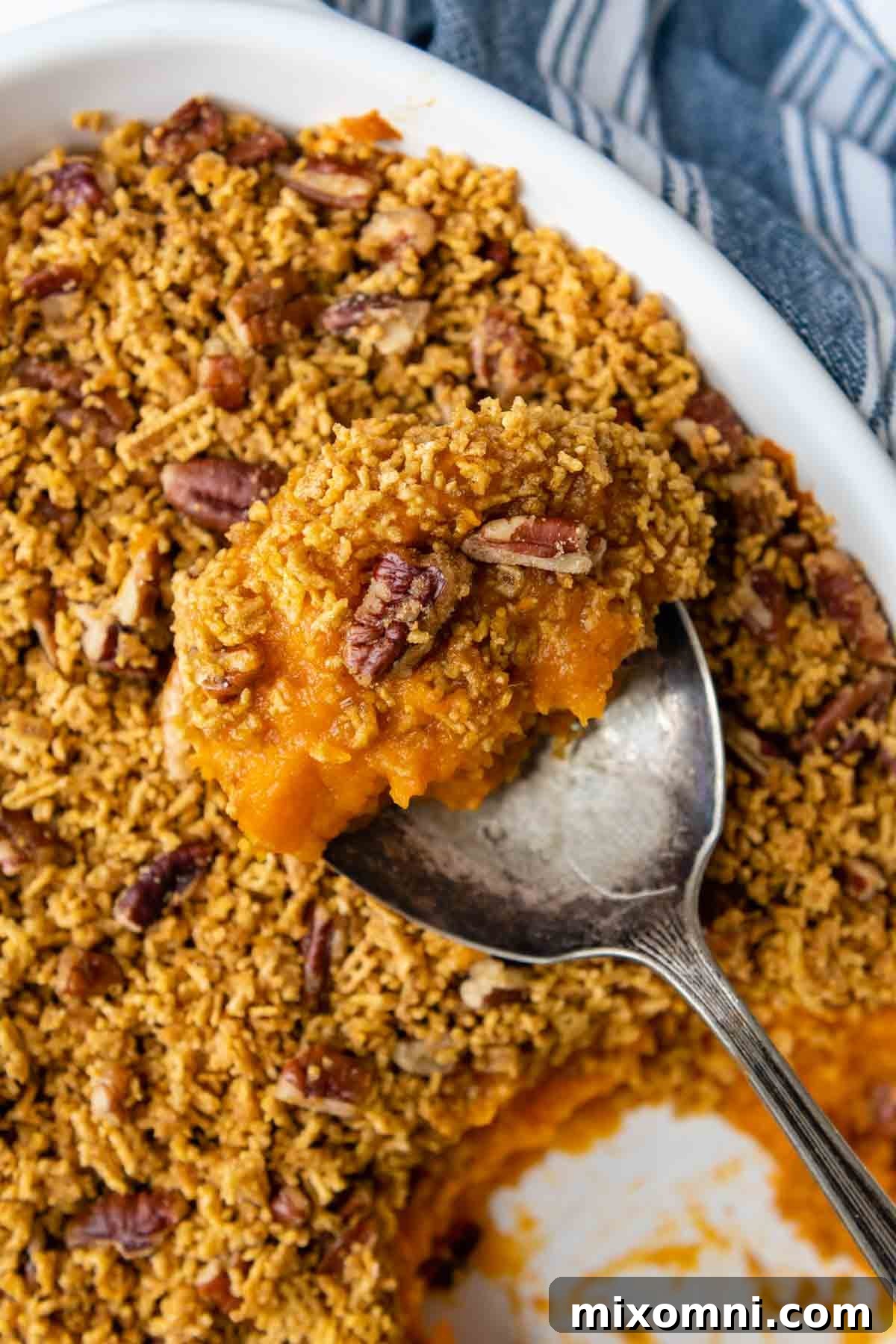
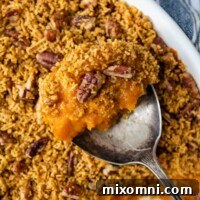
Delight in the ultimate holiday side dish with this incredibly easy and utterly delicious gluten-free sweet potato casserole. Gone are the days of needing obscure specialty ingredients; this recipe brings a classic comfort food to every table. It features a beautifully fluffy sweet potato base, subtly sweetened with brown sugar and brightened with a hint of orange zest. The crowning glory is a delightful crunchy pecan Chex cereal topping, making it effortlessly simple to prepare, even for those new to gluten-free cooking or baking.
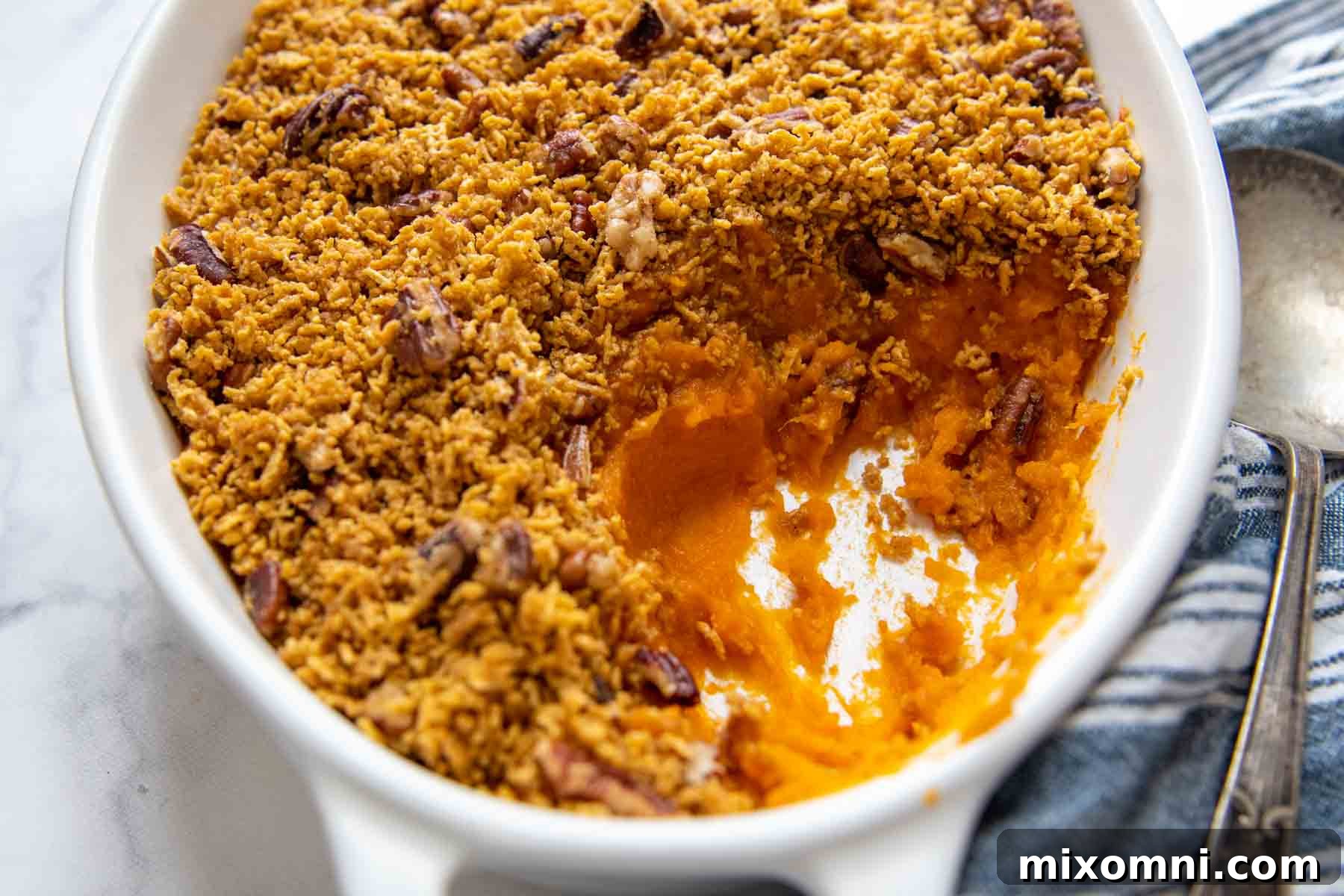
The Best Gluten-Free Sweet Potato Casserole for Every Occasion
Sweet potato casserole is an undisputed star of holiday feasts, particularly at Thanksgiving. Alongside beloved dishes such as gluten-free green bean casserole, rich gluten-free gravy, and a comforting traditional gluten-free stuffing, it holds a cherished place. Ensuring every guest can partake in these traditional flavors is paramount, especially when accommodating those with celiac disease or gluten sensitivities. This recipe is meticulously crafted to be a showstopper that everyone will adore, making it a perfect addition to any gluten-free Thanksgiving dinner or family gathering.
What sets this gluten-free sweet potato casserole apart is its innovative and delightful topping. We’ve swapped traditional crumbly toppings, which often contain wheat flour, for a naturally gluten-free alternative: Chex cereal. Combined with crunchy pecans, a touch of butter, and brown sugar, it creates an irresistible sweet and savory contrast. The beauty of these ingredients lies in their accessibility and affordability, reflecting the philosophy behind many recipes, including those found in my gluten-free cookbook. This means you can create a truly exceptional dish without any fuss or frantic searches for specialty items.
Beyond being gluten-free, this recipe is remarkably adaptable. To create a dairy-free sweet potato casserole, simply substitute heavy cream with full-fat coconut milk and butter with a plant-based dairy-free butter. For an egg-free or vegan version, consider using a reliable egg replacer or a tablespoon of cornstarch to bind the sweet potato base. These simple swaps ensure that this comforting casserole can be enjoyed by a wider array of dietary preferences without compromising on taste or texture.
Are Sweet Potatoes Naturally Gluten-Free?
Yes, absolutely! Sweet potatoes themselves are a wonderful, naturally gluten-free food. They are inherently safe for individuals following a gluten-free diet, whether due to celiac disease, gluten sensitivity, or personal preference. This makes them an excellent foundation for a wide range of allergy-friendly dishes.
However, it’s crucial to be mindful of cross-contamination, especially when dining out or preparing food in shared kitchens. For instance, sweet potato fries might become contaminated if cooked in the same fryer as wheat-battered items. Similarly, many conventional sweet potato casseroles often feature toppings like streusel or crumbles that contain wheat flour, making them unsuitable for gluten-free diets. Always double-check ingredient lists or ask about preparation methods when in doubt.
If you’re a fan of the sweet potato and looking for more naturally gluten-free delights, be sure to explore recipes like authentic southern sweet potato spoon bread, which offers a unique savory-sweet profile, or this expertly crafted gluten-free sweet potato pie, perfect for dessert.
Mastering the Perfect Sweet Potato Base: Roasting vs. Boiling
The foundation of an extraordinary sweet potato casserole lies in how you prepare the sweet potatoes themselves. While boiling is a common method, roasting stands out as the superior technique, yielding a much richer flavor and a more desirable texture for your casserole base. Roasting at a higher temperature caramelizes the natural sugars in the sweet potatoes, intensifying their sweetness and depth of flavor. This process also helps to evaporate excess moisture, preventing the final casserole from becoming watery or runny – a common pitfall with boiled potatoes.
To roast, simply scrub the sweet potatoes clean, prick them several times with a fork, and bake them directly in their skins until fork-tender. The skins will easily peel away once cooled, leaving you with perfectly cooked, concentrated sweet potato flesh that is naturally drier and sweeter. This method ensures your casserole will have that coveted creamy, luxurious texture without any dilution of flavor. It’s a small extra step that makes a monumental difference in the overall quality and taste of your gluten-free sweet potato casserole.
Essential Ingredients & Smart Substitutions for Your Casserole
Creating a delicious gluten-free sweet potato casserole is simple with readily available ingredients. Many components can also be easily adapted to suit dairy-free or vegan diets, making this recipe highly versatile. Here’s a detailed look at the key ingredients and recommended substitutions:
- Sweet Potatoes: As discussed, roasting the sweet potatoes is highly recommended. It concentrates and caramelizes their natural sugars, leading to a richer flavor and a beautifully fluffy, less watery casserole base. If you must, boiling can work, but ensure they are thoroughly drained.
- Heavy Cream: A modest amount of heavy cream adds a luxurious richness and extra creaminess to the mashed sweet potatoes. For dairy-free options, excellent substitutions include full-fat coconut milk (for a richer result), half and half, whole milk, or even softened cream cheese for added tang and body. Almond milk can also be used for a lighter dairy-free alternative.
- Butter: Essential for flavor and moisture in the potato base and the topping. For a dairy-free recipe, simply replace regular butter with a high-quality plant-based vegan butter or coconut oil.
- Brown Sugar or Maple Syrup: These provide a deeper, more nuanced sweetness than white sugar. The amount specified in the recipe card is generally a reduced quantity, as many traditional sweet potato casserole recipes tend to be overly sweet. Feel free to adjust to your personal taste, but remember the sweet potatoes themselves are naturally sweet.
- Egg: Acts as a binder, helping the casserole hold its shape and providing a tender texture. For an egg-free sweet potato casserole, you can use a commercial egg replacer (prepared according to package directions) or substitute with 1 tablespoon of cornstarch mixed with 2 tablespoons of water per egg.
- Orange Zest: This ingredient is a secret weapon! It doesn’t overpower the casserole but introduces a unique, bright, and fragrant hint of citrus that beautifully complements the earthy sweetness of the potatoes. If you prefer to omit it, or don’t have an orange on hand, you can replace it with ½ teaspoon of cinnamon, a dash of nutmeg, or 1 teaspoon of vanilla extract for a different warm flavor profile.
- Chex Cereal: This is the hero of our crunchy topping! It’s an excellent gluten-free spin on classic Southern casseroles that traditionally use cornflake toppings, which are often not gluten-free. Use either rice or corn Chex cereal. Alternatively, you can find gluten-free cornflakes from brands like Nature’s Path. The key is to crush them lightly for texture.
- Pecans: Chopped pecans add a wonderful nutty flavor and a satisfying salty crunch that balances the sweetness of the topping. If pecans aren’t your preference, or you’re looking for a different topping entirely, refer to the Gluten-Free Sweet Potato Casserole Topping Variations section below for other delicious ideas, such as marshmallows.
How to Make Gluten-Free Sweet Potato Casserole: Step-by-Step Guide
Creating this gluten-free sweet potato casserole is a straightforward process, making it an ideal recipe for both seasoned and novice cooks. Below are step-by-step photos and detailed instructions. For the complete recipe, including precise ingredient amounts, please scroll down to the recipe card.
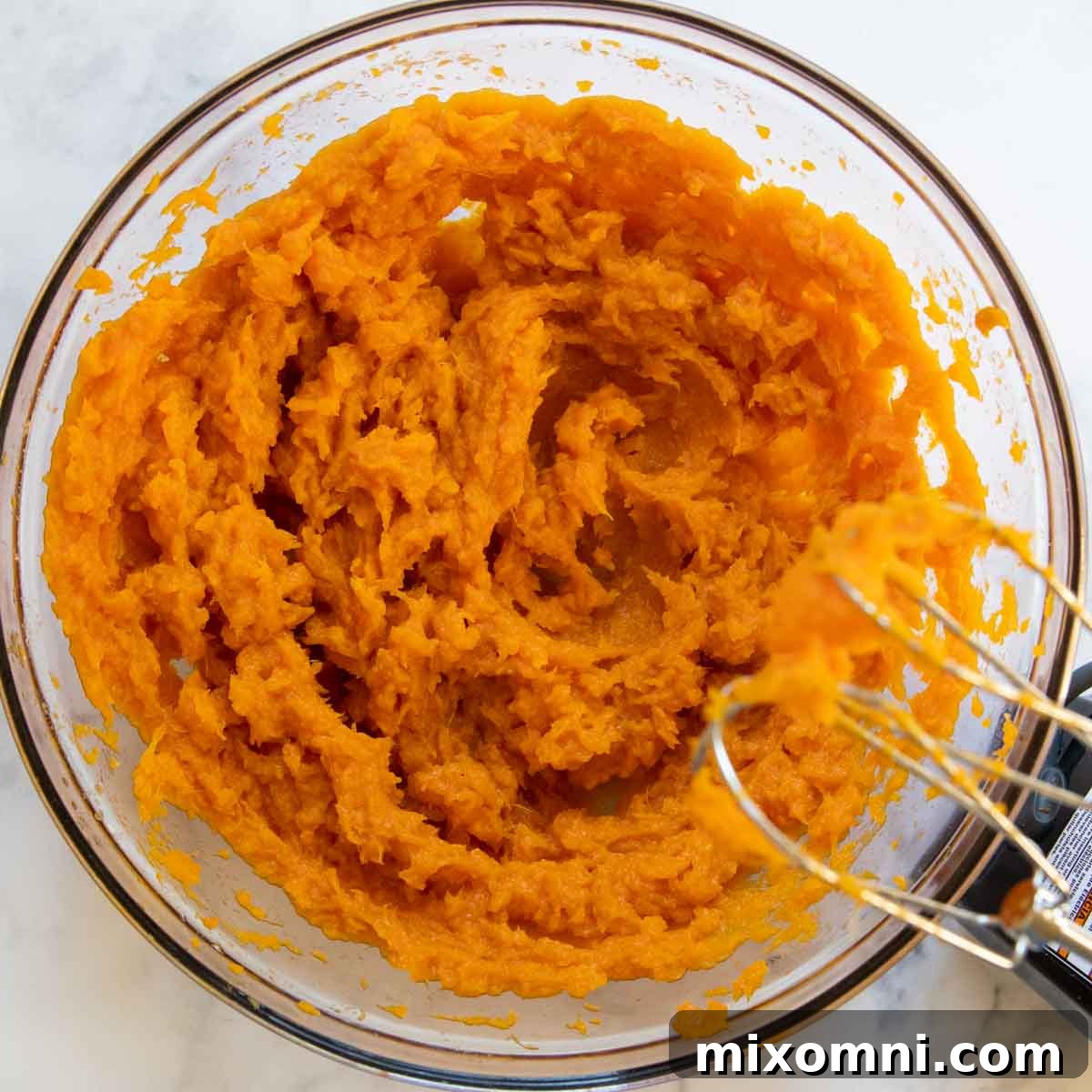
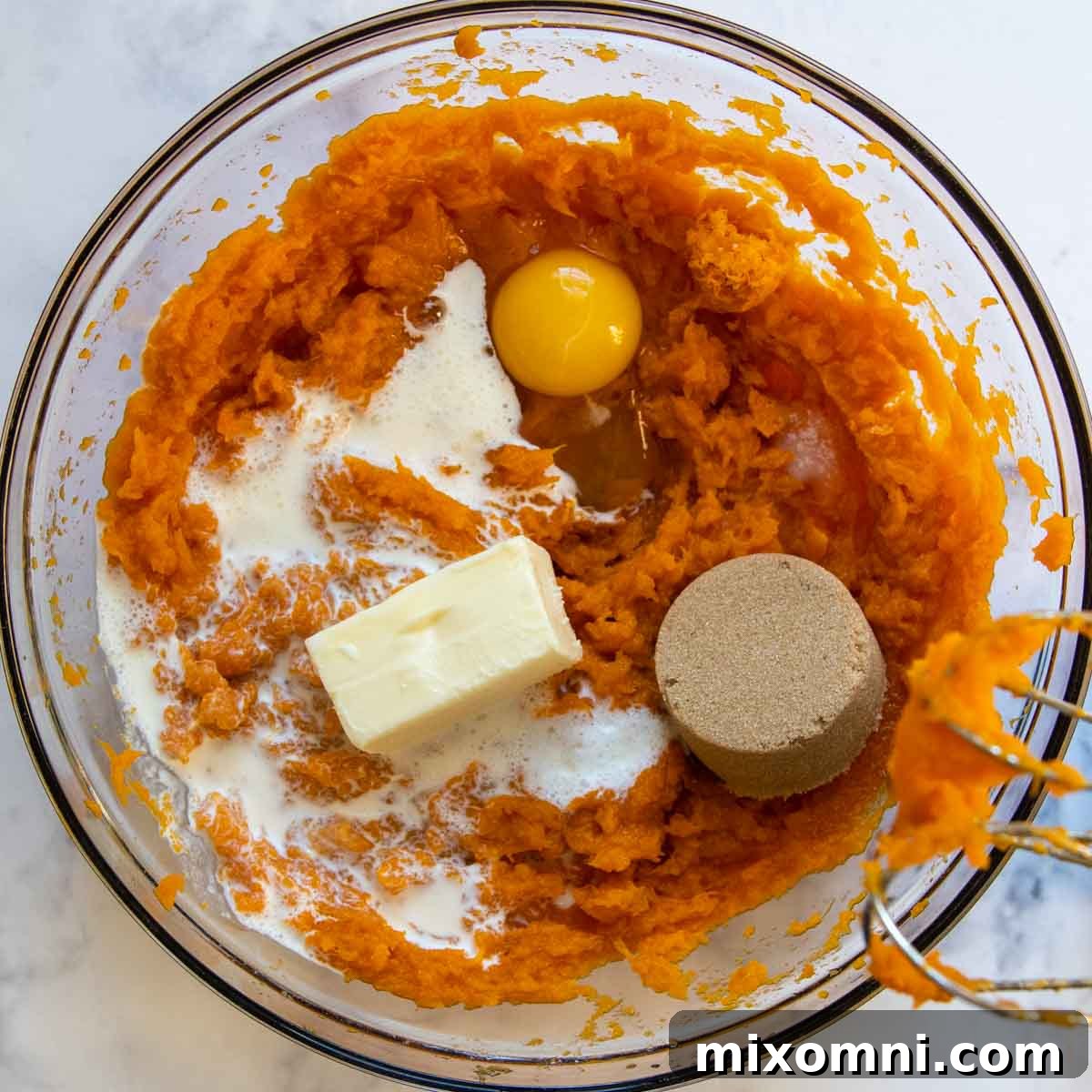
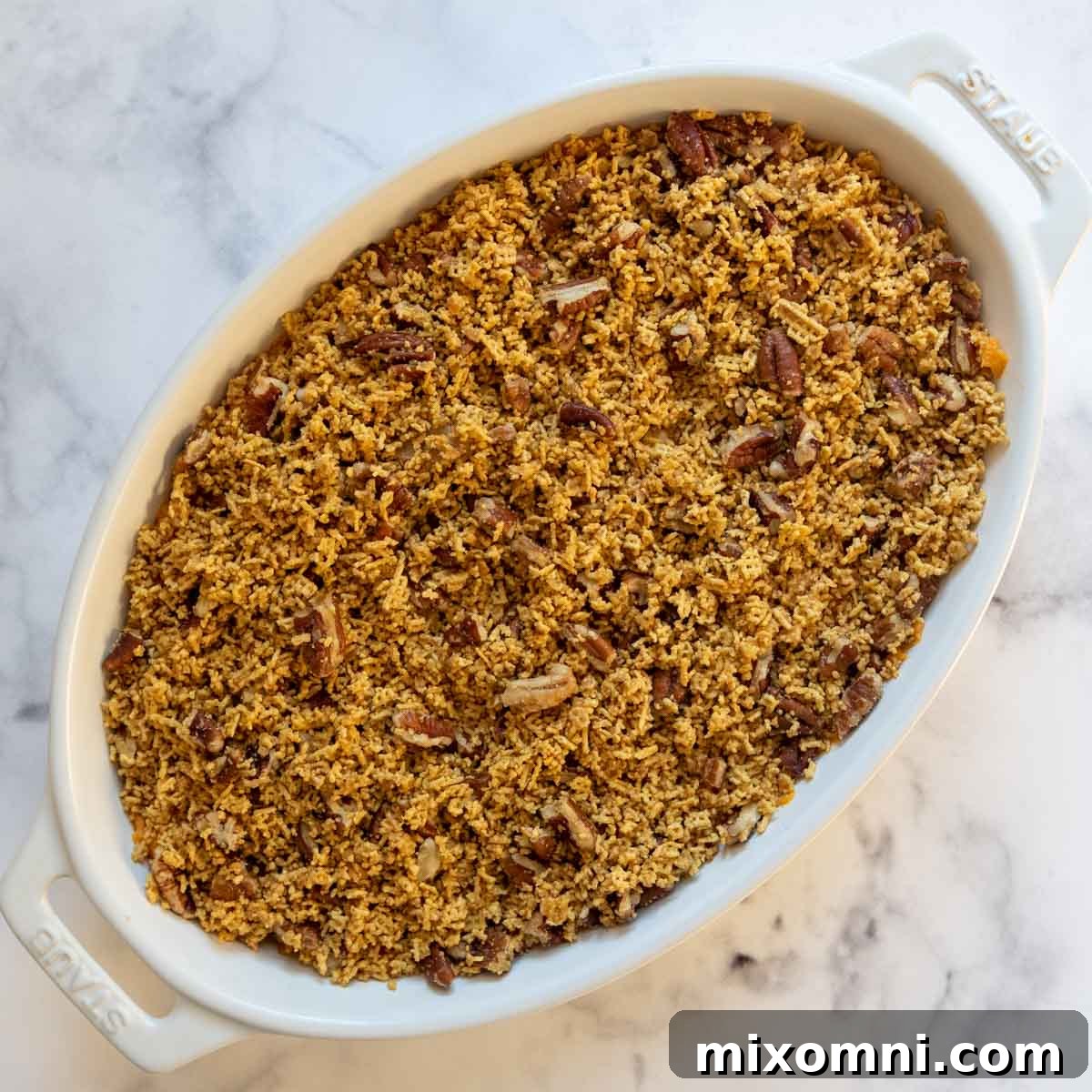
- Prepare Sweet Potatoes: Preheat your oven to 400ºF (200ºC). Line a baking pan with foil or parchment paper. Thoroughly prick the sweet potatoes 5-6 times with a fork to allow steam to escape. Roast for 50-60 minutes, turning them halfway through, until they are exceptionally fork-tender and slightly caramelized.
- Mash the Base: Once the roasted sweet potatoes are cool enough to handle, carefully peel away their skins. Transfer the soft, cooked flesh to a large mixing bowl. Using a hand-held mixer or a potato masher, mash the potatoes until they are smooth and free of lumps.
- Combine Casserole Ingredients: To the mashed sweet potatoes, pour in the heavy cream, softened butter, brown sugar, whisked egg, fresh orange zest, and salt. Beat the mixture again with the hand mixer until all ingredients are thoroughly combined and the base is wonderfully smooth and fluffy. Spread this mixture evenly into a 2-quart baking dish.
- Prepare the Topping: In a separate medium bowl, combine the crushed Chex cereal, chopped pecans, melted butter, brown sugar, a pinch of cinnamon, and a tiny pinch of salt. Mix these ingredients together until the cereal and pecans are well coated. Sprinkle this delicious crunchy topping evenly over the sweet potato mixture in the baking dish.
- Bake to Perfection: Reduce the oven temperature to 350ºF (175ºC). Bake the casserole for 30 minutes, or until the sweet potato base is heated through in the center and the pecan Chex topping is golden brown and delightfully crisp. Serve warm and enjoy!
Gluten-Free Sweet Potato Casserole Topping Variations
While our crunchy pecan Chex topping is a fan favorite, there are many delicious ways to top your gluten-free sweet potato casserole, ensuring there’s an option for everyone’s taste!
Classic Marshmallow Topping: Instead of a pecan topping, you can opt for the beloved marshmallow topping. You will need a 10-ounce bag of mini marshmallows. The key to a perfect marshmallow topping is timing: do NOT sprinkle the marshmallows on top until the last 5 minutes of baking. This ensures they become beautifully golden and toasted without burning.
The Best of Both Worlds: Half and Half Topping: Can’t decide between crunchy pecans and gooey marshmallows? Why not have both! You can easily create a half and half topping. Prepare half the amount of the pecan crunch recipe and sprinkle it over one side of the casserole. For the other half, add your mini marshmallows during the last 5 minutes of baking. This thoughtful approach gives your guests the freedom to choose their preferred topping, making your holiday spread even more inclusive and enjoyable.
Dairy-Free and Egg-Free Modifications for Your Casserole
Adapting this recipe for specific dietary needs, such as dairy-free or egg-free, is incredibly simple, allowing even more people to enjoy this delightful side dish.
- For a Gluten-Free Dairy-Free Sweet Potato Casserole:
- Butter Swap: Replace traditional butter with an equal amount of high-quality plant-based vegan butter or coconut oil. Both options work beautifully, adding richness without dairy.
- Cream Substitute: Instead of heavy cream, opt for full-fat coconut milk (for a richer texture and subtle tropical hint) or unsweetened dairy-free almond milk (for a lighter consistency). Ensure you use full-fat coconut milk from a can for the best creamy results.
- For an Egg-Free Sweet Potato Casserole (which can also be vegan if combined with dairy-free modifications):
- Egg Replacer: Substitute the large egg with a commercial egg replacer, prepared according to its package instructions. Many excellent brands are available that mimic the binding properties of eggs.
- Cornstarch Option: Alternatively, use 1 tablespoon of cornstarch mixed with 2 tablespoons of water per egg. This creates a slurry that acts as an effective binder in the casserole.
By implementing these straightforward modifications, you can confidently serve a gluten-free sweet potato casserole that caters to various dietary requirements, ensuring everyone at your table can indulge in this comforting classic.
Scaling and Serving Suggestions for Your Gathering
This recipe, as written, is baked in a 2-quart casserole dish, which is roughly equivalent to an 8×8 inch, 9×9 inch, or a 9-10 inch pie plate. It typically yields about 9 servings, perfect for an average family meal or a smaller holiday gathering. Given that holiday tables are often laden with a bounty of side dishes, this quantity is usually sufficient to offer generous portions without overwhelming guests.
Doubling the Recipe for Larger Groups: If you’re hosting a larger gathering, anticipating bigger appetites, or simply want plenty of leftovers, this recipe can be easily doubled. For a double batch, transfer the sweet potato mixture into a larger 9×13 inch casserole dish. Be mindful that doubling the recipe will naturally extend the baking time. Expect to add approximately 10-15 minutes to the baking duration to ensure the center is thoroughly heated through and the topping is perfectly golden and crisp.
This casserole is a versatile addition to any meal, not just Thanksgiving! It pairs wonderfully with roasted chicken, pork tenderloin, or as a hearty side dish for Sunday dinner. Its comforting flavors make it a welcome presence at any festive table.
Can I Use Canned Sweet Potatoes or Yams?
Yes, absolutely! While roasting fresh sweet potatoes provides the best depth of flavor and prevents a watery casserole, using canned sweet potatoes or yams is a convenient shortcut, especially when time is short. To use canned varieties, you will typically need two 29-ounce cans, ensuring they are thoroughly drained before mashing.
Important Note on Sweetness: Many canned sweet potatoes or yams are packed in syrup, which significantly increases their sweetness. If you opt for canned, it’s highly recommended to either completely omit the brown sugar from the sweet potato mixture or reduce the amount by at least half. Taste the mashed sweet potato mixture before adding sugar and adjust as needed to avoid an overly sweet casserole. You can always add more sugar, but you can’t take it away!
Make-Ahead and Rewarming Tips for Convenience
This gluten-free sweet potato casserole is an excellent candidate for make-ahead preparation, a lifesaver during busy holiday seasons or when entertaining. Preparing it in advance allows you to minimize stress on the day of your event, without sacrificing flavor or quality.
- Make-Ahead Instructions: Prepare the entire casserole, including the sweet potato base and the pecan Chex topping, as directed in the recipe. Once assembled, allow the casserole to cool completely to room temperature. This is a crucial step to prevent condensation. Once cool, cover the baking dish tightly with aluminum foil or plastic wrap. Store it in the refrigerator for up to 24 hours before you plan to bake it. For best results, it’s often better to bake the topping fresh, so you can alternatively prepare the sweet potato base and store the topping ingredients separately, sprinkling them just before baking.
- Rewarming for Optimal Results: On the day of baking, remove the casserole from the refrigerator and let it sit at room temperature for at least 1 hour. This helps to ensure more even heating. Remove the foil (if covering the topping) and bake as directed in the recipe. Depending on how cold the casserole was when it went into the oven, you may need to extend the baking time by an additional 5-15 minutes, or until the center is piping hot and the topping is golden and crisp. If the topping starts to brown too quickly, you can loosely cover it with foil during the last part of baking.
These make-ahead options offer tremendous flexibility, ensuring you can enjoy a freshly baked, delicious gluten-free sweet potato casserole with minimal last-minute effort.
Click here to see thestep-by-step web story instructions for this recipe!
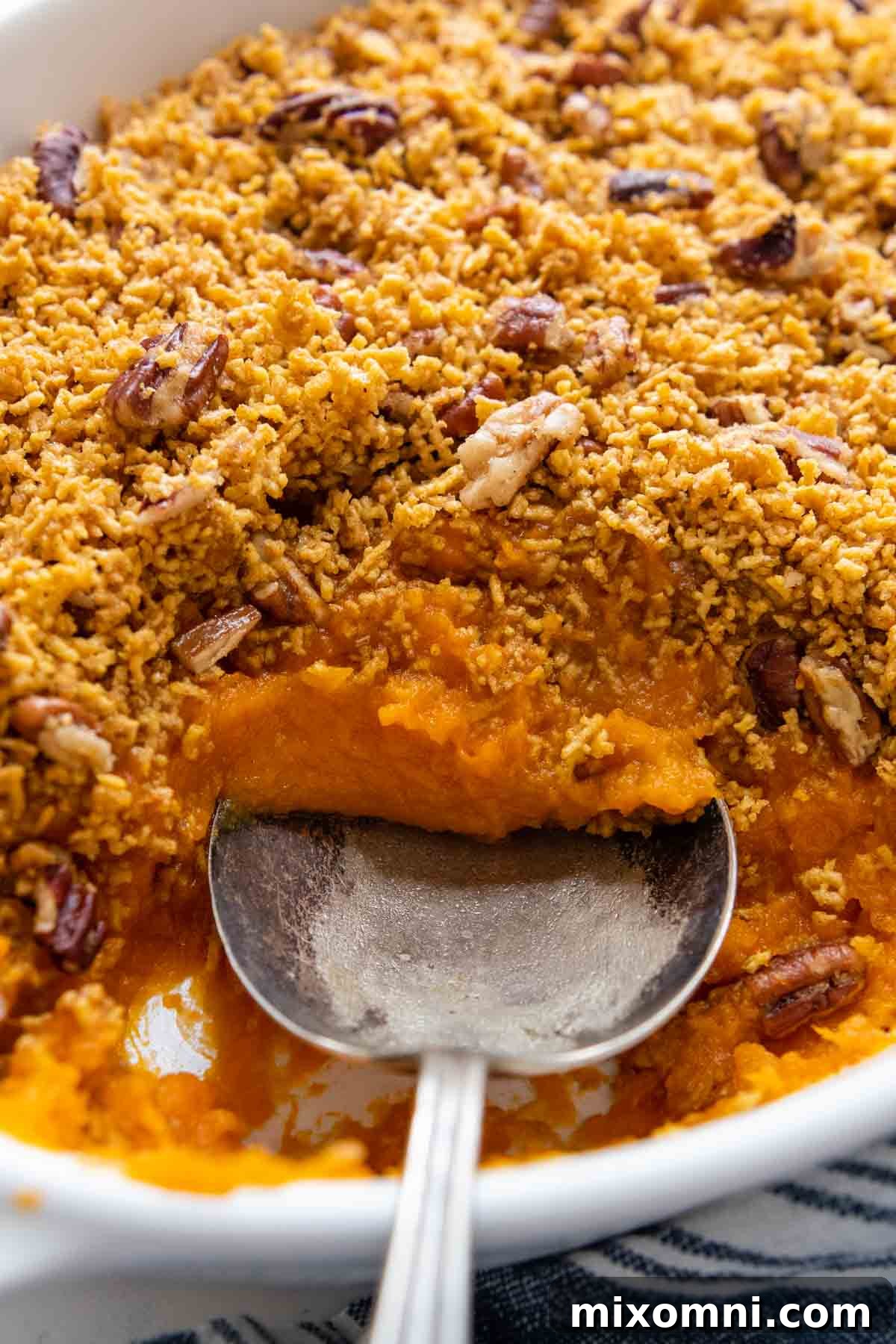
SAVE THIS RECIPE FOR GLUTEN-FREE SWEET POTATO CASSEROLE TO YOUR PINTEREST BOARD!
Let’s be friends on Pinterest! I’m always sharing great recipes!
Easy Gluten-Free Sweet Potato Casserole with Crunchy Topping

Melissa Erdelac
Now everyone can enjoy an easy gluten-free sweet potato casserole with no speciality ingredients required. A fluffy sweet potato base is flavored with brown sugar and orange zest. It’s topped with a crunchy pecan Chex cereal topping, making it simple to prepare, even for those not familiar with a gluten-free diet!
Pin Recipe
Rate This Recipe
Ingredients
- 3 pounds sweet potatoes
- 3 tablespoons heavy cream (see notes for dairy-free)
- 4 tablespoons butter, very softened (see notes for dairy-free)
- ⅓ cup brown sugar or pure maple syrup
- 1 large egg (see notes for egg-free)
- 1 teaspoon orange zest
- ¼ teaspoon salt
Crunchy Pecan Topping
- 1 cup crushed corn Chex cereal (about 2 cups whole cereal)
- ½ cup chopped pecans
- 4 tablespoons melted butter (see notes for dairy-free)
- 3 tablespoons brown sugar
- ⅛ teaspoon cinnamon
- Pinch salt
Instructions
- Preheat the oven to 400ºF (200ºC) and line a baking sheet with foil or parchment paper. Prick the sweet potatoes 5-6 times with a fork. Roast for 50-60 minutes, turning halfway, until very tender.
- Reduce the oven to 350ºF (175ºC). Once the potatoes are cool enough to handle, peel away the skins and transfer the flesh to a large mixing bowl. Use a hand-held mixer to mash the potatoes until smooth.
- Pour in the heavy cream, softened butter, brown sugar, egg, orange zest, and salt. Beat again until well combined. Spread evenly in a 2-quart baking dish.
- For the topping, combine the crushed cereal, pecans, melted butter, brown sugar, cinnamon, and pinch of salt. Sprinkle this mixture evenly on top of the sweet potato mixture.
- Bake for 30 minutes, or until the potatoes are heated through in the middle and the topping is golden and crisp.
- Don’t forget to leave feedback and rate this recipe after you’ve made it!
Notes
Dairy-Free / Egg-Free Modifications
To make this recipe dairy-free, replace the butter with plant-based butter or coconut oil. For the heavy cream, use full-fat coconut milk or dairy-free almond milk. For an egg-free casserole, substitute 1 tablespoon cornstarch (mixed with 2 tbsp water) or use a commercial egg replacer like Neat Egg.
Marshmallow Topping
A marshmallow topping may be substituted for the cereal topping. You will need a 10-ounce bag of mini marshmallows, but do not sprinkle on top until the last 5 minutes of baking to prevent burning and ensure a perfect golden finish.
You may also opt for a half and half topping: use a half recipe of the pecan crunch on one side and marshmallow topping on the other. This offers guests a choice based on their preference!
Nutrition Information
(Approximate values per serving)
- Calories: 344kcal
- Carbohydrates: 46g
- Protein: 4g
- Fat: 17g
- Saturated Fat: 8g
- Polyunsaturated Fat: 2g
- Monounsaturated Fat: 6g
- Trans Fat: 0.4g
- Cholesterol: 51mg
- Sodium: 264mg
- Potassium: 572mg
- Fiber: 5g
- Sugar: 19g
- Vitamin A: 21977IU
- Vitamin C: 5mg
- Calcium: 81mg
- Iron: 2mg
Did you make this recipe? Please leave a star rating and review below. It helps others when searching for recipes and I LOVE feedback!