
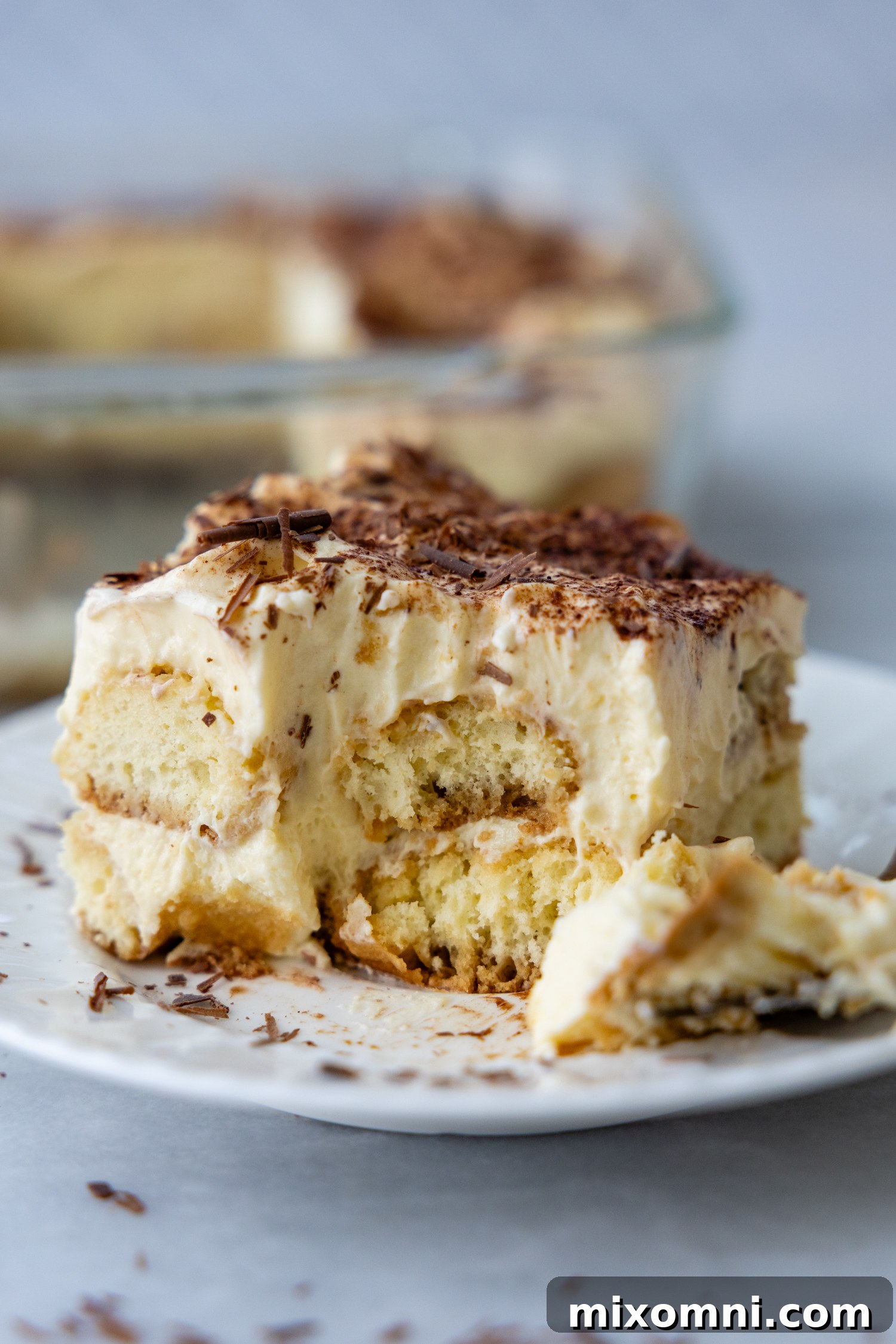
If you’ve been dreaming of an authentic Italian tiramisu that caters to a gluten-free lifestyle, your search ends here. This recipe delivers a truly classic taste and texture, meticulously crafted with a luscious cooked custard base, ensuring a perfectly safe and incredibly rich experience without the use of raw eggs. Picture delicate layers of light, airy mascarpone whipped cream, exquisitely balanced atop espresso-dipped gluten-free ladyfingers. This easy, no-bake dessert isn’t just a treat; it’s a culinary triumph designed to become a beloved staple in your home for years to come. Prepare to indulge in a truly restaurant-worthy dessert that everyone can enjoy!
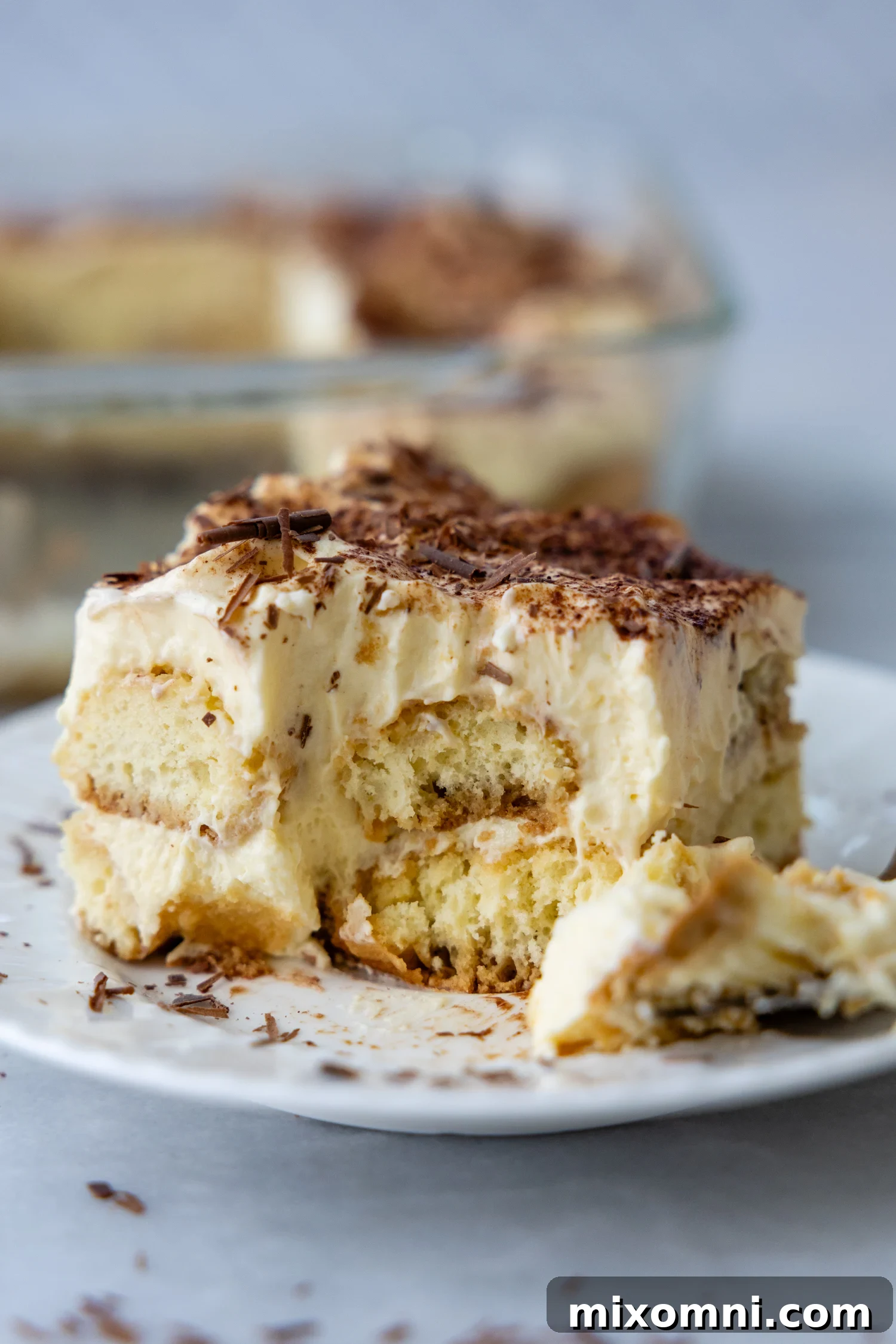
Authentic Gluten-Free Tiramisu: An Exquisite Italian No-Bake Dessert
For what feels like an eternity, I’ve yearned for a gluten-free rendition of my all-time favorite Italian dessert: tiramisu. Before embarking on my gluten-free journey (B.G.F., as I fondly call it), I had mastered a flawless homemade recipe for classic tiramisu. However, the prospect of finding suitable, affordable gluten-free ladyfingers seemed daunting, and I often wondered if any store-bought alternative could truly live up to the original’s delicate charm and absorbent texture.
Yet, as the holiday seasons approached, the craving for a truly authentic, yet easy-to-make, gluten-free tiramisu became irresistible. The dream finally transformed into a delicious reality once I successfully perfected my own homemade gluten-free ladyfingers, or savoiardi, which I’m confident my Italian grandmother would wholeheartedly approve of. With this crucial component in place, it was game on to recreate the ultimate tiramisu experience.
While this is a no-bake gluten-free dessert, its foundation begins with a critical step on the stovetop. My unwavering goal was to create a tiramisu completely free of raw eggs. Many shortcut recipes simply blend heavy whipped cream with mascarpone, but I’ve consistently found these versions to be lacking the profound richness and silken texture that defines true tiramisu. Just as authentic Italian almond cookies must start with the distinct flavor of almond paste, a truly silky and decadent tiramisu absolutely demands the depth and stability provided by a proper zabaglione.
Don’t let that elegant Italian term “zabaglione” intimidate you! This recipe remains remarkably easy and entirely achievable in your home kitchen. You won’t need a double boiler or any other specialized culinary equipment. Instead of relying on raw eggs for the custard, we gently whisk and cook egg yolks on the stovetop with granulated sugar and a touch of milk. This careful cooking process not only ensures food safety but also creates a wonderfully stable and incredibly flavorful base that is essential for an authentic tiramisu.
Once this exquisite custard has cooled thoroughly, it’s delicately folded into the mascarpone and whipped cream mixture, creating that signature Italian tiramisu flavor profile and irresistibly pillowy texture. Layer this creamy, soft filling over the espresso-dipped ladyfingers, dust generously with cocoa powder, and then comes what is truly the hardest part: the waiting. Allowing the tiramisu to chill adequately is crucial; it permits the flavors to meld beautifully and the ladyfingers to fully absorb the aromatic coffee, resulting in a cohesive, melt-in-your-mouth dessert. Trust me, every moment of anticipation will be richly rewarded.
Ingredient Spotlight: Crafting Tiramisu Perfection
Selecting the right ingredients is key to achieving that legendary tiramisu taste and texture. Here’s a closer look at the stars of our show:
- Mascarpone: This luxurious Italian cream cheese is the heart of our tiramisu. You’ll typically find it in the specialty cheese section of your grocery store. While it can sometimes be a bit pricey, its rich, buttery, and slightly sweet flavor is absolutely indispensable for the authentic taste and creamy consistency we’re aiming for. Keep an eye out for sales or check discount grocers like Aldi, where I often find excellent quality mascarpone at a more accessible price.
- Espresso: The intensity of freshly brewed espresso provides that quintessential bittersweet coffee flavor. If you don’t own an espresso machine, there’s no need to worry! Simply brew a fantastically strong cup of your favorite coffee using a Moka pot, French press, or even a robust drip coffee maker. The crucial step is to let it cool completely to room temperature (or even chill it) before dipping the ladyfingers. Dipping warm ladyfingers will cause them to disintegrate far too quickly.
- Gluten-Free Ladyfingers: These delicate sponge cookies are the structural backbone of tiramisu. My homemade recipe for gluten-free ladyfingers is linked and is truly the “chef’s kiss” for this dessert! Like the tiramisu itself, they are easy to make and don’t require any special equipment, not even a piping bag. For those seeking quicker options, I’ll also outline some excellent store-bought or alternative gluten-free substitutes below.
- Egg Yolks: The key to our velvety cooked custard. Yolks provide richness, color, and act as a natural emulsifier when gently cooked with sugar and milk, creating the stable base for our cream.
- Granulated Sugar: Essential for sweetening both the custard and balancing the bitterness of the coffee and cocoa. It also helps in achieving the correct texture in the cooked custard.
- Milk (at least 2% fat): Used in the custard, it adds moisture and helps create a smooth consistency. The higher fat content contributes to a richer end product.
- Vanilla Extract: A touch of pure vanilla extract enhances the overall sweetness and adds a warm, aromatic depth to the mascarpone cream.
- Unsweetened Cocoa Powder: This is our final flourish, providing a beautiful visual appeal and a deep, slightly bitter chocolate note that perfectly complements the sweet, creamy layers and strong coffee.
Step-by-Step Guide: Assembling Your Masterpiece
(Below, you’ll find step-by-step photos and detailed instructions. For the complete recipe, including precise ingredient amounts, please scroll down to the full recipe card at the end of this article.)
The Silky Custard Base (Zabaglione Technique) that Makes All the Difference
While this initial step requires a bit of foresight—as the custard needs ample time to chill—it is unequivocally the secret to this gluten-free tiramisu’s signature, classic taste. This quick egg cream is simple to prepare and absolutely worth the extra planning.
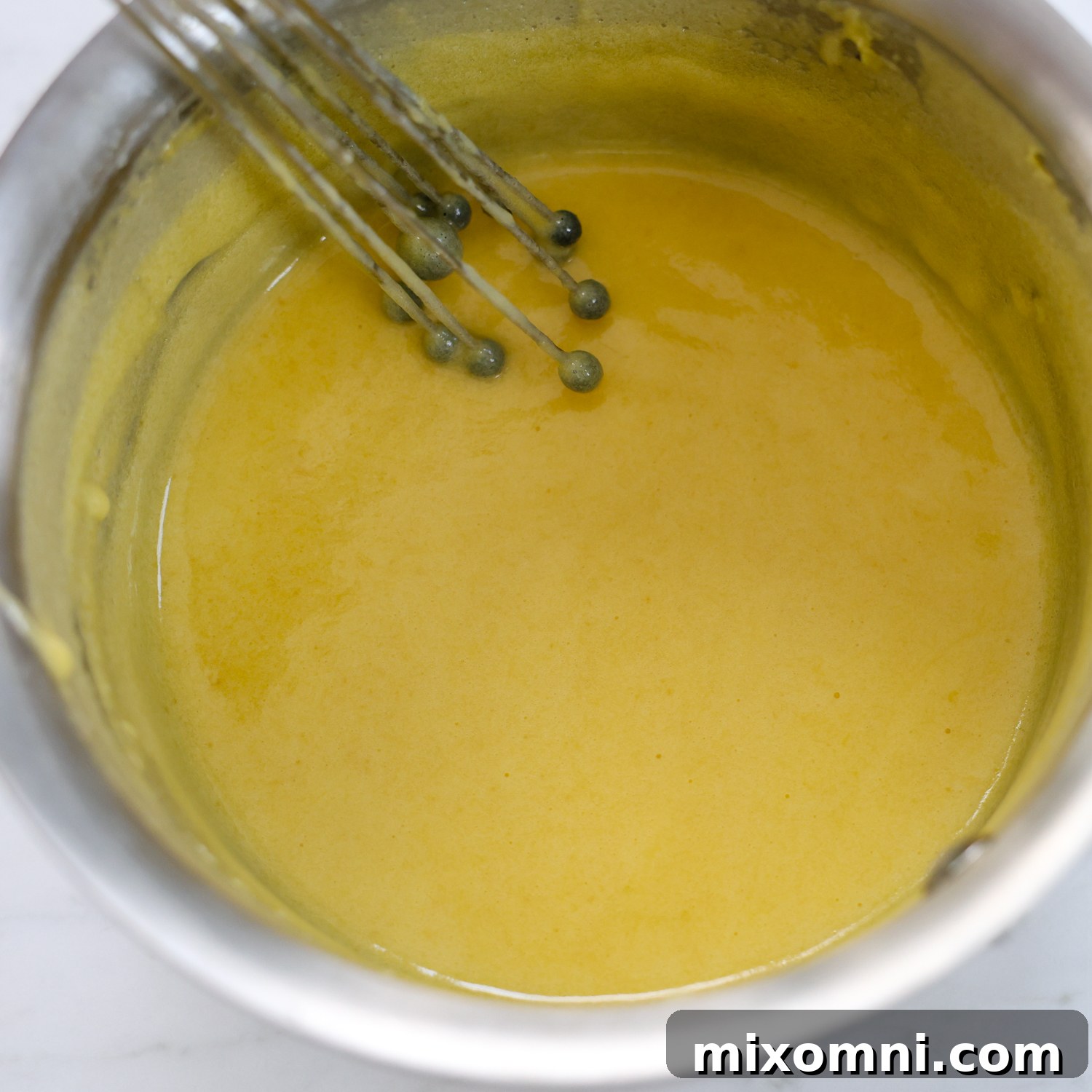
In a small, heavy-bottomed saucepan, vigorously whisk together the egg yolks, granulated sugar, and milk until they are thoroughly blended and smooth. Place the saucepan over medium heat, continuing to whisk constantly to prevent the eggs from scrambling or sticking to the bottom. Cook the mixture until it comes to a full, rolling boil, which typically takes about 4-5 minutes. Once boiling, continue to whisk and boil for precisely one minute more. Immediately remove the saucepan from the heat and stir in the vanilla extract. Transfer the custard to a clean bowl, cover it with plastic wrap pressed directly onto the surface to prevent a skin from forming, and let it cool completely to room temperature. Once cooled, refrigerate it for at least 1 hour, or preferably overnight, until it is thoroughly chilled. This chilling is crucial for achieving the perfect texture in the final cream.
Creating the Luxurious Mascarpone Cream
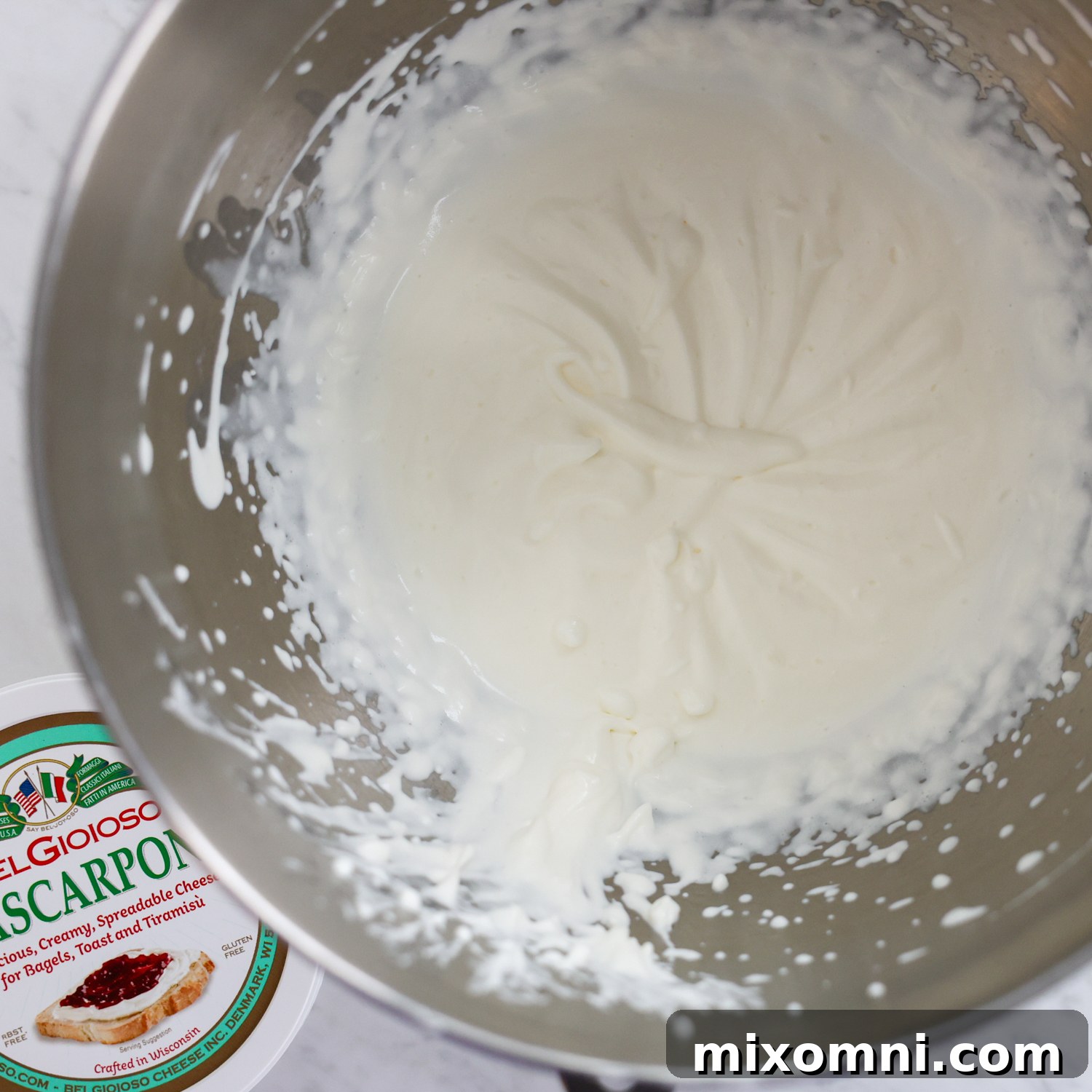
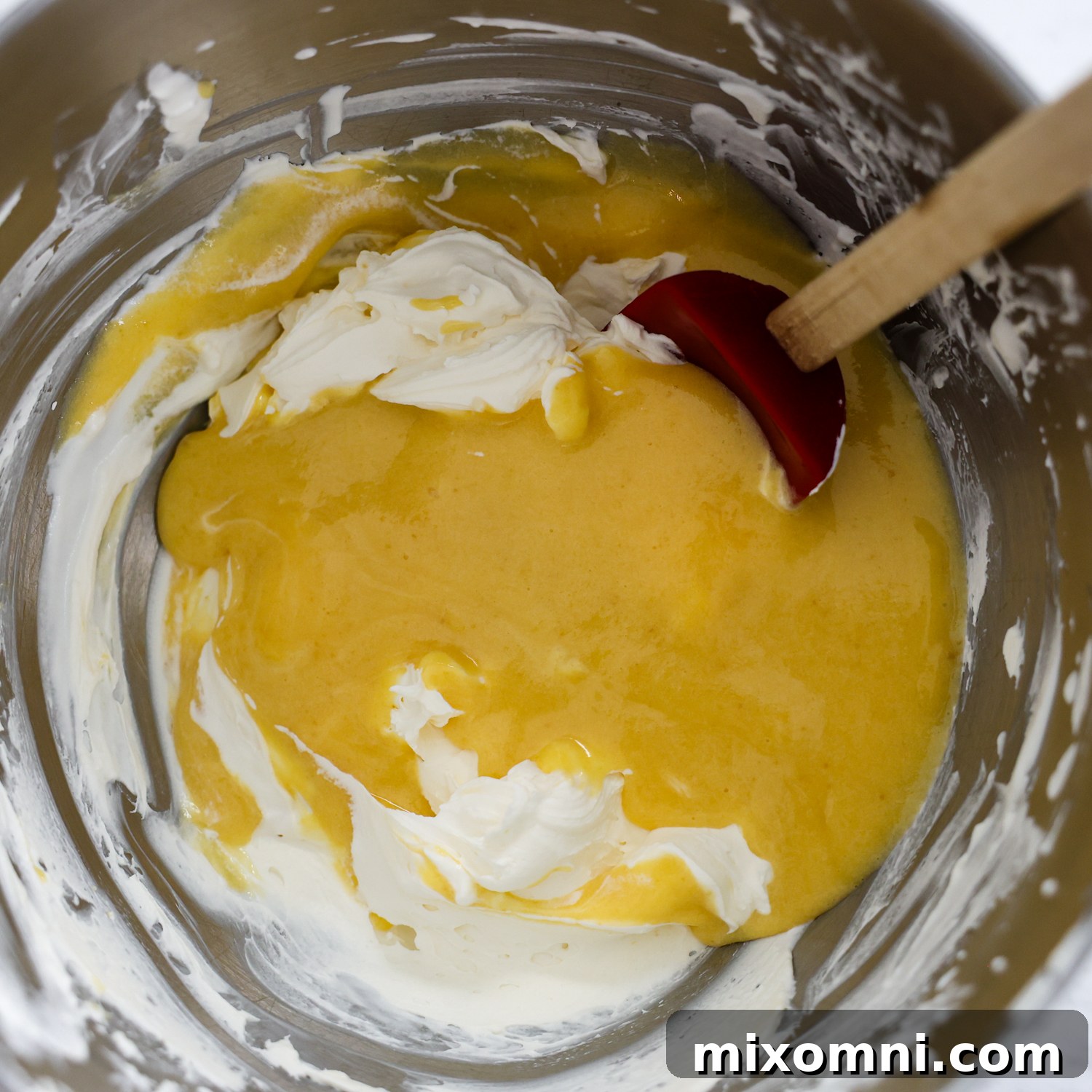
In a large mixing bowl, using a stand mixer fitted with a whisk attachment (or a hand mixer), beat the heavy cream on medium-high speed until soft peaks form. We’re looking for a slightly less stiff consistency than traditional whipped cream, as it will be further combined. Next, add the mascarpone cheese to the whipped cream and continue to beat until the mixture achieves a smooth, spreadable consistency, similar to a softened cream cheese or a firm, spreadable frosting. To finalize this dreamy mascarpone filling, gently fold in the thoroughly chilled custard. Be careful not to overmix, as you want to maintain the airiness of the cream. Once fully combined, your rich, fluffy cream is ready for assembly!
The Art of Layering: Dipping and Assembly Fun!
Now for the most delightful part of the process! Ensure your brewed coffee or espresso has cooled completely to at least room temperature. This is a crucial step; if the liquid is warm, the delicate ladyfingers will quickly turn to mush. If you desire, add your preferred liqueur (such as rum, Kahlua, or Grand Marnier) to the coffee at this stage. However, using just coffee is perfectly fine for an alcohol-free version.
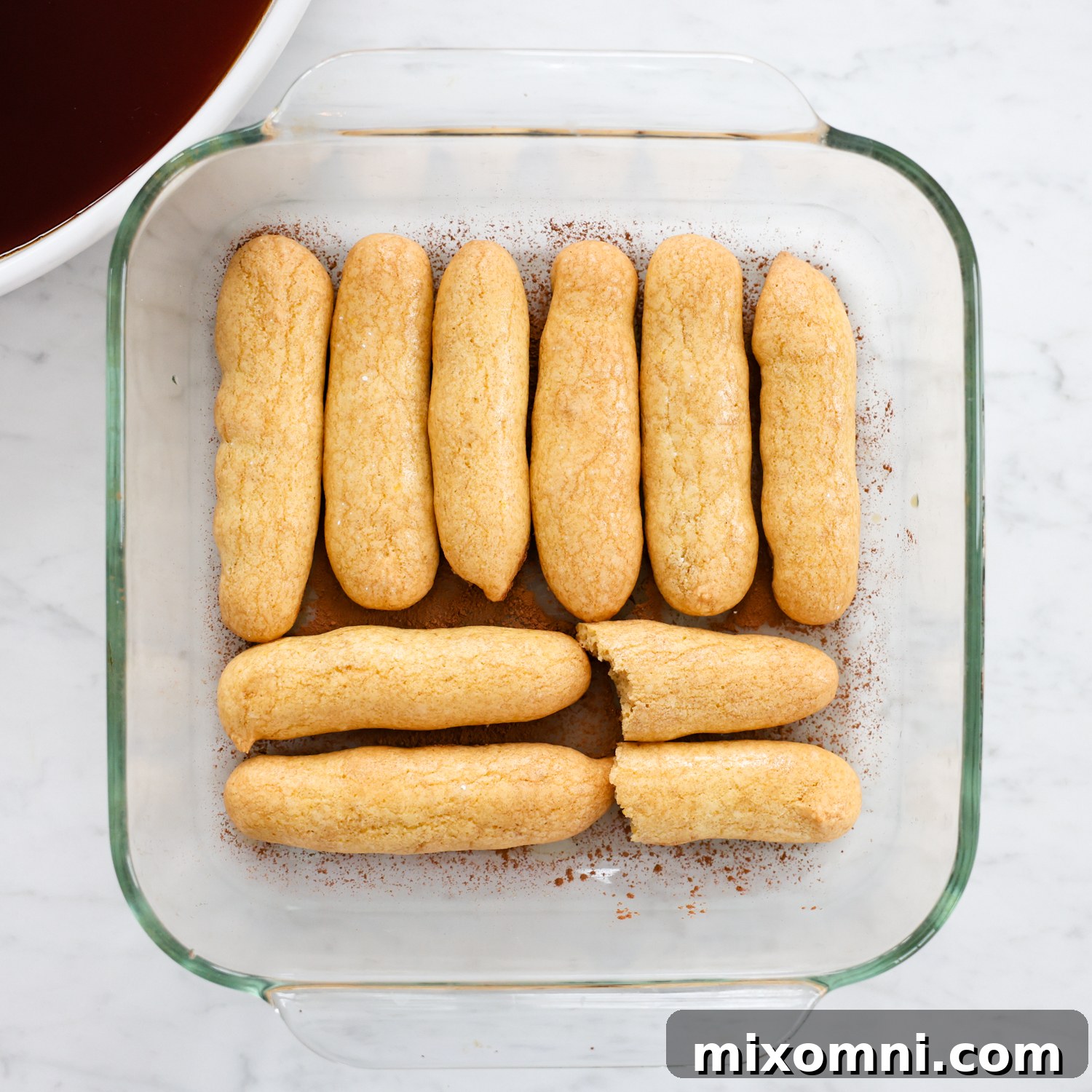
Prepare your baking dish by lightly dusting the bottom with a thin layer of unsweetened cocoa powder using a sifter. This initial dusting adds another layer of subtle chocolate flavor and helps prevent the first layer of ladyfingers from sticking. Next, one by one, briefly dip each gluten-free ladyfinger into the espresso mixture, flipping quickly to coat both sides. The dipping time will vary depending on the crispiness or softness of your specific ladyfingers. Crispier ladyfingers can handle a slightly longer dip, while softer ones should be submerged very quickly. The goal is for the coffee to begin soaking into the cookies, but not to the point where they become overly saturated or too fragile to handle. Remember, as the dessert chills in the refrigerator, the coffee will continue to permeate the cookies, so they don’t need to be completely soaked at this stage.
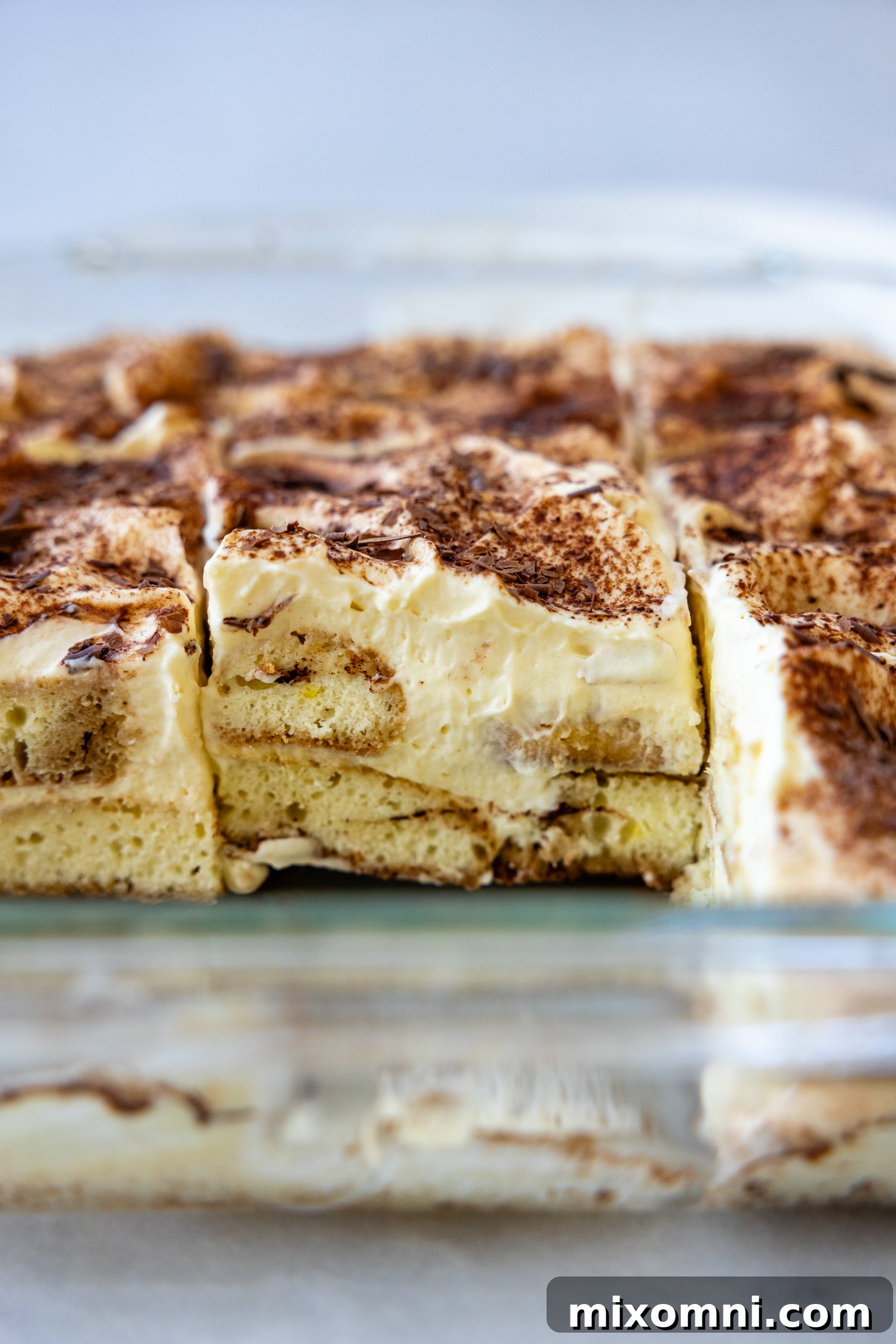
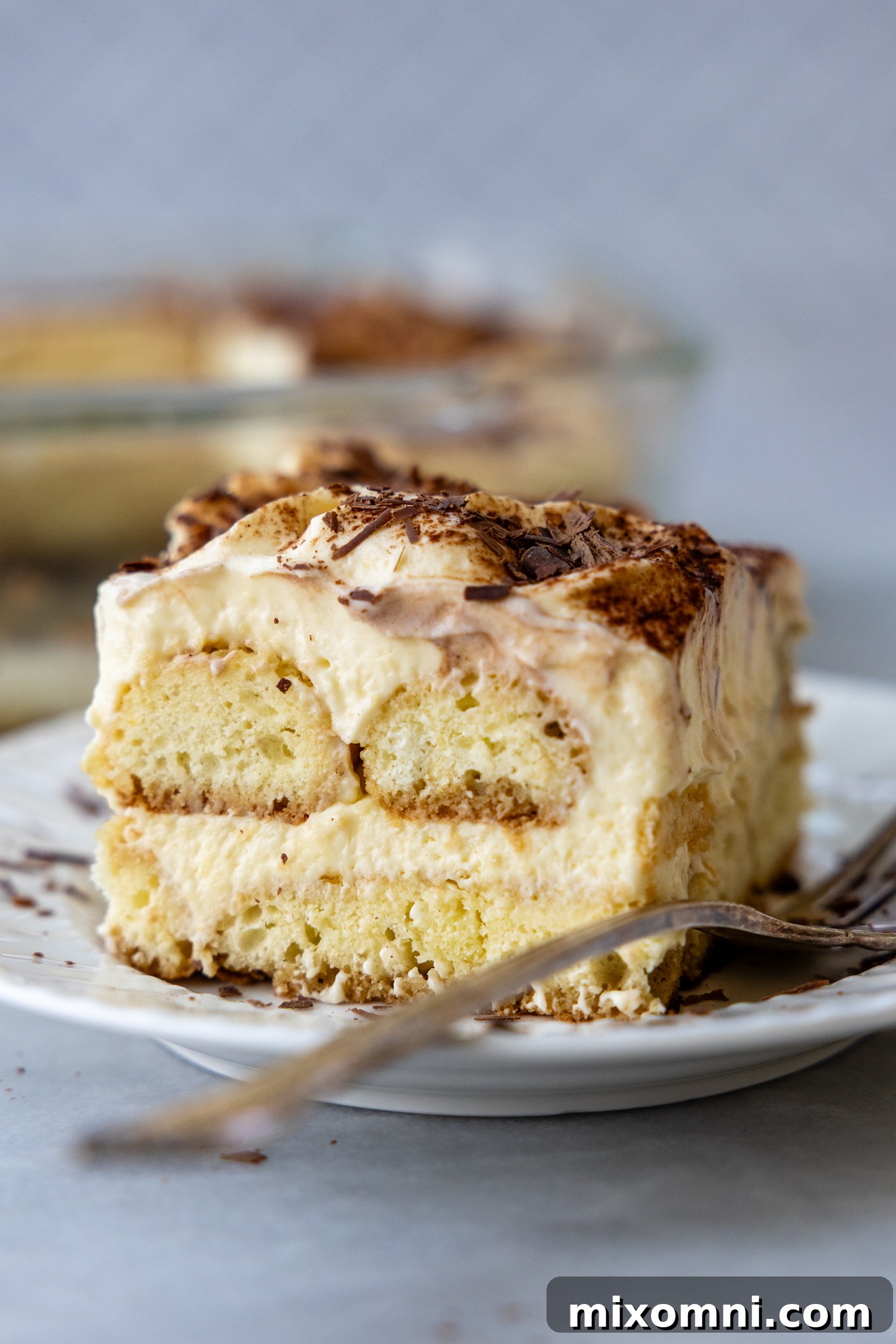
Carefully arrange the dipped ladyfingers in a single layer at the bottom of your prepared baking dish. Don’t worry if you need to break some ladyfingers to fit them snugly into the corners or to fill any gaps – perfect presentation will come with the cream layers. Once the first layer of ladyfingers is complete, spread half of the luscious mascarpone cream evenly over them. Repeat this process: dip the remaining sponge cookies in the espresso mixture, layer them on top of the cream, and then cover with the remaining half of the mascarpone filling. For a truly elegant finish, generously dust the top layer with more unsweetened cocoa powder or, if you’re feeling extra fancy, sprinkle with finely shaved chocolate. Cover the dish tightly with plastic wrap and refrigerate for a minimum of 4 hours, though ideally, allow it to chill overnight for the best possible flavor development and set texture. Buon appetito!
For optimal taste and a truly perfect texture, making this dessert ahead of time is an absolute must! The cooked custard requires sufficient time to chill before it can be folded into the mascarpone cream. Similarly, the coffee needs to cool completely to room temperature to prevent the ladyfingers from falling apart. Most importantly, the assembled tiramisu needs time to rest and reach its optimal stage of espresso-soaked goodness and sweet, creamy perfection. A minimum of 4 hours in the refrigerator is essential, but honestly, it reaches its peak flavor and consistency when allowed to sit and meld overnight.
Gluten-Free Ladyfinger Alternatives & Creative Swaps
I understand that making homemade gluten-free ladyfingers might not always be feasible or desirable for everyone. My aim is for this decadent dessert to be accessible to all! The key is to find a suitable base that can absorb the rich espresso without dissolving into an unappetizing mush.
Your quickest option, of course, is to purchase commercially available Schar gluten-free ladyfingers, if they are readily available in your area. You’ll typically need around 24 cookies to create two layers in an 8×8 inch dish. These are designed to mimic traditional savoiardi and generally hold up well to dipping.
Another excellent alternative would be to use layers of gluten-free vanilla wafers. While they offer a slightly different texture, being denser and more cookie-like, they still absorb liquid well. For a texture that more closely approximates an authentic ladyfinger, consider using slices of a good quality gluten-free cake. A sturdy, yet tender, gluten-free pound cake would be absolutely ideal. My homemade recipe for gluten-free pound cake works beautifully for this purpose, especially if prepared in a loaf pan and then sliced into finger-like pieces. You could also use a simple gluten-free sponge cake, cut into manageable strips. These cake-based alternatives provide excellent absorbency and a soft, cakey texture that is delightful in tiramisu.
Save this Recipe to Your Pinterest Board!
Let’s be friends on Pinterest! I’m always sharing great recipes and culinary inspiration!
Did you make this legendary recipe? I absolutely love hearing from you and seeing your culinary creations! Please leave a star rating and comment below the recipe card. Your feedback is incredibly valuable, helping other home bakers discover and enjoy these recipes. And rest assured, you will always hear back from me! -Melissa
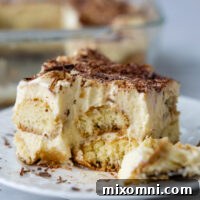
Legendary Gluten-Free Tiramisu (Easy Homemade) Recipe Card

Melissa Erdelac
9
slices
25 mins
4 hrs 25 mins
If you are looking for an authentic Italian gluten-free tiramisu, this is the perfect recipe for you. It uses a sweet cooked custard for a classic taste and texture without using raw eggs. The mascarpone whipped cream layers are light and airy, perched on top of espresso-dipped gluten-free ladyfingers. This easy, no-bake dessert will surely be made on repeat for years to come!
Pin Recipe
Ingredients
- 4 egg yolks
- ½ cup (100 g) granulated sugar
- ½ cup (123 g) milk, at least 2% fat
- 1 teaspoon vanilla extract
- ¾ cup (180 g) heavy cream
- 8 ounce mascarpone
- 24 gluten-free ladyfingers
- 1 cup brewed espresso or very strong coffee, room temp or cold
- 2 tablespoons Grand Marnier, or rum or Kahlua (optional)
- Unsweetened cocoa powder, for dusting
Equipment
-
Sifter
-
Stand Mixer (or hand mixer)
-
8×8 Inch Baking Dish (or 2-quart equivalent)
-
Small Saucepan
-
Whisk
-
Shallow Bowl
Instructions
-
In a small saucepan, vigorously whisk the egg yolks with the sugar until they are very well blended and smooth. Whisk in the milk and cook over medium heat, continuing to whisk constantly to prevent scorching. Cook until the mixture comes to a full, rolling boil (approximately 4-5 minutes). Boil for 1 minute, still whisking continuously. Remove from heat and stir in the vanilla extract. Transfer the custard to a clean bowl, cover tightly with plastic wrap directly on the surface, and cool completely to room temperature. Then, cover and chill thoroughly in the refrigerator for at least 1 hour, or preferably overnight.
-
In a large bowl, beat the heavy cream with a whisk attachment until soft peaks form (the cream should be firm enough to hold its shape but still pliable). Add the mascarpone cheese and continue to whip until it creates a soft, spreadable mixture with medium peaks, resembling a thick, creamy frosting. Finally, add the thoroughly chilled egg yolk mixture (custard) and gently fold it into the mascarpone cream until just combined, being careful not to overmix and deflate the airiness.
-
For assembly, combine the cooled espresso (and optional liqueur if using) in a shallow bowl and set aside. Using a sifter, dust the bottom of an 8×8-inch (2-quart) baking dish with a thin, even layer of unsweetened cocoa powder.
-
Working one at a time, quickly dip each gluten-free ladyfinger into the espresso mixture, flipping to coat each side. Crispier ladyfingers can be soaked slightly longer, while softer ladyfingers should be dipped very briefly. The aim is for the coffee to begin soaking into the cookies without making them too soft to handle. As the dessert chills, the coffee will continue to permeate, so complete saturation isn’t necessary at this stage. Remove the dipped ladyfingers and arrange them, rounded side up, in a single layer at the bottom of the baking dish. It’s perfectly fine to break some ladyfingers to fit them snugly and fill any gaps in the bottom layer.
-
Spread half of the mascarpone cream mixture evenly over the first layer of dipped ladyfingers. Repeat with the remaining ladyfingers: dip them in the espresso, layer them on top of the mascarpone cream, and then cover with the remaining half of the mascarpone mixture, spreading it smoothly to the edges.
-
Generously dust the top layer of the tiramisu with more unsweetened cocoa powder using a sifter. Cover the baking dish tightly with plastic wrap and let it chill in the refrigerator for at least 4 hours, but for the very best flavor and texture, chilling overnight is highly recommended. Refrigerate any leftovers, where it will continue to taste delicious for up to 3-4 days.
Nutrition Information (per slice, approximate):
Calories: 389 kcal, Carbohydrates: 37g, Protein: 6g, Fat: 23g, Saturated Fat: 14g, Polyunsaturated Fat: 1g, Monounsaturated Fat: 3g, Cholesterol: 180mg, Sodium: 81mg, Potassium: 80mg, Sugar: 23g, Vitamin A: 782 IU, Vitamin C: 0.2mg, Calcium: 96mg, Iron: 1mg
Did you make this recipe?
Please leave a star rating and review below. It helps others when searching for recipes and I LOVE feedback!