
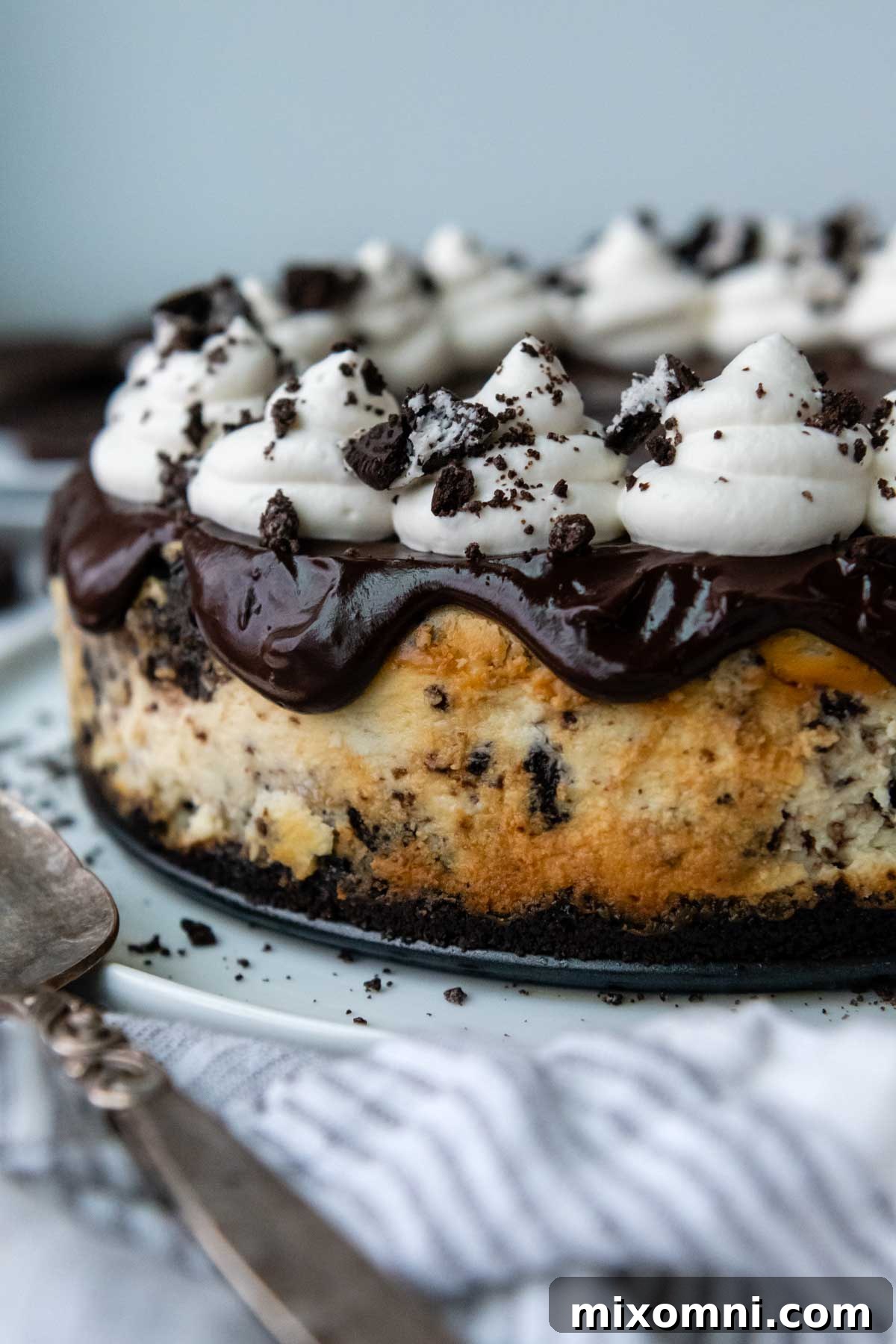
Prepare to embark on a culinary journey with the ultimate gluten-free Oreo dessert! This incredibly rich, ultra-thick, and sumptuously creamy gluten-free Oreo cheesecake boasts a velvety cookies and cream filling, crowned with a glossy chocolate ganache, and adorned with fluffy clouds of homemade whipped cream. It’s a showstopper that proves gluten-free baking can be just as decadent and satisfying, if not more so, than traditional treats. Whether you’re a seasoned baker or new to the kitchen, this recipe is designed for success, delivering a dessert that will impress even the most discerning palates.
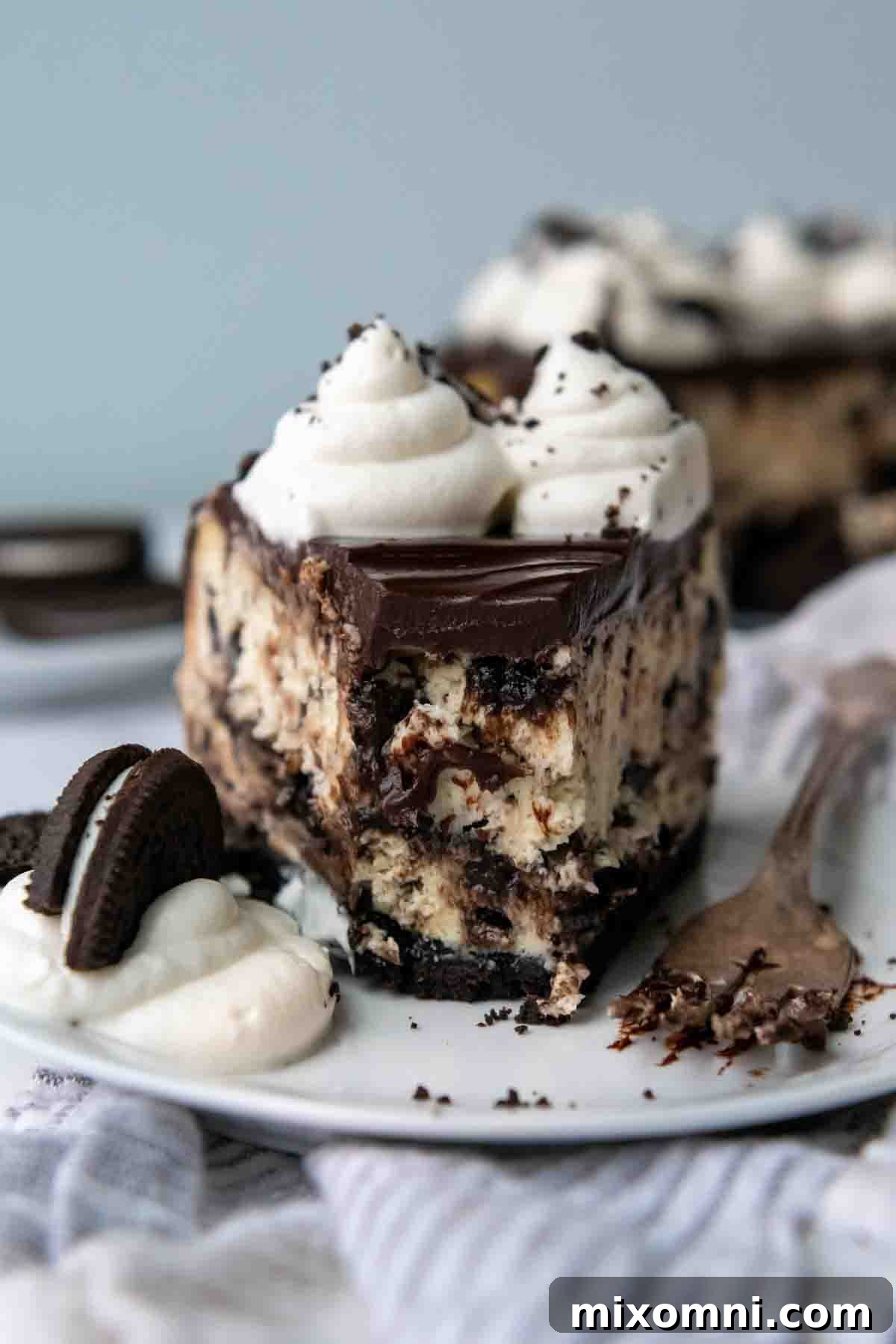
Indulge in the Best Gluten-Free Oreo Cheesecake Experience
The culinary world rejoiced when Nabisco introduced their much-anticipated gluten-free Oreo cookies. For those of us navigating a gluten-free lifestyle, this opened up a universe of possibilities for classic desserts that were once off-limits. Among the myriad of potential recipes, the gluten-free Oreo cheesecake quickly rose to the top as a true masterpiece. It’s more than just a dessert; it’s a celebration of flavor and texture, perfectly complementing other beloved gluten-free Oreo creations like gluten-free cookies and cream ice cream cake and delightful gluten-free Oreo truffles. This cheesecake isn’t just a gluten-free alternative; it’s a destination dessert that stands tall on its own merit.
Our journey to cheesecake perfection begins with a simple yet essential foundation: the crust. Crushed gluten-free Oreo cookies are mixed with rich melted butter, forming an easy-to-press-in crust that provides a decadent chocolate base for the creamy filling. This GF chocolate crust is robust enough to hold the generous filling, offering a delightful contrast in every bite. While the recipe is designed for a 9-inch springform pan, offering that classic tall cheesecake presentation, the versatile cookie crumb mixture can also be pressed into a 9×13 inch pan to create convenient gluten-free Oreo cheesecake bars, perfect for sharing at parties or enjoying throughout the week.
As the aromatic crust cools, our focus shifts to crafting the heart of this dessert: the cheesecake filling. We opt for a baked filling enriched with eggs, as this method yields a thicker, more custard-like texture that beautifully balances the sweetness of the cookies with a subtle tangy flavor. The baking process transforms simple ingredients into a sophisticated, velvety creaminess that defines a truly exceptional cheesecake.
However, if your schedule or preference leans towards a quicker treat, a no-bake gluten-free Oreo cheesecake is also an excellent option. For a delicious shortcut, simply adapt this no-bake gluten-free cheesecake recipe for the filling, then stir in generous chunks of chopped Oreos. This method delivers a lighter, equally satisfying dessert with minimal effort, making it ideal for busy days or when oven space is limited.
Once the baked cheesecake has achieved its perfect texture and cooled, it requires several hours, or ideally, an overnight stay in the refrigerator. This crucial chilling period allows the cheesecake to set completely, ensuring clean slices and a firm, rich consistency. After its chill-time, you’re ready to crown your masterpiece with a silky-smooth chocolate ganache topping. This elegant finish is surprisingly simple to make: combine heated heavy cream with good quality chocolate chips, stir until luscious and smooth, then spread it generously over the chilled cheesecake. The glossy ganache adds an extra layer of chocolatey indulgence, elevating the entire dessert.
To truly achieve the ultimate gluten-free dessert experience, take your cheesecake to the next level. Sprinkle additional cookie crumbs over the ganache for added texture and visual appeal, then pipe generous dollops of homemade whipped cream around the edges. This final flourish not only looks stunning but also adds a delightful lightness to contrast the rich ganache and creamy filling. Throughout this guide, you’ll discover more invaluable gluten-free baking tips, including expert advice on proper storage techniques and easy tricks for decorating your cheesecake like a professional baker, ensuring every slice is as perfect as the last.
I have made a LOT of cheesecakes over the years but none better than this one! No one would ever know it is gluten free. It is easy, delicious and disappeared faster than any other dessert on the table. Thanks for an outstanding and delicious recipe that does not need one bit of tweaking – it is perfection as is!
—Ella
Ingredient Spotlight: Crafting the Perfect Gluten-Free Oreo Cheesecake
One of the many joys of creating gluten-free Oreo recipes is the widespread availability of these fantastic GF cookies. Gone are the days of tirelessly searching specialty stores for ingredients. Gluten-free Oreos can now be found in the cookie aisle of most major grocery stores, making this recipe not only delicious but also remarkably accessible and affordable – a true testament to the philosophy behind the recipes shared in my gluten-free cookbook and on this website.
- Gluten-Free Oreos – These iconic cookies are the star of our show, playing multiple roles in this recipe. They form the crunchy base, are gently folded into the luscious cookies and cream filling, and finally, serve as a delightful decoration on top. For this comprehensive recipe, you will need two standard packages of gluten-free Oreos. Don’t worry if you have any leftover cookies; they’re perfect for whipping up a half recipe of those irresistible gluten-free Oreo balls!
- Cream Cheese – For that signature thick, sturdy, and undeniably rich cheesecake texture, we highly recommend using full-fat cream cheese. Light cream cheese, while a good option for some recipes, simply won’t yield the same luxurious density and robust flavor profile needed here. The secret to a lump-free, velvety filling lies in starting with room temperature cream cheese. If you find yourself short on time and forgot to set it out, a clever trick from this creamy gluten-free pumpkin cheesecake recipe works wonders: unwrap the bricks of cream cheese and microwave them briefly using the defrost setting until softened but not melted.
- Sour Cream – This ingredient is a true MVP in cheesecake, contributing that distinctive tangy flavor that perfectly cuts through the sweetness and enriches the overall depth of the filling. Both regular and light sour cream can be used interchangeably in this recipe, as its primary contribution is to the taste and creaminess rather than the structural integrity of the cheesecake.
- Eggs – Essential for a baked cheesecake, eggs are what give it that beautifully velvety, custard-like texture that melts in your mouth. They act as a binder and add richness, creating a more complex and satisfying experience compared to the straightforward, simpler flavor profile of a no-bake cheesecake. The good news is, despite being a baked recipe, this easy method does not necessitate a fiddly water bath for baking, simplifying the process significantly.
- Heavy Cream – A versatile dairy hero in this dessert! Heavy cream is crucial for creating the decadent chocolate ganache topping, transforming simple chocolate chips into a glossy, pourable delight. Additionally, it serves as the base for the ethereal homemade whipped cream mounds that will crown your cheesecake, adding a light and airy contrast to the rich layers below.
Crafting the Perfect Gluten-Free Oreo Cheesecake Crust
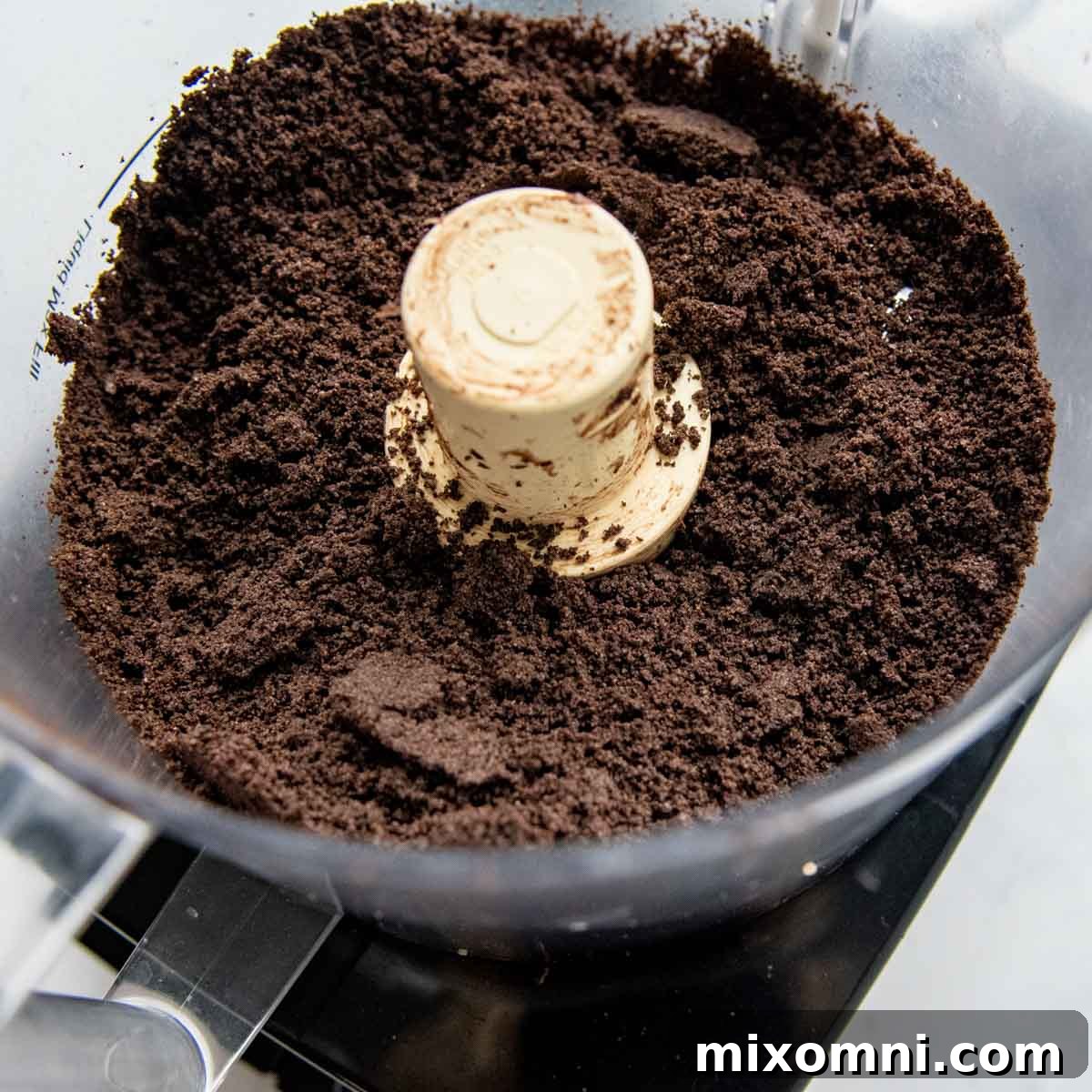
A truly exceptional cheesecake begins with a stellar crust, and our gluten-free Oreo crust is no exception. It’s the perfect sweet and crunchy counterpoint to the creamy filling. To begin, gather approximately 20 gluten-free Oreo cookies. The goal is to transform these cookies into finely ground crumbs. The most efficient way to achieve this consistent fine crumb texture is by using a food processor. Pulse the cookies until they resemble fine sand. If you don’t have a food processor, a reliable alternative is to place the cookies into a sturdy ziplock bag, seal it, and use a rolling pin to crush them until they are uniformly fine. Be patient and ensure there are no large chunks left, as this will affect the crust’s consistency.
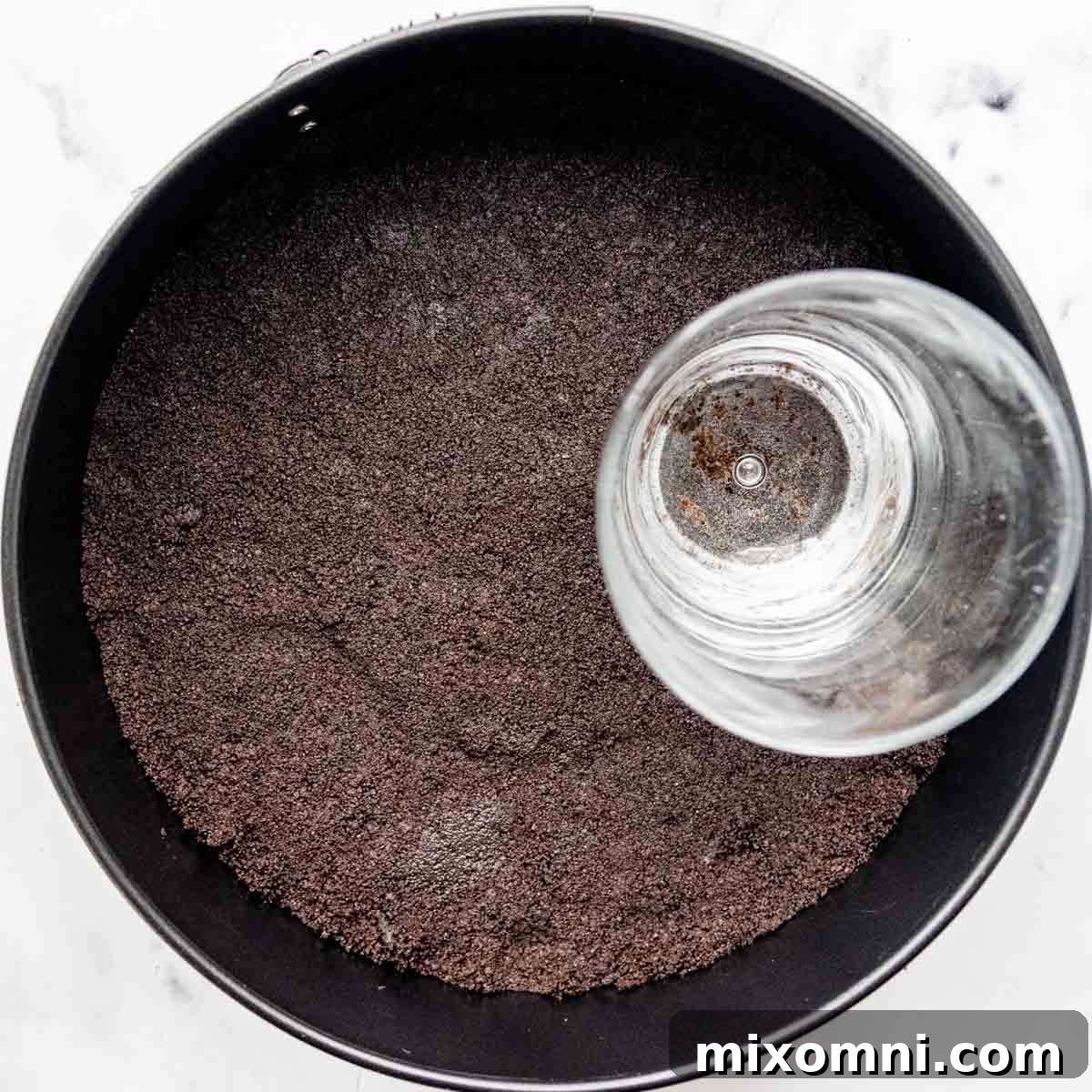
Once your gluten-free Oreo crumbs are perfectly fine, transfer them to a bowl (or keep them in the food processor if that’s what you used). Pour in the melted unsalted butter and mix thoroughly until the crumbs are evenly moistened and resemble wet sand. This butter acts as the binder, holding the crust together. Next, dump this mixture into a prepared 9-inch springform pan. For easy removal later, you might consider lightly greasing the bottom of the pan and even lining it with parchment paper before adding the crumbs. While a 9-inch pan is ideal for a generously thick cheesecake, a 10-inch pan can also be used, though it will result in slightly thinner layers for both crust and filling. Use the bottom of a measuring cup or a flat-bottomed glass to firmly and evenly press the crumbs along the bottom of the pan. The firmer you press, the more cohesive and sturdy your crust will be.
With the crust perfectly formed, it’s time for a quick bake. Place the pan in a 350ºF (175ºC) oven for just 10 minutes. This brief baking period helps to set the butter and ensures a crisp, golden-brown crust that won’t become soggy when the filling is added. After 10 minutes, remove the crust from the oven and set it aside to cool completely. Allowing it to cool is crucial; adding a cold filling to a hot crust can lead to a less stable base and potential cracks in your cheesecake. Use this cooling time to prepare the exquisite cheesecake filling.
How to Make Ultra Creamy Gluten-Free Oreo Cheesecake
(The following provides detailed step-by-step photos and modified instructions. For the complete recipe, including precise ingredient amounts and nutritional information, please scroll down to the dedicated recipe card.)
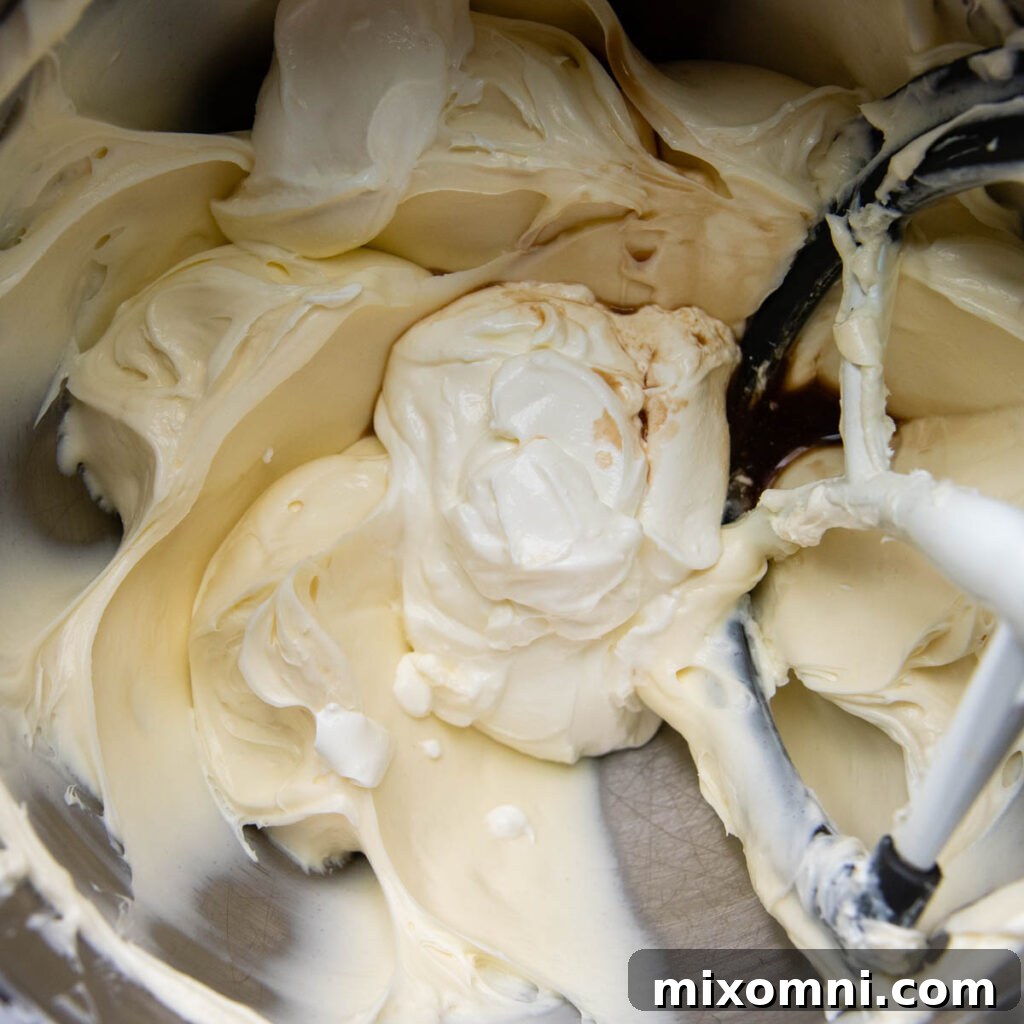
Now, for the glorious filling! In a large mixing bowl, or using a stand mixer fitted with the paddle attachment, combine the softened full-fat cream cheese with the granulated sugar. This is where starting with room temperature cream cheese truly pays off; it ensures that the ingredients blend together smoothly and effortlessly, preventing any unwanted lumps and resulting in a perfectly creamy, silky batter. Beat on medium speed for 1-2 minutes until the mixture is light, fluffy, and completely smooth, scraping down the sides of the bowl as needed to ensure everything is incorporated.
Next, add the full-fat sour cream, large room temperature eggs, and a generous teaspoon of vanilla extract to the cream cheese mixture. Continue to beat on medium-low speed until all ingredients are just combined and the mixture is smooth and creamy. Be careful not to overmix at this stage once the eggs are added, as excessive air can lead to cracks in the finished cheesecake. Mix just enough until there are no streaks of unmixed ingredients.
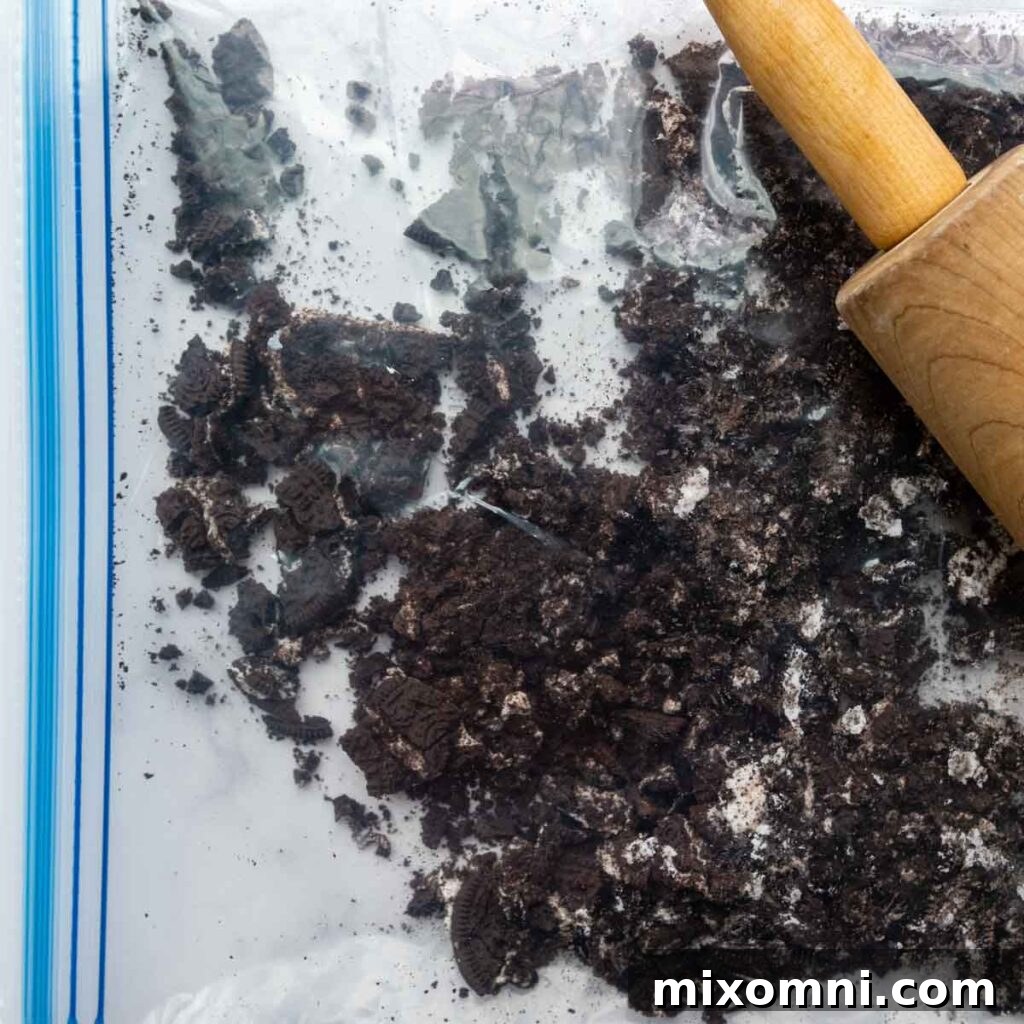
For the signature “cookies and cream” texture, prepare the remaining gluten-free Oreos. Unlike the crust, where fine crumbs are desired, here we want larger, more discernible chunks. Place about 15 gluten-free Oreos into a ziplock bag and gently crush them using a rolling pin. Aim for a variety of sizes – some smaller pieces, some larger fragments – to ensure delightful pockets of cookie goodness throughout the cheesecake. Once crushed, carefully fold these cookie chunks into the prepared cheesecake filling using a spatula. Mix just until the cookies are evenly distributed, again avoiding overmixing.
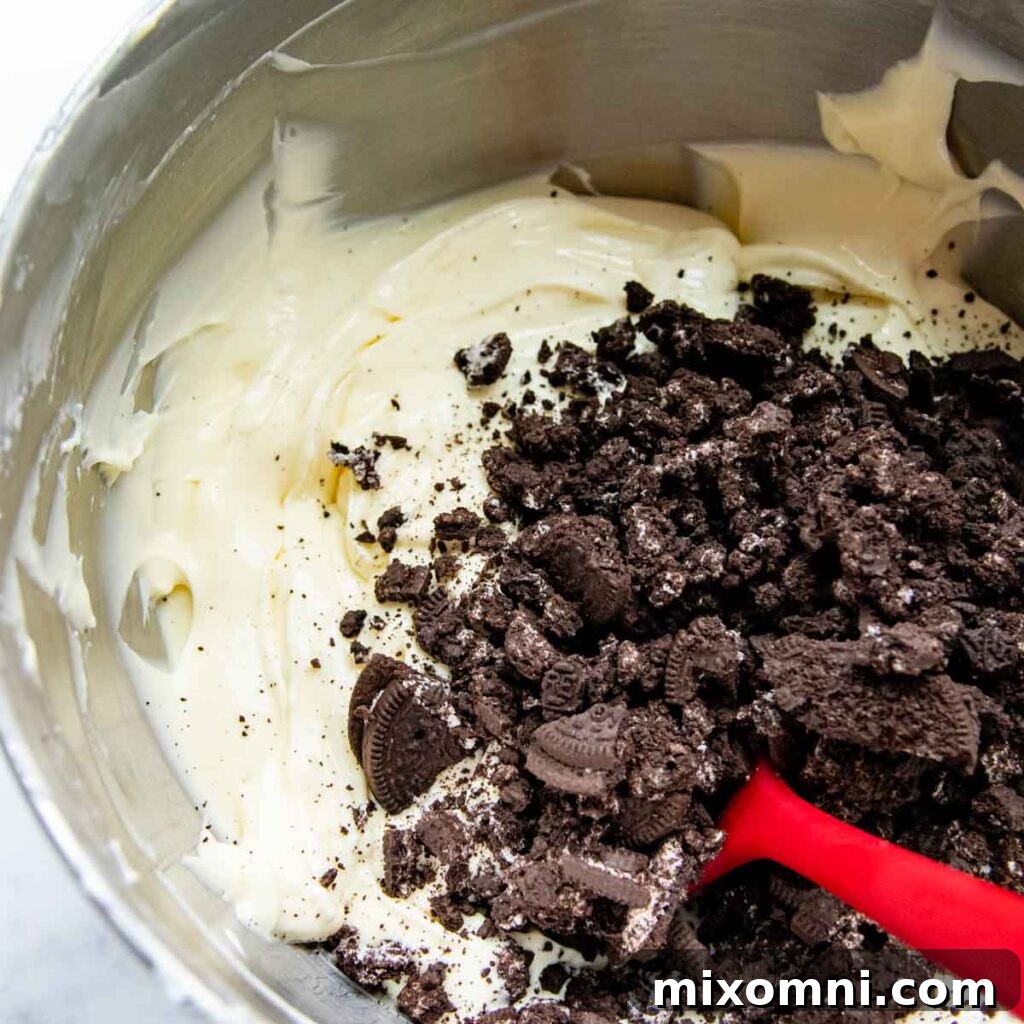
Carefully pour the rich, cookies-and-cream-studded filling into your pre-baked and cooled Oreo crust. Use an offset spatula or the back of a spoon to gently smooth the top surface of the cheesecake. This ensures an even bake and a beautiful presentation. To prevent any potential mess in your oven from butter dripping from the springform pan (which can sometimes happen with baked crusts), line a baking sheet with foil and place the cheesecake pan on top before transferring it to the oven. Bake in a preheated 325ºF (160ºC) oven for approximately 50-60 minutes. The cheesecake is done when the edges are set and slightly puffed, but the very center still has a slight wobble when gently shaken. You can also insert a toothpick into the middle; it should come out moist but not liquidy.
Preventing cracks in your cheesecake is a key to professional-looking results, and the secret lies in gradual cooling. Once the cheesecake is baked, turn off the oven and leave the door slightly ajar. Allow the cheesecake to remain in the cooling oven for about 15 minutes. This slow transition from hot to warm helps prevent a sudden temperature shock that often causes cracks. After 15 minutes, remove the cheesecake from the oven and place it on a wire rack to cool completely to almost room temperature. This entire process can take several hours. Once it has reached near room temperature, the cheesecake must be transferred to the refrigerator for at least 4 hours, or ideally, overnight. This extended chilling period is absolutely crucial for the cheesecake to fully set and firm up. Resist the temptation to release the outer ring of the springform pan before it’s thoroughly chilled; doing so prematurely can cause the cheesecake to pull apart and crack, a mistake I’ve made myself! Patience at this stage will be richly rewarded with a perfectly set, beautiful cheesecake.
Chocolate Ganache Topping and Expert Decorating Tips
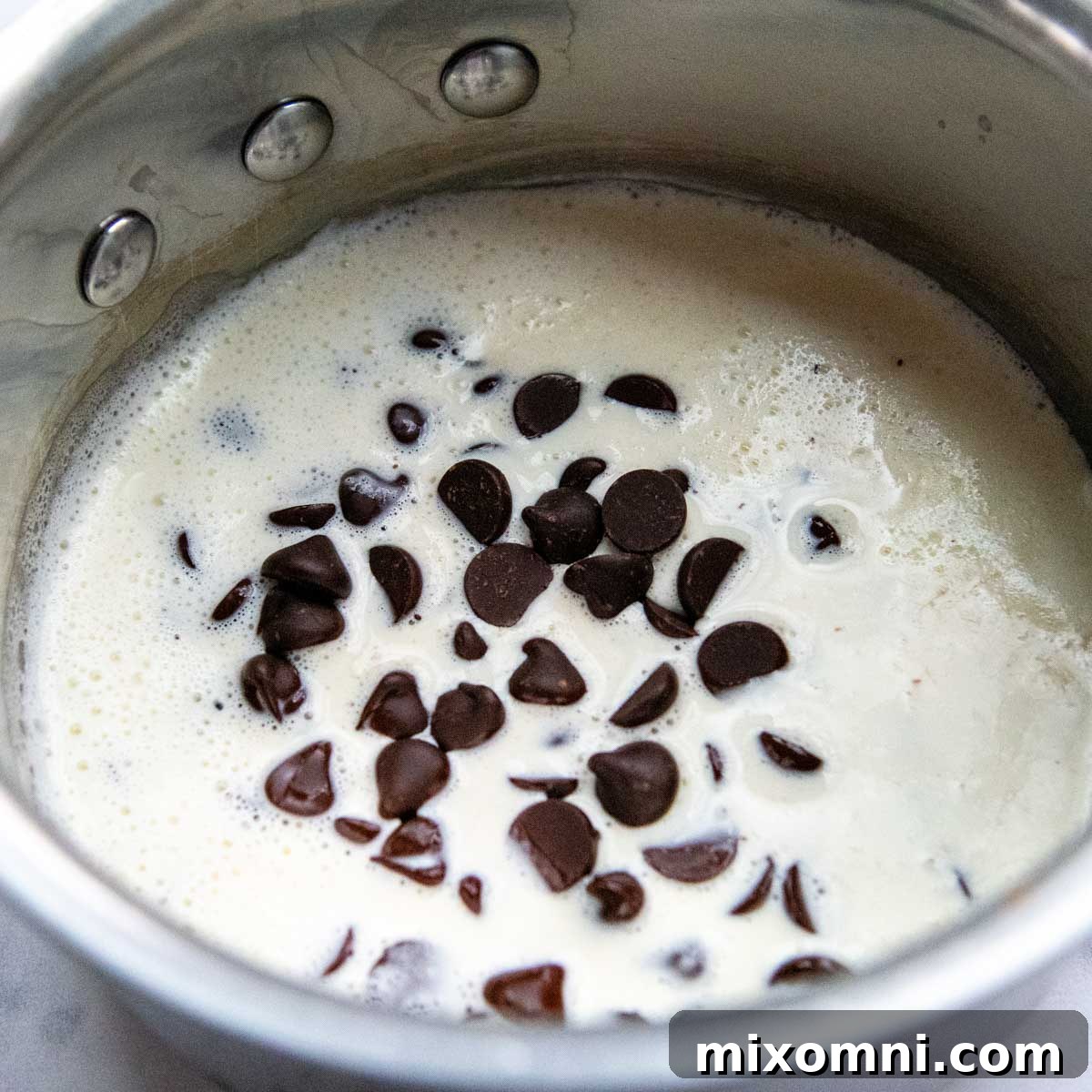
While a chocolate ganache topping might sound intimidatingly fancy, it’s remarkably straightforward to prepare and adds a sophisticated touch to your gluten-free Oreo cheesecake. Begin by gently heating ½ cup of heavy cream in a small saucepan over medium heat until it’s hot and simmering, but not boiling. Once hot, remove it from the heat and immediately add 1 cup of semi-sweet chocolate chips. Let the chocolate chips sit in the warm cream for about 1 minute without stirring. This allows the residual heat to gently melt the chocolate. After a minute, begin stirring the mixture with a whisk or spatula until it becomes a luscious, silky smooth ganache. If the ganache seems too thick, you can add a tiny splash more cream; if too thin, let it sit for a few more minutes to cool and thicken slightly. This simple process creates a glossy, rich chocolate layer that is irresistible.
If you’re in a pinch or prefer a different chocolate experience, feel free to skip homemade ganache. You can easily substitute a good quality store-bought hot fudge sauce, or even whip up a batch of my old-fashioned hot fudge sauce for a warm, gooey topping. Alternatively, for a simpler yet equally delightful presentation, serve the cheesecake simply with a generous dollop of freshly whipped cream.
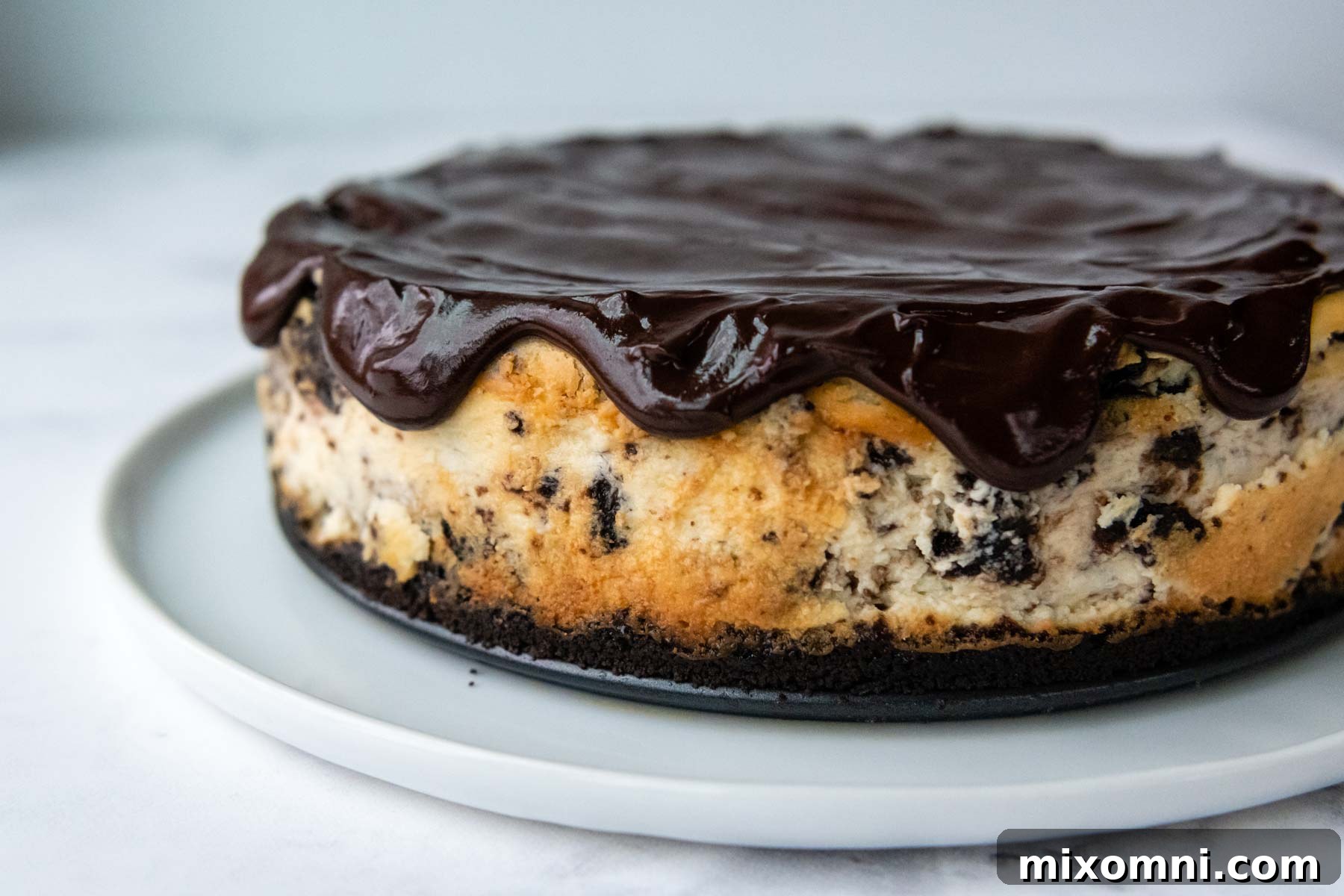
Before applying the ganache, gently run a thin knife around the outer edge of the cheesecake (while it’s still in the springform pan with the base attached) to ensure a clean release when the ring is opened. This prevents the edges from tearing. Now, it’s time to make your gluten-free cheesecake look even more impressive. Pour the warm ganache directly onto the center of the chilled cheesecake. Take your trusty offset spatula and, working from the center outwards, gently smooth the ganache across the top. For a perfectly elegant drip effect, spread the ganache just enough so it gracefully cascades just over the edge of the cheesecake, creating alluring rivulets down the sides. Once spread, place the cheesecake back into the refrigerator for about 20 minutes to allow the ganache to set slightly.
While the ganache is setting, you can prepare the fresh, homemade whipped cream. In a chilled mixing bowl with a whisk attachment (chilling the bowl helps achieve better peaks), combine ¾ cup of cold heavy cream, 1 teaspoon of vanilla extract, and 2 tablespoons of powdered sugar. Beat on medium-high speed until soft peaks form and hold their shape. The consistency should be light and airy, yet firm enough to pipe. Be mindful not to over-beat, as this can quickly turn your beautiful cream into a buttery consistency. Conversely, under-beating will result in a runny cream that won’t hold its shape when piped.
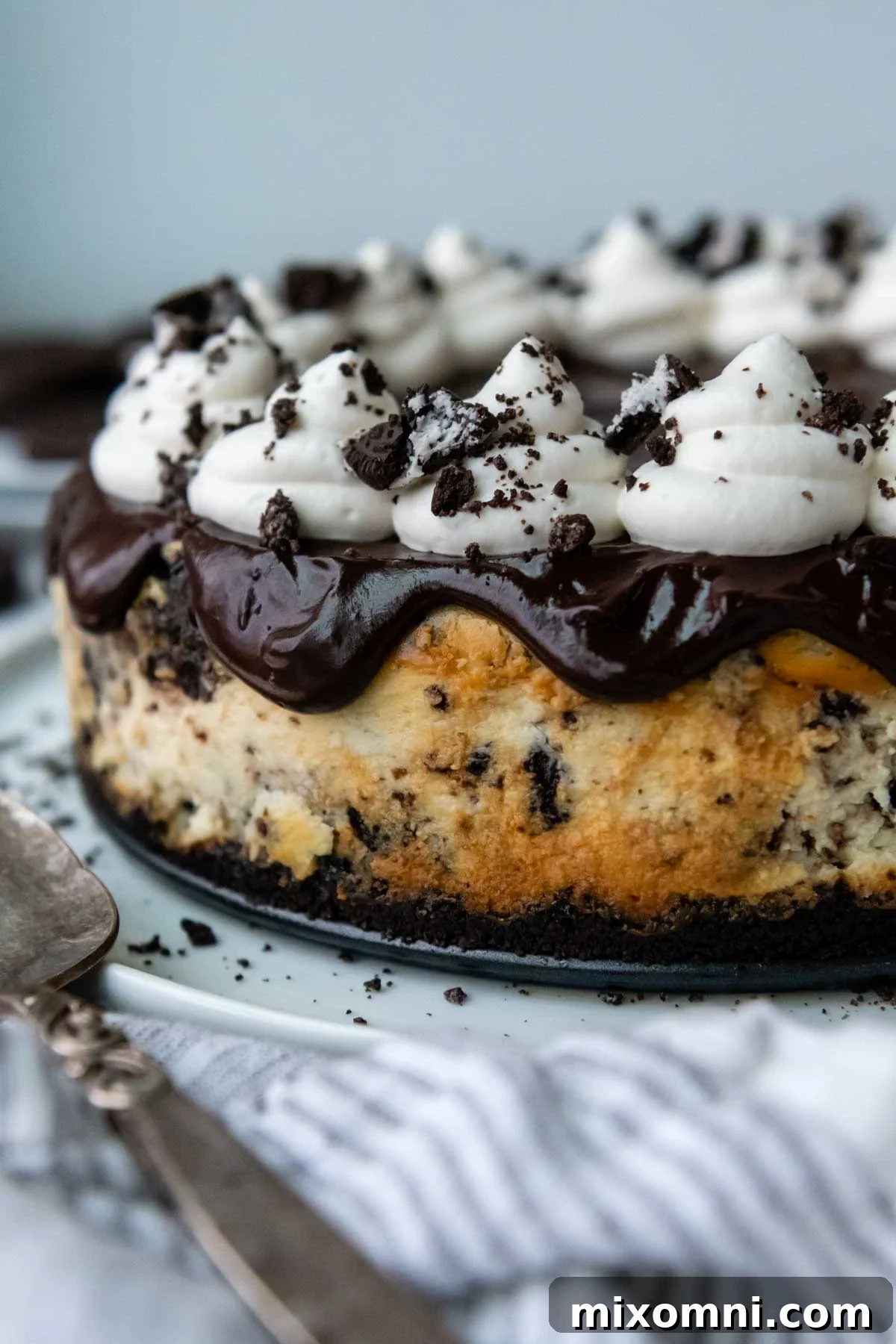
For a professional flourish, pipe mounds of whipped cream around the edge of the cheesecake. You can achieve various decorative effects using different piping tips. A large open star tip creates beautiful ridged rosettes, while a large round tip will produce smooth, elegant dollops. Use a coupler with a pastry bag for easy tip changes (and if you’re like me, you’ll love these disposable ones for quick cleanup!). Once piped, sprinkle additional crushed gluten-free Oreo cookie crumbs over the whipped cream and ganache for an extra layer of texture and visual appeal. This magnificent cheesecake is now ready to be admired and devoured!
Sourcing Your Gluten-Free Oreos: A Guide
Now that you’re undoubtedly convinced of the delicious potential of gluten-free Oreo recipes, you might be wondering where to find these essential ingredients. The good news is that gluten-free Oreos are no longer a rare specialty item. They are now commonly stocked in the regular cookie aisle of most major grocery stores, often positioned right alongside their traditional counterparts and other Oreo variations. You’ll typically find them at large retailers like Walmart, Meijer, Target, and a wide array of local grocery chains. This increased availability makes it easier than ever to enjoy your favorite cookies and integrate them into fantastic recipes like this cheesecake.
Beyond the iconic brand, the market for gluten-free chocolate sandwich cookies has expanded significantly, offering excellent alternatives if you can’t find Oreos or simply wish to explore. Look for other reputable brands such as Glutino, known for its extensive range of gluten-free products, Kinnikinnick, which offers delicious allergy-friendly options, and Goodie Girl. For those who frequent Trader Joe’s, their GF Joe Joe’s are another popular and tasty choice. Don’t hesitate to try different brands to find your personal favorite, as each may offer a slightly different texture and flavor profile that could enhance your cheesecake experience.
Storing Tips for Your Gluten-Free Oreo Cheesecake
One of the many advantages of this delectable gluten-free Oreo dessert is its convenience as a make-ahead treat. This makes it an ideal choice for holidays, special celebrations, or entertaining guests, allowing you to prepare it in advance and focus on other aspects of your event. For optimal results and a perfectly set texture, it is highly recommended to make the cheesecake at least one day ahead of when you plan to serve it. This extended chilling period allows the flavors to meld beautifully and the structure to firm up completely, ensuring clean, elegant slices.
Any leftover cheesecake can be safely refrigerated for up to 3 days. To maintain its freshness and prevent it from absorbing other odors from your fridge, ensure it is well covered with plastic wrap or stored in an airtight container. If you anticipate needing to store your cheesecake for a longer duration, freezing is an excellent option. You can either freeze the entire cheesecake for future enjoyment or pre-slice it into individual serving-size portions before freezing, which makes thawing and serving much more convenient.
How to Freeze Gluten-Free Oreo Cheesecake Like a Pro
Freezing cheesecake is an excellent way to preserve its deliciousness for weeks, or even months, allowing you to enjoy this delightful gluten-free Oreo dessert whenever a craving strikes. Both baked and no-bake cheesecakes can be successfully frozen, provided they are properly prepared and wrapped to prevent freezer burn and the formation of ice crystals, which can compromise texture and flavor. The key to successful freezing lies in smart wrapping techniques.
To achieve a professional-quality wrap that protects your dessert without marring its beautiful topping, follow these steps: First, place the fully assembled and chilled cheesecake (without any wrapping) directly into the freezer. Allow it to freeze solid for several hours or overnight. Once the cheesecake is thoroughly frozen and firm, it’s ready for wrapping. Remove it from the freezer and carefully wrap it in a couple of layers of plastic wrap, ensuring a tight seal around the entire cheesecake. This initial layer of plastic wrap acts as a barrier against air. Then, add a final layer of heavy-duty aluminum foil over the plastic wrap. The foil provides an additional layer of protection against freezer burn and helps prevent any odors from seeping in. This double-layer approach ensures maximum freshness.
When properly frozen, your gluten-free cookies and cream cheesecake can be stored in the freezer for up to 3 months without a noticeable decline in quality. To enjoy your frozen cheesecake, transfer it to the refrigerator and allow it to thaw overnight, typically for about 24 hours. Once thawed, unwrap it, let it come to room temperature for a short while if desired, and then slice and enjoy its renewed creamy goodness. This method ensures your homemade cheesecake remains a convenient, ready-to-enjoy treat.
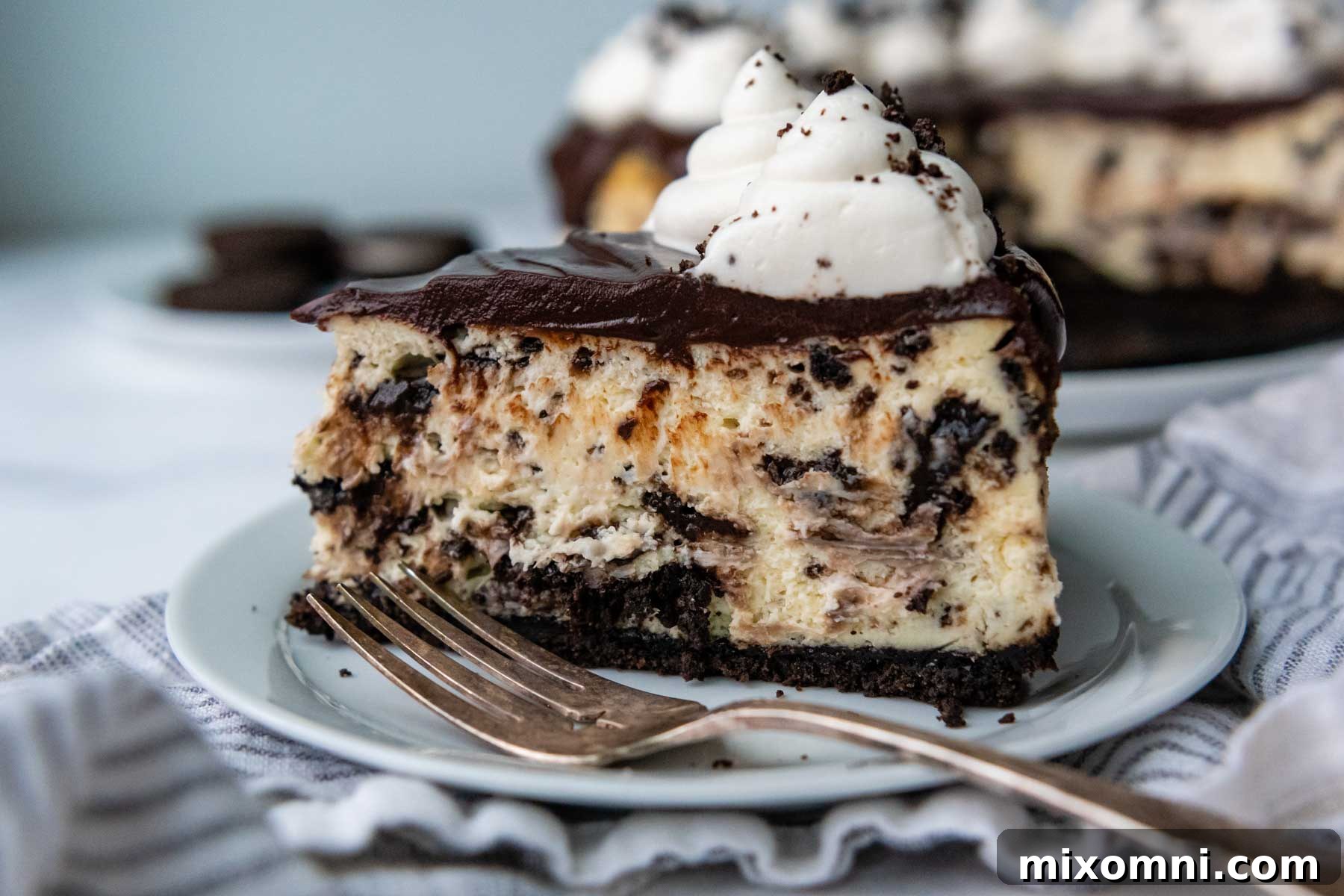
Save this recipe to your pinterest board!
Let’s be friends on Pinterest! I’m always sharing great recipes!
Ultra Creamy Gluten-Free Oreo Cheesecake (Easy)
 Melissa Erdelac
Pin
Rate
Remove Ads
Ingredients
Gluten-Free Oreo Crust
- 20 gluten-free Oreo cookies, (2 packages total for the recipe)
- 4 tablespoons unsalted butter
Gluten-Free Oreo Cheesecake
- 32 ounces (4 packages) full-fat cream cheese, softened
- 1 cup granulated sugar
- 1 cup sour cream, full-fat
- 3 large eggs, room temperature
- 1 teaspoon vanilla extract
- 15 gluten-free Oreo cookies, crushed into larger chunks
Chocolate Ganache
- ½ cup heavy cream
- 1 cup semi-sweet chocolate chips
Whipped Cream
- ¾ cup heavy cream
- 1 teaspoon vanilla extract
- 2 tablespoons powdered sugar
- 2-3 gluten-free Oreo cookies (crushed), for decorating
Equipment
-
Food Processor
-
Offset Spatula
-
9-inch springform pan
Instructions
Cheesecake Crust
-
Preheat the oven to 350°F (175°C).
-
Crush 20 gluten-free Oreo cookies into fine crumbs. For best results and speed, use a food processor. Alternatively, place cookies in a durable ziplock bag and use a rolling pin to crush them until they are uniformly fine, resembling sand.20 gluten-free Oreo cookies, 4 tablespoons unsalted butter
-
Add the 4 tablespoons of melted unsalted butter to the cookie crumbs (either in the food processor or a mixing bowl). Mix thoroughly until the crumbs are evenly moistened and stick together.
-
Pour the crumb mixture into a 9-inch springform pan. Use the bottom of a measuring cup or a flat glass to firmly and evenly press the crumbs along the bottom of the pan to form a compact crust.
-
Bake the crust in the preheated oven for 10 minutes. Remove it from the oven and allow it to cool completely on a wire rack while you prepare the cheesecake filling.
Filling
-
Reduce the oven temperature to 325°F (160°C). In a large mixing bowl or the bowl of a stand mixer fitted with a paddle attachment, combine the softened full-fat cream cheese and granulated sugar. Beat on medium speed for 1-2 minutes until the mixture is very smooth, light, and creamy, scraping down the sides of the bowl as needed.32 ounces (4 packages) full-fat cream cheese, 1 cup granulated sugar
-
Add the full-fat sour cream, large room temperature eggs, and vanilla extract to the cream cheese mixture. Beat again on medium-low speed until all ingredients are just combined and the mixture is smooth. Be careful not to overmix once the eggs are added.1 cup sour cream, 3 large eggs, 1 teaspoon vanilla extract
-
Slightly crush the remaining 15 gluten-free Oreos in a ziplock bag using a rolling pin. Aim for larger chunks rather than fine crumbs to create delightful pockets of cookie texture in the cheesecake. Gently fold these crushed Oreos into the cheesecake filling using a spatula until evenly distributed.15 gluten-free Oreo cookies
-
Pour the filling into the pre-baked and cooled Oreo crust. Use an offset spatula to smooth the top surface of the filling. For easier cleanup and to catch any potential butter drips from the springform pan, line a baking sheet with foil and place the cheesecake pan on it before baking.
-
Bake in the 325ºF (160°C) oven for 50-60 minutes. The cheesecake is done when the edges are set and slightly puffed, but the center still has a slight wobble. A toothpick inserted into the middle should come out moist but not wet and liquidy.
-
To prevent cracks, cool the cheesecake gradually. Turn off the oven, leaving the cheesecake inside with the oven door slightly ajar. Allow it to sit in the oven for 15 minutes. Then, remove it and cool completely on a wire rack to almost room temperature.
-
Once cooled to near room temperature, transfer the cheesecake to the refrigerator and chill for at least 4 hours, or ideally, overnight. Do not attempt to release the outer ring of the springform pan until the cheesecake is fully chilled and set, as this can cause it to pull apart and crack.
Chocolate Ganache
-
In a small saucepan, heat ½ cup of heavy cream over medium heat until it is hot and just simmering, but not boiling. Remove from heat, add 1 cup of semi-sweet chocolate chips, and let sit for 1 minute to melt the chocolate. Stir until smooth and glossy.½ cup heavy cream, 1 cup semi-sweet chocolate chips
-
Once the cheesecake is thoroughly chilled, run a thin knife along the inner edge of the springform pan’s outer ring to help release the cheesecake. Then, open the ring and carefully pull it away. If desired, you can then transfer the cheesecake (with its bottom pan still attached) to a serving platter.
-
Pour the warm chocolate ganache onto the center of the chilled cheesecake. Use an offset spatula to gently spread the ganache evenly over the top, allowing it to go just over the edge for a beautiful drip effect. Place the cheesecake back in the fridge for about 20 minutes to allow the ganache to set slightly.
Whipped Cream
-
In a chilled mixing bowl with a whisk attachment, combine ¾ cup of cold heavy cream, 1 teaspoon of vanilla extract, and 2 tablespoons of powdered sugar. Beat on medium-high speed until soft peaks form and hold a firm shape. Be careful not to overbeat.¾ cup heavy cream, 1 teaspoon vanilla extract, 2 tablespoons powdered sugar
-
For piping, transfer the whipped cream to a pastry bag fitted with a large open star tip or a large round tip (using a coupler is helpful). Pipe attractive mounds of whipped cream around the edge of the cheesecake. Finally, sprinkle an additional 2-3 crushed gluten-free Oreo cookies on top for decoration. Serve immediately or refrigerate until ready to serve for the best experience.2-3 gluten-free Oreo cookies (crushed)
Notes
Storing and Freezing Tips
It’s best to make at least one day ahead of serving so the cheesecake has ample time to set properly before slicing.
Leftovers can be refrigerated for up to 3 days, ensuring they are well covered to maintain freshness. For longer storage, consider freezing the entire cheesecake or slicing it into individual portions before freezing.
To freeze, first place the cheesecake in the freezer unwrapped until it is completely solid. Once frozen solid, wrap it tightly in a couple of layers of plastic wrap, then cover with a layer of aluminum foil to prevent freezer burn.
Frozen cheesecake can be stored for up to 3 months. To thaw, transfer it to the refrigerator and allow it to sit overnight (approximately 24 hours) before unwrapping and enjoying.