
The Ultimate Guide to Soft & Chewy Almond Flour Chocolate Chip Cookies (Gluten-Free & Grain-Free)
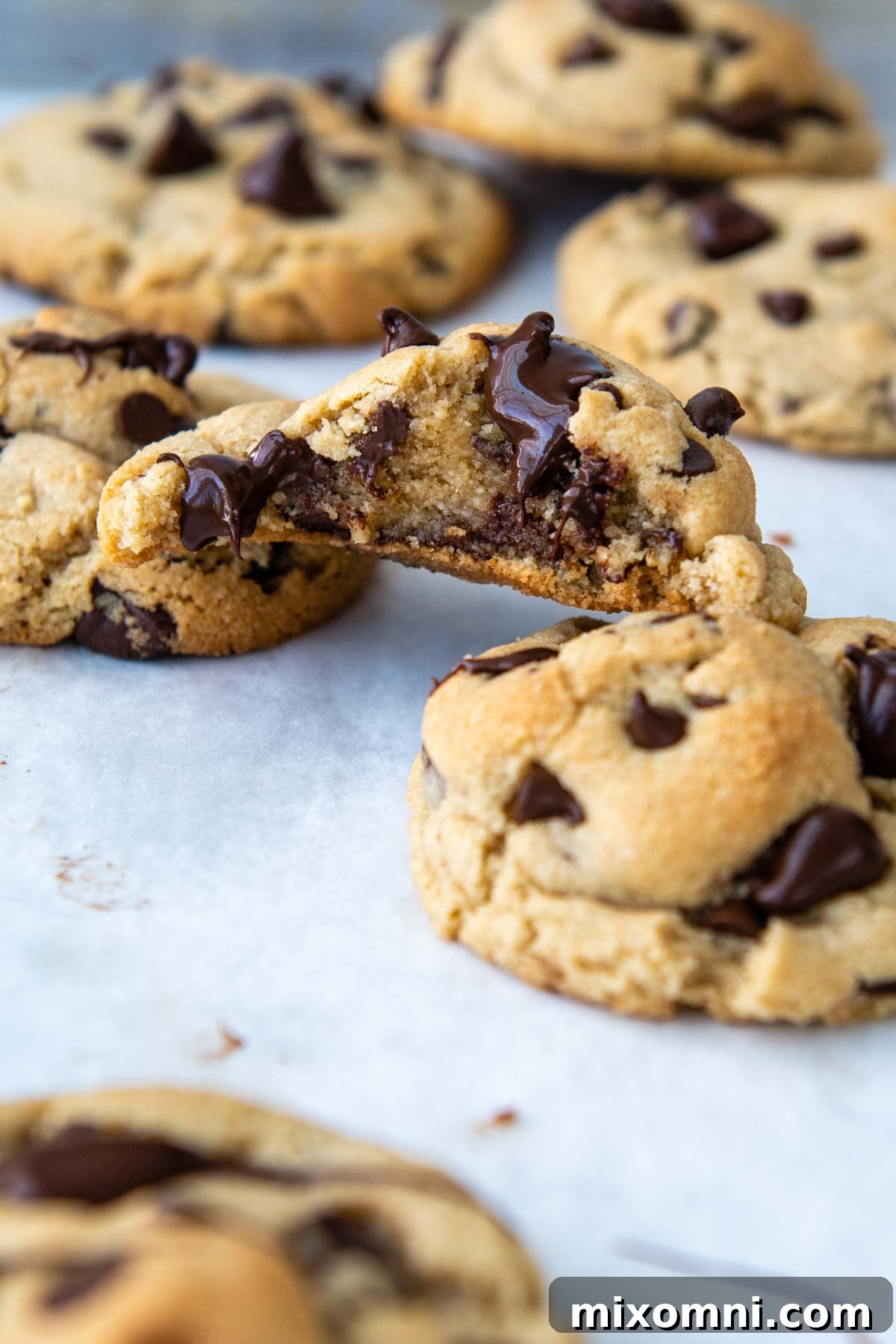
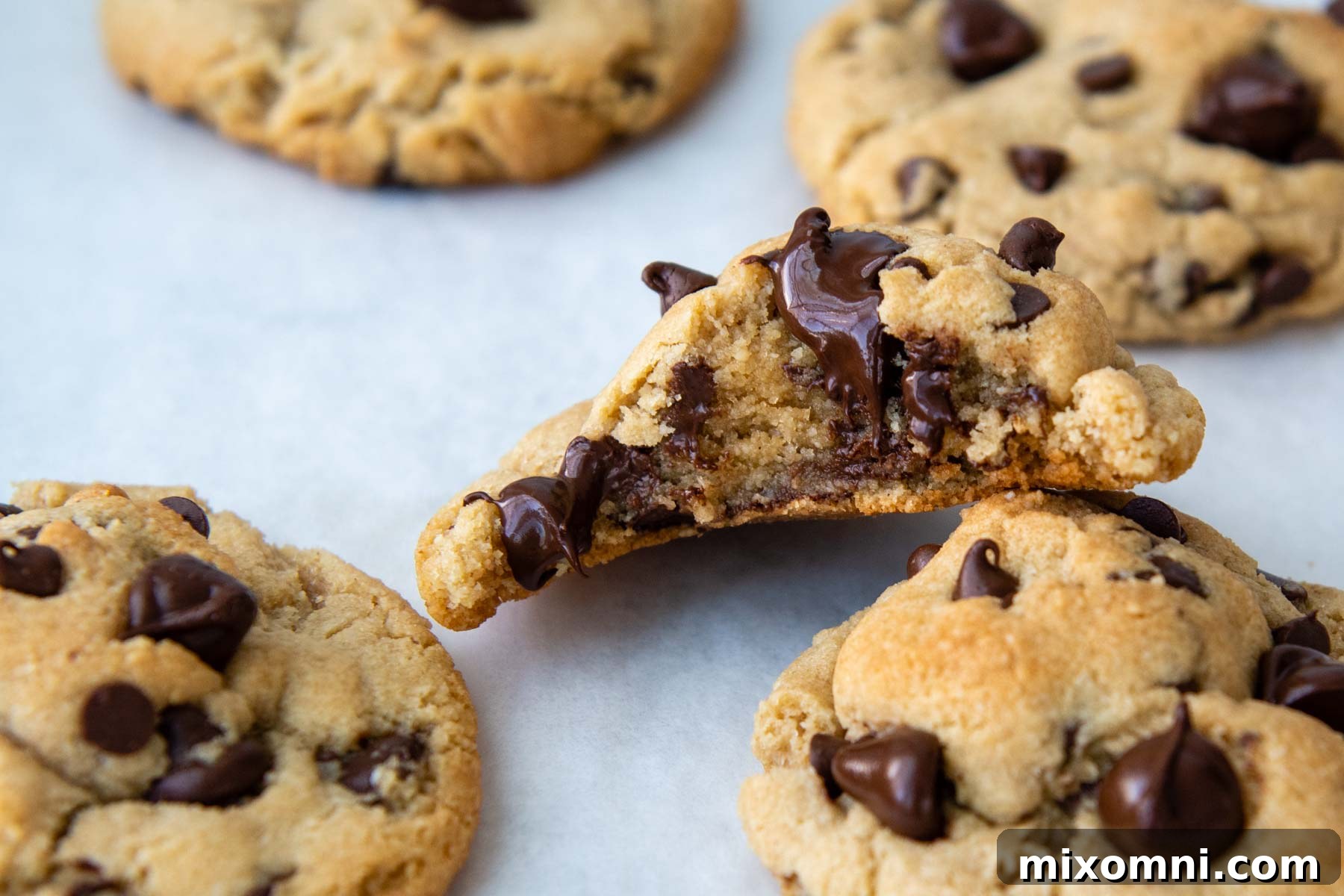
Prepare yourself for what might just be the best gluten-free and grain-free cookie recipe you’ve ever encountered. These chewy, soft, and unbelievably gooey almond flour chocolate chip cookies aren’t just a good alternative; they genuinely rival—and many testers claim surpass—the classic versions you grew up loving. The secret to their superior taste and texture lies in using 100% blanched almond flour, which transforms them into bakery-style delights bursting with chocolatey goodness.
Why Almond Flour Chocolate Chip Cookies Are a Game Changer
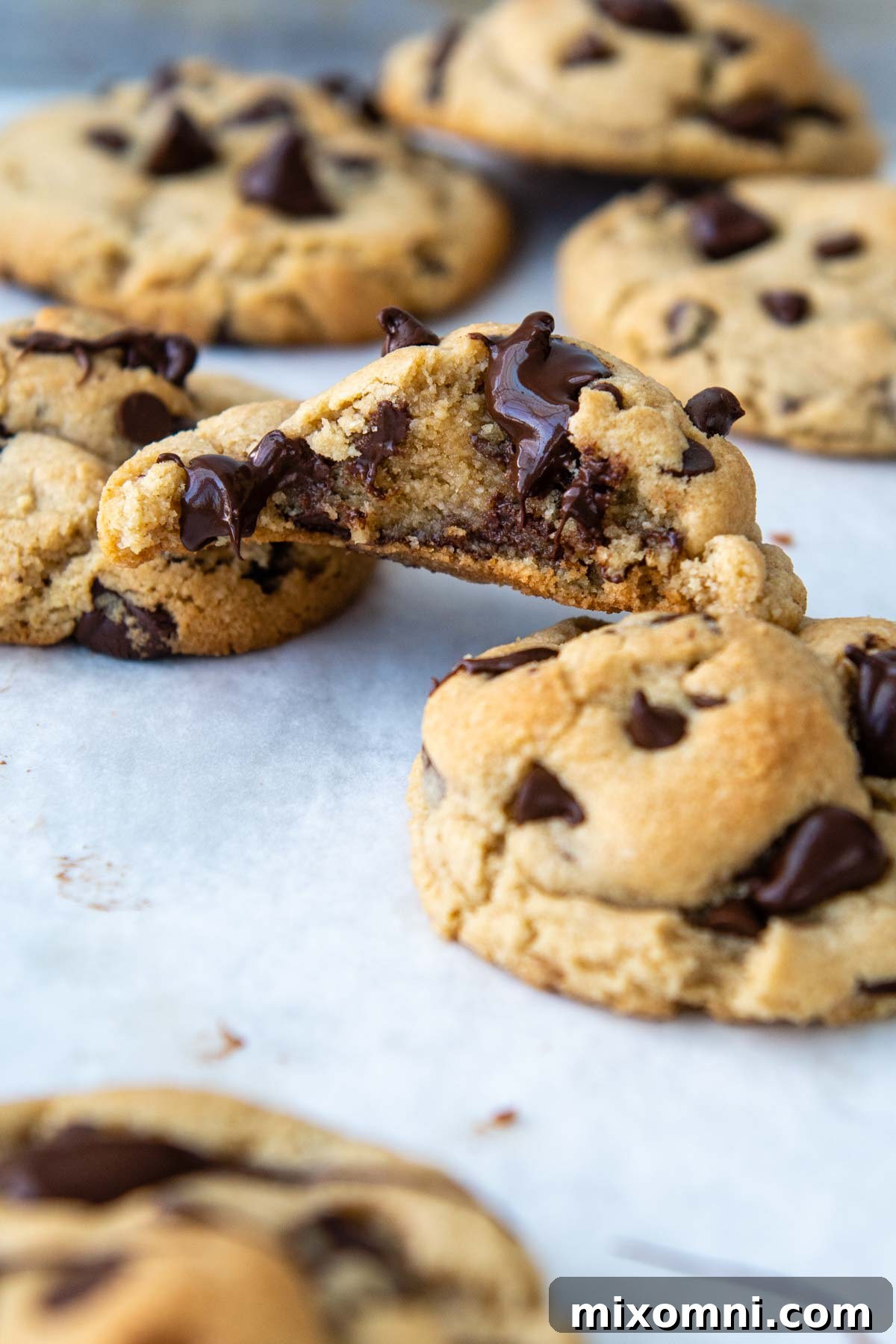
It’s perfectly normal to approach a gluten-free cookie recipe with a touch of skepticism. Many people assume that a grain-free cookie can only ever be “good for what it is,” merely serving as a dietary compromise. However, I am genuinely confident that these homemade cookies will shatter any preconceived notions. They are exceptionally gooey and soft, offering a rich, satisfying experience that stands toe-to-toe with any traditional chocolate chip cookie. In blind taste tests, no one ever suspects these are made exclusively with almond flour.
Beyond being gluten-free and grain-free, using almond flour actually offers distinct advantages that enhance the overall cookie experience. Just like in traditional Swiss Basler Brunsli cookies, almond flour contributes a unique quality, providing a delicate crispness that perfectly complements a wonderfully chewy crumb. This results in a bakery-style cookie that is incredibly tender on the inside, with a satisfying bite on the outside, and absolutely loaded with chocolate flavor in every mouthful.
Achieving Unbeatable Softness and Chewiness
If you’re searching for chewy almond flour cookies, this recipe employs specific techniques to guarantee ultimate softness with those coveted crisp, chewy edges. We incorporate an extra egg yolk, which adds richness and moisture, contributing significantly to the cookie’s tender texture. Increasing the proportion of brown sugar not only adds a deeper caramel note but also helps retain moisture, ensuring a soft chew. Furthermore, a small amount of creamy peanut butter (or almond butter for a pure almond profile) is added. This subtle addition boosts chewiness without overpowering the delicious chocolate and almond flavors, creating a truly irresistible cookie.
I tried these after needing to go to a gluten-free diet. I can’t believe this was the first GF cookie recipe I tried and it was perfect. I expected to have to throw out several batches before I found a recipe I liked. Thank you for sharing this!
—Debbie
Essential Ingredients for Your Almond Flour Cookies
One of the beauties of this recipe is that almond flour is the only specialty ingredient. Fortunately, blanched almond flour is now widely available in most local grocery stores, making it easy to whip up a batch of these incredible cookies. All other ingredients are likely already staples in your pantry!
- Butter: Use unsalted butter, softened to room temperature, for optimal creaming with the sugars. For those with dairy sensitivities or preferences, plant-based butter sticks are an excellent dairy-free alternative and work beautifully in this recipe.
- Nut Butter (Peanut Butter or Almond Butter): A small amount of creamy peanut butter is added for its role in enhancing the cookie’s chewiness. Don’t worry, it won’t give your cookies an overwhelming peanut butter flavor; it simply adds to the textural complexity. If you prefer, creamy almond butter can be used to keep the flavor profile strictly almond, or any other preferred creamy nut butter will work. For true peanut butter enthusiasts, be sure to explore our old fashioned almond flour peanut butter cookies!
- Sugar: A combination of light brown sugar and granulated sugar is crucial for both structure and chewiness. The molasses in brown sugar keeps the cookies soft and moist, while granulated sugar contributes to the crisp exterior. While coconut sugar can be used as a substitute, be aware that it might result in cookies that are a little drier, so minor adjustments to moisture might be needed.
- Blanched Almond Flour: This is the star of our gluten-free recipe! It’s vital to use blanched almond flour, which means the almonds have had their skins removed before being ground into a fine powder. Avoid almond meal, which is coarser and includes the skins, as it will produce a different texture. Blanched almond flour creates a lighter, more tender crumb. I often find the best value at warehouse clubs like Costco, but it’s increasingly available at stores like Aldi.
- Chocolate Chips: The choice of chocolate chips allows for wonderful customization! Semisweet, milk chocolate, dark chocolate, or white chocolate chips all work wonderfully. For an optimal distribution of chocolate in every single bite, I recommend using a mixture of both mini and regular-sized chocolate chips. This ensures that no matter where you bite, you’ll get that perfect hit of melted chocolate. Dairy-free chocolate chips are also a fantastic option for those needing them.
- Egg and Egg Yolk: The combination of a whole egg and an extra egg yolk contributes significantly to the richness, moisture, and chewiness of these cookies. The yolk, in particular, adds fat and emulsifiers that create a tender, almost custard-like texture in the cookie’s interior.
- Vanilla Extract: A crucial flavor enhancer, vanilla extract brings warmth and depth to the sweet chocolate and nutty almond notes.
- Baking Soda: This leavening agent reacts with the acidic brown sugar to help the cookies spread slightly and achieve their soft, chewy texture.
- Salt: A pinch of salt is essential to balance the sweetness and bring out the full flavor of the chocolate and almond.
Let’s Bake These Together: Step-by-Step Perfection
(Below you’ll find step-by-step photos and detailed instructions. For the complete recipe, including precise ingredient amounts, please scroll down to the full recipe card at the end of this article.)
Cookie Dough Made Easy – No Chilling Necessary
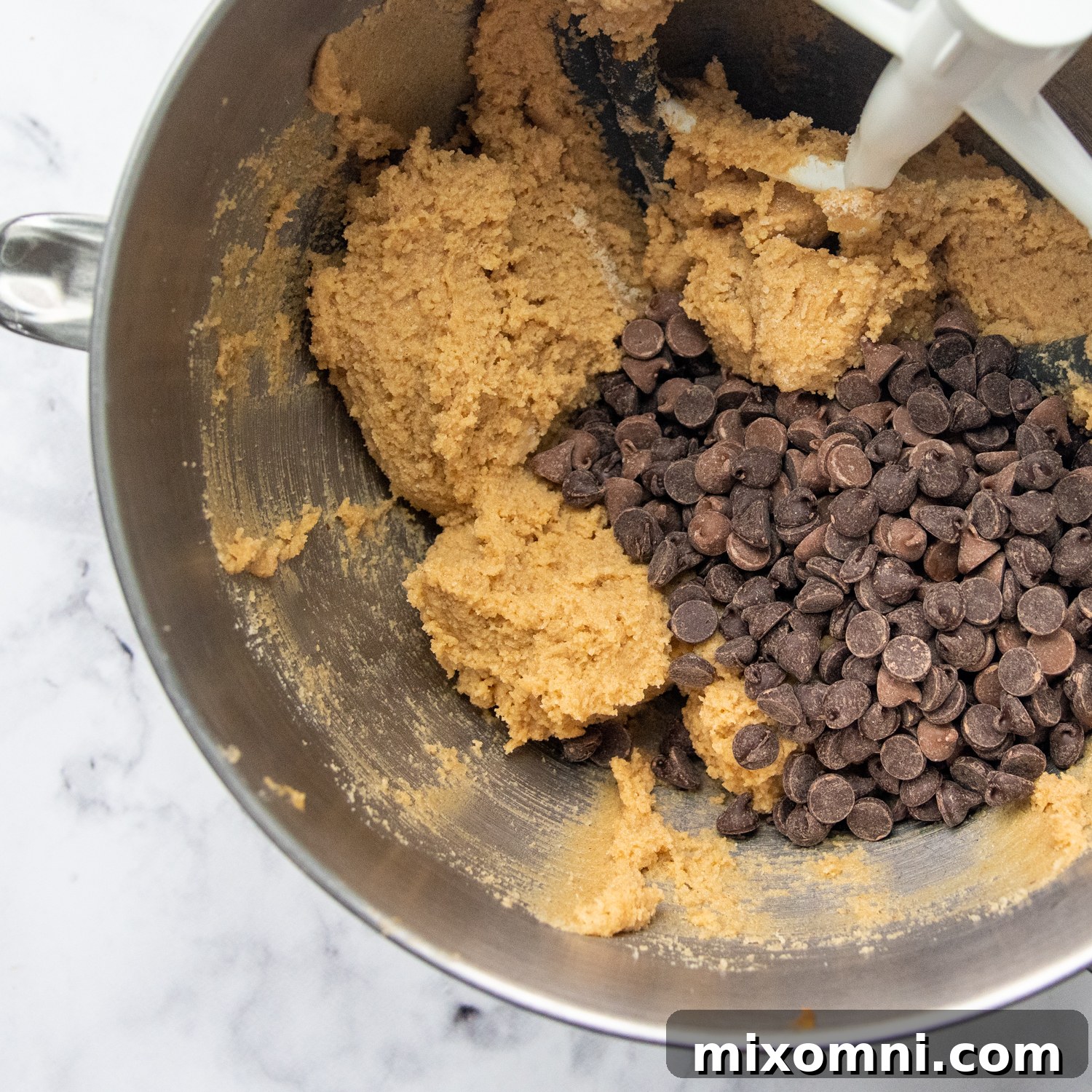
In a large mixing bowl, combine the softened butter, creamy peanut butter, light brown sugar, and granulated sugar. Beat these ingredients together until the mixture is light, fluffy, and perfectly creamy. Remember to scrape down the sides of the bowl occasionally to ensure everything is thoroughly incorporated. Next, beat in the whole egg, extra egg yolk, and vanilla extract until just combined. Finally, gradually mix in the blanched almond flour, baking soda, and salt until no dry flour streaks remain. Gently fold in your chosen chocolate chips. That’s it – your dough is ready to bake!
Scoop, Shape, and Bake to Perfection
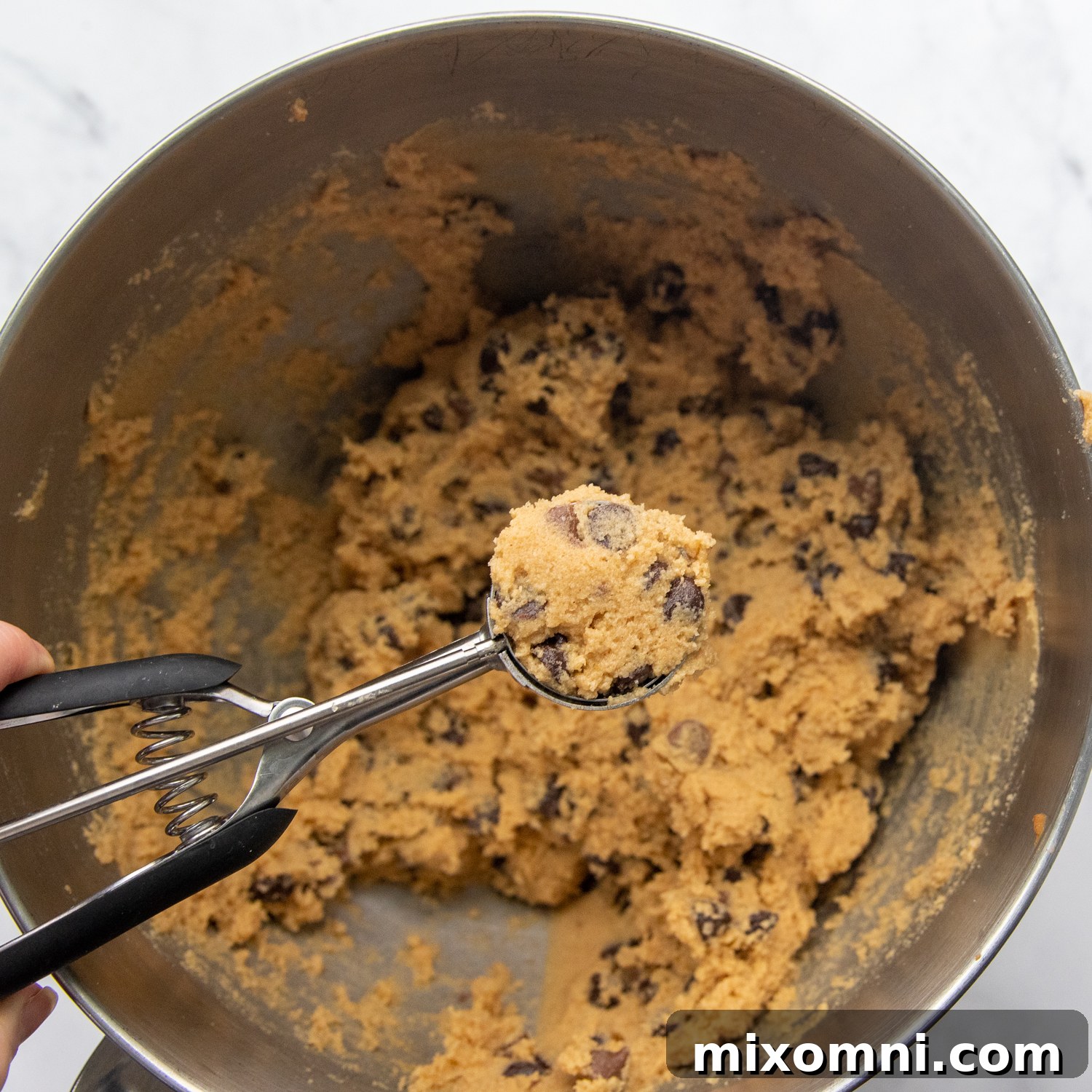
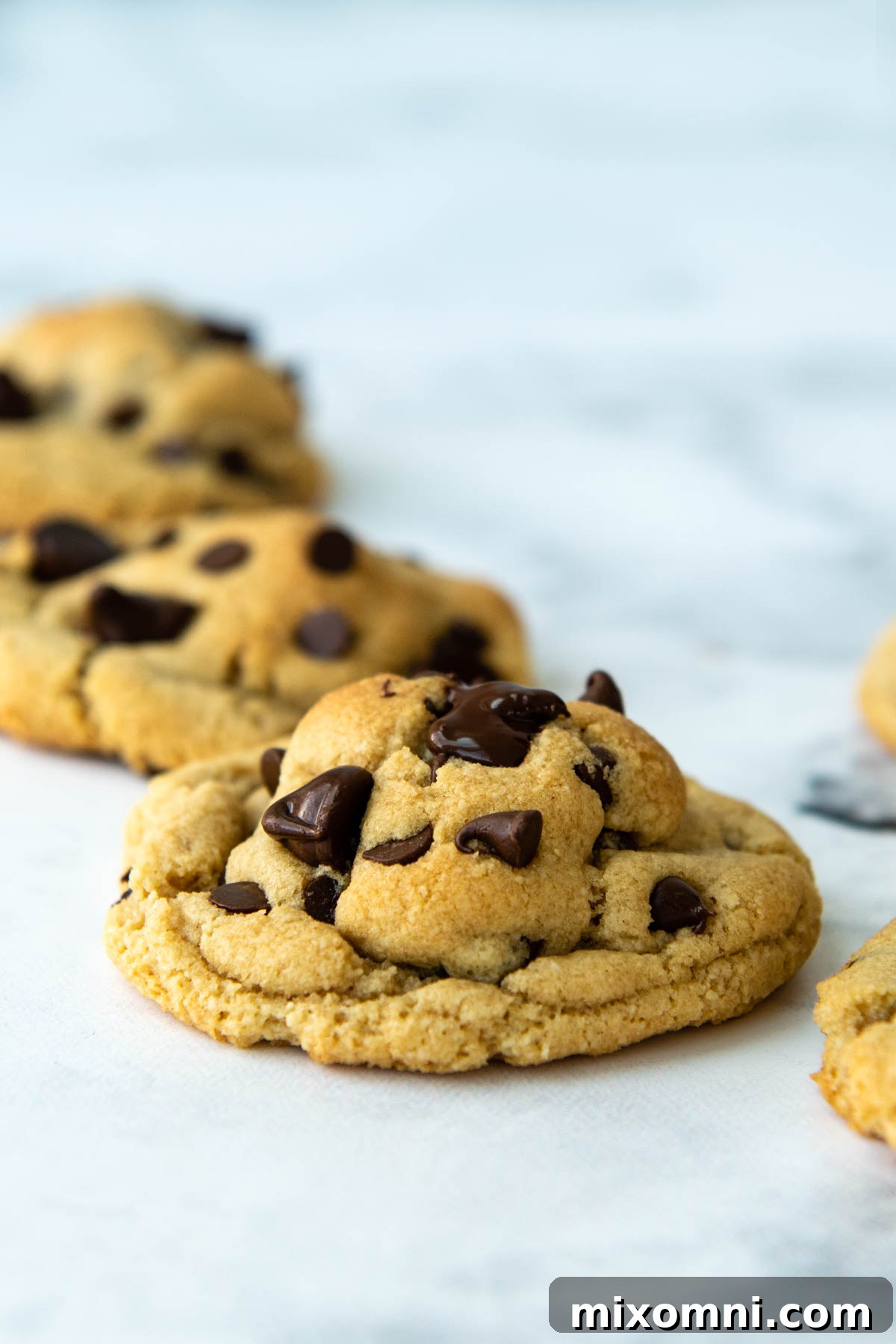
My preferred method for portioning out cookie dough quickly and consistently is by using a medium cookie scoop. Drop uniform mounds of dough onto ungreased baking sheets, ensuring they are spaced about 2 inches apart to allow for proper spreading. For those aiming for stunning bakery-style cookies with beautiful craggy tops (as pictured in this post), you can opt to chill the dough for 1 hour (or freeze for 30 minutes). After chilling, shape the dough balls into taller, cylindrical forms rather than perfect spheres. This slight modification encourages them to bake up with those desirable layered ridges. If you’re curious to see this technique in action, check out the detailed picture tutorial in my gluten-free chocolate chip cookies recipe.
Bake the cookies for approximately 12-13 minutes, or until their edges turn a beautiful golden brown and appear set, while the centers still look soft and slightly undercooked. Due to the inherent moisture in almond flour, these cookies are a bit more forgiving if slightly underbaked, ensuring they remain wonderfully soft and chewy even after cooling.
To Chill or Not to Chill? Your Dough Questions Answered
One common question with cookie recipes, especially gluten-free ones, is whether chilling the dough is truly necessary. I’ve thoroughly tested this almond flour chocolate chip cookie recipe both with and without refrigeration. The good news is that chilling the almond flour cookie dough does not significantly impact how much the cookies spread or their final texture. Therefore, for most home bakers, it is not essential to refrigerate the dough before baking.
However, there are a couple of scenarios where chilling can be beneficial. If you find the dough a little too sticky or soft to handle comfortably, a brief chill can make it much easier to work with. Additionally, for those aspiring to achieve that signature “bakery-style” appearance—characterized by thicker, crinkled edges and a slightly taller profile (as depicted in the recipe photos)—refrigerating the dough for an hour and then shaping it into tall cylinders is the trick. This technique helps create that desirable layered look.
If you prefer to skip the chilling step entirely, I highly recommend using a medium cookie scoop. This tool allows you to effortlessly portion out uniform balls of dough without needing to directly handle and shape it. If perfect roundness isn’t your top priority, simply use two teaspoons to scoop and scrape the dough directly onto your baking sheet. Either way, you’ll get delicious cookies without the wait!
Jazz Up Your Almond Flour Cookies: Creative Variations
This almond flour cookie dough is incredibly versatile, serving as a perfect base for a wide array of delicious cookie possibilities! Don’t hesitate to experiment with the basic recipe and swap out the classic chocolate chips for new and exciting flavors. Here are some ideas to inspire your next batch:
- White Chocolate Macadamia: Replace semi-sweet chocolate chips with white chocolate chips and add chopped macadamia nuts for a buttery, decadent twist.
- Mini M&Ms: For a fun, colorful, and kid-friendly option, fold in a cup of mini M&Ms. The candy shells add a delightful crunch.
- Salted Chocolate Chip: Enhance the chocolate flavor and add a sophisticated touch by sprinkling a little flaky sea salt on top of the cookie dough balls before baking. This contrasts beautifully with the sweetness.
- Nutella Swirl: For a hazelnut chocolate experience, replace the almond butter with an equal amount of Nutella in the dough. You could even swirl in extra Nutella before baking for a marbled effect.
- Oatmeal Cookies: This recipe can also be adapted to create a chewy almond flour oatmeal cookie! Just adjust the dry ingredients to incorporate gluten-free rolled oats for a heartier texture.
- Double Chocolate: Add 1/4 cup of cocoa powder to the dry ingredients and use dark chocolate chips for an intense chocolate lover’s dream.
- Peppermint Bark: During the holidays, swap in crushed candy canes and white chocolate chips after baking.
Easy Yet Professional Baking Tips for Success
Baking perfect cookies is an art, but with a few simple tricks, you can elevate your results to professional levels, even with gluten-free almond flour. Follow these pro tips for the best possible almond flour chocolate chip cookies every time:
- Room Temperature Ingredients: Always start with room temperature butter and eggs. This allows them to cream together more efficiently, creating a smoother, more emulsified dough that results in better texture. If your egg is cold, separate the yolk while it’s still cold (it’s easier), then let the yolk sit at room temperature for about 30-60 minutes before mixing.
- Quickly Soften Butter: Forgot to take your butter out? No problem! Use your microwave on 20% power for 30 seconds to 1 minute, flipping halfway. Be careful not to melt it – you want it pliable, not liquid.
- Slightly Underbake: This is a golden rule for soft, chewy cookies. Remove the cookies from the oven when the edges are golden and set, but the centers still look slightly soft and undercooked. They will continue to cook and set on the hot baking sheet as they cool, ensuring a perfectly tender interior.
- Chilling for Shape (Optional): While not strictly necessary for texture, chilling the dough for an hour can make it firmer and easier to handle, especially if you don’t have a cookie scoop and want perfectly round cookies. After chilling, roll the dough into uniform balls.
- Maximize Chocolate Flavor: For an extra decadent chocolate experience, consider using a combination of chocolate chunks and chips, or even a blend of semi-sweet, milk, and dark chocolate chips. This layering of chocolate types adds depth and varied melting points, creating pockets of gooey goodness.
- Don’t Overmix Dry Ingredients: Once you add the almond flour, baking soda, and salt, mix until just combined. Overmixing can develop gluten (even in almond flour, though less pronounced than wheat) and lead to tougher cookies.
- Cooling Time: Allow the cookies to cool on the baking sheets for 10-15 minutes before transferring them to a wire rack. This initial cooling period allows them to firm up enough to prevent breakage and continue their setting process.
Save This Irresistible Recipe to Your Pinterest Board!
Let’s be friends on Pinterest! I’m always sharing great recipes and baking inspiration!
Did you make this recipe? I love hearing from you! Leave a star rating and comment below the recipe card. Your feedback truly helps others searching for recipes and means the world to our community. I always make sure to respond! -Melissa

Ooey Gooey Almond Flour Chocolate Chip Cookies

Melissa Erdelac
32
cookies
10
mins
12
mins
Pin
Rate
Ingredients
-
½
cup
(113 g)
butter
, softened -
¼
cup
(65 g)
creamy peanut butter
-
1
cup
(234 g)
packed light brown sugar
-
½
cup
(100 g)
granulated sugar
-
1
whole egg
-
1
egg yolk
-
2
teaspoons
vanilla extract
-
2 ¾
cup
(283 g)
blanched almond flour
-
1
teaspoon
baking soda
-
½
teaspoon
salt
-
1 ½
cups
(255 g)
semi-sweet chocolate chips
, (or a mixture of miniature and regular chocolate chips)
Equipment
-
Baking Sheets
-
Medium Cookie Scoop
-
Blanched Almond Flour
Instructions
-
Preheat your oven to 350°F (175°C). In a large mixing bowl, or the bowl of a stand mixer fitted with a paddle attachment, cream together the softened butter, creamy peanut butter, light brown sugar, and granulated sugar for about 3 minutes. Beat until the mixture is light, smooth, and creamy, making sure to scrape down the sides of the bowl as needed to ensure all ingredients are well combined.
-
Add the whole egg, extra egg yolk, and vanilla extract to the creamed mixture. Beat until these wet ingredients are thoroughly combined, ensuring a smooth batter.
-
Gradually mix in the blanched almond flour, baking soda, and salt. Continue mixing on low speed until no pockets of dry flour remain and the dough comes together. Be careful not to overmix. Once the dough is formed, gently stir in your preferred semi-sweet chocolate chips (or a mix of miniature and regular chocolate chips) until evenly distributed throughout the dough.
-
Using a medium cookie scoop, drop uniform portions of dough onto ungreased baking sheets, spacing them approximately 2 inches apart. For a professional, bakery-style appearance, you can chill the dough for 1 hour (or freeze for 30 minutes) and then shape the dough balls into tall cylinders before baking (as shown in the photos within this post). This helps create appealing ridges and a thicker cookie.
-
Bake for 12-13 minutes, or until the edges are golden brown and appear set, but the centers still look soft and slightly undercooked. This slight underbaking ensures your cookies remain wonderfully soft and chewy after cooling. Allow the cookies to cool on the baking sheets for 10 minutes before carefully transferring them to a wire rack to cool completely.
Notes
Storing and Freezing Almond Flour Cookies
Proper storage is key to keeping your almond flour chocolate chip cookies fresh and delicious. Once the cookies have cooled completely to room temperature, stack them and place them in an airtight container. They will maintain their freshness and chewiness for up to 3 days at room temperature. For longer storage, consider wrapping individual cookies or small groups (2-3) tightly in plastic wrap before placing them in an airtight container; this method can extend their longevity for up to a week.
Almond flour cookies are also excellent for freezing, offering two convenient options:
Freezing Unbaked Cookie Dough: This is a fantastic way to have fresh cookies on demand! Portion out your cookie dough into balls using a scoop, then arrange them on a baking sheet lined with wax paper. Place the baking sheet in the freezer until the dough balls are solid. Once frozen, transfer the solid dough balls to an airtight freezer container or a heavy-duty freezer bag. They can be stored in the freezer for up to 3 months. When you’re ready to bake, simply place the frozen cookie dough balls on an ungreased baking sheet, spaced 2 inches apart. Bake as directed in the recipe, adding an extra 2-4 minutes to the baking time (totaling around 14-17 minutes), or until the edges are golden.
Freezing Baked Cookies: If you prefer to bake ahead, these cookies freeze beautifully once baked. After baking, ensure the cookies are completely cooled. Stack them in groups of 2 or 3, wrap them tightly in plastic wrap, and then place these wrapped stacks into an airtight freezer container or freezer bag. They can be frozen for up to 3 months. To enjoy, simply thaw the baked cookies on the counter at room temperature. For an extra treat, you can warm them briefly in the microwave or a low oven for that freshly baked taste.
These storage methods ensure you can enjoy your delicious gluten-free and grain-free almond flour chocolate chip cookies whenever the craving strikes!
Calories:
183
kcal
,
Carbohydrates:
17
g
,
Protein:
3
g
,
Fat:
12
g
,
Saturated Fat:
4
g
,
Cholesterol:
19
mg
,
Sodium:
28
mg
,
Potassium:
73
mg
,
Fiber:
2
g
,
Sugar:
13
g
,
Vitamin A:
108
IU
,
Calcium:
40
mg
,
Iron:
1
mg
Did you make this recipe?
Please leave a star rating and review below. It helps others when searching for recipes and I LOVE feedback!
Frequently Asked Questions (FAQs) About Almond Flour Cookies
Can I substitute almond flour for regular flour in any cookie recipe?
Not usually. Almond flour behaves very differently from wheat flour. It’s gluten-free, which means it doesn’t provide the same structure, and it absorbs liquid differently. For best results, it’s always recommended to use a recipe specifically developed for almond flour, like this one, to ensure proper texture and consistency.
Are these cookies really soft and chewy without gluten?
Absolutely! This recipe is specifically designed to maximize softness and chewiness. The combination of almond flour’s natural moisture, extra egg yolk, and a higher proportion of brown sugar works together to create an incredibly tender and satisfyingly chewy cookie that rivals traditional recipes.
What kind of almond flour should I use?
For this recipe, and most baking, it’s crucial to use blanched, finely ground almond flour. Blanched means the almond skins have been removed, resulting in a lighter color and finer texture. Avoid almond meal, which is coarser and includes the skins, as it will yield a denser, grainier cookie.
Can I make these cookies dairy-free?
Yes, you can! Simply substitute the unsalted butter with your favorite plant-based butter sticks. Ensure it’s a stick form suitable for baking to maintain the correct fat content and consistency.
Why do you use both white and brown sugar?
The combination of granulated white sugar and light brown sugar serves multiple purposes. Granulated sugar contributes to crispness on the edges and helps with spread. Brown sugar, with its molasses content, adds moisture, depth of flavor, and contributes significantly to the soft, chewy texture of the cookie. It’s a balance that creates the perfect cookie.
How do I prevent my almond flour cookies from spreading too much?
Almond flour cookies generally spread less than wheat flour cookies. However, ensure your butter isn’t too soft or melted, and measure your ingredients accurately. If you’re concerned about spread or want thicker cookies, chilling the dough for an hour (as mentioned in our tips) can also help them hold their shape better during baking.