

Unlock the secret to a truly satisfying pizza night with our incredible Almond Flour Pizza Crust recipe! Say goodbye to soggy, uninspiring gluten-free options and embrace a crust that’s wonderfully thick, delightfully fluffy, yet irresistibly crispy. Crafted with just a handful of simple ingredients and straightforward steps, you can have this low-carb, gluten-free masterpiece ready in under 30 minutes. Whether you’re following a low-carb, keto, or gluten-free diet, this almond flour pizza dough is guaranteed to exceed your expectations and bring the joy of pizza back to your table.

Why Choose Almond Flour for Your Pizza Crust?
For those navigating a low-carb, keto, or gluten-free lifestyle, the idea of a truly delicious pizza crust often feels like a distant dream. Traditional pizza crusts, made from wheat flour, are packed with carbohydrates and gluten, making them off-limits for many. This is where almond flour steps in as a game-changer.
Almond flour, made from finely ground blanched almonds, offers an exceptional alternative. It’s naturally gluten-free and significantly lower in carbohydrates compared to conventional flours. But it’s not just about health benefits; almond flour also imparts a fantastic texture and subtle nutty flavor to your crust. Unlike many gluten-free alternatives that can be dense or gummy, an almond flour crust can be both sturdy enough to hold your favorite toppings and surprisingly light and airy on the inside, with a satisfying crispness on the outside.
Our recipe for homemade almond flour pizza crust comes together in under 5 minutes of active prep time, requiring no yeast, no kneading, and no extensive rising period. This makes it a perfect solution for quick weeknight meals or spontaneous pizza cravings. It’s a testament to how easy and rewarding healthy eating can be, proving that you don’t have to sacrifice flavor or texture to align with your dietary goals.
Essential Ingredients for the Perfect Almond Flour Pizza Crust
Crafting this exceptional almond flour pizza crust requires a careful selection of ingredients that work in harmony to deliver its signature thick, fluffy, and crispy texture. Each component plays a vital role, especially when working with gluten-free and low-carb flours. All ingredients in this recipe are gluten-free and suitable for those with celiac disease or following a gluten-free or low-carb diet.
- Fine, Blanched Almond Flour: This is the foundation of our crust. It’s crucial to use fine, blanched almond flour for the best results. Blanched almond flour means the skins have been removed before grinding, resulting in a smoother, finer texture that mimics traditional flour more closely. This leads to a more tender and less crumbly crust. Almond meal, which includes the skins and is coarser, is not recommended as it can yield a heavier, more rustic texture that might not hold together as well.
- Psyllium Husk Powder: This ingredient is a true marvel in gluten-free baking, especially for low-carb doughs. Psyllium husk powder is a soluble fiber that acts as a powerful binder, absorbing liquids and giving the dough elasticity and pliability. Without it, almond flour dough can be quite fragile and prone to crumbling. Psyllium husk powder allows the dough to be easily rolled and shaped, preventing a dry, brittle crust. It’s also very low in net carbohydrates, making it ideal for keto diets.
- Baking Powder: As this recipe is yeast-free, baking powder serves as the primary leavening agent. It reacts with moisture and heat to create carbon dioxide bubbles, which are trapped in the dough, resulting in a thick, fluffy crust. This eliminates the need for any rise time, significantly cutting down on preparation. Like psyllium husk, it’s a low-carb friendly ingredient.
- Seasonings (Garlic Powder & Salt): These enhance the savory profile of the crust itself. Garlic powder adds a subtle aromatic depth, while salt balances the flavors. For a more robust taste, consider adding Italian seasoning or a pinch of onion powder to the dry mix.
- Eggs (1 Whole Egg & 1 Egg White): Eggs are essential binders in this recipe, helping to hold the almond flour together and provide structure. The specific combination of one whole egg and one egg white is chosen for optimal moisture and binding. Two whole eggs would introduce too much liquid, potentially making the dough too wet and difficult to work with. We have not tested this recipe with egg replacers, so for best results, we recommend sticking to eggs.
- Olive Oil: A good quality olive oil adds richness to the dough, contributing to a tender interior and a crisp exterior. It also helps prevent the dough from sticking. You can substitute with other mild-flavored oils like avocado oil or grapeseed oil if preferred.
- Apple Cider Vinegar: While you won’t taste it in the final product, a touch of apple cider vinegar reacts with the baking powder, boosting its leavening power. This helps achieve an even better rise, contributing to that desirable fluffy texture.
- Boiling Water: Added at the end of mixing, boiling water helps to activate the psyllium husk more effectively and quickly, allowing it to absorb liquids and make the dough pliable almost instantly. This brief resting period is key for easy handling.
Recommended Tools for a Crispy Crust
Achieving that coveted golden, crispy crust with a soft interior for your toppings often comes down to using the right tools. While a standard baking sheet will work, certain equipment can elevate your almond flour pizza crust from good to extraordinary.
- Pizza Stone: For truly exceptional results, a pizza stone is highly recommended. A preheated pizza stone ensures an intense, even heat transfer to the bottom of the crust from the moment it enters the oven. This high initial heat is crucial for developing a crispy base rapidly, which is especially beneficial for almond flour crusts that bake quickly. I prefer a circular pizza stone as it doubles as a guide for shaping your dough, and handles make it much easier to maneuver in and out of a hot oven.
- Pizza Peel: A pizza peel (or paddle) is indispensable for safely transferring your raw or par-baked pizza to and from a screaming hot pizza stone or baking sheet. Trying to move an unbaked pizza by hand can be tricky, potentially disturbing your carefully arranged toppings or causing burns. A peel allows you to slide the pizza smoothly into the oven and retrieve it with ease.
- Alternative to Pizza Stone: If a pizza stone isn’t available, don’t worry! You can still achieve a decent crust by preheating a heavy-duty baking sheet or a pizza pan in the oven before placing the dough on it. While it may not deliver the same level of crispness as a stone, a hot pan is always superior to a cold one for crust development. A rimless baking sheet can also be useful for easy sliding with a pizza paddle.
- Rolling Pin: Essential for evenly rolling out your dough to the desired thickness.
- Large Mixing Bowl & Whisk: For combining your ingredients.
- Parchment Paper: Crucial for rolling out the dough without sticking and for easy transfer. Greasing it lightly with cooking spray further aids in non-stick release.
Crafting Your Almond Flour Pizza Crust: A Step-by-Step Guide
Making a delicious, low-carb almond flour pizza crust is surprisingly simple and quick. Follow these detailed steps to achieve a perfectly textured base for your favorite pizza creations.
- Preheat Your Oven: Start by preheating your oven to 350ºF (175ºC). If you’re using a pizza stone, place it in the oven now so it can preheat thoroughly. If not, a baking sheet or pizza pan should be placed in the oven to get hot as well.
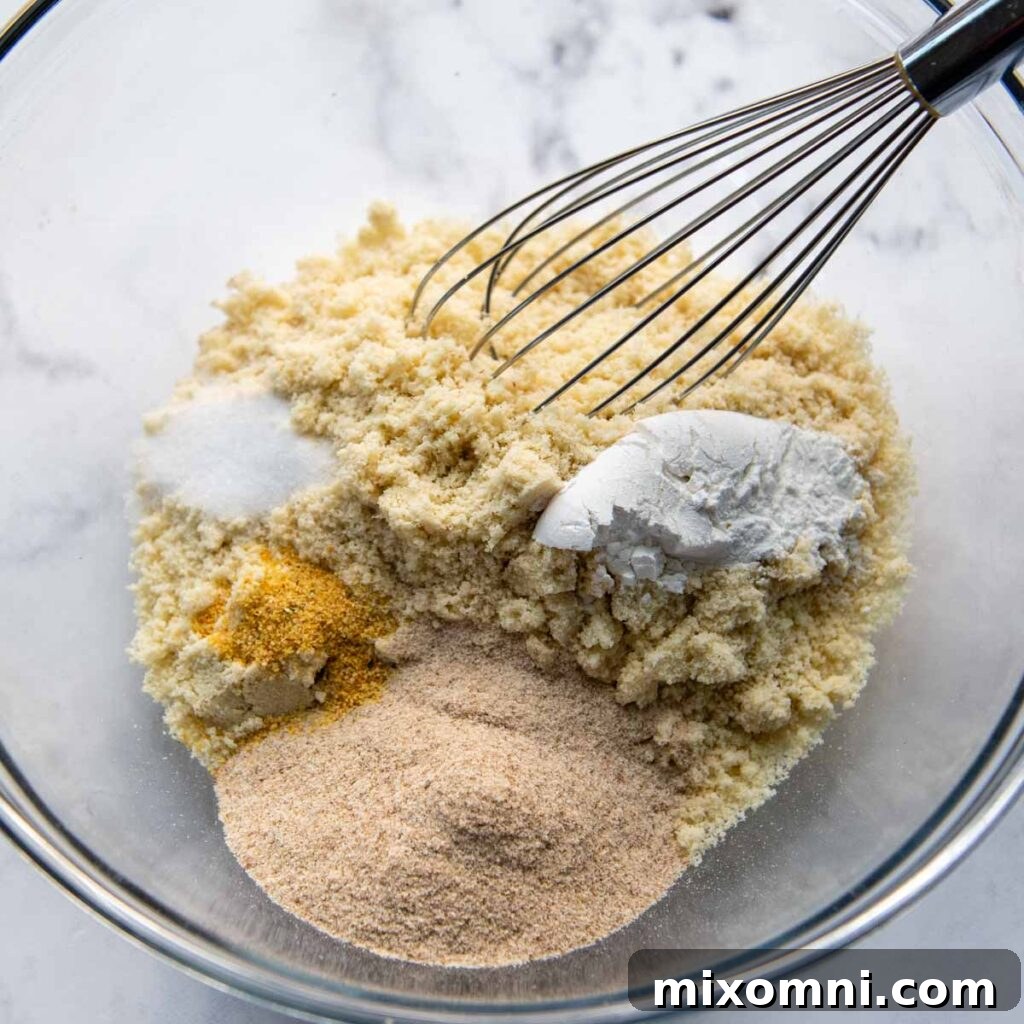
- Combine Dry Ingredients: In a large mixing bowl, whisk together the almond flour, psyllium husk powder, baking powder, garlic powder, and salt until well combined. Ensure there are no lumps in the dry mix.
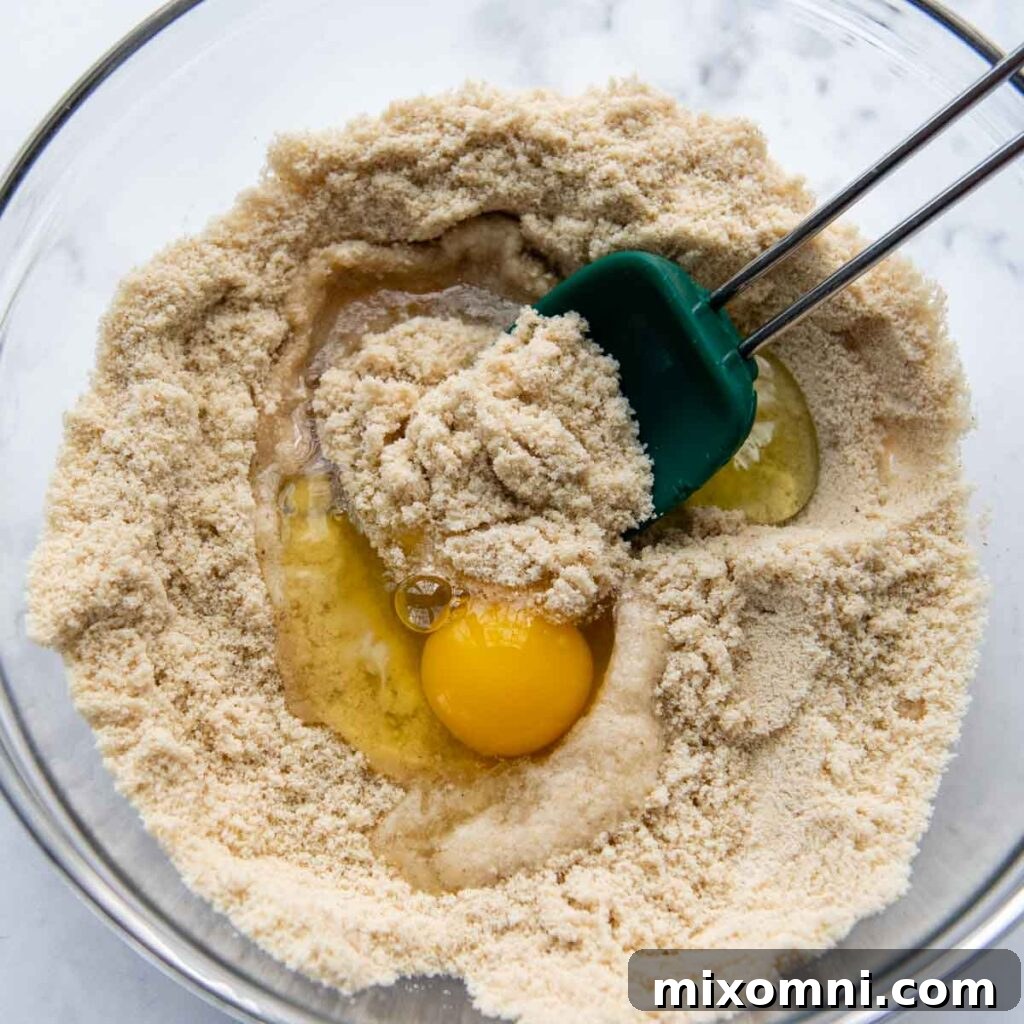
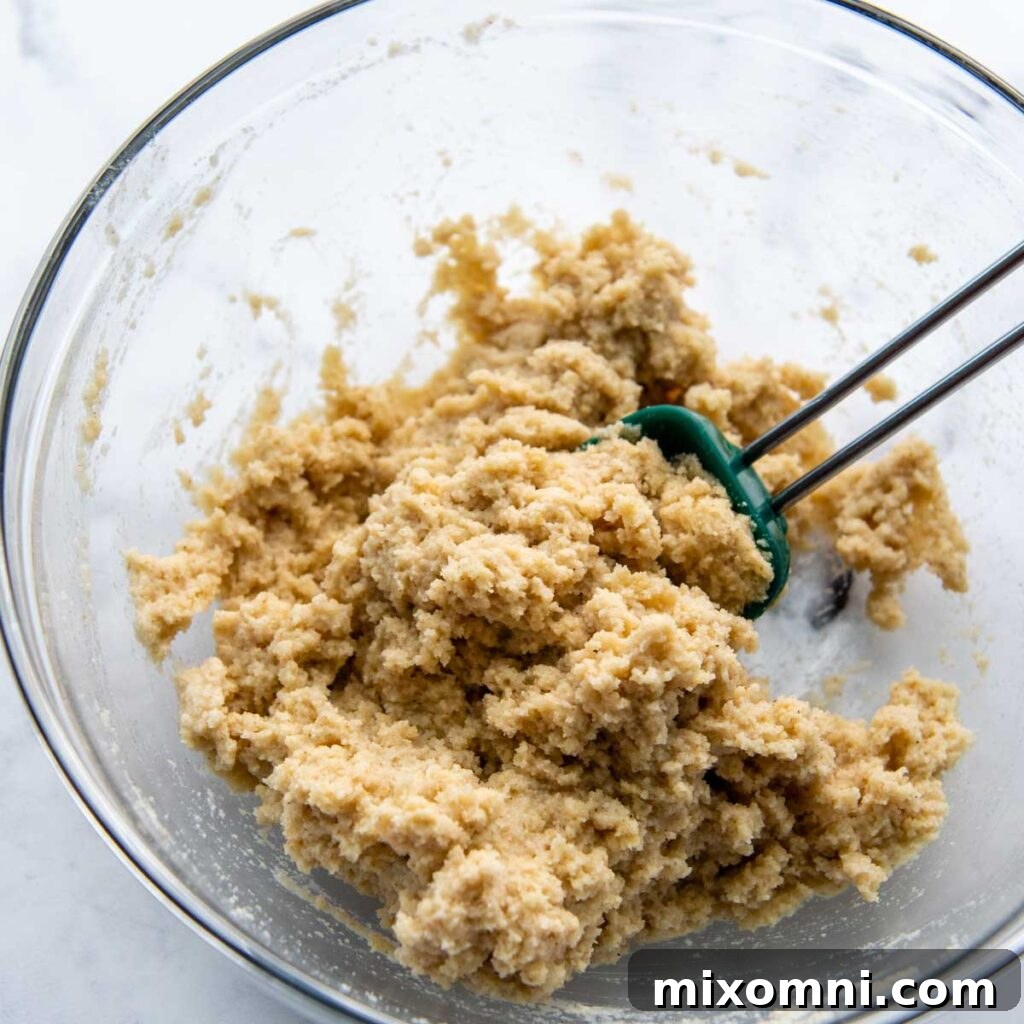
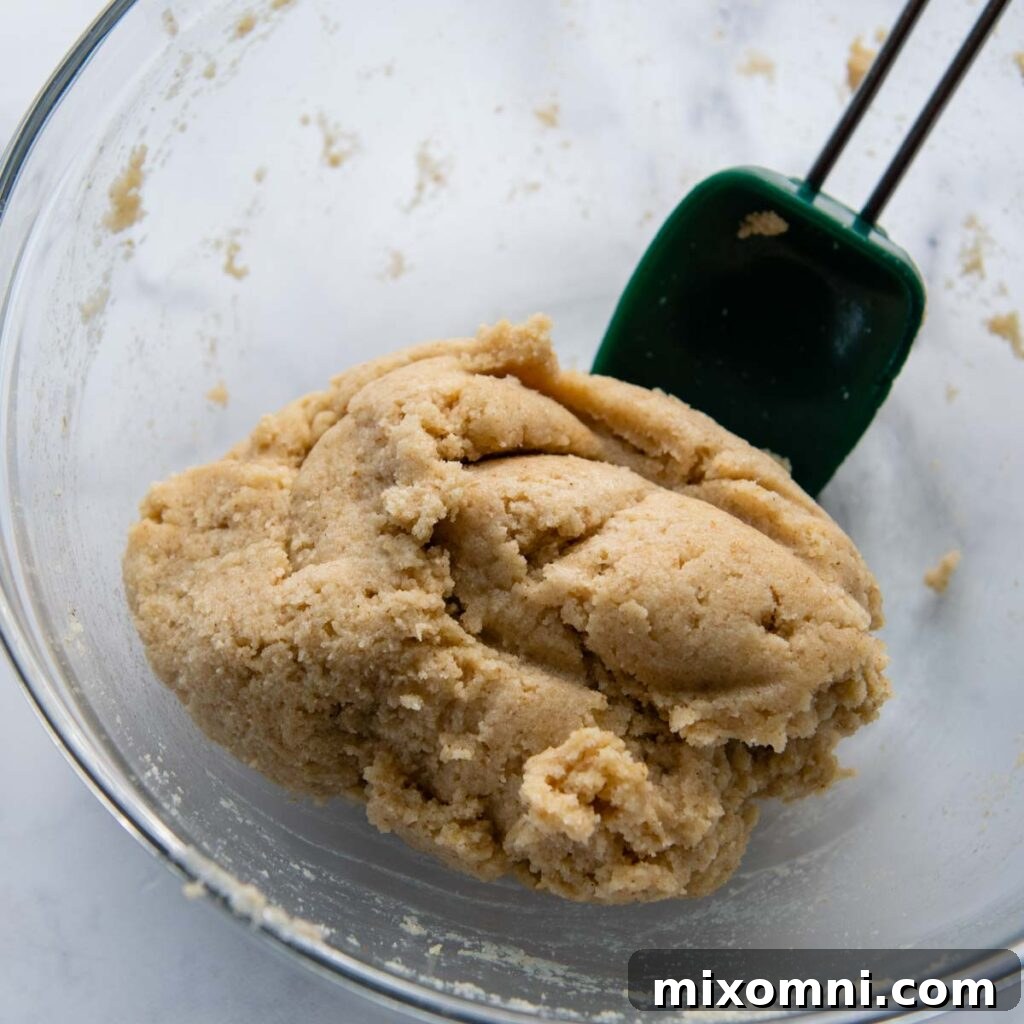
- Mix Wet Ingredients & Rest: Add the eggs, olive oil, and apple cider vinegar to the dry ingredients. Stir vigorously to mix everything thoroughly. Then, pour in the boiling water and continue stirring for about 1 minute until a cohesive dough forms. Let the dough rest for 5 minutes. This crucial step allows the psyllium husk to fully absorb the liquids, making the dough much more pliable and easier to handle.
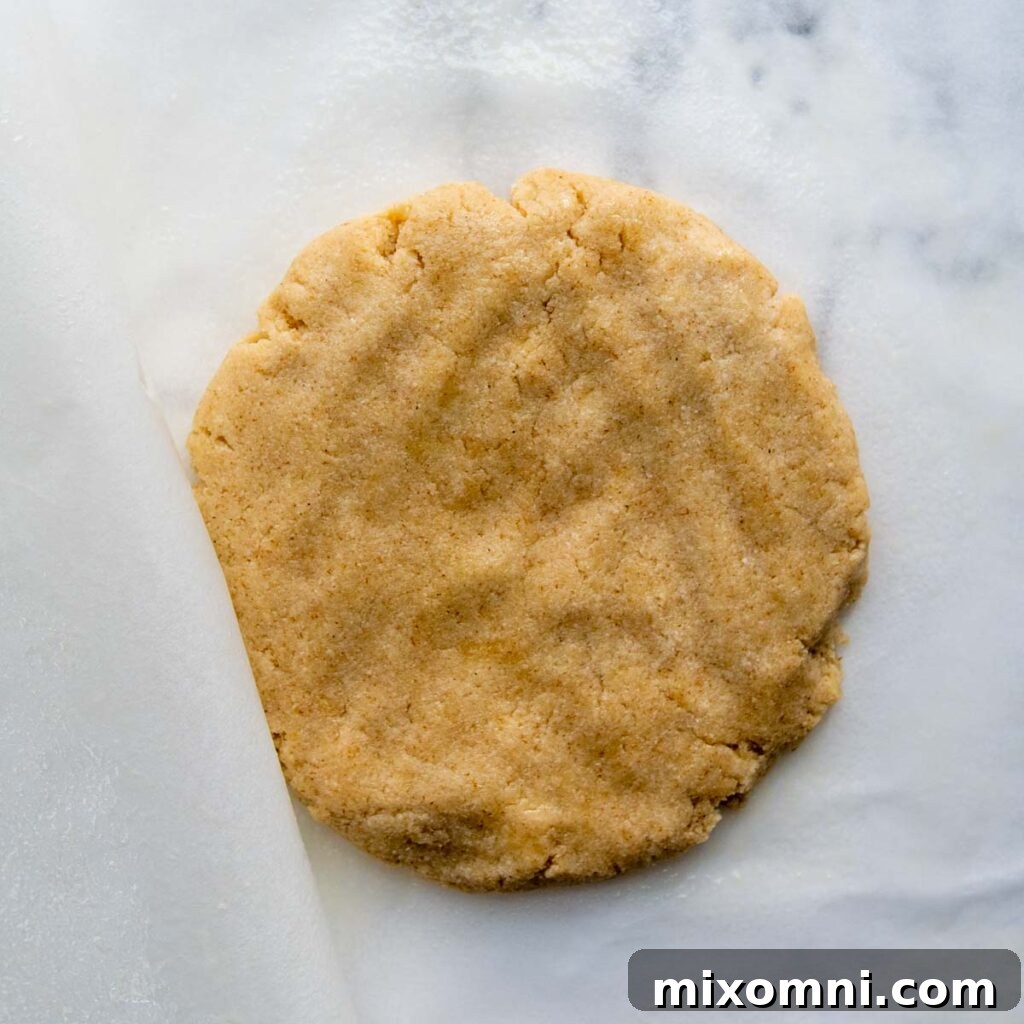
- Prepare for Rolling: After resting, the dough should be firmer and less sticky. Shape it into a ball. Place the dough ball between two large pieces of greased parchment paper. Use a non-stick cooking spray or a light brushing of olive oil on the sides of the parchment paper that will touch the dough. Flatten the dough slightly into a thick disc.
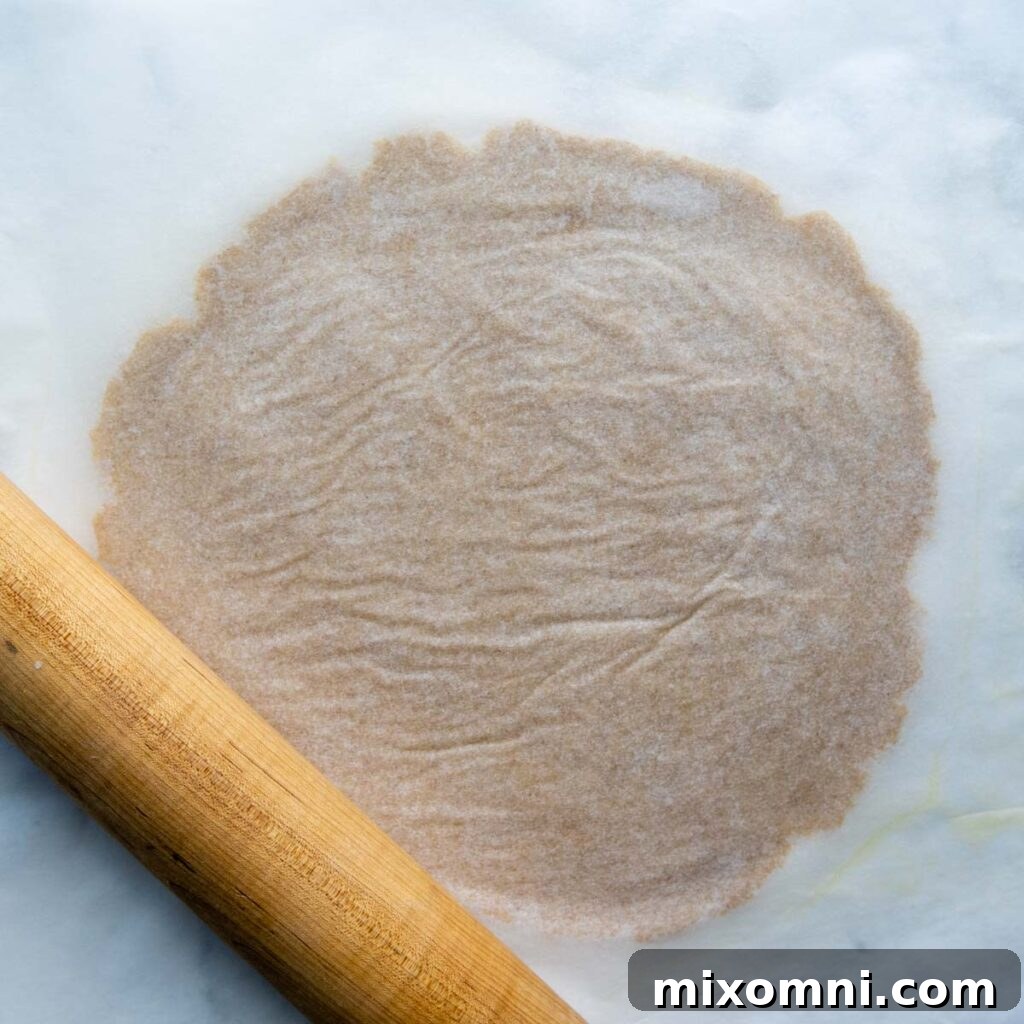
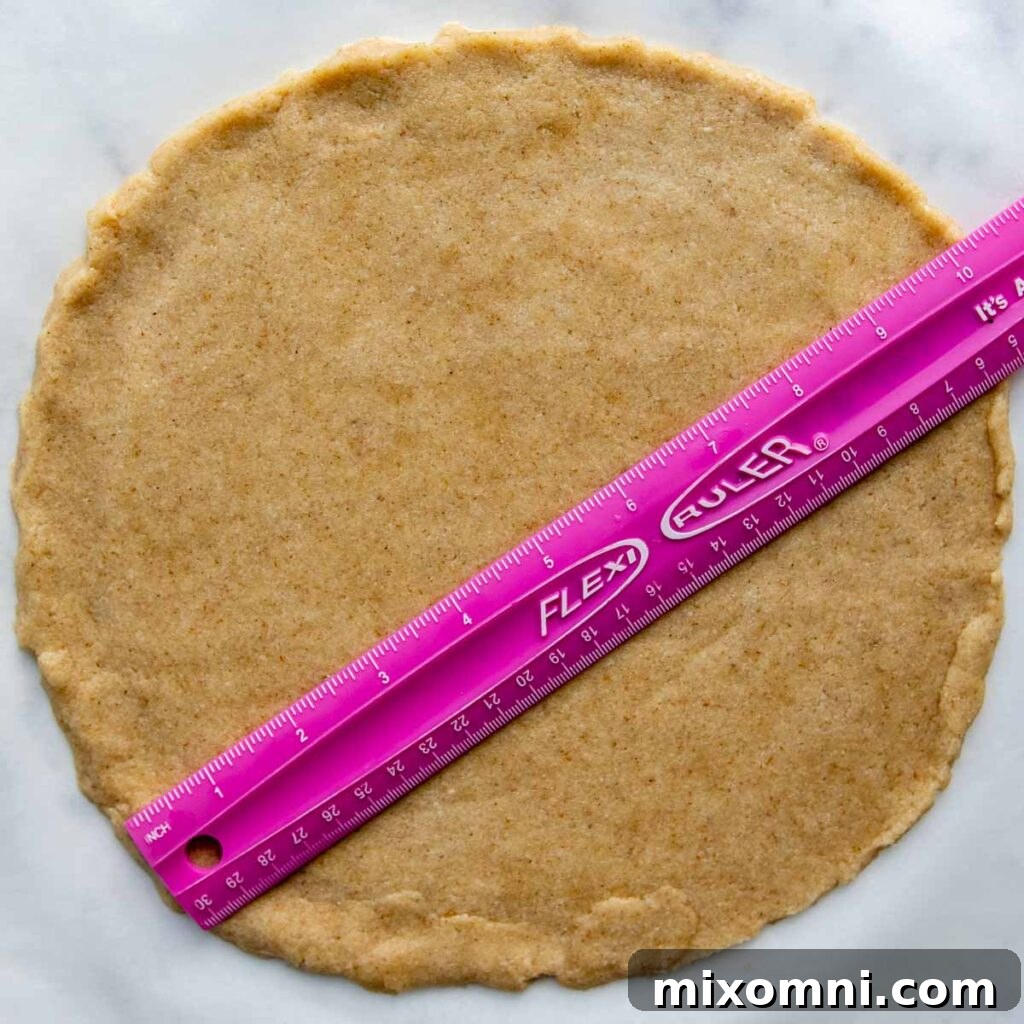
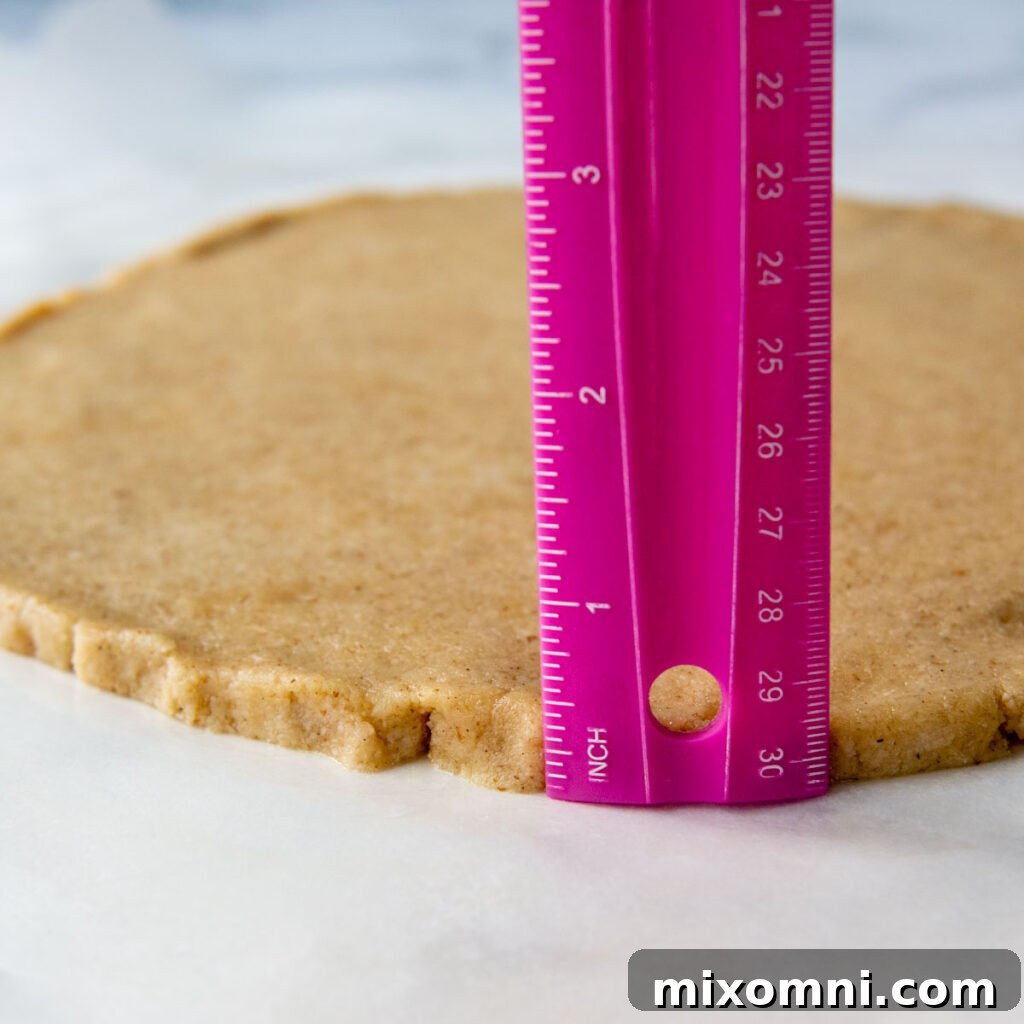
- Roll Out the Crust: Using a rolling pin over the top parchment paper, roll out the dough into a 10-inch (25 cm) circle. Aim for a thickness of about 1/4 to 1/2 inch (0.6 to 1.2 cm). Rolling it thinner will result in a crispier crust, while a thicker roll will yield a fluffier one. If the dough becomes uneven, simply tear off excess from thicker areas and press it into thinner edges to maintain a consistent circle. Once a rough circle is formed, use your fingers to press and smooth the edges for a perfect round shape.
- Par-Bake the Crust: Carefully remove the top layer of parchment paper, leaving the dough on the bottom piece. Transfer the parchment paper with the dough to your preheated baking tray or pizza stone. Par-bake for 15 minutes, rotating halfway through for even cooking. The crust should be firm but not yet golden brown on the bottom. It will finish baking once you add the toppings.
Elevating Your Pizza: Toppings and Finishing Touches
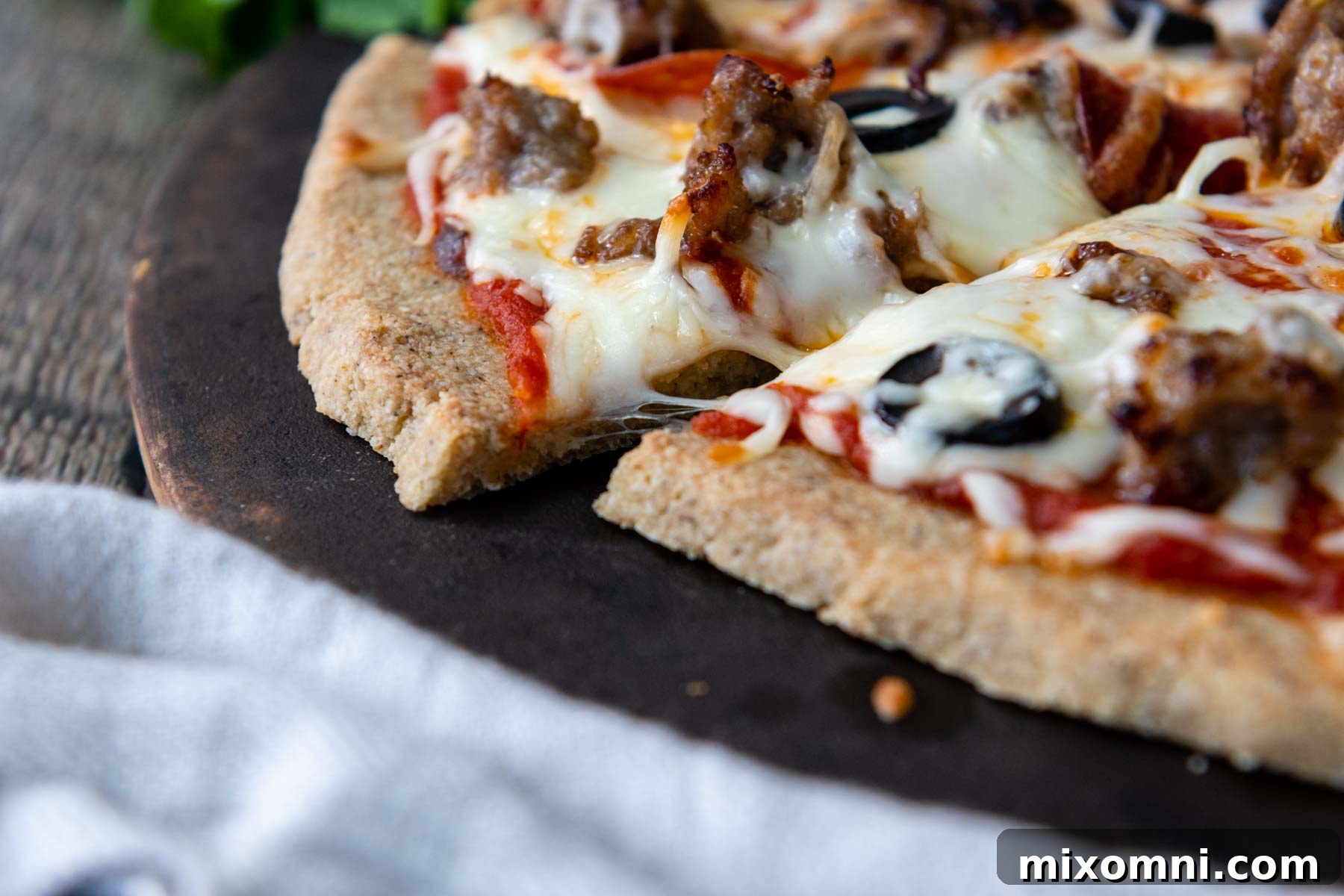
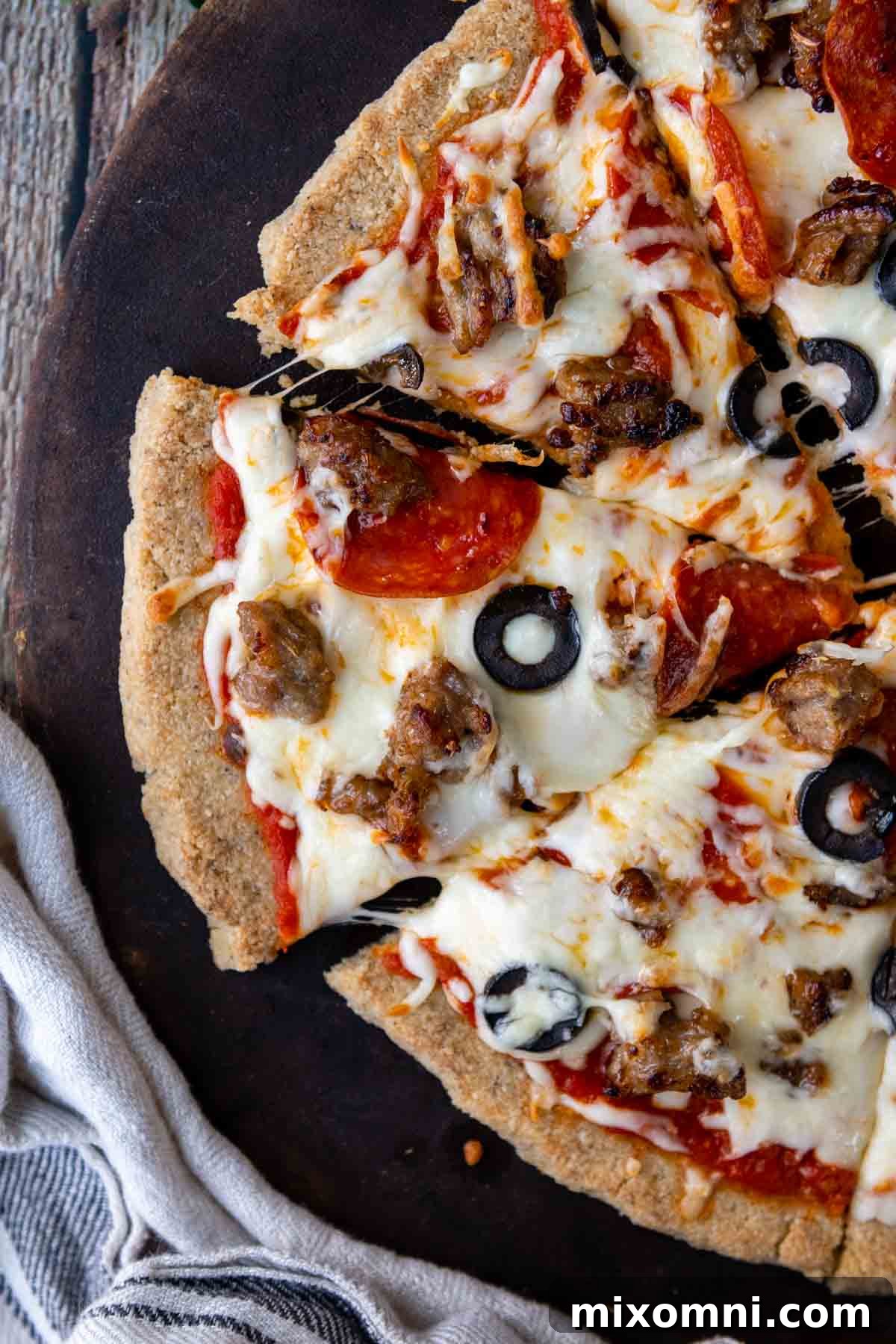
Now that your almond flour pizza crust is perfectly par-baked, it’s time for the exciting part: transforming it into the pizza of your dreams! The versatility of this low-carb crust means you can enjoy virtually any pizza style you desire, from classic pepperoni to gourmet vegetarian options.
Here’s how to add your toppings and finish baking:
- Prepare for Toppings: Remove the par-baked crust and pan from the oven. Increase the oven temperature to 375ºF (190ºC). Carefully place the hot pan or pizza stone on a heat-proof surface.
- Apply Sauce Judiciously: Spread a thin, even layer of your favorite pizza sauce over the crust. It’s important to use sauce sparingly; applying too much sauce, especially watery varieties, can introduce excess moisture and make the crust soggy. For a low-carb option, ensure your sauce has no added sugar.
- Choose Your Toppings Wisely: This is where your creativity shines! Load up your pizza with desired toppings such as pepperoni, cooked sausage, mushrooms, crispy bacon, olives, or bell peppers. Remember the crucial note about high-water content vegetables below.
- Add Cheese: Finish with a generous layer of mozzarella cheese, or a dairy-free alternative if preferred. For extra flavor, you can blend mozzarella with a harder cheese like provolone or Parmesan.
- Final Bake & Broil: Return the assembled pizza to the middle rack of your preheated 375ºF (190ºC) oven. Bake for 7-8 minutes, or until the cheese is completely melted and bubbly. For that perfect golden, slightly charred finish on the cheese, turn on the broiler for an additional 1-2 minutes, keeping a close eye on it to prevent burning.
- Serve and Enjoy: Carefully remove the pizza from the oven. Allow it to rest for 1-2 minutes before slicing. This helps the cheese set and prevents toppings from sliding off. For an extra burst of flavor, sprinkle with fresh basil, grated Parmesan cheese, or red pepper flakes before serving.
Important Note About Toppings
The beauty of this almond flour pizza recipe lies in its adaptability, allowing you to recreate your cherished pizza favorites while adhering to your dietary preferences. However, a key consideration for maintaining the crispness of your crust is the moisture content of your toppings.
Avoid high-water content vegetables: Fresh tomato slices, zucchini, eggplant, and certain mushrooms tend to release significant amounts of moisture as they bake. When placed directly on the crust, this moisture can seep into the almond flour dough, leading to a soggy or less-than-crispy base. To ensure your crust remains firm and delightful, it’s best to avoid these raw, high-water vegetables as direct toppings.
The simple trick for wet veggies: If you absolutely love these ingredients on your pizza, there’s a simple and effective solution: pre-roast or sauté them first! By cooking these vegetables beforehand, you allow much of their excess moisture to evaporate. This concentrates their flavor and ensures they won’t make your beautiful almond flour crust watery. Once pre-cooked and drained, they can be added to your pizza without worry, contributing flavor and texture without compromising the crust.
Stick to ingredients like cooked meats (pepperoni, sausage, chicken), pre-sautéed onions and peppers, olives, and lower-moisture cheeses for the best results and a consistently crisp pizza experience.
Make-Ahead & Freezing Instructions
One of the fantastic advantages of this fluffy almond flour pizza crust is how well it freezes, making meal prep a breeze! You can easily double the recipe and freeze extra crusts for future quick meals. Here’s how to prepare and freeze your make-ahead crust:
- Prepare and Par-Bake: Follow the recipe instructions to prepare the dough and roll it out into a 10-inch circle. Par-bake the crust as directed (Step 6 in the main instructions).
- Cool Completely: After par-baking, remove the crust from the oven and let it cool down entirely on a wire rack. It’s crucial that the crust is completely cool before freezing to prevent ice crystal formation and sogginess. Do not add any toppings before freezing.
- Wrap Securely: Once fully cooled, wrap the crust tightly with plastic wrap, ensuring no air can get in. Then, add a second protective layer of aluminum foil. This double wrapping helps prevent freezer burn.
- Freeze: Place the securely wrapped crust in the freezer. It can be stored for up to 2 months.
- Baking from Frozen: When you’re ready to enjoy your frozen pizza crust, there’s no need to thaw it first!
- Place a pizza stone or baking sheet on the middle oven rack and preheat your oven to 375ºF (190ºC).
- Unwrap the frozen crust and place it on a piece of parchment paper.
- Spread your desired sauce, toppings, and cheese directly onto the frozen crust.
- Carefully slide the parchment paper with the assembled pizza onto the hot preheated pan in the oven.
- Bake for approximately 8 minutes, or until the cheese is melted and bubbly. For a golden-brown top, you can briefly turn on the broiler for 1-2 minutes, watching it closely.
Storage and Reheating Tips for Leftover Pizza
Sometimes, against all odds, you might have leftover almond flour pizza. Knowing how to properly store and reheat it ensures you can savor its deliciousness without compromising its texture.
Storage:
- For best freshness, store leftover pizza slices in an airtight container or wrapped securely in aluminum foil.
- It will keep well in the refrigerator for up to three days.
- Leftover pizza can also be frozen for longer storage, using similar wrapping methods as for the crust, and reheated using the methods below.
Reheating:
I highly recommend avoiding the microwave for reheating almond flour pizza, as it tends to make the crust too soft and lose its crispness. Instead, opt for these methods to restore that delightful texture:
Stove Top Reheating
This method is fantastic for bringing back a crispy bottom crust and perfectly melted cheese. Place your leftover pizza slice in a cold, nonstick skillet. Cover the skillet with a lid and turn the heat to medium-low. Heat for about 3 minutes, or until the bottom of the crust is crisp. Turn off the heat and let the pizza sit under the lid for an additional 2 minutes. This steams the toppings and cheese gently, allowing them to melt beautifully without burning the crust.
Air Fryer Reheating
The air fryer is a quick and efficient way to reheat pizza, providing excellent crispness. Preheat your air fryer to 360ºF (180ºC). Place your pizza slices on a piece of foil in the air fryer basket (this helps with cleanup and prevents toppings from falling through). Heat for 3-6 minutes, checking periodically, until the pizza is hot and the cheese is re-melted and slightly bubbly.
Oven Reheating
For reheating multiple slices or a larger portion, the oven is an excellent choice. Preheat your oven to 350ºF (175ºC). Place the pizza slices directly on a baking sheet or on a piece of parchment paper on a baking sheet. Rewarm for about 5 minutes, or until the pizza is thoroughly heated through and the cheese is melted to perfection.
Frequently Asked Questions (FAQ)
Here are some common questions about making and enjoying almond flour pizza crust:
Can I substitute psyllium husk powder?
Psyllium husk powder is highly recommended for this recipe due to its unique binding properties, which are crucial for the texture and pliability of gluten-free, low-carb doughs. While some recipes suggest alternatives like xanthan gum, they often require different ratios and can result in a different texture. For the best results as described, sticking to psyllium husk powder is advised.
What kind of almond flour should I use?
Always use fine, blanched almond flour. Blanched means the almond skins have been removed, resulting in a lighter color and smoother texture. “Fine” indicates a finely ground flour, which prevents a gritty or crumbly crust. Almond meal, which is coarser and includes skins, will yield a different, often heavier, result.
How do I prevent a soggy crust?
Several factors contribute to a soggy crust. Ensure your oven is fully preheated, especially if using a pizza stone. Par-baking the crust as directed is essential. Also, be mindful of moisture from toppings; use pizza sauce sparingly and pre-cook any high-water content vegetables like zucchini or fresh tomatoes to remove excess moisture before adding them to your pizza.
Is this recipe truly keto-friendly?
Yes, this recipe is designed to be keto-friendly. Almond flour is a low-carb alternative to traditional wheat flour, and psyllium husk powder is rich in fiber with very low net carbs. Always verify the net carb count of your specific brands of ingredients, and choose low-carb pizza sauce and toppings to maintain the keto status of your final pizza.
Can I make this dairy-free?
Absolutely! The crust itself is naturally dairy-free. To make the entire pizza dairy-free, simply choose a plant-based or dairy-free cheese alternative and ensure your pizza sauce doesn’t contain any dairy ingredients.
Can I roll the crust thinner for a crispier result?
Yes, you can roll the dough thinner (closer to 1/4 inch) if you prefer a very thin and crispy crust. Be aware that a thinner crust might be a bit more delicate to handle, but the psyllium husk helps maintain its integrity. Adjust baking times slightly if you opt for a thinner crust, as it may cook faster.
Final Thoughts on Your Low-Carb Pizza Journey
Embarking on a low-carb or gluten-free diet doesn’t mean sacrificing the simple pleasures of life, and this almond flour pizza crust is definitive proof! With its perfect balance of thickness, fluffiness, and crispness, it stands as a testament to how innovative ingredients can deliver both health benefits and incredible flavor. This recipe offers a quick, easy, and undeniably delicious way to enjoy pizza without compromise.
Whether you’re a seasoned low-carb enthusiast or just beginning your journey, this versatile crust provides the ideal canvas for all your favorite toppings. From quick weeknight dinners to weekend family feasts, you now have a reliable, guilt-free option that’s sure to become a staple in your kitchen. So go ahead, experiment with flavors, pile on your chosen ingredients, and rediscover the joy of homemade pizza!
Save this recipe for almond flour pizza crust to your Pinterest board!
Let’s be friends on Pinterest! I’m always sharing great recipes!
Thick, Crispy Almond Flour Pizza Crust (30 Mins)

Enjoy a thick, fluffy, yet crispy almond flour pizza crust with only a handful of ingredients and extra easy steps in less than 30 minutes! Here you will learn how to make a gluten-free pizza dough with almond flour and turn it into a low carb crust guaranteed to not disappoint!
Yield: 3 servings
Prep Time: 10 mins
Cook Time: 23 mins
Total Time: 33 mins
Ingredients
- 1 ¼ cup blanched almond flour
- 3 tablespoons psyllium husk powder (helps make dough pliable)
- 1 tablespoon baking powder
- ½ teaspoon salt
- ¼ teaspoon garlic powder
- 1 large egg
- 1 egg white
- 2 tablespoons olive oil (or preferred oil)
- 1 tablespoon apple cider vinegar
- ¼ cup boiling water
- Toppings: pizza sauce, cheese, pizza toppings (see “Important Note About Toppings” section for guidance)
Equipment
- Pizza Stone (recommended)
- Pizza Peel (recommended)
- Rolling Pin
- Large Mixing Bowl
- Whisk
- Parchment Paper
Instructions
- Begin by preheating the oven to 350ºF (175ºC). If you have a pizza stone, place that in the oven to preheat as well. If not, place a baking sheet in the oven to preheat.
- In a large mixing bowl, whisk together the dry ingredients: almond flour, psyllium husk powder, baking powder, salt, and garlic powder.
- Add the wet ingredients: eggs, olive oil, and apple cider vinegar. Stir well, then add the boiling water. Stir for about 1 minute to fully mix. Let the pizza dough sit for 5 minutes for liquids to absorb, making the dough easier to work with.
- Shape the dough into a ball and place it between two large pieces of greased parchment paper. Flatten into a thick disc.
- Use a rolling pin on top of the parchment to roll out into a 10-inch (25 cm), 1/4-1/2-inch (0.6-1.2 cm) thick circle. Adjust edges with fingers if needed.
- Peel off the top parchment paper and transfer the dough on the bottom parchment paper to the preheated baking tray or pizza stone. Bake for 15 minutes, rotating halfway through. The crust will be firm but not golden.
- Remove the crust and pan from the oven, and increase the oven temperature to 375ºF (190ºC). Spread a thin layer of pizza sauce, then add toppings and cheese.
- Return the pan to the middle oven rack and bake for 7-8 minutes, or until the cheese melts. For golden, bubbly cheese, turn on the broiler for 1-2 minutes, watching carefully. Remove from the oven, let it sit for 1-2 minutes, slice, and enjoy!
Notes
Note About Toppings
High-water content vegetables (e.g., fresh tomato slices, zucchini, eggplant) are not recommended as direct toppings as they can make the crust soggy. If desired, pre-roast or sauté these vegetables first to release moisture.
Reheating Leftovers
Store leftovers in an airtight container or foil for up to three days. Do not microwave; it softens the crust. Reheat using one of these methods:
- Stove Top: Place slice in a cold, nonstick skillet, cover, and heat on medium-low for 3 minutes until crisp. Let sit covered for 2 more minutes.
- Air Fryer: Preheat to 360ºF (180ºC). Place slices on foil in the basket and heat for 3-6 minutes.
- Oven: Preheat to 350ºF (175ºC). Place slices on a baking sheet and rewarm for 5 minutes.
Freezing / Make-Ahead Pizza Crust
- Prepare and par-bake the crust as directed, then cool completely. Do not add toppings before freezing.
- Wrap the cooled crust securely with plastic wrap and foil. Freeze for up to 2 months.
- To use, place a pizza stone or baking sheet on the middle oven rack and preheat to 375ºF (190ºC).
- Assemble your frozen pizza crust (do not thaw) on parchment paper with sauce, toppings, and cheese.
- Move the parchment paper with the pizza to the hot pan. Bake for 8 minutes. Broil for 1-2 minutes for golden cheese.
Nutritional Facts are calculated without pizza sauce, cheese, and toppings.
Nutrition Information
Calories: 408kcal, Carbohydrates: 20g, Protein: 13g, Fat: 34g, Saturated Fat: 3g, Polyunsaturated Fat: 1g, Monounsaturated Fat: 7g, Trans Fat: 0.01g, Cholesterol: 55mg, Sodium: 430mg, Potassium: 447mg, Fiber: 12g, Sugar: 2g, Vitamin A: 79IU, Vitamin C: 0.003mg, Calcium: 282mg, Iron: 2mg