
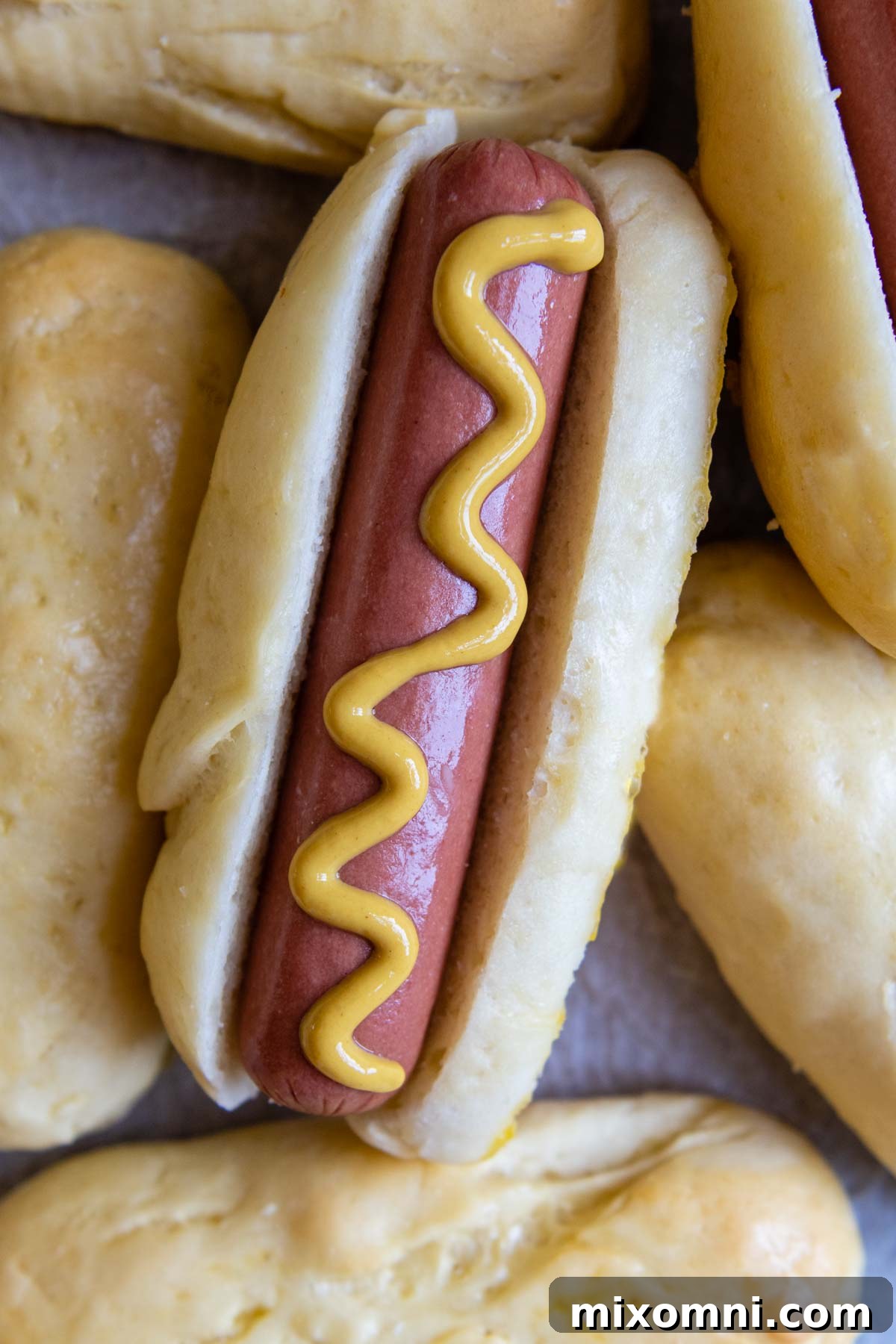
Are you craving that classic hot dog experience but need a gluten-free option that doesn’t compromise on taste or texture? Look no further! This ultimate guide and easy recipe will help you create the most incredibly soft, fluffy, and delicious gluten-free hot dog buns you’ve ever tasted. Forget the dense, crumbly, or overly dry store-bought alternatives – these homemade buns are designed to be squishy and delightful, just like the ones you remember, and can be whipped up in under an hour from start to finish. Plus, they offer a subtly sweet, doughy perfection that perfectly complements your favorite hot dogs and toppings. A dairy-free variation is also included, ensuring everyone can enjoy this summertime staple!
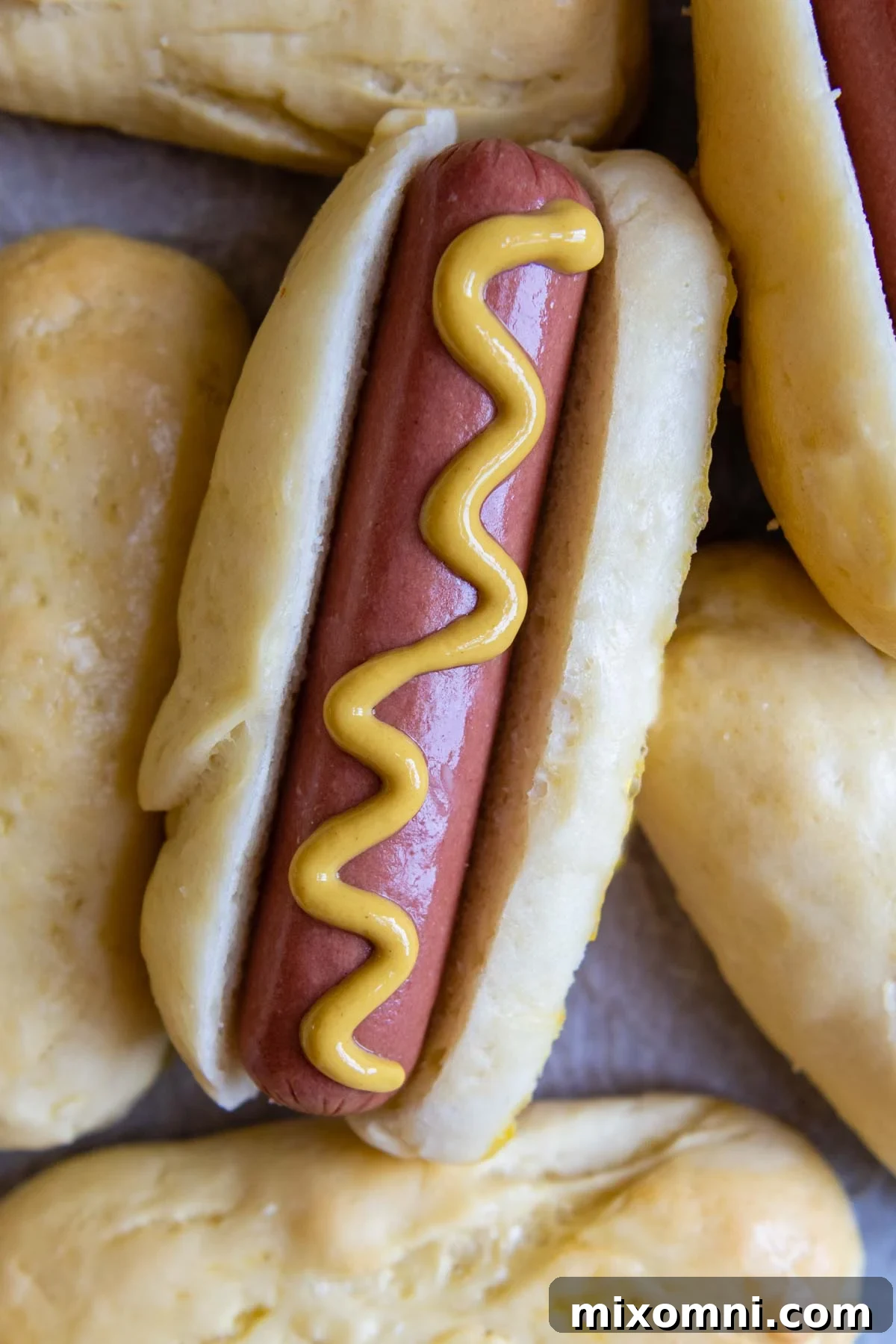
Unlock the Secret to Perfect Homemade Gluten-Free Hot Dog Buns
The days of skipping hot dogs at backyard barbecues and summer cookouts are officially over! With this simple, no-fuss recipe, you can effortlessly create amazing gluten-free hot dog buns that will impress even the most discerning palates. If you’re new to gluten-free baking, especially when it comes to breads and buns, don’t be intimidated. I’ve meticulously crafted this recipe and guide to walk you through each step, proving just how easy and incredibly delicious homemade gluten-free hot dog buns can be!
Having perfected numerous gluten-free bread and bun recipes that consistently receive rave reviews, I was determined to conquer another common frustration for those on a gluten-free diet: the elusive perfect hamburger bun. My from-scratch gluten-free burger buns recipe not only proved that exceptional results were possible, but that they could also be achieved with surprising ease. Building upon that success, I’ve adapted and refined that tried-and-true formula to bring you these superior hot dog buns – a recipe poised to transform your dinner table and elevate your casual meals into delightful culinary experiences.
This comprehensive guide is packed with invaluable baking tips and tricks. You’ll learn the best techniques for shaping gluten-free hot dog buns to ensure they retain their moisture and fluffy texture, preventing them from becoming dry and crumbly. We’ll explore the ideal gluten-free all-purpose flour blend to use for optimal results, and I’ll reveal the “secret ingredients” that contribute to a dough that is both soft and surprisingly elastic, mimicking traditional wheat-based buns. Get ready to discover my favorite baking secrets that guarantee success every time you make these delightful, squishy gluten-free hot dog buns!
Essential Ingredients for Superior Gluten-Free Hot Dog Buns
While the ingredient list for these gluten-free hot dog buns appears straightforward, a few key components are crucial for achieving their signature soft and pliable texture. Below, I’ll explain how each ingredient contributes to the best possible result and offer practical substitutions where applicable, ensuring your baking journey is smooth and successful.
- Gluten-Free Flour Blend: The foundation of any successful gluten-free baked good. For all gluten-free bread and bun recipes, I wholeheartedly recommend Cup4Cup. Its unique formulation closely mimics the taste and texture of traditional wheat flour, providing unmatched results in terms of structure and elasticity. While other blends can be used, results may vary. Look for a blend that contains xanthan gum for best structure.
- Potato Starch (not flour): This is a secret weapon for achieving truly soft hot dog rolls, reminiscent of classic potato buns. Instead of relying on excess gluten-free flour, which can lead to a drier crumb, potato starch adds incredible tenderness and a delicate texture. It provides structure without stiffness, making the buns wonderfully squishy. While potato starch is highly recommended for optimal results, tapioca starch can be used as a substitute, or you can even add a small amount of additional gluten-free flour in a pinch, though this might slightly alter the final texture. This technique also works wonders for homemade gluten-free calzone dough!
- Psyllium Husk Powder: An absolutely essential binding agent in gluten-free baking, especially for doughs that need to be shaped. Psyllium husk powder is remarkable for mimicking the elasticity and crumb structure found in wheat-based baked goods, giving the dough a more workable consistency. It helps prevent crumbling and provides a desirable chewiness. A crucial tip: darker colored psyllium husk powder can impart a slightly purple hue to your baked goods. For a beautifully golden bun, it’s best to use a very light-colored psyllium husk powder.
- Baking Powder and Yeast: For many gluten-free bread recipes, I employ a two-pronged leavening approach to ensure a fantastic rise. The yeast activates when mixed with warm liquids and rests briefly, providing a foundational lift and characteristic bread flavor. The baking powder, on the other hand, provides an additional boost during baking, helping the buns achieve maximum fluffiness. If you’re using instant yeast, you can simply mix it directly with the dry ingredients, eliminating the need for a separate activation step in water.
- Butter: Beyond its delightful rich flavor, butter plays a vital role in gluten-free baking by coating the starches in fat. This helps to eliminate any potential grittiness and contributes significantly to the tender, melt-in-your-mouth texture of the buns. For a dairy-free hot dog bun recipe, readily swap out regular butter for your favorite plant-based, dairy-free butter alternative.
Crafting Your Hot Dog Buns: A Step-by-Step Guide
Let’s make these incredible gluten-free hot dog buns together! The process is surprisingly straightforward, and following these steps will lead to perfect results. (Below, you’ll find detailed step-by-step photos and comprehensive instructions. For precise ingredient amounts and the full printable recipe card, please scroll down to the bottom of this page.)
Activate the Yeast and Prepare the Dough
Begin by combining the yeast and sugar in warm water. Achieving the correct water temperature (around 105-115°F or 40-46°C) is key for yeast activation; an instant-read thermometer can be very helpful here. Allow the mixture to sit for approximately 5 minutes until it becomes foamy, indicating the yeast is active. Then, incorporate the slightly cooled melted butter and eggs, ensuring they are at room temperature to prevent shocking the yeast.
Concurrently, in the bowl of a stand mixer fitted with a paddle attachment, whisk together all the dry ingredients. Once the yeast mixture is ready, gradually add it to the dry ingredients while mixing on low speed. This slow addition helps everything combine thoroughly without creating a mess.
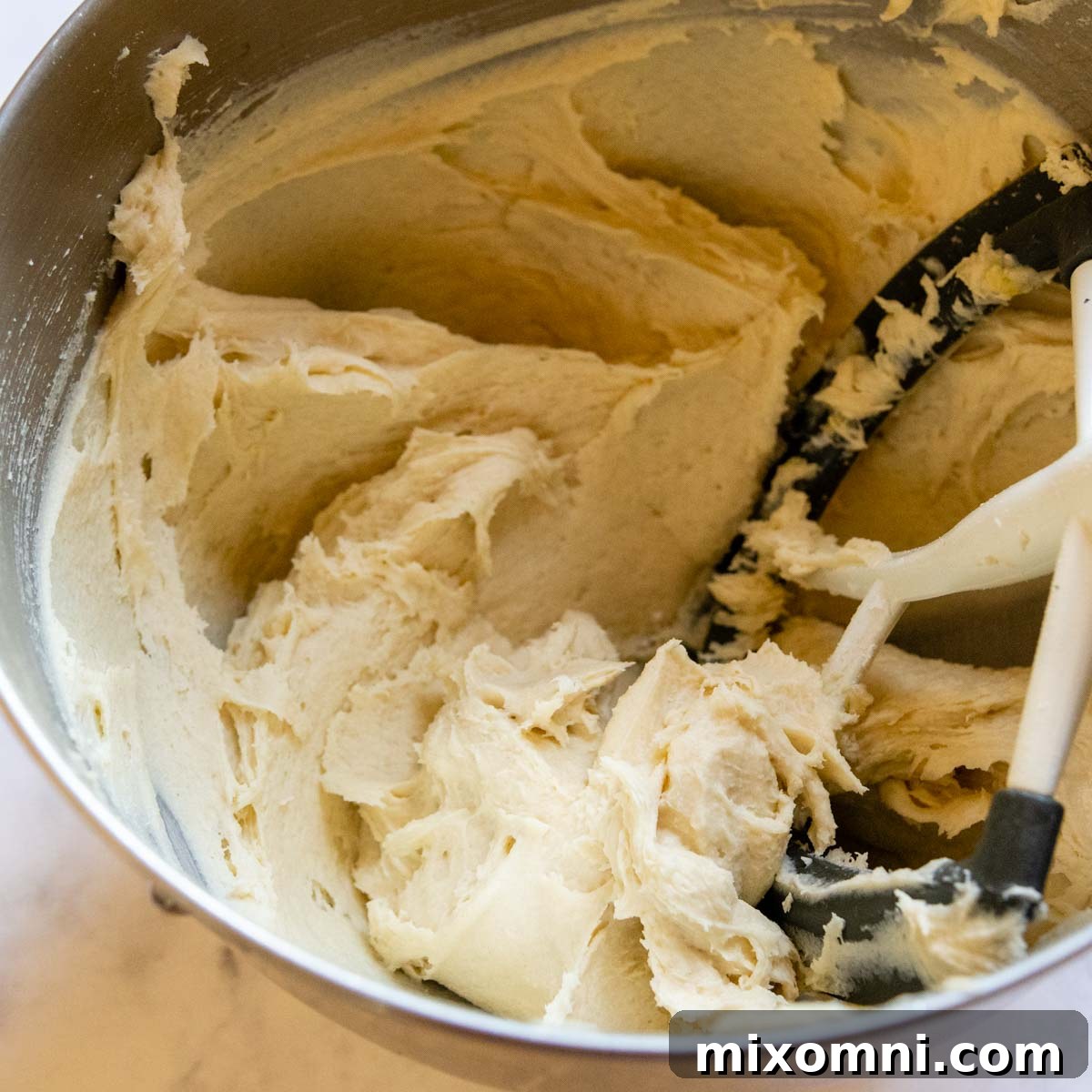
As the dough starts to come together, increase the mixer speed to medium and beat for a full 6 minutes. At this stage, the dough will be quite stiff but should still exhibit a slight stickiness. This consistency is intentional for achieving soft buns, so resist the urge to add more flour.
Portioning and Initial Shaping of the Dough
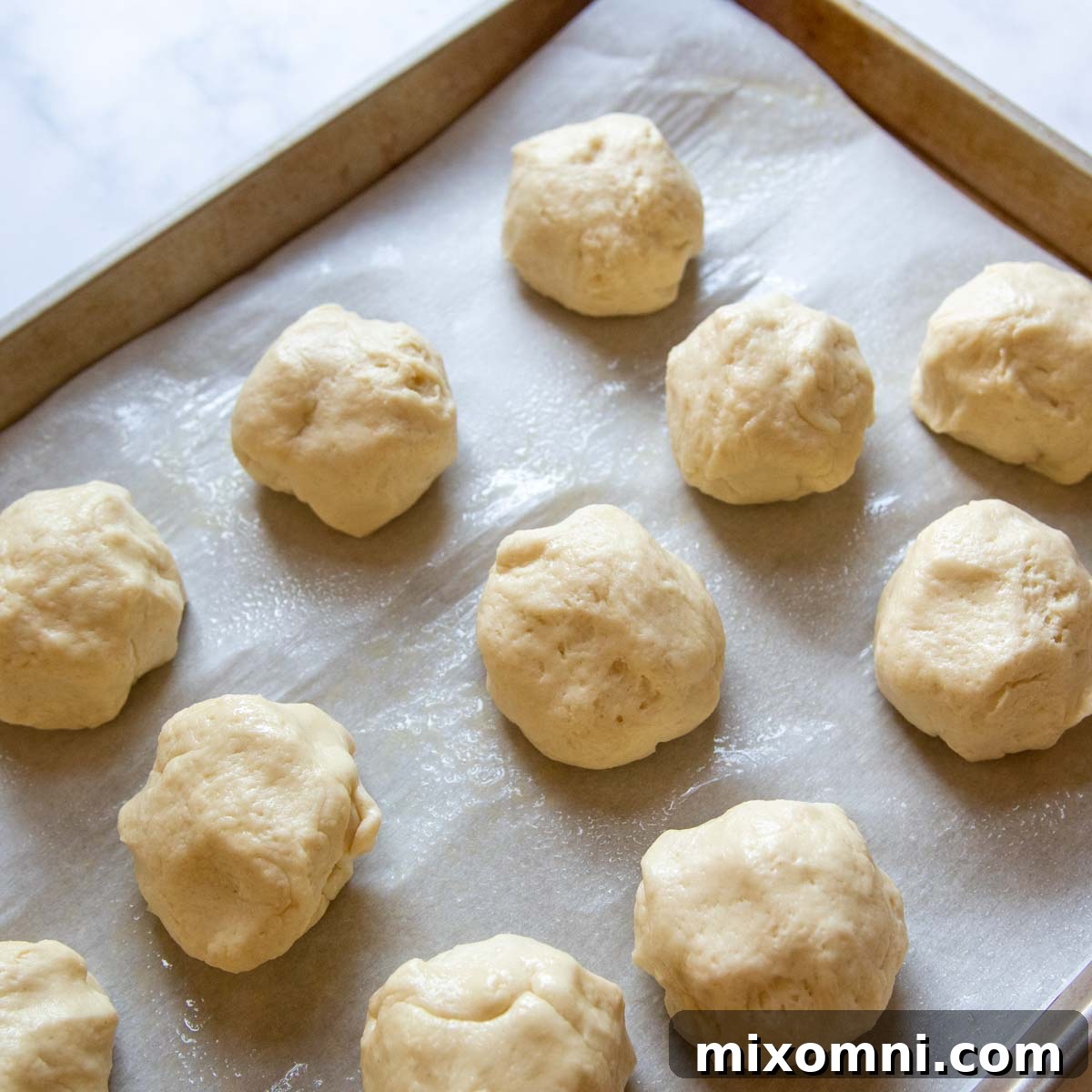
Many gluten-free hot dog bun recipes mistakenly call for excessive amounts of flour to make the dough easier to handle. This often results in dry, crumbly buns after baking – a disappointment we want to avoid! Our method uses less flour, meaning the dough will be slightly sticky, but with the right technique, it remains perfectly manageable. This sticky consistency is crucial for the ultimate soft texture.
First, prepare your workspace by lining a baking sheet with greased parchment paper. Then, portion the dough into approximately 3-ounce servings for an average-sized hot dog bun. A simple way to do this is by lightly spraying a ⅓ measuring cup with cooking spray and using it to scoop out portions slightly less than full. For precise measurements, especially if consistency is key, place a piece of greased plastic wrap over a food scale and weigh each portion accurately. This ensures uniform buns that bake evenly.
Transforming Dough Balls into Hot Dog Buns
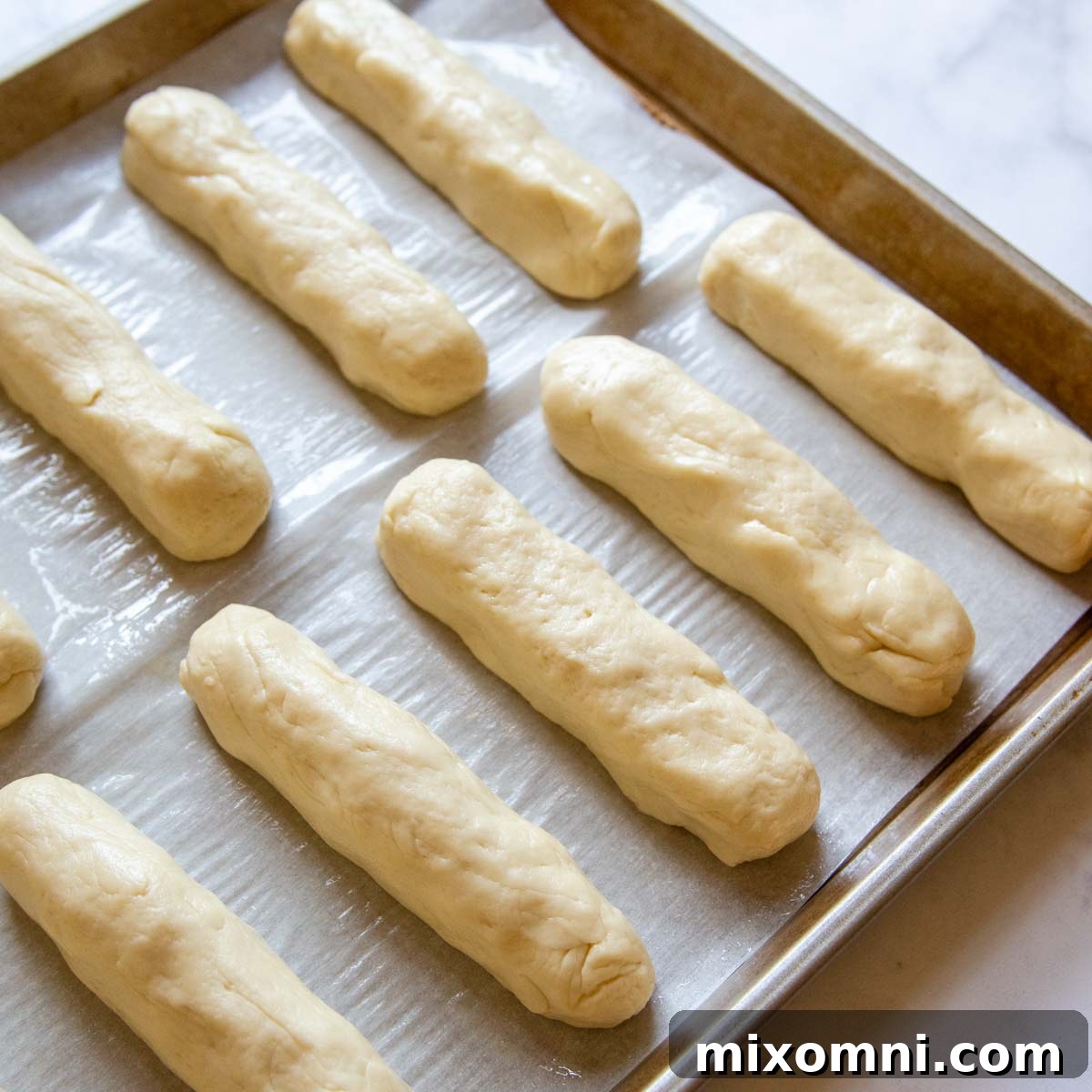
Now for the fun part: shaping your dough into recognizable hot dog buns! Take one portioned dough ball at a time and, with lightly greased hands, gently roll it into a 5-inch log. The goal here is to make the surface of the dough as smooth as possible. A smoother log will result in a more aesthetically pleasing bun that is less prone to cracking during baking. While minor cracks won’t affect the taste or softness, a smooth exterior simply makes them look professionally baked and even more appealing.
Arrange the shaped buns side-by-side in two rows on your prepared baking sheet, leaving about 1.5 to 2 inches of space between them to allow for expansion during proofing and baking. Loosely cover the entire baking sheet with a piece of greased plastic wrap. This prevents the dough from drying out and helps create a warm, humid environment. Place the covered buns into your previously warmed (and now turned off) oven for 10 minutes. This quick warm proof helps activate the yeast for a good rise. After 10 minutes, remove the pan from the oven and let the buns continue to proof at room temperature for an additional 20 minutes while your oven preheats to 375°F (190°C).
Golden Finish: Brush, Bake, and Serve!
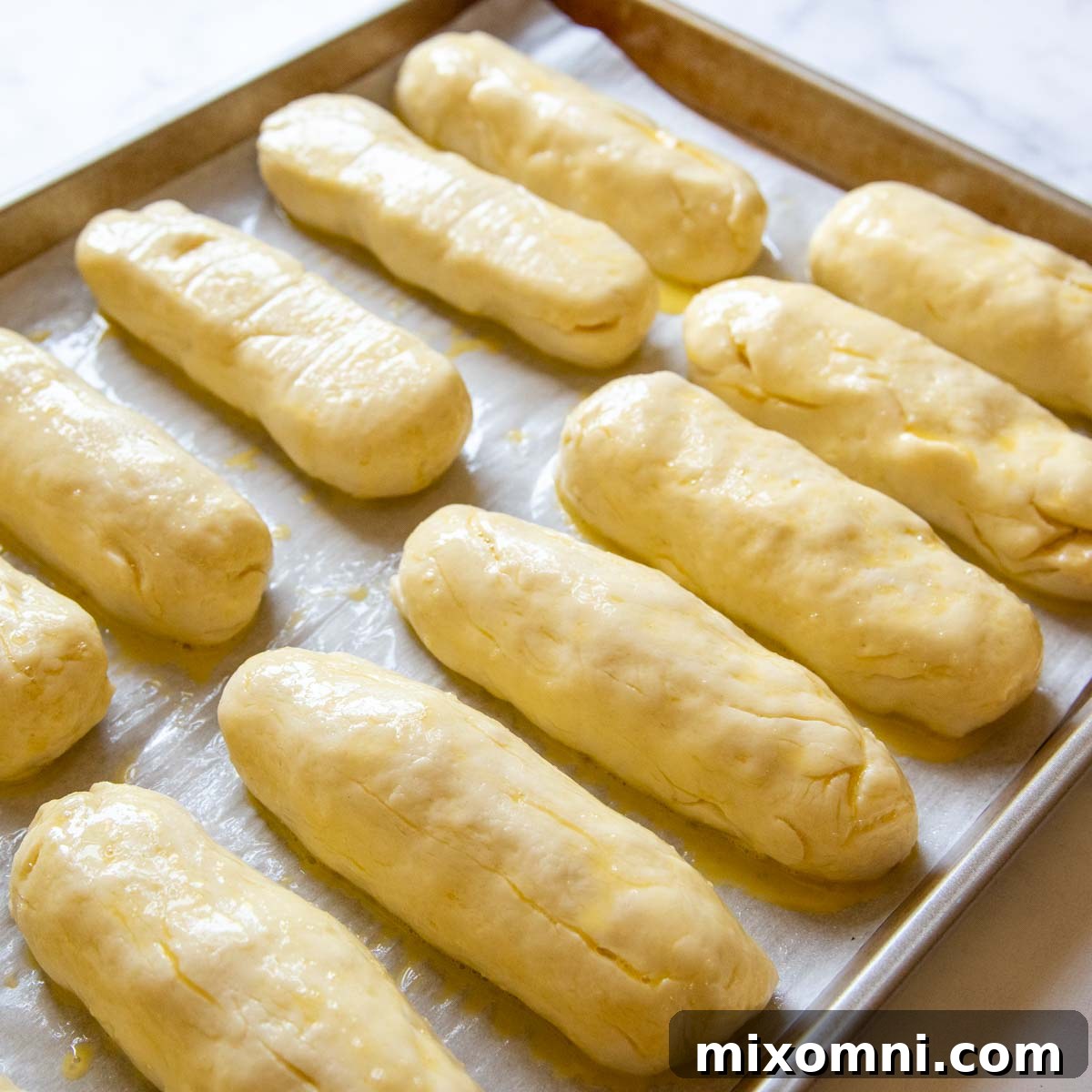
Once the buns have proofed and your oven is preheated, it’s time for the final touches before baking. Gently brush the tops and sides of each bun with an egg wash (one egg mixed with one tablespoon of water). This egg wash isn’t just for shine; it creates a beautiful, golden-brown crust and helps to seal in moisture, contributing to the buns’ overall softness and appealing texture. For an extra layer of flavor and visual appeal, you can also sprinkle on some poppy or sesame seeds at this stage.
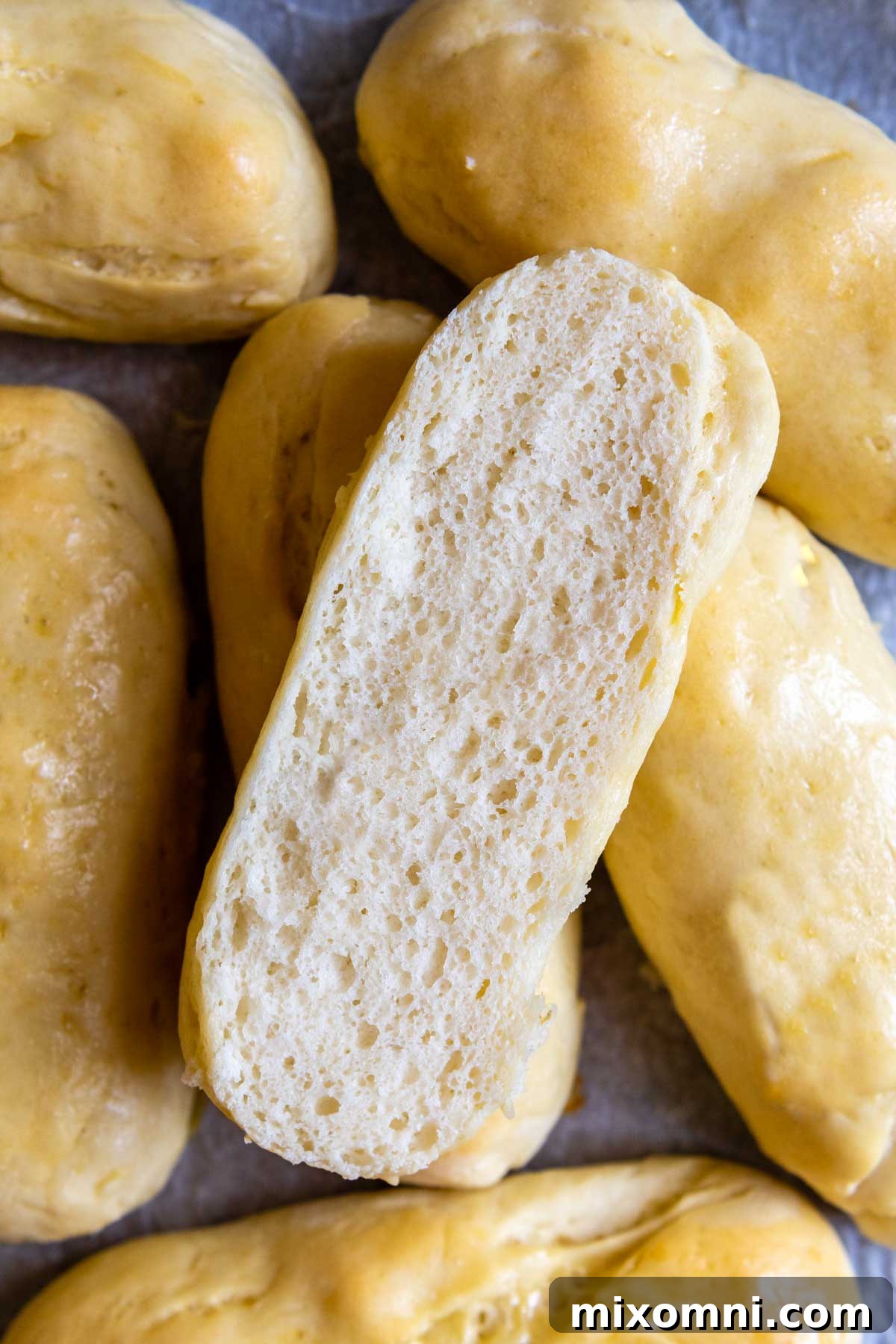
Bake the buns for 16-18 minutes, rotating the baking sheet halfway through to ensure even browning. You’ll know they are perfectly baked when their bottoms are golden brown and their internal temperature reaches 190°F (88°C) using an instant-read thermometer. For an extra touch of indulgence and a truly rich finish, brush the warm buns with a little melted butter immediately after they come out of the oven. Allow them to cool completely on a wire rack before slicing and serving. This resting period is essential for the structure to set and for the buns to achieve their optimal soft, squishy texture.
Serving, Storing, and Creative Toppings for Your GF Hot Dog Buns
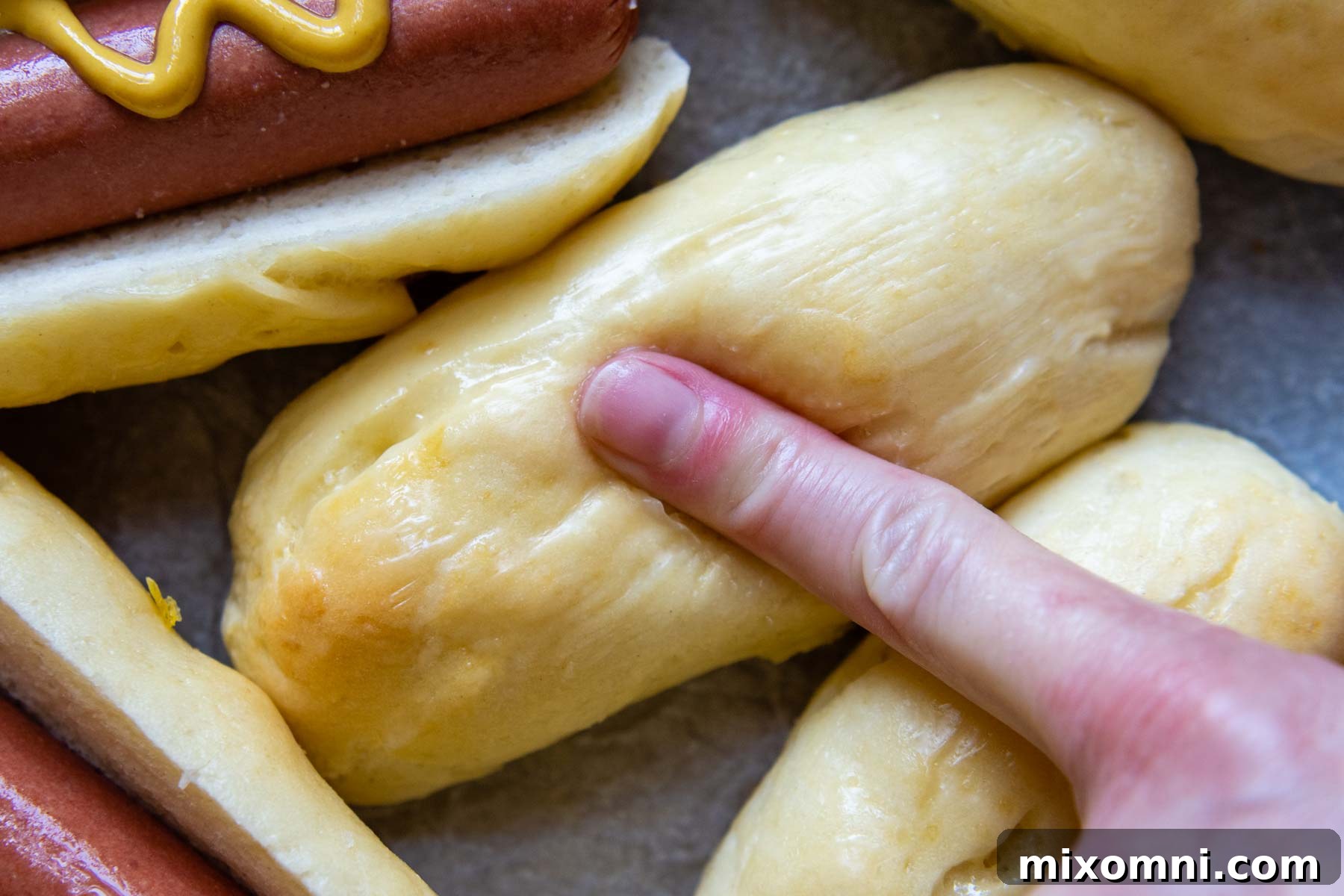
For the absolute best texture and flavor, these homemade gluten-free hot dog buns are best enjoyed on the day they are made. Their freshness and unparalleled softness are truly a treat! However, if you plan to make them ahead or have leftovers, please refer to the “Storing and Freezing” notes in the recipe card for detailed instructions on how to preserve their quality and serve them perfectly later.
Beyond simply enjoying them plain, there are many ways to enhance your hot dog bun experience. After brushing the unbaked buns with egg wash, consider sprinkling them with poppy seeds or sesame seeds for an extra burst of flavor and a pleasing visual touch. Of course, these versatile buns are a perfect canvas for classic hot dog toppings such as ketchup, mustard, relish, and finely diced onions. But don’t hesitate to get creative! Elevate your hot dog game with gourmet additions like creamy pimento cheese, tangy sauerkraut, zesty pickled red onions, or transform them into hearty chili cheese dogs. The possibilities are endless, and these soft buns will hold up to all your topping adventures!
Don’t Forget to Pin This Recipe for Later!
Let’s connect on Pinterest! I’m always sharing fantastic recipes and baking inspiration!
Did you try this amazing recipe? I absolutely love hearing from you! Please leave a star rating and share your thoughts in the comment section below the recipe card. Your feedback is incredibly valuable, helping other home bakers find and enjoy these delicious recipes. And rest assured, I always read and respond to your comments! -Melissa

★★★★★
Squishy, Soft Gluten-Free Hot Dog Buns

Melissa Erdelac
This easy recipe delivers ultra-soft, fluffy gluten-free hot dog buns in under an hour. Enjoy a slightly sweet, squishy bun that tastes just like the classic, with a dairy-free option included!
Pin Recipe
Rate This Recipe
Remove Ads
Ingredients
- 1 ½ cup (360 g) warm water (110°F)
- 1 packet (9 g) active dry yeast
- 2 large eggs, room temperature
- ¼ cup (57 g) melted butter, cooled slightly (see notes for dairy-free option)
- 3 ¼ cup (473 g) gluten-free all-purpose flour, I recommend Cup4Cup brand for best results
- ⅓ cup (80 g) + 1 tsp granulated sugar, divided
- ½ cup (88 g) potato starch
- 2 tablespoons (22 g) psyllium husk powder, ensure light-colored psyllium for best bun color
- 2 teaspoons baking powder
- 1 teaspoon salt
- egg wash: 1 egg mixed with 1 tbsp water
Equipment
-
Stand Mixer
-
Cup4Cup Gluten Free Flour
-
Food Scale
Instructions
-
Before you begin mixing the dough, preheat your oven to 200ºF (95°C). Once it reaches the desired temperature, turn it off. This creates a warm, ideal environment for proofing the dough later. Line a large baking sheet with parchment paper and lightly grease the parchment.
-
In a medium bowl, stir the active dry yeast and 1 teaspoon of granulated sugar into the warm water (110°F/43°C). Let this mixture sit undisturbed for 5 minutes. You should see it become foamy, which indicates the yeast is alive and active. After 5 minutes, add the room temperature eggs and slightly cooled melted butter to the yeast mixture, stirring gently to combine.
-
While the yeast mixture is activating, combine the dry ingredients in the bowl of your stand mixer fitted with a paddle attachment. Add the gluten-free all-purpose flour, the remaining granulated sugar, potato starch, psyllium husk powder, baking powder, and salt. Whisk these dry ingredients thoroughly. Slowly add the prepared yeast mixture to the dry ingredients while the mixer is running on low speed, continuing to mix until a dough starts to form.
-
Once the dough has come together, increase the mixer speed to medium and continue to beat for 6 minutes. The dough will appear quite stiff, yet it should still be noticeably sticky to the touch. This consistency is perfect for soft gluten-free buns, so avoid the temptation to add more flour. You may need to stop the mixer once or twice to scrape down the sides of the bowl, ensuring all ingredients are incorporated.
-
For standard-sized hot dog buns, portion the dough into approximately 3-ounce (around 85-gram) individual servings. To achieve this easily, you can lightly spray a ⅓ measuring cup with cooking spray and use it to scoop slightly less than a full cup. Alternatively, for precise measurements, place a piece of greased plastic wrap on a food scale and weigh out each portion accurately.
-
Lightly spray your hands with cooking spray to prevent sticking. Take each portioned dough ball and roll it into a tight, smooth sphere. You should end up with 12-13 uniform dough balls. Temporarily move these dough balls to the top edge of your prepared baking sheet, leaving enough room below to shape them into logs.
-
Now, take one dough ball and, using your greased hands, roll it into a 5-inch (approximately 13 cm) log shape. Focus on making the log as smooth as possible. A smoother surface helps prevent the dough from cracking during baking, which improves the bun’s appearance without affecting its taste or texture. Repeat this process for all remaining dough balls.
-
Arrange the shaped buns side-by-side in two rows on the prepared baking sheet, maintaining about 1 ½ to 2 inches (4-5 cm) of space between them. Loosely cover the baking sheet with a piece of greased plastic wrap. Place the covered baking sheet into the warmed, turned-off oven for 10 minutes. This provides a gentle, warm proof. After 10 minutes, remove the pan from the oven and allow the buns to continue proofing at room temperature for an additional 20 minutes while your oven preheats to 375°F (190°C).
-
Once proofed, gently brush the tops and sides of each bun with the egg wash. If desired, sprinkle with sesame or poppy seeds for added flavor and texture. Bake for 16-18 minutes, rotating the baking sheet halfway through to ensure even golden-brown coloring on all sides and bottoms. The buns are fully cooked when their internal temperature reaches 190ºF (88°C). For an extra soft and rich finish, you can brush them with a little melted butter immediately after they come out of the oven. Transfer the buns to a wire rack and cool completely before storing in an airtight container or freezing. Cooling completely is crucial for setting their structure and achieving the best texture.
Notes
Dairy-Free Modifications
To make this recipe dairy-free, simply replace the melted butter with an equal amount of your preferred vegan, plant-based butter sticks. When doing so, also reduce the salt measurement in the recipe to ¾ teaspoon, as some vegan butters can have a higher salt content.
Serving, Storing and Freezing Homemade GF Hot Dog Buns
Gluten-free baked goods tend to lose moisture more quickly than their wheat-based counterparts. For the absolute best, softest texture, I highly recommend serving these delicious hot dog buns on the same day they are baked. Their fresh-baked quality is truly unparalleled!
If you need to make them ahead of time or wish to store leftovers, ensure the buns are completely cooled to room temperature after baking. Once cool, wrap each bun individually in plastic wrap, then transfer them to a freezer-safe ziplock bag. They can be frozen for up to 2 months without significant loss of quality.
When you’re ready to serve frozen buns, thaw them at room temperature. It’s crucial that the buns are at room temperature and not chilled when served. If the buns are cold, they will not have their signature soft texture and may become crumbly. For a quick refresh, you can warm them in the microwave for a few seconds to ensure any “chill” is removed and they return to their squishy best.
This recipe has been lovingly adapted from our popular gluten-free hamburger buns, tweaked for the perfect hot dog experience.
Calories: 190kcal,
Carbohydrates: 34g,
Protein: 5g,
Fat: 5g,
Saturated Fat: 2g,
Polyunsaturated Fat: 0.4g,
Monounsaturated Fat: 1g,
Trans Fat: 0.1g,
Cholesterol: 35mg,
Sodium: 222mg,
Potassium: 140mg,
Fiber: 5g,
Sugar: 6g,
Vitamin A: 146IU,
Vitamin C: 0.2mg,
Calcium: 57mg,
Iron: 1mg
Did you make this recipe?
Please leave a star rating and review below. Your feedback helps others and is greatly appreciated!