
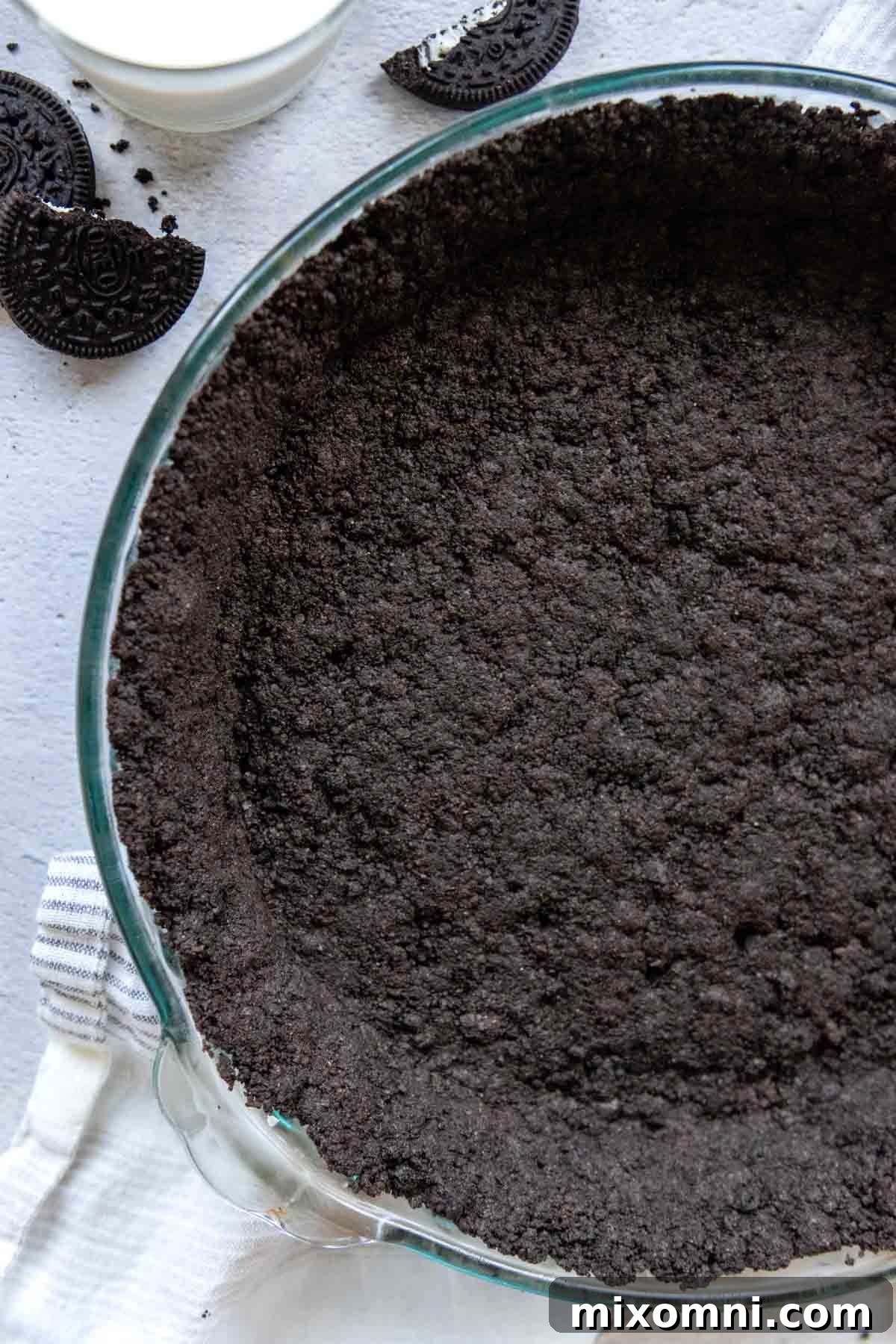
Unlock the secret to crafting the ultimate gluten-free Oreo pie crust that not only holds together flawlessly but also slices with elegant precision! For years, gluten-free bakers faced the challenge of crumbly crusts, but our refined technique ensures a sturdy foundation for any dessert. The key lies in a slightly adjusted butter ratio specifically tailored for gluten-free Oreos, providing the perfect binding needed for both decadent chocolate cheesecake crusts and delightful no-bake pie fillings. Get ready to master the perfect 2-ingredient ratio and transform your gluten-free baking experience.
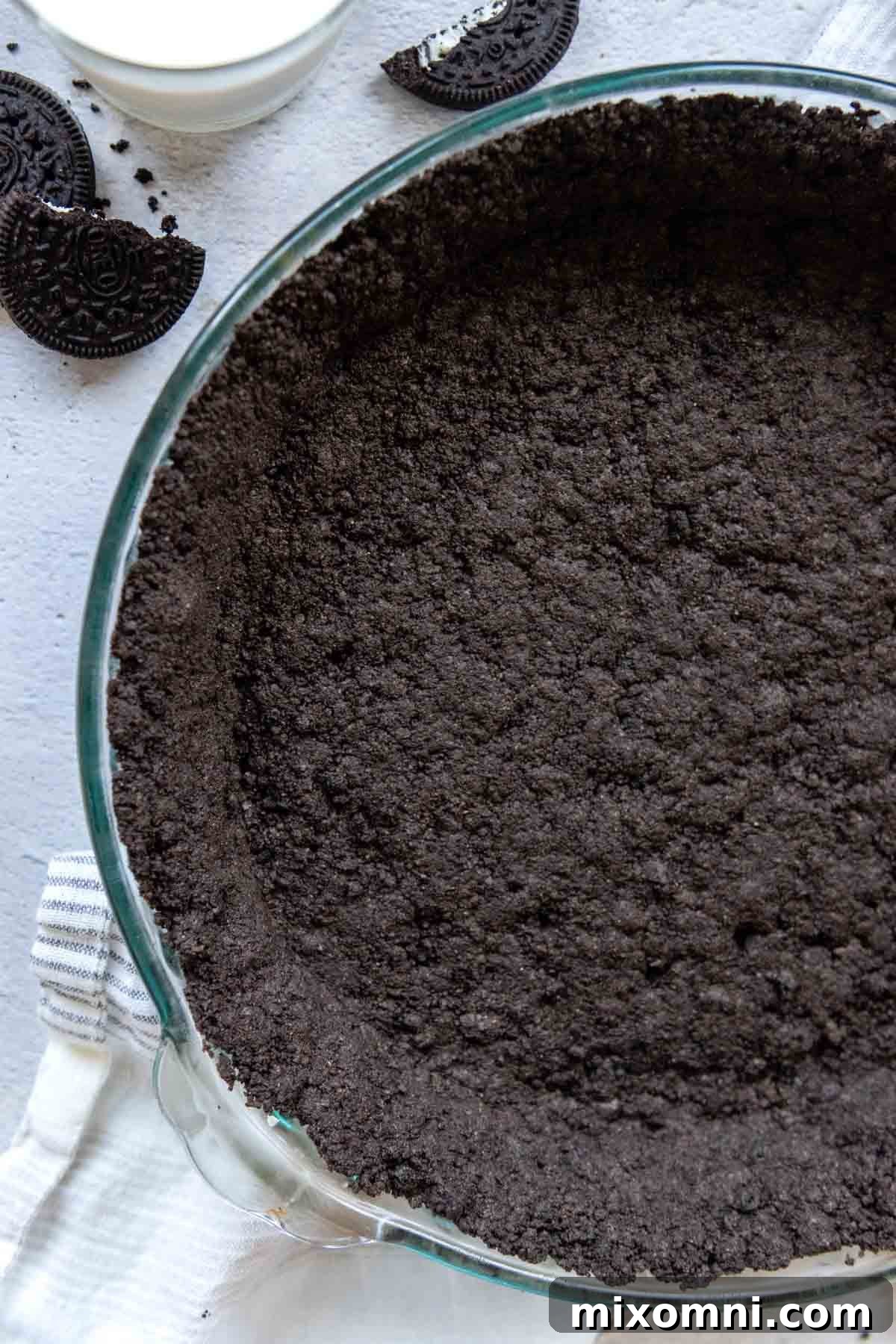
The Ultimate Gluten-Free Chocolate Crust for Cheesecakes & Pies
The advent of readily available gluten-free Oreos has revolutionized the world of gluten-free desserts, opening up a universe of delicious possibilities that were once out of reach for those avoiding gluten. From rich chocolate cheesecakes to creamy no-bake pies, the versatility of these cookies in crust form is truly remarkable. Our journey into perfecting this crust began after the viral success of a gluten-free Oreo cheesecake, which inspired a cascade of new creations, including a beloved homemade gluten-free ice cream cake. Now, it’s time to extend that expertise to the realm of pies, ensuring every slice is a testament to perfect texture and taste.
When initially developing this gluten-free Oreo pie crust recipe, the natural first step was to adapt traditional cookie crust recipes. However, a direct swap of regular Oreos for their gluten-free counterparts didn’t yield the desired results. Similar to my experience with perfecting a gluten-free graham cracker crust, subtle yet crucial adjustments were necessary. The primary goal was to create a crust that firmly binds together, allowing for clean, beautiful slices without crumbling upon serving.
While a gluten-free graham cracker crust benefits from a small amount of added GF flour to aid in binding, a gluten-free Oreo crust thankfully requires no additional dry ingredients. The magic happens by simply tweaking the ratio of cookie crumbs to melted butter. This minor adjustment significantly improves the crust’s integrity and ensures it holds up to any filling. Furthermore, for optimal stability and flavor, especially when preparing a gluten-free chocolate crust for cheesecakes or pies, we highly recommend a brief pre-bake of 10 minutes before adding your chosen filling. This step helps to set the crust, making it crispier and more durable.
For those who prefer a strictly no-bake approach, it is technically possible to skip the baking step while maintaining the same ingredient proportions. If you opt for a no-bake crust, ensure it chills in the refrigerator for at least 30 minutes, or ideally longer, before filling. Be aware, however, that a no-bake crust, while convenient, will inherently be more crumbly and may not slice as cleanly as its baked counterpart. But remember, the joy of baking is in making it your own, so if no-bake is your preference, go for it!
Essential Ingredient Insights
Despite this recipe calling for just two simple ingredients – gluten-free Oreos and melted butter – a deeper understanding of each component can elevate your crust from good to exceptional. Let’s delve into some key considerations and options to personalize your culinary creation.
Choosing Your Gluten-Free Oreos
While the classic chocolate gluten-free Oreo offers a rich, versatile base for many desserts, don’t feel limited! The market for gluten-free sandwich cookies has expanded wonderfully, providing a fantastic array of choices to customize your crust. Nabisco now offers gluten-free versions of their beloved Double Stuffed, Golden, and Mint Oreos. Imagine a Golden Oreo crust paired with a lemon meringue pie, or a Mint Oreo crust for a refreshing peppermint cheesecake! Beyond Nabisco, several other brands produce excellent gluten-free sandwich cookies that can be used interchangeably. Keep an eye out for varieties from Great Value (Walmart), Kinnikinnick, Glutino, and Simple Mills. Each brand and flavor offers a unique twist, allowing you to tailor the crust to perfectly complement your chosen filling.
The Role of Butter & Dairy-Free Alternatives
Melted butter is the crucial binding agent in this recipe, acting as the glue that transforms cookie crumbs into a cohesive crust. Its rich, fatty content coats the crumbs, allowing them to stick together when pressed and creating that desirable sturdy texture. For those seeking a dairy-free crust, a simple swap to a high-quality vegan or plant-based butter stick works beautifully. It’s worth noting that traditional Oreos, including their gluten-free versions, are generally considered vegan and dairy-free, so you only need to concern yourself with the butter substitution. I have not personally tested this recipe with melted coconut oil, which is a common dairy-free fat in baking. If you decide to experiment with coconut oil, please ensure it is melted but not hot, and mix it thoroughly with the crumbs. I would love to hear about your results in the comments below, as this could be a great option for a wider audience.
Let’s Craft This Crust Together!
Creating this gluten-free Oreo crust is incredibly straightforward, but a few key techniques will ensure a perfect result every time. Follow these detailed steps to achieve a crust that is both delicious and structurally sound. (For precise ingredient measurements and a printable recipe, please refer to the complete recipe card further down the page.)
The Easiest Prep: Achieve Fine Crumbs
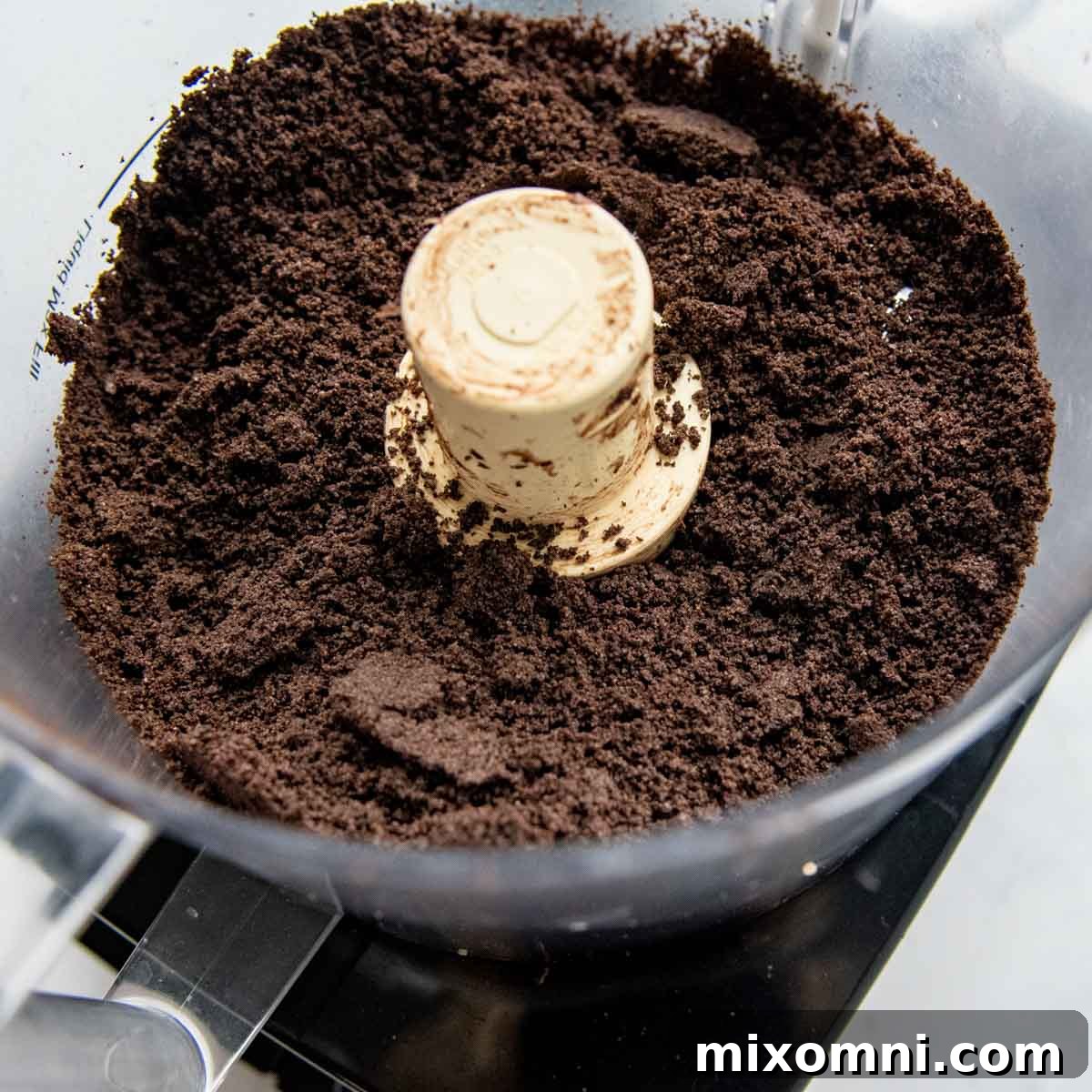
I cannot stress enough the transformative power of a food processor when it comes to preparing cookie crumbs for a pie crust. It’s a game-changer, especially if you find kitchen prep tedious or time-consuming. A food processor effortlessly pulverizes the cookies into exceptionally fine crumbs, which is absolutely essential for a crust that binds well and yields neat, clean slices. The finer the crumbs, the more surface area they have to absorb the melted butter, resulting in a more cohesive and less crumbly crust.
If you don’t have a food processor, don’t worry – you can still achieve a stellar crust with a little elbow grease. Place your gluten-free Oreos in a sturdy ziplock bag, remove as much air as possible, and then use a rolling pin or a meat mallet to crush them. Be diligent and persistent! You want to crush them until they resemble fine sand, with no large chunks remaining. This might take a few minutes, but the effort is well worth it for a superior crust.
Once your cookies are reduced to fine crumbs, it’s time to introduce the melted butter. If using a food processor, you can simply pour the melted butter directly into the processor and pulse a few times until the crumbs are evenly moistened and resemble wet sand. If you crushed the cookies by hand, transfer the crumbs to a medium-sized mixing bowl and pour in the melted butter. Mix thoroughly with a spoon or spatula until all the crumbs are uniformly coated.
The Art of Pressing: Foundation for Stability
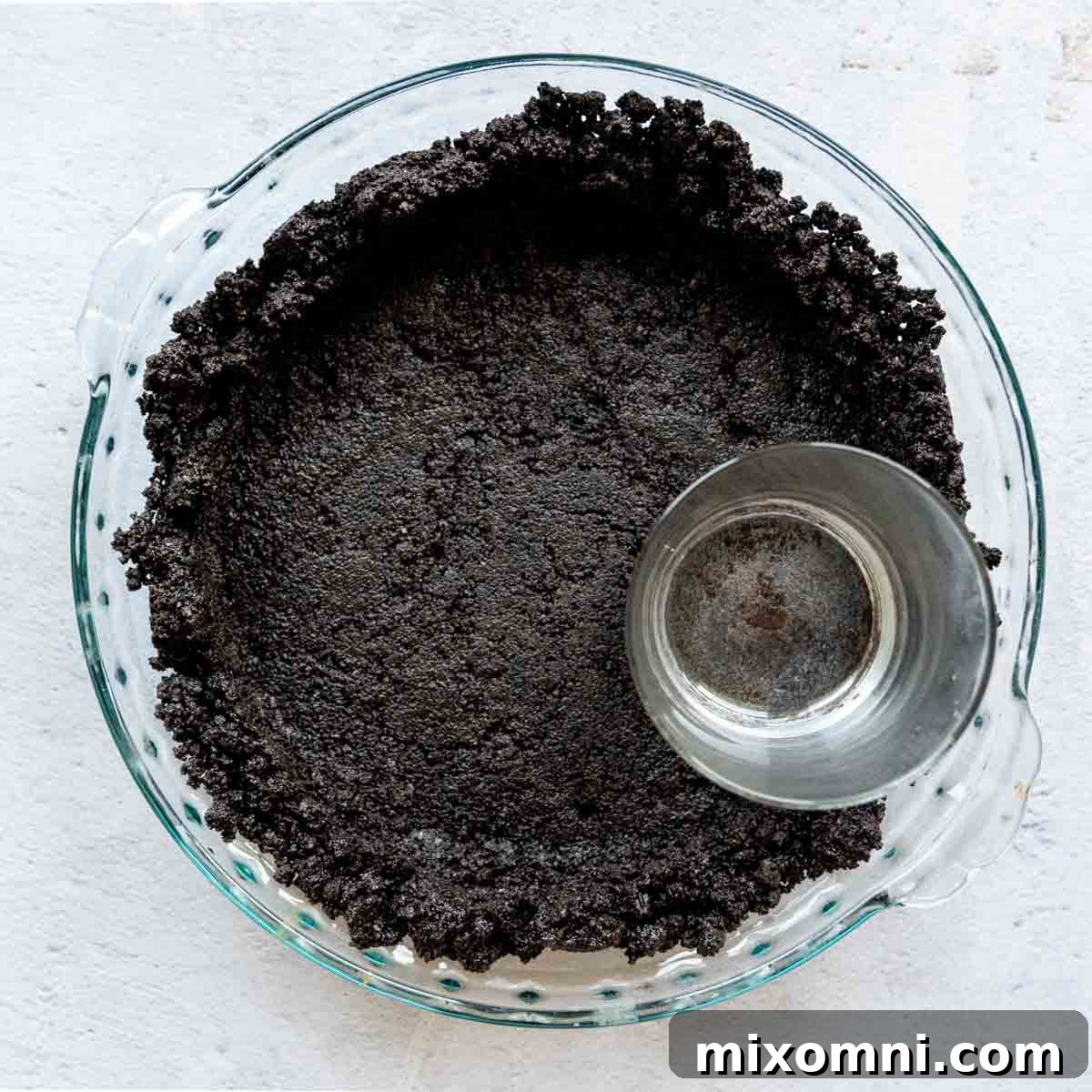
Beyond the ideal crumb-to-butter ratio, the most critical step for achieving a stable, sliceable crust for your pies or cheesecakes is the pressing technique. Proper and firm pressing ensures a dense, compact crust that won’t fall apart when cut. Begin by pouring the entire crumb mixture into your chosen pie plate or springform pan. Distribute the crumbs roughly evenly across the bottom.
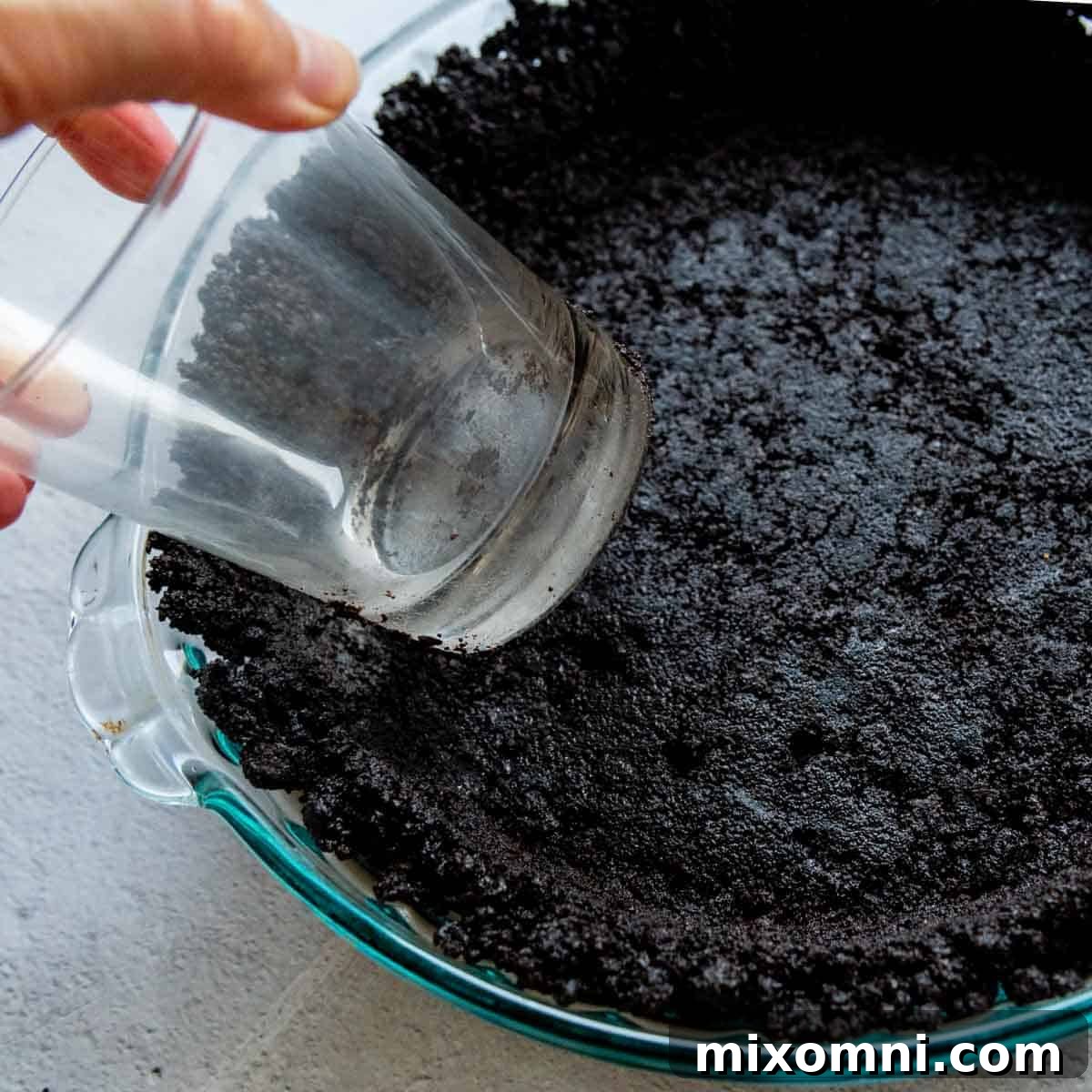
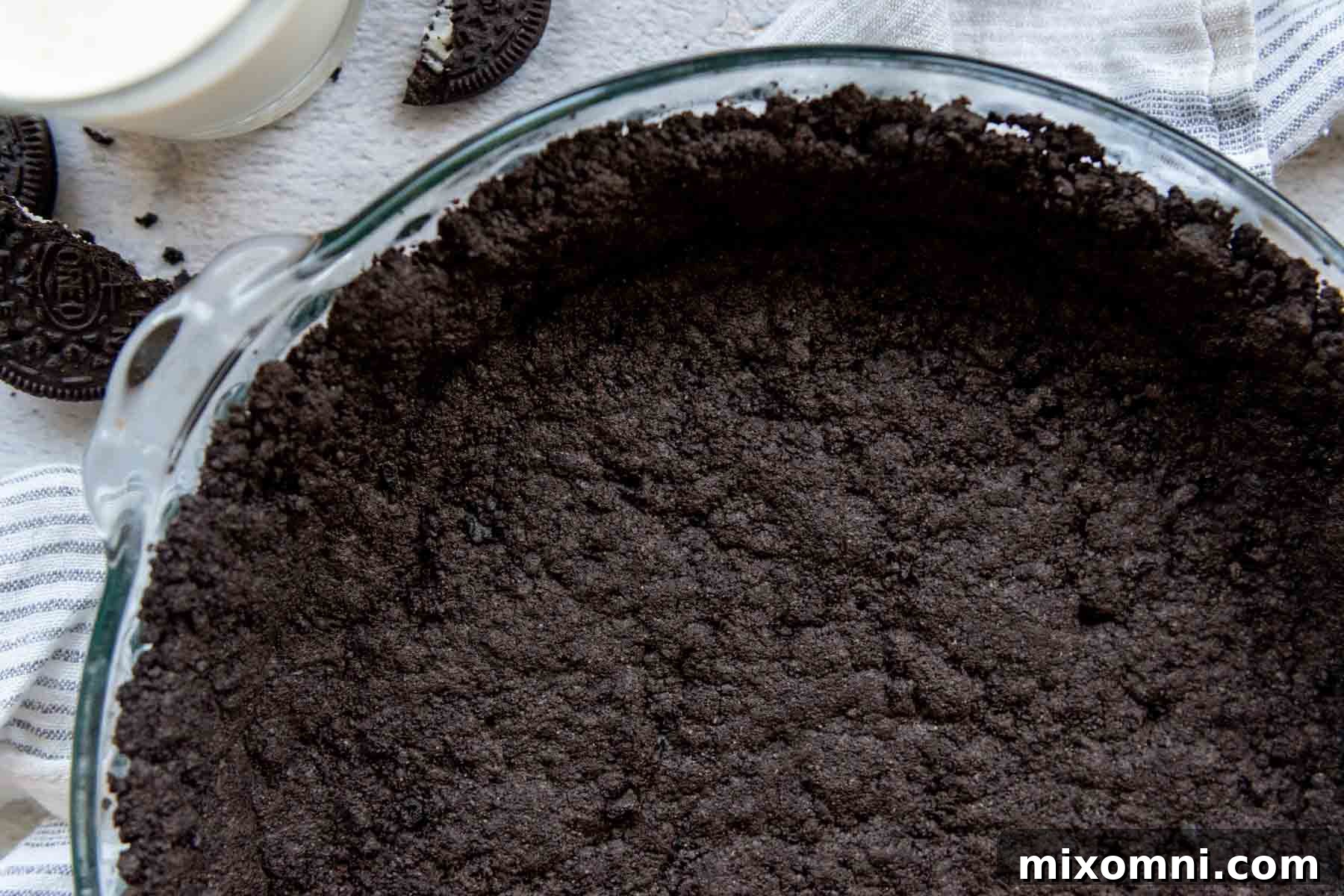
Now, for the pressing: use the flat bottom of a measuring cup or a drinking glass to firmly and evenly press the crumbs down onto the bottom of the pan. Apply consistent pressure, working your way around the entire base. As you press, any excess crumbs will naturally spread outwards towards the sides of the pan. Once the bottom is compacted, switch to using the side of the glass to press the crumbs up and around the edges of the pan. For a springform pan, you might only bring the crust up about a third of the way, or you can opt to keep the entire crust on the bottom for a simpler presentation.
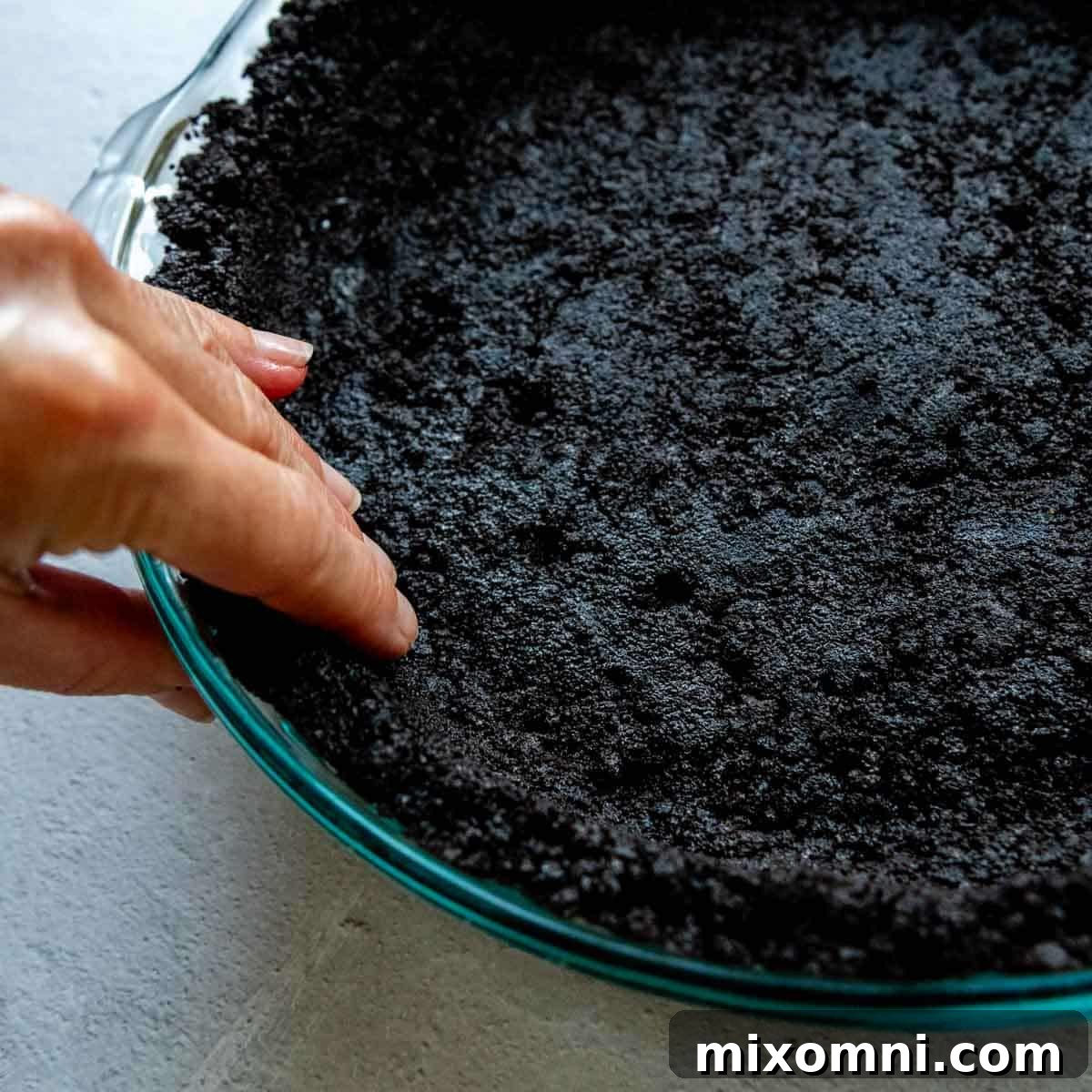
To finish, I like to use my fingers to go around the edges once more, meticulously smoothing out any uneven spots and ensuring the top edge of the crust has a nice, clean ridge. This is where attention to detail truly pays off, creating a professional-looking finish. My inner perfectionist definitely shines through at this stage!
Bake, Cool, and Fill
Once your crust is perfectly pressed into the pan, it’s time for a quick trip to the oven. Pop the crust into a preheated oven at 350ºF (175ºC) for precisely 10 minutes. This short baking period is key to setting the butter and lightly toasting the cookie crumbs, resulting in a crisper, more flavorful, and significantly more stable crust. Think of it as an “almost” no-bake crust, as those few minutes in the oven make all the difference! Once baked, remove the crust from the oven and allow it to cool completely on a wire rack before adding your chosen filling. Patience here is a virtue – a warm crust will cause many fillings to melt or become watery. So, you gain a wonderfully firm crust, but you must allow it to cool thoroughly before proceeding to the next delicious step.
Choosing the Perfect Baking Pan for Your Gluten-Free Oreo Crust
The beauty of this homemade gluten-free Oreo crust recipe lies in its adaptability to various baking vessels, making it suitable for a wide range of desserts. Understanding how to adjust the crust for different pan types will ensure your dessert turns out perfectly every time.
Standard Pie Plates
This recipe is ideally suited for a standard 9-inch pie plate. For a classic pie with sides, distribute the crumbs evenly across the bottom and then press them firmly up the sides of the dish to create a sturdy rim. If you opt for a deep-dish pie pan, you can still use the same amount of crumbs. The trick is to make the bottom crust slightly thinner than usual. This ensures you have enough crumb mixture to extend generously up the higher sides of the deep-dish pan, providing ample support for your filling.
Springform Pans for Cheesecakes
This rich chocolate crust is a phenomenal base for gluten-free no-bake cheesecakes. For springform pans, aim for sizes between 8 and 10 inches. If you’re using an 8-inch pan, you’ll have a slightly thicker crust, and you can easily press the crumbs up the sides a bit for a dramatic presentation. For larger 9 or 10-inch springform pans, you have the flexibility to either create a single, thick bottom layer or extend the crust slightly up the sides, depending on your aesthetic preference and the type of cheesecake you’re making.
Mini Desserts: Cupcakes and Tarts
Craving individual portions? This crust is perfect for mini cheesecake cupcakes or small tarts. We’ll dive into specific tips for making those right below, but rest assured, the fundamental principles of crushing, binding, and pressing remain the same, just on a smaller scale!
Elevate Your Desserts: Next-Level Cheesecake & Pie Fillings
Once you’ve mastered this incredibly versatile gluten-free Oreo crust, the possibilities for delectable desserts are truly endless. This sturdy and flavorful foundation is perfect for an array of fillings, transforming simple ingredients into extraordinary treats. Here are some inspiring ideas to get your creative juices flowing and take your cheesecakes and pies to the next level:
- Mini Cheesecake Cupcakes: For delightful individual servings, line a standard 12-cup muffin tin with paper liners. Distribute approximately 2 tablespoons of the crumb mixture into the bottom of each cup and press down firmly. If your chosen cheesecake filling requires baking, pour it in and bake according to its instructions. For no-bake fillings, bake the crusts at 350ºF (175ºC) for about 7 minutes, then cool completely before adding your filling. These are perfect for parties or portion control!
- Ice Cream or Freezer Pie Fillings: This robust chocolate crust is an ideal partner for any ice cream pie. Its stability holds up beautifully in the freezer, preventing sogginess. Think classic vanilla, mint chocolate chip, or even a layered ice cream cake within this crust.
- Decadent Mousse Fillings: Whether it’s a rich chocolate mousse or a light and airy raspberry mousse, the crisp texture of the Oreo crust provides a fantastic contrast to the creamy, delicate filling.
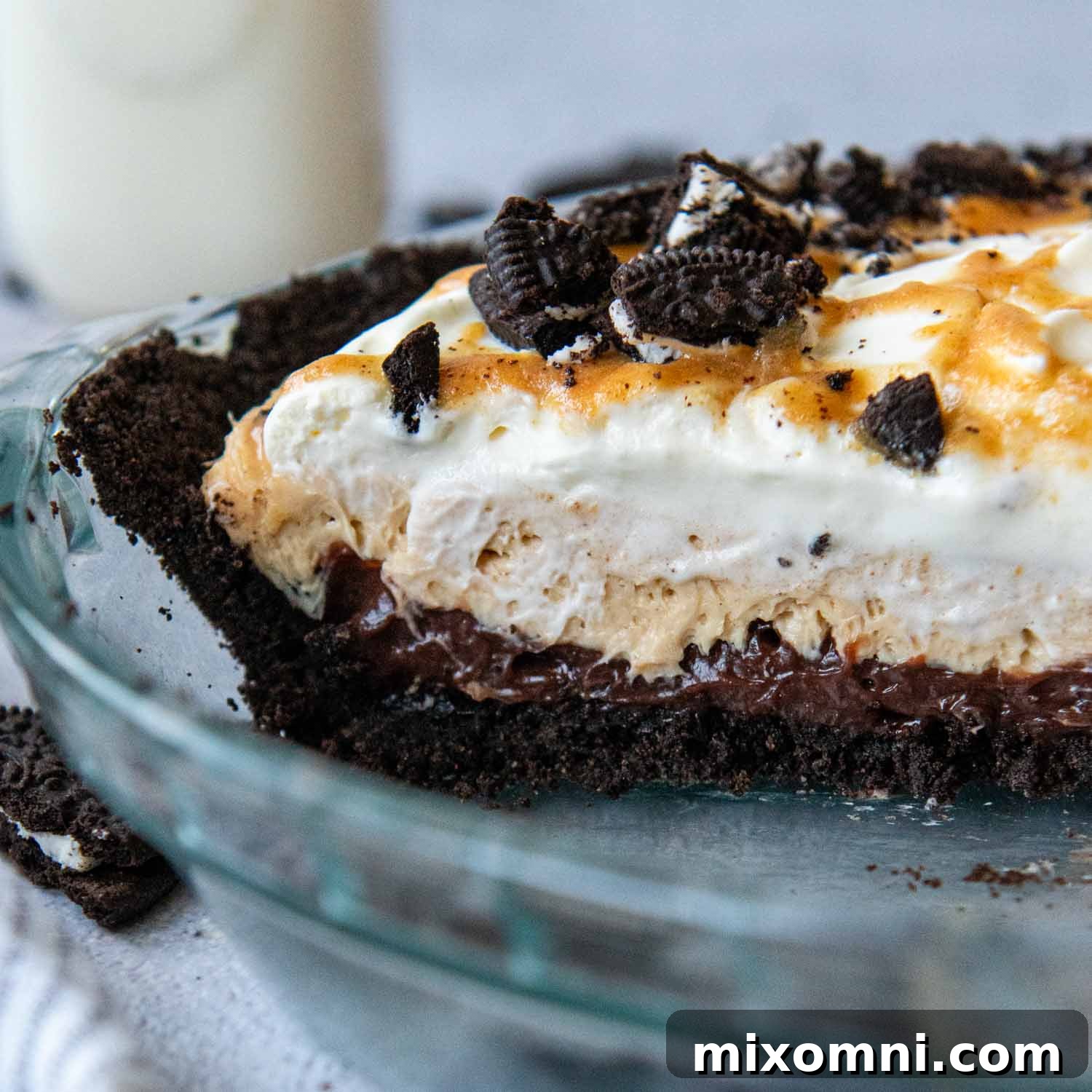
- Creamy Peanut Butter Filling: A match made in heaven! The combination of chocolate Oreo and peanut butter is irresistible. For a foolproof recipe, follow this easy peanut butter Oreo pie recipe that perfectly complements this crust.
- Cannoli Cheesecake: Imagine the spiced ricotta and chocolate chip goodness of a cannoli, reimagined as a creamy cheesecake atop this chocolatey base. The flavors meld beautifully for an Italian-inspired dessert dream.
- Seasonal Delights: Candy Cane or Peppermint Pie: Perfect for the holidays, a cool and refreshing candy cane or peppermint pie filling nestled in this dark chocolate crust is a festive showstopper.
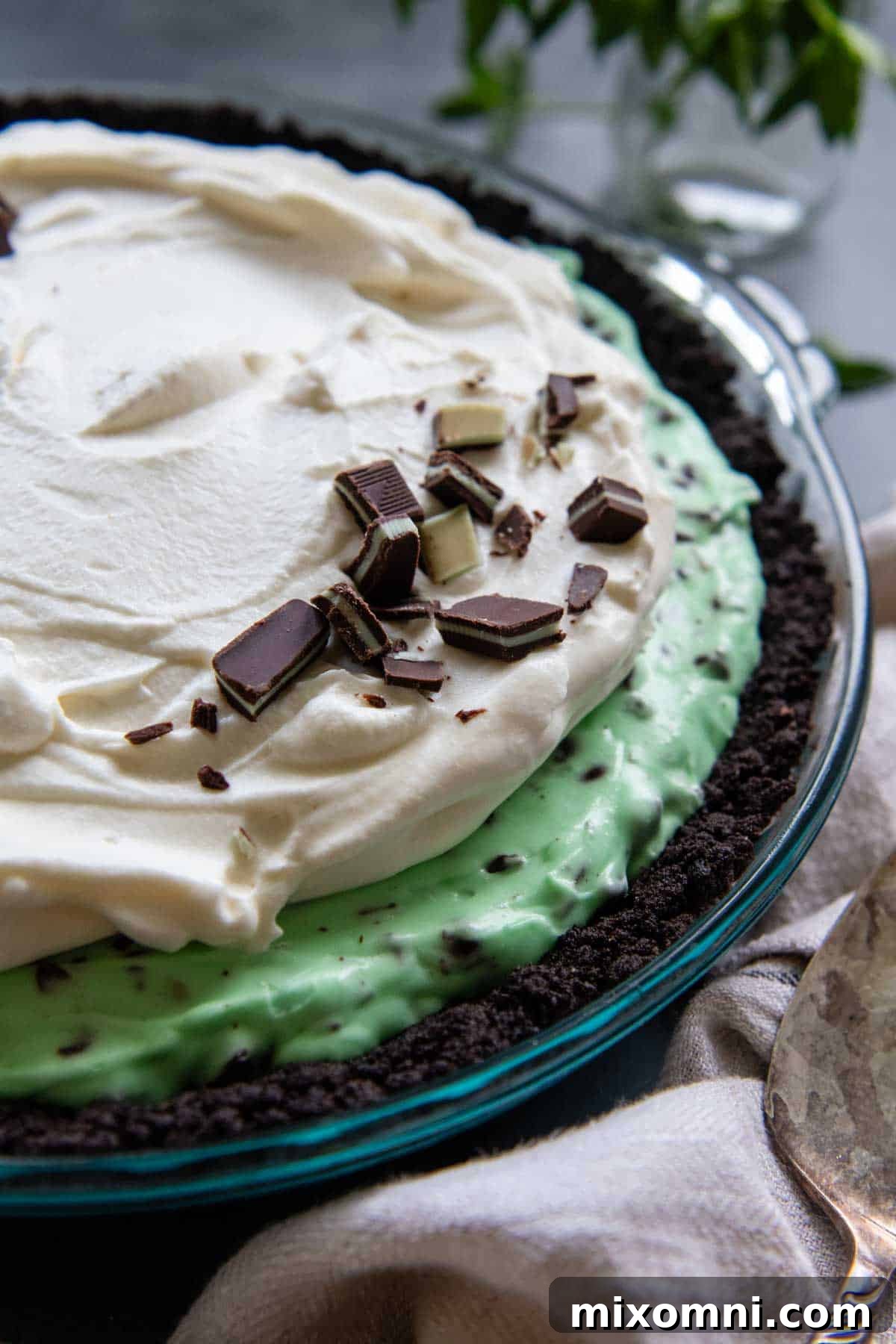
- Another Fan Favorite – Epic Chocolate Chip Mint Pie with Andes: If you love mint and chocolate, you absolutely must try this chocolate chip mint pie with Andes mints. The crust provides the perfect base for its vibrant flavors.
- More Ideas? We love hearing about your culinary adventures! Tell us how you used this versatile gluten-free Oreo crust in the comments below. Your creativity inspires us all!
Save This Recipe to Your Pinterest Board!
Let’s be friends on Pinterest! I’m always sharing great recipes and gluten-free inspiration!
Did you make this recipe? I love hearing from you! Leave a star rating and comment below the recipe card. Your feedback is invaluable to our community and helps other bakers discover delicious recipes. I truly appreciate your thoughts and always respond! -Melissa
Average Rating: 5 stars (3 ratings)
Easy Gluten-Free Oreo Crust (Slices Perfectly!)

Melissa Erdelac
8 servings
5 mins
10 mins
15 mins
Learn how to make a gluten-free Oreo pie crust recipe that actually holds together and slices beautifully! The trick is to use a little more butter than traditional recipes to ensure perfect binding. Discover the ideal 2-ingredient ratio right here!
Pin Recipe
Rate & Comment
Remove Ads
Ingredients
Equipment
Instructions
-
Preheat your oven to 350°F (175°C). Take the 26 gluten-free Oreos and crush them into very fine crumbs. The quickest and most efficient way to achieve this is by using a food processor. Alternatively, place the cookies in a sturdy ziplock bag, seal it, and use a rolling pin or meat mallet to crush them until they are extremely fine, resembling sand.
26 gluten-free Oreos -
Once the cookies are finely crushed, add the melted butter. If you’re using a food processor, pour the melted butter directly into the processor with the crumbs and pulse until combined. If crushing by hand, transfer the crumbs to a mixing bowl and thoroughly mix in the melted butter until all crumbs are evenly coated.
5 tablespoons butter -
Pour the crumb mixture into your chosen 9-inch pie plate or springform pan. Use the bottom of a measuring cup or a flat-bottomed drinking glass to firmly and evenly press the crumbs along the bottom of the pan. Continue pressing along the sides of the pan with the side of the cup to create a well-defined crust. Finally, use your fingers to press around the edges and bottom once more, ensuring everything is compressed and perfectly even. For a springform pan, you can simply press along the bottom, or extend the crust about one-third up the sides.
-
Bake the crust in the preheated oven for 10 minutes. This crucial step helps to set the crust and makes it wonderfully crisp. Once baked, remove the crust from the oven and allow it to cool completely on a wire rack before adding your desired cheesecake or pie filling. Garnish your finished pie or cheesecake with any remaining crushed cookies just before serving for the best texture and appearance.
Notes
Make Ahead and Storage Tips
This versatile crust can be prepared ahead of time, making your dessert assembly a breeze. Once baked and fully cooled, the crust can be stored at room temperature for up to 24 hours. Simply cover it loosely with foil until you’re ready to fill it.
For longer storage, the baked crust can be wrapped securely in plastic wrap and then foil, and frozen for up to 1 month. When ready to use, thaw it in the refrigerator overnight or at room temperature for a few hours before filling.
After your crust is filled, the complete dessert should be refrigerated for optimal freshness and texture. It can typically be stored in the refrigerator for up to 24 hours before serving. A little bonus tip: If you plan to garnish your dessert with additional gluten-free Oreos, it’s best to add these right before serving. I’ve noticed that gluten-free Oreos tend to soften quickly when stored in the refrigerator, compromising their satisfying crunch. The filled crust itself will hold up beautifully, but those garnish cookies are best enjoyed crisp!
Leftovers of the filled dessert can be kept refrigerated for a couple of days. While the crust texture holds up well initially, over time, moisture from the filling will begin to seep in, eventually causing the crust to soften slightly. Enjoy it fresh for the best experience!
Nutrition Information
Per Serving (1/8 of recipe):
- Calories: 244 kcal
- Carbohydrates: 28g
- Protein: 2g
- Fat: 15g
- Saturated Fat: 7g
- Polyunsaturated Fat: 2g
- Monounsaturated Fat: 5g
- Trans Fat: 0.3g
- Cholesterol: 19mg
- Sodium: 208mg
- Potassium: 93mg
- Fiber: 1g
- Sugar: 16g
- Vitamin A: 219 IU
- Calcium: 10mg
- Iron: 5mg
(Nutritional values are estimates and may vary based on specific ingredients and preparation.)
Did you make this recipe?
Please leave a star rating and review below. Your feedback helps others discover delicious recipes and I LOVE hearing from you!