
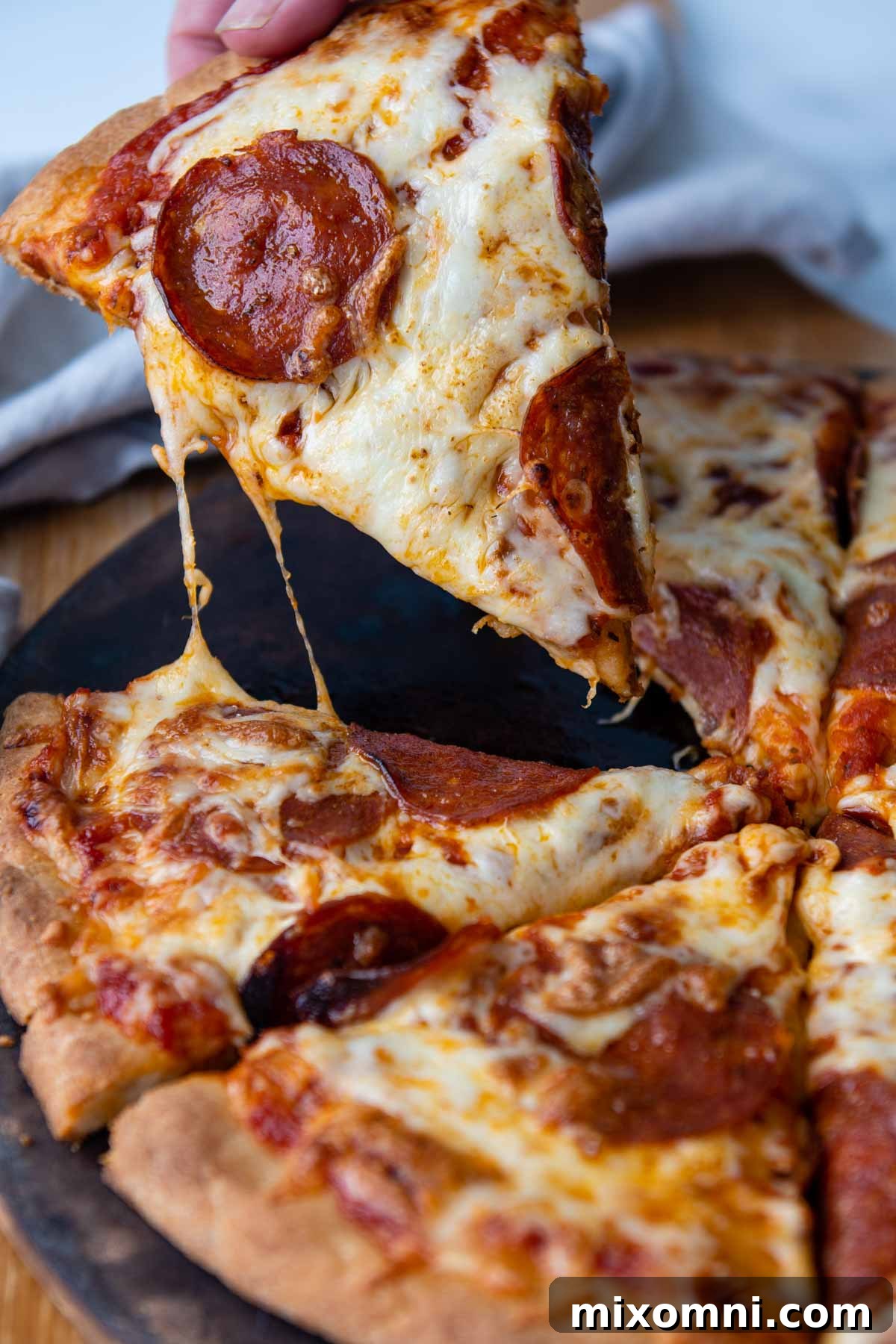
Whether you’re new to gluten-free baking or a seasoned pro, discovering a reliable, truly delicious gluten-free pizza crust can be a game-changer. My meticulously tested recipe for homemade gluten-free pizza crust is designed to be your ultimate go-to. It delivers everything you crave in a perfect pizza base: a beautifully soft and fluffy interior, inviting golden-crisp edges, and that satisfying chew often missing in gluten-free alternatives. Crafted from a carefully balanced blend of premium gluten-free flours and the magic of psyllium husk, this crust is robust enough to generously support your favorite pizza sauce, ample cheese, and all your beloved toppings without ever becoming soggy or falling apart.
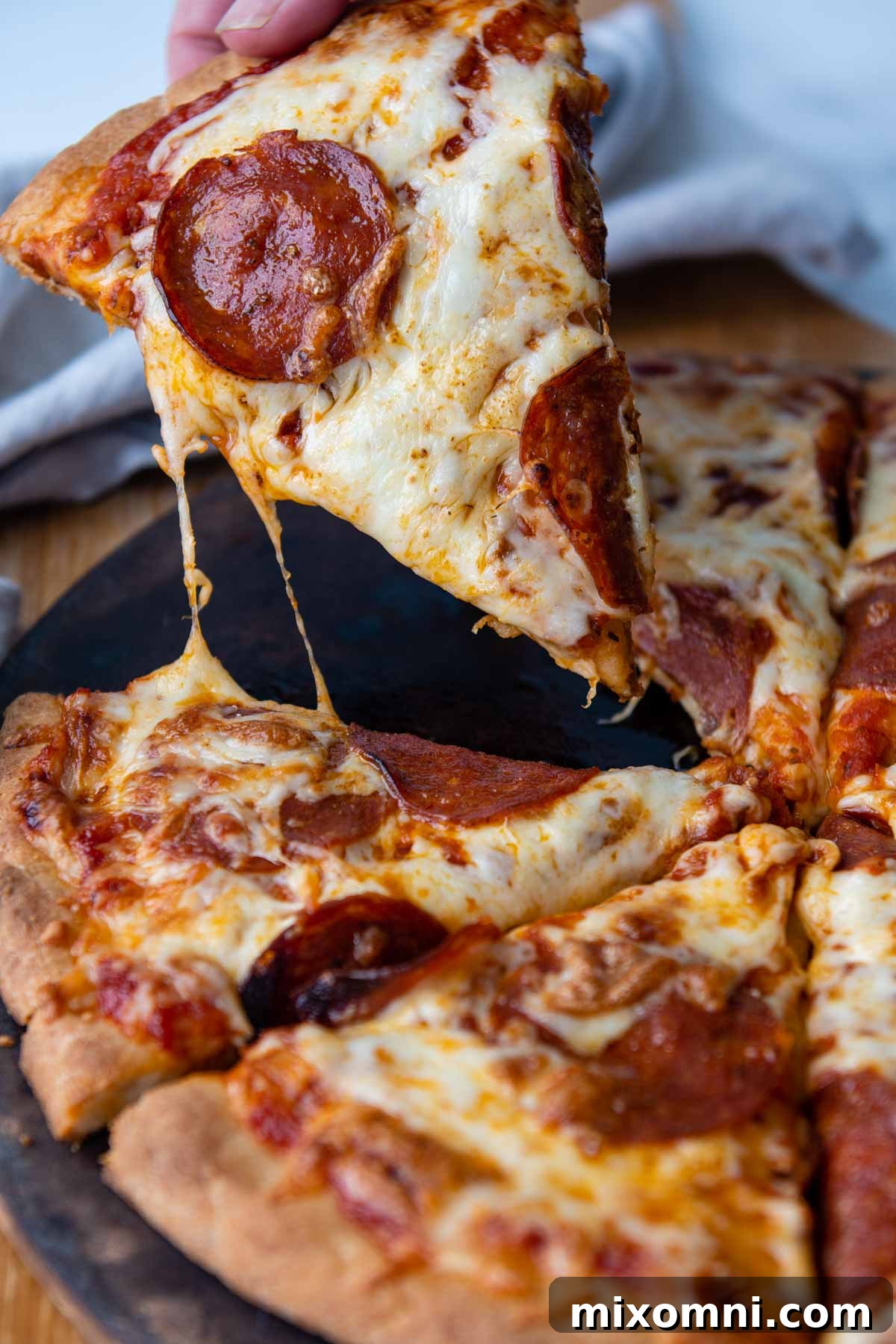
Skeptics, Prepare to Be Converted: This Gluten-Free Pizza Crust is a Revelation!
I know what you might be thinking. As you glance through this homemade pizza crust recipe, thoughts like, “She wants me to bake it for how long?!” or “How can gluten-free dough possibly achieve such an amazing texture as she claims?!” are likely swirling in your mind. Rest assured, I’ve been exactly where you are.
My journey to perfecting gluten-free baking, particularly pizza, began when I transitioned to a gluten-free diet. I first encountered a similar innovative gluten-free pizza dough recipe in an invaluable resource: the America’s Test Kitchen: How Can It Be Gluten-Free Cookbook. Initially, I shared your skepticism about the unique process and ingredient choices. Yet, after successfully working through countless ATK recipes, I quickly came to trust their meticulous testing and ingenious techniques. Their scientific approach profoundly influenced my own gluten-free bread and baking explorations, ultimately inspiring my published GF cookbook.
So, let’s delve into the secrets behind this extraordinary crust. While it is indeed made with gluten-free flour, its success lies in a clever combination of “ingredient friends” that meticulously work together to prevent the all-too-common cardboard-like texture. This recipe strategically swaps a portion of the traditional GF flour blend with other starches, ensuring the crust remains wonderfully light and fluffy, rather than dense and overly chewy.
For instance, when developing my doughy soft gluten-free pizza rolls, a small amount of potato starch proved effective. However, for a pizza crust that truly shines, a touch of almond flour is introduced. This ingenious addition significantly enhances moisture and mitigates chewiness, a crucial benefit since this recipe is intentionally crafted without eggs or butter. This makes our pizza crust not only incredibly delicious but also a fantastic option for those seeking a dairy-free and vegan-friendly base.
Beyond the clever flour blend, you’ll discover another “magic” ingredient at play: psyllium husk powder. In gluten-free baking, psyllium husk is a true hero. It acts as a powerful binder, greatly enhancing the dough’s structure, elasticity, and providing that desirable stretchy texture reminiscent of traditional gluten-containing doughs. These qualities are absolutely essential for achieving a truly “bomb-diggity” homemade gluten-free pizza crust.
All these scientific explanations make sense, right? Now, where does the initial questioning come in? It’s often due to the dough’s surprising ease of preparation – it literally comes together in a flash with just a “dump and mix” method. The “extra time” you might be wondering about is primarily dedicated to the crucial rising and baking phases, which I’ll meticulously guide you through below. Remember: trust the process, and you’ll be rewarded with the best gluten-free pizza you’ve ever made.
After trying many other recipes for a year, this is my go-to recipe for GF pizza! It’s easy and is consistently delicious! I make this gluten free pizza for everyone when my daughter with celiac visits, and no one misses the wheat pizza–it’s THAT GOOD.
—Kate
Let’s Craft This Incredible Crust Together!
(Below you’ll find detailed step-by-step photos and comprehensive modified instructions to guide you. For the complete recipe, including precise ingredient amounts and nutritional information, please scroll down to the dedicated recipe card.)
Effortless Start: Simply Dump and Mix
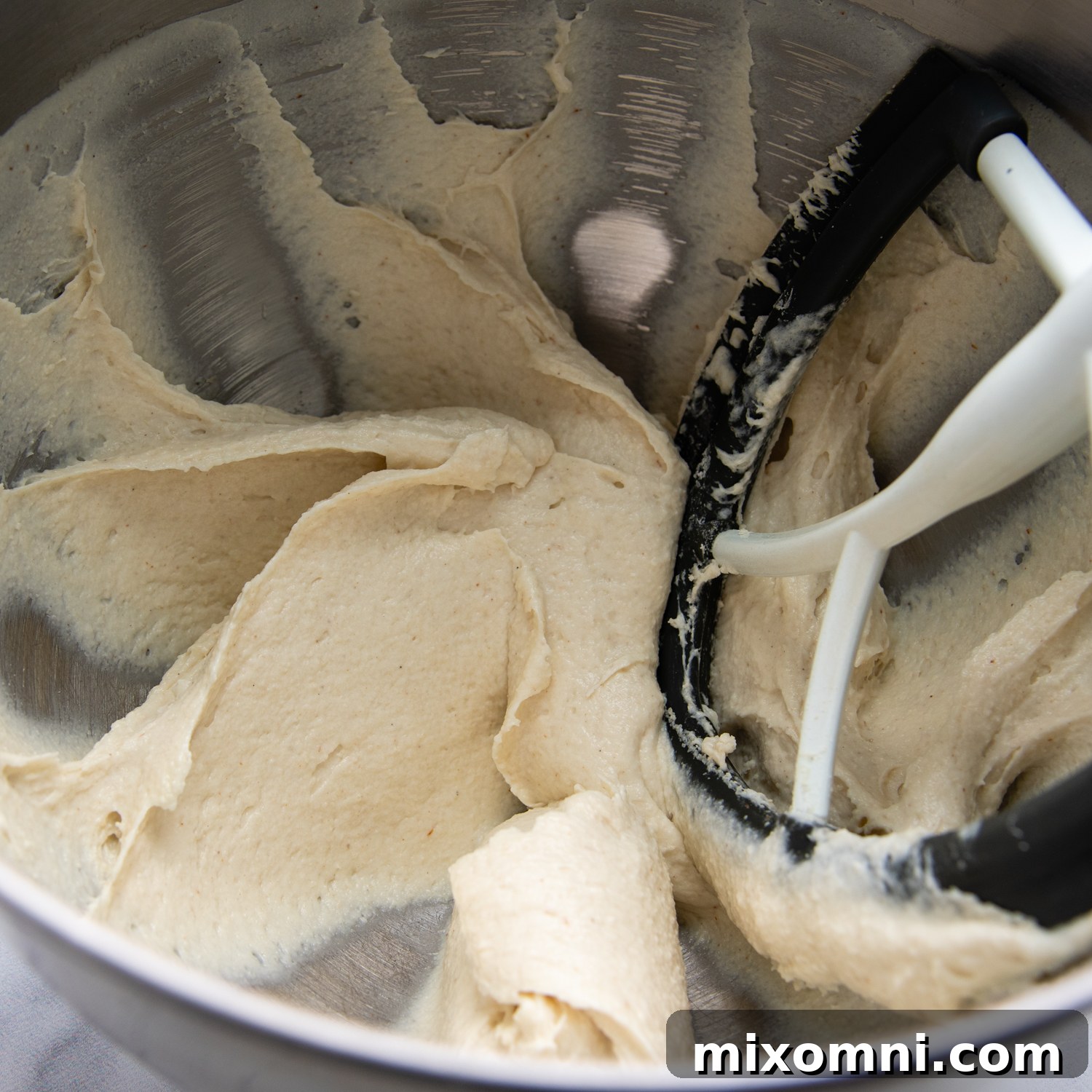
Begin by combining all the dry ingredients in the large mixing bowl of a stand mixer. Using a paddle attachment on low speed, thoroughly blend your chosen gluten-free flour (I personally use and highly recommend Cup4Cup GF flour for consistently superior results), almond flour, psyllium husk powder, baking powder (which provides an essential boost of rise and loftiness), salt, and instant yeast. Ensure all dry ingredients are well-distributed before proceeding.
Next, with the mixer still on low speed, slowly and steadily pour in the warm water and olive oil. Continue mixing until all ingredients are just combined and no dry pockets of flour remain. Then, increase the mixer speed to medium-high and beat the dough vigorously for a full 5 minutes. Don’t be alarmed by the dough’s sticky, almost batter-like consistency; this is perfectly normal and expected for a gluten-free, no-knead dough. The beauty here is that you won’t need to knead or handle it extensively with your hands!
The Patient Wait: Plan Ahead for Rise Time
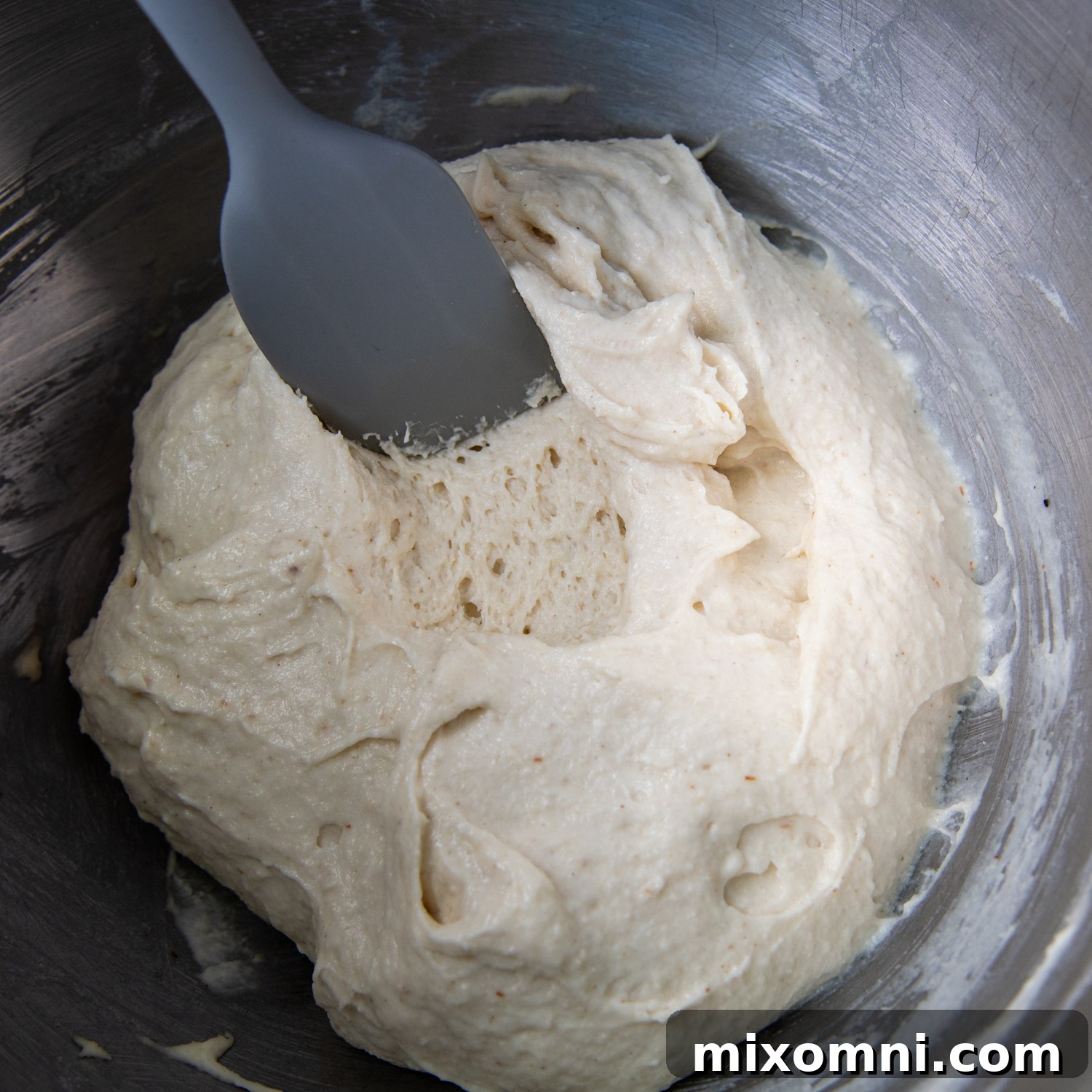
After mixing, use a rubber spatula to carefully scrape all the sticky dough into the center of the bowl, forming a neat mound. Tightly cover the bowl with plastic wrap, creating an airtight seal. Now comes the waiting game: let the dough rise in a warm, draft-free place for approximately 90 minutes. Yes, this is a significant amount of time, so planning ahead is key to a stress-free pizza night. The dough is ready when it appears noticeably puffy and, when gently probed with a spoon, reveals a slightly bubbly interior. This rise is crucial for developing the light texture.
Shaping the Perfect Crust: A Gentle Touch
Before you begin shaping, preheat your oven to a moderate 325°F (160°C). Prepare your baking surface: you’ll need either a pizza stone or a sturdy baking sheet, both generously lined with greased parchment paper. The parchment paper is essential for preventing sticking and easing transfer.
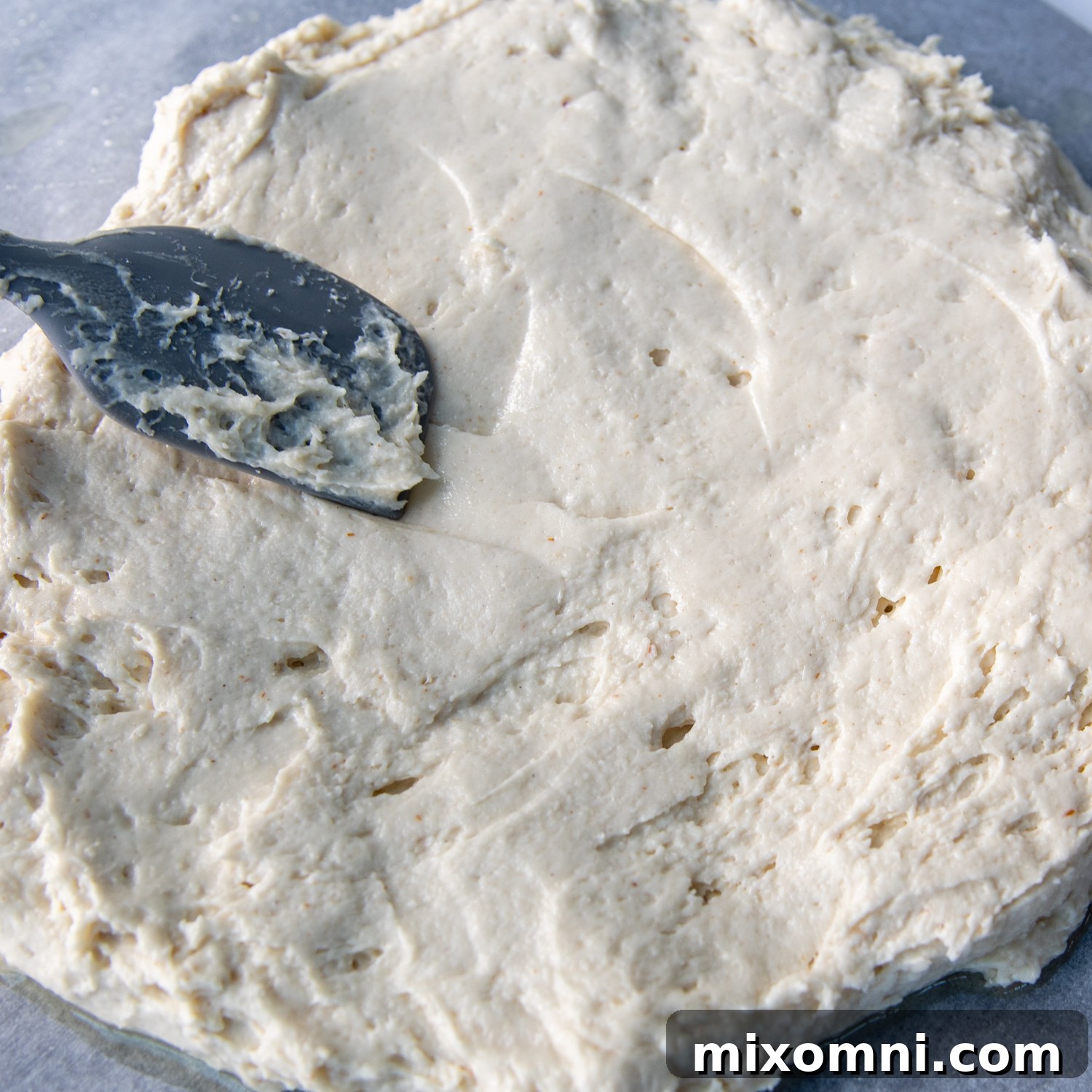
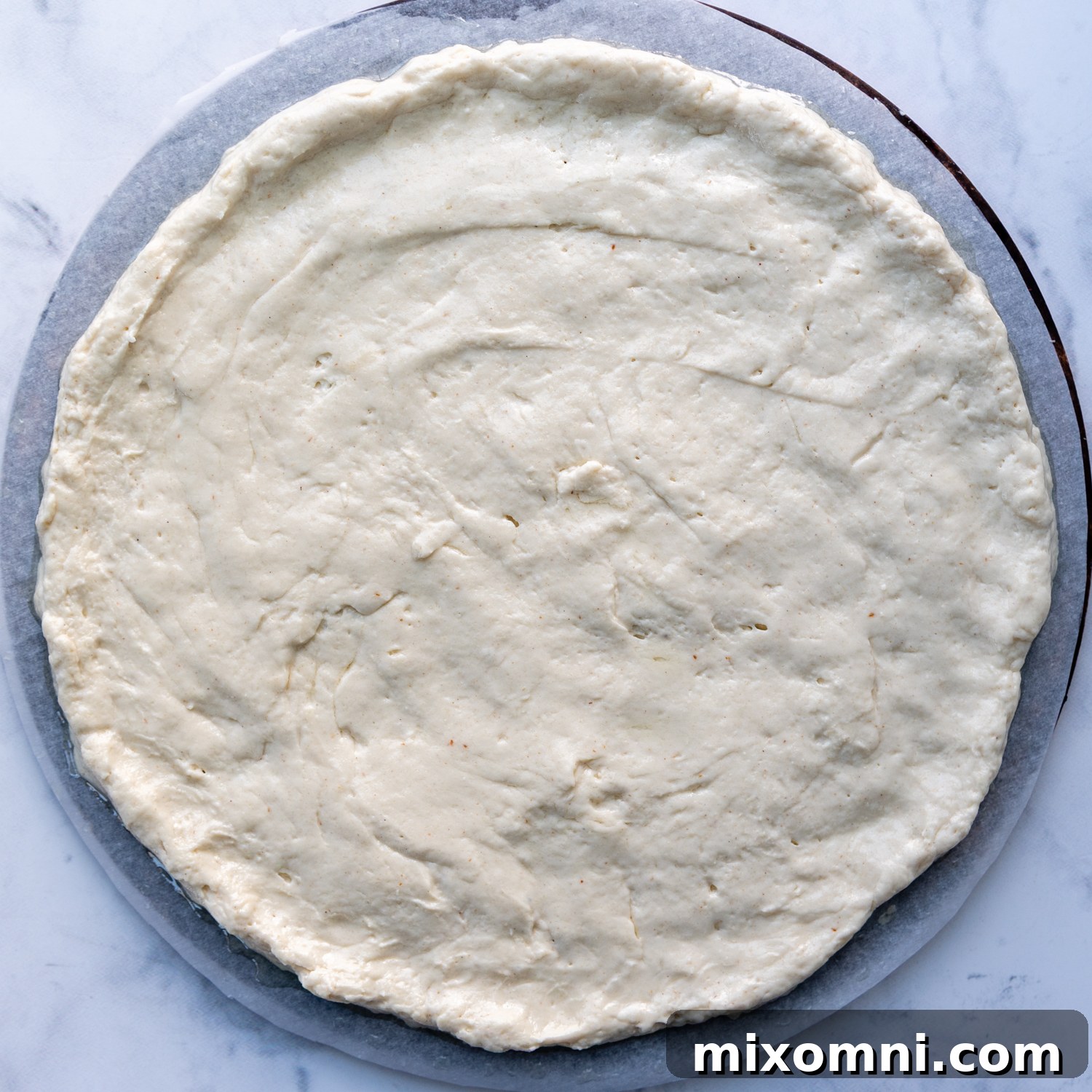
Carefully scoop the risen dough onto the center of the prepared parchment paper. Using a silicone spoon that has been liberally greased with cooking spray or olive oil, gently spread the dough outwards from the center. Continue spreading and greasing the spoon as needed until the dough forms a uniform circle, approximately 11 ½ inches (29 cm) in diameter. For those who enjoy a slightly thicker, chewier edge, you can use greased fingertips to gently shape a raised crust around the perimeter. Don’t worry if it’s not perfectly round; homemade charm is part of the appeal!
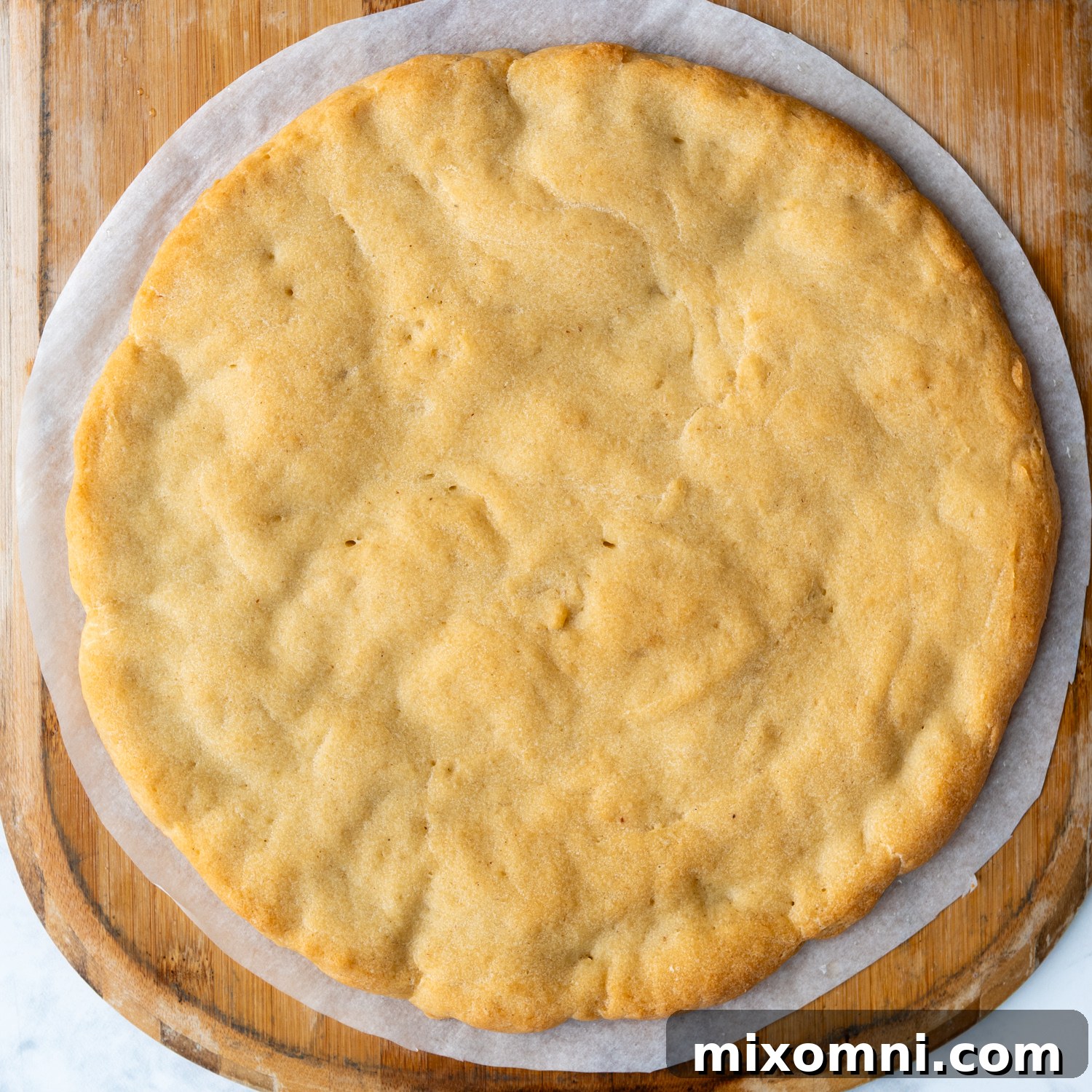
Now, bake this shaped crust at the lower oven temperature of 325°F (160°C) for an impressive 45-50 minutes. Yes, you read that correctly – this initial bake is vital for achieving the desired structure and crispness. The crust will emerge firm to the touch and will have begun to lightly brown on the underside, indicating it’s perfectly par-baked and ready for its toppings.
The Grand Finale: Sauce, Toppings, and Final Bake
With your par-baked crust ready, it’s time for the exciting part – assembling your masterpiece! Remove the pizza stone (or baking sheet) from the oven, and then place it back in the oven empty, increasing the temperature to a scorching 500°F (260°C). Allowing the stone to preheat at this high temperature is key to achieving that authentic, pizzeria-style crispy crust. I highly recommend assembling your pizza directly on a pizza peel (lined with parchment paper for easy sliding) as this makes for a seamless transfer onto the intensely hot stone.
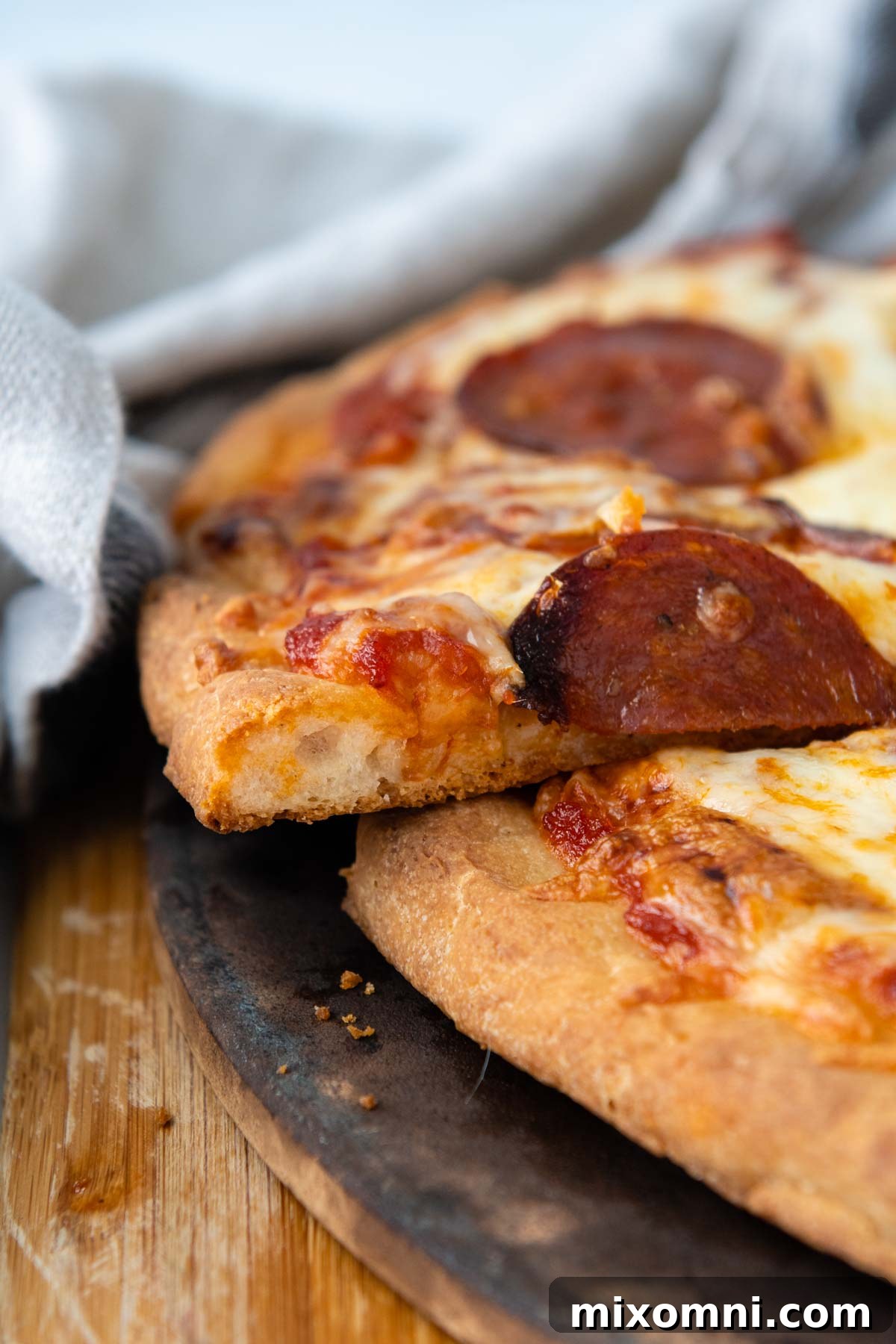
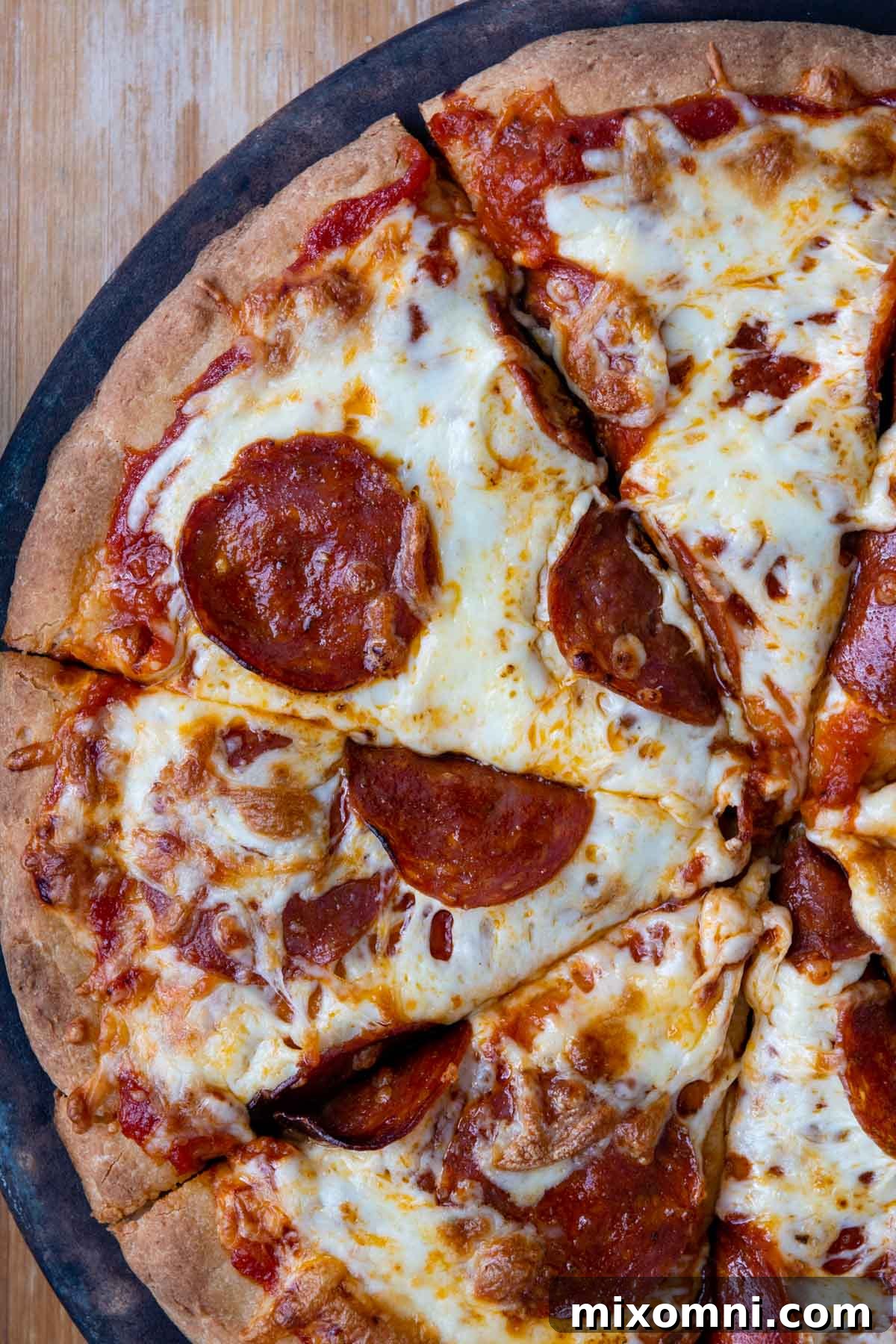
Liberally spread your favorite pizza sauce over the par-baked crust, ensuring even coverage. Pile on generous layers of your preferred cheese and an abundance of your chosen toppings. Once assembled, with a swift and confident motion, slide your pizza onto the screaming hot stone in the oven. Bake for a quick 8-10 minutes, keeping a close eye on it. The crust will develop a deeper, richer golden-brown hue, and the cheese will be beautifully melted and bubbly, often with enticingly browned edges. The aroma alone will be intoxicating! Carefully remove your perfect pizza, slice, and then take a moment to savor. Afterwards, please return here and leave a comment to let me know that this truly is the best gluten-free pizza recipe you’ve ever tried! 😎
Essential Equipment (And Smart Substitutions) for Your GF Pizza
To truly replicate those coveted pizza parlor dreams of a crispy crust with a deliciously doughy soft interior, I wholeheartedly recommend investing in a good pizza stone. I particularly favor this circular pizza stone because its shape naturally serves as a helpful guide for shaping your dough into a perfect circle. However, rectangular stones work just as effectively and are widely available.
If a pizza stone isn’t currently in your kitchen arsenal, don’t despair! You can still achieve a fantastic crust. Simply preheat a heavy-duty baking sheet or a dedicated pizza pan in the oven along with the final high-temperature preheat. While it may not yield quite the same intense crispness as a preheated stone, using a hot pan is infinitely better than starting with a cold one, which can lead to a less-than-ideal crust.
To effortlessly assemble your pizza and elegantly transfer it onto the screaming hot stone (or preheated baking sheet), a pizza paddle or peel is an invaluable tool. Attempting to move an unbaked, fully topped pizza without one can be a tricky endeavor, often resulting in disturbed toppings or a misshapen pie. However, if you don’t own a peel, a clever workaround involves placing your parchment-lined pizza onto a rimless baking sheet, or by inverting a rimmed baking sheet, and then carefully sliding the pizza from there onto the hot surface.
For best results, especially with gluten-free dough which can be more delicate, ensure all your equipment is clean and ready. Having a spray bottle with cooking oil or a small bowl of olive oil and a pastry brush nearby will also be helpful when handling and shaping the dough, preventing any frustrating sticking.
Maximize Your Time: Make-Ahead & Freezer-Friendly Options!
While this recipe does involve two distinct rounds of baking, this unique process is actually a huge advantage for you! After the initial par-bake, you have incredible flexibility. You can immediately pile on your favorite toppings and proceed to the final bake, enjoying a fresh, homemade gluten-free pizza right away. Alternatively, you can choose to transform this par-baked crust into a wonderfully convenient make-ahead component, perfect for busy weeknights or impromptu gatherings.
If you plan to bake the pizza later, promptly transfer the par-baked crust to a wire rack to allow it to cool completely. Once cooled, you have two excellent storage options:
- Short-Term Storage: The cooled crust can safely sit at room temperature for up to 4 hours. Simply wrap it securely in plastic wrap to maintain freshness.
- Long-Term Freezing: For maximum convenience, wrap the cooled crust securely in plastic wrap, then cover it again with aluminum foil. This double layer of protection prevents freezer burn and maintains quality. Freeze the crust for up to 3 weeks. When you’re ready for pizza night, there’s no need to thaw! You can assemble your toppings directly onto the frozen crust and bake it straight from the freezer, following the instructions for the final bake. This strategy ensures you always have a delicious gluten-free pizza base ready to go!
Making two crusts at once and freezing one is a smart tactic for quick, easy, and satisfying Friday pizza nights!
Craving Extra Crispy? Here’s How!
For those who absolutely adore an extra crispy pizza crust – one that delivers a satisfying crunch with every bite – maximizing the heat transfer is your secret weapon. The best tool for this is undeniably a pizza stone. Some fantastic sets even include a pizza paddle, which truly elevates your homemade pizza game, allowing for a seamless transition of your pizza into the intense heat.
The magic of the pizza stone lies in its ability to absorb and retain a tremendous amount of heat. When placed in a high-temperature oven and allowed to preheat thoroughly, it becomes incredibly hot. This intense heat provides an immediate, powerful burst of energy to the crust as soon as the pizza slides onto it. This “jump start” is precisely what’s needed to achieve a perfectly crisp base within the short baking time required for your toppings and cheese to melt and bubble. It’s a win-win: a beautifully cooked crust and perfectly melted toppings, all without overcooking either component. For an even thinner, crispier crust, consider spreading the dough slightly wider during the shaping stage and ensuring your par-bake allows for a slight browning underneath.
Don’t Forget to Pin This Recipe!
Let’s be friends on Pinterest! I’m always sharing great recipes and baking tips!
Did you try this recipe? I absolutely love hearing from you! Please consider leaving a star rating and comment below the recipe card. Your feedback is incredibly valuable, not only for me but also for other home bakers searching for reliable gluten-free recipes in our community. I always make sure to respond to every comment! -Melissa

Crispy, Doughy Gluten-Free Pizza Crust (No Knead!)

Melissa Erdelac
8
slices
1 hour
30 minutes
50 minutes
2 hours
20 minutes
Pin
Rate
Remove Ads
Ingredients
-
1 ⅔
cup
(257 g)
gluten-free all purpose flour
-
¼
cup
(25 g)
almond flour
,
for best results, but may also sub additional GF flour -
2
teaspoons
(8 g)
psyllium husk powder
,
what is psyllium husk?
-
1 ¼
teaspoon
baking powder
-
1
teaspoon
salt
-
½
teaspoon
instant yeast
-
1 ¼
cup
(275 g)
warm water -
2
tablespoons
(28 g)
olive oil
Equipment
-
Pizza Stone -
Pizza Peel -
Stand Mixer
Instructions
-
In the large mixing bowl of a stand mixer, use a paddle attachment to combine on low speed gluten-free flour, almond flour (or additional GF flour if substituting), psyllium husk powder, baking powder, salt, and instant yeast. Mix until thoroughly combined.1 ⅔ cup gluten-free all purpose flour,
¼ cup almond flour,
2 teaspoons psyllium husk powder,
1 ¼ teaspoon baking powder,
1 teaspoon salt,
½ teaspoon instant yeast -
Continue mixing on low speed and slowly pour in the warm water and olive oil. Mix until combined and the dough forms a sticky batter. Increase the speed to medium-high and beat for 5 minutes to develop structure.1 ¼ cup warm water,
2 tablespoons olive oil -
Use a rubber spatula to scrape all the dough into the center of the bowl. Cover securely with plastic wrap and let rise in a warm, draft-free place for 90 minutes. The dough should appear slightly bubbly inside when ready.
-
Preheat oven to 325°F (160°C). Line a pizza stone with parchment paper. If you do not have a pizza stone, line a large baking sheet with parchment paper. Spray the paper generously with cooking spray to grease.
-
Transfer the dough into the center of the prepared stone or pan. Use a liberally greased silicone spoon (or greased fingers) to spread the dough into a uniform 11 ½” (29 cm) circle. If desired, gently shape the edges to create a raised crust.
-
Bake the crust for 45-50 minutes, or until it is firm to the touch and starts to brown lightly on the underside. This is your crucial par-bake.
-
If assembling and baking the pizza later, immediately move the par-baked crust to a wire rack to cool completely. At this stage, it may sit at room temperature for up to 4 hours, or you can wrap it securely in plastic, then cover with aluminum foil, and freeze for up to 3 weeks. When ready to bake from frozen, simply assemble your pizza directly on the frozen crust.
-
When you’re ready to make your pizza, place the empty pizza stone (or baking sheet) in the oven and preheat the oven to 500°F (260°C). (Refer to the recipe notes if you do not have a pizza stone.) Carefully transfer the par-baked crust to a pizza peel (lined with parchment paper) for an easy slide onto the hot stone.
-
Spread on your desired pizza sauce, cheese, and all your favorite toppings. Using the pizza peel, slide the assembled pizza onto the preheated hot stone. Bake for 8-10 minutes, or until the crust is a deep golden brown and the cheese is gloriously melted and bubbly.
Notes
Making without a pizza stone
If you do not have a pizza stone, you can still make a delicious gluten-free pizza! Simply preheat a baking sheet or a dedicated pizza pan in the oven along with the final high-temperature preheat. While this method may not produce a crust quite as crisp as a pizza stone, using a preheated pan is significantly better than placing the pizza on a cold one. For easier transfer without a pizza paddle, use a rimless baking sheet or an inverted rimmed baking sheet to slide your parchment-lined pizza onto the hot surface.
Freezing and Storing for Ultimate Convenience
Although this recipe involves some initial time investment for rising and par-baking, its freezer-friendly nature makes it incredibly efficient for meal prep. You can bake this crust right from frozen, making future pizza nights a breeze!
Consider making two crusts at once. Enjoy one immediately and freeze the other for a quick and easy homemade Friday pizza night later in the month!
To freeze: Allow the par-baked crust to cool completely on a wire rack. Once fully cooled, wrap it securely in plastic wrap, then cover it with an additional layer of aluminum foil. Freeze for up to 3 weeks. When you’re ready to bake, there’s no need to thaw; simply assemble your toppings directly onto the frozen crust and bake as instructed.
To store: After the initial par-bake, let the crust cool completely. You can store it at room temperature, wrapped securely in plastic, for up to 4 hours before topping and final baking.
Key Tips to Remember for Gluten-Free Pizza Success
- Optimize Equipment: The texture and overall success of this gluten-free pizza crust are significantly enhanced by using specific pizza-making equipment. A pizza stone is essential for achieving a truly crispy crust, while a pizza paddle ensures a flawless and easy transfer of your pizza onto the hot oven surface.
- Mind the Diameter: When shaping the pizza dough, make sure to spread it out to at least an 11 ½-inch (29 cm) circle. Using a standard baking sheet might limit the diameter, leading to a thicker, less crispy crust. Therefore, a round pizza stone (highly recommended for superior results) or a round pizza pan is preferred.
- Versatile Par-Baked Crust: Since this crust is par-baked, it offers incredible versatility! Beyond conventional oven baking, it could also be an excellent base for grilled pizza – simply finish it on the grill for a unique smoky flavor and char.
- Keep it Greased: Gluten-free dough can sometimes be sticky. It’s remarkably easy to work with as long as you keep your tools liberally greased. Always have nonstick cooking spray or a small bowl of olive oil and a pastry brush handy when spreading and shaping the dough to prevent any sticking.
Recipe adapted from America’s Test Kitchen: How Can It Be Gluten-Free Cookbook
Calories:
140
kcal
,
Carbohydrates:
20
g
,
Protein:
4
g
,
Fat:
6
g
,
Saturated Fat:
1
g
,
Polyunsaturated Fat:
1
g
,
Monounsaturated Fat:
3
g
,
Sodium:
294
mg
,
Potassium:
70
mg
,
Fiber:
4
g
,
Sugar:
1
g
,
Vitamin C:
1
mg
,
Calcium:
53
mg
,
Iron:
1
mg
Did you make this recipe?
Please leave a star rating and review below. It helps others when searching for recipes and I LOVE feedback!