
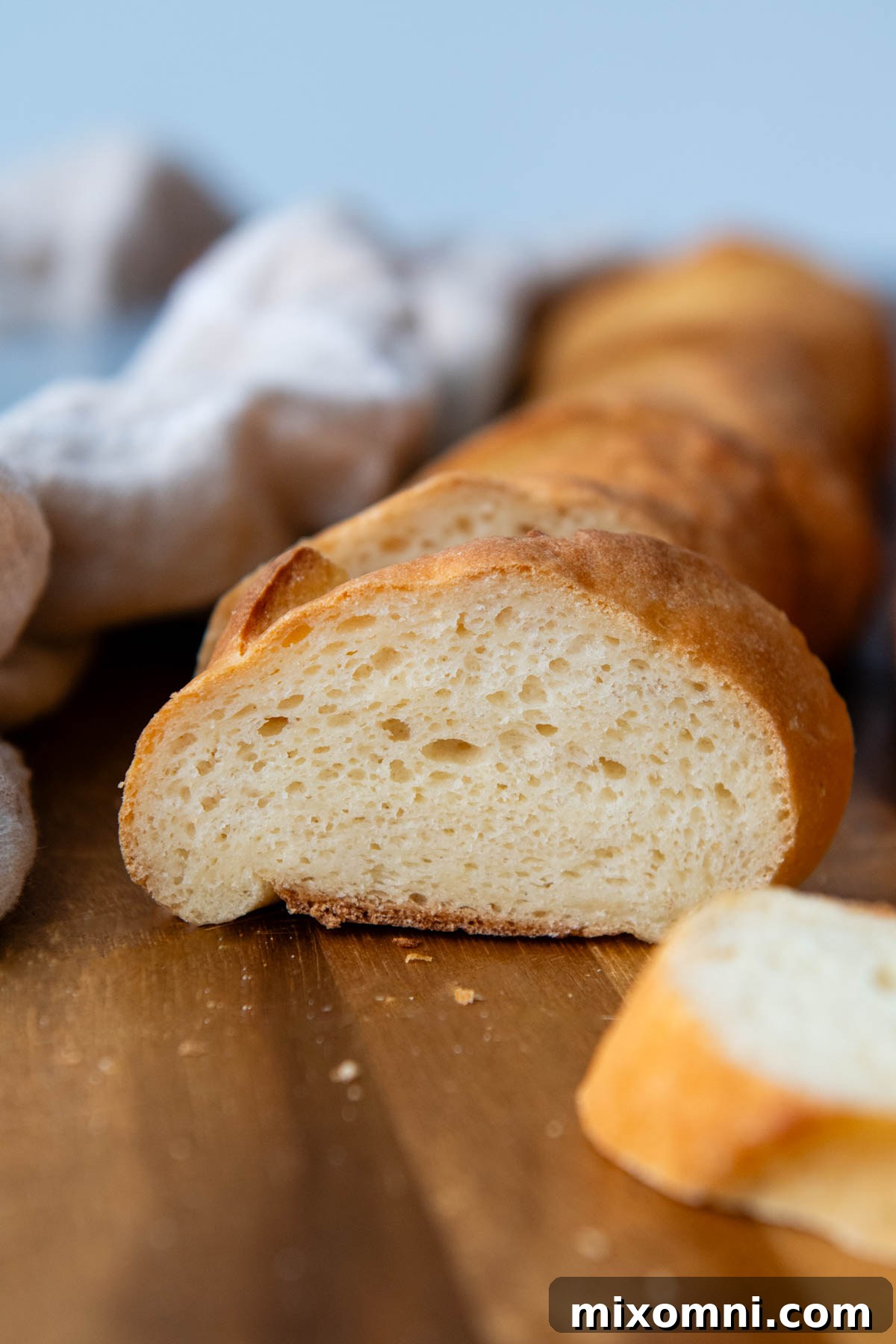
Embark on a delightful culinary journey to create the ultimate gluten-free French bread right in your own kitchen! With this meticulously developed and extensively tested recipe, you’ll discover the secrets to baking a baguette that boasts an irresistibly crisp crust and a delightfully soft, airy crumb. As an experienced gluten-free baker, I’ve spent countless hours perfecting simple yet effective techniques to overcome the common challenges of gluten-free baking. The result? A homemade loaf that comes together effortlessly in minutes, requires just one short rise, and bakes quickly, allowing you to savor its authentic taste and texture in less than an hour from start to finish. Prepare to be amazed by how easily you can achieve bakery-quality gluten-free French bread!
Mastering Easy Gluten-Free French Baguettes: Your Guide to Perfect Bread
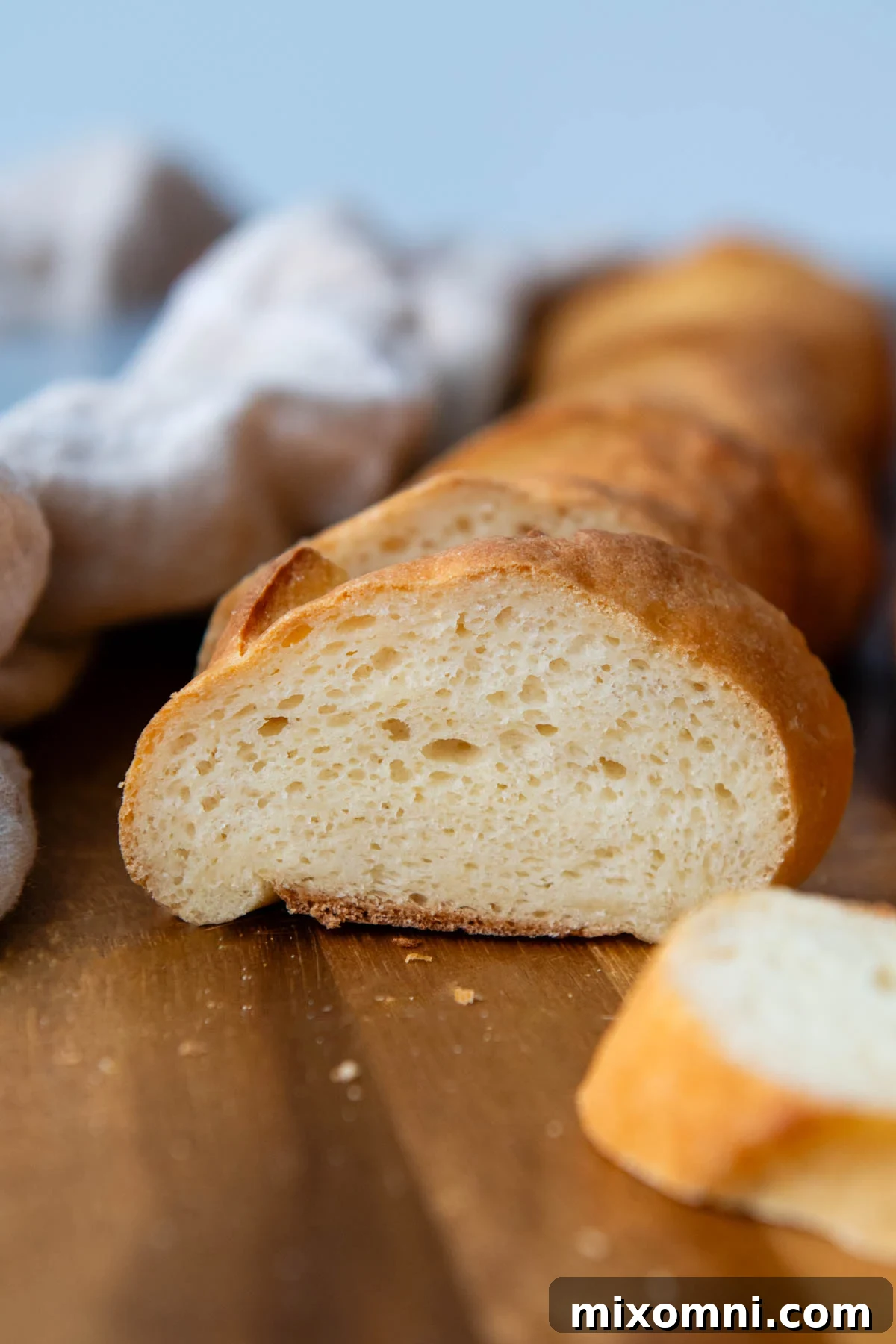
Creating an authentic gluten-free French baguette proved to be a more intricate challenge than I initially anticipated. My goal was clear: to replicate the quintessential characteristics of a classic baguette – a beautifully crusty exterior paired with a soft, open, and airy interior crumb. This quest led me through numerous trials and persistent experimentation, pushing the boundaries of what I thought was possible with gluten-free ingredients.
The inspiration for this specific recipe actually stemmed from enthusiastic readers who successfully adapted my easy gluten-free breadsticks recipe into a larger, single loaf. Their ingenuity was a catalyst, prompting me to dive deeper into developing a dedicated gluten-free baguette recipe that was not only authentic in taste and texture but also remained remarkably easy to execute for home bakers. While those initial breadstick-based experiments offered a pleasing flavor and a promising crisp crust (a technique I’ll share later, involving ice cubes for steam!), I found that the interior crumb lacked the signature openness and irregular air pockets that define a true French baguette.
My research into traditional wheat-based baguette recipes revealed a key insight: the characteristic open crumb and large holes are largely attributed to the high-protein content in wheat flour. Unfortunately, this high-protein structure is inherently missing in gluten-free flour blends. This understanding guided my subsequent recipe testing, leading to the crucial incorporation of ingredients that could functionally mimic these missing attributes. The first breakthrough came with adding eggs, which provide essential protein, enhance binding, and contribute to the dough’s overall moisture content. Two whole eggs made a noticeable difference, improving both structure and texture, but still, something was missing for that ideal open crumb.
My next significant discovery, surprisingly, involved apple cider vinegar. Typically, I tend to avoid adding extra ingredients to my gluten-free bread recipes if they don’t deliver a substantial impact. However, in this case, a full tablespoon of apple cider vinegar in the dough proved to be a game-changer. The acidity it introduces creates an environment that significantly helps in opening up the crumb structure, a vital element for achieving that coveted airy texture in gluten-free bread.
Finally, I adopted a clever trick borrowed from my successful recipe for soft gluten-free rolls: replacing a portion of the gluten-free all-purpose flour with potato starch. Baguettes, by nature, require shaping, which demands a dough with a certain stiffness. Rather than simply adding more flour, which can easily lead to a dry and dense bread, potato starch effectively absorbs moisture while simultaneously ensuring the final product maintains a delightfully soft and tender texture. This combination of innovative adjustments ultimately led to the perfected recipe you see today.
Now that this recipe has been thoroughly perfected, we’ve been enjoying these glorious gluten-free baguettes in countless ways. Imagine them as crusty baguettes generously slathered with butter and dunked into a hearty soup, transformed into savory easy gluten-free garlic bread, or serving as the base for cheesy French bread pizzas. They’re also fantastic for French toast, make perfect toasty garlic GF crostini, elevate any sandwich, are ideal for dipping into rich Swiss cheese fondue, and if you haven’t indulged in a fresh panzanella salad recently, now is truly the perfect time to experience it with this amazing bread!
Key Ingredients for Gluten-Free French Bread Success
Understanding the role of each ingredient is paramount to achieving baking success, especially in the nuanced world of gluten-free bread. Here’s a closer look at the critical components that make this gluten-free French baguette recipe truly exceptional:
- Gluten-Free Flour: The foundation of any gluten-free baked good, the choice of flour blend dramatically impacts the final texture. I enthusiastically recommend Cup4Cup gluten-free flour for its superior ability to mimic traditional wheat flour, yielding an incredibly light and satisfying texture. Please note that Cup4Cup contains milk powder, so if you require a dairy-free option, be sure to select a certified dairy-free gluten-free flour blend. Crucially, regardless of your brand choice, ensure your blend explicitly contains xanthan gum, or add it separately if not included, as it’s vital for structure in gluten-free baking.
- Psyllium Husk Powder: This remarkable ingredient is a game-changer for gluten-free bread. It acts as a superb binder, mimicking some of the elasticity and structure that gluten typically provides. More importantly, psyllium husk powder is exceptional at retaining moisture, which is essential for preventing gluten-free baguettes from becoming dry and crumbly. Its binding properties also lend the dough a pliability that makes shaping the baguettes significantly easier.
- Apple Cider Vinegar: As discovered through extensive testing, apple cider vinegar is not just another addition; it’s a critical component for achieving the desired open and airy crumb. The acidic environment it creates in the dough interacts with the other ingredients, promoting a lighter texture and helping to create those wonderful internal pockets that are characteristic of traditional baguettes. While other vinegars might technically work, apple cider vinegar has consistently yielded the best results in this recipe.
- Baking Powder: In this recipe, baking powder works synergistically with yeast to provide an extra boost to the rise. Achieving a truly light and airy texture can be particularly challenging in gluten-free breads, and the addition of baking powder ensures a more reliable and substantial lift, contributing significantly to the bread’s overall tenderness.
- Olive Oil: Beyond adding a subtle, delightful flavor, olive oil plays an important role in the dough’s texture. It coats the gluten-free starches, contributing to a softer crumb and helping to maintain the bread’s moisture. The fat content also aids in the overall workability of the dough.
Step-by-Step Baking Your Gluten-Free French Bread: A Guided Process
Here, we’ll walk through the process with step-by-step photos and detailed instructions. For the precise ingredient measurements and a complete printable recipe, please refer to the comprehensive recipe card located further down the page.
Crafting the Easy Dough
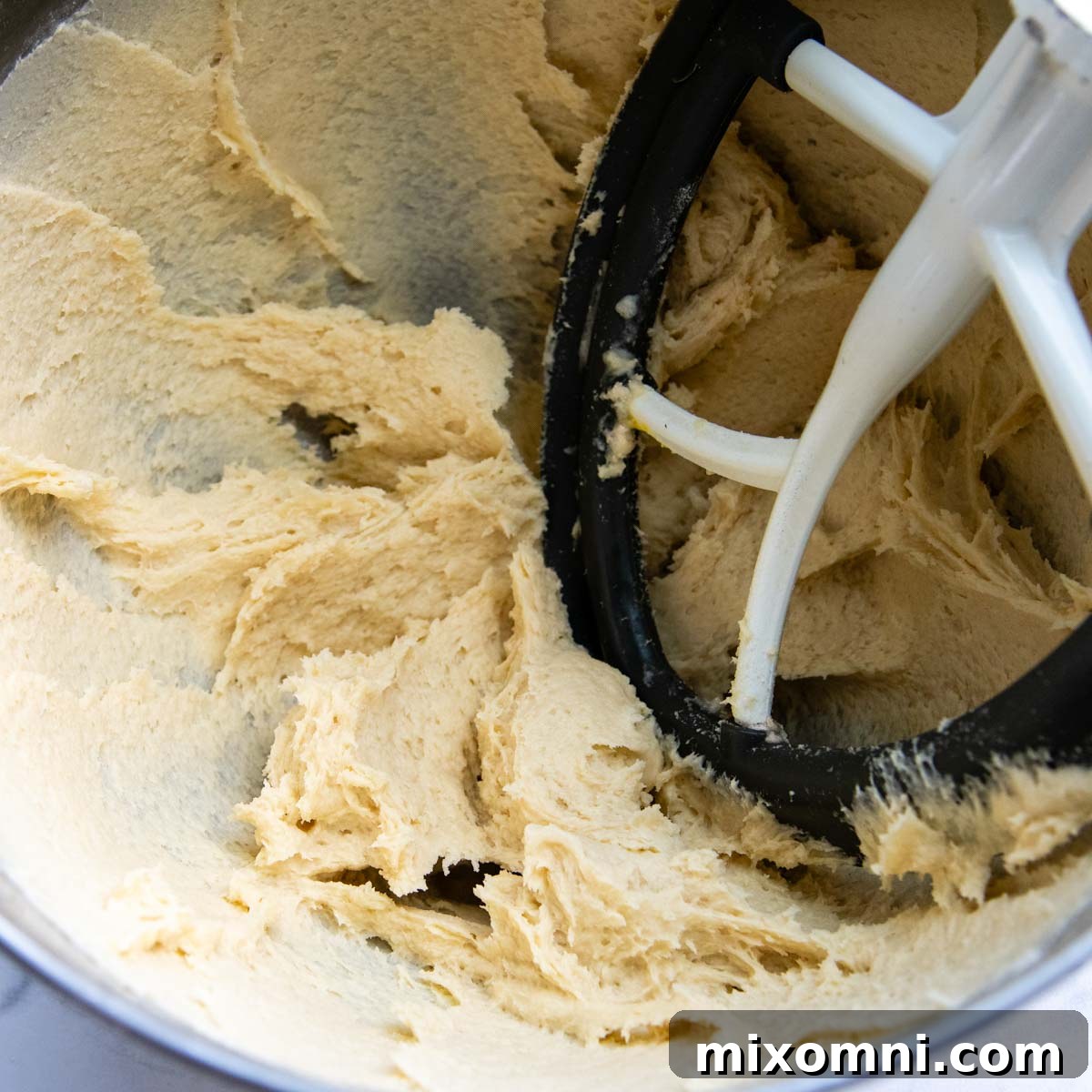
In the bowl of your stand mixer, begin by thoroughly blending all the dry ingredients. Once combined, incorporate the wet ingredients. Start mixing on low speed to allow everything to come together, then increase the speed slightly and beat for a full 5 minutes. This beating time is crucial for developing the structure in gluten-free dough. You’ll notice the batter becomes quite stiff, yet it will remain sticky and cling to the sides of the bowl. Once this consistency is achieved, your dough is perfectly ready! It’s surprisingly straightforward, isn’t it?
Shaping Your Perfect Baguettes
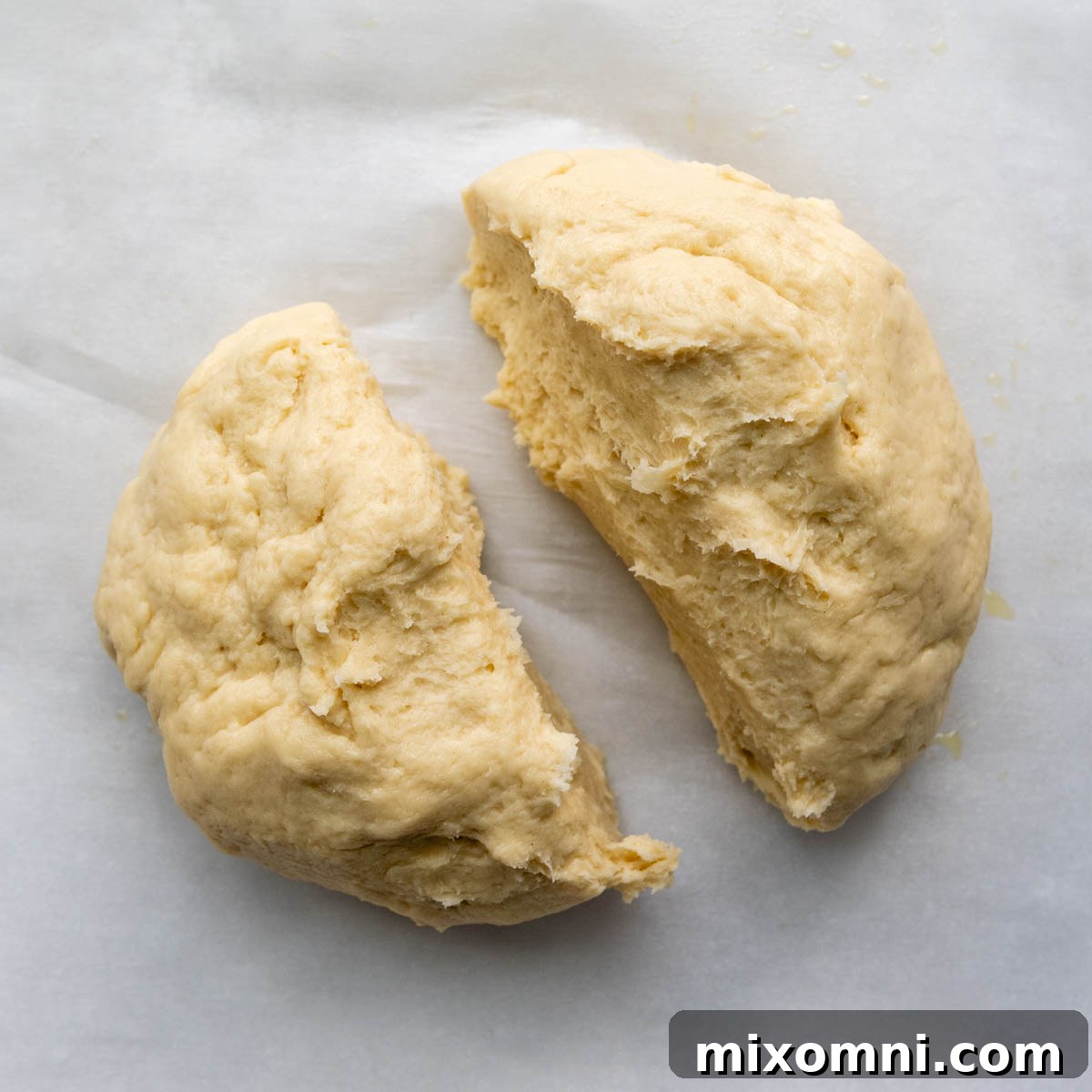
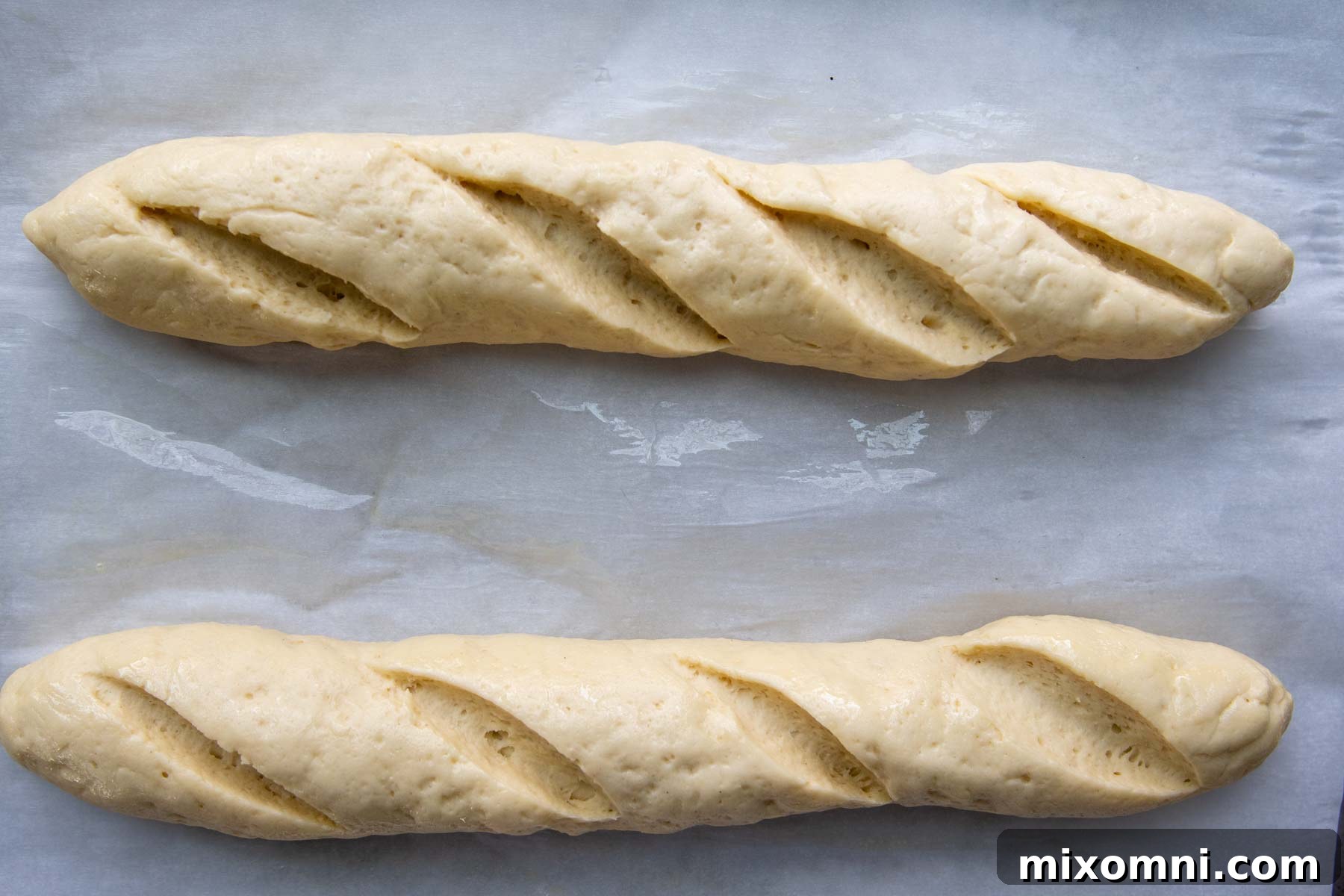
For an ideal work surface, I recommend using a piece of parchment paper placed directly on a baking sheet. Lightly spread a thin layer of olive oil over the parchment to prevent any sticking. Scrape the entire dough mixture out onto the prepared surface and divide it evenly into two equal portions. Take each portion and, using greased hands (a little olive oil or nonstick spray works wonders), roll it into a smooth, uniform 12-inch log. Once shaped, use a sharp knife to make about 3-4 shallow diagonal slits across the top of each baguette, which will help with expansion and create an authentic look.
The Essential Rise and Bake
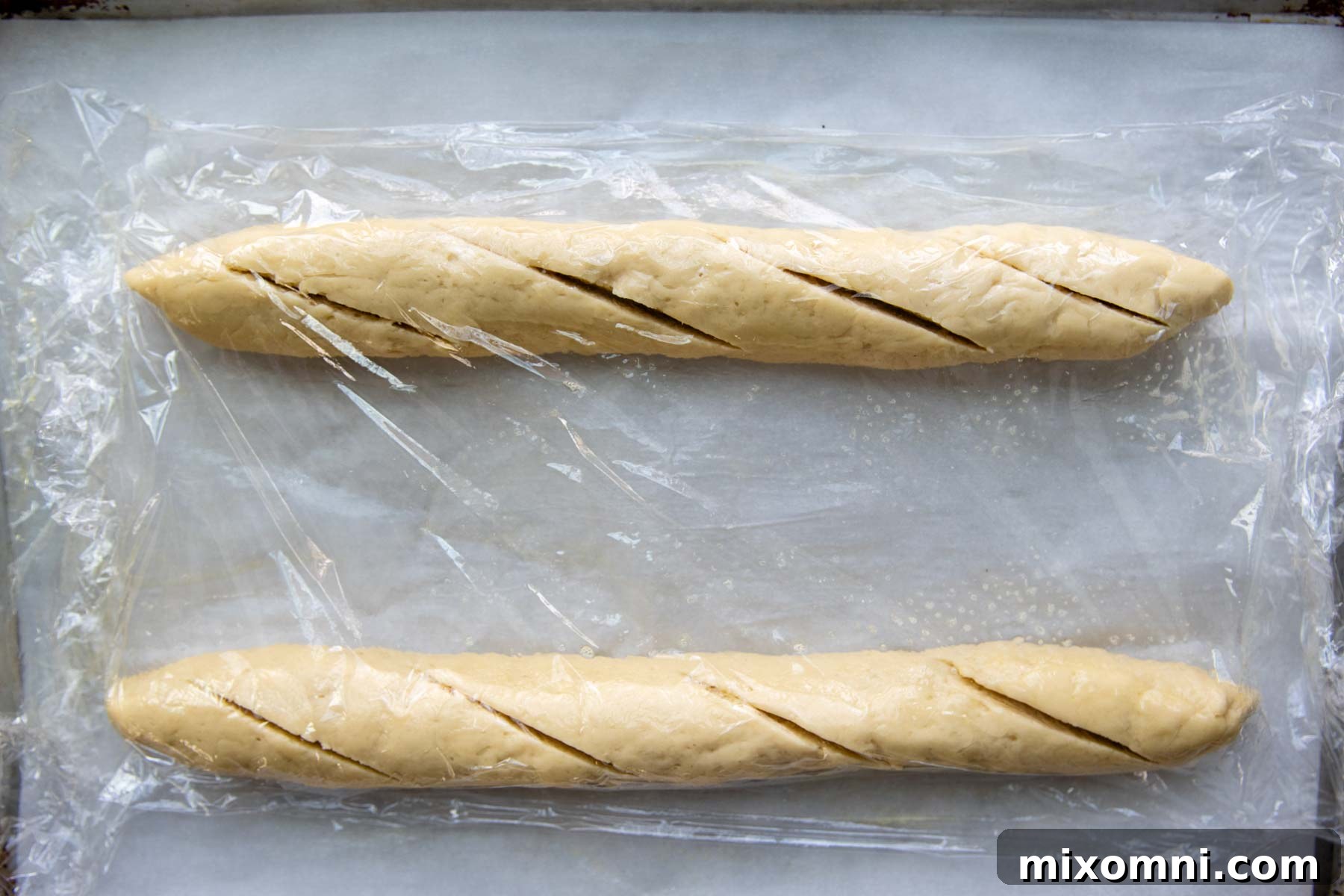
Gently lay a piece of greased plastic wrap over your shaped baguettes and allow them to rise for a crucial 30 minutes in a warm, draft-free spot. At this point, they won’t have fully doubled in size, but don’t worry – the baking powder in the recipe ensures they will expand further during baking in the hot oven. Meanwhile, preheat your oven to a robust 450℉ (230°C) to achieve that signature crusty outer texture. Just before you’re ready to bake, create a steamy environment by carefully tossing 5-6 ice cubes onto the bottom of your oven. This burst of steam is key to developing an incredibly crisp crust and a delightfully chewy interior.
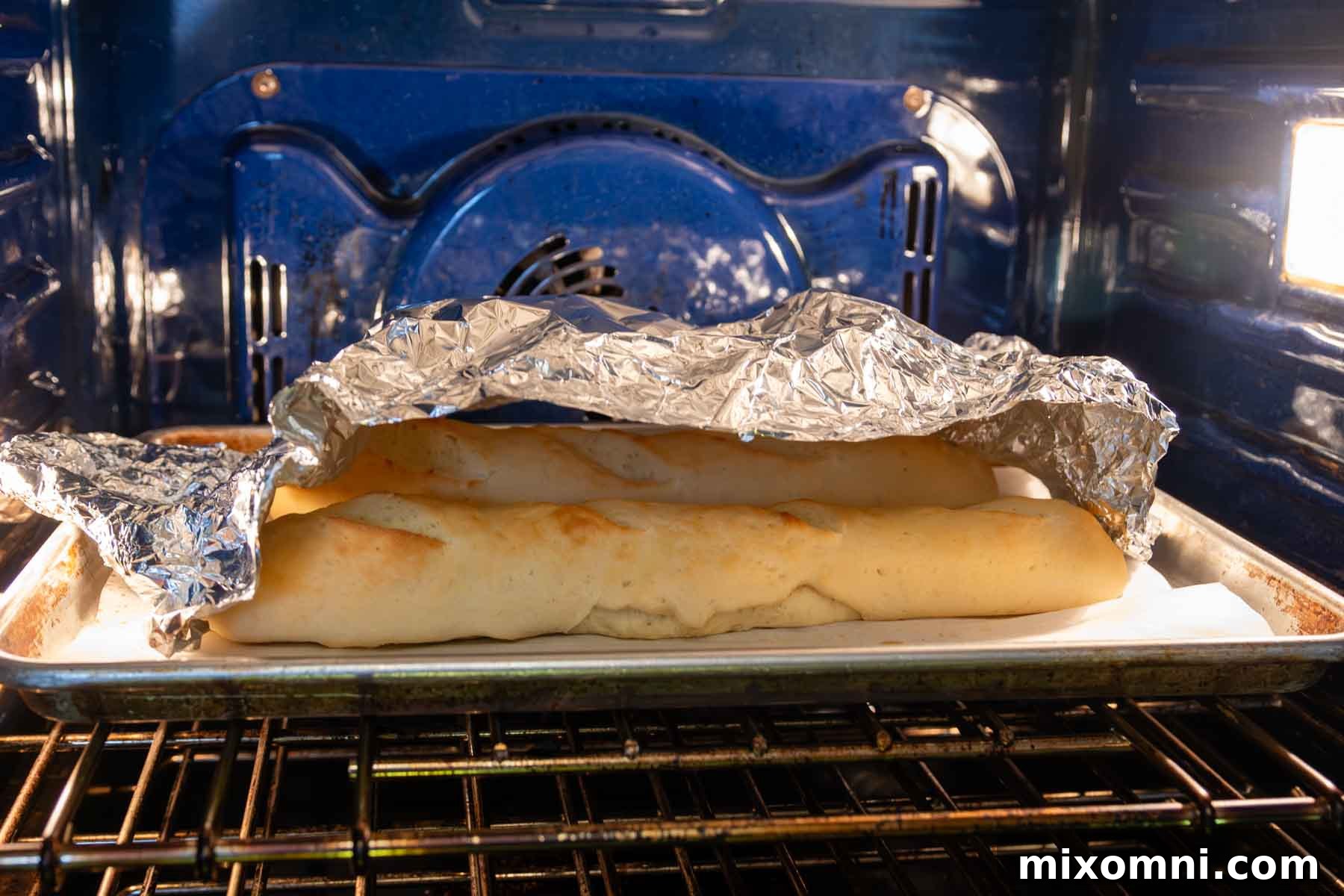
Bake your baguettes for an initial 10 minutes. Then, loosely tent a large piece of aluminum foil over the baking sheet to prevent the bread from over-browning, and reduce the oven temperature to 350℉ (175°C). Continue baking for an additional 15 minutes. Oui, Oui! Bon Appétit! Your perfect gluten-free French bread is now ready to be enjoyed!
Pro Tips for Shaping Gluten-Free Baguettes (No Special Pans Needed!)
You don’t need fancy equipment to bake beautiful baguettes! I personally don’t use dedicated French bread pans, relying instead on the simple combination of parchment paper and a standard baking sheet. While baguette pans can be helpful for very loose doughs, this specific gluten-free French baguette recipe yields a dough that is surprisingly easy to shape and holds its form beautifully without needing additional support.
Because gluten-free dough can be a bit stickier than traditional wheat dough, a little preparation goes a long way. Before you begin shaping, lightly grease your hands with a small amount of olive oil or a quick spray of nonstick cooking spray. This simple step prevents the dough from adhering to your hands and makes the shaping process much smoother and less frustrating. I find this method far preferable to dusting the work surface with extra flour, which can inadvertently dry out the bread and negatively impact its tender texture.
For an impeccably smooth, lump-free surface on your baguettes, which contributes to a professional bakery finish, you can lightly dampen your fingertips with water. Gently smooth out any visible ridges, seams, or imperfections in the dough just before placing it to rise. This small detail ensures a more uniform and attractive crust once baked.
Serving Suggestions and Ways to Enjoy Your Gluten-Free French Bread
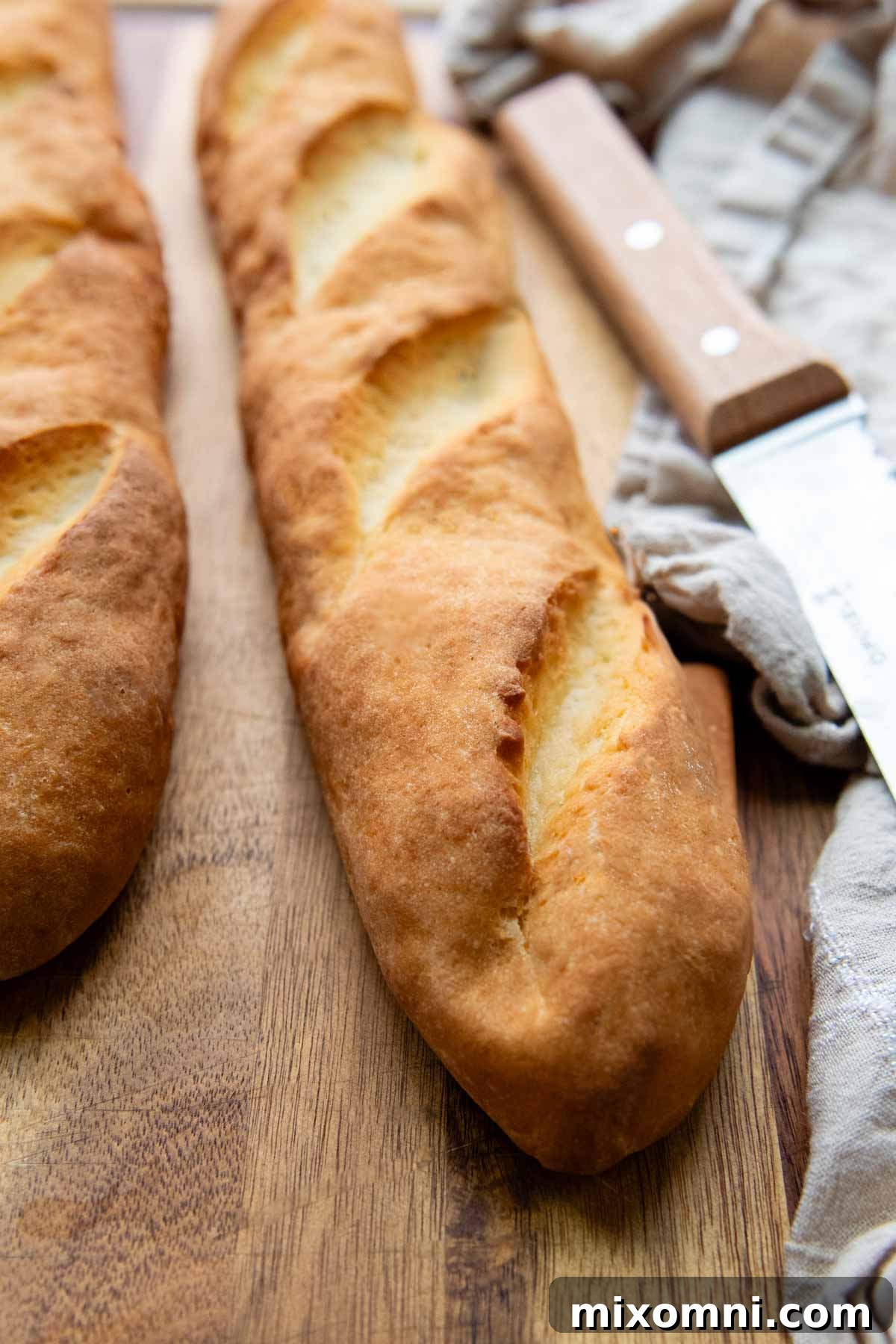
Once you’ve pulled these golden-brown masterpieces from the oven, the possibilities for enjoying them are truly endless! Their versatile flavor and perfect texture make them suitable for almost any meal or snack. Slice them thick and serve alongside a comforting bowl of French onion soup or a hearty stew, allowing the crusty exterior to soak up all the delicious broth. For a classic French experience, simply spread generous amounts of creamy butter onto warm slices and savor the simple perfection. Don’t forget that these baguettes make the absolute best gluten-free garlic bread, ideal for pairing with pasta dishes or as a delightful appetizer. Get creative and transform them into gourmet open-faced sandwiches, cheesy French bread pizzas for a fun family meal, or even elegant garlic crostini for your next gathering. Sliced and toasted, they’re excellent with cheese and charcuterie, or for dipping into rich Swiss cheese fondue. For breakfast or brunch, leftover slices can be quickly turned into indulgent French toast. And if you’re looking for a refreshing summer dish, cubes of this bread are the perfect base for a vibrant Panzanella salad. However you choose to enjoy them, these homemade gluten-free baguettes are sure to impress!
Frequently Asked Questions About Gluten-Free French Bread
What makes this recipe unique for gluten-free baguettes?
This recipe stands out because it directly addresses the inherent challenges of gluten-free baking to achieve an authentic baguette texture. By strategically incorporating eggs for protein and binding, apple cider vinegar for an open crumb, and potato starch for ideal shaping without dryness, it mimics the characteristics usually provided by gluten. The specific techniques, like beating the dough for 5 minutes and using steam during baking, are also critical for developing the signature crust and airy interior that are often difficult to achieve in gluten-free versions.
Can I substitute ingredients in this recipe?
While some substitutions might be possible, it’s generally recommended to stick to the recipe for the best results, as gluten-free baking is quite precise. For gluten-free flour, ensure your chosen blend contains xanthan gum, or add it separately. If you need a dairy-free option, select a GF flour blend that doesn’t contain milk powder (like Cup4Cup does). Substituting psyllium husk powder is not advised as it’s crucial for structure and moisture retention. The specific role of apple cider vinegar in opening the crumb is also quite unique, so I recommend keeping it in the recipe.
How can I ensure a crispy crust and an airy interior?
Several key steps contribute to these desired textures. For the crispy crust, preheating the oven to a high temperature (450℉/230°C) is essential. The secret weapon is throwing ice cubes onto the bottom of the oven at the start of baking; this creates a burst of steam that promotes a beautiful, crisp crust. For an airy interior, the 5-minute beating of the dough helps develop structure, the apple cider vinegar creates an acidic environment for an open crumb, and the potato starch maintains softness. Ensuring proper hydration of the dough (as per the notes on water consistency) is also vital.
How do I store and reheat gluten-free French bread?
Gluten-free breads tend to dry out more quickly than traditional breads. For optimal freshness, it’s best to enjoy your baguettes on the day they are made. If you have leftovers or wish to bake ahead, allow the bread to cool completely, then wrap it tightly in plastic wrap before placing it in a freezer-safe bag or double-wrapping in foil. It can be frozen for up to two months. To reheat, thaw completely to room temperature. Avoid reheating from a chilled state, as this can result in a dry texture. For the best flavor and texture, warm the thawed bread briefly: either microwave for a few seconds wrapped in a paper towel or wrap the entire loaf in foil and bake in a 350ºF (175°C) oven for 10-15 minutes until warm.
Don’t Forget to Pin This Recipe!
Join our community on Pinterest for more amazing gluten-free recipes and baking inspiration!
Did you make this incredible recipe? I love hearing from you! Your feedback is invaluable to our baking community. Please leave a star rating and comment below the recipe card to share your experience. It truly helps others discover and enjoy this delicious gluten-free French bread, and I always make sure to respond! -Melissa
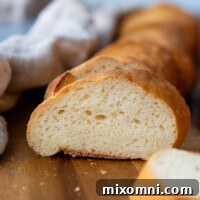
Crusty, Airy Gluten-Free French Bread (Ready in 1 Hour!)
By Melissa Erdelac
- Yield: 12 slices
- Prep Time: 10 mins
- Cook Time: 25 mins
- Total Time: 1 hr 5 mins
Learn how to make the best gluten-free French bread with an easy and well-tested recipe. As an experienced gluten-free baker, I’ve perfected simple techniques to make a crusty baguette with a soft, airy crumb. This homemade loaf mixes together in minutes, requires one short rise, a quick bake, and is ready to enjoy in less than 1 hour!
Pin Recipe
Rate This Recipe
Ingredients
- 1 ½ cup (213 g) gluten free all purpose flour (I highly recommend Cup4Cup gluten-free flour blend)
- 3 tablespoons (31 g) potato starch (see recipe notes for substitution)
- 2 tablespoons (20 g) psyllium husk powder (helps with bread moisture & structure – what is psyllium husk?)
- 1 packet (2 ¼ tsp, 9 g) instant rapid rise yeast
- 1 teaspoon (5 g) baking powder
- 1 ½ teaspoon (9 g) salt
- ½-¾* cup (180 g) warm water (112°F) (*see recipe notes for amount)
- 2 large eggs, room temperature
- 1 tablespoon (16 g) apple cider vinegar
- 1 tablespoon (21 g) honey
- 1 tablespoon (15 g) olive oil
Equipment
- Baking Sheets
- Cup4Cup Gluten-Free Flour
- Stand Mixer
Instructions
- Using a stand mixer fitted with a paddle attachment, combine the gluten-free flour, potato starch, instant rapid rise yeast, psyllium husk powder, baking powder, and salt. Mix on low speed until all the dry ingredients are uniformly combined.
- To the dry ingredients, add the warm water (refer to the recipe note below for guidance on water amount), room temperature large eggs, apple cider vinegar, honey, and olive oil. Begin mixing on low speed for approximately 1 minute, allowing the dough to start coming together. Then, increase the mixer speed to medium and continue to beat the dough vigorously for 5 full minutes. This extended beating time is critical for developing the proper texture in gluten-free batter. During this process, be sure to stop and scrape down the paddle and the sides of the bowl halfway through. The resulting batter should be noticeably thick and stiff, yet still possess a slight stickiness.
- Prepare your baking surface by laying a large sheet of parchment paper on a baking sheet. Lightly grease your hands with either nonstick cooking spray or a small amount of olive oil. Scrape the entire dough mixture out of the mixer bowl onto the greased parchment paper. Gently shape the dough into a large, cohesive ball. Using a sharp knife, carefully divide this dough ball into two equal halves.
- Move one half of the dough to the side. With your greased hands, roll the other half into a smooth, even 12-inch log. Repeat this shaping process with the second half of the dough, ensuring both logs are positioned approximately 3-4 inches apart on the parchment paper. For an authentic baguette appearance, gently pinch and taper the ends of each log. Finally, use your sharp knife to make three shallow diagonal slits, about ¼-inch deep, across the top of each baguette. (Visual examples of these shaping steps are available in the instructional images provided in the main article.)
- Transfer the parchment paper with the shaped bread onto your baking sheet. Loosely cover the shaped bread with a piece of greased plastic wrap and allow it to rise in a warm, draft-free location for 30 minutes. It’s important to note that the bread will not fully double in size during this stage, but the baking powder will contribute to further expansion once it’s in the oven. While the bread is rising, preheat your oven to a hot 450℉ (230°C).
- Once the oven is preheated and your baguettes have completed their rise, carefully remove the plastic wrap. To create the essential steamy environment for a wonderfully crisp outer crust, throw 5-6 ice cubes directly onto the bottom of the oven (or into a cast iron pan placed on the bottom rack). Immediately place your baking sheet with the baguettes onto the middle oven rack. Bake for an initial 10 minutes.
- After the first 10 minutes of baking, loosely tent a large piece of aluminum foil over the baking sheet. This prevents the baguettes from over-browning while allowing them to continue baking. Reduce the oven temperature to 350℉ (175°C) and continue baking for an additional 15 minutes.
- Once baked to a beautiful golden-brown, transfer the baguettes from the baking sheet to a wire rack. Allow them to cool slightly for about 30 minutes before slicing and serving. This cooling period is crucial for the internal crumb structure to set properly and ensures the best possible texture.
Recipe Notes
*Important Note on Water Consistency:
A few readers have occasionally reported their batter being too thin. While extensive follow-up testing hasn’t pinpointed a universal cause, to ensure your success, I strongly recommend beginning with ½ cup of warm water. From there, gradually add additional water, one tablespoon at a time, until your dough achieves a consistency that closely matches the images provided in this recipe post. In my consistent testing, the full ¾ cup of water is typically required to reach the ideal texture. The dough should be notably stiff, yet still pliable enough to be moved by the paddle attachment of your stand mixer, and it should retain a slight stickiness. Crucially, allow the dough to mix for at least a couple of minutes before making any decisions about adjusting the water, as the dough has a tendency to thicken as it mixes.
For bakers who use Caputo gluten-free flour, you might find that it requires slightly less water—approximately ½ cup plus 2 tablespoons—to reach the desired consistency.
Storing, Freezing, and Reheating Gluten-Free French Bread:
Gluten-free breads typically lose moisture more rapidly than their wheat-based counterparts. For the freshest taste and best texture, I highly recommend serving your homemade baguettes on the day they are baked. If you wish to prepare them ahead of time or store leftovers, ensure the bread is completely cool before wrapping it tightly in plastic wrap. Then, transfer it to a freezer-safe ziplock bag or wrap it again securely in a double layer of aluminum foil. It can be frozen for up to 2 months.
When you’re ready to enjoy your frozen baguettes, allow them to thaw completely to room temperature. It’s important to avoid reheating them directly from a chilled state, as this can result in a drier, less soft texture. For optimal flavor and a wonderfully soft crumb with a crispy crust, warm the thawed bread briefly before serving. You can do this by wrapping a portion in a paper towel and microwaving for just a few seconds, or for a more traditional method, wrap the entire loaf completely in foil and place it in a 350ºF (175°C) oven for 10-15 minutes until warmed through.
Nutrition Information (per serving)
- Calories: 89 kcal
- Carbohydrates: 16 g
- Protein: 3 g
- Fat: 2 g
- Saturated Fat: 0.4 g
- Polyunsaturated Fat: 0.4 g
- Monounsaturated Fat: 1 g
- Trans Fat: 0.003 g
- Cholesterol: 27 mg
- Sodium: 207 mg
- Potassium: 66 mg
- Fiber: 3 g
- Sugar: 2 g
- Vitamin A: 40 IU
- Vitamin C: 0.1 mg
- Calcium: 31 mg
- Iron: 1 mg
Did you try this recipe? Please leave a star rating and review below. Your feedback means the world and helps others discover delicious gluten-free baking!