
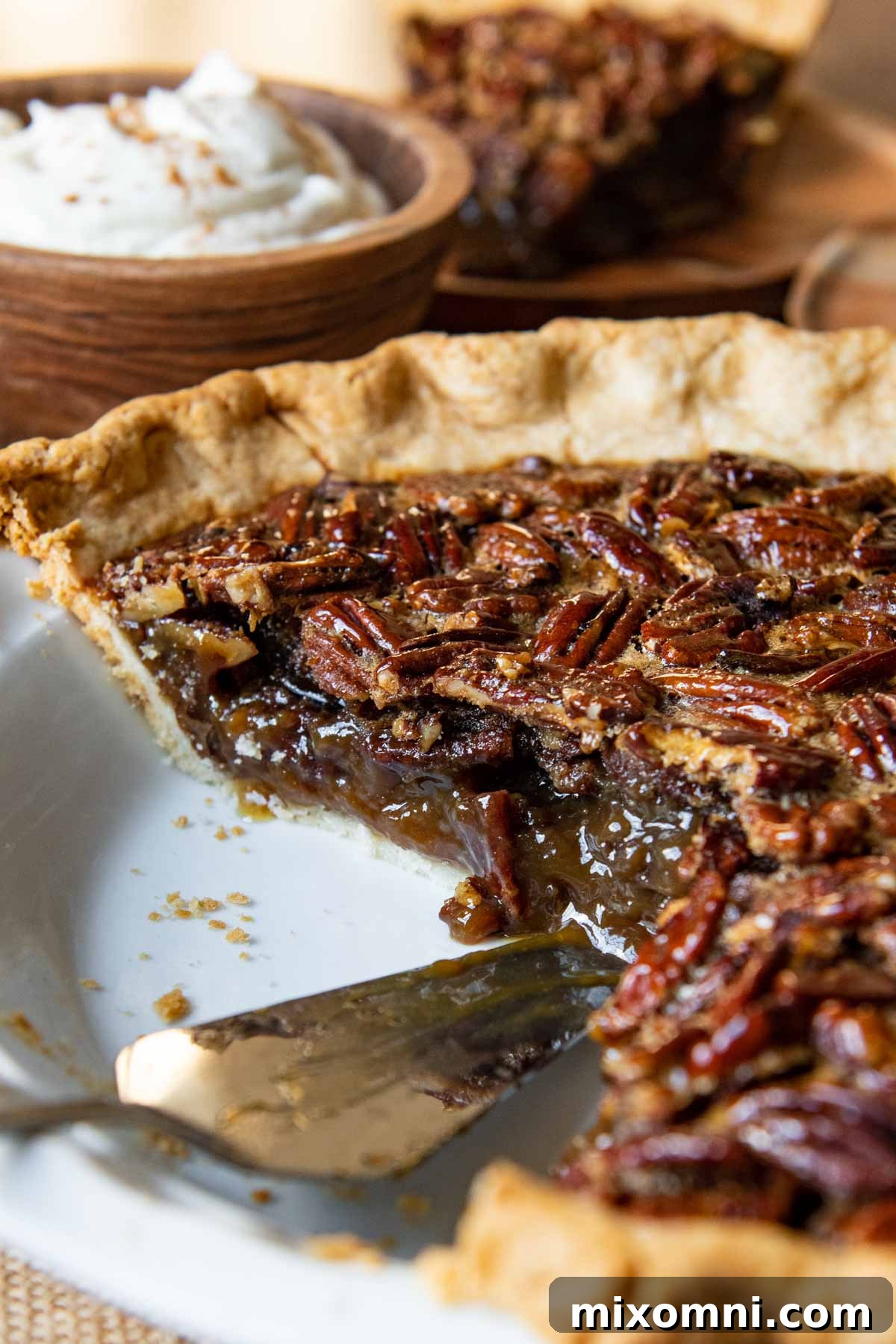
Prepare to create the ultimate Gluten-Free Pecan Pie that will truly captivate every palate! This meticulously crafted homemade recipe features a lusciously buttery, wonderfully flaky crust, perfectly complementing an effortlessly prepared pecan pie filling. What sets this recipe apart are a few ingenious touches: a subtle hint of molasses artfully balances the sweetness, preventing it from being cloying, while a touch of cornstarch acts as our secret weapon, guaranteeing a perfectly set filling every single time. This isn’t just a dessert; it’s a culinary masterpiece designed to impress, proving that gluten-free can be utterly gourmet and irresistibly delicious.
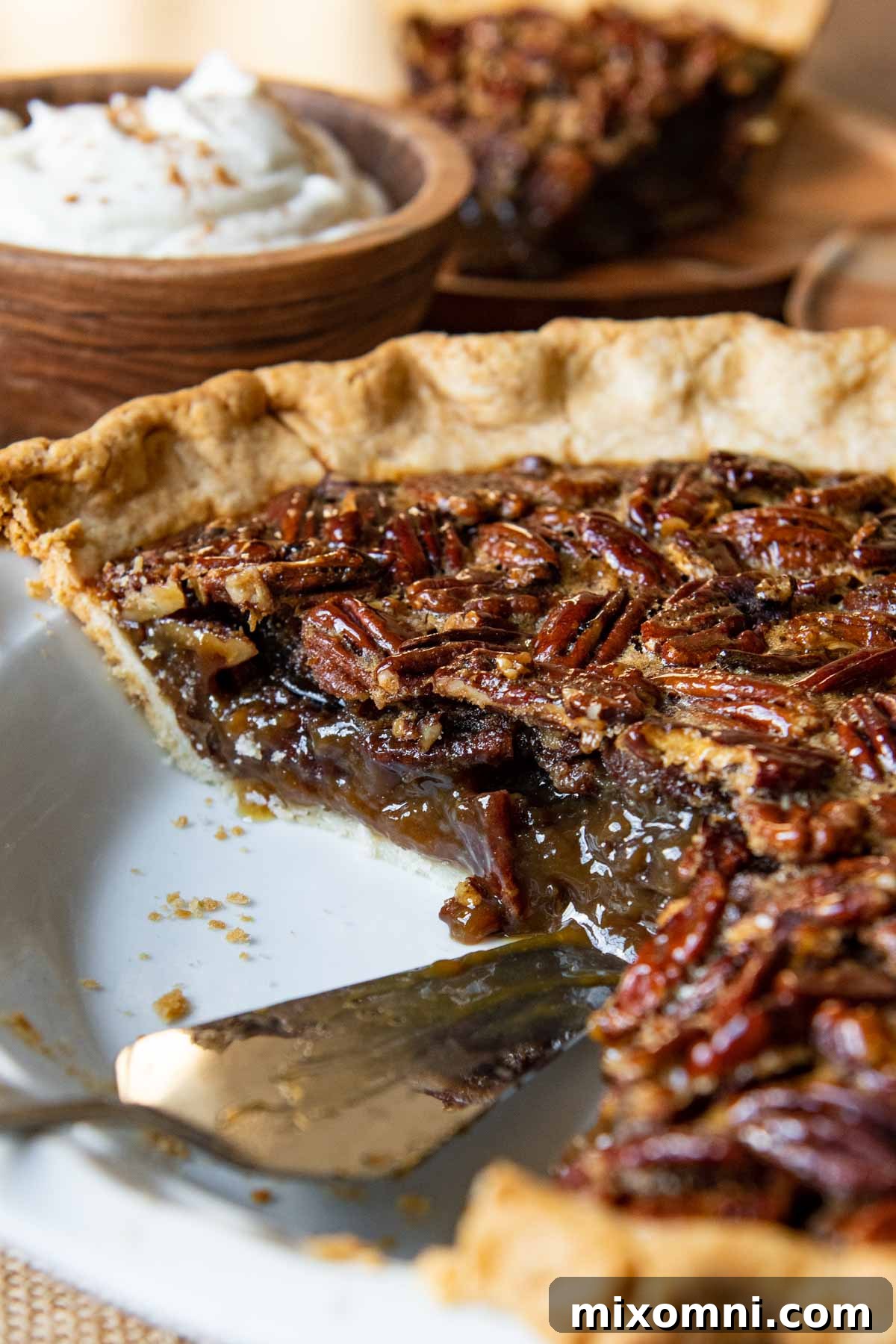
Mastering the Art of Gluten-Free Pecan Pie: A Recipe That Always Sets
The holidays often call for a classic pecan pie—rich, sticky, and deeply satisfying. However, for those navigating a gluten-free diet, finding a truly exceptional version can be a challenge. This recipe changes everything. Whether your guests adhere to a gluten-free lifestyle or not, we guarantee no one will detect any difference between this delectable gluten-free pecan pie and the traditional, beloved version they grew up enjoying. This pie is a celebration of flavor and texture, ensuring everyone can partake in the joy of a quintessential holiday dessert.
The foundation of any great pie is its crust, and a gluten-free pie is no exception. The secret to crafting the best GF pecan pie lies in achieving a buttery, flaky crust that is so good, it will genuinely surprise even the most skeptical palates. For this very reason, I exclusively use this fail-proof gluten-free pie dough recipe. It consistently delivers a tender, crisp texture that beautifully holds the rich pecan filling, making it an absolute cornerstone of this recipe’s success.
This particular pie crust is not only incredibly easy to roll out but also boasts an unparalleled flavor profile that simply cannot be beaten. Its versatility makes it my go-to for a wide array of baked goods, from sweet homemade gluten-free pie recipes to comforting savory delights like this family-favorite gluten-free chicken pot pie. Its consistent performance ensures a delicious base every time, whether you’re crafting a dessert or a hearty main course.
One of the most frequent frustrations encountered when baking a pecan pie from scratch is a filling that refuses to set. This often results in a pie that is too thin or runny to slice cleanly, dampening the anticipation of that perfect dessert. While some traditional recipes tackle this issue by incorporating a small amount of all-purpose flour into the filling, a different approach is needed for a truly exceptional gluten-free version.
When creating a gluten-free pecan filling, the traditional flour thickener needs to be carefully substituted. I highly recommend using cornstarch for this crucial role, rather than a general gluten-free flour blend. The reason is simple yet vital: gluten-free flour blends are typically composed of various starches and flours, each with differing thickening properties. This variability can lead to inconsistent results, making it difficult to predict how your filling will set. Some GF flours are better for structure in baking, while others excel as thickeners. Cornstarch, on the other hand, provides reliable, consistent thickening, ensuring your pie filling achieves that desired firm, sliceable texture without compromise.
Beyond the common challenge of a runny filling, another issue I was determined to resolve when developing this recipe was the tendency for pecan pie to be overwhelmingly sweet, often bordering on syrupy and excessively rich. Many traditional recipes can leave you feeling like you’ve had too much after just one bite. To counteract this, I’ve integrated several easy yet effective techniques into this recipe, ensuring a beautifully balanced flavor that is rich without being cloying.
Firstly, a simple yet impactful adjustment is to reduce the amount of brown sugar used. This modest change provides a solid foundation for dialing back the overall sweetness. Complementing this, the addition of a tablespoon of molasses introduces a wonderful depth of flavor while further tempering the sweetness, adding a complex, almost smoky undertone that enhances the pecan’s natural taste. Finally, incorporating a generous quantity—an entire 10-ounce bag—of salty pecans creates a delightful textural and flavor contrast. The saltiness of the pecans cuts through the sweetness, preventing it from dominating and making each bite a harmonious blend of sweet, salty, and nutty. These thoughtful adjustments transform a potentially one-note dessert into a sophisticated and perfectly balanced treat.
Below, I’m delighted to share more of my gluten-free baking expertise. You’ll discover invaluable tips for achieving a perfectly golden and crisp gluten-free crust, clear indicators for knowing precisely when your pie is baked to perfection, and detailed step-by-step photos. These comprehensive guides are designed to ensure your gluten-free Thanksgiving dessert, or any occasion pie, turns out absolutely flawlessly, delighting everyone at your table.
Essential Ingredient Insights for Your Perfect Pecan Pie
Understanding the role of each ingredient is key to mastering this gluten-free pecan pie. Here’s a closer look at what goes into making it extraordinary, along with some helpful tips for each component:
- Pecans: You have flexibility here – feel free to use whole pecans, chopped pecans, or a delightful combination of both to achieve your preferred texture. If you’re aiming for a beautiful, decorative arrangement on top of your pie, simply set aside a handful of pecans before mixing them into the filling. Once the filling is in the crust, artfully place your reserved pecans on top in any design you envision, then proceed with baking. This not only adds visual appeal but also allows the pecans to toast perfectly.
- Eggs: Eggs are a structural cornerstone in this pecan pie recipe, providing essential binding and richness to the filling. For this particular recipe, I strongly advise against using egg substitutes to create an egg-free pecan pie. The chemistry of pecan pie is quite specific, and egg substitutes may not deliver the consistent texture and setting properties required. If you specifically need an egg-free option, it’s best to seek out a dedicated vegan pecan pie recipe, which is formulated with alternative binders and thickeners.
- Dark Corn Syrup: While both dark and light corn syrup can be used interchangeably in terms of function in this recipe, I personally favor dark corn syrup. Its rich, caramel-like flavor, imbued with subtle molasses notes, significantly enhances the overall depth and complexity of the pecan pie. Beyond flavor, corn syrup is crucial for achieving the characteristic sticky, gooey texture of the filling and plays a vital role in ensuring the pie sets properly. Should you prefer to use pure maple syrup as a substitute, be aware that you will need to add an additional tablespoon of gluten-free flour to the filling. This extra thickener is essential to help the filling solidify, as maple syrup has a different viscosity and sugar composition than corn syrup.
- Molasses: Pecan pies are famously sweet, sometimes to a fault. This recipe incorporates a strategic splash of molasses not just for its unique flavor, but primarily to elegantly counterbalance the sweetness of the sugar and corn syrup. It introduces a darker, more complex note that prevents the pie from tasting one-dimensionally sugary. While I highly recommend it for its balancing effect, this ingredient is optional. If you have a strong preference for a very sweet pie, you may choose to omit it, though the pie will be richer and sweeter as a result.
- Butter: For those seeking a delicious gluten-free and dairy-free option, this recipe is easily adaptable. Simply substitute the melted butter with an equal amount of melted coconut oil or your favorite brand of vegan butter. Both alternatives perform beautifully, contributing to a rich, luscious filling without compromising on flavor or texture. Ensure your chosen vegan butter or coconut oil is suitable for baking to achieve the best results.
- Cornstarch: This ingredient is a true game-changer in our gluten-free pecan pie filling. The addition of cornstarch ensures a more solid, reliably set filling, significantly reducing the guesswork often associated with knowing when a pecan pie is perfectly baked. It acts as a powerful thickener, contributing to that desirable sliceable texture. While it can be omitted if you prefer a looser, more traditional (and potentially runnier) filling, be prepared to rely more heavily on an accurate internal temperature reading to confirm doneness. Without cornstarch, the filling should register between 185-200ºF (85-93ºC) in the center before removing it from the oven to cool.
Let’s Bake This Together: A Step-by-Step Guide
Embark on the journey to creating your perfect gluten-free pecan pie with these detailed, step-by-step instructions. While the photos below offer visual guidance, please refer to the complete recipe card further down for precise ingredient measurements and comprehensive instructions. We’re going to create something truly delicious!
Crafting a Legendary Gluten-Free Pie Crust
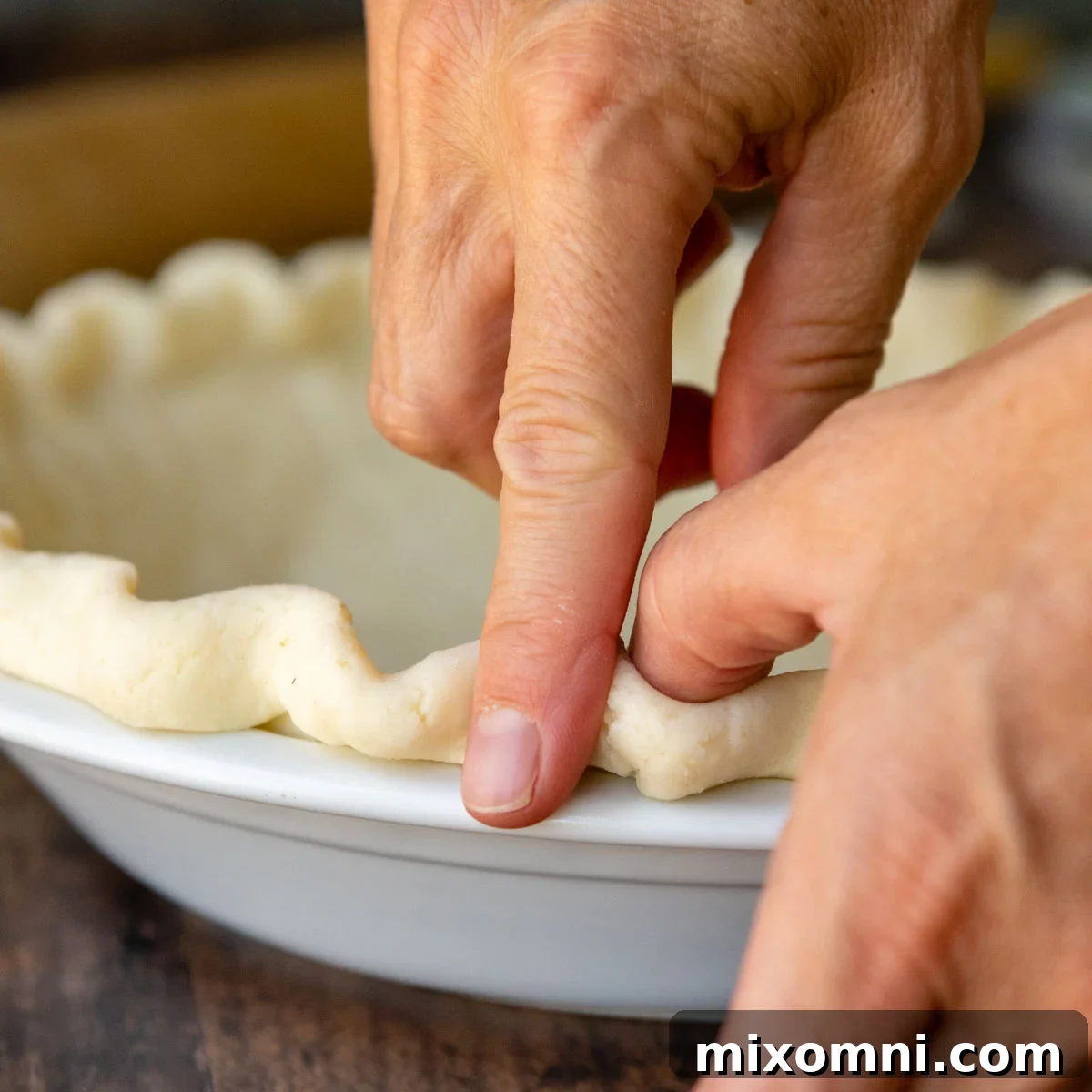
This exceptional crust is my absolute favorite, proving versatile enough for both savory and sweet pies. The full recipe card meticulously guides you through the process, offering detailed instructions for preparing it either in a food processor or entirely by hand. If you’re new to the art of rolling out pie dough, fear not! I’ve included an abundance of helpful tips and illustrative pictures in my dedicated homemade GF pie crust recipe, ensuring your success.
Whipping Up the Perfect Pecan Pie Filling
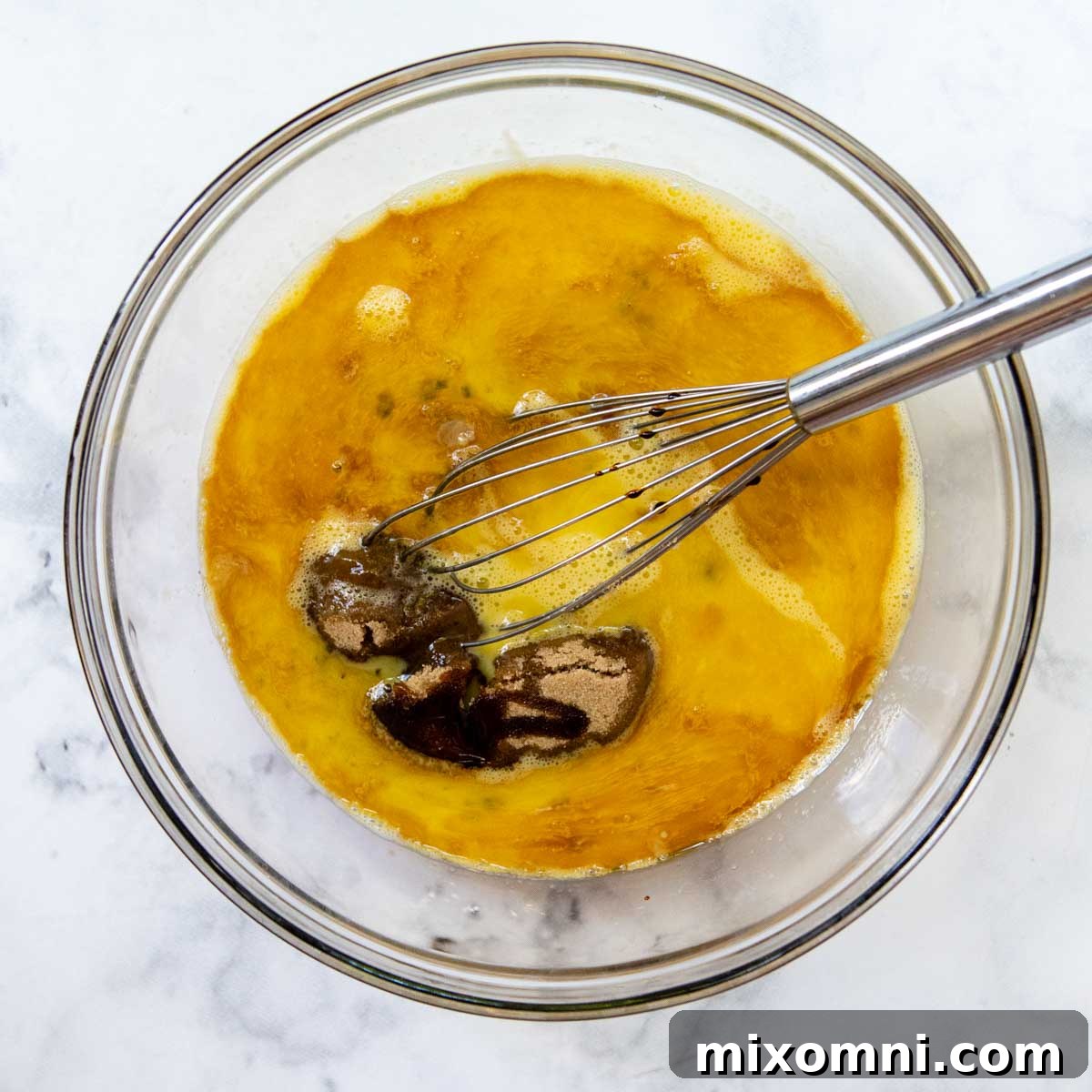
Once your perfectly shaped dough is nestled in the pie pan, a quick 15-minute chill in the freezer is in order. While it cools, you can effortlessly assemble the filling – this is truly the easiest part of the process! Begin by whisking together all the liquid and sugar ingredients in a large bowl, reserving the pecans for a later step. Ensure everything is thoroughly combined for a smooth, homogenous mixture that promises rich flavor.
The Final Steps: Fill and Bake to Perfection
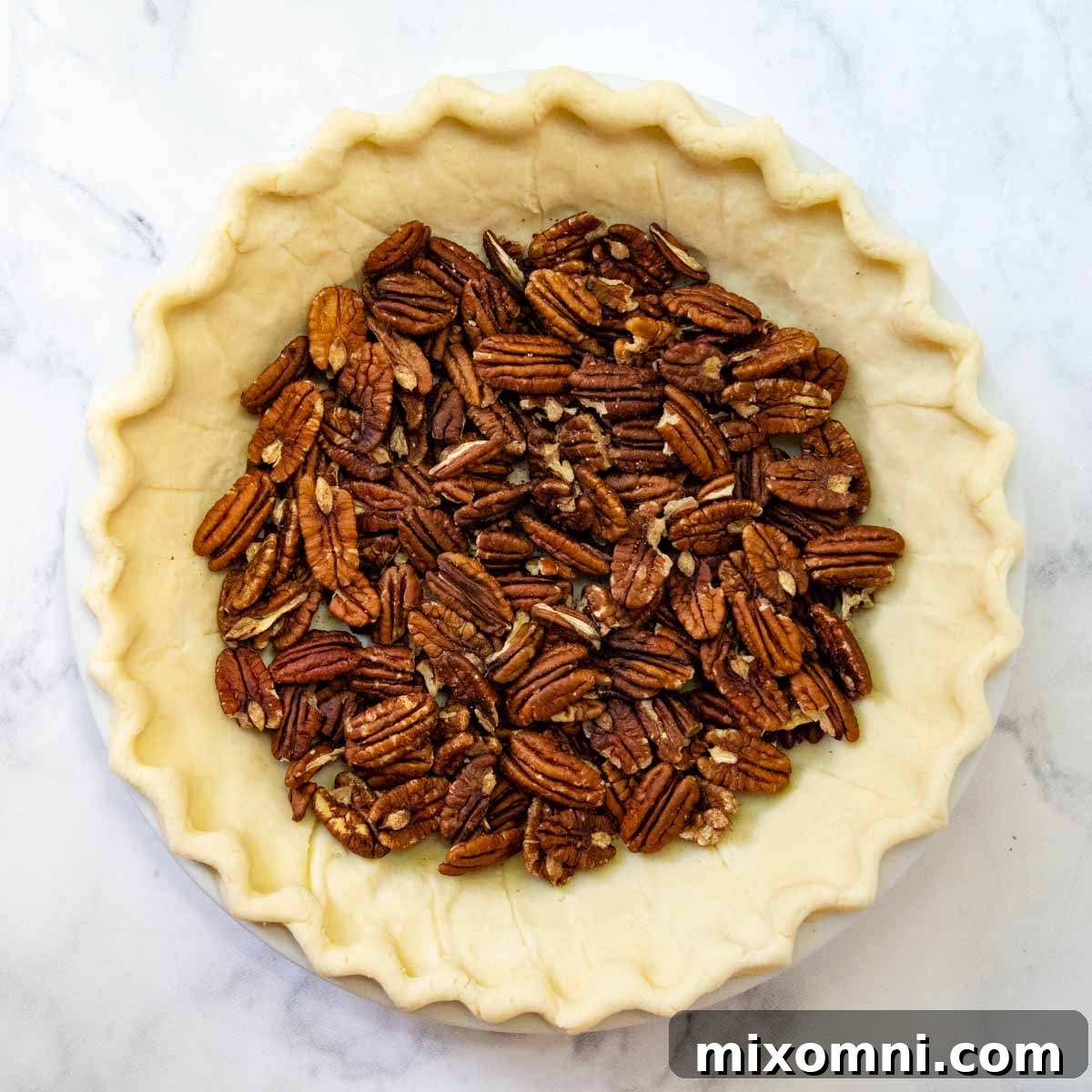
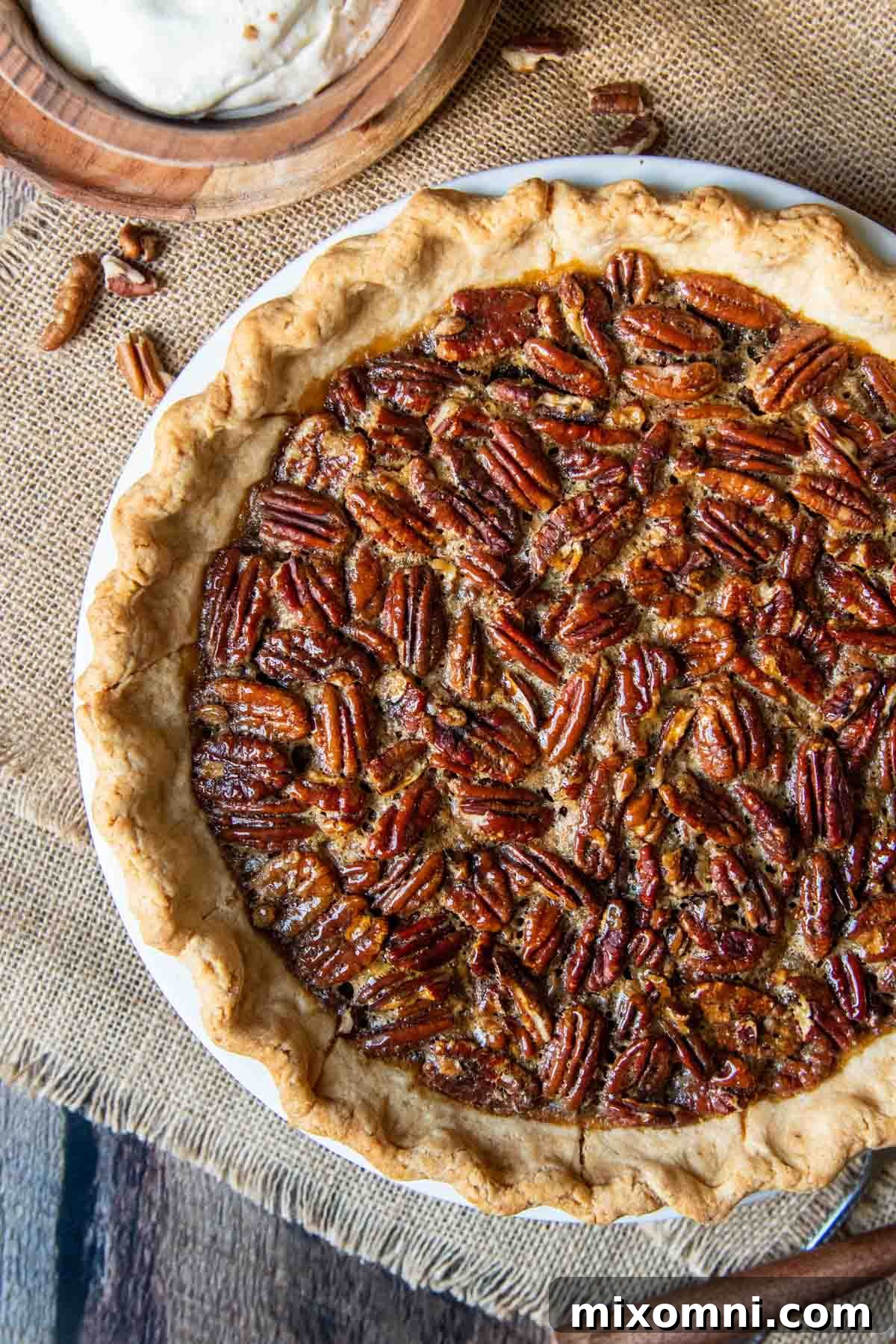
With your filling prepared, it’s time to assemble your pie. Evenly spread the pecans across the bottom of your chilled pie crust, creating a nutty base. Then, carefully pour the luscious filling over the pecans, ensuring they are fully submerged. For baking, we’ll start with a high heat to achieve that initial crust set: bake in a 425ºF (220ºC) oven for 10 minutes. Afterwards, reduce the oven temperature to 325ºF (160ºC) and continue baking for an additional 50-60 minutes. To protect your beautiful crust from over-browning, especially the delicate edges, I highly recommend using a pie shield after the first 20 minutes of baking.
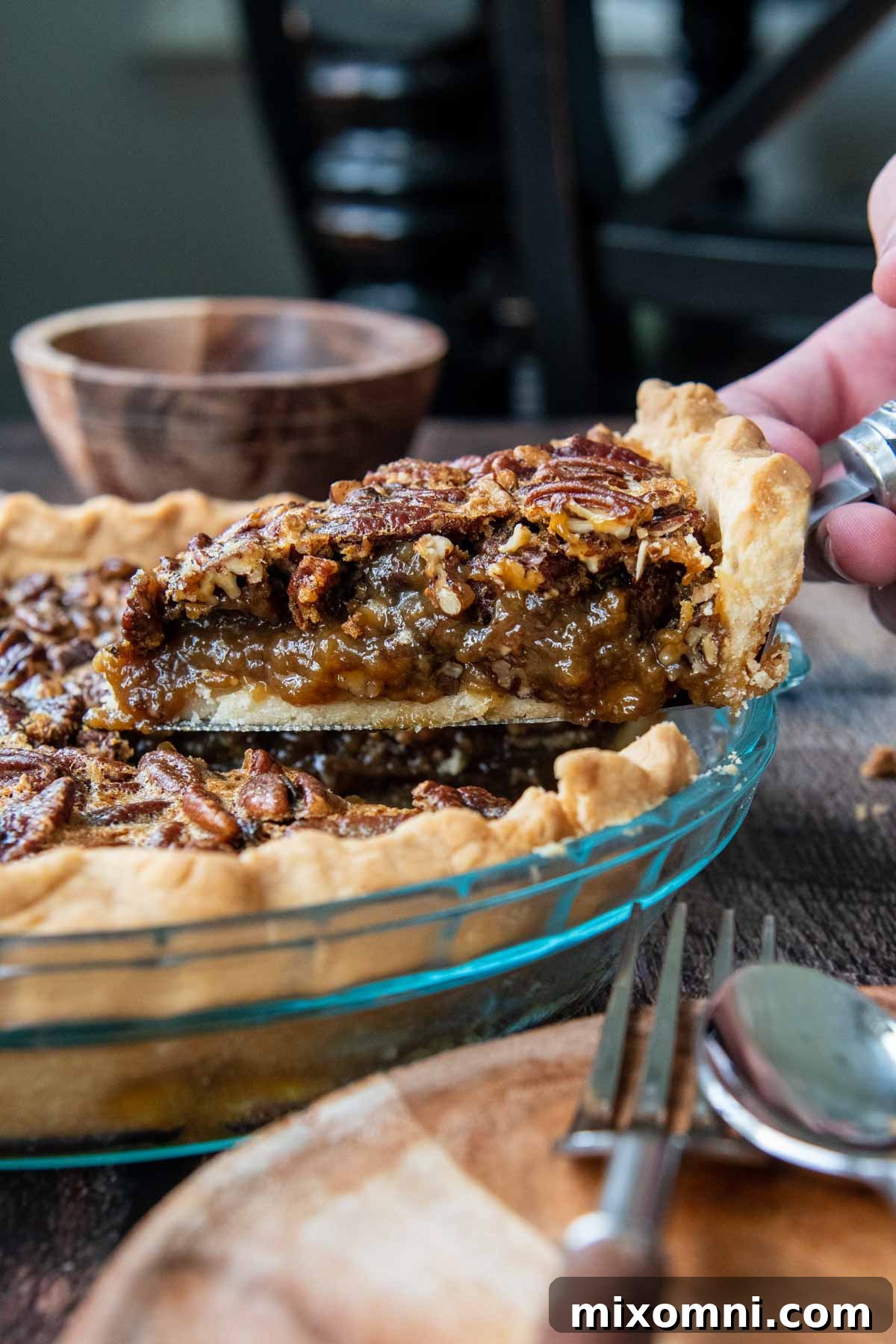
Now comes perhaps the most challenging part of all: the waiting game. It is absolutely crucial to allow your pie to cool completely, a process that typically takes at least 4-6 hours, before attempting to slice and serve. Resist the temptation to cut into it early, as the filling needs this time to properly set and achieve its perfect consistency. Once fully cooled, your patience will be rewarded with perfectly firm, delectable slices. Then, it’s truly “go time” – indulge and enjoy every sweet, nutty bite of your homemade gluten-free pecan pie!
Expert Tips and Tricks for Your Best Gluten-Free Pecan Pie
- For a Dairy-Free Option: To easily adapt this recipe to be dairy-free while remaining gluten-free, simply substitute the melted butter in the filling with an equal amount of melted coconut oil or your preferred brand of vegan butter. Ensure your pie crust is also made with a dairy-free butter alternative.
- Preventing a Soggy Bottom: A common pie predicament! To ensure a crisp, golden bottom crust, freeze your prepared pie shell for at least 15 minutes before adding the filling and baking. Additionally, always bake the pie on the lowest rack in your oven, as this provides more direct heat to the bottom of the crust. For more in-depth advice on this, check out my homemade recipe for gluten-free apple pie, which contains numerous valuable tips for preventing a soggy bottom.
- Flavor Enhancements: For a delightful twist and an added layer of warmth, consider whisking in 1/2 teaspoon of ground cinnamon into your pecan pie filling. A pinch of nutmeg or a splash of bourbon could also elevate the flavor profile, creating an even more sophisticated dessert.
- Filling Consistency: The addition of cornstarch is your best friend for a reliably thicker, more solid filling that slices beautifully. However, if you prefer a slightly looser, more traditional (and often gooey) consistency, you can omit the cornstarch. Just be aware that the pie may be a bit more challenging to slice neatly, and careful monitoring of the internal temperature will be even more crucial.
- Protecting Your Crust: Those beautiful pie crust edges can brown quickly. To prevent them from becoming overly dark or burnt, especially during the longer baking phase, use a pie shield. Place it over the crust edges after about 20 minutes of baking, and it will deflect direct heat, allowing the center to cook through without compromising the edges.
- Knowing When It’s Done: The key to a perfectly baked pecan pie is subtle. The pie is ready when the edges of the filling are set and firm, but the very center still exhibits a slight, gentle jiggle when the pie is carefully moved. It should not wave back and forth like liquid. For absolute certainty, use an instant-read thermometer; when inserted into the center, it should register between 185-200ºF (85-93ºC).
- Make Ahead and Storage: This pecan pie is actually one of those rare desserts that often tastes even better when made a day or two in advance. The flavors deepen, and the filling has ample time to set perfectly. Store the cooled pie at room temperature, loosely covered with foil or plastic wrap, for up to 3 days. For longer storage, it can be refrigerated for up to a week or frozen for several months (see freezing tips below).
Troubleshooting: What to Do If Your Pecan Pie Filling is Runny
A runny pecan pie filling is a common lament for home bakers, but it’s usually indicative of one of two issues: either the pie was under-baked, or it simply didn’t have sufficient time to cool completely before being sliced. The filling of a pecan pie thickens and sets as it cools, a crucial process that cannot be rushed. If you’ve allowed your pie to cool for the recommended 4-6 hours and still find the filling to be too loose after slicing, there are a few steps you can take. Chilling the pie in the refrigerator for several hours or even overnight can often help solidify a slightly undercooked filling. In more extreme cases, gently re-warming the pie in a low oven (around 250°F / 120°C) for 15-20 minutes, then cooling it completely again, might help, but this should be done with caution to avoid further overcooking the crust or eggs.
Don’t Forget to Pin This Recipe to Your Pinterest Board!
Let’s be friends on Pinterest! I’m always sharing great recipes and gluten-free baking inspiration!
Made this incredible recipe? I adore hearing from you! Please leave a star rating and comment below the recipe card. Your feedback is invaluable, helping other home bakers discover and enjoy these recipes, and I always make sure to respond! -Melissa
Vintage Gluten-Free Pecan Pie (Slices Perfect!)

Melissa Erdelac
8
20 mins
55 mins
2 hrs 15 mins
Make the best gluten-free pecan pie, guaranteed to outshine all others! This homemade recipe has a buttery, flaky crust filled with an easy ingredient pecan pie filling to make this recipe undeniably perfect. Using a dash of molasses counterbalances the sweetness, while adding a little cornstarch guarantees the filling to set every time!
Pin
Rate
Remove Ads
Watch a video demonstration of this Gluten-Free Pecan Pie recipe:
Play Video: Gluten Free Pecan Pie

For best viewing, please ensure your browser settings allow video playback.
Ingredients
Gluten-Free Pie Crust
- 8 tablespoon unsalted butter, cut into small cubes and frozen for 10 minutes
- 2 ½ tablespoons ice water
- 1 ½ tablespoons sour cream
- 1 ½ teaspoon apple cider vinegar
- ¾ PLUS ⅔ cup (6 ½ ounces weight total) gluten free flour, I highly recommend Cup4Cup gluten-free flour
- 1 ½ teaspoon sugar
- ½ teaspoon salt
Pecan Pie Filling
- 3 large eggs
- 1 cup dark corn syrup
- ½ cup light brown sugar
- 3 tablespoons butter, melted and cooled
- 1 tablespoon molasses
- 1 tablespoon cornstarch
- ½ teaspoon salt
- 2 ½ cups (10 ounce package) whole or chopped pecans
Equipment
- Pie Shield
- Food Processor (optional, for crust)
- Pastry Blender (optional, for crust)
- Instant-Read Thermometer (recommended)
Instructions
Gluten-Free Pie Crust
-
Place the cubed butter in the freezer for 10 minutes to ensure it’s very cold. In a small bowl, whisk together the ice water, sour cream, and apple cider vinegar. Place this bowl of liquids in the refrigerator until you are ready to use it, keeping it chilled.
Ingredients: unsalted butter, ice water, sour cream, apple cider vinegar
-
FOOD PROCESSOR METHOD: Combine the gluten-free flour, sugar, and salt in the bowl of a food processor. Pulse a few times until these dry ingredients are thoroughly mixed.
BY HAND METHOD: In a medium-sized bowl, whisk together the gluten-free flour, sugar, and salt until well combined.
Ingredients: gluten free flour, sugar, salt
-
FOOD PROCESSOR METHOD: Add the frozen cubed butter to the flour mixture in the food processor. Pulse repeatedly until the butter is finely incorporated into the flour, resembling coarse meal with no large chunks of butter remaining. This ensures a flaky crust.
BY HAND METHOD: Add the frozen cubed butter to the dry ingredients. Use a pastry blender, two forks, or your fingertips to cut the butter into the flour mixture. Work quickly to prevent the butter from warming too much, until the mixture resembles coarse crumbs with some pea-sized pieces of butter still visible.
-
FOOD PROCESSOR METHOD: Pour the chilled liquid mixture (ice water, sour cream, vinegar) into the food processor with the flour and butter. Pulse just until the flour becomes moistened and small clumps of dough begin to form. Avoid over-processing. If the dough doesn’t quite come together, add a tiny splash more cold water, pulsing once or twice, until it forms a cohesive dough.
BY HAND METHOD: Create a well in the center of your flour-butter mixture. Add about half of the chilled liquid mixture and gently knead with your fingers or a fork until partially combined. Pour in the remaining liquids and continue to knead gently until the dough just starts to come together and the liquids are well mixed with the flour. Be careful not to overwork the dough.
TIP: To check if your dough has the right consistency, pinch a small amount between your fingers and flatten it. If it holds together without being too sticky or crumbly, it’s perfect. If it crumbles easily, add a tiny bit more ice water, mix, and recheck. If it’s too wet or sticky, sprinkle in a dash of gluten-free flour and mix briefly.
-
Transfer the dough onto a sheet of plastic wrap. Gently flatten it into a thick, 1-inch disk. Wrap the disk tightly in the plastic wrap and refrigerate for at least 1 hour, or freeze for 30 minutes. Before rolling out, allow the dough to sit on the counter for about 5 minutes; this slight softening will make it easier to work with without it breaking.
-
Preheat your oven to 425ºF (220ºC). Lay a large piece of parchment paper on your clean workspace. Place the unwrapped dough disk in the center of the parchment paper, then place another sheet of parchment paper of the same size on top. Using a rolling pin, begin pressing and spreading the dough from the center outwards. Roll the dough into a circular shape that is slightly larger than your 9-inch pie dish, ensuring even thickness.
-
Carefully remove the top sheet of parchment paper. Invert the dough (still on the bottom parchment paper) directly onto your pie dish. Gently peel off the second sheet of parchment paper. Helpful Tip: If the dough has become too warm during rolling and sticks to the paper, simply leave the paper on and place the entire pie dish with the dough into the refrigerator for 5-10 minutes. Once chilled again, the paper will be much easier to remove. Conversely, if the dough is too cold and cracks while handling, let it sit on the counter for a minute to warm slightly before proceeding.
-
If necessary, trim the edges of the dough so that you have an even 1/2-inch overhang all around the pie dish. Carefully tuck this excess dough underneath itself, all the way around the rim of the dish. Then, use your thumb and forefinger (or a fork) to create a decorative crimped edge. Place the prepared pie crust back into the freezer for 15 minutes while you prepare the pecan filling; this chilling step is vital for preventing a soggy bottom and maintaining the crust’s shape.
Pecan Pie Filling
-
In a medium-sized bowl, whisk together the large eggs, dark corn syrup, light brown sugar, melted and cooled butter, molasses, cornstarch, and salt until the mixture is smooth and well combined. Take your chilled pie shell from the freezer. Evenly distribute the whole or chopped pecans across the bottom of the crust. Then, carefully pour the prepared filling mixture over the pecans, ensuring they are fully submerged.
Ingredients: large eggs, dark corn syrup, light brown sugar, butter, molasses, cornstarch, salt, whole or chopped pecans
-
Place the pie in the preheated 425ºF (220ºC) oven for 10 minutes. Crucially, bake it on the LOWEST OVEN RACK to ensure a crisp bottom crust. After 10 minutes, reduce the oven temperature to 325ºF (160ºC) and continue baking for an additional 50-60 minutes. For optimal results and to prevent the crust from becoming overly browned, use a pie shield around the edges after the first 20 minutes of baking. The pie is done when the edges of the filling are set, and the middle shows only a slight jiggle (it should not wave back and forth like a liquid). For precise doneness, an instant-read thermometer inserted into the center of the pie should register between 185-200ºF (85-93ºC).
-
This final step requires patience but is absolutely essential: allow the pie to cool completely at room temperature for at least 4-6 hours before attempting to slice and serve. The filling continues to set and firm up significantly as it cools. Storing leftover pie is simple; once fully cooled, loosely cover it with foil or plastic wrap and keep it at room temperature for up to 3 days. For longer storage, refrigerate for up to a week or freeze for up to 3 months (ensure it’s well-wrapped for freezing).
Notes
Best Tips and Tricks
- For a dairy-free gluten-free recipe, replace the melted butter with coconut oil or vegan butter.
- To prevent a soggy pie crust bottom, freeze the pie shell for 15 minutes first and always bake on the lowest oven rack.
- For an added twist of flavor, whisk in 1/2 teaspoon of ground cinnamon into the filling mixture.
- Adding cornstarch ensures a thicker, more solid filling that slices beautifully, but it may be omitted if you prefer a runnier texture.
- Use a pie shield after 20 minutes of baking to protect the crust edges from becoming overly browned.
- The pie is perfectly done when the edges are set and the middle jiggles only slightly, without waving. For certainty, an instant-read thermometer should read 185-200ºF (85-93ºC) in the center.
- This pie gets even better when made ahead of time, 1 to 2 days in advance. Store it at room temperature, loosely covering with foil after it has cooled completely.
Serving Suggestions
- Serve slices warm or at room temperature.
- Pair with a scoop of vanilla bean ice cream or a dollop of freshly whipped cream for an extra treat.
- A drizzle of caramel sauce or a sprinkle of flaky sea salt can further enhance the experience.
Freezing Instructions
- To freeze a whole baked pecan pie, ensure it is completely cooled. Wrap it tightly in several layers of plastic wrap, then an additional layer of aluminum foil. Freeze for up to 3 months.
- To thaw, transfer the frozen pie to the refrigerator overnight, then let it come to room temperature before serving. You can also warm it gently in a low oven (300°F / 150°C) for 15-20 minutes after thawing for a “freshly baked” feel.
Nutrition Information (per serving, estimated):
Calories: 638kcal,
Carbohydrates: 70g,
Protein: 7g,
Fat: 40g,
Saturated Fat: 12g,
Polyunsaturated Fat: 8g,
Monounsaturated Fat: 17g,
Trans Fat: 1g,
Cholesterol: 104mg,
Sodium: 524mg,
Potassium: 233mg,
Fiber: 5g,
Sugar: 51g,
Vitamin A: 595IU,
Vitamin C: 1mg,
Calcium: 78mg,
Iron: 2mg
Did you make this recipe?
Please leave a star rating and review below. It helps others when searching for recipes and I LOVE feedback!
Frequently Asked Questions About Gluten-Free Pecan Pie
Q: Can I use a store-bought gluten-free pie crust?
A: Absolutely! While my homemade gluten-free pie crust recipe is truly exceptional, using a good quality store-bought gluten-free pie crust is a fantastic shortcut. Just be sure to follow the package directions for pre-baking (if required) and chilling before adding the filling to prevent a soggy bottom.
Q: How can I make this pecan pie dairy-free as well as gluten-free?
A: It’s quite simple! For the pie crust, you’ll need to use a high-quality vegan butter substitute in place of regular butter. For the filling, swap the melted butter for an equal amount of melted coconut oil or a suitable vegan butter alternative. These substitutions will yield a delicious dairy-free and gluten-free pie.
Q: How long does gluten-free pecan pie last, and how should I store it?
A: Once completely cooled, this pecan pie can be stored loosely covered with foil or plastic wrap at room temperature for up to 3 days. For longer freshness, refrigerate it for up to 1 week. If you plan to keep it even longer, the pie freezes beautifully for up to 3 months (see freezing instructions in the notes section above).
Q: My pie crust edges are browning too quickly. What should I do?
A: This is a common issue! The best solution is to use a pie shield. You can buy one or easily create a makeshift shield using aluminum foil. Simply cut a donut shape out of foil that covers the crust edges but leaves the center exposed. Place it over the pie after about 20 minutes of baking, and it will prevent further browning of the edges.
Q: Can I add a little bourbon to the filling for extra flavor?
A: Yes, absolutely! Bourbon is a classic and wonderful addition to pecan pie, adding a sophisticated depth of flavor. You can typically substitute 1-2 tablespoons of the corn syrup with bourbon in the filling mixture. Start with a smaller amount and adjust to your taste preference.