
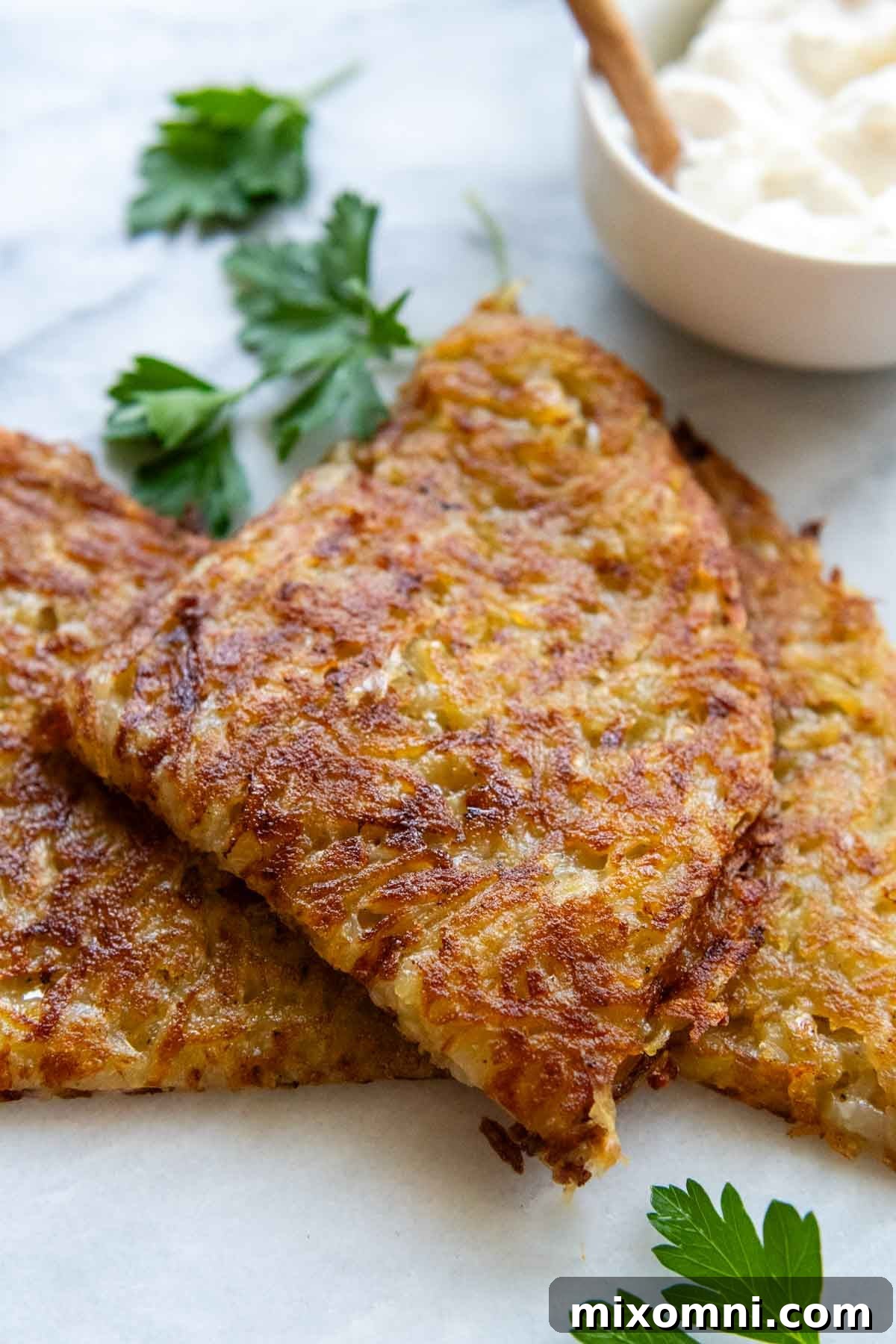
Unlock the secrets to crafting the ultimate Swiss potato rösti – a dish renowned for its irresistibly crispy, golden-brown edges and a delightfully tender, creamy interior. This comprehensive, step-by-step tutorial provides all the professional insights and expert tips you need to master this classic Swiss delicacy, seasoned to absolute perfection. Made with just a few simple, naturally gluten-free ingredients, rösti transforms humble potatoes into an impressive and versatile side dish that will captivate any palate.
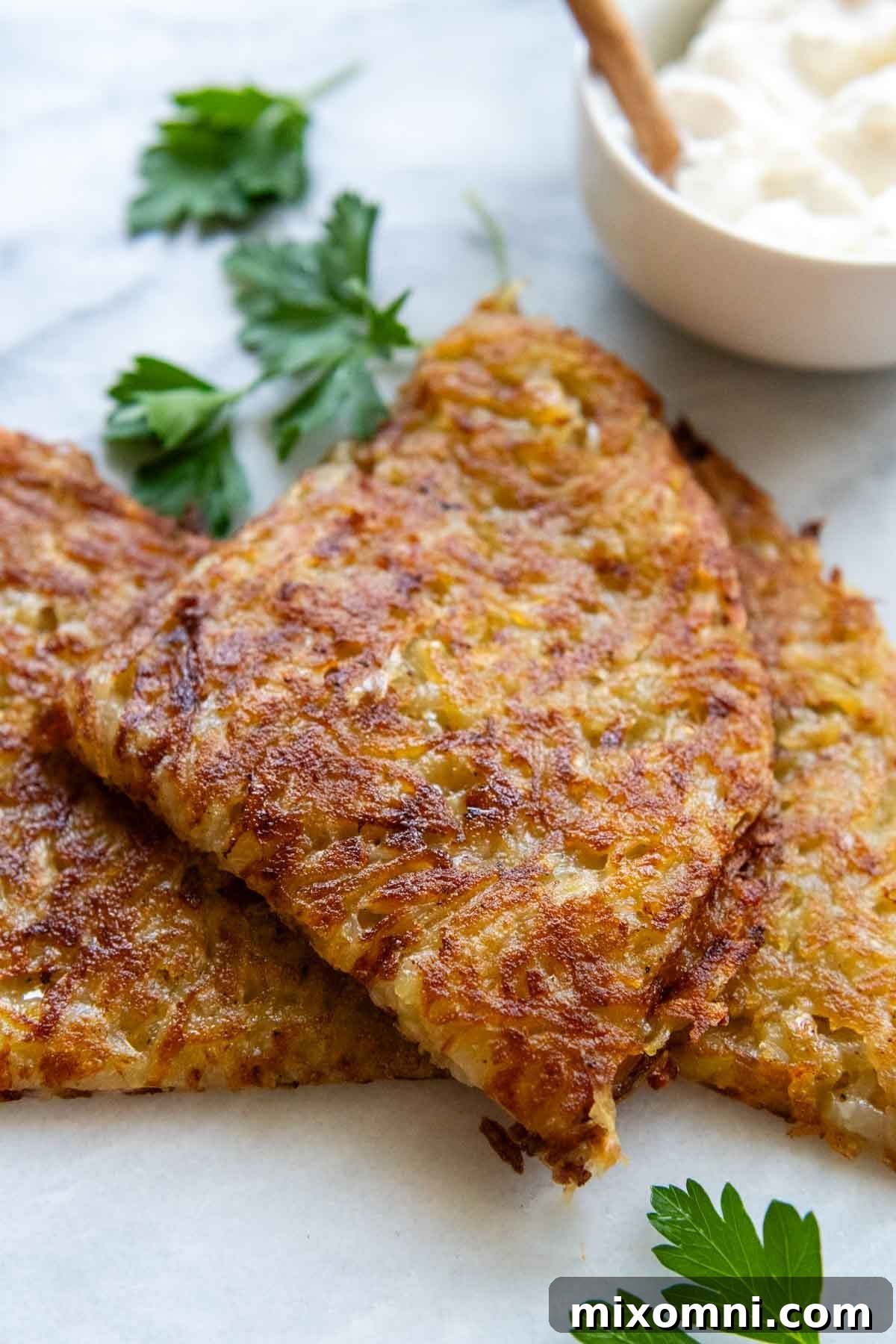
Mastering the Art of Traditional Swiss Potato Rösti
During a recent unforgettable summer adventure through the breathtaking Swiss Alps, my husband and I immersed ourselves in the stunning landscapes and savored countless incredible gluten-free Swiss culinary delights. Among the many dishes that left a lasting impression, Swiss potato rösti stood out as a must-recreate. Its deceptively simple ingredient list, much like our regional favorite, gluten-free dumplings and sauerkraut, yields results that are anything but ordinary. At its core, a truly authentic gluten-free rösti requires only grated potatoes, a quality fat (such as butter, oil, or a combination of both), and a touch of salt and pepper. You might be thinking, “That just sounds like hash browns.” Ah, my friend, prepare to be amazed – it is so much more profound!
My quest to replicate the sublime rösti I enjoyed in Switzerland focused on achieving that perfect textural contrast: an exquisitely creamy, tender center encased within ultra-crisp, golden edges. Furthermore, ensuring the entire potato cake binds together seamlessly for an effortless flip was paramount, especially when preparing a traditional potato rösti without the aid of eggs or flour, just like this recipe demonstrates. In the following sections, I will guide you through the process of making this iconic Swiss dish with ease, helping you avoid common pitfalls (believe me, I’ve had my share of tragic attempts!), sharing foolproof flipping techniques, exploring delicious gluten-free additions, and offering the best methods for reheating any precious leftovers.
Essential Ingredients for Perfect Rösti
Crafting exceptional Swiss rösti begins with selecting the right core ingredients and equipment. Similar to preparing another one of my favorite Swiss gluten-free recipes, easy homemade muesli, you can stick to the staples for a wonderfully satisfying result, or you can elevate the flavor with thoughtful additions. Let’s start with the foundational elements, and towards the end of this guide, I’ll share some fantastic ways to customize your rösti.
- Potatoes: The Heart of the Dish
Potatoes are, without a doubt, the absolute backbone of any rösti recipe. For a center that beautifully melds together and for the characteristic creaminess that makes rösti so distinct, I wholeheartedly recommend using Yukon Gold potatoes. Their medium-starch content means they break down just enough to create a cohesive structure while still holding their shape, making them ideal for both rösti and creamy dishes like a thick gluten-free potato soup. While other potato varieties can be used, Yukon Golds consistently deliver the best texture for that desirable tender interior. - Butter and Oil: The Flavor and Crispiness Duo
Many rösti recipes advocate for either all butter or all oil. But why choose when you can have the best of both worlds? I opt for a blend of butter and oil because butter imparts an incredible, rich, nutty flavor that is essential to traditional rösti. However, butter alone can sometimes brown too quickly without achieving maximum crispiness. By adding oil, particularly olive oil, you ensure a higher smoke point, allowing the potatoes to cook longer and develop an unparalleled, ultra-crispy outer layer without burning. This combination guarantees both superior taste and texture. - Seasoning: Simplicity is Key
When enjoying rösti in Switzerland, you might encounter local preferences for seasoning, such as Knorr Aromat. If you’re sensitive to gluten, it’s wise to exercise caution, as it can be difficult to definitively confirm if all varieties are gluten-free. For homemade rösti, however, the magic lies in simplicity: a generous portion of salt and freshly ground black pepper, combined with the butter, provides a rich, satisfying flavor profile that perfectly complements the potatoes. Avoid over-seasoning; let the natural goodness of the ingredients shine through.
Indispensable Equipment for Rösti Success
Having the right tools can make all the difference in your rösti journey, particularly when it comes to achieving that perfect flip and consistent cooking. Here’s what I recommend:
- Shallow Non-Stick Skillet: Your Rösti’s Best Friend
If you’re preparing one large, impressive potato rösti, a high-quality non-stick pan of the appropriate size is crucial. I recommend a 9 or 10-inch skillet. This size ensures the rösti has good thickness for even cooking and remains manageable for flipping. The key is to choose a *shallow* pan. A shallower pan significantly simplifies the flipping process, making it less intimidating and more successful. My personal favorite is a Scanpan, known for its even heating and exceptional non-stick properties, making it perfect for delicate tasks like making easy gluten-free crepes as well. - Flipping Board: The Secret to a Seamless Turn
The flip is often the most daunting part of making rösti, but with the right aid, you absolutely got this! You’ll need a surface to place over the pan, onto which you’ll invert the partially cooked rösti before sliding it back into the pan to cook the second side. You have a few options for this crucial flipping assist, some more effective than others. Your best bet is a round cutting board with a handle. Its flat surface is ideal for sliding the rösti back into the pan, and the handle allows you to grip both the board and the pan tightly together, preventing any slippage. The core principle is to find something you can firmly hold against the pan, enabling a quick and secure flip. Another viable option is a plate that is slightly larger than your pan. Just ensure you protect your hands adequately to keep the two surfaces firmly joined – a lesson learned from unfortunate rösti mishaps! Remember, you’ll need to slide the rösti back in, so a plate with a pronounced rim could pose a challenge. A flat wooden cutting board also works well. Crucially, avoid anything that could melt when placed on a hot pan. The flipping aid should be slightly larger than the pan; if it’s too large, it becomes cumbersome to hold everything securely. - Box Grater or Food Processor: For Perfect Potato Shreds
A standard box grater is perfectly suitable for shredding potatoes into thin, consistent strips. If you have a food processor with a grating attachment, it can speed up the process considerably, especially for larger batches. The key is even shredding for uniform cooking. - Lint-Free Towel: For Optimal Moisture Removal
A thin, lint-free kitchen towel, often called a flour sack towel, is indispensable for squeezing excess moisture from the grated potatoes. This step is critical for achieving that signature crispiness.
Let’s Make This Together!
(Below you’ll find step-by-step photos and simplified instructions. For exact ingredient measurements and a complete recipe, please refer to the detailed recipe card further down.)
Preparation: Grate and Dry the Potatoes
Begin by peeling your potatoes. Use a box grater or a food processor with a grating attachment to shred them into thin, even strips. Immediately transfer the grated potatoes to a thin, lint-free towel. This is precisely when I find flour sack towels to be incredibly useful.
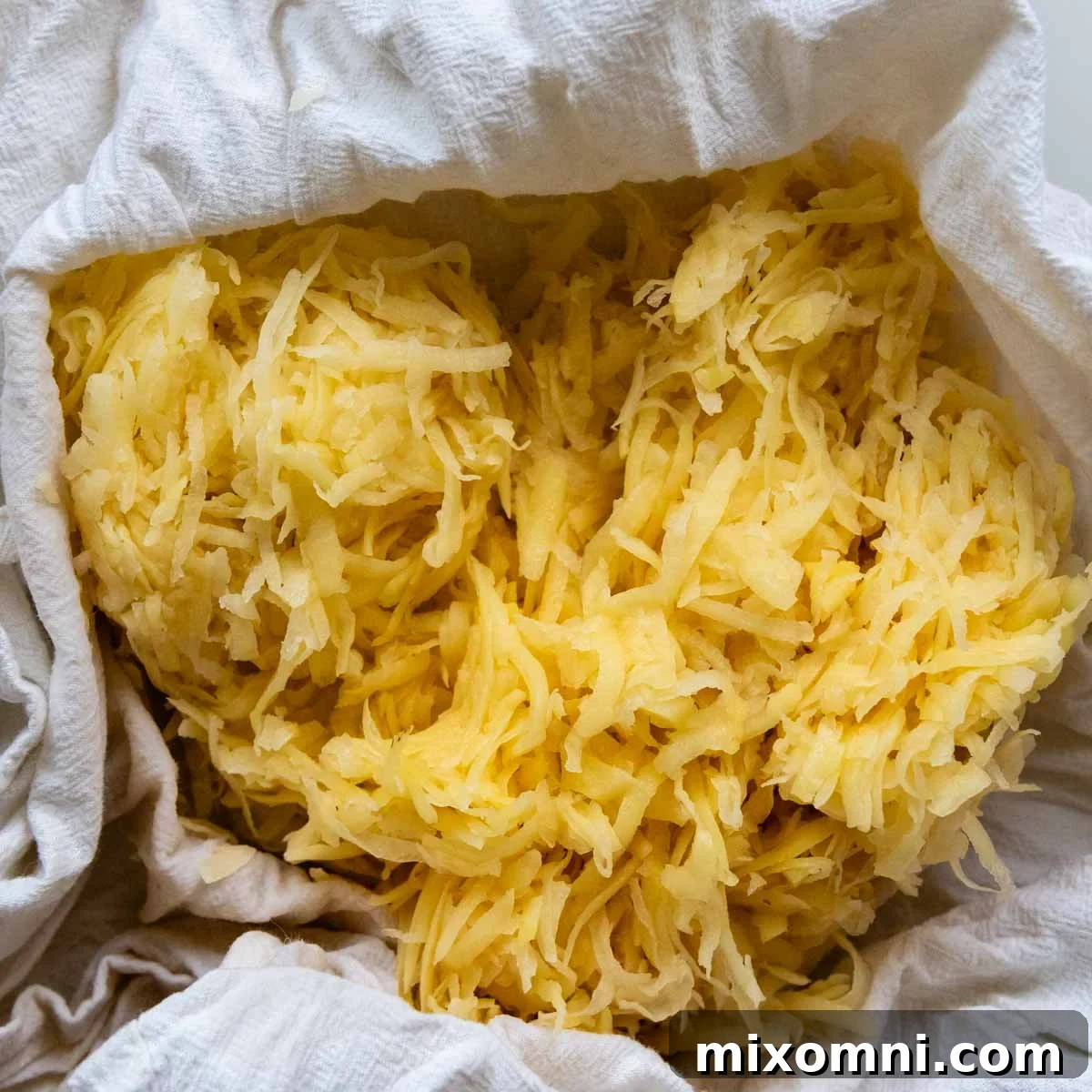
The Right Amount of Squeeze
Wrap the towel tightly around the grated potatoes and firmly squeeze out the excess water. Don’t feel the need to extract every single drop; a little residual moisture is actually beneficial, as it helps the potatoes steam and become wonderfully tender on the inside. However, too much water will prevent the exterior from achieving that desired golden crispiness, so aim for noticeably drier, but not bone-dry, potatoes. Once adequately dried, transfer the potatoes to a large bowl and toss them with a tablespoon of melted butter, salt, and pepper until evenly coated.
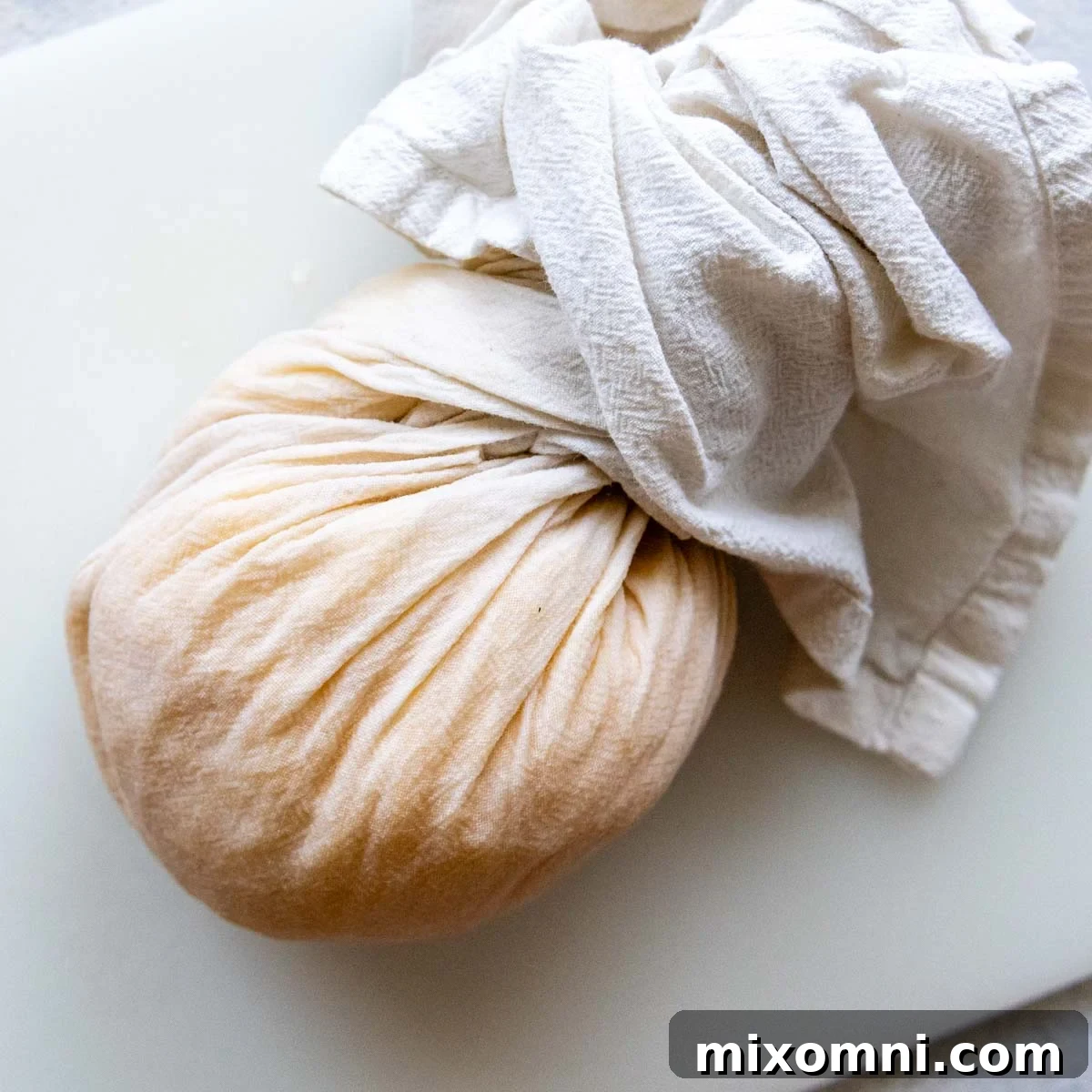
Time to Cook Your Rösti
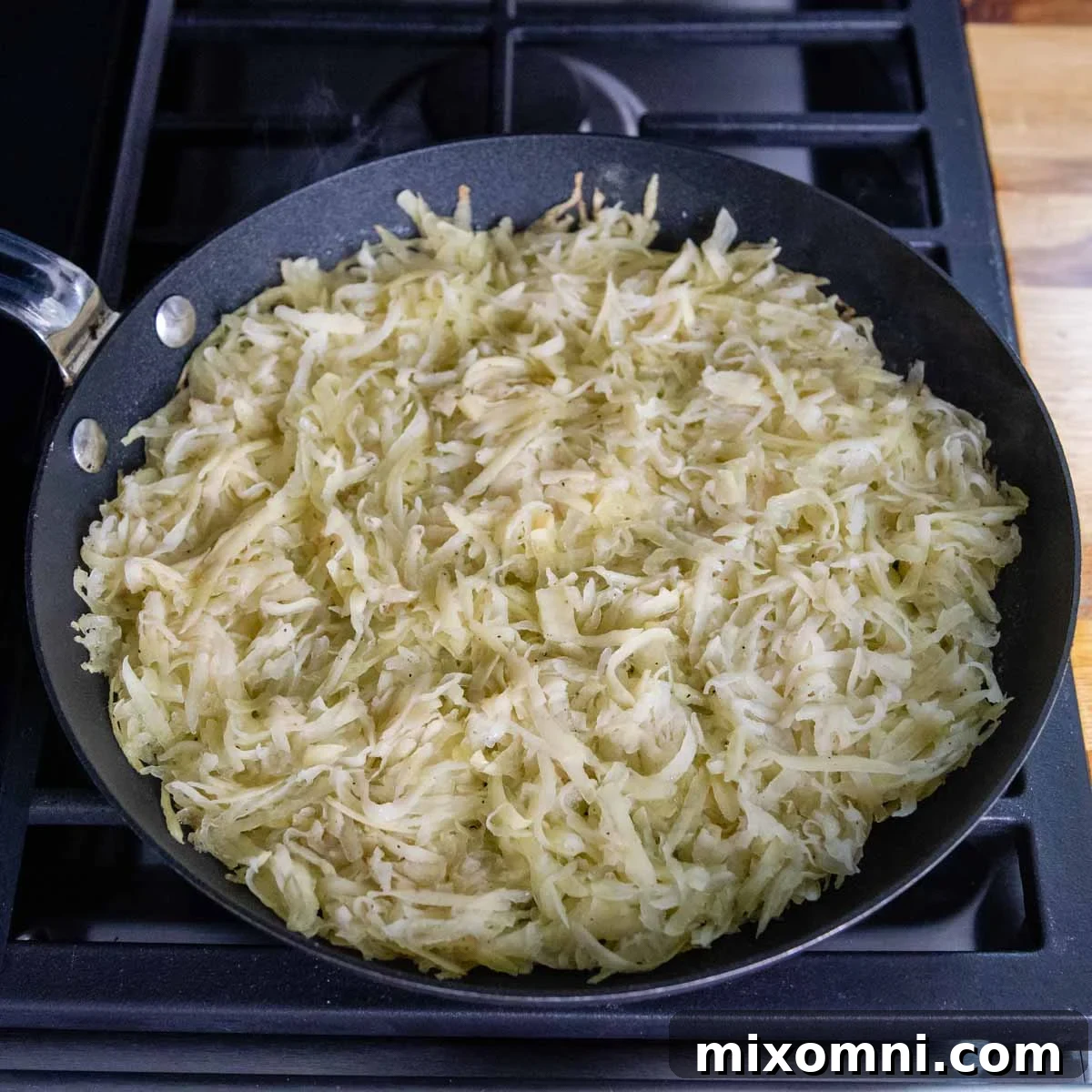
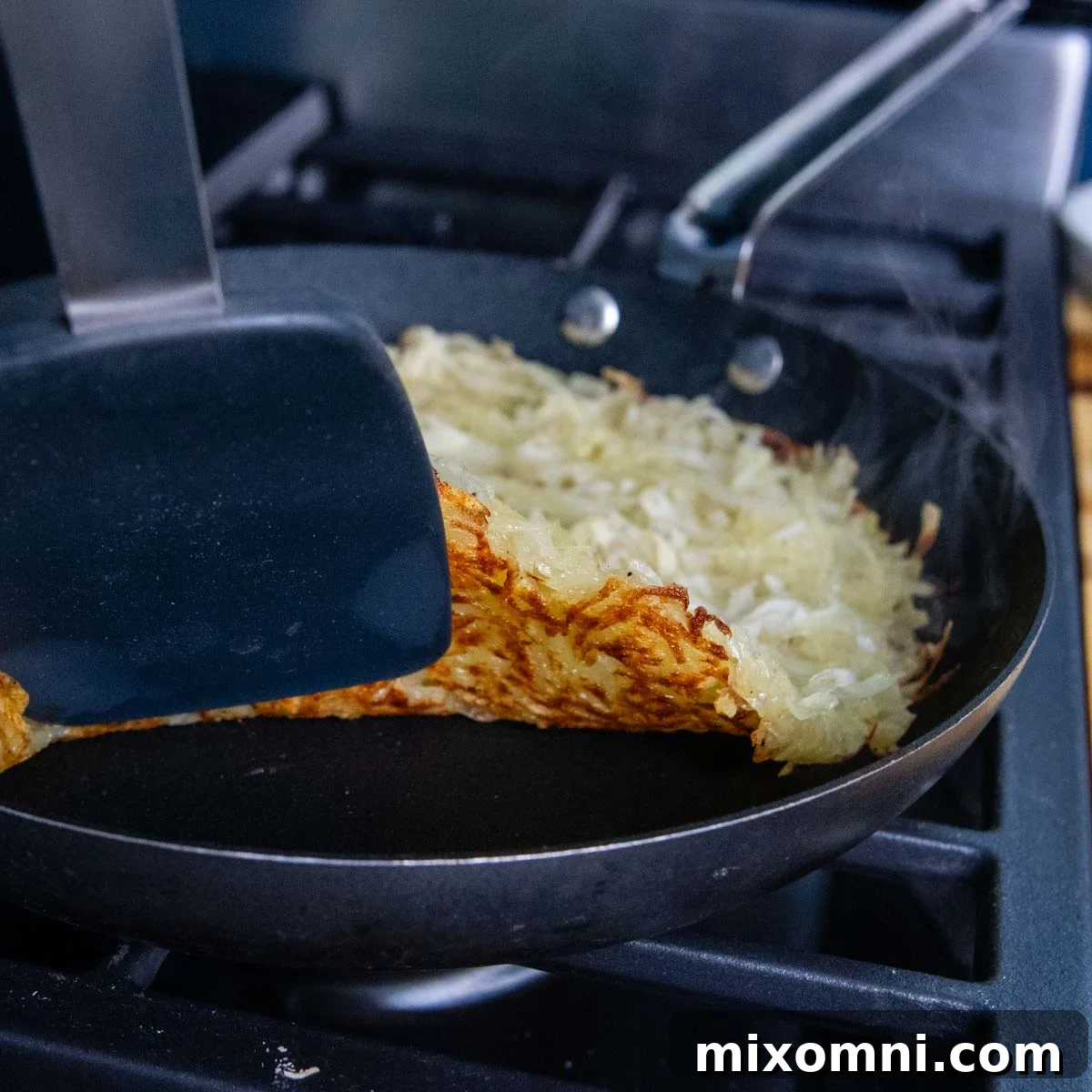
Heat your non-stick pan over medium-low heat. Add the remaining butter and oil, swirling to coat the entire surface. Carefully transfer the seasoned potatoes into the hot pan, spreading them out evenly across the bottom. Importantly, do not pack them down; allowing some air pockets helps the heat disperse and ensures the potatoes cook thoroughly from the inside out. Let the rösti cook undisturbed for approximately 9-12 minutes. Check the underside after 5-6 minutes; if it’s browning too quickly or too slowly, adjust the heat accordingly. Once the bottom is a beautiful golden-brown and satisfyingly crisp, gently run a spatula around and underneath to ensure it’s not sticking anywhere.
Now, take the pan off the heat – it’s time for the flip! Refer back to my detailed tips above on what to use for flipping to maximize your success. The most critical advice: secure the pan and your chosen flipping aid firmly together, and execute the flip swiftly and confidently!
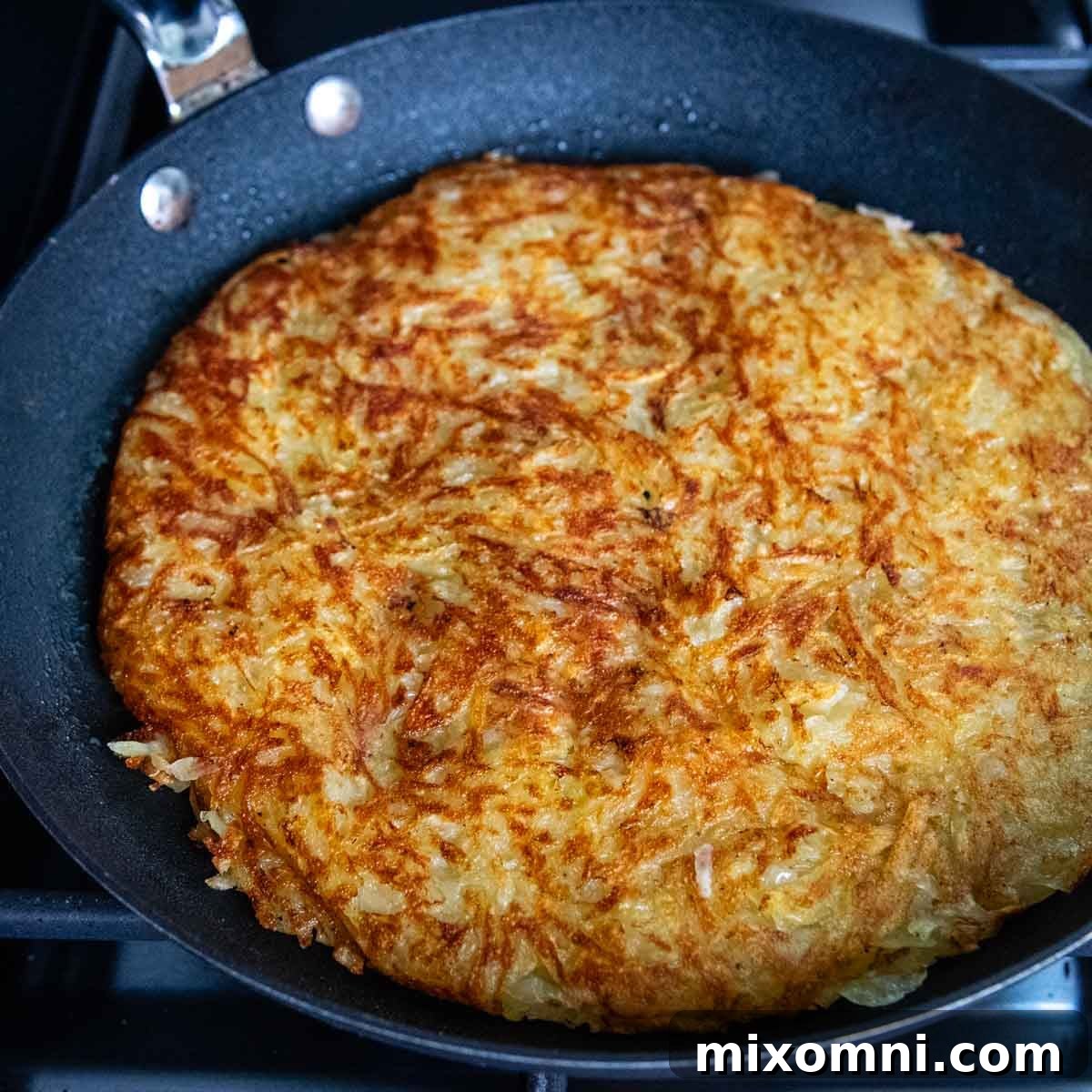
Melt the remaining butter and oil in the pan, then carefully slide the rösti back in, cooked side up. Allow the second side to cook for another 9-12 minutes, or until it’s also golden and crispy, and the potatoes are tender throughout. Once cooked, transfer your masterpiece onto a cutting board, slice it into wedges, and serve immediately. Take a moment to savor your creation and be incredibly proud of your culinary achievement!
Making Individual Potato Rösti “Pancakes”
If the thought of flipping one large rösti feels a bit too intimidating, or if you simply don’t have a suitable flipping aid on hand, don’t despair! You can still enjoy this delicious recipe by making smaller, individual rösti pancakes, much like classic latkes. This method offers a simpler approach without compromising on flavor or crispiness.
To prepare rösti pancakes, heat half of the butter and oil in your pan. Once hot, drop the seasoned potato mixture into 3-4 separate mounds. Gently spread each mound out slightly with a spatula to flatten them into disc shapes, but remember, avoid packing them down tightly. Cook these individual rösti until the undersides are beautifully golden and crisp. When ready to flip, simply transfer the cooked pancakes onto a cutting board, then add the remaining butter and oil to the pan. Flip the rösti pancakes and slide them back into the pan to cook on the other side until they are tender throughout and equally golden and crispy. This method provides all the satisfaction of traditional rösti with less flipping stress!
Delicious Toppings and Gluten-Free Additions for Rösti
One of the joys of potato rösti is its incredible versatility, making it a fantastic canvas for a wide array of toppings and mix-ins. When preparing a gluten-free potato rösti, always double-check any additional seasonings or ingredients to ensure they are safe. Since this recipe inherently uses no flour, you’re already off to a great start, but some processed seasonings can contain hidden wheat.
Consider incorporating grated cheese directly into the potato mixture before cooking for a delightful cheesy rösti. Popular choices include Gruyère, Emmental, or even a sharp cheddar. Cooked chopped meats, such as crispy bacon bits or diced ham, also make wonderful additions, providing extra flavor and heartiness. Sautéed onions, softened to a sweet caramelization, can be mixed in for an aromatic twist. Remember, because rösti has a relatively short cook time, any meats or vegetables you add should be pre-cooked to ensure they are tender and flavorful by the time your rösti is ready.
As for serving, the possibilities are virtually limitless, just like with any other beloved potato side dish. For a hearty breakfast or brunch, pair your rösti with fried eggs, savory ham, crispy bacon, or your favorite sausages. Sautéed vegetables like mushrooms, bell peppers, or tender squash also make excellent accompaniments. If you happen to have some leftover cheese fondue, a decadent drizzle over warm rösti is an absolute heavenly treat!
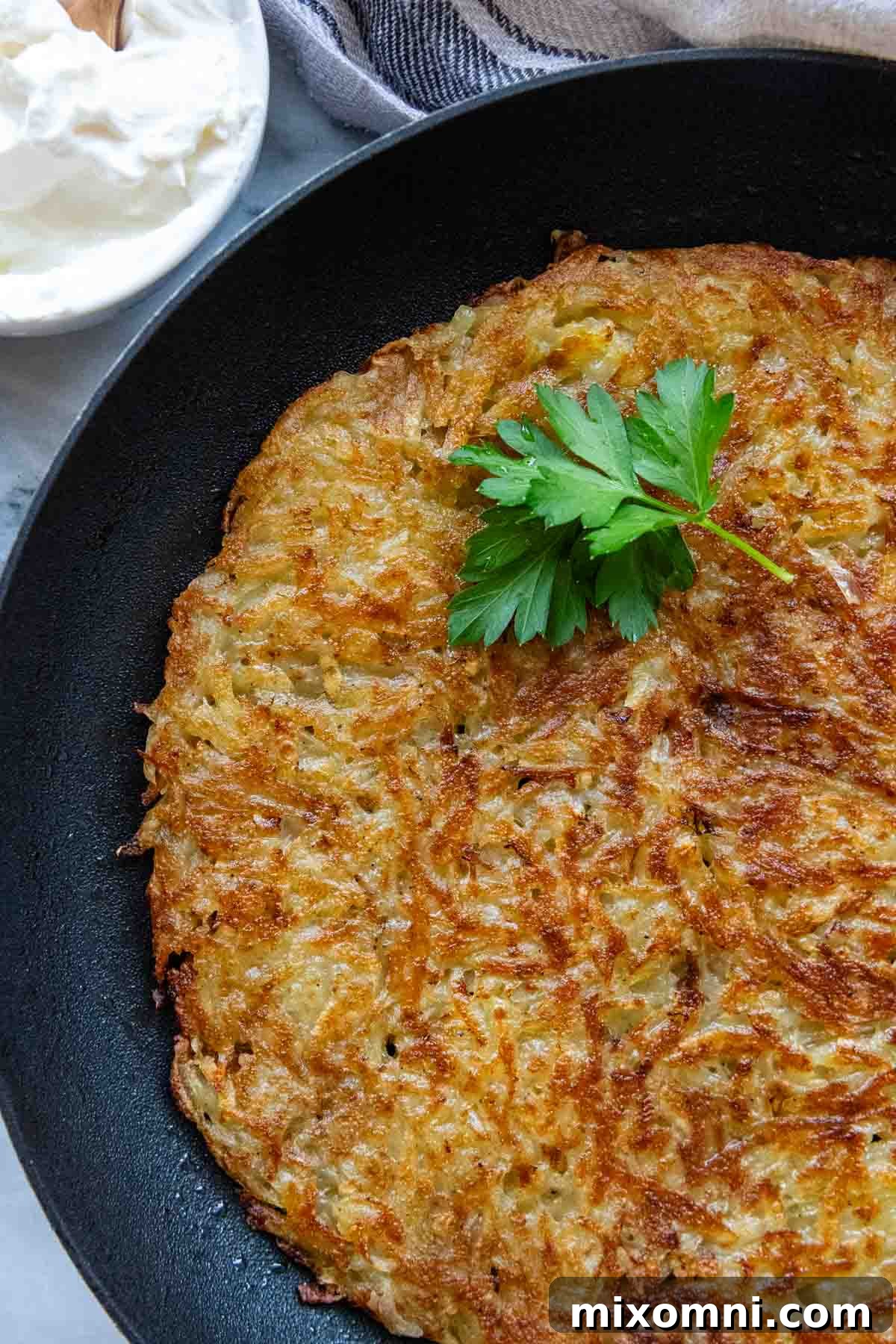
Other traditional and inspired ideas include serving rösti alongside schnitzel, a variety of sausages, or topped with melted raclette, Gruyère, or Swiss cheese. Pickled beets or sauerkraut offer a wonderful tangy contrast. For an Oktoberfest-inspired feast, I love to serve rösti with roasted sausage, sweet sautéed apples, tangy sauerkraut, and a dollop of spicy mustard. And for a simple yet sublime finish, a generous dollop of sour cream on top is pure perfection!
The Best Method for Reheating Rösti Leftovers
If you somehow manage to have any rösti leftovers (a rare feat, I know!), consider yourself truly blessed. I often make a larger batch specifically for this purpose, as I enjoy preparing it earlier in the day and reheating it just before serving. However, the method of reheating is crucial to preserving its delicious texture.
Through various tests, I’ve found that the absolute best and fastest way to reheat potato rösti is in an air fryer. Simply spray the air fryer basket with a nonstick cooking spray, place the rösti inside, and heat it at 375ºF (190ºC) for about 4 minutes, or until it’s heated through and has regained its crispiness. The air fryer works wonders at bringing back that coveted crunch.
If you don’t own an air fryer, the oven is your next best option. Place the rösti on a lightly greased baking sheet and reheat it in a preheated oven at 375ºF (190ºC) for approximately 5-6 minutes, or until it’s hot and crispy again. Whatever you do, avoid reheating rösti in the microwave at all costs. The microwave will inevitably turn your beautifully crispy creation into a soggy, unappetizing disappointment, stripping away all its charm.
Save this recipe to your Pinterest board!
Let’s be friends on Pinterest! I’m always sharing great recipes!
Did you make this recipe? I love hearing from you! Your feedback helps others discover and enjoy these recipes. You will always hear back from me! -Melissa

Easy How To: Crispy Potato Rösti Recipe

Melissa Erdelac
4 wedge
10 mins
20 mins
30 mins
Ingredients
- 1 pound Yukon gold potatoes
- 2 tablespoons melted butter, divided
- 1 tablespoon olive oil, divided
- ½ teaspoon salt
- ⅛ teaspoon pepper
Equipment
- 10-inch shallow, nonstick pan (I love using my Scanpan for this)
- Flour Sack Towels
- Box Grater
Instructions
- Peel the potatoes and use a box grater to shred them into thin strips.
- Transfer the grated potatoes to a lint-free towel. Wrap them tightly in the towel and firmly squeeze out the excess moisture. You want the potatoes to be dry enough to get crisp, but still retain some moisture so they become tender when cooking.
- Place the slightly dried potatoes in a large bowl. Stir in 1 tablespoon of melted butter, ½ teaspoon of salt, and ⅛ teaspoon of pepper until well combined.
- Heat a shallow nonstick pan (ideally 10 ½-inches) over medium-low heat. Add ½ tablespoon of butter and ½ tablespoon of olive oil to the pan and swirl to coat the surface evenly. Spread the seasoned potatoes in the pan, ensuring there are no significant gaps, but do not pack them down tightly.
- Cook for 9-12 minutes, leaving the rösti undisturbed. Check the underside about halfway through to see if it’s starting to turn golden. If not, increase the temperature slightly.
- Once the underside is completely golden and crisp, it’s time to flip. Remove the pan from the heat. First, slide a spatula all around the edges and underneath to ensure the potatoes are not sticking anywhere. Next, use something heat-resistant and slightly larger than the pan to place on top – a round wooden cutting board or a large, flat plate works well. (If your chosen surface is much larger than the pan, it can be difficult to hold the pan and board together, and the rösti might slide off.)
- Protect your hands with pot holders and firmly hold both the pan and the board together. Flip them over quickly so the partially cooked rösti rests on the board.
- Melt the remaining ½ tablespoon of butter and ½ tablespoon of oil in the pan and swirl to coat evenly. Carefully slide the rösti back into the pan, cooked side up. Cook for an additional 9-12 minutes, or until the potatoes are tender and the second side is also golden and crispy. Slide the finished rösti onto a cutting board, slice into wedges, and serve immediately.