
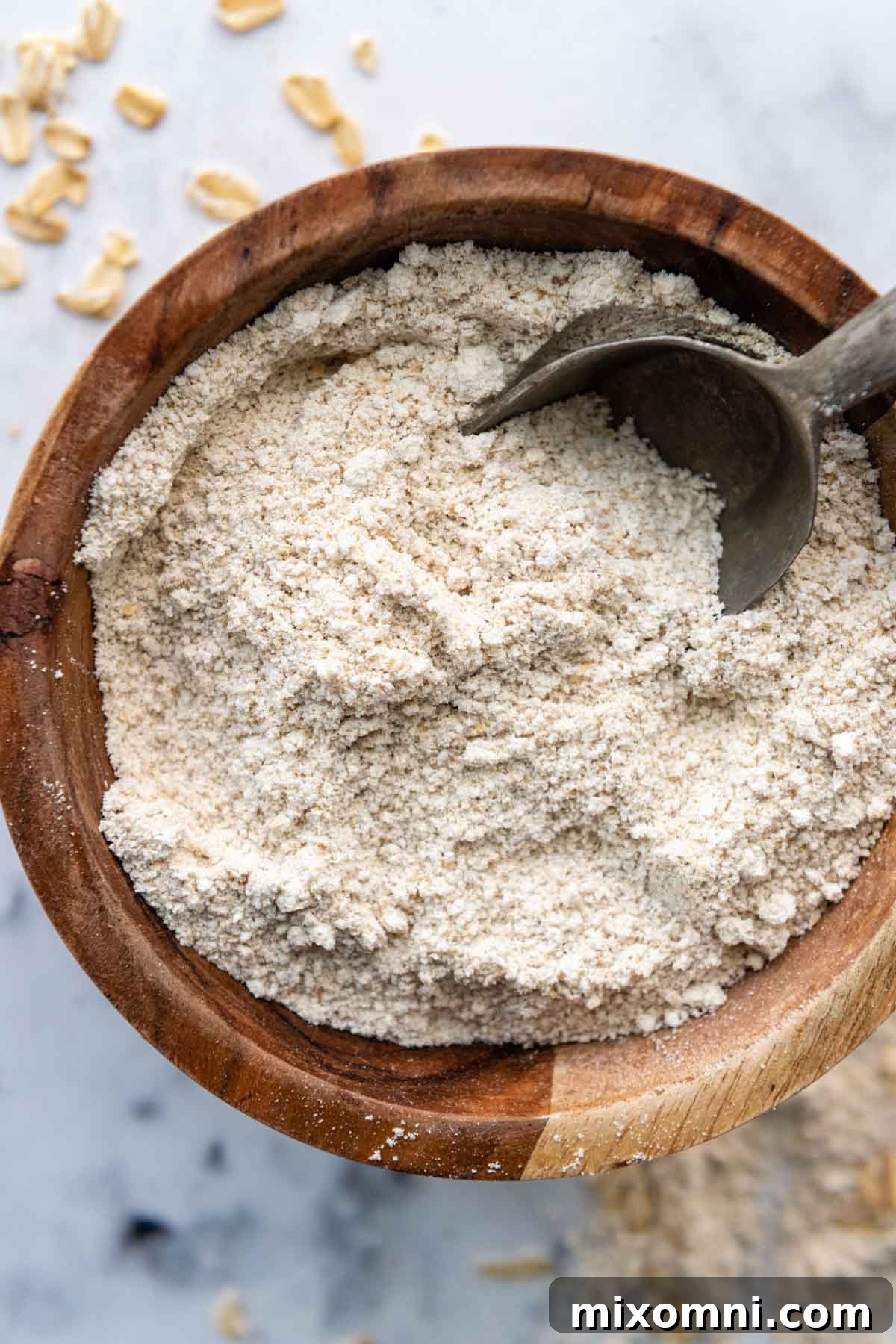
Unlock the secret to healthier, more affordable baking by learning how to make oat flour right in your own kitchen! This comprehensive guide provides everything you need to know, from selecting the best oats and mastering the blending process to understanding flour equivalents and discovering versatile substitutes. Whether you’re a seasoned baker or just starting your gluten-free journey, this resource will empower you to create the fluffiest, finest oat flour for all your culinary needs.
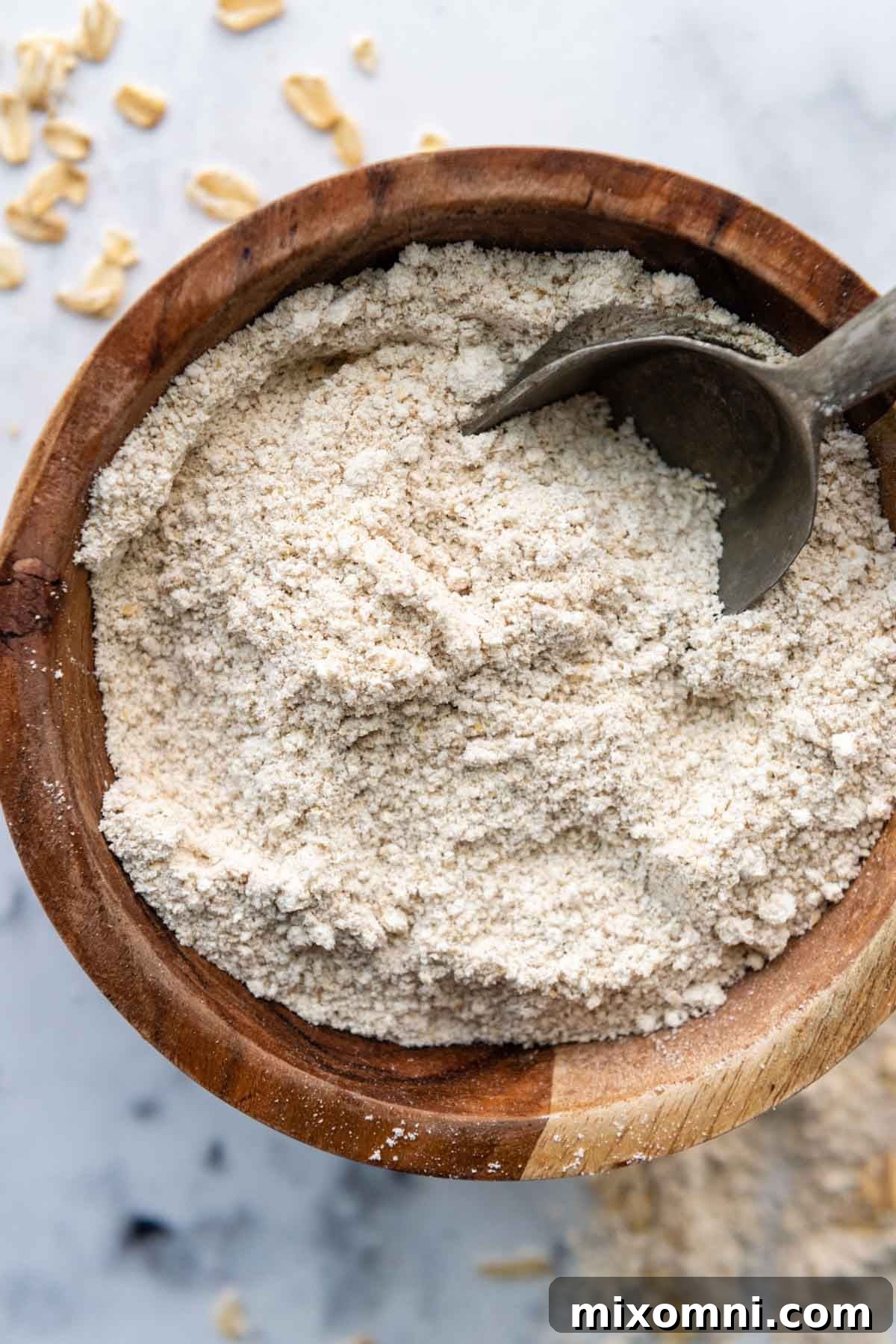
Incorporating homemade oat flour into your recipes not only offers a naturally gluten-free alternative but also presents a significantly more cost-effective option compared to purchasing all-purpose gluten-free flours, specialized grain flours, or even homemade almond flour. Beyond the financial savings, baking with oat flour introduces a subtle, nutty, and slightly sweet flavor that enhances a wide array of gluten-free oat flour recipes. Imagine delicious oat flour bread, tender cakes, chewy cookies, flaky pie crusts, and moist oat flour muffins, all made with your own fresh, wholesome flour.
This guide will demystify the process, ensuring you can confidently make, store, and substitute oat flour, achieving consistently fluffy and fantastic results every time. Get ready to transform simple oats into a baking powerhouse!
What is Oat Flour? A Gluten-Free Staple Explained
At its core, oat flour is simply finely ground oats. It’s a versatile, whole-grain flour gaining popularity for its nutritional benefits and its ability to act as a gluten-free alternative in many recipes. Unlike some other flours that require complex milling processes, oat flour can be effortlessly made at home using common kitchen appliances, giving you complete control over its freshness and texture.
Is Oat Flour Naturally Gluten-Free? Understanding Certification
Technically, oats themselves do not contain wheat gluten. However, the question of whether oat flour is truly gluten-free for those with celiac disease or gluten sensitivity is crucial. Oats are frequently processed on shared equipment with wheat, barley, and rye, leading to a high risk of cross-contamination. This means that while pure oats are gluten-free, the oats you buy might not be, due to processing practices.
For individuals adhering to a strict gluten-free diet, it is imperative to use certified gluten-free oats or oatmeal when making homemade oat flour. These products are grown, harvested, and processed in dedicated facilities to prevent cross-contamination. Popular brands like Bob’s Red Mill offer certified gluten-free oats, which can often be found at local grocery stores, Trader Joe’s, Vitacost, or Amazon. Always look for a “certified gluten-free” label to ensure your homemade oat flour is safe for consumption.
It’s also worth noting that a small percentage of people with celiac disease may not tolerate oats, even if they are certified gluten-free, due to a protein called avenin. If you have celiac disease or severe gluten intolerance, consult with a healthcare professional before adding oats to your diet.
Why Make Your Own Oat Flour? Benefits Beyond the Bag
Beyond its gluten-free nature, making oat flour at home offers several compelling advantages:
- Cost-Effectiveness: Store-bought specialty flours, especially gluten-free varieties, can be quite expensive. Whole oats are generally much cheaper per pound than their pre-ground flour counterparts, leading to significant savings over time.
- Freshness and Purity: When you make oat flour at home, you’re guaranteed fresh flour without any additives, preservatives, or anti-caking agents often found in commercial products. This ensures a purer taste and potentially better baking results.
- Control Over Ingredients: You choose the exact type of oats (certified gluten-free, organic, etc.), giving you complete control over what goes into your flour and, ultimately, your food.
- Nutritional Powerhouse: Oats are a whole grain packed with dietary fiber (including beta-glucan), protein, vitamins, and minerals. Using oat flour adds these valuable nutrients to your baked goods, making them a healthier choice.
- Unique Flavor and Texture: Oat flour imparts a distinctive nutty and slightly sweet flavor, along with a tender, moist texture to baked goods. This makes it a fantastic addition to both sweet and savory recipes.
- Versatility in Baking: From light and airy pancakes to dense and satisfying bread, oat flour is incredibly versatile. It’s a staple for muffins, cookies, cakes, waffles, and even thickening sauces or gravies.
Choosing the Right Oats for Perfect Flour
While any type of oat can be ground into flour, the specific variety you choose will influence the texture, density, and yield of your homemade oat flour. Understanding these differences is key to achieving the desired results for your recipes.
Rolled Oats vs. Quick Oats vs. Steel-Cut Oats
- Whole Rolled Oats (Old-Fashioned Oats): These are oat groats that have been steamed and flattened. They are the most commonly recommended type for making oat flour because they provide a good balance of texture and yield. They grind into a fine, light flour ideal for most baking applications.
- Quick Oats (Instant Oats): These are rolled oats that have been cut into smaller pieces and then rolled thinner. They are excellent for oat flour as they are already partially processed, resulting in an even finer, fluffier flour with less grinding time. They are particularly good for recipes where a very smooth texture is desired.
- Steel-Cut Oats (Irish Oats): These are oat groats that have been cut into two or three pieces, not rolled. They are denser and take longer to cook. While you can make flour from steel-cut oats, it will generally require more blending time to achieve a fine consistency. The resulting flour might also be slightly coarser than that made from rolled or quick oats, and the yield will differ.
Regardless of the type, always ensure your oats are plain and unflavored. Flavored oatmeal packets often contain sugar, salt, and other additives that are not suitable for baking flour.
How to Make Oat Flour: Step-by-Step Guide for a Fluffy Finish
Making oat flour is remarkably simple, primarily relying on the right equipment and a few minutes of your time. The goal is to achieve a fine, powdery consistency, free from any large oat flecks, similar to traditional all-purpose flour.
The Power of a High-Speed Blender
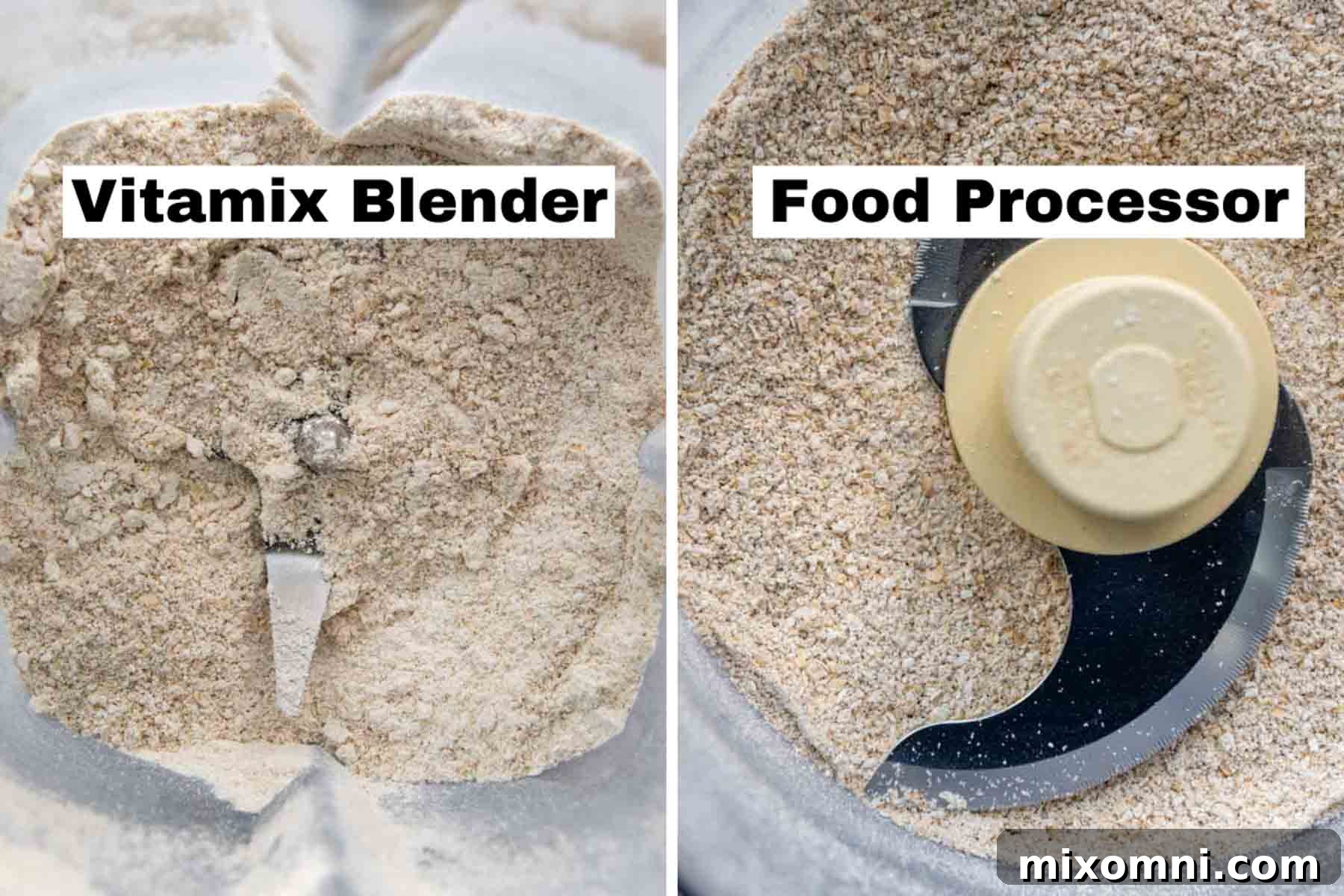
For the absolute best results—meaning the fluffiest, finest oat flour—a high-powered blender like a Vitamix or Blendtec is your best tool. These blenders have robust motors and sharp blades designed to pulverize ingredients into extremely fine powders quickly. As you can see from the comparison image below, the difference in texture achieved by a high-speed blender versus a food processor is significant, resulting in flour that performs better in delicate baked goods such as oat flour cookies.
While I haven’t personally tested more budget-friendly blenders like Ninja or Magic Bullet for optimal oat flour texture, they are generally powerful enough to create a good quality oat flour suitable for many recipes, particularly those with a bit more moisture or density, like pumpkin oat flour muffins or flourless pancakes.
- Add Oats to Blender: Pour your chosen oats (rolled or quick oats work best) into your high-powered blender. Ensure the blender jar is completely dry.
- Secure and Blend: Place the lid firmly on the blender. Start blending on a medium speed. Gradually increase the speed if necessary, but avoid the highest setting right away to prevent overheating the oats.
- Process to Fine Powder: Blend for approximately 30 seconds to 1 minute. The oats should transform into a fine, powdery flour.
- Check for Consistency: Stop the blender and remove the lid. Visually inspect the flour for any larger, unground flecks of oats. If you find any, use a spatula to scrape down the sides of the blender jar, redistribute the oats, and blend again for another 15-30 seconds until uniformly fine.
- Avoid Overheating: Blend in short bursts rather than continuously for several minutes. Continuous blending can generate heat, which can start to cook the oats or affect the flour’s properties.
Using a Food Processor (and its Limitations)
While a food processor can grind oats, achieving the fine, fluffy texture characteristic of high-quality oat flour is significantly more challenging. In my experience, even a powerful 14-cup Cuisinart food processor did not yield results comparable to a high-speed blender. The blades in larger food processors often struggle to make continuous contact with all the oats, leading to an inconsistent grind with coarser particles.
Smaller capacity food processors (e.g., 7-10 cups) might perform slightly better, as the oats have less room to escape the blades, potentially resulting in a more uniform, albeit still coarser, flour. If you have success with a smaller food processor, please share your tips in the comments below!
However, a coarser oat flour isn’t always a deal-breaker. Some recipes can actually benefit from or tolerate a less-fine grind. Recipes where the batter rests for an extended period, allowing the oats to hydrate and soften, such as oat flour waffles, or recipes that cook for a longer duration, like oat flour banana bread, will yield a tender crumb even with a slightly coarser oat flour.
For small batches, a clean coffee grinder can also be an effective alternative to a blender or food processor, producing very fine flour due to its dedicated grinding mechanism. Just ensure it’s thoroughly cleaned if previously used for coffee beans, to avoid unwanted flavors.
Oat Flour Equivalents: Measurements for Success
One of the most common questions home bakers have is: “How much oat flour does one cup of whole oats yield?” The answer isn’t always straightforward, as it largely depends on the type of oats used and the grinding method employed. Different oat types—steel-cut, rolled, or quick oats—will compress differently and result in varying flour amounts.
You might also notice discrepancies between online resources and your own measurements. These variations often stem from the equipment used for grinding. A high-speed blender like a Vitamix produces a much fluffier, lighter flour compared to the denser, coarser flour typically yielded by a food processor or coffee grinder (as illustrated in the image above). This difference in fluffiness directly impacts volume measurements.
For the most accurate baking results, it’s always recommended to weigh your flour rather than relying solely on volume measurements. However, for those who prefer volumetric measurements, here are the median equivalents I found when testing with a Vitamix blender, yielding a light and airy oat flour:
- 1 cup steel cut oats = 1 ⅓ cup oat flour = 125 grams
- 1 cup whole rolled oats = 1 cup oat flour = 94 grams
- 1 cup quick oats = 1 cup + 1½ tablespoons oat flour = 98 grams
Keep these guidelines in mind, but remember that slight adjustments may be needed based on your specific oats and grinding equipment.
Baking with Homemade Oat Flour: Tips for Optimal Results
Baking with oat flour is a delightful experience, but it’s important to understand its unique properties to achieve the best results. Oat flour behaves differently from wheat flour or even other gluten-free flours due to its high fiber content and distinct protein structure.
Here are some essential tips for baking successfully with your homemade oat flour:
- Oat Flour Absorbs More Liquid: Oat flour is incredibly absorbent. When adapting recipes not specifically designed for oat flour, you may need to increase the liquid content slightly. Start by adding about 10-20% more liquid and adjust as needed, observing the batter’s consistency.
- Allow for Resting Time: Many oat flour batters benefit from a brief resting period (10-15 minutes) before baking. This allows the flour to fully hydrate, resulting in a more uniform texture and preventing a crumbly final product. This is particularly useful for recipes like muffins, pancakes, and quick breads.
- Combine with Other Flours: For certain recipes, especially those requiring more structure or a lighter crumb, oat flour can be wonderfully complemented by other gluten-free flours like tapioca starch, potato starch, or almond flour. This creates a balanced texture and flavor profile.
- Gentle Mixing: While not as critical as with wheat flour, overmixing oat flour batters can sometimes lead to a denser texture. Mix until just combined to keep your baked goods tender.
- Great for Moist Baked Goods: Oat flour excels in recipes where moisture is desired, such as banana bread, pumpkin bread, muffins, and cookies. Its natural sweetness and moistening properties truly shine.
- Use by Weight for Precision: As mentioned in the equivalents section, measuring oat flour by weight (grams) offers superior accuracy compared to volume (cups), ensuring consistent baking results every time.
Experimentation is key! Start with recipes specifically formulated for oat flour, and as you gain confidence, you can begin adapting your favorite traditional recipes.
Storing Your Homemade Oat Flour for Maximum Freshness
Proper storage is essential to maintain the freshness and quality of your homemade oat flour, preventing it from going rancid. Oats, like other whole grains, contain natural oils that can spoil over time if not stored correctly.
Here’s how to store your oat flour effectively:
- Short-Term Storage (Up to 3 Months): For flour you plan to use relatively soon, store it in an airtight container in a cool, dark pantry. Glass jars with tight-fitting lids or sturdy plastic containers work perfectly. I particularly recommend OXO storage containers for their secure seal, which I use for everything from homemade flours to granola.
- Longer-Term Storage (Up to 6 Months): To extend the shelf life of your oat flour, store it in the freezer. Place the flour in a double layer of ziplock freezer bags, pressing out as much air as possible, or use an airtight freezer-safe container. Freezing helps to preserve the natural oils and prevents spoilage.
- Bringing to Room Temperature: Before using frozen oat flour for baking, allow it to come to room temperature. This typically takes about 15-30 minutes, depending on the amount. Using cold flour can affect the texture of your dough or batter.
Always label your containers with the date the flour was made to keep track of its freshness.
Oat Flour Substitutes: When You’re Out of Oats
What if you’re halfway through a recipe and realize you’re out of oat flour? Don’t worry, there are several excellent gluten-free and conventional flour substitutes available. However, it’s crucial to understand that these substitutes work best when converting recipes that don’t rely on 100% oat flour, but rather use a smaller amount or a mixture of starches. Oat flour’s unique absorbency means recipes primarily using it are specifically formulated to account for its high liquid needs. Substituting it completely in such recipes might require significant liquid adjustments.
For recipes where oat flour is a minor component, such as gluten-free bagels or gluten-free granola bars, these substitutions are usually quite effective. Most of the following substitutes can be used in a 1:1 ratio, with one notable exception:
- Brown Rice Flour: Use ¾ cup brown rice flour for every 1 cup of oat flour. Brown rice flour is denser and less absorbent than oat flour, so a direct 1:1 swap can make your baked goods too dry.
- White Rice Flour: Similar to brown rice flour, it’s a good gluten-free option but might still require slight liquid adjustments depending on the recipe.
- Almond Flour: A popular low-carb, gluten-free choice. It’s often denser and contains more fat, which can affect the texture and moisture content of your recipe.
- Coconut Flour: Extremely absorbent! Use with caution and significantly reduce the amount, or increase liquid, if substituting. It’s usually best in very small quantities or in recipes specifically designed for it.
- All-Purpose Wheat Flour: For those not on a gluten-free diet, regular wheat flour can be a direct substitute. However, it will change the gluten-free nature of your recipe.
- Cassava Flour: A versatile, gluten-free flour derived from the cassava root. It has a fairly neutral flavor and can be a good substitute in many applications.
- Amaranth Flour: A nutritious, gluten-free flour with a slightly earthy flavor.
- Buckwheat Flour: Despite its name, buckwheat is gluten-free. It has a strong, distinct flavor that might not suit all recipes, but works well in rustic bakes.
When substituting, always consider the overall balance of your recipe and be prepared to make minor adjustments to liquid or other dry ingredients to achieve the desired consistency.
Frequently Asked Questions About Oat Flour
What kind of oats are best for making oat flour?
Whole rolled oats (old-fashioned) and quick oats (instant oats) are generally the best choices for making oat flour. They produce a finer, fluffier flour with less effort. Steel-cut oats can be used but will require more blending time and may result in a slightly coarser flour.
Can I use flavored oatmeal packets to make oat flour?
No, it is not recommended to use flavored oatmeal packets. These often contain added sugars, salts, artificial flavors, and other ingredients that are not suitable for baking flour and will alter the taste and possibly the chemical reactions in your recipes. Always use plain, unflavored oats.
My homemade oat flour isn’t fine enough, what went wrong?
If your oat flour isn’t as fine as you’d like, several factors could be at play:
- Equipment: A high-powered blender is crucial for achieving the finest texture. Food processors, especially larger ones, typically yield coarser results.
- Blending Time: You might need to blend for a little longer or in more short bursts.
- Oat Type: Steel-cut oats naturally produce a slightly coarser flour than rolled or quick oats.
- Quantity: Blending too small a quantity might not allow the blades to catch all the oats effectively. Try increasing the amount slightly within your blender’s capacity.
For finer flour, consider sifting it through a fine-mesh sieve after blending and re-blending any larger particles.
Is oat flour healthy?
Yes, oat flour is considered a very healthy option. It’s a whole grain flour, meaning it retains all parts of the oat kernel, including the bran, germ, and endosperm. This makes it rich in dietary fiber (especially soluble fiber like beta-glucan, known for its heart-healthy benefits), protein, and various vitamins and minerals such as manganese, phosphorus, magnesium, copper, iron, and zinc. It’s also a good source of antioxidants. Its nutritional profile makes it a beneficial addition to a balanced diet, particularly for those looking for gluten-free whole grain options.
SAVE THIS How to Make Oat Flour recipe TO YOUR PINTEREST BOARD!
Let’s be friends on Pinterest! I’m always sharing great recipes!
Fluffy Oat Flour: How To Make, Substitutes, Equivalents
 Melissa Erdelac
Pin
Rate
Remove Ads
Ingredients
- 1 cup whole rolled oats, (for gluten free oat flour, use certified GF oats)
Equipment
-
Vitamix
Instructions
-
Place the oatmeal in a high-powered blender. Blend the oats until it turns into a fine, powdery flour, about 30 seconds – 1 minute.
-
Check to see if there are any large flecks, if so scrape the sides and process again.
-
1 cup whole rolled oats = 1 cup oat flour, 94 grams; 1 cup quick oats = 1 cup 1½ tablespoons oat flour, 98 grams (if using Vitamix)
-
DID YOU MAKE THIS RECIPE?? DON’T FORGET TO LEAVE FEEDBACK AND/OR CLICK A STAR RATING ON THE RECIPE CARD!
Notes
Storing Tips
Store homemade oat flour (or opened store bought) in airtight container up to 3 months.
For longer storage, place in a double layer of ziplock freezer bags, or airtight storage container, and freeze up to 6 months. Allow it to come to room temperature before using for baking.