
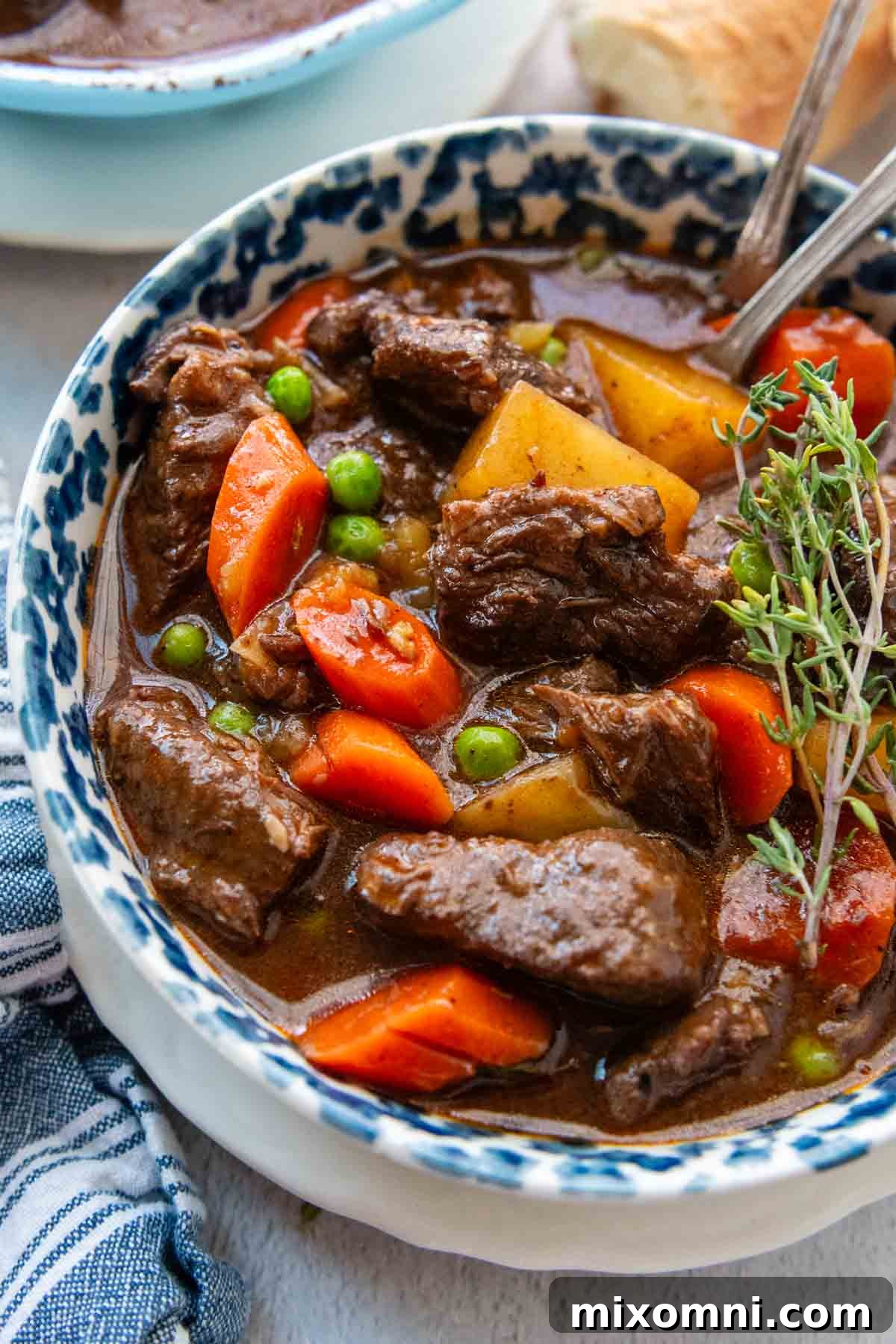
Welcome to the ultimate guide for crafting the best gluten-free beef stew recipe, a truly comforting and satisfying meal perfect for any occasion. This recipe delivers a rich, robust flavor profile and a perfectly thickened consistency that will make you forget it’s gluten-free. Imagine tender beef chunks, slow-cooked to fall-apart perfection, braised in red wine, and simmered with aromatic vegetables. Whether you prefer the classic Dutch oven method or the convenience of a slow cooker, this recipe has you covered. Beyond meeting all essential requirements for a phenomenal stew, we’ll delve into the secrets behind its simple, yet profoundly flavorful gluten-free seasoning and effective thickening agents, ensuring every spoonful is pure deliciousness.
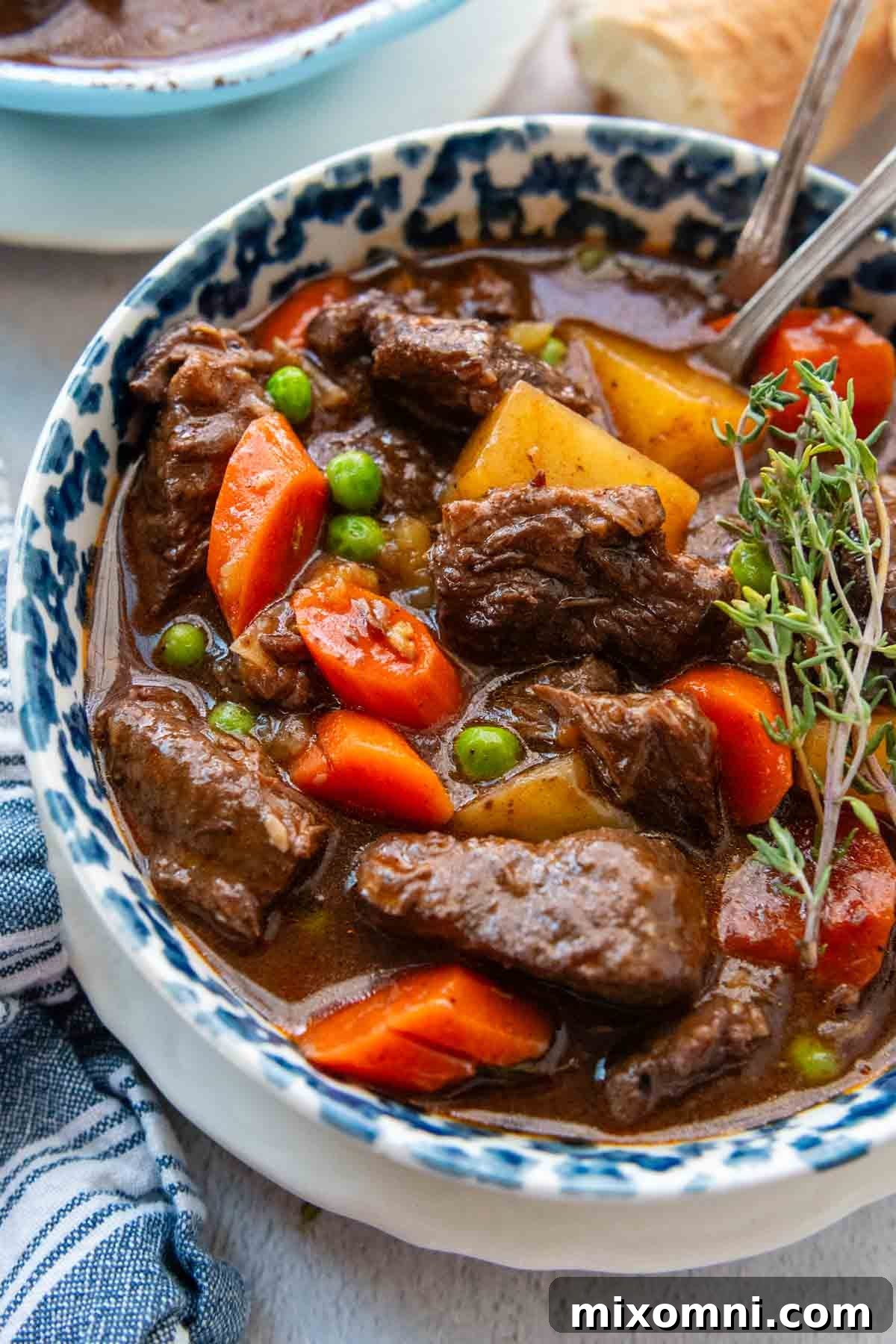
Crafting the Perfect Gluten-Free Beef Stew
Developing a truly exceptional gluten-free beef stew goes far beyond a simple flour swap. Over the years, countless bland and tough stews have taught me precisely what to avoid and what elements are crucial for success. This recipe is the culmination of extensive testing, aiming to create a stew that is not only gluten-free but genuinely superior in taste and texture.
The foundation of any great stew lies in its seasoning. Many recipes overcomplicate flavor by relying on an extensive list of spices, often resulting in a muddled taste. Our approach simplifies this, proving that a complex flavor doesn’t require a complex spice rack. The magic ingredient here is red wine. It’s not just for deglazing; it infuses the stew with a profound, rich, and sophisticated depth of flavor that complements the beef beautifully, eliminating the need for numerous exotic spices.
Another common pitfall in stew recipes is the vague instruction to “season by taste.” For a dish as hearty and flavorful as beef stew, a generous and intentional application of salt and pepper is paramount. We begin by thoroughly seasoning the beef chuck roast before browning, allowing the flavors to penetrate the meat. As the stew simmers, layers of flavor are built with robust beef broth, aromatic thyme, fragrant bay leaves, and a touch of brown sugar to perfectly balance the savoriness with a hint of sweetness. This careful layering ensures a cohesive and deeply satisfying taste in every bite.
Achieving fall-apart tender beef is non-negotiable for an outstanding stew. Many recipes fall short by recommending pre-cut stew meat. While convenient and often cheaper, these mixed cuts can lead to inconsistent textures, with some pieces remaining tough and chewy. The secret to succulent, melt-in-your-mouth beef is selecting the right cut. We champion boneless beef chuck roast for its generous marbling, which breaks down during long, slow cooking, transforming into incredibly tender, flavorful morsels.
Finally, the ideal gluten-free thickener is critical for achieving that signature velvety, clingy consistency. Our top recommendation is an all-purpose gluten-free flour blend. Unlike cornstarch, which tends to “break” upon reheating, leaving you with a watery stew, gluten-free flour provides a stable, luxurious thickness that holds up beautifully, even after refrigeration or freezing. This makes the stew an excellent make-ahead or freezer-friendly meal, ensuring it remains just as thick and delicious as the day it was prepared. For other gluten-free thickening options, see our dedicated section below.
Key Ingredients and Smart Substitutions
The beauty of this gluten-free beef stew lies in its foundational ingredients, which are easily accessible and offer a wealth of flavor. Below, we detail the essential components, along with helpful notes on selection and potential modifications to suit your preferences. While the core recipe is fantastic as is, feel free to personalize with additional vegetables, fresh herbs, or complementary seasonings.
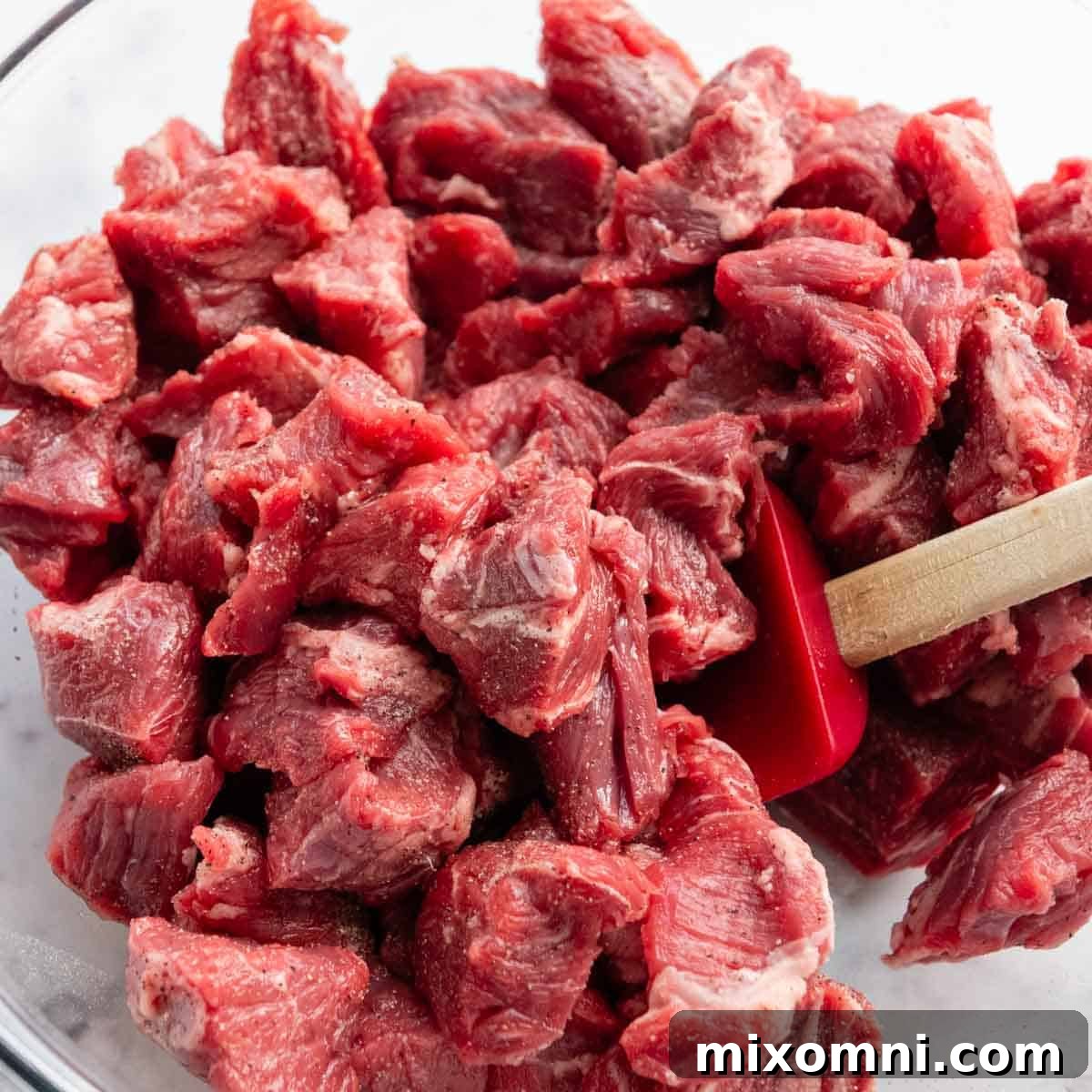
- Beef: The recipe specifically calls for a 2½ – 3 pound boneless chuck roast. We strongly advise against substituting pre-cut stew meat or other leaner cuts. Chuck roast’s ample marbling is essential for achieving the desired fall-apart tenderness during the long braising process. For optimal results, purchase a whole chuck roast and cut it into uniform 1½-inch cubes, carefully trimming any excessive fat or silver skin. This consistency in size ensures even cooking and tenderness across all pieces.
- Vegetables: Our classic stew combination features hearty potatoes, sweet carrots, pungent onions, and vibrant frozen peas. For the potatoes, Yukon gold are highly recommended due to their buttery flavor and tendency to break down slightly, contributing a natural richness and subtle thickening to the stew. However, feel free to experiment with other additions like sweet potatoes for a touch of sweetness, celery for added aromatic depth, pearl onions, parsnips, or mushrooms for varying textures and flavors.
- Red Wine: Choose a dry red wine that you would enjoy drinking – it doesn’t need to be expensive! Pinot Noir, Cabernet Sauvignon, or Merlot are all excellent choices that will impart a deep, fruity, and slightly tannic complexity to the stew. If you prefer to make a beef stew without wine, an equal amount of high-quality gluten-free beef broth can be used as a direct substitute, though it will alter the depth of flavor.
- Gluten-Free Beef Broth: Always read labels carefully when selecting broth, as some brands may contain hidden gluten ingredients. We recommend looking for clearly labeled and verified gluten-free brands such as Swanson, Aldi’s Simply Nature organic brand, or Chef’s Cupboard broth to ensure safety for a gluten-free diet. A rich, flavorful broth is crucial for the stew’s overall taste.
- Seasoning: The core flavor base is built upon minced garlic, concentrated tomato paste, earthy dried thyme (or fresh for an extra boost), fragrant bay leaves, and a generous, balanced seasoning of salt and pepper. For an extra layer of complexity, consider adding fresh rosemary, a splash of balsamic vinegar for brightness, or a dash of gluten-free Worcestershire sauce for umami depth.
- Gluten-Free Flour: Unlike gluten-free baking, where specific flour blends are often critical, the brand of gluten-free all-purpose flour is less crucial here. Any reputable all-purpose gluten-free flour blend will work effectively to thicken the stew, providing that satisfying, rich consistency.
How to Make Flavorful Gluten-Free Beef Stew
While this recipe offers versatility in cooking methods, the Dutch oven reigns supreme for its ability to create exceptional flavor and texture with minimal fuss. The advantage of a Dutch oven is two-fold: it allows you to sear the beef and cook the stew in a single vessel, preserving all those delicious browned bits, and its heavy construction ensures a consistently low and even cooking temperature in the oven. However, we also provide options for making this hearty stew in a slow cooker or an Instant Pot, ensuring there’s a method for every kitchen and schedule.
(The detailed step-by-step instructions below provide modified guidance and insights. For the comprehensive recipe, including precise ingredient quantities, please refer to the complete recipe card at the bottom of this article.)
- Preheat your oven to 300℉ (150℃). In a large mixing bowl, combine the cubed beef with 1 teaspoon of salt and ½ teaspoon of freshly ground black pepper. Toss thoroughly to ensure every piece of beef is evenly coated, preparing it for maximum flavor development during searing.
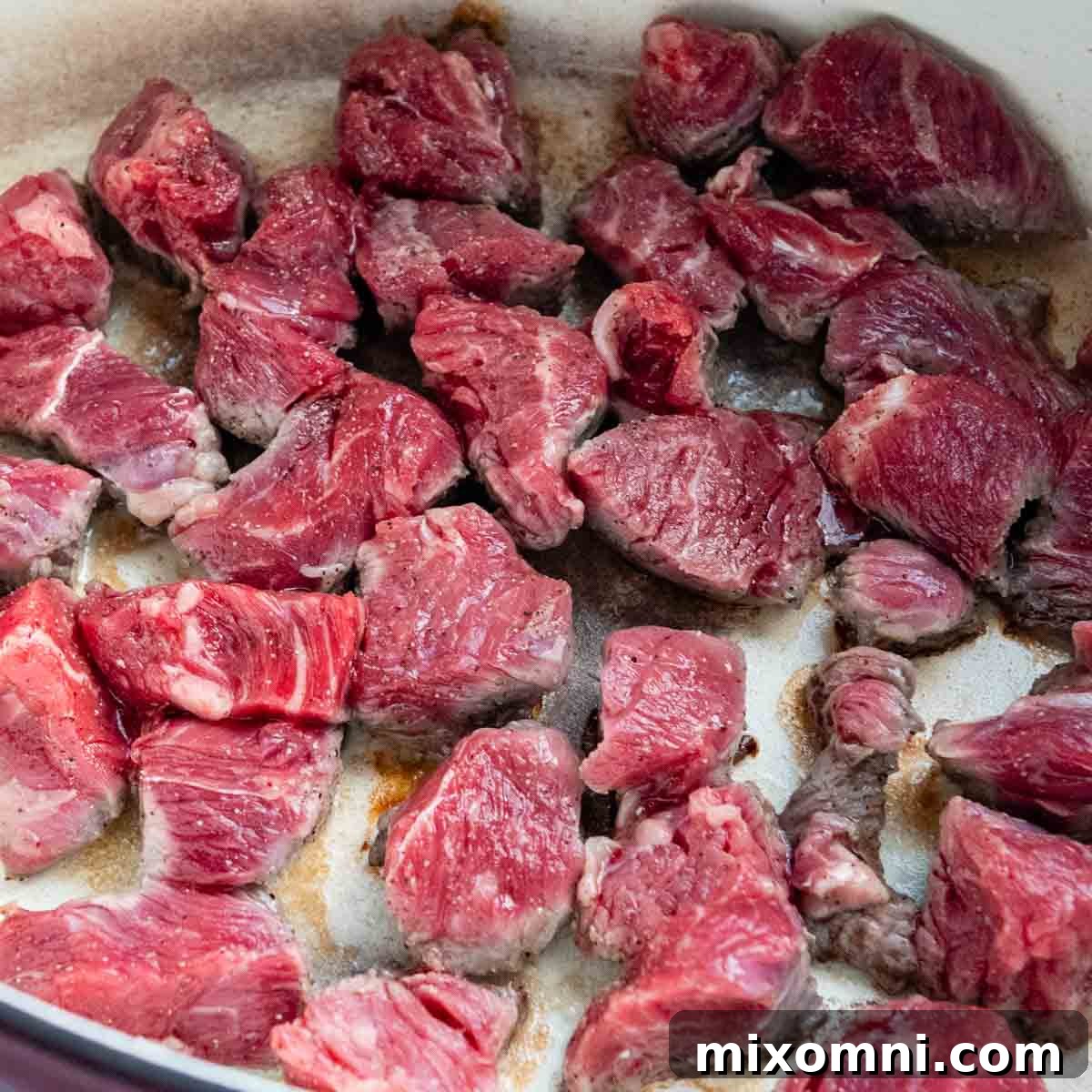
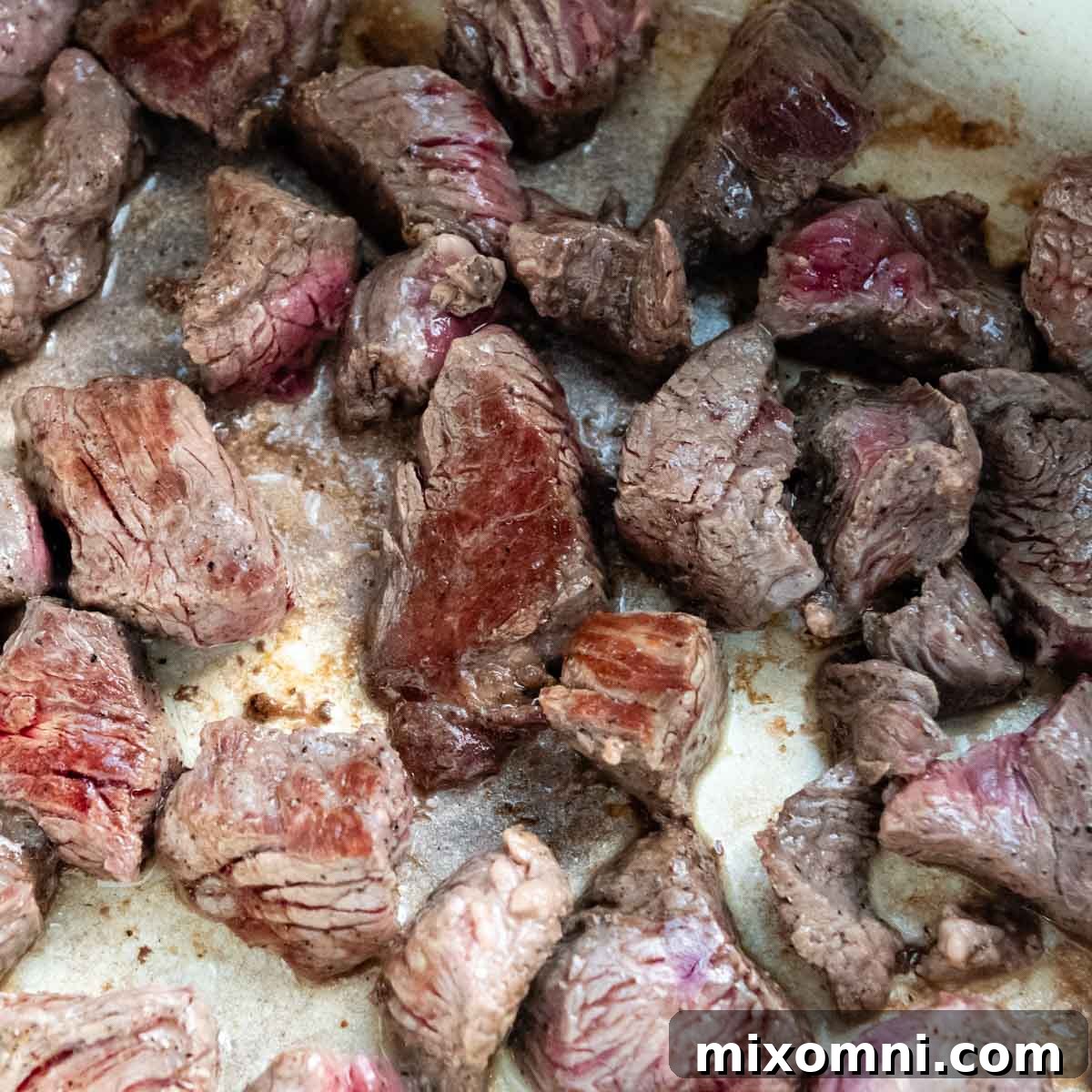
- Heat a large, oven-safe Dutch oven over medium-high heat. Add 1 tablespoon of olive oil. It is crucial not to overcrowd the pan during searing. Add enough beef to form a single layer at the bottom, allowing sufficient space for heat to circulate around each piece. This technique promotes proper browning and creates a rich, flavorful crust, which is essential for the stew’s depth.
- Place a layer of seasoned beef in the hot Dutch oven. Sear for 2-3 minutes per side, or until each piece is beautifully browned. Remember, the goal here is not to cook the beef through, but to develop a deep, caramelized crust. Transfer the seared beef to a clean plate and set aside. Repeat this process with the remaining beef, adding an additional 1 tablespoon of olive oil for each new batch to maintain proper searing conditions.
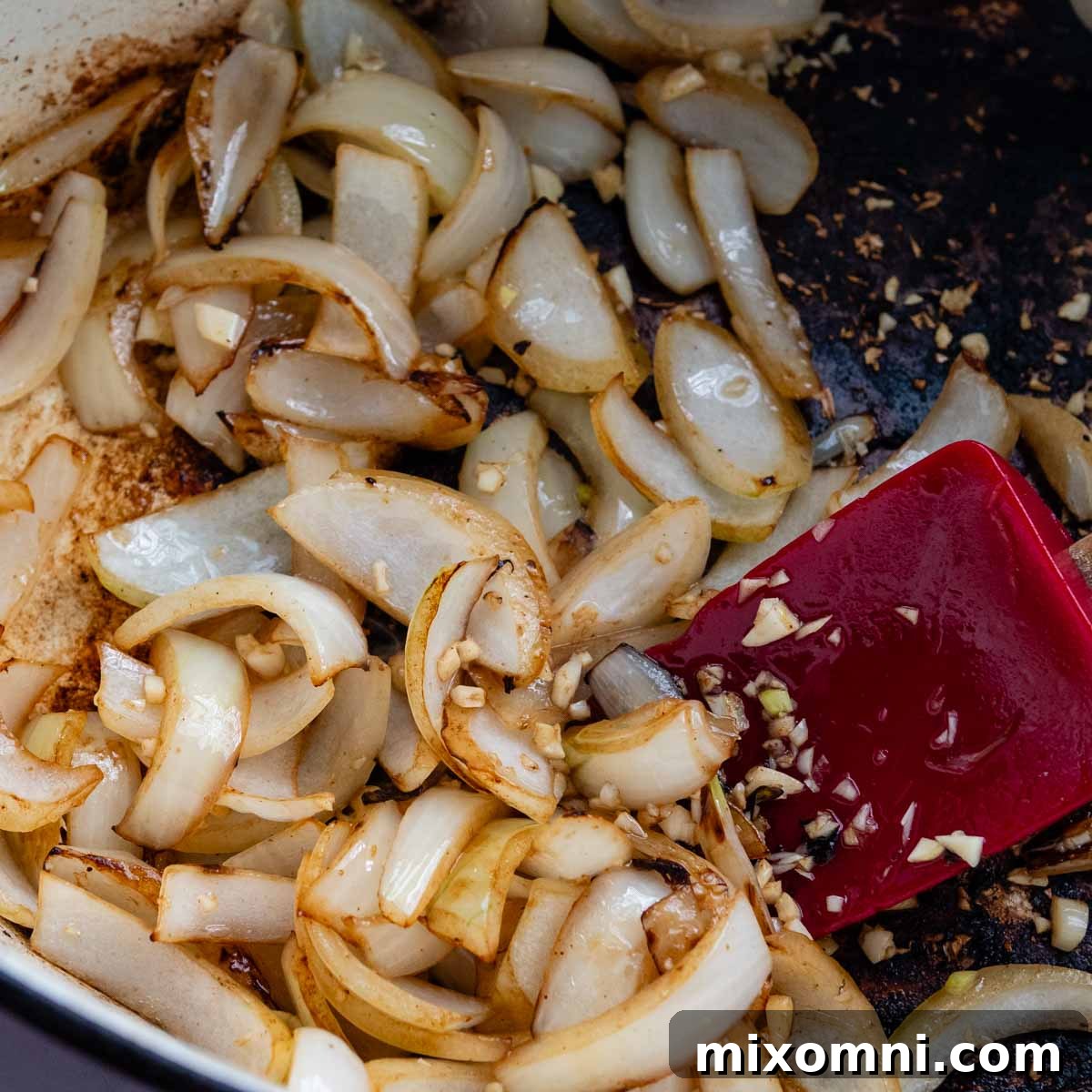
- Once all the beef is seared and removed, lower the heat to medium. Add ½ tablespoon of olive oil to the empty pot. Add the chopped onions and cook for approximately 3 minutes, or until they soften and become translucent. If the pot appears too dry or the onions threaten to overcook, add a small splash of water or beef broth to deglaze the pan and prevent burning.
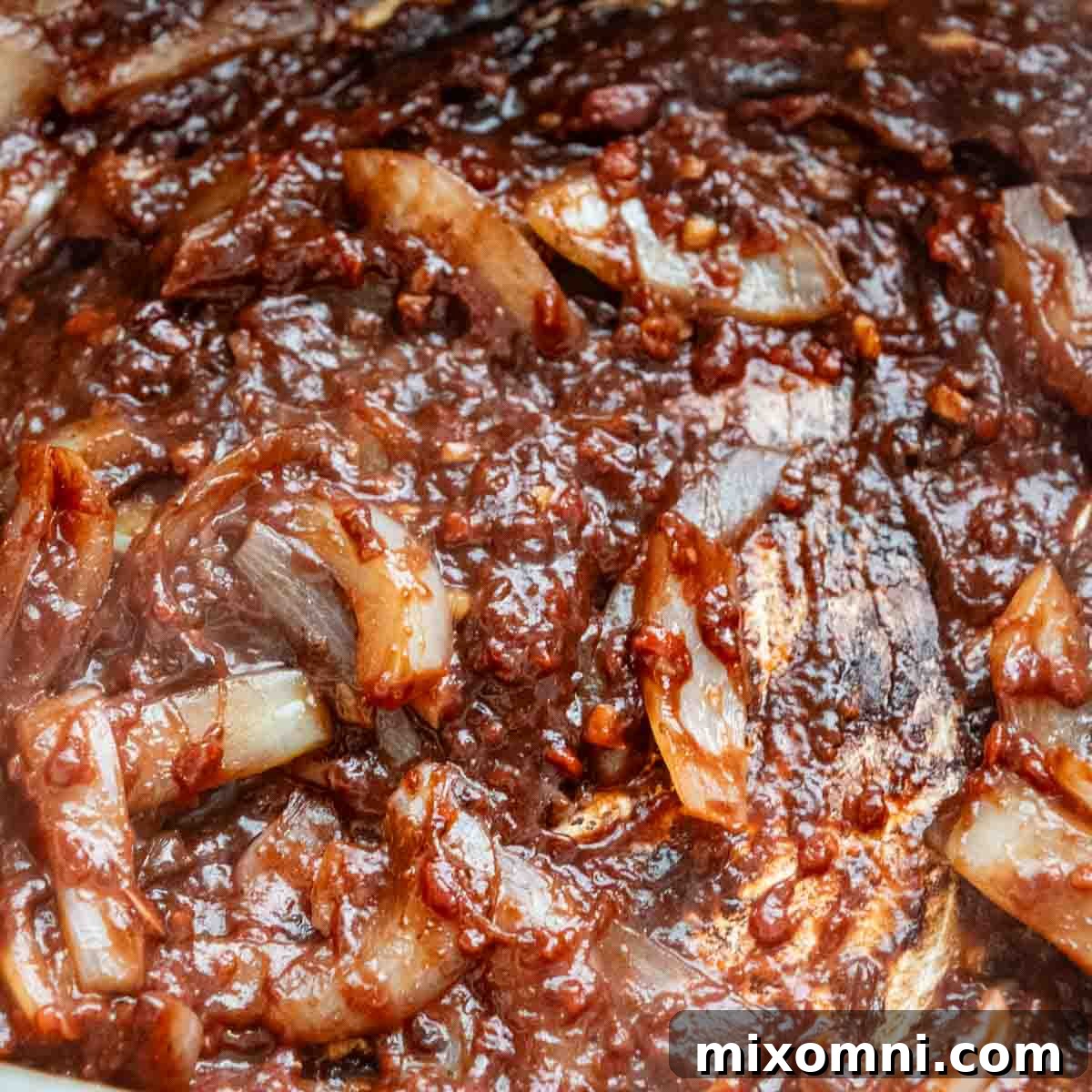
- Stir in the minced garlic, gluten-free all-purpose flour, and tomato paste with the softened onions. Mix well, forming a thick paste. Gradually pour in the red wine, whisking constantly and scraping up any browned bits (fond) from the bottom of the pot. This deglazing step incorporates immense flavor into the stew. Continue whisking until you have a thick, smooth, and aromatic sauce.
- Once the sauce is thick and well-combined, gradually stir in 2 cups of gluten-free beef broth, dried thyme, bay leaves, and brown sugar. Ensure all remaining browned bits are scraped from the bottom of the pot. Return the seared beef, along with any accumulated juices, to the pot. Increase the heat and bring the mixture to a gentle boil. Cover the Dutch oven and transfer it to the preheated oven. Cook for 1 hour, allowing the flavors to meld and the beef to begin tenderizing.
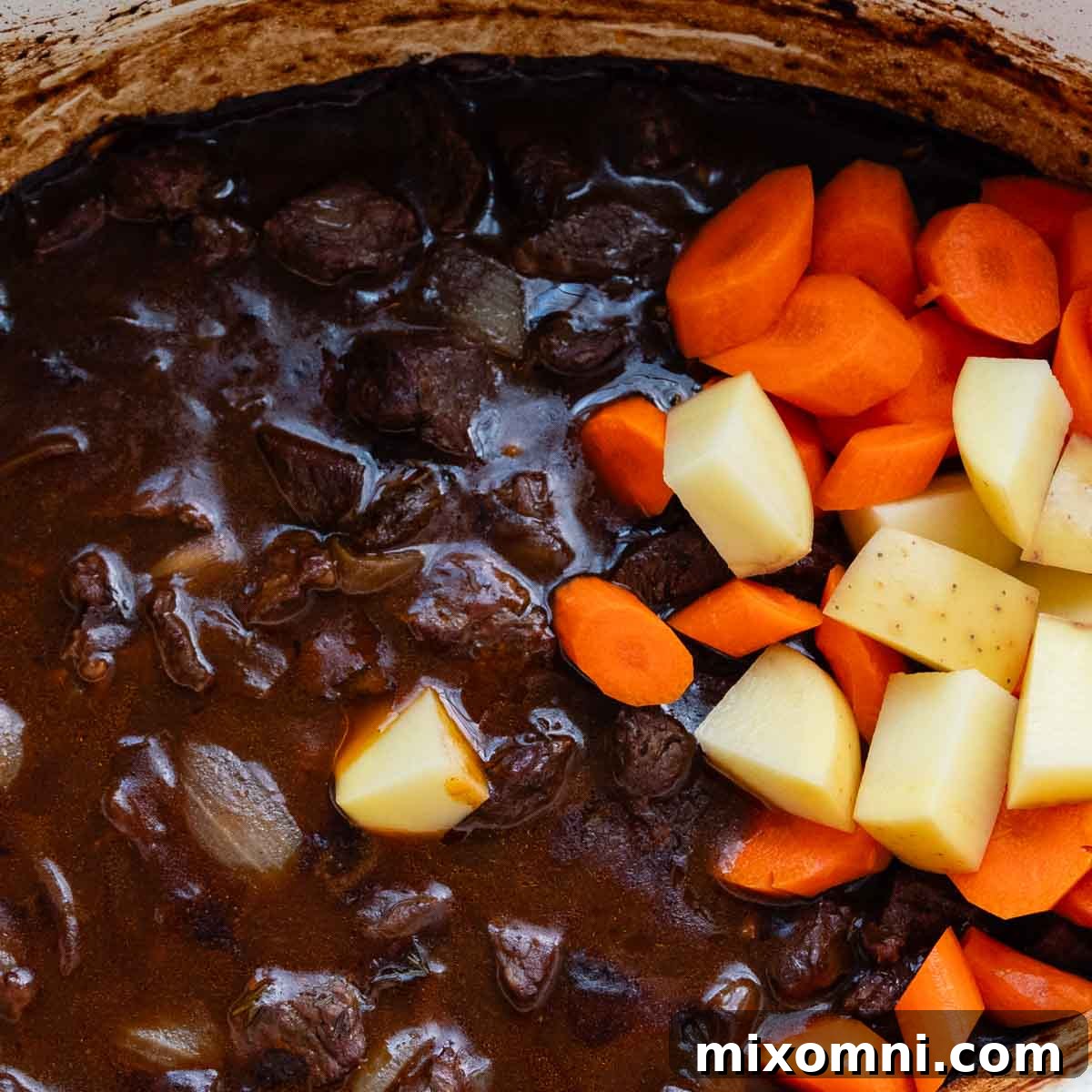
- After 1 hour, carefully remove the Dutch oven from the oven. Stir in the cubed Yukon gold potatoes, sliced carrots, and an additional 1 – 1½ cups of gluten-free beef broth, adjusting the amount based on your desired stew thickness. Cover the pot again and return it to the oven for another 1 to 1 hour and 30 minutes, or until the beef is incredibly tender and easily falls apart with a fork, and the vegetables are perfectly fork-tender. Finally, stir in the remaining ½ teaspoon of salt and the frozen peas. Serve this rich, comforting stew immediately, perhaps garnished with fresh parsley.
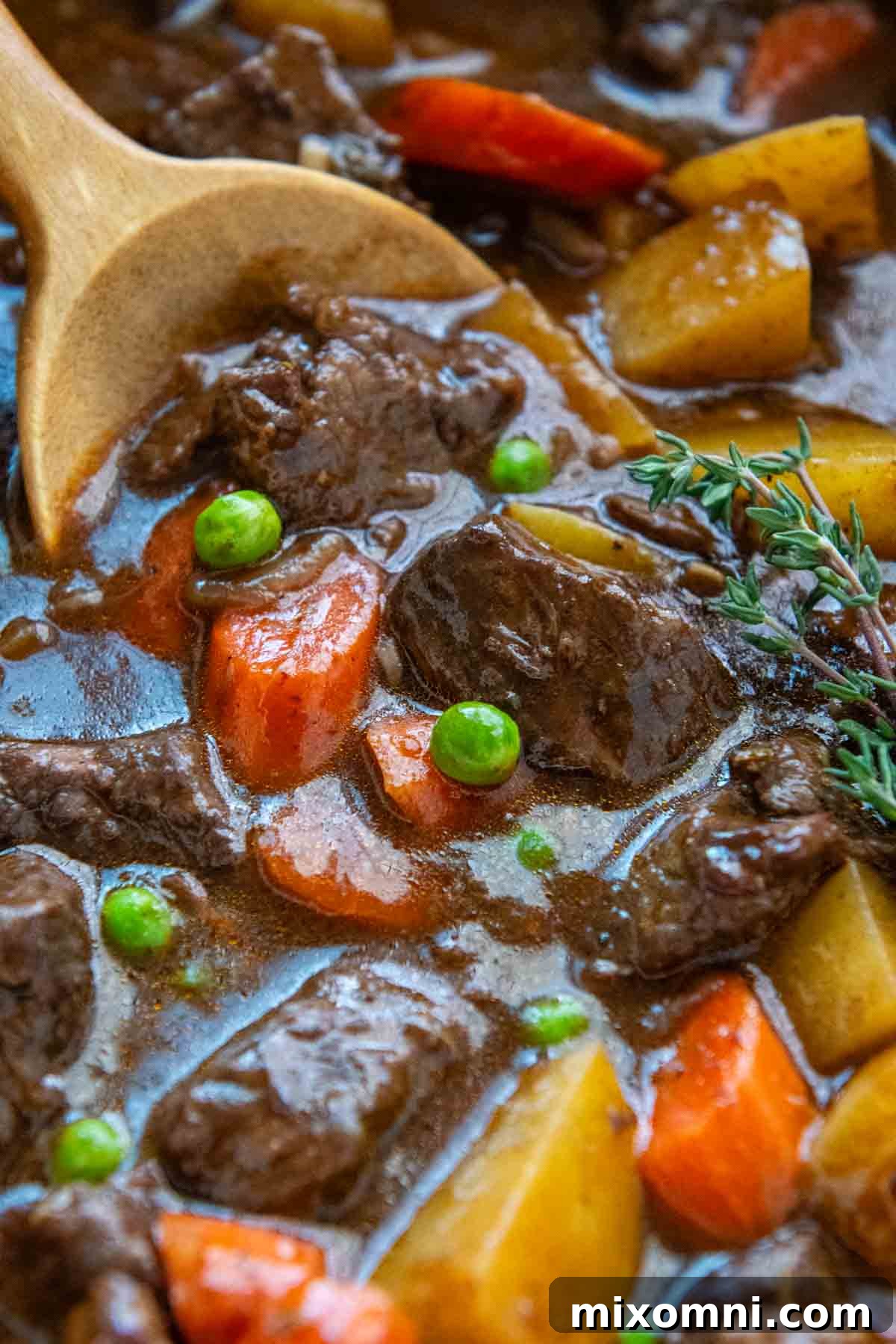
Choosing the Best Beef for Your Stew
While the allure of a pre-packaged beef stew meat might be strong due to its affordability and convenience, it often comes at the cost of both flavor and texture. These packages typically contain a medley of various beef cuts, often inconsistently trimmed. This variability means you might get lucky with a few tender morsels, but you’re equally likely to encounter tough, stringy chunks that stubbornly resist tenderization, even after hours of simmering. For a truly superior beef stew, the cut of meat makes all the difference.
Our unwavering recommendation for the best beef stew is a boneless chuck roast. This cut, sourced from the shoulder of the steer, is renowned for its generous marbling – those fine streaks of intramuscular fat that melt during slow cooking, basting the meat from within and yielding incredibly moist, flavorful, and fall-apart tender results. The collagen in chuck roast also breaks down into gelatin, adding a luscious mouthfeel and body to the stew’s sauce.
For a hearty, meat-forward stew, opt for a 3-pound chuck roast. Keep in mind that the weight will reduce slightly once you trim off any excess external fat. If you prefer a stew with a slightly smaller beef-to-vegetable ratio, a 2½-pound roast is sufficient. In this case, you might consider adding an extra 1-2 cups of vegetables to maintain a balanced texture and volume in your stew. Investing a little more time in selecting and preparing your chuck roast will pay dividends in a stew that is consistently tender, rich, and truly exceptional.
Gluten-Free Thickeners for a Perfect Stew
Achieving that ideal, comforting consistency in beef stew is paramount, and choosing the right gluten-free thickener is key. While many options exist, my preferred method is using gluten-free all-purpose flour. It excels in its ability to create a stable, velvety texture that holds up beautifully over long simmer times, through reheating, and even after freezing. When used to create a roux after browning the meat and sautéing the aromatics, it builds a robust foundation for the stew’s luscious sauce before any liquids are added.
However, if gluten-free flour isn’t your preference or accessible, several other alternatives can be successfully employed. It’s important to note that these alternatives may influence the final flavor and, more significantly, the consistency upon reheating.
- Arrowroot Powder: This excellent thickener offers a neutral flavor and performs exceptionally well when it comes to freezing and reheating, maintaining its thickening power without breaking down. For best results, arrowroot powder should be added towards the end of the cooking process. Create a “slurry” by mixing 1 tablespoon of arrowroot powder with 3 tablespoons of cold water for every cup of liquid in your stew. Once the meat and vegetables are tender, stir this slurry into the simmering stew liquid until it reaches your desired thickness.
- Cornstarch: Cornstarch is a readily available and effective thickener, but it comes with a notable drawback: it tends to “break” when frozen and reheated. This means your beautifully thickened stew may become thin and watery after rewarming. For this reason, cornstarch is best used if you plan to consume the entire batch of stew on the same day it’s made. Use it in a similar fashion to arrowroot: create a slurry by combining 1 tablespoon of cornstarch with 1 tablespoon of cold water for every cup of stew liquid, and stir it into the simmering stew towards the end of cooking.
- Potato Flakes: Also commonly known as instant mashed potatoes, potato flakes offer a convenient and flavor-neutral thickening solution. Always check the ingredient label to ensure you’re using a gluten-free brand. These flakes can be sprinkled directly into the stew after the meat and vegetables are tender. Stir them in gradually, allowing them to absorb the broth and thicken the stew to your preferred consistency. They are quite forgiving and absorb liquid effectively.
- Tapioca: There are two main forms of tapioca used for thickening: small tapioca pearls and tapioca starch. For small tapioca pearls, add 3 tablespoons along with the main stew liquid at the beginning of the cooking process. The pearls will dissolve and thicken the stew as it simmers. If using tapioca starch, treat it much like cornstarch: create a slurry with 1 tablespoon of starch and 1 tablespoon of cold water for every cup of liquid, adding it at the end of cooking. A key advantage of tapioca starch over cornstarch is its superior performance when freezing and reheating, maintaining a more stable consistency.
Versatile Cooking Options for Your Gluten-Free Beef Stew
This exceptional gluten-free beef stew recipe is adaptable to several cooking methods, each offering unique advantages. Whether you prefer the traditional hands-on approach or the set-it-and-forget-it convenience, you can achieve a wonderfully tender and flavorful stew.
Dutch Oven Method: The Classic Choice
The Dutch oven method is widely regarded as the gold standard for beef stew, and for good reason. Its heavy-bottomed construction and tight-fitting lid create an ideal environment for slow, even cooking. A primary advantage is the ability to perform multiple steps – browning the meat, deglazing the pan, and simmering the stew in the oven – all in one pot. This minimizes cleanup and, more importantly, ensures that no precious flavor is lost, as all those caramelized bits from searing are incorporated directly into your sauce. Cooking in the oven also provides a consistently low and stable temperature, which is crucial for tenderizing tough cuts of meat uniformly without scorching.
For this recipe, a larger 6-quart Dutch oven is recommended. Its ample surface area allows you to properly brown the beef in fewer batches, preventing overcrowding and ensuring a beautiful sear on each piece. A smaller Dutch oven (no less than 4-quarts) can also be used, but you’ll need to divide the beef into at least 3-4 batches to guarantee enough space for hot air circulation, which is essential for effective browning.
Crockpot (Slow Cooker) Method: Effortless Convenience
For those days when time is short but you crave a homemade meal, the slow cooker offers unparalleled convenience. While much of the cooking time is hands-off, it’s crucial to start the recipe on the stovetop to develop the foundational flavors that make this stew truly special before transferring it to the crockpot.
- Begin by browning the beef in batches in a separate pan, then transfer it to your slow cooker. In the same pan, sauté the onions and then incorporate the tomato paste, seasonings, red wine, and broth as directed in the main recipe. This initial stovetop work is vital for building a rich flavor base.
- Transfer all the contents – the seared beef, cooked aromatics, and liquids – into your slow cooker.
- Cook on the LOW setting for 7½-8 hours, or on HIGH for 3½-4 hours. The longer, slower cooking time on low generally yields more tender beef.
- Just before serving, stir in the frozen peas.
- Slow cooker stews sometimes need a little extra help with thickening. If your stew isn’t as thick as desired, create a cornstarch slurry by mixing 3 tablespoons of cornstarch with 3 tablespoons of cold water. Stir this mixture into the stew, then cook on HIGH for an additional 30 minutes, or until thickened. Keep in mind that the stew will also continue to thicken naturally as it stands.
Instant Pot (Electric Pressure Cooker) Method: Speedy Results
The Instant Pot is perfect for significantly reducing cooking time while still achieving tender results. Due to the smaller capacity of most electric pressure cookers, we highly recommend halving the recipe ingredients to ensure optimal cooking and prevent overfilling.
- Use the “Sauté” function to brown the beef in two stages. Use half the olive oil for the first batch of beef, then add the remaining oil and beef for the second batch. Remove the beef and set aside.
- Still using the “Sauté” function, cook the onions until softened. Crucially, omit the gluten-free flour at this stage, as pressure cooking handles thickening differently.
- Add the seared beef back to the pot, along with the liquids (red wine and beef broth) and all the seasonings (tomato paste, thyme, bay leaves, brown sugar).
- Secure the lid, set the valve to “Sealing,” and cook on HIGH PRESSURE for 35 minutes. Once cooking is complete, allow a 10-minute natural pressure release before manually releasing any remaining pressure.
- Stir in the frozen peas. If additional thickening is needed, prepare a cornstarch slurry (3 tablespoons cornstarch mixed with 3 tablespoons cold water). Stir it into the stew, then use the “Sauté” function until the stew thickens to your preference.
Freezing and Reheating Tips for Convenience
This gluten-free beef stew is an excellent candidate for meal prepping, making it incredibly convenient for busy weeknights or future comforting meals. Proper storage ensures its deliciousness is preserved.
To store your gluten-free beef stew, allow it to cool completely to room temperature before transferring it to an airtight container. It can be safely refrigerated for up to 3 days. For longer storage, this stew freezes beautifully for up to 3 months. When freezing, portion the stew into individual servings in freezer-safe containers or bags, removing as much air as possible to prevent freezer burn. Thaw frozen stew overnight in the refrigerator before reheating.
The best method for reheating beef stew is on the stovetop. Transfer the desired portion to a saucepan and heat over medium-low heat, stirring occasionally, until it is thoroughly warmed through. This gentle heating helps to maintain the stew’s texture and prevents the meat from drying out. If you opt for microwave reheating, use a microwave-safe bowl and heat on a 50% power setting, stirring every minute, until it is warm. Finish at full power for a brief period until piping hot. This gradual reheating prevents overheating and ensures even temperature distribution, maintaining the stew’s rich flavor and consistency.
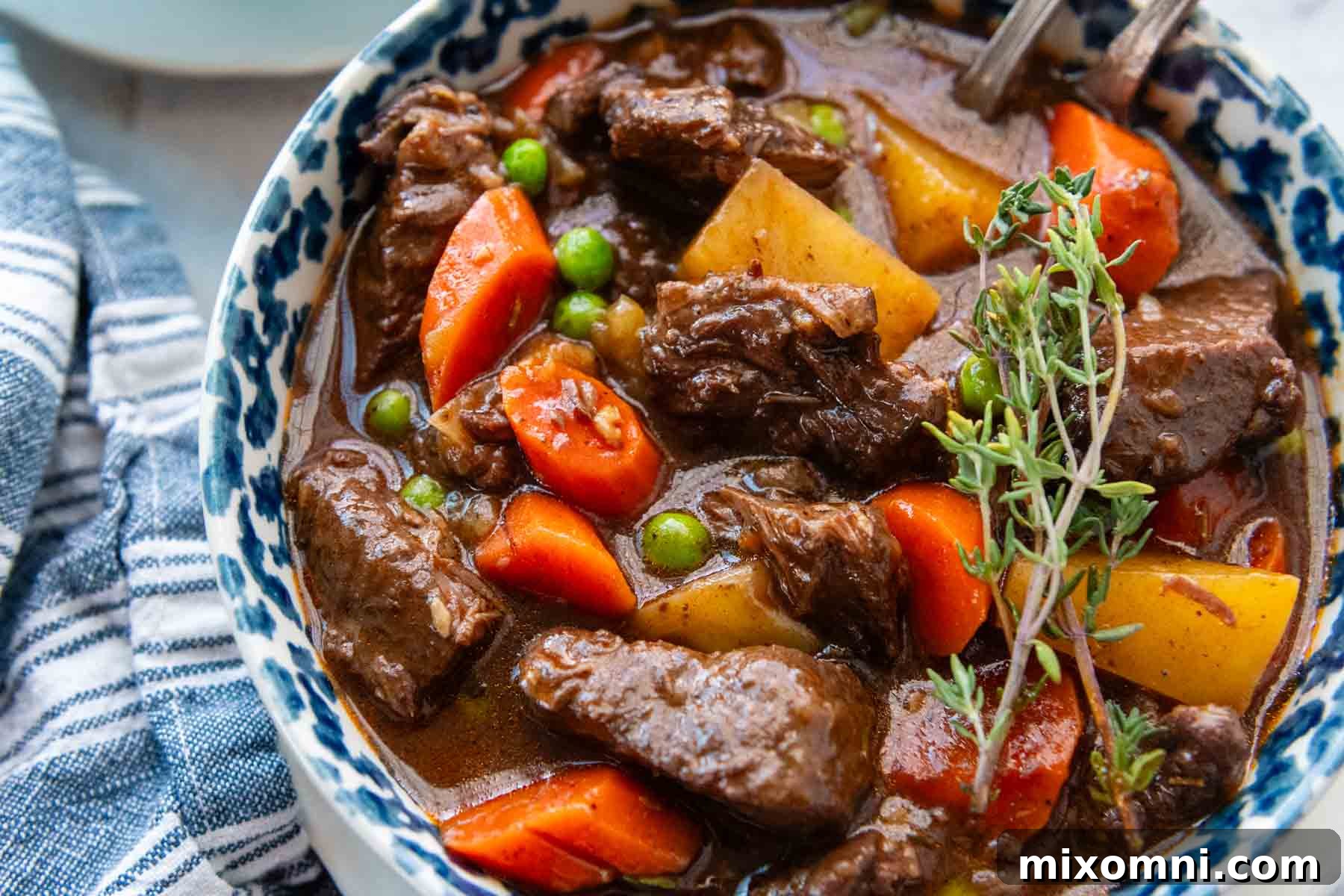
Save this recipe to your pinterest board!
Let’s be friends on Pinterest! I’m always sharing great recipes!
Did you make this recipe? I love hearing from you! Leave a star rating and comment below the recipe card. It helps others when searching for recipes and I appreciate feedback from our community. You will always hear back from me! -Melissa
Gluten-Free Beef Stew With Red Wine (Best Flavor)
 Melissa Erdelac
Pin
Rate
Remove Ads
Ingredients
- 2½-3 pounds boneless beef chuck roast, trimmed of excess fat and cut into 1½-inch cubes
- 1½ teaspoons salt, divided
- ½ teaspoon ground pepper
- 2-3½ tablepoons olive oil
- 2 large onions, chopped in 2-inch chunks
- 6 garlic cloves, minced
- 3 tablespoons gluten free all purpose flour
- 3 tablespoons tomato paste
- 1 cup dry red wine
- 3 – 3½ cups gluten-free beef broth, divided
- 1 teaspoon dried thyme, or 1 tbsp. minced fresh
- 2 bay leaves
- 1 teaspoon brown sugar
- 1½ pounds Yukon gold potatoes, cut into 1½-inch chunks
- 4-5 carrots, peeled and cut into 1-inch slices
- 1 cup frozen peas
Equipment
-
Dutch Oven
-
Santoku Knife
Instructions
-
Preheat the oven to 300℉. In a large bowl combine the cut beef with 1 teaspoon salt and ½ teaspoon pepper. Toss to combine.2½-3 pounds boneless beef chuck roast, 1½ teaspoons salt, ½ teaspoon ground pepper
-
Heat a large oven-safe dutch oven over medium-high heat. Add 1 tbsp oil. You will want to add enough beef so it fits in a single layer at the bottom of the pan without overcrowding. This allows enough heat to circulate around each piece, giving a nice sear.2-3½ tablepoons olive oil
-
Add a layer of beef to the bottom of the pan. Sear 2-3 minutes per side, or until well browned. The beef will not be cooked through, which is fine. Transfer the meat to a plate. Repeat with remaining beef, adding 1 tbsp oil for each batch.
-
Once the meat has been browned, lower the heat to medium and add ½ tbsp oil to the empty pot. Cook the onions about 3 minutes, or until tender. If the pot becomes too dry or the onions are overcooking, add a splash of water and continue cooking.2 large onions
-
Stir in the garlic, gluten-free flour, and tomato paste and mix combine with the onions. Slowly add the red wine, whisking constantly and scrapping up the browned bits at the bottom of the pot.6 garlic cloves, 3 tablespoons gluten free all purpose flour, 3 tablespoons tomato paste, 1 cup dry red wine
-
Once it’s a thick, well whisked sauce, gradually stir in 2 cups beef broth, thyme, bay leaves, and brown sugar. Continue to scrape up any remaining browned bits. Add the beef, with juices, back to the pot. Increase the heat and bring to a boil. Cover and transfer the pot to the oven. Cook for 1 hour.3 – 3½ cups gluten-free beef broth, 1 teaspoon dried thyme, 2 bay leaves, 1 teaspoon brown sugar
-
Stir in the potatoes, carrots and 1 – 1½ cups of broth, depending on desired thickness of stew. Cover and return to the oven 1 – 1 hour 30 minutes more, or until the beef is very tender and the vegetables are fork-tender. Stir in remaining ½ tsp salt and frozen peas. Serve immediately.1½ pounds Yukon gold potatoes, 4-5 carrots, 1 cup frozen peas
Notes
Cooking in a Slow Cooker
For a gluten-free slow cooker beef stew recipe, you will to start the recipe on the stove top and transfer to a crockpot to finish the cooking.
- Brown the meat in batches and transfer to a plate. In the same pan, cook the onions, and add the tomato paste, seasonings, red wine, and broth as the recipe directs. Transfer everything to a slow cooker.
- Cook on LOW for 7½-8 hours or HIGH 3½-4 hours. Stir in the peas.
- If additional thickening is needed, mix together 3 tablespoons cornstarch with 3 tablespoons water. Stir in and cook on HIGH for 30 minutes. It will also thicken more upon standing.
Cooking in an Instant Pot
Since electric pressure cookers have smaller capacities, I recommend halving the recipe ingredients to make instant pot beef stew.
- Brown in two stages, using half the oil for first batch of beef and finishing with remaining oil and beef.
- Saute the onions, but omit the flour. Add the liquids and seasonings and beef back to the pot.
- Cook on HIGH PRESSURE for 35 minutes, with a 10 minute natural release.
- Add the peas. Mix together 3 tablespoons cornstarch with 3 tablespoons water. Stir in and use SAUTE function until thickened.